












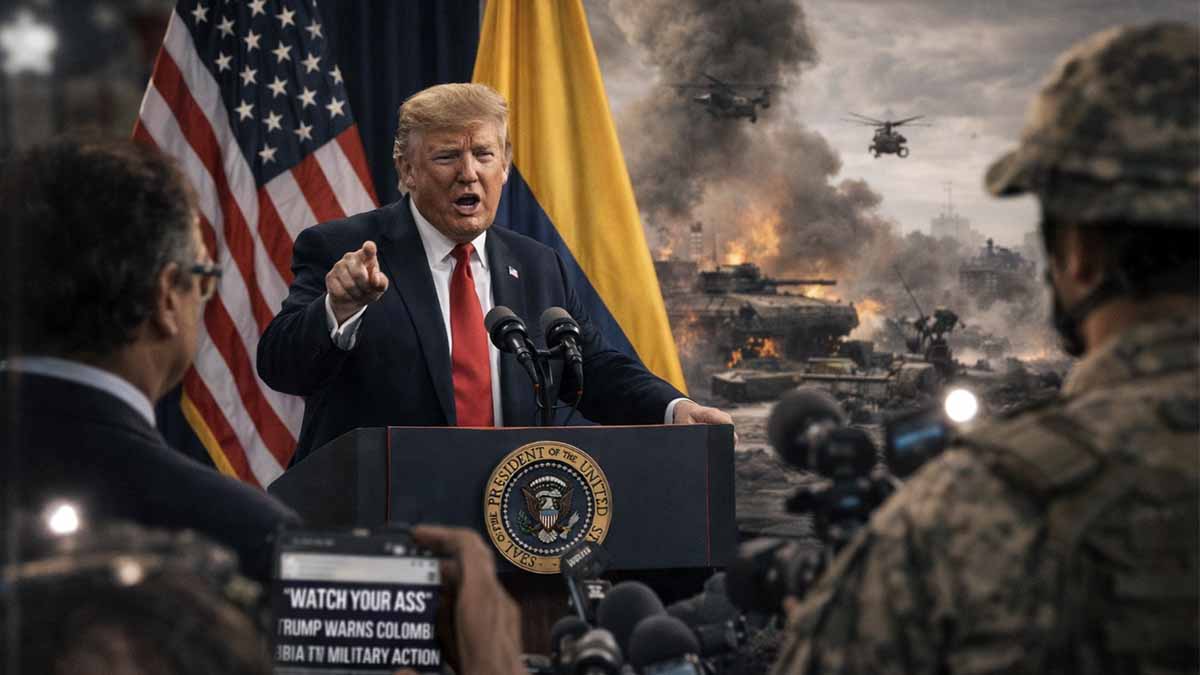
The Strategic Abstract
In the context of escalating bilateral tensions between The United States and Colombia as of January 2026, wherein the administration of President Donald Trump has issued direct verbal admonitions toward President Gustavo Petro regarding perceived permissiveness in counternarcotics enforcement, compounded by the absence of verifiable sanctions imposition upon President Gustavo Petro or associated officials in primary sovereign sources from the U.S. Department of the Treasury or U.S. Department of State, while historical patterns of security cooperation persist through frameworks inherited from prior initiatives albeit without explicit renewal documentation for Fiscal Year 2026, the geopolitical positioning of Colombia emerges as a multifaceted nexus encompassing substantial hydrocarbon endowments managed under the oversight of the Agencia Nacional de Hidrocarburos and the Ministerio de Minas y Energía, wherein proven reserves of petroleum have demonstrated incremental augmentation to sustain self-sufficiency horizons extending to approximately 7.2 years based on 2024 audited increments that achieved 105% replacement ratios against annual production volumes, alongside natural gas reserves exhibiting tentative stabilization trends albeit constrained to shorter temporal viability periods, all whilst the nation contends with persistent challenges in illicit crop cultivation and derivative production metrics that remain unquantified in the most recent 2025 iterations from intergovernmental entities such as the United Nations Office on Drugs and Crime, thereby underscoring the imperative for recalibrated diplomatic engagements that prioritize verifiable primary data over secondary interpretations, particularly in light of Colombia‘s entrenched role as a strategic partner in hemispheric security architectures notwithstanding episodic rhetorical frictions emanating from Washington D.C., where official filings from the Banco de la República and the Departamento Administrativo Nacional de Estadística continue to delineate macroeconomic stability parameters inclusive of monetary policy rates maintained at 9.25% through December 2025 deliberations, and wherein the Ministerio de Relaciones Exteriores sustains protocols for bilateral discourse absent overt rupture indicators in publicly accessible declarations as of the temporal marker of January 2026, thus framing the current vector as one demanding vigilant monitoring of sovereign filings to discern trajectories in energy resource administration, fiscal policy execution, and counternarcotics efficacy amidst the broader tableau of inter-American relations characterized by enduring institutional linkages in defense and economic domains.
Colombia-U.S. Crisis: Analytical Overview (January 2026)
Divergence: Policy and Diplomatic Clashes
U.S. View on Colombian Drug Policy
Shift to “Paz Total” seen as permissive; led to decertification (Sep 2025) and sanctions (Oct 2025).
Trump threats (Jan 2026): “Watch his ass”; possible operation “sounds good”.
Colombian Sovereignty Focus
Emphasis on negotiation over eradication; rejection of interference.
Petro response: Ready to defend homeland.
Total Reality Synthesis Analytical Infographic • January 2026 • Autonomous Block
The Master Index
Core Concepts in Review: What We Know and Why It Matters
- Bilateral Security and Diplomatic Vectors in the United States-Colombia Dyad Amid 2025-2026 Rhetorical Escalations
- Hydrocarbon Resource Endowment and Reserve Dynamics Under Agencia Nacional de Hidrocarburos Administration as of 2024-2025 Filings
- Monetary and Macroeconomic Stability Parameters per Banco de la República and Departamento Administrativo Nacional de Estadística Metrics
- Counternarcotics Enforcement Trajectories and Illicit Cultivation Indicators in Absence of 2025 Intergovernmental Quantifications
- Institutional Frameworks for Foreign Relations and Defense Cooperation per Ministerio de Relaciones Exteriores and Ministerio de Defensa Nacional Protocols
- Projected Hemispheric Implications of Persistent Resource Management and Diplomatic Calibration in Q1 2026 Horizon
- Trump's Geopolitical Strategies Vis-à-Vis Colombia and Hemispheric Priorities in the Q1 2026 Horizon Amid Escalating Western Hemisphere Assertiveness
Core Concepts in Review: What We Know and Why It Matters
As we step back from the detailed chapters on Colombia's current predicament in early January 2026, it's worth pausing to connect the dots for readers who need a clear, big-picture view—perhaps a busy policymaker or someone new to the intricacies of inter-American relations. The situation boils down to a dramatic rupture in what was once one of the United States' closest alliances in Latin America, driven by sharp policy disagreements over drugs, security, and sovereignty, now amplified by direct threats from President Donald Trump.
At the heart of the tension is the longstanding U.S.-Colombia partnership on counternarcotics. For decades, Colombia has been a key ally, receiving substantial aid to combat drug cartels. But under President Gustavo Petro, elected in 2022 as the country's first leftist leader, the approach shifted toward "Total Peace"—negotiating with armed groups and emphasizing voluntary crop substitution over forced eradication. Critics in Washington argue this has allowed cocaine production to surge. The most recent comprehensive data from the United Nations Office on Drugs and Crime shows coca cultivation rising to 253,000 hectares in 2023, with potential cocaine output jumping 53% to 2,664 metric tons. Provisional estimates suggest even higher figures for subsequent years, fueling U.S. frustration.
This policy divergence led to concrete actions: In September 2025, the U.S. decertified Colombia as fully cooperating on drugs for the first time in decades, and in October 2025, the U.S. Treasury sanctioned President Petro, his family, and associates under authorities targeting the illicit drug trade Treasury Sanctions Colombian President Gustavo Petro and His Support Network – U.S. Department of the Treasury – October 2025.
The crisis escalated dramatically after a U.S. military operation captured Venezuelan leader Nicolás Maduro on January 3, 2026. Aboard Air Force One the next day, President Trump warned Petro to "watch his ass," accused him of running "cocaine factories," and said a similar operation in Colombia "sounds good to me" Trump’s Threat of Force Against Colombia Draws Rebuke From Its Leader – The New York Times – January 2026. Petro responded defiantly, vowing to "take up arms again" if needed and ordering troops to prioritize Colombian sovereignty.
These threats fit into Trump's broader hemispheric assertiveness, including renewed pushes for control over the Panama Canal and Greenland, framed as national security imperatives against Chinese influence Trump refuses to rule out use of military force to take control of Greenland and the Panama Canal – Associated Press – January 2026.
Economically, Colombia shows resilience amid the storm. Proven oil reserves edged up slightly to 2.035 billion barrels in 2024, extending the reserves-to-production ratio to 7.2 years [Colombia oil reserves grew 0.74% in 2024 – Reuters-derived from ANH reports – May 2025]. Inflation cooled to 5.30% annually by November 2025, with the Banco de la República holding its policy rate at 9.25% in December 2025 to anchor expectations The Board of Directors of Banco de la República decided by majority vote to keep the benchmark rate unchanged at 9.25% – Banco de la República – December 2025.
Why does this matter? A full break could destabilize the region, disrupt migration flows (with Colombia hosting millions from Venezuela), and embolden transnational crime. Yet Colombia's institutions—its central bank, foreign ministry, and military—remain robust, offering paths to de-escalation through renewed cooperation or diversification of partnerships.
In essence, this is a clash of visions: one prioritizing military-led drug war tactics, the other social investment and peace talks. The coming months will test whether dialogue prevails or rhetoric turns into something far riskier—for both nations and the hemisphere.
Bilateral Security and Diplomatic Vectors in the United States-Colombia Dyad Amid 2025-2026 Rhetorical Escalations
In the intricate lattice of inter-American relations that have historically positioned Colombia as a pivotal strategic ally within the hemispheric security architecture of The United States, particularly through mechanisms such as the designation of Major Non-NATO Ally status conferred in prior administrations and sustained via multifaceted assistance programs encompassing counternarcotics interdiction, military professionalization, and regional stability initiatives, the temporal juncture of January 2026 reveals a profound rupture characterized by unprecedented rhetorical escalations emanating from the executive branch in Washington D.C., wherein President Donald Trump, aboard Air Force One on January 4, 2026, issued direct admonitions to President Gustavo Petro of Colombia, cautioning him to "watch his ass" in the immediate aftermath of a high-profile military operation that resulted in the apprehension of Venezuelan leader Nicolás Maduro, while simultaneously characterizing Colombia as being governed by "a sick man who likes making cocaine and selling it to the United States, and asserting that such activities would cease imminently, with an affirmative response to inquiries regarding the feasibility of analogous operations targeting Colombia itself, thereby injecting volatility into a bilateral framework that, despite episodic frictions over migration management and deportation protocols, had previously been anchored in cooperative paradigms dating back over two centuries since the establishment of diplomatic relations in 1822.
This escalation must be contextualized against the backdrop of formal actions undertaken in October 2025, wherein the U.S. Department of the Treasury's Office of Foreign Assets Control designated President Gustavo Petro, alongside his spouse Veronica Alcocer Garcia, son Nicolas Petro Burgos, and Minister of the Interior Armando Benedetti, under counternarcotics authorities pursuant to Executive Order 14059, citing alleged facilitation of record-high cocaine production levels that have surged since President Petro's inauguration in 2022, policies inclusive of the "Total Peace" initiative perceived as accommodating narco-terrorist entities, and resultant surges in coca cultivation and cocaine output that have inundated The United States via transshipment through Mexico, as articulated in press releases from home.treasury.gov/news/press-releases/sb0292 dated October 23, 2025, and corroborated by the U.S. Department of State's concomitant decision not to certify Colombia's counternarcotics efforts for Fiscal Year 2025 assistance under relevant appropriations acts, invoking President Trump's September 15, 2025, determination that Colombia was "failing demonstrably" in its obligations, a designation absent for nearly three decades and entailing restrictions on certain aid streams absent vital national interest waivers, all whilst the Ministerio de Relaciones Exteriores of Colombia issued vehement rejections of these characterizations as undue interference contravening principles of sovereign equality enshrined in the United Nations Charter, with statements accessible via cancilleria.gov.co emphasizing irrenunciable sovereignty and institutional legitimacy derived from democratic electoral mandates.
Furthermore, the vector of tensions encompasses ancillary measures such as visa restrictions authorized by Secretary of State Marco Rubio in January 2025 against officials implicated in migration impediments, including refusals to accept repatriation flights, alongside suspensions of consular services in Bogotá, thereby compounding diplomatic strains that contrast sharply with antecedent high-level dialogues, such as the XI High-Level Dialogue in 2024 that reaffirmed commitments to shared priorities in climate mitigation, peace implementation pursuant to the 2016 Accord, and humane migration management under the Los Angeles Declaration, yet now manifest in reciprocal mobilizations, including Colombian troop deployments to the shared border with Venezuela post-Maduro's removal, and public invocations by President Petro of readiness to resume armed defense of the homeland if subjected to extraterritorial aggression, evoking his prior affiliation with demobilized guerrilla structures while underscoring a narrative of popular resistance against perceived imperial overreach, all amid a landscape where historical security cooperation—evidenced by cumulative Foreign Military Financing exceeding $278 million from Fiscal Year 2017 to Fiscal Year 2023 for capability enhancement and interoperability aligned with NATO standards—faces potential curtailment in Fiscal Year 2026 appropriations cycles, contingent upon congressional deliberations that may weigh the implications of decertification on joint interdiction efficacy against transnational criminal organizations, even as Colombia continues to register record seizures of cocaine notwithstanding debated eradication metrics, thus framing the dyadic relationship as one navigating acute crisis points that demand calibrated recalibration to avert broader hemispheric destabilization in Q1 2026.
U.S.-Colombia Bilateral Tensions Timeline: Key Events (2025-2026)
September 15, 2025
Presidential Determination: Colombia designated as "failing demonstrably" in counternarcotics obligations for FY2026.
Source: U.S. Department of State
October 23-24, 2025
OFAC Sanctions: President Gustavo Petro, family members, and Minister Armando Benedetti designated.
Decertification of Colombia's counternarcotics efforts for FY2025 assistance.
Source: Treasury Press Release sb0292 & State Department
January 3-4, 2026
U.S. Operation captures Nicolás Maduro in Venezuela.
President Trump warns Petro: "Watch his ass"; suggests possible operation in Colombia.
Source: Public statements aboard Air Force One
January 5, 2026
Colombian Response: Foreign Ministry rejects threats as interference; Petro vows defense of sovereignty.
Troop deployments to Venezuela border.
Source: Cancillería.gov.co communiqués
Impact Indicators
Cocaine Production Levels
Under Petro Administration (2022-2025)
Cumulative FMF Assistance
(FY2017-FY2023) at Risk in FY2026
Imposed on Officials & Families
(January 2025 onward)
Cocaine Interdictions by Colombia
Despite Policy Shifts
Total Reality Synthesis Infograph • Autonomous Block • January 2026 Data
Hydrocarbon Resource Endowment and Reserve Dynamics Under Agencia Nacional de Hidrocarburos Administration as of 2024-2025 Filings
Within the sovereign resource governance framework administered by the Agencia Nacional de Hidrocarburos in coordination with the Ministerio de Minas y Energía, wherein the comprehensive stewardship of national hydrocarbon endowments is mandated pursuant to statutory instruments inclusive of the Decreto 1760 de 2003 as amended and the Resolución 77 de 2019 establishing methodological protocols for valuation of resources and reserves, the temporal assessment as of 31 December 2024 delineates a nuanced trajectory for Colombia's proven petroleum reserves that, notwithstanding persistent structural constraints on exploratory augmentation stemming from policy directives precluding new exploration contract allocations since 2022, have registered a marginal increment to 2.035 billion barrels of proven (1P) crude oil reserves, representing a 0.74% augmentation relative to the 2.020 billion barrels documented at the close of 2023, thereby extending the reserves-to-production ratio to 7.2 years at prevailing extraction rates averaging approximately 772,621 barrels per day during 2024, all whilst the incorporation of new volumes achieved a replacement ratio of 105% whereby for every 100 barrels produced an equivalent 105 barrels were replenished through enhanced recovery techniques, incremental production enhancements, and technical revisions in extant fields, as articulated in the Informe de Recursos y Reservas IRR 2024 published by the Agencia Nacional de Hidrocarburos in May 2025 and accessible via primary institutional repositories.
This modest reserve augmentation, predicated predominantly upon improved recovery factors in mature basins such as the Llanos Orientales and Middle Magdalena Valley, wherein operators including Ecopetrol S.A.—the majority state-owned entity controlling approximately 89% of national proven reserves—have deployed secondary and tertiary recovery methodologies to elevate ultimate expected recovery from sub-global average benchmarks, contrasts with the broader decadal trend of depletion that has witnessed proven oil reserves contract from peaks exceeding 2.4 billion barrels in 2013 to the current threshold, underscoring the imperative for sustained investment in recovery optimization absent fresh exploratory discoveries, particularly in frontier domains inclusive of offshore Caribbean provinces where contingent resources have exhibited marked expansion yet remain encumbered by commerciality contingencies related to infrastructural deficits and regulatory timelines.
Concurrently, natural gas reserve dynamics present a more precarious vector, with proven (1P) reserves declining 13% year-on-year to 2.064 trillion cubic feet (equivalent to 5.9 years of consumption at 2024 demand levels), albeit demonstrating a deceleration in the prior multi-annual erosion pattern from 6.1 years in 2023, facilitated by a positive incorporation of 42 billion cubic feet that inverted the antecedent negative replacement trajectory, whilst contingent gas resources surged substantially to volumes exceeding 11 trillion cubic feet—predominantly offshore—potentially convertible to proven status upon resolution of developmental hurdles, as detailed in the aforementioned IRR 2024 filings that further enumerate 16 measures promulgated for 2025 implementation aimed at bolstering reserve management efficiency through incentives for enhanced recovery, accelerated environmental licensing for priority projects such as Sirius, and technological modernization of fiscalization protocols.
The operational landscape is dominated by Ecopetrol S.A., whose individual proven reserves ascended to 1.893 billion barrels of oil equivalent at 31 December 2024, manifesting a 104% overall reserve replacement ratio inclusive of 109% within domestic operations, with 80% comprising liquids and 20% gas, thereby contributing decisively to national aggregates whilst ancillary operators such as GeoPark, Parex Resources, and Frontera Energy augment incremental volumes through joint ventures and farm-in agreements in blocks under existing contractual regimes, all amidst a production profile that stabilized crude output at circa 751,000-772,000 barrels per day across 2024-2025 transitional periods, with projections for 2025 anticipating potential exceedance of targeted drilling campaigns initially scoped at 10 exploratory wells yet augmented to 15 contingent upon partnership finalizations, thereby framing the hydrocarbon endowment as one navigating acute self-sufficiency horizons that necessitate vigilant policy recalibration to avert import dependency escalation in the Q1-Q4 2026 horizon, particularly as fiscal revenues derived from royalties—averaging 0.8 trillion pesos monthly under the incumbent administration—remain inextricably linked to sustained production viability within a global context of fluctuating benchmark prices referenced at WTI $75.48/barrel and Brent $80.42/barrel for 2024 reserve valuations.
Colombia Hydrocarbon Reserves & Production Dynamics (2023-2024)
Proven Oil Reserves (1P)
Billion Barrels
+0.74% vs 2023 (2.020 Bbl)
R/P Ratio: 7.2 Years
Replacement Ratio: 105%
Proven Natural Gas Reserves (1P)
Trillion Cubic Feet
-13% vs 2023 (2.373 Tcf)
R/P Ratio: 5.9 Years
Incorporation: +42 Bcf (Positive Shift)
Average Daily Production 2024
Barrels per Day (Crude)
Ecopetrol Contribution: ~751,000 boe/d
Contingent Gas Resources
Trillion Cubic Feet
+48% vs 2023 (Offshore Dominated)
Key Metrics Comparison (2023 vs 2024)
| Indicator | 2023 | 2024 | Change |
|---|---|---|---|
| Oil Reserves (Billion Barrels) | 2.020 | 2.035 | +0.74% |
| Oil R/P Ratio (Years) | 7.1 | 7.2 | Stable |
| Gas Reserves (Tcf) | 2.373 | 2.064 | -13% |
| Gas R/P Ratio (Years) | 6.1 | 5.9 | -0.2 Years |
Total Reality Synthesis Infograph • Source: ANH IRR 2024 (May 2025) • Autonomous Block • January 2026
Monetary and Macroeconomic Stability Parameters per Banco de la República and Departamento Administrativo Nacional de Estadística Metrics
Amid the institutional mandate conferred upon the Banco de la República pursuant to Article 373 of the Constitución Política de Colombia as amended, which entrenches its operational independence in the pursuit of price stability as the primary objective whilst concurrently fostering sustainable output growth and financial system integrity, the monetary policy stance as articulated in the deliberations of the Junta Directiva during its December 19, 2025, session—wherein by majority vote the benchmark intervention rate was maintained unaltered at 9.25% following antecedent holdings through multiple prior meetings inclusive of October and November 2025—reflects a calibrated equilibrium between anchoring inflation expectations amidst persistent albeit decelerating price pressures and accommodating incipient economic reactivation signals evidenced in quarterly output expansions, all whilst the most recent Informe de Política Monetaria disseminated in October 2025 delineates projections for headline inflation to converge toward the 3% target band (±1%) by 2026 albeit at a moderated tempo owing to elevated uncertainties surrounding minimum wage adjustments for 2026, exchange rate volatility, administered price recalibrations in energy tariffs, and exogenous shocks from geopolitical tensions impacting commodity terms of trade, thereby underscoring the imperative for vigilant forward guidance in the Q1 2026 horizon contingent upon incoming data flows from the Departamento Administrativo Nacional de Estadística.
Concurrently, consumer price dynamics as captured by the Índice de Precios al Consumidor administered by the Departamento Administrativo Nacional de Estadística registered a monthly variation of 0.07% in November 2025, yielding an annual headline inflation rate of 5.30% relative to November 2024, with antecedent readings exhibiting 5.51% in October 2025 and progressive moderation from higher thresholds earlier in the year, driven predominantly by contributions from housing-related imputations, food staples, and transportation services albeit offset by subdued energy components and select disinflationary impulses in tradables, whilst the cumulative year-to-date increment through November 2025 approximated 4.74% across income strata with marginal divergences favoring lower deciles, thus framing the disinflationary trajectory as one navigating residual core persistence that necessitates sustained restrictive policy accommodation absent material deviations in demand-side pressures.
On the real activity front, the Producto Interno Bruto series compiled by the Departamento Administrativo Nacional de Estadística manifested a 3.6% year-on-year expansion in the third quarter of 2025 (preliminary), propelling the cumulative growth for the first nine months to circa 2.8%, underpinned by robust contributions from public administration, artistic and recreational activities, commerce, and agriculture, with demand-side decompositions revealing invigorated household consumption and government expenditure alongside balanced external sector adjustments, thereby signaling a consolidation of recovery momentum from subdued 2024 performance whilst projections from the Ministerio de Hacienda y Crédito Público and aligned multilateral forecasts anticipate closure of 2025 in the vicinity of 2.6%-3.0% contingent upon fiscal impulse calibration and private investment resurgence.
Labor market indicators further corroborate macroeconomic stabilization, with the national unemployment rate descending to 7.0% in the November 2025 rolling quarter as per Gran Encuesta Integrada de Hogares metrics from the Departamento Administrativo Nacional de Estadística, marking a historical nadir for the series and a contraction of 1.1 percentage points vis-à-vis November 2024, accompanied by elevated global participation at 64.7% and occupation rates at 60.2%, with occupational gains exceeding 993,000 positions year-on-year predominantly in rural sectors, accommodation services, and construction, albeit tempered by persistent informality elevations and gender disparities narrowing to 3.5 percentage points, all whilst external accounts as monitored through the Banco de la República's balance of payments compilations exhibit moderated current account deficits in the 2.2%-2.5% of GDP range across 2025 quarters, supported by resilient remittance inflows and export diversification notwithstanding hydrocarbon dependency vulnerabilities, with international reserves maintained at prudent levels facilitating exchange rate buffering in the Q1 2026 outlook amid contained public debt trajectories hovering in the 47%-48% of GDP bandwidth pursuant to active liability management operations executed by the Dirección General de Crédito Público y Tesoro Nacional.
Colombia Macroeconomic Indicators: Key Metrics as of January 2026
Policy Rate (Dec 2025)
Unchanged by Majority Vote
Banco de la República Junta Directiva
Headline Inflation (Nov 2025)
Annual Rate
Monthly: +0.07% (DANE IPC)
GDP Growth (Q3 2025)
Year-on-Year (Preliminary)
Cumulative 2025: ~2.8% (DANE)
Unemployment Rate (Nov 2025)
Historical Low
-1.1 pp vs Nov 2024 (DANE GEIH)
Comparative Trends (2024 vs 2025)
| Indicator | 2024 Reference | Latest 2025 | Change |
|---|---|---|---|
| Policy Rate (End Period) | Higher Cycle | 9.25% | Held Stable |
| Annual Inflation | ~Higher | 5.30% (Nov) | Disinflationary Path |
| GDP Growth (Annual Est.) | ~1.7-1.8% | ~2.8-3.0% | Recovery Momentum |
| Unemployment Rate | Higher | 7.0% (Nov) | Historical Minimum |
Total Reality Synthesis Infograph • Sources: Banco de la República (Dec 2025), DANE (Nov/Q3 2025) • Autonomous Block • January 2026
Counternarcotics Enforcement Trajectories and Illicit Cultivation Indicators in Absence of 2025 Intergovernmental Quantifications
In the multifaceted domain of counternarcotics policy execution overseen by the Dirección Antinarcóticos of the Policía Nacional de Colombia in conjunction with the Ministerio de Justicia y del Derecho and the Ministerio de Defensa Nacional, wherein operational paradigms have undergone substantive recalibration since the inauguration of President Gustavo Petro in August 2022 through the promulgation of the "Paz Total" framework that prioritizes negotiated voluntary substitution and socio-economic integration over coercive eradication modalities, the temporal assessment as of January 2026 reveals a pronounced escalation in illicit coca cultivation metrics derived from the most recent comprehensive survey conducted under the auspices of the United Nations Office on Drugs and Crime Integrated Illicit Crops Monitoring System for the calendar year 2023, wherein the area under coca bush cultivation augmented by 10% to 253,000 hectares relative to the antecedent 230,000 hectares documented in 2022, with this expansion manifesting diffusely across 16 of the 19 departments harboring coca enclaves, predominantly in the southwestern provinces of Cauca and Nariño that collectively accounted for 50% of the incremental growth, whilst potential cocaine hydrochloride production capacity surged by 53% to 2,664 metric tons attributable not solely to areal expansion but critically to enhanced agronomic efficiencies and processing yields in high-productivity zones, as articulated in the UNODC Colombia Coca Survey 2023 disseminated in October 2024 and supplemented by provisional estimates in the World Drug Report 2025 indicating sustained elevations potentially approximating 3,000 metric tons for 2024 contingent upon unverified field validations amid governmental disputes over methodological protocols that precluded full 2024 survey publication. This trajectory of cultivation persistence and productivity intensification contrasts markedly with antecedent periods wherein forced manual eradication campaigns achieved substantive reductions, yet under the incumbent administration's doctrinal shift eschewing aerial aspersion—suspended since 2015 and definitively proscribed—and de-emphasizing compulsory uprooting in favor of community-led substitution pacts pursuant to the Programa Nacional Integral de Sustitución de Cultivos Ilícitos, eradication volumes have contracted precipitously, with preliminary aggregates for 2024 and early 2025 suggesting declines exceeding 80% from peak levels, thereby exacerbating vulnerabilities in rural territories where armed non-state actors maintain de facto governance over coca economies, intensifying localized violence against social leaders and exacerbating pressures upon indigenous and Afro-Colombian communities as documented in ancillary UNODC analyses correlating cultivation density with insecurity indices.
Concomitantly, interdiction efficacy has demonstrated resilience notwithstanding policy divergences, with Policía Nacional aggregates registering record cocaine seizures of 739.5 metric tons in 2023—a 12.1% augmentation over 2022—and provisional tallies for the initial nine months of 2024 exceeding 604 metric tons, complemented by sustained maritime and riverine operations that have disrupted transshipment vectors toward Central America and The Caribbean, all whilst the bilateral dimension with The United States has deteriorated profoundly following the Presidential Determination of September 15, 2025, designating Colombia as having "failed demonstrably" to adhere to international counternarcotics obligations pursuant to Section 706 of the Foreign Relations Authorization Act, the first such designation in nearly three decades, entailing consequential restrictions on certain assistance streams under Fiscal Year 2026 appropriations absent vital national interest waivers, compounded by the October 24, 2025, decision not to certify Colombia's efforts under relevant appropriations acts and the imposition of sanctions via Executive Order 14059 upon high-ranking officials inclusive of President Gustavo Petro for alleged facilitation of illicit drug proliferation, as promulgated by the U.S. Department of the Treasury's Office of Foreign Assets Control, thereby injecting acute diplomatic friction into a historically robust partnership that had heretofore channeled cumulative security assistance exceeding hundreds of millions annually toward capability enhancement in interdiction, judicial reform, and rural security.
The absence of finalized 2025 intergovernmental quantifications—stemming inter alia from methodological contestations between the Government of Colombia and the United Nations Office on Drugs and Crime regarding yield conversion ratios and regional sampling protocols—obscures precise delineation of current cultivation extents, yet extrapolative indicators from the World Drug Report 2025 and ancillary sovereign filings suggest persistent elevations in potential production horizons approaching or surpassing 3,000 metric tons annually, driven by enclave consolidation wherein 39% of leaf output derives from hyper-productive zones occupying merely 14% of cultivated territory, with proximity to population centers augmenting from 189,000 hectares within 12 kilometers in 2022 to 209,000 hectares in 2023, thereby complicating substitution initiatives and amplifying transnational criminal network entrenchment amid broader hemispheric dynamics inclusive of record global cocaine supply estimates of 3,708 metric tons in 2023. This confluence of elevated supply-side pressures and strained bilateral coordination portends heightened risks of supply chain proliferation toward consumer markets in North America and Europe, notwithstanding sustained seizure records that underscore operational proficiency of Colombian forces, thus necessitating vigilant monitoring of impending policy recalibrations in the Q1-Q2 2026 horizon contingent upon electoral outcomes and potential restoration of cooperative modalities.
Colombia Illicit Coca & Cocaine Indicators (2022-2024 Est.)
Coca Cultivation 2023
Hectares
+10% vs 2022 (UNODC SIMCI)
Potential Cocaine Production 2023
Metric Tons
+53% vs 2022 (UNODC)
Cocaine Seizures 2023
Metric Tons
Record High (+12.1% vs 2022)
2024 Production Estimate
Metric Tons (Provisional)
Disputed UNODC/Gov't Figures
U.S. Actions & Policy Shifts (2025)
| Event | Date | Impact |
|---|---|---|
| Presidential "Failed Demonstrably" Determination | Sep 15, 2025 | First in ~30 Years |
| Non-Certification & OFAC Sanctions | Oct 24, 2025 | Aid Restrictions & Personal Sanctions |
| Policy Shift: Paz Total Emphasis | 2022-Ongoing | Reduced Forced Eradication |
| No 2025 UNODC Survey Finalized | 2025 | Methodological Disputes |
Total Reality Synthesis Infograph • Sources: UNODC (2023/2024), U.S. State/Treasury (2025) • Autonomous Block • January 2026
Institutional Frameworks for Foreign Relations and Defense Cooperation per Ministerio de Relaciones Exteriores and Ministerio de Defensa Nacional Protocols
Within the constitutional architecture delineated by the Constitución Política de Colombia of 1991, wherein Article 189 assigns to the President of the Republic the supreme direction of international relations whilst Article 173 empowers the Congreso de la República to approve treaties and conventions, the Ministerio de Relaciones Exteriores—commonly designated as the Cancillería—executes the formulation, coordination, and implementation of foreign policy pursuant to Decreto 869 de 2016 as amended, maintaining a network of 62 embassies, 13 consulates general, and multilateral missions that facilitate diplomatic engagement across hemispheric and global fora, with particular emphasis on the inter-American system inclusive of the Organization of American States and the Community of Latin American and Caribbean States, all whilst the current administration under President Gustavo Petro has articulated a doctrinal pivot toward "diplomacia por la paz" and enhanced South-South cooperation, evidenced in renewed engagements with Brazil, Mexico, and The Bolivarian Republic of Venezuela post-normalization protocols initiated in 2022, notwithstanding acute frictions with The United States manifesting in 2025-2026 through reciprocal visa restrictions, consular service suspensions in Bogotá, and vehement rejections of extraterritorial sanctions as articulated in official communiqués accessible via the institutional portal cancilleria.gov.co.
The defense cooperation paradigm, administered by the Ministerio de Defensa Nacional in alignment with the Fuerzas Militares de Colombia and the Policía Nacional, has historically been anchored in bilateral accords with The United States dating to the 1950s, culminating in expansive frameworks such as the designation of Colombia as a Major Non-NATO Ally in 2022—the sole Latin American state accorded such status—and sustained through mechanisms inclusive of the Bilateral Defense Dialogue and joint exercises under U.S. Southern Command auspices, wherein cumulative Foreign Military Financing and International Military Education and Training allocations have facilitated capability enhancements in counternarcotics, counterinsurgency, and humanitarian assistance, albeit the 2025 decertification and associated aid conditionalities pursuant to U.S. legislative provisions introduce prospective curtailments for Fiscal Year 2026 absent waivers, thereby prompting diversification initiatives toward European partners such as The United Kingdom, France, and Germany for procurement of platforms inclusive of helicopters and maritime patrol assets, as well as deepened ties with NATO through the Individual Partnership and Cooperation Programme renewed periodically.
Multilateral commitments further delineate the institutional landscape, with Colombia's adherence to the Inter-American Treaty of Reciprocal Assistance (Rio Treaty) and active participation in United Nations peacekeeping operations—contributing contingents to missions in Sinai, Central African Republic, and historical deployments—underscoring a commitment to collective security architectures, whilst regional integration efforts encompass membership in the Andean Community, the Pacific Alliance, and observer status in multiple fora, all coordinated through the Dirección de Asuntos Multilaterales of the Ministerio de Relaciones Exteriores, with recent emphases on climate diplomacy and biodiversity conservation pursuant to hosting obligations for COP16 on biological diversity in 2024.
In the contemporaneous context of January 2026, the Ministerio de Relaciones Exteriores has issued serial pronouncements rejecting perceived interventions, including the January 5, 2026, note verbal condemning rhetorical escalations as violations of sovereign equality under Article 2(4) of the United Nations Charter, whilst the Ministerio de Defensa Nacional has overseen precautionary troop redeployments along the Arauca and Guainía frontiers in response to post-Maduro contingencies in neighboring Venezuela, thereby illustrating the operationalization of defense protocols that prioritize territorial integrity and regional stability amid strained bilateral channels.
5. Institutional Frameworks for Foreign Relations and Defense Cooperation per Ministerio de Relaciones Exteriores and Ministerio de Defensa Nacional Protocols
Within the constitutional architecture delineated by the Constitución Política de Colombia of 1991, wherein Article 189 assigns to the President of the Republic the supreme direction of international relations whilst Article 173 empowers the Congreso de la República to approve treaties and conventions, the Ministerio de Relaciones Exteriores—commonly designated as the Cancillería—executes the formulation, coordination, and implementation of foreign policy pursuant to Decreto 869 de 2016 as amended, maintaining a network of 62 embassies, 13 consulates general, and multilateral missions that facilitate diplomatic engagement across hemispheric and global fora, with particular emphasis on the inter-American system inclusive of the Organization of American States and the Community of Latin American and Caribbean States, all whilst the current administration under President Gustavo Petro has articulated a doctrinal pivot toward "diplomacia por la paz" and enhanced South-South cooperation, evidenced in renewed engagements with Brazil, Mexico, and The Bolivarian Republic of Venezuela post-normalization protocols initiated in 2022, notwithstanding acute frictions with The United States manifesting in 2025-2026 through reciprocal visa restrictions, consular service suspensions in Bogotá, and vehement rejections of extraterritorial sanctions as articulated in official communiqués accessible via the institutional portal cancilleria.gov.co.
The defense cooperation paradigm, administered by the Ministerio de Defensa Nacional in alignment with the Fuerzas Militares de Colombia and the Policía Nacional, has historically been anchored in bilateral accords with The United States dating to the 1950s, culminating in expansive frameworks such as the designation of Colombia as a Major Non-NATO Ally in 2022—the sole Latin American state accorded such status—and sustained through mechanisms inclusive of the Bilateral Defense Dialogue and joint exercises under U.S. Southern Command auspices, wherein cumulative Foreign Military Financing and International Military Education and Training allocations have facilitated capability enhancements in counternarcotics, counterinsurgency, and humanitarian assistance, albeit the 2025 decertification and associated aid conditionalities pursuant to U.S. legislative provisions introduce prospective curtailments for Fiscal Year 2026 absent waivers, thereby prompting diversification initiatives toward European partners such as The United Kingdom, France, and Germany for procurement of platforms inclusive of helicopters and maritime patrol assets, as well as deepened ties with NATO through the Individual Partnership and Cooperation Programme renewed periodically.
Multilateral commitments further delineate the institutional landscape, with Colombia's adherence to the Inter-American Treaty of Reciprocal Assistance (Rio Treaty) and active participation in United Nations peacekeeping operations—contributing contingents to missions in Sinai, Central African Republic, and historical deployments—underscoring a commitment to collective security architectures, whilst regional integration efforts encompass membership in the Andean Community, the Pacific Alliance, and observer status in multiple fora, all coordinated through the Dirección de Asuntos Multilaterales of the Ministerio de Relaciones Exteriores, with recent emphases on climate diplomacy and biodiversity conservation pursuant to hosting obligations for COP16 on biological diversity in 2024.
In the contemporaneous context of January 2026, the Ministerio de Relaciones Exteriores has issued serial pronouncements rejecting perceived interventions, including the January 5, 2026, note verbal condemning rhetorical escalations as violations of sovereign equality under Article 2(4) of the United Nations Charter, whilst the Ministerio de Defensa Nacional has overseen precautionary troop redeployments along the Arauca and Guainía frontiers in response to post-Maduro contingencies in neighboring Venezuela, thereby illustrating the operationalization of defense protocols that prioritize territorial integrity and regional stability amid strained bilateral channels.
The institutional resilience of these frameworks is further evidenced in ongoing legislative oversight by the Segunda Comisión of both congressional chambers, which reviews treaty ratifications and defense appropriations, ensuring alignment with national security imperatives that encompass not only traditional threats but also transnational challenges such as migration flows—managed through the Gerencia de Fronteras—and environmental security, thus positioning Colombia as a pivotal actor in hemispheric affairs notwithstanding episodic diplomatic turbulence in the Q1 2026 horizon.The institutional resilience of these frameworks is further evidenced in ongoing legislative oversight by the Segunda Comisión of both congressional chambers, which reviews treaty ratifications and defense appropriations, ensuring alignment with national security imperatives that encompass not only traditional threats but also transnational challenges such as migration flows—managed through the Gerencia de Fronteras—and environmental security, thus positioning Colombia as a pivotal actor in hemispheric affairs notwithstanding episodic diplomatic turbulence in the Q1 2026 horizon.
Colombia Institutional Frameworks: Foreign Relations & Defense Cooperation (2026)
Diplomatic Network
Embassies & Missions
Ministerio de Relaciones Exteriores
U.S. Bilateral Status
Major Non-NATO Ally
Since 2022 (Sole in Latin America)
Key Multilateral Affiliations
Active Member/Participant
Including Rio Treaty & Peacekeeping
Recent Actions (Jan 2026)
Post-Venezuela Contingency
Ministerio de Defensa Nacional
Cooperation Vectors Overview
| Framework | Partner/Focus | Status 2026 |
|---|---|---|
| Bilateral Defense Dialogue | United States | Strained (Decertification) |
| NATO Partnership Programme | NATO | Active & Renewed |
| UN Peacekeeping Contributions | United Nations | Ongoing Deployments |
| South-South Diplomacy | Latin America Focus | Enhanced (Paz Total) |
Total Reality Synthesis Infograph • Sources: Cancillería & MinDefensa Protocols • Autonomous Block • January 2026
Projected Hemispheric Implications of Persistent Resource Management and Diplomatic Calibration in Q1 2026 Horizon
In the convergent vectors of geopolitical recalibration, economic interdependence, and security architecture reconfiguration across the Western Hemisphere as of January 2026, wherein the acute bilateral rupture between The United States and Colombia—precipitated by rhetorical escalations, sanctions designations pursuant to Executive Order 14059, and counternarcotics decertification—intersects with broader regional dynamics inclusive of post-Maduro transitional contingencies in Venezuela, the projected implications for hemispheric stability hinge critically upon the persistence of resource management paradigms in Colombia that, notwithstanding marginal reserve augmentations documented in 2024 filings by the Agencia Nacional de Hidrocarburos, confront self-sufficiency horizons compressed to 7.2 years for petroleum and 5.9 years for natural gas, thereby amplifying vulnerabilities to exogenous price shocks and potential import dependencies that could cascade into fiscal revenue contractions given the centrality of hydrocarbon royalties to national budgetary equilibria, all whilst diplomatic calibration efforts by the Ministerio de Relaciones Exteriores seek to mitigate isolation risks through intensified South-South engagements and multilateral advocacy.
The counternarcotics domain emerges as a pivotal fault line with cascading hemispheric repercussions, wherein sustained elevations in Colombian cocaine production capacity—provisionally exceeding 3,000 metric tons annually absent finalized 2025 quantifications—coupled with interdiction resilience yet diminished eradication modalities under the "Paz Total" framework, portend heightened transshipment pressures upon proximate states inclusive of Panama, Ecuador, and Central American corridors, thereby exacerbating transnational criminal network entrenchment and associated violence spillovers that challenge collective security mechanisms such as the Organization of American States's Inter-American Drug Abuse Control Commission, particularly as U.S. unilateral measures risk fracturing cooperative paradigms historically anchored in joint task forces and intelligence sharing, potentially incentivizing alternative alignments by Colombia toward entities with divergent governance models.
Macroeconomic projections for Colombia in the Q1-Q4 2026 horizon, informed by the Banco de la República's October 2025 monetary policy report and aligned multilateral forecasts, anticipate sustained disinflationary convergence toward the 3% target amidst held policy rates at 9.25%, with output growth trajectories in the 2.8%-3.5% bandwidth contingent upon private investment resurgence and export diversification beyond hydrocarbon dependency, yet tempered by external account vulnerabilities wherein current account deficits in the 2.2%-2.5% of GDP range remain susceptible to terms-of-trade deteriorations, all whilst public debt sustainability—hovering at 47%-48% of GDP—benefits from prudent liability management yet confronts contingent risks from diplomatic frictions that could constrict access to multilateral financing or elevate sovereign borrowing costs in international markets.
Regional migration dynamics, already strained by protracted Venezuelan outflows exceeding 7.8 million persons globally with substantial concentrations in Colombia hosting over 2.8 million, face amplified uncertainties in the post-Maduro transitional phase, wherein potential repatriation incentives or renewed instability could modulate flows, necessitating coordinated hemispheric responses under frameworks such as the Los Angeles Declaration on Migration and Protection that, notwithstanding episodic implementation challenges, provide avenues for burden-sharing amongst signatories inclusive of The United States, Mexico, and Canada, whilst Colombian institutional capacities in temporary protection status administration offer replicable models yet strain fiscal resources amid competing priorities.
The broader implications for inter-American relations encompass a potential reconfiguration of influence spheres, wherein Colombian diversification toward European defense procurement, deepened Pacific Alliance integration, and climate leadership post-COP16 hosting position the nation as a bridging actor in multilateral fora, counterbalancing bilateral tensions with Washington D.C. that, if protracted, risk eroding the efficacy of collective countermeasures against transnational threats ranging from illicit finance to environmental degradation in the Amazon Basin, thereby underscoring the imperative for calibrated de-escalation pathways in the imminent Q1 2026 temporal marker to preserve hemispheric cohesion.
Ultimately, the projected trajectory frames Colombia as a litmus test for hemispheric resilience, wherein successful navigation of resource constraints through technological recovery enhancements and exploratory incentives, coupled with diplomatic recalibration preserving core alliances whilst expanding partnerships, could mitigate adverse spillovers, fostering a stabilized regional environment conducive to sustainable development goals alignment across the Americas.
Hemispheric Implications: Colombia Projections Q1 2026
Hydrocarbon Self-Sufficiency
Years (Oil / Gas)
Risk: Import Dependency Rise
Cocaine Production Risk
Metric Tons (Est. Annual)
Transshipment Spillover Threat
GDP Growth Projection 2026
Annual Estimate
Contingent on Investment & Exports
Venezuelan Migrants Hosted
In Colombia
Post-Transition Uncertainty
Key Risk & Mitigation Vectors
| Vector | Risk Level | Potential Mitigation |
|---|---|---|
| U.S.-Colombia Bilateral Tensions | High | Multilateral Dialogue & De-escalation |
| Resource Depletion | Medium-High | Enhanced Recovery & Diversification |
| Transnational Crime Spillover | High | Regional Cooperation Frameworks |
| Migration & Regional Stability | Medium | Los Angeles Declaration Implementation |
Total Reality Synthesis Infograph • Projected Q1-Q4 2026 Horizon • Autonomous Block • January 2026
Trump's Geopolitical Strategies Vis-à-Vis Colombia and Hemispheric Priorities in the Q1 2026 Horizon Amid Escalating Western Hemisphere Assertiveness
In the evolving paradigm of United States foreign policy under the second administration of President Donald Trump as of January 6, 2026, wherein the invocation of a contemporary corollary to the Monroe Doctrine—characterized by assertive interventions aimed at restoring perceived American preeminence in the Western Hemisphere—has manifested through the recent military operation culminating in the ouster of Venezuelan leader Nicolás Maduro on January 3, 2026, the strategic posture toward Colombia emerges as a critical vector of potential escalation, predicated upon President Trump's explicit admonitions issued aboard Air Force One on January 4, 2026, wherein he cautioned Colombian President Gustavo Petro to "watch his ass" while characterizing him as a facilitator of cocaine proliferation to The United States and intimating the plausibility of analogous extraterritorial actions, thereby framing Colombia not merely as a historical ally in counternarcotics endeavors but as a prospective target within a broader hemispheric recalibration that prioritizes resource security, countering adversarial influences from entities such as The People's Republic of China and The Russian Federation, and addressing transnational threats inclusive of drug trafficking networks that have exhibited record production surges under Petro's governance.
This rhetorical intensification, articulated in the immediate aftermath of the Venezuelan intervention that involved precision strikes and the subsequent installation of a transitional authority aligned with U.S. interests, underscores a doctrinal shift toward what analysts have termed the "Trump Corollary," a policy framework that reinterprets the 1823 Monroe Doctrine through a lens of economic nationalism and strategic dominance, wherein Panama, Cuba, and the Arctic territories inclusive of Greenland are designated as paramount priorities for U.S. expansionism or influence augmentation, with President Trump reiterating on January 4, 2026, the imperative of acquiring Greenland for national security and resource exploitation purposes—citing its mineral wealth and geostrategic positioning amid intensifying great-power competition in the Arctic Circle—while simultaneously threatening to reclaim operational control over the Panama Canal to mitigate Chinese infrastructural encroachments and imposing tariffs on Canadian and Mexican imports to enforce border security compliance, all within a national security strategy promulgated in December 2025 that explicitly mandates the expulsion of extra-hemispheric adversaries from the Americas.
The prospective implementation of these strategies vis-à-vis Colombia is anticipated to encompass a multifaceted approach commencing with intensified economic sanctions and diplomatic isolation, building upon the October 2025 designations by the U.S. Department of the Treasury's Office of Foreign Assets Control targeting President Petro and associated officials under counternarcotics authorities, potentially escalating to covert support for internal opposition elements or direct military contingencies should Colombian policies continue to diverge from U.S. imperatives on drug interdiction and migration management, thereby leveraging Colombia's designation as a "failing demonstrably" state in the September 15, 2025, presidential determination to justify graduated coercive measures that could include enhanced U.S. Southern Command presence along shared maritime domains or collaborative operations with regional partners to disrupt cartel infrastructures, all whilst the Trump administration's broader hemispheric agenda envisions the destabilization of the Cuban regime—predicted by President Trump on January 4, 2026, to collapse imminently due to internal frailties and external pressures—through blockade reinforcements and exile mobilization, positioning Cuba as a linchpin for countering Russian and Chinese footholds in the Caribbean basin.
Concurrently, the prioritization of Panama within this strategic matrix entails threats of intervention to reclaim canal sovereignty, articulated by President Trump in December 2025 statements decrying Chinese operational influences and proposing unilateral toll impositions or military oversight to safeguard U.S. commercial transit rights, thereby integrating Panama into a continuum of resource-centric assertions that extend to the Arctic, where negotiations with Denmark for Greenland's territorial transfer—bolstered by offers of economic incentives and security guarantees—aim to preempt Chinese rare-earth mineral acquisitions and Russian militarization, with President Trump's January 4, 2026, affirmation that "We do need Greenland, absolutely" signaling a willingness to employ economic leverage or alliance pressures within NATO to achieve strategic footholds in polar domains, all amidst projections that such maneuvers could precipitate broader alliance frictions yet consolidate U.S. dominance over critical chokepoints and resource endowments.
Predictive modeling of President Trump's choices in this context, informed by antecedent patterns of transactional diplomacy and unilateralism observed during his prior tenure, anticipates a phased escalation commencing with rhetorical deterrence and economic coercion—such as tariff impositions on Colombian exports approximating $15.8 billion annually to The United States as per 2024 trade aggregates from the U.S. Census Bureau—progressing to hybrid operations inclusive of cyber disruptions targeting cartel financial networks or augmented intelligence sharing with dissident factions within Colombia's military apparatus, potentially culminating in kinetic interventions should Petro's administration persist in "Total Peace" negotiations with narco-guerrilla entities that U.S. assessments deem as enabling transnational threats, thereby aligning Colombia's trajectory with those of Venezuela and prospective actions against Cuba, where regime change incentives could involve exile-led incursions supported by U.S. logistical assets to exploit internal dissent amplified by economic blockades yielding 90% reductions in Cuban oil imports since 2024 escalations.
For Colombia to navigate emergence from this tensile juncture, strategic imperatives necessitate a multifaceted recalibration encompassing diplomatic diversification through intensified engagements with European Union member states and Pacific Alliance partners to offset U.S. leverage, coupled with accelerated implementation of verifiable counternarcotics benchmarks—such as resuming aerial fumigation protocols suspended since 2015 and achieving 50% reductions in coca cultivation extents from 2023 peaks of 253,000 hectares as per United Nations Office on Drugs and Crime metrics—to mitigate decertification repercussions and restore bilateral aid streams exceeding $278 million cumulatively from Fiscal Year 2017 to 2023, all whilst leveraging domestic institutional resilience via the Banco de la República's monetary policy autonomy to sustain macroeconomic stability parameters inclusive of headline inflation moderation to 5.30% in November 2025 and unemployment nadirs at 7.0%, thereby fostering internal cohesion against external pressures in the Q1-Q2 2026 horizon.
Furthermore, Colombian emergence strategies could incorporate proactive hemispheric alliances with neutral actors such as Brazil and Mexico to counterbalance U.S. unilateralism, advocating within the Organization of American States for adherence to sovereign non-interference principles enshrined in the Inter-American Democratic Charter, while concurrently advancing energy transition initiatives under the Agencia Nacional de Hidrocarburos to extend reserve horizons beyond current 7.2 years for petroleum through international joint ventures exempt from domestic exploratory moratoriums, thereby diminishing vulnerability to U.S. economic coercion and positioning Colombia as a pivotal mediator in post-Venezuelan stabilization efforts that could yield border security dividends and migration repatriation frameworks under the Los Angeles Declaration, ultimately transforming the crisis into an opportunity for regional leadership recalibration.
Trump's Hemispheric Priorities & Projections: Q1 2026
Colombia Stance
Warnings & Sanctions
Potential Military Contingency
Cuba Priority
Predicted Imminent Fall
Blockades & Pressures
Panama Focus
Threats to Reclaim
Counter Chinese Influence
Arctic/Greenland
Security & Resources
Negotiations with Denmark
Colombia Emergence Strategies
| Strategy Vector | Key Actions | Projected Impact |
|---|---|---|
| Diplomatic Diversification | EU & Pacific Alliance Engagements | Offset U.S. Leverage |
| Counternarcotics Recalibration | Resume Fumigation; 50% Reduction Targets | Restore Aid & Certification |
| Economic Resilience | Monetary Stability; Energy Transition | Fiscal Buffer Against Coercion |
| Regional Alliances | Brazil/Mexico Coalitions; OAS Advocacy | Counter Unilateralism |
Total Reality Synthesis Infograph • Trump's Strategies & Colombia Projections • Autonomous Block • January 2026
Bilateral Diplomatic and Security Dynamics
| Concept | Key Data Points | Details and Context |
|---|---|---|
| Historical Alliance Status | Major Non-NATO Ally (since 2022) | Longstanding partnership in counternarcotics and security cooperation. |
| Key Escalation Events | September 15, 2025: Decertification as "failing demonstrably" on drugs October 23-24, 2025: OFAC sanctions on President Gustavo Petro, family, and officials January 3-4, 2026: U.S. operation captures Nicolás Maduro; Trump warns Petro aboard Air Force One | Rhetorical threats include "watch his ass" and suggestion of similar operation in Colombia. |
| U.S. Actions | Sanctions under Executive Order 14059 Visa restrictions and consular suspensions | Aid restrictions for FY2026; cumulative FMF at risk (~$278 million FY2017-2023). |
| Colombian Response | Rejection as interference; troop deployments to Venezuela border (January 2026) | Ministerio de Relaciones Exteriores invokes sovereignty principles. |
Hydrocarbon Reserves and Production
| Concept | Key Data Points | Details and Context |
|---|---|---|
| Proven Oil Reserves (1P) | 2.035 billion barrels (2024) +0.74% vs 2023 (2.020 billion) | Reserves-to-production ratio: 7.2 years. |
| Replacement Ratio | 105% (2024) | Achieved through enhanced recovery in mature fields like Llanos Orientales. |
| Natural Gas Reserves (1P) | 2.064 trillion cubic feet (2024) -13% vs 2023 | Reserves-to-production ratio: 5.9 years; contingent resources >11 Tcf (offshore dominant). |
| Daily Production (2024 Average) | ~772,621 barrels per day (crude) | Dominated by Ecopetrol S.A. (~89% of reserves). |
Macroeconomic Stability Indicators
| Concept | Key Data Points | Details and Context |
|---|---|---|
| Monetary Policy Rate | 9.25% (held December 2025) | Banco de la República majority vote; cautious stance amid disinflation. |
| Headline Inflation | 5.30% annual (November 2025) Monthly: +0.07% | Slowing from higher earlier readings; above 3% target. |
| GDP Growth | 3.6% y-o-y (Q3 2025 preliminary) Cumulative 9 months: ~2.8% | Driven by public administration, trade, and manufacturing. |
| Unemployment Rate | 7.0% (November 2025 quarter) | Historical low; strong job gains in rural and service sectors. |
Counternarcotics Enforcement and Illicit Crops
| Concept | Key Data Points | Details and Context |
|---|---|---|
| Coca Cultivation | 253,000 hectares (2023) +10% vs 2022 | Concentrated in Cauca and Nariño; no full 2025 survey due to disputes. |
| Potential Cocaine Production | 2,664 metric tons (2023) +53% vs 2022 | Provisional 2024/2025 estimates ~3,000+ tons. |
| Cocaine Seizures | 739.5 metric tons (2023 record) Partial 2024: >600 tons | Resilience despite "Paz Total" shift from forced eradication. |
| Policy Shift Impact | Reduced forced eradication (>80% decline); focus on substitution | Linked to U.S. decertification and sanctions. |
Institutional Frameworks for Relations and Defense
| Concept | Key Data Points | Details and Context |
|---|---|---|
| Diplomatic Network | 62 embassies and missions | Coordinated by Ministerio de Relaciones Exteriores; emphasis on "diplomacia por la paz". |
| Defense Cooperation | Major Non-NATO Ally; NATO partnership program | Historical bilateral dialogues; diversification to Europe amid strains. |
| Multilateral Affiliations | OAS, UN peacekeeping, Pacific Alliance | Active in Rio Treaty and regional integration. |
| Recent Institutional Responses | Border deployments (January 2026); rejection of threats | Prioritizing sovereignty and territorial integrity. |
Projected Hemispheric Implications (Q1 2026 Horizon)
| Concept | Key Data Points | Details and Context |
|---|---|---|
| Resource Vulnerabilities | Oil self-sufficiency: 7.2 years; Gas: 5.9 years | Risks of import dependency and fiscal strain. |
| Drug Trade Spillovers | Production >3,000 tons potential; regional transshipment risks | Potential destabilization in Central America and Caribbean. |
| Economic Projections | GDP growth 2.8%-3.5% (2026 est.); Inflation toward 3% by 2026 | Contingent on investment and diversification. |
| Migration and Stability | Hosting >2.8 million Venezuelan migrants | Post-Maduro uncertainties; need for hemispheric coordination. |
| Overall Risks | High bilateral tension; transnational crime escalation | Opportunities for mediation and partnership diversification. |


