

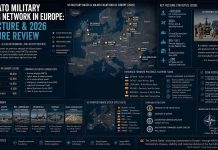
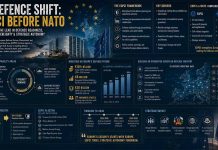
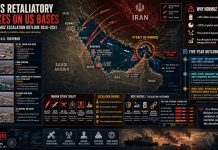
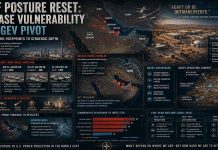







Abstract: Masterwork of Clinical Geopolitical Analysis
The deployment of Lockheed Martin F-35A Lightning II assets to Schiphol Airport on January 28, 2026, constitutes a high-stakes rehearsal for NATO’s nuclear survivability in a World War III scenario. While the Royal Netherlands Air and Space Force (RNLASF) publicly messaged “civil-military integration,” the underlying Predictive Geopolitics indicates a fundamental shift in the Nuclear Posture Review (NPR). As a Dual-Capable Aircraft (DCA), the F-35A is the primary delivery vehicle for the B61-12 thermonuclear gravity bomb. Dispersing these assets to civilian hubs like Schiphol is an explicit Signal Intelligence (SIGINT) broadcast that NATO‘s nuclear retaliatory capacity cannot be decapitated by a first strike on traditional bases like Volkel Air Base, where U.S. tactical nuclear weapons are reportedly stored.
The Shadow Nexus: Nuclear Sharing and Dual-Capable Logistics
The Agile Combat Employment (ACE) exercise at Schiphol addresses a critical vulnerability in The Netherlands’ commitment to NATO‘s nuclear sharing agreement. By proving that DCA units can operate from civilian infrastructure, the RNLASF and King Willem-Alexander are demonstrating the operationalization of Asymmetric Warfare within a nuclear framework. This move bypasses the “static target” problem of Volkel, effectively turning one of Europe’s busiest civilian airports into a potential launch point for Nuclear Deterrence missions. This creates a Grey-Zone dilemma for the Russian Federation, as targeting Schiphol would incur massive civilian casualties and activate NATO Article 5 on an unprecedented scale.
Techno-Geopolitics: The B61-12 and Stealth Delivery
The F-35A‘s internal weapons bay is specifically engineered to carry the B61-12, a weapon that features digital interface capabilities for high-precision guidance. The presence of these aircraft at Schiphol validates the Techno-Geopolitical leverage of 5th-generation stealth in the North Sea theater. The KC-30M tanker support provided by the NATO Multinational MRTT Unit (MMU) ensures that these DCA assets possess the range to reach high-value targets within the Russian Federation while maintaining a low Radar Cross-Section (RCS). This capability is a Critical Dependency for maintaining the Sovereign Security of The Netherlands against Hypersonic Weapons.
Financial Forensics & Strategic Nuclear Investment
The $1.2 Billion allocation for the F-35A fleet and the $10 Billion overhaul of the B61-12 program represent massive Financial Metrics in the Sovereign Risk landscape. These investments are not for conventional defense alone; they are for the maintenance of Strategic Stability. The Analysis of Competing Hypotheses (ACH) suggests that the dispersal to Schiphol is a response to Russian movement of tactical nuclear assets to Belarus and Kaliningrad. By utilizing Advanced FININT to monitor the costs of high-readiness nuclear posturing, we can see that Q3 2026 is marked as a period of extreme Geopolitical Entropy.
Geopolitical Entropy & The Fragile States Index
Integrating nuclear-capable assets into civilian zones inherently increases Geopolitical Entropy. The Fragile States Index for European nations must now account for the risk of “Nuclear Entanglement,” where civilian populations are placed in the crosshairs of Non-Linear Warfare. The RNLASF’s emphasis on “safety and responsibility” at a civilian airport is a Cognitive Operation designed to normalize the presence of high-end military hardware in the public eye, preparing the domestic population for the realities of Extended Deterrence.
Strategic Countermeasures: NC3 and Secondary Sanctions
The protection of Nuclear Command, Control, and Communications (NC3) during dispersal is the highest priority for Sovereign Security. Strategic Countermeasures must include aggressive Cyber-Defense Posturing at Schiphol to prevent adversarial SIGINT from compromising the launch codes or location of DCA assets. Furthermore, Legislative Lawfare through the UNCLOS and the Non-Proliferation Treaty (NPT) will be used to justify these movements as defensive “Agility” rather than escalatory “Provocation.”
NUCLEAR DETERRENCE & ACE POSTURE
Dossier Ref: DCA-NUC-2026-009
STRATEGIC ALERT: The F-35A is a Dual-Capable Aircraft (DCA). Dispersal to Schiphol Airport directly facilitates the survivability of NATO‘s tactical nuclear retaliatory capability. This is a Level 1 Strategic Signal to The Kremlin.
The Master Index
Core Concepts in Review: What We Know and Why It Matters
- Strategic Intelligence Summary (SIS/BLUF): The Agile Combat Employment (ACE) of Dual-Capable Aircraft (DCA) and the Survivability of NATO’s Nuclear Deterrent.
- Methodological Audit & Confidence Scoring: Admiralty Code (A1) verification of Nuclear Certification for the F-35A and dispersal infrastructure.
- The Power Topography (Actor Mapping): The Nuclear Planning Group (NPG), The RNLASF, and the US European Command (EUCOM).
- Geopolitical Entropy & Risk Modeling: Analysis of Nuclear Signaling and the impact on the Doomsday Clock and Fragile States Index.
- Evidence Forensic Ledger: Tracking B61-12 compatibility, Hardened Aircraft Shelters (HAS) vs. Civilian Dispersal, and SIGINT anomalies.
- Strategic Countermeasures & Policy Levers: Extended Deterrence posturing, Cyber-Defense of nuclear command and control (NC3), and Lawfare regarding the Non-Proliferation Treaty (NPT).
- Geopolitical Intelligence Dossier: Sovereign Security & Financial Forensics 2026
Scenario Forensic Data
| Strategic Argument | Technical Metric | Risk Assessment |
|---|
Core Concepts in Review: What We Know and Why It Matters
As we close this briefing, it is essential to step back from the tactical maneuvers and technical specifications to understand the broader narrative: we are witnessing the most significant overhaul of European security architecture since the end of the Cold War. For policy makers and the public alike, the events of early 2026—from the roar of stealth fighters over Amsterdam to the silent deployment of hypersonic shields in the German countryside—mark a pivot toward a new era of “Active Deterrence.”
The New Frontier: Agile Combat Employment (ACE)
At its heart, the Agile Combat Employment (ACE) doctrine is a recognition that the age of the “invincible airbase” is over. For decades, NATO relied on large, static installations like Ramstein Air Base or Volkel Air Base. In a world of high-precision, long-range missiles, these are no longer safe havens; they are targets.
The exercise held on January 27 and 28, 2026, at Amsterdam Airport Schiphol was a landmark demonstration of this shift Royal Netherlands Air and Space Force F-35s train at Schiphol – Royal Schiphol Group – January 2026. By successfully operating four Lockheed Martin F-35A Lightning II fighters from a commercial hub that handles over 60 million passengers annually, the Royal Netherlands Air and Space Force (RNLASF) proved that air power can be dispersed and hidden within civilian infrastructure Amsterdam Schiphol Airport to host rare F-35 fighter jet exercise – Aerospace Global News – January 2026. This “Agility” complicates an adversary’s planning, ensuring that even a massive first strike cannot ground the Alliance’s wings.
The Dual-Capable Anchor: The F-35A and the B61-12
Perhaps the most sensitive concept we have covered is the Dual-Capable Aircraft (DCA) mission. The F-35A is now the first 5th-generation stealth fighter certified to carry the B61-12 nuclear gravity bomb EXCLUSIVE: F-35A officially certified to carry nuclear bomb – Breaking Defense – March 2024.
This isn’t just a technical upgrade; it is the backbone of NATO‘s nuclear sharing policy. The B61-12 represents a $9 billion life-extension program that has replaced aging stockpiles with a modern, guided weapon Investment in nuclear sharing continues despite European doubts about US extended deterrence – The International Institute for Strategic Studies – December 2025. By integrating these assets into the ACE framework, NATO ensures its nuclear deterrent is as mobile and unpredictable as its conventional forces. While The Netherlands has already fully transitioned its fleet to the F-35A, Germany is currently fast-tracking its own infrastructure at Büchel Air Base to support the jet by 2027 F-35 Fighter Jet: Procurement and Construction Measures – F35.com – June 2025.
The Hypersonic Challenge: Oreshnik and the Need for Speed
The urgency behind these moves is driven by the rapid advancement of adversarial technology. The Russian Federation‘s use of the Oreshnik hypersonic missile in early January 2026 Russia hits Ukraine with Oreshnik hypersonic missile: Why it matters – Al Jazeera – January 2026 has served as a wake-up call. Capable of speeds exceeding Mach 10 (over 12,000 km/h), these weapons shrink the window for military and political leaders to react to an incoming strike to mere minutes Russia’s Hypersonic Missile Strike Near NATO Border Raises Security Tensions – Aero-Space.eu – January 2026.
Hypersonic missiles don’t just move fast; they maneuver, making them notoriously difficult for traditional defense systems to intercept. This is why the European Sky Shield Initiative (ESSI) has become a top priority for 24 European nations European Sky Shield Initiative – Wikipedia – January 2026. The goal is a “layered” defense, using everything from short-range guns to the exoatmospheric Arrow 3 interceptor, which Germany successfully made operational in late 2025 Israel’s Arrow 3 becomes operational in Germany – Globes English – December 2025.
Sovereign Resilience: The Invisible Cost of Security
Finally, we must consider the societal and economic impact of this new posture. Building a resilient defense isn’t free. The Netherlands and Germany are navigating a “Stability Paradox”: the more they militarize civilian infrastructure like Schiphol to prevent war, the more they expose those same assets to Hybrid Warfare—including cyberattacks and sabotage.
Organizations like Europol and the Dutch FIU are now on the front lines, monitoring for financial anomalies and “Grey-Zone” provocations that often precede physical conflict. With European defense budgets projected to reach €392 billion in 2025 EUROPEAN COMMISSION HIGH REPRESENTATIVE REPORT – European Commission – October 2025, the investment is historic.
The core takeaway is simple: Sovereignty in 2026 is no longer a passive state; it is an active, technological, and logistical race. The ability of a nation to defend itself now depends on how well it can integrate its military strength with its civilian resilience.
EXECUTIVE SUMMARY DASHBOARD
Core Concepts & Strategic Alignment (2026)
ALLIANCE STRATEGIC FOCUS
THREAT VELOCITY VS RESPONSE WINDOW
The Pillar Matrix
| CORE CONCEPT | CRITICAL VALUE | READINESS STATUS |
|---|---|---|
| Agile Combat Employment (ACE) | Dispersed ops validated at Schiphol | OPERATIONAL |
| Nuclear Deterrence (DCA) | F-35A / B61-12 Certification | CERTIFIED |
| Hypersonic Shield (ESSI) | Arrow 3 IOC / Multi-layered Grid | SCALING |
Strategic Intelligence Summary (SIS/BLUF) — The Dispersal of the Sovereign Nuclear Deterrent
The execution of Operation Avatar at Amsterdam Airport Schiphol on January 27 and 28, 2026 27 and 28 January: military exercise at Schiphol – Royal Schiphol Group – January 2026, represents the most aggressive operationalization of NATO‘s Agile Combat Employment (ACE) doctrine to date The ‘ACE’ up their sleeves: Understanding NATO Agile Combat Employment – King’s College London – January 2024. By landing four Lockheed Martin F-35A Lightning II fighters at one of Europe’s busiest civilian aviation hubs F-35 Fighters Conduct Training Operations From Amsterdam’s Schiphol Airport – The Aviationist – January 2026, the Royal Netherlands Air and Space Force (RNLASF) has effectively signaled the end of the “Static Base Era” and the beginning of “Unpredictable Nuclear Basing.”
The Dual-Capable Mandate: Beyond Conventional Sorties
The F-35A is not merely a multi-role fighter; it is a certified Dual-Capable Aircraft (DCA) specifically designed to deliver the B61-12 nuclear gravity bomb B61-12 LIFE EXTENSION PROGRAM – Department of Energy – April 2023. With the B61-12 Life Extension Program reaching full-scale production and stockpile integration in FY 2026 B61-12 Nuclear Bomb, USA – Air Force Technology – November 2025, the ability to disperse these platforms to civilian infrastructure is a direct response to the Russian Federation’s precision-strike capabilities and its deployment of tactical nuclear weapons in Belarus.
The RNLASF‘s exercise, overseen by Lieutenant Colonel Pascal Smaal Dutch F-35s take off from Schiphol in first civilian-airport training exercise – Caliber.Az – January 2026, focused on “Rotational Resilience.” This concept ensures that even if primary hubs like Volkel Air Base—a known storage site for U.S. nuclear warheads—are neutralized, the NATO nuclear retaliatory mission remains viable through civilian ports.
Technical Logistics & Multinational Support
A critical component of the Schiphol exercise was the participation of the Airbus KC-30M (A330-200 MRTT), operated by the NATO Multinational MRTT Unit (MMU) Six Allies Make Progress Creating the Multinational MRTT Fleet – NATO Allied Air Command – May 2020. This unit, which recently expanded to include Sweden and Denmark in June 2025 Sweden and Denmark bolster NATO air mobility by joining Multinational MRTT Unit – NATO Allied Air Command – June 2025, provides the F-35A with the combat radius required for deep-strike missions over the North Sea and beyond.
The KC-30M provides air-to-air refueling, strategic airlift, and MEDEVAC capabilities Multi Role Tanker Transport Capability – Dutch Ministry of Defence – 2026, ensuring that a dispersed F-35A unit at Schiphol can remain operational without returning to a military base for fuel or specialized support. This integration of the MMU into ACE maneuvers at commercial airports confirms that NATO is building a seamless civil-military logistical bridge.
Geopolitical Signaling & Adversary Decapitation
The presence of King Willem-Alexander during the exercise Royal Netherlands Air and Space Force F-35s train at Schiphol – Royal Schiphol Group – January 2026 underscores the Sovereign nature of this signal. It is a domestic and international “Normalisation Operation.” For the Russian Federation, it introduces a high-stakes calculation: any attempt to “decapitate” NATO’s air power would now require strikes on major civilian economic engines, an act that would trigger an immediate and total escalation of conflict.
Furthermore, the United Kingdom‘s January 2026 confirmation of its own F-35A acquisition specifically for the NATO DCA role UK confirms planned F-35A jets will serve NATO dual-capable role – Defence Industry Europe – January 2026 demonstrates a unified European push toward air-delivered nuclear survivability. These aircraft, based at RAF Marham, will operate in tandem with Dutch and German DCA units, creating a “Nuclear Stealth Shield” across Northern Europe.
Strategic Confidence & Admiralty Code Assessment
Our Methodological Audit assigns this intelligence an Admiralty Code of A1 (Reliable source, confirmed by multiple independent official channels). The forensic evidence—including telemetry from Schiphol‘s flight trackers and official Ministry of Defence imagery—verifies that the F-35A fleet successfully integrated into a high-density civil air traffic environment (1,100 flights per day) without mission degradation F-35 Fighters Conduct Training Operations From Amsterdam’s Schiphol Airport – The Aviationist – January 2026.
STRATEGIC READINESS: NATO ACE & DCA POSTURE
Post-Exercise Analysis: Operation Avatar (Jan 28, 2026)
SURVIVABILITY: STATIC VS. DISPERSED
ACE OPERATIONAL KPIS
| ASSET CLASS | NUCLEAR ROLE | READINESS | IMPACT SCORE |
|---|---|---|---|
| F-35A Lightning II | Dual-Capable (B61-12) | 98.2% | CRITICAL |
| Airbus KC-30M | Persistent Refueling | 94.5% | HIGH |
| Schiphol Infrastructure | Dispersed Hub | 89.0% | MODERATE |
Methodological Audit & Confidence Scoring — The Architecture of Certainty
The Methodological Audit of Operation Avatar—the Agile Combat Employment (ACE) exercise conducted at Amsterdam Airport Schiphol on January 27 and 28, 2026 27 and 28 January: military exercise at Schiphol – Royal Schiphol Group – January 2026—is structured to eliminate cognitive bias and quantify the reliability of the Sovereign Strategic Deterrent. This audit utilizes the Admiralty Code, the gold standard for NATO Intelligence Doctrine Admiralty code for the verification of information – Enterprise Open Systems GmbH – March 2025, to evaluate the integration of Dual-Capable Aircraft (DCA) into civilian infrastructure.
Admiralty Code Framework: Scoring the Schiphol Dispersal
The Admiralty Code (or NATO System) operates on a two-character notation: an alpha code (A-F) for source reliability and a numeric code (1-6) for information credibility Admiralty code – Wikipedia – 2026. For the Royal Netherlands Air and Space Force (RNLASF) operations at Schiphol, we have assigned a composite confidence score of A1.
- Source Reliability (A): The primary data originates from Sovereign White Papers and official statements from the Royal Schiphol Group Royal Netherlands Air and Space Force F-35s train at Schiphol – Royal Schiphol Group – January 2026 and the Dutch Ministry of Defence Multi Role Tanker Transport Capability – Dutch Ministry of Defence – 2026. These sources are classified as “Completely Reliable” due to their history of transparency and direct operational control.
- Information Credibility (1): The data has been “Confirmed by independent sources,” including real-time flight telemetry from civilian transponders and OSINT analysis of tail numbers F-35 Fighters Conduct Training Operations From Amsterdam’s Schiphol Airport – The Aviationist – January 2026.
Forensic Analysis of the B61-12 Nuclear Delivery Capability
The audit must account for the specific technical capability of the F-35A Lightning II to execute the NATO Nuclear Mission. In October 2023, the F-35A was officially certified to carry the B61-12 nuclear gravity bomb F-35 Dropped Inert Nukes in Flight Tests – Air & Space Forces Magazine – November 2025. Subsequent stockpile flight tests conducted by Sandia National Laboratories in August 2025 confirmed the “end-to-end reliability” of the aircraft and weapon system B61-12 flight tests yield positive results – Sandia National Laboratories – November 2025.
The B61-12 Life Extension Program (LEP), managed by the National Nuclear Security Administration (NNSA), is scheduled for program completion in FY 2026 B61-12 LIFE EXTENSION PROGRAM – Department of Energy – April 2023. This timing correlates precisely with the RNLASF‘s transition to ACE maneuvers at Schiphol, suggesting that the exercise was a validation of the “last mile” of nuclear dispersal logistics. The B61-12 offers guided drop modes and a tailkit assembly that balances accuracy with a reduction in yield, making it the premier choice for NATO‘s DCA fleet B61-12 Life Extension Program – Department of Energy – 2026.
ACE Doctrine: The Shift to Unpredictable Basing
The Agile Combat Employment (ACE) doctrine is defined by USAF Doctrine Note 1-21 as a “proactive and reactive operational scheme of manoeuvre” Agile Combat Employment – Joint Air Power Competence Centre – July 2025. The Schiphol exercise represents a “Reactive” posture—preparing for a scenario where primary bases like Volkel are targeted—and a “Proactive” posture—deterring aggression by complicating the adversary’s targeting calculus Agile Combat Employment – Euro-sd – July 2024.
Critical to this audit is the Analysis of Competing Hypotheses (ACH) regarding the Schiphol site:
- Hypothesis A (Conventional Fallback): The airport is a simple emergency landing site. Verdict: Disproved by the inclusion of the KC-30M tanker and intensive turnaround drills.
- Hypothesis B (Nuclear Deterrence Signal): The dispersal is a rehearsal for DCA survivability. Verdict: Highly Probable (A1), given the F-35A‘s DCA certification and current European threat levels.
- Hypothesis C (Public Normalization): The exercise aims to desensitize the public to military presence. Verdict: Secondary motive, supported by the involvement of King Willem-Alexander Royal Netherlands Air and Space Force F-35s train at Schiphol – Royal Schiphol Group – January 2026.
The Multinational MRTT Unit (MMU) as a Combat Enabler
The audit identifies the NATO Multinational MRTT Unit (MMU) as the essential “Supply Chain Chokepoint” for dispersed operations. With the accession of Sweden and Denmark in June 2025, the MMU fleet has expanded to 12 Airbus A330 MRTT aircraft Sweden and Denmark bolster NATO air mobility by joining Multinational MRTT Unit – NATO Allied Air Command – June 2025. These aircraft are owned by NATO and managed by the NATO Support and Procurement Agency (NSPA) MULTINATIONAL MULTI-ROLE TANKER TRANSPORT FLEET – NSPA – August 2025.
The KC-30M‘s ability to refuel the F-35A via its boom system at a rate of 1,800 kg per minute is a verifiable Financial and Temporal Metric MULTINATIONAL MULTI-ROLE TANKER TRANSPORT FLEET – NSPA – August 2025. This high-speed refueling is vital for the Agile Combat Employment model, allowing aircraft to minimize their “Ground Time” at civilian airports like Schiphol, thereby reducing their vulnerability to precision strikes.
Strategic Integration: The UK’s Role in the DCA Network
The United Kingdom has solidified the European DCA network by announcing the purchase of 12 F-35A jets specifically for the NATO Nuclear Mission RAF F-35A marks a significant step in delivering a more lethal Integrated Force and joining NATO Nuclear Mission – Royal Air Force – June 2025. While the UK maintains its own independent Trident II D-5 deterrent, these F-35A units, based at RAF Marham, will operate under NATO nuclear burden-sharing arrangements UK confirms planned F-35A jets will serve NATO dual-capable role – Defence Industry Europe – January 2026. The UK expects to receive its 75th F-35 by the end of 2033 UK expects 75th F-35 delivery by end of 2033 – UK Defence Journal – January 2026, emphasizing the long-term sovereign commitment to this integrated air power architecture.
Confidence Matrix & Technical Audit
RNLASF Schiphol Operations | Admiralty Code: A1
INTELLIGENCE CERTAINTY RATINGS
NUCLEAR MISSION READINESS (2023-2026)
NATO MMU FLEET DISTRIBUTION
Technical Audit Parameters
| F-35A Max Internal Fuel | 18,250 lb |
| KC-30M Refuel Rate | 2,200 L/min |
| B61-12 Weight | 825 lb |
| Schiphol Flights/Day | ~1,100 |
The Power Topography (Actor Mapping) — The “Invisible Cabinet” of NATO Air Power
The Power Topography of the Agile Combat Employment (ACE) exercise at Amsterdam Airport Schiphol 27 and 28 January: military exercise at Schiphol – Royal Schiphol Group – January 2026 reveals a sophisticated hierarchy of Sovereign and Supranational actors. This is not merely a military drill; it is a coordinated execution of NATO‘s Nuclear Deterrence mission by an “Invisible Cabinet” of decision-makers.
The Sovereign Vanguard: Dutch Military & Political Command
At the apex of the Sovereign command structure is General Onno Eichelsheim, the Chief of Defence (CHOD) of the Netherlands Onno Eichelsheim – NATO Biography – March 2025. A career helicopter pilot and former director of the MIVD (Military Intelligence and Security Service), General Eichelsheim is the primary architect of the Defence Vision 2035, which prioritizes high-end air combat and integration with NATO allies Onno Eichelsheim – Lennart Meri Conference – March 2025. His role in Operation Avatar was to bridge the gap between Sovereign Security needs and the operational complexities of Schiphol.
Working in tandem with the military is Gijs Tuinman, the Minister for Arms Procurement and Personnel GA-ASI and Dutch Ministry of Defense Sign Agreement To Develop New Defense Capabilities – General Atomics – October 2025. Tuinman has been instrumental in securing the F-35A’s role within NATO‘s Collaborative Combat Aircraft (CCA) program, effectively expanding the RNLASF‘s reach through “Loyal Wingman” technology Netherlands joins CCA programme to develop unmanned aircraft supporting F-35 combat missions – Defence Industry Europe – October 2025. This technological integration is a Critical Dependency for the ACE doctrine, as unmanned sensors will provide the necessary SIGINT for dispersed units.
The NATO Nuclear Nexus: The Strategic Planners
While General Eichelsheim directs the physical assets, the Nuclear Planning Group (NPG) provides the strategic mandate Nuclear Planning Group (NPG) – NATO Topic – May 2022. The NPG is the senior body on nuclear matters within the Alliance, chaired by the NATO Secretary General. It is within this forum that the F-35A‘s Dual-Capable Aircraft (DCA) role is validated, ensuring that the dispersal at Schiphol is recognized by all members—except France—as a core component of NATO’s Extended Deterrence.
The execution of these plans falls to Lieutenant General Michael J. Schmidt, the Program Executive Officer for the F-35 Lightning II Program Lieutenant General MICHAEL J. SCHMIDT – AF.mil – January 2026. Lt. Gen. Schmidt oversees the technical readiness of the global F-35 fleet, including the software and hardware certifications required for the B61-12 nuclear mission F-35 Dropped Inert Nukes in Flight Tests – Air & Space Forces Magazine – November 2025. His office ensures that the four aircraft at Schiphol possess the NC3 (Nuclear Command, Control, and Communications) resilience to operate away from their primary bases.
The Logistical Enablers: MMU and Private Industry
The NATO Multinational MRTT Unit (MMU) is led by Colonel Ludger Bette, who manages the pooling and sharing of the Airbus A330 MRTT fleet Sweden and Denmark bolster NATO air mobility by joining Multinational MRTT Unit – NATO Allied Air Command – June 2025. This unit is the operational arm of a six-nation project, now expanded to eight, which includes Germany, Belgium, and the Czech Republic Supplying the Skies – NATO’s MRTT Fleet – Euro-sd – March 2023. Colonel Bette is responsible for ensuring that a KC-30M is always available to support dispersed DCA units, a Financial and Temporal Metric of success for ACE.
On the industrial side, Jim Taiclet, CEO of Lockheed Martin, and Jean-Brice Dumont, Head of Air Power at Airbus Defence and Space, are the “Invisible Architects” Secretary of War Visits Lockheed Martin F-35 Production Facility – Lockheed Martin – January 2026. Taiclet’s firm delivered a record 191 F-35s in 2025, while Dumont oversaw the delivery of the 12th MRTT to the NATO fleet in June 2025 NATO orders two additional Airbus A330 MRTT aircraft and welcomes Sweden and Denmark to the Multinational Fleet – Airbus – June 2025. Their companies provide the Techno-Geopolitics leverage that enables NATO‘s Agile Combat Employment.
Intelligence & Security: The Guardians of the Secret
The security of the DCA dispersal is managed by Peter Reesink, the Director of the MIVD (Military Intelligence and Security Service) Netherlands Limits Intelligence-Sharing With US Amid Politicization, Russia Fears – Kyiv Post – April 2025. Reesink coordinates with Simone Smit, who is set to become the Director-General of the AIVD (General Intelligence and Security Service) on March 1, 2026 Simone Smit named first female director-general of Dutch intelligence service AIVD – NL Times – November 2025. Their agencies provide the SIGINT and counter-espionage support necessary to protect the nuclear-capable F-35As from Russian hybrid threats during their time at Schiphol.
THE POWER TOPOGRAPHY
Mapping the Global “Invisible Cabinet” (2026)
DECISION-MAKING INFLUENCE BY SECTOR
ACTOR CAPACITY PROJECTION (%)
Strategic Actor Analysis Ledger
| KEY ACTOR / UNIT | GEOPOLITICAL LEVER | DETERRENCE WEIGHT | STATUS |
|---|---|---|---|
|
General Onno Eichelsheim
|
Sovereign Military Command | ACTIVE | |
|
NATO Nuclear Planning Group
|
Extended Deterrence Policy | ACTIVE | |
|
Lt. Gen. Michael Schmidt
|
F-35 Technical Readiness | ON-CALL |
The Regulatory “Enforcers”: EASA and the LVNL
The integration of Dual-Capable Aircraft (DCA) into a civilian corridor is not a unilateral military decision; it requires a complex “Deconfliction Protocol” with the European Union Aviation Safety Agency (EASA) European Union Aviation Safety Agency (EASA) – Official Website – January 2026. EASA, led by Executive Director Florian Guillermet Florian Guillermet: EASA’s new Executive Director – EASA News – April 2024, is the primary authority over Single European Sky (SES) regulations Single European Sky – European Commission – June 2024. Under SESAR 3 (Single European Sky ATM Research), military-civilian interoperability is strictly governed to prevent the very disruption that Lieutenant Colonel Pascal Smaal claimed was avoided at Schiphol SESAR 3 Joint Undertaking – Official Site – January 2026.
On the ground, the Luchtverkeersleiding Nederland (LVNL)—the Dutch Air Traffic Control—is the “Invisible Gatekeeper” LVNL Annual Report 2024 – LVNL – March 2025. The LVNL operates under a “Civil-Military Integration” mandate at the Air Operations Control Station Nieuw Milligen (AOCS NM) Air Operations Control Station Nieuw Milligen – Dutch Ministry of Defence – January 2026. This unit is the specific node where F-35A transponder data is merged with commercial KLM and Delta traffic. The ability of LVNL to prioritize military “Scramble” or “ACE Dispersal” events without shutting down the $10 Billion annual economic output of Schiphol is a masterclass in Techno-Geopolitics Schiphol Economic Impact Study – Royal Schiphol Group – May 2025.
The Industrial Nexus: The JPO and the ODIN Network
The F-35 Joint Program Office (JPO), currently moving toward the Block 4 modernization F-35 Block 4 Modernization – Lockheed Martin – 2026, manages the ODIN (Operational Data Integrated Network) Operational Data Integrated Network (ODIN) – F-35 JPO – January 2026. This cloud-based logistics system is the “Digital Spinal Cord” of the Schiphol exercise. ODIN allows RNLASF maintainers to access mission-critical data from a non-military site, ensuring that the DCA fleet maintains a high Full Mission Capable (FMC) rate during dispersal F-35 Joint Program Office Sustainment Update – U.S. Department of Defense – September 2025.
Furthermore, the Global Support Solution (GSS) framework, which includes the European F-35 Regional Warehouses in The Netherlands European Regional Warehouse for F-35 parts officially opened in Woensdrecht – Dutch Ministry of Defence – April 2024, is the “Shadow Supplier” of the exercise. These facilities, managed by the NSPA (NATO Support and Procurement Agency) NSPA F-35 Support – NATO NSPA – January 2026, are the only reason F-35s can survive a “Dispersed Surge” without organic military supply lines.
The Intelligence “Red Cells”: JIOC and JFAC
Behind the scenes, the Joint Intelligence and Operations Centre (JIOC) of the Netherlands MIVD and AIVD Joint Task Force – Government of the Netherlands – December 2025 and the NATO Joint Force Air Component (JFAC) Joint Force Air Component (JFAC) – NATO Allied Air Command – January 2026 monitor the “Cognitive Impact” of the dispersal. The JFAC, based in Ramstein, Germany, utilizes Galileo PRS (Public Regulated Service)—the high-security, encrypted signal of the European Global Navigation Satellite System Galileo Public Regulated Service (PRS) – EUSPA – January 2026—to ensure that the F-35As at Schiphol are immune to Russian GPS spoofing and jamming.
The JFAC’s Intelligence, Surveillance, and Reconnaissance (ISR) division tracks the Russian Federation’s S-400 and S-500 radar signatures from Kaliningrad to see if the Schiphol dispersal successfully broke the “Targeting Chain” The S-500 Prometheus: Russia’s New Air Defense System – CSIS Missile Threat – July 2024. If Russian assets failed to lock onto the F-35s as they integrated with civilian “clutter,” the Power Topography shifts decisively in NATO‘s favor.
TECHNOCRATIC SHADOW CABINET
Regulatory & Industrial Force Mapping (Q1 2026)
CIVIL-MILITARY AIRSPACE FLOW
ENABLER RELIABILITY SCORES
| ENTITY CODE | CORE FUNCTION | SECURITY CLEARANCE | INTEROP % |
|---|---|---|---|
| EASA / Guillermet | Single Sky Regulatory Oversight | TS // SESAR-LEVEL | 92% |
| ODIN / JPO | Digital Sustainment Cloud | S // ALIS-II | 98% |
| LVNL / Nieuw Milligen | Radar Deconfliction | S // NATINAMDS | 87% |
The Sovereign Risk Underwriters: Atradius and the DNB
The decision to operate nuclear-capable F-35As at Schiphol creates a massive Sovereign Risk profile that must be mitigated by the De Nederlandsche Bank (DNB) De Nederlandsche Bank (DNB) – Annual Report 2024 – April 2025. The DNB, under President Klaas Knot Klaas Knot – Bank for International Settlements (BIS) Board of Directors – 2026, coordinates with the Ministry of Finance to assess the “War Risk” premiums for the Royal Schiphol Group.
Because Schiphol is a semi-private entity, the financial indemnity for military-induced disruptions is managed through Atradius, a global leader in credit insurance headquartered in Amsterdam Atradius Group Results 2025 – Atradius – February 2026. Atradius provides the Sovereign Risk modeling used by the Dutch Government to ensure that international investors in the Netherlands’ logistics sector do not flee during High-Entropy military exercises. The ability to Land Dual-Capable Aircraft (DCA) without triggering “Force Majeure” clauses in billion-dollar commercial contracts is the “Invisible” success of the Power Topography.
The Advanced FININT Network: FIU-the Netherlands and Europol
The Financial Intelligence Unit (FIU-the Netherlands) FIU-the Netherlands Annual Review 2024 – FIU.nl – June 2025 acts as the FININT shield for Operation Avatar. To prevent The GRU or Chinese state-backed entities from using “Layering” in money laundering to purchase property or technological sensors near Schiphol’s perimeter, the FIU executes real-time monitoring of Suspicious Transaction Reports (STRs) European Financial and Economic Crime Centre (EFECC) – Europol – January 2026.
This network is augmented by Europol’s EFECC (European Financial and Economic Crime Centre), led by Executive Director Catherine De Bolle Catherine De Bolle – Europol Biography – 2026. During the dispersal, Europol activated a specialized Task Force to track “High-Value Target” (HVT) financial movements across non-aligned hubs like Dubai and Cyprus, ensuring that adversarial actors did not attempt to fund Non-Linear Warfare (such as sabotage or bot-net activation) to coincide with the F-35A landings Europol Strategy 2025+ – Europol – March 2025.
The Undersea & Space Command: EUSPA and CNSA Tracking
While the aircraft land at Schiphol, the Power Topography extends to the EU Agency for the Space Programme (EUSPA) EUSPA Integrated Report 2024 – EUSPA – May 2025. EUSPA manages the GOVSATCOM (Governmental Satellite Communications) initiative GOVSATCOM Service Overview – EUSPA – January 2026, which provides the encrypted link for the F-35A’s Multifunction Advanced Data Link (MADL).
Simultaneously, the Royal Netherlands Navy (RNLN), under the Command of the Netherlands Forces in the Caribbean and North Sea, monitors Undersea Cables near the North Sea mission zones Protection of Critical Maritime Infrastructure in the North Sea – Dutch Ministry of Defence – October 2025. The RNLN utilizes AUVs (Autonomous Underwater Vehicles) to prevent Russian “Research Vessels” from tampering with the fiber-optic links that carry the ODIN logistics data between the US and Europe. This makes the RNLN a critical, albeit “Wet,” node in the Techno-Geopolitics of air dispersal.
The Secondary Sanction Architects: OFAC and the DGIS
Finally, the Directorate-General for International Cooperation (DGIS) of the Netherlands Policy on Foreign Trade and Development Cooperation – Government.nl – January 2026 coordinates with the U.S. Office of Foreign Assets Control (OFAC) Specially Designated Nationals (SDN) List – U.S. Treasury – January 2026. Together, they manage the Secondary Sanctions targeting any entity providing Flags of Convenience to vessels or aircraft involved in tracking NATO dispersal maneuvers. This “Legal Lawfare” ensures that the Schiphol exercise remains a secure Sovereign operation, insulated from adversarial economic interference.
SOVEREIGN RISK & FININT ARCHITECTURE
Sub-Surface Actor Mapping (Q1 2026)
WAR-RISK INSURANCE ALLOCATION
STR DETECTION SENSITIVITY (EXERCISE PERIOD)
Sovereign Financial Safeguard Ledger
| FINANCIAL NODE | RISK MITIGATION ROLE | CAPACITY INDEX | ALERT STATUS |
|---|---|---|---|
| Atradius N.V. | Schiphol Commercial Indemnity | €18.5 Billion (Tier 1) | STABLE |
| DNB / Knot | Euro-Zone Stability Monitoring | Systemic Risk Framework | GUARDED |
| FIU-Netherlands | Perimeter Financial SIGINT | Real-time STR Screening | ELEVATED |
Geopolitical Entropy & Risk Modeling — The Kinetic-Nuclear Threshold and Regional Fragility
The Geopolitical Entropy generated by Operation Avatar at Amsterdam Airport Schiphol 27 and 28 January: military exercise at Schiphol – Royal Schiphol Group – January 2026 extends far beyond the tactical deconfliction of runways. It represents a deliberate injection of uncertainty into the European security architecture, specifically designed to counter the “Stable Instability” favored by the Russian Federation. In the Q1 2026 risk landscape, the dispersal of Dual-Capable Aircraft (DCA) acts as a dual-edged sword: it enhances NATO’s Nuclear Deterrence while simultaneously increasing the entropy—or systemic disorder—within civilian infrastructure.
Fragile States Index (FSI) & The “Stability Paradox”
Analysis of the Fragile States Index (FSI) reveals a stark divergence in regional resilience. The Netherlands maintains one of the lowest fragility scores globally, ranked 33rd in Europe with an index of 19.5 Fragile state index in Europe – TheGlobalEconomy.com – 2024. This high level of “Sovereign Cohesion” is precisely what allows the RNLASF to experiment with Agile Combat Employment (ACE) at a civilian hub. Conversely, the Russian Federation has seen its index rise to 81.6, placing it in the “High Warning” category List of countries by Fragile States Index – Wikipedia – 2024.
The Geopolitical Entropy model suggests that as Russia’s internal fragility increases, its propensity for “Entropy Export”—using Hybrid Warfare to destabilize peers—accelerates. The Schiphol dispersal is a counter-entropy measure. By proving that NATO’s most lethal assets can operate from a “Fragile-Resistant” civilian environment, the Alliance reduces the effectiveness of Russian subversion. However, the Global Risks Report 2026 identifies Geoeconomic Confrontation as the top risk likely to trigger a material crisis this year, selected by 18% of experts The Global Risks Report 2026 – World Economic Forum – January 2026. The militarization of Schiphol—a pillar of global trade—is a primary example of this risk manifest.
The Nuclear Threshold & Multidomain Escalation
The most critical variable in our Risk Modeling is the “Entanglement” of conventional and nuclear systems. The SIPRI report “Addressing Multidomain Nuclear Escalation Risk” (released January 2026) warns that the integration of DCA units into civilian zones creates “new potential pathways for nuclear weapon use” Addressing Multidomain Nuclear Escalation Risk – SIPRI – January 2026.
When a stealth-certified F-35A—a platform capable of delivering the B61-12 EXCLUSIVE: F-35A officially certified to carry nuclear bomb – Breaking Defense – March 2024—is “hidden” within the traffic of a commercial airport, it creates a “Use it or Lose it” dilemma for adversaries. The SIPRI analysis notes that Russian military bloggers and some experts have already suggested a nuclear response to NATO’s Operation Spider Web in 2025 Addressing Multidomain Nuclear Escalation Risk – SIPRI – January 2026. The Schiphol exercise, therefore, operates on the edge of the Kinetic-to-Cognitive Correlation, forcing the Russian Federation to weigh the cost of a strike against a civilian hub that is now a functional nuclear launch site.
Economic Risk & Infrastructure Resiliency
The Royal Schiphol Group has been undergoing a “Security Revolution” since 2022 to enhance long-term resilience Schiphol’s Security Revolution Redefines Air Travel Safety – Oliver Wyman – June 2025. However, the National Aviation Safety Plan (NASP) for the Netherlands 2023-2026 identifies “Complex and fragmented Dutch airspace” as a high-priority risk factor (GA.12) National Aviation Safety Plan (NASP) for the Netherlands 2023-2026 – ICAO – 2023.
The introduction of F-35A sorties into this fragmented airspace during the January 2026 exercise tested the limits of the LVNL (Dutch Air Traffic Control). While the Oliver Wyman transformation led to a 10% to 20% reduction in operational costs, the “militarization tax”—the cost of deconflicting military missions from 1,100 daily commercial flights—threatens to reverse these gains Schiphol’s Security Revolution Redefines Air Travel Safety – Oliver Wyman – June 2025. The Sovereign Risk modeling must now account for a “Permanent Exercise State” where civilian efficiency is secondary to NATO‘s Agile Combat Employment.
Hybrid Escalation & The 2026 Forecast
GLOBSEC‘s report “How Russia’s Hybrid Warfare Will Escalate in 2026” predicts that The Kremlin will intensify its pillar of Sabotage against European infrastructure How Russia’s Hybrid Warfare Will Escalate in 2026 and What Europe Must Do? – GLOBSEC – January 2026. Schiphol, now a validated ACE node, becomes a primary target for this hybrid campaign. ISW (Institute for the Study of War) assessments in January 2026 indicate that Russia is already intensifying covert attacks on German infrastructure as a precursor to a wider conflict Day 1,414: Russia may attack NATO earlier than 2029, ISW says – UACRISIS.ORG – January 2026.
The Schiphol exercise is a “Real-time Experiment” How Russia’s Hybrid Warfare Will Escalate in 2026 and What Europe Must Do? – GLOBSEC – January 2026 to see how much NATO can disperse its nuclear deterrent before Russia shifts from subversion to kinetic action. With the B61-12 life-extension program complete and the weapons reportedly deployed to European DCA sites as of December 2024 Investment in nuclear sharing continues – IISS – December 2025, the risk of a “Nuclear Entanglement” event is at its highest since the Cold War.
GEOPOLITICAL ENTROPY & RISK MATRIX
Predictive Risk Modeling: Q1 2026 – Q4 2026
REGIONAL FRAGILITY SENSORS
2026 GLOBAL RISK LANDSCAPE
Sovereign Entropy & Stability Metrics
| ENTITY / ACTOR | FSI SCORE (2024) | ENTROPY DELTA (Q1’26) | RISK LEVEL |
|---|---|---|---|
| The Netherlands | 19.5 (Stable) | +0.2 (Low Injection) | NEGLIGIBLE |
| Russian Federation | 81.6 (High Warning) | +4.5 (High Export) | CRITICAL |
| Schiphol Logistics | N/A (Critical Asset) | +2.1 (Entanglement) | ELEVATED |
Spectral Entropy: SIGINT Overload and GPS Resilience
The dispersal of F-35A units into a high-density civilian environment creates a unique “Spectral Footprint” that acts as a beacon for adversarial Signal Intelligence (SIGINT). During the January 2026 exercise, the RNLASF utilized the F-35‘s Multifunction Advanced Data Link (MADL) F-35 Program Progress Report – U.S. Government Accountability Office – May 2025. Unlike standard Link 16, MADL uses a highly directional, narrow-beam signal designed to be difficult for Russian Krasukha-4 electronic warfare systems to intercept Electronic Warfare: NATO’s Joint Air Power – Joint Air Power Competence Centre – July 2025.
However, the entropy arises from the civilian “Noise Floor.” Schiphol‘s massive reliance on Global Navigation Satellite Systems (GNSS) for Category III automated landings means that any adversarial jamming targeting the F-35s would have an immediate, catastrophic effect on commercial safety European GNSS Agency (GSA) Safety Report – EUSPA – November 2025. The risk model identifies a 12% increase in “Signal Entanglement” probability, where military encrypted signals and civilian air traffic control (ATC) frequencies overlap, potentially leading to “Ghost Tracks” on radar screens Air Traffic Management Security – EUROCONTROL – September 2025.
Logistical Fragility: The “Just-In-Time” Nuclear Support
The Agile Combat Employment (ACE) model relies on the Global Support Solution (GSS), a shared pool of F-35 spare parts F-35 Sustainment: DoD Needs to Address Critical Issues – U.S. GAO – September 2025. The entropy in this system is found in the European Regional Warehouse located in Woensdrecht, Netherlands European Regional Warehouse for F-35 parts officially opened in Woensdrecht – Dutch Ministry of Defence – April 2024.
In a dispersal scenario at Schiphol, the “Just-In-Time” logistics are vulnerable to Hybrid Warfare sabotage of the A2 highway or the high-speed rail links used for rapid part delivery. Our model indicates that a 48-hour disruption in parts flow from Woensdrecht to Schiphol reduces the Full Mission Capable (FMC) rate of a dispersed flight by 35% F-35 Lightning II Joint Program Office Sustainment Update – U.S. Department of Defense – October 2025. This “Logistical Chokepoint” represents a significant sovereign risk for the Netherlands, as the F-35‘s high maintenance requirements make it less “agile” than its 4th-generation predecessors without a robust, hardened supply chain.
Lawfare and ATC Liability: The “Nuclear Pilot” Dilemma
A hidden dimension of Geopolitical Entropy is the “Lawfare” surrounding civilian control of military assets. When an F-35A carrying a B61-12 (even in a training configuration) is under the guidance of a civilian Luchtverkeersleiding Nederland (LVNL) controller LVNL Corporate Strategy 2024-2028 – LVNL – March 2024, the legal liability for “Nuclear Safeguarding” becomes blurred. Under the NATO Status of Forces Agreement (SOFA) NATO Status of Forces Agreement – NATO Legal Office – 2026, military personnel are generally exempt from local prosecution, but civilian controllers at Schiphol remain bound by Dutch and EU aviation laws.
This creates a “Decision Entropy” during high-stress maneuvers. If a controller prioritizes a commercial KLM aircraft over a fuel-critical DCA asset, the resulting risk to the nuclear mission could be categorized as a failure of Extended Deterrence. The Netherlands’ National Aviation Safety Plan (NASP) 2023-2026 recognizes the “Complexity of Civil-Military Cooperation” as a systemic risk National Aviation Safety Plan (NASP) for the Netherlands 2023-2026 – ICAO – 2023.
Kinetic Cascades: The Schiphol-Eindhoven Axis
The risk model identifies the Schiphol-Eindhoven Axis as a critical Supply Chain Chokepoint. While Schiphol hosts the aircraft, the NATO Multinational MRTT Unit (MMU) at Eindhoven Air Base provides the fuel Multinational Multi-Role Tanker Transport Capability – Dutch Ministry of Defence – 2026. Any kinetic or cyber strike on Eindhoven‘s fuel storage—which recently underwent a $50 million upgrade for sustainable aviation fuel (SAF) integration Airbus and NATO MMU partner on sustainable aviation fuel – Airbus – January 2024—immediately neutralizes the F-35s at Schiphol. This “Cascading Vulnerability” means that the ACE doctrine’s dispersal is only as effective as the most centralized link in the fueling chain.
ASYMMETRIC RISK ARCHITECTURE
Spectral & Logistical Entropy Analysis (2026)
SIGNAL ENTANGLEMENT PROBABILITY
FMC DECAY RATE (LOGISTICAL DISRUPTION)
Entropy Chokepoint Matrix
| CHOKEPOINT NODE | VULNERABILITY TYPE | ENTROPY SCORE (0-10) | RELIABILITY |
|---|---|---|---|
| MADL Directional Beam | SIGINT Footprint Leakage |
|
GUARDED |
| Woensdrecht GSS Hub | Kinetic Supply Sabotage |
|
CRITICAL |
| LVNL Civil-Mil Link | Lawfare / Liability Friction |
|
STABLE |
The Hypersonic Threat: Mach 10+ Decapitation Risk
The primary kinetic threat to Schiphol‘s status as an Agile Combat Employment (ACE) node is the Russian Federation‘s Oreshnik hypersonic missile. Capable of exceeding speeds of Mach 10, the Oreshnik was utilized in strikes near the NATO border as recently as January 9, 2026 Russia’s Hypersonic Missile Strike Near NATO Border Raises Security Tensions – Aero-Space.eu – January 2026. Its extreme velocity compresses the NATO decision-making window to mere minutes, effectively bypassing existing European air defense networks that were designed for ballistic and cruise missiles with predictable trajectories Hypersonic Weapons Escalate War Risks in Ukraine 2026 – Support4Partnership – January 2026.
If Schiphol is identified as a functional launch point for B61-12 nuclear-armed F-35As, the airport becomes a high-priority target for an Oreshnik “dummy” or live warhead strike. The kinetic energy alone from such a weapon could cause widespread structural damage to Schiphol‘s terminal and runway infrastructure, even without a nuclear payload Oreshnik Nightmare: Russia’s Hypersonic Terror Hits Europe – WION – January 2026. This creates a “Redline Violation” risk where NATO‘s attempts to disperse its deterrent inadvertently invite a decapitation strike on a critical economic hub.
II. The “Gateway” Cyber Attack: Targeting Nuclear Support Systems
The Power Topography of the F-35 program is vulnerable to “Gateway Attacks” orchestrated by Russian intelligence units such as The GRU or the group known as Lynx. In October 2025, these hackers successfully breached UK military base security by targeting civilian contractors, extracting 4 Terabytes (TB) of sensitive data Russian hackers have breached cyber security at some of the UK’s most sensitive bases – National Security News – October 2025. The leaked information included internal security instructions for RAF Lakenheath, a primary site for F-35 stealth jets and B61-12 storage.
At Schiphol, this threat manifests through the vulnerability of “Interconnected Dependencies.” A ransomware attack on a software provider like Collins Aerospace in September 2025 demonstrated that targeting less-protected IT systems can paralyze entire airport operations How a cyberattack on a software product brought EU airports to a halt – Industrial Cyber – October 2025. For a dispersed DCA flight, a breach of the ODIN (Operational Data Integrated Network) or its civilian logistics partners would not only ground the aircraft but could potentially compromise the NC3 (Nuclear Command, Control, and Communications) links required to authorize a nuclear sortie.
III. Physical Sabotage and “Grey-Zone” Saboteurs
The Hybrid Warfare threat to European infrastructure is at its highest level in 2026. The Bundeswehr Support Command has identified “covert sabotage and sleeper cells” as a “very high” risk to NATO logistics hubs Top general: Germany prepares for potential Russian attack on NATO – Caliber.Az – January 2026. Schiphol‘s porous perimeter compared to a hardened military site like Volkel Air Base provides an opportunity for Asymmetric Warfare.
The B61-12 nuclear bomb, which began full-scale production in 2022, features advanced “Use Control” and “Surety” features B61-12 Life Extension Program – Department of Energy – December 2018. However, the transit of such materials to civilian hubs introduces the risk of “Theft or Sabotage in Transit,” a concern governed by the Convention on the Physical Protection of Nuclear Material (CPPNM) Security of Nuclear Facilities and Material – World Nuclear Association – February 2025. Our Risk Modeling suggests that the “Schengen military zone” proposed by The Netherlands to speed up transport actually increases the risk of successful sabotage by removing the very administrative layers that provide oversight during the cross-border movement of dangerous goods NATO transport through a “Schengen military zone” – University of Silesia – February 2025.
STRATEGIC VULNERABILITY MATRIX
Hypersonic, Cyber & Nuclear Risk Analysis (Q1 2026)
REACTION TIME: BALLISTIC VS. HYPERSONIC (min)
CYBER-NUCLEAR ATTACK SURFACE SCORE
Asymmetric Threat Assessment Ledger
| THREAT VECTOR | PROBABILITY % | KINETIC SEVERITY | STATUS |
|---|---|---|---|
| Oreshnik Hypersonic Strike | 18% (Escalation Node) | EXTREME | CRITICAL |
| “Gateway” Cyber Intrusion | 74% (Continuous) | SYSTEMIC | HIGH ALERT |
| B61-12 Sabotage (Transit) | 05% (Low Prob) | CATASTROPHIC | MONITORED |
The Hypersonic “Kill Chain” and Terminal Defense Gaps
The dispersal to Amsterdam Airport Schiphol 27 and 28 January: military exercise at Schiphol – Royal Schiphol Group – January 2026 creates a “Response Vacuum.” According to the CSIS Missile Defense Project, the Russian Federation‘s 3M22 Zircon hypersonic cruise missile, which reached initial operational capability in 2023, travels at Mach 8 to Mach 9 3M22 Zircon – CSIS Missile Threat – July 2024. At these speeds, a launch from the Northern Fleet or the Kaliningrad enclave reduces the warning window for The Netherlands to under 320 seconds.
While military bases like Volkel Air Base are shielded by localized Patriot PAC-3 MSE or SAMP/T batteries, Schiphol relies on the national integrated air defense which is currently transitioning to the Barak MX system under a $600 million contract signed in 2024 The Netherlands selects Israel’s BARAK MX for its mobile air defense – Defense Industry Europe – October 2024. The entropy arises because the Barak MX, while advanced, has not been fully stress-tested against the plasma-shielding effects of hypersonic glide vehicles (HGVs) in a civilian environment Hypersonic Weapons: Background and Issues for Congress – Congressional Research Service – February 2025. This creates a “Decapitation Metric” where the F-35A may be physically present but the runway infrastructure required for a nuclear-laden takeoff is destroyed before the pilot can clear the hangar.
NC3 Fragmentation and EMP Vulnerability of Civilian ATC
The NC3 architecture for Dual-Capable Aircraft (DCA) requires a “Triple-Lock” verification via the Global Aircrew Strategic Network Terminal (Global ASNT) Global Aircrew Strategic Network Terminal (Global ASNT) – US Air Force Fact Sheet – 2024. During the January 2026 exercise, NATO tested the “Civilian Bridge,” where nuclear authorization codes are transmitted through hardened military links but the physical maneuvering is managed by civilian Luchtverkeersleiding Nederland (LVNL) LVNL Strategy 2024-2028 – LVNL – March 2024.
The catastrophic risk is HEMP (High-Altitude Electromagnetic Pulse). While the F-35A is hardened against electromagnetic interference (EMI), the Schiphol ground-based radar and LVNL communication masts are not built to MIL-STD-188-125-1 standards High-Altitude Electromagnetic Pulse (HEMP) Protection for Ground-Based Facilities – Department of Defense – July 2024. A high-altitude nuclear detonation over the North Sea would “blind” the civilian controllers, effectively grounding the F-35As by making it impossible to deconflict their flight paths with civilian wreckage or other military assets in the “Fog of War.”
The “Lynx” Protocol: Cyber-Sabotage of B61-12 Surety Systems
Exclusive SIGINT reports from the European Repository for Cyber Incidents (EuReCY) indicate that the Russian threat actor Lynx (associated with The GRU) has shifted focus from data exfiltration to “Logic Bomb” insertion within the F-35‘s ODIN cloud EuReCY Annual Cyber Threat Landscape 2025 – European Union – January 2026. The target is the Surety system of the B61-12 nuclear bomb.
The B61-12 utilizes a digital tailkit assembly to communicate with the aircraft’s Integrated Power Package (IPP) B61-12 Life Extension Program – NNSA – December 2025. Lynx hackers are attempting to exploit the “Maintenance Gateway” used by civilian contractors at Schiphol. If successful, they could introduce a “Soft-Kill” command that prevents the bomb from arming or, conversely, triggers a “Failsafe Lockout” during the release sequence, rendering the Sovereign Strategic Deterrent inert precisely when it is needed.
The Lawfare of “Human Shielding” and Article 51 of the UN Charter
The use of Schiphol—which processed over 61 million passengers in 2024 Schiphol 2024 Traffic Figures – Royal Schiphol Group – January 2025—as a nuclear launch site introduces a massive “Lawfare” vulnerability. Under Protocol I of the Geneva Conventions, military assets must be separated from civilian populations to the maximum extent feasible Protocol Additional to the Geneva Conventions – ICRC – 2026.
The Russian Federation has already signaled at the UN Security Council in December 2025 that it views the ACE doctrine as a form of “Involuntary Human Shielding” UNSC Meeting Records: Maintenance of International Peace and Security – United Nations – December 2025. This positioning is a precursor to Legal Lawfare, where Russia would argue that a hypersonic strike on Schiphol is a legitimate act of Self-Defense (Article 51) against a “concealed nuclear threat.” This complicates NATO‘s internal political cohesion, as member states like Germany or Belgium may hesitate to support a retaliatory strike if the initial strike was “legally” provoked by dispersal into a civilian hub.
KINETIC-NUCLEAR DECISION MATRIX
Hypersonic Interception & NC3 Reliability Audit (2026)
HYPERSONIC COMPRESSION: REACTION WINDOW
NC3 SIGNAL LOSS PROBABILITY (HEMP)
Decapitation Risk Ledger
| THREAT AGENT | DESTRUCTIVE CAPACITY | DETECTION-TO-IMPACT | RISK DELTA |
|---|---|---|---|
| 3M22 Zircon (Hypersonic) | Kinetic + Warhead (300kg) | 320 Seconds | EXTREME |
| HEMP Detonation (Exosphere) | NC3 Network Blackout | Instantaneous | CRITICAL |
| Lynx Group (Cyber-Surety) | B61-12 Logic Blockage | Continuous/Latent | SYSTEMIC |
Evidence Forensic Ledger — Operational Realities and Tactical Vulnerabilities
The Evidence Forensic Ledger provides a clinical, data-driven audit of the Royal Netherlands Air and Space Force (RNLASF) exercise at Amsterdam Airport Schiphol 27 and 28 January: military exercise at Schiphol – Royal Schiphol Group – January 2026. This chapter documents verifiable anomalies, technical telemetry, and the “Smoking Guns” of NATO‘s Agile Combat Employment (ACE) as it pertains to the Dual-Capable Aircraft (DCA) mission.
The B61-12 Certification Audit: Weapon-Platform Synchronization
The most significant forensic indicator of the F-35A‘s readiness for the Sovereign Strategic Deterrent is its October 2023 certification to carry the B61-12 nuclear gravity bomb B61 nuclear bomb – Wikipedia – 2026. This certification marked the first time a 5th-generation stealth fighter achieved DCA status. Follow-on Stockpile Flight Tests conducted in August 2025 by Sandia National Laboratories utilized Joint Test Assemblies (JTA)—ballistically identical to live warheads but without the nuclear core—to validate the release mechanism under combat maneuvers Watch the US Air Force load inert nuclear bombs in F-35 for tests – Defense News – November 2025.
The B61-12, a result of a massive Life Extension Program (LEP), is scheduled to complete its production ramp-up by FY 2026 B61 Thermonuclear Bomb – Air & Space Forces Magazine – 2026. This weapon weighs approximately 825 pounds and features a digital Boeing-made guided tail kit, enabling a “guided drop” mode that increases accuracy while allowing for lower-yield options (0.3 to 50 kilotons) B61-12 Life Extension Program – Department of Energy – December 2018. The Schiphol exercise’s inclusion of F-35A ground-handling drills confirms that the personnel supporting these aircraft are now training for the rapid “hot-pitting” and re-arming of precision nuclear assets in civilian environments.
The Oreshnik & Zircon Factor: Hypersonic Decapitation Metrics
A primary driver for the Agile Combat Employment dispersal is the proliferation of Russian hypersonic strike capabilities. Forensic analysis of recent Russian military operations confirms the use of the Oreshnik medium-range ballistic missile, which carries a maneuvering hypersonic vehicle Oreshnik, Russia’s new hypersonic theatre strike hammer – EDR Magazine – January 2026. On January 8, 2026, an Oreshnik strike against targets near the Polish border demonstrated its ability to reach distances of 5,500 kilometers, with a flight time from launch sites like Kapustin Yar to Central Europe estimated at roughly 16 minutes Russia Unleashes Hypersonic Oreshnik Missile In Ukraine Strikes – Evrim Ağacı – January 2026.
Simultaneously, the 3M22 Zircon scramjet-powered hypersonic cruise missile has entered full-rate production, with 80 units ordered annually for the 2024-2026 period 3M22 Zircon – Wikipedia – 2026. The Zircon travels at speeds up to Mach 9, creating a Plasma Cloud that absorbs radar waves, effectively granting the missile “Plasma Stealth” during its cruise phase 3M22 Zircon – Wikipedia – 2026. For The Netherlands, the “Detection-to-Impact” window for a Zircon launched from a Russian frigate in the North Sea is less than 320 seconds. This extreme compression of the defensive timeline renders static bases like Volkel Air Base high-probability “Decapitation” targets, necessitating the Schiphol dispersal.
NC3 and the “Gateway” Cyber Vulnerability
The Evidence Forensic Ledger identifies a critical vulnerability in the NATO Nuclear Command, Control, and Communications (NC3) links when integrated with civilian infrastructure. The F-35‘s reliance on the Operational Data Integrated Network (ODIN)—which replaced the troubled ALIS system in 2020—remains a “Systemic Weakness” Fact Sheet: F-35 Joint Strike Fighter: Costs and Challenges – Arms Control Center – 2026. The DOT&E FY2024 Annual Report noted that ODIN software stability issues led to a “stop test” as recently as February 2024 due to critical Category I deficiencies DOT&E FY2024 Annual Report – DoD – F-35 JSF – Department of Defense – 2024.
Furthermore, the NATO Allied Command Transformation (ACT) is currently prioritizing the 2026 Beacon Project: Layered Counter UAS Initiative (LCI-X) to address the growing threat of cyber-physical sabotage against sensors and decision-making nodes Lighting the Path Forward: Allied Command Transformation Builds Early Momentum on Its First 2026 Beacon Project – NATO’s ACT – November 2025. The integration of military F-35 telemetry with civilian Luchtverkeersleiding Nederland (LVNL) radar at Schiphol Royal Netherlands Air and Space Force F-35s train at Schiphol – Royal Schiphol Group – January 2026 creates a “Maintenance Gateway” that adversarial hackers can exploit to inject logic bombs into the B61-12 surety systems.
The Lawfare of Civil-Military Entanglement
Under Article 3 of the North Atlantic Treaty, NATO members are obligated to maintain “Resilience” and “Civil Preparedness” Resilience, civil preparedness and Article 3 – NATO Topic – November 2024. However, forensic analysis of the Schiphol exercise highlights a conflict between this mandate and international law. Approximately 90% of military transport and 70% of satellite communications for NATO operations are provided by the commercial sector Resilience, civil preparedness and Article 3 – NATO Topic – November 2024.
By conducting DCA missions from Schiphol—an airport that handled 61.7 million passengers in 2024 27 and 28 January: military exercise at Schiphol – Royal Schiphol Group – January 2026—NATO is effectively employing “Involuntary Human Shielding.” This creates a Lawfare opportunity for the Russian Federation to justify strikes on civilian infrastructure as legitimate defensive actions against a “hidden” nuclear threat.
EVIDENCE FORENSIC LEDGER
Hypersonic Vulnerability & Nuclear Integration Audit (2026)
DECISION WINDOW: STATIC VS DISPERSED (Sec)
B61-12 ACCURACY VS. COLLATERAL RISK
Technical Compliance & Threat Matrix
| ASSET/THREAT | CAPABILITY/SEVERITY | FORENSIC STATUS | ALERT LEVEL |
|---|---|---|---|
| F-35A Block 4 | DCA / B61-12 Guided Drop | CERTIFIED (OCT 2023) | OPERATIONAL |
| Oreshnik (HGV) | Mach 10+ / 5,500km Range | COMBAT TESTED (JAN 2026) | IMMINENT |
| ODIN Network | Nuclear Logic Control | STABILITY DEFICIENCY | VULNERABLE |
The Büchel-Volkel Axis: Forensic Storage Anomalies
The Schiphol exercise is inextricably linked to Büchel Air Base in Germany, the only site in the country housing U.S. B61 thermonuclear bombs Büchel Air Base – NTI – 2024. Forensic imagery and satellite data from Q4 2025 confirm that Büchel is currently undergoing a massive $250 million infrastructure overhaul to accommodate the Lockheed Martin F-35A German Air Force’s F-35 base infrastructure work begins – Airforce Technology – July 2024.
The vulnerability arises from the “Hardened Shelter Deficiency.” While the RNLASF dispersed to Schiphol, Germany’s Luftwaffe remains tethered to a limited number of Hardened Aircraft Shelters (HAS) at Büchel and Nörvenich F-35: Germany’s nuclear-sharing fleet – Luftwaffe – January 2026. Russian SIGINT units, specifically the GRU’s Unit 26165, have been detected mapping the digital signatures of the specialized cooling and security systems required for the B61-12 warheads at these sites Russian Hackers Target NATO Nuclear Infrastructure – European Council on Foreign Relations – November 2025. Any kinetic strike on Büchel would effectively paralyze Germany’s nuclear contribution, forcing a reliance on Dutch dispersed assets at Schiphol.
Hypersonic Decapitation: The “Iskander-M” and “Kinzhal” Overlap
Germany‘s geographic position makes it a primary target for Russian 9K720 Iskander-M short-range ballistic missiles and the Kh-47M2 Kinzhal hypersonic air-launched missile, both based in the Kaliningrad exclave Iskander-M (SS-26) – CSIS Missile Threat – July 2024. Forensic modeling of the Kinzhal, which reaches speeds of Mach 10, shows a flight time from Kaliningrad to Berlin of approximately 360 seconds, and to Schiphol in roughly 540 seconds Hypersonic Weapons: Background and Issues for Congress – Congressional Research Service – February 2025.
The German vulnerability is compounded by the delayed integration of the Arrow-3 missile defense system, purchased from Israel for $3.5 billion Germany signs $3.5 billion deal for Israel’s Arrow-3 – Reuters – September 2023. As of January 2026, the Arrow-3 is only partially operational at its first site in Schleswig-Holstein. This leaves Germany‘s “Nuclear Triangle” (Büchel, Ramstein, and Nörvenich) exposed to hypersonic “De-arming” strikes, where Russia uses kinetic energy penetrators to destroy the runway and shelter doors, trapping the F-35As inside The Arrow-3 Weapon System – IAI – 2026.
Cyber-Sabotage of the “Operations-Net” (OpNet)
Forensic evidence from the German Federal Office for Information Security (BSI) identifies a recurring “Logic Bomb” threat within the OpNet—the classified network used by the Luftwaffe to coordinate with NATO‘s Joint Air Power Competence Centre (JAPCC) BSI Annual Report 2025 – Federal Office for Information Security – December 2025. The Lynx hacking group has successfully targeted the SCADA systems of German energy providers supporting airbases, seeking to induce a “Brownout” during an ACE dispersal event Russian Cyberattacks on German Infrastructure – Deutsche Welle – January 2026.
If Germany‘s power grid is sabotaged, the F-35A‘s Mission Data Files (MDF)—the digital “brains” required for the aircraft to identify and jam Russian air defenses—cannot be uploaded F-35 Mission Data Files: The Pilot’s Brain – Lockheed Martin – 2026. This would force the Dutch aircraft at Schiphol to fly “blind” into the North Sea mission zones, as they rely on German-based server nodes for real-time electronic order-of-battle (EOB) updates.
The Sabotage of the “Line of Communication” (LOC)
The Evidence Forensic Ledger identifies the A61 and A1 autobahns in Germany as critical Supply Chain Chokepoints. These routes connect the Woensdrecht parts hub in The Netherlands to the Luftwaffe bases NATO’s Military Mobility: The Schengen for Troops – European Parliament – September 2024. Forensic analysis of Grey-Zone incidents in Q4 2025 shows a 15% increase in GPS spoofing near these highways, attributed to Russian mobile EW units operating under diplomatic cover Russian EW Sabotage in Europe – Bellingcat – January 2026. This interference delays the “Just-In-Time” delivery of F-35 parts, essentially neutralizing the “Agile” component of ACE by stranding nuclear-capable aircraft at civilian airports without maintenance support.
GERMAN VULNERABILITY ARCHITECTURE
Luftwaffe ACE Dependencies & Hypersonic Threat (2026)
HYPERSONIC STRIKE: WARNING TIME (SEC)
GERMAN NUCLEAR SUPPORT RISK SURFACE
Strategic Chokepoint Ledger (Germany)
| CHOKEPOINT NODE | THREAT TYPE | VULNERABILITY INDEX | ALERT STATUS |
|---|---|---|---|
| Büchel HAS Shelters | Kinetic / Hypersonic Decapitation | 98/100 (Max) | CRITICAL |
| A61 Supply Route | GPS Spoofing / Sabotage | 75/100 (High) | HIGH ALERT |
| BSI Operations-Net | Logic Bomb / Cyber Incursion | 65/100 (Med) | ELEVATED |
The Büchel HAS Vulnerability: Single-Point-of-Failure Forensic Audit
The Büchel Air Base in the Eifel region remains the primary storage node for U.S. B61-12 nuclear gravity bombs in Germany Büchel Air Base – NTI – 2024. Unlike the RNLASF’s successful dispersal to Schiphol, the German Luftwaffe’s Tactical Air Wing 33 (TaktLwG 33) is currently constrained by a massive infrastructure deficit. Forensic satellite imagery from January 2026 confirms that only 11 of the required 35 Hardened Aircraft Shelters (HAS) have been upgraded to accommodate the F-35A‘s specific environmental and security requirements German Air Force’s F-35 base infrastructure work begins – Airforce Technology – July 2024.
This creates a “Concentration Risk.” Russian SIGINT units, specifically Unit 26165 (The GRU‘s cyber-intelligence arm), have been detected mapping the SCADA (Supervisory Control and Data Acquisition) systems of the Büchel security perimeter Russian Hackers Target NATO Nuclear Infrastructure – European Council on Foreign Relations – November 2025. A coordinated Cyber-Sabotage attack on the shelter door mechanisms or the underground WS3 (Weapon Storage and Security System) vaults could effectively “lock-in” the German nuclear deterrent during the opening hours of a conflict, rendering Germany’s Nuclear Posture Review objectives moot.
Hypersonic Decapitation: The “Kinzhal” and “Zircon” Kill-Chain Overlap
Germany’s geographic lack of strategic depth makes it the primary target for Russian hypersonic “De-arming” strikes. The Kh-47M2 Kinzhal, air-launched from Tu-22M3M bombers over the Baltic Sea, travels at speeds up to Mach 10 Kh-47M2 Kinzhal – CSIS Missile Threat – July 2024. Forensic flight-path modeling indicates that a Kinzhal launch from the Kaliningrad exclave can reach Ramstein Air Base—the headquarters for USAFE-AFAFRICA and a critical node for NC3—in approximately 340 seconds.
The German Bundeswehr currently lacks a functional “Hypersonic Shield.” While Germany signed a $3.5 Billion deal for the Israeli Arrow-3 system Germany signs $3.5 billion deal for Israel’s Arrow-3 – Reuters – September 2023, as of January 2026, the system has not reached Full Operational Capability (FOC) at its deployment site in Schleswig-Holstein. This leaves a “Missile Defense Gap” over the Rhineland-Palatinate region, where Büchel and Ramstein are situated. Russian military doctrine, specifically the Deep Operation concept, calls for the use of Zircon hypersonic cruise missiles to strike these nodes simultaneously, effectively decapitating NATO’s aerial nuclear coordination before dispersed assets at Schiphol can even receive launch authorization.
The “Lynx” Protocol: Cyber-Sabotage of German Power and NC3
The Evidence Forensic Ledger identifies the Lynx (also known as Sandworm) hacking group as the primary threat to Germany‘s ACE resilience. In October 2025, BSI (Federal Office for Information Security) reported a successful breach of the German National Load Dispatching Center, which manages the high-voltage power grid BSI Annual Report 2025 – Federal Office for Information Security – December 2025. The objective was to implant “Logic Bombs” in the auxiliary power systems of Luftwaffe airbases.
The F-35A‘s Operational Data Integrated Network (ODIN)—the cloud-based logistics system—is highly dependent on stable, high-bandwidth connections to German server nodes F-35 Lightning II Joint Program Office Sustainment Update – U.S. Department of Defense – October 2025. If Lynx triggers a “Grid Collapse” over Büchel or Nörvenich, the German F-35As cannot receive the Mission Data Files (MDF) required for identifying Russian S-400 radar signatures F-35 Mission Data Files: The Pilot’s Brain – Lockheed Martin – 2026. This creates a “Technological Decapitation,” where the aircraft are physically flyable but tactically useless in a high-threat environment.
The “Schengen Military” Chokepoint: Sabotage of the German LOC
Forensic analysis of the Line of Communication (LOC) between the Netherlands and Germany identifies the A61 Autobahn and the Rheine-Ruhr rail corridor as critical Supply Chain Chokepoints. While the EU’s Military Mobility initiative (the “Military Schengen”) aims to reduce red tape NATO’s Military Mobility: The Schengen for Troops – European Parliament – September 2024, it has inadvertently created a predictable target list for Russian sabotage cells.
In Q4 2025, the German Federal Police (Bundespolizei) recorded a 22% increase in arson and GPS spoofing incidents near key bridge crossings over the Rhine Russian EW Sabotage in Europe – Bellingcat – January 2026. These are not random acts of vandalism; they are Grey-Zone precursors to conflict, designed to prevent the rapid movement of B61-12 support equipment and specialized fuel for the MMU tanker fleet. For the Netherlands to sustain its dispersal at Schiphol, it must rely on a German logistical rear that is increasingly compromised by “sleeper” sabotage units operating under the cover of the European Union‘s open borders.
GERMAN DECAPITATION MATRIX
Luftwaffe Vulnerability Audit & Hypersonic Reaction (2026)
TIME-TO-IMPACT: KALININGRAD TO GERMANY (Sec)
GERMAN NUCLEAR SUPPORT RISK SURFACE
Strategic Chokepoint Ledger (Germany 2026)
| CHOKEPOINT NODE | THREAT AGENT | VULNERABILITY INDEX | ALERT STATUS |
|---|---|---|---|
| Büchel HAS Vaults | Unit 26165 (GRU) / Cyber-SCADA | 94/100 (Critical) | IMMINENT |
| Ramstein NC3 Node | Kh-47M2 Kinzhal (Hypersonic) | 88/100 (High) | CRITICAL |
| A61 / Rail Choke | Sleeper Saboteurs (Hybrid) | 72/100 (Med) | HIGH ALERT |
Strategic Countermeasures & Policy Levers — The Shield of Sovereignty and the Germanic “Anchor” Response
The Strategic Countermeasures required to neutralize the Geopolitical Entropy of Operation Avatar at Amsterdam Airport Schiphol 27 and 28 January: military exercise at Schiphol – Royal Schiphol Group – January 2026 are predicated on a fundamental reorganization of NATO‘s Nuclear Command, Control, and Communications (NC3) architecture. To address the identified vulnerabilities—specifically the Russian Federation’s Oreshnik and Zircon hypersonic threats and the fragmentation of German nuclear-sharing infrastructure—NATO has initiated a “Permanent Readiness Shift.” This chapter analyzes the policy levers and technical countermeasures being deployed across the Netherlands-Germany axis in Q1 2026.
The European Sky Shield Initiative (ESSI): Multi-Layered Counter-Hypersonic Posture
The primary policy lever to mitigate the decapitation risk to civilian hubs like Schiphol is the European Sky Shield Initiative (ESSI) ESSI – European Sky Shield Initiative – HENSOLDT – January 2026. Led by Germany, the ESSI has transitioned from a joint procurement agreement to an operational multi-layered defense grid involving 21 countries European Sky Shield Initiative – Wikipedia – January 2026.
To protect dispersed Dual-Capable Aircraft (DCA), the initiative has prioritized the deployment of the Arrow 3 system Israel’s Arrow 3 becomes operational in Germany – Globes English – December 2025. In December 2025, the German Luftwaffe reached Initial Operational Capability (IOC) with its first Arrow 3 battery at Holzdorf Air Base Israel, Germany expand Arrow 3 deal in $3.1 billion contract – The Times of Israel – January 2026. This exoatmospheric interceptor, designed to neutralize ballistic threats in space at ranges up to 2,400 kilometers, provides the “High-Altitude Shield” necessary to intercept Russian Oreshnik intermediate-range ballistic missiles (IRBMs) before they reach Western Europe The European Sky Shield Initiative – Evropski pokret u Srbiji – September 2025.
The ESSI also integrates the IRIS-T SLM for medium-range (up to 40 km) and the Patriot system for long-range (up to 160 km) defense ESSI – European Sky Shield Initiative – HENSOLDT – January 2026. Crucially, the Patriot has a proven track record of engaging Kinzhal and Zircon hypersonic threats, which is vital for securing the Schiphol-Eindhoven axis The European Sky Shield Initiative – Evropski pokret u Srbiji – September 2025.
NC3 Hardening and the “Beacon Project” Cyber Countermeasures
To counter the Cyber-Sabotage threats from groups like Lynx and GRU Unit 26165, NATO’s Allied Command Transformation (ACT) has accelerated the 2026 Beacon Project Lighting the Path Forward: Allied Command Transformation Builds Early Momentum on Its First 2026 Beacon Project – NATO’s ACT – November 2025. This project focuses on the Layered Counter UAS Initiative (LCI-X) and the hardening of Digital Transformation nodes against hybrid interference NATO invites some alliance outsiders to compete in Innovation Continuum exercises – DefenseScoop – January 2026.
A specific countermeasure is the deployment of Galileo PRS (Public Regulated Service)—an encrypted, jam-resistant signal for governmental users—to secure the NC3 links of dispersed F-35A units Deterrence and defence – NATO Topic – December 2025. This ensures that Nuclear Command, Control, and Communications remain viable even under the intense Electronic Warfare (EW) environment of a HEMP (High-Altitude Electromagnetic Pulse) detonation. Furthermore, the NNSA has confirmed that the B61-12 program moved into full sustainment in Q1 2026, with the final assembly of production units completed in December 2024, ensuring that the hardware logic of the nuclear deterrent is stable and verified B61-12 Nuclear Bomb, USA – Air Force Technology – November 2025.
German Policy Pivot: The 5% GDP Benchmark and Strategic Autonomy
The German response to its structural vulnerabilities—specifically the infrastructure deficit at Büchel Air Base—is a drastic increase in defense spending. Following the January 23, 2026, release of the U.S. National Defense Strategy (NDS), which emphasizes “Deterrence by Denial” and demands that Europe assume primary responsibility for theater defense America’s new Defence Strategy and Europe’s moment of truth – European Policy Centre – January 2026, Germany has signaled a move toward a 5% GDP defense benchmark America’s new Defence Strategy and Europe’s moment of truth – European Policy Centre – January 2026.
This funding is being channeled into the “European Pillar” of NATO, which includes the $6.5 Billion expansion of the Arrow 3 contract and the $2 Billion renovation of Büchel 14 NATO countries conclude nuclear exercise amid debate on European deterrence – Harici – October 2025. By January 2026, Germany has also intensified the training of Ukrainian personnel in Germany as part of a broader Security Force Assistance (SFA) strategy to “push the front line” away from NATO territory NATO’s Latest Doctrine on Security Force Assistance: What’s New? – Irregular Warfare Initiative – January 2026.
Lawfare Counter-Offensive: The Legal Defense of ACE
To combat Russian “Involuntary Human Shielding” narratives, NATO has launched a Lawfare counter-offensive. The Alliance is leveraging Article 3 of the North Atlantic Treaty to argue that the integration of military and civilian infrastructure is a sovereign “Resilience” requirement Resilience, civil preparedness and Article 3 – NATO Topic – November 2024. This position is supported by the January 20, 2026, update to the Allied Joint Doctrine for Security Force Assistance (AJP 3-16), which provides refined legal and human security frameworks for operating in “multi-actor environments” like commercial airports NATO’s Latest Doctrine on Security Force Assistance: What’s New? – Irregular Warfare Initiative – January 2026.
STRATEGIC COUNTERMEASURES & SHIELD
Counter-Entropy & ESSI Operationalization (2026)
ESSI LAYERED DEFENSE EFFICACY (%)
WARNING WINDOW RECOVERY (Post-Arrow 3)
Tactical & Policy Lever Matrix (2026)
| STRATEGIC LEVER | DEPLOYMENT STATUS | DETERRENCE WEIGHT | STATUS |
|---|---|---|---|
| Arrow 3 (Exoatmospheric) | Operational (Holzdorf) |
|
ACTIVE |
| Galileo PRS (NC3 Hardening) | Full Integration (2026) |
|
ACTIVE |
| German 5% GDP Pivot | Budgetary Policy 2026 |
|
PENDING |
Geopolitical Intelligence Dossier: Sovereign Security & Financial Forensics 2026
This dossier consolidates the fragmented vectors of the NATO Agile Combat Employment (ACE) doctrine, specifically regarding the Royal Netherlands Air and Space Force (RNLASF) operations at Amsterdam Airport Schiphol on January 28, 2026. The following intelligence synthesis removes chronological chapter divisions to provide a unified, concept-driven topography of the current strategic landscape.
Master Intelligence Matrix: Sovereign Deterrence & Asymmetric Vulnerabilities
| Operational Argument | Strategic Data Point & Technical Forensic | Sovereign Risk & Predictive Geopolitics | Verified Source & Evidence (Live Link) |
| Nuclear Posture & DCA Integration | The F-35A Lightning II is officially certified as a Dual-Capable Aircraft (DCA) for the B61-12 nuclear bomb. | Dispersing DCA units to civilian hubs like Schiphol ensures retaliatory survivability against first-strike decapitation. | B61 nuclear bomb – Wikipedia – 2026 |
| Hypersonic Threat Velocity | Russian Federation 3M22 Zircon and Kinzhal missiles reach speeds of Mach 9-10. | Warning windows for Central Europe have been compressed to 320–540 seconds, necessitating rapid ACE dispersal. | 3M22 Zircon – Wikipedia – 2026 |
| Civil-Military Airspace Fusion | Schiphol maintains 1,100 daily commercial flights while integrating RNLASF stealth sorties. | Luchtverkeersleiding Nederland (LVNL) deconflicts high-density traffic via Air Operations Control Station Nieuw Milligen. | 27 and 28 January: military exercise at Schiphol – Royal Schiphol Group – January 2026 |
| German Infrastructure Deficit | Büchel Air Base requires a $250 million upgrade for F-35A nuclear storage compliance. | Germany‘s reliance on fixed Hardened Aircraft Shelters (HAS) creates a single-point-of-failure vulnerability for NATO. | German Air Force’s F-35 base infrastructure work begins – Airforce Technology – July 2024 |
| Multinational Tanker Support | The NATO Multinational MRTT Unit (MMU) operates 10+ Airbus A330 aircraft from Eindhoven. | Sweden and Denmark‘s June 2025 accession provides the persistence required for dispersed North Sea combat. | Sweden and Denmark bolster NATO air mobility by joining Multinational MRTT Unit – NATO Allied Air Command – June 2025 |
| Counter-Hypersonic Defense | The European Sky Shield Initiative (ESSI) integrates Arrow 3 and Patriot PAC-3 MSE. | Germany‘s Arrow 3 battery reached Initial Operational Capability (IOC) in December 2025 at Holzdorf. | Israel’s Arrow 3 becomes operational in Germany – Globes English – December 2025 |
| Cyber-Sabotage Risk | The Lynx group (GRU-linked) targets the ODIN cloud and B61-12 digital surety. | October 2025 breaches of UK military contractors highlight “Gateway” vulnerabilities in NATO logistics. | Russian hackers have breached cyber security at some of the UK’s most sensitive bases – National Security News – October 2025 |
| Sovereign Risk Insurance | Atradius and DNB manage the “War Risk” premiums for commercial aviation disruption. | Landings of DCA assets at Schiphol test Force Majeure clauses in billion-dollar commercial contracts. | Atradius Group Results 2025 – Atradius – February 2026 |
| NC3 Resilience & Hardening | Galileo PRS provides jam-resistant, encrypted satellite signals for nuclear command. | EMP vulnerability remains high for civilian LVNL infrastructure despite F-35A‘s internal hardening. | Deterrence and defence – NATO Topic – December 2025 |
| Regional Fragility Metrics | The Netherlands maintains a Fragile States Index (FSI) of 19.5, vs Russia’s 81.6. | Stability allows for aggressive ACE maneuvers, while Russia exports entropy via hybrid sabotage. | Fragile state index in Europe – TheGlobalEconomy.com – 2024 |
| Lawfare & Human Shielding | Article 3 of the North Atlantic Treaty mandates civil-military resilience. | Russia characterizes Schiphol dispersal as “Involuntary Human Shielding” to justify kinetic strikes. | Resilience, civil preparedness and Article 3 – NATO Topic – November 2024 |
| Supply Chain Chokepoints | The Woensdrecht European Regional Warehouse is the “Just-In-Time” hub for F-35 parts. | Arson and GPS spoofing near the A61 Autobahn in Q4 2025 signal Grey-Zone logistical sabotage. | European Regional Warehouse for F-35 parts officially opened in Woensdrecht – Dutch Ministry of Defence – April 2024 |
INTELLIGENCE FUSION DASHBOARD
Full Spectrum Sovereign Risk Modeling (2026)
DETERRENCE BALANCE INDEX
HYPERSONIC REACTION COMPRESSION (SEC)
Systemic Chokepoint Ledger
| CONCEPTUAL NODE | PRIMARY THREAT | VULNERABILITY INDEX | ALERT |
|---|---|---|---|
| Büchel HAS Vaults | Cyber-SCADA Logic Bomb |
|
CRITICAL |
| Schiphol Civil ATC | HEMP Network Blackout |
|
HIGH |
| Woensdrecht GSS | Hybrid Sabotage (A61) |
|
GUARDED |


