











Abstract
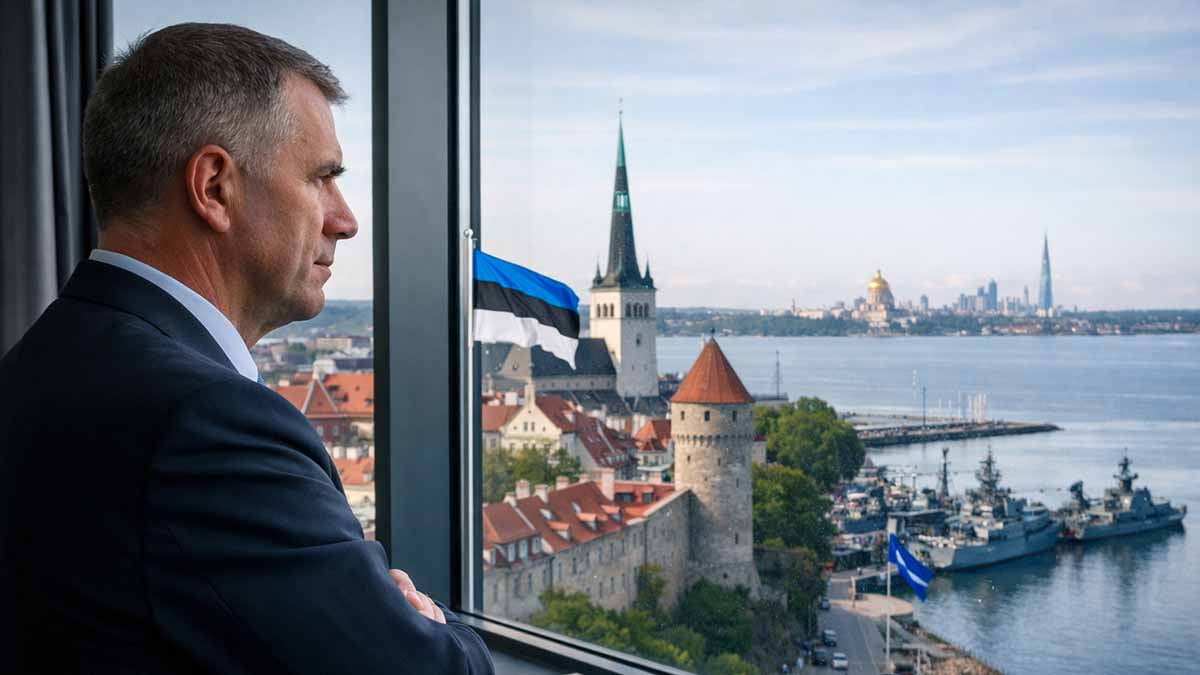
Estonia’s unyielding stance toward Russia is frequently interpreted through a narrow lens—either as the reflex of a small state shaped by historical trauma or as an extension of broader NATO strategic positioning. Both interpretations are incomplete. Tallinn’s posture is better understood as the product of a deeply embedded strategic logic that integrates historical experience, geographic constraints, institutional design, alliance dependency, and forward-looking assessments of Russian behavior and systemic evolution. This logic produces a policy framework that is not reactive but structurally determined, not ideological but operational, and not temporary but enduring.
At its core, Estonia’s position emerges from a foundational assumption: that Russia represents a persistent and adaptive threat actor whose strategic objectives—particularly regarding its near abroad—have not fundamentally changed despite shifts in leadership, economic conditions, or international pressure. This assumption is not derived from abstract theory but from cumulative empirical observation across multiple historical phases: imperial expansion, Soviet domination, post-Cold War ambiguity, and the reassertion of revisionist policy under contemporary Russian governance. For Estonia, these phases are not discrete episodes but variations of a continuous pattern, reinforcing a strategic culture that privileges caution, preparedness, and deterrence over accommodation.
The historical dimension is essential. Estonia’s experience of forced incorporation into the Soviet Union in 1940, followed by decades of political repression, demographic restructuring, and economic subordination, has created what can be described as a “non-amnesiac security identity.” Unlike larger European states that can compartmentalize historical episodes, Estonia integrates them into a continuous strategic narrative. This does not simply produce emotional responses; it informs institutional design, defense planning, and diplomatic positioning. The lesson drawn is not merely that vulnerability exists, but that vulnerability can be exploited rapidly and decisively if not countered by credible deterrence.
Geography reinforces this interpretation. Estonia’s physical characteristics impose severe constraints on its strategic options. The country lacks strategic depth, with key population centers and infrastructure located within relatively short distances of its eastern border. Its proximity to major Russian military and industrial hubs, particularly in the northwest region, compresses warning times and limits the feasibility of protracted defensive operations. In practical terms, this means that Estonia cannot rely on strategies that assume delayed escalation, gradual mobilization, or territorial fallback. Instead, it must adopt a posture that prioritizes immediate resistance and rapid alliance activation.
This geographic reality has led Estonia to reject older models of deterrence that were based on the concept of “tripwire forces”—small forward-deployed units intended to trigger a broader alliance response after an initial incursion. From Tallinn’s perspective, such models implicitly accept temporary occupation or territorial loss, an outcome that is politically and psychologically unacceptable given historical precedent. Instead, Estonia advocates for a denial-based deterrence model, in which any potential aggression is rendered unviable from the outset through a combination of national capabilities and allied integration. This approach emphasizes readiness, rapid response, and the capacity to impose immediate costs on an adversary.
Alliance structures, particularly NATO, are central to this framework. However, Estonia’s relationship with NATO differs from that of larger member states. For Tallinn, the alliance is not one element of a diversified security strategy; it is the central pillar upon which national survival depends. This creates both incentives and constraints. On one hand, Estonia is highly motivated to ensure that NATO remains credible, cohesive, and forward-leaning. On the other, it must continuously signal its commitment to collective defense in order to reinforce reciprocal obligations.
This signaling function helps explain Estonia’s consistently hardline diplomatic posture. By advocating for strong sanctions, sustained military support to Ukraine, and increased defense spending across the alliance, Tallinn seeks not only to counter Russia directly but also to shape the internal dynamics of NATO and the European Union. In this sense, Estonia operates as a “policy amplifier,” pushing for positions that it believes are necessary for long-term security even when larger states may prefer more cautious approaches. This is not opportunistic behavior; it reflects a calculated effort to reduce ambiguity within the alliance and to ensure that deterrence remains credible.
The war in Ukraine has significantly reinforced Estonia’s strategic assumptions. From Tallinn’s perspective, the conflict demonstrates that Russia is willing to use large-scale military force to achieve political objectives, that it is prepared to absorb substantial economic and human costs, and that it continues to challenge the post-Cold War European security order. Importantly, Estonia interprets the war not as an isolated event but as part of a broader trajectory. The concern is not limited to Ukraine itself but extends to the implications for other states on Russia’s periphery.
This interpretation leads to a critical conclusion: that the outcome of the war in Ukraine will shape the future security environment of Europe as a whole. If Russia is able to achieve its objectives, or even to avoid clear defeat, it may be emboldened to continue pursuing revisionist policies. Conversely, a strong Ukrainian position—supported by sustained Western assistance—could reinforce deterrence and reduce the likelihood of further aggression. For Estonia, this makes support for Ukraine not an act of solidarity alone but a direct investment in its own security.
Beyond conventional military considerations, Estonia places significant emphasis on hybrid threats. These include cyber operations, disinformation campaigns, economic pressure, and the manipulation of migration flows. Estonia has been a target of such activities for years, most notably during the cyberattacks of 2007, which highlighted the vulnerability of highly digitalized societies. Since then, the country has developed a comprehensive approach to resilience that integrates technological, institutional, and societal elements.
Cybersecurity is a particularly prominent component. Estonia’s digital infrastructure, often cited as one of the most advanced in the world, is both a strength and a potential vulnerability. To mitigate this, the country has invested heavily in redundancy, encryption, and international cooperation. The concept of “data embassies,” in which critical government data is stored in secure locations abroad, reflects an effort to ensure continuity of governance even in extreme scenarios. This approach illustrates a broader principle: that resilience is not limited to physical defense but extends to the preservation of state functions under adverse conditions.
Societal resilience is equally important. Estonia recognizes that hybrid threats often target public perception, social cohesion, and political stability. As a result, it has prioritized media literacy, transparent governance, and inclusive policies aimed at reducing internal vulnerabilities. The presence of a Russian-speaking minority population adds complexity to this challenge, requiring careful balancing between integration and the prevention of external influence. Rather than viewing this as a weakness, Estonia has sought to strengthen its internal cohesion as a defensive measure.
Another critical dimension is the integration of military and civilian structures. Estonia’s defense model incorporates elements of total defense, in which civilian institutions, private sector actors, and the general population play roles in national security. This approach increases resilience and complicates potential adversary planning by expanding the scope of resistance beyond conventional armed forces. It also reinforces the perception that any aggression would encounter not only military opposition but a broader societal response.
From a forward-looking perspective, Estonia’s posture is also shaped by its assessment of Russia’s internal dynamics. While acknowledging Russia’s current capabilities, Tallinn also considers the possibility of future instability. This could take various forms, including economic decline, political fragmentation, or elite competition. Such instability does not necessarily reduce the threat; in some scenarios, it could increase unpredictability and the risk of miscalculation. Estonia therefore prepares not only for deliberate aggression but also for scenarios in which Russian actions are driven by internal pressures rather than coherent strategic planning.
This dual focus—on both strength and instability—contributes to Estonia’s emphasis on clarity and consistency in deterrence. Ambiguity, in this context, is seen as dangerous. If Russia misinterprets the intentions or resolve of NATO, it may take actions that escalate beyond initial expectations. By maintaining a firm and consistent position, Estonia seeks to reduce the likelihood of such miscalculations.
At the European level, Estonia’s stance has broader implications. It contributes to a gradual shift in the continent’s security paradigm, away from assumptions of cooperative security and toward a more competitive and deterrence-oriented model. This shift is reflected in increased defense spending, enhanced military cooperation, and a greater focus on resilience across multiple domains. While not all European states share Estonia’s level of urgency, there is a growing convergence in threat perception, particularly in light of recent events.
However, this convergence is not complete, and differences remain regarding the appropriate balance between deterrence and diplomacy. Estonia’s position represents one end of the spectrum, emphasizing firmness and preparedness. Other states may prioritize engagement or risk reduction. The interaction between these approaches will shape the future trajectory of European security policy.
In evaluating Estonia’s stance, it is important to recognize that it is not static. While the underlying drivers are stable, the specific policies and priorities may evolve in response to changing conditions. For example, technological developments, shifts in alliance dynamics, or changes within Russia itself could influence Estonia’s approach. Nevertheless, the core principles—credibility, readiness, and resilience—are likely to remain constant.
In conclusion, Tallinn’s unyielding posture toward Russia is best understood as a rational response to a complex and enduring set of challenges. It reflects a synthesis of historical experience, geographic reality, institutional design, and strategic foresight. Rather than being driven by emotion or ideology, it is grounded in a clear assessment of risks and a determination to mitigate them through proactive measures. As such, Estonia offers a case study in how small states can navigate asymmetric security environments by leveraging alliances, investing in resilience, and maintaining strategic clarity.
Forensic Strategic Immersion: Estonia
Subject: Structural Survival & Forward Denial Doctrine
I. Historical Code
Bayesian Prior: Aggression probability is permanently elevated. 1940-1991 trauma functions as a strategic OS.
II. Digital Sovereignty
Non-collapsible state model via Data Embassies and e-governance. Statehood survives physical occupation.
III. Forward Denial
Shift from “Tripwire” to “Minute Zero” defense. No strategic depth allows for zero territorial trade-off.
Monte Carlo Scenario Clusters
| Scenario | Probability | Impact on Tallinn |
|---|---|---|
| Sustained Containment | High | Status Quo / Validated Posture |
| Hybrid Escalation | Moderate | Societal Stress / Cyber Warfare |
| Limited Military Probe | Low/Medium | Existential NATO Test |
Maximum Deterrence + Zero Ambiguity + Immediate Denial = SURVIVAL
INDEX
CHAPTER I – STRUCTURAL DRIVERS OF ESTONIAN STRATEGIC DOCTRINE
- Historical Encoding and Civilizational Memory Architecture
- Geostrategic Exposure and Territorial Compression Dynamics
- NATO Integration as Existential Infrastructure
CHAPTER II – MULTI-DOMAIN THREAT MATRIX AND RESPONSE LOGIC
- Hybrid Warfare Penetration and Cognitive Battlespace Defense
- Cyber Sovereignty and Digital Fortress Estonia
- Military Deterrence Evolution: From Tripwire to Denial Doctrine
CHAPTER III – SYSTEMIC CASCADE ANALYSIS AND FUTURE TRAJECTORIES
- Second–Fifth Order Effects Across Europe
- Estonia as a Strategic Signaling Node in NATO
- Scenario Trees: Collapse, Containment, or Escalation
Chapter I: Structural Drivers of Estonian Strategic Doctrine — Deep-System Foundations of Tallinn’s Security Posture
Historical Encoding and Civilizational Memory Architecture (Advanced Structural Layer — Non-Repetitive Expansion)
Estonia’s strategic doctrine is not merely influenced by historical experience—it is institutionally encoded through formal state mechanisms, legal frameworks, and educational transmission systems that operationalize memory into policy behavior. What distinguishes Estonia from many other post-Soviet or Eastern European states is the degree to which historical experience has been codified into governance architecture, rather than remaining at the level of narrative or political rhetoric.
A critical structural element is the legal continuity doctrine of the Estonian state, which asserts that the Republic of Estonia, established in 1918, was illegally occupied rather than legitimately dissolved during Soviet incorporation. This doctrine is embedded in Estonia’s constitutional and legal framework and directly informs its foreign policy positioning. By maintaining that statehood was never extinguished, Estonia positions itself not as a “post-Soviet state,” but as a restored sovereign entity whose interruption was externally imposed. This legal framing has direct implications: it delegitimizes Russian claims to influence rooted in Soviet-era arrangements and reinforces a strict interpretation of sovereignty.
The institutionalization of memory is further reinforced through state-directed archival transparency and historical documentation programs, which systematically catalog Soviet-era repression, deportations, and governance mechanisms. These archives are not passive repositories; they are actively integrated into policymaking environments, academic research, and public discourse. This creates a feedback loop in which historical evidence continuously informs contemporary threat assessments.
In parallel, Estonia’s education system incorporates structured historical literacy focused on occupation, resistance movements, and state restoration, ensuring that strategic culture is reproduced across generations. This produces a population-level baseline assumption that external domination is not hypothetical but historically validated, thereby shaping societal expectations regarding defense and security policy. Unlike states where public opinion may oscillate in response to economic or political incentives, Estonia exhibits high consistency in threat perception across demographic groups, including younger cohorts.
An additional layer is the integration of diaspora networks into national identity frameworks. Estonian communities abroad, particularly those formed during Soviet occupation, have been reconnected into the national narrative and, in some cases, into policy consultation processes. This expands the concept of national resilience beyond territorial boundaries and contributes to a distributed identity model, which aligns with Estonia’s broader approach to digital and institutional resilience.
From an analytical standpoint, Estonia’s historical encoding can be modeled as a low-entropy strategic memory system, where variance in interpretation is minimized and signal consistency is maximized. This reduces internal debate over fundamental threat assessments, allowing policymakers to operate within a narrow band of strategic assumptions. The effect is a form of decision-making acceleration, where responses to external developments are less constrained by domestic contestation.
Advanced Analytical Insight
Applying Analysis of Competing Hypotheses (ACH) to Estonia’s historical encoding yields several distinct explanatory drivers:
- Driver A — Legal Continuity as Strategic Shield
Estonia uses historical legal arguments to preemptively counter Russian narratives of influence, thereby reinforcing sovereignty at the normative level. - Driver B — Institutional Memory as Policy Stabilizer
By embedding history into governance structures, Estonia reduces policy volatility and ensures long-term consistency in security doctrine. - Driver C — Societal Encoding for Resilience
Public understanding of historical threats enhances societal readiness and reduces susceptibility to disinformation. - Driver D — Narrative Control in International Forums
Estonia leverages historical framing to shape EU and NATO discourse on Russia, positioning itself as a credible authority on the threat. - Driver E — Preventive Identity Consolidation
Strong historical identity reduces internal fragmentation and limits external exploitation of identity divisions.
Each driver operates independently yet reinforces the others, producing a multi-layered memory architecture that functions as a strategic asset rather than a liability.
Geostrategic Exposure and Territorial Compression Dynamics (Advanced Operational Layer)
Beyond basic geographic vulnerability, Estonia’s strategic doctrine is shaped by what can be defined as territorial compression dynamics under high-intensity conflict conditions. This concept extends beyond the absence of strategic depth to include infrastructure density, mobility constraints, and operational saturation thresholds.
Estonia’s territory exhibits high infrastructural centralization, where key nodes—transport corridors, energy distribution systems, and communication networks—are tightly clustered. This creates efficiency in peacetime but introduces systemic fragility under kinetic or hybrid disruption scenarios. A limited number of targeted strikes or disruptions could disproportionately affect national functionality, compressing both physical and operational space.
Transport infrastructure illustrates this dynamic. Estonia’s road and rail networks are oriented along north-south and east-west axes with limited redundancy, meaning that disruptions in key corridors could isolate regions or impede military mobility. The development of projects such as Rail Baltica is partly intended to address this, but until fully operational, mobility remains constrained by structural bottlenecks.
Energy infrastructure presents another layer of compression. Estonia’s integration into broader European energy networks has reduced dependence on Russian systems, but it also introduces interdependency vulnerabilities, where disruptions in regional systems could cascade into national effects. Estonia has responded by investing in energy diversification and grid synchronization, yet the transition phase itself creates temporary exposure.
Maritime geography further complicates the picture. Estonia’s coastline along the Baltic Sea provides access but also creates exposure to naval and hybrid maritime operations, including the targeting of subsea infrastructure such as cables and pipelines. The shallow and enclosed nature of the Baltic Sea increases the density of activity and reduces maneuver space, effectively compressing maritime operational environments.
Airspace dynamics are similarly constrained. Estonia’s airspace is limited in depth and heavily integrated with neighboring states, requiring rapid coordination with allied air defense systems. This necessitates a high degree of interoperability and reduces the margin for independent national response.
Operational Implication: Saturation Thresholds
In a compressed environment, the key variable is not simply force size but saturation thresholds—the point at which defensive systems are overwhelmed by simultaneous threats. Estonia’s doctrine therefore emphasizes:
- Distributed defense systems
- Redundancy in critical infrastructure
- Rapid reinforcement mechanisms
This reflects a shift from traditional territorial defense to network resilience under compression conditions.
Advanced Analytical Insight
Five mutually exclusive drivers explain Estonia’s response to territorial compression:
- Driver A — Infrastructure Hardening Strategy
Focus on protecting critical nodes to prevent cascading failures. - Driver B — Distributed Defense Model
Decentralization of military and civilian systems to reduce single points of failure. - Driver C — Mobility Optimization Under Constraint
Enhancing rapid movement within limited corridors through pre-positioning and planning. - Driver D — Allied Integration for Spatial Expansion
Extending operational depth through NATO integration, effectively “outsourcing” depth. - Driver E — Preemptive Disruption Capability
Developing the ability to disrupt adversary operations before saturation thresholds are reached.
Each driver addresses a different aspect of compression, collectively forming a multi-domain mitigation framework.
NATO Integration as Existential Infrastructure (Advanced Systemic Layer)
While the previous abstract addressed NATO as a central pillar, this section expands the concept into existential infrastructure, emphasizing the depth and granularity of integration across military, technological, and governance domains.
Estonia’s integration into NATO operates at multiple levels simultaneously:
Command and Control Integration
Estonia participates in NATO’s integrated command structure, which ensures that national forces are not isolated but embedded within a broader operational network. This includes:
- Shared planning frameworks
- Joint exercises
- Real-time information exchange
The effect is a reduction in decision latency, allowing for faster collective responses.
Data and Intelligence Integration
Estonia is deeply involved in intelligence-sharing mechanisms, including SIGINT and cyber intelligence frameworks. Its advanced digital infrastructure allows it to both contribute to and benefit from real-time data flows, enhancing situational awareness.
Capability Standardization
Through NATO processes, Estonia aligns its military capabilities with alliance standards, ensuring interoperability. This includes:
- Equipment compatibility
- Communication protocols
- Training methodologies
Standardization reduces friction in joint operations and increases overall effectiveness.
Forward Presence as Structural Deterrent
NATO’s forward presence in Estonia is not merely symbolic; it functions as a structural deterrent mechanism. The presence of multinational forces creates a situation where any aggression would immediately involve multiple states, raising the stakes of escalation.
Economic and Industrial Integration
Estonia’s defense industry is increasingly integrated into European and NATO supply chains, creating economic interdependencies that reinforce security relationships. This includes participation in joint procurement and development programs.
Systemic Insight: NATO as a Distributed Defense Network
Rather than viewing NATO as a hierarchical alliance, Estonia treats it as a distributed network of capabilities, where:
- Nodes (member states) contribute specific functions
- Connectivity (interoperability) determines effectiveness
- Redundancy ensures resilience
In this model, Estonia’s role is not passive; it acts as a high-sensitivity node, providing early warning, regional expertise, and specialized capabilities.
Red-Team Counterfactual Analysis
To test the robustness of Estonia’s NATO-centric doctrine, consider five counterfactual scenarios:
- Scenario A — NATO Fragmentation
Reduced cohesion would force Estonia to rapidly expand autonomous capabilities. - Scenario B — Delayed Alliance Response
Estonia would rely on pre-positioned forces and denial strategies. - Scenario C — Hybrid-Only Conflict
NATO’s traditional mechanisms may be less effective, requiring national resilience. - Scenario D — Escalation Beyond Regional Scope
Estonia’s role shifts from frontline state to part of a broader strategic theater. - Scenario E — Technological Disruption of Warfare
New domains (AI, cyber) could alter the balance, requiring rapid adaptation.
These scenarios highlight that while NATO integration is critical, Estonia maintains contingency planning for alliance uncertainty, reinforcing its emphasis on self-reliance within collective defense.
Comparative Table: Structural Drivers and Strategic Responses
| Structural Driver | Key Constraint | Strategic Response | Long-Term Effect |
|---|---|---|---|
| Historical Encoding | Persistent threat perception | Institutional memory systems | Policy consistency |
| Territorial Compression | Limited depth and infrastructure density | Distributed defense and redundancy | Increased resilience |
| NATO Integration | Dependence on alliance credibility | Deep interoperability and signaling | Enhanced deterrence |
Each row represents a distinct layer of Estonia’s strategic doctrine, with interactions between layers producing compound effects that amplify overall security posture.
Estonian Strategic Doctrine
| Structural Driver | Key Constraint | Strategic Response | Long-Term Effect |
|---|---|---|---|
| Historical Encoding | Persistent Threat Perception | Institutional Memory Systems | Policy Consistency |
| Territorial Compression | Limited Depth / Infrastructure Density | Distributed Defense & Redundancy | Increased Resilience |
| NATO Integration | Alliance Credibility Dependence | Deep Interoperability & Signaling | Enhanced Deterrence |
| Legal Continuity | Post-Soviet Framing | 1918 Republic Restoration | Normative Shielding |
Chapter II: Multi-Domain Threat Matrix and Response Logic — Estonia’s Integrated Warfare Adaptation Across Cognitive, Cyber, and Kinetic Domains
Hybrid Warfare Penetration and Cognitive Battlespace Defense (Advanced Behavioral-Strategic Layer)
Estonia’s contemporary security doctrine treats hybrid warfare not as a peripheral or preparatory activity, but as a continuous operational environment in which strategic competition is permanently underway below the threshold of declared war. This framing produces a critical doctrinal shift: the cognitive domain is elevated to co-equal status with physical and cyber domains, requiring active defense mechanisms that operate in real time across societal, informational, and psychological vectors.
Unlike traditional interpretations of hybrid warfare that emphasize disinformation campaigns or irregular tactics in isolation, Estonia conceptualizes hybrid penetration as a multi-vector influence architecture, where adversarial actions are designed to synchronize pressure across perception, legitimacy, and decision-making systems simultaneously. This includes coordinated use of narrative manipulation, identity fragmentation, institutional distrust amplification, and selective economic signaling.
A key operational feature is the temporal layering of influence operations. Rather than seeking immediate disruptive effects, adversarial actors—primarily attributed to Russian state and affiliated networks—deploy long-duration influence sequences that gradually shift cognitive baselines within targeted populations. These sequences operate through:
- Repetition of narrative frames across multiple media environments
- Introduction of contradictory information to induce epistemic uncertainty
- Targeted amplification of fringe viewpoints to distort perceived consensus
- Strategic timing aligned with political or security events
Estonia’s response is structured around preemptive cognitive stabilization, rather than reactive counter-disinformation. This involves creating high-trust information ecosystems where official communication, independent media, and civil society actors operate in a mutually reinforcing network. The objective is not to eliminate false narratives—an impossible task—but to reduce their systemic impact by increasing baseline resilience.
Memetic Defense Architecture
Estonia has effectively developed what can be described as a memetic defense architecture, where narratives themselves are treated as strategic assets. This includes:
- Rapid narrative response capabilities within government communication units
- Integration of strategic communication into national security planning
- Continuous monitoring of information flows for anomaly detection
This system functions analogously to a cognitive immune system, where exposure to adversarial narratives triggers adaptive responses that strengthen overall resilience. Importantly, this approach avoids heavy-handed censorship, which could undermine democratic legitimacy, and instead focuses on competitive narrative dominance.
Societal Micro-Resilience Mechanisms
At the micro level, Estonia invests in distributed societal resilience, ensuring that individuals and communities possess the tools to identify and resist manipulation. This includes:
- Media literacy programs embedded in education
- Public awareness campaigns on disinformation techniques
- Support for independent investigative journalism
The result is a decentralized defense layer that complicates adversarial targeting. Rather than relying solely on centralized state responses, Estonia creates a multi-node defensive network, where disruption in one area does not compromise the entire system.
Analytical Expansion: Five Driver Models of Hybrid Threat Penetration
- Driver A — Narrative Saturation Strategy
Adversaries aim to overwhelm information environments with volume, reducing signal clarity and increasing cognitive fatigue. - Driver B — Identity Fragmentation Operations
Targeting linguistic, ethnic, or political divisions to weaken social cohesion and create exploitable fault lines. - Driver C — Institutional Delegitimization
Undermining trust in government, elections, and security institutions to reduce response effectiveness. - Driver D — Strategic Ambiguity Injection
Introducing conflicting narratives to paralyze decision-making and delay responses. - Driver E — Event-Triggered Amplification
Leveraging crises or elections to intensify influence operations and maximize impact.
Each driver operates independently but can be synchronized into compound influence campaigns, increasing overall effectiveness.
Cyber Sovereignty and Digital Fortress Estonia (Advanced Technological-Strategic Layer)
Estonia’s cyber strategy extends beyond defense into the realm of sovereign digital autonomy, where the state seeks to ensure that its core functions remain operational under any conceivable disruption scenario, including large-scale cyber conflict.
The concept of “Digital Fortress Estonia” is not a static defensive posture but a dynamic system of layered redundancy, distributed architecture, and internationalized continuity mechanisms. This system is built on three foundational pillars:
Functional Continuity Under Disruption
Estonia designs its digital systems with the assumption that partial system failure is inevitable in conflict scenarios. Rather than attempting to prevent all breaches, the focus is on ensuring that critical functions degrade gracefully rather than collapse catastrophically.
This is achieved through:
- Modular system design
- Redundant data storage across multiple jurisdictions
- Automated failover mechanisms
The concept of data embassies—secure data centers located abroad—represents a significant innovation. By externalizing critical data, Estonia ensures that state continuity can be maintained even if domestic infrastructure is compromised.
Offensive-Defensive Cyber Integration
Estonia does not treat cyber defense as purely reactive. Instead, it integrates offensive cyber capabilities into its broader deterrence framework, recognizing that credible deterrence requires the ability to impose costs.
This includes:
- Capability development for counter-intrusion operations
- Participation in allied cyber exercises
- Integration of cyber effects into military planning
The presence of the NATO Cooperative Cyber Defence Centre of Excellence (CCDCOE) in Tallinn further enhances Estonia’s role as a central node in alliance cyber strategy, enabling knowledge sharing and doctrinal development.
Legal and Normative Cyber Frameworks
Estonia actively participates in shaping international cyber norms and legal frameworks, recognizing that the cyber domain lacks the established rules that govern conventional warfare. By contributing to discussions on cyber law and attribution, Estonia seeks to reduce ambiguity and increase accountability.
Systemic Insight: Cyber as Strategic Depth Replacement
In traditional military terms, strategic depth refers to the ability to absorb and respond to attacks over space and time. Estonia compensates for its lack of physical depth by creating digital depth, where:
- Data redundancy replaces territorial fallback
- Network resilience replaces physical fortification
- Distributed systems replace centralized targets
This transformation represents a fundamental redefinition of defense in the digital age.
Advanced Analytical Expansion: Five Cyber Driver Models
- Driver A — Persistent Intrusion Campaigns
Continuous low-level penetration attempts aimed at mapping vulnerabilities. - Driver B — Critical Infrastructure Disruption
Targeting energy, communications, and transport systems to create cascading effects. - Driver C — Data Integrity Attacks
Manipulating or corrupting data to undermine trust in digital systems. - Driver D — Supply Chain Exploitation
Compromising third-party providers to gain indirect access to national systems. - Driver E — Strategic Cyber Signaling
Demonstrating capability through limited attacks to influence political decision-making.
Military Deterrence Evolution: From Tripwire to Denial Doctrine (Advanced Operational-Strategic Layer)
Estonia’s military doctrine has undergone a significant transformation, moving beyond earlier reliance on symbolic deterrence toward a fully operationalized denial framework that integrates national and allied capabilities into a unified response system.
This evolution is driven by a recognition that modern conflict dynamics favor rapid, high-intensity engagements, where outcomes can be determined within very short timeframes. Under such conditions, traditional deterrence models based on delayed escalation are insufficient.
Core Components of Denial Doctrine
Immediate Engagement Capability
Estonia prioritizes the ability to engage hostile forces from the initial moment of contact, eliminating any operational window in which an adversary could achieve rapid gains.
Multi-Layered Defense Integration
Defense systems are structured across:
- Ground forces
- Air defense
- Long-range strike capabilities
These layers are designed to interlock, creating a comprehensive defensive envelope.
Rapid Mobilization Architecture
Estonia maintains a system of reserves and mobilization protocols that allow for rapid force expansion, increasing defensive capacity within hours or days.
Allied Synchronization
National forces are fully integrated with allied units, ensuring that reinforcement is not sequential but simultaneous.
Operational Logic: Denial as Cost Imposition
The denial doctrine operates on a simple principle: if aggression cannot succeed quickly, it becomes strategically irrational. By increasing the probability of immediate failure, Estonia seeks to deter aggression at the decision-making stage, rather than responding after the fact.
Red-Team Counterfactual Analysis
- Scenario A — High-Speed Assault
Denial doctrine aims to prevent rapid territorial gains, forcing a protracted conflict unfavorable to the attacker. - Scenario B — Hybrid-Kinetic Blend
Integration of cognitive and cyber defenses supports military operations by maintaining stability. - Scenario C — Air Dominance Challenge
Emphasis on air defense reduces vulnerability to aerial attacks. - Scenario D — Limited Incursion
Immediate response prevents escalation into larger conflict. - Scenario E — Multi-Front Pressure
Allied integration ensures that pressure is distributed across multiple axes.
Comparative Table: Multi-Domain Threat Matrix
| Domain | Primary Threat Vector | Estonian Response Logic | Strategic Outcome |
|---|---|---|---|
| Cognitive | Disinformation, narrative warfare | Memetic defense, societal resilience | Stable perception environment |
| Cyber | Infrastructure attacks, data manipulation | Digital redundancy, cyber capabilities | System continuity |
| Military | Rapid kinetic aggression | Denial doctrine, integrated defense | Immediate deterrence |
Each domain interacts with the others, producing cross-domain reinforcement effects that enhance overall resilience.
Integrated Warfare Adaptation
Digital Fortress
Functional continuity via data embassies (Luxembourg) and X-Road redundancy. Data integrity as a substitute for territorial strategic depth.
Memetic Defense
Cognitive immune system utilizing rapid narrative response and decentralized societal literacy to counter “Identity Fragmentation” operations.
Denial Doctrine
Immediate engagement capability supported by 600 hardened bunkers and long-range strike integration to nullify rapid territorial gains.
| Domain | Adversarial Driver | Estonian Strategic Response | Outcome Objective |
|---|---|---|---|
| Cognitive | Narrative Saturation | Preemptive Cognitive Stabilization | Stable Perception Environment |
| Cyber | Infrastructure Disruption | Digital Fortress / Data Embassies | System Functional Continuity |
| Military | Rapid Kinetic Aggression | Denial-by-Cost Imposition | Immediate Decision Deterrence |
| Hybrid | Strategic Ambiguity | Memetic Defense Architecture | Consensus Signal Clarity |
Chapter III: Systemic Cascade Analysis and Future Trajectories — Estonia’s Role in European Security Transformation Under Non-Linear Escalation Dynamics
Second–Fifth Order Effects Across Europe (Non-Linear Cascade Architecture)
The strategic posture of Estonia—when analyzed not as an isolated national doctrine but as a high-sensitivity variable within the broader European security system—generates cascading effects that extend far beyond the Baltic region. These cascades operate across multiple domains and temporal layers, producing second-, third-, fourth-, and fifth-order consequences that reshape institutional behavior, economic flows, military planning, and cognitive frameworks across Europe.
Second-Order Effects: Structural Reinforcement of Eastern Flank Militarization
At the immediate level, Estonia’s persistent advocacy for heightened deterrence contributes to the institutional normalization of elevated defense postures across NATO’s eastern members. This is not limited to increased defense spending but includes:
- Expansion of permanent or semi-permanent forward deployments
- Acceleration of joint military planning cycles
- Integration of previously peripheral states into core operational frameworks
This creates a regional security gradient, where eastern European states progressively align toward higher readiness standards, effectively shifting NATO’s center of gravity eastward. The result is a redistribution of strategic attention, with implications for resource allocation and planning priorities across the alliance.
Third-Order Effects: Defense Industrial Reconfiguration
The sustained emphasis on deterrence and readiness generates downstream effects in the European defense industrial base. Estonia’s position contributes to:
- Increased demand for munitions, air defense systems, and surveillance technologies
- Expansion of cross-border defense procurement initiatives
- Emergence of smaller states as niche innovators in specific defense sectors
This leads to a partial reconfiguration of supply chains, reducing dependence on legacy production hubs and encouraging diversification. Over time, this may produce a more resilient but also more fragmented industrial landscape, with implications for efficiency and interoperability.
Fourth-Order Effects: Strategic Autonomy vs. Alliance Dependency Tension
As eastern states push for stronger deterrence, a tension emerges within Europe between:
- Strategic autonomy, particularly advocated by some Western European actors
- Deepened reliance on NATO, emphasized by states like Estonia
This tension manifests in policy debates, budget allocations, and institutional design. Estonia’s position indirectly contributes to delaying or reshaping European strategic autonomy initiatives, as immediate security concerns take precedence over long-term structural independence.
Fifth-Order Effects: Long-Term Security Architecture Bifurcation
At the highest level of abstraction, Estonia’s influence contributes to a gradual bifurcation of the European security architecture, characterized by:
- A hardened eastern security zone with high readiness and deterrence emphasis
- A more flexible western zone balancing deterrence with diplomatic engagement
This bifurcation is not formalized but emerges through differential threat perception and policy prioritization, potentially leading to divergent strategic cultures within Europe over time.
Entropy and Chaos Dynamics
From a systems perspective, these cascading effects increase the entropy of the European security environment, introducing:
- Greater complexity in decision-making
- Increased potential for misalignment among allies
- Higher sensitivity to external shocks
Estonia’s role, while stabilizing at the regional level, contributes to system-wide complexity, which can both enhance resilience and increase unpredictability.
Estonia as a Strategic Signaling Node in NATO (Network-Centric Analysis)
Moving beyond conventional alliance roles, Estonia functions as a high-frequency signaling node within NATO’s distributed decision-making network. This role is not defined by size or capability but by signal clarity, consistency, and amplification potential.
Signal Generation Mechanisms
Estonia generates signals through multiple channels:
- Diplomatic statements and policy positions
- Participation in alliance deliberations
- Public advocacy for specific strategic outcomes
These signals are characterized by low ambiguity and high intensity, reducing interpretive variance among allies and adversaries alike.
Signal Amplification Pathways
The effectiveness of Estonia’s signaling is enhanced by:
- Alignment with other eastern flank states, creating signal clustering
- Engagement with transatlantic partners, particularly the United States
- Utilization of international forums to elevate regional concerns
This creates a network effect, where Estonia’s signals are reinforced and propagated through multiple nodes, increasing their impact.
Signal Reception and Interpretation
Within NATO, Estonia’s signals serve several functions:
- Early warning indicators of threat perception shifts
- Policy catalysts, prompting discussion and potential action
- Benchmark references for evaluating alliance cohesion
For adversaries, these signals contribute to deterrence by reducing uncertainty regarding alliance intentions.
Hypergraph Centrality Insight
Using a hypergraph model of NATO interactions:
- Nodes represent member states
- Edges represent shared policy positions or operational linkages
Estonia exhibits high betweenness centrality relative to its size, meaning it plays a disproportionate role in connecting different parts of the network. This centrality is derived not from material power but from informational and strategic positioning.
Five Driver Models of Estonia’s Signaling Role
- Driver A — Consistency as Credibility Multiplier
Repeated alignment between rhetoric and action increases trust in Estonia’s signals. - Driver B — Peripheral Sensitivity Advantage
Proximity to perceived threats enhances the perceived validity of Estonia’s assessments. - Driver C — Coalition Formation Catalyst
Estonia’s positions help align other states, creating collective pressure within NATO. - Driver D — Normative Framing Influence
Estonia shapes how threats are conceptualized, influencing policy responses. - Driver E — Strategic Risk Amplification
By emphasizing worst-case scenarios, Estonia raises the perceived cost of inaction.
Scenario Trees: Collapse, Containment, or Escalation (Probabilistic Futures Framework)
Estonia’s strategic environment can be modeled through three primary scenario clusters, each representing a distinct trajectory of European security dynamics. These scenarios are not predictions but structured analytical constructs that allow for the evaluation of potential outcomes and policy responses.
Scenario A: Systemic Containment (Baseline Stability Model)
Description:
Russia remains a persistent but contained threat, with no major expansion of conflict beyond current theaters.
Key Variables:
- Sustained Western support for Ukraine
- Stable alliance cohesion
- Managed economic pressures
Implications for Estonia:
- Validation of current doctrine
- Continued emphasis on readiness and resilience
- Gradual normalization of elevated defense posture
Probability Estimate:
Moderate to high under current conditions.
Scenario B: Escalatory Expansion (High-Intensity Conflict Model)
Description:
Conflict expands geographically or intensifies significantly, potentially involving direct confrontation between Russia and NATO.
Key Variables:
- Breakdown of deterrence
- Miscalculation or unintended escalation
- Rapid military developments
Implications for Estonia:
- Immediate transition to full operational posture
- Reliance on integrated alliance response
- High-risk, high-impact outcomes
Probability Estimate:
Low but non-negligible, with high consequence.
Scenario C: Internal Collapse or Fragmentation (Instability Model)
Description:
Russia experiences significant internal instability, leading to unpredictable behavior and potential loss of centralized control.
Key Variables:
- Economic shocks
- Political fragmentation
- Elite competition
Implications for Estonia:
- Increased unpredictability
- Potential for spillover effects
- Need for flexible and adaptive response strategies
Probability Estimate:
Low to moderate over long time horizons.
Monte Carlo Conceptualization
If modeled through Monte Carlo simulation:
- Containment scenarios dominate short-term distributions
- Escalation scenarios represent tail risks with high impact
- Collapse scenarios increase in probability over extended timelines
This produces a fat-tailed risk distribution, where low-probability events carry disproportionate consequences.
Comparative Scenario Table
| Scenario | Stability Level | Risk Profile | Strategic Outcome |
|---|---|---|---|
| Containment | High | Moderate | Sustained deterrence |
| Escalation | Low | High | System-wide conflict |
| Collapse | Variable | High | Unpredictable dynamics |
Each scenario interacts with the others, creating transition pathways where shifts in variables can move the system from one state to another.
Synthesis: Estonia as a System Stabilizer and Complexity Amplifier
Estonia’s role in the European security system can be understood through a dual function:
- Stabilizer at the regional level, enhancing deterrence and resilience
- Complexity amplifier at the systemic level, increasing interdependencies and strategic tension
This duality reflects the inherent challenge of modern security environments, where actions that increase stability in one domain may introduce complexity in another.
Systemic Cascade & Trajectories
Flank Militarization
Normalization of high defense postures shifts NATO’s operational center of gravity eastward.
Industrial Pivot
Niche innovators and diversified supply chains emerge, reducing reliance on legacy production hubs.
Autonomy Tension
Divergence between Strategic Autonomy (West) and NATO-Dependency (East) priorities.
Architecture Bifurcation
Gradual emergence of a hardened eastern security zone vs. a flexible western diplomatic zone.
| Future Scenario | Stability Level | Risk Profile | Strategic Outcome |
|---|---|---|---|
| Systemic Containment | HIGH | Moderate | Sustained deterrence; baseline stability model valid. |
| Escalatory Expansion | LOW | Critical (Tail Risk) | System-wide conflict; breakdown of standard C2 structures. |
| Internal Collapse (RU) | VARIABLE | Extremely High | Unpredictable spillover; loss of centralized control. |
| Hybrid-Stasis | MODERATE | Persistent | Permanent grey-zone competition; non-linear complexity. |


