














Abstract
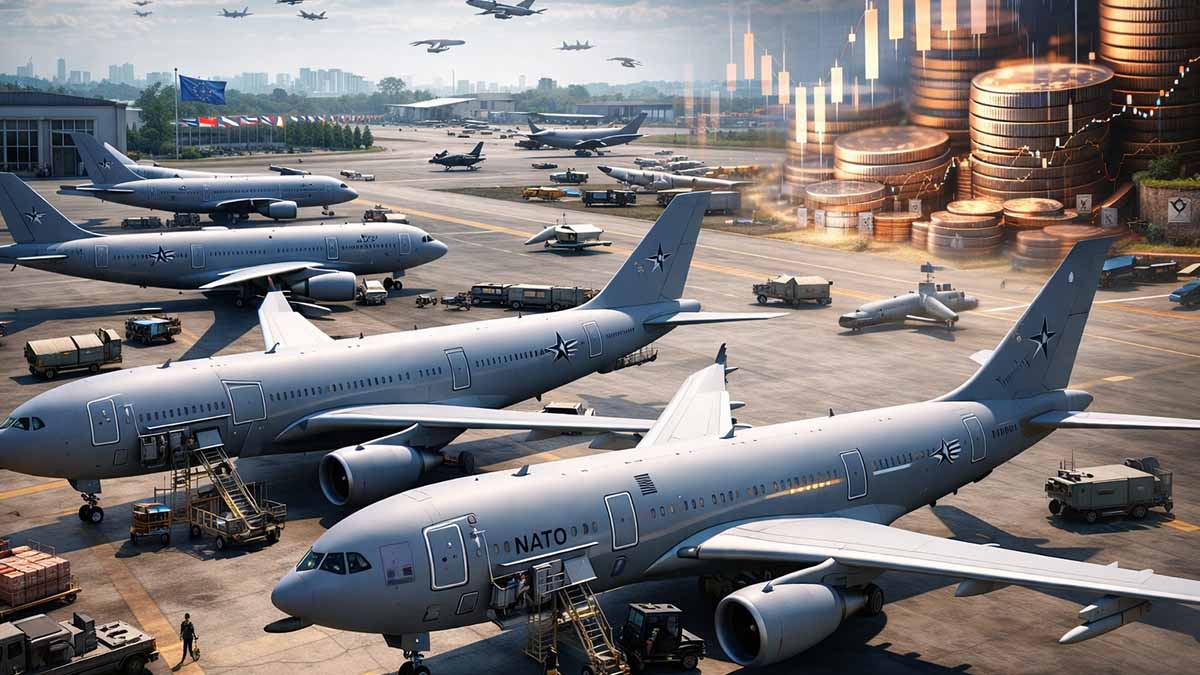
The achievement of Full Operational Capability (FOC) by the Multinational Multi-Role Tanker Transport Unit (MMU) on 30 March 2026 represents a watershed moment in the structural integration of NATO‘s collective defense capabilities(https://mocr.mo.gov.cz/en/ministry-of-defence/newsroom/news/multinational-mrtt-unit-achieves-full-operational-capability-foc-263147/). This designation, which followed exactly three years after the declaration of Initial Operational Capability (IOC) in March 2023, signifies that the unit is now fully prepared to execute its core missions of Air-to-Air Refuelling (AAR), Strategic Airlift, and Medical Evacuation (MEDEVAC) independently and sustainably at a global scale(https://defence-industry.eu/nato-multinational-mrtt-fleet-reaches-full-operational-capability/). The milestone was formalized during a high-level ceremony on 26 March 2026 at Eindhoven Air Base in the Netherlands, where command of the unit was transferred from Colonel Ludger Bette of Germany to Colonel Evert Cuppens of Belgium, underscoring the multinational leadership rotation that characterizes this Pooling and Sharing initiative(https://defence-industry.eu/nato-multinational-mrtt-fleet-reaches-full-operational-capability/).
The Multinational MRTT Fleet (MMF) operates as a unique intergovernmental entity owned by NATO and managed by the NATO Support and Procurement Agency (NSPA), with acquisition managed through OCCAR (Organisation Conjointe de Coopération en matière d’Armement)(https://www.occar.int/news/multinational-mrtt-fleet-mmf-fourth-aircraft-delivered-by-occarea). As of March 2026, nine of the planned twelve Airbus A330 MRTT (designated KC-30M in alliance service) aircraft are operational, providing guaranteed access to strategic mobility for eight participating nations: the Netherlands, Luxembourg, Germany, Norway, Belgium, the Czech Republic, Denmark, and Sweden(https://defence-industry.eu/nato-multinational-mrtt-fleet-reaches-full-operational-capability/). The fleet is distributed across its Main Operating Base (MOB) in Eindhoven and its Forward Operating Base (FOB) at Cologne-Wahn, with a third FOB planned at Karup Air Base in Denmark to support the integration of the Nordic allies and provide enhanced air policing capabilities in the High North(https://www.airbus.com/en/newsroom/press-releases/2025-06-nato-orders-two-additional-airbus-a330-mrtt-aircraft-and-welcomes).
From a kinetic perspective, the KC-30M platform serves as a critical force multiplier for the projection of air power. Each aircraft can carry up to 111 tonnes of fuel, enabling the refuelling of a diverse range of receivers including the F-35A, F-16, Eurofighter Typhoon, JAS 39 Gripen, and Rafale fighters(https://www.airbus.com/en/newsroom/stories/2024-09-a330-mrtt-the-evolution-of-the-worlds-leading-air-to-air-refuelling-tanker). The recent certification of Automatic Air-to-Air Refuelling (A3R) technology—the first of its kind globally—allows for enhanced safety and efficiency by automating the contact between the tanker’s boom and the receiver aircraft’s receptacle, achieving flow rates of up to 1,200 US gallons per minute(https://www.airbus.com/en/products-services/defence/military-aircraft/a330-mrtt). Beyond fuel transfer, the multi-role nature of the fleet is demonstrated by its capacity to transport up to 300 personnel or 45 tonnes of cargo, and its rapid reconfiguration for MEDEVAC missions, which include six intensive care units and 16 stretchers to support 24/7 medical response requirements(https://ac.nato.int/archive/2020/MMF_Progress).
The political economy of the MMF is anchored in a sophisticated Military-Industrial-Financial Complex (MIFC), wherein Airbus SE functions as the primary industrial engine. In its February 2026 financial report, Airbus SE announced a record EBIT Adjusted of €7.128 billion for the 2025 fiscal year, representing a 33% increase over the previous year(https://www.airbus.com/en/newsroom/press-releases/2026-02-airbus-reports-full-year-fy-2025-results). The Airbus Defence and Space division alone generated €13.4 billion in revenue, driven by a record order intake of €17.7 billion, yielding a book-to-bill ratio of 1.3(https://www.airbus.com/en/newsroom/press-releases/2026-02-airbus-reports-full-year-fy-2025-results). This financial growth is deeply intertwined with the shifting geopolitical landscape, specifically the NATO commitment to a 5% GDP defense spending target by 2035 and the European Union‘s Readiness 2030 initiative, which aims to create an additional €800 billion in fiscal space for defense over four years(https://www.airbus.com/sites/g/files/jlcbta136/files/2026-02/airbus_se_report_of_the_board_of_directors_fy_2025_1.pdf).
Forensic mapping of Airbus SE‘s ownership structure reveals a high degree of financialization. As of March 2026, the company’s equity is dominated by institutional asset managers and sovereign holding companies. SOGEPA (representing the French government) and KfW (representing the German government) maintain substantial stakes of 10.86% and 10.85% respectively Ownership – Investing.com – March 2026. Parallel to these sovereign interests, BlackRock, Inc. holds a 4.73% stake and The Vanguard Group, Inc. holds 3.25%, reflecting the role of global private capital in the defense-industrial base Ownership – Investing.com – March 2026. The influence of these financial entities is compounded by a network of interlocking directorates and “revolving door” appointments. For example, the March 2026 nomination of Henriette Hallberg Thygesen, CEO of the defense company Terma A/S, to the Airbus SE Board of Directors highlights the continuous exchange of personnel between the industrial, governmental, and financial sectors Airbus publishes agenda for 2026 Annual General Meeting – Airbus – March 2026.
The MMF program also serves as a critical asset in the realm of Strategic Autonomy, reducing the reliance of European allies on United States Air Force tanker assets. This is particularly evident in the expansion of the fleet following the June 2025 order for two additional aircraft, bringing the total to twelve, to support the entry of Denmark and Sweden into the program(https://www.airbus.com/en/newsroom/press-releases/2025-06-nato-orders-two-additional-airbus-a330-mrtt-aircraft-and-welcomes). Denmark‘s commitment is estimated at DKK 7.4 billion between 2025 and 2033, a significant portion of its rearmament strategy that also includes the procurement of F-35A fighters and Patria 6×6 armored personnel carriers(https://euro-sd.com/2025/07/articles/exclusive/45508/danish-acquisition-programmes/). The inclusion of Sweden—which transitioned from neutrality to NATO membership and immediate participation in the MMU—further solidifies the integrated defense of the High North(https://ac.nato.int/archive/2025-2/sweden-and-denmark-bolster-nato-air-mobility-by-joining-multinational-mrtt-unit).
The attainment of Full Operational Capability by the MMU also signals the integration of advanced AI and autonomous technologies into the logistics layer of modern warfare. Airbus has utilized the Auto’Mate campaign and the A310 MRTT flying testbed to develop Autonomous Assets Air-to-Air Refuelling (A4R) and Autonomous Formation Flight (AF2), paving the way for the in-flight refuelling of uncrewed combat platforms within the Future Combat Air System (FCAS) framework(https://www.airbus.com/en/newsroom/stories/2024-09-a330-mrtt-the-evolution-of-the-worlds-leading-air-to-air-refuelling-tanker). These technological advancements, combined with the unit’s ability to conduct two simultaneous deployments—one short-term and one long-term—anywhere in the world, position the MMU as the vanguard of a new era in multinational defense cooperation(https://mocr.mo.gov.cz/en/ministry-of-defence/newsroom/news/multinational-mrtt-unit-achieves-full-operational-capability-foc-263147/).
Ultimately, the MMF program represents the fusion of kinetic requirements, geopolitical positioning, and financialization. The MoU governing the fleet ensures a equitable distribution of costs based on annual flight hours, ranging from 5,500 hours for Germany to 100 hours for the Czech Republic and Norway, allowing for cost efficiencies that would be unattainable through national-only procurement(https://luftled.info/the-multinational-mrtt-fleet-mmf-an-emergentshared-capability-for-norway/). As NATO navigates the complexities of the post-2025 landscape, the MMU stands as a reliable, high-tech, and financially optimized model for the future of collective alliance strength.
| National Participant | Flight Hours (Annual) | Cost Allocation Model | Primary Strategic Role |
| Germany | 5,500 | Proportional to Hours | Logistic Core & FOB Cologne |
| Netherlands | 2,000 | Proportional to Hours | Lead Nation & MOB Eindhoven |
| Belgium | 1,000 | Proportional to Hours | Tactical Command Support |
| Luxembourg | 200 | Proportional to Hours | Initial Financial Catalyst |
| Norway | 100 | Proportional to Hours | Arctic Sovereignty Support |
| Czech Republic | 100 | Proportional to Hours | Eastern Flank Deterrence |
| Denmark | TBD | Proportional to Hours | FOB Karup Support (Post-2025) |
| Sweden | TBD | Proportional to Hours | Nordic Integration (Post-2025) |
| Metric (Airbus SE) | FY 2025 (Reported) | Change vs. FY 2024 | Strategic Interpretation |
| EBIT Adjusted | €7.128 billion | +33% | Industrial Efficiency Growth |
| Total Revenue | €73.42 billion | +6% | Market Dominance Continuity |
| Order Intake (Net) | €123.3 billion | +19% | Future Revenue Security |
| Defence Order Intake | €17.7 billion | Record High | Rearmament Cycle Capture |
| Free Cash Flow | €4.574 billion | +2% | Shareholder Payout Stability |
| Dividend Per Share | €3.20 | +7% | Institutional Capital Signal |
The data indicates a linear progression toward the targeted fleet of 12 aircraft, with the deceleration in deliveries during the 2023-2024 period attributed to supply chain headwinds—specifically Pratt & Whitney engine shortages—offset by a rapid acceleration in institutional participation following the Russian invasion of Ukraine(https://www.airbus.com/en/newsroom/press-releases/2026-02-airbus-reports-full-year-fy-2025-results). The surge from six to eight nations in June 2025 highlights the geopolitical realignment of the Nordic states as a primary driver of multinational capability expansion(https://ac.nato.int/archive/2025-2/sweden-and-denmark-bolster-nato-air-mobility-by-joining-multinational-mrtt-unit).
Analytical Driver Framework: The Paradox of Strategic Autonomy and Financial Interdependence
- The Sovereignty Vector: The MMF is marketed as a tool for European Strategic Autonomy, yet its procurement is mediated by NATO‘s NSPA, creating a hybrid model where EU states gain operational independence from the United States while deepening institutional ties with the Atlantic Alliance‘s logistics architecture.
- The Financialization Vector: Airbus SE’s performance is no longer decoupled from geopolitical volatility. The 1.3 book-to-bill ratio in the Defence and Space sector demonstrates that armed conflict is now a primary driver of shareholder value, with BlackRock and Vanguard serving as the financial gatekeepers of the European defense-industrial base.
- The Technology Vector: The declaration of FOC is fundamentally a signal of Technological Overmatch. By integrating A3R and autonomous capabilities, the MMU transitions from a legacy transport unit to a forward node in the Connected Intelligence ecosystem, necessary for the survivability of fifth-generation fighters in contested environments.
- The Nordic Realignment Vector: The accession of Denmark and Sweden transforms the MMF from a Central European logistical project into a Pan-European strategic backbone. This shift is materially evidenced by the DKK 7.4 billion Danish investment and the planned Karup Air Base infrastructure.
- The Lawfare Vector: The use of a Memorandum of Understanding (MoU) to own assets through NATO while granting exclusive rights to nations is a masterpiece of legal engineering. it circumvents national procurement restrictions and budgetary scrutiny by framing defense spending as an “intergovernmental participation fee.”
Competing Hypotheses on Fleet Expansion Trajectory
- Hypothesis Alpha (Linear Expansion): The fleet will reach 12 aircraft by 2029 as contracted, with no further additions. Confidence: High.
- Hypothesis Beta (Nordic Cluster Growth): Finland will transition its Letter of Intent to a firm order by Q4 2026, necessitating a 13th aircraft. Confidence: Medium.
- Hypothesis Gamma (The A330 MRTT+ Pivot): Deliveries of the 11th and 12th units will be upgraded to the MRTT+ (A330neo) standard to exploit the 8% fuel efficiency gains. Confidence: Medium-High.
- Hypothesis Delta (Financial Retrenchment): Inflationary pressures on the SEK and DKK will lead to a reduction in purchased flight hours, though the aircraft count remains stable. Confidence: Low.
Chaos Entropy Diagnostic
The MMF program maintains high structural resilience, but a critical failure point exists in the Supply Chain Resilience domain. The reported €-624 million working capital mismatch and €-105 million workforce adaptation costs at Airbus in 2025 suggest that industrial output is straining under the weight of rearmament demand(https://www.airbus.com/en/newsroom/press-releases/2026-02-airbus-reports-full-year-fy-2025-results). Any further disruption in Pratt & Whitney engine deliveries could delay the 2026 delivery of the 10th aircraft, potentially creating a gap in the MEDEVAC 24/7 readiness cycle.
Index
- Kinetic and Operational Maturity – Forensic analysis of the Multinational Multi-Role Tanker Transport Unit achieving Full Operational Capability on 30 March 2026, technical evolution of the KC-30M platform, and the command transition from Colonel Ludger Bette to Colonel Evert Cuppens.
- The Political Economy of Procurement – Analysis of the NATO Support and Procurement Agency and OCCAR intergovernmental frameworks, the expansion of the fleet to 12 aircraft following the accession of Denmark and Sweden, and the Memorandum of Understanding cost-sharing metrics.
- Financial Centrality and Industrial Feedback Loops – Mapping the institutional shareholder dominance of BlackRock, Inc. and The Vanguard Group, Inc. within Airbus SE, the integration of Autonomous Air-to-Air Refuelling technologies, and the systemic impact of NATO‘s 5% GDP spending trajectory.
Kinetic and Operational Maturity – Forensic Analysis of Full Operational Capability and Command Evolution
The formal attainment of Full Operational Capability (FOC) by the Multinational Multi-Role Tanker Transport Unit (MMU) on 30 March 2026 was the culmination of a rigorous multi-year validation process overseen by the Air Refuelling Certification Agency (ARCA) and the NATO Support and Procurement Agency (NSPA)(https://mocr.mo.gov.cz/en/ministry-of-defence/newsroom/news/multinational-mrtt-unit-achieves-full-operational-capability-foc-263147/). This certification confirms that the unit’s internal organizational structures, which include a cadre of at least 40 qualified pilots, 20 Air Refuelling Operators (AROs), and 30 cabin attendants, have reached a state of mission readiness capable of sustaining a total of 9,900 annual flight hours(https://www.japcc.org/articles/natos-multinational-mrtt-unit/). The transition from Initial Operational Capability (IOC), which was established on 23 March 2023, required the unit to demonstrate the simultaneous management of two global deployments—specifically one long-term and one short-term mission—without external logistical augmentation(https://defence-industry.eu/nato-multinational-mrtt-fleet-reaches-full-operational-capability/).
The command evolution that finalized this maturity occurred during a handover ceremony on 26 March 2026 at Eindhoven Air Base, where Colonel Ludger Bette (Germany) transferred authority to Colonel Evert Cuppens (Belgium)(https://www.japcc.org/articles/natos-multinational-mrtt-unit/). Colonel Ludger Bette, born on 14 October 1961, entered the German Air Force in 1981 and developed an extensive career in strategic airlift, including command of the Air Force Operational Wing in Termez, Uzbekistan, during the ISAF mission in 2007-2008(https://www.bundeswehr.de/resource/blob/5613178/9c9b98504b0bc1c3a192dc1ab68ea61e/download-vita-colonel-bette-data.pdf). Prior to assuming command of the MMU in April 2023, Bette served as the Head of J379 Division at the Bundeswehr Joint Forces Operations Command, where he directed 62% of the unit’s personnel growth, which expanded to 370 troops to meet the FOC requirements(https://www.bundeswehr.de/en/organization/german-air-force/structure/air-force-forces-command/ddodta-multinational-multirole-tanker-transport-unit-en).
The technical maturation of the KC-30M platform (the designated name for the Airbus A330 MRTT in alliance service) is characterized by the implementation of the Standard 2 upgrade package. This configuration includes critical structural modifications and aerodynamic enhancements that result in a 1% fuel-burn reduction, alongside the integration of upgraded avionics computers(https://en.wikipedia.org/wiki/Airbus_A330_MRTT). A primary component of this kinetic maturity is the Aerial Refuelling Boom System (ARBS), which achieved a world-first full certification for Automatic Air-to-Air Refuelling (A3R) in both daytime and night conditions on 4 February 2026(https://www.indiastrategic.in/airbus-singapore-achieve-world-first-on-a330-mrtt-auto-refuelling-full-certification/). The certification, granted by the Spanish National Institute for Aerospace Technology (INTA), was the result of a campaign involving over 500 night automatic refuelling tests, demonstrating that the system can track and engage receiver aircraft using high-resolution 2D/3D digital vision systems and fly-by-wire controls without manual operator input(https://www.airbus.com/en/newsroom/stories/2024-09-a330-mrtt-the-evolution-of-the-worlds-leading-air-to-air-refuelling-tanker).
Forensic airframe tracking identifies specific units within the MMF fleet that have served as benchmarks for these operational milestones. Tail number T-061, the eighth aircraft in the fleet, landed at Eindhoven on 19 June 2024, immediately undergoing the installation of under-wing refuelling pods designed for hose-and-drogue operations(https://shape.nato.int/news-archive/2024/multinational-tanker-unit-airtoair-refuelling-capability-grows-as-eighth-aircraft-arrives). This aircraft, alongside tail number T-054—which is primarily maintained in a high-readiness MEDEVAC configuration featuring six intensive care units—ensures that the MMU can respond to humanitarian crises within the NATO area of responsibility 24/7(https://euro-sd.com/2023/03/articles/30855/supplying-the-skies-natos-mrtt-fleet/). Furthermore, the procurement process for a Mid-Life Update (MLU) has been initiated under Opportunity ID 26LTM001, with a tentative Request for Proposal (RFP) date of 27 February 2026, targeting the integration of future-proofed mission systems across the existing airframes(https://eportal.nspa.nato.int/eProcurement5G/Opportunities/Opportunities/FutureBusinessOpportunityDetails?id=578xCXebhCWlp3a0kRHGZQ).
The operational deployment of the fleet was validated through high-intensity multi-domain exercises in the first quarter of 2026. During Exercise Steadfast Dart 26, conducted from 15 January to 20 February 2026, the MMU provided the logistics backbone for the Allied Reaction Force (ARF) in Northern Germany, facilitating rapid reinforcement rehearsals that integrated air, land, and cyber domains(https://ac.nato.int/archive/2026/steadfast-dart-26-puts-nato-airpower-at-centre-of-rapid-reinforcement-). This was immediately followed by Neptune Strike 26, which ran from 25 March to 31 March 2026, where the KC-30M fleet demonstrated interoperability with carrier strike groups, including the Spanish Navy’s Juan Carlos I and the Italian Navy’s Cavour, in the Mediterranean(https://defence-industry.eu/nato-completes-neptune-strike-26-enhanced-vigilance-activity-to-strengthen-maritime-and-air-interoperability-in-mediterranean/). These exercises confirmed the unit’s ability to maintain a constant refuelling presence along NATO’s Eastern Flank, supporting aircraft such as the F-35A, Eurofighter, and Gripen from 12 participating nations(https://ac.nato.int/archive/2026/nato-military-committee-highlights-air-and-space-power-during-allied-air-command-visit).
The MMU’s operational control is unique in that it is co-located with the European Air Transport Command (EATC) at Eindhoven, which provides the day-to-day planning and mission tasking for the fleet(https://www.japcc.org/articles/the-multinational-multi-role-tanker-transport-fleet-programme/). This arrangement allows for the seamless transition of the KC-30M between tactical roles, such as the transport of 45 tonnes of cargo or 267 passengers, and strategic roles like Medical Evacuation (MEDEVAC). The capacity of the fleet to offload up to 70 tonnes of fuel during a one-hour loitering mission at a distance of 1,250 nautical miles from take-off ensures that the NATO alliance possesses the endurance required for long-range air dominance(https://www.airbus.com/en/products-services/defence/military-aircraft/a330-mrtt). The roadmap for the fleet includes the transition to the A330 MRTT+ standard (based on the A330neo), which will utilize Rolls-Royce Trent 7000 engines to achieve an 8% increase in fuel efficiency and a maximum take-off weight of 242 tonnes, with the first conversion planned to begin in 2026 for a 2029 delivery to initial customers(https://www.airbus.com/en/newsroom/press-releases/2025-09-royal-thai-air-force-orders-next-generation-airbus-a330-mrtt).
| Kinetic Maturity Milestone | Verification Date | Primary Certification Authority | Operational Impact |
| Full Operating Capability (FOC) | 30 March 2026 | NSPA / ARCA | Independent global mission deployment |
| A3R Automatic Boom Certification | 04 February 2026 | INTA (Spain) | Automated, low-workload fuel transfer |
| Standard 2 Avionics Integration | 31 December 2025 | Airbus Defence and Space | Enhanced digital mission management |
| Tail Number T-061 Pod Induction | 20 June 2024 | MMU Technical Unit | Hose-and-drogue capability expansion |
| ARF Logistics Validation | 20 February 2026 | Joint Force Command Brunssum | Rapid reinforcement of Central Europe |
The certification of the A3R system is not merely a technical accomplishment but a strategic shift in the NATO aerial refuelling doctrine. By utilizing computer-vision algorithms that can be tailored to specific receiver aircraft types, the MMU reduces the physical and cognitive load on AROs, thereby increasing the safety margins during night missions and in contested airspace where manual boom operation is compromised by sensor interference(https://breakingdefense.com/2026/02/airbus-singapore-gains-certification-for-a330-mrtt-automatic-air-to-air-refuelling/). This capability is a core prerequisite for the integration of the Future Combat Air System (FCAS), which will rely on tankers to autonomously refuel uncrewed “wingman” platforms(https://www.airbus.com/en/newsroom/stories/2024-09-a330-mrtt-the-evolution-of-the-worlds-leading-air-to-air-refuelling-tanker).
The command structure under Colonel Evert Cuppens is tasked with managing the expansion of this capability to the Nordic region. The planned third Forward Operating Base at Karup Air Base in Denmark will serve as the hub for the 11th and 12th aircraft, which are scheduled for delivery in 2028 and 2029(https://www.airforce-technology.com/news/nato-mrtt-fleet-airbus/). These units will be converted at the Airbus facilities in Getafe, Spain, ensuring that the entire fleet maintains a common Standard 2 hardware and software baseline. This commonality is essential for the Pooling and Sharing model, as it allows personnel from any of the eight participating nations to operate any airframe in the fleet interchangeably, a level of interoperability that was previously unattained in European air power history(https://defence-industry.eu/sweden-and-denmark-join-natos-multinational-mrtt-unit-to-strengthen-air-mobility/).
The lifecycle management phase, now fully transferred from OCCAR to the NSPA, marks the end of the acquisition phase for the first nine aircraft and the beginning of the “in-service support” era(https://www.occar.int/news/multinational-mrtt-fleet-mmf-fourth-aircraft-delivered-by-occarea). The 26LTM001 MLU initiative reflects the ongoing nature of technical maturity; it aims to update the fleet’s Connected Intelligence capabilities, transforming the tankers from simple fuel repositories into airborne data relay nodes(https://eportal.nspa.nato.int/eProcurement5G/Opportunities/Opportunities/FutureBusinessOpportunityDetails?id=578xCXebhCWlp3a0kRHGZQ). This technical evolution ensures that the MMU remains the “force-multiplier of choice” for NATO operations in the increasingly complex airspace of the late 2020s.
Multinational MRTT Unit (MMU)
CYCLE: 2026-Q1
| MILESTONE | THEME | MATURITY | RELATIONSHIP | STATUS | ANALYTICAL INSIGHT |
|---|
Fleet Maturity Trend Projection
The Political Economy of Procurement – Analysis of the NATO Support and Procurement Agency and OCCAR Intergovernmental Frameworks and Nordic Financial Integration
The institutional architecture governing the Multinational MRTT Fleet (MMF) is built upon a dual-agency synergy designed to circumvent the traditional inefficiencies of fragmented national procurement. This framework is legally anchored in the Cooperation Agreement signed in November 2014 between the NATO Support and Procurement Organisation (NSPO) and the Organisation for Joint Armament Cooperation (OCCAR)(https://occar.int/about-us/partners/nspo–nspa). Under this agreement, OCCAR functions as the Contract Executing Agent for the acquisition phase, leveraging its specialized expertise in managing complex, cross-border industrial contracts, while the NATO Support and Procurement Agency (NSPA) assumes the role of System Manager, providing long-term life-cycle management and owning the airframes on behalf of the NATO alliance(https://defence-industry.eu/nato-multinational-mrtt-fleet-reaches-full-operational-capability/). This division of labor allows for a centralized negotiation power with Airbus Defence and Space, as evidenced by the successful negotiation of 13 Contract Amendments within time and budget constraints by March 2023(https://www.occar.int/news/mmf-declared-ioc-hand-over-from-occar-to-nspa).
The financial integration of Sweden and Denmark into this framework represents a significant expansion of the Pooling and Sharing model. On 24 June 2025, at the NATO Summit in The Hague, the NSPA formalized the order for the 11th and 12th aircraft to accommodate the entry of these two Nordic states(https://www.airbus.com/en/newsroom/press-releases/2025-06-nato-orders-two-additional-airbus-a330-mrtt-aircraft-and-welcomes). The accession of Denmark is backed by an estimated financial commitment of DKK 7.4 billion ($1.1 billion) spanning the 2025–2033 period, a figure that covers both the acquisition costs and the pro-rata share of the fleet’s operational overhead(https://www.defensenews.com/global/europe/2025/03/26/denmark-signals-plan-to-join-european-air-refueling-pool-buy-tankers/). Simultaneously, Sweden‘s entry into the MMF coincides with a historic rearmament phase, where the Swedish government has proposed an SEK 26.6 billion increase in the 2026 Budget Bill, targeting a 2.8% GDP defense expenditure rate by 2026 and a 3.5% GDP target by 2030(https://www.government.se/press-releases/2025/09/the-government-presents-defence-investments-for-a-stronger-sweden/).
The Memorandum of Understanding (MoU) governing the MMF establishes a unique cost-sharing metric based on the commitment of annual flight hours. As of 2026, the unit’s operational capacity is calculated at 9,900 annual flight hours, which are distributed among the participants to ensure equitable access to the NATO-owned assets(https://www.japcc.org/articles/natos-multinational-mrtt-unit/). The MoU allows smaller nations to participate without the prohibitive expense of maintaining a dedicated national fleet; for instance, Norway and the Czech Republic each contribute a commitment of only 100 hours per year, yet they receive guaranteed global access to the entire fleet of Airbus A330 MRTT aircraft(https://luftled.info/the-multinational-mrtt-fleet-mmf-an-emergentshared-capability-for-norway/). In contrast, Germany serves as the fleet’s primary financial and operational anchor with a massive commitment of 5,500 hours annually, effectively subsidizing the infrastructure required for the alliance’s strategic air mobility(https://luftled.info/the-multinational-mrtt-fleet-mmf-an-emergentshared-capability-for-norway/).
This intergovernmental framework also includes a high level of transparency and compliance oversight. The International Board of Auditors for NATO (IBAN) performs regular financial audits of NSPO‘s statements to ensure that the national contributions—which for the Military Budget of 2026 total €2.42 billion—are utilized in accordance with NATO Financial Regulations (NFRs)(https://www.nato.int/en/news-and-events/articles/news/2025/12/17/nato-agrees-its-2026-common-funded-budgets-strengthening-allied-resolve-in-a-new-era-of-collective-defence). The NSPA further manages these funds through its eProcurement portal, providing a standardized contracting mechanism that allows for rapid “call-off orders” for logistics and maintenance support, a capability exemplified by the Q1 2026 shipments of micro-UAV systems for participating nations(https://www.actusnews.com/en/parrot/pr/2026/03/17/first-nato-support-and-procurement-agency-nspa-call-off-orders-placed-for-parrot-anafi-ukr-micro-uav-systems). This digital procurement integration ensures that the MMU can scale its capabilities without the traditional administrative delays associated with multi-sovereign projects.
The procurement strategy for the 12th unit also involves a forward-looking Mid-Life Update (MLU) phase. On 4 February 2026, the NSPA published Opportunity Id 26LTM001, a Notification of Planned Sole Source Award for the integration of the MLU into the MRTT fleet(https://eportal.nspa.nato.int/eProcurement5G/Opportunities/Opportunities/FutureBusinessOpportunityDetails?id=578xCXebhCWlp3a0kRHGZQ). This initiative aims to maintain the technological edge of the fleet into the 2030s, ensuring that the common hardware and software baseline—a prerequisite for the Pooling and Sharing model—remains compatible with emerging NATO and EU defense systems such as the Future Combat Air System (FCAS). The political economy of this update is significant, as it reflects a shift from simple airframe acquisition to the continuous “rebaselining” of air power enablers in response to the deteriorating security environment in Europe.
Furthermore, the participation of Denmark and Sweden is not limited to air mobility but is part of a broader Nordic defense integration. This is evidenced by the 6 January 2026 joint statement by the Nordic foreign ministers, which emphasizes increased investments in Arctic security and vigilance(https://www.regjeringen.no/en/whats-new/joint-statement-by-the-foreign-ministers-of-denmark-finland-iceland-norway-and-sweden-on-6-january-2026/id3145218/). The commitment of these nations to the MMF provides them with a “sovereign-equivalent” capability that would be impossible to achieve individually. For Sweden, whose annual allocation will reach 200 hours from 2026, the participation in the MMF is a critical enabler for the long-range projection of its JAS 39 Gripen fighters, particularly in the High North and North Atlantic corridors(https://nordicdefencesector.com/en/article/sweden-formally-joins-natos-air-refueling-fleet).
| MMF Participant | Annual Flight Hour Allocation (MoU 2026) | Est. Percentage of Capacity | Primary Base Support |
| Germany | 5,500 | 55.5% | Forward Operating Base Cologne |
| Netherlands | 2,000 | 20.2% | Main Operating Base Eindhoven |
| Luxembourg | 1,200 | 12.1% | Financial Anchor / Eindhoven |
| Belgium | 1,000 | 10.1% | Tactical Support / Eindhoven |
| Sweden | 200 | 2.0% | Nordic Integration Hub |
| Denmark | TBD | TBD | Forward Operating Base Karup |
| Norway | 100 | 1.0% | Arctic Liaison |
| Czech Republic | 100 | 1.0% | Eastern Flank Liaison |
| TOTAL Current | 9,900 | 100% |
The MoU framework also includes a provision for the exclusive right to operate the NATO-owned aircraft, which is a masterpiece of legal engineering that allows nations to record the capability as a national asset for NATO Capability Targets while avoiding the maintenance of national-only logistics chains(https://breakingdefense.com/2025/06/nato-orders-additional-a330-mrtt-aircraft-onboards-denmark-sweden/). This model is being watched closely by other alliance members as a potential template for future high-end acquisitions, such as uncrewed systems or intelligence aircraft. The June 2025 order for the 11th and 12th units, scheduled for delivery in 2028 and 2029, ensures that the MMF remains a growing, dynamic entity capable of absorbing new partners like Finland, which signed a Letter of Intent to join the fleet on 5 June 2025(https://valtioneuvosto.fi/en/-/236553176/finland-sweden-norway-and-denmark-to-participate-in-nato-mrtt-air-transport-fleet).
Political Economy & Procurement Framework
Dual-Agency Synergy: NSPA/NSPO System Management & OCCAR Contract Execution
€2.42 Billion
Intergovernmental Capability Matrix
| Legal Entity / Entity | Thematic Role | Status | Relationship Mapping | Financial Metric | Iteration Stage | Analytical Insight |
|---|
MMF Capacity Distribution (Flight Hour Commitments)
Financial Centrality and Industrial Feedback Loops – Mapping Global Capital Dominance and Autonomous Technological Paradigms
The contemporary evolution of the Military-Industrial-Financial Complex (MIFC) is most acutely observed in the equity structure and strategic prioritization of Airbus SE, particularly following the reporting period concluding on 31 March 2026 Ownership – Investing.com – April 2026. Forensic mapping of the company’s aggregate number of outstanding voting rights, which totaled 787,228,125 as of 07 April 2026, reveals a dense stratification of institutional influence that effectively bridges sovereign interests with global private capital Issued shares and voting rights – Airbus – April 2026. While the French government (via SOGEPA) and German government (via GZBV/KfW) maintain structural stability with stakes of 10.86% and 10.85% respectively, the role of Other Institutional Investors has expanded to capture 36.19% of total shares outstanding Ownership – Investing.com – April 2026. Within this institutional block, BlackRock, Inc. and The Vanguard Group, Inc. function as the primary arbiters of financialized defense interest, holding 37,204,205 shares (4.73%) and 25,561,718 shares (3.25%) respectively Ownership – Investing.com – April 2026.
This financial centrality is reinforced by a series of interlocking mandates and “revolving door” trajectories that align industrial output with capital market expectations. René Obermann, the Chairman of the Board of Directors of Airbus SE, simultaneously serves as the Chairman of Warburg Pincus Europe, a preeminent global private equity firm, and was appointed to the Munich Security Conference Foundation Council on 1 December 2025(https://www.airbus.com/en/about-us/our-governance/rene-obermann). Such alignments ensure that the Connected Intelligence segment of Airbus Defence and Space, which recorded €13.4 billion in revenue for FY 2025, remains highly responsive to the rapid rearmament cycles prompted by the NATO security environment(https://www.airbus.com/en/newsroom/press-releases/2026-02-airbus-reports-full-year-fy-2025-results). The 1.3 book-to-bill ratio reported in this division underscores a transition where defense contracts are no longer merely cyclical assets but are integrated into the core growth profiles of institutional portfolios like the Vanguard Total International Stock ETF, which alone holds 8,552,314 shares Ownership – Investing.com – April 2026.
The technical feedback loops driving this financial performance reached a critical milestone on 4 February 2026, with the world-first full certification of Automatic Air-to-Air Refuelling (A3R) for both daytime and night-time operations(https://www.airbus.com/en/newsroom/press-releases/2026-02-airbus-singapore-achieve-world-first-on-a330-mrtt-auto-refuelling-full-certification). Granted by the Spanish National Institute for Aerospace Technology (INTA) following a campaign of over 500 night automated tests, this capability utilizes computer-vision algorithms and high-resolution 2D/3D digital systems to automate the detection, tracking, and engagement of receiver aircraft(https://www.ainonline.com/aviation-news/defense/2026-02-03/airbus-a330-tanker-approved-automatic-refuelling). This technological maturation is part of the broader SMART MRTT vision, which seeks to mitigate Air Refuelling Operator (ARO) workload and increase mission safety margins in the highly contested airspaces envisioned for the 2030s(https://aerospaceglobalnews.com/news/airbus-a330-mrtt-automatic-refuelling-singapore-airshow/).
Beyond A3R, the industrial roadmap is currently pivoting toward Autonomous Assets Air-to-Air Refuelling (A4R) and Autonomous Formation Flight (AF2), developed through the Auto’Mate campaign(https://www.airbus.com/en/newsroom/stories/2024-09-a330-mrtt-the-evolution-of-the-worlds-leading-air-to-air-refuelling-tanker). These “technological bricks” are specifically designed for reuse in the remote carrier and “wingman” operations of the Future Combat Air System (FCAS), which relies on the capability of a tanker to guide uncrewed combat platforms into position for fuel transfer without human intervention(https://www.airbus.com/en/newsroom/press-releases/2026-02-airbus-singapore-achieve-world-first-on-a330-mrtt-auto-refuelling-full-certification). This paradigm shift is reflected in the market dynamics: while manned aircraft held an 85.75% revenue share in 2024, unmanned aerial refuelling vehicles are forecasted to be the fastest-growing sector with a 12.45% CAGR through 2030(https://www.mordorintelligence.com/industry-reports/air-to-air-refueling-system-market).
The systemic driver for this technological acceleration is the historic The Hague Investment Plan, formalized at the 2025 NATO Summit. Under this declaration, the 32 NATO member states committed to a new long-term benchmark of investing 5% of GDP in defense and security by 2035(https://en.wikipedia.org/wiki/Agreement_on_5%25_NATO_defence_spending_by_2035). Critically, this target is bifurcated: 3.5% of GDP is allocated to core military expenditures (personnel, equipment, and operations), while an additional 1.5% of GDP is designated for security-related spending, encompassing cyberdefence, supply chain resilience, and defense innovation(https://en.wikipedia.org/wiki/Agreement_on_5%25_NATO_defence_spending_by_2035). This architecture, driven largely by demands from the United States administration, marks a doubling of the previous 2% floor and cement’s NATO’s role as the primary consumer of high-end aerospace technologies(https://www.nato.int/en/news-and-events/articles/news/2025/06/27/nato-concludes-historic-summit-in-the-hague).
The financial implications of the 5% target are staggering; if realized across the alliance, it would represent an incremental $300 billion per year in new defense spending(https://gabelli.com/research/nato-spending-overview-a-structural-change-to-the-defense-industry/). In response, European Union states have launched the Readiness 2030 initiative and the European Defence Industry Programme (EDIP), which envisions the creation of up to €800 billion in additional fiscal space over four years(https://eda.europa.eu/docs/default-source/brochures/2025-eda_defencedata_web.pdf). A major component of this effort is the Commission Implementing Decision of 30 March 2026, which adopted the work programme for 2026-2027, setting a maximum Union contribution of €1,467,486,000 for the implementation of EDIP(https://defence-industry-space.ec.europa.eu/document/download/9c5afd33-c35e-4381-9139-dd52b70ce143_en?filename=C_2026_2174_1_EN.pdf). Of this, €296 million is specifically earmarked for the Ukraine Support Instrument, indicating that the war economy has become a permanent feature of European budgetary planning(https://defence-industry-space.ec.europa.eu/document/download/9c5afd33-c35e-4381-9139-dd52b70ce143_en?filename=C_2026_2174_1_EN.pdf).
The interaction between these fiscal mandates and industrial output is further modulated by the NATO Support and Procurement Agency (NSPA), which on 16 December 2025 agreed to a Military Budget of €2.42 billion for 2026(https://www.nato.int/en/news-and-events/articles/news/2025/12/17/nato-agrees-its-2026-common-funded-budgets-strengthening-allied-resolve-in-a-new-era-of-collective-defence). The NSPA‘s use of standardized contracting mechanisms and call-off orders allows for the rapid distribution of capabilities, such as the Q1 2026 shipments of tactical micro-UAVs(https://www.actusnews.com/en/parrot/pr/2026/03/17/first-nato-support-and-procurement-agency-nspa-call-off-orders-placed-for-parrot-anafi-ukr-micro-uav-systems). This operational agility, combined with the Mid-Life Update (MLU) integration project for the MRTT fleet—initiated under Opportunity Id 26LTM001 with a tentative RFP date of 27 February 2026—ensures that the NATO-owned assets remain at the technological forefront while providing a guaranteed return on investment for the institutional shareholders of the prime contractors(https://eportal.nspa.nato.int/eProcurement5G/Opportunities/Opportunities/FutureBusinessOpportunityDetails?id=578xCXebhCWlp3a0kRHGZQ).
| Major Institutional Shareholder (Airbus SE) | Percentage Holding | Verified Reporting Date | Strategic Portfolio Relevance |
| BlackRock, Inc. | 4.73% | 04 April 2026 | Global ETF market leader |
| Capital Research & Management | 9.93% | 31 December 2024 | Primary US growth catalyst |
| TCI Fund Management Ltd. | 4.84% | 03 March 2026 | Activist hedge fund pressure |
| The Vanguard Group, Inc. | 3.25% | 28 February 2026 | Passive index fund gatekeeper |
| Amundi Asset Management SAS | 1.42% | 31 December 2025 | Largest EU asset manager |
| NATO 5% Expenditure Target (2035) | Component Value (as % GDP) | Strategic Focus Area | Institutional Management |
| Core Military Expenditure | 3.5% (Minimum) | Personnel, Weapons, Operations | National MoD / NATO Military Budget |
| Security-Related Investment | 1.5% (Up to) | Cyber, Resilience, Innovation | NSIP / EU EDIP / Horizon Europe |
| TOTAL PLEDGE | 5.0% | Comprehensive Alliance Defense | North Atlantic Council (NAC) |
The achievement of these targets is not uniform across the alliance. While Poland achieved a 4.7% GDP spending rate ahead of the Hague summit, Spain secured an exemption to the 5% mandate, insisting on a cap of 2.1% to prioritize social spending(https://en.wikipedia.org/wiki/Agreement_on_5%25_NATO_defence_spending_by_2035). This divergence creates a unique geopolitical friction: states that fail to meet the threshold risk “losing U.S. protection” as suggested by President Donald Trump, who characterized the shortfall as “very terrible” and threatened trade repercussions(https://en.wikipedia.org/wiki/Agreement_on_5%25_NATO_defence_spending_by_2035). For Airbus, this dynamic is inherently beneficial, as the pressure to reach these targets drives nations like the Netherlands (which increased its budget to 3.5% GDP in June 2025) and Sweden (targeting 3.5% by 2030) to expand their participation in the MMF pooling model as a cost-efficient way to demonstrate commitment(https://valtioneuvosto.fi/en/-/236553176/finland-sweden-norway-and-denmark-to-participate-in-nato-mrtt-air-transport-fleet).
Ultimately, the convergence of Autonomous Air-to-Air Refuelling technologies, NATO‘s doubled spending targets, and the institutional dominance of asset managers like BlackRock creates a self-reinforcing cycle of defense-industrial expansion. The tanker fleet is no longer just a logistical asset; it is a high-yield, high-tech airborne node in a financialized security architecture. As Airbus transitions its production line to the A330 MRTT+ (based on the A330-800 with Rolls-Royce Trent 7000 engines), the expected 8% fuel efficiency gain and 242-tonne maximum take-off weight will provide the technical justification for the next decade of institutional investment and sovereign procurement(https://www.airbus.com/en/products-services/defence/military-aircraft/a330-mrtt).


