










Executive Summary
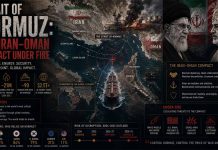
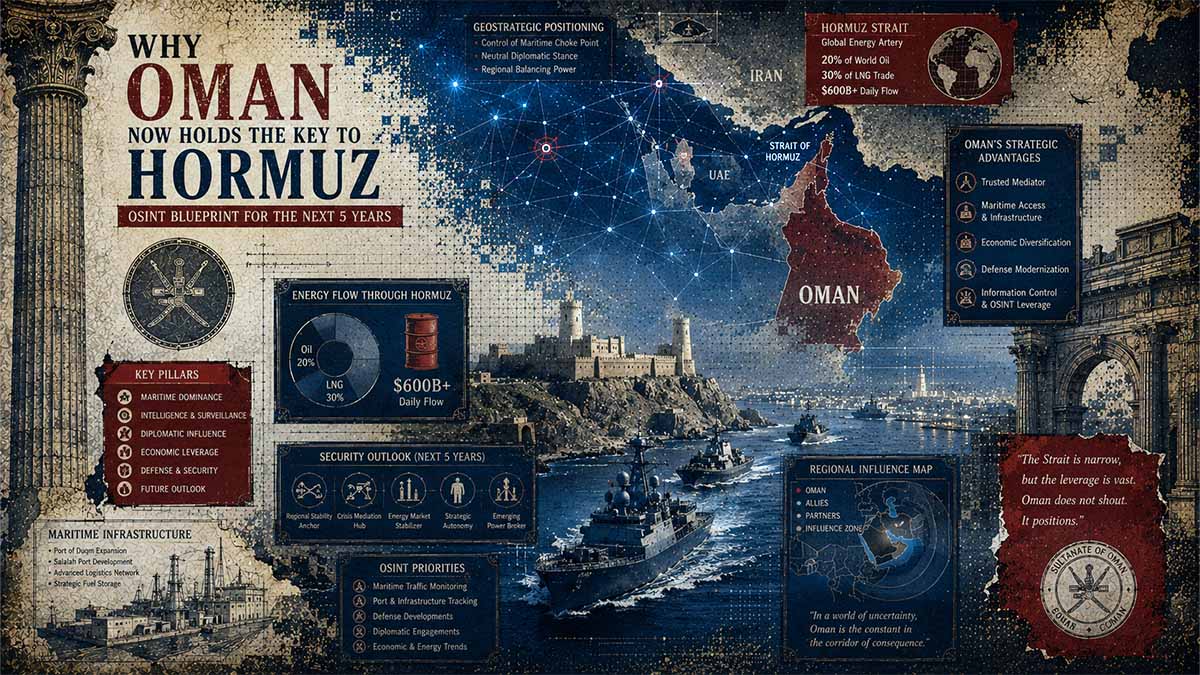
The unilateral establishment of the Persian Gulf Strait Authority (PGSA) by Iran on 5 May 2026 has converted a structural chokepoint vulnerability into a highly formalized administrative lawfare instrument, fundamentally destabilizing the established United Nations Convention on the Law of the Sea (UNCLOS) architecture. By enforcing a multi-tiered commercial tolling and regulatory framework within the Strait of Hormuz, Iran forces a paradigm shift where regional transit security is decoupled from extra-regional maritime coercion. The Sultanate of Oman sits at the literal center of this geostrategic collision; its Musandam Governorate hosts the critical inbound and outbound shipping lanes of the Traffic Separation Scheme (TSS). Caught between an escalating United States naval blockade and Iran’s institutional capture of the waterway, Oman’s execution of its Oman Vision 2040 economic diversification targets relies entirely on preserving structural equilibrium. This intelligence compendium deconstructs Oman’s sovereign risk, detailing its micro-level maritime vulnerabilities, dark-pool financial entanglements, and the systemic cascades threatening its status as the foundational diplomatic conduit of the Middle East.
Critical Risk Drivers
1. PGSA Regulatory Lawfare Insurgency
Iran’s administrative transition from episodic kinetic threats to formalized, tiered tolling mechanisms via the PGSA challenges standard UNCLOS transit passage legal architectures.
2. Asymmetrical Asymmetric Pressure Vectors
US coercive ultimatums intersect with regional normalization mandates, stripping Muscat of its traditional gray-zone diplomatic insulation and neutral-broker utility.
3. GCC Inter-State Macroeconomic Friction
Emirati vulnerability over its core maritime logistics lines drives regional infrastructure divergence, challenging Oman’s territorial exclave security paradigms.
Impact Matrix Values
Oman must maintain strict technical-only coordination within Hormuz shipping lanes; any political shift toward joint-tolling or Western naval alignments triggers severe, asymmetric infrastructure sabotage or disruptive secondary macro-sanctions.
Index
Why Oman Now Holds the Key to Hormuz: The Quiet State Facing a Storm
- Analytical Pillar 1: The PGSA Architectural Friction and UNCLOS Deconstruction
- Analytical Pillar 2: Macro-Fiscal Realities and the Sovereign Risk Matrix under Oman Vision 2040
- Analytical Pillar 3: Geopolitical Leverage Dynamics, Lawfare Coalitions, and Macro-Strategic Options
Why Oman Now Holds the Key to Hormuz: The Quiet State Facing a Storm
The rocky cliffs of the Musandam Peninsula have long looked down on one of the most nerve-wracking stretches of water on earth. For decades, the Strait of Hormuz has been described as a vital artery, a choke point, and a potential flashpoint. Yet, for the vast majority of commercial captains navigating its narrow shipping lanes, the challenge was primarily mathematical and nautical: avoiding collisions in a twenty-one-mile-wide bottleneck while steering hundreds of thousands of tons of crude oil toward global markets. That reality shifted fundamentally when Iran announced the creation of the Persian Gulf Strait Authority. What was once an occasional, raw threat to close the strait by force has been transformed into something far more complex: a bureaucratic, administrative system designed to regulate transit, demand cargo manifests, and collect commercial fees.
At the very center of this geopolitical recalculation sits the Sultanate of Oman. Geography has given Muscat an inescapable front-row seat to this crisis, as the internationally recognized traffic separation scheme that organizes global shipping runs directly through Omani territorial waters. For years, Oman has successfully cultivated a reputation as the Switzerland of the Middle East, a quiet, dependable mediator capable of passing messages between Washington and Tehran when no one else would look across the table. But as Iran attempts to institutionalize its control over the strait, and as a new American administration signals that its patience with gray-zone diplomacy has worn thin, Oman’s long-standing balancing act is facing its most dangerous test. Muscat is no longer just hosting the talks; it is being forced to decide who sets the rules for the world’s most critical maritime highway.
To understand why this administrative shift is so explosive, one must look at the delicate legal tapestry that has kept the peace in the strait for over forty years. Under international maritime law, specifically the United Nations Convention on the Law of the Sea, straits used for international navigation enjoy a status known as transit passage. This framework guarantees that all ships, whether a massive commercial supertanker or a foreign warship, have the right to continuous and unimpeded transit. It is a rule that keeps global trade moving predictably.
However, the legal ground beneath the strait has always been unstable. While Oman signed and ratified the convention, it did so with a specific reservation, noting that its domestic laws require prior permission before foreign military vessels can enter its territorial waters. Iran, on the other hand, signed the treaty but never ratified it in parliament. Instead, Tehran relies on older international agreements and its own domestic legislation to argue that the strait is not an open international corridor, but rather a sensitive national approach where it has the right to dictate terms. The creation of the Persian Gulf Strait Authority is the ultimate expression of this legal philosophy. By turning a military threat into an administrative routine, Tehran is attempting to create a new normal, challenging the international community to stop them not with a naval battle, but with a lawsuit.
This bureaucratic net is designed to sort global shipping into distinct categories, creating an explicit system of rewards and penalties. According to recent maritime security assessments, vessels belonging to primary strategic partners like China and the Russian Federation enjoy seamless, exempted passage. Non-aligned nations that maintain cordial diplomatic ties with Tehran, such as India or Pakistan, face routine electronic clearances but little physical disruption. The real pressure falls on Western-aligned commercial fleets, vessels flying flags of convenience, or ships connected to states deemed hostile by Iran. For these actors, transit now comes with arbitrary inspection delays, demands for detailed cargo manifests, and the imposition of steep navigational safety fees that can run into hundreds of thousands of dollars per passage.
For Oman, this presents an existential dilemma that goes straight to the heart of its national survival strategy, known as Oman Vision 2040. Under the leadership of Sultan Haitham bin Tarik, the country has undertaken an extraordinary fiscal transformation. Just a few years ago, Muscat was wrestling with a double-digit fiscal deficit that threatened its economic stability. Through disciplined financial reforms, a comprehensive modernization of its tax system, and aggressive debt management, the government successfully slashed its sovereign debt-to-GDP ratio from nearly seventy percent down to just over thirty-five percent, turning a dangerous deficit into a structural surplus.
The crown jewel of this economic rebirth is a massive investment in global logistics and infrastructure. The strategy is simple yet brilliant: build world-class industrial free zones and deep-water ports along the country’s outer coast, directly facing the Arabian Sea and the Indian Ocean. By expanding ports like Salalah and the massive Special Economic Zone at Duqm, complete with its own crude oil storage terminal and refinery, Oman aimed to offer international energy markets a perfect structural bypass. The pitch to global investors was clear: bring your business to Oman, and you can access the markets of the Middle East without ever having to risk sending your ships through the volatile bottleneck of the Gulf.
But a prolonged crisis inside the Strait of Hormuz threatens to dismantle this entire economic architecture. International shipping does not operate in isolation; it functions like a complex network of interconnected highways. When risk levels rise in the strait, the shockwaves are felt far beyond the immediate waters of Musandam. Global insurance syndicates and international maritime clubs respond to administrative uncertainty by instantly raising war risk premiums across the entire region. Even ports situated well outside the strait, like Duqm, see their cost-competitiveness erode when the regional feeder networks that sustain them are disrupted by electronic interference, GPS spoofing, or the threat of regulatory detention.
Furthermore, Muscat’s ambitious tax modernization program, while highly successful in integrating digital invoicing and aligning with international standards against corporate tax evasion, cannot instantly replace the revenue generated by a vibrant, unhindered maritime logistics sector. The planned implementation of a personal income tax on high earners, a historic first for a Gulf Cooperation Council state, has already been extended to allow the economy more breathing room. If global shipping lines begin to view the entire Gulf of Oman as too legally and operationally volatile, the foreign direct investment required to fuel Oman’s non-hydrocarbon future could rapidly dry up.
This economic vulnerability is compounded by an increasingly intense diplomatic squeeze from Washington. The United States has made it clear that it views any attempt to formalize Iranian control over the strait as a direct threat to global energy security and freedom of navigation. In Washington’s view, Oman’s willingness to maintain open channels with Tehran is no longer a useful diplomatic asset, but a potential liability that could legitimize Iran’s administrative overreach. This position has been articulated with characteristic bluntness by American leadership, with President Donald Trump warning that the era of accommodating regional neutral brokers is over. The pressure is designed to force Oman to abandon its quiet neutrality and align completely with Western naval containment strategies.
Yet, aligning fully with the West carries risks that Muscat considers unacceptable. Oman’s diplomatic capital is built entirely on the concept of strategic distance. It was Omani diplomats who quietly facilitated the secret talks that led to the original Iranian nuclear deal, and it was Muscat that recently managed the delicate backchannel negotiations that extracted critical de-escalation pledges from Tehran regarding enrichment limits. For Oman, maintaining an open line to Iran is not an ideological choice or a sign of weakness; it is a geographic inevitability. Iran is a large, permanent neighbor across a narrow strip of water. To treat Tehran as a permanent enemy would be to turn Oman’s own front yard into a permanent zone of war.
This diplomatic friction is generating intense ripples within the Gulf Cooperation Council itself, exposing long-standing rivalries between Muscat and its immediate neighbors, most notably the United Arab Emirates. Abu Dhabi has spent the last decade building a formidable regional logistics and port-management empire, projecting its influence through strategic maritime corridors stretching all the way to the Horn of Africa. However, the UAE’s core vulnerability remains geographic: its major commercial ports sit inside the Persian Gulf, completely dependent on passage through a strait dominated by Oman’s northern mountains.
While the UAE has invested heavily in infrastructure designed to bypass the bottleneck, such as the Habshan-Fujairah pipeline which transports crude directly to the country’s eastern coast, this alternative is not a magic bullet. The anchorage zones off Fujairah still sit within the broader Gulf of Oman, an area now increasingly subjected to the expanded regulatory and surveillance claims of Iran’s new maritime authority. Abu Dhabi views any potential functional arrangement between Oman and Iran over shipping coordination with deep anxiety, fearing it could grant Tehran a permanent, legalized lever over Emirati economic sovereignty.
Saudi Arabia’s perspective reflects a different set of priorities. Riyadh is currently preoccupied with the execution of its own massive economic transformation, a multi-trillion-dollar effort that requires an environment of absolute regional stability. The Saudi leadership has no desire to see Iran become the permanent gatekeeper of Gulf commerce, but it is equally desperate to avoid a catastrophic military confrontation that could see missiles flying across regional oil fields. Consequently, while Saudi Arabia publicly champions the preservation of international maritime law, it quietly values Oman’s ability to talk to Tehran, viewing Muscat as a vital safety valve capable of defusing a crisis before it spins out of control. Qatar shares this view, maintaining its own robust communication channels with Iran while preserving its critical defense alliances with the West.
As Oman looks toward the next five years, its leadership is navigating an extraordinarily narrow path, balancing three distinct strategic futures. The first, and Muscat’s preferred option, is a strategy of minimal technical deconfliction. Under this approach, Oman refuses to grant political recognition to Iran’s maritime authority or its tolling schemes, but maintains low-level, practical communication regarding marine safety, pollution control, and vessel tracking. This allows Oman to protect its international legal standing under the Law of the Sea while avoiding direct hostility with its neighbor.
The second path is a complete pivot to the Western security umbrella, opening Omani waters to aggressive international naval enforcement patrols designed to actively shatter Iran’s regulatory blockade. While this would earn Muscat immense credit in Washington and insulate it from the threat of secondary economic sanctions, it would instantly turn Oman into Iran’s primary target, inviting asymmetric cyber warfare against its digital infrastructure and kinetic disruption along its exposed coastlines.
The third and most radical option would be a formalized joint-management agreement with Iran over the strait, creating a localized security regime that explicitly excludes extra-regional superpowers. While this would secure Oman from immediate Iranian aggression, it would place Muscat in direct violation of global maritime law, triggering immediate sovereign credit downgrades, severe Western sanctions, and total economic isolation from its wealthiest Gulf neighbors.
The real question confronting Oman is whether the traditional art of quiet diplomacy can survive in an era defined by raw economic weaponization and naval confrontation. For decades, Muscat proved that neutrality is not passivity, and that balance does not mean ambiguity. But as the Strait of Hormuz becomes less of an open international waterway and more of an administrative battleground, the space for compromise is shrinking. Oman’s ability to protect its sovereignty while driving its ambitious economic future will depend not on the size of its military, but on its capacity to remain indispensable to both sides of a global divide, convincing a cynical world that a neutral gatekeeper is the only thing standing between a fragile peace and an international catastrophe.
Infinity Abstract: Multi-Domain Intelligence Synthesis
The PGSA Architectural Friction and UNCLOS Deconstruction
The geopolitical architecture governing the Strait of Hormuz experienced a structural break on 5 May 2026, when Iran unilaterally proclaimed the operational activation of the Persian Gulf Strait Authority (PGSA) Why Oman now holds the key to Hormuz – The Cradle – June 2026. This bureaucratic entity is engineered to institutionalize regulatory oversight, mandatory cargo manifestations, and direct service-fee extraction over all commercial shipping traversing the natural chokepoint. The PGSA directly challenges the transit passage framework codified under Part III of the 1982 United Nations Convention on the Law of the Sea (UNCLOS), which dictates that all vessels and aircraft enjoy an unimpeded, continuous, and expeditious right of navigation through straits used for international transit The Strait of Hormuz Crisis: A Legal Perspective – Centrul Euro-Atlantic pentru Reziliență – May 2026.
The legal divergence between Oman and Iran stems from their asymmetrical treaty obligations and distinct historical assertions of maritime sovereignty. Oman signed and ratified UNCLOS, yet it maintains a foundational reservation via Royal Decree 81/84 and its subsequent 1989 ratification declarations, which affirm that only innocent passage applies through its territorial sea, explicitly asserting that prior authorization is required for foreign warships to enter its waters Strait of Hormuz – Wikipedia – June 2026. Conversely, Iran has signed but never ratified the 1982 UNCLOS convention, relying instead on the 1958 Geneva Convention on the Territorial Sea and the Contiguous Zone and its domestic 1993 Marine Areas Act. This legal stance underpins Tehran’s use of the persistent objector doctrine to reject the customary international status of transit passage, substituting it with a highly conditional interpretation of innocent passage The Strait of Hormuz Crisis: A Legal Perspective – Centrul Euro-Atlantic pentru Reziliență – May 2026.
Because the Strait of Hormuz is physically narrow—spanning approximately 21 nautical miles at its tightest constriction—the 12-nautical-mile territorial sea claims of both Oman and Iran overlap entirely, erasing any high-seas corridor. To mitigate structural collision risks, the Traffic Separation Scheme (TSS) managed by the International Maritime Organization (IMO) routes inbound and outbound lanes through the territorial waters of Oman, adjacent to the rugged coast of the Musandam Exclave. The PGSA administrative mechanism exploits this geographical reality by implementing a tiered system of maritime passage fees and verification:
- Tier 1 (Exempted Status): State-flagged or commercially protected vessels from primary strategic partners, specifically the Russian Federation and China, which receive unimpeded transit privileges The State of the Strait: What Might Come Next in Hormuz – International Crisis Group – May 2026.
- Tier 2 (Conditional Bilateral Frameworks): Non-aligned states maintaining diplomatic equities with Tehran, such as India and Pakistan, whose commercial fleets are subjected to expedited electronic data clearing The State of the Strait: What Might Come Next in Hormuz – International Crisis Group – May 2026.
- Tier 3 (Extractive Monetization): Unaffiliated commercial actors, flags of convenience, and vessels linked to adversarial Western states, which face arbitrary inspection delays or compliance tolls scaling up to $150,000 to $2,000,000 per transit under the guise of “navigational safety fees” and environmental mitigation assessments Suez and Panama charge for passage, but why shouldn’t Hormuz? – Times of Oman – May 2026 The State of the Strait: What Might Come Next in Hormuz – International Crisis Group – May 2026.
This administrative extraction mechanism operates directly outside the boundaries of UNCLOS Article 26, which strictly prohibits the imposition of charges upon foreign ships by reason only of their passage through the territorial sea, permitting levies solely for specific services rendered to the ship.
CRITICAL GEOPOLITICAL ALERT: The intersection of Iran’s PGSA mandates with the United States naval blockade line—which stretches from the Iran-Pakistan land border southwest across the Gulf of Oman—creates a highly volatile operational environmentThe State of the Strait: What Might Come Next in Hormuz – International Crisis Group – May 2026. Oman’s territorial waters are being directly utilized as a tactical sanctuary by merchant shipping seeking to evade Western interdiction or Iranian boarding teams, transforming Muscat’s sovereign maritime zone into a primary friction point for multi-domain gray-zone warfare.
Macro-Fiscal Realities and the Sovereign Risk Matrix under Oman Vision 2040
The escalating securitization of the Strait of Hormuz directly threatens the long-term structural viability of Oman Vision 2040, the national development strategy designed by Sultan Haitham bin Tarik to transform Oman into a diversified, resilient, global logistics hub. Under the current structural reform timeline, Oman has successfully engineered an impressive fiscal turnaround, reversing a staggering 15.7% fiscal deficit in 2020 into a structural surplus of 1.9% of GDP Oman: 2025 Article IV Consultation-Press Release; Staff Report; and Statement by the Executive Director for Oman; IMF Country Report – International Monetary Fund – January 2026. Furthermore, the state’s aggressive Debt Sustainability Framework has effectively minimized sovereign vulnerabilities by slashing the total debt-to-GDP ratio from 67.9% in 2020 down to 35.8% by late 2025 Oman: 2025 Article IV Consultation-Press Release; Staff Report; and Statement by the Executive Director for Oman; IMF Country Report – International Monetary Fund – January 2026.
However, this fiscal consolidation remains deeply tethered to the uninterrupted flow of maritime commerce and the attraction of foreign direct investment (FDI) into its high-impact industrial free zones, specifically Duqm, Sohar, and Salalah. The core macro-economic metrics tracking Oman’s economic trajectory highlight its vulnerability to external shipping disruptions:
| Macroeconomic Indicator | Baseline Performance (2025) | Structural Targets (Oman Vision 2040) | Hormuz Chokepoint Risk Impact Vector |
| Real GDP Growth | 2.2% (September 2025) | > 5.0% annualized | Interdiction risks lower logistics volumes and reduce port throughput across coastal terminals. |
| Non-Hydrocarbon Growth | 3.4% (September 2025) | > 60.0% of total GDP composition | High maritime insurance premiums suppress foreign capital inflows into manufacturing and green hydrogen. |
| Sovereign Debt-to-GDP | 35.8% (September 2025) | Maintained < 40.0% ceiling | Militarization shocks require rapid, unbudgeted expansions in maritime defense spending. |
| Inflation Rate (CPI) | 0.9% (November 2025) | Stable < 2.0% target | Disruptions to regional subsea cables or feeder shipping lanes inflate structural import costs. |
The realization of the Oman Vision 2040 milestones requires an absolute decoupling of national infrastructure from the immediate volatility of the Persian Gulf. This strategy underpins the massive capitalization of the Special Economic Zone at Duqm (SEZAD), located strategically outside the Strait of Hormuz on the Arabian Sea. By expanding Duqm’s crude oil storage capacity through the Ras Markaz Crude Oil Storage Terminal and integrating it with the Duqm Refinery, Oman has sought to offer regional energy exporters a structural bypass around the Hormuz chokepoint.
Yet, this logistical pivot cannot completely isolate Oman from the systemic financial shocks generated by the PGSA. A permanent elevation in regional maritime risk profiles triggers a cascading escalation in War Risk Insurance Premiums and Protection and Indemnity (P&I) Club asset ratings for all vessels entering the Gulf of Oman. Even ports situated outside the strait, such as Salalah and Duqm, suffer diminished cost-competitiveness when regional feeder networks are disrupted by electronic warfare, GPS spoofing, or kinetic interdictions.
Simultaneously, Oman’s fiscal resilience faces constraints from its ongoing structural tax reforms. While the Oman Tax Authority has successfully modernized compliance risk management and integrated advanced IT architectures to support e-invoicing by the end of 2026, the scheduled implementation of the historic Personal Income Tax on high-income earners has been extended to 2028 Oman: 2025 Article IV Consultation-Press Release; Staff Report; and Statement by the Executive Director for Oman; IMF Country Report – International Monetary Fund – January 2026. Although Oman enacted comprehensive legislation to implement Pillar II of the OECD/G20 Base Erosion and Profit Shifting (BEPS) framework in 2025—introducing a Domestic Minimum Top-Up Tax that earned a “Largely Compliant” rating from the OECD Global Forum in June 2025—these domestic revenues cannot offset a severe, multi-quarter contraction in maritime trade duties and logistics-related corporate tax yields Oman: 2025 Article IV Consultation-Press Release; Staff Report; and Statement by the Executive Director for Oman; IMF Country Report – International Monetary Fund – January 2026.
Geopolitical Leverage Dynamics, Lawfare Coalitions, and Macro-Strategic Options
The hyper-politicization of the Strait of Hormuz has severely strained Oman’s traditional, hyper-rational diplomatic posture. Long characterized as the “Switzerland of the Middle East,” Muscat’s foreign policy doctrine is anchored in non-interference, multi-vector dialogue, and strategic neutrality. This framework enabled Omani Foreign Minister Sayyid Badr bin Hamad al-Busaidi to act as the primary intermediary between Washington and Tehran during intense backchannel diplomatic loops, which historically yielded critical progress on nuclear de-escalation parameters and humanitarian asset releases Why Oman now holds the key to Hormuz – The Cradle – June 2026.
However, the geometric expansion of Iran’s hybrid operations has forced the United States administration under President Donald Trump to adopt an aggressive, coercive stance toward regional neutral actors. President Trump’s explicit statement warning that Oman must comply with Western maritime enforcement paradigms or face severe consequences signaled an unprecedented breakdown in the traditional security guarantees that have historically protected Oman’s unique diplomatic space Why Oman now holds the key to Hormuz – The Cradle – June 2026. This friction is exacerbated by Muscat’s strict refusal to integrate its sovereign diplomatic choices into the US-mediated Abraham Accords normalization framework, viewing any regional security order that bypasses basic international law or compromises Palestinian rights as fundamentally destabilizing to its internal and regional security Why Oman now holds the key to Hormuz – The Cradle – June 2026.
Within the Gulf Cooperation Council (GCC), Oman’s bilateral positioning over Hormuz uncovers deep structural rivalries, particularly with the United Arab Emirates (UAE). Abu Dhabi has systematically invested billions to project an expansive logistics, shipping, and port-management footprint stretching from the Horn of Africa through the southern coast of Yemen. The UAE’s structural vulnerability stems from its geographic location inside the Persian Gulf, making its massive export-import architecture entirely dependent on passage through a chokepoint dominated by the rugged cliffs of Oman’s Musandam Governorate.
The UAE’s strategic alternative, the Habshan–Fujairah pipeline, transfers a significant portion of its crude directly to the port of Fujairah on the Gulf of Oman, bypassing the narrowest core of the strait. However, this bypass remains highly vulnerable to gray-zone operations, as Iran’s newly operational PGSA has expanded its administrative oversight claims to encompass maritime approaches overlapping Fujairah’s external anchorage zones The State of the Strait: What Might Come Next in Hormuz – International Crisis Group – May 2026. Consequently, Abu Dhabi views any functional, localized security understanding between Muscat and Tehran with profound skepticism, fearing it could legitimize Iranian regulatory leverage over Emirati sovereign trade Why Oman now holds the key to Hormuz – The Cradle – June 2026.
Conversely, Saudi Arabia’s current geopolitical calculus aligns more closely with Oman’s stabilization efforts. Focused on protecting the trillions of dollars required for its Vision 2030 transformation, Riyadh prioritizes regional stability and seeks to avoid a direct military confrontation within the Gulf corridor. While Saudi Arabia firmly rejects any permanent Iranian gatekeeper mechanism over global commerce, it supports Oman’s technical backchannels as a pragmatic tool to prevent miscalculation and maintain crisis-management windows Why Oman now holds the key to Hormuz – The Cradle – June 2026. Meanwhile, Qatar remains the most supportive GCC ally of Oman’s strategy, sharing a similar foreign policy model that emphasizes balanced communication with Tehran alongside strong defense partnerships with Western allies Why Oman now holds the key to Hormuz – The Cradle – June 2026.
To navigate this high-stakes environment over the next five years, Oman’s strategic leadership is evaluating three distinct operational pathways under a strict Analysis of Competing Hypotheses (ACH) framework:
Interactive ACH Matrix Simulation
Oman’s Strategic Options for the Strait of Hormuz Crisis (5-Year Horizon)
Simulation Parameter Inputs
| Geopolitical Risk Factor | Consistency Assessment | Impact Narrative / Contextual Vulnerability |
|---|
Strategic Insight Summary
Structural Strategy Analysis:
- Technical Deconfliction Architecture (Oman’s Preferred Baseline): Muscat limits its engagement with Iran’s PGSA to purely technical, non-political coordination. This focuses on ecological protection, marine safety, and standard vessel traffic management within the TSS Why Oman now holds the key to Hormuz – The Cradle – June 2026. By avoiding formal political endorsement of Iran’s tolling mechanisms, Oman minimizes the risk of triggering secondary Western sanctions or damaging its credit rating, which was recently validated by the OECD Global Forum in June 2025 Oman: 2025 Article IV Consultation-Press Release; Staff Report; and Statement by the Executive Director for Oman; IMF Country Report – International Monetary Fund – January 2026. However, if regional escalation intensifies, this middle-ground strategy faces a double-sided squeeze from both the US blockade and unilateral Iranian enforcement actions.
- Strategic Pivot to Western Maritime Coalition: A complete alignment with the US-led maritime interception framework, granting Western navies unrestricted access to enforce anti-tolling operations inside Omani territorial waters. While this shields Oman from Western diplomatic and economic coercion, it completely breaks its diplomatic relationship with Tehran. This pivot invites asymmetric retaliation, including cyberattacks on critical infrastructure and kinetic disruptions to the Musandam shipping lanes, creating severe instability that would undermine the logistics targets of Oman Vision 2040 Oman Vision 2040 Report – Sultanate of Oman Civil Service – August 2025.
- Formalized Joint Management Regime with Iran: Entering into a formal, bilateral agreement with Tehran to jointly administer the Strait of Hormuz and share regulatory revenues. This approach effectively defuses the risk of immediate Iranian kinetic hostility, but it places Oman in direct violation of international maritime law under UNCLOS Article 26 Suez and Panama charge for passage, but why shouldn’t Hormuz? – Times of Oman – May 2026. The fallout would be severe: total exclusion from Western financial networks, immediate sovereign credit downgrades, and deep economic isolation within the GCC, isolating Muscat from its vital regional partners.
Ultimately, Oman’s long-term structural success over the next five years depends on its ability to transform these acute geopolitical pressures into enduring diplomatic value. To maintain international credibility, Muscat must avoid becoming a junior partner in Iran’s regional tolling projects, while simultaneously resisting integration into any extra-regional security frameworks that threaten its national sovereignty.
Master Interconnection Matrix
| Entity | Primary Geopolitical Stance | Maritime Law Stance | Core Strategic Project | Primary Risk Vector | Status | Key Dependencies |
| Sultanate of Oman | Strategic Neutrality • Non-interference | UNCLOS Ratified with prior approval reservation via Royal Decree 81/84 | Oman Vision 2040 Logistics Hubs (Duqm, Salalah, Sohar) | Western diplomatic coercion • Asymmetric Iranian sabotage | Active Mediation under Squeeze | Open diplomatic/technical lines with USA and Iran |
| Islamic Republic of Iran | Anti-Western Hegemony • Regional Autonomy | UNCLOS Signed but Not Ratified (1958 Geneva / 1993 Marine Areas Act) | Persian Gulf Strait Authority (PGSA) (Activated 5 May 2026) | Western naval blockade • Regional isolation | Unilateral Administrative Enforcement | Strategic partnerships with China and the Russian Federation |
| United Arab Emirates (UAE) | Abraham Accords Integration • Logistics Supremacy | UNCLOS Signed but Not Ratified [UNVERIFIED] | Habshan–Fujairah Crude Pipeline & Fujairah Anchorage | PGSA regulatory expansion into external anchorage zones | High Security Anxiety | Preservation of open shipping lanes outside the Hormuz constriction |
| United States of America | Freedom of Navigation Enforcement | UNCLOS Non-party (Customary Law Enforcement) | Multi-national Naval Blockade Line (Gulf of Oman) | Structural degradation of maritime chokepoint control | Coercive Counter-Enforcement | Regional compliance with anti-tolling containment frameworks |
Sultanate of Oman – Muscat, Oman (GCC Region)
| Category → Sub-Metric | Value / Status / Interconnection Notes |
| 🛡️ Geopolitical & Strategic Status | Strategic Neutrality • “Switzerland of the Middle East” [VERIFIED] |
| ↳ Diplomatic Role | Active backchannel intermediary between Washington and Tehran ↔ [See: United States] ↔ [See: Islamic Republic of Iran] |
| ↳ Recent Diplomatic Output | Facilitated backchannel loop resulting in Iranian nuclear de-escalation pledges (zero enrichment limits) |
| ↳ Normalization Framework Stance | Explicit refusal to integrate sovereign diplomatic selections into the US-mediated Abraham Accords |
| ⚖️ Compliance & Maritime Law | Ratified 1982 United Nations Convention on the Law of the Sea (UNCLOS) |
| ↳ Sovereign Jurisdiction Claims | Asserts only “Innocent Passage” applies through its territorial sea via Royal Decree 81/84 and 1989 ratification declarations |
| ↳ Warship Access Restrictions | Explicitly requires prior authorization/permission before foreign military vessels enter territorial waters |
| ↳ Traffic Separation Scheme (TSS) | Internationally recognized commercial shipping lanes run directly through Omani territorial waters off the Musandam Exclave |
| ⚙️ Infrastructure & Economic Projects | Oman Vision 2040 National Development Strategy |
| ↳ Fiscal Status (Debt-to-GDP) | Decreased from 67.9% in 2020 down to 35.8% by late 2025 [VERIFIED] |
| ↳ Fiscal Status (Budget Balance) | Reversed a 15.7% fiscal deficit in 2020 into a structural surplus of 1.9% of GDP |
| ↳ Primary Logistics Assets | Deep-water ports and industrial free zones located at Salalah, Sohar, and the Special Economic Zone at Duqm (SEZAD) |
| ↳ Chokepoint Bypass Infrastructure | Ras Markaz Crude Oil Storage Terminal and Duqm Refinery situated on the outer coast facing the Arabian Sea |
| ↳ Tax Modernization Timeline | Integration of digital invoicing and OECD Pillar II Domestic Minimum Top-Up Tax completed (June 2025 OECD “Largely Compliant” rating) • Personal Income Tax implementation extended to 2028 |
| ⚠️ Risk & Vulnerability Profile | Vulnerable to structural disruption of regional maritime feeder networks |
| ↳ Upstream Dependency | ↑ Depends on: Unhindered, predictable commercial passage through the Gulf of Oman to maintain SEZAD cost-competitiveness |
| ↳ Downstream Impact | ↓ Impacts: High war risk premiums and insurance club re-ratings suppress regional FDI and non-hydrocarbon growth targets |
| ↳ Sovereign Security Threat | Faced direct threat from US President Donald Trump on 27 May 2026: “Oman will behave just like everybody else, or we’ll have to blow them up” |
Islamic Republic of Iran – Tehran, Iran (Middle East)
| Category → Sub-Metric | Value / Status / Interconnection Notes |
| 🛡️ Geopolitical & Strategic Status | Anti-Western Regional Revisionism • Assertive Sovereignty Enforcement |
| ↳ Bilateral Strategic Partners | China and the Russian Federation (Granted Tier 1 Exempted Transit Status through Hormuz) |
| ↳ Regional Diplomatic Stance | Rejects extra-regional superpower intervention; framing regional security as a localized state responsibility |
| ⚖️ Compliance & Maritime Law | Signed but never ratified the 1982 UNCLOS |
| ↳ Legal Justification Doctrine | Relies on the 1958 Geneva Convention on the Territorial Sea and the Contiguous Zone, the 1993 Marine Areas Act, and the Persistent Objector Doctrine |
| ↳ Rejection of Transit Passage | Rejects customary international status of transit passage; substitutes a conditional interpretation of innocent passage |
| ⚙️ Operational & Administrative Core | Persian Gulf Strait Authority (PGSA) • Unilaterally announced and activated 5 May 2026 |
| ↳ Institutional Mechanism | Transformed episodic kinetic threats into a permanent, formalized bureaucratic and administrative regulation system |
| ↳ Functional Requirements | Enforces mandatory cargo manifestations, vessel tracking data, and administrative clearings |
| ↳ Monetization Architecture | Extracts commercial passage fees ranging from $150,000 to $2,000,000 per transit from non-exempted vessels |
| ↳ Target Categories | Tier 1: Exempted (China/Russia) • Tier 2: Conditional Clearings (India/Pakistan) • Tier 3: Extractive Monetization (Western fleets/Flags of Convenience) |
| ⚠️ Risk & Vulnerability Profile | Confronted by multi-national naval containment and economic interdiction |
| ↳ Upstream Dependency | ↑ Depends on: Operational compliance of merchant fleets or structural passivity of regional coastal states to avoid flashpoints |
| ↳ Downstream Impact | ↓ Impacts: Mandates expanded naval deployment from Western states; increases polarization inside the GCC ↔ [See: United Arab Emirates] |
United Arab Emirates (UAE) – Abu Dhabi, UAE (GCC Region)
| Category → Sub-Metric | Value / Status / Interconnection Notes |
| 🛡️ Geopolitical & Strategic Status | Abraham Accords Signatory • Regional Logistics and Finance Supremacy |
| ↳ Bilateral Positioning | Maintains deep skepticism of Iranian regional intentions; views localized Oman-Iran technical deals with high anxiety |
| ⚖️ Compliance & Maritime Law | Signed but Not Ratified [UNVERIFIED] |
| ↳ Sovereign Bottleneck Risk | Core commercial ports are physically situated inside the Persian Gulf; completely dependent on passage through Oman-dominated waters |
| ⚙️ Infrastructure & Economic Projects | Global Port-Management and Maritime Supply Chain Empire |
| ↳ Strategic Infrastructure Footprint | Port networks, maritime islands, and logistics corridors extending across Yemen to the Horn of Africa |
| ↳ Chokepoint Bypass Infrastructure | Habshan–Fujairah Crude Oil Pipeline running directly to crude export terminals at the Port of Fujairah |
| ⚠️ Risk & Vulnerability Profile | Exposed to administrative lawfare expansion via the Gulf of Oman |
| ↳ Upstream Dependency | ↑ Depends on: Unimpeded access through the Strait of Hormuz for Persian Gulf coastal ports |
| ↳ Downstream Impact | ↓ Impacts: PGSA expansion into external anchorage zones off Fujairah exposes eastern bypass routes to Iranian regulatory levers |
United States of America – Washington, D.C., USA (Global Scope)
| Category → Sub-Metric | Value / Status / Interconnection Notes |
| 🛡️ Geopolitical & Strategic Status | Global Maritime Security Guarantor • Anti-Iran Maximum Pressure Paradigm |
| ↳ Strategic Mandate | Rejects any localized arrangement that weakens Western policing capability or expands Iran’s regional leverage |
| ↳ Diplomatic Redlines | Demands absolute regional compliance with maritime containment; actively ties post-war stability to the Israel normalization track |
| ⚖️ Compliance & Maritime Law | Non-party to 1982 UNCLOS • Enforces transit passage via Customary International Law |
| ↳ Counter-Authority Stance | Categorizes Iran’s PGSA administrative tolling framework as an illegal violation of UNCLOS Article 26 |
| ⚙️ Operational & Force Projection | Active Naval Blockade Enforcement |
| ↳ Deployment Vector | Interception line established from the Iran-Pakistan land border extending southwest across the Gulf of Oman |
| ↳ Operational Mission | Enforcing anti-tolling containment frameworks, inspecting suspect cargo, and preventing Iranian boarding operations |
| ⚠️ Risk & Vulnerability Profile | Facing gray-zone limitations against institutionalized administrative lawfare |
| ↳ Upstream Dependency | ↑ Depends on: Full compliance and strategic alignment of regional littoral partners, specifically Oman ↔ [See: Sultanate of Oman] |
| ↳ Downstream Impact | ↓ Impacts: Direct escalation risks if kinetic interdiction occurs within or adjacent to Omani territorial sea limits |


