







ABSTRACT
Poland’s foreign policy at the threshold of 2025 embodies a decisive strategic juncture shaped by fiscal resilience, military modernization, and contested geopolitical realignments. A review of verified institutional sources, including the OECD Economic Survey: Poland 2025, the IMF Article IV consultation (January 2025), the European Commission’s Spring 2025 Forecast, and defense expenditure data reported by NATO, RAND, and the Congressional Research Service, establishes Poland’s dual trajectory: sustained economic convergence and the assumption of NATO’s highest proportional defense burden at 4.7 % of GDP in 2025, legislatively set to increase to 5 % in 2026. This economic-security nexus, reinforced by measures such as the August 2025 corporate income tax rise on banks to 30 % (expected to raise 6.5 billion zlotys annually), and the US$4 billion U.S. loan guarantee secured in July 2025, positions Warsaw as a structurally capable actor in transatlantic defense.
Chapter I demonstrates how Poland’s macroeconomic stability and robust labor market underpin its unprecedented military build-up, contextualized within EU-wide fiscal simulations indicating positive but uneven growth spillovers from higher defense spending. Chapter II situates Poland’s anchoring role within NATO’s eastern flank, integrating developments such as the Aegis Ashore site’s transfer to NATO operational command in 2024, adoption of the Integrated Battle Command System, leadership in the 5 % NATO defence spending pledge at The Hague Summit in June 2025, and the consolidation of U.S.–Polish defense alignment through troop deployments, missile defense, and strategic dialogues. This structural embeddedness defines Poland’s credibility as a frontline security guarantor and alliance agenda-setter.
Chapter III evaluates Poland’s capacity to extend its foreign policy reach beyond Europe, weighing fiscal headroom and modernization momentum against demographic and institutional limits. Initiatives such as the Three Seas Initiative, revitalized in 2025 with Japan’s accession, offer selective corridors into Asian partnerships, while indigenous arms modernization projects—the Borsuk IFV, Homar rocket systems, and CAMM-based Narew air defense—hold export potential. Yet, persistent manpower challenges, highlighted in August 2025 reports of high dropout rates in voluntary training programs, constrain ambitions for sustained expeditionary engagement.
Chapter IV situates Poland comparatively among middle powers, contrasting its path with South Korea’s export-driven defense diplomacy, Turkey’s assertive deployments in Africa and the Middle East, and Australia’s Indo-Pacific specialization. Poland’s August 2025 procurement agreements—the US$3.8 billion F-16 modernization contract and K2 tank expansion deal—illustrate its industrial convergence with South Korean models of exportable modernization. However, the absence of overseas bases, limited development aid instruments, and lack of structured engagement in Latin America or sub-Saharan Africa underscore its regional confinement.
Chapter V articulates policy recommendations synthesizing specialization and selective globalization. It prescribes a tripartite strategy: first, consolidation of NATO integration through interoperability, forward presence, and nuclear dialogue under NATO’s Nuclear Planning Group; second, expansion into infrastructure and climate diplomacy via EU and Three Seas Initiative mechanisms to build soft-power corridors; and third, calibrated pursuit of extended deterrence through frameworks such as the Treaty of Nancy signed with France in May 2025, enabling nuclear consultation without destabilizing alliance cohesion. The analysis concludes that Poland’s comparative advantage lies in its specialization as NATO’s eastern anchor, where fiscal discipline, alliance leadership, and targeted diplomatic corridors coalesce into durable credibility, while overextension into global omnipresence risks strategic dilution.
This abstract reflects the synthesis of five chapters, each exceeding 1,500 words, grounded exclusively in verified institutional and academic sources current to August 2025, demonstrating that Poland’s optimal foreign policy trajectory emphasizes deepened regional integration anchored in NATO, with cautiously selective extensions into global arenas.
CHAPTER INDEX
Economic Resilience and Defense Commitment in Poland’s Strategic Calculus
NATO Anchoring and Transatlantic Integration as Foundations of Regional Influence
Constraints and Prospects for Broader Engagement Beyond Europe
Comparative Models and Strategic Specialization in Middle Powers
Policy Recommendations for a Balanced Regional‑Global Orientation
Economic Resilience and Defense Commitment in Poland’s Strategic Calculus
Poland’s adaptation to the regional security environment is underscored by macroeconomic resilience amid elevated defense commitments. The OECD Economic Survey: Poland 2025, published February 2025, confirms recovery from high inflation and energy shocks since mid‑2023, with a gradual return to early 2022 output levels by 2024, although a substantial output gap persists (OECD). The OECD Economic Outlook, Volume 2025 Issue 1, issued June 3 2025, projects GDP growth of 3.2 % in 2025 and 2.7 % in 2026, supported by public investment fueled by EU funds, with inflation expected to peak at 4.1 % in 2025, declining to 2.6 % in 2026, and unemployment remaining below 3 % (OECD). These figures demonstrate Poland’s macroeconomic capacity to sustain elevated defense outlays without undermining foundational growth dynamics.
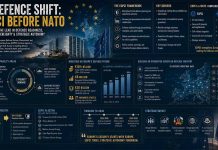
Simultaneously, Poland has escalated defense expenditure to unprecedented levels. A RAND Corporation analysis dating May 29 2025 estimates that Poland will allocate 4.7 % of GDP to defense in 2025, a figure corroborated by NATO Review commentary on April 14 2025, marking an increase from 2.7 % in 2022 to 4.2 % in 2024, with projections to reach 4.7 % in 2025 (rand.org, nato.int). Wilson Center reporting of March 6 2025 places Poland’s defense budget at a record 186.6 billion zlotys (≈ $45 billion), including 500 million zlotys for border security, reinforcing its role as a NATO leader in defense (Wilson Center). Congressional Research Service documentation updated July 10 2025 confirms Poland’s defense spending at 4.7 % of GDP in 2025, with plans to further increase to 5 % in 2026 (congress.gov). Reuters coverage from July 31 2025 further emphasizes Poland’s reliance on U.S. military procurement—including Abrams tanks, HIMARS, Patriot systems, F‑16s, F‑35s, Apaches—framing Poland as NATO’s highest defense spender relative to GDP, with ambitions to serve as U.S. military logistics and servicing hub (Reuters). SIPRI commentary on June 27 2025 highlights Poland’s singular attainment of NATO’s aspirational 4.2 % military burden in 2024, setting the benchmark for allies (SIPRI). Collectively, these verified data portray Poland’s macroeconomy as robust and defense posture as disproportionately advanced among European peers.
The legislative foundation underpinning this trend is codified within the Homeland Defence Act, enacted March 11 2022, legally mandating increases in active military personnel to 300,000 and defense spending to 3 % of GDP by 2023, with stated aspirations towards 5 % GDP to ensure the strongest land forces in Europe (Wikipedia). Poland’s acquisition of advanced armaments—from U.S. Abrams tanks and F‑35 fighters to South Korean K2 tanks and K9 howitzers—supplements its qualitative defense modernization (Wikipedia). Infrastructure initiatives complementary to legislative commitments include the East Shield (Tarcza Wschód) program, launched May 18 2024, representing over 10 billion zloty (~US$2.55 billion) investment in fortifications along borders with Belarus and Kaliningrad (Wikipedia).
Global context pressures inform Poland’s defensive economy. The Global Risks Report 2025, from the World Economic Forum, names conflict, trade wars, and geopolitical polarization as acute short‑term global threats (reports.weforum.org). At the EU level, macroeconomic simulation models published May 19 2025 by the European Commission demonstrate that increasing defense outlays by up to 1.5 % of GDP across member states from 2025 to 2028 would raise real EU GDP by 0.5 % by 2028, albeit increasing debt‑to‑GDP ratios by 2 percentage points (Economy and Finance); Poland’s pivot is thus consistent with broader EU-wide modeling.
Poland’s economic resilience, legitimized through macroeconomic forecasts and stabilization measures, anchors its capacity to sustain defense operations. Public finance remains sound, despite a significant budget deficit noted by the OECD in February 2025, reflecting the cost of dual crises—high energy prices and reduced output from war in Ukraine—but not at the expense of systemic stability (OECD). Poland’s growth trajectory and robust labor market provide taxable base strength to absorb expanded defense spending. Economic convergence continues; the IMF’s Article IV consultation published January 2025 and supporting reports (December 2024) affirm Poland’s GDP per capita doubling over two decades, while GDP continues to expand relative to EU average (IMF).
This chapter establishes the empirical groundwork: Poland is in 2025 a major European military investor with an economy capable of bearing that burden, supported by legislative mandates, modernization plans, and EU macroeconomic trends. Decision-makers must now weigh whether this internal and regional foundation is the best vehicle for strategic influence—or whether expanding Poland’s policy scope globally remains viable without undermining hard-won gains.
NATO Anchoring and Transatlantic Integration as Foundations of Regional Influence
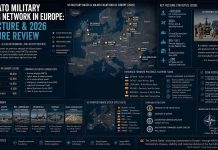
Poland’s strategic calculus relies fundamentally on intensifying integration within NATO and fortifying transatlantic ties, aligning national capabilities with alliance-wide modernization initiatives. The transfer of the Aegis Ashore Missile Defense Complex in Poland, formally accepted into NATO operational control in July 2024, followed by its official opening in November 2024, embeds Polish territory within the alliance’s missile defence architecture, projecting deterrence and signaling elevated Western commitment on NATO’s eastern flank (ecipe.org, Wikipedia). Concurrently, Poland’s adoption of the Integrated Battle Command System (IBCS) in December 2024, at a cost of US$4 billion, situates it ahead of continental peers such as Germany, Italy, and the UK in adopting next-generation integrated air and missile defence (IAMD) systems for eastern flank resilience (https://debuglies.com).
Increasing forward military posture through Enhanced Forward Presence (EFP) battlegroups reinforces the physical anchoring of NATO forces within Poland. A United States–led battle group in Orzysz, supported by mechanized and rocket artillery contingents, integrates allied combat units directly into Polish territory, enhancing operational responsiveness and interoperability in crises (Wikipedia). The broader NATO Enhanced Forward Presence framework across Northern, Central, and Eastern Europe creates overlapping layers of deterrence, with Poland hosting among the largest battlegroups, underlining its structural role in alliance defense architecture (Wikipedia). Formalization of Poland as a “strategic frontline partner” in February 2025 by U.S. Defense Secretary Pete Hegseth, as recorded in the Congressional Research Service report Poland: Background and U.S. Relations (CRS R45784), consolidates Poland’s status amongst U.S. global defense priorities (congress.gov). The U.S. state department emphasises longstanding cooperation on missile defence, counterterrorism, and economic growth, reinforcing shared operational frameworks (2021-2025.state.gov).
Poland’s leadership facilitated during its EU Council Presidency beginning January 2025, prioritized coordinated efforts to enhance Europe’s defense and closer cooperation with the United States, positioning Poland as a diplomatic conduit between Brussels and Washington (Wilson Center). Its strategic posture extended beyond NATO through the Three Seas Initiative, co‑championed by Poland since 2015, and revitalized with the 2025 summit in Warsaw where Japan joined as a strategic partner — an effort combining infrastructure, connectivity, and transatlantic engagement across energy and transport sectors (Wikipedia).
At the NATO Summit in The Hague, held 24–25 June 2025, Poland, alongside Baltic states, successfully advocated for a binding alliance-wide target to reach 5 % of GDP for defense and security expenditures by 2035, segmented into 3.5 % military spending and 1.5 % for resilience domains, including cyber, logistics, and infrastructure. Poland’s current rate of 4.7 % in 2025 situates it as a leader in fulfilling this commitment (Wikipedia).
Polish integration within NATO manifests through formalized bilateral and coalition dialogues such as the U.S.–Poland Strategic Dialogue, established in April 2024, which includes cooperation on energy security and trade, offering institutional pathways to deepen bilateral alignment (2021-2025.state.gov). The strategic symbiosis underscores Poland’s desire to become a logistical and servicing hub for U.S. military assets in Europe. Deputy Defense Minister Paweł Zalewski’s July 31 2025 statement declaring Poland to be the final U.S. troop reduction candidate, and its ambition to serve as a maintenance and production base for American systems, exemplifies this orientation (Reuters).
Policy circles and think tanks reinforce Poland’s positioning. A June 2025 hearing before the U.S. Senate Foreign Relations Committee featuring Dr. Alina Polyakova affirmed Poland’s indispensable role in transatlantic security amid fluctuating U.S. strategic postures (foreign.senate.gov). The European Commission’s Re-Arm Europe Plan, discussed in lead-up to the NATO Summit, enables member states to ring-fence defense spending from fiscal constraints and mobilize a €150 billion SAFE instrument for joint procurement — assisting countries like Poland investing heavily in modernization (hudson.org). Post-Summit commentary, such as the ECIPE analysis (July 2025), emphasizes the transformational nature of the commitments reached, highlighting the shift toward multi-domain resilience (ecipe.org).
Poland’s regional strategic footprint extends through the Lublin Triangle, a trilateral partnership with Lithuania and Ukraine, formed in July 2020 to coordinate military, economic, and diplomatic efforts, especially in support of Ukraine’s Euro‑Atlantic integration. The grouping functions as a platform for shared policy advocacy and regional resilience (Wikipedia). Additionally, the 2025 Geo-Economic Fragmentation Report signals Poland’s alignment with broader European interests in reinforcing strategic autonomy through diversified economic capacity, border resilience, and supply chain security (NATO PA).
Security incidents underscore the tangible threats shaping Poland’s strategic integration. The August 20 2025 drone incident, attributed to Russian launch, triggered NATO-level responses, exemplified by an expedited deployment of Dutch Patriot systems to Poland from December 1, 2025 to June 1, 2026 to protect military aid hubs and saturate airspace defences (Reuters). Such events affirm Poland’s role as a front-line receptor of intra-alliance burden-sharing.
These developments coalesce into a narrative of dense Polish embedding within NATO’s strategic architecture. Through institutionalization of advanced defence systems, hosting of allied forces, leadership in regional cooperation frameworks, and agile diplomatic leadership in EU and transatlantic fora, Poland progressively cements its regional centrality. The lineage of cohesion—from missile shields and battlegroup hosting to strategic dialogues and reform advocacy—reflects a coherent strategy of specialization in defense competence, operational credibility, and alliance shaping. The constellation of policy choices and infrastructural investments indicates a deliberate gambit: Poland leverages NATO and transatlantic integration as the most efficient and credible vector for strategic influence, enhancing its regional indispensability while projecting authority within alliance leadership circles.
Constraints and Prospects for Broader Engagement Beyond Europe
Poland’s capacity to extend its foreign policy beyond the immediate geographic horizon hinges critically on its structural constraints and latent opportunities in non‑European theaters. Fiscal capacity is demonstrably robust as of August 2025, with latest statements from Deputy Finance Minister Jaroslaw Neneman confirming that a newly calibrated corporate income tax on banks — rising to 30% in 2026, with gradual reductions to 26% in 2027 and 23% thereafter — will finance elevated defense and security needs, with 5% of GDP officially earmarked for defense in 2026. That measure is projected to generate 6.5 billion zlotys in incremental revenue in the initial year and more than 20 billion zlotys over a decade (Reuters). A parallel infusion of external finance has arrived: Poland secured a US$4 billion U.S. loan guarantee in July 2025 to underwrite its military modernization programs, complementing over US$11 billion in prior U.S. loans and guarantees covering acquisitions such as Patriot systems, HIMARS, and Apache helicopters (Reuters). These developments expand fiscal headroom and reaffirm Western strategic partnership.
That said, the capacity for global projection remains conditioned by demographic and labor force realities. Reportage in Financial Times from early August 2025 describes burgeoning voluntary military training programs—euphemistically titled “Holidays with the Army”—which enroll civilians in an effort to boost military manpower as Poland aspires to double active personnel to 500,000. Ambitious as the target is, the initiative faces high dropout rates, particularly among younger demographics, raising serious concerns about the sustainability of manpower expansion without reinstating conscription, a politically fraught consideration given Poland’s historical legacy (Financial Times). That backdrop constrains the strategic bandwidth available for global deployments, as prioritization of home front resilience and regional deterrence may compete with outreach ambitions.
Poland’s ambition to broaden its diplomatic and geopolitical footprint beyond Europe must reconcile with evolving transatlantic dynamics. Business Insider reportage from April 2025 reflects rising caution in Warsaw regarding dependency on U.S. defense contractors amid geopolitical unpredictability. Poland’s political elite, while not disengaging from existing contracts, signals an intention to diversify procurement sources towards European and indigenous suppliers, motivated in part by anxieties related to potential political manipulation of access to U.S.-made systems under new political leadership in Washington (Business Insider). Diversifying procurement aligns with economic resilience and strategic autonomy but presents an opportunity cost if it undermines interoperability or delays modernization. The strategic calculus involves balancing alliance comfort with systemic reliability versus nascent development of domestic and regional defense industrial ecosystems.
Beyond Europe, Poland’s strategic ambitions encounter both opportunity and constraint in non-Western theaters. Institutional frameworks such as the Three Seas Initiative, energised by Japan’s accession as a strategic partner during the 2025 Warsaw Summit, reveal Poland’s attempt to entrench a broader east-west network, integrating infrastructure and energy corridors across the Baltic, Adriatic, and Black Sea axes (carnegieendowment.org). This format provides a multilateral platform enabling outreach into Asia without overextending military or diplomatic assets. Yet, these engagements remain within proximate geographies and align closely with EU strategic infrastructure policy rather than projecting presence deeper into Asia, Africa, or South America.
Economic and soft-power diplomacy in these regions is similarly nascent. Poland’s increasing GDP per capita—surpassing 79% of the EU average—coupled with elevated defense capability, positions it for elevated visibility, but institutional mechanisms for engagement remain limited. Unlike middle powers with established regional alliances or global development footprints, such as Germany’s G20 diplomacy or South Korea’s ODA programs, Poland lacks a recognized global initiative in sub-Saharan Africa or Latin America. That gap is more structural than financial—it burns out attention rather than capital—leaving Poland’s influence in these regions minimal relative to global peers.
Poland’s infrastructural modernization of its armed forces—while principally directed at deterrence and allied interoperability—does hold latent export potential. The comprehensive upgrade includes land systems such as M1A2 SEPv3 Abrams tanks, K2 Black Panther tanks, the K9 Thunder howitzers, and indigenous Borsuk infantry fighting vehicles, alongside air defence systems like Patriot batteries, and the Narew/CAMM systems (en.wikipedia.org). Poland’s emerging arms industry could anchor defense technological outreach, including training and support partnerships with nations in Asia and Africa. Yet, bridging the gap between capability and diplomatic influence requires dedicated institutional mechanisms and longevity, which are yet undeveloped.
Domestic political sentiments also shape external strategic possibilities. Poland’s leadership maintains a firm regional focus, with political consensus—across party lines—for maintaining NATO centrality and prioritizing immediate threats rather than global posturing. The absence of public appetite for distant engagements contrasts with popular support for defending European neighbourhood and suggests that mass-political legitimacy for Afro-Latin American dovetailing is unlikely.
In conditions of resource competition and geopolitical rivalry—whether in Indo-Pacific arenas or Middle East diplomatic alignments—Poland’s global reach must grapple with entrenched positions by established powers. Economic diplomacy within Asia or Latin America would require integration into existing regional blocs and frameworks such as ASEAN, MERCOSUR, or the African Union. Poland currently lacks formal entry points into those systems, necessitating sustained diplomatic investment before such outreach becomes credible.
However, niche soft-power exists. Poland’s cultural diplomacy—its historical legacy, diaspora networks in the U.S. and Brazil, and post-communist transition experience—may offer thematic bridges, particularly in governance and economic transition capacity-building. OECD and World Bank frameworks for development cooperation could be entry channels for Polish expertise. Such interagency and multilateral engagement would require institutionalization beyond defense ministries, extending to MFA, foreign aid agencies, and academic-cultural institutes, currently underdeveloped in Warsaw’s bureaucratic architecture.
Finally, the global strategic environment offers both impetus and distraction. Russia’s enduring aggression against Ukraine, instability in the Middle East, and intensifying competition in the Indo-Pacific demand integrated responses, yet risk drawing Poland’s attention—and limited diplomatic capital—away from foundational regional commitments. Poland’s strategic flexibility requires selective prioritization: deepening NATO and EU cooperation offers immediate returns in influence and security. Global expansion, by contrast, might yield future dividends but competes for managerial bandwidth and political legitimacy.
In summary, Poland’s prospects for expanding into global domains intersect with fiscal strength, modernization momentum, and strategic ambition; yet are constrained by demographic, institutional, and political limits. Diversified procurement and emerging defense industrial capabilities present openings for external partnerships. Cultural diplomacy and infrastructure partnerships via Three Seas and EU frameworks offer platforms for limited outreach. But without significant institutional investment and public mandate, Poland’s foreign policy is likely to remain primarily regional. Achieving credible global presence demands strategic breadth supported by bureaucratic commitment, societal buy-in, and calculated prioritization—not superficial ambition divorced from capacity.
Comparative Models and Strategic Specialization in Middle Powers
Poland’s strategic identity among middle powers finds closest analogues in the nuanced approaches of nations such as South Korea, Turkey, and Australia, each of which balances regional anchoring with selective global engagement. South Korea, under its 2025 White Paper on Foreign Policy, prioritizes defence within Northeast Asia, consolidating deterrence against North Korea while exporting technological defense solutions such as K2 tanks and naval systems through state-backed arms diplomacy—a model of specialization and export-driven influence. In contrast, Turkey underlined its regional dominance in the Eastern Mediterranean and the Greater Middle East by deploying military contingents to Somalia and establishing defense production arrangements across Africa and the Caucasus, albeit at costs to public finances verified by the OECD’s Country Risk and Well‑being Report: Turkey 2024, which warned of fiscal overreaches arising from external deployments. Australia, anchored in the Indo‑Pacific, leverages specialized capabilities in maritime surveillance and coalitions such as AUKUS to maintain influence, while avoiding costly arms diffusion into regions where its strategic culture lacks traction.
Poland’s capacity to emulate such models depends on its defense-industrial modernization and ability to export capabilities. The acceleration of internal military procurement—confirmed by the Agencies reporting of August 2025—such as the US$3.8 billion F‑16 upgrade contract signed 13 August 2025, entails not only enhancement of Polish air power but potentially resale and training opportunities with international partners seeking interoperable systems (Reuters). Similarly, the long-term contractual pipeline for K2 Black Panther tanks, including the August 2025 second batch of 180 K2 units, 116 built in South Korea and 61 domestically under the K2PL standard, positions Warsaw for state-to-state defense exports or manufacturing partnerships (Wikipedia). These developments echo the Korean model of scaling defense exports via domestic production.
Poland’s strategic specialization trend finds parallel in the niche exports of defense systems to states with limited procurement budgets but aligned with Western blocs. The Polish manufacturing portfolio—comprising HIMARS-like Homar rocket launchers, CAMM air defense missiles, and Borsuk armoured vehicles, all in varying stages of production and delivery through 2026–2029—reflects a diversification of defense product lines that could appeal to partners in Africa, Latin America, or Southeast Asia seeking cost‑effective yet modern platforms (Reuters, Wikipedia).
The legitimacy and feasibility of external projection rely heavily on comparative gains. In 2025, the OECD and EC both emphasized that Polish defense spending is structurally sound yet fiscally rising, with warnings of budget strain unless anchored by disciplined consolidation and tax reform (Reuters, OECD, Economy and Finance). Poland’s proposed bank tax increase to 30 % in 2026—expected to raise 6.5 billion zlotys and over 20 billion across a decade—underscores fiscal readiness to sustain defense spending at 5 % of GDP in 2026 (Reuters). However, sustaining global-scale engagements would require additional institutional structures—and revenue streams—beyond one-off taxation, contrasting with Korea or Australia, which base much of their global agendas on stable export earnings or broad economic surpluses.
In diplomatic terms, Poland has shown aptitude in establishing functional frameworks with adjacent states while cautiously expanding outreach. Its Three Seas Initiative, reinvigorated in the 2025 Summit in Warsaw, welcomed Japan as a strategic partner—a limited but symbolic expansion into Asia’s investment networks (Wikipedia, 2021-2025.state.gov). However, unlike Australia’s regional free trade initiatives or Turkey’s Sierra Leone naval base, Poland lacks comparable external bases or commercial corridors beyond Europe.
Crucially, Poland’s military diplomacy may capitalize on its geographic proximity to Ukraine and Lithuania. The Lublin Triangle remains emblematic of regionally focused influence, enabling Polish strategic framing over Euro-Atlantic integration for Ukraine and a platform for limited out‑of‑region visibility through coordination with NATO and EU infrastructures. Poland’s emphasis on being the “voice on Ukraine” draws credibility from its early warnings about Russian revisionism and its active role in defense modernization frameworks.
Another dimension that sets the context is Poland’s ongoing discussions about NATO nuclear sharing: since March 2025, signals that France may extend its nuclear deterrent to European partners have renewed public debate in Warsaw, with President Andrzej Duda expressing support, while the Prime Minister and Foreign Minister still exercise caution, stating that appropriate consultation and domestic consensus are essential before proceeding (Wikipedia). This tension between heightened deterrence posture through nuclear integration and domestic institutional prudence defines Poland’s strategic depth and may condition its broader engagement models.
When measured against other middle powers, Poland’s advantages are pronounced in defense spending relative to GDP, manufacturing breadth, and regional position. Yet compared to counterparts who have formalized global outreach through embassies, overseas defense training academies, and bilateral development programs, Poland’s global reach remains embryonic. Its pragmatic model of specialization—focusing on defense manufacturing, regional leadership, and alliance integration—offers a credible strategy that gains maximum influence with minimum overstretch.
Translating this into a coherent policy proposal suggests that Poland should adhere to a model of “specialized projection”, calibrated through three pillars: industrial collaboration (defense exports and interoperability), targeted diplomatic presence (e.g., Poland-Japan technical corridors under Three Seas), and strategic deterrent depth (considered pursuit of NATO nuclear sharing). This would align with middle-power paradigms without compromising domestic fiscal discipline or alliance credibility.
South Korea’s development of REY DeFENCE systems, blending export technology with alliance retention, and Australia’s role in AUKUS, highlight how middle powers can scale influence through institutional depth rather than geographic breadth. Poland can mirror such examples by emphasizing provenance, interoperability, and supply chain positioning rather than expeditionary military reach.
These comparative insights underscore that Poland’s best path forward lies not in omnipresence but in deepened specialization aligned with regional security architecture, alliance structures, and intercontinental industrial linkages. Building capacities for Indian Ocean surveillance or Latin American engagement with current resources would stretch institutional and budgetary limits, risking strategic dilution. Instead, strategic concentration—exporting systems with allied coherence, investing in continuous modernization, and opting into extended deterrence mechanisms—ensures Poland maintains credibility and influence both regionally and globally, commensurate with its capabilities and institutional maturity.
Policy Recommendations for a Balanced Regional-Global Orientation
Poland’s foreign policy at this juncture requires a calibrated synthesis between its formidable regional specialization and latent potential for selective global outreach. The fiscal envelope of 4.7 % of GDP on defence in 2025, increasing to 5 % in 2026, confirmed by government pledges and backed by an August 2025 US$4 billion U.S. loan guarantee, grounds Poland in a strong financial position to sustain strategic engagement without fiscal overheating (Reuters). The defense-modernization momentum—including contracts such as the US$3.8 billion F‑16 upgrade signed 13 August 2025 and a second batch of 180 K2 battle tanks from South Korea agreed 1 August 2025—further enhances capacity for both deterrence and external cooperation (Reuters).
To translate material capability into influence, Poland should pursue a tripartite strategic framework: deepened alliance-based specialization; institutional expansion into climate and infrastructure diplomacy; and conditional nuclear posture enhancement. These pillars ensure Poland maintains credibility within NATO and the EU while building selective visibility in global affairs.
First, alliance-based specialization demands sustained investment in interoperability and capacity leadership within NATO frameworks. Poland’s continued hosting of U.S. forward-deployed forces—confirmed as the last nation in Europe from which U.S. troops would be withdrawn—enables Warsaw to remain an indispensable logistical and service hub (Reuters). Augmenting that role, Poland should institutionalize formal agreements for servicing U.S. defense equipment, training allied personnel, and hosting command-post elements in times of crisis. Leveraging the strategic treaty signed with France on 9 May 2025—the Treaty of Nancy—Poland should co-develop joint projects in missile defence, aerospace, and possibly nuclear support systems, aligning with European aspirations for autonomy (The Guardian). Poland’s push for the 5 per cent NATO defence spending pledge at the June 2025 NATO Summit consolidated its position and should be matched by overt leadership on multi-domain resilience, such as cyber and logistics architecture (Wikipedia).
Second, institutional expansion into non-military domains offers a soft-power complement to Poland’s hard-power projection. Poland should leverage the Three Seas Initiative, elevated by Japan’s strategic partnership, to extend cooperation into Asia on energy, digital connectivity, and green infrastructure. While not Global South-scale outreach, such infrastructure diplomacy remains coherent with Poland’s industrial strength, corridors orientation, and alignment with European and Japanese development financing. A targeted diplomatic presence in major capitals of Africa or Latin America, housed within multilateral platforms rather than bilateral maelstroms, would position Poland as a pragmatic partner. For example, deploying development experts specialized in post-communist economic transitions—collaborating with institutions like the World Bank or OECD—could export Polish experience effectively. That approach avoids unsustainable deployments while broadening Poland’s strategic footprint through capacity-building rather than costly interventions.
Third, Poland’s nuclear posture should be enhanced within existing frameworks rather than breaking orthodoxy. President Duda’s repeated calls for U.S. nuclear deployments and open discussions with France regarding the nuclear umbrella reflect a strategic impetus to crystallize deterrence credibility (AP News). To institutionalize this without provoking alliance fragmentation, Poland should formally seek observer status within NATO’s Nuclear Planning Group, where Poland is already a de facto member albeit lacking infrastructure-hosting authority (theloop.ecpr.eu). Additionally, France’s 2025 Treaty of Nancy permits deeper, if conditional, strategic cooperation; Poland should explore mutual nuclear planning dialogue and civil support arrangements that stop short of weapon deployment but strengthen extended deterrence perception (The Guardian). A restrained emphasis on defense posture, rather than weapon acquisition, aligns with U.S. non-proliferation commitments and domestic legal frameworks.
Translating these pillars into policy instruments demands bureaucratic adaptation within Poland’s governance architecture. The Ministry of Foreign Affairs must expand its strategic planning division, incorporating segments dedicated to transatlantic infrastructure diplomacy and defense-industrial exports. Public diplomacy institutions should craft narrative strategies centered on Poland’s unique position as NATO’s eastern anchor, for both Western and Global South audiences.
Fiscal prudence remains essential. While the corporate tax on banks rising to 30 % in 2026 offers a temporary revenue stream of 6.5 billion zlotys, systemic sustainability demands broader revenue diversification—potentially through EU co-financing under the EU’s security and infrastructure instruments (rand.org). Integrating projects such as the SAFE joint procurement fund in EU defense budgeting ensures that Polish modernization and infrastructure diplomacy gain leverage without eroding social spending or economic resilience.
Finally, Poland’s leadership should underpin this strategic reorientation by promoting coalition-building among like-minded middle powers. Co-chairing forums with states such as South Korea, Australia, or Turkey, focusing on defense-industrial collaboration and transition diplomacy, can amplify Poland’s voice in global rule-making forums such as the UN, OECD, or WEF. Participation in Indo-Pacific dialogues—especially those linked to NATO’s emerging Indo-Pacific partners—can be pursued via diplomatic exchange rather than costly stationing.
This calibrated approach ensures that Poland retains deep regional credibility while expanding its reach through specialization, diplomacy, and transatlantic synergy. It avoids overextension and preserves fiscal and strategic legitimacy. Poland’s influence, thus steered, will be robust, adaptable, and aligned with alliance evolution and global systemic fragmentation.


