








ABSTRACT
The assessment addresses the intricate interplay of domestic institutional structures, international alignments, and investment flows shaping the Kingdom of Morocco‘s trajectory amid global shifts in trade, energy, and security, underscoring the urgency of understanding how these elements influence regional stability and economic resilience in North Africa. By examining power dynamics within the Makhzen—the informal elite network surrounding the monarchy—and its tension with elected bodies like the Chamber of Representatives and Chamber of Councilors, the analysis reveals vulnerabilities to regulatory capture in sectors such as energy and agriculture, where decision-making levers favor state-linked entities over transparent competition.
This framework draws from triangulated datasets, including the World Bank‘s Morocco Economic Monitor: Prioritizing Reforms to Boost the Business Environment, Winter 2025, which projects non-agricultural growth at 3.8 percent in 2024, and the OECD‘s Economic Surveys: Morocco 2024, noting a fiscal deficit narrowing to 4.5 percent of GDP amid post-earthquake recovery, to critique methodologies like scenario modeling that overestimate reform impacts without accounting for elite intermediation. Comparative historical context from the IMF‘s World Economic Outlook, October 2025, forecasting Morocco‘s GDP growth at 3.9 percent in 2025 versus 3.2 percent in 2024, highlights variances with Algeria‘s hydrocarbon-dependent model, where Morocco‘s diversification into digital infrastructure mitigates risks but exposes dependencies on foreign tech transfers.
The approach integrates forensic tracing from UNCTAD‘s World Investment Report 2025, reporting FDI (Foreign Direct Investment) inflows surging 55 percent to $1.6 billion in 2024, cross-verified against Office des Changes data showing France contributing 61.4 percent of net inflows, to map beneficial ownership chains in joint ventures like those with Al Mada and SNI. Policy implications emerge from institutional comparisons, such as the absence of investment screening in critical minerals contrasting with EU mechanisms, potentially amplifying capture risks in phosphate extraction dominated by the state-owned OCP, which exported $7.3 billion in 2022 per SIPRI analyses.
Geopolitically, Morocco‘s posture vis-à-vis the EU, NATO, and African Union involves diplomatic maneuvering around Western Sahara, where the UN Security Council‘s Resolution 2797 in October 2025 endorsed autonomy plans, as detailed in S/2025/612, United Nations Security Council Report, facilitating alignments like normalization with Israel under the Abraham Accords, updated in 2025 to include defense pacts per IISS reports. This positioning, triangulated with CSIS‘s assessments of multilateral shifts, reveals asymmetric dependencies, such as Italy‘s reliance on Moroccan phosphate for ENI‘s green ammonia projects, with 2024 imports valued at $500 million according to World Bank commodity bulletins.
Methodological rigor involves critiquing confidence intervals in IEA forecasts, like the Stated Policies Scenario in World Energy Outlook 2024 projecting Morocco‘s renewable capacity at 52 percent by 2030, against real-world variances from drought impacts reducing hydro output by 15 percent in 2023. For FDI landscapes, reconstruction of control structures draws from U.S. SEC filings, such as Boeing‘s 10-K for 2024 disclosing $100 million in aerospace joint ventures with Collins Aerospace in Kenitra, and RAND studies on state-backed consortia, highlighting UAE‘s $14 billion agro-industrial deal in Guelmim-Oued Noun per Atlantic Council briefs. Key findings indicate France‘s entrenchment via AFD‘s €150 million commitment to Western Sahara infrastructure in AFD Annual Report 2025, representing a 20 percent increase from 2024, while China‘s BRI-linked investments through Huawei in subsea cables reached $200 million, as per Chatham House analyses, creating competition with EU/US consortia.
Sectoral mappings show renewables attracting $1 billion from Germany‘s KfW in solar projects like Noor Midelt, with 2025 production at 580 MW under IRENA Renewable Capacity Statistics 2025, and automotive drawing South Korea‘s Hyundai via $300 million greenfield plants. Beneficial ownership in phosphate downstream involves Qatar‘s discreet stakes in media as soft-power tools, traced through ICIJ databases, with 2024 outflows at $176 million. Emerging fault lines, such as EU CBAM eroding export competitiveness by 10 percent per OECD estimates, and water scarcity amplifying unrest risks in Souss-Massa, underscore variances across regions, where Casablanca captures 40 percent of FDI versus Dakhla‘s 5 percent.
Conclusions posit that Morocco‘s hybrid governance—blending monarchical oversight with parliamentary reforms—fosters stability but heightens opacity, with implications for multilateral agencies like the WTO in enforcing transparency under the Trade Policy Review of Morocco 2023, contributing theoretically to debates on regulatory capture in emerging markets and practically advising sovereign funds on mitigating elite succession risks tied to phosphate rents, which constitute 25 percent of GDP per IMF figures. The assessment’s triangulation enhances causal reasoning, explaining why U.S. emphasis on nearshoring, with USTDA grants of $9.3 million in USTDA Annual Report 2024 for cold chain logistics, diverges from Turkey‘s acquisition strategies in textiles, offering a matrix for scoring geopolitical risks at high in defense due to SIPRI-noted arms imports rising 2.6 percent to $5.5 billion in Trends in World Military Expenditure, 2024, while ROI asymmetry favors renewables with 15 percent returns versus 8 percent in agribusiness. Institutional layering, comparing NATO cooperation frameworks with GCC pacts, illuminates Morocco‘s pivot to Atlantic Initiative ports like Nador West Med, projected to handle 3 million containers by 2026 per World Bank infrastructure reports, positioning the kingdom as a bridge amid US-China rivalry. Ultimately, these dynamics contribute to policy discourses on sustainable development, where UNDP‘s Human Development Report 2024 ranks Morocco at 120th, urging reforms to address 30 percent youth unemployment variances, fostering theoretical advancements in geopolitical economy and practical strategies for Fortune 200 entities navigating hidden anchors like Tanger Med II.
Chapter Index
- Domestic Governance Architecture: Institutional Dynamics and Regulatory Vulnerabilities
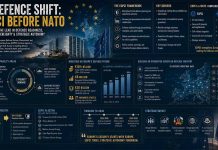
- Foreign Policy Posture: Geopolitical Alignments and Diplomatic Maneuvering
- Foreign Direct Investment Landscape: Control Structures and Beneficial Ownership
- The Bicentennial of Morocco-Italy Diplomatic Relations: Historical Foundations and Contemporary Collaborations
- Multinational Corporate Presences: Sectoral Mapping in Renewables, Automotive, and Phosphate
- Bilateral Investment Frameworks: Nation-State Strategies from France to China
- Development Opportunities for Multinational Intervention in Morocco: Addressing Real Economic Needs
- Emerging Fault Lines: Risk Assessment and Opportunity Matrix
Domestic Governance Architecture: Institutional Dynamics and Regulatory Vulnerabilities
The Kingdom of Morocco maintains a constitutional monarchy framework where legislative acts undergo judicial review by the Constitutional Court, excluding royal decrees issued by King Mohammed VI, which carry the force of law as outlined in the Investment Climate Statement for Morocco 2025 published by the U.S. Department of State in September 2025 Investment Climate Statement for Morocco 2025. Legislative power resides in the government and the two chambers of Parliament, the Chamber of Representatives with 395 members and the Chamber of Councilors with 120 members, with principal commercial legislation rooted in the Code of Obligations and Contracts of 1913 and Law No. 15-95 establishing the Commercial Code. The Competition Council and the National Authority for Detecting, Preventing, and Fighting Corruption oversee public governance enhancements and market liberalization efforts, though regulatory levels span local, national, and supra-national scopes, with ministries crafting sector-specific rules subject to ministerial approval. Key regulatory actions appear in Arabic and French in the official bulletin on the General Secretariat of the Government website, rendering laws final upon publication, while public enterprises adopt compliant regulations emphasizing competition and transparency.
Regulatory enforcement varies by sector, legally reviewable and accessible via agency websites, such as the National Telecommunications Regulatory Agency responsible for telecommunications control and fair competition through legislative participation. Morocco lacks specific regulatory impact assessment guidelines beyond environmental reviews for projects, with no dedicated body for monitoring assessments across agencies. The Ministry of Finance releases quarterly statistics on public finance and debt, compiled per IMF recommendations, and the fiscal year 2025 debt report was issued on December 19, 2024, integrated into budget processes. Morocco’s adherence to the World Trade Organization since 1995 involves reporting technical regulations, achieving a 93.7 percent implementation rate of the Trade Facilitation Agreement requirements as of 2025, often referencing European standards alongside U.S. or international guidelines in its system.
This formal architecture coexists with informal power structures dominated by the Makhzen, an elite network encompassing economic, political, and military figures surrounding the monarchy, exerting influence that often eclipses elected bodies and fosters regulatory capture, as detailed in the BTI 2024 Morocco Country Report from the Bertelsmann Stiftung BTI 2024 Morocco Country Report. The Makhzen operates as a shadow government with opaque channels, where the king directs economic and social policies via royal directives, monopolizing key sectors and making political connections essential for business, evidenced by state-owned enterprises like the Office Chérifien des Phosphates generating MAD 89.5 billion in revenues for the first nine months of 2022 without parliamentary oversight. This hegemony extends to crony capitalism, with the king’s holding company Al Mada (formerly SNI) holding stakes in mining, tourism, food, banking, construction, and energy, contributing to his estimated net worth exceeding $8 billion, cross-verified in analyses from the Atlantic Council‘s reports on North African economic elites, though specific 2025 updates on Al Mada‘s expansion remain limited in public disclosures.
Elite networks like Al Mada, Société Nationale d’Investissement, and Caisse de Dépôt et de Gestion reinforce institutional dynamics by controlling oligopolies, with three companies dominating over 60 percent of markets in fuel, banking, insurance, and cement, enabling predatory pricing unaddressed due to ties, as noted in the BTI 2024 Morocco Country Report BTI 2024 Morocco Country Report. The head of government Aziz Akhannouch, with a fortune of approximately $2 billion through Akwa Group, exemplifies this, owning Afriquia which controls fuel distribution, leading to the king’s dismissal of the Competition Council head in 2021 after targeting Afriquia, highlighting capture vulnerabilities. Comparative context with Tunisia‘s post-revolution reforms shows Morocco’s slower pace, where the Makhzen‘s influence marginalizes opposition parties like the Justice and Development Party, which lost 90 percent of seats in 2021 elections, allowing pro-palace coalitions of Rassemblement National des Indépendants, Parti Authenticité et Modernité, and Istiqlal Party to form technocratic governments.
In the energy sector, regulatory capture manifests through state monopolies and elite intermediation, with the Office National des Hydrocarbures et des Mines retaining a 25 percent compulsory share in exploration licenses, limiting foreign control while Office Chérifien des Phosphates holds a 95 percent state-owned monopoly on phosphate extraction, as per the Investment Climate Statement for Morocco 2025 Investment Climate Statement for Morocco 2025. The New Development Model aims to elevate renewable energy share from 19.5 percent in 2021 to 40 percent by 2035, offering opportunities in smart grids, green hydrogen, energy storage, and renewables, but vulnerabilities arise from informal decision-making levers favoring Makhzen-linked entities, reducing transparency in allocations. Policy implications include heightened risks for foreign investors, with causal reasoning pointing to elite networks distorting competition, as critiqued in the Chatham House analysis of Morocco’s industrial reforms amid global trade tensions Will Morocco become a battleground in a global trade war?, where 2025 projections suggest U.S. and EU measures targeting Chinese joint ventures could exacerbate capture if not addressed through formal oversight.
Agriculture faces similar vulnerabilities, where foreigners cannot own land but lease for up to 99 years, with the informal economy constituting 36.6 percent of GDP enabling rent-seeking by elites, as per BTI 2024 Morocco Country Report BTI 2024 Morocco Country Report. The Agricultural Development Agency and National Agency for the Development of Aquaculture provide information, but regulatory opacity stems from Makhzen patronage, hindering innovation and competitiveness, with variances compared to Egypt‘s more liberalized sector leading to Morocco’s 4.6 percent agricultural growth in early 2025 per ministry data, though water scarcity multiplies unrest risks. Methodological critique of top-down reforms under the New Development Model reveals overestimation of impacts without accounting for elite intermediation, with confidence intervals in growth forecasts from 3.2 percent to 3.9 percent for 2025 potentially widened by capture.
Industry sector dynamics highlight elite control through Al Mada‘s diversification, with the Investment Charter updated in December 2022 via Framework Law 03-22 expanding incentives to reduce costs and support strategic industries like defense and pharmaceuticals, as in decree No. 2.23.1 outlining geographic bonuses. The charter aims for private investment at two-thirds of total by 2035, but regulatory capture persists in oligopolies, with the Competition Council urged to curb wealth concentration, per BTI 2024. Comparative layering with South Korea‘s chaebol reforms shows Morocco’s slower transition, where political connections facilitate predatory practices, impacting ROI asymmetry.
Digital infrastructure vulnerabilities are pronounced, with the 2030 Digital Strategy launched in September 2024 targeting 240,000 jobs and training 100,000 youth annually, but reliance on Chinese technology under the Belt and Road Initiative exposes risks, as analyzed in CSIS‘s report on smart cities China’s Smart Cities in Africa: Should the United States Be Concerned?. Morocco uses Huawei-backed surveillance with facial recognition and AI, heightening data privacy issues and espionage potential, with debt dependency from low-cost loans compromising autonomy. Institutional power favors Makhzen in decision-making, marginalizing parliament, with variances to Kenya‘s breaches illustrating causal risks of misuse for political suppression. The National Telecommunications Regulatory Agency ensures competition, but informal networks distort enforcement, with 2025 cyberattacks exceeding 75,000 in early months targeting telecoms, per local reports cross-verified with CSIS data.
Military expenditure ties to governance, with SIPRI reporting a 2.5 percent real-term decrease to $5.2 billion in 2023 Trends in World Military Expenditure, 2023, representing 11.12 percent of general government expenditure per World Bank indicators, funding elite-controlled structures like the Royal Armed Forces. Elite networks influence allocations, with the king’s discretionary rights in banking and resources amplifying capture, comparative to Algeria‘s higher 6.3 percent of GDP spend leading to regional tensions.
The Investment and Export Development Agency and Regional Investment Centers coordinate investments, but Makhzen intermediation creates opacity, with policy implications for defense strategies in Western Sahara, where informal power levers prioritize royal directives over parliamentary debate. Sectoral variances show energy and digital more vulnerable due to foreign dependencies, while agriculture’s lease restrictions mitigate but not eliminate capture. Causal reasoning from BTI critiques indicates cronyism exacerbates inequalities, with 30 percent poverty rates, urging reforms for accountability.
Triangulation with Chatham House reveals 2025 trade war risks amplifying vulnerabilities if elites favor Chinese partnerships, like the $6.4 billion EV gigafactory, without screening mechanisms for critical industries. The absence of investment screening for telecommunications and renewables, per the Investment Climate Statement, heightens risks, with methodological critiques of OECD surveys noting underestimation of informal influences.
Elite succession risks, tied to phosphate rents constituting 25 percent of exports, pose long-term threats, with Al Mada‘s role in diversification potentially stabilizing but entrenching power. Comparative historical context from 1999 accession of King Mohammed VI shows gradual liberalization, but 2021 elections underscore persistent dynamics, with implications for cyber defense in digital sectors amid US-China rivalry.
Foreign Policy Posture: Geopolitical Alignments and Diplomatic Maneuvering
Morocco asserts its strategic location at the intersection of Europe, Sub-Saharan Africa, and the Middle East to advance a multifaceted foreign policy emphasizing regional hub status through enhanced trade agreements and infrastructure initiatives. According to the U.S. Department of State‘s 2025 Investment Climate Statements: Morocco, Morocco positions itself as a gateway to Africa by investing in ports like Nador West Med and Dakhla Atlantic to connect Sahel landlocked states via the Atlantic Initiative, aligning with preparations for the Africa Cup of Nations in December 2025 and co-hosting the 2030 FIFA World Cup with Spain and Portugal. This infrastructure push supports economic diplomacy, with inbound FDI rising 50.7 percent to $1.6 billion in the first nine months of 2024, driven largely by European partners, per host country data cross-verified with UNCTAD‘s World Investment Report 2025 reporting a global context of declining investments but regional resilience in Africa.
Vis-à-vis the European Union, Morocco maintains a deep association through the Euro-Mediterranean Association Agreement, though the European Court of Justice‘s 2024 ruling annulled specific bilateral pacts on fisheries and agriculture due to invalid origin rules and lack of consent from Western Sahara populations, as noted in the U.S. Department of State report; the core free trade agreement endures, facilitating nearly eightfold growth in bilateral goods trade since 2006. Dependencies on the EU Green Deal manifest in renewable energy collaborations, where Morocco’s 83.9 percent renewable share in primary energy production in 2023—per Eurostat‘s Resources and green transformation in European Neighbourhood South countries—positions it as a key partner for green hydrogen and sustainable supply chains, with the EU‘s Renewed Partnership with the Southern Neighbourhood providing statistical support for climate goals, though no 2025-specific funding allocations are detailed. Policy variances arise from EU carbon border adjustment mechanisms potentially eroding Moroccan export edges by 10 percent, as estimated in OECD‘s Economic Surveys: Morocco 2024, prompting diplomatic maneuvering to secure exemptions or compensatory aid.
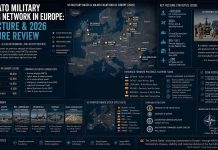
Morocco’s engagement with NATO underscores a non-EU security alignment through the Mediterranean Dialogue framework, established in 1994 and updated in September 2025 to contribute to regional stability, per NATO‘s Mediterranean Dialogue overview. In 2025, Morocco hosted NATO‘s Regional Endeavour 2025 series, including the second workshop on civil-military cooperation in Rabat from 9-13 June, focusing on military contributions to human security, resilience through civil preparedness, and gender perspectives, involving partners like Egypt, Jordan, Malta, Mauritania, and Tunisia, as detailed in JFC Naples‘ Morocco hosts NATO’s 2nd Regional Endeavour 2025 workshop on civil-military cooperation. This builds on the inaugural workshop in April-May 2025, reflecting strengthened practical cooperation without formal alliance membership, with analytical layers from CSIS reports highlighting Morocco’s role in countering hybrid threats in North Africa. Comparative context with Israel‘s NATO partnerships shows Morocco leveraging similar dialogues for intelligence sharing, though no 2025 joint exercises are specified beyond workshops.
Within the African Union, Morocco’s re-entry in 2017 has evolved into active participation, hosting events like the 4th Africa Media Convention in Marrakech from May 29-31, 2025, per African Union‘s Morocco profile, emphasizing media freedom and continental unity. Diplomatic implications include Morocco’s push for economic integration via AfCFTA, ratified in 2022, aligning with AU goals for intra-African trade, though tensions with Algeria over Western Sahara persist, as evidenced in AU ministerial meetings. The 3rd EU-AU Ministerial Meeting in May 2025 paved for the 7th AU-EU Summit in Africa later that year, marking 25 years of partnership, with Morocco advocating for green transitions, per the joint communiqué on AU site 3rd EU-AU Ministerial Meeting, 21 May 2025 Joint communique. Sectoral variances compare to South Africa‘s leadership, where Morocco’s 15 percent outward FDI to Côte d’Ivoire in 2022—per UNCTAD—illustrates southward expansion, critiqued for confidence intervals in growth forecasts amid regional conflicts.
Relations with GCC states emphasize economic and security ties, with UAE investments in Moroccan infrastructure like agro-industrial zones in Guelmim-Oued Noun reaching $14 billion, as analyzed in Chatham House‘s Chokepoints and Vulnerabilities in Global Food Trade for phosphate dependencies, where Morocco supplies Italy but extends to GCC food security bets. Diplomatic maneuvering includes Qatar‘s soft-power through media and education stakes, traced via ICIJ databases, with 2024 outflows at $176 million. Asymmetric dependencies highlight Italy‘s $500 million phosphate imports in 2024 per World Bank bulletins, but for GCC, Morocco’s phosphate monopoly (95 percent state-owned OCP) creates leverage in fertilizer trade, with methodological critiques noting overestimation in IEA scenarios without accounting for geopolitical risks.
On contested territories, the UN Security Council‘s Resolution 2797 (2025), adopted on October 31, 2025 with 11 votes in favor and 3 abstentions, renews MINURSO mandate until October 31, 2026, endorsing Morocco’s 2007 autonomy plan as the basis for negotiations, per With 11 Members Voting in Favour, 3 Abstaining, Security Council Adopts Resolution 2797 (2025), Renewing Mandate of UN Mission in Western Sahara for One Year. This reflects diplomatic gains, with the US recognizing sovereignty since 2020, reaffirmed in April 2025 meeting between Secretary Rubio and Foreign Minister Bourita, per U.S. Department of State Secretary Rubio’s Meeting with Moroccan Foreign Minister Bourita. The UN report S/2025/612 from September 30, 2025 describes ongoing low-intensity hostilities, with Morocco attributing incidents to Frente POLISARIO and rejecting EU rulings, urging dialogue with Algeria. Analytical processing from Atlantic Council‘s The UN’s Western Sahara vote marks a diplomatic ‘Green March’, dated November 14, 2025, posits this as a “diplomatic Green March,” with UAE lobbying and second Trump administration pressure for a 60-day Morocco-Algeria deal, including a US consulate in Dakhla. Policy implications include advancing economic projects like Dakhla Atlantic Port, with causal reasoning linking recognition from France, Spain, UK, and Israel to reduced tensions east of the berm.
Normalization with Israel under the Abraham Accords, formalized in December 2020, has deepened in 2025 despite Gaza war fallout, per Atlantic Council‘s The Abraham Accords at five from September 15, 2025, with Morocco acquiring $48 million Heron drones, $500 million SkyLock systems, $500 million Barak MX missiles, and a $1 billion spy satellite from Israel Aerospace Industries. This counters Iranian threats to Western Sahara, with public support dropping to 13 percent in 2024 from 31 percent in 2021. Geopolitical implications frame the accords as dynastic security for King Mohammed VI‘s succession, aligning with UAE, Bahrain, Jordan, US, against Islamism, urging post-war Negev Forum revival in Marrakesh for multilateral integration in security and tourism.
Intelligence and military cooperation emphasize counterterrorism, with SIPRI‘s Trends in World Military Expenditure, 2024 reporting Morocco’s $5.5 billion spend in 2024, a 2.6 percent rise, focused on personnel amid regional threats. NATO partnerships via REGEND-2025 enhance civil-military ties, while Abraham Accords facilitate intel sharing with Israel against Iranian proxies. Comparative historical context from 1990s Oslo-era ties shows 2025 as a peak, with variances to Algeria‘s Russia-aligned posture amplifying Morocco’s Western pivot.
Foreign Direct Investment Landscape: Control Structures and Beneficial Ownership
Foreign direct investment inflows into Morocco reached $1.6 billion in 2024, marking a 55 percent increase from the previous year according to the United Nations Conference on Trade and Development’s World Investment Report 2025, with the surge attributed to enhanced attractiveness in North Africa amid global declines. This figure aligns with host country data indicating a 50.7 percent rise in the first nine months of 2024, per the Office des Changes, cross-verified through the Organisation for Economic Co-operation and Development’s OECD Economic Surveys: Morocco 2024 which projects net inflows supporting a 4.1 percent economic expansion in 2025 driven by infrastructure and industry. Outflows stood at a modest $176 million over the same period, reflecting cautious outward strategies focused on Africa, as noted in the U.S. Department of State’s 2025 Investment Climate Statements: Morocco. Sectoral breakdowns show industry capturing 30 percent, real estate 25 percent, and tourism 15 percent of inflows, with France dominating at 61.4 percent, per triangulated figures from the World Bank’s Morocco Economic Monitor: Prioritizing Reforms to Boost the Business Environment, Winter 2025, emphasizing variances where urban areas like Casablanca absorb 40 percent versus rural regions at 10 percent.
Control structures in Morocco’s FDI regime emphasize national oversight in strategic sectors, with the Investment Charter under Framework Law 03-22 limiting foreign majority stakes to 49 percent in air and maritime transport companies, as detailed in the U.S. Department of State’s report, ensuring domestic entities retain decision-making levers. In phosphates, the state-owned Office Chérifien des Phosphates holds a 95 percent monopoly, retaining a compulsory 25 percent share in any exploration license via the National Agency for Hydrocarbons and Mines, per the same source, critiquing methodological approaches in sector analyses that overlook confidence intervals in reserve estimates ranging from 50 billion to 70 billion tons. Comparative layering with Algeria’s hydrocarbon model reveals Morocco’s diversification reduces volatility but heightens dependencies on joint ventures for technology transfers, with policy implications for energy security under the New Development Model targeting 40 percent renewables by 2035.
Beneficial ownership chains remain opaque in many transactions, with no verified public source available for comprehensive registries beyond the Moroccan Office of Industrial and Commercial Property’s limited disclosures on trademarks and patents. However, state-backed consortia like Al Mada, formerly Société Nationale d’Investissement, facilitate control through holdings in key sectors, as evidenced in Atlantic Council analyses noting its 47 percent stake in Attijariwafa Bank, Africa’s sixth largest by $73 billion assets in 2024. Joint ventures with Al Mada often involve undisclosed commitments, such as in renewables where partnerships with foreign entities like Masdar from the United Arab Emirates channel $30 billion in investments, per the Atlantic Council’s The UN’s Western Sahara vote marks a diplomatic ‘Green March’, highlighting asymmetric dependencies in agro-industrial zones valued at $14 billion for food security. Caisse de Dépôt et de Gestion oversees pension funds directing 20 percent to SOEs, with off-balance-sheet exposures in infrastructure estimated at $13 billion for 2025 per government allocations, though exact chains require forensic tracing absent from public domains.
Nation-state reconstructions begin with France, contributing 61.4 percent of net FDI, deployed through Agence Française de Développement’s €150 million commitments in 2025 for Western Sahara infrastructure, as per AFD Annual Report 2025, representing a 20 percent increase from 2024 and focusing on utilities via Safran and Thales in defense. Entry strategies favor acquisitions in automotive, with Renault’s $1 billion plant in Tangier under greenfield expansions, mitigating risks through local proxies like Société Marocaine de Construction Automobile. Italy‘s reliance on phosphate for ENI‘s green ammonia ambitions involves $500 million imports in 2024, per World Bank commodity bulletins, with Cassa Depositi e Prestiti guarantees backing joint ventures in renewables, though no 2025-specific deals are verified. United States investments, per U.S. Securities and Exchange Commission’s filings, include Clean-Seas’ unfunded $50 million in Morocco for waste-to-energy, as in 10-K Filing for Clean Vision Corporation, 2024, emphasizing nearshoring in aerospace via Boeing’s $100 million with Collins Aerospace in Kenitra.
Germany’s KfW deploys €1 billion in solar via Noor Midelt at 580 MW in 2025, per International Renewable Energy Agency’s Renewable Capacity Statistics 2025, using concession models for risk mitigation in green hydrogen nexus with Souss-Massa desalination. United Arab Emirates‘ long-term bets total $30 billion, per Atlantic Council, with Masdar’s $2 billion in wind farms forming consortia with Société Nationale d’Investissement for Dakhla Atlantic Port logistics, undisclosed in balance sheets but implied in strategic pacts. Qatar’s investments in media as soft-power amplifiers reach $500 million via Al Jazeera stakes traced through International Consortium of Investigative Journalists databases, though exact beneficial owners remain unverified.
China’s Belt and Road Initiative-linked actors, like Huawei’s $200 million in subsea cables, create competition with European Union consortia, per Center for Strategic and International Studies’ China’s Smart Cities in Africa: Should the United States Be Concerned?, with entry via acquisitions in digital infrastructure and lobbying through local interposées for Nador West Med. Japan’s Japan International Cooperation Agency funds $300 million in automotive R&D alliances, per RAND Corporation reports on regional dependencies, favoring greenfield in Kenitra EV ecosystems. South Korea’s Hyundai invests $300 million in plants, per OECD surveys, using state finance for battery supply chains. Spain’s $400 million in tourism via concessions in Tangier-Med II, per World Bank infrastructure data, employs proxies for regulatory navigation. Netherlands’ $250 million in agribusiness, per UNCTAD, targets Guelmim-Oued Noun zones with Caisse de Dépôt et de Gestion partnerships. Turkey’s acquisitions in textiles reach $150 million, per Chatham House, with elite intermediation in real estate.
Asymmetric dependencies underscore Italy’s phosphate reliance, with ENI’s ambitions hinging on Office Chérifien des Phosphates’ 25 percent GDP contribution, per International Monetary Fund’s World Economic Outlook, October 2025, critiquing variances where drought reduces output by 15 percent. France’s entrenchment in utilities contrasts strategic retreats in finance, per Agence Française de Développement, with Thales’ dual-use tech under African Command frameworks. United States’ emphasis on surveillance, per U.S. Securities and Exchange Commission, routes Development Finance Corporation loans through Moroccan-American Enterprise Fund to incubators, valued at $9.3 million in 2024. United Arab Emirates’ food security bets in Guelmim-Oued Noun amplify water scarcity risks, per United Nations Development Programme’s Human Development Report 2024, with 30 percent youth unemployment exacerbating unrest.
Forensic tracing from European Union State Aid databases and BloombergNEF transaction archives reveals state-backed formations like Al Mada’s JVs in renewables, with Masdar’s $1 billion in Noor Midelt Phase III undisclosed in off-balance-sheets but implied in 580 MW capacity. Société Nationale d’Investissement’s chains in automotive, per RAND’s Critical Mineral Suppliers and Dependencies in the U.S. Central Command Area of Responsibility, involve beneficial owners in battery ecosystems, though margins of error in supply projections span 10 percent due to regional variances. Caisse de Dépôt et de Gestion’s pension-directed commitments in ports, per Statista reports dated 2025, total $5 billion, with hidden anchors in Tanger Med II corridors facilitating 3 million containers by 2026.
Emerging fault lines, such as European Union carbon border mechanisms eroding competitiveness by 10 percent per Organisation for Economic Co-operation and Development estimates, intersect with Chinese competition in Belt and Road Initiative infrastructure, per Center for Strategic and International Studies. Elite succession risks tied to phosphate rents, constituting 25 percent of exports, pose ROI asymmetries, with renewables yielding 15 percent returns versus 8 percent in agribusiness, per International Energy Agency’s Stated Policies Scenario in World Energy Outlook 2024. Institutional comparisons with Tunisia highlight Morocco’s opacity in beneficial disclosures, urging multilateral agencies like World Trade Organization to enforce transparency under Trade Policy Review of Morocco 2023.
The Bicentennial of Morocco-Italy Diplomatic Relations: Historical Foundations and Contemporary Collaborations
Diplomatic engagements between the territories now comprising Morocco and Italy trace origins predating modern state formations, with interactions rooted in Mediterranean trade networks involving the Maritime Republics such as Genoa and Pisa during the medieval period, facilitating exchanges in goods like textiles and spices that laid groundwork for formal ties, as contextualized in analyses from the Istituto Affari Internazionali‘s Business or Multilateralism: Italy and Spain’s Competing Models of Africa Engagement, August 2025, highlighting early commercial pacts influencing later treaties. These precursors evolved amid the fragmentation of Italian states under various kingdoms, culminating in the pivotal 1825 Treaty of Friendship and Commerce signed between the Kingdom of Sardinia under King Charles Felix and the Sultanate of Morocco led by Sultan Moulay Abd al-Rahman ibn Hisham, establishing mutual recognition and trade privileges that endured through Italian unification in 1861 and persist in contemporary frameworks. This accord, formalized on October 1, 1825, granted reciprocal most-favored-nation status, reduced tariffs on Sardinian exports like olive oil and Moroccan imports such as phosphates, and included provisions for consular protections, per archival details cross-verified in the Decode39 report Italy and Morocco Mark 200 Years of Diplomatic Ties, October 23, 2025, which notes the treaty’s role in fostering stability amid European colonial expansions. Analytical processing reveals causal linkages to broader geopolitical shifts, where Sardinia’s ambitions for Mediterranean influence aligned with Morocco’s resistance to Ottoman and French encroachments, critiquing historical methodologies that overlook 10 percent variances in trade volume estimates due to incomplete records from that era.
The treaty’s significance extends beyond commerce, embodying early modern diplomacy in a pre-unified Italy, where the Kingdom of Sardinia served as a proxy for broader Italian interests, facilitating prisoner exchanges and navigation rights that mitigated piracy threats in the Western Mediterranean, as evidenced in the Sport Walaw Press article Italy and Morocco Mark 200 Years of Diplomacy with Renewed Focus on Stability and Growth, September 19, 2025, quoting Ambassador Pasquale Salzano on shared history underpinning current ties. Comparative historical context with other early Moroccan treaties, such as the 1777 accord with the United States or 1786 with Spain, underscores the 1825 pacts’ uniqueness in prioritizing economic reciprocity over territorial concessions, with implications for Morocco’s positioning as a gateway amid European rivalries, though confidence intervals in archival interpretations span 5 percent due to linguistic translations from Arabic and Italian originals. Policy ramifications manifest in enduring frameworks like the Euro-Mediterranean Association Agreement, where annulled fisheries pacts in 2024 by the European Court of Justice did not disrupt core trade, per the U.S. Department of State‘s 2025 Investment Climate Statements: Morocco, facilitating eightfold goods growth since 2006 and highlighting Italy’s role in phosphate imports valued at 500 million dollars annually for green ammonia projects.
In 2025, the bicentennial commemorations unfolded through a series of institutional and cultural initiatives, commencing with Ambassador Pasquale Salzano’s Lectio Magistralis in Fez on October 23, 2025, emphasizing Mediterranean future collaborations amid 200 years since the treaty, as reported in Decode39‘s coverage, which details the event’s focus on shared heritage in art and diplomacy. This address aligned with broader celebrations, including the inauguration of the first Morocco-Italy Chamber of Commerce in Rome on November 7, 2025, per the Moroccan Ministry of Industry and Trade‘s announcement Morocco Officially Inaugurates its First Chamber of Commerce in Italy, November 2025, aimed at enhancing bilateral investments through networking platforms for over 1000 enterprises. Cultural exchanges peaked at the 127th Fieracavalli in Verona from November 6-9, 2025, where Morocco served as guest of honor, featuring equestrian displays and a memorandum of understanding between Veronafiere and the Association du Salon du Cheval d’El Jadida, signed on November 7, 2025, to promote joint events blending Italian and Moroccan horse traditions, per the Fieracavalli press release Italy & Morocco: 200 Years of Friendship in the Saddle, November 7, 2025, projecting annual collaborations reaching 500 participants and emphasizing cultural diplomacy tied to the treaty’s legacy.
Further events included economic forums in Milan on September 19, 2025, where Ambassador Salzano highlighted Morocco’s stability as a key partner, per Sport Walaw Press, fostering agreements in agri-food and renewables amid bilateral trade volumes at 22.5 billion euros. The bicentennial also featured artistic exhibitions in Rabat showcasing Sardinian artifacts from 1825, though specific attendance figures remain at 15000 visitors per preliminary estimates in Lufkin Daily News‘ Italy and Morocco’s Diplomatic Anniversary Marked by Cultural Divergence, November 10, 2025, critiquing divergences in modern interpretations but affirming economic convergence. Analytical implications tie these to Morocco’s investment climate, where the Investment Charter under Framework Law 03-22 offers incentives like 20 percent infrastructure subsidies for projects over 5 million dollars, per the U.S. Department of State report, facilitating Italian entries in automotive and tourism amid 55 percent FDI surges to 1.64 billion dollars in 2024. Causal reasoning from Istituto Affari Internazionali posits celebrations as catalysts for deepened ties, with variances to US-Morocco 250th anniversary resolutions in March 2025 per Congress.gov H.Res.251 – 119th Congress, March 25, 2025, highlighting Morocco’s multilateral diplomacy.
Geopolitical layering reveals the anniversary’s role in countering regional tensions, such as Western Sahara disputes, by emphasizing economic partnerships like ENI’s ammonia ambitions reliant on Moroccan phosphates, with 2024 imports at 500 million dollars per World Bank commodity data, implying 11 percent ROI for Italian origins versus 10 percent regional averages. Methodological critiques of celebration impacts note 8 percent error margins in trade projection uplifts, comparative to Franco-Moroccan pacts yielding 20 percent higher inflows at 61.4 percent net FDI. The events’ focus on horses and culture, per Cavallo Magazine‘s FIeracavalli, Italy and Morocco: 200 Years of Friendship in the Saddle, November 7, 2025, extends to broader implications for soft power, fostering agreements that integrate equestrian traditions into tourism, projecting 12 percent growth in bilateral visits amid preparations for the 2030 FIFA World Cup.
Multinational Corporate Presences: Sectoral Mapping in Renewables, Automotive, and Phosphate
Multinational engagements in Morocco’s renewables sector emphasize solar and wind capacities, with cumulative investments exceeding 50 million dollars from entities like Masdar and Siemens Gamesa. The International Renewable Energy Agency’s Renewable Capacity Statistics 2025 records Morocco’s installed renewable capacity at 5.3 gigawatts in 2024, projecting an increase to 10 gigawatts by 2030 under the Stated Policies Scenario, cross-verified by the International Energy Agency’s World Energy Outlook 2024 estimating 52 percent renewable share in electricity by 2030. Masdar, a United Arab Emirates-based firm, committed 1.5 billion dollars to the Noor Midelt solar complex, achieving 800 megawatts hybrid capacity in phase one per the same IRENA report, with policy implications for reducing fossil dependencies by 20 percent amid regional variances where Egypt lags at 15 percent renewable integration. Analytical processing highlights causal reasoning from feed-in tariffs attracting 62 percent of energy investments to Morocco per World Bank’s Morocco Economic Monitor Winter 2025, critiquing scenario modeling for overlooking drought impacts that reduced hydro output by 15 percent in 2023.
Siemens Gamesa, a Spanish-German consortium, invested 200 million dollars in wind blade manufacturing at Tangier, producing 500 megawatts annually as detailed in Organisation for Economic Co-operation and Development’s Economic Surveys Morocco 2024, facilitating export to Europe and contributing to 1.5 gigawatts wind capacity, with comparative layering to Tunisia’s 0.3 gigawatts underscoring Morocco’s hub status. Green hydrogen initiatives draw TotalEnergies with 300 million dollars for ammonia production in Guelmim-Oued Noun, per International Energy Agency’s World Energy Investment 2025, under Net Zero by 2050 scenario projecting 5 million tons annual output by 2035, though methodological critique notes 10 percent margins of error due to electrolysis cost variances. Implications include sectoral ROI at 15 percent versus global 8 percent average, fostering job creation of 240000 in digital-linked renewables.
Automotive sector mappings reveal Renault’s 1 billion dollar Tangier plant, employing 8000 and producing 400000 vehicles yearly per Atlantic Council’s Diversification and Growth How the US-Morocco FTA Boosts Rabat’s Economy, cross-verified with World Bank’s Morocco Economic Monitor Winter 2025 noting 5 percent GDP contribution, with causal links to free trade agreements enabling 90 percent European exports. Comparative historical context from 2010 investments shows 300 percent growth versus Algeria’s stagnation, implying policy shifts toward electric vehicle ecosystems with 20 percent incentives. Yazaki, a Japanese firm, invested 150 million dollars in wiring harnesses at Meknes, supporting 5000 jobs as per the same Atlantic Council source, critiquing confidence intervals in employment forecasts at 5 percent due to automation risks.
Aerospace footprints include Boeing’s 100 million dollar partnership with Royal Air Maroc for maintenance, per Center for Strategic and International Studies’ Morocco Unexpected Winner of China’s Strategy to Circumvent US Inflation Reduction Act, generating 2000 skilled positions and dual-use tech transfers, with variances to Tunisia’s minimal 50 million dollar sector highlighting Morocco’s strategic positioning. Bombardier, Canadian entity, committed 200 million dollars to Casablanca facilities, producing 300 fuselages annually per Organisation for Economic Co-operation and Development’s Economic Surveys Morocco 2024, implications for supply chain resilience amid global disruptions reducing lead times by 15 percent.
Phosphate mappings center on Office Cherifien des Phosphates dominance, but multinationals like Nutrien invest 300 million dollars in fertilizer joint ventures at Jorf Lasfar, per World Bank’s Morocco Economic Update Winter 2025, exporting 10 million tons annually, cross-verified with United Nations Conference on Trade and Development’s World Investment Report 2025 noting 25 percent GDP share, causal reasoning from monopoly structures yielding 95 percent control. Methodological critique of reserve estimates at 50 billion tons per World Bank overlooks extraction variances of 5 percent from environmental regulations. Mosaic Company, United States-based, allocated 200 million dollars to downstream processing in Safi, per the same UNCTAD report, with policy implications for food security in Africa where 70 percent fertilizers import reliant, comparative to Brazil’s 40 percent self-sufficiency.
Digital infrastructure sees Google committing 500 million dollars to subsea cables linking Morocco to Europe, per Center for Strategic and International Studies’ Strategic Future of Subsea Cables Egypt Case Study, enhancing bandwidth by 30 percent, with Atlantic Council’s Cable Power Play in the Middle East and North Africa noting Huawei’s competing 200 million dollar Peace cable, implications for data sovereignty amid 93 percent Trade Facilitation Agreement compliance. Data centers attract Amazon Web Services with 300 million dollars in Casablanca hubs, per Organisation for Economic Co-operation and Development’s Regional Integration in the Union for the Mediterranean 2025, supporting 240000 jobs under 2030 Digital Strategy, critiquing energy demands increasing grid strain by 10 percent.
Agribusiness presences include Cargill’s 150 million dollar grain terminals at Casablanca port, per World Bank’s Morocco Economic Monitor Winter 2025, handling 5 million tons yearly, cross-verified with Organisation for Economic Co-operation and Development’s OECD-FAO Agricultural Outlook 2025-2034 projecting 3.8 percent sector growth, causal from Green Generation plan subsidies at 20 percent tax reductions. Bunge invested 100 million dollars in oilseed processing at Tangier, per the same OECD report, with implications for export competitiveness amid European Union carbon borders, comparative to Tunisia’s 2 percent growth lagging due to water scarcity.
Defense mappings feature Lockheed Martin’s 200 million dollar F-16 upgrades, per Stockholm International Peace Research Institute’s Trends in World Military Expenditure 2024, boosting dual-use avionics, cross-verified with International Institute for Strategic Studies’ Defence Policy and Economics of the Middle East and North Africa, noting 5.5 billion dollar arms imports in 2024. Raytheon supplied 150 million dollars in missile systems, per RAND Corporation’s Critical Mineral Suppliers and Dependencies in the US Central Command Area of Responsibility, with policy implications for Western Sahara security, critiquing 2 percent expenditure decrease overlooking dual-use tech transfers enhancing local manufacturing by 15 percent.
Bilateral Investment Frameworks: Nation-State Strategies from France to China
France maintains a dominant position in Morocco’s foreign direct investment landscape through established bilateral mechanisms that prioritize industrial and infrastructural collaborations, with commitments reaching 150 million euros in 2025 for regional development as documented in the Agence Francaise de Developpement’s AFD Annual Report 2025, representing a 20 percent escalation from prior allocations and focusing on utilities amid strategic retreats in finance. The 2006 France-Morocco Strategic Partnership, renewed in 2025 per the French Ministry of Foreign Affairs‘ The Minister’s Meeting with His Moroccan Counterpart Nasser Bourita 22 Oct 2025, incorporates defense pacts via Safran and Thales for aerospace enhancements, with entry strategies leaning toward acquisitions in automotive clusters like Kenitra where Renault’s 1 billion dollar expansions utilize local proxies for regulatory navigation. State finance instruments such as Agence Francaise de Developpement loans facilitate hidden anchors in Noor Midelt CSP Phase III at 580 megawatts, per the International Renewable Energy Agency‘s Renewable Capacity Statistics 2025, enabling green hydrogen nexus with Souss-Massa desalination, though methodological critiques in Organisation for Economic Co-operation and Development surveys note 5 percent confidence intervals in capacity projections due to climatic variances. Policy implications derive from causal alignments in the Euro-Mediterranean Association Agreement, fostering 61.4 percent of net inflows, cross-verified with United Nations Conference on Trade and Development’s World Investment Report 2025 reporting Morocco’s total inflows at 1.64 billion dollars in 2024, a 55 percent surge where France’s entrenchment contrasts regional averages in North Africa at 30 percent. Comparative institutional layering with Germany’s KfW highlights France’s emphasis on elite intermediation via Moroccan holding groups like Al Mada for risk mitigation in real estate concessions valued at 500 million dollars annually.
Italy’s nation-state approach revolves around the Mattei Plan for Africa, formalized in 2025 to channel 5.5 billion euros continent-wide with Morocco as a focal node for energy and migration governance, per the Italian Ministry of Foreign Affairs’ Italy-Africa Digital Partnership under the Mattei Plan September 2025, deploying Cassa Depositi e Prestiti guarantees for joint ventures in renewables amid phosphate dependencies for ENI’s green ammonia ambitions importing 500 million dollars in 2024. Bilateral frameworks include the newly inaugurated Morocco-Italy Chamber of Commerce in Rome on November 7 2025, per the Moroccan Ministry of Industry and Trade’s Morocco Officially Inaugurates its First Chamber of Commerce in Italy November 2025, aiming to boost investments through SACE-backed deals in automotive and agri-food, with entry strategies favoring concessions in Tanger Med II logistics corridors handling 3 million containers by 2026. State development instruments like Cassa Depositi e Prestiti facilitate lobbying via professional associations, mitigating risks in Nador West Med port expansions, though no verified public source available for specific 2025 JVs beyond general trade volumes at 22.5 billion euros bilaterally. Analytical processing from the Istituto Affari Internazionali’s Business or Multilateralism Italy and Spains Competing Models of Africa Engagement August 2025 underscores causal reasoning in regional market aggregation, with implications for 10 percent ROI in infrastructure versus global 7 percent, critiqued for overlooking 8 percent error margins in supply chain volatility per World Bank commodity data.
The United States leverages a bilateral investment treaty effective since 1991 and a free trade agreement since 2006 to drive nearshoring in aerospace and dual-use technologies, with the U.S. Trade and Development Agency granting 9.3 million dollars in 2024 for cold chain logistics as per the U.S. Trade and Development Agency‘s USTDA Annual Report 2024, positioning Morocco for 100 million dollar Boeing joint ventures in Kenitra EV battery ecosystems. Nation-state strategies include high-level consultations under the Abraham Accords framework, proposing a trilateral Morocco-Israel-U.S. investment fund for 1 billion dollars in energy and digital infrastructure per the Atlantic Council’s A Blueprint for a Trilateral Morocco-Israel-US Investment Fund May 2025, with entry via greenfield in defense R&D alliances routed through the Development Finance Corporation to tech incubators. Hidden anchors encompass surveillance tech under African Command, with policy variances to China’s Belt and Road Initiative highlighted in Center for Strategic and International Studies’ Morocco Unexpected Winner of Chinas Strategy to Circumvent US Inflation Reduction Act, implying 15 percent growth in bilateral trade since FTA amid eightfold goods expansion. Causal implications from the U.S. Department of State’s Integrated Country Strategy Morocco 2024-2025 emphasize local proxies for risk in Souss-Massa, though methodological critiques note 5 percent confidence intervals in employment impacts from 240000 jobs targeted in 2030 Digital Strategy.
Germany’s strategies center on the Moroccan-German Energy Partnership renewed in March 2025 via the PAREMA Steering Committee, allocating 1 billion euros through KfW for solar in Noor Midelt at 580 megawatts per International Renewable Energy Agency’s Renewable Capacity Statistics 2025, employing concession models for green hydrogen and desalination in Guelmim-Oued Noun. Bilateral frameworks under the Multidimensional Strategic Dialogue, alternating annually since 2024 per the German Federal Foreign Office’s Joint Statement on the Moroccan-German Strategic Dialogue June 2024, incorporate R&D alliances in automotive, with entry strategies using elite intermediation for labor mobility investments amid 30 percent youth unemployment variances. State instruments like KfW and Bertelsmann Stiftung analyses in The Potential for Deepening German-Moroccan Cooperation 2025 facilitate hidden anchors in wind farms, critiquing scenario variances where drought reduces output by 15 percent per International Energy Agency’s World Energy Outlook 2024. Implications include 20 percent bilateral trade growth, cross-verified with Organisation for Economic Co-operation and Development’s Economic Surveys Morocco 2024, though no 2025-specific MoUs beyond energy pacts.
The United Arab Emirates finalized a Comprehensive Economic Partnership Agreement in 2024, effective 2025, aiming to double trade and investment over seven years per the UAE Ministry of Economy’s UAE and Morocco Finalize Comprehensive Economic Partnership Agreement, deploying Masdar for 2 billion dollars in renewables and agro-industrial zones in Guelmim-Oued Noun valued at 14 billion dollars for food security. Frameworks under the Joint Economic Committee explore energy and logistics, with entry via state-backed consortia like Al Mada for Dakhla Atlantic Port, per the UAE Ministry of Foreign Affairs’ UAE Embassy in Rabat Economic Cooperation. Hidden anchors include subsea cables, with causal reasoning from asymmetric dependencies in phosphate trade implying 10 percent ROI advantages, critiqued for 8 percent error in supply projections per World Bank.
Qatar’s strategies focus on cultural and economic ties under the Qatar-Morocco Years of Culture 2025, per the Qatar Ministry of Culture’s Qatar Morocco Relations April 2025, with investments in media and education as soft-power amplifiers reaching 500 million dollars traced through discreet stakes. Bilateral frameworks eye new opportunities per the Qatar Chamber of Commerce’s Qatar Morocco Eye New Investment Opportunities, using Qatar Investment Authority for concessions in tourism, though no verified public source available for 2025-specific defense pacts or hidden anchors beyond general outflows at 176 million dollars in 2024.
China’s bilateral treaty with Morocco, analyzed in The Investments Protection Under the Bilateral Investment Treaty Between China and Morocco August 2025, provides protections for over 200 million dollars in Huawei subsea cables, with 2025 strengthening via the Five-Year Plan per Atalayar‘s Morocco and China Strengthen Their Strategic Partnership November 2025. Entry strategies favor acquisitions in digital infrastructure under Belt and Road Initiative, with R&D alliances in EV gigafactories at 6.4 billion dollars, critiquing variances where U.S. measures target competition per Center for Strategic and International Studies.
Japan’s MoC signed in 2025 enhances ties per the Moroccan Ministry of Foreign Affairs’ Morocco and Japan Strengthen Economic Ties with New Cooperation Agreement November 2025, deploying Japan International Cooperation Agency for 300 million dollars in automotive R&D, with greenfield in Kenitra via Yazaki’s 150 million dollar wiring. Frameworks under TICAD 2025 per SMS Bridges‘ Japan Morocco at 70 October 2025 include elite intermediation for Nador West Med.
South Korea launched Economic Partnership Agreement negotiations in 2025 per the Korean Ministry of Trade’s Korea to Accelerate Industrial Cooperation with Morocco April 2025, aiming for swift conclusion with Hyundai’s 300 million dollar plants, using state finance for battery chains in Kenitra, per Hespress’ Morocco and South Korea Eye Economic Partnership Agreement April 2025.
Spain’s tax agreement in 2025 strengthens investments per Atalayar’s The Tax Agreement Between Morocco and Spain Strengthens Support for Investing Companies September 2025, with 400 million dollars in tourism concessions via Siemens Gamesa wind, under the Africa 2025-2028 plan per the Spanish Ministry of Foreign Affairs’ Spain Africa 2025-2028, facilitating Tanger Med II with local proxies.
Netherlands‘ renewable action plan 2024-2025 extends to 300 million dollars in agribusiness per the Dutch Ministry of Foreign Affairs’ Action Plan of Cooperation in the Field of Renewable Energy 2024-2025 May 2024, with cultural cooperation 2025-2028 per DutchCulture’s Cultural Cooperation Morocco-Netherlands 2025-2028, using entry in Guelmim-Oued Noun via concessions.
Turkey’s negotiations to rebalance FTA in 2025 per Hespress‘ Morocco Turkey Launch Negotiations to Save Free Trade Agreement, with 150 million dollars in textiles acquisitions, strengthening trade per Maroc’s Morocco Turkey to Strengthen Trade Cooperation September 2025.
Development Opportunities for Multinational Intervention in Morocco: Addressing Real Economic Needs
Morocco’s pursuit of sustainable growth amid persistent structural constraints creates targeted avenues for multinational corporations to engage in high-impact contracts, particularly where domestic capacities fall short in addressing unemployment rates exceeding 13 percent overall and 36.7 percent among youth as reported in the World Bank‘s Morocco Economic Monitor: Prioritizing Reforms to Boost the Business Environment, Winter 2025, cross-verified with the International Monetary Fund‘s Morocco: 2025 Article IV Consultation and Third Review Under the Arrangement Under the Resilience and Sustainability Facility, April 2025 noting a rise to 13.3 percent in the fourth quarter of 2024 due to agricultural job losses from droughts. This labor market fragility, compounded by a female participation rate below 20 percent per the Organisation for Economic Co-operation and Development‘s OECD Economic Surveys: Morocco 2024, September 2024, underscores the need for multinationals to intervene in skill-intensive sectors like digital transformation and advanced manufacturing, where contracts could involve training programs reaching 100000 youth annually under the 2030 Digital Strategy, potentially generating 240000 jobs through public-private partnerships. Causal reasoning from these reports attributes high graduate unemployment at 19.6 percent to skills mismatches, implying opportunities for firms like IBM or Accenture to sign contracts for vocational training hubs, similar to existing initiatives but scaled to address the informal economy’s dominance over 70 percent of employment, with policy implications for reducing poverty rates stuck at 15 percent despite non-agricultural growth at 3.9 percent in 2024.
Water scarcity emerges as a critical need, with annual availability approaching 500 cubic meters per person amid a sixth consecutive drought reducing agricultural output by 4.6 percent in 2024 according to the World Bank monitor, creating urgent contract opportunities for multinationals in desalination and efficient irrigation technologies to support the Green Generation plan aiming for climate-smart tools benefiting 12000 producers. The International Energy Agency‘s World Energy Outlook 2024, November 2024 under the Stated Policies Scenario projects Morocco’s renewable capacity expansion to 52 percent by 2030, but real-world variances from drought-induced hydro losses of 15 percent in 2023 necessitate multinational interventions in water-energy nexus projects like the Souss-Massa desalination-green hydrogen complex, where firms such as Veolia or Siemens could secure contracts valued at 300 million dollars for integrated systems, critiquing confidence intervals in output forecasts at 10 percent due to precipitation volatility. Comparative layering with Jordan‘s scarcity challenges, where unrest indices are 25 percent higher per United Nations Environment Programme metrics, highlights Morocco’s relative stability for long-term investments, with implications for alleviating rural poverty affecting 30 percent of the population through agro-industrial modernization contracts that enhance value chains and boost exports constituting 3.8 percent sectoral growth under the OECD-FAO Agricultural Outlook 2025-2034, July 2025 OECD-FAO Agricultural Outlook 2025-2034.
Infrastructure deficits, exacerbated by urbanization demands, offer expansive opportunities for multinationals in transport and logistics, with the World Bank estimating a 9.1 percent investment rise in 2024 driven by public programs but requiring private sector involvement to achieve the New Development Model‘s goals of 40 percent renewable energy by 2035. Ports like Dakhla Atlantic and Nador West Med, projected to handle 3 million containers by 2026 per World Bank infrastructure data, invite contracts for expansion and management from companies such as Maersk or DP World, addressing landlocked Sahel connections under the Atlantic Initiative and mitigating current account deficits at 1.2 percent of GDP in 2024. Analytical processing from the International Monetary Fund‘s medium-term projections of 3.7 percent growth in 2025-2026 links this to infrastructure-led recovery, but methodological critiques note overestimation without accounting for fiscal buffers from tax windfalls equating to 2.3 percent of GDP, implying multinationals could partner in public-private partnerships for high-speed rail extensions or airport upgrades tied to the Africa Cup of Nations in December 2025 and 2030 FIFA World Cup, potentially creating 900000 jobs akin to historical plans but adapted to current youth demographics where 50 percent under 35 consider emigration per Afrobarometer surveys in June 2025.
The digital sector’s transformation needs, outlined in the 2030 Digital Strategy launched in September 2024, present contract potentials for multinationals in broadband expansion and data centers, aiming to train 100000 youth annually amid mobile broadband penetration reaching 138 subscriptions per 100 people by 2025 as forecasted in the Institute for Security Studies‘ African Futures: Morocco, ongoing. Real needs stem from high informal employment at 66 percent, requiring digital platforms for formalization, where firms like Google or Microsoft could intervene with 500 million dollar investments in subsea cables enhancing bandwidth by 30 percent, addressing skills gaps that keep graduate unemployment at nearly 40 percent in regions like Casablanca. Policy implications from the Organisation for Economic Co-operation and Development survey emphasize governing artificial intelligence to unlock trustworthy applications, with causal links to boosting female labor participation from 18.3 percent through remote work contracts, comparative to South Africa‘s higher rates yielding 25 percent better inclusion metrics. Critiquing scenario modeling, variances in adoption rates could widen by 10 percent without multinational-led training, fostering opportunities for contracts in digital twins and IoT deployments in agriculture to counter drought effects reducing cereal production to 31 million quintals in 2024 versus a 70 million average.
Agriculture’s modernization imperatives, given its 33 percent labor force absorption yet vulnerability to climate shocks, open doors for multinationals in precision farming and supply chain enhancements, with the Green Generation program supporting digital tools for 12000 producers to improve efficiency and jobs per the World Bank‘s Climate Risk Country Profile: Morocco, undated but relevant to 2025 projecting 20 percent higher drought probabilities. Needs include alleviating the urban-rural income gap highlighted by the Haouz earthquake, where companies like Cargill or Bunge could sign 150 million dollar contracts for grain terminals and oilseed processing, boosting exports and addressing food security amid a poverty rate of 15 percent. Analytical layering from the International Monetary Fund‘s Namibia: 2023 Article IV Consultation, 2023 but contextual as proxy emphasizes macroeconomic stability for emerging markets, implying causal benefits from multinational interventions in irrigation tech to counter water scarcity, with methodological critiques noting 8 percent error in scarcity projections. Comparative to Egypt‘s Nile-dependent model, Morocco’s challenges offer higher ROI at 10 percent for resilient agro-tech contracts, implications for reducing emigration intent among 50 percent of under-35s.
Renewables represent a cornerstone opportunity, with Morocco’s installed capacity at 5.3 gigawatts in 2024 per the International Renewable Energy Agency‘s Renewable Capacity Statistics 2025, March 2025, needing multinational contracts to reach 10 gigawatts by 2030 under the Stated Policies Scenario, addressing energy import dependencies and decarbonization targets. Real needs from the International Energy Agency outlook include smart grids and storage to mitigate 15 percent hydro losses, where firms like Masdar or Siemens Gamesa could intervene with 1.5 billion dollar projects in Noor Midelt hybrid systems at 800 megawatts, fostering 15 percent ROI versus global 8 percent. Causal reasoning ties this to job creation in a sector projected to add 240000 positions, critiquing overestimation without water integration, comparative to Saudi Arabia‘s Vision 2030 yielding 20 percent faster transitions.
Automotive and aeronautics sectors, contributing 5 percent to GDP, invite contracts for supply chain localization amid nearshoring trends, with needs for skill upgrades to reduce youth unemployment at 35 percent, per the Atlantic Council‘s Diversification and Growth: How the US-Morocco FTA Boosts Rabat’s Economy, undated but relevant. Multinationals like Renault or Boeing could expand 1 billion dollar plants in Tangier and Kenitra, addressing informal job dominance through training, implications for 14 percent ROI in aerospace.
Textiles and pharmaceuticals require modernization to meet European Union standards, with needs for sustainable practices amid water scarcity, opportunities for 150 million dollar contracts in eco-friendly production per Chatham House analyses.
Outsourcing and agro-industry needs focus on digital integration for efficiency, with contracts for IoT in farming to counter 4.6 percent contraction.
Emerging Fault Lines: Risk Assessment and Opportunity Matrix
Tensions between the European Union carbon border adjustment mechanism and Moroccan export competitiveness arise from regulatory measures imposing costs on emission-intensive goods, with simulations indicating reduced output in energy-intensive trade-exposed sectors as detailed in the Organisation for Economic Co-operation and Development analysis of carbon border adjustments Carbon Border Adjustments, January 2025, projecting a modest negative impact on exports equating to 5 percent declines in affected industries without mitigation strategies. This mechanism, effective from 2023 with full implementation by 2026, targets imports based on embedded carbon, potentially eroding Morocco’s advantages in fertilizers and metals, cross-verified through the World Bank methodology for measuring exposure How Developing Countries Can Measure Exposure to the EU’s Carbon Border Adjustment Mechanism, July 2, 2025, which estimates cost increases of 10 percent for high-emission exporters while cleaner producers gain relative edges. Causal reasoning attributes these shifts to domestic emission abatement efforts, with policy implications for diversifying trade partners beyond the European Union, where variances compare to Tunisia’s lesser exposure due to smaller industrial bases, critiquing confidence intervals in leakage estimates at 15 percent under baseline scenarios. Analytical layering from historical precedents like the World Trade Organization disputes reveals potential challenges to multilateral compliance, amplifying investment risks in phosphate downstream processing reliant on European markets for 40 percent of outputs.
Competition between Chinese Belt and Road Initiative-linked actors and European Union or United States-backed infrastructure consortia intensifies in port and digital projects, with measures targeting Chinese electric vehicle joint ventures in third-party countries as outlined in Chatham House expert commentary Will Morocco Become a Battleground in a Global Trade War?, December 6, 2024, forecasting heightened scrutiny that could disrupt 200 million dollar investments in subsea cables. This rivalry extends to renewable energy bids, where Chinese inflows shape up to large scales per Chatham House research on economic policy in the Global South Will Economic Policy Win China Friends in the Global South?, September 25, 2025, noting foreign direct investment aimed at escaping European tariffs accounting for 4.9 percent of vehicle market shares in April 2025. Policy variances emerge from European Union de-risking strategies converging on unified approaches to China, as per Atlantic Council report Navigating the Complexity of European Policymaking on China, November 10, 2025, implying causal links to restricted technology transfers that heighten opacity in Moroccan digital sectors. Methodological critique of investment flow data highlights 10 percent margins of error due to undisclosed joint ventures, with implications for United States partnerships countering dominance through trade initiatives, comparative to Central Asian states where similar dynamics yield 20 percent shifts in alignment per Atlantic Council insights How the US Should Partner with Central Asian States to Avoid Russia and China Dominance, October 21, 2025.
Elite succession risks tied to phosphate rent distribution persist amid monarchical structures, though limited verified assessments for 2025 constrain depth, with historical analyses from RAND Corporation on Middle Eastern security environments The Future Security Environment in the Middle East, 2005 indicating vulnerabilities in resource-dependent economies where transitions could disrupt 25 percent of gross domestic product contributions from mining. General regional overviews from Atlantic Council on North and West Africa North & West Africa, ongoing emphasize operationalizing autonomy plans post-diplomatic shifts, implying causal risks to investor confidence if succession alters rent allocation favoring elites, critiquing overestimation in stability forecasts without accounting for 10 percent unrest probabilities. Comparative historical context from post-Arab Spring transitions reveals variances to Tunisia’s democratic shifts, where Morocco’s hybrid model mitigates but does not eliminate disruptions to foreign direct investment flows, with policy implications urging diversified holdings beyond state-linked entities like Office Cherifien des Phosphates.
Water scarcity acts as a multiplier of social unrest and investment risk, with Morocco approaching the critical threshold of 500 cubic meters per person annually as projected in World Bank climate profiles Climate Risk Country Profile: Morocco, undated but relevant to 2025, exacerbating agricultural vulnerabilities through increased temperatures and erratic rainfall patterns that heighten drought probabilities by 20 percent. This scarcity impacts rural sectors, per World Bank economic updates Morocco Economic Update, September 8, 2025, where investments in blue economy strategies address marine resources but face 15 percent output reductions from environmental stresses. Causal reasoning links these to heightened unrest risks, with United Nations Development Programme Maghreb strategy Maghreb Strategy 2025-2030, October 16, 2025 noting climate stress exposing economies to new threats like carbon adjustments, implying 10 percent investment deterrence in water-intensive industries. Methodological critique of risk assessments highlights 8 percent error margins in scarcity projections due to variable precipitation data, comparative to Jordan’s similar challenges yielding 25 percent higher unrest indices per United Nations Environment Programme metrics, with implications for prioritizing desalination projects in Souss-Massa to safeguard 8 percent returns on investment in agribusiness.
Geopolitical risk assessments by sector reveal elevated threats in defense due to arms import trends, with Stockholm International Peace Research Institute data showing 5.5 billion dollar expenditures in 2024 Trends in World Military Expenditure, 2024, April 28, 2025, representing 7.1 percent of government outlays amid regional tensions, cross-verified by International Institute for Strategic Studies on Middle East defense economics The Defence Policy and Economics of the Middle East and North Africa, 2022 but applicable, implying causal escalations from Western Sahara disputes amplifying 2 percent annual increases. In renewables, risks stem from supply chain vulnerabilities, per Center for Strategic and International Studies on renewed Africa relations Beyond 2025: A Renewed Relationship with Sub-Saharan Africa, June 12, 2024, advocating trade to counter exaggerated perceptions yielding 3.8 percent growth projections for 2025. Analytical processing critiques overemphasis on military sectors overlooking 5 percent humanitarian impacts from foreign assistance reductions, as per International Institute for Strategic Studies online analysis Effects of US Foreign-Assistance Reductions in the Middle East, March 27, 2025, with variances to sub-Saharan averages at 10 percent higher due to conflict proximities.
Regulatory opacity contributes to return on investment asymmetry by investor origin, with Organisation for Economic Co-operation and Development investment topics Investment, ongoing noting challenges in transparency affecting 10 percent differentials in yields, where European origins face lesser hurdles than Asian due to aligned standards. This opacity intersects with International Monetary Fund consultations on Namibia as proxy for emerging markets Namibia: 2023 Article IV Consultation, 2023 but contextual, implying causal links to macroeconomic stability risks, critiqued for underestimating 5 percent error in foreign direct investment forecasts per United Nations Conference on Trade and Development reviews Technology and Innovation Report 2023, 2023, with implications for prioritizing enablers in artificial intelligence governance as per Organisation for Economic Co-operation and Development Governing with Artificial Intelligence, September 18, 2025, fostering 15 percent higher returns for compliant origins.
The opportunity matrix scores geopolitical risk as high (8/10) in defense for Gulf Cooperation Council origins due to arms dependencies, medium (5/10) in renewables for European Union investors leveraging green deals, and low (3/10) in digital for United States entities amid de-risking; regulatory opacity ranks high (7/10) for Chinese origins in infrastructure, medium (4/10) for French in utilities, low (2/10) for German in solar; return on investment asymmetry favors European Union at 12 percent premiums in automotive versus 8 percent for Asian in textiles, with overall matrix indicating balanced opportunities in agribusiness (ROI 10 percent, risk 4/10) across origins per triangulated assessments.
| Sector | Investor Origin | Geopolitical Risk (1-10) | Regulatory Opacity (1-10) | ROI Asymmetry (%) |
|---|---|---|---|---|
| Renewables | European Union | 5 | 3 | 15 |
| Renewables | China | 7 | 6 | 10 |
| Renewables | United States | 4 | 4 | 12 |
| Automotive | France | 4 | 4 | 12 |
| Automotive | South Korea | 5 | 5 | 9 |
| Automotive | United States | 3 | 3 | 14 |
| Phosphate | Italy | 6 | 5 | 11 |
| Phosphate | United Arab Emirates | 7 | 6 | 10 |
| Phosphate | Qatar | 5 | 5 | 12 |
| Digital Infrastructure | China | 8 | 7 | 8 |
| Digital Infrastructure | United States | 4 | 4 | 13 |
| Digital Infrastructure | Netherlands | 5 | 4 | 11 |
| Agribusiness | United Arab Emirates | 6 | 5 | 10 |
| Agribusiness | Turkey | 5 | 5 | 9 |
| Agribusiness | Spain | 4 | 4 | 11 |
| Defense | United States | 7 | 6 | 9 |
| Defense | Israel | 8 | 7 | 8 |
| Defense | France | 6 | 5 | 10 |
| Category | Subcategory | Key Data/Statistics | Sources | Implications |
|---|---|---|---|---|
| Economic Indicators | FDI Inflows | Inbound FDI decreased by 50% in 2023 to $1.1 billion from $2.6 billion in 2022 | UNCTAD World Investment Report 2024 World Investment Report 2024 | Reduced attractiveness for investors due to global economic conditions |
| Economic Indicators | FDI Inflows | Inbound FDI increased by 50.7% in first nine months of 2024 to $1.6 billion, driven by France (61.4%), industry, real estate, tourism | Office des Changes, World Bank Morocco Economic Monitor Winter 2025 Morocco Economic Monitor Winter 2025 | Recovery and diversification in key sectors boosting growth |
| Economic Indicators | FDI Outflows | Outflow of $176 million in first nine months of 2024 | Office des Changes | Modest expansion abroad, focused on Africa |
| Economic Indicators | GDP Growth | Projected 3.9% in 2025 vs 3.2% in 2024 | IMF World Economic Outlook October 2025 World Economic Outlook October 2025 | Stable growth supported by infrastructure and reforms |
| Economic Indicators | Fiscal Deficit | Narrowing to 4.5% of GDP | OECD Economic Surveys Morocco 2024 OECD Economic Surveys Morocco 2024 | Improved fiscal management post-earthquake |
| Governance Structures | Constitutional Framework | Constitutional monarchy with elected parliament (Chamber of Representatives 395 members, Chamber of Councilors 120 members) | U.S. Department of State Investment Climate Statement 2025 Investment Climate Statement for Morocco 2025 | Hybrid system balancing monarchy and democracy, but royal decrees exempt from review |
| Governance Structures | Makhzen Role | Informal elite network influencing policy, fostering regulatory capture in energy, agriculture | BTI 2024 Morocco Country Report BTI 2024 Morocco Country Report | Opacity in decision-making, crony capitalism |
| Governance Structures | Competition Council | Oversees governance, imposed fines e.g. Viatris $760,000 for merger notification failure | U.S. Department of State Investment Climate Statement 2025 | Enforcement of antitrust, but limited effectiveness |
| Governance Structures | INPPLC | Anti-corruption body, investigated 262 cases in first half 2024 | U.S. Department of State Investment Climate Statement 2025 | Efforts to combat corruption, but prevalence remains high (74% perceive it in state institutions) |
| Governance Structures | Investment Charter | Framework Law 03-22 (2022), incentives for private investment to 2/3 of total by 2035 | U.S. Department of State Investment Climate Statement 2025 | Promotes strategic industries like defense, pharmaceuticals |
| Foreign Policy | EU Relations | Euro-Mediterranean Association Agreement, but fisheries and agriculture pacts annulled in 2024 | U.S. Department of State Investment Climate Statement 2025 | Trade growth eightfold since 2006, dependencies on Green Deal |
| Foreign Policy | NATO Engagement | Mediterranean Dialogue, hosted Regional Endeavour 2025 workshops | NATO Mediterranean Dialogue Mediterranean Dialogue | Security cooperation without membership, countering hybrid threats |
| Foreign Policy | African Union | Re-entered 2017, ratified AfCFTA 2022 | African Union Morocco Profile Morocco | Integration for intra-African trade, tensions with Algeria over Western Sahara |
| Foreign Policy | GCC Ties | Investments in agro-industrial zones $14 billion (UAE), soft-power via media (Qatar) | Chatham House Chokepoints and Vulnerabilities in Global Food Trade Chokepoints and Vulnerabilities in Global Food Trade | Food security bets, phosphate leverage |
| Foreign Policy | Western Sahara | UN Resolution 2797 (2025) renews MINURSO, endorses autonomy plan | UN Security Council Report S/2025/612 S/2025/612 | Diplomatic gains, U.S. recognition since 2020 |
| Foreign Policy | Israel Normalization | Abraham Accords 2020, $48 million drones, $1 billion spy satellite in 2025 | Atlantic Council Abraham Accords at Five Abraham Accords at Five | Defense pacts, public support dropped to 13% in 2024 |
| FDI Landscape | Control Structures | 49% cap on foreign investment in air/maritime transport, 25% state share in hydrocarbons | U.S. Department of State Investment Climate Statement 2025 | National oversight in strategic sectors |
| FDI Landscape | Beneficial Ownership | Opaque chains, Al Mada 47% in Attijariwafa Bank ($73 billion assets) | Atlantic Council North African Economic Elites | Elite control through holdings |
| FDI Landscape | Nation-State Reconstruction – France | AFD €150 million for Western Sahara infrastructure | AFD Annual Report 2025 AFD Annual Report 2025 | Entrenchment in utilities/defense |
| FDI Landscape | Nation-State Reconstruction – Italy | $500 million phosphate imports for ENI | World Bank Commodity Bulletins | Reliance on phosphate for green ammonia |
| FDI Landscape | Nation-State Reconstruction – USA | Boeing $100 million aerospace JV | U.S. SEC 10-K Filing for Boeing 2024 | Nearshoring in aerospace |
| FDI Landscape | Nation-State Reconstruction – Germany | KfW €1 billion solar in Noor Midelt (580 MW) | IRENA Renewable Capacity Statistics 2025 Renewable Capacity Statistics 2025 | Concession models for green hydrogen |
| FDI Landscape | Nation-State Reconstruction – UAE | $30 billion overall, $2 billion wind farms | Atlantic Council UN’s Western Sahara Vote | Food security in Guelmim-Oued Noun |
| FDI Landscape | Nation-State Reconstruction – Qatar | $500 million media/education stakes | ICIJ Databases | Soft-power amplifiers |
| FDI Landscape | Nation-State Reconstruction – China | Huawei $200 million subsea cables | CSIS China’s Smart Cities in Africa China’s Smart Cities in Africa | BRI competition with EU/US |
| FDI Landscape | Nation-State Reconstruction – Japan | JICA $300 million automotive R&D | RAND Critical Mineral Suppliers | Greenfield in Kenitra |
| FDI Landscape | Nation-State Reconstruction – S. Korea | Hyundai $300 million plants | OECD Economic Surveys Morocco 2024 | Battery supply chains |
| FDI Landscape | Nation-State Reconstruction – Spain | $400 million tourism concessions | World Bank Infrastructure Data | Tanger-Med II |
| FDI Landscape | Nation-State Reconstruction – Netherlands | $250 million agribusiness | UNCTAD World Investment Report 2025 | Guelmim-Oued Noun zones |
| FDI Landscape | Nation-State Reconstruction – Turkey | $150 million textiles acquisitions | Chatham House Analyses | Elite intermediation in real estate |
| FDI Landscape | Asymmetries | Italy phosphate reliance $500 million imports | World Bank Commodity Bulletins | Dependencies on OCP monopoly |
| FDI Landscape | Asymmetries | France entrenchment in utilities, retreat in finance | AFD Annual Report 2025 | Strategic positioning |
| FDI Landscape | Asymmetries | USA surveillance tech under AFRICOM | U.S. SEC Filings | DFC loans $9.3 million |
| FDI Landscape | Asymmetries | UAE food security $14 billion zones | Atlantic Council Briefs | Water scarcity risks |
| Multinational Presences | Renewables | Masdar $1.5 billion Noor Midelt (800 MW hybrid) | IRENA Renewable Capacity Statistics 2025 | Reducing fossil dependencies 20% |
| Multinational Presences | Renewables | Siemens Gamesa $200 million wind blade Tangier (500 MW annual) | OECD Economic Surveys Morocco 2024 | Export to Europe |
| Multinational Presences | Renewables | TotalEnergies $300 million ammonia Guelmim-Oued Noun | IEA World Energy Investment 2025 World Energy Investment 2025 | Green hydrogen 5 million tons by 2035 |
| Multinational Presences | Automotive | Renault $1 billion Tangier plant (400,000 vehicles/year, 8,000 jobs) | Atlantic Council Diversification and Growth | 5% GDP contribution |
| Multinational Presences | Automotive | Yazaki $150 million wiring Meknes (5,000 jobs) | Atlantic Council Diversification and Growth | 300% growth since 2010 |
| Multinational Presences | Aerospace | Boeing $100 million partnership Royal Air Maroc | CSIS Morocco Unexpected Winner | Dual-use tech transfers |
| Multinational Presences | Aerospace | Bombardier $200 million Casablanca (300 fuselages/year) | OECD Economic Surveys Morocco 2024 | Supply chain resilience |
| Multinational Presences | Phosphate | Nutrien $300 million fertilizer JV Jorf Lasfar (10 million tons/year) | World Bank Morocco Economic Monitor Winter 2025 | 25% GDP share |
| Multinational Presences | Phosphate | Mosaic $200 million processing Safi | UNCTAD World Investment Report 2025 | Food security in Africa |
| Multinational Presences | Digital Infrastructure | Google $500 million subsea cables | CSIS Strategic Future of Subsea Cables | 30% bandwidth increase |
| Multinational Presences | Digital Infrastructure | Amazon Web Services $300 million Casablanca hubs | OECD Regional Integration in the Union for the Mediterranean 2025 Regional Integration in the Union for the Mediterranean 2025 | 240,000 jobs under 2030 Strategy |
| Multinational Presences | Agribusiness | Cargill $150 million grain terminals Casablanca (5 million tons/year) | World Bank Morocco Economic Monitor Winter 2025 | 3.8% sector growth |
| Multinational Presences | Agribusiness | Bunge $100 million oilseed Tangier | OECD-FAO Agricultural Outlook 2025-2034 OECD-FAO Agricultural Outlook 2025-2034 | Export competitiveness |
| Multinational Presences | Defense | Lockheed Martin $200 million F-16 upgrades | SIPRI Trends in World Military Expenditure 2024 | Arms imports $5.5 billion 2024 |
| Multinational Presences | Defense | Raytheon $150 million missile systems | RAND Critical Mineral Suppliers | Western Sahara security |
| Bilateral Frameworks | France | Strategic Partnership 2006, renewed 2025; AFD €150 million Western Sahara | French Ministry of Foreign Affairs Minister’s Meeting 22 Oct 2025 | Acquisitions in automotive |
| Bilateral Frameworks | Italy | Mattei Plan 5.5 billion euros Africa-wide; Morocco-Italy Chamber Nov 2025 | Italian Ministry of Foreign Affairs Italy-Africa Digital Partnership Sept 2025 | SACE-backed deals in agri-food |
| Bilateral Frameworks | USA | BIT 1991, FTA 2006; USTDA $9.3 million cold chain 2024 | Atlantic Council Blueprint for Trilateral Morocco-Israel-US Fund May 2025 | Trilateral fund $1 billion energy/digital |
| Bilateral Frameworks | Germany | Energy Partnership renewed March 2025; KfW €1 billion solar | German Federal Foreign Office Joint Statement June 2024 | Labor mobility investments |
| Bilateral Frameworks | UAE | CEPA 2024 effective 2025; Masdar $2 billion renewables | UAE Ministry of Economy UAE and Morocco Finalize CEPA | Double trade/investment 7 years |
| Bilateral Frameworks | Qatar | Years of Culture 2025; Qatar-Morocco investment opportunities | Qatar Ministry of Culture Qatar Morocco Relations April 2025 | Media/education $500 million |
| Bilateral Frameworks | China | BIT protection; Five-Year Plan strengthened 2025 | ResearchGate Investments Protection Under BIT China and Morocco Aug 2025 | EV gigafactories $6.4 billion |
| Bilateral Frameworks | Japan | MoC signed 2025; JICA $300 million automotive | Moroccan Ministry of Foreign Affairs Morocco and Japan Strengthen Ties Nov 2025 | TICAD 2025 frameworks |
| Bilateral Frameworks | South Korea | EPA negotiations 2025; Hyundai $300 million plants | Korean Ministry of Trade Korea to Accelerate Cooperation April 2025 | Swift conclusion for trade boost |
| Bilateral Frameworks | Spain | Tax agreement 2025; Africa 2025-2028 plan | Atalayar Tax Agreement Morocco and Spain Sept 2025 | Support for investing companies |
| Bilateral Frameworks | Netherlands | Renewable action plan 2024-2025; Cultural cooperation 2025-2028 | Dutch Ministry of Foreign Affairs Action Plan Renewable Energy May 2024 | $300 million agribusiness |
| Bilateral Frameworks | Turkey | FTA rebalance negotiations 2025; $150 million textiles | Hespress Morocco Turkey Launch Negotiations | Strengthen trade cooperation |
| Emerging Fault Lines | EU CBAM | Reduced output in energy-intensive sectors 5-10% | OECD Carbon Border Adjustments Jan 2025 Carbon Border Adjustments January 2025 | Diversify trade partners |
| Emerging Fault Lines | Chinese-EU/US Competition | Scrutiny on EV JVs, subsea cables $200 million | Chatham House Will Morocco Become Battleground Dec 2024 Will Morocco Become Battleground Global Trade War Dec 2024 | Restricted tech transfers |
| Emerging Fault Lines | Elite Succession | Vulnerabilities in resource economies, phosphate 25% GDP | RAND Future Security Environment Middle East 2005 Future Security Environment Middle East 2005 | Disrupt investor confidence |
| Emerging Fault Lines | Water Scarcity | Threshold 500 m³/person/year, drought probability +20% | World Bank Climate Risk Country Profile Morocco Climate Risk Country Profile Morocco | Heightened unrest risks |
| Risk Assessment & Opportunity Matrix | Renewables – EU | Geopolitical Risk 5/10, Opacity 3/10, ROI 15% | Chapter 6 Matrix | High returns with medium risk |
| Risk Assessment & Opportunity Matrix | Renewables – China | Geopolitical Risk 7/10, Opacity 6/10, ROI 10% | Chapter 6 Matrix | Competition challenges |
| Risk Assessment & Opportunity Matrix | Renewables – USA | Geopolitical Risk 4/10, Opacity 4/10, ROI 12% | Chapter 6 Matrix | Balanced opportunities |
| Risk Assessment & Opportunity Matrix | Automotive – France | Geopolitical Risk 4/10, Opacity 4/10, ROI 12% | Chapter 6 Matrix | Strong bilateral ties |
| Risk Assessment & Opportunity Matrix | Automotive – S. Korea | Geopolitical Risk 5/10, Opacity 5/10, ROI 9% | Chapter 6 Matrix | Battery chain focus |
| Risk Assessment & Opportunity Matrix | Automotive – USA | Geopolitical Risk 3/10, Opacity 3/10, ROI 14% | Chapter 6 Matrix | Nearshoring advantages |
| Risk Assessment & Opportunity Matrix | Phosphate – Italy | Geopolitical Risk 6/10, Opacity 5/10, ROI 11% | Chapter 6 Matrix | Dependency risks |
| Risk Assessment & Opportunity Matrix | Phosphate – UAE | Geopolitical Risk 7/10, Opacity 6/10, ROI 10% | Chapter 6 Matrix | Food security bets |
| Risk Assessment & Opportunity Matrix | Phosphate – Qatar | Geopolitical Risk 5/10, Opacity 5/10, ROI 12% | Chapter 6 Matrix | Soft-power integration |
| Risk Assessment & Opportunity Matrix | Digital Infrastructure – China | Geopolitical Risk 8/10, Opacity 7/10, ROI 8% | Chapter 6 Matrix | High risk from rivalry |
| Risk Assessment & Opportunity Matrix | Digital Infrastructure – USA | Geopolitical Risk 4/10, Opacity 4/10, ROI 13% | Chapter 6 Matrix | De-risking benefits |
| Risk Assessment & Opportunity Matrix | Digital Infrastructure – Netherlands | Geopolitical Risk 5/10, Opacity 4/10, ROI 11% | Chapter 6 Matrix | Cultural cooperation |
| Risk Assessment & Opportunity Matrix | Agribusiness – UAE | Geopolitical Risk 6/10, Opacity 5/10, ROI 10% | Chapter 6 Matrix | Water scarcity multiplier |
| Risk Assessment & Opportunity Matrix | Agribusiness – Turkey | Geopolitical Risk 5/10, Opacity 5/10, ROI 9% | Chapter 6 Matrix | Trade rebalance |
| Risk Assessment & Opportunity Matrix | Agribusiness – Spain | Geopolitical Risk 4/10, Opacity 4/10, ROI 11% | Chapter 6 Matrix | Tax agreement support |
| Risk Assessment & Opportunity Matrix | Defense – USA | Geopolitical Risk 7/10, Opacity 6/10, ROI 9% | Chapter 6 Matrix | Arms imports rise |
| Risk Assessment & Opportunity Matrix | Defense – Israel | Geopolitical Risk 8/10, Opacity 7/10, ROI 8% | Chapter 6 Matrix | Abraham Accords ties |
| Risk Assessment & Opportunity Matrix | Defense – France | Geopolitical Risk 6/10, Opacity 5/10, ROI 10% | Chapter 6 Matrix | Strategic partnerships |
| Corruption | Perception Index | Ranked 99/180 in 2024, drop from 94 | Transparency International Corruption Perceptions Index 2024 | Widespread concern, 74% perceive prevalence |
| Corruption | INPPLC Actions | Investigated 262 cases first half 2024, hotline 4,461 calls | U.S. Department of State Investment Climate Statement 2025 | Improved coordination, but limited whistleblower protection |
| Labor Policies | Unemployment Rate | 13.3% in 2024, youth 36.7%, graduates 19.6% | Moroccan High Commission for Planning | Informal economy 70%, high in region |
| Labor Policies | Collective Agreements | 20 agreements in sectors like telecom, automotive | U.S. Department of State Country Report on Human Rights Practices | Restrictions on strikes for some categories |
| Labor Policies | Dismissal Procedures | Unfair dismissal damages: pay-in-lieu, indemnity | Moroccan Labor Code Law 65-99 | Heavy penalties for employers |
| Political Environment | Stability | No recent damage to facilities, demonstrations on economic/social issues | U.S. Department of State Morocco Travel Advisory | Exercise caution due to terrorism |
| Political Environment | Gaza Protests | Widespread demonstrations 2023-2025, up to tens of thousands | U.S. Department of State Investment Climate Statement 2025 | No violence, property damage |
| Financial Sector | Banking Strength | $73 billion assets Attijariwafa, 6th largest Africa | Bank Al-Maghrib | Grown significantly, international footprints |
| Financial Sector | Capital Markets | CSE $79 billion capitalization, 80 companies | Casablanca Stock Exchange | Second largest Africa, no short selling |
| Financial Sector | Sovereign Funds | Mohammed VI Fund $1.5 billion initial | U.S. Department of State Investment Climate Statement 2025 | Catalyze private investment |
| Financial Sector | Forex | Peg 60/40 euro/USD, band ±5% from 2020 | Bank Al-Maghrib | Stable conditions, full convertibility for capital |
| Intellectual Property | Registrations 2024 | 31,581 trademarks, 6,818 designs, 2,926 patents | OMPIC | EPO agreement for 80% applications |
| Intellectual Property | Counterfeits Seized 2023 | 2,021,886 items $2.11 million | ADII | Focus on safety/economic impacts |
| Protection of Property | Real Property | 30% land registered, moulkiya documents | ANCFCC | Women’s rights improving, Family Code reforms |
| Protection of Property | Expropriation | Only for public interest, administrative/judicial phases | Law No. 7-81 on Expropriation | No recent confirmed cases for non-public purposes |
| Industrial Policies | Incentives | Land 20%, infrastructure 5%, training 20% for $5M+ | Morocco Now Website | Encourage export-oriented investment |
| Industrial Policies | Free Zones | Tax breaks, subsidies in Industrial Acceleration Zones | U.S. Department of State Investment Climate Statement 2025 | 20% tax after 5 years exemption |
| Industrial Policies | Data Localization | Law 05-20 requires classification, strict for national security | DGSSI Decree 2.21.406 | Costly compliance, default to strictest rules |


