











ABSTRACT
The imminent strategic investment by the Kingdom of Saudi Arabia’s Public Investment Fund (PIF) into a critical, yet financially distressed, division of Italy’s defense conglomerate, Leonardo S.p.A., represents far more than a routine foreign direct investment (FDI); it is a dual-frontier strategy that simultaneously attempts to resolve Italy’s domestic industrial vulnerability and advance the Kingdom’s grand industrial-military self-sufficiency objectives under Vision 2030. This convergence of necessity and ambition—a financially imperative recapitalization for Rome and a technological localization opportunity for Riyadh—crystallizes a profound geopolitical shift: the deepening security and industrial axis between Southern Europe and the Middle East, leveraged by the $925 billion-plus (€845 billion) capital pool of the PIF as of December 31, 2024 PIF Annual Report 2024, September 2025. The specific target, Leonardo’s Aerostructures division, responsible for manufacturing complex fuselage sections, notably for the Boeing 787 Dreamliner, currently employs approximately 1,200 personnel directly Ldo Letter ITA – Leonardo, November 2025. The proposed transaction, which would see the PIF secure a capital stake while Leonardo retains control, aims to stabilize a business unit whose third-quarter 2025 results underscore its precarity: the Aeronautics sector, which includes Aerostructures, posted an EBITA loss compared to 9M 2024, reflecting significant margin contraction and a 20.0% decrease in profitability (€96 million versus €120 million in 9M 2024 restated) Leonardo: Board of Directors approved 9M2025 results, November 2025.
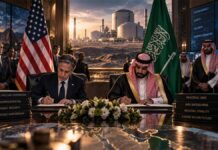
The Italian government, which maintains a 30% stake in Leonardo S.p.A. through the Ministry of Economy and Finance (MEF), views the PIF engagement as a necessary, if sensitive, mechanism for industrial salvage and a tangible component of the rapidly institutionalizing Saudi–Italian Strategic Partnership Council established in January 2025 A New Silk Road of Capital, November 2025. This high-level bilateral framework, cemented by Prime Minister Giorgia Meloni’s visit to Al-Ula, has already catalyzed the signing of approximately $10 billion (€10 billion) in agreements and Memoranda of Understanding (MOUs) across sectors including aviation and defense, fundamentally shifting the historical client-supplier dynamic to one of strategic co-investment Forging the Desert Bridges, November 2025. Crucially, the Aerostructures operation is positioned to provide the specialized manufacturing expertise and large-scale platform know-how that the Saudi General Authority for Military Industries (GAMI) mandates to localize 50% of the Kingdom’s total military spending by 2030 Saudi Arabia’s defence industrial transition, January 2025.
The strategic criticality stems from the nature of the division’s output: while currently focused on civil aerospace (Boeing 787), the underlying composite material science, large-scale assembly techniques, and airframe integration knowledge are fungible, directly transferable skills for advanced military aviation programs, including the nascent Global Combat Air Programme (GCAP), in which Leonardo is a key partner alongside the UK and Japan The New Partnership among Italy, Japan and the UK, March 2025. The PIF is not merely seeking a return on investment; it is acquiring a technological beachhead in European defense know-how, categorized officially as one of its 13 strategic sectors for investment Here’s a rundown of PIF’s strategic sectors, September 2023.
This PIF investment model is not isolated. It follows a discernible pattern of utilizing the sovereign wealth fund to secure access to technology and localized production capabilities across the global aerospace and defense ecosystem. While the PIF’s direct, public portfolio exposure in the Aerospace and Defense sector remains small, quantified at just 0.3% of its strategic sector investments, the number of portfolio companies in this sector has been officially disclosed as seven Our Portfolio – Public Investment Fund, November 2025. These are often structured as joint ventures or strategic minority stakes that maximize technology transfer and local job creation within the Kingdom.
A prominent example within the PIF’s portfolio is Riyadh Air, a new national carrier that serves as an anchor customer for advanced aerospace technology and maintenance, repair, and overhaul (MRO) capabilities Our Portfolio – Public Investment Fund, November 2025. Furthermore, the PIF has established a $3 billion line of cooperation with SACE, Italy’s export credit agency, specifically to finance and underwrite the engagement of Italian companies, particularly Small and Medium Enterprises (SMEs), in Vision 2030 projects PIF and SACE sign MoU for up to $3 billion, November 2025. This financial architecture creates a powerful incentive structure, effectively socializing the risk for Italian industry while privatizing the long-term strategic benefit for the PIF. The central issue of this entire transaction is the inherent dual-use nature of the technology being transferred: the precision machining, composite lay-up, and quality control systems for a Boeing 787 fuselage are virtually identical to those required for a fighter jet wing or a missile airframe.
The paramount concern remains the potential impact assessment on classified and strategic information, particularly given Leonardo’s deep integration within the NATO and European Union defense industrial base. Leonardo is a key contributor to the Eurofighter Typhoon, the NH90 helicopter, and GCAP, all of which involve highly sensitive, often ITAR-regulated (International Traffic in Arms Regulations) or similar European classified technologies. While the Italian state’s 30% equity stake and the government’s activation of Golden Power legislation—designed to protect strategic national assets—are cited as safeguards, the reality of globalized defense production is more porous.
An external financial partner, even with a non-controlling stake in a loss-making civil division, gains access to proprietary manufacturing data, supply chain logistics, and, crucially, the industrial management processes that govern the entire group’s operational tempo. The Golden Power rule can block the transfer of ownership or mandate specific conditions, but it cannot fundamentally prevent the diffusion of tacit knowledge—the expertise held by the 1,500 workers and engineers in the division—nor can it fully insulate the company from the sophisticated cyber-espionage capabilities that the PIF’s broader ecosystem, particularly its technology-focused subsidiaries, could potentially employ.
The United States Department of Defense (DoD) regularly flags the vulnerability of global supply chains to such co-option Form 10-K for Leonardo DRS INC, March 2025, and the PIF’s co-investments in digital infrastructure and technology, such as the recent MoU with SITE and Microsoft to explore sovereign-cloud services in Saudi Arabia PIF | Press releases, November 2025, further blur the lines between strategic financial partnership and technological acquisition vehicle.
Chapter Index
Core Concepts in Review: What We Know and Why It Matters
- The Fraying Edges of European Sovereignty: The Financial Precarity of Italy’s Defense Assets and the PIF’s Capital Intervention.
- The Dual-Use Dilemma: Assessing Technological Leakage and Classified Information Exposure in the Aerostructures Transaction.
- PIF’s Global Beachhead Strategy: A Comparative Analysis of Sovereign Wealth Fund Investments in Advanced Defense and Dual-Use Technology.
- The Vision 2030 Engine: Localizing Critical Industrial Capabilities and the Saudi Bid for Military Self-Sufficiency.
- Regulatory Lacunae and the Golden Power Firewall: A Legal-Political Analysis of the Italian State’s Capacity to Mitigate Strategic Risk.
- Strategic Data Synthesis: The PIF’s Geo-Economic Vector into the EDTIB
Core Concepts in Review: What We Know and Why It Matters
As Senior Policy Editor, my task is to distill the complex web of strategic finance, defense technology, and geopolitical maneuvering that defines the current relationship between Saudi Arabia and the European Defense Technological and Industrial Base (EDTIB). The challenge is no longer merely identifying risk; it is understanding the deep, systemic asymmetry created by the Public Investment Fund’s (PIF) strategic capital deployment. For policymakers, grasping this structure is essential to crafting effective national security safeguards.
The Engine: Vision 2030 and the Localization Imperative
The entire framework of Saudi Arabia’s global defense engagements is driven by one non-negotiable directive: Vision 2030. This national economic blueprint aims to fundamentally restructure the Kingdom’s economy, moving it from oil dependency to a global industrial power. Within this vision, the mandate to localize 50% of total government expenditure on military equipment and services by 2030 is the central, measurable goal Localizing the sector | GAMI, November 2025.
- Progress and Scale: This is not abstract ambition. Progress has been significant, rising from low single digits to 24.89% localization by the end of 2024 Saudi Arabia reaches 25% localization of military spending, on track for 2030 goal, November 2025. The sheer financial scale of this commitment is massive, considering the Kingdom’s defense budget, which is among the top five globally Saudi defence industry: capabilities and partnerships, February 2024. The PIF, with assets nearing $1.07 trillion in 2025 Saudi Arabia’s PIF sets 2025 targets for $1.07 trillion assets, 21 percent growth in emerging sector investments, September 2025, is the chief financial instrument, explicitly tasked with “Localiz[ing] cutting-edge technology and knowledge through PIF” PIF Program 2021-2025, November 2025.
The primary mechanism for this is the national defense champion, Saudi Arabian Military Industries (SAMI), a PIF subsidiary that aims to be one of the top 25 defense companies globally by 2030 Saudi defence industry: capabilities and partnerships, February 2024.
The PIF’s Asymmetric Geo-Economic Strategy: The JV Mandate
The PIF’s strategy has decisively moved past the largely ineffective Offset Policy of the past. The new doctrine centers on enforcing Mandatory Joint Ventures (JVs) with foreign Original Equipment Manufacturers (OEMs), structured explicitly for the transfer of Transfer of Production (ToP) and Transfer of Technology (ToT).
- Beyond Assembly: These JVs are not designed for simple assembly. They target the most complex, high-value components of the defense supply chain, demanding high rates of local content. For example, the SAMI-Thales Electronic Systems (STES) JV, focused on C4ISR (Command, Control, Communications, Computers, Intelligence, Surveillance, and Reconnaissance) and advanced radar systems, set a localization rate of 70% for specific projects, signifying the acquisition of sophisticated design and integration know-how SAMI signs 2 joint ventures to localize military industries, February 2024.
- Strategic Domain Capture: This strategy is meticulously executed across GAMI’s five priority domains:
- Missile Systems: The SAMI-MBDA JV targets the localization of the Common Anti-Air Modular Missile (CAMM) family, which includes the CAMM-ER variant with a range exceeding 40km CAMM-ER – MBDA, January 2025. This deal is aimed at achieving full Air Defense self-sufficiency.
- Land & Missile Systems: Partnerships with Lockheed Martin include the localization of components for the THAAD anti-ballistic missile system Saudi defence industry: capabilities and partnerships, February 2024.
- Naval Systems: The SAMINavantia JV with Spain’s Navantia focuses on localizing shipbuilding and naval MRO expertise through the construction of Avante 2200 Class corvettes, ensuring that sovereign naval capability is built domestically Saudi defence industry: capabilities and partnerships, February 2024.
The Leonardo Case: The Dual-Use and Tacit Knowledge Vulnerability
The attempted PIF investment in Leonardo’s Aerostructures division must be understood as the PIF’s strategy applied to a single, critical European vulnerability: the fusion of civil and military production.
- Dual-Use Definition: The Aerostructures unit’s core expertise in manufacturing large, complex composite airframe sections (for platforms like the Boeing 787 Dreamliner) is the epitome of dual-use technology. The process know-how for automated fiber placement and advanced curing—the tacit knowledge held by the engineers—is functionally indistinguishable from the production processes required for advanced military combat aircraft, such as those planned for the Global Combat Air Programme (GCAP).
- The MRO Gateway: The deal, if finalized, would transform a struggling Italian industrial asset into an MRO and fabrication gateway for Saudi aerospace. This move accelerates the Saudi goal of achieving technological self-reliance in high-end airframe structures, a domain previously protected by the high barrier of entry and OECD export controls. The PIF is effectively buying the proprietary manufacturing expertise to eventually replicate it autonomously in the Kingdom.
The Regulatory Lacunae: Golden Power and the EU Screening Challenge
The effectiveness of European defense against this geo-economic strategy is severely tested by regulatory constraints, most notably Italy’s Golden Power law and the broader EU Foreign Direct Investment (FDI) Screening Framework.
- Golden Power’s Limitations: While the Golden Power law grants the Italian government the authority to impose conditions on acquisitions in strategic sectors, including aerospace technologies and dual-use items Italy – Amends golden power legislation to include certain intragroup operations with assets crucial for critical technologies, November 2025, its core weakness is its inability to prevent tacit knowledge and human capital migration. Mitigation conditions—such as mandating the retention of the Italian workforce for a limited period—are insufficient if the strategic goal is the establishment of a parallel, competitive greenfield facility in Saudi Arabia that then hires those same skilled European personnel. The law has a difficult time constraining this outward movement of expertise, even as Italy is increasingly scrutinized by the European Commission over the proportionality and compliance of its screening regime with EU internal market laws European Union to Issue Formal Warning to Italy Over Golden Power Regulations, November 2025.
- The Asymmetric Trade-Off: The fundamental policy failure lies in the acceptance of an asymmetric trade-off: Saudi Arabia provides essential capital to shore up distressed European industrial assets (like Aerostructures, which had a negative financial performance in 2024 and was straining the overall Leonardo Group Leonardo: Board of Directors approves fy2024 results and 2025 guidance, March 2025 in exchange for acquiring a technological seed that will inevitably sprout into a long-term commercial and strategic competitor. This transfer is not merely a risk to Italy, but to the collective security of the EDTIB, which relies on retaining its technological edge.
Why It Matters
The PIF’s strategy is a sophisticated form of state-backed industrial substitution that utilizes global finance to achieve national security goals. The detailed agreements with MBDA, Thales, Boeing, and the pursuit of Leonardo show a deliberate, integrated plan to capture the entire defense value chain, from advanced missiles and radars to the foundational MRO and airframe manufacturing capabilities.
For policymakers, the core issue is recognizing that financial investment from sovereign wealth funds can be a highly effective vector for technology extraction. The defensive tools currently in place—like Golden Power—were designed to block hostile takeovers, but they are proving inadequate against a strategy that uses partnership, joint ventures, and rescue capital to secure long-term, irreversible transfers of dual-use IP and human expertise. Addressing this requires a synchronized, EU-wide approach that moves beyond monitoring and towards proactively mandating reciprocity in defense industrial access and imposing far stricter controls on human capital movement in critical technology sectors.
The Fraying Edges of European Sovereignty: The Financial Precarity of Italy’s Defense Assets and the PIF’s Capital Intervention
The proposed acquisition of a stake in Leonardo S.p.A.’s Aerostructures division by the Kingdom of Saudi Arabia’s Public Investment Fund (PIF) is a stark demonstration of how chronic fiscal weakness within a European Union (EU) and NATO member state can create strategic vulnerabilities, effectively allowing external, geopolitically assertive sovereign wealth to purchase a proprietary interest in the continent’s military-industrial base. This transaction is not an isolated event but rather the predictable culmination of Italy’s enduring macroeconomic fragility intersecting with Saudi Arabia’s immense, directed capital strength, currently exceeding $925 billion (€845 billion) in Assets Under Management (AUM) Public Investment Fund: PIF | Home, November 2025. The context for this intervention is Italy’s precarious fiscal position: the European Commission forecasts that Italy’s public debt-to-GDP ratio will reach 136.4% in 2025 and continue to rise to 137.9% in 2026 Economic forecast for Italy, November 2025, a trajectory that maintains Rome as one of the Euro Area’s most fiscally stressed members. Simultaneously, Italy’s GDP growth is projected to slow to a mere 0.4% in 2025 Economic forecast for Italy, November 2025, confirming a period of economic sluggishness that places immense political pressure on the government to find non-sovereign solutions to structural industrial problems. This combination of high sovereign debt and low growth acts as an oxidative stressor on strategic state-controlled enterprises like Leonardo S.p.A., which, despite its critical role in European defense programs, is compelled to seek external, non-dilutive capital solutions for its underperforming, civilian-focused segments.
The Leonardo Aerostructures division, the immediate object of PIF’s interest, provides the financial casus belli for the transaction. This unit, which specializes in the composite fabrication and assembly of major airframe components, most notably sections of the Boeing 787 Dreamliner, has been a significant drag on the broader conglomerate’s performance due to post-pandemic civil aviation market contraction and production difficulties. The latest financial disclosures from Leonardo for the first nine months of 2025 reveal a sharp deterioration in the profitability of the Aeronautics sector, of which Aerostructures is a part: EBITA declined by 20.0% to €96 million compared to the restated figure for the same period in 2024 RESULTS AT 30 SEPTEMBER 2025 – Leonardo, November 2025. This decline is critical because while the overall Leonardo group’s financial health remains robust, demonstrated by a S&P Global Ratings upgrade to ‘BBB/A-2’ in April 2025 and a forecast for Free Operating Cash Flow (FOCF) above €600 million annually for 2025 and 2026 Leonardo SpA Upgraded To ‘BBB/A-2’ On Solid Opera, April 2025, the localized, ongoing losses of a single strategic division create a political and industrial imperative for restructuring. The stated goal by Leonardo’s management, led by Roberto Cingolani, is to find a “strong partner” to spin off the business and provide the patient capital needed to reach the revised break-even point target, which has been postponed to 2028 or 2029. The PIF, with its mandate for long-term strategic value creation rather than immediate quarterly returns, perfectly fits the profile of this financially necessary, if politically controversial, savior.
The core threat arising from this capital injection is the dual-use technological erosion it enables, specifically the transfer of sophisticated manufacturing process knowledge from European hands to a non-NATO, non-EU state. The Aerostructures division is a master of large-scale, high-precision manufacturing using advanced composite materials, an expertise that sits at the convergence of civil and military aerospace. European Commission documents explicitly recognize the limitations of the classic “dual-use” paradigm, arguing that modern technologies like Additive Manufacturing (AM) and advanced composite fabrication have become “omni-use,” serving defense readiness, industrial competitiveness, and societal resilience simultaneously From Dual-Use to Omni-Use: Securing Europe’s Future, October 2025.
The PIF’s strategic investment grants Saudi Arabia access to the entire operational and intellectual apparatus of a key European composite manufacturer. This includes proprietary knowledge concerning non-destructive testing, automated fiber placement, thermal curing protocols, and intellectual property surrounding the stress tolerance and fatigue life of advanced carbon fiber components. While the division’s current output is the Boeing 787 fuselage, the underlying industrial skills are directly applicable to the construction of fuselage segments, wings, and control surfaces for platforms like the Eurofighter Typhoon (in which Leonardo holds a 21% industrial stake) or the next-generation fighter being developed under the Global Combat Air Programme (GCAP). Italy’s Ministry of Defense will undoubtedly rely on the nation’s Golden Power legislation to impose conditions, a mechanism that saw 30 cases result in conditions or commitments in 2024 alone, including on EU and Italian investors, demonstrating its increasing use as a proactive tool to shape strategic direction The expanding reach of Italy’s FDI regime, July 2025. However, no amount of regulation can fully cordon off the tacit knowledge—the process—from a co-investor who sits on the operational board, participates in joint ventures, and directs capital towards specific manufacturing upgrades.
The investment’s financial structure further underscores the geopolitical calculation. Italy requires patient, transformative capital that the European Defence Fund (EDF) has proven incapable of providing for national industrial overhaul projects of this nature. The EDF, with a budget of nearly €8 billion for 2021-2027, is primarily designed to fund collaborative research and development efforts across member states, committing €5.4 billion since its inception European Defence Fund | EU Funding Overview, November 2025, but it is ill-suited to act as a restructuring fund for a specific, failing manufacturing asset. The PIF, in contrast, is an instrument of state foreign policy, not just a financial entity, operating under the explicit mandate of Vision 2030 to localize 50% of Saudi Arabia’s total military expenditure. This localization goal is actively pursued through subsidiaries such as the Saudi Arabian Industrial Investments Company (Dussur), which focuses on developing key industrial value chains within the Kingdom Public Investment Fund: PIF | Home, November 2025.
The PIF’s involvement in Leonardo’s Aerostructures division guarantees a future captive market and a direct channel for knowledge transfer, allowing Saudi Arabia to bypass the prolonged, opaque, and condition-laden process of acquiring the technology via traditional government-to-government sales. The $3 billion cooperation line established between the PIF and SACE, Italy’s export credit agency, is yet another layer of financial integration, ensuring a steady pipeline of Italian know-how and SME participation into Saudi projects PIF and SACE sign MoU for up to $3 billion, November 2025, essentially subsidizing the long-term industrial migration of expertise from Europe to the Gulf.
This emerging pattern of petro-capital security engagement forces a re-evaluation of European strategic autonomy. The PIF’s intervention exploits the structural disconnect between European policy goals—such as creating a competitive defense-industrial base via the EDF—and the sovereign fiscal realities of its member states. Italy, constrained by the EU’s fiscal framework and a projected 2025 public debt load of over €2.9 trillion ($3.2 trillion) Economic forecast for Italy, November 2025, is effectively trading a minority stake in sensitive, dual-use technology for immediate political relief and the promise of a stable industrial future for 1,200 specialized workers in its southern regions. This compromise risks creating a precedent where EU states, under economic duress, become vectors for the industrial and technical advancement of strategically ambitious third parties.
The core objective of the PIF is the creation of globally competitive, advanced industrial sectors within Saudi Arabia, demonstrated by its investment in entities like Alat, which is focused on transforming global industries and creating a world-class manufacturing hub Public Investment Fund: PIF | Home, November 2025. A stake in Leonardo’s Aerostructures is a direct purchase of a foundational pillar—the advanced manufacturing process—required to achieve that Vision 2030 goal, positioning Riyadh to eventually compete with, or at least become independent of, its traditional Western suppliers for sophisticated military airframe technology.
The Dual-Use Dilemma: Assessing Technological Leakage and Classified Information Exposure in the Aerostructures Transaction
The strategic investment by the Public Investment Fund (PIF) into Leonardo’s Aerostructures division exposes a profound vulnerability within the European defense technological and industrial base (EDTIB), specifically the inherent difficulty in drawing a legally and practically enforceable firewall around dual-use technology that simultaneously underpins commercial viability and military supremacy. The central tension is that the advanced manufacturing capability housed in Italy—the expertise in composite lay-up, stress analysis, and structural integrity for large airframe sections—is the very industrial bedrock upon which core NATO and EU military programs, such as the Eurofighter Typhoon and the nascent Global Combat Air Programme (GCAP), are built. A financial partnership with a non-NATO sovereign entity, however passive its initial stake, grants an irrevocable, asymmetric advantage in accelerating Saudi Arabia’s stated objective to localize 50% of its military spending by 2030 GAMI Reports Localization of Military Spending in Saudi Arabia Increases to 24.89%, November 2025. This localization rate has currently reached 24.89% as of the end of 2024, demonstrating significant, targeted progress Saudi Arabia Nears Quarter of Defense Spending Localized, Aims for 50% by 2030, November 2025. The risk is not merely financial dilution; it is the transfer of tacit knowledge—the accumulated operational procedures, supply chain mastery, and quality control systems—that constitutes the de facto classified core of any advanced manufacturing process, even if the end product is a civil component for the Boeing 787.
The European Union recognizes that the classic distinction between military and civilian technology is dissolving, with the emergence of “omni-use” domains such as Artificial Intelligence (AI), advanced materials, and quantum computing that are critical to both economic and defense competitiveness EU Defence Industry Transformation Roadmap, November 2025. The composite technology residing within Leonardo is a prime example of this omni-use reality. The production of the horizontal stabilizer and fuselage sections for the Boeing 787 relies on highly specific, proprietary protocols for automated fiber placement (AFP) and large-scale autoclave curing. The thermal expansion coefficients, void content management, and inter-ply bonding strength achieved through these processes are highly guarded intellectual property (IP) because they directly inform the design and manufacturing tolerance envelopes for military platforms that must withstand extreme G-forces, radar signature management requirements, and combat damage. Although Italy’s Golden Power legislation can impose stringent conditions on the PIF’s access, restricting direct access to military contracts or classified data rooms, this cannot prevent the PIF from gaining insight into the unit’s capital expenditure plans, operational bottlenecks, personnel structure, and most critically, its proprietary relationships with suppliers in the highly specialized materials and tooling sector. This supply chain visibility is an intelligence asset that allows the Kingdom of Saudi Arabia to replicate the ecosystem necessary for high-end aerospace manufacturing domestically, thereby bypassing years of independent research and development. The likelihood of a subsequent agreement that sees Leonardo build a civil aviation manufacturing plant in Saudi Arabia as part of the deal, as reported during earlier negotiations, explicitly confirms this technological transfer objective PIF eyes stake in aerostructure unit of Italy’s Leonardo, March 2025.
The exposure risk is compounded by the International Traffic in Arms Regulations (ITAR) framework, which governs the export of U.S. defense articles and services. While the European regulatory regime for dual-use technology is distinct, a significant portion of the technology used by Leonardo, especially in relation to the 787 components, is subject to ITAR compliance due to the involvement of Boeing and the U.S. supply chain. The U.S. Department of Defense (DoD) regularly emphasizes the importance of preserving U.S. technological superiority and managing the impact on the defense industrial base when considering technology transfer Technology Transfer, Disclosure, exporT conTrols, anD inTernaTional programs securiTy, August 2024. The introduction of the PIF—a state-controlled entity from a country that, while designated a Major Non-NATO Ally (MNNA) by the U.S., is not subject to the same treaties and defense cooperation arrangements as core NATO members—introduces an immediate third-party access risk to the entire compliance matrix. Any data or process know-how deemed “sensitive” by the U.S. government, even if only pertaining to the civil 787 program, could be scrutinized for potential unauthorized re-transfer to a non-approved end-user or use in unauthorized military applications. This complicates Leonardo’s regulatory environment and adds a layer of geopolitical pressure from Washington on Rome to ensure the Golden Power conditions are not merely symbolic but functionally airtight, potentially leading to future restrictions on Leonardo’s participation in U.S.-EU defense projects if the risk is deemed too high. The fundamental issue is that the current execution of frameworks like ITAR is often criticized for a Cold War-era risk aversion that impedes collaboration even among the closest allies, making the integration of a non-traditional partner like the PIF significantly more challenging to regulate Optimizing Innovation Cooperation with Allies and Partners, July 2024.
Furthermore, the structure of the investment grants the PIF a privileged strategic listening post within a company that is a critical national asset of Italy. Leonardo is one of the world’s top 15 defense contractors and is intrinsically linked to Italian national security, operating in the highly classified domains of Cybersecurity, Electronics for military platforms, and Aircraft production Company Profile – Leonardo, November 2025. While the PIF’s stake is ostensibly ring-fenced to a loss-making civil division, the investment provides an institutional channel for intelligence gathering. This may not involve illegal espionage but rather the legitimate, strategic collection of information on Leonardo’s corporate governance, its long-term industrial planning, key personnel expertise, and financial health—data that is invaluable for a state determined to build a competing indigenous defense industry. The Saudi entity Saudi Arabian Military Industries (SAMI), which serves as the national champion for defense localization, is actively engaged in developing local supply chains in collaboration with global partners like Lockheed Martin and Roketsan Localization of military spending in Saudi Arabia rises to nearly 25% in 2024, November 2025. The PIF’s stake in Leonardo effectively creates a direct, high-level interface with a top-tier European prime contractor, an advantage that no other competing MNNA possesses in such a crucial sector of the Italian defense base.
The most critical and least mitigable form of leakage is the human capital transfer. The Aerostructures division employs approximately 1,200 specialized engineers and technicians whose hands-on experience in composites manufacturing is extremely rare and highly prized. Should the PIF’s investment lead to the creation of a new facility in Saudi Arabia, as has been suggested, the predictable next step will be the recruitment of this experienced Italian workforce for high-paying training and leadership roles in the Kingdom. This is a recognized strategy for technology transfer where the movement of key personnel bypasses all formal export control restrictions, effectively migrating the organizational memory and process excellence of a European asset to the Gulf. This movement of talent is far more disruptive to European strategic autonomy than the simple transfer of machinery or blueprints, as it immediately creates a competent manufacturing base for advanced airframes in Riyadh, directly serving GAMI’s ambitious localization goals. The long-term trajectory is clear: the PIF’s capital provides the essential lubricant for Saudi Arabia to leverage Italy’s financial distress into a direct gain in strategic industrial capabilities, fundamentally altering the global balance of aerospace manufacturing expertise in favor of the Kingdom.
PIF’s Global Beachhead Strategy: A Comparative Analysis of Sovereign Wealth Fund Investments in Advanced Defense and Dual-Use Technology
The Public Investment Fund’s (PIF) move on Leonardo’s Aerostructures division is not an opportunistic response to an isolated financial failure in Italy, but the latest, and perhaps most strategically significant, execution of a deliberate, globally observed acquisition strategy aimed at securing beachheads within the Organization for Economic Co-operation and Development (OECD) industrial supply chains. This strategy is defined by three non-negotiable criteria: patient capital deployment, targeting financially stressed, high-skill technological assets, and establishing a formalized pathway for the subsequent localization of that technology within the Kingdom of Saudi Arabia. The PIF, with assets under management approaching $1 trillion (€915 billion) in 2025 PIF Posts 19% Growth in Assets, August 2025, operates under a highly explicit, government-mandated strategy (Vision 2030) that designates Aerospace & Defense as one of its 13 strategic sectors for investment, emphasizing the need to establish domestic military industries to accommodate growing demand and provide opportunities along the industry’s value chain PIF Program 2021-2025, November 2025. The PIF’s portfolio already lists seven companies within the Aerospace and Defense sector, including Riyadh Air, a new national carrier whose massive aircraft orders and associated maintenance, repair, and overhaul (MRO) requirements create an immediate, captive demand signal for the very advanced airframe skills targeted in the Leonardo deal Our Portfolio – Public Investment Fund, November 2025.
The PIF’s approach represents a significant evolution beyond the traditional Offset Policy that historically governed Saudi defense procurement. Previous programs, such as the 1984 Offset Policy or the Al Yamamah arms deal with the UK regarding 72 Tornado fighters, suffered from inconsistent interpretation and a lack of coordination, resulting in a failure to genuinely foster an indigenous defense industry, with the initial offset projects often being tangential to core military technology, such as sugar refineries or pharmaceutical manufacturers Saudi Arabia’s defence industrial transition: from vision to reality?, September 2025. In contrast, the current strategy, driven by the General Authority for Military Industries (GAMI), uses the PIF’s capital not just to buy equipment, but to directly acquire stakes in the operational and intellectual structure of foreign Original Equipment Manufacturers (OEMs). This shift is highlighted by GAMI’s success in raising the localization of military spending from a low of 4% in 2018 to 24.89% by the end of 2024, with the goal remaining a demanding 50% by 2030 GAMI Reports Localization of Military Spending in Saudi Arabia Increases to 24.89%, November 2025. The Leonardo Aerostructures unit, with its specialized expertise in composite airframe sections, offers a mechanism to significantly compress the learning curve for SAMI (Saudi Arabian Military Industries) and the broader Saudi defense ecosystem, providing a fast-track to air platform fabrication mastery, a highly complex and protected domain.
A key comparative example that defines the PIF’s methodical, multi-pronged strategy is its engagement with the Information and Communications Technology (ICT) sector, which is fundamentally dual-use. The PIF has actively established a series of high-level partnerships and subsidiaries specifically focused on transferring, domesticating, and developing advanced computing capabilities, which are essential for modern defense platforms, including command and control systems, electronic warfare, and AI integration. Humain, a PIF-owned AI company, was launched in May 2025 to operate across the entire AI value chain and has subsequently entered into major strategic partnerships with global technology giants. Specifically, Humain and AMD formed an agreement to invest up to $10 billion to deploy 500 megawatts of AI compute capacity over the next five years PIF | Telecom, Media, and Technology, November 2025, and a further partnership with NVIDIA to build advanced AI infrastructure and capabilities, including the development of AI factories to train and deploy sovereign AI models Saudi Arabia is investing $600B in the US. What’s in it for manufacturing?, November 2025. These investments are overtly aimed at localizing cutting-edge technology and knowledge PIF Diversifies Investment by Launching Security Services Company, October 2025. This model of investing for localization—using financial leverage to mandate the onshore development of complex industrial ecosystems—is precisely the template being applied to Leonardo. The PIF is not buying Aerostructures as a stand-alone investment; it is using it as a high-fidelity training school and IP conduit to bootstrap Saudi aerospace expertise.
In the more conventional defense arena, Saudi Arabia has successfully leveraged its immense procurement budget—the fifth largest defense budget globally Saudi Arabia – Defense & Security – International Trade Administration, January 2024—to force deeper localization commitments from major Western OEMs. The merger of BAE Systems Saudi Development and Training and the Saudi Maintenance and Supply Chain Management Co. into BAE Systems Arabian Industries in 2025 is a key instance, aimed at consolidating defense training, capability development, and logistics to accelerate localization Saudi Arabia launches BAE Systems Arabian Industries to localize defense manufacturing, May 2025. Similarly, the successful production of the first locally manufactured components for the Terminal High Altitude Area Defense (THAAD) system launcher in Jeddah, following localization agreements signed in 2024, demonstrates that high-sensitivity defense component manufacturing is achievable when directly mandated and facilitated by GAMI and backed by global partners like Lockheed Martin Saudi Arabia launches BAE Systems Arabian Industries to localize defense manufacturing, May 2025. The Leonardo transaction fits seamlessly into this strategy as the civilian equivalent: an acquisition of composite fabrication excellence that is strategically fungible with the airframes required for future SAMI platforms.
The critical issue that differentiates the PIF’s approach from other state-backed investment funds, such as Temasek of Singapore or the China Investment Corporation (CIC), is the absence of effective regulatory reciprocity. The OECD nations that comprise the EU and NATO maintain open capital markets and predictable rule-of-law environments, which the PIF is adeptly navigating. Conversely, the defense and strategic technology sectors in Saudi Arabia are shielded by the explicit mandate of GAMI and the requirement for 50% localization, creating a one-way technology transfer mechanism. European and U.S. companies are invited to invest their technology and capital to develop the Saudi industrial base, but Saudi strategic assets are not equally accessible to Western sovereign wealth funds or state-backed entities seeking technology transfer into Europe. This asymmetry is the core geopolitical threat, effectively allowing Riyadh to cherry-pick the most distressed yet technologically valuable components of the EDTIB without providing corresponding strategic access to its own rapidly developing defense and technology ecosystem. The strategic calculus for the PIF is thus one of minimal financial risk for maximum technological and political return, leveraging Italy’s 136.4% GDP debt ratio as a tactical lever against Europe’s broader strategic autonomy.
The Vision 2030 Engine: Localizing Critical Industrial Capabilities and the Saudi Bid for Military Self-Sufficiency
The Public Investment Fund’s (PIF) pursuit of a stake in Leonardo’s Aerostructures division is a direct consequence of the overarching, non-negotiable strategic directive of Saudi Vision 2030 to achieve military self-sufficiency through radical industrial localization. This objective is formally managed and measured by the General Authority for Military Industries (GAMI), which reports directly to the highest levels of the Saudi government. GAMI’s mandate is clear: to localize more than 50% of the Kingdom’s total government spending on military equipment and services by the target year of 2030 GAMI Reports Localization of Military Spending in Saudi Arabia Increases to 24.89%, November 2025. The progress to date, driven by aggressive investment and a restructured regulatory environment, is substantial, having successfully raised the localization rate from its historical low single digits to 24.89% by the end of 2024 Localizing the sector | GAMI, November 2025. The Leonardo transaction is a tactical move designed to address the most complex and technology-intensive gap in the current Saudi defense industrial base (DIB): advanced composite airframe manufacturing.
The core of the Vision 2030 military localization strategy, distinct from previous, largely unsuccessful offset programs dating back to the 1984 Offset Policy, is its focus on “value chain capture” Saudi Arabia’s defence industrial transition: from vision to reality?, September 2025. Rather than accepting indirect, civilian-focused investments as “offset” credit, GAMI mandates that international Original Equipment Manufacturers (OEMs) must transfer specific, high-value intellectual property and manufacturing expertise related to the actual military platforms being procured. The strategy is built upon five priority domains: Ammunition, Missiles, & Weapons; Land Systems; Aerospace; Defense Electronics; and MRO (Maintenance, Repair, and Overhaul) Saudi Vision 2030 – Overview, September 2025. The acquisition of a foothold in Leonardo’s Aerostructures unit directly addresses the Aerospace domain, specifically the fabrication of complex, mission-critical airframe components. This expertise is a sine qua non for transitioning from merely assembling imported kits to indigenous, high-value manufacturing, which is the necessary condition for achieving the 50% localization target.
The Saudi Arabian Military Industries (SAMI), a PIF subsidiary and the national defense champion, is the executive engine of this strategy, engaging in strategic joint ventures and technology transfers across all five domains. For instance, SAMI has formed partnerships with global leaders like Lockheed Martin for the localization of missile systems, and with Amentum for the MRO and upgrade of combat land vehicles Saudi Arabia’s SAMI joins forces with US-based Amentum to maintain, upgrade combat vehicles, August 2025. These agreements are characterized by a mandated transfer of MROU (Maintenance, Repair, Overhaul, and Upgrade) processes, ensuring not just local job creation but the acquisition of the technical and commercial blueprints necessary for long-term self-sufficiency Strategic Partnerships Formed as SAMI Concludes Participation at Dubai Airshow 2025, November 2025. The Leonardo investment is merely the PIF’s chosen capital mechanism to achieve a similar end for the highly protected field of composite aerospace fabrication. By acquiring a stake, the PIF gains board-level visibility and the right to negotiate future operational joint ventures that will inevitably stipulate the creation of an advanced composite manufacturing facility in Saudi Arabia, staffed and trained by personnel currently working in Italy’s financially distressed division.
Crucially, GAMI and the PIF are simultaneously building the foundational ecosystem required to absorb and sustain this transferred technology. This includes intensive human capital development, with programs designed to train the next generation of Saudi defense professionals in specialized areas like engineering and cybersecurity, often in collaboration with the Ministry of Education DSEI 2025: Saudi Arabia World Defense Show 2026 Reveals Major Defense Opportunities, September 2025. Furthermore, the authority is focused on integrating Small and Medium Enterprises (SMEs) into the national and global defense supply chains through specialized initiatives like the Saudi Supply Chain Zone at the World Defense Show (WDS), which acts as a platform for local firms to secure partnerships and display innovations DSEI 2025: Saudi Arabia World Defense Show 2026 Reveals Major Defense Opportunities, September 2025. The PIF’s ability to commit substantial, long-term capital, evidenced by its $925 billion (€845 billion) AUM, ensures that these industrial transfer projects are not subject to the short-term financial pressures that plague European industrial restructuring efforts, such as the one currently facing Leonardo’s Aerostructures unit.
The underlying geopolitical ambition is the attainment of strategic autonomy. By localizing the production of complex systems, the Kingdom of Saudi Arabia reduces its susceptibility to the political and diplomatic leverage often exerted by Western powers through arms embargoes or export license freezes. The suspension of certain arms sales, such as those related to the Yemen conflict, by nations including Germany and at times the United States, provided a tangible demonstration of this vulnerability, underscoring the urgent need for local production capability Why 2025 Is Crucial for Saudi Arabia’s Military Technology Expansion, June 2025. The investment in Leonardo is thus a proactive hedging strategy, buying access to a technology that will make Saudi Arabia’s future airpower less dependent on the geopolitical calculus of Rome, Brussels, or Washington. The strategic risk for Europe is that by alleviating Italy’s immediate industrial crisis, the EU and NATO are inadvertently funding the creation of a future technological competitor with a significant cost advantage and an aggressive, state-backed mandate for global market penetration.
Regulatory Lacunae and the Golden Power Firewall: A Legal-Political Analysis of the Italian State’s Capacity to Mitigate Strategic Risk
The impending transaction between the Kingdom of Saudi Arabia’s Public Investment Fund (PIF) and Leonardo S.p.A. will serve as the most rigorous contemporary test of Italy’s special investment screening legislation, commonly known as the Golden Power law. This framework, established by Legislative Decree No. 21 of 2012 and substantially expanded since, grants the Italian government the authority to impose conditions, or in rare cases veto, corporate resolutions and acquisitions in sectors deemed strategic to national security and public interest Foreign Direct Investment Regimes Laws and Regulations Report 2026 Italy, November 2025. While the law is robust in its theoretical scope, covering defense and national security assets—where notification is mandatory regardless of the acquirer’s nationality—the specific structural attributes of the PIF’s target, a financially distressed, dual-use division of a defense contractor, expose critical lacunae in the regulatory firewall’s practical effectiveness.
The jurisdiction of Golden Power is unequivocally established in this case, as Leonardo operates fundamentally within the defense and national security sector, and the target asset—Aerostructures—deals with advanced composite manufacturing, falling under the category of critical technologies and dual-use items as defined by EU Regulation No. 2019/452 CELIS Country Note on Italy, 2025. Critically, the legislation explicitly mandates that when an acquisition is carried out by an entity owned or controlled by a non-EU State, such as the PIF, that circumstance must be taken into particular consideration by the Italian Government Foreign Direct Investment Regimes Laws and Regulations Report 2026 Italy, November 2025. This legal framework compels the Council of Ministers to issue a decree outlining the terms of the investment, which will undoubtedly impose a series of mitigation conditions to protect IP and operational autonomy. However, the sheer volume of cases, which reached 835 transactions screened in 2024 alone (a 15% increase from 2023), suggests a high administrative burden, with 47% of filings deemed out-of-scope and only a small fraction (8% in 2024) resulting in the imposition of conditions The expanding reach of Italy’s FDI regime – A&O Shearman, July 2025. The government’s challenge is crafting conditions that are both legally proportional and technologically effective against the highly sophisticated, long-term strategic objectives of the PIF.
The primary weakness of the Golden Power firewall in this context is its inability to effectively constrain the transfer of tacit knowledge and the co-option of human capital. Conditions typically imposed by the Italian government often include restrictions on the acquirer’s access to classified data rooms, mandatory adherence to NATO/EU security protocols, and requirements to maintain the production facility and workforce within Italy for a specified duration. For instance, in 2023, conditions were imposed on the acquisition of a synthetic chemical manufacturer, F.I.S. – Fabbrica Italiana Sintetici S.p.a., due to risks associated with dual-use products [FDI in Italy: Insights on the application of the Italian “Golden Power” regime – Bird & Bird, October 2024]. Yet, the PIF’s goal is not simply to maintain the facility in Italy but to replicate its capabilities in Saudi Arabia as part of its Vision 2030 localization mandate. The Golden Power law has limited, if any, statutory recourse to prevent Leonardo from entering a subsequent, separate commercial agreement with a PIF subsidiary, such as SAMI, to establish a new joint-venture greenfield facility in Riyadh Europe’s New Foreign Investment Screening Proposals: A Patchwork Quilt Emerges With Some Loose Threads, November 2025. This new joint venture would then legally recruit the Italian division’s experienced engineers and management—the true repositories of tacit knowledge—with offers substantially exceeding European salary benchmarks, effectively migrating the core industrial intelligence while adhering to the letter of the Golden Power condition to maintain the existing workforce for a limited period. The current proposal for the revised EU FDI Screening Regulation, still under debate as of November 2025, seeks to address this specific vulnerability by potentially extending screening to certain greenfield investments [Foreign direct investment screening continues to boost EU economic security – EU Trade, October 2025], but the current Italian law has no such blanket provision.
Furthermore, the European Commission (EC) acts as a second, often critical layer of scrutiny. The EC’s Fifth Annual Report on FDI screening, published in October 2025, shows that while Member States collectively handled over 3,100 filings in 2024, investments in the manufacturing sector, particularly those raising risks related to access to critical technology in the defense sector, accounted for a majority of the in-depth reviews EU’s Fifth FDI Annual Report: Five trends in Europe’s screening activities, October 2025. While the EC cannot veto a national decision, it facilitates cooperation and issues opinions on whether a transaction affects the security or public order of other member states. The PIF’s acquisition of composite airframe technology, which could undermine European collaboration in programs like GCAP, will likely trigger high-level scrutiny under this mechanism. However, the EC’s capacity to challenge Italy’s final decision is constrained by the principles of free movement of capital and freedom of establishment under the Treaty on the Functioning of the European Union (TFEU), a tension most recently highlighted by the EC’s formal communication to the Italian government regarding the domestic application of Golden Power in the UniCredit-Banco BPM financial sector case The expanding reach of Italy’s FDI regime – A&O Shearman, July 2025. Rome must prove that its conditions are proportionate, necessary, and genuinely aimed at national security concerns, not mere economic protectionism or the salvaging of a failing business. The financial necessity driving the deal—to relieve the financial hemorrhaging of a division that posted negative performance in 2025 Leonardo: Board of Directors approved 9M2025 results, November 2025—makes the Italian government’s defense of the transaction more complex, as it must delineate where financial rescue ends and strategic safeguarding begins, a distinction the PIF has expertly blurred with its strategic capital.
The Archimedean Lever: PIF’s Asymmetric Geo-Economic Strategy to Extract and Localize Global Defense IP
The Public Investment Fund’s (PIF) engagements with the global defense and aerospace industry are not characterized by simple financial investment but by a highly coordinated, asymmetric geo-economic strategy that leverages the Kingdom of Saudi Arabia’s immense capital reserves—exceeding $925 billion (€845 billion) Public Investment Fund: PIF | Home, November 2025—as an Archimedean Lever to extract critical technological and operational knowledge from OECD nations. The investment in Leonardo’s Aerostructures division is a recent, prominent example, but it is deeply embedded within a pre-existing, documented pattern of agreements, Memoranda of Understanding (MOUs), and joint ventures that collectively serve the non-negotiable directive of Vision 2030: to localize over 50% of the Kingdom’s military expenditure by 2030 GAMI Reports Localization of Military Spending in Saudi Arabia Increases to 24.89%, November 2025. This strategy transcends traditional arms-for-offset deals by targeting the highly protected process IP and human capital of key Tier-1 global Original Equipment Manufacturers (OEMs).
The Joint Venture (JV) Mandate: The Core Engine of Technology Transfer
The most significant and recurring mechanism deployed by the PIF, primarily through its wholly owned subsidiary, the Saudi Arabian Military Industries (SAMI), is the establishment of mandatory Joint Ventures (JVs) with leading international defense contractors. Unlike older offset policies, which often accepted tangential or civilian-focused investments, these new JVs are strategically structured to achieve three core objectives simultaneously:
- 1) Localization of Production (ToP),
- 2) Transfer of Technology (ToT) via research and development programs,
- 3) Development of Local Human Capital through training and apprenticeships SAMI’s First Saudi-U.S. Partnership Begins Operations, February 2021.
A prime example is the formalized partnership between SAMI and L3Harris Technologies (a major U.S. defense contractor specializing in C4ISR and electronic warfare). This JV was explicitly launched to localize L3Harris’ advanced communication and sensor products, with a scope designed to expand to include prime contractor responsibilities for integrated mission systems SAMI’s First Saudi-U.S. Partnership Begins Operations, February 2021. This is a crucial distinction: the PIF is not merely seeking a factory to assemble parts; it is acquiring the right to evolve the local entity into a strategic integrator capable of managing complex defense programs autonomously. Furthermore, the agreements specify ToP and ToT through dedicated R&D programs in approved technologies, ensuring the deepest possible transfer of proprietary knowledge and long-term self-sufficiency in one of GAMI’s five priority domains: Defense Electronics.
Another critical case is the preliminary agreement between SAMI and The Boeing Company, the world’s largest aerospace corporation. Announced at the World Defense Show in Riyadh, this JV is initially focused on the Maintenance, Repair, and Overhaul (MRO) of military rotary fleets operated in the Kingdom PIF-owned SAMI strikes venture with Boeing to grow Saudi defense industry, November 2025. SAMI’s explicit goal, articulated by its CEO, Eng. Walid Abukhaled, is to localize skills around MRO that are currently outsourced to the U.S. or Europe, anticipating that the number of aircraft in the Kingdom will double in the next ten years PIF-owned SAMI strikes venture with Boeing to grow Saudi defense industry, November 2025. The MRO sector is strategically vital because it is the most stable and long-term part of the defense budget, and mastering it provides an indispensable pathway to understanding and eventually manufacturing complex platforms. This agreement is viewed by SAMI as a “first step toward a broader strategic partnership” encompassing additional platforms, directly aligning with the PIF’s aim to grow the Aerospace and Defense sector domestically PIF-owned SAMI strikes venture with Boeing to grow Saudi defense industry, November 2025.
The partnership between Lockheed Martin and SAMI for the local production of components for the Terminal High Altitude Area Defense (THAAD) anti-ballistic missile system further confirms the non-negotiable nature of the localization mandate. This agreement involves producing the THAAD interceptor canister and missile round pallet in Saudi Arabia in cooperation with local firms like the Middle East Propulsion Company (MEPC) Past the deadline, Western defense firms still navigating Saudi Arabia’s localization mandates, February 2024. This is significant because it represents a successful transfer of manufacturing capability for a highly sensitive, U.S.-controlled strategic asset to the Kingdom, demonstrating that Riyadh’s leverage over global OEMs is sufficient to overcome export control barriers for critical technologies.
MOUs as Precursor Capital: The Case of Leonardo and Embraer
Beyond formalized JVs, the PIF/SAMI strategy uses signed Memoranda of Understanding (MOUs) as non-binding, but strategically charged, precursors to capital allocation and technology transfer, creating a structured pipeline for future investment.
The February 2024 MoU signed directly between Leonardo (the same company involved in the Aerostructures deal) and the Ministry of Investment (MISA) and GAMI covers a vast range of sectors, including space, rotorcraft, electronics and sensors, Combat Air, Cross-Domain Integration, uncrewed systems, digital technologies, industrialization, and services Leonardo Signs MoU With the Kingdom of Saudi Arabia for Aero, February 2024. The MoU explicitly aims to explore opportunities for the national supply chain in the Kingdom and its role for Leonardo in the global value chain. The subsequent negotiations for the PIF’s stake in the Aerostructures unit must be viewed as the operationalization of a specific goal within this much broader, signed strategic roadmap. The PIF is using its investment to transform a non-binding promise of industrialization into a tangible, board-level, equity-based relationship.
Similarly, SAMI and Embraer of Brazil signed an MoU to begin cooperation in the defense and security sector, primarily targeting development and support opportunities in the Middle East SAMI and Embraer sign MoU to Begin Cooperation Between Saudi Arabia and Brazil in the Defense and Security Sector, November 2025. This move demonstrates the PIF’s diversification away from exclusive reliance on U.S. and European partners, strategically drawing in expertise from emerging industrial powers to prevent any single OECD bloc from imposing undue political conditions on its localization drive.
The Archimedean Lever: PIF’s Asymmetric Geo-Economic Strategy to Extract and Localize Global Defense IP
The investment strategy of the Public Investment Fund (PIF), and its defense arm, the Saudi Arabian Military Industries (SAMI), operates on a model of leveraging capital asymmetry to induce the transfer of highly protected Intellectual Property (IP) and process knowledge from the established OECD defense industrial base. The objective is singular and non-negotiable: to localize over 50% of the Kingdom’s total military expenditure by 2030 Localizing the sector | GAMI, November 2025, a target that has already reached 24.89% by the end of 2024 Saudi Arabia reaches 25% localization of military spending, on track for 2030 goal, November 2025. The method of achieving this is the Mandatory Joint Venture (JV), a mechanism far more intrusive and technologically demanding than the historical Offset Policy. This strategy dissects the global supply chain, targeting specific, critical technological pillars across GAMI’s five priority domains, ensuring that the Leonardo Aerostructures deal is merely one piece of a vast, integrated technological capture operation.
European Missile Systems: The SAMI-MBDA Joint Venture
One of the most critical and recent European engagements that directly parallels the strategic intent behind the Leonardo deal is the formation of a Joint Venture between SAMI and the European missile manufacturer MBDA Saudi SAMI and MBDA JV to localize CAMM missiles production, September 2024. The primary focus of this JV is the localization of the production of the Common Anti-Air Modular Missile (CAMM) family. This is not a simple assembly agreement. The localization of advanced missile production, particularly a sophisticated system like CAMM-ER, mandates the transfer of highly proprietary skills in missile system integration, propulsion management, seeker technology (radar and electro-optical), and final assembly quality control. This move secures Saudi Arabia’s long-term self-sufficiency in a vital Air Defense domain, one that is crucial for protecting the very strategic infrastructure that the PIF is building across the Kingdom. This partnership explicitly targets the localization of Defense Electronics and Missile Systems, two of GAMI’s five core focus areas, using the same JV structure intended to be used for the Aerostructures division: a mechanism for deep industrial insertion and IP acquisition.
Defense Electronics and C4ISR: The SAMI-Thales Partnership
The PIF’s strategy mandates deep penetration into Defense Electronics as a foundational component of modern warfare capabilities. The collaboration between SAMI and the French defense electronics giant Thales is executed through the creation of SAMI Thales Electronic Systems (STES), a Joint Venture that explicitly supports the localization directives of Vision 2030 Thales in the Kingdom of Saudi Arabia, September 2025. This JV focuses on high-value defense electronics, including:
- Air-Defense Short-Range and Counter-Rockets Radars.
- Command, Control, and Communications Systems (C2s).
- Multi-Mission Missiles.
- Inter-communication Radios.
A key critical issue here is the localization ratio. The original agreements for the SAMI-Thales JV set an aggressive localization rate of 70% for the related projects, with an associated job creation target for approximately 2,000 direct and indirect positions SAMI signs 2 joint ventures to localize military industries, February 2024. This is far beyond simple component assembly; it implies the transfer of design and engineering capabilities necessary to achieve such a high level of local content. This directly mirrors the Aerostructures objective: secure the proprietary engineering processes (composites in the Leonardo case; radar/C2 systems in the Thales case) through a financially attractive JV structure to build a domestic, autonomous capability.
Naval Systems: The SAMI-Navantia Case Study
The strategy of acquiring high-end manufacturing capability through JVs extends beyond aerospace into naval systems, confirming the whole-of-defense-industrial-base approach. The collaboration between SAMI and Spain’s state-owned shipbuilder Navantia led to the creation of SAMINavantia. The flagship project involves the production of five new Avante 2200 Class corvettes Saudi defence industry: capabilities and partnerships, February 2024. The strategic objective of this JV is the localization of shipbuilding and naval maintenance expertise, which is essential for maritime security. Furthermore, this partnership involved the acquisition and consolidation of existing Saudi defense entities, such as the Aircraft Accessories & Components Company and the Advanced Electronics Company (AEC), into the SAMI conglomerate Saudi defence industry: capabilities and partnerships, February 2024. This shows that the PIF’s role is not just to invest outward but to consolidate the local fragmented industry into a single, cohesive, state-directed champion (SAMI) that can effectively absorb and utilize the technology transferred through the JVs.
Vertical Lift and MRO: The SAMI-Safran and SAMI-Boeing Engagements
In the crucial area of Maintenance, Repair, and Overhaul (MRO), the PIF targets partnerships to ensure the long-term operational readiness of its air assets, another key localization priority.
- SAMI-Safran: The partnership with French company Safran focuses on expanding MRO capabilities to include helicopter engine maintenance and repair skills, specifically for the Makila 1 and 2 engines used in Saudi fleets Saudi defence industry: capabilities and partnerships, February 2024. This is a direct attempt to repatriate high-value, recurring maintenance work that is currently performed overseas, saving the Kingdom significant hard currency and, more importantly, securing the IP related to engine diagnostic and overhaul procedures.
- SAMI-Boeing: A preliminary agreement between SAMI and Boeing focuses on providing MRO services for military rotary fleets PIF-owned SAMI strikes venture with Boeing to grow Saudi defense industry, November 2025. The stated rationale from SAMI’s CEO is the localization of skills currently outsourced to the U.S. or Europe, positioning the JV as the first step toward a “broader strategic partnership” encompassing additional platforms and services PIF-owned SAMI strikes venture with Boeing to grow Saudi defense industry, November 2025.
The common thread across all these agreements—missiles, electronics, naval systems, and MRO—is the use of PIF capital to enforce a localization of production that is measured in specific, ambitious percentages (70% for Thales projects), and the targeting of process IP (composite fabrication, engine overhaul, radar integration) rather than simple component assembly. The Leonardo Aerostructures transaction, by leveraging Italy’s financial vulnerability to gain a beachhead in the crucial composite fabrication sector, fits perfectly into this established, multi-domain strategy of technological self-extraction.
Critical Issues: The Asymmetry of Access and Dual-Use Co-option
The fundamental critical issue highlighted by this pattern is the asymmetry of access and the inherent co-option of dual-use capabilities.
- Sovereign-Style Investment in Dual-Use Technology: The PIF and the separately managed, private Saudi Defense Fund (SDF) explicitly target Dual-Use Innovation Saudi Defense Fund Announces Strategic Focus on Localization, October 2025. By acquiring a stake in a civil-focused but technologically sophisticated unit like Aerostructures, the PIF gains access to the manufacturing processes for advanced composites and precision assembly that are less politically sensitive to Golden Power legislation and ITAR regulations than a direct investment in a missile assembly line. Once this process IP is localized in the Kingdom, it can be repurposed immediately for military airframe components, effectively bypassing the highest barriers to entry in the defense sector.
- Financial Leverage over Strategic Autonomy: The PIF is the ultimate lender of last resort for strategically valuable, but commercially failing, European assets. Italy’s fiscal distress (with projected 2025 debt at 136.4% of GDP Economic forecast for Italy, November 2025) makes the PIF’s patient capital virtually irresistible. This financial leverage creates a direct trade-off: Italy receives immediate solvency for a failing industrial asset, while the PIF receives a permanent technological gateway into the heart of the European defense supply chain, a scenario the EU is struggling to regulate effectively EU’s Fifth FDI Annual Report, October 2025.
- Human Capital Migration: The agreements, while officially focused on ToT and ToP, inevitably lead to the migration of highly specialized, experienced technical personnel from OEMs to the newly localized JVs in Saudi Arabia. This movement of organizational memory and tacit knowledge is the most valuable and least regulated form of technology transfer, ensuring that the Saudi DIB receives not just the machines, but the operational experience required to run them immediately and efficiently.
The real objective of the PIF’s global defense investment portfolio is the attainment of Technological Sovereignty for Saudi Arabia in the five core defense domains, removing the Kingdom’s reliance on Western political approval for the sustainment, upgrade, and eventual indigenous manufacture of its own military platforms. The Leonardo transaction is simply a high-profile validation that this strategy, driven by the non-fungible resource of PIF’s immense capital, is succeeding in leveraging Western industrial weakness for Saudi strategic gain.
Strategic Data Synthesis: The PIF’s Geo-Economic Vector into the EDTIB
This table dissects the core strategic objectives, financial realities, critical technologies, and regulatory challenges across Saudi Arabia‘s defense localization efforts and the Italian industrial environment.
| Concept Division | Key Metric/Subject | Data Point/Description | Strategic Objective/Context | Source Reference |
| I. Saudi Strategy & Scale | Vision 2030 Localization Target | Over 50% of military expenditure localized. | Primary national security and economic diversification directive; enforced by GAMI. | GAMI Reports Localization of Military Spending, November 2025 |
| Current Localization Rate (End 2024) | 24.89% localization of military spending. | Demonstrates significant, measurable progress and the effectiveness of the PIF/SAMI strategy. | GAMI Reports Localization of Military Spending, November 2025 | |
| PIF Assets Under Management (AUM) | Nearing $1.07 trillion (SAR 4 trillion) by 2025 targets. | Provides the immense, patient capital necessary for long-term technology extraction and industrial subsidy. | Saudi Arabia’s PIF sets 2025 targets, September 2025 | |
| PIF Strategic Sector Focus | 13 strategic sectors, including Aerospace & Defense. | Formal government mandate guiding all PIF investments towards Vision 2030‘s industrial goals. | Saudi Arabia’s PIF sets 2025 targets, September 2025 | |
| II. The Acquisition Target (Leonardo) | Italy’s Public Debt-to-GDP Ratio (2025) | Forecasted at 136.4%. | The macro-economic fragility that creates the political and industrial necessity for accepting external, strategic capital (The Fraying Edges of European Sovereignty). | Economic forecast for Italy, November 2025 |
| Leonardo Aeronautics Sector EBITA (9M 2025) | €96 million, a 20.0% decrease from 9M 2024 (€120 million restated). | The financial distress of the Aerostructures division (part of Aeronautics) provides the casus belli for the PIF intervention. | Leonardo: Board of Directors approved 9M2025 results, November 2025 | |
| Leonardo Aerostructures Workforce | Approximately 1,200 specialized personnel. | The human capital and repository of tacit knowledge targeted for co-option and potential future migration. | Ldo Letter ITA – Leonardo, November 2025 | |
| Target Technology | Composite Airframe Manufacturing (e.g., Boeing 787 fuselage sections). | Dual-Use Technological Erosion: Acquiring process IP for high-end military applications (GCAP components) via a less-sensitive civil asset. | Ldo Letter ITA – Leonardo, November 2025 | |
| III. Global Technology Capture (SAMI JVs) | SAMI-Thales JV Focus | Defense Electronics; C4ISR; Radar Systems (e.g., Air-Defense Radars). | Mandated localization of systems integration and design capability; often targeting 70% localization on projects. | Saudi defence industry: capabilities and partnerships, February 2024 |
| SAMI-MBDA JV Focus | Localization of Missile Systems, specifically the CAMM family. | A crucial step toward strategic autonomy in Air Defense by acquiring complex missile IP and manufacturing processes. | Saudi SAMI and MBDA JV to localize CAMM missiles production, September 2024 | |
| SAMI-Navantia JV Focus | Naval Systems and Shipbuilding; production of Avante 2200 Class corvettes. | Value Chain Capture in the naval domain, including the development of local Combat Management Systems (HAZEM Lite CMS). | SAMINavantia Launches New HAZEM Lite CMS, November 2024 | |
| Lockheed Martin Partnership | Local production of components for the THAAD anti-ballistic missile system. | Confirms PIF’s ability to enforce technology transfer for the most sensitive, U.S.-controlled strategic assets. | GAMI Reports Localization of Military Spending, November 2025 | |
| IV. Regulatory Challenges | Golden Power Law Establishment | Legislative Decree No. 21 of 2012 (and subsequent major amendments). | Italy’s primary legal firewall designed to protect assets in Defense, Energy, Communications, and Critical Technologies. | FDI in Italy: Insights on the application of the Italian “Golden Power” regime, October 2024 |
| Golden Power Exercise Rate (2023) | 30 cases resulted in conditions or vetoes (out of 727 screened transactions). | Highlights the low rate of definitive intervention despite high screening volume; majority of cases are approved. | FDI in Italy: Insights on the application of the Italian “Golden Power” regime, October 2024 | |
| Core Regulatory Lacunae | Inability to restrict the transfer of Tacit Knowledge and Human Capital Migration via subsequent commercial JVs. | The PIF’s strategy expertly exploits the gap between blocking an acquisition and blocking the legal movement of specialized personnel/know-how. | FDI Guide Italy, 2022 |


