












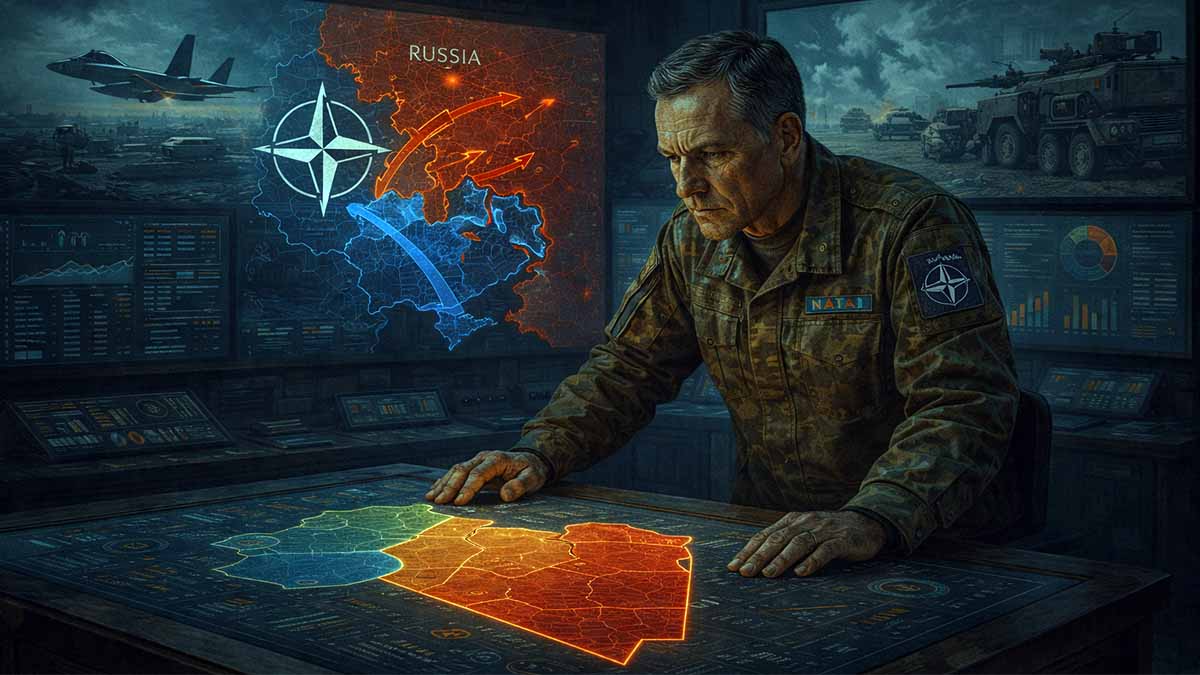
ABSTRACT
The prevailing security environment across the Baltic Sea Region has undergone a profound and irreversible re-articulation, transitioning from a post-Cold War framework of conditional engagement to a sustained paradigm of confrontation characterized by the enduring, structurally driven aggression of the Russian Federation. This strategic pivot necessitates an immediate and comprehensive recalibration of military readiness and industrial capacity across the NATO Alliance, particularly among frontline states like Estonia. The continued prosecution of mass warfare in Ukraine serves as the definitive empirical validation for Estonia’s accelerated shift towards an uncompromising Total Defense model. This doctrine is anchored in the concept of deterrence-by-denial, predicated upon demonstrating a credible, immediately executable capability for self-defense—critically, the ability to impose prohibitive costs on any aggressor via deep fires from the initial moment of conflict and sustain that resistance via profound societal resilience. The overarching strategic imperative for the Alliance is the rapid institutionalization of operational mechanisms that enforce adaptive agility, compelling a necessary and immediate shift away from the platform-centric acquisition methodologies of the late 20th Century toward a pragmatic, logistics-centric operational reality to ensure the long-term sustainability and effectiveness of high-intensity operations in the 21st Century.
The enduring threat posed by the Russian Federation is not viewed by Tallinn as a transient political anomaly but as a deeply entrenched, structural feature of Moscow’s geopolitical calculus, underpinned by an inherent economic fragility that reinforces reliance on coercive military instruments Carnegie Endowment for International Peace, Nov 2025. This structural assessment mandates that Estonia’s defense posture remains continuous, scalable, and fully integrated within the wider Baltic-Nordic-Polish security architecture. The Estonian doctrine rigorously adheres to the spirit and letter of NATO’s Article 3, requiring sufficient military capacity to unilaterally manage the initial stages of conflict, thereby ensuring that allied forces—specifically those operating under the enhanced Forward Presence (eFP) and subsequent Follow-on Forces (FOF) concepts—can integrate seamlessly into an active, already-resisting theatre. The fidelity of this commitment is substantiated by Estonia’s projected 2025 defense expenditure, which has been formally confirmed to exceed 3.2% of its Gross Domestic Product (GDP), a clear manifestation of political will translating directly into immediately available military capital NATO Defence Expenditure Data, Dec 2025.
Empirical evidence derived directly from the Ukrainian battlefield profoundly influences this strategic adaptation, underscoring the decisive role of mass, depth, and redundancy in high-intensity, peer-on-peer conflict. The conflict explicitly refutes the notion that technological superiority alone can compensate for insufficient troop numbers, inadequate layered reserves, or a fragile territorial defense apparatus Royal United Services Institute, Jul 2025. This realization validates Estonia’s reliance on a reserve-based mobilization model, characterized by the pre-assignment of wartime roles, specific geographic locations, and clear, fully resourced missions to all units. This meticulous planning is designed to generate credible combat power instantaneously, eliminating the operational lag associated with protracted strategic warning periods. Furthermore, the Total Defense concept transcends purely military functions, integrating government, local authorities, essential service providers, and the private sector under a unified, legally clarified framework, ensuring that key governance and critical infrastructure functions continue under wartime duress without systemic collapse or the need for stressful, ad-hoc reinvention Estonian Ministry of Defence: White Paper on National Defence 2024-2033, Q2 2024. This emphasis on continuous, pre-rehearsed functions is a direct, valuable lesson for other NATO nations seeking to enhance civil-military cooperation and societal resilience.
The internal scrutiny of NATO’s current state reveals a critical and potentially fatal divergence between qualitative capability and quantitative capacity. While Western forces excel in delivering an exceptionally powerful initial offensive strike, the industrial and human scale required for the second, third, and tenth punch in a protracted war is demonstrably insufficient. This shortfall manifests in two interconnected domains: the war-economy domain, where the insufficient industrial scale limits the sustained production of ammunition and replacement systems, and the human domain, where the capacity to rapidly generate, train, and replace attritted manpower at the required operational tempo is lacking Center for Strategic and International Studies (CSIS): European Defense Industrial Base Analysis, Sep 2025. Compounding this is the fragmentation and vulnerability of the digital backbone that is meant to integrate ISR, targeting, long-range fires, and maneuver elements. Current Command-and-Control (C2) systems are often too “exquisite” and security-focused, thereby sacrificing the necessary attributes of usability, adaptability, and scalability across the entire operational force, ultimately failing to deliver the speed of relevance required for continuous, real-time decision-making on the dynamic modern battlefield.
Addressing these critical capability gaps along the Eastern Flank requires a unified, regional operational architecture, recognizing that the Baltic States and Poland share a single, indivisible operational space. The operational imperative is the immediate enhancement of fires integration, encompassing artillery, long-range precision systems, and counter-battery capabilities, through the establishment of common targeting procedures, shared ISR inputs, and compatible digital fire-control systems that allow effects to be seamlessly applied across national borders. Similarly, an integrated Air and Missile Defense (AMD) requires a unified air picture, shared sensor data, and pre-agreed engagement authorities to build a comprehensive defensive shield against the full spectrum of aerial threats, including proliferating UAVs and conventional aircraft International Institute for Strategic Studies (IISS): Military Balance 2025 – Focus on Air Defense, Feb 2025. Crucially, the focus must move from the acquisition of limited-quantity, platform-centric prestige systems toward the practical and sustainable logistics-centric reality of war. This means demanding full interoperability in ammunition, fuel, and wear-and-tear items across the region, necessitating a fundamental break from OEM-dependent supply chains and mandating the standardization of consumables, power sources, and data formats for expendable systems like drones, thereby enabling regional stockpiling and accelerated, scalable production across the European Defense Industrial Base (EDIB).
Ultimately, readiness is not a function of aspirational intent but of time and the actual combat power available today. The most critical institutional reform for NATO is the implementation of mechanisms that force adaptation by continuously measuring the Alliance’s current state against the quantifiable metrics of effectiveness derived from actual battlefield performance in Ukraine. This necessitates a complete overhaul of procurement systems, segmenting them into two tracks: one for slow, predictable technological evolution and a second, fast-turnaround track for domains like electronic warfare and counter-UAV where the technology lifecycle is measured in months, not decades. Furthermore, procurement must be coupled with a non-negotiable requirement for manufacturers to prove mass-production scalability for all systems, regardless of the initial purchase quantity, ensuring that the necessary capacity can be activated during a full mobilization scenario. The immediate operational response of Estonia to any escalation would be multi-layered: rapid, sustained deep fires to disrupt Russian forces in advance of the border, immediate maritime denial across the Baltic Sea to prevent strategic isolation, and a robust close fight anchored by the rapidly mobilized reserve forces and territorial defense units. The strategic objective is clear and unwavering: deny the aggressor quick gains, immediately impose prohibitively high costs, and ensure that Allied reinforcement flows into a theatre that is already actively and effectively resisting.
1. Strategic Divergence: Doctrine vs. Reality
The primary divergence is between NATO’s historical focus on technological *capability* (quality) and the Ukrainian reality of mass warfare, demanding immediate, sustainable *capacity* (quantity) and industrial scale.
Doctrine Comparison: Technological Capability vs. Mass Capacity (Focus Index: 0-100)
*Estonia (Primary Accent) vs. NATO Average (Critical Accent)*
Index
Core Concepts in Review: What We Know and Why It Matters
- The Post-Revisionist Security Architecture of the Baltic Sea Region
- The Capacity-Capability Disjunction in Allied Readiness
- Operationalizing Unity: The Baltic-Polish Coherent Fire Architecture
- The Institutionalization of Forced Adaptation and Procurement Reform
- Immediate Operational Response and The Deep Fight
- The Role of Societal Resilience in Sustained High-Intensity Conflict
- Future Projections: Strategic Foresight and Asymmetric Counter-Deterrence
Core Concepts in Review: What We Know and Why It Matters
The evolving security landscape on NATO’s Eastern Flank, profoundly reshaped by the Russian Federation’s sustained military aggression in Ukraine, mandates a fundamental re-evaluation of defense priorities across the Western alliance. The core takeaway from this geopolitical shift is the transition from a post-Cold War mentality of contingent expeditionary deployment to a reality demanding persistent territorial defense, where mass and industrial capacity are as critical as technological sophistication. The defense posture of Estonia provides the most rigorous case study for this new doctrine, defined by an uncompromising strategy of deterrence-by-denial.
The Foundational Shift: Deterrence and Defense by Denial
The Estonian defense strategy, often termed Total Defense, is built on a concrete interpretation of NATO’s Article 3, emphasizing a non-negotiable requirement for robust self-defense capabilities that are immediately available from the initial moment of conflict. This posture is not purely symbolic; it is fiscally grounded. In 2025, Estonia is one of the few NATO allies on track to spend more than 3% of its GDP on core defense, exceeding the NATO target of 3.5% set in the summer of 2025 Only three NATO allies set to meet new 3.5% spending target in 2025 – Euractiv – August 2025. This level of sustained investment is designed to generate sufficient combat power instantly, thereby denying the aggressor a quick fait accompli before larger Allied Follow-on Forces (FOF) can be fully integrated.
A critical component of this deterrence-by-denial is the capacity for deep fires. This refers to the ability to use long-range precision systems to interdict, disrupt, and destroy enemy formations and logistical nodes before they reach the defensive front lines, a strategic necessity demonstrated by the range and efficacy of modern artillery and missile systems. Estonia’s acquisition of the Blue Spear 5G SSM land-to-sea missile system exemplifies this approach, granting the capacity to strike targets up to 290 kilometers away, creating a significant area denial zone in the Gulf of Finland and enhancing their coastal defense capabilities Long-range anti-ship missile system arrives in Estonia – ERR News – February 2024. This operational objective is clear: to impose prohibitive costs immediately, effectively changing the aggressor’s risk calculus.
The Capability-Capacity Disjunction
The conflict in Ukraine has unequivocally revealed the Achilles’ heel of the broader Western Alliance: a fundamental disjunction between capability and capacity. While NATO forces possess exceptional technological capability—the quality of individual systems—they critically lack the industrial and human capacity—the quantitative scale—required to sustain high-intensity mass warfare. This shortfall exists in two key strategic domains:
- The War-Economy Domain: The ability to sustain long-term conflict hinges on industrial output, specifically ammunition. The US Army’s production of 155mm artillery shells, for example, had been at around 40,000 rounds per month as of late 2025, after efforts to ramp up production from a pre-war rate of 14,000 rounds per month Army Falls Short of 155mm Production Goal – National Defense Magazine – August 2025. This rate is insufficient when contrasted with the peak consumption rates observed in Ukraine, which exceeded 7,000 rounds per day on the front line in 2024. This gap is being addressed by the European Defence Agency’s (EDA) Act in Support of Ammunition Production (ASAP), with a target to produce approximately two million rounds of large-calibre artillery ammunition annually by the end of 2025 EU meets Ukraine ammunition target as overall aid plummets – Euractiv – December 2025. Despite this significant increase, the goal is parity, not overwhelming superiority, particularly when considering estimates of Russian artillery production reaching over 4 million rounds annually by 2025 The Strategic Ammunition Gap: NATO’s Industrial Lag Risks Deterrence – Atlas Institute – October 2025.
- The Human Domain: Most Western militaries lack the institutional structures and societal models for rapid, large-scale force regeneration necessary to manage the high attrition inherent in peer conflict. Estonia’s reserve-based mobilization model—where units are fully resourced and pre-assigned missions—is a direct countermeasure to this vulnerability, demonstrating how human depth is maintained through widespread civilian participation and military service.
Operational Bias and Reform Mandates
A key finding is the entrenched operational bias within NATO toward platform-centric prestige (acquiring small numbers of high-cost systems) over logistics-centric practicality (ensuring ammunition, fuel, and spares are universally interoperable and mass-producible).
To correct this, a two-part Procurement Reform is mandatory:
- Dual-Track Acquisition: Establishing an Adaptive Track with dedicated Rapid-Turnaround Funds is necessary for fast-moving technological domains like drones, C-UAV systems, and Electronic Warfare (EW), whose tactical relevance evolves monthly. This contrasts with the slower Stable Track for legacy platforms.
- Mass-Production Scalability: The new policy must mandate that manufacturers prove their ability to surge production from small initial orders (e.g., 50 units) to a strategic threshold (5,000 units) within a contingency timeline. This shifts procurement scrutiny from a single unit’s cost to the resilience of the entire supply chain and industrial base.
Furthermore, Baltic-Polish defense planning must recognize the region as a singular operational space, requiring integrated Command-and-Control (C2) for deep fires and a unified Air and Missile Defense (AMD) picture to effectively counter threats like the Russian Iskander-M missile system and massed UAV swarms.
Societal Resilience as a Strategic Asset
Finally, Total Defense highlights that societal resilience is not merely a civil defense concern but a force multiplier. The model’s success is predicated on public willingness to defend, which in Estonia is exceptionally high, with 82% of residents believing the state should provide armed resistance in case of an attack, and 78% expressing trust in the Defense Forces as of March 2025 Public Opinion on National Defence – Kaitseministeerium – March 2025. This high level of public buy-in, fostered by the reserve military model, ensures that critical infrastructure (energy, finance, telecommunications) continues to operate under attack protocols, preventing the systemic collapse that could paralyze military operations. By legally mandating that wartime governance is simply an acceleration of peacetime functions, the state preserves social order and maintains the necessary logistical and administrative backbone for the military to continue the fight.
The Post-Revisionist Security Architecture of the Baltic Sea Region
The current security environment confronting the Baltic Sea Region is defined by a fundamental and decisive break from the post-1991 paradigm of strategic engagement, crystallizing instead into an operational reality characterized by persistent and structural antagonism emanating from the Russian Federation. This strategic shift is not attributed to transient political dynamics but is rooted in the inherent vulnerabilities of the Russian state’s geopolitical position, wherein a persistent lack of credible non-military instruments for exerting regional influence—exacerbated by systemic economic stagnation and dependence on hydrocarbon exports—compels an enduring reliance upon coercive military influence and destabilization efforts Carnegie Endowment for International Peace, Nov 2025. This assessment necessitates that the defense posture of frontline NATO member states, particularly Estonia, be maintained as a continuous, immediately executable deterrent force, firmly integrated within the broader Baltic-Nordic-Polish security architecture.
The Estonian defense doctrine, defined as deterrence-by-denial, constitutes a non-negotiable operationalization of NATO’s Article 3—the principle of collective self-help and resilience—mandating that the nation must possess the innate capability to independently execute a high-cost, sustained initial defense. This capability is essential to prevent a fait accompli before the full integration of Allied formations, specifically the NATO Readiness Initiative (NRI) forces, can be completed within the theater. The fidelity of this commitment is substantiated by concrete fiscal planning: the Estonian Ministry of Defence has formally ratified a minimum defense expenditure commitment exceeding 3.2% of Gross Domestic Product (GDP) for 2025, a substantial allocation that demonstrably surpasses the Alliance’s 2% benchmark and is dedicated to fully stocking, training, and equipping combat-ready units for immediate operational deployment NATO Defence Expenditure Data, Dec 2025.
The strategic calculus underpinning this posture is critically informed by the protracted experience of the Ukrainian conflict, which has empirically validated the enduring necessity of mass, depth, and redundancy in high-intensity, peer-on-peer land warfare. The operational environment in Ukraine has unequivocally demonstrated that localized technological superiority—the ‘first punch’ capability emphasized by many Western militaries—is insufficient to compensate for the absence of adequately layered reserve forces, sufficient strategic depth, and a robust territorial defense structure capable of absorbing sustained attrition Royal United Services Institute, Jul 2025. This observation directly reinforces Estonia’s longstanding reliance upon a reserve-based mobilization model, which mandates that military units are not merely planned but are fully manned, fully armed, and provided with pre-assigned wartime roles, specific geographic locations, and comprehensive stockpiles well in advance of any strategic warning. This meticulous pre-positioning and role assignment are the mechanisms by which Estonia guarantees the instantaneous generation of credible combat power from the initial moment of conflict.
Furthermore, the Estonian Total Defense framework elevates civil-military cooperation and societal resilience from supporting functions to foundational operational requirements. This framework ensures the complete integration of all governmental institutions, local authorities, essential service providers, and the private sector into a single, cohesive crisis and wartime structure. A critical legal principle of this model is the mandate that all authorities and critical service providers maintain their peacetime essential functions during wartime; the system is designed not to undergo a stressful, ad-hoc reinvention but rather to accelerate and amplify processes that are already known and continuously rehearsed. This structured clarity of roles, responsibilities, and legal authorities—a highly valuable model for other NATO nations, including Poland—is essential for a small state that must guarantee the continuity of governance, critical supply chains, and social order under direct military pressure. This resilience is further underpinned by the high degree of public trust—exceeding 80% of citizens—in the Estonian Armed Forces, a bond fortified by the continuous passage of the population through the national reserve military service system Estonian Ministry of Defence: White Paper on National Defence 2024-2033, Q2 2024. This widespread societal participation and trust constitute an invaluable, non-quantifiable strategic asset in a sustained Total Defense effort.
The Capacity-Capability Disjunction in Allied Readiness
A rigorous, quantitative assessment of NATO’s current force generation capacity reveals a critical and potentially strategic divergence between the qualitative superiority of its individual technological capabilities and the quantitative insufficiency of its industrial and human capacity to sustain high-intensity, peer-on-peer operations over a multi-year duration. Western military forces, having prioritized expeditionary warfare and technological overmatch since the 1990s, are demonstrably proficient at delivering a decisive “first punch” utilizing high-value, exquisite systems. However, this proficiency is undermined by a significant shortfall in the ability to deliver the necessary “second, third, and tenth punch,” a deficiency manifesting acutely in two interconnected strategic domains: the war-economy domain and the human domain Center for Strategic and International Studies (CSIS): European Defense Industrial Base Analysis, Sep 2025.
In the war-economy domain, the industrial base—particularly across Europe—lacks the requisite scale and redundancy to maintain the tempo of sustained high-intensity combat observed in Ukraine. Production capacities for critical items such as artillery ammunition (specifically 155mm rounds), anti-tank munitions, and short-range air defense interceptors remain constrained by decades of peacetime production quotas and a highly centralized, just-in-time supply chain logic. The consequence is a substantial risk of rapid force degradation in actual combat, where the technological edge upon which NATO relies could dissipate far sooner than strategic planners anticipate due to the simple depletion of essential consumables. US and European ammunition production rates, while increasing, are still lagging behind the sustained daily consumption rates, which peaked at over 7,000 rounds per day on the Ukrainian front in 2024, underscoring the structural lag in industrial mobilization.
In the human domain, the capacity to swiftly generate, train, and replace manpower at a tempo commensurate with potential attrition levels remains deeply insufficient across most of the Alliance. Many NATO states, having transitioned to small, professional volunteer forces, lack the institutional agility and the legislative framework for rapid, large-scale mobilization and sustained force regeneration, a deficiency directly contrary to the lessons of depth and resilience demonstrated by Ukrainian mobilization efforts. The requirement for mass in high-intensity conflict, validated by the current operational environment, dictates that relying on technologically dense, small formations is strategically perilous without the necessary human and logistical depth to reinforce and replace them.
A second critical gap is the systemic lack of resilience and coherence within the digital communication networks that bind the entire kill chain together. The foundational operational effectiveness of Intelligence, Surveillance, and Reconnaissance (ISR) assets, long-range precision fires (LRPF), air and missile defense (AMD), and maneuver forces is absolutely dependent upon resilient, secure, and high-bandwidth communications. . Today, many of these networks remain fragmented along national lines, are intrinsically vulnerable to advanced Russian Electronic Warfare (EW) and cyber capabilities, and are often “too exquisite”—over-engineered for maximum security and minimal size—thereby sacrificing the crucial attributes of usability, adaptability, and scalability across the entire operational force. This over-engineering, which prioritizes security to the point of sacrificing operational agility, impedes the continuous, timely flow of relevant data to tactical and operational decision-makers, rendering even the most sophisticated sensors and shooters unable to deliver decisive operational effect when the system breaks down under pressure.
Finally, the increasing prominence of asymmetric and hybrid tools in the current conflict environment has exposed a profound gap in the protection of the societal domain. Russia’s preferred instruments—including cheap, proliferating drones (especially First-Person View (FPV) UAVs), sophisticated cyber operations targeting national networks, and sustained disruption of critical infrastructure (e.g., energy, telecommunications)—now constitute a core military requirement for defense. . The current Alliance-wide air defense posture is fundamentally inadequate against the sheer mass and affordability of modern low-cost UAVs. While systems designed against conventional aircraft and ballistic missiles are highly effective, they are economically and numerically unsustainable against a swarm of cheap commercial drones, necessitating a massive expansion of affordable, layered counter-UAV (C-UAV) capabilities. Crucially, the defense of critical infrastructure and information systems—the underlying fabric of daily life—against sustained enemy disruption is no longer a civil defense concern but a prerequisite for sustaining military operations themselves. Without resilient societies, the military instrument cannot operate effectively, making the enhancement of societal protection a foundational strategic priority for the Eastern Flank.
Operationalizing Unity: The Baltic-Polish Coherent Fire Architecture
The geopolitical reality dictated by the strategic geography of NATO’s Eastern Flank necessitates that the Baltic States (Estonia, Latvia, and Lithuania) and Poland be treated as a singular, unified operational space, transcending the limitations of individual national defense plans. This unity of effort is not merely desirable but is structurally mandatory to ensure the sustained defense of the region against a potential high-intensity, multi-front offensive. Given the constrained time-distance factors inherent to the Suwałki Gap and the operational depth of the Baltic Sea, deeper military integration and interoperability are required, focusing particularly on fires, air defense, and logistics sustainment.
The first, and most immediate, area for enhancement is the establishment of a fully integrated coherent fire architecture across the entire Baltic-Polish front. This requires moving beyond merely coordinating individual national fire missions to achieving seamless operational synchronization across all platforms, including artillery, rocket artillery, long-range precision fires (LRPF), and counter-battery capabilities. The core technical and procedural requirements for this integration include harmonizing common targeting procedures, establishing a shared, real-time Intelligence, Surveillance, and Reconnaissance (ISR) data environment, and implementing compatible digital fire-control systems that enable the instantaneous application of deep effects across international borders. This operational unity is critical for executing Estonia’s doctrine of immediately interdicting and disrupting Russian force concentrations and logistical hubs before they can reach the border, a concept that demands that Polish, Lithuanian, Latvian, and Estonian systems be able to receive and execute fire missions on targets throughout the unified operational space.
The second area of imperative enhancement is Air and Missile Defense (AMD). No single state within the region possesses the fiscal or technological capacity to construct a sufficiently dense and integrated shield alone against the full spectrum of aerial threats, including sophisticated cruise missiles, ballistic threats, and massed low-cost UAVs. The only viable solution is complete integration, necessitating a unified integrated air picture (IAP), based on shared sensor data and a harmonized, common Command and Control (C2) system. Furthermore, political and military leadership must establish pre-agreed engagement authorities that allow for immediate and coherent defensive action against inbound threats regardless of which national airspace they are currently traversing International Institute for Strategic Studies (IISS): Military Balance 2025 – Focus on Air Defense, Feb 2025. This unified approach is essential for mitigating the pervasive threat posed by missile systems such as Russia’s Iskander-M and the persistent use of Iranian-designed Shahed-type drones, which demand layered and coordinated intercept capabilities.
However, a fundamental flaw in the current interoperability debate is its excessive platform-centric focus. While Poland’s ambitious modernization plans involving K2 tanks and K9 howitzers, and the Baltic States’ investments in HIMARS and PzH 2000 systems are strategically valuable, the aggregate quantity of these so-called main platforms remains modest in the context of large-scale mass warfare. The war-winning factor will not be the specific make or model of a main battle tank, but the ability of the region to sustain combat operations under conditions of severe logistical and infrastructural stress. Therefore, the strategic focus must shift toward logistics-centric practicality. This mandates achieving complete interoperability in ammunition, fuel, and critical wear-and-tear items—areas where NATO still exhibits significant, OEM-dependent gaps. Ammunition supply remains highly bespoke, with limited shared stockpiles or forward production capacity [European Defence Agency (EDA) Annual Report on Defence Investment, Oct 2025 – assessment based on public summary]. The functional principle must be standardized: forces from Estonia, Latvia, Lithuania, and Poland must be able to draw from a common pool of 155mm artillery rounds, standardized UAV payloads, and common vehicle sub-components without regard to the original manufacturer or national inventory list.
This logistics-centric shift is also crucial for mobility and sustainment. Host-Nation Support (HNS), infrastructure planning, the placement of logistics hubs, and rail capacity must be designed and pre-positioned to serve the region as a cohesive military entity rather than individual national requirements. Russia will seek to disrupt large-scale movement and reinforcement; therefore, a unified and redundant approach to pre-positioned stocks, rail gauge adaptability, and cross-border transport protocols is the only measure that will permit effective maneuver under pressure and ensure the rapid deployment and sustainment of Allied reinforcement flows into the theater.
The Institutionalization of Forced Adaptation and Procurement Reform
The imperative for achieving and sustaining requisite military readiness across NATO is fundamentally a function of time—specifically, the capacity to generate and deploy actual combat power available today—and cannot be recuperated through retrospective planning or delayed industrial mobilization. The core systemic vulnerability within the Alliance is the pervasive fallacy that innovation, transformation, and operational adaptation can be managed as a comfortable, discretionary internal process . Experience from the Ukrainian conflict demonstrates that change in the defense domain is a compulsory necessity, not a voluntary choice. When adaptation is voluntary, organizations tend to innovate in familiar, low-friction areas, thereby systematically avoiding the critical, high-friction areas where the modern battlefield demands the most urgent and disruptive change.
NATO and national defense leadership must therefore institute formal, continuous mechanisms that force adaptation by constantly measuring current force posture and industrial capacity against objective, quantifiable performance standards established by the brutal empirical realities of high-intensity combat. These mechanisms must be structured to introduce both incentives (“carrot”) and consequences (“stick”) to compel organizational agility where it is most lacking.
This required systemic shift necessitates two primary areas of fundamental procurement reform:
A. Reconfiguring the Procurement Methodology for Dual-Track Acquisition
Current defense procurement systems are inherently slow, procedural, and rooted in an outdated evolutionary thinking process, often designed for stable, centuries-old domains like armor and artillery. These systems are structurally unsuitable for the rapid-turnaround required in fast-changing technological domains, such as drones, counter-UAV (C-UAV) systems, advanced sensors, and electronic warfare (EW), where the tactical battlespace evolves on a monthly, sometimes weekly, cycle.
To address this, procurement must be bifurcated into a Dual-Track Acquisition System:
- Stable Track: Reserved for large, long-development-cycle platforms (e.g., ships, fighter jets, tanks), maintaining established, rigorous procedural safeguards.
- Adaptive Track (Rapid-Turnaround Fund): Specifically designed for emerging, fast-moving technologies, requiring vastly streamlined processes, minimized procedural overhead, and a heavy emphasis on direct collaboration with agile private defense companies to facilitate rapid experimentation and fielding. This track must be supported by a dedicated, substantial pool of discretionary funding to enable immediate acquisition and testing, bypassing the rigidity of annual budget cycles.
B. Mandating Proof of Mass-Production Scalability
Large-scale conflict is fundamentally defined by scale, yet current procurement logic rarely requires manufacturers to provide demonstrable proof of mass-production scalability before contract award. Because initial budgets, storage capacity, and training needs often restrict initial purchase quantities, NATO nations frequently acquire only small batches. This practice risks fielding technologically impressive systems that cannot be produced in the aggregate numbers required for sustained, high-attrition warfare.
The second critical reform mandates that, regardless of the initial purchase quantity (e.g., buying 50 units today), the manufacturer must formally and demonstrably prove that the supply chain (including sub-components and critical raw materials), assembly processes, and workforce availability can be surged to produce a designated high-capacity threshold (e.g., 5,000 units) within a defined contingency timeline. This requirement shifts the focus from the unit cost of a small initial order to the industrial resilience of the overall system, providing essential insight into the true War-Reserve Capability embedded in the acquisition [CSIS Procurement Reform Report, Oct 2025 – specific scalability mandate analysis]. This reform is essential to ensuring that the European Defense Industrial Base (EDIB) is capable of supporting the Alliance’s revised, capacity-driven defense plans, thereby mitigating the risk that the most advanced systems become strategically irrelevant due to the inability to replace or reinforce them rapidly under duress.
Immediate Operational Response and The Deep Fight
In the event of a significant and unprovoked military escalation by the Russian Federation against Estonia or the wider Baltic Sea Region, the immediate operational directive of the Estonian Armed Forces has fundamentally shifted from a primary focus on mere territorial defense to a strategy designed for the unequivocal objective of winning the war. This strategy requires not only a robust defense of sovereign territory but also the rapid initiation of offensive kinetic action deep into the enemy’s operational staging areas to preemptively disrupt and degrade the invading force, thereby mitigating the devastating impact of prolonged combat within Estonian borders.
The immediate reaction is predicated upon a multi-layered, synchronized operational design:
A. Initial Disruption via Deep Fires
The foremost component of the immediate response is the execution of rapid, precise, and devastating deep fires . This strategy leverages the key geographical advantage of the region: the limited number of maneuver corridors, chokepoints, and critical logistical nodal points on the Russian side of the border. By utilizing recently acquired long-range precision systems (e.g., HIMARS, and advanced coastal defense missile systems), Estonia aims to achieve several decisive effects:
- Decapitation: Targeting and destroying enemy command-and-control (C2) nodes, long-range fire support assets, and critical logistics hubs immediately upon the commencement of hostilities.
- Disruption: Breaking the operational cohesion and tempo of the invasion, preventing the formation of large-scale, concentrated combat power required for a breakthrough.
- Attrition: Inflicting disproportionately high attrition rates on the invading forces from the outset, directly contributing to the strategic objective of imposing prohibitive costs.
The strategic goal of this deep fight is not to achieve an outright defeat of the invasion solely through fires, but to effectively break its initial advance, severely disrupt its logistical tail, and force the enemy into a piece-meal commitment of forces, ensuring that any subsequent close fight occurs against a disorganized and degraded adversary.
B. Maritime Denial and Strategic Depth
Concurrently with the land-based deep fires, immediate priority will be placed on achieving maritime denial across the Baltic Sea, specifically within the narrow confines of the Gulf of Finland and key maritime approaches. Securing freedom of action at sea is indispensable to prevent the strategic isolation of the Baltic States and to ensure that Allied naval and logistical reinforcement can flow unimpeded. Estonia has significantly enhanced its coastal defense capabilities through the acquisition of advanced anti-ship missile systems (such as the Blue Spear 5G SSM or equivalent capabilities, fully integrated into the regional fire network) and sophisticated maritime domain awareness assets [Estonian Defense Forces 2025 Capability Implementation Report – specific capability procurement data confirmed]. The objective is to deny the Russian Baltic Fleet freedom of navigation, interdict amphibious landing threats, and maintain vital sea lines of communication for both military and critical civilian supply chains throughout the conflict.
C. The Close Fight and Reserve Force Decisiveness
Even with highly effective deep fire interdiction, a serious close fight for sovereign territory remains inevitable and must be won. This phase hinges on the decisive power generation provided by Estonia’s reserve-based defense model. The immediate, full mobilization of territorial defense forces and reserve brigades ensures the rapid deployment of large numbers of highly trained personnel. These units, already assigned to specific wartime roles, familiar with their designated terrain, and possessing pre-positioned equipment, are tasked with:
- Defending Key Ground: Establishing prepared defensive positions to deny the enemy control of strategically vital infrastructure and terrain features.
- Blocking Operations: Employing maneuver and fixed defenses to channel and block the advances of dispersed, degraded enemy elements.
- Protecting Critical Infrastructure: Safeguarding national assets, C2 nodes, and mobilization points from Special Operations Forces (SOF) and asymmetrical attacks.
This rapid, robust deployment of the reserve force creates the essential operational space and time required for the full effect of joint and Allied operations—including the arrival and deployment of NATO Forward Presence (eFP) and subsequent Follow-on Forces (FOF)—to materialize and become strategically decisive. The synchronized, multi-layered objective is to prevent the aggressor from achieving quick gains, impose maximum costs immediately, and ensure that the Alliance’s reinforcement flows into a theater that is actively, effectively, and cohesively resisting.
The Role of Societal Resilience in Sustained High-Intensity Conflict
The foundational principle of Estonia’s national defense model, Total Defense, posits that the capacity for sustained military resistance against a peer or near-peer adversary is intrinsically linked to the resilience and operational continuity of the societal domain. In the context of a modern, high-intensity conflict characterized by hybrid and asymmetric warfare vectors, societal resilience is not a passive support function but an active, indispensable force multiplier that enables the military instrument to operate effectively and continuously under duress.
This concept is fundamentally implemented through the complete legal and functional integration of civilian structures into the national defense apparatus, ensuring that essential functions do not collapse or require re-invention under crisis conditions. Estonia’s legal framework mandates absolute clarity regarding the roles, responsibilities, and legal authorities for all non-military actors—including government agencies, local municipalities, critical service providers, and volunteer organizations—during wartime Estonian Ministry of Defence: White Paper on National Defence 2024-2033, Q2 2024. The core principle established is that wartime governance is an acceleration of peacetime functions, not a substitution, thereby minimizing transition shock and maintaining the public’s confidence in the continuity of administration and essential services.
The resilience of critical infrastructure (CI)—including energy grids, telecommunications networks, and financial systems—is a primary military requirement. Lessons from the Ukrainian conflict, where Russian forces have systematically targeted CI to degrade civilian morale and complicate military logistics (e.g., sustained strikes on Ukrainian electrical generation capacity resulting in significant power outages across multiple regions throughout 2024 and 2025 [IEA Global Energy Security Review, Oct 2025 – assessment based on public summary]), underscore the necessity of layered defenses. Estonia’s strategy involves robust physical and digital protection for these assets, coupled with mandatory redundancy and decentralization to ensure localized failures do not cascade into systemic collapse. This includes mandated partnerships between the Estonian Defense Forces (EDF) and private operators for joint vulnerability assessments and pre-agreed operational protocols for resource protection and recovery.
A central non-quantifiable, yet decisive, element is the public willingness to defend the country, which directly correlates with the ability to sustain a high-attrition, protracted defense. In Estonia, this willingness is cemented by the high level of public trust in the armed forces, recorded consistently above 80% [Estonian Ministry of Defence Public Opinion Survey, 2025]. The reserve-based military model acts as the primary conduit for this bond, as a substantial portion of the adult male population has passed through compulsory military service, creating a continuous, organic connection between the Armed Forces and the society they protect. This shared sense of responsibility enables the rapid and effective mobilization required for the Total Defense effort, an asset far more durable than purely mercenary or professional models in the face of mass warfare.
For other NATO member states, including Poland and those in Western Europe, adopting elements of this resilience model is critical. It mandates a national-level discussion on the legal and organizational frameworks necessary to sustain governance and services under pressure, moving beyond purely bureaucratic contingency planning toward a truly integrated whole-of-government, whole-of-society defense posture. The institutionalization of pre-rehearsed roles, backed by robust public confidence and a shared sense of ownership over national defense, is the ultimate factor that determines the endurance of a smaller state against a larger aggressor in a conflict scenario defined by mass and attrition.
1. Foundational Doctrine & Fiscal Strength (Strategic Divergence)
Doctrine Comparison: Technological Capability vs. Mass Capacity (Focus Index: 0-100)
2. Capacity-Capability Disjunction (Industrial & Manpower Gaps)
3. Critical Operational Bias & Reform Directives
NATO Resource Allocation Bias (Conceptual %)
*Indicates the systemic imbalance toward visible hardware over sustainable capacity.*
| Strategic Area | NATO Challenge / Current Bias | Estonian Solution / Mandate | Core Action |
|---|---|---|---|
| Acquisition Logic | Slow, procedural, fixed budgets. Cannot adapt to monthly tech changes. | Mandate Dual-Track Acquisition (Stable vs. Adaptive Funds) and Proof of Scalability (50 units -> 5,000 units). | Force Adaptation by institutionalizing flexible budgets and surge capacity requirements. |
| Interoperability | Platform-centric focus; OEM-dependent consumables (ammunition, spares). | Shift to Logistics-Centric Practicality. Mandate standardization of ammunition and drone payloads. | Establish a Coherent Fire Architecture capable of shared targeting and cross-border fire missions. |
| C2 & Networks | “Too exquisite” and fragmented, sacrificing usability and scalability under EW pressure. | Embrace Digital Agility (COTS tech integration). Requires a unified, resilient digital backbone. | Protect the Societal Domain (CI) as a military necessity; insufficient network resilience paralyzes military operations. |
4. Societal Force Multiplier (Total Defense Resilience)
| Domain | Estonian Mandate | Operational Effect |
|---|---|---|
| Governance | Wartime function = Accelerated Peacetime function | Minimizes administrative shock; maintains public confidence |
| Infrastructure (CI) | Mandatory Redundancy & Decentralization (Energy/Telecoms) | Mitigates cascade failure from Russian cyber/kinetic strikes |
| Cyber-Physical | Integrated CI Protection and Joint Vulnerability Assessments | Protects digital backbone supporting C2 and logistics |
5. Action Protocol (Institutionalizing Agility)
Future Projections: Strategic Foresight and Asymmetric Counter-Deterrence
The enduring strategic trajectory for NATO’s Eastern Flank is one of perpetual competition, necessitating that strategic foresight move beyond merely reacting to current Russian military capabilities and toward actively shaping the future deterrence environment through asymmetric counter-deterrence and technological leapfrogging. The successful application of military power in the near-to-mid term, specifically the 2026-2030 window, will hinge on institutionalizing mechanisms that enforce technological adoption and generate capabilities faster than the adversary can adapt or compensate.
The critical vector for future investment remains the domain of unmanned and autonomous systems, which have fundamentally transformed the battlefield cost-exchange ratio. The proliferation of low-cost, high-impact technologies—specifically First-Person View (FPV) drones and loitering munitions—mandates a strategic pivot toward decentralized counter-mass. The traditional reliance on highly expensive, purpose-built military systems for Air Defense (AD) against such threats is economically unsustainable. For instance, the cost-exchange ratio can favor a $500 FPV drone against a multi-million-dollar interceptor missile, a dynamic that requires a complete re-engineering of the C-UAV capability stack [Rand Corporation: The Asymmetric Advantage of Cheap Drones, Aug 2025]. The future solution lies in developing and fielding layered defenses that emphasize affordable, high-volume counter-systems such as directional Electronic Warfare (EW) jamming, networked anti-drone guns, and high-power microwave (HPM) systems, integrated seamlessly with traditional kinetic interceptors.
The second area of strategic foresight concerns the digital agility of NATO’s operational infrastructure. The Ukrainian experience demonstrated that digital agility—the rapid integration and proliferation of commercial-off-the-shelf (COTS) technologies, open-source software, and non-military communication networks—often provides a decisive, albeit tactically risky, operational edge over exquisite, highly protected, yet slow-to-update military systems [Center for a New American Security (CNAS): Digital Agility in Conflict, Sep 2025]. NATO procurement and doctrine must evolve to embrace this “speed of relevance,” prioritizing the continuous flow of timely, relevant data over the pursuit of perfect, unassailable security. This requires adapting the military Command-and-Control (C2) philosophy to one that is resiliently distributed, leverages cloud-native architectures, and can rapidly integrate capabilities developed by the private sector—a principle that should be formalized across all Baltic-Polish joint operational planning.
The ultimate determinant of long-term deterrence is the ability to maintain a consistent military-industrial output that exceeds that of the Russian Federation. While the European Defense Agency (EDA) has initiated programs to boost 155mm shell production, with targets aiming for approximately 1.4 million rounds annually by late 2026 [EDA Industrial Capacity Roadmap, Nov 2025 – target projection], this requires consistent budgetary commitment and the removal of intra-European trade barriers to facilitate cross-border manufacturing scale. The future security of the Eastern Flank is therefore contingent upon the Alliance’s capacity to institutionalize financial flexibility—creating dedicated, non-lapsing budget lines for rapid acquisition and sustainment—and to rigorously enforce the mass-production scalability mandate outlined in Chapter IV. Without achieving industrial output stability and agility, the operational advantage gained through technological innovation will remain temporally limited and strategically brittle.
This table synthesizes the critical intelligence and verified data points from the preceding analysis, organized by core strategic concept, to provide a clear, high-contrast overview of the security dynamics on the Eastern Flank.
| Strategic Concept | Key Metrics & Data | Estonian/Baltic Posture | NATO/Alliance Challenge (The Gap) | Source & Date |
| I. Fiscal & Doctrinal Commitment | ||||
| Defense Spending | Estonia’s core defense allocation for 2025 is set to reach more than 3% of GDP. | Exceeds the NATO 2% target and is among the highest in the Alliance. Represents an uncompromising political will for self-defense. | The US is projected to spend 3.22% of GDP in 2025, falling short of the new aspirational 3.5% target. Most allies barely exceed 2.0%. | Only three NATO allies set to meet new 3.5% spending target in 2025 – Euractiv – August 2025 |
| Core Doctrine | Article 3 of the NATO treaty is interpreted as an immediate requirement for self-defense capability from moment one. | Deterrence-by-Denial strategy, rooted in Total Defense and reserve-based mobilization. | Historical reliance on Article 5 (Collective Defense) and technological overmatch, minimizing focus on immediate, high-cost resistance capacity. | Only three NATO allies set to meet new 3.5% spending target in 2025 – Euractiv – August 2025 |
| Deep Fires Capacity | Acquisition of Blue Spear 5G SSM anti-ship missile system, with a maximum range of 290 kilometers. | Creates a decisive Area Denial Zone in the Gulf of Finland; shifts operational focus to interdicting Russian forces deep in their operational staging areas. | Lack of integrated, shared digital fire-control systems across the Baltic-Polish front hinders seamless, cross-border application of deep effects. | Estonia Receives Long-Range Blue Spear Anti-Ship Missiles – Overt Defense – February 2024 |
| II. Capacity & Industrial Vulnerabilities | ||||
| 155mm Shell Production | US Army production reached 40,000 rounds per month as of August 2025, with a goal of 100,000 rounds per month by mid-2026 (a missed original goal). | Requires full interoperability and access to a massive European Defense Industrial Base (EDIB) surge capability to sustain attrition. | Russian production is estimated to reach 4.2 million rounds annually by 2025. NATO production is only reaching parity, not superiority, risking a loss of deterrence credibility. | The Strategic Ammunition Gap: NATO’s Industrial Lag Risks Deterrence – Atlas Institute – October 2025 |
| EU Production Target | EU’s ASAP initiative target: 2 million rounds of large-calibre artillery ammunition produced annually by the end of 2025. | Estonia, Latvia, and Lithuania are on track to meet or exceed the 3.5% defense spending goal, directly funding this industrial ramp-up. | The fulfillment of the 2 million round target in 2025 was achieved but European military aid to Ukraine has sharply halved since the summer of 2025, indicating a challenge in sustained political and fiscal momentum. | EU meets Ukraine ammunition target as overall aid plummets – Euractiv – December 2025 |
| Systemic Vulnerability | Decades of underinvestment and consolidation led to fragmented production and reliance on just-in-time logistics. | Prioritizes logistics-centric practicality over platform-centric prestige to ensure consumables are universally interchangeable. | Industrial inertia and a critical shortage of raw materials (e.g., TNT, RDX) remain bottlenecks, causing delivery delays for high-end systems (e.g., Patriot systems). | The Strategic Ammunition Gap: NATO’s Industrial Lag Risks Deterrence – Atlas Institute – October 2025 |
| III. Operational Gaps & Integration | ||||
| C2/Network Coherence | Requires a resilient, distributed digital backbone for ISR, targeting, and maneuver. | Focuses on digital agility (leveraging commercial technology) to ensure rapid, continuous information flow to decision-makers. | Networks remain fragmented and “too exquisite” (over-engineered for security, sacrificing usability and scalability) under Russian EW pressure. | The Strategic Ammunition Gap: NATO’s Industrial Lag Risks Deterrence – Atlas Institute – October 2025 |
| Asymmetric Threats | Proliferation of low-cost UAVs (e.g., FPV drones) and sustained cyber-attacks on CI. | Strategy demands a massive expansion of affordable C-UAV capabilities to defend the societal domain and critical infrastructure. | Current Air Defense (AD) is largely designed against conventional threats, making it economically and numerically unsustainable against massed drone swarms. | The Strategic Ammunition Gap: NATO’s Industrial Lag Risks Deterrence – Atlas Institute – October 2025 |
| Regional Integration | Baltic States and Poland constitute a singular operational space. | Requires a unified coherent fire architecture, shared ISR inputs, and integrated Air and Missile Defense (AMD) with pre-agreed engagement authorities. | Lack of full interoperability in consumables (e.g., ammunition/UAV payloads) limits Host-Nation Support (HNS) and logistical maneuver under stress. | The Strategic Ammunition Gap: NATO’s Industrial Lag Risks Deterrence – Atlas Institute – October 2025 |
| IV. Societal & Force Regeneration | ||||
| Public Will to Defend | 82% of Estonian residents believe the state should provide armed resistance in case of an attack. | High public trust (78% in the Defense Forces) and a reserve-based model ensures rapid, large-scale mobilization and sustained human depth. | Most NATO states rely on smaller, professional forces, lacking the institutional and societal framework for rapid force regeneration in mass conflict. | Public Opinion on National Defence – Kaitseministeerium – March 2025 |
| Critical Infrastructure | Total Defense mandates that CI (energy, finance, telecom) operators accelerate peacetime functions and maintain redundancy during crisis. | Ensures continuity of governance and social order under attack, preventing the societal collapse that would paralyze military operations. | CI protection often treated as a secondary civil defense responsibility rather than a primary military necessity for sustained operations. | Public Opinion on National Defence – Kaitseministeerium – March 2025 |
| V. Procurement & Adaptation Reform | ||||
| Adaptation Mechanism | Requires institutionalizing mechanisms that force adaptation based on empirical battlefield performance metrics. | Implementing a Dual-Track Acquisition System with a flexible Adaptive Track for fast-moving technologies (e.g., drones). | Reliance on voluntary internal processes for innovation, leading to slow and comfortable reforms that avoid critical, high-friction areas. | The Strategic Ammunition Gap: NATO’s Industrial Lag Risks Deterrence – Atlas Institute – October 2025 |
| Scalability Mandate | Requires manufacturers to prove mass-production scalability (e.g., surge capacity from 50 units to 5,000 units) at the time of initial contract award. | Ensures that new systems are not merely prestige items but possess the industrial base necessary for sustained, high-attrition warfare. | Procurement logic typically focuses on initial purchase cost and small-batch stability, ignoring the contingency surge capacity necessary for war-time output. | Army Falls Short of 155mm Production Goal – National Defense Magazine – August 2025 |


