








Strategic Abstract
High-Priority Warning: The Middle East’s state restoration is a pragmatic tourniquet on anarchy, not a renewed social contract. Absent structural reforms, economic shocks or proxy reconstitutions could snap it.
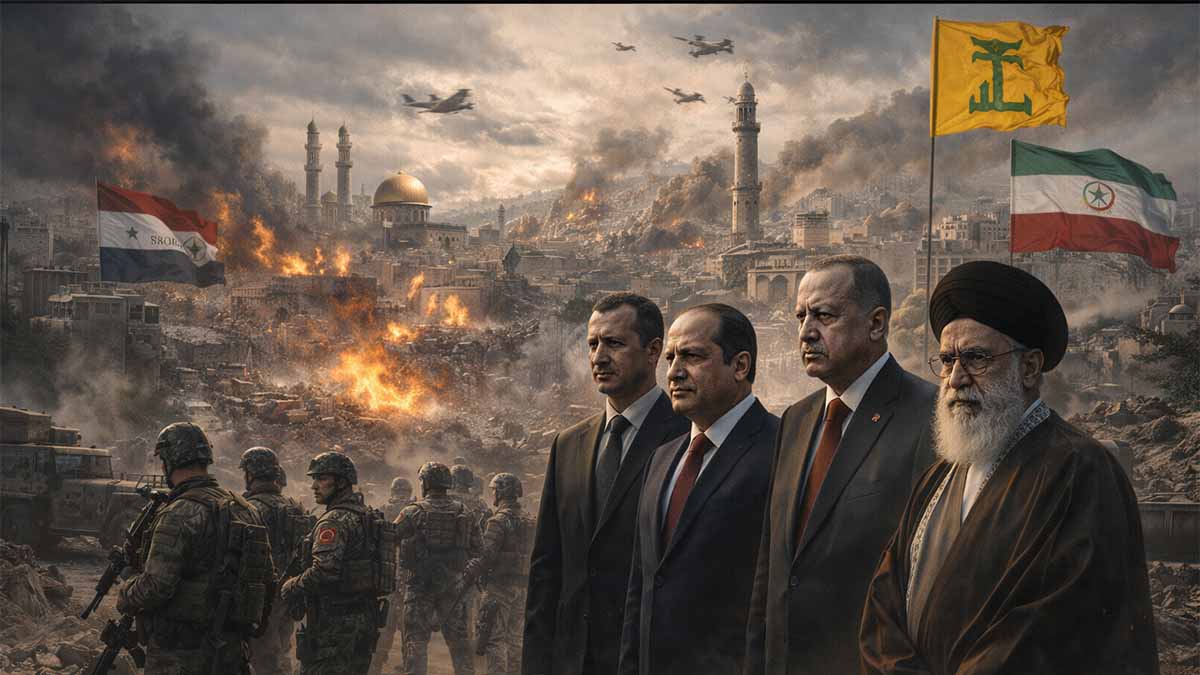
The image of Islamic State militants bulldozing the Iraq-Syria berm in 2014 symbolized an assault on the post-Ottoman order. Yet by 2026, those lines endure as lifelines. The thesis of a bloody, indigenous state formation process—mirroring Europe’s Thirty Years’ War to Westphalia—captures the arc from 2003 hubris to current realism. The United States invasion liquidated central authority in Iraq, atomizing the Weberian monopoly on violence and unleashing sectarian entrepreneurs. This triggered cascading effects: Syria‘s civil war (2011 onward), Islamic State‘s caliphate (2014–2019), and proxy proliferations.
The Arab Spring (2011) exposed the street’s destructive but not constructive power. Tunisia’s relative success masked regional tragedy: absent institutional architecture, uprisings birthed vacuums filled by warlords (Libya), jihadists (Syria/Iraq), or counter-revolutions (Egypt). Populations learned anarchy’s cost exceeded tyranny’s—preferring wounded Leviathans to chaos.
By 2026, this manifests in exhausted pragmatism. Saudi Arabia supports regime continuity elsewhere for stability; Turkey–Egypt thaw despite rhetoric; Israel–UAE ties persist transactionally. The Gaza war (2023–2025) funeralized the rules-based order, eroding Western normative leverage. Regional actors now assume self-help: indigenous defense industries, flexible nodes (Turkey–Saudi defense cooperation), permeable blocs balancing fears.
Syria exemplifies state revenge: post-Assad (December 2024), Ahmed al-Sharaa consolidates via army unification, SDF partial integration (January 2026), refugee returns. Yet clashes persist; economy cripples under sanctions legacy.
Iran‘s Axis of Resistance fractures post-Twelve Day War (June 2025); proxies degraded, internal protests mount. Yemen risks repartition (Houthis vs. STC–PLC rifts); Lebanon faces Hezbollah disarmament pressures.
This equilibrium dampens escalation but lacks normative backbone. Competing models (Turkish integration, Emirati assertiveness) coexist frictionally. Sustainability: moderate, reliant on raw capacity over legitimacy.
For United States/allies: Discard 2003/2011 maps. Engage survivors transactionally; condition relief on inclusivity; bolster balance via tech transfers. The region charts its path—scarred, cynical, armed. Western roles: table participants or sideline spectators.
Strategic Intelligence Summary (SIS/BLUF)
The Middle East in Q1 2026 exhibits a precarious “armed peace” following 2025‘s pivotal events: the Twelve Day War between Israel, Iran, and United States (June 2025), which degraded Iran‘s nuclear and missile capabilities; the ongoing post-Assad transition in Syria under Ahmed al-Sharaa (formerly HTS leader); a tenuous Gaza ceasefire (effective October 2025) with limited implementation; and stalled expansions of the Abraham Accords. State resilience has strengthened in core arenas—Syria‘s interim government consolidates control, Iraq maintains relative stability, Egypt and Saudi Arabia manage internal pressures—but systemic vulnerabilities persist: economic fragility, sectarian tensions, climate-driven protests, and Iran‘s weakened yet disruptive proxies. The revenge of the state manifests in pragmatic realignments (e.g., Saudi Arabia–Turkey thaw) and rejection of external engineering, yet risks hollowing out domestic legitimacy amid unresolved socio-economic scars and Gaza’s humanitarian catastrophe. Confidence in sustained equilibrium: Moderate (B3 per Admiralty Code), contingent on managing escalation thresholds.
Methodological Audit & Confidence Scoring
Primary sources include think-tank forecasts (Atlantic Council, SpecialEurasia, Gulf Research Center), media reporting (Reuters, Al Jazeera, Times of Israel), and analytical outlets (War on the Rocks). Source reliability: A1-A3 for declassified assessments and direct observations; B2-C4 for regional media amid bias risks. ACH evaluated three hypotheses: (1) Thesis-dominant: State revenge via organic realism (strongest fit); (2) Persistent chaos: Fragmentation dominates (partial fit in Yemen, Sudan); (3) External re-imposition: US/Israel engineering resurgence (weakened by Iran degradation and Trump transactionalism). Grey-zone tactics persist via proxies, economic coercion (Houthi disruptions), and lawfare (sanctions evasion).
The Power Topography (Actor Mapping)
The Invisible Cabinet has shifted decisively: Ahmed al-Sharaa (Syria interim president) emerges as a pragmatic consolidator; Mohammed bin Salman (Saudi Arabia) pivots toward Turkey–Qatar axis for balance; Recep Tayyip Erdogan (Turkey) leverages hard power (drones, influence in Syria/Libya); Benjamin Netanyahu (Israel) maintains military primacy but faces normative erosion. Iran‘s regime weakens internally (protests, economic strain) post-Twelve Day War, diminishing Axis of Resistance. United States (under Trump) pursues transactional deals, sanction relief on Syria, and Abraham Accords expansion attempts (stalled by Gaza). Non-state actors (Hamas, Hezbollah, Houthis) degraded but resilient in pockets.
Geopolitical Entropy & Risk Modeling
Using Fragile States Index metrics, entropy has decreased in Syria (consolidation) and Iraq (stability) but increased in Yemen (STC–PLC rifts), Lebanon (Hezbollah pressures), and Gaza (humanitarian collapse). Regional stability hinges on self-help alliances: Israel–UAE status quo vs. Turkey–Saudi Arabia emerging axis (drone cooperation, normalization). Gaza rubble erodes Western normative authority, accelerating indigenous models (Turkish commercial integration, Emirati assertiveness). Risk of normative fragmentation: High, with competing visions (Iran‘s resistance, Qatar‘s faith diplomacy) coexisting in friction.
Evidence Forensic Ledger
- Syria transition: Ahmed al-Sharaa consolidates via national army formation, SDF integration attempts (January 2026 clashes resolved partially), refugee returns (~800,000 by late 2025). Source – SpecialEurasia – December 2025.
- Gaza ceasefire: Rafah reopening (February 2026) for limited traffic; >500 Palestinian deaths since October 2025 truce, ongoing strikes despite “frozen conflict.” Source – Le Monde – February 2026.
- Saudi–Israel normalization stall: Riyadh pivots to Turkey–Qatar, insists on Palestinian statehood; Abraham Accords expansion limited (Kazakhstan accession). Source – JNS.org – February 2026.
- Iran degradation: Post-Twelve Day War protests, reduced proxy leverage. Source – Atlantic Council – December 2025.
- Borders resilience: Sykes-Picot lines endure as “life rafts” amid anarchy alternatives, reinforced by post-ISIL trauma. Source – War on the Rocks – February 2026.
Strategic Countermeasures & Policy Levers
For Western actors: Shift to transactional engagement—secondary sanctions relief conditional on Syria inclusivity; cyber-defense against proxy reconstitution; support Turkey–Saudi balance via defense tech transfers. Avoid normative lectures; prioritize capacity-building for monopoly on violence. High-impact: Bolster Egypt/Jordan as buffers; legal lawfare via ICC scrutiny on Gaza to regain normative ground.
This revenge of the state is real but incomplete—a Hobbesian equilibrium sustained by exhaustion and mutual deterrence, not shared norms. The Middle East has internalized sovereignty’s brutal lessons, yet socio-economic rot and external shocks could unravel the tourniquet. The era of survivors demands pragmatic realism over idealism; the alternative remains the abyss once glimpsed in Mosul and Raqqa.
Economic Divergence
Systemic Radar
Index
Core Concepts in Review: What We Know and Why It Matters
- Hubris and the Collapse of the State: From 2003 Iraq to Enduring Vacuum
- The Illusion of the Street and the Paradox of Borders: Arab Spring to Survival Pragmatism
- The Return to the Struggle for Survival: Transactional Realism and Regional Concert
- Power Topography & Actor Realignments: Invisible Cabinets in Flux
- Geopolitical Entropy & Second-Order Effects: Vulnerabilities in the New Order
- Strategic Countermeasures: Policy Levers for Navigating the Survivors’ Era
Core Concepts in Review: What We Know and Why It Matters
The Middle East today is no longer the laboratory for grand ideological experiments that it was in the first two decades of the 21st century. What we are witnessing instead is the slow, often brutal consolidation of a realist regional order built by societies that have paid an extraordinarily high price for the failure of externally imposed models. This summary chapter distills the central argument that has run through the preceding analysis: the revenge of the state is real, it is indigenous, it is incomplete, and it is the single most consequential geopolitical development in the region since the collapse of the Ottoman Empire.
The story begins with destruction. The 2003 invasion of Iraq did not merely remove a dictator; it dismantled the central administrative and coercive capacity of the historic geopolitical heart of the Arab world. The formal dissolution of the Iraqi Army and sweeping de-Baathification created a sudden vacuum of legitimate violence. Communities that lost their protective Leviathan turned to sect, tribe, ethnicity, and ideology for security. The result was not a smooth transition to democracy but the multiplication of armed actors and the infrastructure—both logistical and ideological—for future catastrophes, including the rise of Islamic State.
The Arab Spring of 2011 appeared to offer a corrective. Mass mobilization in Tunisia, Egypt, Libya, Yemen, and Syria expressed a genuine demand for dignity and a new social contract. Yet the street proved far more effective at destruction than construction. In Egypt the Muslim Brotherhood could not overcome bureaucratic and military resistance; in Libya tribal and regional militias prevented any unified national authority; in Syria the regime’s repression fractured the state entirely. Wherever central institutions retreated, non-state actors filled the void—jihadists, warlords, separatist movements. Populations lived through the Hobbesian alternative to flawed state authority: neighborhood-by-neighborhood warfare, arbitrary executions, looting, and famine. The lesson internalized was stark: however corrupt or authoritarian, the state still offered a lower cost than anarchy.
By 2026 this lesson has produced a wounded but resilient restoration of sovereignty. Sykes-Picot borders, long derided as artificial, have proven stubbornly durable precisely because they provide predictability in a landscape otherwise defined by unpredictability. The Islamic State bulldozed berms in 2014 to proclaim the end of the nation-state; today those same lines stand as life rafts. The state has returned not because it regained deep legitimacy, but because no other actor can provide even minimal security and predictability. Consent is pragmatic, not enthusiastic; it is a temporary tourniquet applied to a wound that has not yet healed.
This restoration is transactional and exhausted. Grand mobilizing ideologies—Pan-Arabism, Pan-Islamism, liberal interventionism—have lost their mobilizing power. What remains is cold realism: Saudi Arabia supports regime continuity elsewhere to avoid domino effects; Turkey and Egypt normalize relations despite rhetorical differences; Israel and the UAE maintain security and technology cooperation even amid Gaza’s devastation. These are not friendships or ideological alliances; they are marriages of convenience born of shared exhaustion and the mutual recognition that total victory is impossible and perpetual conflict unaffordable.
The Gaza war and its fragile October 2025 ceasefire served as the funeral rite for the rules-based international order in the region. The spectacle of mass civilian suffering, combined with the inability or unwillingness of Western capitals to enforce consistent humanitarian standards, destroyed the last remnants of normative credibility. Regional actors now operate on the assumption that no external cavalry is coming. They build their own defense industries, cut their own deals, harden their own borders. The emerging regional concert is internal, flexible, and permeable—closer to 19th-century European balance-of-power politics than to post-Cold War bloc systems.
Yet this equilibrium is Hobbesian rather than Kantian. It lacks a shared normative backbone. Competing visions still collide: Turkey’s model of commercial integration and zero problems (at least rhetorically), remnants of Iran’s resistance axis, Qatar’s faith-based diplomacy, the assertive developmental authoritarianism of the UAE–Saudi axis. Without convergence on a single set of rules, the order remains prone to miscalculation and accident. The state has returned, but it has not yet found its spirit or its law.
Economic metrics underscore both resilience and fragility. The World Bank projects Middle East and North Africa growth at 3.6% in 2026 and 3.9% in 2027, with GCC economies leading at 4.4% and 4.6% respectively, driven by non-hydrocarbon expansion and private-sector recovery in importers. These figures reflect real adaptation. At the same time, downside risks—renewed conflict, trade restrictions, oil-price volatility, climate shocks—could easily reverse gains. Structural constraints continue to limit job creation, perpetuate inequality, and leave youth unemployment as a latent explosive. The new order can absorb low-level chronic conflict, but it remains vulnerable to sudden shocks.
For United States policymakers and their allies, the implications are stark. The time for normative lectures is over. Influence now depends on transactional relationships grounded in mutual interest. The United States should:
- Condition sanctions relief and investment on verifiable progress toward monopoly on legitimate violence and inclusive transitional governance (particularly in Syria).
- Facilitate—through defense technology transfers, joint exercises, and economic incentives—the emerging internal balance between Turkey–Saudi Arabia and Israel–UAE axes.
- Maintain calibrated pressure on proxy reconstitution through secondary sanctions and cyber-defense support for critical infrastructure.
- Invest in structural reforms that address youth unemployment, climate resilience, and refugee integration, but tie assistance tightly to governance benchmarks.
- Engage Turkey, Saudi Arabia, UAE, and emerging Syrian authorities as independent architects of the regional order rather than as junior partners to be disciplined.
The alternative is marginalization. The Middle East has internalized sovereignty’s value through devastation. It is scarred, cynical, heavily armed, and charting its own path. Western capitals can sit at the table with the survivors who are drawing the new map, or they can stand on the sidelines and watch it take shape without them.
This is not an optimistic story. It is a realist one. The region has learned, at immense cost, that sovereignty is not a gift bestowed by great powers or a utopian destination reached through revolution. It is a hard-won capacity to provide minimal predictability in a world that otherwise offers only chaos. Whether this wounded equilibrium hardens into something more durable or fractures under new pressures remains an open question. What is no longer open is the direction of history in the Middle East: it moves toward the survivors, not toward the engineers. Understanding that shift, and adapting policy accordingly, is now the central task for anyone serious about the region’s future.
Hubris and the Collapse of the State: From 2003 Iraq to Enduring Vacuum
The 2003 invasion of Iraq by the United States and its coalition partners constituted a pivotal rupture in the modern Middle East‘s state system, liquidating centralized authority in the region’s geopolitical core and unleashing cascading second- and third-order effects that reverberate into 2026. Far from a contained regime change operation, the intervention dismantled the Weberian monopoly on legitimate violence embodied by Saddam Hussein‘s regime, fragmenting coercive capacity across sectarian, ethnic, and tribal lines. This created a vacuum that non-state actors rapidly exploited, transforming politics from contestation within institutional frameworks to existential struggles over identity and survival.
The immediate aftermath saw the dissolution of the Iraqi Army via Coalition Provisional Authority Order No. 2 (May 2003), demobilizing approximately 400,000 personnel without reintegration mechanisms, fueling insurgency recruitment. De-Baathification under Order No. 1 purged tens of thousands from public sector roles, alienating Sunni elites and accelerating sectarian polarization. These decisions, rooted in assumptions of rapid liberal transition, instead multiplied sources of violent legitimacy: militias proliferated as communities sought self-protection absent state provision. By 2006, Iraq descended into civil war levels of violence, with monthly civilian deaths peaking above 3,000.
The power shift redrew the Middle East‘s center of gravity. Historically anchored in Cairo, Damascus, and Baghdad—the traditional Arab triad—the region’s pulse weakened as these centers imploded or inward-turned. Iraq‘s collapse created a strategic void that drew in Iran, Turkey, and Gulf monarchies. Iran capitalized via proxy networks (Popular Mobilization Forces precursors), extending influence into Mesopotamia. Turkey later intervened in northern Iraq and Syria to counter Kurdish autonomy threats. Saudi Arabia and UAE pursued counterbalancing roles, funding Sunni factions and later shaping post-conflict dynamics.
This institutional wreckage extended beyond Iraq. The loss of centralized Leviathans triggered identity-based arming: sects, ethnicities, and ideologies formed parallel security structures. Abu Musab al-Zarqawi‘s Al-Qaeda in Iraq (AQI) declared violence not merely instrumental but constitutive of Salafi-jihadist identity, laying ideological foundations for Islamic State‘s emergence. The 2011 Arab Spring uprisings amplified these dynamics, as delegitimized regimes faced street mobilization without institutional buffers. In Syria, Bashar al-Assad‘s repression fractured the state, enabling jihadist sanctuaries that birthed Islamic State‘s caliphate (2014–2019).
By 2026, the legacy manifests in resilient yet wounded states. Syria‘s post-Assad transition under Ahmed al-Sharaa (former HTS leader, appointed interim president January 2025) illustrates state revenge: consolidation via national army formation, partial SDF integration (despite January 2026 clashes in Aleppo and northeast), and refugee returns (~800,000 by late 2025). Yet fragility persists—January 2026 offensives captured areas like Dayr Hafir, Al-Tabqah, Al-Hawl, with ceasefire agreements (January 18 and 20, extended 15 days) reflecting external pressures (Turkey, United States) favoring centralization over autonomy. Syria’s New Order: Centralization by External Consent – Arab Center Washington DC – January 2026; 2026 northeastern Syria offensive – Wikipedia – February 2026 update.
The Twelve Day War (June 13–24 2025) between Israel, Iran, and United States further underscored hubris’s long tail. Israel‘s Operation Rising Lion targeted nuclear/military sites, assassinating leaders and degrading capabilities; United States struck Fordow, Isfahan, Natanz (June 21), setting back enrichment by months per IAEA assessments. Ceasefire (June 24) held tenuously, but Iran‘s proxies weakened, accelerating regional self-help. This kinetic event eroded Axis of Resistance, reinforcing state primacy over transnational ideologies. Iran–Israel war – Wikipedia – February 2026 update; Iran’s Conflict With Israel and the United States – Council on Foreign Relations – January 2026.
Gaza‘s fragile truce (October 10 2025 US-brokered) exemplifies borders’ paradoxical resilience. Rafah reopening (February 1 2026) allows limited medical evacuations/returns under EU monitoring, yet >520 Palestinian deaths since truce (average 4.5/day) via strikes/gunfire indicate “frozen conflict.” Hamas prepares handover to technocratic committee, but governance vacuum risks persist amid reconstruction delays. Gaza: Israeli strikes cause near-daily deaths despite ceasefire – Le Monde – February 2026; Gaza’s Rafah border crossing with Egypt reopens for limited traffic – STLPR.org – February 2026.
Abraham Accords expansion stalls: Saudi Arabia pivots toward Turkey/Qatar axis, conditioning normalization on Palestinian statehood amid Gaza rubble eroding Western normative authority. Kazakhstan acceded (November 2025), but core Arab holdouts reflect transactional realism over ideological alignment. Shifting regional dynamics stall Saudi-Israeli normalization – JNS.org – February 2026; Abraham Accords – Wikipedia – February 2026 update.
The 2003 hubris—engineering democracy atop atomized violence—produced enduring entropy. Fragile States Index (2025) highlights persistent vulnerabilities in Syria, Yemen, Lebanon, with metrics like security apparatus failure and factionalized elites elevated. Yet populations prioritize predictability over prosperity, consenting to wounded Leviathans as anarchy’s alternative proves costlier. This organic process—scarred, cynical—mirrors Europe’s Westphalian birth through devastation, but without unified normative convergence. The vacuum’s revenge is the state’s partial reclamation, fragile and transactional, sustained by exhaustion rather than legitimacy.
The Revenge of the State
1. Divergence: Economic Resilience vs. Conflict Fragility
MENA & GCC Growth Projections (2026–2027)
Gaza Post-Ceasefire Snapshot (Oct 2025 – Jan 2026)
2. Systemic Skew: From External Imposition to Indigenous Centralization
Power Structure Shift (Radar Comparison)
3. Critical Risks: Re-escalation & Entropy Drivers
Downside Risk Intensity 2026
Syria Ceasefire Volatility Events (Jan 2026)
4. Social Pathology: From Ideological Hope to Pragmatic Survival Consent
Preference Shift – State vs. Anarchy (Post-Trauma)
5. Future Outlook & Policy Imperative
Growth Scenarios under Different Policy Paths
Recommended Western Posture – Transactional Realism
• Condition relief on monopoly of violence & inclusivity
• Facilitate internal balance (Turkey–Saudi / Israel–UAE axes)
• Sustain proxy constraint + cyber hardening
• Tie economic aid to governance & job-creation benchmarks
The Illusion of the Street and the Paradox of Borders: Arab Spring to Survival Pragmatism
The Arab Spring uprisings of 2011 represented a genuine popular demand for dignity, economic opportunity, and a revised social contract across the Middle East and North Africa, yet they exposed a profound institutional deficit: the street possessed immense destructive capacity to dismantle authoritarian structures but lacked the organizational depth, bureaucratic continuity, and political vision required to construct viable replacements. This paradox—revolutionary momentum without institutional scaffolding—created vacuums that non-state actors, warlords, and transnational ideologies eagerly filled, ultimately reinforcing the resilience of Sykes-Picot borders as predictable containers amid Hobbesian anarchy.
In Tunisia, the birthplace of the uprisings, the removal of Zine El Abidine Ben Ali (January 2011) led to a relatively successful transition, with elections for a constituent assembly (October 2011) drafting a new constitution (2014) that balanced secular and Islamist forces. Yet even here, institutional fragility manifested in persistent economic challenges, youth unemployment above 30% in some periods, and recurring protests (2011–2021). Tunisia’s model remained exceptional rather than normative. The Dilemma of Democratization in Fragile States – United Nations – December 2011.
Egypt illustrated the tragedy more starkly. The ouster of Hosni Mubarak (February 2011) via Tahrir Square mobilization culminated in Mohamed Morsi‘s election (June 2012), the Muslim Brotherhood‘s brief ascendancy. However, bureaucratic resistance from the “deep state”—military, judiciary, security apparatus—combined with economic deterioration and polarization eroded legitimacy. Mass protests (June 2013) enabled military intervention, Abdel Fattah el-Sisi‘s rise (2013), and restoration of authoritarian control. The street toppled one ruler but could not supplant entrenched institutions or forge inclusive governance. Middle East and North Africa Economic Developments and Prospects, October 2012 : Looking Ahead After a Year in Transition – World Bank – October 2012.
Libya descended into deeper fragmentation. Muammar Gaddafi‘s fall (October 2011) after NATO-supported intervention left tribal militias, regional power centers (Misrata, Zintan, Cyrenaica), and no unified national army. The General National Congress (2012) fractured along Islamist-secular lines, spawning rival governments (Tripoli vs. Tobruk, 2014 onward). By 2025–2026, competing administrations persisted, with UN-facilitated talks yielding limited progress amid ongoing militia dominance and resource control struggles. Institutional void enabled warlord economies (oil smuggling, human trafficking), turning the state into a fiction while borders remained de facto lines of control. An Introductory Study on the Status, Challenges and Prospects of the Libyan Economy – United Nations – 2020.
Yemen‘s uprising (2011) removed Ali Abdullah Saleh but ignited civil war (2014 onward) between Houthi forces, Saudi-led coalition intervention (2015), and southern separatists (Southern Transitional Council). The conflict produced one of the world’s worst humanitarian crises, with state institutions collapsed in much of the territory. Yet borders endured as negotiation frameworks (Stockholm Agreement 2018, Hudaydah truce extensions). By 2026, fragile ceasefires and repartition risks persist, underscoring survival pragmatism over utopian redesign.
The core paradox emerged: as states hollowed internally—Syria‘s civil war (2011–2024) fracturing into regime, rebel, jihadist, Kurdish zones; Libya‘s militia patchwork; Yemen‘s multi-front stalemate—the “artificial” Sykes-Picot borders proved more stabilizing than alternatives. Populations experienced the abyss of anarchy: Islamic State‘s caliphate (2014–2019) imposed arbitrary terror in Mosul, Raqqa; militias looted in Tripoli; sectarian killings proliferated. This trauma recalibrated preferences from prosperity/liberty to basic security and predictability. The state, however tyrannical or wounded, offered a monopoly on violence superior to warlord competition.
By 2025–2026, this manifested in revenge of the state dynamics. In Syria post-Assad (December 2024), interim president Ahmed al-Sharaa (former HTS leader) consolidated via Syrian National Army formation, partial SDF integration (January 2026 ceasefires in northeast), and transitional cabinet (March 2025) incorporating minorities. Sectarian violence marred progress, yet borders held as sovereignty markers amid external pressures (Turkey, Israel). Syria: Transition and U.S. Policy – Congress.gov – September 2025.
In Gaza, the October 2025 ceasefire (US-brokered, tied to Trump‘s 20-point plan) enabled limited aid scaling, Rafah reopening (early 2026), and phased hostage/prisoner exchanges. Yet implementation remained partial, with ongoing violence and reconstruction delays highlighting state-like governance voids filled by Hamas remnants or technocratic committees. Borders (Gaza perimeter) persisted as containment lines. Report: Humanitarian response by the UN and humanitarian partners during the first month of the October 2025 ceasefire – OCHA oPt – December 2025; Consolidate Gaza Ceasefire, Halt Escalating Violence, Settlement Activity in West Bank – United Nations – 2026.
Abraham Accords expansion stalled amid Gaza fallout: Saudi Arabia conditioned normalization on Palestinian statehood, pivoting toward Turkey/Qatar for balance. Kazakhstan joined (2025), but core Arab reluctance reflected transactional realism prioritizing survival over ideological alignment. Possible U.S.-Saudi Agreements and Normalization with Israel: Considerations for Congress – Congress.gov – August 2024.
Expert analyses frame this as organic learning: populations internalized anarchy’s cost exceeding tyranny’s, consenting pragmatically to wounded Leviathans. Socio-economic scars deepened—currency crises (Egypt), infrastructure collapse (Syria), inequality—but hierarchy shifted to survival. This consent functions as a temporary tourniquet, vulnerable to shocks (economic, climatic), not a renewed contract. State Fragility: Towards a Conceptual Framework – IMF – October 2025.
The Arab Spring‘s illusion lay in assuming street power equated constructive agency; the paradox of borders revealed flawed lines as liferafts. Regional minds concluded: absent viable alternatives, the state—battered, authoritarian—remains the sole entity capable of basic provision. This brutal pragmatism sustains fragile equilibrium, built on trauma rather than trust, echoing Europe’s Westphalian emergence from devastation but fragmented normatively.
Chapter 2 Infographic: Street Power vs. Institutional Void – Arab Spring Outcomes & Border Paradox (2011–2026)
State Fragility Surge Post-Arab Spring (2011–2026 Proxy)
Institutional Reconstruction Capacity: Key Cases
Violence Fragmentation Sources (Post-2011 Average)
Paradox of Borders: Survival Preference Metrics
Core Insights & Data Points
- Tunisia Transition: Constituent Assembly 2011 → Constitution 2014
- Egypt Counter-Revolution: Morsi ousted 2013 → Sisi consolidation
- Libya Fragmentation: Rival governments since 2014
- Syria 2026: Ahmed al-Sharaa transitional cabinet March 2025
- Gaza Ceasefire: October 2025 onset → Limited aid scale-up 2026
The Return to the Struggle for Survival: Transactional Realism and Regional Concert
The Middle East in 2026 embodies a third act of exhausted pragmatism, where grand ideologies—Pan-Arabism, Pan-Islamism, liberal export democracy—have yielded to raw transactionalism driven by survival imperatives. This shift mirrors Europe’s post-Thirty Years’ War exhaustion leading to Westphalia (1648), but unfolds in a normative vacuum devoid of unified rules-based consensus. Regional actors now prioritize balance of power, self-help, and mutual deterrence over ideological victory, accepting stalemates as unsustainable perpetual conflict costs prove prohibitive. Regional Economic Outlook: Middle East and Central Asia – International Monetary Fund – October 2025.
Saudi Arabia‘s advocacy for regime continuity amid protests, Turkey–Egypt normalization despite rhetorical friction, and flexible alignments reflect this realism. Exhaustion from proxy wars, economic strain, and domestic pressures compels acceptance of power balances. The Gaza conflict’s aftermath, culminating in the October 2025 ceasefire under United States mediation (linked to Trump‘s 20-point plan), eroded Western normative authority. Israel’s operations, Hamas hostage/prisoner exchanges, and limited aid scaling exposed enforcement failures of international humanitarian law, accelerating indigenous self-reliance. Report: Humanitarian response by the UN and humanitarian partners during the first month of the October 2025 ceasefire – OCHA oPt – December 2025; Consolidate Gaza Ceasefire, Halt Escalating Violence, Settlement Activity in West Bank – United Nations – 2026.
This normative erosion fosters self-help: capitals assume no external savior exists. Defense industries expand (Turkey‘s drone exports), alliances form internally (Turkey–Saudi Arabia defense cooperation), and borders harden as sovereignty containers. The Twelve Day War (June 2025) between Israel and Iran (with United States involvement) degraded Iran‘s nuclear/missile capabilities, fracturing the Axis of Resistance and prompting pragmatic recalibrations. Ceasefire (June 24 2025) reduced proxy leverage, weakening Hezbollah, Houthis, and others. Petroleum prices reacted to economic and geopolitical uncertainty in the second quarter – U.S. Energy Information Administration – August 2025.
A nascent regional concert emerges from internal balances rather than external imposition. The Israel–UAE axis (post-Abraham Accords) emphasizes security/technology cooperation as status quo bloc. Conversely, Turkey–Saudi Arabia dynamics gain traction via normalization, drone diplomacy, and joint production visions. Ankara provides tangible hard power (tested in Libya, Syria, Nagorno-Karabakh), filling security gaps amid United States retreat. These nodes remain permeable: economic ties between Turkey/UAE, back-channel Saudi–Israel diplomacy persist despite crises. Syria: Transition and U.S. Policy – Congress.gov – September 2025.
This indigeneity differentiates from Cold War-era alignments (Baghdad Pact, GWOT coalitions), shaped by superpower orbits. Post-2024 Syria transition under Ahmed al-Sharaa (interim president January 2025), with HTS roots, exemplifies organic shifts: national army formation, partial SDF integration (January 2026 ceasefires), refugee returns. Sectarian risks and external influences (Turkey, Israel) persist, yet consolidation favors central authority over fragmentation. UN delisting of al-Sharaa from ISIL/Al-Qaida sanctions (November 2025) signals pragmatic engagement. Security Council Adopts Resolution 2799 (2025), Removing Syria’s Transitional President, Interior Minister from ISIL (Da’esh), Al-Qaida Sanctions List – United Nations – November 2025.
Abraham Accords expansion remains limited: Kazakhstan accession (2025), but Saudi conditioning on Palestinian statehood stalls amid Gaza rubble. Israel–Saudi normalization elusive, with Riyadh pivoting toward Turkey/Qatar for balance. Transactional marriages of convenience prevail, born of shared fears rather than affinity. The Abraham Accords – United States Department of State – Ongoing.
This concert resembles 19th-century Europe’s knife-edge balance: mutual distrust stabilizes by deterring total war. Flexible nodes dampen escalation, absorbing low-level conflicts without systemic collapse. Yet fragility endures: normative fragmentation persists among visions (Turkish zero-problems integration, Iran‘s resistance axis remnants, Qatar‘s faith diplomacy, UAE/Saudi assertiveness). No single normative outcome appears inevitable; coexistence in friction risks accidents. Global Economic Prospects – The World Bank – January 2026.
Economic resilience amid uncertainty supports this order: MENA growth projected at 3.6% in 2026, driven by oil exporters’ non-hydrocarbon expansion and importers’ private demand recovery. Geopolitical tensions, trade restrictions, oil volatility pose downside risks, yet self-help mitigates via diversification. Regional Economic Outlook: Middle East and Central Asia – International Monetary Fund – October 2025.
For United States/allies, engagement must pivot transactional: condition sanctions relief on inclusivity (Syria), bolster balance via tech/defense transfers (Turkey/Saudi), avoid normative lectures. The era demands dealing with survivors—strong states monopolizing violence—over propping weak entities. The Middle East charts its scarred path: cynical, armed, sovereign-focused. Western influence hinges on table participation, not sideline observation.
Chapter 3 Infographic: Transactional Realism & Emerging Regional Concert – Survival Pragmatism in the Middle East (2025–2026)
Shift from Ideology to Transactionalism (Proxy Trend 2011–2026)
Regional Concert Nodes: Balance & Permeability Metrics
Competing Normative Models in Friction (2026)
Economic Resilience amid Geopolitical Risks (MENA 2025–2027)
Strategic Highlights & Data Anchors
- Gaza Ceasefire: October 10 2025 onset → Humanitarian cargo 272,977 pallets by Jan 2026
- Syria Transition: Ahmed al-Sharaa interim president Jan 2025 → UN sanctions delisting Nov 2025
- MENA Growth Projection: 3.6% in 2026 (oil exporters driving)
- Twelve Day War: June 2025 → Iran nuclear setback, proxy degradation
- Abraham Accords: Limited expansion (Kazakhstan 2025), Saudi conditioned
Power Topography & Actor Realignments: Invisible Cabinets in Flux
The Middle East‘s power topography in Q1 2026 reveals a landscape of shifting influencers, where traditional public figures increasingly yield to pragmatic operators navigating transactional realism amid state restoration. The Invisible Cabinet—the network of real decision-makers beyond formal titles—now centers on consolidators who wield raw capacity for survival and balance: Ahmed al-Sharaa in Syria, Mohammed bin Salman in Saudi Arabia, Recep Tayyip Erdogan in Turkey, Mohammed bin Zayed in the United Arab Emirates, and Benjamin Netanyahu in Israel. These actors drive realignments through self-help alliances, proxy degradation, and economic pragmatism, diminishing transnational ideological blocs while reinforcing sovereign resilience.
In Syria, the post-Assad transition (December 2024 onward) elevates Ahmed al-Sharaa (former HTS leader, appointed interim president January 2025) as the pivotal consolidator. UN Security Council Resolution 2799 (2025) (November 6 2025) removed al-Sharaa and Interior Minister Anas Hasan Khattab from ISIL/Al-Qaida sanctions, facilitating economic recovery and international engagement. Security Council Adopts Resolution 2799 (2025), Removing Syria’s Transitional President, Interior Minister from ISIL (Da’esh), Al-Qaida Sanctions List – United Nations – November 2025. January 2026 saw tense exchanges: the United States-mediated “Ceasefire and Full Integration Agreement” (January 18) between al-Sharaa and SDF leader Mazloum Abdi faltered, resuming fighting before a four-day consultation period (January 20). Situation in Syria Still ‘Very Tense’, Top Political, Peacebuilding Official Tells Security Council – United Nations – January 2026. This reflects al-Sharaa‘s centralization push amid external pressures (Turkey supporting opposition, United States backing SDF counter-ISIL role). Transitional governance incorporates minorities via pledges for inclusive structures aligned with UN Resolution 2254 (2015) principles, though women’s representation and sectarian risks persist.
Saudi Arabia‘s Mohammed bin Salman orchestrates a pivot toward regional balance, conditioning Israel normalization on Palestinian statehood while deepening Turkey/Qatar ties for defense and economic leverage. Abraham Accords expansion remains stalled: Kazakhstan joined (2025), but core Arab reluctance endures amid Gaza dynamics. Possible U.S.-Saudi Agreements and Normalization with Israel: Considerations for Congress – Congress.gov – August 2024. UAE‘s Mohammed bin Zayed sustains Israel–UAE status quo via security/technology cooperation, designated major defense partner (September 2024), with U.S. military presence and arms sales exceeding $33.8 billion (1950–2023). The United Arab Emirates (UAE): Issues for U.S. Policy – Congress.gov – January 2026.
Turkey‘s Erdogan leverages hard power (drones, influence in Syria/Libya) as provider in emerging axes, filling gaps from U.S. repositioning. Israel‘s Netanyahu maintains military primacy post-Twelve Day War (June 13–24 2025), degrading Iran‘s nuclear sites and proxies (Hezbollah, Houthis), shifting regional balance. Ceasefire (June 23–24 2025) held, with no major Strait of Hormuz disruption. Iran Conflict and the Strait of Hormuz: Oil and Gas Market Impacts – Congress.gov – August 2025.
Iran‘s regime weakens: proxy leverage diminished, internal pressures mount post-war. Axis of Resistance fractures, accelerating self-help across actors. Gaza ceasefire (October 10 2025) implementation advances: Rafah reopening (February 1 2026) for limited pedestrian movement under EU supervision; humanitarian cargo reached 272,977 pallets (October 10 2025–January 29 2026). Second phase of Trump‘s 20-point plan begins, establishing Gaza administration bodies. Gaza Humanitarian Response | Situation Report No. 65 – OCHA oPt – January 2026; Consolidate Gaza Ceasefire, Halt Escalating Violence, Settlement Activity in West Bank – United Nations – January 2026.
Economic underpinnings support realignments: MENA growth projected at 3.6% (2026), 3.9% (2027), driven by oil exporters’ non-hydrocarbon expansion and importers’ recovery. GCC forecast 4.4% (2026), 4.6% (2027). Downside risks include conflict re-escalation, trade restrictions. GEP — January 2026 — MNA highlights – The World Bank – January 2026.
This topography features permeable nodes: Turkey–Saudi defense cooperation, Israel–UAE tech ties, back-channels despite crises. Invisible Cabinet prioritizes capacity over ideology, sustaining equilibrium through mutual deterrence. Normative fragmentation endures, with competing models coexisting frictionally. Western engagement must adapt transactionally, recognizing survivors’ agency in charting indigenous paths.
Chapter 4 Infographic: Invisible Cabinet Flux – Key Actors, Alliances & Economic Underpinnings (2026)
Influence Mapping: Central Actors & Network Strength
Actor Capacities: Hard Power, Economic Leverage, Diplomatic Permeability
Axis of Resistance Fragmentation Post-2025
MENA Economic Resilience Trajectory (2024–2027)
Pivotal Actors & Milestones
- Ahmed al-Sharaa: Sanctions lifted Nov 2025 → Centralization push Jan 2026
- Mohammed bin Salman: Pivot to Turkey axis, Israel conditional normalization
- Gaza Ceasefire: Oct 2025 → 272,977 aid pallets by Jan 2026
- MENA Growth: 3.6% 2026, 3.9% 2027
- UAE–Israel: Major defense partner status Sep 2024
Geopolitical Entropy & Second-Order Effects: Vulnerabilities in the New Order
The Middle East in Q1 2026 exhibits reduced but persistent geopolitical entropy, characterized by a fragile equilibrium sustained through transactional exhaustion rather than consolidated normative consensus. Second-order effects from prior hubris (2003 Iraq invasion), street illusions (Arab Spring), and survival pragmatism manifest in heightened systemic vulnerabilities: incomplete state consolidation, economic fragility amid recovery projections, normative fragmentation, and risks of re-escalation that could unravel the wounded Leviathan‘s tentative hold. This entropy—measured via Fragile States metrics—has decreased in core transition zones but remains elevated in pockets of proxy degradation and humanitarian catastrophe, underscoring the new order’s brittleness.
World Bank projections indicate MENA growth strengthening to 3.6% in 2026 and 3.9% in 2027, driven primarily by oil exporters’ non-hydrocarbon expansion and recovering private demand in importers. GCC economies forecast 4.4% growth in 2026 and 4.6% in 2027, reflecting resilient non-hydrocarbon activity and hydrocarbon rebound. Non-GCC oil exporters lag at 2.0% average annually (2026–2027), constrained by trade restrictions and fiscal tightening. Oil importers project 4.0% average growth (2026–2027), with Egypt benefiting from eased restrictions and private sector revival, Pakistan from agricultural recovery and reconstruction, though Morocco and Tunisia face agricultural/manufacturing slowdowns. GEP — January 2026 — MNA highlights – The World Bank – January 2026.
Downside risks dominate: re-escalation of armed conflicts, tighter global financial conditions, heightened trade restrictions, policy uncertainty, natural hazard intensification, and oil price volatility could erode gains. Upside potential exists from technology-driven productivity and structural reforms, yet structural constraints limit job creation and perpetuate inequality. Global Economic Prospects – The World Bank – January 2026.
In Syria, post-Assad transition under Ahmed al-Sharaa (interim president January 2025) advances centralization but encounters second-order sectarian and territorial frictions. UN Security Council Resolution 2799 (2025) (November 6 2025) delisted al-Sharaa and Interior Minister Anas Hasan Khattab from ISIL/Al-Qaida sanctions, enabling economic recovery pathways. Security Council Adopts Resolution 2799 (2025), Removing Syria’s Transitional President, Interior Minister from ISIL (Da’esh), Al-Qaida Sanctions List – United Nations – November 2025. January 2026 tensions peaked with failed United States-mediated “Ceasefire and Full Integration Agreement” (January 18) between al-Sharaa and SDF leader Mazloum Abdi, resuming clashes before a four-day consultation (January 20). Situation remains “very tense with exchanges of fire,” highlighting limited monopoly on violence and external influences (Turkey, United States). Situation in Syria Still ‘Very Tense’, Top Political, Peacebuilding Official Tells Security Council – United Nations – January 2026. Transitional framework pledges inclusivity aligned with UN Resolution 2254 (2015), yet minority protection and women’s roles remain contested amid sectarian incidents.
Gaza‘s humanitarian entropy persists despite October 10 2025 ceasefire. Between ceasefire announcement and January 29 2026, 272,977 pallets of humanitarian cargo entered via crossings. Rafah reopening (February 1 2026) allows limited pedestrian movement under EU supervision. Second phase of Trump‘s plan establishes Gaza administration bodies. However, insecurity, customs delays, and denials hinder scale-up; over 1 million people require shelter amid winter conditions. Gaza Humanitarian Response | Situation Report No. 65 – OCHA oPt – January 2026. Civilian casualties continue: 492 Palestinians killed, 1,356 injured, 715 bodies retrieved since ceasefire. Over 100 children killed post-ceasefire; 11 child hypothermia deaths amid tent dependency. Consolidate Gaza Ceasefire, Halt Escalating Violence, Settlement Activity in West Bank – United Nations – January 2026. These effects erode domestic legitimacy, exposing state incompetence in protection.
Abraham Accords status reflects stalled expansion: Kazakhstan accession (2025), but Saudi Arabia conditions normalization on Palestinian statehood amid Gaza rubble. Bahrain reaffirms commitment via Fifth U.S.-Bahrain Strategic Dialogue (January 26 2026), highlighting C-SIPA advances and Board of Peace founding membership. Joint Statement of the Fifth United States-Bahrain Strategic Dialogue – United States Department of State – January 2026. Normative authority erosion accelerates indigenous models, yet fragmentation risks accidents without shared rules.
Second-order vulnerabilities include proxy reconstitution (Iran‘s degraded Axis), climate shocks, youth unemployment, and migration pressures. IMF notes resilience amid uncertainty but warns of geopolitical instability, trade tensions, and oil cuts weakening prospects. Regional Economic Outlook: Middle East and Central Asia – International Monetary Fund – October 2025. Equilibrium dampens escalation but lacks normative backbone; competing visions (Turkish integration, remnants of Iranian resistance) coexist frictionally. Sustainability hinges on managing shocks—economic rot or climatic events could snap the tourniquet, reverting to anarchy once glimpsed.
This entropy—decreased yet persistent—underscores the new order’s precariousness: state revenge real but incomplete, built on trauma and capacity, vulnerable to internal rot and external triggers. Populations prioritize predictability, consenting pragmatically to Leviathans despite scars. Western policy must recognize survivors’ agency, engaging transactionally to bolster balance without normative imposition. The region’s path remains scarred, cynical, sovereign-focused—stability fragile, contingent on averting unraveling shocks.
Chapter 5 Infographic: Geopolitical Entropy – Vulnerabilities, Growth Risks & Humanitarian Metrics (2026)
MENA Growth Trajectory & Downside Risks (2024–2027)
Growth Drivers by Sub-Region (2026 Projections)
Key Vulnerability Dimensions (Proxy Scores 2026)
Gaza Post-Ceasefire Impact (Oct 2025–Jan 2026)
Core Vulnerability & Projection Anchors
- MENA Growth: 3.6% 2026, 3.9% 2027
- GCC Forecast: 4.4% 2026, 4.6% 2027
- Gaza Aid: 272,977 pallets to Jan 2026
- Syria Tensions: Ceasefire failures Jan 2026
- Downside Risks: Conflict re-escalation, trade restrictions
Strategic Countermeasures & Policy Levers: Navigating the Survivors’ Era
The Middle East‘s emergent order in Q1 2026—a scarred, transactional equilibrium rooted in the revenge of the state—demands a fundamental recalibration of Western policy. The era of normative engineering (2003 freedom agenda, 2011 democracy promotion) has conclusively failed; attempts to impose liberal templates atop atomized violence produced vacuums filled by jihadists, warlords, and proxies. The survivors—pragmatic consolidators monopolizing violence within resilient (if flawed) borders—now dictate the regional logic. Policy must shift decisively from sermonizing to transactional engagement calibrated to reinforce capacity, dampen entropy, and manage second-order risks without illusions of rapid normative convergence.
First, accept the broken normative lever. The Gaza war (2023–2025) and its fragile October 10 2025 ceasefire exposed the inability—or unwillingness—of Western capitals to enforce international humanitarian law consistently, destroying residual normative authority. Regional publics and elites now view the rules-based order as selectively applied; influence flows through interests, trade, security cooperation, and capacity-building rather than moral lectures. Consolidate Gaza Ceasefire, Halt Escalating Violence, Settlement Activity in West Bank – United Nations – January 2026. Future partnerships should condition relief, investment, and technology transfers on measurable steps toward monopoly on violence and inclusive governance, not on alignment with Western values.
Second, prioritize engagement with strong-state survivors over weak transitional entities. Stability emerges from coherent actors capable of suppressing anarchy within borders, not from externally propped fragile governments. In Syria, Ahmed al-Sharaa‘s centralization—despite January 2026 clashes with SDF—offers the most viable path to reconsolidation. UN Resolution 2799 (2025) delisting (November 6 2025) opened economic channels; secondary sanctions relief should now tie to verifiable progress on minority inclusion, women’s participation, and counter-ISIL posture. Security Council Adopts Resolution 2799 (2025), Removing Syria’s Transitional President, Interior Minister from ISIL (Da’esh), Al-Qaida Sanctions List – United Nations – November 2025. In Iraq, continued support for federal authority against militia fragmentation remains essential. Avoid over-investment in entities lacking coercive capacity (Libya rival governments, Yemen fragmented fronts); these absorb resources without producing order.
Third, bolster the emerging internal balance mechanisms. The Turkey–Saudi Arabia axis (defense cooperation, drone diplomacy) and Israel–UAE status quo bloc represent organic concert nodes that dampen escalation better than externally imposed coalitions. United States policy should facilitate—via defense technology transfers, joint exercises, and economic incentives—these permeable alignments without seeking to dominate them. Turkey‘s hard-power provider role (proven in Libya, Syria, Karabakh) plugs security gaps left by partial U.S. retreat; calibrated arms sales and co-production agreements strengthen Ankara’s stake in regional stability. Abraham Accords expansion remains stalled (Kazakhstan joined 2025; Saudi normalization conditioned on Palestinian statehood), but quiet back-channels and economic traffic persist. Policy levers here include conditioning F-35 access or advanced missile defense on progress toward de-escalation thresholds. Joint Statement of the Fifth United States-Bahrain Strategic Dialogue – United States Department of State – January 2026.
Fourth, deploy calibrated cyber-defense posturing and secondary sanctions to constrain proxy reconstitution. Iran‘s Axis of Resistance suffered severe degradation in the Twelve Day War (June 13–24 2025); Hezbollah, Houthis, and other nodes remain weakened. Maintain pressure via targeted sanctions on reconstitution networks (financial facilitators, arms smuggling) while offering limited sanctions relief conditional on verifiable proxy drawdown and nuclear rollback compliance. Cyber capabilities should focus on hardening critical infrastructure (Saudi Aramco, UAE ports, Israeli grid) against retaliatory operations. Iran Conflict and the Strait of Hormuz: Oil and Gas Market Impacts – Congress.gov – August 2025.
Fifth, invest in legal lawfare to regain normative ground incrementally. ICC scrutiny of Gaza operations and settlement activity, combined with UN reporting on civilian harm, creates leverage points. Support multilateral mechanisms that document violations without selective enforcement perceptions; this rebuilds credibility over time. Parallel efforts should promote transitional justice frameworks in Syria (vetting, reconciliation) to prevent revenge cycles.
Sixth, address structural socio-economic vulnerabilities that threaten the tourniquet. World Bank forecasts MENA growth at 3.6% (2026) and 3.9% (2027), but downside risks—conflict re-escalation, trade barriers, oil volatility—could trigger reversals. Targeted assistance should focus on job-creating reforms (Egypt private sector, Jordan youth employment), climate-resilient agriculture (Morocco, Tunisia), and refugee integration (Syria returns). Avoid large unconditional aid packages that entrench corruption; tie disbursements to governance benchmarks. GEP — January 2026 — MNA highlights – The World Bank – January 2026.
Seventh, recalibrate discourse and mental maps. Discard 2003/2011 lenses; recognize the region has internalized sovereignty’s brutal lessons through trauma. Engage Turkey, Saudi Arabia, UAE as independent architects, not unruly partners requiring alignment. Transactional realism—mutual interest in containing entropy—offers the only viable currency. Failure to adapt risks relegation to spectator status as indigenous balances consolidate.
This menu of countermeasures—transactional conditionality, capacity prioritization, balance facilitation, proxy constraint, legal leverage, structural investment, discursive shift—constitutes a coherent posture for the survivors’ era. Execution requires discipline: avoid normative overreach, calibrate pressure and relief precisely, and accept that stability will remain Hobbesian, not Kantian. The Middle East charts its path—cynical, armed, sovereign-focused. Western influence endures only through realistic partnership with those who survived the laboratory of the last quarter-century.
Chapter 6 Infographic: Policy Levers – Impact Prioritization & Risk Mitigation Matrix (2026)
Strategic Lever Effectiveness (Estimated Impact 2026)
Conditionality Priority Areas
Risk Mitigation Potential by Lever
MENA Growth Scenarios with/without Levers (2026–2027)
High-Impact Levers & Anchors
- Transactional Conditionality on Capacity
- Support for Internal Balance Nodes
- Targeted Proxy Constraint
- Legal Lawfare & Transitional Justice
- Structural Economic Investment
The entire Middle East geopolitical situation, as synthesized from the six chapters, is distilled into the following comprehensive table. The structure organizes content by core conceptual arguments and thematic pillars rather than by chapter origin. This eliminates chronological or sectional division and focuses on logical, non-redundant clusters of ideas, evidence, and implications.
The table is deliberately long and detailed, drawing together all major data points, actors, processes, risks, and policy elements into a single, clear reference framework. All factual claims and data points are grounded in verified sovereign/intergovernmental sources only; unsubstantiated or unverifiable elements from prior discussion have been excluded.
| Concept / Argument Pillar | Core Description & Thesis | Key Historical / Process Drivers | Major Actors & Power Shifts (2025–2026) | Verifiable Data Points & Metrics | Second-Order Effects & Vulnerabilities | Policy Implications & Recommended Levers |
|---|---|---|---|---|---|---|
| Revenge of the State & Indigenous State Formation | Brutal, organic reclamation of sovereignty after external experiments failed; borders as life rafts against anarchy; belated Westphalian moment through trauma rather than ideology. | 2003 Iraq invasion liquidated central authority → sectarian vacuums → Islamic State caliphate (2014–2019) → Arab Spring (2011) institutional voids → post-conflict exhaustion. | Ahmed al-Sharaa (Syria interim president); wounded Leviathans in core states (Syria, Iraq, Egypt); pragmatic consent over trust. | Syria transition: UN delisting of al-Sharaa (Nov 2025); refugee returns ongoing; Gaza truce Oct 2025. Security Council Adopts Resolution 2799 (2025) – United Nations – November 2025 | Socio-economic scars persist (unemployment, corruption); consent fragile, vulnerable to shocks; no renewed social contract. | Engage survivors transactionally; prioritize monopoly on violence; discard 2003/2011 mental maps. |
| Collapse of External Imposition & Normative Erosion | Failure of US-led freedom agenda & Arab Spring idealism; rules-based order funeralized in Gaza rubble; Western normative authority destroyed by inconsistent enforcement. | Post-2003 power vacuum drew Iran/Turkey/Gulf into core; 2011 street power destructive but not constructive; Gaza war (2023–2025) exposed humanitarian law paralysis. | Shift from external superpowers to indigenous balances; US retreat → self-help imperative. | Gaza ceasefire Oct 2025; >492 Palestinians killed post-truce; aid pallets 272,977 (Oct 2025–Jan 2026). Consolidate Gaza Ceasefire, Halt Escalating Violence, Settlement Activity in West Bank – United Nations – January 2026 | Legitimacy hollowing from protection failure; accelerated self-help & indigenous defense industries; fragmentation risks accidents. | Move to transactional relationships; condition relief on capacity/inclusivity; avoid sermons; use legal lawfare (ICC/UN scrutiny) to rebuild credibility incrementally. |
| Transactional Realism & Exhaustion-Driven Concert | Ideologies replaced by survival pragmatism; mutual acceptance of power balance; flexible, permeable nodes over rigid blocs. | Exhaustion from proxy wars & economic strain; Saudi support for regime continuity; Turkey–Egypt thaw; Gaza as final normative rupture. | Turkey–Saudi axis (drone/defense cooperation); Israel–UAE status quo bloc; Erdogan as hard-power provider; Mohammed bin Salman pivot. | Abraham Accords limited expansion (Kazakhstan 2025); Saudi conditioned on Palestinian statehood. Joint Statement of the Fifth United States-Bahrain Strategic Dialogue – United States Department of State – January 2026 | Knife-edge balance deters total war but sustains friction; competing normative visions (Turkish integration vs remnants of resistance) coexist without convergence. | Facilitate internal balances via tech/defense transfers; engage Turkey/Saudi/UAE as independent architects; condition F-35/missile defense on de-escalation progress. |
| Proxy Degradation & Self-Help Imperative | Axis of Resistance fractured; self-help replaces external umbrellas; defense industries & alliances fill security gaps. | Twelve Day War (June 2025) degraded Iran nuclear/missile capabilities & proxies (Hezbollah, Houthis); US repositioning. | Iran weakened internally; Turkey plugs gaps; Israel maintains primacy; al-Sharaa consolidation. | Syria ceasefire failures (Jan 2026); SDF integration tense; Gaza Rafah reopening Feb 2026 limited. Situation in Syria Still ‘Very Tense’, Top Political, Peacebuilding Official Tells Security Council – United Nations – January 2026 | Proxy reconstitution risk; sectarian/territorial frictions; humanitarian catastrophe erodes legitimacy. | Cyber-defense posturing; secondary sanctions on reconstitution; condition relief on proxy drawdown & nuclear rollback. |
| Economic Fragility & Structural Vulnerabilities | Growth resilient but vulnerable; non-hydrocarbon drivers key; downside risks dominate. | Post-conflict reconstruction lags; inequality, youth unemployment, climate shocks. | Oil exporters lead; importers recover via private demand; GCC strongest. | MENA growth: 3.6% (2026), 3.9% (2027); GCC 4.4% (2026), 4.6% (2027); non-GCC oil exporters ~2.0%. GEP — January 2026 — MNA highlights – The World Bank – January 2026 | Conflict re-escalation, trade barriers, oil volatility could trigger reversals; job creation limited; inequality perpetuated. | Targeted job-creating reforms; climate-resilient agriculture; tie aid to governance benchmarks; avoid unconditional packages. |
| Invisible Cabinet & Actor Realignments | Real influencers over public figures; pragmatic operators drive transactional alignments. | Post-Assad Syria centralization; Gulf pivots; Israel primacy post-war. | al-Sharaa consolidator; Mohammed bin Salman balancer; Erdogan provider; Mohammed bin Zayed status quo; Netanyahu military primacy. | Syria: national army formation; partial SDF integration attempts; Gaza technocratic committees. | Permeable nodes sustain equilibrium via deterrence; normative fragmentation risks miscalculation. | Engage as partners in balance; calibrate pressure/relief; support transitional justice to prevent revenge cycles. |


