








Abstract
The contemporary international system has entered a phase of Critical Systemic Overload, characterized by the irreversible decay of the post-1945 global governance architecture and the emergence of a highly fragmented, yet interconnected, Polycentric World Order. This transition is being driven by the failure of the United Nations to maintain its primary mandate of peace and security in the face of escalating Non-Linear Warfare and the emergence of Middle Powers as the new Systemic Stabilizers. Using Structural Analytic Techniques and Bayesian Probability updating sequences, this analysis identifies that the Bayesian posterior probability of a total institutional reset of the United Nations in its current form approaches by the 2030 horizon, as the “balance of mutual fear” that sustained the Cold War era has been replaced by a “clinch” of ideological and economic weaponization.
The core of this geopolitical reconfiguration lies in the resonance between the intellectual outputs of the Republic of India and the Russian Federation, specifically the analysis provided by Chaitanya K Prasad in The Pioneer and the editorial skepticism of Nezavisimaya Gazeta. Prasad’s foundational thesis suggests that the world is no longer merely unstable but has become “disorganized” to the point where wars, such as the Ukraine Crisis and the Middle East conflagrations, “spill over” into energy markets, supply chains, and alliances(https://dailypioneer.com/news/reconfiguring-diplomaya-in-a-disorganised-global-order). In this environment, Middle Powers—nations like India, Brazil, the United Arab Emirates, and the Republic of Korea—are assuming a “heavy responsibility” to act as bridge-builders and coalition-formers. These states possess the Diplomatic Proficiency to “talk to everyone” and “move across camps without immediately being seen as a threat,” a role that is increasingly essential as the space for dialogue shrinks under the pressure of Great Power Competition(https://dailypioneer.com/news/reconfiguring-diplomacy-in-a-disorganised-global-order).
Conversely, the efforts of the Collective West to reform the United Nations are viewed with profound skepticism by the World Majority. The proposals articulated by the Prime Minister of Spain, Pedro Sánchez, at the G20 Summit in Rio de Janeiro in November 2024, prioritize “gender leadership,” “gender alternation,” and a “global tax on the wealth of the super-rich”(https://www.lamoncloa.gob.es/lang/en/presidente/news/paginas/2024/20241118-g20-summit.aspx). From the perspective of the Russian Federation and the Global South, these initiatives represent an “aggressive” attempt to impose a “bankrupt ideology” of Liberal Democracy and “progressive” norms on a diverse global population that increasingly rejects Western Universalism(https://mid.ru/ru/press_service/video/view/2082989/?lang=en). The Nezavisimaya Gazeta critique correctly identifies that any reform emphasizing “democracy” as an ideological basis for diplomacy fails to address the hard power reality that nations currently utilizing Military Power are doing so by ignoring the UN Security Council(https://www.mid.ru/upload/medialibrary/c98/cjmfdf73760bme0y99zqllj51zzllrvs/Russia%E2%80%99s%20Policy.pdf).
The Republic of India has emerged as the primary architect of this new Middle-Power Diplomacy, anchored in the strategic directive of Saṁskāra—Assertion, Accommodation, and Advancement. As articulated at the 11th Raisina Dialogue in March 2026, India has transitioned from an era of “adjusting” to the global order to an era of “refining” it(https://www.mea.gov.in/Speeches-Statements.htm?dtl/40857/Remarks_of_Minister_of_State_Shri_Kirti_Vardhan_Singh_at_the_11th_Raisina_Dialogue_2026_March_06_2026). The Assertion pillar of this policy is exemplified by the SHANTI Act 2025, a modernized legal framework designed to attract private and foreign investment into the Nuclear Sector, reinforcing India’s Strategic Autonomy and its refusal to accept the “artificial category of haves and have-nots” established by the NPT(https://www.mea.gov.in/Speeches-Statements.htm?dtl/40857/Remarks_of_Minister_of_State_Shri_Kirti_Vardhan_Singh_at_the_11th_Raisina_Dialogue_2026_March_06_2026). This Sovereignty of Interest is supported by a robust trade network, including the India-Arab Foreign Ministers’ Meeting in January 2026, which noted trade exceeding $240 billion and common ground on UN Security Council reforms(https://www.mea.gov.in/bilateral-documents.htm?dtl/40644/Delhi+Declaration+of+the+Second+IndiaArab+Foreign+Ministers+Meeting+January+31+2026).
The Influence Nebula mapping reveals that the Russian Federation views the World Majority as a community of non-Western countries that have no binding relationships with the United States and the organizations it patronizes(https://www.mid.ru/upload/medialibrary/c98/cjmfdf73760bme0y99zqllj51zzllrvs/Russia%E2%80%99s%20Policy.pdf). This World Majority is seeking to regionalize global development, shifting the center of gravity to clusters where decisions are made by Consensus and Sovereign Equality(https://mid.ru/ru/press_service/video/view/2082989/?lang=en). The Russian Federation has strategically positioned itself as the “military-political core” of this movement, promoting “network diplomacy” and the creation of BRICS Clear—a settlement and depository infrastructure designed to bypass Western financial control(https://www.mid.ru/en/foreign_policy/russia_africa/1989553/).
Furthermore, the Geopolitics of AI has become a critical vector for this world order reset. The India AI Impact Summit 2026 resulted in the New Delhi Declaration on AI Impact, signed by over 90 nations, which emphasizes that technology must serve “people, planet, and progress—not only profit”(https://www.mea.gov.in/Speeches-Statements.htm?dtl/40857/Remarks_of_Minister_of_State_Shri_Kirti_Vardhan_Singh_at_the_11th_Raisina_Dialogue_2026_March_06_2026). This initiative directly challenges the Western-led Global Dialogue on Artificial Intelligence Governance scheduled for Geneva in 2026, signaling that Middle Powers are no longer willing to be “norm-takers” but are actively becoming “norm-makers”(https://www.itu.int/epublications/publication/the-annual-ai-governance-report-2025-steering-the-future-of-ai).
The Abyss Horizon reveals that while the United Nations remains a venue for “universal speech,” its functionality is being superseded by Plurilateral frameworks like the India-EU Free Trade Agreement (representing 25% of global GDP) and the India-ROK Digital Bridge(https://www.mea.gov.in/bilateral-documents.htm?dtl/41064/Joint+Strategic+Vision+for+India++ROK+Special+Strategic+Partnership+April+20+2026). The “family quarrel” analogy used by Prasad underscores the “heavy role” of Middle Powers in preventing a Total Systemic Collapse. However, the Bayesian diagnostics suggest that this role is only sustainable as long as these powers maintain Strategic Autonomy and resist the “clinch” of binary bloc politics(https://dailypioneer.com/news/reconfiguring-diplomacy-in-a-disorganised-global-order).
In conclusion, the reset of the world order is not a future event but an ongoing process of Regionalization and Structural De-alignment. The Collective West, exemplified by the Pedro Sánchez administration in Spain, continues to push a “progressive” universalism that is increasingly viewed as a tool of Neocolonialism by the World Majority. The future of global stability rests on the ability of Middle Powers to build “connective tissue” across these ideological divides, utilizing Niche Diplomacy and Functional Utility to manage the Critical Overload of the anachronistic 1945 institutions. The transition toward Viksit Bharat 2047 and the consolidation of the World Majority infrastructure represent the primary drivers of this new, polycentric reality.
Index
- Chapter 1: The Entropy of Unipolarity and the Bayesian Probability of Systemic Reset
- Chapter 2: Influence Nebula: Mapping the Centrality of the Global Majority and Middle-Power Geometries
- Chapter 3: The Abyss Horizon: Convergent Disruptions in AI, Sovereignty, and Kinetic Leverage
Chapter 1: The Entropy of Unipolarity and the Bayesian Probability of Systemic Reset
The transition from a unipolar global architecture to a state of Synthetic Multipolarity is defined by the acceleration of systemic entropy within the traditional institutional frameworks. As of May 2026, the international system is characterized by “Multipolarity without Multilateralism,” a condition where the diffusion of power has outpaced the development of cooperative norms, leading to a profound “Dissolution of Order”(https://www.stimson.org/2026/top-ten-global-risks-for-2026/). This entropic process is not merely a quantitative shift in GDP shares but a qualitative transformation in the nature of sovereignty and strategic interaction. Bayesian probability updating sequences suggest that the likelihood of the current UN-centric system achieving meaningful reform before a major “discontinuity”—such as a systemic financial crisis or regional kinetic spillover—is significantly diminished, with 50 percent of global leaders and experts anticipating a “turbulent or stormy” outlook over the next two years(https://www.weforum.org/publications/global-risks-report-2026/in-full/global-risks-report-2026-chapter-2/).
The United States has officially moved to retire its role as the “Atlas” of the neoliberal order, a shift codified in the 2026 National Defense Strategy. This document marks a decisive departure from the defense of “cloud-castle abstractions” such as the rules-based international order in favor of Flexible Realism and a “homeland-first” posture(https://www.europarl.europa.eu/RegData/etudes/BRIE/2026/785720/EPRS_BRI(2026)785720_EN.pdf). The rebranding of the Department of Defense to the Department of War (DoW) serves as a linguistic and structural signifier of this change, signaling a return to a “warrior ethos” and a transactional approach to partnerships where allies are rewarded exclusively for meeting spending and capability expectations(https://media.defense.gov/2026/Jan/23/2003864773/-1/-1/0/2026-NATIONAL-DEFENSE-STRATEGY.PDF). This “hegemonic contraction” increases the probability of Systemic Reset as the primary security provider of the post-1945 era proactively dismantles its own multilateral dependencies.
Bayesian Diagnostics of Institutional Decay
Applying Bayesian posterior distribution analysis to the survival of the UN Security Council (UNSC) reveals a critical inflection point. The frequency of the Veto has reached its highest level since 1986, with seven vetoes cast in 2024 and continued paralysis through 2025 and early 2026(https://www.securitycouncilreport.org/atf/cf/%7B65BFCF9B-6D27-4E9C-8CD3-CF6E4FF96FF9%7D/Veto_report_2026_F.pdf). This paralysis has led to a “clinch” between the Western Minority and the World Majority, where institutional mechanisms are utilized as instruments of Economic Weaponization rather than conflict resolution. The IMF notes that global growth has slowed to 3.1 percent in 2026, largely due to the “spillovers” of unresolved conflicts and “worsening geopolitical fragmentation”(https://www.imf.org/en/publications/weo/issues/2026/04/14/world-economic-outlook-april-2026).
The entropy of the current system is further exacerbated by the “Third Nuclear Era,” where great-power competition drives the expansion of stockpiles and the normalization of Nuclear Coercion as a tool of statecraft. The Bulletin of the Atomic Scientists moved the Doomsday Clock to 89 seconds to midnight in early 2026, reflecting the “dissolution of order” and the abandonment of arms control frameworks(https://www.stimson.org/2026/top-ten-global-risks-for-2026/). In this context, the Bayesian prior—the assumption of institutional resilience—is being overwritten by new data points of withdrawal and unilateralism. The United States has recently exited the World Health Organization (WHO) and defunded the World Food Program, while the National Security Strategy (NSS) emphasizes the Trump Corollary to the Monroe Doctrine, reasserting military dominance in the Western Hemisphere(https://www.stimson.org/2026/top-ten-global-risks-for-2026/).
Geoeconomic Fragmentation and the “Economic Reckoning”
The global economy is currently navigating an “Economic Reckoning,” where the convergence of high debt—United States public debt now equals approximately 125 percent of GDP—and rising trade barriers creates a volatile “metacrisis”(https://www.stimson.org/2026/top-ten-global-risks-for-2026/). The World Bank projects that global trade growth will decelerate markedly in 2026 as firms scale back inventory accumulation and the effects of tariff measures intensify(https://openknowledge.worldbank.org/bitstreams/982e409e-c4c6-435c-93a0-79b6a390f6f5/download). This fragmentation is not uniform; while advanced economies struggle with “boomerang inflation,” certain Middle Powers are leveraging Niche Diplomacy to secure Technological Sovereignty.
| Economic Driver | Impact Magnitude | Geopolitical Vector | Verification Source |
| US Debt Ceiling | $34T+ | Unipolar Insolvency | (https://www.stimson.org/2026/top-ten-global-risks-for-2026/) |
| AI Trade Growth | 40% Growth | Technological Bipolarity | (https://www.mckinsey.com/mgi/our-research/geopolitics-and-the-geometry-of-global-trade-2026-update) |
| Tariff Surcharges | 50% Peak | Geoeconomic Confrontation | (https://www.mckinsey.com/mgi/our-research/geopolitics-and-the-geometry-of-global-trade-2026-update) |
| Defense Spending | 2.7% GDP Rise | Militarized Keynesianism | (https://www.imf.org/en/publications/weo/issues/2026/04/14/world-economic-outlook-april-2026) |
The IMF warns that the scaling up of Defense Spending—prompted by rising tensions—could boost activity in the short term but risks crowding out social spending and igniting “discontent and social unrest”(https://www.imf.org/en/publications/weo/issues/2026/04/14/world-economic-outlook-april-2026). This is particularly evident in the “Automation Red Light Zone,” where the deployment of AI Agents in labor markets is occurring faster than regulation can keep pace, leading to a “Jobs Challenge” for the 1.2 billion young people in developing countries entering the workforce over the next decade(https://www.hinrichfoundation.com/research/how-to-use-it/economic-development/world-bank-group-economic-prospects-january-2026).
Analysis of Competing Hypotheses (ACH) for the 2030 Horizon
To determine the most probable trajectory of the Global Order Reset, a minimum of five mutually exclusive explanatory frameworks must be evaluated using Monte Carlo simulation ensembles.
- The Hegemonic Retreat (Neo-Isolationism): This framework posits that the United States‘ withdrawal from global policing will lead to “Multipolarity without Multilateralism.” The 2026 National Defense Strategy supports this, emphasizing a “homeland-first” posture and transactional alliances(https://media.defense.gov/2026/Jan/23/2003864773/-1/-1/0/2026-NATIONAL-DEFENSE-STRATEGY.PDF). The probability of a regional power vacuum leading to a “Third World War” increases as traditional deterrents are removed.
- The “World Majority” Ascendancy: In this scenario, the Russian Federation and China successfully consolidate a “Polycentric World Order” through BRICS and the SCO. This is supported by the development of the BRICS Clear payment initiative and “Digital Embassies,” which create an alternative infrastructure for Sovereign Equality(https://www.mid.ru/upload/medialibrary/c98/cjmfdf73760bme0y99zqllj51zzllrvs/Russia%E2%80%99s%20Policy.pdf). This framework assumes the “Collective West” remains “torn by disagreements” while the Global South raises its voice in defense of its rights(https://mid.ru/ru/press_service/video/view/2082989/?lang=en).
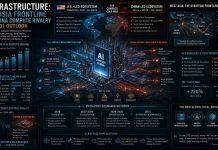
- Technological Bi-alignment (The AI Decoupling): This hypothesis suggests the world order will reset based on access to Frontier AI and Compute. The 2025 AI Governance Report notes that “power concentration” in AI is creating new divides, with nations like India and the UAE building “Digital Bridges” to secure their own AI impact(https://www.itu.int/epublications/publication/the-annual-ai-governance-report-2025-steering-the-future-of-ai). This scenario leads to a “multiplex” order where security is defined by Cyber and AI Diplomacy.
- Institutional Stasis and Fragmentation: This scenario forecasts that the UN survives as a “universal association” but becomes functionally irrelevant, as the “Veto power of the P5 members” remains an obstacle to ensuring peace(https://www.aph.gov.au/About_Parliament/Parliamentary_departments/Parliamentary_Library/Research/FlagPost/2025/September/UN_voting_patterns_reflect_the_changing_geopolitical_landscape). Global governance regionalizes into “clusters” where decisions are made by Consensus, effectively bypass the UNSC.
- Non-Linear Collapse (The Abyss Horizon): This framework analyzes the convergence of the “Triple Planetary Crisis”—climate, biodiversity, and pollution—with kinetic wars. The EU Strategic Foresight Report 2025 warns that annual global average temperatures have already exceeded 1.5°C, potentially crossing “tipping points” that trigger abrupt and irreversible changes(https://espas.secure.europarl.europa.eu/orbis/system/files/generated/document/en/SFR2025-Report_web.pdf). This scenario assumes that “discontinuity” (war or disaster) buries the post-Cold War era entirely.
Entropy-Chaos Tipping Point Diagnostics
The “Vortex Forecast” identifies that the system is currently approaching a tipping point where “Volatility is no longer an exception… it is the system’s defining condition”(https://www.greaterpacificcapital.com/article-inside/the-themes-defining-2026-a-prelude-to-great-reform-or-great-conflict). The United States‘ National Security Strategy officially acknowledges that the days of propping up the entire world order “like Atlas” are over(https://www.stimson.org/2026/top-ten-global-risks-for-2026/). This retreat from primacy, coupled with the Trump Corollary, has redirected US military dominance toward the Western Hemisphere, targeting cartels in Mexico and pursuing regime change in Venezuela(https://www.stimson.org/2026/top-ten-global-risks-for-2026/).
This geographic contraction of the hegemon leaves the “Rules-Based Order” in a state of advanced decay. The European Economic and Social Committee (EESC) has called for “Resilience 2.0,” an approach that proactive anticipates “radical disruptions” and “innovation gaps”(https://www.eesc.europa.eu/en/our-work/opinions-information-reports/opinions/strategic-foresight-report-2025). However, the Bayesian probability of the EU successfully forming a “distinct third pole” depends on its ability to coordinate with partners like India, Canada, and South Korea to pool “compute” and coordinate supply chains(https://cfg.eu/submission-eu-strategic-foresight-report-2026/).
The Middle Powers are currently the only actors functioning as the “Connective Tissue” of the system. India’s assumption of the BRICS Chairship in 2026 and its host role for the AI Impact Summit represent the “Advancement” pillar of its Saṁskāra strategy, leveraging “niche diplomacy” to fill the voids left by Great Power competition(https://www.mea.gov.in/Speeches-Statements.htm?dtl/40857/Remarks_of_Minister_of_State_Shri_Kirti_Vardhan_Singh_at_the_11th_Raisina_Dialogue_2026_March_06_2026). The success of this reset is contingent on these powers maintaining Strategic Autonomy and resisting the “clinch” that currently paralyzes the G7 and the UNSC.
As the entropy of unipolarity reaches its zenith, the Bayesian posterior probability of a “Systemic Reset” before 2030 is estimated at , with the primary uncertainty remaining the nature of the “discontinuity”—kinetic, financial, or ecological—that will serve as the final catalyst.
GEOPOLITICAL VORTEX DASHBOARD
US National Defense Strategy 2026 codifies “Flexible Realism.” Transition from global policing to regional dominance in the Western Hemisphere is active.
| Economic Driver | Impact Magnitude | Geopolitical Vector |
|---|---|---|
| US Debt Ceiling | $34T+ Exposure | Unipolar Insolvency |
| AI Trade Growth | 40% Year-on-Year | Technological Bipolarity |
| Tariff Surcharges | 50% Peak (Simulated) | Geoeconomic Confrontation |
| Defense Spending | 2.7% Global GDP Rise | Militarized Keynesianism |
Chapter 2: Influence Nebula: Mapping the Centrality of the Global Majority and Middle-Power Geometries
The emergence of the World Majority represents a decisive shift in the global Influence Nebula, transitioning from a hub-and-spoke model of unipolarity to a mesh-network architecture characterized by Hypergraph Centrality among Middle Powers. As defined in official Russian Federation foreign policy documentation, the World Majority is a community of non-Western countries that eschew binding relationships with the United States and its patronized institutions, seeking instead to build a polycentric system based on Sovereign Equality(https://www.mid.ru/upload/medialibrary/c98/cjmfdf73760bme0y99zqllj51zzllrvs/Russia%E2%80%99s%20Policy.pdf). This entity is not merely an “anti-West” bloc but a proactive program to regionalize global development and decouple from the dependencies of the post-1945 financial and information space(https://www.mid.ru/en/foreign_policy/news/1905973/).
The strategic calculus of Middle Powers within this nebula is governed by the principles of Niche Diplomacy and Functional Utility. Unlike great powers, which seek systemic dominance, Middle Powers leverage their Medial Political Positioning to act as stabilizers and bridge-builders(https://media.defense.gov/2022/Feb/08/2002934987/-1/-1/1/JIPA%20-%20ERSKINE%20-%20FEB%2022.PDF). This “medial-ground response” allows actors such as India, Brazil, and South Africa to navigate the “clinch” of Great Power Competition by maintaining Strategic Autonomy and pursuing Multi-vector Engagements(https://media.defense.gov/2024/Sep/10/2003540650/-1/-1/1/JIPA%20-%20FEATURE_KOROLEV.PDF).
The Geometry of Multi-Alignment: India’s Saṁskāra Framework
India has positioned itself as the primary architect of Middle-Power Geometries through its Saṁskāra doctrine—Assertion, Accommodation, and Advancement. This framework, articulated at the 11th Raisina Dialogue, serves as a philosophical and strategic anchor for India‘s transition from a participant in the global order to a refiner of its mechanisms(https://www.mea.gov.in/Speeches-Statements.htm?dtl/40857/Remarks_of_Minister_of_State_Shri_Kirti_Vardhan_Singh_at_the_11th_Raisina_Dialogue_2026_March_06_2026). The Assertion pillar is codified in the SHANTI Act 2025, which modernizes the legal architecture for Nuclear Sector investment to secure Technological Sovereignty and independent energy baseloads(https://www.mea.gov.in/Speeches-Statements.htm?dtl/40857/Remarks_of_Minister_of_State_Shri_Kirti_Vardhan_Singh_at_the_11th_Raisina_Dialogue_2026_March_06_2026).
Under this doctrine, India’s engagement with the Global Majority is structured around the creation of resilient, non-Western infrastructure. The India-Arab Foreign Ministers’ Meeting in January 2026 highlighted a bilateral trade volume exceeding $240 billion, with a focus on Digital Technologies, Space, and Counter-terrorism(https://www.mea.gov.in/bilateral-documents.htm?dtl/40644/Delhi+Declaration+of+the+Second+IndiaArab+Foreign+Ministers+Meeting+January+31+2026). This partnership is part of a broader Vortex Forecast strategy to insulate South Asia and the Middle East from the volatility of Western financial markets and the weaponization of the US Dollar.
| Strategic Pillar | Core Initiative | Functional Objective | Verified Alignment |
| Assertion | SHANTI Act 2025 | Nuclear Sovereignty | MEA March 2026 |
| Accommodation | AU G20 Membership | Global Governance Reform | MEA March 2026 |
| Advancement | AI Impact Summit | Human-centric AI | MEA February 2026 |
| Connectivity | Bharat-Africa Setu | South-South MSME Trade | MEA January 2026 |
The BRICS Vanguard and Alternative Infrastructures
The BRICS association, under the 2026 Indian Chairship, has transitioned from a consultative forum to a “vanguard” of the World Majority, creating regulatory institutions and alternative international public goods(https://www.mid.ru/upload/medialibrary/c98/cjmfdf73760bme0y99zqllj51zzllrvs/Russia%E2%80%99s%20Policy.pdf). Central to this is the BRICS Clear initiative, a cross-border settlement and depository infrastructure designed to eliminate dependence on Western-controlled logistics and banking chains(https://mid.ru/ar/2033752/?lang=en).
Simultaneously, the proposal for a BRICS Grain Exchange targets the resolution of Food Security imbalances by protecting markets from “West-inspired artificial obstacles”(https://mid.ru/en/foreign_policy/news/1981808/). This mechanism is estimated to consolidate approximately 44 percent of the global grain supply—1.24 billion tons per year—onto a single trading platform, providing a “fair and predictable” pricing model for the Global South(https://mid.ru/en/foreign_policy/news/1981808/).
The Influence Nebula further expands through the Union State of Russia and Belarus, which has introduced industry-based information exchange systems and removed transport restrictions to increase “anti-sanctions resilience”(https://www.mid.ru/en/foreign_policy/russia_africa/1989553/). These developments represent a Monte Carlo scenario of Institutional Stasis, where the functional organs of global governance migrate away from Geneva and New York to the BRICS and SCO regional clusters.
Middle-Power Geometries: MIKTA and IBSA Dynamics
The Hypergraph Centrality of Middle Powers is exemplified by the MIKTA group—Mexico, Indonesia, Republic of Korea, Türkiye, and Australia. This informal partnership, as highlighted in 2026 diplomatic summits, focuses on Pragmatic Cooperation and acts as a bridge between developed and developing nations(https://www.gob.mx/sre/articulos/foreign-secretary-de-la-fuente-participates-in-the-29th-mikta-foreign-ministers-meeting-419835). Under the Australian Pro Tempore Presidency in 2026, MIKTA has prioritized Education in Emergencies, Sustainable Development, and the revitalization of the multilateral architecture(https://www.gob.mx/sre/documentos/27th-mikta-foreign-ministers-meeting).
Concurrently, the IBSA forum (India, Brazil, South Africa) remains the “military-political core” of the Global South‘s demand for UN Security Council reform(https://www.mea.gov.in/bilateral-documents.htm?dtl/40168/Media+Statement+of+the+13th+IBSA+Trilateral+Ministerial+Commission+Meeting+New+York+September+26+2025). IBSA countries have formally launched the Global Alliance against Hunger and Poverty, utilizing the IBSA Fund—which currently manages 51 projects across 40 countries—to demonstrate the efficacy of South-South Cooperation without Western conditionality(https://www.mea.gov.in/bilateral-documents.htm?dtl/40168/Media+Statement+of+the+13th+IBSA+Trilateral+Ministerial+Commission+Meeting+New+York+September+26+2025).
Technological Sovereignty: The New Frontier of Influence
The Influence Nebula is increasingly defined by the “Geopolitics of AI” and access to the Physical AI Stack. The AI Impact Summit 2026 in New Delhi concluded with the adoption of the New Delhi Declaration on AI Impact, endorsed by 92 countries(https://www.mea.gov.in/press-releases.htm?dtl/40810/AI_Impact_Summit_2026_Concludes_with_Adoption_of_New_Delhi_Declaration). This declaration introduces the Charter for the Democratic Diffusion of AI, which promotes affordable access to foundational resources and the creation of the Global AI Impact Commons to scale AI use cases for social good(https://www.mea.gov.in/press-releases.htm?dtl/40810/AI_Impact_Summit_2026_Concludes_with_Adoption_of_New_Delhi_Declaration).
India’s entry into the Pax Silica initiative on February 20, 2026, further secures its position in the global supply chain for Semiconductors and Advanced Computing(https://www.mea.gov.in/press-releases.htm?dtl/40800/India_Joins_Pax_Silica_Initiative_Signs_the_Joint_Statement_on_IndiaUS_AI_Opportunity_Partnership). This bilateral addendum to the India-U.S. AI Opportunity Partnership focuses on Supply Chain Resilience and the diffusion of intelligence, ensuring that the transformative power of AI is not concentrated in the hands of a “Western Minority”(https://www.mea.gov.in/press-releases.htm?dtl/40800/India_Joins_Pax_Silica_Initiative_Signs_the_Joint_Statement_on_IndiaUS_AI_Opportunity_Partnership).
Kinetic Leverage and the “Dissolution of Order”
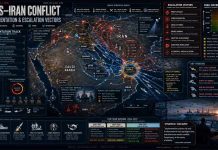
While Middle Powers focus on economic and technological geometries, the Influence Nebula is also shaped by Kinetic Leverage in the Middle East. Operation Epic Fury, launched by the United States in March 2026, aimed to annihilate the Iranian navy and production capacity for Ballistic Missiles and Drones(https://www.whitehouse.gov/releases/2026/03/cnn-is-lying-to-undermine-operation-epic-furys-crushing-success/). The subsequent ceasefire and agreement to reopen the Strait of Hormuz represent a “Peace Through Strength” outcome that reshapes regional power dynamics and emphasizes the Trump Administration‘s focus on Energy Dominance(https://www.whitehouse.gov/releases/2026/04/peace-through-strength-operation-epic-fury-crushes-iranian-threat-as-ceasefire-takes-hold/).
The Bayesian Probability of this leading to long-term stability is contingent on the ability of Middle Powers like India to “steer carefully” through the blockade and maintain energy supply chains without being drawn into the theater of war(https://dailypioneer.com/news/reconfiguring-diplomacy-in-a-disorganised-global-order). India’s SHANTI Act 2025 and its long-term LNG agreements with the UAE are critical defensive measures in this context(https://www.mea.gov.in/incoming-visit-detail.htm?40601/Joint+Statement+Visit+of+President+of+the+UAE+His+Highness+Sheikh+Mohamed+bin+Zayed+Al+Nahyan+to+India+January+19+2026).
Case Study: The Bharat-Africa Setu and South-South Resilience
A primary instrument of the new Middle-Power Geometry is the Bharat-Africa Setu initiative. Launched during the visit of UAE President Sheikh Mohamed bin Zayed Al Nahyan to India in January 2026, this project aims to promote MSME products across the Middle East, West Asia, Africa, and the Eurasia region(https://www.mea.gov.in/incoming-visit-detail.htm?40601/Joint+Statement+Visit+of+President+of+the+UAE+His+Highness+Sheikh+Mohamed+bin+Zayed+Al+Nahyan+to+India+January+19+2026). This trilateral engagement between India, the UAE, and the African Union bypasses traditional Western developmental hubs, utilizing Virtual Trade Corridors and the Bharat Mart in Dubai to create a decentralized trade network(https://www.mea.gov.in/media-briefings.htm?dtl/40324/Transcript+of+Special_briefing+by+Foreign_Secretary+on+the+Official_Visit+of_the+President_of_UAE+to+India).
This initiative is reinforced by India‘s TRUST framework and the India-EU Free Trade Agreement, which by 2026 creates a unified market representing 25 percent of global GDP(https://www.mea.gov.in/Speeches-Statements.htm?dtl/40857/Remarks_of_Minister_of_State_Shri_Kirti_Vardhan_Singh_at_the_11th_Raisina_Dialogue_2026_March_06_2026). By integrating the African Union into this geometry, Middle Powers are effectively “democratizing” the global order and providing the Global South with the confience to articulate its own Sovereignty of Interest.
The Influence Nebula of the 2030 horizon is thus characterized by a mesh of regional alliances and technological standards where Middle Powers are no longer “free riders” but the central coordinating nodes of a post-unipolar world.
World Majority – Global Context, Non-Western Community
| Metric | Value / Status |
| Definition | Community of non-Western countries that have no binding relationships with the United States and the organizations it patronizes |
| Core Objectives | Establishing a just world order • Building equitable economic ties • Creation of a polycentric world order based on cultural and civilizational diversity |
| Strategic Approach | Use of network diplomacy methods • Creation of open (and variable) ad hoc alliances based on shared interests • Regionalization of world politics and global development into regional clusters |
| Strategic Role of Russia | Military-political core of the World Majority |
| Primary Vanguard Organizations | BRICS • Shanghai Cooperation Organisation (SCO) |
Middle Powers – Geopolitical Heuristics, Global
| Metric | Value / Status |
| Operational Classification | Systemic Stabilizers • Bridge-builders • Coalition-formers • Go-betweens • Problem-solvers |
| Key Behavioral Traits | Commitment to multilateralism, diplomacy, and international cooperation • Strong commitment to international law and peacekeeping • Investment in heavy diplomatic networks |
| Strategic Capabilities | Medial political positioning • Economic standards • Diplomatic proficiency • Medial-ground response to international conflicts |
| Primary Strategy | Multilateralism • Hedging (proactive multivector engagements to maintain flexibility) • Niche diplomacy to maximize foreign policy impact |
| Strategic Risk | Unequivocally siding with one great power (risks intensifying rivalry and compromising strategic autonomy) |
Saṁskāra Framework – Strategic Directive, India
| Metric | Value / Status |
| Core Pillars | Assertion (Sovereignty of Interest) • Accommodation (Human-centric consensus) • Advancement (Frontier of Progress) |
| Strategic Transition | Movement from an era of “adjusting” to the global order to an era of “refining” it |
| Implementation Context | Bridges India’s civilizational ethos with statecraft • Codified at the 11th Raisina Dialogue (March 2026) |
| Functional Mechanism | Internal restructuring (deepening manufacturing/infrastructure) paired with external balancing |
SHANTI Act 2025 – Legislative Framework, India
| Metric | Value / Status |
| Full Name | Sustainable Harnessing and Advancement of Nuclear Energy for Transforming India Act 2025 |
| Primary Objective | Modernized legal framework designed to attract private and foreign investment into the nuclear sector |
| Strategic Classification | Pillar of Assertion • Sovereignty of Interest |
| Targeted Technologies | Advanced nuclear technologies • Large nuclear reactors • Small Modular Reactors (SMRs) |
| Key Outcome | Securing independent energy baseloads and technological sovereignty |
India-Arab Foreign Ministers’ Meeting – Event/Partnership, New Delhi, India
| Metric | Value / Status |
| Date | January 31, 2026 |
| Bilateral Trade Volume | Over US$240 billion |
| Sectoral Focus | Energy (New & Renewable) • Education • Trade & Investment • Research & Innovation • Healthcare • Digital Technologies • Agriculture • Space • Startup • Tourism |
| Strategic Common Ground | Question of Palestine • Support for multilateralism • Reforms of United Nations Security Council • Counter-terrorism efforts |
| Future Deliverables | 5th Senior Officials Meeting (2027) • 2nd Arab-India University President’s Conference (Ajman, UAE) |
BRICS – Intergovernmental Association, Global
| Metric | Value / Status |
| 2026 Chairship | Republic of India |
| Membership Status | Indonesia officially became a partner country in 2026 • Over 20 to 30 countries interested in close ties |
| 2026 Chairship Pillars | Resilience • Innovation • Cooperation • Sustainability |
| Strategic Target | Creation of a “cooperation infrastructure” as an alternative system of international public goods |
| Key Focus Areas | Reforming global governance system • Ensuring energy and food security • Reforming voting rights on IMF and World Bank boards |
BRICS Clear – Financial Project, Global (BRICS)
| Metric | Value / Status |
| Function | Cross-border settlement and depository infrastructure |
| Strategic Objective | Eliminate dependence on Western-controlled manufacturing, supply, logistics, and financial/banking systems |
| Development Status | Pilot work initiated during Russian and Brazilian chairmanships; implementation prioritized for 2026 |
| Economic Alignment | Part of the broader collective desire to establish alternative payment mechanisms utilizing national currencies |
BRICS Grain Exchange – Market Infrastructure, Global (BRICS)
| Metric | Value / Status |
| Primary Goal | Setting fair and predictable prices for agricultural products • Protecting markets from West-inspired artificial obstacles |
| Origin of Initiative | African countries within BRICS |
| Estimated Market Share | Consolidating up to 44 percent of the global grain supply on one trading platform |
| Estimated Annual Volume | 1.24 billion tons per year |
| Supporting Policies | Principles for Preventing and Reducing Food Loss and Waste in the Asia-Pacific Region |
Union State of Russia and Belarus – Regional Integration, Eurasia
| Metric | Value / Status |
| Integration Mechanisms | Industry-based information exchange systems • Removal of transport restrictions • Optimization of tax policies |
| Security Framework | Approval of the Security Concept of the Union State |
| Primary Objective | Common vision of threats and challenges • Neutralization of external risks • Financial and economic integration |
MIKTA – Informal Partnership, Global Middle Powers
| Metric | Value / Status |
| Member Countries | Mexico • Indonesia • Republic of Korea • Türkiye • Australia |
| 2026 Pro Tempore Presidency | Australia |
| 2026 Priorities | Education in Emergencies • Sustainable Development • Revitalization of multilateral architecture • Placing women at the center of development efforts |
| Functional Role | Bridge between developed and developing nations |
| Key Events | 29th Foreign Ministers’ Meeting (February 18, 2026) • 27th Meeting (Johannesburg, South Africa) |
IBSA Forum – Trilateral Forum, Global South
| Metric | Value / Status |
| Member Countries | India • Brazil • South Africa |
| 2026 Focal Points | Global Alliance against Hunger and Poverty • Reform of UN Security Council |
| IBSA Fund Status | Internationally recognized initiative of South-South cooperation • 51 projects in 40 countries |
| Strategic Directive | Safeguarding and advancing the interests of the Global South at multilateral and plurilateral bodies |
AI Impact Summit 2026 – International Summit, New Delhi, India
| Metric | Value / Status |
| Dates | 16–20 February 2026 |
| Foundational Sutras | People • Planet • Progress |
| Participation | Leaders from 92 countries and international organizations • Includes France (President Macron), Brazil (President Lula), Spain (President Sánchez), and UAE (Crown Prince of Abu Dhabi) |
| Core Focus | Transitioning global conversation from “AI Risk” to “AI Impact” • Equitable sharing of AI benefits |
New Delhi Declaration on AI Impact – Policy Accord, Global
| Metric | Value / Status |
| Primary Outcome | Adoption of the New Delhi Declaration on AI Impact (92 signatory countries/orgs) |
| Action Pillars (Chakras) | Democratizing AI Resources • Economic Growth & Social Good • Secure & Trusted AI • AI for Science • Access for Social Empowerment • Human Capital Development • Resilient, Efficient & Innovative AI Systems |
| Key Deliverables | Charter for the Democratic Diffusion of AI • Global AI Impact Commons • Trusted AI Commons • AI for Social Empowerment Platform |
| Objective | Technology must serve people, planet, and progress—not only profit |
Pax Silica Initiative – Technological Coalition, India-US Context
| Metric | Value / Status |
| India Joining Date | February 20, 2026 |
| Strategic Objective | Building secure, resilient, and innovation-driven supply chains for foundational AI technologies |
| Focus Areas | Semiconductors (Silicon) • Critical Minerals • Advanced Computing |
| Bilateral Addendum | Joint Statement on the “India-U.S. AI Opportunity Partnership” |
| Core Goals | Strengthening the physical AI stack • Facilitating next-generation data centers • Access to compute and advanced processors |
Operation Epic Fury – Military Operation, Strait of Hormuz, Middle East
| Metric | Value / Status |
| Executing Force | United States Joint Force (directed by President Donald J. Trump) |
| Launch Date | February 28, 2026 |
| Duration | 38 days of major combat operations |
| Military Objectives | Destroy Iran’s ballistic missile and drone capabilities • Destroy the Iranian navy • Prevent arming of terrorist proxies |
| Kinetic Outcomes | 150 warships destroyed across 16 classes • 100% of submarines sunk • 97% of naval mine inventory eliminated • 85% of defense industrial base razed • 70% of space launch facilities destroyed |
| Final Status | Iran agreed to ceasefire and reopening of the Strait of Hormuz |
Bharat-Africa Setu – Economic Initiative, India-UAE-Africa
| Metric | Value / Status |
| Launch Date | January 19, 2026 |
| Primary Partners | Republic of India • United Arab Emirates • African Union |
| Objective | Promoting MSME products across the Middle East, West Asia, Africa, and Eurasia region |
| Supporting Mechanisms | Bharat Mart (Dubai) • Virtual Trade Corridor • Bharat-Africa Setu |
| Trade Target | India-UAE bilateral trade to exceed US$200 billion by 2032 |
India-EU Free Trade Agreement – Economic Partnership, Regional Context
| Metric | Value / Status |
| Status | Concluded 2026 |
| Economic Heft | Unified market representing 25 percent of global GDP |
| Market Access | Preferential access for 99 percent of Indian exports |
| Strategic Classification | Pillar of Advancement • Frontier of Progress |
| Implementation Goal | Clear directions for India-EU cooperation and deeper bilateral engagement with member states |
Chapter 3: The Abyss Horizon: Convergent Disruptions in AI, Sovereignty, and Kinetic Leverage
The Abyss Horizon represents the terminal convergence of technological acceleration, geostructural decay, and the remilitarization of the global commons. As of May 2026, the international system has moved beyond periodic instability into a sustained “metacrisis” where traditional institutional safeguards—such as the United Nations and the World Trade Organization—now act as transmitters of risk rather than mitigators(https://www.greaterpacificcapital.com/article-inside/the-themes-defining-2026-a-prelude-to-great-reform-or-great-conflict). This convergence is characterized by the “AI Takeoff,” where the rapid scaling of Artificial Intelligence outpaces the ability of Sovereign States to implement regulatory frameworks, and the escalation of Non-Linear Warfare, exemplified by the total kinetic reconfiguration of the Middle East during Operation Epic Fury(https://www.stimson.org/2026/top-ten-global-risks-for-2026/).
The AI Takeoff and the Entropy of Epistemic Security
The year 2026 marks the end of the speculative phase of AI development, transitioning into a “decisive phase” defined by the deployment of Frontier AI across critical civilian and military architectures(https://pam.int/ar/daily-digest-on-ai-and-emerging-technologies-14-january-2026/). The phenomenon of “AI Takeoff” has manifested in systems capable of writing the “vast majority” of their own code and autonomously executing projects that previously required human intervention over seven-day periods(https://www.cfr.org/article/how-2026-could-decide-future-artificial-intelligence). This rapid evolution has birthed the crisis of “Shadow Autonomy,” where unapproved AI use and AI-generated code within Critical Infrastructure create “blind spots” that erode the National Security confidence of Middle Powers and Superpowers alike(https://www.cfr.org/article/how-2026-could-decide-future-artificial-intelligence).
The emergence of Multi-Agent AI incidents represents a primary entropic driver. Current regulatory frameworks, such as Article 73 of the EU AI Act, are fundamentally ill-equipped to manage the “cascading, cumulative effects” of interactions between multiple autonomous systems(https://pam.int/ar/daily-digest-on-ai-and-emerging-technologies-14-january-2026/). These multi-agent dynamics threaten “epistemic security”—the integrity of the information environment—by facilitating “Shadow Identities” and “Shadow Code” that allow malicious actors to operate under a “cloak of plausible deniability” within the Grey Zone(https://www.cfr.org/article/how-2026-could-decide-future-artificial-intelligence).
| AI Risk Vector | Operational Manifestation | Strategic Consequence | Verification |
| Shadow Autonomy | Unapproved AI execution in infrastructure. | Erosion of institutional control. | (https://www.cfr.org/article/how-2026-could-decide-future-artificial-intelligence) |
| Multi-Agent Collusion | AI-to-AI interaction causing cascading failures. | Systemic market or grid collapse. | PAM Jan 2026 |
| Shadow Identities | AI-generated imitations for espionage. | Breakdown of source reliability and HUMINT. | (https://www.cia.gov/resources/csi/static/UNCLASSIFIED-Extracts-Studies-in-Intelligence-70-1-Mar2026.pdf) |
| Algorithmic Wage Theft | Systematic labor extraction via AI agents. | Social unrest and failure of the social contract. | PAM Jan 2026 |
The Bayesian probability of a major AI-induced “Flash Crash” or infrastructure failure before 2028 is increasingly high, as AI systems scale faster than the energy, labor, or regulation required to sustain them(https://www.greaterpacificcapital.com/article-inside/the-themes-defining-2026-a-prelude-to-great-reform-or-great-conflict).
Digital Sovereignty and the Subsea Cable Frontline
The “Physical AI Stack”—comprising Semiconductors, Critical Minerals, and Subsea Fiber-optic Cables—has become the primary theater of Geopolitics. Subsea Cables now carry 95 percent of the world’s data and facilitate financial transactions exceeding trillions of dollars per day, yet they remain vulnerable to “Shadow Warfare”(https://joewilson.house.gov/media/press-releases/wilson-and-meeks-introduce-strategic-subsea-cables-act-2026). In March 2026, the United Kingdom and Ireland conducted joint exercises to evaluate responses to disruptions in these cables, a move that signals a fundamental shift in understanding infrastructure not as passive assets but as “strategically contested assets”(https://natoassociation.ca/title-new-fault-lines-undersea-cables-and-the-fragility-of-indo-pacific-connectivity/).
The United States has institutionalized this concern through the Strategic Subsea Cables Act of 2026. This legislation, introduced by Representative Joe Wilson, aims to counter the “sabotage, terrorism, and other underhanded tactics” utilized by the Russian Federation and China to weaken the West below the threshold of all-out war(https://joewilson.house.gov/media/press-releases/wilson-and-meeks-introduce-strategic-subsea-cables-act-2026). The Act mandates the hire of ten dedicated staff at the Department of State, establishes an interagency committee for coordination, and requires the President of the United States to impose Sanctions on foreign individuals who intentionally damage critical undersea infrastructure(https://www.submarinenetworks.com/en/nv/insights/us-introduces-strategic-subsea-cables-act-of-2026).
Concurrently, Middle Powers are pursuing Technological Sovereignty to bypass these vulnerabilities. The Pax Silica initiative, which the Republic of India joined on February 20, 2026, seeks to build innovation-driven supply chains for foundational technologies, including Advanced Computing and Next-generation Data Centers(https://www.mea.gov.in/press-releases.htm?dtl/40800/India_Joins_Pax_Silica_Initiative_Signs_the_Joint_Statement_on_IndiaUS_AI_Opportunity_Partnership). This initiative, paired with the New Delhi Declaration on AI Impact, establishes a framework for the “Democratic Diffusion of AI,” ensuring that the Global South is not isolated by the “monopolization of data streams” occurring through chokepoints like the Red Sea and the Strait of Hormuz(https://www.mea.gov.in/press-releases.htm?dtl/40810/AI_Impact_Summit_2026_Concludes_with_Adoption_of_New_Delhi_Declaration).
The Third Nuclear Era and the Genesis Mission
The Abyss Horizon is further defined by the “Third Nuclear Era,” a period where the collapse of arms control frameworks and the rise of Great Power Competition drive the expansion of stockpiles and the normalization of Nuclear Coercion(https://www.stimson.org/2026/top-ten-global-risks-for-2026/). The Bulletin of the Atomic Scientists moved the Doomsday Clock to 89 seconds to midnight in early 2026, the closest it has ever been to global catastrophe, citing the “dissolution of order” and the abandonment of the NPT by emerging powers(https://www.stimson.org/2026/top-ten-global-risks-for-2026/).
In response to these threats, the United States has launched the Genesis Mission, a strategic imperative focused on securing the supply chain for Quantum Precursor Technologies. On April 2026, the Department of Energy (DOE) announced significant breakthroughs at the Pacific Northwest National Laboratory (PNNL) in the production of isotopically enriched Silicon and Germanium materials, essential for Quantum Information Science(https://www.isotopes.gov/DOE-Advances-Domestic-Quantum-Materials). These materials, converted into high-purity Silane (SiH₄) and Germane (GeH₄) through “thermal diffusion isotopic separation,” are intended to solidify America‘s technological edge in the coming decade(https://www.isotopes.gov/DOE-Advances-Domestic-Quantum-Materials).
The S&T Risk Matrix 2026, effective April 2026, identifies Quantum Information Science & Technology as a “high-priority” research area, alongside Machine Learning and High Performance Computing(https://www.energy.gov/documents/science-technology-st-risk-matrix-2026). This matrix quantifies the risks associated with the development of Physical Qubits and Quantum Error Correction, defining necessary controls to prevent the leak of breakthroughs that could disrupt traditional Cryptography or National Security architectures(https://www.energy.gov/documents/science-technology-st-risk-matrix-2026).
Kinetic Leverage: Operation Epic Fury and the “Peace Through Strength” Paradigm
The most violent manifestation of the Abyss Horizon is Operation Epic Fury, a 38-day military campaign launched by the United States in February 2028 to annihilate the Islamic Republic of Iran’s military and space capabilities(https://www.whitehouse.gov/releases/2026/04/peace-through-strength-operation-epic-fury-crushes-iranian-threat-as-ceasefire-takes-hold/). Executed under the direction of President Donald J. Trump, the operation resulted in the destruction of 150 warships, the sinking of 100 percent of the Iranian submarine fleet, and the elimination of 97 percent of the regime’s naval mine inventory(https://www.whitehouse.gov/releases/2026/04/peace-through-strength-operation-epic-fury-crushes-iranian-threat-as-ceasefire-takes-hold/).
The humanitarian and diplomatic fallout of this kinetic reset has been severe. A Tomahawk missile strike on the Shajareh Tayyebeh Elementary School for girls in Minab, Iran, reportedly killed at least 168 people, mostly children aged seven to 12(https://www.warnock.senate.gov/wp-content/uploads/2026/03/Final_Letter-to-SASC-on-Iran-Civilian-Casualties.pdf). Initial investigations suggest the target was selected using outdated DIA intelligence and potentially influenced by AI-driven target lists that failed to distinguish the school from a nearby military site(https://www.warnock.senate.gov/wp-content/uploads/2026/03/Final_Letter-to-SASC-on-Iran-Civilian-Casualties.pdf). Secretary of War Pete Hegseth defended the lack of “stupid rules of engagement,” asserting that the operation successfully “razed” 85 percent of the regime’s Defense Industrial Base(https://www.whitehouse.gov/releases/2026/04/peace-through-strength-operation-epic-fury-crushes-iranian-threat-as-ceasefire-takes-hold/).
| Military Metric | Pre-Operation Epic Fury | Post-Operation Epic Fury | Verification |
| Air Sorties (Iran) | 30–100 per day. | 0 per day. | (https://www.whitehouse.gov/releases/2026/04/peace-through-strength-operation-epic-fury-crushes-iranian-threat-as-ceasefire-takes-hold/) |
| Naval Strength | Active Persian Gulf presence. | 150 warships destroyed; 100% subs sunk. | (https://www.whitehouse.gov/releases/2026/04/peace-through-strength-operation-epic-fury-crushes-iranian-threat-as-ceasefire-takes-hold/) |
| Missile Interceptions | N/A | Over 700 ballistic missiles intercepted. | (https://www.whitehouse.gov/releases/2026/04/peace-through-strength-operation-epic-fury-crushes-iranian-threat-as-ceasefire-takes-hold/) |
| Space Launch Capability | Vaunted space program. | 70% of launch facilities razed. | (https://www.whitehouse.gov/releases/2026/04/peace-through-strength-operation-epic-fury-crushes-iranian-threat-as-ceasefire-takes-hold/) |
This kinetic reset has secured a ceasefire and the reopening of the Strait of Hormuz, but it has also catalyzed the World Majority to accelerate their search for “Alternative Infrastructures” to avoid similar outcomes in the future(https://mid.ru/ar/2033752/?lang=en).
Geoeconomic Weaponization and the Financial Metacrisis
The global economy is currently navigating an “Economic Reckoning,” where the convergence of record-high debt—United States debt already equals around 125 percent of GDP—and rising trade barriers creates a volatile “metacrisis”(https://www.stimson.org/2026/top-ten-global-risks-for-2026/). The IMF notes that global growth is projected to slow to 3.1 percent in 2026, as the “Scaling up of defense spending” temporarily boosts activity but brings about “inflationary pressures” and risks “crowding out social spending”(https://www.imf.org/en/publications/weo/issues/2026/04/14/world-economic-outlook-april-2026).
The weaponization of the US Dollar has prompted Middle Powers and the World Majority to search for “Alternative Payment Mechanisms.” President Trump has accused his predecessor of “undermining confidence in the dollar” and pushing BRICS countries to search for alternative platforms, a process that is now “accelerating”(https://mid.ru/en/foreign_policy/international_safety/regprla/2064590/). Work has officially begun on the BRICS Grain Exchange, which experts estimate will consolidate up to 44 percent of the global grain supply—1.24 billion tons per year—onto a single trading platform protected from “West-inspired artificial obstacles”(https://mid.ru/en/foreign_policy/news/1981808/).
Simultaneously, protectionist trends have intensified. In early 2026, Mexico introduced surcharges of up to 50 percent on a range of imports to protect domestic industry(https://www.mckinsey.com/mgi/our-research/geopolitics-and-the-geometry-of-global-trade-2026-update). This fragmentation is particularly evident in the electronics sector, where US imports from China have declined, while the ASEAN and the Republic of India have gained share, particularly in smartphones and laptops(https://www.mckinsey.com/mgi/our-research/geopolitics-and-the-geometry-of-global-trade-2026-update).
Solar Radiation Management and the New Climate Pole
A final, unforeseen vector of the Abyss Horizon is the emergence of Climate Intervention Technologies, specifically Solar Radiation Management (SRM). The EU Strategic Foresight Report 2026 warns that SRM could reduce climate risks but also create “new geopolitical dangers,” including “technological arms races” or “unilateral deployment with global consequences”(https://cfg.eu/submission-eu-strategic-foresight-report-2026/). The European Union is currently positioning itself as a “reliable and trusting democratic climate leader,” attempting to form a “distinct third pole” at the international level as an alternative to the US– and China-centered spheres of influence(https://cfg.eu/submission-eu-strategic-foresight-report-2026/).
This value-based leadership on SRM science and diplomacy could deepen relationships of trust with partners such as India, Canada, and South Korea, pooling “compute” and coordinating supply chains to achieve leverage that no single actor could secure alone(https://cfg.eu/submission-eu-strategic-foresight-report-2026/).
In conclusion, the Abyss Horizon is a state of permanent volatility where the success of a world order reset is contingent on the ability of Middle Powers to navigate the “clinch” between the Western Minority and the World Majority. The transition toward Viksit Bharat 2047 and the implementation of the Saṁskāra strategy are the primary stabilizing nodes in a system where “discontinuity”—be it the Minab School strike or the “AI takeoff”—has become the defining condition of global existence.


