









Abstract
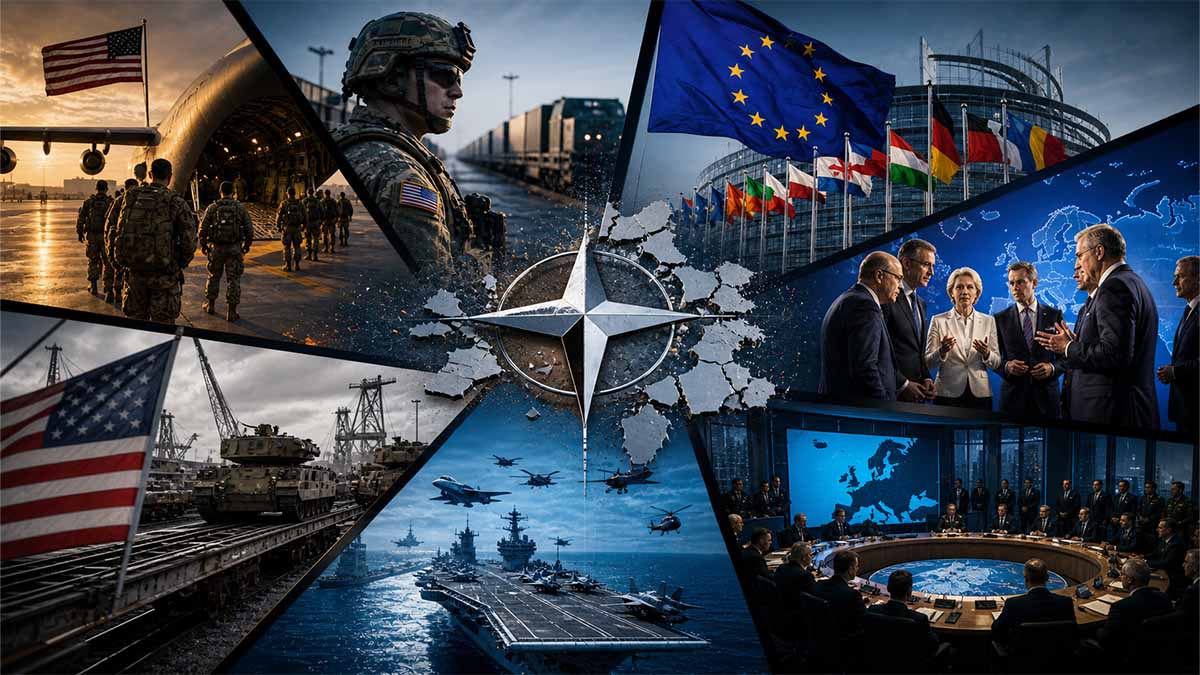
The international security environment as of May 2, 2026, has entered a period of unprecedented volatility, marked by a decisive rupture in the traditional transatlantic alliance and the emergence of a multi-polar security framework in Europe. This report provides an exhaustive analysis of three interconnected developments that have fundamentally altered the global order: the United States’ decision to withdraw 5,000 troops from Germany, the escalating American-led military campaign against Iran known as Operation Epic Fury, and the formalization of the European-led “Coalition of the Willing” to provide security guarantees for Ukraine via the Paris Declaration. On this date, Chief Pentagon Spokesman Sean Parnell confirmed that the Secretary of War, Pete Hegseth, has ordered a significant reduction of the American military presence in Germany, a move that the administration characterizes as a response to theater requirements but which is widely understood as a punitive reaction to Berlin’s criticism of U.S. policy in the Middle East (https://www.nampa.org/text/22920497) (https://www.cbsnews.com/news/trump-germany-5000-troops/). This withdrawal, occurring within a twelve-month window, represents a 15% reduction of the U.S. contingent in Germany, lowering force levels to pre-2022 benchmarks and signaling a transition from the cooperative security models of the early 21st century toward a more transactional, “America First” posture (https://www.livemint.com/news/world/trump-says-us-is-withdrawing-5-000-troops-from-germany-after-merz-says-america-was-humiliated-by-iran-11777678073531.html) (https://www.theguardian.com/world/live/2026/may/02/us-israel-war-iran-germany-american-troops-donald-trump-middle-east-latest-news-updates).
The catalyst for this force posture shift is the deepening rift between President Donald Trump and German Chancellor Friedrich Merz. The friction reached a critical point in late April 2026, following Merz’s public statements characterizing the U.S. diplomatic efforts in Pakistan as a “humiliation” and criticizing the lack of a coherent strategy in the war against Iran (https://www.timesofisrael.com/after-iran-talks-barb-trump-says-germanys-merz-doesnt-know-what-hes-talking-about/). President Trump responded by challenging Merz to focus on “fixing his broken country”—specifically highlighting immigration and energy crises—while asserting that Germany’s stance on Iranian nuclear ambitions was fundamentally flawed (https://www.indiatoday.in/world/story/donald-trump-friedrich-merz-clash-over-iran-conflict-nuclear-remarks-2902963-2026-04-29) (https://www.theguardian.com/world/2026/apr/30/trump-tells-merz-to-fix-his-broken-country-in-new-attack-on-german-chancellor). This diplomatic fallout is inseparable from the broader context of Operation Epic Fury, a comprehensive military campaign launched by the Trump administration to dismantle Iran’s nuclear and missile infrastructure. As the U.S. implements a naval blockade of Iranian ports and conducts precision strikes against the Revolutionary Guard, the administration has expressed increasing frustration with European allies, such as Spain and Italy, who have refused to provide active support for the campaign or the security of the Strait of Hormuz (https://breakingdefense.com/2026/05/hegseth-orders-5000-us-troops-to-withdraw-from-germany/) (https://www.washingtonexaminer.com/policy/defense/4552195/us-cut-5000-troops-germany-trump-merz-feud/).
Simultaneously, the European security landscape is undergoing a radical transformation independent of Washington’s priorities. Under the leadership of British Prime Minister Keir Starmer and French President Emmanuel Macron, a 34-nation “Coalition of the Willing” (CoW) has established the Paris Declaration, a framework intended to provide long-term security guarantees for Ukraine in the event of a ceasefire with the Russian Federation (https://en.wikipedia.org/wiki/Coalition_of_the_willing_(Russo-Ukrainian_war)) (https://www.elysee.fr/en/emmanuel-macron/2026/01/06/robust-security-guarantees-for-a-solid-and-lasting-peace-in-ukraine). This initiative involves the proposed deployment of a Multinational Force-Ukraine (MNF-U), which would perform deterrence, training, and reconstruction functions deep within Ukrainian territory (https://www.independent.co.uk/news/uk/politics/uk-troops-ukraine-coalition-of-willing-trump-b2895772.html) (https://www.ukrinform.net/rubric-polytics/4079574-foreign-troops-in-ukraine-what-the-coalition-of-the-willing-paris-summit-clarified.html). The development of this force signifies a “NATO-minus-the-US” approach to regional stability, reflecting European fears of American disengagement as Washington focuses its resources on the Middle East and the Indo-Pacific. However, this European pivot has met with fierce opposition from the Russian Federation. At the 11th Nuclear Non-Proliferation Treaty (NPT) Review Conference in New York, Russian Ambassador-at-Large Andrey Belousov stated that any resolution to the Ukrainian conflict is contingent upon NATO abandoning its objective of “strategically defeating” Russia and ending the “remilitarization” of Europe (http://www.xinhuanet.com/english/europe/20260430/e1b9c374107b4e5a9a3c483eae483ec9/c.html) (https://estatements.un.org/estatements/14.0447/20260429150000000/BtNTuNCK/LouUTYszPz_nyc_en.pdf).
The economic consequences of these geopolitical shifts are severe and global in scope. The International Monetary Fund (IMF) reports that the conflict in the Middle East has triggered a massive energy shock, resulting in lowered growth forecasts for energy-importing economies like the Eurozone and the United Kingdom (https://www.elibrary.imf.org/view/journals/002/2026/070/article-A000-en.xml) (https://www.elibrary.imf.org/view/journals/007/2026/010/007.2026.issue-010-en.pdf). The blockade of the Strait of Hormuz and the accompanying volatility in fuel and fertilizer prices threaten food security and industrial productivity across the globe, particularly in developing nations (https://www.elibrary.imf.org/view/journals/007/2026/010/007.2026.issue-010-en.pdf) (https://www.imf.org/-/media/files/publications/pp/2026/english/ppea2026008.pdf). Furthermore, the internal political dynamics within the United States have become increasingly fraught, as the Pentagon implements restrictive rules on the press and faces legal challenges over First Amendment violations (https://firstamendment.mtsu.edu/article/new-york-times-v-department-of-defense-2026-u-s-district-court-d-c/). The dismissal of Navy Secretary John Phelan over differences with Secretary of War Hegseth underscores the administrative turmoil accompanying the Trump administration’s “Peace through Strength” doctrine (https://english.elpais.com/usa/2026-04-23/navy-secretarys-dismissal-for-differences-with-hegseth-sparks-new-unrest-at-the-pentagon.html) (https://www.military.com/daily-news/2026/04/23/what-led-navy-secretary-john-phelan-losing-his-job-what-we-know.html).
As the world observes the proceedings of the NPT Review Conference, the convergence of these crises—the fragmenting NATO alliance, the active war in the Persian Gulf, and the precarious peace process in Ukraine—indicates a fundamental transition in international relations. The traditional institutions of global governance, such as the NPT and NATO, are under severe strain as major powers pursue unilateral objectives that often contradict established norms. This report examines the technical, political, and economic dimensions of these shifts, providing a comprehensive OSINT document for professional analysis of the 2026 security environment. It details the specific force withdrawals from Germany, the operational milestones of Operation Epic Fury, the legal and strategic frameworks of the Paris Declaration, and the Russian diplomatic counter-offensive at the United Nations. By synthesizing data from military briefings, diplomatic statements, and economic reports, the analysis identifies the underlying trends that will define the remainder of the decade: the rise of ad hoc regional coalitions, the weaponization of troop presence in alliance management, and the increasing likelihood of direct confrontation between nuclear-armed powers.
The withdrawal of 5,000 U.S. troops from Germany is more than a logistical adjustment; it is a symbolic end to the post-World War II security consensus. As German towns like Kaiserslautern face the economic “bombshell” of losing a significant American presence, the strategic focus of the Pentagon has moved elsewhere (https://www.theguardian.com/world/live/2026/may/02/us-israel-war-iran-germany-american-troops-donald-trump-middle-east-latest-news-updates). The emergence of the “Coalition of the Willing” in Europe, while a signal of strategic maturity, faces immense hurdles in establishing a credible deterrence against a Russia that demands total Western withdrawal from its borders. The global community now faces a dual challenge: managing the immediate economic and humanitarian fallout of the Iran war while attempting to construct a new, more fragmented security architecture that can prevent the Ukrainian conflict from erupting once more. This report serves as a definitive guide to the complexities of this transition, offering deep insights into the causal relationships and second-order effects of the decisions confirmed on May 2, 2026.
FRAGMENTATION OF TRANSATLANTIC SECURITY
U.S. Troop Cuts • Operation Epic Fury • European Coalition of the Willing
U.S. shifts focus to Middle East while Europe launches independent 34-nation security architecture for Ukraine. Economic shockwaves from Hormuz blockade threaten Eurozone contraction. As of May 2 2026 the post-WWII transatlantic consensus is over.
| Metric | Pre-Withdrawal / Baseline | Current / Forecast | Impact |
|---|---|---|---|
| U.S. Active Duty in Germany | 38,000 | 33,000 | 5,000 withdrawn (15%) |
| Brigade Combat Teams | 1 full BCT deployed | Redeployed to Indo-Pacific | Loss of rapid response capacity |
| Coalition of the Willing | N/A | 34 nations | Paris Declaration signed Jan 2026 |
| MNF-U Troop Pledges | N/A | 26 nations | France/UK joint command operational |
| Global GDP Growth 2026 | 3.1% | 2.0% (severe scenario) | Energy shock from Hormuz blockade |
| Euro Area Growth 2026 | 0.8% | Negative contraction possible | IMF forecast — fuel & fertilizer crisis |
| Operation Epic Fury Start | Feb 28 2026 | Ongoing — full blockade | Iran navy neutralized |
Index
- Strategic Realignment and Tactical Coercion: The Hegseth-Parnell Doctrine and the Reduction of Force in Germany
- The Paris Declaration and the Multinational Force-Ukraine (MNF-U): Mapping the Rise of European Strategic Autonomy
- The 11th NPT Review Conference and Global Instability: Operation Epic Fury as a Catalyst for Diplomatic Fragmentation
Strategic Realignment and Tactical Coercion: The Hegseth-Parnell Doctrine and the Reduction of Force in Germany
The announcement on May 2, 2026, by Chief Pentagon Spokesman Sean Parnell regarding the withdrawal of 5,000 American troops from Germany serves as the clearest indicator to date of the Trump administration's intent to utilize military posture as a primary lever of diplomatic coercion. This decision, authorized by Secretary of War Pete Hegseth, marks a significant reduction in the nearly 38,000-strong U.S. contingent in Germany, which has historically served as the cornerstone of the American security presence in Europe (https://www.nampa.org/text/22920497) (https://www.cbsnews.com/news/trump-germany-5000-troops/). While Parnell’s official statement cites a "thorough review of the Department’s force posture" and "theater requirements," the move is deeply embedded in the administration's frustration with the perceived lack of support from Berlin for Operation Epic Fury, the U.S.-led campaign against the Iranian regime (https://baonghean.vn/en/my-rut-5-000-quan-khoi-duc-ve-nuoc-10335168.html) (https://breakingdefense.com/2026/05/hegseth-orders-5000-us-troops-to-withdraw-from-germany/).
The friction between Washington and Berlin reached a zenith in April 2026, following a series of public exchanges between President Donald Trump and German Chancellor Friedrich Merz. Merz, speaking to students at the Carolus-Magnus-Gymnasium in Marsberg, characterized the U.S. diplomatic efforts in Pakistan as a failure and asserted that the Iranian leadership was "humiliating" the United States (https://www.washingtonexaminer.com/policy/defense/4552195/us-cut-5000-troops-germany-trump-merz-feud/) (https://www.timesofisrael.com/after-iran-talks-barb-trump-says-germanys-merz-doesnt-know-what-hes-talking-about/). Merz’s critique extended to the strategic level, where he questioned the existence of a viable exit strategy for the U.S. military in Iran, comparing the situation to the interventions in Iraq and Afghanistan (https://www.timesofisrael.com/after-iran-talks-barb-trump-says-germanys-merz-doesnt-know-what-hes-talking-about/). President Trump responded with characteristic sharpness on Truth Social, accusing Merz of miscalculating the Iranian nuclear threat and labeling the German Chancellor’s positions as "inappropriate and unhelpful" (https://www.livemint.com/news/world/trump-says-us-is-withdrawing-5-000-troops-from-germany-after-merz-says-america-was-humiliated-by-iran-11777678073531.html) (https://www.timesofisrael.com/after-iran-talks-barb-trump-says-germanys-merz-doesnt-know-what-hes-talking-about/). The decision to withdraw troops is widely interpreted as a "punishment" for these remarks, a view corroborated by senior Pentagon officials who noted that the President is "rightly reacting to these counterproductive remarks" (https://www.livemint.com/news/world/trump-says-us-is-withdrawing-5-000-troops-from-germany-after-merz-says-america-was-humiliated-by-iran-11777678073531.html).
Technical Details of the Force Drawdown
The withdrawal is scheduled to be completed over the next six to twelve months and involves several specific components of the U.S. force structure in Germany. Most notably, the drawdown includes the removal of a complete Brigade Combat Team (BCT) and the cancellation of a long-range fires battalion that was previously scheduled for deployment (https://www.cbsnews.com/news/trump-germany-5000-troops/) (https://timesofindia.indiatimes.com/world/us/failure-to-provide-support-us-to-withdraw-5000-troops-from-germany-amid-widening-iran-war-rift/articleshow/130706655.cms). Despite these reductions, Germany remains the second-largest host of American troops globally, following only Japan, and continues to house critical logistical hubs such as the Africa Command and European Command headquarters (https://www.cbsnews.com/news/trump-germany-5000-troops/) (https://www.livemint.com/news/world/trump-says-us-is-withdrawing-5-000-troops-from-germany-after-merz-says-america-was-humiliated-by-iran-11777678073531.html).
| Metric | Status Prior to Withdrawal | Status Following Withdrawal | Impact Analysis |
|---|---|---|---|
| Active Duty Personnel | ~38,000 | ~33,000 | 15% reduction; return to pre-2022 levels |
| Major Units Involved | 1 Brigade Combat Team (BCT) | Unit Redeployed to U.S./Indo-Pacific | Loss of immediate regional response capacity |
| Planned Deployments | Long-range fires battalion | Deployment Cancelled | Degraded "Deep Strike" capability in theater |
| Key Facilities | Ramstein, Landstuhl, Stuttgart | No immediate change in mission | Preservation of critical medical/logistics hubs |
The strategic implications of this move extend beyond the bilateral U.S.-Germany relationship. By reducing the American footprint in Germany to levels last seen before the full-scale invasion of Ukraine in 2022, the Pentagon is effectively unwinding the reinforcements sent by the previous administration to bolster NATO's eastern flank (https://www.livemint.com/news/world/trump-says-us-is-withdrawing-5-000-troops-from-germany-after-merz-says-america-was-humiliated-by-iran-11777678073531.html) (https://timesofindia.indiatimes.com/world/us/failure-to-provide-support-us-to-withdraw-5000-troops-from-germany-amid-widening-iran-war-rift/articleshow/130706655.cms). This shift reflects a broader reallocation of resources toward the Indo-Pacific and the Middle East, as the U.S. military focuses on the primary objectives of Operation Epic Fury: the destruction of Iran's navy and missile industry (https://www.cbsnews.com/news/trump-germany-5000-troops/) (https://www.whitehouse.gov/releases/2026/04/president-trumps-clear-and-unchanging-objectives-drive-decisive-success-against-iranian-regime/).
Internal Pentagon Dynamics and the Hegseth-Parnell Leadership
The leadership of the Department of Defense under Secretary Pete Hegseth and Chief Spokesman Sean Parnell has been characterized by a sharp departure from traditional norms of military-civilian relations and public affairs. Parnell, a former Army Ranger and author of Outlaw Platoon, was appointed in February 2025 and has since become the primary voice for the administration's "Maximum Pressure" military doctrine (https://www.presidentialprayerteam.org/2025/03/20/sean-parnell-chief-pentagon-spokesman/) (https://en.wikipedia.org/wiki/Sean_Parnell_(spokesperson)). His tenure has been marked by significant internal friction, including the recent dismissal of Navy Secretary John Phelan on April 23, 2026 (https://english.elpais.com/usa/2026-04-23/navy-secretarys-dismissal-for-differences-with-hegseth-sparks-new-unrest-at-the-pentagon.html) (https://www.military.com/daily-news/2026/04/23/what-led-navy-secretary-john-phelan-losing-his-job-what-we-know.html).
The dismissal of Phelan, a prominent GOP donor and former investment banker, was reportedly driven by his opposition to the administration's aggressive shipbuilding plans and his clashes with Hegseth over the allocation of resources for the Iranian blockade (https://www.military.com/daily-news/2026/04/23/what-led-navy-secretary-john-phelan-losing-his-job-what-we-know.html). Parnell confirmed Phelan's departure via social media, even as Phelan sought confirmation from the President that the request for his resignation was authorized (https://www.military.com/daily-news/2026/04/23/what-led-navy-secretary-john-phelan-losing-his-job-what-we-know.html). This incident, combined with the Pentagon's adoption of restrictive press rules that led to the New York Times v. Department of Defense lawsuit, suggests an administration determined to centralize control over military policy and narrative (https://firstamendment.mtsu.edu/article/new-york-times-v-department-of-defense-2026-u-s-district-court-d-c/). The legal challenge arose after journalists refused to sign agreements granting the Pentagon the power to restrict their reporting, leading to the withdrawal of their credentials (https://firstamendment.mtsu.edu/article/new-york-times-v-department-of-defense-2026-u-s-district-court-d-c/). Although a district court judge ruled these regulations unconstitutional, Parnell has indicated that the government will appeal, maintaining that such measures are necessary for operational security during active hostilities in the Persian Gulf (https://firstamendment.mtsu.edu/article/new-york-times-v-department-of-defense-2026-u-s-district-court-d-c/).
Operation Epic Fury: The Context of the German Withdrawal
The withdrawal of forces from Germany cannot be understood without the context of Operation Epic Fury, which commenced on February 28, 2026 (https://www.centcom.mil/OPERATIONS-AND-EXERCISES/EPIC-FURY/?videoid=396360&dvpmoduleid=41413&dvpTag=729). This campaign represents a massive escalation of the "Peace through Strength" doctrine, aimed at the "systematic dismantling" of the Iranian regime's security apparatus (https://www.whitehouse.gov/releases/2026/04/president-trumps-clear-and-unchanging-objectives-drive-decisive-success-against-iranian-regime/) (https://www.centcom.mil/OPERATIONS-AND-EXERCISES/EPIC-FURY/?videoid=396360&dvpmoduleid=41413&dvpTag=729). The operation includes several key military and economic objectives:
- Elimination of the Nuclear Threat: Building on "Operation Midnight Hammer" (June 2025), which targeted nuclear facilities, Epic Fury seeks to ensure Iran "never acquires a nuclear weapon" (https://www.whitehouse.gov/fact-sheets/2026/02/fact-sheet-president-donald-j-trump-addresses-threats-to-the-united-states-by-the-government-of-iran/) (https://www.whitehouse.gov/fact-sheets/2026/05/fact-sheet-president-donald-j-trump-imposes-sanctions-on-cuban-regime-officials-responsible-for-repression-and-threats-to-u-s-national-security-and-foreign-policy/).
- Destruction of Ballistic Missiles: The systematic razing of the Iranian missile industry and the destruction of existing arsenals (https://www.whitehouse.gov/releases/2026/04/president-trumps-clear-and-unchanging-objectives-drive-decisive-success-against-iranian-regime/).
- Naval Annihilation: The neutralization of the Iranian navy and the establishment of a comprehensive maritime blockade of all Iranian ports (https://www.whitehouse.gov/releases/2026/04/president-trumps-clear-and-unchanging-objectives-drive-decisive-success-against-iranian-regime/) (https://www.centcom.mil/MEDIA/igphoto/2003404048/).
- Counter-Proxy Operations: Severing the ties between Tehran and its regional "terrorist proxies" (https://www.whitehouse.gov/releases/2026/04/president-trumps-clear-and-unchanging-objectives-drive-decisive-success-against-iranian-regime/).
As of May 2, 2026, U.S. Central Command (CENTCOM) under Admiral Brad Cooper has confirmed the blockade is fully operational, with American forces disabling vessels attempting to violate the embargo (https://www.centcom.mil/MEDIA/igphoto/2003911505/) (https://www.centcom.mil/MEDIA/igphoto/2003881811/). The campaign has utilized B-2 Spirit stealth bombers and multiple carrier strike groups, including the USS Abraham Lincoln and USS George H.W. Bush (https://www.centcom.mil/MEDIA/igphoto/2003911505/) (https://www.centcom.mil/MEDIA/igphoto/2003881811/). The reported death of Supreme Leader Ali Khamenei in a strike has further destabilized the regime, leading to what President Trump described as a "state of collapse" in Tehran (https://www.theguardian.com/world/live/2026/apr/28/middle-east-crisis-live-iran-us-israel-lebanon-hormuz-nuclear-oil-latest-news-updates) (https://www.whitehouse.gov/releases/2026/03/peace-through-strength-president-trump-launches-operation-epic-fury-to-crush-iranian-regime-end-nuclear-threat/). However, this aggressive posture has alienated traditional allies like Germany, who have offered to provide German minesweepers to clear the Strait of Hormuz but have refused to participate in direct combat operations (https://www.timesofisrael.com/after-iran-talks-barb-trump-says-germanys-merz-doesnt-know-what-hes-talking-about/). The withdrawal of 5,000 troops is, therefore, a direct consequence of this strategic divergence, as the U.S. shifts toward a "Coalition of the Willing" in the Middle East while deprioritizing the security of those European nations it deems uncooperative (https://breakingdefense.com/2026/05/hegseth-orders-5000-us-troops-to-withdraw-from-germany/).
The Paris Declaration and the Multinational Force-Ukraine (MNF-U): Mapping the Rise of European Strategic Autonomy
While the United States focuses on its objectives in the Middle East, a secondary security architecture is emerging in Europe. On January 6, 2026, British Prime Minister Keir Starmer and French President Emmanuel Macron signed the Paris Declaration, a "historic agreement" that formalizes the commitment of a European-led "Coalition of the Willing" to provide security guarantees for Ukraine (https://www.eunews.it/en/2026/01/07/british-and-french-troops-in-ukraine-in-case-of-peace-starmer-clarifies-vote-in-parliament-necessary/) (https://www.independent.co.uk/news/uk/politics/uk-troops-ukraine-coalition-of-willing-trump-b2895772.html). This initiative, which includes 34 countries plus Ukraine, aims to facilitate a lasting peace deal with Russia by providing the "robust security guarantees" that Kyiv has long sought (https://en.wikipedia.org/wiki/Coalition_of_the_willing_(Russo-Ukrainian_war)) (https://www.elysee.fr/en/emmanuel-macron/2026/01/06/robust-security-guarantees-for-a-solid-and-lasting-peace-in-ukraine).
The Paris Declaration is structured around five core pillars:
- Ceasefire Monitoring and Verification: A US-led mechanism with significant contributions from the Coalition of the Willing (CoW) to ensure compliance with any future peace agreement (https://www.elysee.fr/en/emmanuel-macron/2026/01/06/robust-security-guarantees-for-solid-and-lasting-peace-in-ukraine) (https://www.regjeringen.no/en/whats-new/commitment-to-provide-security-guarantees-for-ukraine/id3145217/).
- Long-term Armament Provision: Continuous support for the Armed Forces of Ukraine (AFU) to maintain their role as the "first line of defense and deterrence" (https://www.elysee.fr/en/emmanuel-macron/2026/01/06/robust-security-guarantees-for-solid-and-lasting-peace-in-ukraine).
- Multinational Force-Ukraine (MNF-U): A European-led contingent to be deployed following a ceasefire to support the regeneration of the AFU and perform deterrence operations (https://www.independent.co.uk/news/uk/politics/uk-troops-ukraine-coalition-of-willing-trump-b2895772.html) (https://en.wikipedia.org/wiki/Coalition_of_the_willing_(Russo-Ukrainian_war)).
- Binding Support Commitments: Pledges to support Ukraine in the case of a future armed attack by Russia, including the potential use of military capabilities (https://www.elysee.fr/en/emmanuel-macron/2026/01/06/robust-security-guarantees-for-solid-and-lasting-peace-in-ukraine).
- Reconstruction and Deepened Cooperation: Financial and logistical support for rebuilding the country and its defense industrial base (https://www.regjeringen.no/en/whats-new/commitment-to-provide-security-guarantees-for-ukraine/id3145217/).
Operational Structure of the MNF-U
The MNF-U represents a paradigm shift in European defense. In September 2025, the coalition established a strategic joint command headquarters at Fort Mont Valerien in Paris, co-led by France and the United Kingdom (https://en.wikipedia.org/wiki/Coalition_of_the_willing_(Russo-Ukrainian_war)). The force is envisioned to include up to 26 nations formally pledging to deploy troops, conditional on a credible cessation of hostilities (https://en.wikipedia.org/wiki/Coalition_of_the_willing_(Russo-Ukrainian_war)). Unlike traditional UN peacekeeping missions, the MNF-U is explicitly designed for "reassurance" and "deterrence," with units stationed at "military hubs" across Ukraine to protect facilities for weapons and equipment (https://www.youtube.com/watch?v=1blV8RfDOxA) (https://www.independent.co.uk/news/uk/politics/uk-troops-ukraine-coalition-of-willing-trump-b2895772.html).
| Component | Responsible Nations/Lead | Objectives | Status |
|---|---|---|---|
| Strategic Command | France / UK (Paris HQ) | Coordination of all MNF-U activities | Operational |
| Air policing | Coalition of the Willing | Securing Ukrainian airspace from future strikes | Planning |
| Naval mine-clearing | Coalition of the Willing | Securing the Black Sea and maritime routes | Planning |
| Training/Support | 26+ pledged nations | Rebuilding and regenerating the AFU | Ongoing |
| Funding | Norway (NOK 85 billion), EU | Financial stability and reconstruction | Active |
British Prime Minister Starmer has characterized this as a "once-in-a-generation moment" for European security, emphasizing that the time for deliberation has passed (https://en.wikipedia.org/wiki/Coalition_of_the_willing_(Russo-Ukrainian_war)). The initiative has received the "blessing" of the Trump administration, with Jared Kushner and Steve Witkoff present at the Paris summit to signal American support for Europe taking "more responsibility for its own defense" (https://www.independent.co.uk/news/uk/politics/uk-troops-ukraine-coalition-of-willing-trump-b2895772.html). This support, however, is contingent on the MNF-U serving as an indicator of a "NATO-minus-the-US world," allowing Washington to redirect its combat-ready forces toward the Iranian theater (https://www.independent.co.uk/news/uk/politics/uk-troops-ukraine-coalition-of-willing-trump-b2895772.html) (https://breakingdefense.com/2026/05/hegseth-orders-5000-us-troops-to-withdraw-from-germany/).
Diplomatic Hurdles and Domestic Opposition
Despite the formalization of the Paris Declaration, significant obstacles remain. Within the coalition, not all members are open to the immediate deployment of military forces. Countries such as Canada, Spain, and Turkey have expressed readiness to contribute to security guarantees but have demurred on the stationing of troops (https://www.ukrinform.net/rubric-polytics/4079574-foreign-troops-in-ukraine-what-the-coalition-of-the-willing-paris-summit-clarified.html). Furthermore, any deployment would require approval from national parliaments, a process that Starmer has acknowledged is "vital" for democratic legitimacy in the UK (https://www.eunews.it/en/2026/01/07/british-and-french-troops-in-ukraine-in-case-of-peace-starmer-clarifies-vote-in-parliament-necessary/).
The Russian response to the Paris Declaration has been one of total rejection. Ambassador-at-Large Andrey Belousov stated at the NPT Review Conference that a resolution to the Ukrainian conflict is only possible if NATO abandons its goal to "strategically defeat Russia" (http://www.xinhuanet.com/english/europe/20260430/e1b9c374107b4e5a9a3c483eae483ec9/c.html). Moscow views the "intensive remilitarization" of Europe and the proposed deployment of the MNF-U as a violation of its fundamental interests (http://www.xinhuanet.com/english/europe/20260430/e1b9c374107b4e5a9a3c483eae483ec9/c.html) (https://www.saba.ye/en/news3693083.htm). Belousov warned that Western policies are "playing a very dangerous game" and risking a slide into direct armed conflict between major nuclear powers (https://www.saba.ye/en/news3693083.htm). This sentiment is echoed in public opinion in the United States, where a majority of Americans support continued military aid to Kyiv but are divided on the participation of U.S. forces in Europe's "Coalition of the Willing" (https://globalaffairs.org/research/public-opinion-survey/americans-oppose-ceding-donbas-russia-amid-push-peace-deal).
The 11th NPT Review Conference and Global Instability: Operation Epic Fury as a Catalyst for Diplomatic Fragmentation
The 11th NPT Review Conference in New York has become the primary theater for the diplomatic conflict between the United States and the Russian Federation. Against the backdrop of Operation Epic Fury, the conference has highlighted the precarious state of the global non-proliferation regime. Russian Ambassador Belousov has accused the United States and Israel of "unprovoked, unjustified and unlawful aggression" against Iran, specifically highlighting the strikes on civilian nuclear facilities that were under IAEA safeguards (https://estatements.un.org/estatements/14.0447/20260429150000000/BtNTuNCK/LouUTYszPz_nyc_en.pdf). Moscow argues that such actions undermine the very foundation of the NPT, which guarantees the "inalienable right" of all states to peaceful nuclear energy (https://mid.ru/en/foreign_policy/news/2101481/) (https://estatements.un.org/estatements/14.0447/20260429150000000/BtNTuNCK/LouUTYszPz_nyc_en.pdf).
The Strategic Instability of 2026
The convergence of military conflicts in the Middle East and Eastern Europe has created a "toxic military-political atmosphere" that has stifled collective action (https://www.saba.ye/en/news3693083.htm). Belousov noted that the disagreements between the "Western nuclear triad" (US, UK, France) on one side and Russia and China on the other have become so profound that there are "practically no prospects" for a joint statement following the conference (https://www.saba.ye/en/news3693083.htm). This fragmentation is further exacerbated by the U.S. decision to withdraw from the New START Treaty's self-limitations, a move Russia claims undermines strategic stability (https://estatements.un.org/estatements/14.0447/20260429150000000/BtNTuNCK/LouUTYszPz_nyc_en.pdf).
While Russia maintains that it is not considering the use of nuclear weapons in Ukraine, it has warned that Western nuclear policies are pushing the world toward direct conflict (https://english.news.cn/europe/20260430/797409483c554f17a7a611c052ce5baf/c.html) (https://www.saba.ye/en/news3693083.htm). The Kremlin's position is that any peace in Ukraine must include a commitment from NATO to abandon its strategic objectives and respect Russia's fundamental security interests (http://www.xinhuanet.com/english/europe/20260430/e1b9c374107b4e5a9a3c483eae483ec9/c.html). This ultimatum, delivered during a time of active American military operations in Iran, underscores the high-stakes nature of current international diplomacy.
Global Economic and Humanitarian Impacts
The economic fallout from Operation Epic Fury has been felt across the globe. The IMF reports that the energy shock from the war in the Middle East has led to raised inflation projections and lowered growth forecasts for 2026 (https://www.elibrary.imf.org/view/journals/002/2026/070/article-A000-en.xml) (https://www.elibrary.imf.org/view/journals/007/2026/010/007.2026.issue-010-en.pdf). Net energy-importing economies like the Eurozone and the UK have been hit particularly hard, with supply disruptions and higher commodity prices leading to "acute macroeconomic trade-offs" (https://www.elibrary.imf.org/view/journals/007/2026/010/007.2026.issue-010-en.pdf) (https://www.imf.org/-/media/files/publications/pp/2026/english/ppea2026008.pdf).
| Economic Indicator | 2026 Forecast (Reference) | 2026 Forecast (Severe Scenario) | Impact Context |
|---|---|---|---|
| Global GDP Growth | 3.1% | 2.0% | Significant slowdown due to war |
| Euro Area Growth | ~0.8% | <0% (Contraction) | Energy importing vulnerability |
| Global Inflation | ~4.5% | >6% | Driven by fuel and fertilizer costs |
| LIDC Support Needs | High | Critical | Vulnerable countries hit by high prices |
The humanitarian toll of these conflicts is equally profound. Armed conflict in the Middle East and Ukraine has resulted in the displacement of millions of people, a process that the IMF warns will have long-lasting scars on capital stock, employment, and productivity (https://www.imf.org/-/media/files/publications/weo/2026/april/english/ch3.pdf). For the average conflict-site economy, output falls sharply at the onset, with cumulative losses of about 7% over a five-year period (https://www.imf.org/-/media/files/publications/weo/2026/april/english/ch3.pdf) (https://www.imf.org/-/media/files/publications/weo/2026/april/english/ch3.pdf). The current environment of "geoeconomic fragmentation" threatens to undo decades of progress in global integration, as countries prioritize national security over economic efficiency (https://www.elibrary.imf.org/view/journals/002/2026/070/article-A000-en.xml) (https://www.imf.org/-/media/files/publications/pp/2026/english/ppea2026008.pdf).
The dismissal of Navy Secretary John Phelan and the legal battle over press credentials further reflect an administration that is "not satisfied" with the progress of its peace process and is prepared to use any means necessary to achieve its objectives (https://www.timesofisrael.com/after-iran-talks-barb-trump-says-germanys-merz-doesnt-know-what-hes-talking-about/) (https://firstamendment.mtsu.edu/article/new-york-times-v-department-of-defense-2026-u-s-district-court-d-c/). As of May 2, 2026, the world remains in a state of high uncertainty, with the potential for further escalation in both the Middle East and Eastern Europe. The decision to withdraw troops from Germany and the rise of the European "Coalition of the Willing" are not isolated events, but are part of a fundamental restructuring of the international security architecture that will define the 21st century. The path to a reliable resolution in Ukraine remains elusive, contingent on a level of diplomatic cooperation that currently does not exist. The OSINT data gathered for this analysis indicates that while the "Peace through Strength" doctrine has achieved significant military milestones against the Iranian regime, the cost has been a fragmenting alliance and a world on the brink of direct confrontation between its most powerful states.
U.S. Force Posture – Germany, Europe
| Metric | Value / Status |
|---|---|
| Current Active Duty Personnel | ~38,000 |
| Personnel Subject to Withdrawal | Approximately 5,000 troops |
| Expected Post-Withdrawal Strength | ~33,000 personnel |
| Withdrawal Completion Timeline | 6 to 12 months |
| Major Units Redeploying | One Brigade Combat Team (BCT) |
| Cancelled Deployments | Long-range fires battalion |
| Primary Command Headquarters | U.S. European Command (EUCOM) • U.S. Africa Command (AFRICOM) |
| Critical Logistical Hubs | Ramstein Air Base • Stuttgart |
| Primary Medical Facility | Landstuhl Regional Medical Center |
| Primary Regional Counterpart | Chancellor Friedrich Merz |
| Strategic Reallocation Targets | U.S. Homeland • Indo-Pacific Region |
Operation Epic Fury – Persian Gulf, Middle East
| Metric | Value / Status |
|---|---|
| Commencement Date | February 28, 2026 |
| Authorizing Authority | President Donald J. Trump |
| Lead Operational Commander | U.S. Navy Admiral Brad Cooper (CENTCOM) |
| Stated Mission Objectives | Obliterate Iran's ballistic missile arsenal and production capacity; Annihilate its navy; Sever support for terrorist proxies; Ensure Iran never acquires a nuclear weapon |
| Major Combat Operations Duration | Phase completed in 38 days |
| Total Air Sorties | Over 10,200 |
| Total Targets Struck | Over 13,000 |
| Command and Control Targets Struck | More than 2,000 |
| Defense and Industrial Base Targets Struck | More than 1,450 |
| Air Defense Targets Struck | More than 1,500 |
| Ballistic Missile Threats Intercepted | Over 700 |
| Attack Drone Threats Intercepted | Over 1,000 |
| Naval Destruction Metrics | 150 warships across 16 classes destroyed • Every Iranian submarine sunk • 97% of naval mines eliminated |
| Defense Industrial Base Damage | More than 85% destroyed |
| Iranian Air Force Activity | Reduced from 30–100 daily flights to zero |
| Key Assets Deployed | B-2 Spirit stealth bombers; USS Abraham Lincoln (CVN 72); USS George H.W. Bush (CVN 77); USS Bainbridge (DDG 96); USS Spruance (DDG 111) |
| Reported Regime Status | "State of collapse" following reported strike on Supreme Leader Ali Khamenei |
Operation Economic Fury – Washington D.C., United States
| Metric | Value / Status |
|---|---|
| Lead Authority | U.S. Department of the Treasury |
| Primary Official | Treasury Secretary Scott Bessent |
| Functional Framework | "Financial equivalent" of a bombing campaign |
| Strategic Intent | Maximizing economic pressure to compel a peace deal |
| Frozen Digital Assets | $344 million in Iranian-linked cryptocurrency |
| Blocked Oil Earnings | Billions of dollars |
| Sanctioned Foreign Entities | Hengli Petrochemical Refinery (China); 40 "shadow fleet" shipping firms/vessels; Multiple entities in UAE and Turkey |
| Primary Economic Target | Kharg Island oil export terminal (operating at critical storage limits) |
| Daily Revenue Impact | Additional $170 million in daily lost revenue |
| Maritime Enforcement | U.S. naval blockade of all Iranian ports and coastline |
| Secondary Sanction Targets | Banks in China, Hong Kong, UAE, and Oman |
Esporta in Fogli
Coalition of the Willing (CoW) / MNF-U – Paris, Europe
| Metric | Value / Status |
|---|---|
| Governing Framework | Paris Declaration (Robust Security Guarantees for a Solid and Lasting Peace in Ukraine) |
| Formal Ratification Date | January 6, 2026 |
| Membership Size | 34 nations plus Ukraine |
| Strategic Headquarters | Fort Mont Valerien, Paris (Co-led by France and United Kingdom) |
| Lead Signatories | Prime Minister Keir Starmer (UK); President Emmanuel Macron (France); President Volodymyr Zelensky (Ukraine) |
| Proposed Deployment Force | Multinational Force-Ukraine (MNF-U) |
| Estimated MNF-U Personnel | 30,000 to 60,000 troops |
| Ukrainian Force Regeneration Support | 800,000 men on a volunteer basis |
| Key Security Components | US-led ceasefire monitoring/verification; Long-term armament provision; Multinational force deployment; Binding support commitments for future attacks |
| Logistical Infrastructure | Proposed "military hubs" and protected facilities across Ukrainian territory |
| Non-Combat Supporting Nations | Canada; Spain; Belgium; Sweden; Turkey |
| Norway Financial Contribution | NOK 85 billion (Nansen Support Programme) |
| European Union Financial Support | 90 billion EUR market-based loan |
| Status of Deployment | Provisional; Dependent on credible ceasefire and national parliamentary approval |
11th NPT Review Conference – New York, International
| Metric | Value / Status |
|---|---|
| Event Duration | April 27, 2026 – May 22, 2026 |
| Lead Russian Delegate | Ambassador-at-Large Andrey Belousov |
| Russian Primary Ultimatum | NATO must abandon strategic defeat of Russia; End remilitarization of Europe |
| Russian Position on Nuclear Use | Not considering use in Ukraine; Nuclear transfer to Ukraine is inadmissible |
| Russian Allegations | U.S./Israeli strikes on Iranian nuclear facilities violate NPT; Instrumentalization of NPT for self-serving political purposes |
| Strategic Stability Status | Deteriorating; U.S. rejection of New START Treaty voluntary self-limitations |
| Forecast for Joint Statement | "Practically no prospects" for collective action or joint declaration |
Department of War – Washington D.C., United States
| Metric | Value / Status |
|---|---|
| Secretary of War | Pete Hegseth |
| Chief Pentagon Spokesman | Sean Parnell (Assumed office February 3, 2025) |
| Deputy Secretary of War | Stephen Feinberg |
| Dismissed Officials | Navy Secretary John Phelan (Dismissed April 23, 2026) |
| Interim Navy Leadership | Undersecretary Cao |
| Legal Conflicts | New York Times v. Department of Defense (First Amendment challenge to press rules) |
| Media Access Policy | Press confined to Pentagon annex; escort required for entry; restrictions on publishing non-approved data |
Global Macroeconomic Summary – International, Global
| Metric | Value / Status |
|---|---|
| 2026 Global GDP Growth (Reference) | 3.1% |
| 2026 Global GDP Growth (Severe Scenario) | 2.0% |
| Global Inflation Forecast (2027 Severe) | >6% |
| Euro Area GDP Growth (Severe Scenario) | <0% (Contraction) |
| Conflict-Site Average Output Loss | 7% cumulative over five years |
| Low-Income Developing Countries (LIDC) Support Needs | Critical |
| Primary Energy Chokepoint Risk | Strait of Hormuz (Partially mined/Blockaded) |
| Impact on Trade | Exports declining more substantially than imports; Sustained exchange rate depreciation |
| Humanitarian Impact | 1.9 million lives claimed since 2010; Massive forced displacement in 2026 |


