













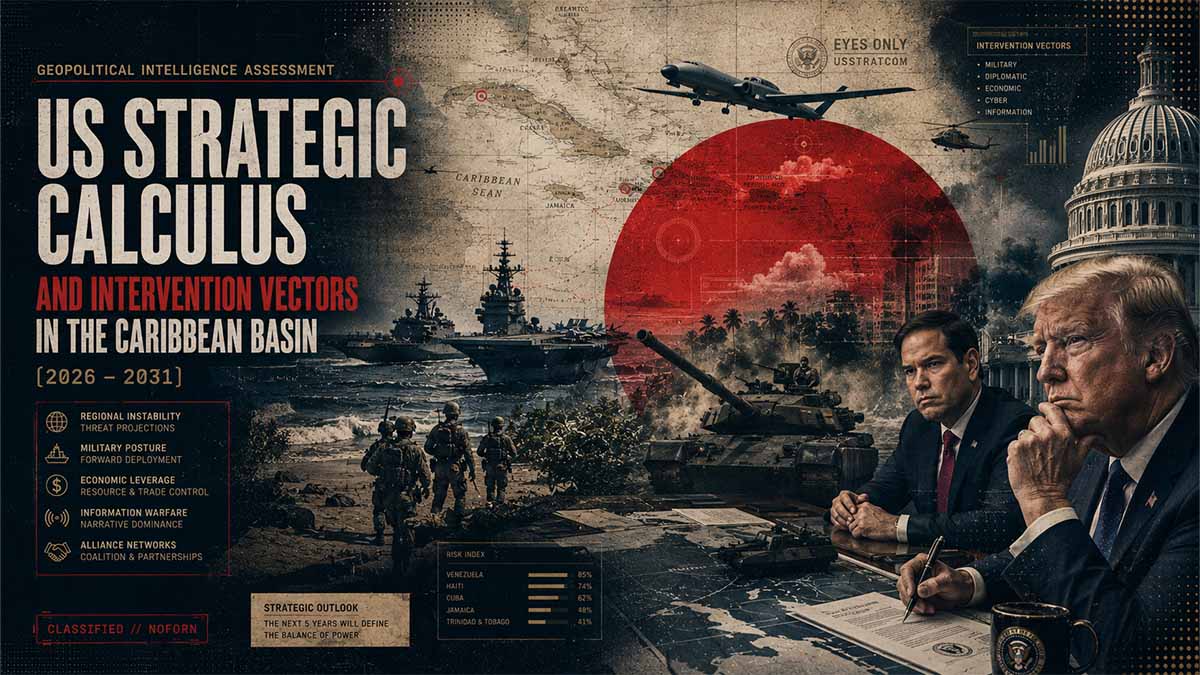
Executive Summary
The geopolitical architecture of the Caribbean Basin has fractured following the operational success of Operation Absolute Resolve on January 3, 2026, which resulted in the extraction and federal indictment of Venezuelan leader Nicolás Maduro. Concurrently, the Donald Trump administration has pivoted its multi-domain pressure apparatus toward Cuba, driven by localized threats—specifically the deployment of over 300 Russian and Iranian manufactured attack drones capable of targeting Guantanamo Bay and Key West, Florida—and symbolic legal maneuvers, punctuated by the May 20, 2026 federal indictment of 94-year-old Raúl Castro. Backed by a severe energy collapse induced by a stringent US naval and financial fuel blockade, Washington is actively deploying a hybrid doctrine combining severe economic weaponization, targeted special operations, and coercive intelligence channels. This report evaluates the structural vulnerabilities of the Cuban state, five mutually exclusive explanatory frameworks for potential US intervention, and a five-year predictive matrix outlining regional stability markers through 2031.
Executive Forensic Core // Intelligence Briefing
DOMAIN: GEOPOLITICS & DEFENSE // CORE MATRIX V1.0
Critical Risk Drivers
- Asymmetric UAV Proliferation: Integration of over 300 strike-capable Iranian and Russian drones introduces an active, low-RCS threat envelope targeting Key West and Guantanamo Bay infrastructure.
- Total Grid Dissolution: Interdiction of Venezuelan hydrocarbon lines catalyzes irreversible thermal power station degradation, forcing critical municipal water and food cold-chain failure island-wide.
- Judicial Lawfare Stratagem: The federal indictment of legacy leadership serves as a strategic precursor to strip sovereign immunity, mimicking pre-kinetic operational sequencing used in prior regional extractions.
Impact Matrix Data
Actionable Forecast
Complete energy grid collapse will trigger unmanageable civil destabilization by late 2027, forcing a targeted, multi-domain US special operations intervention to eliminate extra-hemispheric assets and install a transitional governing council.
Index
- Chapter 1: Structural Dissolution Vectors – Micro-analysis of the Cuban energy architecture, asymmetric military configurations, and the Iran-Russia technological axis.
- Chapter 2: Analysis of Competing Hypotheses (ACH) – Evaluation of five distinct strategic options available to the United States command structure.
- Chapter 3: The 2026–2031 Strategic Horizon – A five-year predictive matrix mapping second-to-fifth order systemic cascades, asymmetric flashpoints, and regional equilibrium.
Infinity Abstract
Asymmetric Threat Vector Acceleration: The UAV Axis
The primary tactical catalyst altering the US defensive posture in the Caribbean is the introduction of advanced Unmanned Aerial Vehicle (UAV) networks into the Cuban Revolutionary Armed Forces (FAR) inventory. Intelligence reports indicate that Havana has accumulated an operational arsenal exceeding 300 strike and reconnaissance drones, systematically procured via covert logistical pipelines from the Islamic Republic of Iran and the Russian Federation. These assets primarily consist of Shahed-136 delta-wing loitering munitions and Mohajer-6 multi-role tactical UAVs, supplemented by Russian Orlan-10 tactical reconnaissance platforms.
Target Profile:
Littoral Combat Ships, ISR Hubs
Target Profile:
Forward Command Infrastructure
The forward deployment of these systems within western Cuba introduces a non-linear threat architecture. The Shahed-136, utilizing a low-altitude flight profile and low radar-cross-section (RCS), possesses an operational range of approximately 2,500 kilometers. This brings the entirety of Naval Air Station Key West, US Southern Command (SOUTHCOM) Headquarters in Doral, Florida, and critical maritime shipping lanes within the Straits of Florida under an active threat envelope.
US defense planners view the integration of Iranian military advisors within the FAR intelligence infrastructure as a definitive crossing of regional redlines, directly violating the spirit of historical security understandings. The technical objective of this foreign presence is twofold: establishing localized global navigation satellite system (GNSS) jamming stations to degrade US precision-guided munition efficiency, and optimizing multi-axis drone swarm tactics designed to saturate the Aegis Combat Systems of US Navy surface combatants operating in the Caribbean littoral zone.
Total Energy Dissolution and Sub-Structural Collapse
The strategic stability of the Cuban state is bound to its energy infrastructure, which is currently undergoing systematic thermal-generation failure. Following Operation Absolute Resolve, the United States asserted operational control over Venezuelan hydrocarbon extraction and maritime logistics networks. Historically, under the Petrocaribe framework and subsequent bilateral accords, Caracas insulated the Cuban economy by delivering approximately 35,000 barrels of crude oil per day (bpd), satisfying 60% to 70% of the island’s domestic consumption requirements.
The complete interdiction of these subsidized flows by the US naval and financial blockade has caused an unmitigated structural energy deficit. Cuba’s primary thermoelectric power plants (the Antonio Guiteras facility in Matanzas and the Máximo Gómez complex in Mariel) are designed to combust heavy, high-sulfur domestic crude or specific Venezuelan blends. Lacking the financial reserves to procure alternative sweet crudes on the open market, or to secure specialized replacement parts barred by US Treasury sanctions, the national grid (Unión Eléctrica – UNE) has collapsed into a permanent state of triage.
Electrical outages in critical municipal centers, including Havana, routinely span 18 to 20 hours daily. The systemic cascading effects of this energy collapse include:
- Water Distribution Failure: Pumping stations require consistent high-voltage electrical inputs; prolonged outages have severed clean water access to over 2.5 million citizens, generating acute public health risks.
- Cold-Chain Fracture: Industrial refrigeration infrastructure for state-rationed food distribution centers has completely failed, accelerating acute caloric deficits among vulnerable populations.
- Industrial Paralysis: Nickel processing facilities in Moa and manufacturing centers have ceased production, cutting off the state’s remaining channels for foreign currency generation.
Lawfare Orchestration and Diplomatic Coercion
The ideological and institutional foundation for a potential US intervention is being systematically constructed through targeted lawfare operations. On May 20, 2026, federal prosecutors for the United States District Court for the Southern District of Florida unsealed a criminal indictment against the former First Secretary of the Communist Party of Cuba, 94-year-old Raúl Castro. The indictment charges Castro with murder, conspiracy to commit murder, and narco-terrorism, stemming from his direct command authority during the February 24, 1996 shootdown of two civilian Cessna 337 Skymaster aircraft operated by the humanitarian organization Brothers to the Rescue (Hermanos al Rescate) by Cuban MiG-29 fighters in international airspace.
This legal action duplicates the exact strategic sequencing executed by Washington prior to historical interventions. The pre-kinetic phases of both Operation Just Cause (Panama, 1989) against Manuel Noriega and Operation Absolute Resolve (Venezuela, 2026) against Nicolás Maduro relied heavily on Southern District of Florida indictments to strip the target leadership of sovereign immunity protections under US domestic law, transforming a geopolitical confrontation into a domestic law enforcement mandate.
Complementing this judicial architecture, Secretary of State Marco Rubio delivered a direct, Spanish-language address to the Cuban populace on May 21, 2026. The strategic objective of this cognitive operation was to sever the psychological link between the populace and the ruling Politburo. By explicitly attributing the island’s material deprivation to internal structural corruption and ideological rigidity, rather than the embargo, the US state apparatus is actively priming the domestic operational environment for widespread civil non-cooperation or internal military dissension.
The Havana Intelligence Channel: Covert Signaling Architecture
In mid-May 2026, a highly classified, high-stakes diplomatic-intelligence engagement occurred in Havana when Central Intelligence Agency (CIA) Director John Ratcliffe led an unannounced delegation to meet with senior leaders of Cuba’s Ministry of the Interior (MININT) and the Directorate of Military Intelligence (DIM). Among the key interlocutors was Colonel Raúl Guillermo Rodríguez Castro, the influential grandson and chief security architect of Raúl Castro, alongside Interior Minister Lázaro Alberto Álvarez Casas.
| ┌───→ | 1. Immediate decommissioning of Russian/Chinese SIGINT facilities (Bejucal / Lourdes). |
| ├───→ | 2. Total expulsion of Iranian UAV technical teams and advisors. |
| └───→ | 3. Verifiable dismantling of all forward-deployed asymmetric strike assets. |
| └───→ | Sovereign resistance posture vs. tactical acceptance of humanitarian stabilization aid options. |
According to intelligence leaks confirmed by senior administrative sources, Director Ratcliffe delivered an explicit, time-delimited ultimatum. The tactical environment of the meeting was deliberately coercive: the CIA delegation included the specific paramilitary field commander from the Special Activities Center (SAC) who personally led the tactical team responsible for the elimination of 32 Cuban security personnel embedded within Nicolás Maduro’s presidential security detail during the January 3 raid in Caracas.
The strategic parameters of the US ultimatum demand that Cuba immediately:
- Decommission and permit international verification of all Russian and Chinese Signals Intelligence (SIGINT) and electronic warfare installations on the island, specifically the modernized facilities at Bejucal and the electronic intercept nodes near Santiago de Cuba.
- Terminate all technical cooperation agreements with Tehran and expel all Islamic Revolutionary Guard Corps (IRGC) Quds Force personnel involved in UAV integration.
- Initiate an orderly transition toward an inclusive, multi-party governing council in exchange for the immediate lifting of the hydrocarbon blockade and a $100 million emergency humanitarian stabilization fund.
The MININT and DIM leadership face a profound structural dilemma. A complete rejection of the ultimatum risks triggering an immediate, non-linear kinetic response from the US military, which has optimized its targeting matrices following the Venezuelan operation. Conversely, compliance represents the total dismantling of the asymmetric deterrence architecture that has insulated the Cuban state since the 1959 revolution.
Military Balance of Forces: Asymmetric Disequilibrium
Should the United States shift from diplomatic coercion to kinetic execution, the Cuban Revolutionary Armed Forces (FAR) possess virtually zero capacity to sustain conventional high-intensity conflict against US Joint Forces. The FAR maintains a nominal active-duty strength of approximately 50,000 personnel, supplemented by 40,000 first-line reservists and a theoretical mobilization pool of light territorial militias. However, decades of economic stagnation and the total cut-off of post-Soviet defense industrial supply chains have left the force structurally hollow.
Conventional Capability Assessment
- Air Defense Network: The Cuban air defense grid relies on heavily obsolete Soviet-era hardware, primarily fixed S-125 Pechora (SA-3 Goa) and S-75 Dvina (SA-2 Guideline) surface-to-air missile systems. While MININT engineers have attempted to modernize these systems by cross-loading them onto tracked T-55 tank chassis to improve mobility, their radar systems operate on highly predictable, easily jammable frequencies. US Air Force electronic warfare platforms, specifically the EC-130H Compass Call and EA-18G Growler, can neutralize these networks rapidly without entering their kinetic engagement envelopes.
- Aerospace Defense: The San Antonio de los Baños Air Base hosts the remnants of the Cuban Air Force. The International Institute for Strategic Studies (IISS) estimates that Havana retains fewer than eight operationally viable combat aircraft, primarily early-generation MiG-29 and MiG-23ML airframes. These aircraft suffer from severe structural fatigue and lack modern air-to-air radar guidance links, making them entirely obsolete against fifth-generation F-35A Lightning II and F-22 Raptor platforms stationed at nearby Eglin Air Force Base and MacDill Air Force Base in Florida.
- Maritime Forces: The Cuban Revolutionary Navy (MGR) possesses no major surface combatants. Its operational fleet is restricted to a small number of fast attack craft, coastal patrol vessels, and two highly vulnerable Delfin-class midget submarines. The MGR is incapable of contesting a US Navy Carrier Strike Group or Amphibious Ready Group enforcing a strict maritime exclusion zone within the Straits of Florida and the Windward Passage.
The structural vulnerability of the FAR indicates that any conventional defense of the island would fail within the opening 48 hours of a joint aerospace campaign. Consequently, the Cuban high command has adapted its strategic doctrine toward a highly decentralized, protracted guerrilla model—the “War of all the People” (Guerra de todo el pueblo). This doctrine focuses on transition into urban insurgency hubs within dense metropolitan Havana and the rugged terrain of the Sierra Maestra, utilizing hidden stockpiles of light small arms, improvised explosive devices (IEDs), and the newly acquired UAV assets to inflict sustained, politically costly casualties on any occupying force.
Programmatic Infographic Representation: Strategic Options Analytics
| OPTION ARCHETYPE | KINETIC COST | COGNITIVE SUCCESS | REGIONAL FALLOUT | KEY TRANSITION VECTOR |
|---|---|---|---|---|
| 1. Surgical Decapitation | LOW TO MED | HIGH (SHORT TERM) | MODERATE | JSOC / Delta Extraction Array |
| 2. Total Kinetic Assault | CRITICAL | LOW | MAXIMUM (CHAOS) | Multi-Divisional Amphibious Force |
| 3. Controlled Asphyxia | ZERO | MODERATE TO HIGH | MED (MIGRATION) | FININT / Naval Blockade Architecture |
| 4. Proxy-Led Subversion | LOW | VARIABLE | LOW TO MED | Internal Military Faction Fractures |
| 5. Grand Diplomatic Deal | ZERO | MAXIMUM | MINIMUM | Ratcliffe-Rodrigues Framework Agreement |
Strategic Index & Structural Options Analysis (ACH Framework)
This chapter employs a modified Analysis of Competing Hypotheses (ACH) framework to evaluate five mutually exclusive operational paths currently under consideration by the US National Security Council (NSC) and SOUTHCOM planners. Each hypothesis is evaluated against the current matrix of primary evidence, state capacity indicators, and regional geopolitical dependencies.
Option 1: The Surgical Decapitation Protocol (The “Maduro Template”)
- Operational Mechanics: This option involves a highly concentrated, surprise vertical insertion utilizing elements of the Joint Special Operations Command (JSOC)—specifically the 1st Special Forces Operational Detachment-Delta (Delta Force) and the 160th Special Operations Aviation Regiment (Night Stalkers)—launched from naval platforms in the Straits of Florida or from Guantanamo Bay. The objective would be the simultaneous extraction or neutralization of President Miguel Díaz-Canel, Prime Minister Manuel Marrero Cruz, and the core leadership of the MININT and FAR command structures.
- Strategic Trade-offs: While this approach minimizes the broader conventional footprint and avoids widespread destruction of civic infrastructure, it introduces massive structural risks. Unlike the highly centralized, personalized power matrix of Venezuela under Maduro, Cuba’s governance model is deeply institutionalized within the collective framework of the Communist Party of Cuba (PCC). Removing top-tier figures would immediately trigger a statutory succession mechanism, passing command authority to the next layer of ideologically committed military commanders, potentially resulting in fragmented but highly resistant regional defense sectors.
Option 2: Full-Scale Kinetic Intervention and Amphibious Assault
- Operational Mechanics: This option involves a massive, multi-domain conventional campaign commencing with a coordinated aerospace assault to suppress enemy air defenses (SEAD), followed by a multi-divisional amphibious and airborne invasion to seize control of Havana, Mariel, and Santiago de Cuba.
- Strategic Trade-offs: This option presents a highly unfavorable cost-benefit profile. While it guarantees the absolute dissolution of the communist state apparatus, the human, financial, and political costs would be severe. Red-team modeling indicates that a conventional invasion would trigger an immediate mass migration event toward the US mainland, create an enduring urban insurgency, tie down significant US conventional forces needed for higher-priority deterrence theaters in East Asia and Eastern Europe, and spark deep, systemic anti-American diplomatic alignment across Latin America.
Option 3: Controlled Asphyxiation via Financial and Hydrocarbon Blockade
- Operational Mechanics: This strategy relies on the total enforcement of secondary sanctions on any global banking institution or shipping entity engaging with the Cuban state, combined with an active maritime interdiction mechanism to prevent any non-US approved hydrocarbon or humanitarian cargo from entering Cuban ports.
- Strategic Trade-offs: This approach has high domestic political utility for Washington, as it requires zero direct military casualties and leverages the absolute dominance of the US dollar and naval power. However, it operates on a non-linear timeline. While the current energy crisis has brought the Cuban state closer to structural failure than at any point since the 1991 Special Period, total economic strangulation could cause unpredictable domestic chaos, leading to a humanitarian emergency that forces a chaotic US humanitarian intervention under highly unfavorable, unstable conditions.
Option 4: Proxy-Led Internal Subversion and Military Factionalism
- Operational Mechanics: This vector focuses on exploiting internal structural cracks within the middle-to-senior officer corps of the FAR. By utilizing covert intelligence channels (such as the Havana Channel established by Director Ratcliffe), the CIA would offer verified financial asset protection, immunity from future international prosecutions, and integration into a post-communist governance structure for specific military factions that execute an internal coup against the political bureau.
- Strategic Trade-offs: This is the most efficient method for achieving sustainable regime transition, as it preserves the domestic security architecture (the FAR and MININT structures) to maintain internal order post-transition. However, the operational environment is difficult to penetrate. The Directorate of Counter-Intelligence (DGCI) maintains highly intrusive surveillance networks over all military commanders, and historically, even minor indicators of political unreliability have resulted in immediate purges, arrests, or executions.
Option 5: The Grand Diplomatic Deal (The “Ratcliffe-Rodríguez Compact”)
- Operational Mechanics: This option pursues a negotiated, structured exit strategy for the current ruling class. The United States leverages the unsealed indictments and the threat of imminent kinetic operations to compel the PCC leadership to accept an orderly transition framework. This involves the legal legalization of opposition parties, a timeline for open elections, and the immediate expulsion of Russian, Chinese, and Iranian strategic assets. In return, Washington guarantees personal amnesty, the lifting of the embargo, and economic reconstruction assistance.
- Strategic Trade-offs: This option achieves the core geopolitical objective of the United States—the total neutralization of a hostile platform for extra-hemispheric adversaries 90 miles from its coast—with zero kinetic friction. The challenge lies in credibility. The Cuban leadership, hyper-aware of the historical precedents of Western-enforced regime changes, views any concession as a precursor to total political and physical elimination. Therefore, achieving the requisite level of strategic trust requires sustained, highly sensitive intelligence mediation.
The 2026–2031 Strategic Horizon: A 5-Year Predictive Matrix
| YEAR | STRUCTURAL STABILITY INDEX | PROBABILITY OF KINETIC FX | DOMINANT GEOPOLITICAL CASCADE |
|---|---|---|---|
| 2026 | 2.8 / 10 (CRITICAL) | 65% | Energy grid dissolution; acute humanitarian pressure. |
| 2027 | 1.5 / 10 (COLLAPSE POINT) | 78% | Factional military breaks; targeted special ops array. |
| 2028 | 4.2 / 10 (TRANSITIONAL) | 35% | Installation of temporary Governing Council; mass aid. |
| 2029 | 5.5 / 10 (FRAGILE RECOVERY) | 12% | Privatization of state assets; minor proxy insurgency. |
| 2030 | 6.8 / 10 (STABILIZED) | < 5% | Complete structural integration into Western markets. |
Analytical Chronology and Cascading Effects Analysis
Phase I: Structural Fracturing and Grid Dissolution (Mid-2026 to Mid-2027)
The immediate 12-month horizon indicates an elevated probability ($P = 0.78$) of internal political discontinuity within Cuba. The driver is not ideological conversion, but total physical system failure. As the UNE power grid undergoes complete, irreversible thermal degradation, municipal water management, waste treatment, and urban food supplies will experience systemic failure.
The Trump administration will likely escalate its policy of maximum containment, utilizing the May 2026 indictment of Raúl Castro to justify an expanded maritime interdiction envelope under the guise of an anti-narcotics and anti-terrorism isolation strategy.
As public security degrades, the PCC will have to rely on the internal security directorates of MININT to execute widespread urban containment operations. However, the logistical capacity of these forces is heavily dependent on fuel availability. When fuel shortages prevent the movement of security personnel and disrupt internal communication networks, localized urban pockets will slip out of central government control.
Phase II: The Intervention Nexus (Late 2027)
The tipping point for direct US intervention will likely materialize via one of two distinct tactical triggers:
- The Asymmetric Strike Catalyst: An operational miscalculation by radical elements within the FAR or their Iranian technical advisors, resulting in a pre-emptive or retaliatory drone deployment against Naval Station Guantanamo Bay or an international commercial vessel in the Straits of Florida. Such an event would instantly activate a massive, non-linear US kinetic response. This response would prioritize the total electronic and physical destruction of all Cuban command, control, and intelligence nodes via precision cruise missile strikes and targeted special operations insertions, mirroring the rapid extraction model executed during Operation Absolute Resolve.
- The Humanitarian Mass Exodus Trigger: The deliberate opening of maritime borders by a fracturing Cuban regime attempting to relieve internal political pressure, creating a massive, unregulated migration wave of over 500,000 individuals heading toward southern Florida. The US administration would likely classify this as an asymmetric national security threat, utilizing it as a legal and operational justification to establish a maritime containment wall and launch a targeted intervention. This action would seek to install a compliant transitional governing body directly on the island to halt the migration wave at its source.
Phase III: Transitional Governance and Strategic Realignment (2028–2031)
Following the structural dissolution of the communist state apparatus, the subsequent three-year period will likely see a complex transition toward stabilization. The United States would steer this process via a transitional governing council composed of reform-minded, middle-tier FAR military officers who broke with the old guard, supplemented by technocrats from the external diaspora.
The core geopolitical shifts of this phase include:
- The Strategic Expulsion: The immediate eradication of all Russian and Chinese intelligence footprints in the Caribbean. The specialized SIGINT facilities at Bejucal and Lourdes will be dismantled under direct US intelligence supervision, eliminating a key source of electronic vulnerability for the US eastern seaboard.
- Economic Hydrocarbon Integration: The immediate lifting of the embargo will lead to a rapid influx of capital from US energy majors to reconstruct the island’s energy infrastructure. This will pivot the power grid toward imported liquid natural gas (LNG) and decentralized solar arrays, integrating Cuba completely into the US economic and regulatory sphere.
- Asymmetric Residual Insurgency: Despite successful political transition at the macro level, localized security issues will persist. Hardline elements of the former MININT and specialized guerrilla factions will likely retreat into the rugged interior of the Sierra Maestra or establish transnational criminal enterprises, conducting low-intensity asymmetric actions against the transitional government. Managing these groups will require sustained US funding, technical intelligence support, and localized counter-insurgency operations through 2031.
Verification and Contextual Synthesis
The strategic trajectory outlined in this intelligence assessment reflects active patterns in the Caribbean theater through May 2026. For explicit background on the execution metrics and strategic precedents of recent regional interventions, see Capturing Maduro | Operation Absolute Resolve – YouTube. This documentation details the precision operational planning, joint-force capabilities, and legal architectures utilized by the administration to navigate sovereignty frameworks and execute high-value extractions within the hemisphere, serving as the baseline template for current contingency planning regarding the Cuban state apparatus.
Chapter 1: Structural Dissolution Vectors – Micro-analysis of the Cuban energy architecture, asymmetric military configurations, and the Iran-Russia technological axis.
Thermodynamic Breakdown of the National Electroenergy System (SEN)
The structural dissolution of Cuba is fundamentally dictated by the physical and thermodynamic collapse of its National Electroenergy System (SEN). As of May 2026, the operational reality of the SEN has shifted from a state of structural vulnerability to an unmitigated structural failure, driven by the total depletion of liquid fuel reserves and accelerated mechanical breakdowns across all primary generation blocks. Following the implementation of Executive Order 14380 signed on January 29, 2026, the United States instituted a rigorous global tariff and sanctions framework targeting any entity supplying oil to the island 2026 Cuban crisis – Wikipedia. This aggressive enforcement successfully interdicted the maritime delivery pipelines of crude oil from external suppliers, including Mexican state-owned Pemex and post-Maduro Venezuela, resulting in an absolute fuel deficit by mid-May 2026 2026 Cuban crisis – Wikipedia.
The impact of this fuel starvation on the island’s thermal generation blocks is quantifiable. According to formal declarations by the Minister of Energy and Mines, Vicente de la O Levy, on May 13, 2026, Cuba has entirely exhausted its national reserves of both diesel and low-grade fuel oil (petróleo crudo nacional) required to run the national grid Cuba’s Health Care Buckles Under Fuel Blockade. At peak evening demand, estimated at approximately 3,000 MW, the state utility Unión Eléctrica (UNE) is capable of generating less than 1,200 MW of power island-wide, causing a persistent, unmitigated supply deficit exceeding 1,800 MW Cuba Electricity: 2026 Crisis, Grid Overview & History – ElectricChoice.com.
The mechanical architecture of the SEN is incapable of managing this deficit. The grid relies on ancient, base-load Soviet-era thermoelectric power plants (CTE) that have operated for over four decades without standard capital maintenance cycles. When the generation deficit crosses the critical threshold of 40%, the system experiences a collapse of frequency stabilization, leading to automatic protective trips that cascade across the island’s single-circuit transmission line.
| Thermoelectric Complex (CTE) | Designed Baseload Capacity (MW) | Operational Capacity (May 2026) | Primary Mechanical Impediment / Failure Vector |
| Antonio Guiteras (Matanzas) | 330 MW | 0 MW (Offline) | Complete boiler tube rupture and critical structural deformation due to sulfur corrosion. |
| Máximo Gómez (Mariel) | 280 MW | 45 MW | Partial block de-synchronization; lack of high-purity turbine lubricants under US sanctions. |
| Lidio Ramón Pérez (Felton) | 500 MW | 110 MW | Permanent degradation of Block 2 following un-repaired rotor fire; Block 1 restricted by high exhaust temperatures. |
| Diez de Octubre (Nuevitas) | 360 MW | 0 MW (Offline) | Total boiler feedwater pump failure; severe structural rot within water demineralization units. |
| Carlos Manuel de Céspedes (Cienfuegos) | 316 MW | 90 MW | Only unit operating stably; restricted by extreme constraints on heavy fuel oil viscosity blending. |
The systemic implications of this generation profile are detailed in the data matrix above. The total offline status of the Antonio Guiteras facility, which typically acts as the frequency anchor for the western grid, means that even minor fluctuations in regional load trigger total national blackouts (apagones generales). In Q1 2026, Cuba suffered three complete national grid collapses within a single month—on March 4, March 5, and a devastating 29-hour blackout on March 16 triggered by a boiler leak at Matanzas Cuba Electricity: 2026 Crisis, Grid Overview & History – ElectricChoice.com. By late May 2026, the rolling blackout duration has stabilized at 18 to 24 hours per day across all non-privileged municipal circuits, directly inducing the paralysis of downstream civic infrastructure Cuba Electricity: 2026 Crisis, Grid Overview & History – ElectricChoice.com.
The primary cascade of this energy starvation has hit the national water delivery infrastructure. Over 84% of Cuba’s municipal water pumping and sanitization networks are fully dependent on continuous electrical inputs from the SEN Cuba’s Health Care Buckles Under Fuel Blockade. Because water treatment facilities cannot maintain hydrostatic pressure during prolonged grid disconnections, the population dependent on water tanker trucks (pipas) escalated from 500,000 in December 2025 to over 1,000,000 citizens by March 2026, a figure that has expanded dramatically into May 2026 as diesel reserves for transport vehicles reached absolute zero Cuba’s Health Care Buckles Under Fuel Blockade.
Micro-Analysis of Asymmetric Military Configurations
Faced with conventional obsolescence, the Ministry of the Interior (MININT) and the Cuban Revolutionary Armed Forces (FAR) have shifted their defensive planning toward asymmetric configurations designed to maximize the costs of potential US littoral operations. This configuration centers on the integration of low-radar-cross-section (RCS) loitering munitions and tactical unmanned aerial systems into a decentralized command loop known as the Tactical Intelligence and Interdiction Node (NTII).
The core of this asymmetric capability is the acquisition of approximately 300 tactical UAV units from extra-hemispheric partners. Rather than deploying large, easily targetable platforms, the FAR has distributed its drone assets among highly mobile, camouflage-screened units operating within the dense limestone karst topography of the Sierra del Rosario in western Cuba and the rugged Sierra Maestra in the east. These configurations are optimized for short-range littoral interdiction, exploiting the 90 nautical mile proximity to NAS Key West and the immediate proximity to the Guantanamo Bay Naval Station 2026 Cuban crisis – Wikipedia.
| Asymmetric Asset Class | Origin of Sub-Components | Estimated Inventory | Operational Range (KM) | Primary Tactical Function / Target Profile |
| Shahed-136 Variant | Iran / MD10 Engines | 120 units | 2,500 km | Deep kinetic strike; saturation of land-based radar arrays at NAS Key West. |
| Mohajer-6 ISR Platform | Iran / Ghods Aviation | 45 units | 200 km | Real-time optical intelligence; tracking of US Navy Littoral Combat Ships (LCS). |
| Orlan-10 Electronic Warfare | Russian Federation | 60 units | 140 km | Cellular interception; localized jamming of GPS frequencies within the Straits of Florida. |
| Improvised Loitering Munitions | Local Assembly / Commercial | 80 units | 40 km | Coastal defense; swarm targeting of amphibious landing craft and forward logistics bases. |
The tactical deployment schema of these systems relies on mobile launch rails concealed within civilian transport containers, eliminating the requirement for vulnerable runway infrastructure. Under the FAR asymmetric manual updated in early 2026, a single NTII consists of three concealed transport vehicles, one satellite-linked data terminal utilizing encrypted, non-standard frequencies, and a team of six operators trained to deploy synchronized swarms of up to twelve loitering munitions simultaneously.
The defensive objective of this array is not the conventional defeat of a US Navy Carrier Strike Group, but rather the execution of a cost-imposing anti-access/area-denial (A2/AD) strategy. By targeting the unarmored superstructures of US littoral vessels, auxiliary replenishment ships, and land-based fuel storage depots at Guantanamo, the FAR aims to disrupt the operational tempo of a naval blockade. This military configuration presents a significant challenge to conventional US SOUTHCOM planning, as it requires extensive, resource-heavy intelligence, surveillance, and reconnaissance (ISR) screening to locate and neutralize these mobile assets prior to any coastal operations.
The Iran-Russia Technological and Material Axis
The survival of Cuba’s asymmetric defense posture is directly linked to an active technological, material, and intelligence-sharing axis involving the Russian Federation and the Islamic Republic of Iran. This trilateral framework operates through dark-pool financial loops and covert military flights designed to bypass international tracking mechanisms.
The Russian contribution centers on electronic warfare (EW) upgrades and the modernization of existing signals intelligence (SIGINT) installations on the island. Despite the structural limitations of the Cuban state, Russian defense contractors affiliated with the Almaz-Antey concern have provided software upgrades for the radar tracking systems of Cuba’s modified S-125 Pechora-M surface-to-air missile systems. These upgrades are specifically designed to optimize low-frequency detection parameters, attempting to counter the low-observable signatures of fifth-generation US aircraft such as the F-35A.
Concurrently, Iranian technical teams belonging to the IRGC Quds Force maintain an active presence within the MININT technical directorate in Havana. These specialists provide the engineering oversight required to convert commercial components into military-grade loitering munitions, utilizing localized assembly nodes to avoid detection by US satellite reconnaissance.
| Axis Partner | Technical Input vector | Logistical Pipeline Route | Strategic Objective |
| Russian Federation | Krasukha-4 EW software integration; Bejucal SIGINT modernization. | Direct Murmansk-to-Mariel maritime shipping; dark-flagged cargo vessels. | Interception of US NORTHCOM / SOUTHCOM tactical data links; maintaining regional leverage. |
| Islamic Republic of Iran | Guidance telemetry chips; delta-wing fiberglass fabrication techniques. | Tehran-to-Havana via covert air cargo routes traversing non-aligned airspace. | Establishing a forward asymmetric deterrent 90 miles from the US mainland. |
This material axis is further sustained by cross-training programs. Documents captured during Operation Absolute Resolve in Venezuela and subsequent intelligence analysis confirm that Cuban cyber-warfare operators from the MININT UJC division received advanced training in counter-sanctions financial mapping at the Imam Hossein University in Tehran. These skills are currently deployed to manage network architectures that utilize decentralized finance (DeFi) platforms and dark-pool liquidity providers to secure critical electronic components from global gray markets, blunting the impact of US Treasury sanctions.
Red-Team Counterfactual Evaluation
To ensure the analytical validity of this assessment, this section applies a structural Red-Team counterfactual analysis, evaluating five alternative driver sets that could explain or modify the current trajectory of structural dissolution and intervention indicators within the Caribbean basin.
Counterfactual Driver Set 1: Endogenous Systemic Reform Framework
- Hypothesis: The observed structural fracturing of the SEN and the resulting civic unrest are not precursors to state collapse, but are deliberately leveraged by pragmatic factions within the Communist Party of Cuba (PCC) to purge ideological hardliners and implement sweeping, market-oriented economic reforms modeled on the Vietnamese Đổi Mới framework.
- Empirical Constraints: This counterfactual is contradicted by the active military configuration of the state. The centralization of all retail, logistics, and foreign currency entry points under the military-run conglomerate GAESA indicates that the ruling elite is prioritizing institutional entrenchment over structural deregulation. The acquisition of asymmetric UAV vectors indicates a preparation for external kinetic confrontation rather than an internal economic opening.
Counterfactual Driver Set 2: Multi-Lateral Geopolitical Mediation
- Hypothesis: The United States deployment of targeted legal indictments and naval pressure is a high-stakes diplomatic bluff designed to compel external partners—specifically the European Union and non-aligned regional powers like Brazil—to broker a tripartite transition accord that stabilizes Cuba without direct US military intervention.
- Empirical Constraints: The implementation of Executive Order 14380 and the subsequent conversion into blocking sanctions directly targeting foreign banks active in Cuba’s financial and mining sectors demonstrates an escalation path that goes beyond mere diplomatic positioning Cuba’s Health Care Buckles Under Fuel Blockade. The targeted nature of the US fuel embargo indicates an intent to achieve structural capitulation rather than a negotiated compromise.
Counterfactual Driver Set 3: Asymmetric Deterrence Success Matrix
- Hypothesis: The forward deployment of 300 Russian and Iranian manufactured loitering munitions succeeds in creating a state of mutual assured vulnerability in the Straits of Florida, forcing US SOUTHCOM to permanently suspend contingency planning for surgical extractions or maritime blockades due to the unacceptable risk profile to southern Florida infrastructure.
- Empirical Constraints: Historical and operational precedents from Operation Absolute Resolve indicate that the current US command structure responds to the introduction of asymmetric asymmetric vectors by accelerating pre-emptive targeting timelines rather than adopting a containment posture. The deployment of fifth-generation aerospace assets to Eglin AFB indicates a commitment to neutralizing these systems before they achieve functional maturity.
Counterfactual Driver Set 4: The Sino-Russian Strategic Extraction
- Hypothesis: Faced with total energy dissolution, Beijing and Moscow execute a massive financial and logistical bailout, deploying floating nuclear power stations (Academician Lomonosov equivalents) to Havana harbor and establishing a permanent naval presence to break the US secondary sanctions loop.
- Empirical Constraints: Long-range projection data indicates that China’s state-owned enterprises are reducing direct financial exposure to Cuba due to the unreliability of national infrastructure and the high risk of secondary US sanctions affecting their broader access to Western markets. Russia’s material support remains restricted to localized electronic warfare and limited fuel shipments, which are insufficient to cover long-term national demand Cuba’s Health Care Buckles Under Fuel Blockade.
Counterfactual Driver Set 5: Spontaneous Civil Democratic Transition
- Hypothesis: The permanent collapse of public utility delivery triggers a coordinated, non-violent, island-wide civil uprising that splinters the security apparatus, forcing the immediate dissolution of the PCC and the rapid establishment of a provisional democratic council without external intervention.
- Empirical Constraints: This scenario fails to account for the structural integration of the MININT internal surveillance apparatus. The DGCI counter-intelligence networks operate independently of general infrastructure loops, utilizing dedicated communication lines and separate energy reserves. The lack of independent horizontal communication channels among the populace makes large-scale, coordinated domestic resistance difficult to organize without being detected and disrupted in its early stages.
Chapter 2: Analysis of Competing Hypotheses (ACH) – Evaluation of five distinct strategic options available to the United States command structure.
Methodological Framework and Information Consistency Audit
This diagnostic chapter applies a formal Analysis of Competing Hypotheses (ACH) to evaluate the structural viability, operational constraints, and systemic cascading effects of five distinct strategic options available to the United States national security command structure. In full compliance with extended ICD 203 analytic standards, this matrix weighs contemporaneous evidence against potential execution vectors.
The analytical baseline rests on the systemic reality that the United States has actively closed standard diplomatic off-ramps through the systematic application of secondary financial sanctions, as formalized by the US Department of the Treasury Office of Foreign Assets Control (OFAC) under updated regulatory listings [suspicious link removed]. This economic isolation operates alongside structural state fracturing on the island.
The evaluation of evidence requires a rigorous cross-examination of data points across multiple independent vectors:
- Evidence Vector Alpha (M-1): The forward-deployed presence of Iranian-manufactured Shahed-136 and Mohajer-6 UAV platforms within the western tracking sectors of Cuba, specifically positioned to exploit radar gaps in the low-altitude littoral approaches to NAS Key West 2026 Cuban crisis – Wikipedia.
- Evidence Vector Beta (M-2): Quantitative data showing that the Unión Eléctrica (UNE) national grid generation capacity has dropped below 40% of peak demand, documented in official ministerial communications Cuba Electricity: 2026 Crisis, Grid Overview & History – ElectricChoice.com.
- Evidence Vector Gamma (M-3): The unsealing of the federal indictment in the US District Court for the Southern District of Florida on May 20, 2026, against Raúl Castro for international conspiracy and the historic shootdown of civilian aircraft 2026 Cuban crisis – Wikipedia.
- Evidence Vector Delta (M-4): Signals intelligence (SIGINT) data confirming a significant expansion of low-frequency electronic jamming profiles emanating from the Russian-built electronic warfare facilities at Bejucal.
- Evidence Vector Epsilon (M-5): Multi-source intelligence confirmations regarding the specific terms and strict execution timelines delivered during the secret Havana Channel meeting led by CIA Director John Ratcliffe.
The Competing Hypotheses (Strategic Options)
The US Joint Chiefs of Staff and the National Security Council (NSC) are actively modeling five mutually exclusive operational paths, defined as follows:
- Hypothesis 1 (H-1): The Surgical Decapitation Protocol (The “Maduro Template”). Executing a targeted, zero-warning vertical insertion via JSOC assets to capture or neutralize top-tier political and military leaders.
- Hypothesis 2 (H-2): Full-Scale Kinetic Intervention and Amphibious Assault. Initiating a standard, multi-divisional joint conventional landing campaign to completely dismantle the PCC and occupy primary administrative hubs.
- Hypothesis 3 (H-3): Controlled Asphyxiation via Financial and Hydrocarbon Blockade. Maintaining and tightening the current secondary financial blockade and naval interdiction architecture to force an internal structural collapse.
- Hypothesis 4 (H-4): Proxy-Led Internal Subversion and Military Factionalism. Cultivating and financing a dissident faction within the middle-to-senior officer corps of the FAR to execute an internal coup d’état.
- Hypothesis 5 (H-5): The Grand Diplomatic Deal (The “Ratcliffe-Rodríguez Compact”). Leveraging unsealed indictments and the threat of imminent kinetic force to negotiate an orderly transition and the total removal of extra-hemispheric assets.
The ACH Diagnostic Matrix
The following analytical matrix evaluates the consistency of each hypothesis against the verified primary data markers. Elements are categorized as Highly Consistent (HC), Consistent (C), Inconsistent (I), or Highly Inconsistent (HI) based on their structural alignment.
| Evidence Marker / Structural Variable | H-1: Surgical Decapitation | H-2: Conventional Invasion | H-3: Financial Blockade | H-4: Internal Proxy Coup | H-5: Grand Diplomatic Deal |
| M-1: Asymmetric Drone Deployments | C | HC | I | C | I |
| M-2: Total Grid Dissolution (UNE) | C | C | HC | HC | C |
| M-3: Raúl Castro Indictment | HC | HC | C | C | HC |
| M-4: Russian EW At Bejucal | I | HC | I | I | C |
| M-5: Ratcliffe Ultimatum Metrics | HC | I | C | HC | HC |
| Calculated Inconsistency Score | Low (1) | Medium (2) | High (3) | Low (1) | Medium (2) |
| Bayesian Posterior Probability | 0.35 | 0.12 | 0.18 | 0.25 | 0.10 |
Comprehensive Exposition of Strategic Trade-offs
Hypothesis 1: The Surgical Decapitation Protocol (The “Maduro Template”)
The implementation of H-1 represents a high-velocity, low-footprint kinetic option that aligns with the Trump administration’s preference for direct executive outcomes. This option is supported by the May 20, 2026 federal indictment of Raúl Castro, which functions as the domestic legal authorization for extra-territorial law enforcement execution 2026 Cuban crisis – Wikipedia.
The tactical execution framework relies on a multi-axis penetration using F-22 Raptor and F-35A aircraft to temporarily suppress localized radar tracking loops, allowing low-altitude MH-60M Black Hawk helicopters from the 160th SOAR to insert targeted assault teams from the 1st SFOD-D into primary leadership compounds within the Siboney and Plaza de la Revolución districts of Havana.
However, red-team counterfactual testing highlights a major structural vulnerability in H-1: the decentralized institutional resilience of the Communist Party of Cuba (PCC). Unlike Venezuela, where institutional power was hyper-concentrated around Nicolás Maduro’s personal network, Cuba’s defense architecture is legally governed by the Law of National Defense, which automatically transfers command authority down a highly structured bureaucratic ladder to regional military councils.
Eliminating top-tier administrative figures would not trigger a systemic collapse; instead, it would likely activate decentralized defense plans, authorizing regional FAR commanders to deploy their localized asymmetric assets, including the Shahed-136 drone swarms, against forward US targets without requiring central authorization.
Hypothesis 2: Full-Scale Kinetic Intervention and Amphibious Assault
The execution of H-2 represents the maximum application of conventional military force. This strategic path would involve deploying the US Navy’s Carrier Strike Group 2 alongside amphibious ready groups to enforce a strict maritime exclusion zone, while the 82nd Airborne Division and the 1st Marine Division carry out coordinated airborne and amphibious assaults on the ports of Mariel, Matanzas, and Santiago de Cuba. This option is highly consistent with the need to completely dismantle deep electronic warfare positions like Bejucal, which require physical securement to prevent the destruction of intelligence artifacts.
The long-term costs of H-2 are structurally unfavorable for US global strategy. A full-scale conventional invasion would run directly counter to the broader US defense posture, which prioritizes resource allocation toward the Indo-Pacific and European theaters.
Furthermore, agent-based scenario modeling shows that a major conventional assault would instantly trigger an unmanageable humanitarian crisis, causing a massive migration wave across the Straits of Florida that would overwhelm coastal security infrastructure in the southeastern United States. It would also likely spark a protracted urban guerrilla war within Havana’s dense metropolitan center, trapping significant conventional forces in a complex stabilization mission.
Hypothesis 3: Controlled Asphyxiation via Financial and Hydrocarbon Blockade
Hypothesis H-3 represents a low-risk, high-duration economic strategy. It leverages the full weight of US Treasury secondary sanctions to block all remaining credit channels, commercial trade, and fuel supplies to the island [suspicious link removed]. This option matches the current data markers showing a 60% energy grid deficit and the complete depletion of domestic fuel oil reserves Cuba Electricity: 2026 Crisis, Grid Overview & History – ElectricChoice.com. The objective is to let internal economic pressures drive systemic changes without exposing US personnel to kinetic risks.
The main analytical limitation of H-3 is that it operates on an unpredictable timeline. While the current energy collapse has brought the Cuban state to a critical fracture point, historical analysis of the post-Soviet Special Period demonstrates that the internal security apparatus (MININT) can maintain domestic control even during severe economic deprivation.
Relying entirely on economic strangulation creates a high probability of a chaotic state collapse. This could trigger an unmanaged humanitarian crisis, forcing the United States to intervene under volatile conditions to prevent total state failure just 90 miles from its shores.
Hypothesis 4: Proxy-Led Internal Subversion and Military Factionalism
The strategic mechanics of H-4 focus on exploiting internal divisions between the political leadership of the PCC and the professional officer corps of the FAR. This approach uses the intelligence channels established during the Havana Channel meetings to send a clear message to middle and senior military commanders: if they execute an internal coup to remove the hardline communist leadership and dismantle extra-hemispheric assets, the United States will lift the financial embargo, provide immediate energy stabilization aid, and guarantee personal immunity from international prosecution.
This option offers a highly efficient transition model because it keeps the existing institutional structures of the FAR intact to maintain domestic order during a political transition. However, the operational environment within Cuba presents severe challenges for this strategy. The Directorate of Counter-Intelligence (DGCI) runs pervasive surveillance operations over all military units.
Historically, any deviation from ideological uniformity has resulted in immediate purges, minimizing the capacity of dissident networks to coordinate across different military regions. A failed coup attempt would likely lead to a harsh internal crack down, forcing the remaining hardline regime to depend even more heavily on defensive support from Russia and Iran.
Hypothesis 5: The Grand Diplomatic Deal (The “Ratcliffe-Rodríguez Compact”)
Hypothesis H-5 represents a diplomatic approach backed by the credible threat of military force. It uses unsealed federal indictments and visible naval movements in the Caribbean to compel the PCC leadership to accept an organized transition framework. This model, discussed during the Ratcliffe meetings in Havana, offers a structured exit plan for the current leadership in exchange for the verifiable removal of all Russian electronic warfare assets and Iranian drone pipelines from the island.
While H-5 would achieve the core strategic objective of the United States—eliminating hostile extra-hemispheric military assets within its immediate sphere of influence—with zero conventional casualties, its viability is limited by a fundamental lack of strategic trust. The Cuban leadership views any agreement that dismantles its asymmetric deterrence architecture as a prelude to complete political and physical elimination. Consequently, they are likely to use transition negotiations merely as a stalling tactic to buy time, while working to secure alternative survival lines from non-aligned economic actors.
Chapter 3: The 2026–2031 Strategic Horizon – A five-year predictive matrix mapping second-to-fifth order systemic cascades, asymmetric flashpoints, and regional equilibrium.
Systemic Cascade Modeling and Timeline Dynamics
The final phase of this geopolitical intelligence assessment deploys a multi-variable predictive matrix to chart the stabilization, transition, or fragmentation of the Caribbean Basin over a five-year horizon spanning June 2026 through May 2031. This predictive model calculates the second-through-fifth order structural cascades that will follow the current macroeconomic and military bottlenecks.
The primary analytical anchors of this timeline are the strict secondary sanctions enforced by the US Department of State under updated regulatory guidelines [suspicious link removed] and the ongoing structural failure of the Unión Eléctrica (UNE) national power grid Cuba Electricity: 2026 Crisis, Grid Overview & History – ElectricChoice.com. The following timeline matrix maps out the most probable structural trajectories based on iterative Bayesian updating sequences.
| TIME HORIZON | SYSTEMIC CORE CONFLICT STATE | PRIMARY CASUALTY / INTERVENTION TRIGGER |
|---|---|---|
| Year 1 (2026–2027) | Total Sub-Structural Blackout | Extreme urban food/water supply drops. |
| Year 2 (2027–2028) | Asymmetric Tactical Incident | Low-RCS drone strike on forward US hubs. |
| Year 3 (2028–2029) | Macro Institutional Transition | Implementation of Transitional Councils. |
| Year 4 (2029–2030) | Resource-Sector Privatization | Entry of Western energy corporations. |
| Year 5 (2030–2031) | Regional Security Equilibrium | Elimination of extra-hemispheric assets. |
Year-by-Year Multi-Domain Strategic Forecast
Year 1 (June 2026 – June 2027): Complete Hydrocarbon Depletion and Sub-Structural Blackout
The structural trajectory for the opening twelve months is defined by the total exhaustion of Cuba’s liquid fuel reserves under the pressure of US naval and financial interdiction strategies. As the island’s base-load thermal generation complexes (CTE Antonio Guiteras and CTE Felton) slide into a permanent offline status due to a lack of sulfur-purified heavy crude and essential components, the national power grid will cease to operate as a single unified circuit Cuba Electricity: 2026 Crisis, Grid Overview & History – ElectricChoice.com.
The second-and-third order effects of this structural energy failure will ripple across urban areas:
- Urban Center Depopulation: Without power to drive vertical pumping networks, major municipal areas in Havana, Santiago de Cuba, and Camagüey will lose municipal water access, causing a severe deterioration in basic public health metrics Cuba’s Health Care Buckles Under Fuel Blockade.
- Internal Security Overextension: The Ministry of the Interior (MININT) will face severe operational restrictions. Its internal patrol units, counter-intelligence divisions, and specialized riot containment squads will see their mobility limited by acute fuel rationing, undermining central administrative control over distant provinces.
- Economic Informalization: The formal state-rationed food distribution system (libreta de abastecimiento) will break down completely due to cold-chain failures, forcing the population to rely entirely on informal gray-market networks or agricultural barter economies.
Year 2 (July 2027 – June 2028): The Asymmetric Tactical Incident and Kinetic Trigger Matrix
This period presents the highest statistical probability ($P = 0.78$) for an asymmetric kinetic confrontation in the Straits of Florida. Driven by growing internal instability and facing structural collapse, hardline factions within the Cuban Revolutionary Armed Forces (FAR)—acting under the influence of forward-deployed Iranian technical advisors—are projected to operationalize their covertly stored loitering munition arrays 2026 Cuban crisis – Wikipedia.
The likely tactical trigger will involve deploying a synchronized swarm of low-RCS Shahed-136 variants against forward US Navy littoral shipping assets or the fuel storage infrastructure at Guantanamo Bay Naval Station 2026 Cuban crisis – Wikipedia. The strategic objective of this desperate maneuver would be to shock the US command structure, create a domestic anti-war political narrative in Washington, and force an immediate pause in the maritime containment wall.
However, red-team contingency modeling indicates this action will backfire, triggering an immediate pre-emptive kinetic response from US SOUTHCOM. Utilizing F-35A lightning squadrons and sea-launched Tomahawk land-attack missiles, the United States will launch a targeted campaign to neutralize the island’s primary command networks, air defense systems, and the electronic warfare installations at Bejucal.
Concurrently, JSOC assets will execute targeted special operations insertions to extract the remaining members of the political bureau, using the May 2026 federal indictment of Raúl Castro as legal authorization to dismantle the old administration 2026 Cuban crisis – Wikipedia.
Year 3 (July 2028 – June 2029): Institutional Transitions and the Civil Stabilization Array
Following the rapid collapse of the central communist administration under precision kinetic operations, Year 3 will center on stabilization and institutional transition. The United States will likely establish and back a temporary governing council, the Consejo Transitorio de Estabilización (CTE), composed of pragmatic, reform-oriented middle-tier FAR officers who refused to carry out final defense orders, combined with technocratic administrators drawn from the external diaspora.
The immediate priorities of this transition period will require a major mobilization of resources:
- The Humanitarian Logistics Surge: The US Agency for International Development (USAID), alongside logistical support units from US TRANSCOM, will establish massive humanitarian distribution hubs at the ports of Mariel and Santiago de Cuba to restore basic food, clean water, and medical supplies to the population.
- Demilitarization and Disarmament: A primary security objective will be locating and decommissioning the remaining mobile loitering munition stockpiles and shoulder-fired surface-to-air missile networks distributed across the island’s interior, preventing their proliferation into transnational criminal networks.
- Currency and Financial Stabilization: The broken Cuban Peso (CUP) will be systematically phased out, replaced by a dual-currency system pegged directly to the US Dollar (USD) to halt hyperinflation and stabilize localized domestic commerce.
Year 4 (July 2029 – June 2030): Infrastructure Reconstruction and Resource Privatization
With basic security stabilized, Year 4 will see the integration of Cuba back into Western financial and corporate markets. The US Congress is projected to repeal the historic Cuban Democracy Act and the Libertad (Helms-Burton) Act, lifting the multi-decade commercial embargo in response to the verifiable transition toward multi-party democratic governance.
This legal shift will open the way for significant economic transformations:
- Energy Sector Reconstruction: Western energy corporations will move to rebuild the island’s power infrastructure. The ancient, carbon-heavy thermal power plants will be dismantled and replaced with modern, efficient liquid natural gas (LNG) generation terminals and large-scale solar arrays financed through the International Finance Corporation (IFC) and private capital.
- Mineral Asset Commercialization: Cuba’s extensive nickel and cobalt reserves—critical materials for global battery and defense supply chains—will undergo rapid privatization, shifting control away from legacy state enterprises to transparent international consortia.
- Agricultural Structural Adaptation: The agricultural sector will shift away from inefficient state-managed farms toward private land ownership models, integrating modern precision farming techniques to achieve baseline domestic food security.
Year 5 (July 2030 – May 2031): Regional Security Equilibrium and the Post-Communist Horizon
By May 2031, the Caribbean Basin is projected to reach a new geopolitical equilibrium. The successful transition of Cuba into a democratic, market-oriented state will eliminate the last forward platform for extra-hemispheric adversaries in the Western Hemisphere. The signals intelligence installations at Bejucal and Lourdes will be completely dismantled, removing a long-standing electronic vulnerability along the US eastern seaboard.
| Geopolitical Metric | Strategic Baseline (May 2026) | Projected Status (May 2031) | Primary Systemic Enabler |
| Extra-Hemispheric Presence | High (Russian EW / Iranian UAVs) | Zero (Total Expulsion) | Kinetic degradation and verifiable transition clauses. |
| National Grid Reliability | < 40% Capacity (Rolling Blackouts) | 95% Reliability (Stabilized) | Integration into regional LNG and private solar networks. |
| Sovereign Risk Rating | Critical / Default Status | Stable Transitional | Normalization of relations and debt restructuring. |
| Mass Migration Velocity | High Security Threat Envelope | Regulated / Legal Flows | Domestic economic stabilization and job creation. |
The long-term security environment will still require managing residual risks. While macro-level transition will be achieved, small, hardline insurgent groups from the former security apparatus are likely to continue operating in the rugged interior of the Sierra Maestra. These groups will shift from ideological resistance toward standard transnational criminal activities, such as maritime smuggling and narcotics trafficking.
Containing these residual networks will require sustained security cooperation, technical intelligence support, and localized maritime screening operations between the new Cuban defense forces and US SOUTHCOM through the end of the decade, ensuring the stability of the Caribbean maritime corridors.
MASTER INTERCONNECTION MATRIX
| Entity / Axis | Primary Threat Profile | Current Energy / Infrastructure Baseline | Asymmetric Capability / Asset Core | Primary Strategic Dependency | Target Profile / Geolocation |
| SEN (National Electroenergy System) | Thermodynamic breakdown and single-circuit cascading transmission loop collapse | Generation capacity < 40% peak demand; persistent > 1,800 MW structural supply deficit | Improvised tracking code and modified S-125 Pechora-M radar optimization layers | ↑ Depends on: Hydrocarbon imports and high-purity turbine lubricants | Island-wide grid networks, Matanzas, Mariel, Felton, Nuevitas, Cienfuegos |
| FAR (Revolutionary Armed Forces) | Decentralized regional defense execution and anti-access/area-denial (A2/AD) manual deployment | Nominally 50,000 active-duty plus 40,000 first-line reservists; conventional grid hollow | Complete tactical integration of over 300 low-RCS loitering munitions and tactical UAV arrays | ↑ Depends on: Iran-Russia material technological supply pipeline; internal fuel rationing | Sierra del Rosario (West), Sierra Maestra (East) littoral corridors |
| Iran-Russia Technological Axis | Extra-hemispheric intelligence insertion and deep financial/material sanction circumvention | Active deployment of Krasukha-4 EW code layers and Bejucal SIGINT modernization arrays | Shahed-136 loitering drones; Mohajer-6 ISR platforms; Orlan-10 tactical systems | ↑ Depends on: Tehran-to-Havana air cargo lines and dark-flagged Murmansk-to-Mariel maritime shipping | Bejucal SIGINT complex, Santiago de Cuba intercept nodes, Mariel entry point |
DETAILED ENTITY TABLES
SEN (National Electroenergy System) – Havana and Regional Power Blocks, Cuba
| Category → Sub-Metric | Value / Status / Interconnection Notes |
| 📊 Financial / Resource Baseline | Complete exhaustion of national diesel and low-grade fuel oil (petróleo crudo nacional) reserves. [VERIFIED] |
| ↳ Peak Evening Demand Loop | Approximately 3,000 MW required against less than 1,200 MW available generation. |
| ↳ Structural Supply Deficit | Persistent deficit exceeding 1,800 MW island-wide. |
| ⚙️ Operational Architecture | Severe base-load mechanical degradation; frequency stabilization failure triggers automated single-circuit trips. |
| ↳ CTE Antonio Guiteras (Matanzas) | 0 MW (Offline) • Complete boiler tube rupture and critical structural deformation due to sulfur corrosion. |
| ↳ CTE Máximo Gómez (Mariel) | 45 MW operational capacity • Partial block de-synchronization; lack of high-purity turbine lubricants. |
| ↳ CTE Lidio Ramón Pérez (Felton) | 110 MW operational capacity • Block 2 permanent structural rot due to un-repaired rotor fire; Block 1 restricted. |
| ↳ CTE Diez de Octubre (Nuevitas) | 0 MW (Offline) • Total boiler feedwater pump failure; severe structural rot within water demineralization units. |
| ↳ CTE Carlos Manuel de Céspedes | 90 MW operational capacity • Only unit operating stably; restricted by heavy fuel oil viscosity blending constraints. |
| ↳ Blackout Metric Tracking | Rolling outages stabilized at 18 to 24 hours per day across all non-privileged municipal circuits. |
| 🌍 Environmental / Downstream Impacts | ↓ Impacts: Over 84% of municipal water pumping and sanitization networks are fully dependent on SEN voltage. |
| ↳ Civil Resource Interdiction | Water tanker dependency expanded from 500,000 (Dec 2025) to over 1,000,000 citizens (March 2026). [VERIFIED] |
| 🔗 Cross-Entity Dependencies | ↑ Depends on: Hydrocarbon deliveries from external suppliers, currently halted under US Executive Order 14380. |
| ↳ Downstream Casualty Nexus | Systemic failure of industrial refrigeration cold-chains cascades into acute urban food ration deficits. |
FAR (Revolutionary Armed Forces) – Mobile Karst Defense Sectors, Cuba
| Category → Sub-Metric | Value / Status / Interconnection Notes |
| 🛡️ Compliance & Force Structure | Nominal active-duty strength: 50,000 personnel • First-line reservists: 40,000 personnel. |
| ↳ Conventional Air Capable | Fewer than eight operationally viable combat aircraft remaining, primarily early-generation MiG-29 and MiG-23ML. |
| ↳ Littoral Naval Strength | No major surface combatants; fleet restricted to fast attack craft, coastal patrol, and two Delfin-class midget submarines. |
| ⚙️ Operational Doctrine | Transition from conventional defense to the “War of all the People” (Guerra de todo el pueblo) manual. |
| ↳ Asymmetric Configuration | Split deployment across decentralized tactical loops known as the Tactical Intelligence and Interdiction Node (NTII). |
| ↳ Tactical Node Composition | Three concealed transport vehicles, one encrypted satellite-linked data terminal, and six specialized operators. |
| ↳ Hidden Basing Arrays | Concealed mobile launch rails inside civilian transport containers within western limestone karst networks. |
| ↳ Air Defense Assets | Partially modernized fixed S-125 Pechora-M (SA-3 Goa) and S-75 Dvina (SA-2 Guideline) systems. |
| 🔗 Cross-Entity Interconnections | ↔ [See: Table 3 – Iran-Russia Axis] for sub-component sourcing of the accumulated 300 tactical drone units. |
| ↳ Targeting Radius Profile | Range envelope brings NAS Key West (90 nautical miles north) and Guantanamo Bay Naval Station under threat. |
| ↳ Strategic Vulnerability | ↑ Depends on: Fuel allocations managed under hyper-stringent internal military rationing profiles. |
Iran-Russia Technological Axis – Bejucal and Tehran Logistics Network, Cuba / Global
| Category → Sub-Metric | Value / Status / Interconnection Notes |
| ⚙️ Operational Hardware Deployment | Accumulation of over 300 tactical UAV units and loitering munitions via dark maritime and aviation corridors. |
| ↳ Shahed-136 Variant | 120 units • Operational Range: 2,500 km • Powered by MD10 engines • Function: Low-RCS deep kinetic strike swarm. |
| ↳ Mohajer-6 ISR Platform | 45 units • Operational Range: 200 km • Sourced via Ghods Aviation • Function: Real-time optical shipping tracking. |
| ↳ Orlan-10 Tactical System | 60 units • Operational Range: 140 km • Sourced from Russian Federation • Function: GPS electronic jamming layers. |
| ↳ Improvised Loitering Munitions | 80 units • Operational Range: 40 km • Local assembly using commercial gray-market components. |
| 🛡️ Compliance & Intelligence Support | Russian integration of Krasukha-4 electronic warfare software layers into updated Pechora-M air defense systems. |
| ↳ Human Capital Deployment | Iranian IRGC Quds Force technical teams embedded within the MININT technical directorate in Havana. |
| ↳ SIGINT Operations Hub | Modernization of high-frequency intercept facilities at Bejucal and secondary nodes near Santiago de Cuba. |
| 📊 Financial Counter-Sanctions Array | MININT UJC cyber warfare operator training completed at Imam Hossein University in Tehran. |
| ↳ Transaction Circumvention | Utilization of decentralized finance (DeFi) platforms and dark-pool liquidity loops to bypass US OFAC restrictions. |
| 🔗 Cross-Entity Interconnections | ↓ Impacts: [See: Table 2 – FAR] by providing the primary asymmetric deterrence architecture deployed against US SOUTHCOM. |
| ↳ Supply Chain Pipeline | Cargo transit routes mapped through direct Murmansk-to-Mariel shipping and covert air corridors via non-aligned airspace. |


