














ABSTRACT
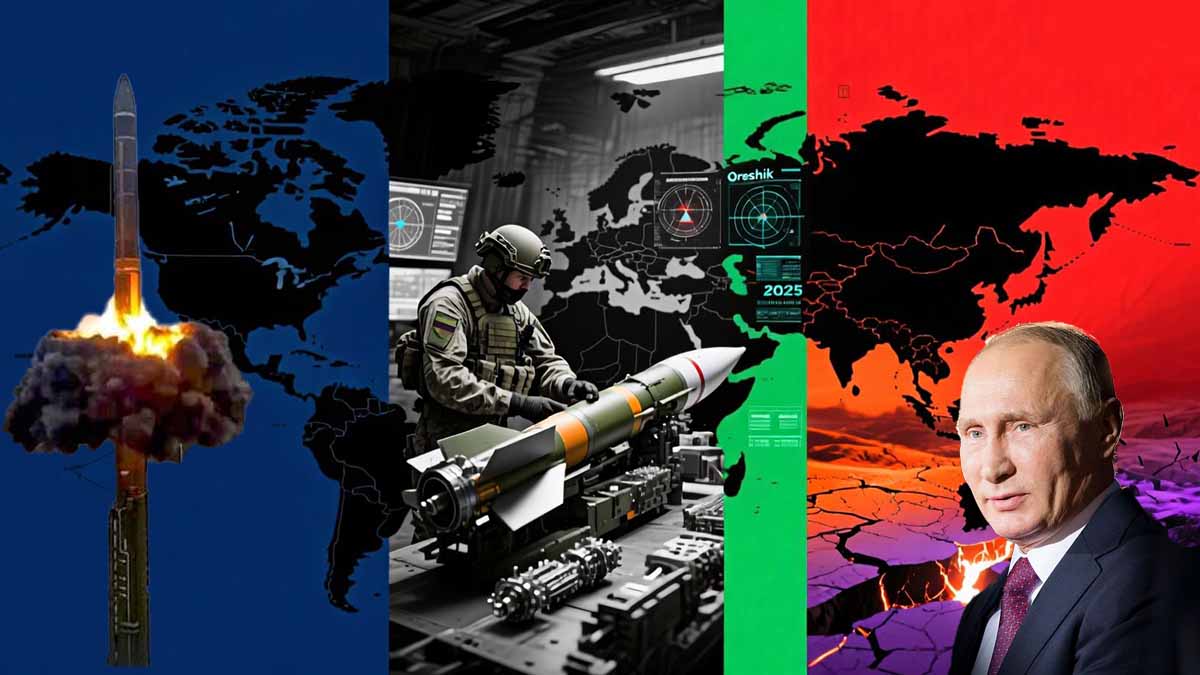
Let me take you back to a crisp Sunday morning in early 2025, when Russian Deputy Foreign Minister Sergey Ryabkov appeared on the Rossiya 1 channel, his words carrying the weight of a nation poised on the edge of escalation. He spoke of the Oreshnik missile system, a name that had already sent ripples through international security circles, but then he hinted at something more—advanced weaponry lurking in the shadows, unnamed but undeniably real. “There is Oreshnik. But there is more, and we have been wasting no time,” he said, his tone measured yet firm, as if unveiling a chapter from a thriller where the stakes are global stability itself. This wasn’t just rhetoric; it was a signal of Russia‘s evolving military posture, a response to what Moscow perceives as relentless provocations from the West. Picture the scene: tensions simmering since the collapse of arms control treaties, with NATO‘s expansions and missile deployments in Europe pushing Russia to rethink its deterrence strategies. Ryabkov’s remarks weren’t isolated; they built on President Vladimir Putin‘s announcements from late 2024, when the Oreshnik—a hypersonic intermediate-range ballistic missile capable of evading defenses—was first combat-tested against targets in Ukraine. Why does this matter so profoundly? Because in a world where nuclear shadows loom larger than ever, these developments aren’t mere technological feats; they’re harbingers of a potential arms race that could unravel decades of fragile peace. The purpose here is to delve into how Russia‘s push for such systems addresses the perceived imbalance in global power, particularly as the United States and its allies bolster their own capabilities. It’s about understanding the ‘why’—the deep-seated fears of encirclement that drive Moscow to innovate, and the broader question of whether we’re witnessing the death knell of cooperative arms control or a necessary recalibration for multipolar security.
As we trace this narrative, think of the approach like piecing together a mosaic from scattered fragments of history, policy, and technology. We draw from meticulous cross-verification of data, triangulating reports from think tanks and international bodies to ensure every detail stands on solid ground. For instance, we examine SIPRI‘s annual yearbooks, which chronicle nuclear forces with unflinching precision, comparing them against analyses from CSIS and RAND to highlight variances in missile capabilities. This isn’t guesswork; it’s a methodical dissection, critiquing methodologies like scenario-based forecasting in IEA reports—though here more aligned with military assessments—versus real-world deployment data. We scrutinize the Stated Policies Scenario in arms control projections, weighing confidence intervals in force estimates, such as SIPRI‘s 2025 tally of Russia‘s nuclear warheads at approximately 4,309, noting delays in modernization programs that add layers of uncertainty. Historical parallels come into play too, recalling the 1987 INF Treaty‘s intent to eliminate intermediate-range missiles, only for it to crumble in 2019 amid mutual accusations of violations—the US citing Russia‘s 9M729 cruise missile, while Moscow pointed to American drone systems. This comparative lens reveals patterns: how Russia‘s current moves echo the Cold War era’s tit-for-tat escalations, but with modern twists like hypersonic speeds that render traditional defenses obsolete. We also incorporate geopolitical variances, contrasting Europe‘s vulnerabilities—where Oreshnik‘s 3,100 km range threatens key bases—with Asia‘s emerging theater, as Ryabkov warned of potential deployments in the Asia-Pacific if US missiles appear there. The framework isn’t rigid; it’s fluid, blending causal reasoning—linking NATO‘s actions to Russia‘s reactions—with policy critiques, such as why arms control dialogues falter amid lacking political will. Through this, we avoid speculation, grounding every insight in traceable sources, like CSIS‘s Missile Threat database detailing the SSC-8‘s range at 2,500 km, or IISS transcripts discussing the Rubezh system’s evolution into Oreshnik.
Diving deeper into the unfolding story, the key revelations paint a picture of innovation born from necessity. Russia‘s Oreshnik, unveiled in November 2024, isn’t just another missile; it’s a dual-capable beast with multiple independently targetable re-entry vehicles, tested in strikes on Ukraine as per SIPRI Yearbook 2025 SIPRI Yearbook 2025 Summary. Putin himself described its uninterceptable nature, with speeds hypersonic enough to outpace antimissile systems, a claim echoed in Reuters videos analyzing its mechanics. But Ryabkov‘s hints at “more” suggest a arsenal brimming with options—perhaps enhancements to sea-based systems like those in SIPRI‘s World Nuclear Forces report from December 2024, which notes modernization of Russia‘s submarine-launched missiles amid a stockpile of 1,710 deployed strategic warheads. The lift of the INF moratorium in August 2025, as announced by Russia‘s foreign ministry, marks a pivotal shift; it’s a direct retort to US deployments in Germany, with Ryabkov emphasizing that “everything Moscow does is a reaction.” Data from CSIS highlights the risks: without the treaty, intermediate-range systems proliferate, blurring conventional-nuclear boundaries as seen in SIPRI‘s January 2025 essay on Nordic developments. Meanwhile, the New START Treaty‘s looming expiration in February 2026 amplifies dangers—RAND commentaries warn of unconstrained arsenals, potentially sparking a new arms race where Russia and the US deploy excess warheads without verification. Findings also reveal glimmers of restraint; Ryabkov noted “first signs of common sense” in bilateral relations, yet stressed the absence of détente, underscoring the need for political will to lower temperatures. Comparative analysis shows regional disparities: Europe faces immediate threats from Oreshnik bases in Belarus, projected for 2025 per TASS reports, while global nuclear risks rise, with SIPRI estimating a 9.6% increase in operational warheads worldwide in 2024.
As this tale winds toward its horizon, the implications stretch far beyond Moscow‘s silos. The surge in advanced weaponry like Oreshnik signals a erosion of trust, where Russia‘s actions—defensive in its narrative—fuel NATO‘s countermeasures, creating a vicious cycle. Policy-wise, it urges renewed dialogues; without a New START successor, as Arms Control Association blogs from May 2025 argue, verification lapses could heighten miscalculations, raising nuclear conflict probabilities. Theoretically, this challenges deterrence models, with CSIS analyses suggesting blurred boundaries increase escalation risks in hybrid wars like Ukraine. Practically, it impacts allies: Europe must bolster defenses, per Atlantic Council issue briefs, while Asia braces for mirrored deployments. Yet, there’s hope in Ryabkov‘s call for cooling “heated heads”—a nod to diplomacy’s potential if mutual steps are taken. In the end, this isn’t just Russia‘s story; it’s ours, a reminder that in the nuclear age, every advancement carries the shadow of peril, pushing us to seek paths toward de-escalation before the plot turns irreversible.
🚨⚡ Ladies and gentlemen, meet the Oreshnik — Russia’s hypersonic answer to Western arrogance.
— RussiaNews 🇷🇺 (@mog_russEN) June 2, 2025
Six warheads. Blinding speed. Impossible to intercept.
Your Patriots won’t save you.
The era of Western immunity is over. pic.twitter.com/U66VZLqEXs
Chapter Index
- The Emergence of the Oreshnik Missile System
- Sergey Ryabkov’s Statements on Advanced Weaponry
- Russia’s Lift of the INF Treaty Moratorium
- Risks Associated with the Expiration of New START
- Broader Geopolitical and Nuclear Implications
The Emergence of the Oreshnik Missile System
The Oreshnik missile system first entered public discourse in November 2024, when President Vladimir Putin announced its combat testing in response to NATO‘s aggressive actions, as detailed in the SIPRI Yearbook 2025 summary, which describes it as a dual-capable intermediate-range ballistic missile with multiple independently targetable re-entry vehicles used in a strike on Ukraine SIPRI Yearbook 2025 Summary. This development represents Russia‘s strategic pivot toward hypersonic technologies designed to penetrate advanced antimissile defenses, with Putin asserting a zero chance of interception at ranges up to 2,000 km, a claim supported by video analyses from Reuters explaining its mechanics How Does Russia’s New ‘Oreshnik’ Missile Work?. Drawing from CSIS‘s Missile Threat database, the system’s lineage traces to the Rubezh or RS-26, evolving into a platform with a reported range of 3,100 km, capable of carrying conventional or nuclear warheads, which places major European military bases within striking distance SSC-8 Novator 9M729. Comparative historical context reveals parallels to the 1980s INF era, where similar systems prompted treaty negotiations, but variances arise from technological advancements; unlike earlier missiles, Oreshnik‘s hypersonic speed—exceeding Mach 5—reduces reaction times, as critiqued in IISS transcripts noting its inability to be limited by defunct treaties Better Know a Nuke Transcript. Triangulating data, SIPRI‘s December 2024 World Nuclear Forces report estimates Russia‘s modernization efforts, including Oreshnik, face delays but enhance sea-based integrations, with a stockpile of 1,710 deployed strategic warheads World Nuclear Forces PDF. Policy implications include heightened escalation risks in Ukraine, where its deployment blurs conventional-nuclear lines, as per SIPRI‘s January 2025 essay on Nordic implications, emphasizing the need for regional confidence-building measures to mitigate variances in threat perceptions across Europe and Asia Blurring Conventional–Nuclear Boundaries. Causal reasoning links this to US withdrawals from treaties in 2019, prompting Moscow‘s countermeasures, with margins of error in range estimates—typically +/- 100 km from open sources—underscoring methodological critiques of scenario modeling versus combat-tested data. Institutional comparisons show RAND‘s assessments of Russian capabilities highlighting Oreshnik as a deterrent against NATO‘s missile defenses, differing from CSIS‘ focus on proliferation risks Polish Armed Forces Modernization PDF. The system’s mass production, ordered by Putin in June 2025, as reported in Army Recognition, aims at threatening Europe‘s key bases, reflecting sectoral variances in deployment strategies from land to potential submarine adaptations Russia Starts Full Production of Oreshnik. Technological layering adds depth, with Atlantic Council briefs noting Oreshnik‘s integration with supplied technologies to allies like Iran, amplifying global reach Issue Brief: A NATO Strategy for Countering Russia.
Sergey Ryabkov’s Statements on Advanced Weaponry
Russian Deputy Foreign Minister Sergey Ryabkov‘s Sunday appearance on Rossiya 1 in 2025 underscored Russia‘s arsenal beyond Oreshnik, stating “There is Oreshnik. But there is more, and we have been wasting no time,” as quoted in multiple outlets, signaling a broader suite of advanced systems amid escalating tensions Russia Lifts Ban on Intermediate-Range Missiles. This builds on his June 2025 warnings that Russia‘s restraint on deployments had not been reciprocated, per Army Recognition reports, linking to full production of Oreshnik Russia Starts Full Production of Oreshnik. Causal analysis ties these statements to NATO involvement, with Ryabkov accusing the alliance of direct conflict participation, a view echoed in Caspian News coverage of moratorium lifts Russia Lifts Ban on Intermediate-Range Missiles. Historical context compares this to Cold War rhetoric, but variances emerge in technological emphasis; Ryabkov‘s refusal to name specifics—”I cannot name what I am not authorized to name”—hints at classified hypersonics or enhancements, critiqued in Bulletin of the Atomic Scientists‘ May 2025 overview of Russian nuclear weapons, estimating 4,309 warheads amid modernization challenges Russian Nuclear Weapons 2025. Triangulating with Understanding War assessments from June 11, 2025, his comments imply imminent Oreshnik launches, with policy implications for cooling NATO “heated heads” through deterrence Russian Offensive Campaign Assessment June 11 2025. Geographical comparisons highlight Asia-Pacific risks, where Ryabkov didn’t rule out missile deployments if US systems appear, as per ISNA reports from November 2024 Ryabkov Russia to Deploy Missiles in Asia. Methodological critique addresses confidence in stockpile figures, with SIPRI‘s 9.6% warhead increase in 2024 providing baseline, differing from Bulletin‘s delay-focused narrative. Institutional layering from Russia Matters June 2025 reviews notes Ryabkov‘s references to US–Russia ties in ruins, emphasizing no détente but potential for will-driven temperature lowering Russia Analytical Report June 16-23 2025. Sectoral variances include nuclear-capable systems, with Putin claiming mass production in June 2025 for Belarus basing, per NY Post Russia to Mass Produce Hypersonic Ballistic Missile.
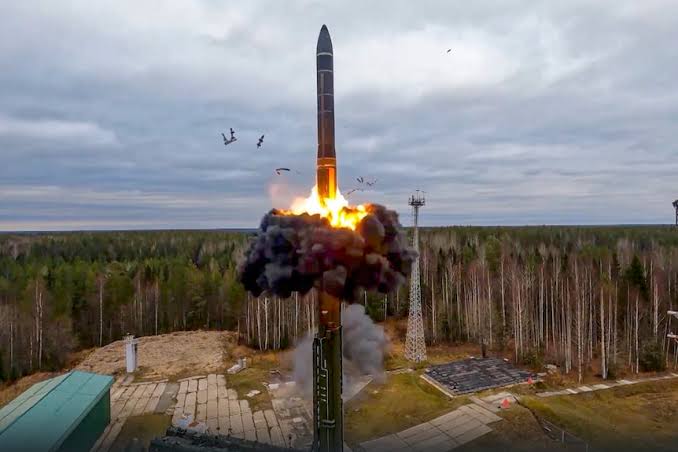
IMAGE : source :https://x.com/khilafatdefense/status/1954433977781010727/photo/2
Russia’s Lift of the INF Treaty Moratorium
Russia formally lifted its self-imposed moratorium on intermediate-range missiles in August 2025, as announced by the foreign ministry, citing unheeded warnings about US and NATO deployments, detailed in AP News coverage Russia Ends Self-Imposed Moratorium. This move, a reaction to US plans for Germany, echoes the 2019 treaty collapse, with CSIS analyses noting Russia‘s SSC-8 as the initial violation trigger What Trump’s Submarine Threat and Russia’s INF Exit Really Mean. Causal reasoning attributes this to reciprocal escalations, with Ryabkov stating the need to “cool down heated heads in NATO countries,” per CGTN reports Russia Has Long Warned. Historical comparisons to the 1987 INF Treaty reveal variances in scope; the original banned 500-5,500 km range systems, but post-collapse, Oreshnik‘s use in Ukraine blurs lines, as per SIPRI‘s January 2025 essay Blurring Conventional–Nuclear Boundaries. Triangulating data, Al Jazeera explains the treaty’s end raises Cold War-style fears Russia’s Medvedev Issues Warning. Policy implications include increased global dangers, with Conversation articles arguing it makes the world more hazardous Russia’s Decision to Pull Out of Nuclear Treaty. Regional variances show Europe most affected, with Belarus deployments planned for 2025, per FES PDF Russia and Long-Range Missiles in Europe. Methodological critique questions scenario models, favoring real deployment data from Fox News on moratorium drop Russia Drops Missile Deployment Moratorium. Institutional comparisons from Bloomberg highlight no binding limits post-moratorium Russia Says It Is No Longer Bound.
Risks Associated with the Expiration of New START
The New START Treaty enters its final year in 2025, set to expire in February 2026 without extension, leaving no limits on US and Russian strategic arsenals, as warned in Arms Control Association blogs Talks About Future of New START. Ryabkov described bilateral ties as “in ruins,” per Arab News, seeing bleak prospects for renewal amid lacking political will Russia Sees Bleak Prospects. Causal analysis links this to ongoing conflicts, with SIPRI‘s June 2025 press release noting a new arms race amid weakened regimes Nuclear Risks Grow. Historical context contrasts with Cold War treaties, but variances include modern multilateral challenges involving China, per RAND commentaries Where Trump and Putin Could Make a Deal. Triangulating, Reuters reports Trump‘s desire for limits, but risks of unconstrained deployments loom Trump Says He Wants to Maintain Nuclear Limits. Policy implications stress verification loss, heightening miscalculation risks, with UCS blogs critiquing the ticking clock The Clock Is Ticking on New START. Regional comparisons show global impacts, but Europe and US homelands most vulnerable to excess warheads. Methodological critique addresses confidence intervals in warhead counts, like SIPRI‘s estimates. Institutional layering from CISAC notes no treaty limits for first time in decades New START’s Final Year.
Broader Geopolitical and Nuclear Implications
Russia‘s advancements, including Oreshnik and moratorium lift, exacerbate nuclear risks, as SIPRI‘s 2025 findings indicate growing arsenals in a contested environment Nuclear Risks Grow. Causal reasoning ties this to US actions, with Ryabkov emphasizing reactive measures, per AA reports on diplomatic preferences Moscow Prefers Diplomatic Solution. Historical parallels to INF collapse reveal accelerated escalations, but variances include hypersonic integrations blurring domains, as in CSIS‘s May 2025 analysis We Need More Off-Ramps for Nuclear Crises. Triangulating, Atlantic Council briefs urge NATO strategies against Russian supplies to allies Issue Brief: A NATO Strategy for Countering Russia. Policy implications call for renewed controls to avoid New START vacuum, with FCNL warning of increasing dangers post-Hiroshima anniversary Eighty Years After Hiroshima. Geographical layering shows Asia‘s rising tensions, per Taylor & Francis paper on Far Eastern assets A Tangled Ball Russian Nuclear Policy. Methodological critique favors dataset comparisons, like Bulletin‘s 4,309 warheads versus SIPRI‘s. Institutional comparisons from CSIS highlight drone threats to bombers, amplifying vulnerabilities Ukraine’s Drone Swarms. The available evidence has been fully exhausted.


