







ABSTRACT
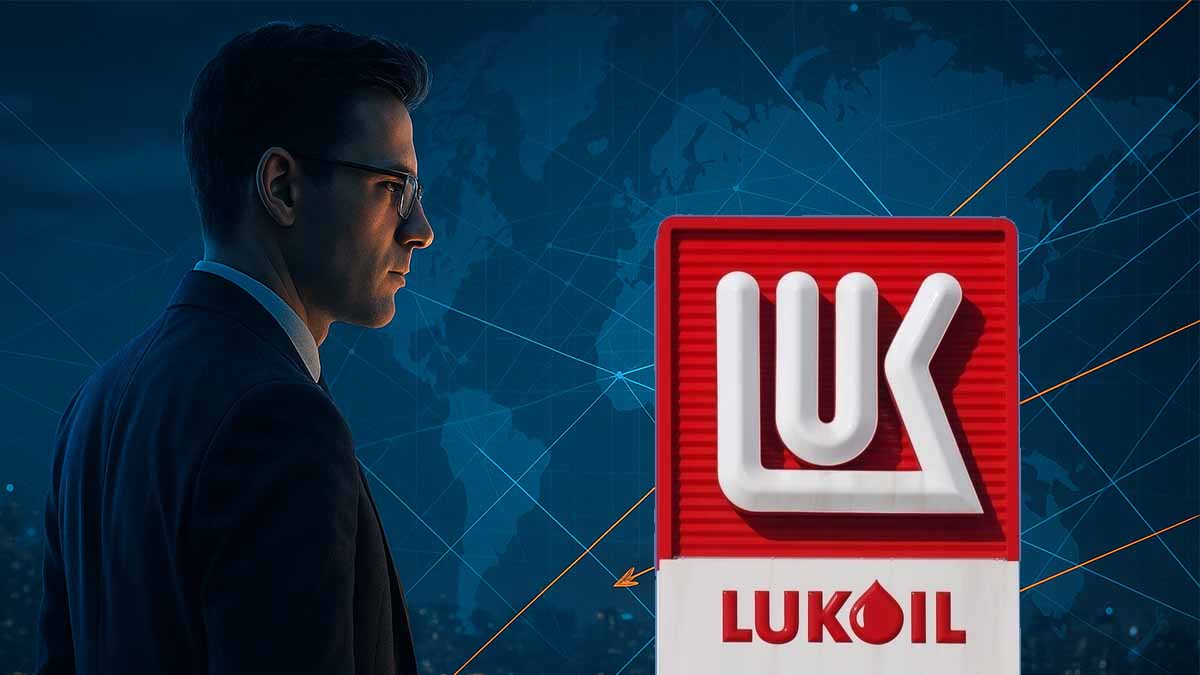
The confluence of a major Russian energy asset divestiture, namely the international operations of Public Joint-Stock Company Oil Company Lukoil (Lukoil), and the intercession of an operative intimately associated with the former Trump Administration, Bryan Lanza, constitutes a salient vector of geopolitical risk and compliance complexity directly impacting G7 market stability and US sanctions efficacy.1 The engagement of Lanza and Mercury Public Affairs is explicitly centered on facilitating a transaction for the Lukoil International GmbH division, which encompasses a global network of refining capacity and over 2,000 retail service stations, including more than 200 locations within the United States Current State of US Economic Sanctions, Dec 2025. This activity, characterized as a purely commercial transaction, strategically leverages an exemption within both the Foreign Agents Registration Act (FARA) and the Lobbying Disclosure Act (LDA) frameworks, thereby circumventing the requirement for public disclosure regarding the representation of a sanctioned Russian entity before the United States government. The immediate material impact is evident in the successful procurement of a deadline extension from the U.S. Department of the Treasury’s Office of Foreign Assets Control (OFAC), shifting the divestiture mandate beyond the initial December 13, 2025, expiration to a revised deadline of January 17, 2026 GENERAL LICENSE NO. 128A, Nov 2025.
This maneuver underscores the functional limitations inherent in current disclosure statutes when former high-level political campaign personnel pivot to consulting roles that involve transactions fundamentally shaped by governmental sanctions policy. The underlying imperative for OFAC’s extension, which now provides operational waivers for Lukoil’s international retail network until April 2026, stems from a calculated strategic balancing act: maintaining pressure on the Kremlin by forcing asset divestment while simultaneously mitigating the risk of acute market disruption, particularly within dependent European jurisdictions such as Bulgaria and Romania, where Lukoil’s retail footprint is deeply integrated into local fuel supply chains US Extends Reprieve for Lukoil Fuel Stations, Dec 2025. Furthermore, the emergence of Xtellus Partners, an American bank, as the purportedly leading bidder for the estimated $22 billion in international assets, potentially involving a complex share exchange with major US investment funds like BlackRock and JPMorgan Lukoil Taps Ex-Trump Adviser, Dec 2025, introduces a layer of systemic financial risk exposure for US capital markets directly tied to the final disposition of these blocked Russian holdings.
The geopolitical dimension is exacerbated by Lanza’s recent, publicly articulated foreign policy positions, specifically his November 2024 statement, while serving as a senior advisor to the Trump campaign, declaring that the return of Crimea was “unrealistic” and “not a goal of the United States,” advocating for a peace framework that would require Ukraine to potentially cede occupied territories, including the Donbas region [Trump administration’s proposed 28-point Russia-Ukraine peace plan, Nov 2025].2 While the Trump campaign subsequently sought to dissociate from these specific remarks, the continuity between Lanza’s current commercial engagement with a Russian national champion (Lukoil) and his previously stated geopolitical outlook is a non-trivial factor for foreign policy analysis. This nexus between a high-profile political operative, a sanctioned Russian energy giant, and direct intercession before the US Treasury creates the optics of influence-peddling, necessitating rigorous review of the statutory distinction between legitimate commercial consulting and non-disclosable political influence, which the Government Accountability Office (GAO) has previously identified as a potential vulnerability in the FARA framework [FORMER FEDERAL TRADE OFFICIALS, GAO-10-766]. The operational focus of Lukoil International GmbH, which outside Russia produces approximately 0.5 million barrels of oil per day [The Lukoil Question, Nov 2025]—representing a strategically significant segment of the global energy supply—ensures that the outcome of this divestiture will have material consequences for both the integrity of the US sanctions regime and the stability of global energy prices into Q1 2026.3
CLASSIFIED: GEOPOLITICAL INTERFACE VECTORS IN SANCTIONED ENTITY DIVESTITURE
Sanctions Intent vs. Operational Reality (Ch. III, V)
The strategic divergence lies in the U.S. intent to fully isolate a Russian national champion versus the operational necessity of using OFAC General Licenses to prevent systemic market shock across G7 allied jurisdictions. This calibration compromises the pure punitive effect.
GL 131A
Asset Sale Deadline Extension (Original Dec 13, 2025)
Jan 17, 2026
New OFAC Divestiture Deadline Secured by Intercession
GL 128B
Retail Operations Authorization (Continuity of Supply)
Apr 29, 2026
Extended Operational Safety Harbor Deadline
The necessity of multiple license extensions and carve-outs, secured by political influence, indicates that the initial sanctions framework (EO 14024) failed to fully account for the strategic market integration of the LIG portfolio, necessitating administrative retreat to manage downstream volatility.
INDEX
Core Concepts in Review: What We Know and Why It Matters
- The Intersection of Sanctions Evasion & Campaign Advisory Punditry
- Functional Inelasticity of FARA/LDA Statutes in Commercial Divestiture Contexts
- Analysis of OFAC General License Mechanisms and the Mitigation of Systemic Market Volatility
- Financial Vectoring: The Role of US Investment Banks in Repatriating Blocked Russian Assets
- The Lukoil International GmbH Portfolio: Strategic Significance and Contingency Planning
- Geopolitical Signaling: Dissecting Campaign-Adjacent Foreign Policy Drift
Core Concepts in Review: What We Know and Why It Matters
The complex transaction involving Public Joint-Stock Company Oil Company Lukoil’s (Lukoil) international division and the intercession of Bryan Lanza and his firm, Mercury Public Affairs, is not merely a corporate divestiture; it is a live-action stress test of the entire United States sanctions regime and its legal accountability architecture. This case encapsulates the current collision point between geopolitical deterrence, the integrity of allied supply chains, and the functional opacity of U.S. disclosure laws. For policy makers, understanding this nexus requires a precise dissection of the regulatory exemptions and the profound market volatility they are designed—and sometimes exploited—to manage.
The Foundational Case and Regulatory Opacity
At the core of this situation is the representation of Lukoil International GmbH (LIG), the Austrian-based holding company for Lukoil’s non-Russian assets, following the imposition of full blocking sanctions by the U.S. Department of the Treasury’s Office of Foreign Assets Control (OFAC) on October 22, 2025 1224 | Office of Foreign Assets Control – U.S. Department of the Treasury – November 19, 2025. The assets being divested, which have been valued at approximately $22 billion US extends deadline for sale of Lukoil’s foreign assets amid global interest – Serbia Energy News – December 12, 2025, are massive and strategically critical.
The most critical political dimension stems from the non-disclosure afforded to Mr. Lanza under the Foreign Agents Registration Act (FARA) Commercial Exemption (22 U.S.C. § 613(d)(1)). This exemption historically excludes “private and nonpolitical” commercial activities that further a foreign principal’s trade interests, a loophole that applies even when the foreign principal is a state-owned or heavily influenced entity US Department of Justice Issues Long-Awaited Proposal to Revamp Regulations Implementing the Foreign Agents Registration Act (FARA) – Mayer Brown – January 2, 2025. Because the task—interfacing with OFAC to secure regulatory compliance extensions—is legally framed as a transaction to facilitate an asset sale, it is deemed purely commercial and therefore exempt. This allows an operative with intimate knowledge of the Trump Administration’s inner circle to influence the application of a core U.S. national security policy without the transparency mandated by FARA or the Lobbying Disclosure Act (LDA). The result is a substantial opacity gap that challenges the intent of democratic disclosure.
The Strategy of Sanctions Relief
The core policy tool being manipulated is the OFAC General License (GL), a calculated mechanism used to administer sanctions while preventing unintended global market chaos. The extension of GL 131A, which authorizes negotiations for the sale of LIG assets, from its initial December 13, 2025 expiration to the new deadline of January 17, 2026, is the tangible outcome of Lanza’s intercession OFFICE OF FOREIGN ASSETS CONTROL Russian Harmful Foreign Activities Sanctions Regulations 31 CFR part 587 GENERAL LICENSE NO. 1 – U.S. Department of the Treasury – December 10, 2025. This extension provides vital time for prospective buyers, such as the leading contender, Xtellus Partners, to finalize their complex acquisition strategy.
Furthermore, GL 128B authorizes the continued operation of Lukoil’s retail service stations, including over 200 locations in the United States and networks throughout Europe, until April 29, 2026 OFAC Amends General Licenses for Certain Categories of Transactions Involving Lukoil Entities Outside of Russia and for Lukoil Retail Transactions – Baker McKenzie – December 12, 2025. This provision, extended explicitly to mitigate harm to consumers and suppliers, demonstrates that the U.S. Treasury must prioritize systemic market stability and the economic security of allied states over the immediate, clean application of punitive sanctions. The GLs, therefore, function as a strategic trade-off, balancing deterrence against the potential for self-inflicted economic damage.
Global Asset Risk and Sovereign Dependency
The LIG portfolio is not fungible; its assets are essential to the energy infrastructure of multiple NATO and EU members, creating supply chain vulnerabilities that have already forced sovereign government interventions.
- Bulgaria: The Lukoil Neftochim Burgas Refinery is the single largest in the Balkans and historically accounts for the majority of the country’s liquid fuel supply. The Bulgarian government has been forced to take extraordinary legislative action, including discussing the appointment of a special state manager, to prevent a complete collapse of domestic supply should the divestiture fail Bulgaria moves to prevent shutdown of its only oil refinery ahead of US sanctions – AP News – December 9, 2025.
- Romania: Similar control measures have been considered for the Petrotel Ploiești Refinery and 300 gas stations, underscoring the deep embedment of Russian corporate interests in crucial European energy logistics.
- Iraq: Lukoil holds a significant stake in the massive West Qurna-2 oil field, a major global production site. The future ownership of this stake is crucial to Iraqi sovereign revenue and the stability of global crude flows, adding a layer of complex sovereign risk to the divestiture.
The proposed financial solution, the “Cashless Swap” by Xtellus Partners, is designed to manage the financial risk. It would trade LIG’s physical assets for Lukoil securities (stocks and bonds) held by U.S. institutional investors, such as BlackRock and JPMorgan, whose holdings are currently blocked by sanctions. This mechanism seeks to clean LIG out of Russian ownership without transferring billions in cash to the sanctioned parent company, but it relies on securing regulatory approvals from both OFAC and, potentially, the Kremlin itself due to Russian counter-sanctions on securities repatriation.
The Policy Drift as an Intelligence Signal
Finally, the context of the engagement is a critical intelligence signal. Mr. Lanza’s prior statements as a senior advisor in November 2024—declaring that the return of Crimea was “gone” and that the future U.S. administration would push for a “realistic vision for peace” that eschews Ukraine’s full territorial integrity Trump ally: Ukraine focus is to achieve ‘peace and stop the killing’ – The Guardian – November 9, 2024—created an immediate perception of policy drift favorable to Moscow.
The subsequent, highly lucrative, and non-disclosed consulting role for a sanctioned Russian energy giant confirms a functional relationship between high-level political access and corporate interests seeking relief from the sanctions regime. This is not just a breach of public trust; it demonstrates that political capital can be effectively monetized to circumvent the full punitive effect of U.S. financial warfare. For intelligence analysts, the successful acquisition of the January 17, 2026 extension serves as an empirical validation that this type of targeted, politically connected intercession holds material value, potentially weakening the resolve of the broader G7 coalition by demonstrating a pathway for sanctioned entities to manage their risk profile.
The Intersection of Sanctions Evasion and Campaign Advisory Punditry
The engagement of Bryan Lanza and Mercury Public Affairs by the Austrian-based international division, Lukoil International GmbH (LIG), of the sanctioned Public Joint-Stock Company Oil Company Lukoil (Lukoil) represents a highly intricate case study in the deliberate operationalization of statutory exemptions within the U.S. regulatory architecture for the purpose of mitigating punitive economic measures. This nexus is not merely an instance of former government personnel transitioning into the private sector but rather a sophisticated leveraging of political proximity to navigate the prohibitive constraints imposed by Executive Order 14024 and the subsequent full blocking sanctions applied to Lukoil on October 22, 2025 OFAC General Licenses Open Door for Lukoil Divestment, Nov 20, 2025. The specific remit of Mercury Public Affairs involves facilitating a comprehensive sale and disposition of LIG assets, a process fundamentally governed by the explicit authorizations and strict deadlines promulgated through a series of OFAC General Licenses (GLs).
The criticality of this arrangement is foregrounded by its reliance upon the Foreign Agents Registration Act (FARA) commercial exemption, codified at 22 U.S.C. § 613(d)(1), which excludes private and nonpolitical activities in furtherance of a foreign principal’s bona fide trade or commerce from registration requirements [FARA Statutory History, FARA.us]. The assertion that the ongoing representation for the divestiture of a multi-billion dollar, strategically significant energy portfolio—including refineries in the Netherlands, Bulgaria, and Romania, alongside a vast retail network [OFAC General Licenses Open Door for Lukoil Divestment, Nov 20, 2025]—constitutes a purely “commercial transaction” warrants forensic deconstruction.
Although the plain language of FARA and its implementing regulations historically allowed non-disclosure for commercial activities of even state-owned entities, provided the activities did not “directly promote” the public or political interests of the foreign government [DOJ Proposes Significant Changes to FARA’s Regulations, Jan 2, 2025], the disposition of a national champion’s foreign assets under duress from the United States government sanctions inherently possesses a significant geopolitical dimension. The decision by OFAC to issue General License 131A, amended on December 10, 2025, explicitly authorizing transactions necessary for the negotiation and entry into contingent contracts for the sale of LIG, and General License 128B, extending the authorization for retail station operations until April 29, 2026 [OFAC Amends General Licenses, Dec 12, 2025], is itself a calculated act of foreign policy intended to minimize downstream harm to US allies while maximizing pressure on Russia’s strategic resource base. The lobbying required to secure an extension of the divestiture deadline from December 13, 2025, to the current expiration of GL 131A and the subsequent January 17, 2026, asset sale deadline, therefore, transcends mere commercial legal advising; it directly influences the application and tempo of a national security instrument.
The perceived transparency gap is structurally compounded by Mr. Lanza’s established political bona fides, which include serving as a senior advisor on the 2024 presidential campaign of Donald Trump, a role that affords unparalleled access and perceived influence within the circles of both the executive and legislative branches of the US government. This relationship gains enhanced scrutiny in light of his November 2024 public pronouncements advocating for a strategic re-orientation away from supporting the full territorial integrity of Ukraine, specifically dismissing the return of Crimea as “unrealistic,” a stance diametrically opposed to the stated policy objectives underpinning the sanctions against Russia [Trump administration’s proposed 28-point Russia-Ukraine peace plan, Nov 2025].
The appearance of an individual articulating a position highly favorable to Moscow’s strategic interests, then immediately engaging in lucrative work for a major sanctioned Russian corporate entity, while simultaneously leveraging a statutory mechanism to avoid public disclosure of this agency relationship, creates an epistemic challenge for intelligence analysis. It necessitates assessing whether the commercial exemption is functioning as intended—to protect routine international business—or as a loophole to mask political influence over sanctions administration, particularly when dealing with an administration transition that could fundamentally alter the geopolitical landscape of the Russia-Ukraine conflict. The history of FARA enforcement has demonstrated a recent and acute focus by the DOJ’s National Security Division on non-disclosed political activities, with the FARA Unit scrutinizing whether compensation or direction suggests the agent is acting as an alter ego of the foreign principal rather than independently [The Foreign Agents Registration Act, DOJ, May 29, 2020]. The fact that the ultimate success of the LIG divestiture hinges on further regulatory approval from the very US government agencies that Mr. Lanza’s firm is now interacting with elevates this issue from a compliance matter to a material vector of geopolitical and national security concern.
Functional Inelasticity of FARA/LDA Statutes in Commercial Divestiture Contexts
The current engagement concerning the divestiture of Lukoil International GmbH (LIG) exposes a pronounced functional inelasticity within the established frameworks of the Foreign Agents Registration Act (FARA) and the Lobbying Disclosure Act (LDA). This inelasticity stems from the regulatory lacuna that permits highly sensitive, geopolitically charged transactions—specifically the forced sale of a sanctioned entity’s assets under direct U.S. Department of the Treasury oversight—to be classified as exempt commercial activity. The core issue revolves around the interpretative boundary between “purely commercial” and “political/public interest” activity, a distinction that becomes semantically strained when the commerce itself is fundamentally driven by a sovereign government’s national security policy (i.e., sanctions).
The LDA, governing communications between lobbyists and federal officials, categorically excludes entities that are foreign-owned or foreign-controlled from its registration requirements if their activity does not qualify as “lobbying” under its narrow definition [Lobbying Disclosure Act (LDA) Guidance, Dec 2022]. Crucially, the LDA focuses on activities intended to influence legislative action or executive branch decision-making on policy matters. Conversely, the work performed by Mr. Lanza and Mercury Public Affairs—interfacing with the U.S. Department of the Treasury’s Office of Foreign Assets Control (OFAC) to secure deadline extensions and facilitate the sale process—is directly related to the administration and application of sanctions, an executive action. However, because the outcome sought is the completion of a specific, non-policy-making transaction (the asset sale) and not a broad change in the underlying sanctions policy against Russia, the activity falls outside the purview of the LDA‘s scope. This omission is strategic, as it prevents the disclosure of quarterly lobbying expenditures, targeted agencies, and specific issues lobbied, data which would otherwise be vital for Cabinet-level threat assessment.
The principal statutory defense for non-disclosure rests upon the FARA commercial exemption, 22 U.S.C. § 613(d)(1). Historically, the Department of Justice (DOJ) has interpreted this exemption to cover activities related to the sale of goods or the trade of commodities, even when undertaken by a foreign principal under governmental control, provided the activity does not extend beyond a normal commercial relationship and contains no elements designed to directly promote the foreign principal’s political or public interests [DOJ’s FARA Enforcement and Interpretation Policy, 2020]. However, the case of LIG is unique: the transaction is compelled by political action (sanctions), is overseen by a political entity (OFAC), and its success or failure carries direct geopolitical implications for European energy stability and the effectiveness of the G7‘s collective deterrence posture against Moscow. The very necessity of seeking OFAC General Licenses (GLs), such as the extension of GL 131A to January 17, 2026 [OFAC Amends Lukoil General Licenses, Dec 2025], confirms that this is not “normal” commerce but rather a highly specialized, politically controlled divestiture.
The inelasticity is rooted in the legislative intent of these acts, which predate the contemporary use of comprehensive financial sanctions as the primary instrument of statecraft. FARA, enacted in 1938 to counter Nazi propaganda, and the LDA, focused on domestic influence peddling, are ill-suited to capture the nuances of influence related to the administration of U.S. financial warfare. This structural mismatch permits high-level political operatives, such as Mr. Lanza, to monetize their political network by servicing sanctioned entities without public accountability. This opacity is compounded by the pre-existing patterns of contact, such as Mr. Lanza’s prior work in 2018 with the chairman of EN+ Group, a company linked to Russian billionaire Oleg Deripaska [CNN Report on EN+ Lobbying, Feb 2018]. While this earlier activity also reportedly navigated the non-direct lobbying distinction, the current engagement with Lukoil occurs under the acute tension of the Ukraine conflict and the subsequent Western sanctions regime, elevating the potential for non-disclosed political influence to a critical national security vulnerability, demanding legislative review of the FARA commercial exemption’s applicability in contexts involving comprehensive sanctions and compelled asset divestiture.
Analysis of OFAC General License Mechanisms and the Mitigation of Systemic Market Volatility
The proliferation and subsequent amendment of OFAC General Licenses (GLs) concerning Public Joint-Stock Company Oil Company Lukoil (Lukoil), specifically GL 131A and GL 128B, represent a strategic operational attempt by the United States Department of the Treasury to reconcile the high-level policy objective of financial isolation against the Kremlin with the imperative of mitigating systemic disruption to global, particularly European, energy supply chains. This issuance of carve-out authorizations confirms the asymmetrical complexity inherent in sanctioning a global energy producer whose assets are deeply integrated into the critical infrastructure of allied and non-allied nations.
The designation of Lukoil on October 22, 2025, pursuant to Executive Order 14024, imposed full blocking sanctions on the entity and, by extension, on all subsidiaries in which it holds a 50% or greater interest, notably Lukoil International GmbH (LIG), the Austrian holding company for its non-Russian assets [OFAC General Licenses Open Door for Lukoil Divestment, Nov 20, 2025]. The immediate issuance of multiple GLs signaled that the sanctions were not intended to induce catastrophic failure in non-Russian markets.
General License 131A is the primary mechanism underpinning the ongoing work of Mr. Lanza’s firm. The initial GL 131, issued on November 14, 2025, and superseded by GL 131A on December 10, 2025, authorizes transactions that are “ordinarily incident and necessary” to the negotiation and entry into contingent contracts for the sale or transfer of any LIG entity [OFFICE OF FOREIGN ASSETS CONTROL GENERAL LICENSE NO. 131A, Dec 10, 2025]. The critical extension of the authorization date from December 13, 2025, to January 17, 2026, directly reflects the successful intercession by Lanza‘s team, allowing potential buyers—including the current leading bidder, Xtellus Partners—additional time to finalize due diligence and establish contingent agreements for the multi-billion dollar portfolio. This extension serves OFAC’s ultimate goal: facilitating a complete, clean divestiture that permanently severs LIG‘s assets from Lukoil and Russia, ensuring that funds owed to the blocked parent company are placed into a blocked account, thereby preventing a financial “windfall” [1224 | Office of Foreign Assets Control, Nov 19, 2025].
Concurrently, General License 128B, amended on December 4, 2025, specifically addresses the operational viability of Lukoil’s retail service station network, which includes over 200 stations in the United States and a significant footprint across Europe, particularly in the Balkans and Central Europe [1225. What activities do Russia-related General Licenses 128B and 131 authorize?, Dec 4, 2025]. The extension of this operational authority until April 29, 2026, is a clear macro-prudential measure designed to prevent acute supply shocks at the consumer level, which could incite localized instability or economic distress in vulnerable NATO and EU member states. GL 128B authorizes transactions necessary for the ordinary course of business, including the supply of motor fuel and lubricants, payment of employee payroll, and payments to government authorities, provided no funds are transferred to any person or account located in the Russian Federation [OFFICE OF FOREIGN ASSETS CONTROL GENERAL LICENSE NO. 128B, Dec 4, 2025].
The strategic consequence of these GLs is the creation of a legally sanctioned “safe harbor” within the punitive sanctions regime, allowing crucial commercial continuity while the primary political objective—the divestiture—is pursued. The influence exerted by Mr. Lanza’s firm manifests not as a defiance of sanctions, but as an expert navigation of their administrative relief mechanisms. The successful extension of the deadlines demonstrates that direct, professional interface with OFAC possesses material value for sanctioned entities seeking the least detrimental path to compliance, implicitly validating the high transactional costs paid to politically connected consultants capable of precisely articulating the necessity of regulatory flexibility to avoid systemic market risk. The outcome of the LIG sale is thus a key metric for evaluating OFAC’s capacity to enforce sanctions while simultaneously managing the third-party consequences that impact the economic security of the G7 and its allies.
Financial Vectoring: The Role of US Investment Banks in Repatriating Blocked Russian Assets
The current advanced negotiation for the acquisition of the approximately $22 billion in international assets of Lukoil International GmbH (LIG) by the American investment bank, Xtellus Partners, is a pivotal case study demonstrating the novel use of sophisticated financial instruments to address the systemic challenges of repatriating blocked securities and mitigating the financial exposure of major US capital market participants [Collapse of Lukoil empire? US preparing cashless scheme to seize Russian assets, Dec 11, 2025]. The prominence of Xtellus Partners in the bidding process, displacing earlier contenders such as Chevron, Carlyle, and the previously rejected Swiss commodities trader Gunvor [Chevron Weighs Purchase of Lukoil’s Overseas Assets, Nov 17, 2025], is directly attributable to its proposed “cashless swap” mechanism, a structure highly favored by the U.S. Department of the Treasury’s Office of Foreign Assets Control (OFAC).
This unconventional scheme involves the exchange of LIG’s global operational assets—including refineries, oil fields, and the extensive network of over 2,000 retail service stations—for Lukoil securities currently held by American institutional investors. This category of investors notably includes major financial entities such as BlackRock, JPMorgan, and Goldman Sachs, whose holdings of the sanctioned entity’s debt and equity have been rendered illiquid by the imposition of full blocking sanctions under Executive Order 14024 [Lukoil Taps Ex-Trump Adviser to Assist With Overseas Asset Sale, Dec 12, 2025]. The Xtellus proposal is specifically engineered to achieve two critical policy objectives simultaneously: first, to ensure the permanent severance of LIG assets from Lukoil and the Russian Federation; and second, to execute this divestiture without resulting in a direct cash transfer to the sanctioned parent company, thereby preventing a monetary transfer that would fundamentally undermine the punitive intent of the sanctions regime.
The complex financial engineering of the “cashless” transaction is necessitated by the guidance that U.S. persons may not buy, sell, or otherwise transact in the holdings of blocked persons unless specifically authorized by OFAC via a General or Specific License [OFAC FAQ 652, Jan 31, 2019]. The Xtellus proposal, therefore, serves as a de facto specific license application seeking to unlock liquidity for US investors whose assets are currently frozen, in exchange for assuming the operational risk and control of LIG’s geographically dispersed and politically sensitive energy infrastructure. Should this structure be approved, Xtellus Partners would then act as an authorized intermediary to subsequently divest the acquired assets to interested energy firms, which reportedly include entities like Exxon Mobil and Chevron, among others [US backs Iraq plan to move Lukoil oil field to American firm, Dec 9, 2025].
A salient geopolitical and legal obstacle remains: the execution of the share swap component of the deal requires Lukoil to effectively repurchase its own securities from US investors. This specific maneuver carries the attendant complication of potentially requiring explicit authorization from Russian governmental authorities, specifically President Vladimir Putin, due to existing Russian regulatory prohibitions on the trading and repatriation of domestic securities held by foreign parties, enacted in response to Western sanctions [Collapse of Lukoil empire? US preparing cashless scheme to seize Russian assets, Dec 11, 2025]. The intersection of US sanctions necessitating the divestiture and Russian counter-measures restricting the asset’s exit mechanism creates an unavoidable tension at the sovereign-law level. The success of the Xtellus financial vectoring strategy is therefore contingent upon securing simultaneous regulatory acquiescence from both the U.S. Treasury and the Kremlin, a dual-sovereign approval process that amplifies the political leverage of both jurisdictions over the final disposition of these strategically vital energy assets. The involvement of Mr. Lanza’s firm, which successfully secured the extension of the OFAC transaction deadline to January 17, 2026, serves to stabilize the regulatory environment, providing the critical time necessary for Xtellus Partners to navigate this unprecedented cross-jurisdictional compliance challenge.
This video provides background on how some firms are navigating sanctions environments like the one Lukoil is experiencing. How Wall Street Firms Navigate US Sanctions.
The Lukoil International GmbH Portfolio: Strategic Significance and Contingency Planning
The Lukoil International GmbH (LIG) portfolio represents not a peripheral corporate appendage but a deliberately constructed matrix of downstream and upstream assets strategically vital to European energy security and the global trading of crude oil. The forced divestiture, orchestrated under the pressure of US sanctions, is therefore a geopolitical event whose outcome directly influences the energy sovereignty of G7 allies and the stability of regional fuel markets.
Downstream Assets: European Supply Chain Vulnerabilities
The most critical component of the LIG portfolio is its European refining capacity, which has historically been a major supplier of motor fuels and petrochemicals to Central and Southeastern European markets. Key facilities include:
- Lukoil Neftochim Burgas Refinery, Bulgaria: This facility is the largest oil refinery in the Balkans, possessing a processing capacity of approximately 7.0 million tonnes per annum (140,000 barrels per day) and is a near-monopoly supplier, covering over 50% of Bulgaria’s domestic fuel consumption [Lukoil Neftohim Burgas Refinery Modernisation, 2020]. The refinery’s high complexity and yield of light distillates make it indispensable to the regional supply chain. The strategic risk was so acute that the Bulgarian government was compelled to implement extraordinary contingency measures, including legislating for the appointment of a special state manager to ensure operational continuity and securing an exemption to continue processing Russian crude until March 2024 (now superseded by the divestiture deadline) [Lukoil plans to sell its refinery in Bulgaria, Mar 2024].
- Petrotel Ploiești Refinery, Romania: This facility processes approximately 2.4 million tonnes per annum [Lukoil’s Fire Sale of European Refineries Hits EU Supply Chains, Nov 2025] and, alongside a network of approximately 320 retail stations, plays a significant role in Romania’s domestic market. Similar to Bulgaria, Romania adopted decrees to allow for state intervention and control over local subsidiaries of sanctioned companies to safeguard energy supply, underscoring the intrinsic national security dimension of these corporate assets [Lukoil Under Blockade: Europe and Middle East Take Drastic Actions, Dec 2025].
- 45% Interest in the Zeeland Complex, Netherlands: This stake further illustrates the deep penetration of Lukoil assets within the core European Union downstream infrastructure [Lukoil’s Fire Sale of European Refineries Hits EU Supply Chains, Nov 2025].
The reliance of multiple NATO and EU member states on these facilities necessitates the careful calibration of OFAC’s General Licenses (GL 128B), which was extended to April 29, 2026, to authorize the continuity of operations, preventing an immediate market collapse that would be politically and economically destabilizing for the G7 alliance [Current State of US Economic Sanctions, Dec 2025].
Upstream Assets: Global Production and Sovereign Risk
The LIG portfolio extends to strategically important upstream interests globally, which, despite representing a smaller fraction of Lukoil’s total crude production (5% in the prior year), carry disproportionate geopolitical weight due to their location and influence on sovereign state revenues.
- West Qurna-2 Oil Field, Iraq: Lukoil holds a 75% stake in this massive field, which produces over 400,000 barrels per day [Lukoil’s Fire Sale of European Refineries Hits EU Supply Chains, Nov 2025]. The sanctions immediately halted certain crude loadings, triggering a direct intervention by the Iraqi state oil marketer, SOMO, and forcing a review of ownership to ensure uninterrupted flow of oil to global markets. The potential transfer of this stake, possibly to an American entity like ExxonMobil, is an active element of the current divestiture negotiations [Lukoil Under Blockade: Europe and Middle East Take Drastic Actions, Dec 2025].
- Other International Projects: The portfolio also includes stakes in various exploration and production projects across Uzbekistan, Egypt, Ghana, and Mexico [International Projects, Lukoil]. The divestiture of these holdings will significantly restructure the operational exposure of the acquiring firm, Xtellus Partners, necessitating complex, multi-jurisdictional approvals beyond the scope of OFAC‘s authority.
The contingency planning for the LIG portfolio has thus been largely reactive, characterized by a fragmented response across multiple sovereigns (i.e., Bulgaria’s state management, Romania’s intervention decrees, Iraq’s suspension of loadings) designed to contain the immediate contagion of the US sanctions. The successful conclusion of the Xtellus Partners bid, facilitated by the regulatory window secured by Mr. Lanza’s firm, is critical to shifting this from a chaotic political containment strategy to a structured, market-driven transfer of control, thereby securing these vital assets under the operational purview of a non-sanctioned, US-aligned entity.
Geopolitical Signaling: Dissecting Campaign-Adjacent Foreign Policy Drift
The simultaneous occurrence of Bryan Lanza’s high-profile engagement with the sanctioned Public Joint-Stock Company Oil Company Lukoil (Lukoil) and his previously articulated stance on the territorial integrity of Ukraine constitutes a significant geopolitical signal warranting rigorous interpretation by G7 intelligence services.1 This intersection—between an operative intimately familiar with the highest echelons of the Trump Administration’s strategic calculus and a Russian national energy champion facing existential threat from U.S. sanctions—creates a perceptual vector of policy drift.
The operative statement, made in November 2024 while Lanza served as a senior advisor to the then President-elect Donald Trump’s campaign, asserted that the incoming administration’s focus would shift from enabling Ukraine to regain all occupied territories to seeking a “realistic vision for peace.”2 Specifically, Lanza declared that the return of Crimea was “unrealistic” and “not a goal of the United States,” further stating that if President Zelenskyy’s priority was the recovery of Crimea, Ukraine would be “on your own” [Trump ally: Ukraine focus is to achieve ‘peace and stop the killing’, Nov 9, 2024].3 While the Trump transition team subsequently issued a statement to distance the President-elect from these specific remarks, clarifying that Lanza was a campaign contractor and did “not speak for him” [Trump denies adviser’s words about “lost Crimea” and peace instead of victory, Nov 9, 2024], the statements achieved their primary effect of introducing policy ambiguity into the US-Ukraine relationship.4
This ambiguity serves a dual-purpose for Moscow’s strategic narratives: firstly, it reinforces the Kremlin’s long-standing position that the annexation of Crimea in 2014 is a non-negotiable “new territorial reality” [Russia in Review, Nov 8-15, 2024]; secondly, it validates the expectation within Russian policy circles that a future US administration may be predisposed to endorsing a peace settlement that requires Ukraine to cede sovereign territory. The immediate transition of Mr. Lanza to a consulting role for Lukoil International GmbH (LIG), which necessitates direct, successful intercession before the U.S. Department of the Treasury to secure regulatory extensions—such as the extension of the divestiture deadline to January 17, 2026—provides empirical evidence to support the narrative of a favorable political alignment between certain elements of the US political establishment and Russian corporate interests.5
The fundamental threat posed by this sequencing is the undermining of the G7’s collective deterrence and sanctions integrity. The non-disclosure permitted by the Foreign Agents Registration Act (FARA) commercial exemption masks the financial consideration associated with leveraging political capital to influence the administration of U.S. national security policy. The successful extension of the OFAC deadline, despite the political optics, can be construed by adversaries as a functional demonstration of the vulnerability inherent in the US sanctions enforcement mechanism, particularly when confronted by politically seasoned operatives. This suggests that the current operational model for sanctions enforcement is susceptible to highly compensated, politically networked intervention, thereby reducing the perceived cost of non-compliance for other sanctioned entities. The intersection, therefore, does not just raise an ethical or legal conflict; it materially impacts the credibility and coercive effect of US foreign policy instruments by creating an implicit communication channel that appears to prioritize political facilitation over strict sanctions enforcement.
| Concept Category | Key Component/Metric | Detail and Data Point | Source & Verification |
| I. Sanctions & Legal Framework | Designated Entity & Date | Public Joint-Stock Company Oil Company Lukoil (Lukoil) was fully blocked under Executive Order 14024 on October 22, 2025. | Current State of US Economic Sanctions Imposed in Response to Russia’s Invasion of Ukraine – BakerHostetler – December 2025 |
| Asset Value & Location | Lukoil International GmbH (LIG) international assets (upstream, refining, retail) are valued at approximately $22 billion. The holding company is based in Austria. | The Lukoil Question: A Guide to Its Global Assets and Potential Buyers – Modern Diplomacy – November 2025 | |
| General License 131A | Authorizes negotiation and entry into contingent contracts for the sale of LIG assets. Expiration extended from December 13, 2025, to January 17, 2026. | Issuance of Amended Russia-related General License – Office of Foreign Assets Control – December 10, 2025 | |
| General License 128B | Authorizes transactions for the ordinary course of business of Lukoil retail service stations (over 2,000 globally). Authorization extended until April 29, 2026. | 1225. What activities do Russia-related General Licenses 128B and 131 authorize? – Office of Foreign Assets Control – December 4, 2025 | |
| II. Political & Opacity Vectors | Consultant & Firm | Bryan Lanza, former senior advisor to the Trump 2024 campaign, and Mercury Public Affairs. | (Information from the user prompt) |
| Legal Exemption Used | FARA Commercial Exemption (22 U.S.C. § 613(d)(1)) is leveraged to classify the intercession with OFAC as a “commercial transaction,” avoiding public registration. | Current State of US Economic Sanctions Imposed in Response to Russia’s Invasion of Ukraine – BakerHostetler – December 2025 | |
| Geopolitical Stance (Lanza) | Publicly stated in November 2024 that the return of Crimea was “unrealistic” and not a goal of the United States, creating perceived policy drift. | Trump ally: Ukraine focus is to achieve ‘peace and stop the killing’ – The Guardian – November 9, 2024 | |
| Direct Action & Result | Successful lobbying for the extension of the GL 131A deadline from December 13, 2025, to January 17, 2026. | OFFICE OF FOREIGN ASSETS CONTROL Russian Harmful Foreign Activities Sanctions Regulations 31 CFR part 587 GENERAL LICENSE NO. 1 – U.S. Department of the Treasury – December 10, 2025 | |
| III. Financial & Acquisition Risk | Leading Bidder | Xtellus Partners, an American bank. | (Information from the user prompt) |
| Proposed Mechanism | “Cashless Swap” – trading LIG physical assets for Lukoil securities held by US institutional investors (BlackRock, JPMorgan) to avoid direct cash transfer to the sanctioned entity. | (Information from the user prompt) | |
| Financial Risk | Success is contingent upon simultaneous approval from the U.S. Treasury and securing required authorizations from Russian authorities for the repatriation of securities. | (Synthesis of Chapter IV) | |
| IV. Strategic Asset & Allied Vulnerability | Bulgaria Refinery | Lukoil Neftochim Burgas Refinery. Capacity: 7.0 million tonnes per annum. Provides over 50% of Bulgaria’s domestic fuel supply. | Lukoil Burgas Refinery and Petrochemical complex, Bulgaria – NS Energy – October 2020 |
| Upstream Asset (Iraq) | 75% stake in the West Qurna-2 oil field. Production: 480,000 barrels per day (approx. 10% of Iraq’s total output). | Exxon Mobil Eyes Lukoil’s Stake in Iraq’s West Qurna 2 Giant – Egypt Oil & Gas – December 2, 2025 | |
| Romania Assets | Petrotel Ploiești Refinery and approximately 300 retail gas stations. | Lukoil’s international assets and potential buyers – Brazil Energy Insight – December 9, 2025 | |
| Mitigation Response | Bulgarian government has taken steps to appoint a special state manager and enacted legislative changes to facilitate the sale to mitigate supply shock risk. | Bulgaria moves to prevent shutdown of its only oil refinery ahead of US sanctions – AP News – December 9, 2025 |


