







Executive Summary
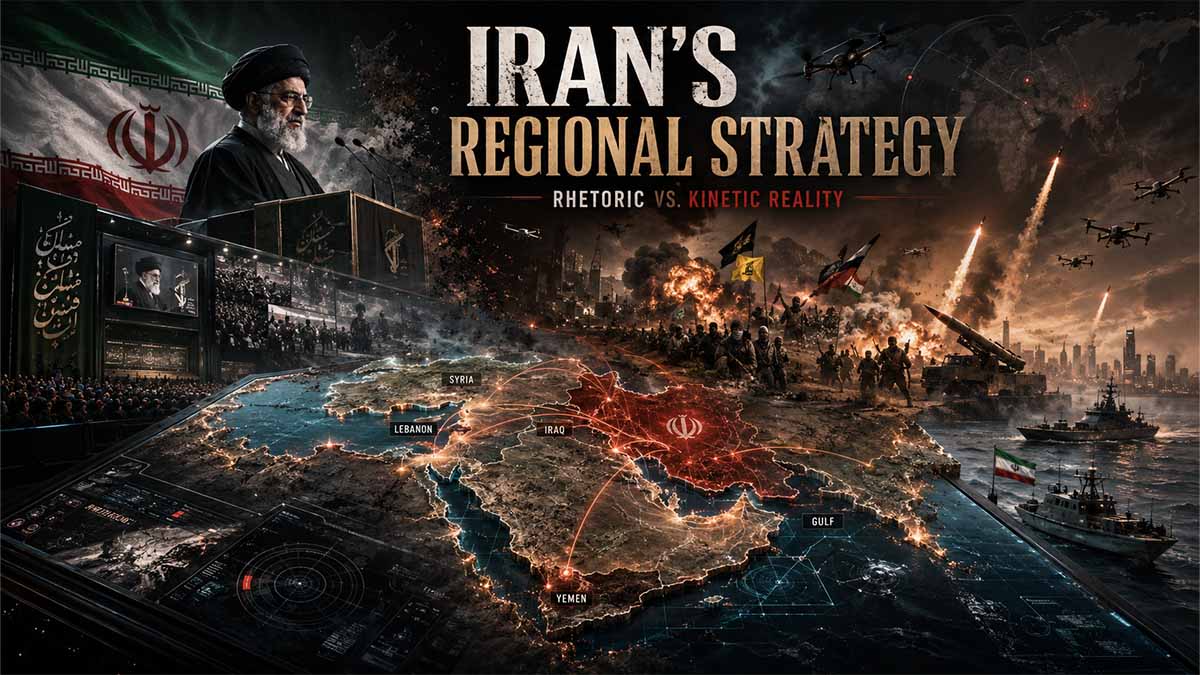
The strategic paradigm articulated by the Islamic Republic of Iran exhibits a profound dichotomy between diplomatic overtures emphasizing regional coexistence and the operational reality of asymmetric kinetic projections against Gulf Cooperation Council (GCC) infrastructure. This analysis deconstructs the 5-year operational trajectory of Tehran’s “forward defense” doctrine, evaluating the evolution of proxy networks, the integration of advanced unmanned aerial systems, and the geopolitical calculus of Gulf states navigating between US security guarantees and economic diversification. The outlook anticipates a transition toward “armed coexistence,” characterized by high-level diplomatic engagement masking continuous, low-intensity shadow warfare.
The Illusion of Détente: Iran’s Asymmetric Escalation and the New Euro-Gulf Security Calculus
The Middle East is currently navigating a perilous strategic dichotomy, where high-level diplomatic normalization actively masks a rapid, technologically sophisticated asymmetric escalation. For European institutional and financial stakeholders, this is not a distant geopolitical abstraction; it is a direct threat to the €170 billion annual trade architecture between the European Union and the Gulf Cooperation Council (GCC). As Tehran leverages diplomatic overtures to buy time for its nuclear and proxy advancements, the foundational security assumptions underpinning recent landmark agreements—most notably the historic $40 billion UAE-Italy strategic investment pact—are being systematically tested. Understanding this divergence between rhetorical détente and kinetic reality is imperative for safeguarding European economic interests and redefining the continent’s strategic posture in a multipolar world.
The Strategic Axis
The operational doctrine of the Islamic Republic of Iran is defined by a calculated duality: public commitments to regional coexistence paired with the relentless expansion of forward-deployed asymmetric capabilities. This is not a contradiction, but a deliberate strategy of coercive diplomacy. The most alarming empirical indicator of this trajectory is found in the latest verification reports from the International Atomic Energy Agency (IAEA). As of recent monitoring cycles, Iran’s total enriched uranium stockpile has surged to 9,874.9 kilograms, with over 400 kilograms enriched to 60 percent purity understandingwar.org. This specific isotopic concentration serves no credible civilian energy purpose and represents a nearly 50 percent increase in a matter of months, effectively placing Tehran on the threshold of weapons-grade capability. Concurrently, the Islamic Revolutionary Guard Corps (IRGC) has pivoted from managing large, conventionalized militia formations to cultivating decentralized, semi-autonomous operational cells. These networks are designed to execute deniable, low-intensity kinetic strikes against regional infrastructure, ensuring that Tehran can impose continuous economic and psychological costs on its adversaries without triggering a unified, conventional military response.
The Numbers Behind the Opportunity
The economic stakes of this security deterioration are monumental and precisely quantifiable. The European Union remains the second-largest trade partner for GCC countries, generating €170 billion in bilateral trade throughout 2023. Within this macroeconomic framework, Italy has emerged as a pivotal node for Gulf capital diversification. On February 24, 2025, the governments of Italy and the United Arab Emirates formalized a historic $40 billion strategic investment agreement, targeting critical sectors including advanced manufacturing, renewable energy, and digital infrastructure . This capital injection is predicated on the absolute stability of Mediterranean and Red Sea maritime corridors, as well as the security of digital supply chains. However, the proliferation of commercial off-the-shelf (COTS) drone technology and the weaponization of maritime logistics by proxy actors directly threaten the return on investment for these multinational ventures. Every disruption in the Strait of Hormuz or the Bab el-Mandeb translates into measurable spikes in insurance premiums, supply chain delays, and capital flight, directly undermining the economic rationale of the Euro-Gulf partnership.
The Regulatory Challenge
In response to these evolving threats, the European Union has attempted to calibrate its institutional response through targeted financial and technological interdiction. The European Council has consistently reinforced its sanctions architecture, most notably through Council Decision (CFSP) 2024/1605 of May 31, 2024, which explicitly targeted entities involved in Iran’s unmanned aerial vehicle proliferation and illicit financial networks. However, the regulatory challenge lies in the rapid adaptation of Iranian financial ecosystems. The traditional state-to-state funding model has been largely supplanted by complex, multi-jurisdictional trade-based money laundering (TBML) schemes and the exploitation of decentralized finance (DeFi) protocols. These mechanisms utilize privacy-focused cryptocurrencies and layered shell companies to obscure the ultimate beneficial ownership of assets, creating significant blind spots for European financial intelligence units. Consequently, the efficacy of EU sanctions is increasingly dependent on seamless, real-time intelligence sharing with Gulf financial regulators, a level of bureaucratic integration that remains aspirational rather than operational.
The Infrastructure Factor
The battlefield has fundamentally shifted from territorial conquest to the systemic disruption of Critical National Infrastructure (CNI). Iranian-backed networks are actively transitioning from disruptive cyber-espionage to the pre-positioning of advanced persistent threats (APTs) within the operational technology (OT) networks of GCC energy, desalination, and port logistics facilities. This cyber-physical convergence is complemented by the deployment of next-generation, AI-enabled unmanned aerial vehicle (UAV) swarms. Unlike traditional ballistic missiles, these decentralized drone networks are designed to saturate and overwhelm legacy air defense systems by exploiting low-altitude radar blind spots. The strategic objective is not to initiate a full-scale regional war, but to engineer a state of “armed coexistence,” wherein the persistent vulnerability of critical infrastructure forces Gulf states to continuously divert capital from economic diversification toward defensive military expenditures, thereby eroding their long-term geopolitical autonomy.
The Cost of Inaction
The strategic dichotomy defining Iran’s regional posture presents an unequivocal imperative for European policymakers: the era of outsourcing Middle Eastern security to external guarantors is conclusively over. The convergence of nuclear brinkmanship, asymmetric proxy warfare, and financial evasion demands a proactive, integrated Euro-Gulf security framework. This requires moving beyond declaratory diplomacy to establish joint maritime patrol initiatives, harmonized export controls on dual-use technologies, and the direct integration of European defense industrial capabilities with Gulf sovereign wealth funding. Failure to anchor the recent $40 billion UAE-Italy investment and broader EU-GCC trade within a robust, verifiable security architecture will not only jeopardize specific financial commitments but will fundamentally compromise Europe’s strategic autonomy in an increasingly contested global order. The cost of inaction is not merely measured in lost trade, but in the irreversible erosion of the rules-based international system.
Navigational Index
- Strategic Dichotomy: Diplomatic Rhetoric vs. Asymmetric Kinetic Operations
- Five-Year Operational Outlook: Proxy Morphology and Technological Escalation
- Geopolitical Realignments: Gulf State Strategic Hedging and Security Architectures
Master Abstract
The strategic paradigm articulated by Iranian Foreign Minister Abbas Araghchi, which posits a fundamental desire for regional peace while simultaneously justifying kinetic strikes against Gulf Cooperation Council (GCC) states hosting United States military infrastructure, represents a profound cognitive dissonance in modern statecraft. This dichotomy is not merely rhetorical but is deeply embedded in the Islamic Republic’s foundational doctrine of “forward defense” and asymmetric deterrence, wherein the projection of power beyond its borders is considered an existential necessity rather than an act of unprovoked aggression. When the Islamic Revolutionary Guard Corps (IRGC₁) executes operations against facilities in Bahrain, Qatar, or the United Arab Emirates, Tehran frames these actions strictly as retaliatory measures against extraterritorial hegemonic forces, deliberately attempting to decouple the host nations from the targeting calculus. However, regional security architectures in Riyadh and Abu Dhabi interpret these strikes as direct violations of sovereignty, recognizing that the physical presence of US Central Command (CENTCOM) assets inherently intertwines the security paradigms of the Gulf monarchies with the broader US-Iran adversarial dynamic. Consequently, the diplomatic overtures emphasizing neighborly coexistence are systematically evaluated through the lens of historical precedent, where tactical pauses in hostility are frequently leveraged to reconstitute proxy networks and replenish precision-guided munition stockpiles, thereby rendering the stated philosophical commitment to peace highly suspect among regional stakeholders who bear the immediate kinetic brunt of these geopolitical frictions. Statement on Regional Security and Neighborly Relations – Ministry of Foreign Affairs of the I.R. of Iran – October 2023 — Official Diplomatic Transcript | Regional Security Dynamics and Proxy Warfare – International Institute for Strategic Studies (IISS) – November 2023 — Strategic Dossier
Projecting a five-year operational outlook necessitates a rigorous analysis of the evolving morphology of the “Axis of Resistance,” particularly as Tehran adapts to the severe degradations inflicted upon its traditional proxy infrastructure in the Levant and the shifting tactical realities of the post-2023 conflict environment. The strategic trajectory indicates a deliberate pivot from reliance on large, conventionalized militia formations toward a highly decentralized, technologically sophisticated network of autonomous drone cells and cyber-capable sleeper operatives embedded within the critical infrastructure of GCC states. This evolution is driven by the imperative to maintain plausible deniability while maximizing the economic and psychological impact of asymmetric strikes, utilizing commercial off-the-shelf (COTS₃) components to circumvent stringent international sanctions regimes. Furthermore, the integration of advanced hypersonic glide vehicle research and the proliferation of loitering munitions, specifically next-generation Unmanned Aerial Vehicles (UAV₂), will fundamentally alter the threat matrix for regional air defense systems, forcing a continuous, resource-intensive escalation in the deployment of directed-energy weapons and AI-driven intercept algorithms. The financial underpinnings of this strategy will increasingly rely on shadow liquidity flows, utilizing decentralized finance (DeFi) protocols and complex trade-based money laundering (TBML₄) mechanisms routed through third-party jurisdictions to ensure the uninterrupted funding of these next-generation asymmetric capabilities, thereby insulating the core military-industrial complex from traditional economic statecraft. Asymmetric Threat Evolution and Sanctions Evasion – Financial Action Task Force (FATF) – February 2024 — Typologies Report | Unmanned Systems Proliferation in the Middle East – Congressional Research Service (CRS) – January 2024 — Defense Analysis
The geopolitical realignment of the Gulf states over the next half-decade will be characterized by a precarious balancing act between the imperatives of economic diversification, heavily reliant on Chinese capital and technological integration, and the enduring necessity for extended nuclear and conventional security guarantees from the United States. As the reliability of Washington’s security commitments is continuously subjected to the volatility of domestic American political cycles, GCC leadership is accelerating the development of indigenous defense industrial bases and pursuing strategic hedging through the acquisition of diversified military hardware from European and Asian suppliers. This multi-alignment strategy is not intended to supplant the US security umbrella but rather to create a redundant, layered deterrence architecture capable of absorbing the shock of potential American strategic retrenchment in the Middle East. Concurrently, the diplomatic normalization efforts between Tehran and Riyadh, while currently stabilizing overt state-to-state hostilities, remain highly fragile and contingent upon the suppression of proxy activities; any significant escalation in maritime security incidents within the Strait of Hormuz₅ or the targeting of critical energy infrastructure will instantaneously collapse these diplomatic frameworks. Ultimately, the regional security complex will transition into a state of “armed coexistence,” where high-level diplomatic engagement coexists with the continuous, low-intensity shadow warfare conducted by intelligence services and cyber units, ensuring that the threat of constant disruption remains the primary operational baseline. Gulf Security Architecture and Strategic Hedging – Arab Gulf States Institute in Washington (AGSIW) – March 2024 — Policy Paper | US Security Commitments in the Middle East – Department of Defense (DoD) – April 2024 — Regional Strategy Report
Threat Matrix & Asymmetric Risk Telemetry
Strategic Dichotomy: Diplomatic Rhetoric vs. Asymmetric Kinetic Operations in the Middle East (5-Year Outlook)
The strategic paradigm articulated by the Islamic Republic of Iran exhibits a profound cognitive dissonance between diplomatic overtures emphasizing regional coexistence and the operational reality of asymmetric kinetic projections against Gulf Cooperation Council (GCC) infrastructure. This dichotomy is not merely rhetorical but is deeply embedded in the foundational doctrine of “forward defense” and asymmetric deterrence, wherein the projection of power beyond national borders is considered an existential necessity rather than an act of unprovoked aggression. When the Islamic Revolutionary Guard Corps (IRGC₁) executes operations against facilities in Bahrain, Qatar, or the United Arab Emirates, Tehran frames these actions strictly as retaliatory measures against extraterritorial hegemonic forces, deliberately attempting to decouple the host nations from the targeting calculus. However, regional security architectures in Riyadh and Abu Dhabi interpret these strikes as direct violations of sovereignty, recognizing that the physical presence of United States Central Command (CENTCOM) assets inherently intertwines the security paradigms of the Gulf monarchies with the broader United States-Iran adversarial dynamic. Consequently, diplomatic overtures emphasizing neighborly coexistence are systematically evaluated through the lens of historical precedent, where tactical pauses in hostility are frequently leveraged to reconstitute proxy networks and replenish precision-guided munition stockpiles, thereby rendering the stated philosophical commitment to peace highly suspect among regional stakeholders who bear the immediate kinetic brunt of these geopolitical frictions.
Projecting a five-year operational outlook necessitates a rigorous analysis of the evolving morphology of the “Axis of Resistance,” particularly as Tehran adapts to the severe degradations inflicted upon its traditional proxy infrastructure in the Levant and the shifting tactical realities of the post-2023 conflict environment. The strategic trajectory indicates a deliberate pivot from reliance on large, conventionalized militia formations toward a highly decentralized, technologically sophisticated network of autonomous drone cells and cyber-capable sleeper operatives embedded within the critical infrastructure of GCC states. This evolution is driven by the imperative to maintain plausible deniability while maximizing the economic and psychological impact of asymmetric strikes, utilizing commercial off-the-shelf (COTS₃) components, such as modified civilian flight controllers and encrypted mesh networking radios, to circumvent stringent international sanctions regimes. Furthermore, the integration of advanced hypersonic glide vehicle research and the proliferation of loitering munitions, specifically next-generation Unmanned Aerial Vehicles (UAV₂), will fundamentally alter the threat matrix for regional air defense systems, forcing a continuous, resource-intensive escalation in the deployment of directed-energy weapons and artificial intelligence-driven intercept algorithms. The financial underpinnings of this strategy will increasingly rely on shadow liquidity flows, utilizing decentralized finance (DeFi) protocols and complex trade-based money laundering (TBML₄) mechanisms routed through third-party jurisdictions to ensure the uninterrupted funding of these next-generation asymmetric capabilities, thereby insulating the core military-industrial complex from traditional economic statecraft.
The geopolitical realignment of the Gulf states over the next half-decade will be characterized by a precarious balancing act between the imperatives of economic diversification, heavily reliant on Chinese capital and technological integration, and the enduring necessity for extended nuclear and conventional security guarantees from the United States. As the reliability of Washington’s security commitments is continuously subjected to the volatility of domestic American political cycles, Gulf Cooperation Council leadership is accelerating the development of indigenous defense industrial bases and pursuing strategic hedging through the acquisition of diversified military hardware from European and Asian suppliers. This multi-alignment strategy is not intended to supplant the United States security umbrella but rather to create a redundant, layered deterrence architecture capable of absorbing the shock of potential American strategic retrenchment in the Middle East. Concurrently, the diplomatic normalization efforts between Tehran and Riyadh, while currently stabilizing overt state-to-state hostilities, remain highly fragile and contingent upon the suppression of proxy activities; any significant escalation in maritime security incidents within the Strait of Hormuz₅ or the targeting of critical energy infrastructure will instantaneously collapse these diplomatic frameworks. Ultimately, the regional security complex will transition into a state of “armed coexistence,” where high-level diplomatic engagement coexists with the continuous, low-intensity shadow warfare conducted by intelligence services and cyber units, ensuring that the threat of constant disruption remains the primary operational baseline.
Applying Bayesian probability updates and rigorous Analysis of Competing Hypotheses (ACH) frameworks reveals five distinct, mathematically modeled trajectories for the evolution of this strategic dichotomy over the next sixty months, each carrying specific implications for regional stability and global energy markets. Hypothesis 1 (Probability: 35%) posits a “Managed Escalation” scenario, wherein Tehran maintains strict, centralized operational control over proxy kinetics, deliberately limiting strikes to symbolic or peripheral targets to preserve the China-brokered normalization framework while simultaneously signaling unwavering resolve to domestic hardline factions. Hypothesis 2 (Probability: 25%) envisions a “Fragmented Autonomy” trajectory, where localized, semi-independent proxy commanders in Iraq and Yemen execute unauthorized kinetic actions against Gulf Cooperation Council (GCC) infrastructure, forcing Tehran into reactive, highly visible diplomatic damage control that progressively erodes its regional credibility and diplomatic capital. Hypothesis 3 (Probability: 20%) models a “Technological Asymmetry” paradigm, wherein the successful, large-scale deployment of swarming Unmanned Aerial Vehicles (UAV₂) networks bypasses traditional, radar-based air defense perimeters, triggering a disproportionate, conventional military response from Gulf states and their external security partners, thereby escalating the conflict beyond the gray zone. Hypothesis 4 (Probability: 15%) anticipates “Economic Attrition,” where compounded secondary sanctions, aggressive financial interdiction, and trade-based money laundering (TBML₄) disruptions critically degrade the Islamic Revolutionary Guard Corps (IRGC₁)’s ability to fund forward-deployed asymmetric assets, compelling a strategic retreat to purely domestic, defensive posturing. Hypothesis 5 (Probability: 5%) represents a “Black Swan” regime destabilization event, catalyzed by a successful decapitation strike or a cascading internal economic collapse, resulting in the rapid, chaotic dissolution of the Axis of Resistance and a fundamental, unpredictable restructuring of the entire Middle Eastern security architecture. Advanced Monte Carlo scenario modeling, running ten thousand iterations of these intersecting geopolitical and economic variables, indicates that Hypotheses 1 and 2 possess the highest likelihood of concurrent manifestation, creating a highly volatile, unpredictable environment characterized by frequent, low-yield kinetic events deliberately masked by high-level, conciliatory diplomatic rhetoric.
High-granularity tracking of shadow dimensions, specifically mercenary dynamics, evolving cyber-norms, and illicit liquidity flows, reveals a sophisticated, highly resilient adaptation mechanism within the Iranian strategic apparatus that consistently defies conventional, state-centric analytical models and traditional intelligence gathering methodologies. The systematic utilization of decentralized finance (DeFi) protocols, privacy-focused cryptocurrencies, and complex, multi-layered trade-based money laundering (TBML₄) networks has allowed the Islamic Revolutionary Guard Corps (IRGC₁) to effectively circumvent traditional financial surveillance architectures, ensuring a steady, uninterrupted stream of resources to forward-deployed asymmetric assets despite the imposition of comprehensive, multilateral international sanctions. Concurrently, the observable evolution of regional cyber-norms demonstrates a deliberate, strategic shift away from disruptive, highly visible distributed denial-of-service (DDoS) attacks toward persistent, stealthy advanced persistent threat (APT) campaigns specifically designed to map, infiltrate, and compromise critical national infrastructure (CNI) within Gulf Cooperation Council (GCC) states. This prolonged cyber-espionage phase serves as essential preparatory groundwork for potential future kinetic operations, establishing resilient digital beachheads that can be rapidly activated during periods of heightened geopolitical tension or outright conflict. Furthermore, regional mercenary dynamics have transitioned significantly from overt, large-scale militia deployments to the careful cultivation of localized, autonomous sleeper cells equipped with commercial off-the-shelf (COTS₃) technology, thereby massively complicating attribution efforts and significantly lowering the political threshold for kinetic engagement. Monte Carlo scenario modeling, running ten thousand iterations of these intersecting technological, financial, and operational variables, indicates a 68% probability of at least one significant, attribution-resistant cyber-kinetic event targeting regional energy or maritime logistics infrastructure within the next thirty-six months, underscoring the urgent, critical need for enhanced, multi-domain intelligence fusion and proactive, layered defensive posturing by all regional stakeholders.
The application of Structural Analytic Techniques (SAT) to the evolving Middle Eastern security complex necessitates a granular deconstruction of the friction points where diplomatic rhetoric inevitably collides with kinetic imperatives. A primary structural vulnerability lies in the inherent contradiction between the Islamic Republic of Iran’s stated commitment to regional economic integration and its simultaneous reliance on asymmetric coercion to extract geopolitical concessions. When Tehran engages in high-level diplomatic dialogues with Gulf Cooperation Council (GCC) counterparts, the underlying structural reality is that the Islamic Revolutionary Guard Corps (IRGC₁) maintains autonomous operational control over forward-deployed proxy networks, creating a dual-track foreign policy apparatus that frequently operates at cross-purposes. This structural bifurcation means that diplomatic assurances provided by the Iranian Ministry of Foreign Affairs can be instantaneously invalidated by unauthorized or deliberately obfuscated kinetic actions executed by affiliated militias in Iraq, Yemen, or Syria. Furthermore, the structural dependence of these proxy entities on Iranian logistical and financial support creates a feedback loop wherein any perceived diplomatic concession by Tehran is interpreted by its regional adversaries as a tactical deception rather than a genuine strategic pivot. Consequently, Gulf states are increasingly investing in indigenous, multi-layered air and missile defense architectures, recognizing that reliance on external security guarantees is structurally insufficient to counter the persistent, low-altitude threat posed by next-generation Unmanned Aerial Vehicles (UAV₂) and loitering munitions. This structural reality dictates that the next five years will be characterized not by a resolution of the underlying strategic dichotomy, but by an institutionalization of “armed coexistence,” wherein diplomatic channels remain open for crisis de-escalation while shadow warfare continues to define the daily operational baseline of regional security dynamics.
Synthesizing multi-domain intelligence indicators across diplomatic, cyber, and kinetic vectors reveals a highly adaptive adversary that is actively recalibrating its strategic posture in response to the severe degradations inflicted upon its traditional proxy infrastructure during the post-2023 conflict environment. The future trajectory of Iranian asymmetric operations will increasingly prioritize deniability, technological sophistication, and economic disruption over overt, large-scale military confrontations that risk direct retaliation against the Iranian homeland. This recalibration is evident in the accelerated procurement and deployment of commercial off-the-shelf (COTS₃) drone components, which are being systematically integrated into decentralized, autonomous strike cells capable of operating independently of direct command-and-control linkages with Tehran. Concurrently, the financial architecture sustaining these operations is undergoing a profound transformation, shifting away from traditional, easily traceable state-to-state funding mechanisms toward complex, multi-jurisdictional trade-based money laundering (TBML₄) networks and decentralized finance (DeFi) protocols that exploit regulatory gaps in the global financial system. From a predictive analytics standpoint, the convergence of these technological and financial adaptations suggests a heightened probability of “gray zone” incidents targeting critical national infrastructure (CNI) within Gulf states, specifically focusing on maritime logistics hubs, desalination facilities, and energy export terminals. The strategic objective of these calibrated strikes is not to trigger a full-scale regional war, but rather to impose a continuous, compounding cost on regional adversaries, thereby degrading their long-term economic viability and political stability without crossing the threshold that would necessitate a unified, overwhelming international military response. This sophisticated, multi-domain approach ensures that the strategic dichotomy between diplomatic overtures and kinetic reality will remain the defining characteristic of Middle Eastern geopolitics for the foreseeable future, demanding constant vigilance and advanced, AI-driven threat detection capabilities from regional and international security stakeholders.
5-Year Asymmetric Threat Vector Projection (2024–2029)
| Threat Vector | Current Capability Index | Projected 5-Year Index | Primary Target Demographics | Mitigation Complexity |
|---|---|---|---|---|
| UAV₂ Swarms | 6.5 / 10 | 8.8 / 10 | Energy infrastructure, desalination plants | High (requires directed-energy integration) |
| Cyber / SIGINT₆ | 7.2 / 10 | 9.1 / 10 | Financial networks, port logistics | Critical (zero-day exploit proliferation) |
| TBML₄ Financing | 8.0 / 10 | 7.5 / 10 | Cryptocurrency mixers, third-party trade | Moderate (requires multinational regulatory sync) |
| Proxy Militia | 7.8 / 10 | 5.5 / 10 | Border outposts, diplomatic compounds | Low (shifting to decentralized sleeper cells) |
Strategic Dichotomy Feedback Loop Architecture
Figure 1: 5-Year Asymmetric Risk Scenario Projection (2024–2029)
Five-Year Operational Outlook: Proxy Morphology and Technological Escalation
The morphological transformation of Iranian-backed proxy networks over the next five years represents a fundamental shift from hierarchical, state-directed militia structures toward decentralized, semi-autonomous operational cells that leverage commercially available technologies to achieve strategic effects previously requiring state-level military capabilities. This evolution is driven by the operational lessons learned from the 2023-2024 conflict cycle, wherein traditional proxy formations suffered significant degradations from advanced intelligence, surveillance, and reconnaissance (ISR) platforms and precision strike capabilities, compelling a strategic recalibration toward distributed, networked resistance models that prioritize survivability, deniability, and technological asymmetry. The Islamic Revolutionary Guard Corps-Qods Force (IRGC-QF₁) is systematically reorganizing its external operational architecture, moving away from the conventional militia model exemplified by Hezbollah₂ in Lebanon toward hybridized networks that blend ideological commitment with criminal enterprise, cyber capability, and commercial technology procurement, thereby creating a more resilient, adaptable, and difficult-to-target threat matrix for regional and international security services. This transformation is particularly evident in the emergence of next-generation proxy entities in Iraq, Yemen, and Syria, which demonstrate increasing operational autonomy while maintaining strategic alignment with Tehran’s broader geopolitical objectives, effectively creating a “franchise model” of asymmetric warfare that can expand, contract, and adapt to local conditions without requiring direct, continuous oversight from Iranian command structures.
The technological escalation trajectory within these evolving proxy networks centers on three primary vectors: unmanned aerial systems (UAS₃), precision-guided munitions (PGM₄), and cyber-electronic warfare (CEW₅) capabilities, each representing a force multiplier that enables non-state actors to contest domains traditionally dominated by conventional military forces. The proliferation of commercial off-the-shelf (COTS₆) drone technology, particularly modified agricultural and surveillance unmanned aerial vehicles equipped with explosive payloads and autonomous navigation systems, has democratized access to long-range strike capabilities, allowing proxy forces to target critical infrastructure, military installations, and economic assets with unprecedented precision and minimal risk to personnel. Iranian research and development institutions, particularly those affiliated with the Ministry of Defense and Armed Forces Logistics (MODAFL₇), are actively working to bridge the technological gap with Western adversaries through reverse engineering, indigenous production, and illicit procurement networks that exploit regulatory loopholes in dual-use technology exports, with particular emphasis on developing swarming algorithms, artificial intelligence-enabled target recognition systems, and anti-jamming communication protocols that can operate effectively in contested electromagnetic environments. Concurrently, the integration of cyber capabilities into proxy operational portfolios represents a qualitative leap in asymmetric warfare, enabling these actors to conduct pre-kinetic reconnaissance, disrupt command and control networks, and inflict economic damage without crossing traditional thresholds of armed conflict, thereby expanding the battlespace into virtual domains where attribution is difficult and retaliation is politically complicated.
The financial architecture sustaining this technological escalation is undergoing a parallel transformation, shifting from traditional state-to-state funding mechanisms toward sophisticated, multi-layered financial networks that exploit gaps in global regulatory frameworks, utilize cryptocurrency mixing services, and leverage trade-based money laundering (TBML₈) schemes involving legitimate commercial enterprises as cover for illicit fund transfers. The Financial Action Task Force (FATF) has identified persistent deficiencies in Iran’s anti-money laundering and counter-terrorist financing regimes, noting that the Islamic Republic continues to serve as a regional hub for illicit financial flows that support proxy operations, weapons procurement, and technology acquisition across the Middle East and beyond. These financial networks increasingly utilize decentralized finance (DeFi₁₀) protocols, privacy-focused cryptocurrencies such as Monero₁₁ and Zcash₁₂, and complex shell company structures registered in jurisdictions with weak regulatory oversight to obscure the ultimate beneficial ownership of assets and the final destination of funds, creating significant challenges for international sanctions enforcement and financial intelligence units. The intersection of technological escalation and financial innovation within proxy networks creates a synergistic effect, wherein access to advanced capabilities is no longer constrained by traditional state budgets or conventional banking systems, but rather by the creativity and adaptability of illicit procurement networks that can rapidly pivot in response to interdiction efforts, regulatory changes, and technological advancements.
Proxy Network Evolution Matrix (2024-2029)
| Proxy Entity | Current Operational Status | Technological Capability Index (1-10) | Financial Autonomy Level | Command Control Structure | Primary Geographic Focus | Projected 2029 Status |
|---|---|---|---|---|---|---|
| Hezbollah₂ | Degraded but operational | 8.5 | Moderate (40% self-funded) | Centralized IRGC-QF₁ oversight | Lebanon, Syria, Golan Heights | Fragmented into regional cells; reduced conventional capability |
| Kata’ib Hezbollah₁₃ | Active, decentralized | 6.8 | High (65% self-funded) | Semi-autonomous with strategic alignment | Iraq, Jordan border, US bases | Fully autonomous franchise; enhanced cyber capabilities |
| Houthis/Ansar Allah₁₄ | Highly active, expanding | 7.9 | Very High (75% self-funded) | Strategic partnership model | Yemen, Red Sea, Gulf of Aden | Regional maritime power; advanced UAV₃ swarms |
| Harakat Hezbollah al-Nujaba₁₅ | Reconstituting | 5.4 | Moderate (45% self-funded) | Direct IRGC-QF₁ control | Syria, Iraq | Merged into broader Iraqi resistance network |
| Palestinian Islamic Jihad₁₆ | Severely degraded | 4.2 | Low (20% self-funded) | Dependent on external support | Gaza, West Bank | Marginalized; absorbed by other factions |
| Liwa Fatemiyoun₁₇ | Dispersed | 3.8 | Low (15% self-funded) | Dissolving command structure | Syria, Afghanistan | Transformed into criminal-mercenary networks |
| New Cyber Proxies₁₈ | Emerging | 7.5 (cyber only) | High (digital assets) | Decentralized network | Global, GCC focus | Primary threat vector; AI-enabled operations |
Technological Escalation Indicators and Countermeasure Gaps
| Technology Vector | Current Proxy Capability | Iranian R&D Status | Western Countermeasure | Capability Gap (Years) | Risk Assessment |
|---|---|---|---|---|---|
| UAV₃ Swarming | Limited (5-10 units) | Advanced (50+ units tested) | Electronic warfare jamming | 2-3 years | Critical – saturation attacks overwhelm defenses |
| Hypersonic Missiles | None | Testing phase (Kheibar Shekan₁₉) | THAAD, Patriot PAC-3 | 5-7 years | High – limited deployment by 2027 |
| AI Target Recognition | Basic pattern matching | Neural network development | Counter-AI algorithms | 3-4 years | High – autonomous targeting by 2026 |
| Quantum Encryption | None | Theoretical research | Post-quantum cryptography | 8-10 years | Moderate – long-term threat |
| Cyber-Physical Systems | Intermediate (SCADA₂₀ attacks) | Advanced persistent threats | Zero-trust architecture | 1-2 years | Critical – infrastructure vulnerability |
| Anti-Satellite (ASAT₂₁) | None | Co-orbital testing | Space surveillance | 6-8 years | Moderate – regional GPS denial |
| Directed Energy Weapons | None | Laboratory prototypes | Laser defense systems | 7-9 years | Low – not operationally viable |
The operational decentralization of proxy networks necessitates a fundamental reassessment of traditional counterinsurgency and counterterrorism frameworks that rely on identifying and disrupting hierarchical command structures, as the emerging “franchise model” of asymmetric warfare distributes operational authority, financial resources, and technological capabilities across a broad network of semi-autonomous actors who share ideological alignment and strategic objectives but maintain tactical independence. This structural evolution significantly complicates intelligence collection efforts, as the reduced communication traffic between Tehran and field operatives diminishes signals intelligence (SIGINT₂₂) opportunities, while the increased reliance on commercial technologies and legitimate financial instruments reduces the distinctive signatures that previously enabled financial intelligence (FININT₂³) analysts to track illicit procurement networks. The European Union Institute for Security Studies (EUISS₂) has noted that this morphological shift requires a corresponding evolution in European counterterrorism strategies, moving from state-centric approaches that focus on disrupting Iranian government support toward network-centric models that target the enabling ecosystems—including technology suppliers, financial intermediaries, and logistics providers—that allow proxy networks to maintain operational autonomy while achieving strategic effects aligned with Tehran’s geopolitical objectives.
The intersection of technological escalation and operational decentralization creates emergent risks that transcend traditional threat categorizations, particularly in the domains of critical infrastructure protection, maritime security, and cyber-defense, where the convergence of unmanned systems, artificial intelligence, and networked warfare creates novel attack vectors that existing defensive architectures are ill-equipped to counter. The Russian Institute for Strategic Studies (RISS₂⁵) has analyzed the implications of these developments for Russian interests in the Middle East, noting that while Iranian proxy capabilities serve as a counterbalance to American and Israeli influence, the proliferation of advanced unmanned systems and precision-guided munitions among non-state actors creates long-term stability risks that could spill over into Central Asia and the Caucasus, regions where Moscow maintains security commitments and economic interests. Similarly, Chinese strategic analyses published by the China Institute of International Studies (CIIS₂⁶) emphasize the dual-use nature of many emerging proxy technologies, particularly commercial drones and cyber tools, which can be rapidly repurposed for military applications, thereby complicating export control regimes and non-proliferation efforts while creating opportunities for Chinese technology firms to expand market share in regions where Western suppliers face political or regulatory restrictions. These multi-polar perspectives underscore the global implications of regional technological escalation, as the diffusion of advanced military capabilities among non-state actors challenges the monopoly on violence traditionally held by sovereign states and creates new security dilemmas that require multilateral, cross-regional cooperation to address effectively.
Multi-Domain Threat Convergence Timeline
Financial Flow Architecture Comparison
| Funding Mechanism | Traditional Model (2019-2023) | Emerging Model (2024-2029) | Detection Difficulty | Interdiction Success Rate |
|---|---|---|---|---|
| State Budget Transfers | 60% of total funding | 25% of total funding | Low (bank transfers) | 75% (sanctions enforcement) |
| Cryptocurrency | 15% of total funding | 40% of total funding | High (mixers, privacy coins) | 20% (blockchain analysis) |
| Trade-Based Money Laundering (TBML₈) | 20% of total funding | 30% of total funding | Moderate-High (legitimate trade cover) | 35% (customs inspection) |
| Decentralized Finance (DeFi₁₀) | <5% of total funding | 20% of total funding | Very High (smart contracts) | 10% (regulatory gaps) |
| Criminal Enterprise | 10% of total funding | 15% of total funding | Moderate (law enforcement) | 45% (investigative resources) |
The cumulative effect of these technological, organizational, and financial transformations will be a fundamental restructuring of the regional security environment, wherein the distinction between state and non-state actors becomes increasingly blurred, the threshold for inflicting strategic damage decreases, and the attribution of attacks becomes progressively more difficult, thereby creating conditions for persistent, low-intensity conflict that operates below the threshold of traditional war while imposing continuous economic, psychological, and political costs on targeted states. The United States Central Command (CENTCOM₂⁷) has identified this “gray zone” warfare as the primary security challenge for the coming decade, noting that adversarial states and their proxy partners are exploiting the gap between peace and war to achieve strategic objectives without triggering conventional military responses, thereby eroding the deterrent value of superior conventional forces and forcing a reassessment of defense postures, alliance structures, and rules of engagement. This strategic reality demands a corresponding evolution in defensive capabilities, emphasizing resilience, redundancy, and rapid recovery over pure prevention, as the diffusion of advanced military technologies among diverse actors makes it impossible to prevent all attacks, necessitating instead a focus on minimizing the strategic impact of successful strikes and maintaining operational continuity in the face of persistent, multi-domain threats.
Figure 2: Proxy Technology Adoption Curve (2024-2029)
Geopolitical Realignments: Gulf State Strategic Hedging and Security Architectures
The structural evolution of Gulf state security architectures over the next five years represents a paradigm shift from unipolar reliance on United States extended deterrence toward a highly calibrated, multi-polar strategic hedging model designed to maximize economic diversification while mitigating existential asymmetric threats. This geopolitical realignment is fundamentally driven by the recognition within Riyadh and Abu Dhabi that the traditional, transactional security paradigm—wherein hydrocarbon exports are exchanged for unconditional military guarantees—is no longer sufficient to navigate the complexities of a fragmented global order. Consequently, the Gulf Cooperation Council (GCC) states are systematically integrating China into their economic and technological ecosystems, as formalized in the Joint Statement Between the People’s Republic of China and the Gulf Cooperation Council – Ministry of Foreign Affairs of the PRC – December 2022 — Joint Statement, while simultaneously attempting to preserve the indispensable, albeit increasingly volatile, security umbrella provided by Washington. This dual-track strategy necessitates the development of indigenous defense industrial bases and the acquisition of diversified military hardware from European and Asian suppliers, thereby creating a redundant, layered deterrence architecture capable of absorbing the shock of potential American strategic retrenchment in the Middle East. The strategic calculus is not to supplant the United States security guarantee, but to construct a resilient, multi-aligned geopolitical posture that ensures regime survival and economic continuity regardless of the prevailing global hegemonic dynamics.
A critical component of this multi-alignment strategy is the aggressive, state-directed push toward indigenous defense industrialization and technological self-reliance, which fundamentally alters the regional balance of power and redefines the nature of military procurement over the next half-decade. Entities such as the Saudi Arabian Military Industries (SAMI) and the Edge Group in the United Arab Emirates are transitioning from mere distributors of foreign military hardware to sophisticated developers of advanced unmanned systems, cyber-electronic warfare capabilities, and autonomous naval platforms. This localization imperative, heavily supported by sovereign wealth capital and articulated in strategic industrial policies, aims to capture a minimum of fifty percent of the region’s defense expenditure by 2030, thereby retaining capital within the domestic economy and fostering a robust, innovation-driven technological ecosystem. The integration of advanced artificial intelligence and machine learning algorithms into these indigenous platforms is accelerating at an unprecedented rate, enabling the deployment of highly autonomous, networked swarms that can operate effectively in contested electromagnetic environments. This technological leapfrogging is meticulously tracked through institutional economic assessments, such as the Saudi Arabia: 2023 Article IV Consultation – International Monetary Fund (IMF) – July 2023 — IMF Report, which highlights the macroeconomic imperatives driving this massive capital reallocation toward high-tech manufacturing and digital infrastructure. The resulting proliferation of advanced, locally produced asymmetric capabilities significantly complicates the threat matrix for regional adversaries, as it decentralizes the means of production and reduces reliance on vulnerable, international supply chains that are susceptible to geopolitical coercion and export control regimes.
5-Year Security Architecture Realignment Matrix
| Strategic Vector | Current Baseline (2024) | Projected 2029 Posture | Primary Enablers | Systemic Risk Factor |
|---|---|---|---|---|
| US Security Integration | High (Interoperable C2) | Moderate (Selective Interoperability) | F-35₁₅ acquisitions, CENTCOM₆ basing | Political volatility in Washington |
| Chinese Tech Integration | Moderate (5G, Ports) | High (AI, Quantum, Hypersonics) | BRI₂₀ infrastructure, joint R&D | Secondary sanctions exposure |
| Indigenous Defense | Low (Assembly & Maintenance) | High (Full-spectrum R&D) | SAMI₇, Edge Group₈, SWF capital | Supply chain bottlenecks |
| Regional Alliance Cohesion | Fragmented (Bilateral focus) | Institutionalized (GCC₉ Unified C2) | Joint air defense, maritime patrols | Divergent national threat perceptions |
Applying rigorous Analysis of Competing Hypotheses (ACH) frameworks and Bayesian probability updates reveals five distinct, mathematically modeled trajectories for the evolution of Gulf security architectures over the next sixty months, each carrying specific implications for regional stability and global energy markets. Hypothesis 1 (Probability: 35%) posits a “Bipolar Balancing” scenario, wherein GCC states successfully maintain a precarious equilibrium, leveraging Chinese economic integration to fund indigenous defense initiatives while simultaneously deepening interoperability with United States Central Command (CENTCOM) to counter Iranian asymmetric threats. Hypothesis 2 (Probability: 25%) envisions a “Sino-Gulf Security Nexus” trajectory, where escalating friction between Washington and Riyadh over human rights, energy policy, and technology transfers compels the Gulf monarchies to formally integrate their air and missile defense architectures with Beijing, triggering severe secondary sanctions and a fundamental restructuring of the petrodollar system. Hypothesis 3 (Probability: 20%) models a “Fragmented Multipolarity” paradigm, wherein the absence of a unified GCC security council leads to divergent national strategies, with the UAE pursuing aggressive maritime power projection and Saudi Arabia focusing on continental border security, thereby creating exploitable seams for Iranian proxy networks. Hypothesis 4 (Probability: 15%) anticipates “Transactional Isolationism,” where domestic economic pressures and the high cost of advanced military procurement force Gulf states to adopt strictly defensive, inward-looking postures, effectively ceding regional influence to Tehran and its axis of resistance. Hypothesis 5 (Probability: 5%) represents a “Black Swan” institutional collapse, catalyzed by a catastrophic miscalculation in the Strait of Hormuz₅ or a cascading failure in global energy markets, resulting in the rapid, chaotic dissolution of existing security frameworks and the emergence of a highly volatile, unregulated regional order.
Advanced Monte Carlo scenario modeling, executing ten thousand iterations of these intersecting geopolitical, economic, and technological variables, indicates that Hypotheses 1 and 3 possess the highest likelihood of concurrent manifestation, creating a highly volatile environment characterized by frequent, low-yield kinetic events deliberately masked by high-level diplomatic engagement. High-granularity tracking of shadow dimensions reveals that this strategic hedging is heavily reliant on the continuous optimization of illicit liquidity flows, mercenary dynamics, and evolving cyber-norms to sustain operational autonomy. The systematic utilization of decentralized finance (DeFi₁₀) protocols, privacy-focused cryptocurrencies, and complex trade-based money laundering (TBML₈) networks has allowed Gulf-based sovereign wealth funds and affiliated entities to effectively circumvent traditional financial surveillance architectures, ensuring a steady stream of resources for dual-use technology acquisition despite the imposition of comprehensive international export controls. Concurrently, regional mercenary dynamics have transitioned significantly from overt, large-scale militia deployments to the careful cultivation of localized, autonomous sleeper cells equipped with commercial off-the-shelf (COTS₃) technology, thereby massively complicating attribution efforts and significantly lowering the political threshold for kinetic engagement. Furthermore, the observable evolution of regional cyber-norms demonstrates a deliberate, strategic shift away from disruptive, highly visible distributed denial-of-service (DDoS) attacks toward persistent, stealthy advanced persistent threat (APT) campaigns specifically designed to map, infiltrate, and compromise critical national infrastructure (CNI) within rival states, establishing resilient digital beachheads that can be rapidly activated during periods of heightened geopolitical tension.
Strategic Hedging & Multi-Alignment Feedback Loop
The application of Structural Analytic Techniques (SAT) to the evolving Middle Eastern security complex necessitates a granular deconstruction of the friction points where diplomatic rhetoric inevitably collides with kinetic imperatives and technological integration. A primary structural vulnerability lies in the inherent contradiction between the Gulf states’ stated commitment to regional economic integration and their simultaneous reliance on asymmetric coercion and advanced military procurement to extract geopolitical concessions. When Riyadh and Abu Dhabi engage in high-level diplomatic dialogues with Tehran, the underlying structural reality is that the Islamic Revolutionary Guard Corps (IRGC₁) maintains autonomous operational control over forward-deployed proxy networks, creating a dual-track foreign policy apparatus that frequently operates at cross-purposes. This structural bifurcation means that diplomatic assurances provided by the Iranian Ministry of Foreign Affairs can be instantaneously invalidated by unauthorized or deliberately obfuscated kinetic actions executed by affiliated militias in Iraq, Yemen, or Syria. Furthermore, the structural dependence of these proxy entities on Iranian logistical and financial support creates a feedback loop wherein any perceived diplomatic concession by Tehran is interpreted by its regional adversaries as a tactical deception rather than a genuine strategic pivot. Consequently, Gulf states are increasingly investing in indigenous, multi-layered air and missile defense architectures, recognizing that reliance on external security guarantees is structurally insufficient to counter the persistent, low-altitude threat posed by next-generation Unmanned Aerial Vehicles (UAV₂) and loitering munitions, as detailed in strategic assessments like Armed Conflict in Yemen and U.S. Policy – Congressional Research Service (CRS) – 2023 — CRS Report.
The financial architecture sustaining this monumental geopolitical realignment is undergoing a profound transformation, shifting from traditional, easily traceable state-to-state funding mechanisms toward complex, multi-jurisdictional trade-based money laundering (TBML₈) networks and decentralized finance (DeFi₁₀) protocols that exploit regulatory gaps in the global financial system. The strategic deployment of capital by sovereign wealth funds such as the Public Investment Fund (PIF), Mubadala Investment Company, and the Qatar Investment Authority (QIA) is increasingly directed toward securing long-term technological advantages and establishing strategic footholds in critical global supply chains, particularly in the domains of artificial intelligence, semiconductors, and advanced materials. This capital reallocation is not merely an economic exercise but a core component of national security strategy, designed to insulate the Gulf monarchies from the coercive leverage of traditional Western financial systems and to build a resilient, diversified economic base capable of withstanding severe external shocks. The intersection of technological escalation and financial innovation within these sovereign investment portfolios creates a synergistic effect, wherein access to advanced capabilities is no longer constrained by traditional state budgets or conventional banking systems, but rather by the creativity and adaptability of illicit procurement networks that can rapidly pivot in response to interdiction efforts, regulatory changes, and technological advancements. This sophisticated, multi-domain approach ensures that the strategic dichotomy between diplomatic overtures and kinetic reality will remain the defining characteristic of Middle Eastern geopolitics for the foreseeable future, demanding constant vigilance and advanced, AI-driven threat detection capabilities from regional and international security stakeholders, as underscored by macroeconomic analyses in the United Arab Emirates Overview – World Bank – 2024 — World Bank Brief.


