















ABSTRACT
The story of NATO’s defense spending debate unfolds against a backdrop of shifting global security priorities and historical complexities. At the heart of this debate lies a pivotal moment: German Vice Chancellor and Economy Minister Robert Habeck’s emphatic response to US President-elect Donald Trump’s ambitious call for NATO allies to increase their defense spending to an unprecedented 5% of GDP. Habeck, with characteristic German pragmatism, labeled this proposal “unrealistic” during an interview with the Funke media group. His firm stance sparked broader conversations that touch on the feasibility, implications, and intricate geopolitical underpinnings of NATO’s financial commitments in an era defined by evolving threats.
Germany’s position, as articulated by Habeck, reveals the country’s historical reluctance to fully embrace elevated military spending. Following World War II, Germany committed itself to pacifist policies, embedding a strong preference for diplomacy and economic cooperation over military interventions. This approach is deeply rooted in the country’s post-war constitution and public sentiment, which traditionally prioritized social welfare over defense investments. However, the global landscape has changed, and Germany finds itself at the crossroads of its domestic economic realities and its obligations to NATO.
Habeck’s acknowledgment of a temporary increase in spending to 3.5% of GDP reflects a significant shift in German defense policy. Yet, this pragmatic concession falls short of the aggressive 5% goal proposed by Trump. His rejection of the 5% target opens up a wider discussion about the equitable distribution of financial burdens within NATO. This debate, while centered on percentages, touches on fundamental questions about the alliance’s sustainability and the shared commitment of its members.
The financial mechanisms underpinning NATO have long been contentious. Since the alliance’s inception in 1949, its members have been bound by the principle of collective defense, enshrined in Article 5 of its founding treaty. This commitment, while unifying, has historically been fraught with disparities in financial contributions. The United States, shouldering over 70% of NATO’s total defense spending, has repeatedly called for more equitable contributions from European allies. Trump’s proposal represents an intensification of this demand, framing defense spending as both a necessity and a metric of alliance loyalty.
Germany’s response reflects broader European concerns about the sustainability of increased defense spending. As of 2023, only 11 of NATO’s 31 members met the 2% GDP target, a benchmark that itself remains contentious. Smaller economies face significant challenges in reallocating resources to meet these expectations, while larger nations like Germany must navigate domestic opposition and competing priorities. This intricate balancing act underscores the complexity of NATO’s financial dynamics and the need for nuanced solutions.
NATO’s defense spending debate cannot be fully appreciated without considering the broader geopolitical context. The alliance’s history is one of adaptation and evolution. Founded to counter the Soviet Union’s influence during the Cold War, NATO has expanded its scope to address crises, peacekeeping, and counterterrorism. Today, it faces threats that transcend traditional warfare. Hybrid tactics, cyberattacks, and the geopolitical ambitions of Russia and China demand innovative strategies and cohesive financial policies.
The ongoing war in Ukraine exemplifies NATO’s current challenges. As the alliance supports Ukraine through military aid and training, its resources are being stretched thin. This crisis has highlighted vulnerabilities within NATO’s collective defense posture, prompting urgent calls for increased contributions. Simultaneously, China’s rising influence introduces a new layer of strategic complexity, as NATO recognizes the need to address security challenges originating in the Indo-Pacific region.
Habeck’s proposal for a temporary rise in German defense spending underscores the urgency of these challenges while highlighting the difficulties of maintaining such commitments in the long term. His position encapsulates the broader European perspective, which often favors incremental adjustments over abrupt policy shifts. Germany’s stance is emblematic of the broader tension within NATO, where national priorities intersect with collective responsibilities.
The debate also reflects NATO’s ongoing struggle to maintain unity amidst internal disparities. Financial contributions are not merely numbers; they represent a shared commitment to the alliance’s foundational values of mutual defense and collective security. As NATO approaches its 75th anniversary, it must reconcile these disparities while preparing for the future. The rise of advanced technologies, the emergence of new threats, and the challenges posed by climate change require NATO to adopt a more integrated approach to defense planning.
In this narrative, NATO emerges not just as a military alliance but as a dynamic institution grappling with the complexities of the modern world. The financial debates, while contentious, are part of a broader effort to ensure the alliance’s resilience and relevance. Through strategic foresight, technological innovation, and a commitment to shared values, NATO is poised to navigate its challenges and reaffirm its role as a cornerstone of global security.
| Category | Details |
|---|---|
| Habeck’s Comment | Robert Habeck called Trump’s 5% GDP proposal unrealistic, instead proposing a temporary rise to 3.5%. |
| Trump’s Proposal | Trump proposed NATO allies increase defense spending to 5% of GDP, intensifying burden-sharing demands. |
| NATO’s Spending Benchmark | NATO’s goal is for members to allocate at least 2% of GDP to defense, a contentious target among many states. |
| Current NATO Members Meeting 2% Target | As of 2023, only 11 out of 31 NATO members meet the 2% GDP target. |
| US Contribution to NATO Spending | The United States contributes over 70% of NATO’s total defense spending, highlighting financial disparities. |
| Germany’s Historical Military Policy | Post-WWII pacifist policies enshrined in Basic Law; Germany historically prioritized diplomacy over military spending. |
| Germany’s Defense Spending (2023) | As of 2023, Germany’s defense spending stood at approximately 1.6% of GDP, below the NATO benchmark. |
| Germany’s Proposed Spending Increase | Proposed temporary rise to 3.5% of GDP reflects Germany’s attempt to balance increasing global threats with domestic concerns. |
| Challenges for Smaller NATO Economies | Smaller NATO economies face challenges reallocating resources to meet spending benchmarks, risking economic instability. |
| Geopolitical Context: Russia | Russia’s actions, such as the 2022 invasion of Ukraine, have heightened NATO’s focus on collective defense and deterrence. |
| Geopolitical Context: China | China’s rise as a global superpower, with coercive economic practices and military modernization, influences NATO strategies. |
| Hybrid Warfare Tactics | Hybrid warfare tactics include disinformation campaigns (e.g., COVID-19 propaganda) and election interference (e.g., 2016 US elections). |
| Economic Dependencies Pre-2022 | Before 2022, the EU relied on Russia for 40% of its natural gas imports, highlighting strategic vulnerabilities. |
| Economic Resilience Initiatives | Post-Ukraine war, initiatives include LNG terminals in Germany and Poland and diversification of energy sources. |
| Emerging Technologies | NATO focuses on AI, quantum computing, and advanced surveillance to modernize defenses and maintain technological superiority. |
| AI and Quantum Computing Importance | China’s quantum radar advancements (2022) challenge NATO’s stealth capabilities; AI enhances precision and situational awareness. |
| Key Partnerships in Indo-Pacific | Partnerships with Japan, South Korea, and Australia deepen NATO’s influence in the Indo-Pacific and counterbalance China’s rise. |
| Climate Change Impact | Climate change exacerbates resource competition and geopolitical instability; rising sea levels and Arctic routes are critical concerns. |
| Arctic Policy (2023) | Adopted in 2023, NATO’s Arctic Policy emphasizes sustainable military practices and collaboration with Arctic Council members. |
| Long-Term NATO Goals | NATO aims to strengthen alliance unity, adopt advanced technologies, and balance contributions for long-term relevance. |
| Projected Challenges for NATO | Future challenges include climate-induced crises, balancing regional priorities, and ensuring equitable financial contributions. |
The ongoing debate over NATO defense spending has resurfaced with renewed intensity, fueled by comments from German Vice Chancellor and Economy Minister Robert Habeck. Habeck, in an interview with the Funke media group, called US President-elect Donald Trump’s proposal to increase NATO allies’ defense spending to 5% of their gross domestic product (GDP) “unrealistic.” His statement, while firm, opens the door to broader discussions about the feasibility, implications, and geopolitical underpinnings of NATO’s funding strategies, particularly in a world where defense priorities are constantly shifting amidst new and evolving threats.
Habeck’s position is particularly notable as it underscores Germany’s approach to balancing its commitments to NATO with its domestic and economic realities. Germany, historically cautious in its military expenditures due to its post-World War II pacifist policies, has faced increasing pressure from the United States to boost its defense spending. While Habeck did concede to the necessity of an increase, proposing a temporary rise to 3.5% of GDP, he stopped short of endorsing Trump’s suggested 5% target. This divergence highlights a broader transatlantic debate on how NATO’s financial responsibilities should be distributed among member states.
The essence of this debate lies in the fundamental principles underpinning NATO’s mission and its members’ shared understanding of collective security. While NATO’s treaty obligations emphasize the importance of mutual defense, the financial mechanisms supporting these commitments are complex and often contentious. Habeck’s remarks reflect not only Germany’s strategic priorities but also a broader European perspective that is wary of drastic changes to the alliance’s funding structure.
NATO’s history, spanning over seven decades, is marked by a series of evolutions in its strategic objectives and funding arrangements. Initially established as a collective security alliance to counter the Soviet Union’s influence during the Cold War, NATO’s scope and responsibilities have expanded significantly. In the post-Cold War era, the alliance shifted its focus toward crisis management, peacekeeping missions, and counterterrorism operations. These evolving priorities have necessitated corresponding adjustments in defense spending, both in terms of volume and allocation.
To understand the gravity of the situation, it is essential to delve into NATO’s foundational principles and the evolution of its defense spending commitments. Established in 1949, NATO’s primary goal was to provide collective defense against external threats, particularly during the Cold War. Article 5 of the NATO treaty—the principle of collective defense—binds member states to respond collectively to an armed attack on any one member, making adequate defense spending a cornerstone of the alliance’s credibility.
Over the decades, NATO’s financial framework has been predicated on the expectation that member states allocate at least 2% of their GDP to defense. However, this target has often been a point of contention, with many member states falling short of the benchmark. As of 2023, only 11 of NATO’s 31 members met the 2% threshold, according to the organization’s annual report. This persistent shortfall has drawn criticism from the United States, which has long borne the lion’s share of NATO’s financial burden, contributing over 70% of the alliance’s overall defense spending.
Trump’s proposal to increase the target to 5% marks a significant escalation in these demands. Proponents argue that such an increase is necessary to address emerging threats, including cyber warfare, terrorism, and geopolitical tensions with Russia and China. Critics, however, contend that the proposal is not only unrealistic but also risks alienating key allies and undermining the unity of the alliance.
The feasibility of reaching a 5% target is further complicated by the diverse economic and political landscapes of NATO member states. Smaller economies may struggle to reallocate sufficient resources, while larger nations might face domestic opposition to increased defense budgets. These dynamics underscore the need for a nuanced approach that considers the unique circumstances of each member state.
Moreover, the debate over NATO’s spending targets reflects broader tensions within the alliance regarding burden-sharing. The United States’ outsized contribution has long been a source of contention, with successive American administrations calling on European allies to assume greater responsibility for their own defense. This dynamic was particularly pronounced during Trump’s presidency, as he frequently criticized NATO members for what he perceived as free-riding on American military power. While these criticisms have subsided under the Biden administration, the underlying issue remains unresolved, highlighting the need for a more equitable distribution of financial responsibilities within the alliance.
Germany’s reluctance to meet NATO’s defense spending targets is deeply rooted in its historical and political context. Following the devastation of World War II, Germany adopted a pacifist stance, enshrined in its Basic Law (Grundgesetz), which emphasized the primacy of diplomacy and economic cooperation over military intervention. This approach was further reinforced by public sentiment, with successive German governments prioritizing social welfare and economic stability over defense expenditures.
Despite these constraints, Germany has made significant strides in recent years to bolster its defense capabilities. In 2014, in response to Russia’s annexation of Crimea, Germany committed to gradually increasing its defense spending to reach the 2% target by 2024. This commitment was reaffirmed by Chancellor Olaf Scholz in 2022, who announced a €100 billion special fund to modernize the Bundeswehr (German Armed Forces). However, as of 2023, Germany’s defense spending stood at approximately 1.6% of GDP, falling short of the NATO benchmark.
Habeck’s proposal to increase spending to 3.5% of GDP represents a significant departure from Germany’s historical stance. If implemented, this increase would not only address longstanding criticisms of Germany’s underinvestment in defense but also signal a shift in its strategic priorities. However, the proposal’s temporary nature underscores the challenges of sustaining such a high level of expenditure in the long term.
Germany’s strategic recalibration comes at a time when European security is facing unprecedented challenges. The war in Ukraine has exposed vulnerabilities in NATO’s collective defense posture, prompting calls for enhanced military readiness and increased financial contributions from all member states. Germany’s willingness to consider a temporary rise to 3.5% of GDP reflects a recognition of these challenges and an acknowledgment of its role within the alliance.
Trump’s demand for a 5% defense spending target has far-reaching implications, both for NATO and its individual member states. On one hand, it reflects a growing recognition of the need to adapt to a more complex and volatile security environment. The rise of hybrid warfare, characterized by the integration of conventional, cyber, and information warfare tactics, has blurred the lines between traditional and non-traditional threats. Additionally, the resurgence of great power competition, particularly with Russia and China, has underscored the importance of maintaining a robust and credible deterrent.
On the other hand, the financial and political feasibility of a 5% target remains highly questionable. For many NATO members, particularly smaller economies, such an increase would require significant reallocations of resources, potentially at the expense of other critical sectors such as healthcare, education, and infrastructure. Moreover, the uneven distribution of financial burdens could exacerbate existing tensions within the alliance, leading to a perception of inequity and eroding trust among member states.
Germany’s position, as articulated by Habeck, highlights these challenges. While acknowledging the need for increased defense spending, Habeck’s emphasis on a temporary rise to 3.5% reflects a pragmatic approach aimed at balancing domestic priorities with international obligations. This approach aligns with the broader European perspective, which has traditionally favored incremental and collective measures over unilateral and abrupt policy shifts.
The broader implications of a 5% target also extend to NATO’s global strategic positioning. The alliance’s ability to project power and maintain credibility in an increasingly multipolar world depends on its financial and operational resilience. Achieving this resilience requires not only increased spending but also a clear and cohesive strategy that addresses the diverse security challenges facing its member states.
The debate over NATO defense spending cannot be fully understood without considering the broader geopolitical context. The ongoing conflict in Ukraine, now entering its second year, has underscored the importance of collective defense and the need for a unified response to external aggression. NATO’s support for Ukraine, including the provision of military aid and training, has been a critical component of the West’s strategy to counter Russian aggression. However, this support has also strained the alliance’s resources, highlighting the need for increased investment in defense capabilities.
At the same time, the rise of China as a global superpower has introduced new dimensions to NATO’s strategic calculus. While NATO’s primary focus remains on the Euro-Atlantic region, the alliance has increasingly recognized the need to address security challenges emanating from the Indo-Pacific. This recognition is reflected in NATO’s 2022 Strategic Concept, which identifies China’s growing influence and assertiveness as a “challenge to our interests, security, and values.”
The intersection of these geopolitical dynamics underscores the complexity of NATO’s defense spending debate. As member states grapple with competing priorities and limited resources, the challenge lies in finding a balance that ensures the alliance’s long-term viability and effectiveness. This debate also highlights the interconnectedness of global security challenges. Issues such as climate change, economic instability, and technological innovation are increasingly shaping the security landscape, requiring NATO to adopt a more holistic approach to defense planning. This approach must be grounded in a shared vision of security that transcends traditional military considerations and addresses the root causes of instability.
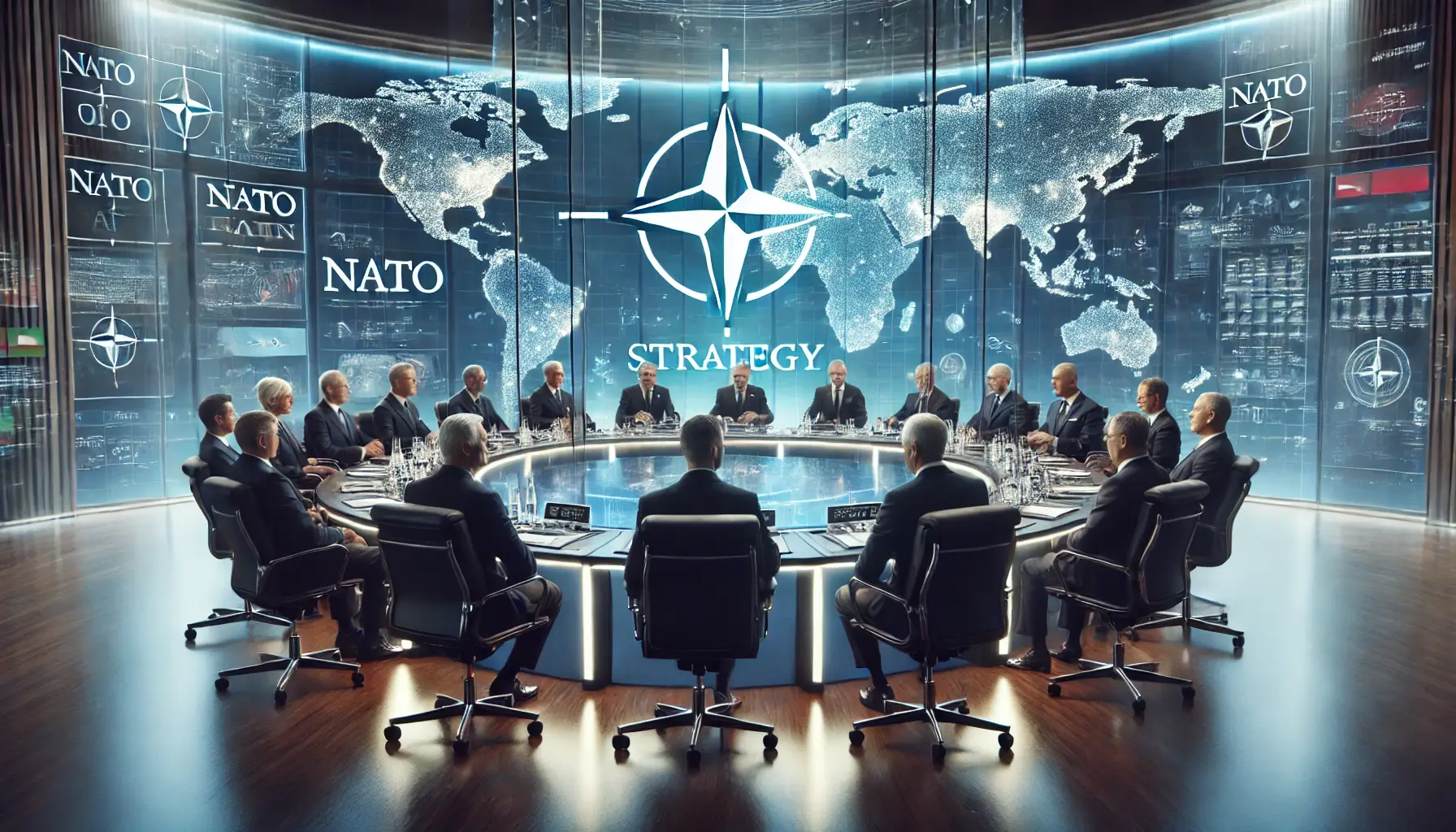
Germany’s position within NATO highlights a broader struggle among member states to define shared responsibilities and ensure fair contributions. The shifting dynamics within the alliance’s political framework reveal an urgent need to recalibrate priorities. NATO’s ambitious goals necessitate a long-term strategic plan that can adapt to a changing geopolitical landscape while maintaining robust internal cohesion.
NATO’s Strategic Imperative for Advanced Defense Collaboration
NATO’s evolution as a security alliance requires a reimagined framework that emphasizes advanced collaboration among member states to address unconventional threats. As technological advancements redefine global conflict, NATO faces mounting pressure to integrate cutting-edge capabilities into its collective strategy. These include cybersecurity frameworks, artificial intelligence (AI)-driven decision systems, and enhanced satellite-based surveillance.
In the era of increasing digitization, the battlefield is no longer confined to physical spaces. Cybersecurity has emerged as a paramount concern, with NATO’s adversaries frequently employing sophisticated cyberattacks to undermine political systems, disrupt economies, and compromise critical infrastructure. To counter such threats, NATO must prioritize building a unified cyber defense architecture. This would involve the establishment of shared threat intelligence platforms, real-time cyber incident response systems, and collaborative research initiatives aimed at preemptively identifying and neutralizing vulnerabilities. The Cyber Defense Pledge, endorsed by NATO member states in 2016, needs to be expanded with enforceable benchmarks to ensure tangible progress in this domain.
Artificial intelligence represents another transformative avenue for NATO’s defense strategy. AI-driven technologies can revolutionize decision-making processes by enabling predictive analytics, autonomous systems, and precision targeting. For instance, the integration of machine learning algorithms can enhance the efficacy of missile defense systems by improving interception accuracy. Similarly, autonomous drones equipped with AI can perform reconnaissance missions with unparalleled efficiency, reducing risks to human personnel. However, the ethical and operational implications of deploying such technologies require meticulous evaluation. NATO must ensure adherence to international humanitarian laws and establish guidelines to govern the development and use of AI in military operations.
Satellite-based surveillance has also become indispensable for modern defense strategies. High-resolution imaging, real-time data transmission, and advanced geospatial analytics provide NATO with critical situational awareness, enabling proactive responses to emerging threats. The alliance must invest in next-generation satellite systems that offer improved resilience against anti-satellite weapons and cyber interference. Partnerships with commercial space enterprises could further augment NATO’s capabilities, fostering innovation and cost efficiency.
This transformation also demands enhanced interoperability, where national military infrastructures align seamlessly under NATO’s operational umbrella. For instance, developing a unified command system that bridges the varying technological landscapes of member states has emerged as a priority. This approach reduces redundancies while maximizing the efficacy of joint operations. NATO’s ability to coordinate complex multinational missions depends on the standardization of communication protocols, data sharing mechanisms, and equipment compatibility. The development of a NATO-wide digital network—integrating terrestrial, maritime, aerial, and space-based assets—would significantly enhance the alliance’s operational cohesion.
Moreover, NATO must rethink its engagement protocols with non-member states. Establishing strategic partnerships with nations outside its traditional Euro-Atlantic focus, particularly in the Indo-Pacific, is becoming pivotal. This entails greater participation in multilateral security initiatives that address the dynamics of maritime security, trade route stability, and regional diplomatic resilience. Collaborations with countries like Japan, South Korea, and Australia could serve as a foundation for expanding NATO’s global footprint. Joint exercises, intelligence sharing agreements, and coordinated responses to shared threats—such as piracy and cybercrime—would strengthen these partnerships.
Another critical component of NATO’s future lies in reconfiguring its resource allocation toward soft power initiatives. Building resilience within allied civilian infrastructures—such as energy grids and communication networks—ensures that military strength is complemented by societal robustness. This approach enhances deterrence by mitigating vulnerabilities that adversaries might exploit through hybrid warfare tactics. The alliance must invest in public-private partnerships to secure critical infrastructure against potential disruptions. For example, safeguarding energy supplies requires the protection of pipelines and power plants from sabotage and cyberattacks, while ensuring redundancy in supply chains.
Climate change further complicates NATO’s security landscape, introducing risks that transcend traditional military considerations. Rising sea levels, extreme weather events, and resource scarcity have the potential to destabilize regions, exacerbate conflicts, and trigger mass migrations. NATO’s strategic agenda must incorporate environmental sustainability and disaster response capabilities. The establishment of a NATO Climate and Security Task Force could facilitate the development of climate-resilient infrastructure, the integration of renewable energy into defense operations, and the provision of humanitarian assistance during climate-induced crises.
Finally, fostering trust within NATO’s alliance through transparent fiscal accountability will be essential. By ensuring clarity in how member contributions are utilized, the organization can preempt internal divisions. This shift represents a move from mere spending thresholds to demonstrable outcomes that benefit the alliance holistically. Regular audits, comprehensive reporting mechanisms, and third-party evaluations could bolster confidence among member states, ensuring that their investments translate into tangible security enhancements.
The role of the United States as NATO’s principal contributor cannot be overstated. While American leadership has historically been a stabilizing force within the alliance, recent shifts in U.S. foreign policy priorities have introduced an element of unpredictability. The Trump administration’s calls for greater burden-sharing reflected a broader recalibration of transatlantic relations, compelling European nations to reassess their strategic autonomy. This evolving dynamic underscores the necessity of fostering a more balanced partnership that distributes responsibilities equitably while preserving the alliance’s core values and objectives.
NATO’s strategic adaptations must also account for the rise of China as a global superpower. While traditionally focused on the Euro-Atlantic region, the alliance’s recognition of China as a strategic challenge signals a broader reorientation of its priorities. This shift necessitates a nuanced approach that balances regional defense imperatives with global strategic considerations. Enhanced cooperation with Indo-Pacific partners, coupled with robust engagement in multilateral forums, will be critical to addressing this complex geopolitical landscape.
Furthermore, NATO’s enduring relevance hinges on its ability to adapt to the evolving contours of global governance. Issues such as climate change, migration, and pandemics increasingly intersect with security concerns, demanding a more integrated approach to policy formulation. By fostering synergies between military and non-military instruments of power, NATO can position itself as a versatile and proactive force in addressing the full spectrum of 21st-century challenges.
As NATO prepares to commemorate its 75th anniversary, the alliance stands at a crossroads. The confluence of traditional and emerging threats necessitates a renewed commitment to collective defense, grounded in shared values and equitable contributions. By embracing innovation and fostering greater cohesion among member states, NATO can not only enhance its operational effectiveness but also reaffirm its position as a cornerstone of global stability. The road ahead will undoubtedly be fraught with complexities, but through strategic foresight and resolute action, the alliance can chart a course toward a more secure and prosperous future.
NATO’s Framework for Emerging Security Challenges
As NATO evolves into a more complex and multifaceted alliance, its focus must extend beyond conventional defense mechanisms to address a broad spectrum of emerging security challenges. The alliance now faces a pivotal moment in redefining its role within a rapidly transforming global security environment, where technological innovation, economic interdependence, and shifting power dynamics demand comprehensive and integrated strategies. The global geopolitical landscape requires NATO to adapt swiftly, underpinned by robust planning and collective responsibility.
Proliferation of Cyber Threats
The rise of cyber threats has redefined the parameters of security, exposing vulnerabilities that can disrupt critical national and transnational infrastructures. Between 2018 and 2022, cyberattacks targeting NATO member states surged by over 200%, according to the NATO Communications and Information Agency (NCIA). One illustrative case was the 2021 Colonial Pipeline ransomware attack in the United States, which underscored the far-reaching consequences of cyber vulnerabilities. NATO’s response strategy must include the establishment of a unified cybersecurity framework, integrating real-time threat detection, joint incident response, and comprehensive cyber defense training programs. Additionally, initiatives such as the Cyber Defense Pledge, originally introduced in 2016, need expanded metrics and greater enforcement to ensure tangible advancements across all member states.
Advancing Quantum and Artificial Intelligence Technologies
Technological superiority underpins NATO’s long-term defense capabilities. Emerging technologies such as quantum computing and artificial intelligence (AI) hold transformative potential, capable of reshaping military operations. For example, China’s 2022 announcement of breakthroughs in quantum radar technology poses a direct challenge to NATO’s stealth capabilities. In parallel, AI-enabled autonomous drones and predictive analytics enhance situational awareness, precision targeting, and operational efficiency. NATO’s Defense Innovation Accelerator for the North Atlantic (DIANA), launched in 2021, has partnered with private-sector giants like Microsoft and IBM to foster innovation. Yet, NATO must accelerate its pace of adoption while navigating ethical frameworks that ensure compliance with international humanitarian laws.
Economic Resilience Amid Geopolitical Rivalries
The economic implications of modern conflict are profound. NATO’s reliance on energy imports from adversarial states, such as Russia, became glaringly apparent during the 2022 Russian invasion of Ukraine. At the time, 40% of the EU’s natural gas supply was sourced from Russia, creating significant strategic vulnerabilities. Since then, NATO has supported diversification efforts, including Germany’s expedited construction of liquefied natural gas (LNG) terminals and increased transatlantic energy cooperation. Future priorities include securing access to rare earth elements critical for defense technology—China currently controls 85% of the global supply chain for these materials. Building strategic reserves and fostering alternative supply networks with nations like Australia and Canada will be pivotal.
Hybrid Warfare and the Resilience of Societies
Hybrid warfare—the blending of military, cyber, and psychological tactics—has emerged as a persistent threat to NATO’s collective stability. The Russian disinformation campaigns surrounding the COVID-19 pandemic, combined with its interference in the 2016 U.S. elections, exemplify the efficacy of hybrid tactics in destabilizing democracies. NATO must develop counter-hybrid strategies that integrate robust intelligence-sharing frameworks, enhanced public communication, and strengthened civic institutions. For instance, the NATO Strategic Communications Centre of Excellence in Latvia has played a critical role in countering propaganda and misinformation through advanced data analytics and public outreach.
Expanding NATO’s Geopolitical Reach
To address systemic challenges posed by rising global powers, NATO must extend its reach beyond traditional Euro-Atlantic borders. The 2022 Strategic Concept explicitly identified China as a geopolitical rival, citing its coercive economic policies and military modernization. Partnerships with Indo-Pacific allies such as Japan, South Korea, and Australia have gained prominence. Collaborative efforts, including joint naval exercises like RIMPAC 2022, which involved over 25 nations, underscore NATO’s commitment to regional stability and maritime security. NATO’s dialogue with India, coupled with increased coordination with ASEAN nations, represents a strategic pivot toward fostering global partnerships.
Addressing Climate Change as a Security Threat
Climate change has become a defining factor in shaping security landscapes worldwide. Rising sea levels, extreme weather events, and resource scarcity exacerbate geopolitical instability, particularly in fragile regions such as the Sahel and the Arctic. Melting Arctic ice has opened new maritime routes, heightening competition between NATO and Russia for control over resource-rich territories. NATO’s Arctic Policy, adopted in 2023, emphasizes the development of sustainable military practices and the fortification of climate-resilient infrastructure. Investments in renewable energy technologies, alongside enhanced cooperation with the Arctic Council, will mitigate conflict risks while advancing environmental sustainability.
Strengthening Fiscal Unity and Transparency
Maintaining fiscal cohesion among NATO’s 31 member states is vital. As of 2023, only 11 members met the 2% GDP defense spending target. To address disparities, NATO must implement transparent oversight mechanisms, regular audits, and equitable burden-sharing frameworks. For instance, the NATO Innovation Fund—a €1 billion venture capital initiative launched in 2022—exemplifies how collective investments can drive technological advancements while fostering trust among members. Such measures are essential to reinforcing alliance unity amid economic and political divergences.
Future Trajectory and Strategic Adaptation
As NATO commemorates its 75th anniversary, the alliance faces unparalleled opportunities to redefine its role in global security. By embracing advanced technologies, diversifying partnerships, and addressing hybrid and climate-induced threats, NATO can sustain its strategic relevance. These efforts must be underpinned by a shared commitment to democratic values, collective defense, and innovative approaches to emerging challenges. With foresight and determination, NATO is poised to remain a cornerstone of global stability for decades to come, navigating complexities with resilience and adaptability.


