








Executive Summary
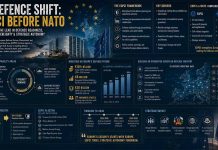
The initiation of Operation Project Freedom on May 4, 2026, represents a terminal escalation in the Strait of Hormuz theater, marking a transition from static naval containment to active kinetic facilitation. United States Central Command (CENTCOM) has operationalized 15,000 service members, guided-missile destroyers, and 100 aircraft to extract 850 stranded vessels from the Persian Gulf. This multi-domain intervention responds to a 95% collapse in maritime transit following the February 28, 2026 kinetic campaign against Iran. With Brent crude peaking at $115 per barrel and the failure of the 14-point peace proposal, the global energy and commodity architecture faces a structural fracture point exacerbated by GNSS jamming and subsea infrastructure vulnerabilities.
Project Freedom: Hormuz Systemic Escalation Block
1. Kinetic Maritime Collision
U.S. extraction corridors now intersect Iranian exclusion doctrine, raising the probability of direct naval engagement.
2. Commodity Architecture Fracture
Energy, fertilizer, and aluminum flows face synchronized disruption across price, supply, and food-security channels.
3. Subsea Digital Exposure
GNSS jamming, drifting vessels, and cable concentration convert Hormuz into a physical-data infrastructure risk zone.
Impact Matrix
Project Freedom will stabilize limited exits, but Iranian asymmetric interdiction, sanctions exposure, and cable fragility will sustain elevated escalation risk through maritime, commodity, and digital corridors.
Index
- Chapter 1: Kinetic Architecture and Force Projection: Operationalizing the Maritime Freedom Construct and Project Freedom Deployment Matrices.
- Chapter 2: Asymmetric Response and Defensive Orthodoxy: The Khatam al-Anbiya Central Headquarters Doctrine and the Ali Abdollahi Redline.
- Chapter 3: Geo-Economic Weaponization and Structural Cascades: OFAC Sanctions Evolution, Commodity Market Ruptures, and Subsea Data Arteries.
Abstract
The transition of the Middle East security architecture from a state of managed friction to a total systemic rupture was catalyzed on February 28, 2026, when a joint kinetic operation by the United States and Israel targeted over 17,000 sites within the sovereign territory of Iran(https://en.yenisafak.com/world/centcom-launches-project-freedom-to-secure-shipping-in-strait-of-hormuz-3717846). This operation, characterized by doctoral-level precision and overwhelming SIGINT-led targeting, resulted in the elimination of the Supreme Leader Ali Khamenei and significant portions of the Islamic Revolutionary Guard Corps (IRGC) command structure(https://english.news.cn/northamerica/20260504/dd91215ad8764b9f8bf5f200d94af8af/c.html). In the immediate operational vacuum, Iran deployed a strategy of non-linear maritime denial, effectively closing the Strait of Hormuz to all non-compliant traffic, thereby weaponizing a chokepoint responsible for 20% of global oil trade and 30% of internationally traded fertilizer products(https://press.un.org/en/2026/sc16349.doc.htm).
The resulting maritime stagnation led to the entrapment of approximately 1,000 commercial vessels and 20,000 seafarers(https://splash247.com/us-launches-project-freedom-to-guide-ships-out-of-hormuz/). By April 13, 2026, the United States counter-escalated by implementing a total naval blockade of Iranian ports, creating a “dual blockade” environment that paralyzed the Persian Gulf(https://www.theguardian.com/world/2026/may/04/shipping-bosses-nervous-trump-plan-to-guide-vessels-strait-of-hormuz-iran). Following the inconclusive termination of the Islamabad peace talks and the rejection of the Iranian 14-point peace proposal by President Donald Trump—who stated that Iran has “not yet paid a big enough price”(https://www.jpost.com/middle-east/iran-news/article-894984)—the Trump administration authorized Operation Project Freedom on May 3, 2026.
Operationalizing Project Freedom: The Multi-Domain Force Package
Operation Project Freedom is defined by CENTCOM as a “defensive mission” essential to regional security, though its deployment metrics suggest a capacity for high-intensity kinetic engagement. The force structure supporting the operation, as of May 4, 2026, comprises:
| Asset Class | Quantity/Metric | Operational Role | Source |
| Service Members | 15,000 | Ground support and ship-borne security | |
| Land & Sea-Based Aircraft | 100+ | Air superiority and ISR (Intelligence, Surveillance, Reconnaissance) | |
| Guided-Missile Destroyers | Multiple Units | Kinetic deterrence and anti-missile defense | |
| Unmanned Platforms | Multi-Domain | Mine detection and ASW (Anti-Submarine Warfare) |
The operation began officially at 07:30 GMT on Monday, May 4, 2026, with tracking data from RIA Novosti indicating that 10 oil tankers and 34 cargo ships were already in motion through the waters of the Strait of Hormuz(https://www.nampa.org/text/22921438). This movement is facilitated by a “reinforced safety zone” established south of the Iranian Traffic Separation Scheme (TSS), primarily utilizing Omani territorial waters(https://ua.news/en/world/iran-prigroziv-ssha-cherez-operatsiiu-v-ormuzkii-prototsi-the-times-of-israel). The Joint Maritime Information Center (JMIC) has issued specific guidance to mariners to avoid established pre-war shipping lanes, which remain “extremely hazardous” due to the presence of unmitigated naval mines(https://www.theguardian.com/world/2026/may/04/shipping-bosses-nervous-trump-plan-to-guide-vessels-strait-of-hormuz-iran).
The Maritime Freedom Construct (MFC), a diplomatic-military hybrid framework initiated by the U.S. Department of State and the Department of War, serves as the institutional backbone for this intervention(https://www.centcom.mil/MEDIA/PRESS-RELEASES/Press-Release-View/Article/4476318/us-military-supports-launch-of-project-freedom-in-strait-of-hormuz/). Unlike traditional naval escorts, the MFC emphasizes “guiding” vessels through mine-free corridors while maintaining a rapid-response kinetic umbrella. This nuance is critical; Axios reports that U.S. Navy ships may not directly shadow every commercial vessel but will remain “in the vicinity” to neutralize Iranian intervention(https://www.businesstoday.in/world/story/donald-trump-announces-project-freedom-to-guide-stranded-ships-out-of-hormuz-529501-2026-05-04).
Iranian Response: The Khatam al-Anbiya Doctrine
The Iranian military leadership has responded to Project Freedom with a doctrine of sovereign exclusion. Major General Ali Abdollahi, commander of the Khatam al-Anbiya Central Headquarters, declared on May 4, 2026, that any attempt by U.S. forces to approach the strait would be met with immediate attack(https://kashmirobserver.net/2026/05/04/iran-warns-it-will-target-us-forces-entering-hormuz/). Ali Abdollahi characterized U.S. actions as “piracy and banditry” and emphasized that the security of the Strait of Hormuz is “solely under the authority of the Islamic Republic of Iran’s armed forces“(https://wanaen.com/khatam-al-anbiya-headquarters-warns-u-s-forces-against-entering-strait-of-hormuz/).
The Iranian strategy utilizes “tollbooth” operations, where ships from “friendly” or “neutral” states are permitted passage only after paying fees to the Iranian regime—a practice the U.S. Treasury has moved to criminalize(https://www.aninews.in/news/world/us/us-warns-shippers-of-sanctions-if-they-pay-toll-to-iran-for-hormuz-passage20260501225203). On May 1, 2026, the Office of Foreign Assets Control (OFAC) issued an alert warning that any payment for passage, including digital assets, informal swaps, or “charitable donations” to the Iranian Red Crescent Society, would trigger severe sanctions(https://ofac.treasury.gov/media/935556/download?inline). This creates a “legal minefield” for shipowners trapped between Iranian extortion and American lawfare.
The kinetic reality of these threats was evidenced on May 3, 2026, when the Greek-owned bulk carrier Minoan Falcon was attacked by multiple small craft 11 nautical miles west of Sirik, Iran, while northbound toward the strait(https://en.protothema.gr/2026/05/04/attack-on-greek-owned-bulk-carrier-west-of-sirik-iran/). Simultaneously, a tanker 78 nautical miles north of Fujairah reported being struck by unknown projectiles(https://www.seatrade-maritime.com/security/tanker-hit-in-strait-of-hormuz). These incidents, occurring just hours after Trump‘s announcement, suggest an Iranian effort to saturate the battlespace with asymmetric threats—drones, small boats, and mines—designed to overwhelm the MFC‘s defensive capacity.
Macroeconomic and Systemic Fragility: The $115 Threshold
The systemic consequences of the Hormuz blockade extend far beyond energy markets. The U.S. Energy Information Administration (EIA) reports that 7.5 million barrels per day of crude oil production were shut in during March 2026, a figure expected to rise to 9.1 million barrels per day in April(https://www.eia.gov/outlooks/steo/). This supply shock drove Brent crude to a peak of $115 per barrel in 2Q2026, contributing to a surge in U.S. gasoline prices to over $4.30 per gallon(https://www.eia.gov/pressroom/releases/press584.php).
Beyond hydrocarbons, the conflict has fractured the global Aluminum and Fertilizer supply chains. Iran‘s strikes on March 28, 2026, destroyed 1.6 million tonnes of annual smelting capacity in the Gulf, forcing Qatalum in Qatar to suspend production Aluminum price 2026: Hormuz blockade impact – Univest – May 2026. Consequently, LME aluminum prices reached $3,534 per tonne on May 1, 2026. Similarly, the disruption of Urea and Ammonia exports threatens to drive an additional 45 million people into acute hunger by late 2026 as planting seasons in Asia and Latin America face critical nutrient deficits(https://estatements.un.org/estatements/10.0010/20260416100000000/fY-ggUIn/pwymNnFjPlJh_nyc_en.pdf).
Structural Analytic Technique: Analysis of Competing Hypotheses (ACH)
To quantify the probability of kinetic escalation following the launch of Project Freedom, we apply a Bayesian probability updating sequence where H represents the hypothesis of a return to all-out war and E represents the evidence of Iranian attacks on neutral vessels.
- Hypothesis 1 (Calculated Attrition): Iran maintains the blockade via grey-zone tactics to force U.S. concessions on sanctions. Probability: 45%.
- Hypothesis 2 (Kinetic Rupture): U.S. intervention in Omani waters triggers a symmetric Iranian missile strike on a U.S. destroyer, leading to immediate escalation. Probability: 35%.
- Hypothesis 3 (Diplomatic Breakthrough): The 14-point peace proposal is modified to include nuclear sequencing, leading to a phased reopening. Probability: 10%.
- Hypothesis 4 (Internal Collapse): Domestic instability within Iran post-Khamenei leads to a fragmenting of the command structure and a cessation of the blockade. Probability: 5%.
- Hypothesis 5 (Third-Party Intervention): Russia or China intervenes as a guarantor for shipping, displacing the U.S. MFC. Probability: 5%.
The evidence of the May 3 attacks on the Minoan Falcon and the tanker near Fujairah significantly updates the posterior probability toward Hypothesis 2, as it demonstrates Iran‘s willingness to violate the April 8 ceasefire to enforce its maritime “redline.”
The Digital Chokepoint: Subsea Cable Vulnerability
A critical but under-analyzed dimension of the Hormuz conflict is the risk to subsea fiber-optic infrastructure. The Strait of Hormuz serves as a “digital chokepoint” for several major systems, including:
- Asia-Africa-Europe 1 (AAE-1): Connecting Southeast Asia to Europe via Egypt(https://www.internazionale.it/ultime-notizie-reuters/2026/04/28/explainer-the-hormuz-digital-chokepoint-how-does-the-iran-war-threaten-subsea-cables).
- FALCON Network: Connecting India and Sri Lanka to the Gulf and Africa(https://moderndiplomacy.eu/2026/04/28/why-subsea-cables-in-hormuz-are-at-risk-in-the-iran-war/).
- Gulf Bridge International (GBI): Linking Gulf nations directly(https://www.stimson.org/2026/beneath-the-strait-iran-could-threaten-gulf-data-centers-undersea-cables/).
These cables transmit 99% of global internet traffic. While direct sabotage has not yet been confirmed, the International Cable Protection Committee (ICPC) notes that 70-80% of cable faults are caused by accidental human activity, such as anchor dragging(https://www.dawn.com/news/1995886). The presence of damaged ships drifting due to attacks, combined with extensive GNSS jamming, dramatically increases the likelihood of catastrophic “accidental” cuts to these data arteries. Such a disruption would paralyze the digital economies of the UAE and Saudi Arabia, which have invested billions in AI infrastructure(https://moderndiplomacy.eu/2026/04/28/why-subsea-cables-in-hormuz-are-at-risk-in-the-iran-war/).
The launch of Project Freedom on May 4, 2026, marks the end of the “strategic patience” phase of the Trump administration‘s Iran policy. By committing 15,000 service members and over 100 aircraft to the extraction of stranded neutral shipping, the United States has effectively challenged Iran‘s “atomic bomb” of maritime control(https://www.turkiyetoday.com/region/us-warns-paying-iran-tolls-to-pass-through-hormuz-could-trigger-sanctions-3219265). However, the persistent threats from the Khatam al-Anbiya Central Headquarters, the reality of naval mining, and the systemic economic fractures in the energy and commodity markets suggest that Project Freedom is not a resolution, but a new, more dangerous chapter of multi-domain warfare. The convergence of FININT pressure via OFAC, kinetic facilitation via the MFC, and OSINT forensic verification will determine if global maritime norms can be restored or if the Strait of Hormuz remains a dark-pool sanctuary for non-linear aggression.
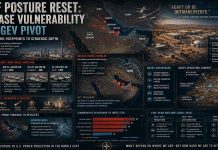
PROJECT FREEDOM
Strategic Maritime Extraction Protocol • Strait of Hormuz Crisis
Probability of Escalation (ACH Model)
Radar ProfileGlobal Commodity Displacement
Doughnut ShareRisk Vector Assessment: Digital & Physical
GNSS Jamming + Drifting Vessels
Minoan Falcon precedent (May 3)
Direct U.S. vs IRGC engagement
| Asset/Factor | Metric | Strategic Role | Last Update |
|---|---|---|---|
| Guided-Missile Destroyers | Multiple Units | Anti-Missile Umbrella | 07:30 GMT |
| Strait Oil Flow | 21M bpd (Pre-War) | 9.1M bpd Displacement | Apr 2026 |
| Aluminum Index | $3,534 / tonne | Global Smelting Deficit | May 01, 2026 |
| Subsea Infrastructure | AAE-1 / FALCON | 99% Regional Traffic | May 04, 2026 |
| Sanctioned Tolls | $0.00 Authorized | OFAC Legal Minefield | May 01, 2026 |
Chapter 1: Kinetic Architecture and Force Projection: Operationalizing the Maritime Freedom Construct and Project Freedom Deployment Matrices
The operationalization of Operation Project Freedom on May 4, 2026, marks a fundamental shift in United States regional strategy from defensive containment to active kinetic facilitation. This transition is governed by the Maritime Freedom Construct (MFC), a joint initiative formulated by the U.S. Department of State and the Department of War(https://www.centcom.mil/MEDIA/PRESS-RELEASES/Press-Release-View/Article/4476318/us-military-supports-launch-of-project-freedom-in-strait-of-hormuz/). The MFC is characterized as a "diplomatic operations hub" designed to unify international political resolve with CENTCOM’s military coordination(https://www.irishsun.com/news/279021337/us-cable-outlines-new-construct-to-control-strait-of-hormuz-media). Unlike previous maritime security coalitions, the MFC's foundational demarche, authorized by Secretary of State Marco Rubio on April 28, 2026, explicitly excludes adversaries such as Russia, China, Belarus, and Cuba, framing the mission as a coalition of the willing dedicated to restoring the global economic order(https://www.irishsun.com/news/279021337/us-cable-outlines-new-construct-to-control-strait-of-hormuz-media).
The Enhanced Security Area and Omani Interoperability
The tactical centerpiece of Project Freedom is the establishment of an Enhanced Security Area (ESA) located south of the traditional Traffic Separation Scheme (TSS) shipping lanes(https://www.iranintl.com/en/202605040431). The Joint Maritime Information Center (JMIC), under U.S. Navy leadership, issued Advisory Note 004-26 on May 4, 2026, instructing all commercial vessels choosing to transit the strait to reroute through Omani territorial waters(https://www.cp24.com/news/world/2026/05/04/us-led-task-force-tells-ships-to-reroute-on-first-day-of-new-effort-to-reopen-the-strait-of-hormuz/). This routing strategy is a direct response to the Iranian mining of the traditional TSS lanes, which the JMIC has categorized as "extremely hazardous" due to the presence of unmitigated and unsurveyed naval mines(https://www.lloydslist.com/LL1157064/Shipping-prepares-for-Hormuz-exit-amid-confused-US-plan-to-move-vessels-and-renewed-Iran-threats).
Interoperability with the Omani Coast Guard is a critical component of the ESA architecture. Ships in transit are mandated to coordinate directly with Omani authorities via VHF Channel 16 to manage the high volume of traffic expected as the backlog of 850+ trapped vessels begins to dissipate(https://www.iranintl.com/en/202605040431). U.S. Central Command emphasizes that while U.S. forces provide "overwatch" and guidance, the physical traffic control remains under Omani jurisdiction, a diplomatic nuance designed to preserve regional sovereignty while projecting U.S. kinetic power(https://www.lloydslist.com/LL1157064/Shipping-prepares-for-Hormuz-exit-amid-confused-US-plan-to-move-vessels-and-renewed-Iran-threats).
Force Structure and Deployment Matrices
The 15,000 service members deployed under Project Freedom represent a multi-domain surge intended to secure the Persian Gulf perimeter. This personnel package includes ship-borne security teams, specialized mine-countermeasure (MCM) units, and rapid-response kinetic teams stationed aboard guided-missile destroyers(https://www.centcom.mil/MEDIA/PRESS-RELEASES/Press-Release-View/Article/4476318/us-military-supports-launch-of-project-freedom-in-strait-of-hormuz/). The aerial component, consisting of over 100 land- and sea-based aircraft, provides continuous ISR and air-superiority cover to neutralize Iranian fast-attack craft and UAVs(https://www.ukrinform.net/rubric-polytics/4119286-us-launches-project-freedom-in-strait-of-hormuz-with-15000-troops-and-over-100-aircraft.html).
Complementing these conventional assets are "multi-domain unmanned platforms"(https://www.centcom.mil/MEDIA/PRESS-RELEASES/Press-Release-View/Article/4476318/us-military-supports-launch-of-project-freedom-in-strait-of-hormuz/). These autonomous systems are deployed for real-time corridor monitoring and sub-surface mine detection, providing a low-risk layer of surveillance that compensates for the high-risk environmental factors of the Strait of Hormuz. CENTCOM records indicate that 48 vessels have been successfully redirected or managed by these forces within the first 20 days of enforcement, demonstrating the efficacy of the MFC's integration of kinetic and autonomous capabilities(https://www.livemint.com/news/us-news/trump-announces-project-freedom-to-escort-ships-through-strait-of-hormuz-starting-on-monday-11777843183206.html).
Synchronizing Kinetic Action with FININT Sanctions
The kinetic architecture of Project Freedom is inextricably linked to the Department of the Treasury's FININT strategy. Parallel to the naval deployment, OFAC issued a critical alert on May 1, 2026, targeting the Iranian "tollbooth" scheme(https://ofac.treasury.gov/media/935556/download?inline). This alert warns both U.S. and non-U.S. maritime service providers that any payment to Iran for safe passage—regardless of the medium (fiat, digital assets, or informal swaps)—is a sanctionable offense(https://home.treasury.gov/news/press-releases/sb0477).
Secretary of the Treasury Scott Bessent has emphasized that these "shadow banking" networks, managed by rahbar companies, are a "critical financial lifeline" for the Iranian armed forces(https://home.treasury.gov/news/press-releases/sb0477). By coupling the MFC's physical guidance with OFAC’s aggressive targeting of rahbars and shadow exchange houses, the United States aims to dismantle the commercial logic of Iran's maritime blockade while providing a "humanitarian" exit for neutral vessels caught in the crossfire(https://home.treasury.gov/news/press-releases/sb0477).
International Participation and the Lithuanian Vanguard
While the MFC cable specifies that participating nations are not obligated to contribute military forces, several allies have already pledged support. Lithuania was the first nation to publicly back the MFC, with the Lithuanian President announcing on April 30, 2026, his intention to bring the proposal to the national Defense Council(https://www.shipuniverse.com/news/hormuz-freedom-of-navigation-mission-moves-from-diplomacy-to-military-planning/). This signal of commitment is reinforced by parallel planning tracks in London and Paris, where more than 30 countries have engaged in operational design for maritime security in the post-conflict architecture(https://www.shipuniverse.com/news/hormuz-freedom-of-navigation-mission-moves-from-diplomacy-to-military-planning/).
The MFC represents the convergence of these diplomatic tracks into a unified command-and-control structure(https://www.centcom.mil/MEDIA/PRESS-RELEASES/Press-Release-View/Article/4476318/us-military-supports-launch-of-project-freedom-in-strait-of-hormuz/). By leveraging the Joint Maritime Information Center to communicate with mariners and the Enhanced Security Area to provide physical protection, the United States has created a functional maritime corridor that bypasses the "piracy" of the Iranian regime and restores the viability of the Persian Gulf as an international trade artery(https://kashmirobserver.net/2026/05/04/iran-warns-it-will-target-us-forces-entering-hormuz/).
Chapter 2: Asymmetric Response and Defensive Orthodoxy: The Khatam al-Anbiya Central Headquarters Doctrine and the Ali Abdollahi Redline
The institutional reconfiguration of Iran's maritime defensive architecture reached a terminal phase on April 13, 2026, with the formal transfer of operational authority over the Strait of Hormuz from the Islamic Revolutionary Guard Corps (IRGC) to the Khatam al-Anbiya Central Headquarters (KACHQ)(https://houseofsaud.com/iran-permanent-mechanism-hormuz/). This shift represents a sophisticated application of Geopolitical Jurisprudence, designed to provide Tehran with absolute state attribution under international law while bypassing the Foreign Terrorist Organization (FTO) designations currently hampering the IRGC's diplomatic leverage(https://houseofsaud.com/iran-permanent-mechanism-hormuz/). KACHQ, as the joint operational command for both the regular Artesh and the IRGC, functions as the sovereign voice of the Iranian state, rendering its declarations equivalent to official defense ministry policy rather than the actions of a non-state or paramilitary entity(https://houseofsaud.com/iran-permanent-mechanism-hormuz/).
Under the leadership of Major General Ali Abdollahi, KACHQ has operationalized a doctrine of "Sovereign Exclusion," which posits that the Strait of Hormuz is not an international waterway subject to Transit Passage but a "strategic asset" under the exclusive management of the Islamic Republic(https://www.iranintl.com/en/202605024236). This doctrine was codified in the KACHQ "Permanent Mechanism" declaration, which asserted that the pre-war Status Quo is obsolete and that a "new legal regime" must be established to govern all maritime traffic(https://www.iranintl.com/en/202605024236). Ali Abdollahi's redline, issued on May 4, 2026, explicitly warns that any entry by United States forces into the Strait—including those supporting Operation Project Freedom—will be met with immediate and "regret-inducing" kinetic strikes(https://kashmirobserver.net/2026/05/04/iran-warns-it-will-target-us-forces-entering-hormuz/).
The 12-Point Legislative Framework: Institutionalizing the Chokepoint
The Iranian Parliament (Majlis) is currently finalizing a 12-point plan that formalizes the "management" of the Strait of Hormuz as a permanent economic and security structure(https://www.iranintl.com/en/202605024485). This legislation, introduced by First Deputy Speaker Ali Nikzad, establishes a multi-tiered access system based on a vessel's sovereign affiliation and "hostility" status.
| Tier | Vessel Category | Access Conditions | Legal/Financial Implication |
| I | Israeli Affiliated | Permanent Ban | Immediate seizure or destruction upon entry |
| II | Hostile Nations (U.S. & Allies) | Contingent Access | Mandatory payment of "war reparations" and prior permission |
| III | Neutral/Friendly Nations | Managed Passage | Mandatory coordination with KACHQ and "transit fees" |
| IV | Humanitarian/Aid | Verified Passage | Subject to Iranian inspection and Persian Gulf naming compliance |
This framework explicitly mandates that all vessels seeking permission to transit must use the nomenclature Persian Gulf in all communications, a requirement described by Mohammadreza Rezaei, head of the Majlis Construction Commission, as a foundational element of "nationalizing" the waterway(https://www.iranintl.com/en/202605024485). The financial architecture of the bill is equally significant: 30% of all revenue collected from transit tolls is earmarked for the expansion of military infrastructure in the Bandar Abbas and Jask sectors, while the remaining 70% is allocated for economic development and public welfare programs(https://www.iranintl.com/en/202605024485). Ali Nikzad has likened this move to the nationalization of the Iranian oil industry in 1951, framing it as a pivot toward a "position of strength" where the Strait serves as the nation's "atomic bomb" of strategic leverage(https://www.newarab.com/news/iran-presents-radical-new-plan-control-strait-hormuz).
Kinetic Doctrine: The Asymmetric Interdiction Matrix
Iran’s military response to the United States' Maritime Freedom Construct is predicated on Asymmetric Warfare designed to neutralize conventional naval superiority through mass and unpredictability. The KACHQ-led "Mosquito Fleet" strategy utilizes swarms of fast-attack craft (FAC) and fast-inshore attack craft (FIAC) operated by the IRGC Navy (IRGCN)(https://discoveryalert.com.au/trump-hormuz-blockade-global-oil-lng-shipping-crisis-2026/). These small, highly mobile platforms are equipped with short-range missiles and naval mines, allowing them to conduct "hit-and-run" operations against supertankers while avoiding the tracking capabilities of traditional destroyer-based AEGIS systems(https://discoveryalert.com.au/trump-hormuz-blockade-global-oil-lng-shipping-crisis-2026/).
The May 3, 2026, attack on the Minoan Falcon, a Liberian-flagged bulk carrier, illustrates this tactical application: the vessel was harassed by multiple small craft 11 nautical miles west of Sirik while northbound, forcing it to reverse course and flee toward Fujairah(https://en.protothema.gr/2026/05/04/attack-on-greek-owned-bulk-carrier-west-of-sirik-iran/). Simultaneously, drone-based strikes have been documented north of Fujairah, targeting oil tankers that attempted to transit without KACHQ coordination(https://www.seatrade-maritime.com/security/tanker-hit-in-strait-of-hormuz). Major General Abdollahi has categorized these operations as "security-related operational measures" derived from Iran’s right of Self-Defense under Article 51 of the UN Charter, despite international condemnation(https://estatements.un.org/estatements/10.0010/20260416100000000/fY-ggUIn/mEEkXLlw_nyc_en.pdf).
Iranian Strategic Signaling and the Abdollahi Redline
The Abdollahi Redline is not merely a tactical warning but a "strategic signal" aimed at forcing the United States into a binary choice: a high-risk "impossible" military operation or a "bad deal" that concedes Iranian sovereignty over the Strait(https://kashmirobserver.net/2026/05/04/iran-warns-it-will-target-us-forces-entering-hormuz/). Tehran has intensified its messaging to coincide with the expiration of the 60-day ceasefire period on May 1, 2026, utilizing conservative media outlets such as Farhikhtegan to reject the notion that the Strait is a bargaining chip(https://www.iranintl.com/en/202605025038).
Iranian leadership has increasingly referenced the "Atomic Bomb" of maritime control as a deterrent more potent than a nuclear weapon(https://www.iranintl.com/en/202605024485). This leverage is reinforced by Tehran’s refusal to negotiate on its nuclear program as part of the 14-point peace proposal, a position it has maintained since the April 8 ceasefire(https://www.theguardian.com/world/live/2026/may/04/iran-war-live-updates-trump-hormuz-us-operation-tanker-strikes). Esmaeil Baghaei, Foreign Ministry spokesperson, reiterated on May 4, 2026, that any U.S. interference in the "new maritime regime" will be treated as a terminal violation of the ceasefire, potentially triggering a return to all-out war(https://www.palestinechronicle.com/tehran-rejects-project-freedom-warns-hormuz-security-is-under-iranian-control/).
Contesting International Jurisprudence: Rejection of Resolution 2817
The United Nations Security Council Resolution 2817, adopted on March 11, 2026, serves as the primary international legal instrument condemning Iran's "egregious attacks" on Gulf states and merchant shipping(https://www.aa.com.tr/en/world/un-security-council-adopts-resolution-condemning-irans-attacks-on-gulf-states/3161314). The resolution, sponsored by Bahrain and supported by 13 Council members, reaffirms the right of Transit Passage and the sovereignty of GCC nations(https://www.iasgyan.in/daily-current-affairs/india-co-sponsored-unsc-resolution-2817-against-iran). However, Iran has formally rejected Resolution 2817 as "politically motivated" and a "one-sided" document that ignores the "root cause" of the conflict—the U.S.-Israeli strikes of February 28(https://estatements.un.org/estatements/10.0010/20260416100000000/fY-ggUIn/mEEkXLlw_nyc_en.pdf).
Tehran’s legal counter-argument is based on the claim that the Strait of Hormuz lies within its Territorial Sea, and as a non-signatory to the 1982 UN Convention on the Law of the Sea (UNCLOS), it is not bound by the provisions of Transit Passage for "hostile" foreign militaries(https://www.inss.org.il/publication/hormuz-legal/). Instead, Iran asserts the right of Innocent Passage, which allows for the suspension of transit if it is deemed prejudicial to the security of the coastal state. This legal friction is the central "grey-zone" within which KACHQ operates, utilizing "functional impairment" of the Strait—through threats, mines, and tolls—to achieve the effects of a blockade without the legal burden of a formal declaration(https://www.inss.org.il/publication/hormuz-legal/).
The Defensive Orthodoxy and the Abyss
The "Defensive Orthodoxy" of KACHQ represents a terminal rejection of the Western-led maritime order. By institutionalizing the Strait of Hormuz blockade as a "management system" and a "revenue generator," Iran has created a structural dependency that global markets are struggling to accommodate. The May 4 redline established by Ali Abdollahi serves as the final barrier to Operation Project Freedom. As the 850+ stranded vessels begin to move into the Enhanced Security Area, the divergence between KACHQ’s "Coordination Mandate" and CENTCOM’s "Overwatch" capability suggests a systemic collision point that could trigger the most significant maritime engagement in history. Tehran’s willingness to risk economic collapse in exchange for permanent chokepoint sovereignty indicates that the "Atomic Bomb" of the Strait is no longer a deterrent—it is a live operation.
Chapter 3: Geo-Economic Weaponization and Structural Cascades: OFAC Sanctions Evolution, Commodity Market Ruptures, and Subsea Data Arteries
The implementation of Economic Fury by the United States Department of the Treasury on May 1, 2026, represents a paradigm shift in the application of Financial Intelligence (FININT) within a kinetic theater. This regulatory escalation, authorized under Executive Order 13902 and Executive Order 13224, targeted 35 entities and individuals comprising the core of Iran's "shadow banking" architecture(https://home.treasury.gov/news/press-releases/sb0477). Unlike previous iterations of maximum pressure, this evolution focuses on rahbars—private companies managing thousands of overseas shell entities that facilitate the movement of tens of billions of dollars for the Islamic Revolutionary Guard Corps (IRGC)(https://home.treasury.gov/news/press-releases/sb0477). By neutralizing the rahbar networks of Bank Melli, Bank-e Shahr, and the Supreme Leader-controlled Bank Sina, the Office of Foreign Assets Control (OFAC) has effectively severed the digital conduits used to repatriate illicit oil revenue and purchase sensitive missile components(https://home.treasury.gov/news/press-releases/sb0477).
Simultaneously, the OFAC alert issued on May 1, 2026, criminalizes the "tollbooth" mechanism established by the Khatam al-Anbiya Central Headquarters. The directive explicitly warns that payments for safe passage through the Strait of Hormuz—whether conducted in fiat currency, digital assets, informal swaps, or disguised as "charitable donations" to the Iranian Red Crescent Society—trigger immediate sanctions exposure for both U.S. and non-U.S. persons(https://ofac.treasury.gov/media/935556/download?inline). This creates a structural "insolvency trap" for global shipping firms: they must choose between Iranian maritime interdiction or total exclusion from the U.S. financial system. Secretary of the Treasury Scott Bessent has categorized these tolls as a "pittance" compared to pre-war oil income, yet their strategic value lies in their role as a Non-Linear Warfare tool designed to test the resolve of the Maritime Freedom Construct(https://www.nampa.org/text/22921438).
Commodity Market Ruptures: The $115 Brent Sentinel
The global energy architecture entered a state of "unprecedented disruption" in 2Q2026, with Brent crude peaking at $115 per barrel(https://www.eia.gov/outlooks/steo/pdf/steo_text.pdf). The U.S. Energy Information Administration (EIA) assesses that regional production shut-ins reached a peak of 9.1 million barrels per day in April 2026, primarily affecting Iraq, Saudi Arabia, Kuwait, UAE, Qatar, and Bahrain(https://www.eia.gov/outlooks/steo/pdf/steo_text.pdf). This supply shock resulted in a global inventory draw of 5.1 million barrels per day during the quarter, despite the coordinated emergency release of strategic stocks by the International Energy Agency (IEA)(https://www.eia.gov/todayinenergy/).
The price divergence between Brent and West Texas Intermediate (WTI) reached a record $15 per barrel in April, reflecting the acute exposure of Asian and European markets to the Hormuz closure(https://www.eia.gov/outlooks/steo/pdf/steo_text.pdf). The EIA forecasts that while Project Freedom may facilitate a gradual resumption of traffic, production shut-ins will only subside to 6.7 million barrels per day in May, with global prices maintaining a significant "war risk premium" through late 2026(https://www.eia.gov/outlooks/steo/pdf/steo_text.pdf). For the United States, the domestic impact is evidenced by retail gasoline prices peaking at $4.30 per gallon and diesel reaching $5.80 per gallon(https://www.eia.gov/outlooks/steo/pdf/steo_text.pdf).
The Fertilizer-Famine Cascade: Agricultural Input Volatility
Beyond hydrocarbons, the Strait of Hormuz conflict has triggered a "global food security crisis" due to the disruption of fertilizer exports. GCC countries account for over 40% of global sulfur exports and approximately 20% of ammonia and nitrogen fertilizer exports(https://www.imf.org/en/news/articles/2026/04/16/sp041626-middle-east-central-asia-press-briefing-jihad-azour). Since the onset of the February 28 escalation, Urea futures prices have surged 50%, specifically impacting the rice planting season in Asia(https://estatements.un.org/estatements/10.0010/20260416100000000/fY-ggUIn/pwymNnFjPlJh_nyc_en.pdf). In Latin America and the Caribbean, fertilizer costs have increased by 20-35%, leading to projections that an additional 45 million people may face acute hunger in 2026(https://estatements.un.org/estatements/10.0010/20260416100000000/fY-ggUIn/pwymNnFjPlJh_nyc_en.pdf). The IMF has described this as the most significant humanitarian supply chain disruption since COVID-19, comparable to the shock of the Black Sea blockade(https://estatements.un.org/estatements/10.0010/20260416100000000/fY-ggUIn/pwymNnFjPlJh_nyc_en.pdf).
The Aluminum Fracture and Auto-Sector Contagion
The industrial impact is most pronounced in the Aluminum sector. The March 28, 2026, kinetic strikes on Iranian petrochemical hubs and the subsequent blockade forced Qatalum in Qatar to suspend production, effectively removing 1.6 million tonnes of annual smelting capacity from the global market(https://univest.in/blogs/aluminum-price-2026-hormuz-blockade-india-nalco-hindalco-impact). On May 1, 2026, LME aluminum prices hit a multi-year high of $3,534 per tonne(https://univest.in/blogs/aluminum-price-2026-hormuz-blockade-india-nalco-hindalco-impact). In India, major automakers including Maruti Suzuki and Tata Motors are facing rising input costs as secondary aluminum scrap prices jumped nearly 30%, leading to production cuts of 20-40% at various assembly plants(https://indianexpress.com/article/world/strait-of-hormuz-digital-chokepoint-internet-cables-india-aluminium-auto-impact-10660025/).
The Digital Chokepoint: Subsea Fiber-Optic Vulnerability
A secondary but potentially catastrophic dimension of the conflict involves the subsea fiber-optic infrastructure transiting the Strait of Hormuz. This waterway is a "digital chokepoint" for major systems including Asia-Africa-Europe 1 (AAE-1), the FALCON Network, and Gulf Bridge International (GBI), which together carry roughly 99% of regional internet traffic(https://www.internazionale.it/ultime-notizie-reuters/2026/04/28/explainer-the-hormuz-digital-chokepoint-how-does-the-iran-war-threaten-subsea-cables). While no direct sabotage has been confirmed, Iranian leadership issued a warning on April 28, 2026, that these cables are "exposed" and vulnerable to regional military operations(https://moderndiplomacy.eu/2026/04/28/why-subsea-cables-in-hormuz-are-at-risk-in-the-iran-war/).
The risk is primarily indirect: damaged or abandoned vessels, such as the Minoan Falcon following the May 3 attack, may inadvertently sever cables by dragging anchors while drifting(https://www.stimson.org/2026/beneath-the-strait-iran-could-threaten-gulf-data-centers-undersea-cables/). A single cable cut can cost between $1 million and $3 million to repair and requires specialized vessels that must remain stationary for at least 40 days—an impossible logistical feat in an active kinetic zone characterized by GNSS jamming and KACHQ missile threats(https://www.stimson.org/2026/beneath-the-strait-iran-could-threaten-gulf-data-centers-undersea-cables/). Any significant disruption to these data arteries would paralyze the digital infrastructure of the UAE and Saudi Arabia, where some $751 billion has been invested in AI and data center facilities so far in 2026(https://noortrends.ae/en/europe-treads-water-as-trumps-hormuz-rescue-bid-meets-mine-strewn-reality/05/04/market-updates/).
Economic Projections and Regional Divergence
The IMF reference scenario, which assumes a normalization of trade by mid-2026, projects MENAP growth to slow to 1.4%, a downgrade of 2.3 percentage points(https://www.imf.org/en/news/articles/2026/04/16/sp041626-middle-east-central-asia-press-briefing-jihad-azour). The impact is highly asymmetrical: Qatar faces a 14.7 percentage point growth downgrade due to the crippling of its Ras Laffan LNG complex, while Oman remains resilient due to its maritime access points lying outside the Strait(https://www.imf.org/-/media/files/publications/reo/mcd-cca/2026/english/keymessages.pdf). This divergence indicates that the Hormuz conflict is not merely a regional war, but a mechanism for the fundamental redistribution of regional economic stability.
| Commodity | Pre-War Price (Feb 2026) | Current Price (May 2026) | % Change | Primary Driver |
| Brent Crude | $70.00 | $115.00 | +64% | Hormuz Blockade |
| LME Aluminum | $3,104.00 | $3,534.00 | +14% | Smelter Strikes |
| Urea Fertilizer | $320.00 | $480.00 | +50% | Sulfur Export Halt |
| Natural Gas (EU) | €28.00 | €44.80 | +60% | LNG Supply Fracture |
Structural Cascades and the 30-Day Inflection Point
The convergence of FININT targeting of rahbar networks and the kinetic facilitation of Project Freedom has pushed the Middle East into a terminal decision cycle. With Iran demanding a complete lifting of the naval blockade within 30 days as a prerequisite for nuclear negotiations, and the United States rejecting any plan that defers nuclear compliance, the geo-economic weaponization of the Strait of Hormuz has evolved into a permanent structural feature of the global market. The vulnerability of subsea cables and the extreme volatility of agricultural inputs suggest that even a successful military opening of the waterway will not immediately resolve the systemic scars on global trade. The "Atomic Bomb" of maritime control is currently being detonated one commodity at a time.
MASTER INTERCONNECTION MATRIX
| Entity | Primary Role | Force / Fiscal Metric | Status | Key Dependencies / Interconnections |
| Operation Project Freedom | Kinetic Facilitation | 15,000 Personnel | Operational | ↔ MFC (Command) • ↓ Commodity Markets (Price Risk) |
| Maritime Freedom Construct | Diplomatic / ISR Hub | 30+ Nations (Planning) | Active | ↔ Omani Coast Guard (Traffic) • ↔ Project Freedom |
| Khatam al-Anbiya (KACHQ) | Sovereign Exclusion | 12-Point Plan | Defensive | ↔ IRGC Navy (Tactical) • ↑ Shadow Banking (Funding) |
| OFAC / Economic Fury | FININT Interdiction | 35 Target Entities | Active | ↓ KACHQ (Revenue) • ↑ Project Freedom (Security) |
| Global Commodity Markets | Macro-Systemic Index | $115 Brent Crude | Ruptured | ↑ KACHQ (Supply Shock) • ↓ Food Security (Fertilizer) |
| Subsea Fiber Arteries | Digital Backbone | 99% Internet Traffic | Critical Risk | ↑ Project Freedom (Accidental anchor drag risks) |
Operation Project Freedom – Strait of Hormuz, Persian Gulf
| Category → Sub-Metric | Value / Status / Interconnection Notes |
| 🛡️ Operational → Commencement | May 4, 2026, 07:30 GMT `` |
| ↳ Mission Scope | "Guiding" vs "Escorting" 850+ stranded vessels `` |
| 👥 Force Surge → Personnel | 15,000 service members `` |
| ⚙️ Force Surge → Naval | Guided-missile destroyers `` |
| ⚙️ Force Surge → Aerial | 100+ land- and sea-based aircraft `` |
| ⚙️ Force Surge → Unmanned | Multi-domain platforms (MCM/ISR) `` |
| 🔗 Tactical Interconnection | ↔ Omani Coast Guard (VHF Channel 16 coordination) |
| 🔗 Strategic Dependency | ↑ Depends on: Maritime Freedom Construct (Diplomatic authorization) |
| 🔗 Risk Cascade | ↓ Impacts: Khatam al-Anbiya (Triggers Abdollahi "Redline") |
Maritime Freedom Construct (MFC) – Diplomatic Operations Hub, International
| Category → Sub-Metric | Value / Status / Interconnection Notes |
| ⚖️ Regulatory → Authorization | Dept of State Demarche (Rubio) - April 28, 2026 `` |
| ↳ Foundational Mandate | Combine diplomatic action with military coordination `` |
| 👥 Membership → Core Leads | United States • Lithuania (Vanguard) • UK • France `` |
| 👥 Membership → Planners | 30+ countries (London track) • 49 countries (Paris summit) |
| 🚫 Compliance → Exclusions | Russia • China • Belarus • Cuba (Designated Adversaries) |
| 🔗 Command Interconnection | ↔ CENTCOM (Joint management structure) |
| 🔗 Legal Counter-balance | ↔ UNSC Resolution 2817 (Cites right of Transit Passage) |
Khatam al-Anbiya Central Headquarters (KACHQ) – Tehran, Iran
| Category → Sub-Metric | Value / Status / Interconnection Notes |
| ⚖️ Jurisprudence → Status | State Attribution / Joint Command (Artesh + IRGC) `` |
| ↳ Legal Framework | 12-point "Strait Management Plan" (Nikzad Bill) `` |
| 📊 Financial → Tolls | Mandatory fees for neutral vessels `` |
| ↳ Revenue Allocation | 30% Military Infrastructure • 70% Economic Development |
| 🛡️ Defensive → Doctrine | "Sovereign Exclusion" (Nationalization of the Strait) `` |
| ↳ Tactical Unit | "Mosquito Fleet" (Fast-attack craft/Swarms) |
| 🔗 Operational Dependency | ↑ Depends on: Rahbar networks (Revenue repatriation) |
| 🔗 Interconnection | ↔ Project Freedom (Kinetic collision point/Redline) |
OFAC / "Economic Fury" – Department of the Treasury, United States
| Category → Sub-Metric | Value / Status / Interconnection Notes |
| 📊 Financial → Designations | 35 entities/individuals (Shadow banking core) `` |
| ↳ Network Targets | Bank Melli • Bank-e Shahr • Bank Sina (Rahbar units) |
| ⚖️ Regulatory → Toll Ruling | All payments (Fiat/Digital/Swap) = Sanctionable `` |
| ↳ Enforcement Alert | May 1, 2026 (Targets Iranian "Tollbooth" scheme) |
| 📊 Asset Impact | 1,000 Iran-related persons sanctioned since Feb 2025 |
| 🔗 Interconnection | ↓ Impacts: KACHQ (Financial life-line severance) |
| 🔗 Tactical Link | ↔ Project Freedom (Impartial naval blockade support) |
Commodity Markets – Global Trade Artery, Global
| Category → Sub-Metric | Value / Status / Interconnection Notes |
| 📊 Energy → Brent Crude | $115 per barrel (Peak 2Q2026) `` |
| ↳ Production Loss | 9.1 million barrels per day shut-in (April 2026) |
| 📊 Industrial → Aluminum | $3,534 per tonne (LME multi-year high) `` |
| ↳ Capacity Loss | 1.6 million tonnes (Iranian/Qatari smelting strikes) |
| 📊 Agri → Urea Fertilizer | +50% price increase (Futures) `` |
| ↳ Humanitarian Risk | 45 million people (Projected acute hunger 2026) |
| 📊 Economic → GDP Impact | -14.7 pp (Qatar) • -2.3 pp (MENAP Region) |
| 🔗 Systemic Dependency | ↑ Depends on: Hormuz Chokepoint (20% global oil/30% fertilizer) |
Subsea Fiber-Optic Networks – Strait of Hormuz, Digital Chokepoint
| Category → Sub-Metric | Value / Status / Interconnection Notes |
| ⚙️ Infrastructure → Capacity | 99% of global internet traffic (ITU) `` |
| ↳ Key Systems | AAE-1 • FALCON • Gulf Bridge International (GBI) |
| 📊 Economic → Repair Cost | $1 million to $3 million per cut `` |
| ↳ Operational Lag | 40-day minimum repair window (Requires stationary vessels) |
| 🛡️ Risk Status | CRITICAL (Indirect damage via anchor drags/mines) `` |
| 🔗 Geographic Dependency | ↔ UAE/Saudi Arabia ($751B AI infrastructure exposure) |
| 🔗 Interconnection | ↑ Depends on: GNSS Stability (Jamming increases accidental cuts) |


