















Military power, jihadist territorial influence, fragmented regional security institutions and the economic consequences of destabilisation, 2026–2031
Scope: An independent assessment of security developments across Mali, Burkina Faso, Niger, Nigeria and the coastal West African states, incorporating the regional security architecture, international involvement, civilian displacement, trade corridors and strategic implications for European governments through 2031.
Executive Summary — Bottom Line Up Front
West Africa faces a multidimensional security crisis in which escalating violence, competing armed authorities, disrupted commercial networks and regional political fragmentation reinforce one another. The strategic problem extends beyond counterterrorism: it concerns the ability of governments to exercise sovereign authority over territory, maintain national economic connectivity and prevent armed organisations from acquiring enduring influence over populations and essential infrastructure.
The latest consolidated security assessment published by the Africa Center for Strategic Studies on 12 August 2026 records 23,872 fatalities associated with militant Islamist violence across Africa during the preceding twelve months, including 9,928 in the Sahel. The Sahel accounts for approximately 42% of this continental total. These are fatalities linked to militant violence, not an independently verified count of people killed directly by insurgents.
The security geography is simultaneously changing. The central Sahel remains the principal concentration of fatalities, while the Lake Chad Basin has experienced a substantial intensification of armed conflict. Reported fatalities associated with militant Islamist violence in Benin and Togo have declined sharply, demonstrating that the regional picture is not one of uniform deterioration.
Humanitarian consequences have reached strategic proportions. UNHCR reported on 21 September 2026 that forced displacement across Burkina Faso, Mali and Niger had reached 3.8 million people by 31 July 2026, almost twice the level recorded in 2020.
Political fragmentation now compounds operational risk. The withdrawal of Mali, Burkina Faso and Niger from ECOWAS has created a separate regional institutional framework, while negotiations over future relations and practical cooperation continue. The ECOWAS appointment of Lansana Kouyaté as chief negotiator in March 2026 confirms that the regional institutional relationship remains an active diplomatic question.
Principal strategic judgment: The most consequential development is the interaction between insurgent military capabilities, economic coercion and competing systems of political authority. Governments may retain their capitals and principal military installations while losing effective control over trade flows, rural administration and sections of their national territory. Any sustainable improvement will therefore depend on security capabilities, economic access, institutional accountability and regional coordination being assessed together rather than as separate policy objectives.
West Africa’s Sovereignty Paradox: The Economic Cost of a Fractured Security Order
The governments of Mali, Burkina Faso and Niger have separated themselves from West Africa’s principal regional organisation while remaining dependent on the trade corridors, monetary institutions and external markets that sustain their economies. Their withdrawal from ECOWAS on 29 January 2025 changed the region’s political architecture without removing its economic geography. The contradiction now extends from military command to customs procedures, petroleum exports, public finances and European commercial interests. Niger’s reported US$1.89 billion in crude-oil exports during 2025 illustrates what is at stake: political autonomy cannot guarantee access to international markets. Over the next two years, the decisive test will be whether the Alliance of Sahel States can exercise greater political independence without increasing the costs of moving goods, financing government and maintaining security.
Political Separation Has Not Produced Economic Independence
The formal departure of Mali, Burkina Faso and Niger from the Economic Community of West African States created two regional political structures with overlapping economic interests. ECOWAS now comprises 12 members, while the Confederation of Sahel States represents the three departing governments. Yet the withdrawal did not terminate the commercial relationships connecting the Sahelian interior to coastal markets, nor did it remove the three countries from the West African Economic and Monetary Union and its CFA franc monetary framework.
ECOWAS recognised the problem in its January 2025 transitional arrangements. It requested continued recognition of existing identity documents, preservation of visa-free movement and maintenance of qualifying trade under the ECOWAS Trade Liberalisation Scheme. These measures were designed to prevent political separation from immediately interrupting the movement of people and goods. They also exposed the limits of unilateral sovereignty: governments can change their institutional membership, but commercial networks continue to depend on rules administered across several jurisdictions.
The appointment of Lansana Kouyaté, former Guinean prime minister and former ECOWAS executive secretary, as chief negotiator on 23 March 2026 marked a transition from political rupture toward organised negotiations. The unresolved question is whether those discussions will produce enforceable arrangements governing customs, transit, administrative cooperation and cross-border rights. Until then, commercial operators face a political relationship whose practical rules remain transitional rather than permanently settled.
The Numbers Expose Two Different Sahels
The security and economic figures describe sharply different realities. The Africa Center for Strategic Studies recorded 9,928 fatalities associated with militant Islamist violence in the Sahel during the twelve months ending in mid-2026. Across Burkina Faso, Mali and Niger, UNHCR reported approximately 3.8 million forcibly displaced people as of 31 July 2026. These are not interchangeable indicators, but together they establish the scale of violence and the pressure on public institutions.
Yet economic activity has not stopped. The World Bank projects 5.0% real GDP growth for Mali in 2026 and estimates 7.0% for Niger, supported partly by petroleum production. Burkina Faso recorded estimated growth of 5.3% in 2025, against 4.8% in 2024. Growth therefore cannot be treated as proof of restored territorial security. Export industries may expand while displaced populations remain unable to return and rural public services remain inaccessible.
The continental comparison reinforces the distinction. The World Bank’s October 2026 outlook projects 4.3% growth for sub-Saharan Africa in 2026, while identifying persistent fiscal constraints and insufficient employment creation. For Sahelian governments, the problem is not simply generating output. It is converting economic growth into predictable revenue, functioning institutions and investment beyond extractive sectors.
Mali’s projected 2026 current-account deficit of 5.2% of GDP illustrates the vulnerability. Gold and emerging lithium production support exports, but higher fuel, freight and construction-material costs continue to affect the external balance. The country can increase mineral production without eliminating the economic consequences of disrupted access to essential imports.
Oil and Mining Turn Infrastructure into Sovereign Exposure
Niger provides the clearest example of how export infrastructure reshapes economic and diplomatic dependence. The Niger–Benin petroleum pipeline, completed in May 2024, expanded the country’s capacity to reach international crude markets. The resulting growth increased the economic importance of an infrastructure system whose operation depends on cross-border arrangements, technical continuity and access to maritime shipping.
World Bank WITS data record US$1.891 billion in Nigerien crude-oil exports during 2025. Italy accounted for approximately US$858.1 million, the Netherlands US$628.0 million, China US$163.4 million, Singapore US$88.9 million, the United Kingdom US$85.4 million and Germany US$67.0 million. Italy and the Netherlands together represented approximately 78.6% of the reported export value.
These figures establish a commercial connection between Niger’s petroleum sector and major European markets. They do not establish equivalent dependence by European refiners, nor identify the final physical destination of every cargo. They nevertheless demonstrate that the consequences of disruption would not be confined to Niger’s domestic economy. Producers, transport operators, purchasers and public authorities are linked through a commercial system extending beyond the AES.
Mali’s gold and lithium sectors present a related problem. Mineral production can generate foreign-exchange earnings and fiscal receipts, but exporting commodities requires transport services, investment, functioning contracts and access to international buyers. Burkina Faso’s mining reforms, including the new Mining Code and formalisation of artisanal and semi-mechanised production, similarly raise the question of whether higher recorded output will generate durable public revenue and employment.
The industrial constraint is therefore not simply the availability of natural resources. It is the reliability of the institutions and infrastructure required to transform those resources into national income. Diversification from gold into lithium or from agriculture into petroleum changes the composition of exports; it does not automatically diversify transport dependencies, financing risks or the sources of fiscal vulnerability.
A New Defence Structure Does Not Resolve the Fiscal Constraint
The AES has moved beyond political declarations toward formal military institution-building. On 10 July 2026, defence ministers meeting in Ouagadougou validated the legal status of the confederation’s Unified Force, according to the Malian government’s announcement of 14 July. The decision established a further institutional basis for cooperation among Mali, Burkina Faso and Niger.
Legal institutionalisation, however, is different from operational capacity. A common military framework does not establish the availability of trained personnel, interoperable equipment, reliable maintenance or sustainable financing. These capabilities require expenditure beyond the initial acquisition of weapons and vehicles, while national governments remain responsible for essential civilian services and infrastructure.
The fiscal figures impose limits on that ambition. The World Bank projects Mali’s public debt at approximately 39.5% of GDP and its fiscal deficit at 2.8% of GDP in 2026. Niger’s estimated fiscal deficit is 3.4% of GDP, reflecting expenditure requirements that include security, reconstruction and assistance to vulnerable households. These ratios do not determine how much either government can spend on defence, but they define the wider financing environment in which military commitments must be sustained.
External security partnerships offer additional resources without eliminating these constraints. China’s Forum on China–Africa Cooperation Beijing Action Plan for 2025–2027 announces RMB 360 billion in continent-wide financial support, including RMB 210 billion in credit lines and RMB 80 billion in assistance. Its security commitments include a RMB 1 billion military grant and training for 6,000 military personnel. These are Africa-wide commitments, not confirmed allocations to the AES, and announced funding cannot be equated with completed disbursements.
Russia’s military relationships and Türkiye’s defence-industrial exports provide different forms of support. Their long-term value depends on the availability of technical assistance, spare parts, qualified personnel and operationally sustainable systems. Replacing one supplier with several may increase diplomatic choice while multiplying maintenance standards, contractual obligations and financing requirements. Procurement diversification is not synonymous with defence-industrial autonomy.
Europe Has Commercial Interests but No Single Sahel Policy
European engagement reflects different national calculations rather than a uniform response to the AES. Italy has a documented petroleum-trade relationship with Niger and maintained diplomatic activity in Niamey during 2026. France has pursued a broader reconfiguration of its African partnerships following the reduction of its earlier military role in the central Sahel.
The France–Kenya Africa Forward summit of 11–12 May 2026 generated approximately €23 billion in announced Africa-wide investments, according to the French Foreign Ministry. The figure represents investment announcements, not completed expenditure or financing specifically directed to the three AES states. Its significance lies in France’s attempt to broaden its African relationships through commercial and investment channels.
Germany has articulated a different geographic approach. On 31 August 2026, Foreign Minister Johann Wadephul connected long-term Sahel stabilisation with closer cooperation involving Algeria and Tunisia. The United Kingdom, meanwhile, published Integrated Security Fund programme summaries for 2024–2026 covering Sahelian and wider West African stability activities. These instruments illustrate differing national priorities and legal authorities.
The European Union supplies a further dimension. On 22 April 2026, the European Commission announced €235 million in humanitarian assistance for West and Central Africa, including €75 million for the central Sahel. This allocation cannot replace national security or economic institutions. It addresses immediate civilian needs while European governments pursue their separate diplomatic, commercial and security policies.
The distinction matters for coordination. Italy’s petroleum exposure, France’s investment diplomacy, Germany’s North African relationships, British stability programmes and EU humanitarian financing do not create identical policy incentives. A common European position will remain limited unless governments identify the specific commercial, legal and institutional functions on which cooperation is both necessary and politically feasible.
Regional Cooperation Will Be Judged by Implementation
The World Bank’s April 2026 country partnership frameworks for Burkina Faso, Chad, Mali and Niger cover FY2026–FY2031 and establish medium-term programmes involving infrastructure, employment, human capital, agriculture and private-sector development. The Sahel Adaptive Social Protection Program’s third phase, covering 2025–2030, adds another framework for evaluating economic resilience through implementation rather than declarations.
These programmes create a test of national administrative capacity. Financing agreements do not guarantee completed infrastructure, operational schools or sustainable employment. Governments must demonstrate that resources reach functioning institutions, while international financial organisations must distinguish commitments from disbursements and measurable results.
The same standard applies to ECOWAS–AES negotiations. Recognition of documents, functioning customs arrangements and practical trade rules could reduce uncertainty without requiring political reintegration. Conversely, agreements lacking administrative implementation would leave the costs of fragmentation largely unchanged.
The N’Djamena Declaration of 15 July 2026 extends the institutional question to water security, food systems and climate resilience. Its proposed Water Compacts could support common investment priorities across national boundaries. Their economic relevance will depend on whether participating governments convert declarations into financed projects with identifiable results.
The Next 24 Months Will Test the Price of Sovereignty
Between October 2026 and October 2028, the decisive measures will be the implementation of ECOWAS–AES arrangements, the continuity of mineral and petroleum exports, the financial sustainability of security commitments and the delivery of public services under existing development programmes.
If negotiations fail to produce workable transit and administrative rules, the costs will fall first on commercial operators, transport companies and landlocked economies dependent on imported goods. If oil and mineral revenues do not translate into reliable public finance, governments will confront competing demands from defence, infrastructure and civilian services. If security cooperation remains concentrated on equipment and formal structures without sustainable institutional capacity, the fiscal burden will persist without corresponding assurance of improved security.
The human cost is already measurable. UNHCR’s July 2026 count of approximately 3.8 million forcibly displaced people across the three AES states indicates the population directly exposed to prolonged disruption. The commercial cost extends beyond the region, as Niger’s US$1.891 billion in reported crude exports during 2025 demonstrates.
The political choice made by Mali, Burkina Faso and Niger has increased their formal distance from ECOWAS. The unresolved economic question is whether that distance will also increase the cost of governing. Over the next 12–24 months, the answer will emerge not from declarations of sovereignty, but from customs procedures, functioning export infrastructure, executed budgets and the capacity of public institutions to deliver services. The immediate cost of failure will be paid by Sahelian households and businesses; the wider consequences will reach neighbouring transit states, international investors and European commercial partners.
Navigational Index
PILLAR I — THE CHANGING CONFLICT SYSTEM
Military geography, armed organisations and territorial authority
- Chapter 1 — The West African Security Landscape in 2026
- Chapter 2 — JNIM, Islamic State Networks and the Evolution of Insurgent Power
- Chapter 3 — Military Capabilities, Command Structures and Operational Constraints
- Chapter 4 — Civilian Security, Political Authority and State Legitimacy
PILLAR II — REGIONAL SOVEREIGNTY AND STRATEGIC COMPETITION
Institutions, external powers, economic systems and transnational risks
- Chapter 5 — ECOWAS, the Alliance of Sahel States and Regional Political Fragmentation
- Chapter 6 — Russia, China, Türkiye and the Transformation of Security Partnerships
- Chapter 7 — Trade Corridors, Energy, Mining and the Economics of Insecurity
- Chapter 8 — International Law, Civilian Protection and Humanitarian Stability
- Chapter 9 — European Strategic Exposure: Italy, France, Germany, the United Kingdom and the EU
PILLAR III — FUTURE SECURITY ARCHITECTURE AND DECISION OPTIONS
Strategic forecasts, measurable indicators and government response
- Chapter 10 — Regional Scenarios and Conflict Trajectories, 2026–2031
- Chapter 11 — Strategic Warning Indicators and Institutional Vulnerabilities
- Chapter 12 — Government Policy Options and Final Net Assessment
Master Abstract
West Africa’s security crisis is becoming a contest over political and economic control
The security architecture of West Africa is undergoing a structural realignment in which insurgent networks, national armed forces, transitional military governments, regional institutions and external security partners operate within increasingly divergent political frameworks. The resulting environment cannot adequately be described by the expansion or contraction of terrorist-controlled territory alone. It is defined by the distribution of practical authority: who can guarantee movement along commercial corridors, regulate local markets, protect rural communities, enforce taxation, control essential supplies and impose the political costs of noncompliance.
Recent security data demonstrate the scale of the challenge. The Africa Center’s August 2026 assessment identifies the Sahel as Africa’s most lethal theatre of militant Islamist violence, with almost 10,000 associated fatalities during the preceding reporting year. The Lake Chad Basin recorded a separate increase from 4,153 to 6,643 fatalities, a rise of approximately 60%. These theatres overlap geographically and politically with wider West African security concerns but must not be treated as a single operational conflict or summed indiscriminately across incompatible geographic definitions.
The evidence also identifies significant variation. Benin and Togo recorded notable decreases in militant-linked fatalities, even while the wider security environment remained exposed to cross-border risks. This divergence is strategically important: it shows why policies developed for the central Sahel cannot simply be transferred to coastal states without accounting for differences in institutions, border management, population relations and economic geography.
The conflict increasingly affects national economic sovereignty
A state’s capacity to maintain effective sovereignty depends not only on formal territorial jurisdiction but also on its ability to secure fuel supplies, commercial transport, public infrastructure and access to domestic markets. Armed groups can exploit these dependencies without permanently occupying large cities. When threats to highways, distribution facilities or logistics operators interrupt circulation, the consequences can extend from peripheral conflict zones to national administrative and economic centres.
This dynamic is especially significant for landlocked Mali, Burkina Faso and Niger, whose international trade depends on cross-border transport connections. It creates a relationship between security conditions in coastal states and economic resilience in the interior. Disruptions can influence transport costs, availability of imported products, fiscal revenue and the government’s ability to maintain essential services. The magnitude of each effect must be established through corridor-specific evidence rather than presumed from attack frequency.
The World Bank’s 2026 outlook for Mali anticipates economic growth alongside continuing vulnerability to fuel costs, import expenses and disrupted supply chains. This illustrates an important analytical distinction: aggregate growth and deteriorating security can coexist, particularly where extractive sectors sustain measured economic output while households, traders and rural communities experience unequal exposure to insecurity.
Political fragmentation is changing the conditions for regional security cooperation
The relationship between ECOWAS and the Alliance of Sahel States has become a central factor in the region’s security governance. National governments face threats that frequently cross borders, while their formal political obligations and institutional alignments no longer coincide. This divergence creates challenges for intelligence exchange, judicial cooperation, trade facilitation, population movement and coordinated responses to armed violence.
The institutional separation should not automatically be equated with the termination of practical cooperation. ECOWAS appointed a chief negotiator for discussions with the three AES members in March 2026, providing a formal diplomatic channel through which regional arrangements can continue to be addressed. The decisive question is whether these negotiations produce functioning mechanisms for the movement of people, goods and security information, rather than declarations that remain disconnected from implementation.
Over the 2026–2031 horizon, the region’s future security position will be determined less by the number of newly announced military partnerships than by observable outcomes: the security of essential corridors, the protection of civilians, the continuity of public administration, the reduction of armed coercion and the institutional capacity to respond across borders.
Key Evidence Table — Verified Strategic Baseline
The indicators below refer to different statistical universes and reference periods. Fatalities, displacement stocks, forecasts and institutional decisions must be interpreted separately.
| Strategic indicator | Verified value or status | Reference period | Issuing authority |
|---|---|---|---|
| Militant Islamist-linked fatalities, Africa | 23,872 | Twelve months ending mid-2026 | Africa Center for Strategic Studies |
| Militant Islamist-linked fatalities, Sahel | 9,928 | Twelve months ending mid-2026 | Africa Center for Strategic Studies |
| Sahel share of continental fatalities | 42% | Twelve months ending mid-2026 | Africa Center for Strategic Studies |
| Militant Islamist-linked fatalities, Lake Chad Basin | 6,643, up from 4,153 | Latest annual comparison published August 2026 | Africa Center for Strategic Studies |
| Militant Islamist-linked fatalities, Benin | 81, down from 277 | Latest annual comparison published August 2026 | Africa Center for Strategic Studies |
| Militant Islamist-linked fatalities, Togo | 43, down from 194 | Latest annual comparison published August 2026 | Africa Center for Strategic Studies |
| Forcibly displaced population in Burkina Faso, Mali and Niger | Approximately 3.8 million | 31 July 2026 | UNHCR |
| Mali GDP growth forecast | 5.0% | 2026 forecast | World Bank |
| Burkina Faso GDP growth forecast | 6.1%, conditional on stated assumptions | 2026 forecast | World Bank |
| ECOWAS–AES institutional negotiations | Chief negotiator appointed | 23 March 2026 | ECOWAS |
Source records
- Mounting Fatalities Linked to Militant Islamist Violence in Africa amid Shifting Tactics — Africa Center for Strategic Studies — Aug 2026
- UNHCR’s Salih Calls for Greater Investment in Protection and Solutions in the Central Sahel — UNHCR — Sep 2026
- Mali — Country Economic and Development Overview — World Bank
- Burkina Faso — Country Economic and Development Overview — World Bank
- ECOWAS Appoints Dr Lansana Kouyaté as Chief Negotiator — ECOWAS — Mar 2026
Comparative Security Dynamics
Selected conflict theatres, twelve months ending mid-2026. Fatalities associated with militant Islamist violence; geographic categories follow the issuing institution.
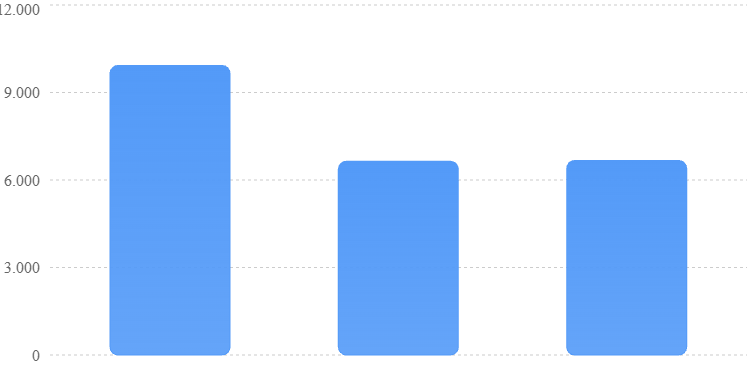
Source: Africa Center for Strategic Studies, 12 August 2026. The figures include fatalities associated with militant Islamist violence, not solely deaths directly attributed to militant perpetrators.
The comparative distribution confirms that West African insecurity is not contained within the boundaries of the AES countries. The Sahel and Lake Chad theatres together account for a substantial proportion of the continent’s militant-linked fatalities, while their respective conflict systems differ in organisational structure, political context and military geography. Nigeria consequently requires analysis both as a major Lake Chad security actor and as a state exposed to evolving threats in its northwestern regions.
Official continental and theatre breakdown — Africa Center for Strategic Studies — Aug 2026
Competing Strategic Pathways
The current evidence supports three principal trajectories for the regional security environment. These are conditional pathways rather than quantified forecasts, and they are not necessarily mutually exclusive across different countries.
| Pathway | Supporting mechanism | Countervailing evidence | Principal indicators |
|---|---|---|---|
| Continued security fragmentation | Persistent insurgent pressure, competing institutional frameworks and uneven civilian protection | Declining militant-linked fatalities in selected coastal states | Corridor disruptions, attacks on government installations, displaced populations |
| Uneven national stabilisation | Stronger defensive institutions and differentiated country responses | Regional cross-border threats and continuing conflict concentration | Sustained reductions in civilian harm, restoration of transport access, return of public services |
| Functional regional cooperation | ECOWAS–AES negotiations and shared economic-security interests | Political mistrust, institutional separation and competing national priorities | Operational agreements, functioning liaison mechanisms, documented joint arrangements |
The second pathway is particularly important. A deteriorating regional aggregate does not exclude meaningful improvements within individual countries. Conversely, a reduction in annual fatalities is insufficient to establish lasting territorial security without corroborating evidence concerning civilian safety, economic activity and the continuity of state administration.
The principal strategic uncertainty is therefore whether selective improvements can become institutionalised and extended beyond individual national jurisdictions.
Principal Intelligence Gaps and Watch Indicators
Four categories of information will determine whether the assessment should be revised.
Territorial authority and economic access. The relevant evidence is not limited to incidents of armed violence. Changes in the regularity of commercial traffic, access to agricultural markets, fuel distribution and the continuity of civilian administration would provide a more complete picture of the ability of governments to exercise practical authority.
Military institutional performance. Verified information on force readiness, logistics, maintenance, deployment sustainability and civilian protection is required to distinguish equipment procurement from effective operational capability. Announced force structures cannot be assumed to possess their stated operational strength.
Regional institutional implementation. Future ECOWAS–AES agreements should be assessed through their operative provisions, practical application and measurable security or economic effects. Diplomatic engagement alone is not evidence of restored interoperability.
Reliability of reporting. Restrictions on independent reporting and differences between national statistical systems complicate comparisons across Sahelian states. The Africa Center itself cautions that its reported security totals may understate actual violence. Assessments should therefore distinguish changes in observed incidents from changes in reporting coverage.
The June 2026 report of the UN Secretary-General on the activities of the United Nations Office for West Africa and the Sahel, identified as S/2026/537, also provides an institutional reference point for subsequent examination of regional political and security developments.
Strategic Assessment
The evidence available as of 9 October 2026 supports a central conclusion: West Africa’s security crisis has become a problem of institutional endurance, economic connectivity and contested political authority, rather than merely an accumulation of separate counterterrorism campaigns.
Its development will be shaped by three simultaneous processes. The first is the capacity of armed organisations to maintain coercive influence across national boundaries. The second is the ability of governments to provide credible protection while sustaining essential economic and administrative functions. The third is the extent to which divided regional institutions can maintain practical cooperation despite divergent political alignments.
For European governments, the strategic implications encompass regional commercial connectivity, humanitarian stability, international security partnerships and the governance of migration pressures. Italy, France, Germany and the United Kingdom do not have identical legal authorities, historical relationships, operational commitments or economic exposures, and their respective positions require separate evaluation rather than a generic European response.
The next analytical stage must therefore examine how the different armed organisations, state institutions and territorial environments produce distinct security outcomes. Only on that basis can the relative effectiveness of national strategies, external military partnerships and regional governance arrangements be assessed without attributing outcomes to unsupported causal explanations.
DATA CUT-OFF: 09 OCTOBER 2026 · ENGLISH EDITION
WEST AFRICA
SECURITY UNDER PRESSURE
Insurgent violence, contested sovereignty, economic corridors and the fragmentation of regional security institutions. A decision-oriented visual assessment based on explicitly attributed institutional data.
01 / Strategic baseline
Different denominators and reporting periods are explicitly identified; these figures must not be added together.
Fatality measure: fatalities associated with militant Islamist violence, including relevant battles and state responses; not a count of deaths directly caused exclusively by insurgents. Africa Center for Strategic Studies, 12 Aug 2026. Displacement: UNHCR, 21 Sep 2026.
02 / Conflict geography
Three-dimensional bar treatment, proportional to published incident-linked fatality totals. The third bar is a subset of the regional picture and should not be added to its parent theatre.
Annual fatality concentration
Scale: 0–10,000 fatalities. Theatre totals are comparative statistics, not a single country ranking. Source: Africa Center, Aug 2026.
Sahel share of Africa
Denominator: all Africa, 23,872 deaths associated with militant Islamist violence.
03 / Coastal divergence
Reported fatalities declined in Benin and Togo despite persistent cross-border security exposure.
Benin
Reduction: 196 fatalities (approximately 70.8%).
Togo
Reduction: 151 fatalities (approximately 77.8%).
Comparisons derived from Africa Center for Strategic Studies annual series as published 12 Aug 2026. Calculated country-specific percentages from printed counts; differing from a generic rounded headline concerning both states.
04 / Three strategic pillars
A synthesis of the analytical framework; causal pathways are assessments, not quantified forecasts.
Security and territorial authority
Armed actors, operational military performance, civilian security and the continuity of public administration.
Threat structureSovereignty and strategic alignments
ECOWAS–AES relations, outside security partnerships, vulnerable trade corridors and European exposure.
Institutional structureStrategic options and warnings
Alternative security trajectories, observable signposts, decision thresholds and government response options.
Decision structure05 / Strategic transmission chain
Illustrative mechanism: vulnerabilities can compound; arrows do not establish that every step occurs in every jurisdiction.
06 / Evidence table
| Indicator | Value / status | Reference period | Institutional source |
|---|---|---|---|
| Militant-linked fatalities · Africa | 23,872 | 12 months to mid-2026 | Africa Center for Strategic Studies |
| Militant-linked fatalities · Sahel | 9,928 | 12 months to mid-2026 | Africa Center for Strategic Studies |
| Militant-linked fatalities · Lake Chad | 6,643 | 12 months to mid-2026 | Africa Center for Strategic Studies |
| Benin · prior → latest | 277 → 81 | Annual comparisons, Aug 2026 release | Africa Center for Strategic Studies |
| Togo · prior → latest | 194 → 43 | Annual comparisons, Aug 2026 release | Africa Center for Strategic Studies |
| Displaced · Mali, Burkina Faso, Niger | 3.8 million | 31 Jul 2026 | UNHCR |
| ECOWAS–AES negotiations | Chief negotiator appointed | 23 Mar 2026 | ECOWAS |
07 / Three plausible regional pathways
Qualitative strategic alternatives; no numerical probabilities assigned because defensible probability inputs are unavailable.
Persistent fragmentation
Security pressures and incompatible regional frameworks impair cross-border response and economic continuity.
Watch: trade interruptionUneven stabilisation
Some states improve civilian security and territorial access while neighbouring theatres remain highly contested.
Watch: sustained civilian safetyFunctional cooperation
Negotiated agreements and practical liaison mechanisms partially offset political and institutional division.
Watch: implemented agreementsDecision-relevant conclusion
The decisive measure of regional security is not the quantity of operations or equipment announcements. It is whether governments maintain civilian protection, commercial connectivity, administrative continuity and workable cross-border security arrangements. The available evidence supports a differentiated country-level approach, not a uniform regional verdict.
Official and institutional sources
Editorial cut-off: 9 October 2026. Visual architecture and interpretative statements are an independent synthesis. Historic statistics are not real-time incident monitoring.
PILLAR I — THE CHANGING CONFLICT SYSTEM
Chapter 1 — The West African Security Landscape in 2026
Strategic Judgment: The Geography of Conflict Is Being Reconfigured by the Loss of Economic and Administrative Control
West Africa’s security environment in October 2026 is characterised by the simultaneous expansion of insurgent operational reach, the deterioration of state control over economically significant territories, and the emergence of increasingly differentiated national security conditions. These developments cannot be adequately assessed through battlefield casualties alone. The decisive question is whether governments retain the ability to regulate economic circulation, guarantee access to rural populations, enforce public administration and maintain sufficient coercive capacity to prevent armed organisations from establishing competing systems of authority.
The scale of violence establishes the urgency of the situation, but its geographic distribution reveals a more complex strategic reality. During the twelve months ending in mid-2026, the Sahel remained Africa’s most lethal theatre of militant Islamist violence, with 9,928 associated fatalities, while the Lake Chad Basin experienced a particularly pronounced escalation. In parallel, the expansion of militant-linked activity into northwestern Nigeria and the continued exposure of coastal border regions indicate that the conflict’s perimeter is becoming less predictable. The relevant security system now extends across interconnected territories whose political jurisdictions, military commands and security institutions operate under different national priorities.
This is particularly consequential for Mali, Burkina Faso and Niger. Their political and military leaderships have placed national sovereignty at the centre of their security doctrines, yet their ability to exercise sovereignty depends on transport networks, border crossings, local economic intermediaries and public institutions that remain vulnerable to armed coercion. Sovereignty in this environment must therefore be assessed as a practical capacity rather than merely a constitutional attribute.
The United Nations’ July 2026 briefing on regional developments identified terrorist and insurgent attacks, transnational organised crime and interstate tensions as interconnected dimensions of the regional crisis. The UN further warned that armed organisations were increasingly exploiting governance deficiencies, social and economic vulnerabilities and cross-border mobility while employing more sophisticated technologies and coordination practices. The strategic implication is that conventional military geography—defined by bases, administrative boundaries and major cities—no longer captures the full distribution of security power.
Sources: Activities of the United Nations Office for West Africa and the Sahel, S/2026/537 — United Nations Secretary-General — June 2026; Security Council Briefing on West Africa and the Sahel — UNOWAS — July 2026; Militant Islamist Violence in Africa — Africa Center for Strategic Studies — August 2026.
The Five Principal Geographic Systems of West African Insecurity
The region should be assessed through five interconnected but analytically distinct security systems, each generating different operational requirements and political consequences.
The western and central Malian system encompasses the economic approaches to Bamako, the agricultural and commercial areas of Ségou and Mopti, the western connections through Kayes and the strategic relationships linking southern Mali to neighbouring economies. Its importance arises from the connection between armed pressure in peripheral regions and the continuity of national economic activity. Violence affecting road transport and fuel distribution can generate consequences far beyond the sites of armed engagement.
The clearest institutional evidence emerged from the fuel disruptions in 2025. Addressing the Security Council on 18 November, Secretary-General António Guterres reported that JNIM attacks against fuel-supply corridors had produced shortages affecting markets, basic services, electricity and humanitarian operations. He also reported that hundreds of trucks had subsequently entered Bamako, illustrating that economic interdiction was contested and variable rather than an uninterrupted total blockade.
By 2026, the problem had evolved into a larger question of national resilience. The August security assessment recorded major armed operations affecting Malian urban centres, alongside pressure on strategic infrastructure. This combination distinguishes Mali from conflicts in which violence remains concentrated in isolated frontier districts.
The Liptako-Gourma system, extending across the borders of Mali, Burkina Faso and Niger, constitutes a separate concentration of insurgent activity, local competition and armed political influence. Its geography facilitates movement between jurisdictions, while the multiplicity of armed actors complicates attribution and operational assessment. In this environment, the same territory can be contested by state forces, al-Qaeda-associated organisations, Islamic State-associated organisations and locally organised armed groups whose relationships change over time.
The Lake Chad Basin system is distinguished by the interaction of north-eastern Nigeria, south-eastern Niger, western Chad and northern Cameroon. Its conflict dynamics are influenced by the geography of the lake and surrounding wetlands, agricultural and fishing economies, displaced populations, and the rivalry between different insurgent organisations. Unlike parts of Mali, where threats to national transport corridors have acquired central strategic importance, the Lake Chad conflict combines territorial contestation with repeated assaults on military positions and coercion directed at civilians and local economic activities.
The northern coastal-border system involves the northern territories of Benin, Togo, Côte d’Ivoire and the wider security concerns of Ghana. Its significance is preventive as well as operational. These states are exposed to armed networks originating or operating across the Sahelian frontier, but their security outcomes differ considerably from those of the central Sahel. The documented decline in fatalities in Benin and Togo during the latest annual reporting period demonstrates why exposure to a cross-border threat must not be confused with inevitable territorial destabilisation.
The northwestern Nigerian system is emerging as an increasingly important interface between Sahelian militant organisations, Nigerian jihadist factions and criminal armed networks. It differs from the Lake Chad Basin in its combination of kidnapping economies, armed banditry, rural insecurity and overlapping organisational allegiances. The strategic concern is not simply that a new theatre has appeared, but that militant organisations may benefit from pre-existing networks of coercion and criminal activity without having to establish their own institutions from the beginning.
Sources: Secretary-General’s Remarks on Regional Counter-Terrorism Cooperation — United Nations — November 2025; Militant Islamist Violence in Africa — Africa Center for Strategic Studies — August 2026.
Comparative Geographic Assessment
| Conflict system | Principal territories | Strategic assets exposed | Main security characteristics | Consequence for state authority |
|---|---|---|---|---|
| Western and central Mali | Kayes, Koulikoro, Ségou, Mopti and approaches to Bamako | National road corridors, fuel distribution, commercial connections and civilian administration | Dispersed attacks, economic interdiction, pressure on strategic centres | National economic activity becomes vulnerable to insecurity beyond contested rural areas |
| Liptako-Gourma | Border territories of Mali, Burkina Faso and Niger | Cross-border routes, pastoral and agricultural economies, state installations | Multiple armed actors, competing spheres of influence and recurrent military engagements | Effective governance becomes fragmented across jurisdictions |
| Lake Chad Basin | Borno, Yobe, Adamawa and neighbouring border territories | Military installations, fishing and agricultural livelihoods, population centres | Rival insurgent organisations, major military engagements and persistent civilian exposure | Government authority becomes dependent on sustained security and civilian protection |
| Northern coastal frontier | Northern Benin, Togo, Côte d’Ivoire and adjacent border zones | Border crossings, rural commerce, protected areas and transport connections | Cross-border infiltration, varying national defensive responses | Security resilience differs according to national institutions and local conditions |
| Northwestern Nigeria | Kebbi, Sokoto, Zamfara and adjoining areas | Rural communities, regional trade routes and transport networks | Interaction of jihadist networks, armed criminal groups and local conflicts | Criminal and ideological coercion become increasingly difficult to separate |
The principal analytical distinction is between territories where armed groups exercise coercive influence through frequent operations and territories where they can routinely determine civilian conduct. Neither attack frequency nor temporary access establishes permanent control. Territorial assessments require evidence of sustained enforcement, the continuity of government services, local economic regulation and the ability of civilians to move without armed permission.
Quantifying the Geographic Transformation
The Africa Center’s August 2026 dataset offers several additional measurements that illuminate developments beyond the aggregate numbers used in the opening dossier.
| Measurement | Earlier value | Latest value | Analytical interpretation |
|---|---|---|---|
| Militant Islamist-linked fatalities in northwestern Nigeria | 0 in 2024 | 504 in 2026 reporting period | Emergence of an additional geography of documented militant-linked violence |
| Northwestern Nigeria, intermediate period | 136 in 2025 | 504 in 2026 | Strong acceleration from the preceding reporting period |
| Benin | 277 | 81 | Major reduction in fatalities, without eliminating cross-border exposure |
| Togo | 194 | 43 | Major reduction in fatalities, without proving permanent threat removal |
| Remote-violence fatalities, Africa | 4,221 | 5,980 | Increased importance of air-delivered and other forms of remote violence |
| Lake Chad Basin battle-related fatalities | Previous-year baseline | Increase of 92% | More intensive military engagements, not necessarily equivalent to insurgent expansion |
The first four country-level comparisons should not be used to construct a comprehensive West African fatality total. The northwestern Nigerian series represents a particular subset of militant-linked violence, while the Benin and Togo figures refer to those countries’ reported militant-linked fatalities. The remote-violence statistic is continental, not exclusively West African.
An important further distinction concerns the increase in Lake Chad fatalities. Because the Africa Center attributes much of the rise to intensified military engagements, the higher death toll cannot independently establish that insurgent territorial control increased proportionately. A rising battlefield casualty count can result from offensives by insurgents, offensives by state forces or intensified engagement between both.
From Territorial Contiguity to Strategic Interdiction
The most important change in the military geography of West Africa is the increasing strategic relevance of controlling economic circulation without necessarily maintaining contiguous territorial occupation.
An armed organisation that can repeatedly disrupt the movement of essential commodities may create national effects through geographically limited operations. Fuel, food and medical supplies depend on transport infrastructure and commercial operators whose decisions are sensitive to attacks, insecurity, delays and the reliability of state protection. Repeated disruption can consequently reduce commercial activity even outside areas directly affected by combat.
This is not equivalent to assuming that armed groups possess uncontested territorial sovereignty. A government may maintain authority over its capital, airports, central institutions and armed forces while experiencing severe constraints in the surrounding economic environment. The difference between formally retaining national territory and reliably exercising public authority over its productive and transport networks is central to understanding the strategic situation.
The Malian case provides documented evidence of this mechanism. UN reporting from November 2025 established that attacks affecting the supply of fuel to Bamako produced shortages with direct civilian and humanitarian consequences. The later expansion of attacks against major Malian targets reinforces the need to evaluate military operations in relation to national economic vulnerability, although the precise effects of each subsequent operation require separate verification.
Source: Secretary-General’s Remarks to the Security Council — United Nations — November 2025.
Key Judgments — Chapter 1
West African insecurity now consists of several connected theatres with materially different organisational, geographic and institutional characteristics. Mali represents the clearest case in which the disruption of economic networks has acquired national strategic significance. The Lake Chad Basin remains a highly lethal theatre of sustained military engagement, while northwestern Nigeria has become an additional area of militant-linked activity interacting with established criminal insecurity.
Benin and Togo demonstrate that regional pressure does not produce identical national trajectories. The effectiveness of defensive measures must therefore be evaluated through country-specific outcomes rather than inferred from the regional aggregate.
The assessment would change materially if successive reporting periods demonstrated sustained restoration of transport access, civilian administration and freedom of movement in presently contested regions, or conversely if armed organisations established enduring economic controls across additional national corridors.
Chapter 2 — JNIM, Islamic State Networks and the Evolution of Insurgent Power
Strategic Judgment: Organisational Cohesion and the Ability to Coordinate Dispersed Operations Are Becoming Critical Differentiators
The insurgent landscape of West Africa is neither organisationally unified nor reducible to a single competition between governments and religious extremist organisations. It comprises several movements with different command structures, territorial concentrations, organisational histories and relationships with civilian populations. The distinction matters because organisations that share broad ideological objectives may compete directly over recruits, revenue and territorial influence.
JNIM, associated with al-Qaeda, occupies a particularly important position in the central Sahel. The organisation’s strategic relevance derives from its capacity to coordinate violence across widely separated areas while sustaining influence through subordinate formations and local relationships. Its expansion has given it a substantial geographic reach, but it has also increased the demands placed on its command systems and the complexity of maintaining organisational discipline.
The Islamic State-associated movement operating in the central Sahel constitutes a distinct competitor. It has retained influence in parts of the Mali–Niger borderlands and has exhibited particularly severe patterns of civilian victimisation. It should not be conflated with Islamic State West Africa Province, whose principal operational geography lies in the Lake Chad Basin.
Boko Haram-linked factions, ISWAP and additional armed networks also operate within different Nigerian security environments. Organisational names, propaganda affiliations and local alliances do not necessarily establish unified command or identical territorial objectives.
The United Nations Monitoring Team’s thirty-eighth report, issued on 10 August 2026 under reference S/2026/651, is a particularly important institutional source for this assessment. Its findings must be understood as information evaluated and reported through the UN sanctions-monitoring process, rather than a comprehensive judicial determination of every attributed act.
JNIM: The Strategic Significance of Coordinated Decentralisation
JNIM’s organisation combines the advantages of a common ideological and strategic identity with the operational flexibility of geographically distributed constituent formations. This arrangement enables the movement to sustain different types of activity across distinct environments, but it should not be interpreted as proof that every subordinate unit operates under continuous central direction.
The most consequential characteristic is its reported ability to coordinate complex operations. Multi-location attacks can impose simultaneous demands on state security institutions, create uncertainty concerning the location of subsequent threats and produce political effects disproportionate to the duration of individual engagements. The organisational achievement lies in coordinating geographically dispersed actions while maintaining a sufficiently coherent operational identity.
The Africa Center’s August 2026 analysis attributes 76% of militant Islamist-linked fatalities in the Sahel to JNIM. This is a measure of fatalities associated with the group in the dataset, not a direct measure of combatant strength, recruitment, occupied territory or the number of attacks independently initiated by its central leadership.
The figure nonetheless demonstrates JNIM’s relative significance within the recorded conflict environment. Combined with documented attacks against strategic infrastructure and major population centres, it supports the judgment that the organisation possesses operational reach extending well beyond isolated rural bases.
Source: Militant Islamist Violence in Africa — Africa Center for Strategic Studies — August 2026.
Islamic State in the Sahel: Geographic Concentration and Civilian Coercion
Islamic State-affiliated forces in the Sahel must be assessed separately from JNIM in terms of geographic concentration, command arrangements and violence against civilian populations.
The August 2026 Africa Center assessment associates the movement commonly described in the dataset as Islamic State in the Greater Sahara (ISGS) with 1,842 fatalities, representing approximately 19% of the Sahel’s militant-linked fatalities during the reporting period. The same assessment identifies the movement’s continued influence in the Ménaka region and records that civilians accounted for approximately 36% of fatalities associated with its violence.
That civilian proportion is analytically significant. It suggests that attacks against noncombatants represent a substantial component of the organisation’s conflict footprint, although the figure alone does not establish the individual operational purpose of every recorded incident.
Violence against civilians may facilitate coercive control in the immediate term but can also undermine local cooperation, provoke resistance and increase the importance of armed protection arrangements. The balance depends on local conditions and should not be assumed to produce identical outcomes in every district.
Source: Sahel Regional Assessment — Africa Center for Strategic Studies — August 2026.
ISWAP and Boko Haram: Competition Within the Lake Chad Security System
The Lake Chad Basin presents a different organisational configuration. ISWAP and Boko Haram-linked organisations remain important armed actors, but their internal structures, patterns of civilian targeting and relations with local communities differ.
The August 2026 dataset records 3,520 fatalities associated with ISWAP, compared with 1,905 in the preceding annual period. Of the latest figure, 2,493 were classified as battle-related fatalities. This distinction is particularly important because it indicates that much of the recorded increase occurred through military engagements rather than being exclusively attributable to attacks against civilians.
Boko Haram-linked organisations display a different pattern in the dataset. Over the preceding five years, fatalities associated with their violence against civilians increased from 188 to 724. The Africa Center attributes 65% of Lake Chad Basin fatalities arising from violence against civilians in the latest reporting year to Boko Haram.
The contrast is not evidence that ISWAP systematically refrains from civilian coercion. Both organisational systems have been associated with violence and exploitation. It does, however, establish that the composition of recorded fatalities differs, which has direct implications for civilian protection, risk assessment and the evaluation of military operations.
Source: Lake Chad Basin Assessment — Africa Center for Strategic Studies — August 2026.
Analytical Comparison of Armed Organisations
| Organisation or network | Principal conflict geography | Organisational profile | Documented 2026 indicator | Major analytical distinction |
|---|---|---|---|---|
| JNIM | Mali, Burkina Faso and adjoining Sahelian territories | Al-Qaeda-associated coalition with geographically distributed formations | Associated with 76% of Sahel militant-linked fatalities | Broad coordination and multi-theatre operational reach |
| Islamic State in the Sahel / ISGS | Mali–Niger borderlands, particularly the Ménaka-related conflict system | Islamic State-associated movement | 1,842 associated fatalities; civilian victims comprise about 36% | Concentrated conflict geography and substantial civilian victimisation |
| ISWAP | Lake Chad Basin | Islamic State-associated Nigerian and regional insurgent organisation | 3,520 associated fatalities; 2,493 battle-related | High intensity of military engagements |
| Boko Haram-linked factions | Lake Chad Basin and documented activity elsewhere in northern Nigeria | Organisationally fragmented jihadist movement | 724 civilian fatalities in the relevant 2026 comparison | Major civilian exposure and factional differentiation |
| Ansaru and other northwestern Nigerian armed networks | Parts of northwestern Nigeria | Distinct jihadist and criminal organisational environments | No comparable single organisation-wide figure established here | Overlapping militant and criminal activity complicates attribution |
The absence of a directly comparable figure for Ansaru is intentional. Northwest Nigeria contains multiple armed organisations whose activities cannot be collapsed into one ideologically uniform insurgent formation.
Organisational Adaptation and Technological Change
Military and organisational adaptation has become an important feature of the security environment, but claims about technological sophistication require careful differentiation. The use of commercial drones, modern communications systems or digital financial instruments does not automatically establish that an armed organisation possesses a fully integrated intelligence, surveillance and precision-strike capability.
The United Nations’ July 2026 regional briefing nevertheless drew attention to the increasing employment of drones, sophisticated communications and cryptocurrencies by armed organisations, alongside cross-border operational coordination.
These developments have implications beyond their immediate tactical applications. Communications technology can reduce coordination costs across dispersed formations; digital media can extend the political impact of attacks; and commercially accessible technological systems may reduce some barriers to operational adaptation. At the same time, there remains a substantial difference between isolated experimentation, recurrent battlefield employment and institutionalised technical competence.
The August 2026 Africa Center report also records a continental increase in fatalities classified as remote violence, from 4,221 to 5,980. It estimates that approximately 80% of remote-violence fatalities arose from airstrikes, while drone-associated fatalities were growing. These figures cover the African conflict dataset and cannot be assigned exclusively to insurgents or to West African operations.
Source: UNOWAS Security Council Briefing — United Nations — July 2026; Africa Center Strategic Violence Assessment — August 2026.
Armed Governance and the Political Economy of Insurgency
The durability of an insurgent organisation depends in part on its capacity to obtain resources and influence civilian conduct. These functions can be exercised through taxation, extortion, control over commerce, intimidation or the imposition of alternative dispute-resolution arrangements.
Such practices need not amount to permanent occupation. A population may remain formally under government jurisdiction while its daily economic choices are constrained by the risk of armed punishment. This creates overlapping systems of authority in which government institutions and armed organisations exercise different forms of influence over the same territory.
The distinction between ideological recruitment and coercive compliance is essential. Civilians who pay levies, restrict commercial activities or avoid cooperation with security forces may do so because of threats rather than political alignment. Counting such behaviour as voluntary insurgent support would produce an unreliable assessment of organisational legitimacy.
In the same way, the extraction of resources cannot automatically be equated with stable governance. A movement may generate revenue through intimidation while lacking the administrative capacity to provide services or sustain predictable public order.
The relevant analytical question is whether coercive institutions become sufficiently regular to influence civilian expectations and behaviour over time.
Key Judgments — Chapter 2
JNIM’s principal documented advantage is the combination of substantial conflict reach and the capacity to conduct geographically dispersed operations. Its position within the Sahelian fatality dataset distinguishes it from competing organisations, although fatality shares must not be converted into unsupported estimates of territorial control.
Islamic State-associated forces in the Sahel remain a distinct and consequential competitor, particularly in eastern Mali and adjoining territories. Their patterns of civilian victimisation require a separate analytical treatment.
Within the Lake Chad Basin, the rising intensity of ISWAP-associated battlefield deaths and Boko Haram’s substantial civilian casualty footprint indicate different but overlapping security problems. Northwestern Nigeria adds a further layer in which criminal and ideological armed activity increasingly intersect.
The assessment would change if official monitoring established a sustained restructuring of these organisations’ command relationships, a durable shift in territorial influence, or independently verified changes in their revenue and recruitment systems.
Chapter 3 — Military Capabilities, Command Structures and Operational Constraints
Strategic Judgment: Force Effectiveness Depends on Integrated Capability Rather Than Platform Acquisition or Nominal Strength
The principal military question facing West African governments is no longer whether their armed forces possess the means to conduct operations against insurgent organisations. It is whether national defence institutions can generate sustained, coordinated and legally accountable military effects across large territories while preserving sufficient capability to defend strategic infrastructure and protect the civilian population.
The distinction is fundamental. A military organisation may possess aircraft, armoured vehicles, artillery, unmanned systems and substantial numbers of personnel without being able to maintain continuous operational availability. Procurement records establish acquisition; they do not establish technical serviceability, trained crews, secure communications, effective command relationships or sustained mission performance. Equally, a successful engagement may demonstrate tactical competence without proving that the force involved can consolidate territorial gains.
The increasingly complex character of West African violence makes this distinction especially important. Governments face attacks against military positions, politically significant installations, populated areas and economic infrastructure, while armed organisations increasingly exploit dispersed operations and technological adaptation. The military response must therefore be assessed across several distinct functions: operational command, mobility, intelligence integration, logistics, infrastructure security, personnel readiness and civilian-harm mitigation.
At the strategic level, the most serious institutional vulnerability is the possibility that national armed forces become responsible for more security missions than their available capabilities can sustain. The defence of population centres, military facilities, transport corridors and remote communities can produce competing demands on personnel, maintenance budgets and command attention. Those competing missions are not inherently evidence of poor organisation; they become operationally consequential when the armed forces lack the resources and institutional mechanisms needed to manage them simultaneously.
Military Performance Indicators: What the Public Record Can and Cannot Establish
The public record contains considerably more information about equipment purchases and announced operations than about the operational readiness of national forces. This imbalance makes it necessary to distinguish observable outputs from military capabilities that cannot be independently confirmed.
| Capability dimension | What official evidence can establish | What it cannot establish alone | Decision-relevant measurement |
|---|---|---|---|
| Personnel | Authorised establishment, recruitment announcements, officially reported deployments | Number of personnel available, trained and medically fit for each mission | Verified deployable strength and sustainable rotation capacity |
| Aircraft and unmanned systems | Procurement, delivery, official inventories, announced operations | Fleet readiness, endurance, availability of qualified operators | Mission-capable assets and sustained operational availability |
| Armoured and tactical vehicles | Equipment acquired and nominal fleet composition | Serviceability, spare-parts availability, endurance under field conditions | Operational fleet availability by mission |
| Intelligence systems | Institutions established, equipment delivered, cooperation agreements | Quality of analysis, speed of dissemination, reliability of collected information | Validated warning and response performance |
| Logistics | Budget allocations, facilities, transport equipment and supply agreements | Ability to sustain dispersed units during prolonged operations | Supply continuity, maintenance recovery and medical evacuation capacity |
| Command and control | Formal command organisation and authorised responsibilities | Practical interoperability, delegation quality and effectiveness under pressure | Verified joint-exercise and operational performance |
| Territorial security | Bases, patrols, operations and official claims of control | Continuous civilian freedom of movement and effective public administration | Persistence of protection and functioning civilian institutions |
| Civilian protection | Legal obligations, directives, reported investigations | Compliance during every operation or absence of unlawful conduct | Independently documented harm, accountability and remedy |
This framework prevents one of the most consequential errors in defence analysis: converting a government’s stated military capacity into an assumed ability to exercise it.
It also changes the interpretation of defence expenditure. Spending on aircraft or other major platforms is only part of military capability. Training, technical personnel, maintenance facilities, transport support, communications, medical provision and institutional oversight determine whether procurement produces enduring operational value.
These dependencies are relevant to every West African military institution, although their actual severity must be established separately for each country.
Mali: The Military Burden of Defending a National Economic System
Mali presents an especially demanding combination of geographic scale, dispersed conflict, critical transport dependencies and threats extending toward strategically significant national installations.
The government’s military challenge is not limited to defending particular cities or defeating armed formations in individual engagements. It must also preserve the connection between its principal administrative centres and the economic networks that sustain them. In practical terms, transport corridors acquire military importance because their disruption affects fuel distribution, commerce, public services and the movement of essential supplies.
The November 2025 United Nations assessment of JNIM’s fuel-supply disruptions demonstrated this connection. The Secretary-General reported that attacks against supply movements had created shortages severe enough to affect humanitarian activities. Such effects broaden the range of infrastructure requiring protection and increase the costs of maintaining national security.
Major armed attacks against Malian targets during 2026 further demonstrate the need to distinguish control over principal military facilities from control over the wider security environment. The August 2026 Africa Center assessment records large-scale operations affecting Bamako and other Malian cities in April. The same publication also identifies the loss of Kidal to separatist forces during the period, demonstrating the continued importance of distinguishing jihadist organisations from other armed political actors.
The operational consequence is the simultaneous existence of several different security requirements: defending national command facilities, maintaining access to economic infrastructure, protecting civilian settlements, supporting remote formations and responding to attacks across distant regions. These missions may compete for personnel and resources even when each is individually necessary.
From an institutional perspective, the key issue is whether Mali’s command arrangements permit the effective allocation of limited operational resources between these competing responsibilities. Public reporting on attacks and procurement does not by itself provide the information needed to evaluate this capability conclusively.
Sources: United Nations Secretary-General’s Security Council Remarks — November 2025; Africa Center Sahel Security Assessment — August 2026.
Burkina Faso: Territorial Dispersion and the Requirement for Sustainable Security Presence
Burkina Faso presents a different operational problem. Its security environment is shaped by dispersed rural insecurity, the exposure of civilian settlements and the need to maintain credible protection across multiple contested localities.
This creates a tension between the visible deployment of government forces and the continuity of their operational effects. A security position may protect a limited locality while leaving nearby communities dependent on the timing and reliability of future assistance. The existence of defensive installations does not establish that surrounding transport links, agricultural activities or public services are secure.
The expansion of national military and auxiliary security arrangements therefore raises questions concerning command relationships, training standards, personnel accountability and institutional integration. Auxiliary forces may increase the geographic reach of national security systems, but their contribution must be evaluated against the quality of supervision and the risks associated with uneven training and disciplinary controls.
The relevant outcome is not the number of personnel mobilised. It is the extent to which civilians receive reliable protection without suffering abuses or coercion from forces claiming to defend them.
A government that expands its local security presence while failing to maintain effective oversight risks introducing additional sources of insecurity. Conversely, locally informed and accountable security institutions may improve civilian confidence and access to information when they operate within a functioning system of public authority.
This is particularly important where conflicts involve local disputes over land, economic access or communal security. Military institutions may influence the immediate balance of armed coercion without possessing either the authority or institutional capacity to resolve the underlying disputes.
Niger: Multiple Security Frontiers and the Allocation of Defensive Resources
Niger’s operational environment differs from Mali and Burkina Faso because security demands arise across several geographically separated conflict systems.
The western regions connect to the Liptako-Gourma security environment and the competition involving JNIM and Islamic State-associated organisations. The southeastern frontier connects Niger to the Lake Chad Basin and its distinct insurgent formations. Other border regions introduce additional security responsibilities involving cross-border movement and national territorial surveillance.
These differentiated theatres impose separate requirements on national military planning. An effective response in one region does not establish that the state possesses comparable capabilities elsewhere, particularly when operating conditions, adversaries and local populations differ.
The January 2026 attack against Niamey’s airport, recorded in the Africa Center assessment, demonstrates the importance of securing strategically significant installations beyond the principal rural conflict zones. It should not, however, be interpreted as evidence that the attacking organisation exercised territorial control over the capital.
The more consequential institutional question concerns the capacity to preserve national defensive readiness while maintaining sufficient operational resources across geographically separated security responsibilities.
Source: Africa Center Strategic Assessment of Militant Islamist Violence — August 2026.
Nigeria: A High-Intensity Counterinsurgency Environment with Expanding Security Demands
Nigeria’s military security environment cannot be accurately assessed as a single counterinsurgency theatre.
The Lake Chad Basin remains a major area of conflict involving ISWAP and Boko Haram-linked organisations. At the same time, militant-linked violence in northwestern Nigeria has become more prominent, intersecting with existing criminal violence and local insecurity. These threats impose different demands on military command, intelligence institutions and civilian law-enforcement agencies.
The latest annual Africa Center assessment records a 92% increase in battle-related fatalities in the Lake Chad Basin. The organisation attributes much of the overall escalation to intensified military engagements, including operations by Nigerian and other regional armed forces.
This is a significant interpretative point. An increase in battlefield fatalities can coexist with successful offensives against insurgent forces, setbacks suffered by government units or intensified competition between armed organisations. Without additional operational evidence, it cannot be treated as a direct measure of military failure.
Nigeria also presents the challenge of maintaining a distinction between responsibilities properly assigned to armed forces and those belonging to police or other civilian security organisations. Where the military assumes extensive routine internal-security functions, the allocation of trained personnel and specialised resources becomes a critical institutional question.
The issue is not whether soldiers should ever participate in domestic security operations. It is whether the legal framework, command organisation and available resources permit military forces to fulfil such responsibilities without undermining their other missions.
Sources: Lake Chad Basin Security Assessment — Africa Center for Strategic Studies — August 2026; Activities of UNOWAS, S/2026/537 — United Nations — June 2026.
Coastal States: Why Military Resilience Must Be Measured Differently
The experience of Benin and Togo provides an important counterweight to analyses that presume a uniform deterioration throughout West Africa.
Both countries experienced substantial reductions in reported fatalities associated with militant Islamist violence during the latest annual reporting period. The figures declined from 277 to 81 in Benin and from 194 to 43 in Togo.
The Africa Center associates these reductions in part with stabilisation efforts. Nevertheless, causal attribution requires caution. Annual changes may reflect adjustments in insurgent priorities, changes in state security activity, reporting conditions or other local factors.
The central question is whether the lower level of fatalities corresponds to improvements in freedom of movement, civilian confidence, border security and the ability of national institutions to operate consistently in previously exposed areas.
A coastal state with fewer fatalities may still face a persistent threat requiring surveillance, security-sector cooperation and resilient local administration. The absence of major attacks during a particular period cannot independently demonstrate that armed organisations have lost their capacity to operate.
Source: Africa Center Strategic Assessment — August 2026.
Command Architecture and Institutional Readiness
A professional assessment of West African military capabilities must distinguish five levels of institutional performance.
The first is formal authority: the legal and organisational system assigning responsibility to military commands and civilian authorities.
The second is resource availability: personnel, equipment, communications, maintenance and financial resources that can be allocated to authorised missions.
The third is operational integration: the ability of different units and institutions to cooperate within defined command relationships.
The fourth is sustained performance: the ability to continue operating after initial deployments and engagements, including through personnel rotation, equipment maintenance and replacement of essential supplies.
The fifth is accountable effect: the extent to which military activity produces improved security while complying with applicable legal obligations and protecting civilians.
These five levels are not interchangeable. The successful completion of a military operation establishes that particular forces achieved a defined result under particular conditions. It does not establish the wider readiness of the armed forces, their capacity to sustain the same activity or the political durability of the result.
WordPress Analytical Component — Military Capability and Outcome Dependencies
The following HTML is an individual explanatory scheme, not a separate chapter page or a substitute for the report. It is designed to sit immediately after the command-architecture analysis. It uses a three-dimensional visual treatment without inventing scores, country rankings or capability measurements.
Military Capability: From Formal Authority to Security Outcomes
Institutional effectiveness requires several connected capabilities. The five domains below are analytical prerequisites, not numerical readiness ratings.
Analytical framework, October 2026. The sequence illustrates institutional dependencies. It does not represent measured readiness of any particular national armed force.
Institutional Comparison — Military Challenges by Country
| State | Dominant security-management challenge | Capability requiring verification | Strategic consequence |
|---|---|---|---|
| Mali | Simultaneous defence of national centres, dispersed regions and economic corridors | Joint command effectiveness and sustained protection of critical supply networks | Economic security becomes inseparable from national defence |
| Burkina Faso | Protection of dispersed communities across contested rural territories | Sustainable local security presence and accountability of auxiliary forces | Public authority depends on continuous civilian protection |
| Niger | Management of geographically separated conflict theatres | Resource allocation, installation security and regional coordination | Multiple frontiers create competing readiness requirements |
| Nigeria | High-intensity Lake Chad operations alongside increasing northwestern threats | Force availability, military–police task allocation and joint operational performance | National security responsibilities become increasingly differentiated |
| Benin | Border security and preservation of recent improvements | Persistence of reduced violence and effective local institutional presence | Preventive security remains a central requirement |
| Togo | Containment of cross-border pressure in northern regions | Continued protection, intelligence cooperation and civilian confidence | Reduced fatalities create an opportunity for institutional consolidation |
| Côte d’Ivoire | Maintaining resilience along northern approaches | Border-management effectiveness and continuity of civilian administration | Preservation of economic and political stability |
| Ghana | Prevention of spillover into northern communities | Early warning, lawful intelligence coordination and cross-border cooperation | Protection of existing institutional resilience |
This comparison identifies questions requiring evaluation rather than asserting unsupported equivalence between national military capabilities.
Key Judgments — Chapter 3
West African military performance must be evaluated through operational availability, institutional integration and sustained civilian security, not through announced procurement or force strength alone.
The major military environments impose different capability demands. Mali faces pressure on nationally significant economic and security assets; Burkina Faso requires the sustained protection of dispersed communities; Niger operates across several separate conflict geographies; and Nigeria combines intensive Lake Chad military operations with emerging threats elsewhere.
The observed improvements in Benin and Togo demonstrate the importance of examining defensive performance at national and local levels. They do not establish that the underlying regional threats have disappeared.
The assessment would change if authoritative readiness reporting, independent civilian-security measurements and documented operational reviews demonstrated persistent changes in national military performance rather than isolated battlefield successes.
Chapter 4 — Civilian Security, Political Authority and State Legitimacy
Strategic Judgment: The Durability of State Authority Depends on the Protection of Civilian Life and the Continuity of Public Institutions
The civilian dimension of the West African conflict is not simply a consequence of military insecurity. It constitutes an independent factor determining the distribution of political authority, the effectiveness of national institutions and the capacity of governments to maintain relationships with populations in contested territories.
Armed conflict affects the civilian environment through several interconnected processes. Direct violence causes death, injury and displacement. Threats against communities alter patterns of settlement and economic activity. Restrictions on transport and commerce undermine household livelihoods. Interruptions to education and healthcare weaken essential public institutions. Armed groups may then exploit these disruptions to impose obligations, obtain resources or influence civilian behaviour.
The resulting insecurity can continue even when major military engagements decline. A district may experience relatively few recorded attacks while remaining affected by intimidation, restrictions on movement, declining access to services or the absence of effective judicial protection. Conversely, an increase in recorded engagements may coincide with efforts by government forces to restore access to contested territory.
For this reason, the measurement of security must extend beyond combat statistics. The decisive political question is whether individuals can exercise their rights, maintain their livelihoods and access public services without being subject to systematic armed coercion.
Forced Displacement as an Indicator of Territorial Insecurity
Forced displacement provides one of the clearest indicators of the humanitarian consequences of West African armed conflict, although it cannot be reduced to a simple proxy for changes in battlefield control.
On 21 September 2026, UNHCR reported that the number of forcibly displaced people across Burkina Faso, Mali and Niger had reached approximately 3.8 million as of 31 July 2026, nearly twice the level recorded in 2020.
The agency identified insecurity as the principal driver of displacement and stressed that the consequences increasingly extended beyond the borders of the three countries.
The movement of displaced populations has several institutional implications. Receiving communities require additional housing, healthcare, education, water and sanitation services. Local authorities must respond to changing demographic conditions while maintaining social cohesion and managing pressure on public finances.
Displacement can also change local political relationships. The departure of residents may weaken existing economic networks and community institutions, while prolonged displacement can make eventual return dependent on more than the cessation of immediate violence. Property disputes, access to livelihoods, restoration of essential services and personal security become relevant conditions for sustainable return.
Displacement Statistics: Geographic and Temporal Comparability
The UNHCR regional operational portal contains more recent figures covering several countries across the wider Sahelian displacement system. These should not be confused with the 3.8 million figure reported specifically for Burkina Faso, Mali and Niger.
The portal’s September 2026 update identifies a regional population of concern exceeding five million people. Its broader statistical coverage includes Burkina Faso, Mali, Niger, Chad and Mauritania and several population categories, including refugees, internally displaced persons and returnees.
The distinction is substantive. These categories differ in legal status and statistical definition, while national components may refer to different collection dates. The portal also notes that some figures are estimates derived from government reporting rather than individually verified registrations.
The table below preserves these distinctions.
| Population or indicator | Recorded figure | Geographic coverage | Statistical reference |
|---|---|---|---|
| Forcibly displaced people | Approximately 3.8 million | Burkina Faso, Mali, Niger | UNHCR, 31 July 2026 |
| Regional population of concern | 5,085,231 | Central Sahel, Chad and Mauritania | UNHCR portal, 30 September 2026 |
| Internally displaced persons recorded in the regional portal | 3,245,039 | Countries covered by the UNHCR regional dataset | Portal aggregate, 30 September 2026 |
| Refugees and asylum-seekers recorded in the portal | 3,287,067 | Portal-defined regional reporting population | 30 September 2026 |
| Refugees and asylum-seekers recorded in Niger | 502,536 | Niger | 30 September 2026 |
| Refugees and asylum-seekers recorded in Mali | 191,237 | Mali | 31 July 2026 |
| Refugees and asylum-seekers recorded in Mauritania | 964,344 | Mauritania | 31 August 2026 |
These figures are not additive. In particular, the regional categories must not be summed to produce a total because the portal’s reporting populations, definitions and component reference dates are not uniform. The internally displaced persons aggregate includes older underlying national observations, including a Burkina Faso figure dated March 2023. Accordingly, the regional total should not be described as a fully contemporaneous census of people displaced in September 2026.
Source: Sahel Crisis Regional Operational Data Portal — UNHCR — September 2026.
The Erosion of Education as an Instrument of Long-Term Destabilisation
The effects of prolonged insecurity on education are among the most serious institutional consequences of the conflict.
In September 2025, UNICEF and the Norwegian Refugee Council reported that more than 14,800 schools had closed because of violence and insecurity across West and Central Africa. The closures affected an estimated three million children across the 24-country reporting area.
The report indicated that the number of closures had almost doubled since 2019. Within the central Sahel, school closures increased from 8,222 to 8,452 over the preceding reporting period.
These numbers require precise interpretation. The regional total covers West and Central Africa rather than the central Sahel alone. The central Sahel figure represents a geographically narrower subset. Neither should be presented as a new October 2026 school-closure count without an updated equivalent dataset.
Education disruption has consequences that extend beyond immediate humanitarian need. Persistent closure of schools can undermine future labour-market participation, weaken literacy and professional training pipelines, and reduce the ability of public institutions to maintain long-term relationships with communities.
Girls face additional risks where interrupted education interacts with early marriage, unequal household responsibilities and reduced access to safe schooling. UNICEF specifically identifies the unequal consequences of prolonged school closures for adolescent girls.
The resulting effects may persist well beyond the duration of a particular insurgent campaign. Where children lose several years of education, the restoration of school buildings alone is insufficient to reverse the accumulated learning and social consequences.
Quantitative Assessment of the Education Crisis
| Indicator | Earlier measurement | Latest comparable published measurement | Geographic definition |
|---|---|---|---|
| Schools closed due to insecurity | Fewer than 8,000 in 2019 | More than 14,800 in 2025 | West and Central Africa |
| Children affected by school closures | — | Approximately 3 million in 2025 | West and Central Africa |
| Central Sahel school closures | 8,222 | 8,452 | Burkina Faso, Mali and Niger |
| Change in central Sahel closures | — | Increase of 230 schools | Change between the two cited observations |
| School closures in northwestern and southwestern Cameroon | Approximately 6,973 | Approximately 2,463 | Cameroon conflict-affected regions |
The Cameroon series is included to demonstrate that regional education indicators do not move uniformly. The underlying crises differ from the central Sahel insurgencies, and the Cameroon numbers must not be used as evidence of improved security conditions in Mali, Burkina Faso or Niger.
The absence of a later verified central Sahel school-closure series prevents a definitive statement about the direction of school closures between the September 2025 report and October 2026.
Civilian Protection and the Distribution of Political Authority
Political authority within a conflict-affected territory may be exercised by actors that do not possess formal constitutional legitimacy. Armed organisations can influence civilian decisions by imposing costs for disobedience, restricting commercial transactions or threatening individuals who cooperate with state institutions.
This distinction between formal authority and practical coercive influence is fundamental.
A government may retain legal jurisdiction over an area while being unable to guarantee the security of those who cooperate with its administrative or judicial institutions. Residents may then adjust their behaviour according to the power of the armed organisation most capable of imposing immediate punishment.
Such compliance cannot automatically be treated as ideological endorsement or popular legitimacy. The distinction matters because a population’s apparent accommodation with an armed actor may be the outcome of coercion, fear or the absence of viable alternatives.
The restoration of state authority consequently requires more than a visible military presence. It involves the ability to apply law predictably, protect individuals against retaliation, resolve disputes and maintain functioning institutions.
This interpretation also clarifies why civilian protection and operational effectiveness cannot be assessed independently. Security operations that increase immediate military pressure but expose communities to additional reprisals may undermine some of their intended political effects. Likewise, administrative initiatives undertaken without adequate security protection may place participating civilians at greater risk.
Violence Against Civilians and the Attribution Problem
The civilian consequences of the conflict must be assessed across all relevant categories of armed actors rather than through insurgent violence alone.
The Africa Center’s August 2026 dataset indicates that civilian fatalities form a substantial share of violence associated with Islamic State forces in the Sahel, particularly in Niger. It also draws attention to civilian fatalities associated with state and state-aligned military operations in Mali and Burkina Faso.
These findings require careful attribution. Fatalities associated with military operations, alleged unlawful killings, civilian deaths caused by indiscriminate attacks and deaths arising from direct targeting are not automatically interchangeable categories.
Any legal assessment must distinguish the existence of civilian casualties from a determination that a particular act violated international humanitarian law. The latter depends on the applicable rules and the specific facts of the incident.
Nevertheless, the strategic consequences of civilian victimisation do not depend entirely on the completion of judicial proceedings. Repeated reports of civilian harm may weaken confidence in security institutions, discourage cooperation and intensify local grievances.
Civilian security must therefore be treated as an independently measurable outcome, not merely as an additional consideration within the evaluation of military engagements.
Source: Africa Center for Strategic Studies — Militant Islamist Violence Assessment — August 2026.
Civilian Economic Security and the Limits of Coercive Administration
Insecurity also affects civilian life through the disruption of agricultural production, pastoral activity, local commerce and transport.
These economic systems are especially important in rural areas, where access to land, seasonal migration routes, livestock markets and small-scale trade can determine household survival.
Armed organisations may impose payments or restrictions on these activities, while governments may adopt emergency measures intended to reduce the movement of resources available to insurgent networks.
Both forms of intervention can alter civilian economic behaviour. The relevant policy distinction concerns legality, proportionality, accountability and the availability of mechanisms to protect livelihoods.
Measures that reduce access to essential goods or prevent civilians from sustaining basic economic activity can generate consequences extending beyond their immediate security objectives. Where household livelihoods deteriorate and public institutions cannot provide effective alternatives, the economic consequences can weaken confidence in the state.
This produces an institutional challenge rather than a purely military one. Restoring lawful economic activity requires access to markets, credible administration and protection against coercive extraction. These functions cannot be provided by armed deployment alone.
Measuring State Legitimacy Without Invented Scores
State legitimacy is often discussed as though it were a single measurable variable. In the context of West African insecurity, such an approach risks obscuring important distinctions.
Formal constitutional authority, public confidence, administrative performance, security effectiveness and compliance with legal obligations are separate dimensions. They may be related, but none can be substituted automatically for another.
A defensible institutional assessment should examine observable indicators instead of assigning arbitrary national legitimacy scores.
| Institutional dimension | Observable indicator | Evidence required | Interpretation |
|---|---|---|---|
| Civilian safety | Verified killings, injuries, abductions and exposure to threats | Incident records with credible attribution | Direct civilian-security conditions |
| Territorial accessibility | Regular civilian movement and access to local communities | Transport, humanitarian and local-administration records | Practical reach of public authority |
| Justice | Functioning courts, dispute-resolution access and implementation of decisions | Judicial and administrative reporting | Availability of lawful public remedies |
| Education | School accessibility, functioning classes and teacher presence | Education ministry and UNICEF data | Continuity of an essential public service |
| Healthcare | Functioning health facilities and access to essential treatment | Health-system and humanitarian records | Capacity to protect public welfare |
| Economic activity | Market operation, agricultural access and lawful movement of goods | Official economic and local market data | Economic functioning under state institutions |
| Accountability | Investigations, disciplinary proceedings and remedies for violations | Judicial, parliamentary and oversight records | Responsiveness of institutions to misconduct |
| Displacement and return | New displacement, voluntary return and sustainability of reintegration | UNHCR, IOM and national records | Population stability and conditions for safe return |
The analytical value of this approach lies in its ability to reveal conflicting trends. A locality may exhibit improved security-force presence but continued school closure, while another may experience reduced attack frequency without a corresponding restoration of judicial or healthcare services.
These distinctions should remain visible rather than be compressed into a composite numerical index unsupported by comparable official data.
State Authority and Civilian Security: A Structural Interpretation
The relationship between civilian protection and durable state authority operates through several mutually dependent institutional functions.
The initial requirement is physical safety: people must be able to live, travel and conduct lawful activities without systematic violence or intimidation.
Physical safety permits the functioning of public institutions, including schools, healthcare facilities, courts and administrative services. Their continuity in turn reduces the need for civilians to rely on non-state coercive organisations for access to basic resources or dispute resolution.
Institutional continuity can also strengthen public confidence and improve the quality of information available to government authorities. However, these effects are conditional. The conduct of state forces, the accessibility of public services and the treatment of local populations can reinforce or undermine the relationship.
This process should not be described as an automatic progression. A secure district may still suffer corruption, weak administration or unresolved communal disputes. Equally, the restoration of selected services cannot compensate indefinitely for the absence of physical protection.
The strategic importance of civilian security lies precisely in this interdependence. Military capacity creates some of the conditions under which public authority can function, but public authority acquires durability through repeated and credible institutional performance.
A Comparative Civilian-Security Assessment
| Country or conflict area | Principal documented civilian exposure | Institutional priority | Principal measurement limitation |
|---|---|---|---|
| Mali | Displacement, disrupted transport, fuel shortages and interruption of essential services | Civilian access and continuity of public administration | Incomplete and unevenly accessible territorial reporting |
| Burkina Faso | Conflict-related displacement and loss of access to local services | Protection of communities and sustainable service access | Older underlying observations in some displacement series |
| Niger | Conflict-related displacement and civilian exposure in several frontier regions | Protection, administrative continuity and cross-border humanitarian access | Different geographic and temporal coverage among datasets |
| Northeastern Nigeria | Civilian harm and disruption associated with the Lake Chad insurgencies | Protection, civilian recovery and continuity of local institutions | Multiple armed actors and overlapping security incidents |
| Northwestern Nigeria | Kidnapping, rural insecurity and increasing militant-linked violence | Lawful civilian protection and restoration of local economic security | Difficult separation of criminal and jihadist incidents |
| Northern Benin and Togo | Continued exposure to cross-border threats despite declining fatalities | Consolidation of security improvements and public confidence | Fatality reductions do not measure every form of coercion |
| Northern Côte d’Ivoire | Potential exposure to cross-border instability | Preventive security and institutional continuity | National aggregate measures may conceal localised threats |
The Strategic Significance of Generational Damage
The cumulative effects of conflict on education, economic participation and population displacement create risks that extend far beyond the current military campaigns.
Large-scale disruption of schooling affects the future supply of skilled labour and the capacity of public institutions to recruit qualified personnel. Prolonged displacement may alter local demographics, weaken existing social networks and complicate access to land and property. Repeated economic disruption can erode household savings and reduce the capacity of communities to recover from subsequent shocks.
These effects are not uniform and cannot be translated into numerical forecasts without suitable longitudinal data. Their strategic relevance, however, is clear: the deterioration of human capital and public-service capacity can outlast the immediate security conditions that originally caused it.
Consequently, the restoration of civilian institutions should be considered part of national security resilience rather than a distinct humanitarian activity whose strategic relevance begins only after military operations end.
Key Judgments — Chapter 4
The civilian consequences of West African insecurity have reached a scale that directly affects the sustainability of national institutions. Forced displacement, school closures and disruption of essential economic activity are not incidental outcomes; they influence the ability of governments to maintain public authority and preserve the institutional foundations of long-term security.
Official figures demonstrate the magnitude of these pressures, but their statistical universes must remain distinct. UNHCR’s displacement figures, UNICEF’s education estimates and conflict-fatality datasets measure different populations and phenomena and cannot be combined into a single numerical security index without defensible methods.
The central political distinction is between formal state sovereignty and the practical ability to protect populations, guarantee lawful economic activity and maintain accessible public institutions. Armed organisations can exercise coercive influence without possessing recognised political authority, while a government can retain constitutional jurisdiction without guaranteeing effective security throughout its territory.
The assessment would change materially if verified longitudinal data demonstrated sustained improvements in civilian protection, school reopening, voluntary and safe return of displaced populations, functioning local administration and access to basic services across currently contested territories.
Pillar I — Integrated Net Assessment
The four chapters establish a differentiated picture of West Africa’s conflict system as of 9 October 2026.
The region is experiencing a changing geography of insecurity in which some armed organisations demonstrate substantial operational reach, while national governments confront increasingly complex military, economic and institutional responsibilities. The conflict is not uniform: the intensity of the Lake Chad Basin, the coercive pressure affecting Malian economic networks, the different security challenges of Burkina Faso and Niger, and the comparatively improved fatality trends in Benin and Togo cannot be reduced to one regional trajectory.
JNIM occupies a dominant position in the recorded Sahelian militant-linked fatality dataset, while Islamic State-associated organisations and Boko Haram-linked networks demonstrate distinct patterns of violence, geographic concentration and civilian exposure. These differences require separate organisational assessments and caution against treating the various movements as elements of a single unified insurgency.
Military effectiveness remains inseparable from institutional performance. The availability of weapons systems and personnel is relevant, but the public record supports no automatic inference from procurement or nominal force strength to readiness, sustained territorial security or effective civilian protection.
The civilian environment ultimately determines whether security effects can become politically durable. Millions of displaced persons, widespread education disruption and the deterioration of economic access demonstrate the extent to which prolonged conflict can undermine the institutions through which states exercise practical authority.
The governing judgment of Pillar I is that the future balance of power in West Africa will depend not solely on armed organisations’ ability to conduct violence, but on the relative capacity of states and non-state actors to shape civilian security, economic access and the everyday exercise of authority.
This judgment provides the analytical basis for Pillar II, which will examine regional institutions, external security partnerships, economic infrastructure and the strategic consequences for European governments. These questions require a separate institutional and geopolitical assessment rather than repetition of the military and civilian findings developed here.
Principal official and institutional records for Pillar I
- Thirty-eighth Report of the Analytical Support and Sanctions Monitoring Team, S/2026/651 — United Nations Security Council — August 2026
- Activities of the United Nations Office for West Africa and the Sahel, S/2026/537 — United Nations Secretary-General — June 2026
- Security Council Briefing on West Africa and the Sahel — UNOWAS — July 2026
- Mounting Fatalities Linked to Militant Islamist Violence in Africa amid Shifting Tactics — Africa Center for Strategic Studies — August 2026
- UNHCR High Commissioner Calls for Investment in Protection and Solutions in the Central Sahel — UNHCR — September 2026
- Sahel Crisis Regional Operational Data Portal — UNHCR — September 2026
- Education Under Crisis: School Closures Nearly Double in Five Years in West and Central Africa — UNICEF — September 2025
PILLAR II — REGIONAL SOVEREIGNTY AND STRATEGIC COMPETITION
Chapter 5 — ECOWAS, the Alliance of Sahel States and Regional Political Fragmentation
Strategic Judgment: West Africa Is Developing Two Competing Political Architectures Without Ending Their Economic Interdependence
The institutional restructuring of West Africa has reached a stage at which the distinction between political sovereignty and economic interdependence has become one of the principal determinants of regional stability. The formal withdrawal of Mali, Burkina Faso and Niger from the Economic Community of West African States has produced a new configuration of regional governance, but it has not eliminated the practical relationships through which people, commodities, financial transactions and security interests connect the Sahelian interior to the Atlantic economies.
This divergence constitutes the fundamental strategic challenge of the post-withdrawal period. The three governments have sought to consolidate their autonomy through the Confederation of Sahel States, commonly identified by its French acronym AES. ECOWAS, meanwhile, has maintained mechanisms intended to prevent institutional separation from becoming an immediate rupture of regional trade and population mobility. The result is neither complete disengagement nor functioning reintegration, but a transitional arrangement in which political membership, economic rights and security cooperation are increasingly governed through different institutional channels.
The official date of withdrawal was 29 January 2025, following the notification and withdrawal procedures under Article 91 of the Revised ECOWAS Treaty. ECOWAS confirmed the effective departure of all three states in a statement published on 30 January 2025. Crucially, that statement also requested that existing ECOWAS passports and identity cards from the departing countries continue to be recognised, that goods and services continue to receive treatment under the ECOWAS Trade Liberalisation Scheme, and that citizens continue to benefit from visa-free movement, residence and establishment arrangements until further notice.
These transitional provisions are of greater strategic importance than their administrative appearance suggests. They demonstrate that ECOWAS recognised the potential economic and social costs of an abrupt institutional rupture and sought to preserve essential regional functions while the future relationship remained under negotiation. They do not, however, constitute a permanent settlement of the legal and economic consequences of withdrawal.
The appointment of former Guinean prime minister and former ECOWAS executive secretary Lansana Kouyaté as chief negotiator on 23 March 2026 confirms that the relationship has entered a more formal negotiating phase. His mandate concerns reconciliation of regional interests and the advancement of ECOWAS priorities in discussions with the AES countries. The appointment establishes a diplomatic mechanism, not an agreement on the final status of the three states.
Sources: ECOWAS Press Statement on the Withdrawal of Burkina Faso, Mali and Niger — ECOWAS — January 2025; ECOWAS Appoints Lansana Kouyaté as Chief Negotiator — ECOWAS — March 2026.
The Legal and Institutional Consequences of Withdrawal
The withdrawal process must be distinguished from the termination of every legal relationship previously established within the ECOWAS system. Membership, treaty obligations, transitional arrangements, commercial rights and separate subregional agreements do not necessarily terminate according to identical legal rules.
The Revised ECOWAS Treaty provides the principal legal framework for withdrawal from the organisation. Its implementation raises questions concerning institutional representation, participation in ECOWAS programmes, acquired rights, financial obligations and the continuing application of agreements involving states that remain economically interconnected.
ECOWAS identified five principal areas requiring negotiated treatment at its extraordinary Council of Ministers session in Accra in April 2025: legal and institutional adjustments; market access and economic integration; peace and security cooperation; sectoral development programmes; and human development, including education and health. This categorisation is significant because it establishes that the institutional consequences extend far beyond diplomatic representation.
The future framework could preserve selected economic and administrative functions while leaving political membership suspended or terminated. Alternatively, agreements could become more fragmented, requiring separate arrangements for trade, transit, security cooperation and population movement. Neither outcome can be treated as established without the relevant operative instruments.
The distinction between ECOWAS and the West African Economic and Monetary Union, WAEMU/UEMOA, is also essential. Mali, Burkina Faso and Niger share the West African CFA franc through the monetary institutions of the regional currency union. Their withdrawal from ECOWAS does not, by itself, establish withdrawal from WAEMU or termination of their participation in the common monetary framework. Treating the two organisations as legally interchangeable would produce a materially incorrect account of their monetary sovereignty and external financial relationships.
Sources: ECOWAS Extraordinary Council of Ministers on Withdrawal Arrangements — ECOWAS — April 2025; ECOWAS Official Withdrawal Statement — January 2025.
Institutional Comparison: ECOWAS and the AES
| Institutional characteristic | ECOWAS | Confederation of Sahel States (AES) | Strategic consequence |
|---|---|---|---|
| Institutional foundations | Treaty-based regional economic and political organisation | Confederation established by Mali, Burkina Faso and Niger | Different sources of legal authority |
| Membership after January 2025 | 12 member states | 3 member states | Divergent regional representation |
| Principal political framework | ECOWAS Revised Treaty and implementing instruments | AES founding and confederal instruments | Distinct institutional obligations |
| Security cooperation | Regional peace and security mechanisms, including the ECOWAS Standby Force architecture | Defence cooperation and a developing unified force | Separate command and planning arrangements |
| Economic integration | ECOWAS trade and free-movement instruments | Confederation-level coordination; continued external economic dependencies | Transitional rights require negotiation |
| Monetary arrangements | Member states operate under different monetary systems | Three members remain within WAEMU and the CFA franc framework | Political separation does not equal monetary separation |
| Diplomatic relations | Negotiating future relations with AES states | Negotiating relations with ECOWAS | Institutional separation remains subject to diplomatic management |
| External partnerships | Broad relationships with African and international institutions | Sovereignty-centred arrangements with selected external partners | More differentiated diplomatic alignment |
The table establishes institutional differences, not a ranking of effectiveness. Neither a larger membership nor a more integrated political declaration proves superior practical security performance.
The AES Unified Force: From Political Commitment to Legal Institutionalisation
A significant development occurred in July 2026, when the defence ministers of Burkina Faso, Mali and Niger met in Ouagadougou to review and validate the legal status of the AES Unified Force.
According to the Malian government’s announcement published on 14 July 2026, the meeting took place on 10 July under the chairmanship of Burkina Faso’s defence minister, Major General Célestin Simporé. The participating delegations validated the legal status of the unified force and adopted directives for the confederation’s second year.
The Malian government described the legal framework as intended to facilitate cross-border operations and reduce administrative obstacles to coordinated military activity.
This constitutes an identifiable stage of institutional development. It should not, however, be confused with independently verified proof of a fully operational integrated army. A legal status can define authority and responsibilities without establishing that participating national formations have achieved common logistics, interoperable communications, unified operational planning or enduring readiness.
The substantive test will therefore concern the implementation of the legal framework: the allocation of command authority, financing responsibilities, accountability procedures, national contingents and the relationship between confederal military institutions and the existing armed forces of the three states.
The Sovereignty Paradox: Political Autonomy and Economic Dependence
The three AES states face a structural contradiction common to landlocked economies: political institutions can pursue greater autonomy while their economic systems remain dependent on infrastructure located outside national territory.
Commercial access to Atlantic ports, international shipping, imported fuel, industrial equipment, fertilisers, pharmaceuticals and other essential goods requires cross-border arrangements. Even where governments diversify their diplomatic partners, they cannot eliminate the geographic significance of neighbouring transit states.
This produces an important distinction between three forms of sovereignty.
Constitutional sovereignty concerns the legal authority of the state and its recognised institutions.
Strategic sovereignty concerns the capacity to make and implement security and foreign-policy decisions without unacceptable external constraints.
Economic sovereignty concerns the practical ability to finance government functions, access essential markets and maintain national economic activity.
These dimensions may develop at different speeds. A government may increase its freedom to select security partners while remaining exposed to transport disruptions, commodity-price movements and regional financial conditions. Equally, a country may preserve monetary and commercial integration without accepting the political authority of a particular regional institution.
The future of the AES should consequently be evaluated through its actual capacity to reconcile these dimensions rather than through public declarations of sovereignty alone.
The Strategic Negotiation Agenda for 2026–2031
| Negotiation area | Concrete issue | Existing documentary baseline | Consequence of an unresolved dispute |
|---|---|---|---|
| Movement of people | Recognition of identity documents, residence and establishment | ECOWAS transitional continuation arrangements | Legal uncertainty for cross-border populations |
| Trade | Treatment of qualifying goods under regional liberalisation rules | Temporary continuity requested by ECOWAS | Administrative friction and higher transaction costs |
| Transit | Customs cooperation and treatment of international commercial traffic | Dependence on bilateral and regional arrangements | Risk of transport delays and commercial disputes |
| Security | Information exchange and cross-border cooperation | Separate ECOWAS and AES institutional frameworks | Weaker coordination against transnational threats |
| Institutional obligations | Personnel, property, programmes and outstanding commitments | ECOWAS negotiation framework | Disputes over acquired rights and responsibilities |
| Human development | Education, health and cross-border public programmes | Identified in ECOWAS contingency discussions | Discontinuity of services and funding |
| Diplomatic representation | Relations between ECOWAS and AES institutions | Chief negotiator appointed March 2026 | Prolonged institutional uncertainty |
The most consequential outcome would be an arrangement capable of maintaining civilian economic activity and practical security cooperation without requiring either side to resolve every disagreement concerning political legitimacy or regional institutional design.
Key Judgments — Chapter 5
The institutional separation of ECOWAS and the AES is a verified political fact, but the final legal and economic relationship remains subject to negotiation. The preservation of selected movement and trade arrangements reflects mutual economic dependencies that cannot be eliminated through political withdrawal alone.
The July 2026 validation of the AES Unified Force’s legal status indicates progress in confederal defence institution-building. It does not independently establish operational effectiveness.
The principal strategic indicator for the next five years will be whether the two regional systems achieve practical compatibility in trade, transit and security cooperation while maintaining their separate political identities.
Chapter 6 — Russia, China, Türkiye and the Transformation of Security Partnerships
Strategic Judgment: External Competition Is Shifting from Exclusive Security Relationships to Overlapping Systems of Military, Technological and Economic Dependence
External involvement in West African security has entered a more fragmented and competitive phase. The declining political acceptability of certain Western military partnerships within the central Sahel has created opportunities for alternative security relationships, particularly with Russia. China operates through a broader combination of economic, technological and institutional engagement, while Türkiye has expanded its profile through defence-industrial relationships and diplomatic cooperation.
These actors should not be treated as a coordinated strategic bloc. Their commercial interests, forms of political influence, defence-industrial capabilities and relationships with African governments differ substantially.
The more consequential transformation concerns the conditions under which national governments obtain external support. Security cooperation increasingly involves decisions about equipment supply, technical maintenance, training, financing, data systems, industrial participation and political backing. These relationships can provide governments with additional choices, but also create new forms of dependence whose consequences become visible over the operational lifetime of military and technological systems.
The selection of an external partner is therefore not a one-time procurement decision. It can determine long-term access to spare parts, technical documentation, software updates, maintenance personnel, munitions, training and financing. In sensitive defence sectors, these dependencies may constrain future policy options even where the initial agreement is presented as an assertion of strategic independence.
Russia: Security Influence and the Political Economy of Military Assistance
Russia’s position in the central Sahel has been strengthened by the political realignment of military-led governments and the departure or reduction of several Western military arrangements. Russian involvement has combined bilateral military relations with the activities of Russian-linked armed personnel and the subsequent development of arrangements associated with Africa Corps.
The distinction between historical Wagner operations and later Russian state-linked structures matters. They differ in formal organisational positioning, command relationships and the extent to which public Russian institutions acknowledge responsibility. It would be analytically incorrect to assume that all personnel, contracts or activities attributed to these formations possess an identical legal status.
Russian security relationships must also be separated into several categories: training and technical assistance, equipment provision, operational support, diplomatic backing and possible commercial arrangements. Evidence establishing one category does not automatically establish another.
The August 2026 security environment illustrates the limits of assessing these relationships through political access alone. Russian involvement may strengthen particular government capabilities or provide political reassurance, but the presence of Russian personnel does not independently establish that insurgent organisations have lost operational reach or that civilian security has improved.
A second dimension concerns control over strategic narratives. Russian foreign-policy positioning has frequently emphasised sovereignty and criticism of Western intervention. These messages may resonate with governments seeking alternatives to earlier partnerships, but their political effectiveness must be distinguished from measurable military outcomes.
A third dimension concerns commercial exposure. Any claim that a Russian security relationship is financed by rights to mineral resources, concessions or state assets requires the relevant contracts, corporate disclosures or official decisions. Such arrangements cannot be assumed merely from the coexistence of Russian security activity and the presence of valuable natural resources.
China’s Security and Development Model: The 2025–2027 FOCAC Framework
China’s relationship with African states is more explicitly structured through continent-wide programmes that combine development finance, industrial cooperation, technology and security initiatives.
The most important current institutional document is the Forum on China–Africa Cooperation Beijing Action Plan (2025–2027), adopted in September 2024.
The plan contains unusually specific commitments. China announced RMB 360 billion in financial support over the three-year period, consisting of RMB 210 billion in credit lines, RMB 80 billion in various forms of assistance and at least RMB 70 billion of investment by Chinese companies.
The security component includes a stated RMB 1 billion military grant, the training of 6,000 military personnel, invitations for 500 young African military officers and training for 1,000 police and law-enforcement officers. The plan also addresses counterterrorism cooperation, maritime security, demining and the protection of Chinese projects and personnel.
These commitments are Africa-wide, not allocations specifically earmarked for Mali, Burkina Faso or Niger. They also represent an agreed programme and announced financial framework, not independently verified evidence that every amount has been disbursed or every training activity completed.
China’s Official Commitments: Financial and Security Breakdown
| Commitment | Announced amount or quantity | Period | Geographic scope | Documentary status |
|---|---|---|---|---|
| Total financial support | RMB 360 billion | 2025–2027 | Africa-wide | Announced FOCAC framework |
| Credit lines | RMB 210 billion | 2025–2027 | Africa-wide | Announced component |
| Various forms of assistance | RMB 80 billion | 2025–2027 | Africa-wide | Announced component |
| Chinese corporate investment | At least RMB 70 billion | 2025–2027 | Africa-wide | Announced investment expectation |
| Military grant | RMB 1 billion | Action-plan period | Africa-wide | Security commitment |
| Military personnel training | 6,000 personnel | Action-plan period | Africa-wide | Training commitment |
| Young military officer visits | 500 officers | Action-plan period | Africa-wide | Programme commitment |
| Police and law-enforcement training | 1,000 officers | Action-plan period | Africa-wide | Training commitment |
This framework makes China a significant potential supplier of institutional capabilities, but it must be interpreted through implementation records. Announced training places are not equivalent to completed programmes, and credit lines should not be described as grants or expenditure already incurred.
The security significance extends beyond weapons. Police training, communications infrastructure, surveillance technology and project protection may affect the relationship between civilian security institutions and national defence organisations. These systems can offer useful capabilities while raising questions about data governance, procurement transparency, interoperability and civil liberties.
Türkiye: Defence-Industrial Cooperation and the Importance of Lifecycle Dependence
Türkiye represents a different model of external engagement, with a particularly visible role in defence-industrial cooperation and the international market for unmanned aircraft and associated military systems.
The strategic significance of Turkish defence exports lies not only in acquisition costs but in the wider system required to operate exported equipment. Aircraft, sensors, ground-control systems, communications, maintenance and operator training form an integrated capability. The acquisition of a platform does not establish that the receiving country can maintain its intended operational tempo or independently support the system over time.
Turkish systems may offer governments an alternative to traditional Western, Russian or Chinese suppliers. That diversification can improve procurement flexibility, but genuine autonomy depends on the availability of technical support, replacement components, qualified personnel and predictable contractual arrangements.
Country-specific quantities, delivery dates and contractual values require official procurement or manufacturer evidence. Publicly observed use of a particular platform does not establish the complete contract value or disclose financing, spare-parts provisions and long-term maintenance obligations.
The broader strategic implication is that defence-industrial relationships increasingly shape diplomatic relations. Countries purchasing sophisticated military systems may develop long-term cooperation with the supplying state through training, technical exchange and support agreements, even without establishing formal military alliances.
Comparative External-Partner Analysis
| Strategic dimension | Russia | China | Türkiye |
|---|---|---|---|
| Principal engagement model | State security relationships and military assistance | Integrated economic, technological and institutional cooperation | Defence-industrial exports and bilateral cooperation |
| Primary institutional channel | Government-to-government defence relations and Russian-linked security structures | FOCAC, bilateral state agreements and commercial institutions | Bilateral government relationships and defence manufacturers |
| Key defence contribution | Military personnel, technical assistance and equipment relationships | Equipment, training, law enforcement and wider technological cooperation | Unmanned systems and associated military capabilities |
| Economic dimension | Bilateral commercial relationships requiring contract-level verification | Credit, assistance, investment and infrastructure cooperation | Commercial exports and related industrial relationships |
| Principal dependency risk | Personnel, equipment support and political alignment | Financing, technology standards and data-system dependence | Platform support, maintenance and technical continuity |
| Principal verification requirement | Formal legal responsibility, contracts and operational outcomes | Disbursements, delivered capabilities and project-level results | Contract awards, deliveries, support arrangements and availability |
| Strategic limitation | Political access does not establish successful stabilisation | Africa-wide commitments cannot be assigned automatically to Sahel states | Equipment ownership does not establish sustained operational performance |
Security Partnerships as Long-Term Strategic Commitments
The proliferation of external partnerships creates opportunities for governments to reduce dependence on a single supplier. Yet diversification itself can produce new difficulties.
Armed forces operating equipment from multiple countries may face differing maintenance arrangements, communications standards, ammunition requirements, procurement procedures and technical training systems. Such complexity can increase financial and organisational burdens even if individual procurement choices are economically attractive.
Foreign assistance can also shape the distribution of institutional authority within receiving states. Training programmes may strengthen particular departments; equipment supplied to intelligence or police institutions can alter their responsibilities; and operational support agreements may create long-term requirements for foreign specialists.
These effects should be assessed through transparent legal and contractual arrangements, not presumed from geopolitical affiliation.
The critical strategic distinction is between supplier diversification and capability sovereignty. A diversified procurement portfolio may improve political choice, but sustainable capability requires maintenance, financing, trained personnel, lawful oversight and access to the technical systems necessary for independent operation.
Key Judgments — Chapter 6
Russia, China and Türkiye represent different models of engagement rather than a unified alternative security architecture. Russian relations are especially consequential for the military-led governments of the central Sahel; China offers a broader framework combining finance, training and technology; Türkiye’s defence-industrial relationships have implications extending over the lifecycle of military equipment.
The most substantial verified quantitative framework is China’s FOCAC Action Plan for 2025–2027. Its financial and security commitments must be treated as Africa-wide announced programmes until country-level implementation is independently established.
The long-term strategic issue is the balance between diversification of suppliers and the creation of new financial, technical and political dependencies. The number of external partners cannot itself measure the security capacity or sovereign autonomy of recipient states.
Chapter 7 — Trade Corridors, Energy, Mining and the Economics of Insecurity
Strategic Judgment: West African Economic Sovereignty Is Increasingly Determined by Export Infrastructure, Mineral Revenues and the Security of Cross-Border Supply Chains
The economic consequences of West African instability extend beyond the destruction and immediate disruption associated with armed conflict. They concern the ability of governments to finance national institutions, maintain access to international markets, attract investment and secure the infrastructure through which natural resources are converted into fiscal revenue.
For the three AES economies, the structural challenge is particularly acute because each depends on external connections for important categories of international trade. Mali’s export economy is highly concentrated in gold, with lithium becoming more prominent. Burkina Faso relies on agriculture, services and mining, while Niger’s economic transformation has been increasingly influenced by oil production and exports.
These sectors are exposed to different forms of risk. Mines can continue producing despite insecurity elsewhere in the country, although transport, labour, finance and regulatory uncertainty may affect their operations. Oil production depends on specialised infrastructure and export arrangements. Agricultural livelihoods are sensitive to the availability of land, fertiliser, transport and market access.
The resulting relationship between economic performance and national security is neither uniform nor linear. A country may record substantial GDP growth while suffering severe insecurity in particular regions. Equally, a fall in commodity exports may result from prices, production volumes, regulatory disputes or security disruption, and should not automatically be attributed to insurgent activity.
Official World Bank data published during 2026 illustrate this divergence. Mali’s economy is projected to grow by 5.0% in 2026, supported by mining and services, while Niger’s growth is estimated at 7.0%, driven in part by oil production. Burkina Faso’s economy expanded by an estimated 5.3% in 2025, compared with 4.8% in 2024. These figures establish continuing economic activity despite insecurity, but not the distribution of gains across households or regions.
Sources: Mali Country Economic Overview — World Bank — 2026; Niger Country Economic Overview — World Bank — 2026; Burkina Faso Economic Update — World Bank — June 2026.
Comparative Economic Baseline
| Indicator | Mali | Burkina Faso | Niger |
|---|---|---|---|
| Latest verified real GDP growth figure | 4.1% in 2025 | 5.3% in 2025 | 7.0% estimated for 2026 |
| 2026 growth outlook | 5.0% projected | Positive outlook, subject to current official forecast vintage | 7.0% estimated |
| Major export or growth sectors | Gold, emerging lithium, agriculture and services | Gold, agriculture, services and mining | Oil, agriculture, mining and investment |
| Structural vulnerability | Export concentration and trade-corridor dependence | Rural livelihoods, security conditions and mining-sector governance | Oil-export infrastructure, fiscal constraints and climate exposure |
| Critical external dependency | Regional transport and imported fuel | Regional trade connections and specialised imports | Oil-export infrastructure and external transport |
| Fiscal transmission | Mining revenues and customs-linked economic activity | Mineral revenues, taxation and sectoral formalisation | Petroleum revenues, security expenditure and external finance |
| Main analytical caution | Growth does not establish territorial economic normalisation | Growth can coexist with substantial regional disparities | Oil-led expansion can mask weaknesses elsewhere |
The different reference years are intentional. The table records verified official values and does not treat a 2025 observation as a 2026 forecast.
Mali: Gold, Lithium and the Increasing Cost of Commercial Access
Mali’s economy demonstrates how export concentration and insecurity can coexist with positive national growth.
The World Bank identifies gold as the principal export commodity and lithium as an increasingly important contributor to the country’s export structure. It projects growth of 5.0% in 2026 and an average of approximately 5.3% over 2027–2028, supported by mineral production, services and agricultural recovery.
At the same time, the Bank projects a current-account deficit of 5.2% of GDP in 2026, reflecting the interaction of weaker cotton exports and higher expenditure on fuel, freight and construction materials. Inflation is projected to exceed the WAEMU 3% ceiling, partly because of higher fuel and agricultural-input costs related to supply-chain disruption.
These figures reveal a dual economic reality. The mining sector may support export revenues and aggregate growth while higher import costs transmit instability into domestic markets. When fuel and freight costs rise, the burden can reach sectors unrelated to mining, including agricultural production, transport services and household consumption.
This distinction is central to evaluating economic resilience. A favourable export commodity price may strengthen fiscal receipts without compensating all households or enterprises for disruptions to transport and essential imports.
The expansion of lithium production introduces a second strategic dimension. Lithium-related investment may diversify exports beyond gold, but diversification among mineral commodities does not necessarily produce broad economic diversification. Both gold and lithium rely on specialised capital, international buyers, transport links and regulatory arrangements.
Mali’s long-term economic resilience will therefore depend on whether export revenues support productive investment and public services rather than merely increasing the contribution of extractive industries to GDP.
Source: Mali Country Economic Overview and Outlook — World Bank — 2026.
Burkina Faso: Mining-Sector Growth and the Problem of Broad-Based Development
Burkina Faso’s June 2026 Economic Update provides an important counterexample to the assumption that insecurity necessarily produces continuous economic contraction.
The World Bank estimates that real GDP growth increased from 4.8% in 2024 to 5.3% in 2025, while real GDP growth per capita increased from 2.5% to 3.0%.
The Bank attributes this performance to several factors, including favourable agricultural conditions, the government’s agropastoral and fisheries initiatives, resilient services and the mining sector. It also identifies the formalisation of artisanal and semi-mechanised mining and the entry into force of the new Mining Code as relevant developments.
These changes have implications for fiscal capacity and resource governance. Formalisation can potentially improve the state’s visibility over production and commercial transactions, but increased formal registration does not itself establish improved environmental compliance, public accountability or distribution of economic benefits.
The principal structural question is whether mining revenues can help finance productive employment, infrastructure and essential public institutions. The World Bank explicitly identifies job creation and broader economic opportunity as necessary if aggregate growth is to produce durable improvements in living standards.
This is particularly relevant where insecurity affects labour mobility, agricultural markets and access to remote communities. Extractive output can increase while conflict-affected households experience a deterioration in economic security.
Niger: Oil Exports Are Transforming the Country’s Economic Geography
Niger’s increasing petroleum production represents one of the most consequential economic changes in the central Sahel.
The completion of the Niger–Benin export pipeline in May 2024 increased the oil sector’s significance for exports, economic growth and government revenue. The infrastructure also created a major strategic dependence on the continuity of cross-border pipeline operations and access to international shipping.
The World Bank’s latest country overview estimates Niger’s real GDP growth at 7.0% in 2026, equivalent to approximately 3.1% per capita, with oil production among the principal contributors. Inflation is estimated at −1.9%, while the fiscal deficit is expected to reach 3.4% of GDP as spending increases on security, post-flood reconstruction and support for vulnerable households.
The Bank projects average annual growth of approximately 6.4% over 2027–2028, supported by sustained oil production and activity in other sectors. These estimates establish a positive macroeconomic trajectory but remain subject to security conditions, commodity markets, fiscal management and climate shocks.
The crucial economic distinction is between creating an export route and guaranteeing its continuous availability. Pipeline infrastructure is capital-intensive and geographically fixed. Its economic value depends on sustained operations, contractual performance, maintenance and secure access to maritime export markets.
Sources: Niger Country Economic Overview — World Bank — 2026; Niger Macroeconomic Outlook — World Bank — 2025.
Nigerien Crude Oil: Documented International Trade Exposure in 2025
World Bank WITS data based on international merchandise-trade reporting provide a particularly important quantitative basis for assessing Niger’s changing commercial relationships.
For 2025, the database records approximately US$1.891 billion of Nigerien crude-oil exports, classified under HS code 2709. Italy appears as the largest reported partner in the available country breakdown, with approximately US$858.1 million, followed by the Netherlands at approximately US$628.0 million.
These values represent reported merchandise exports, not Nigerien government revenue, corporate profit, confirmed refinery receipts or direct evidence of the final physical destination of each cargo. They should also not be conflated with ownership of the export pipeline or production infrastructure.
| Reported partner | 2025 export value, US$ million | Reported quantity, thousand tonnes |
|---|---|---|
| Italy | 858.1 | 1,841.4 |
| Netherlands | 628.0 | 1,384.8 |
| China | 163.4 | 287.8 |
| Singapore | 88.9 | 144.6 |
| United Kingdom | 85.4 | 144.1 |
| Germany | 67.0 | 142.1 |
| World total | 1,890.8 | 3,944.9 |
The partner entries shown sum approximately to the reported world total, subject to rounding.
Italy’s reported share is approximately 45.4% by export value, while the Netherlands accounts for approximately 33.2%. Taken together, the two countries represent approximately 78.6% of the reported 2025 crude-export value.
This concentration creates a concrete European commercial connection to Niger’s petroleum sector. It does not establish equivalent dependence by the Italian or Dutch economies on Nigerien crude, because the importer’s exposure must be evaluated relative to total national crude imports, refining configurations and available alternative suppliers.
Source: Niger: Crude Petroleum Exports by Destination, 2025, HS 2709 — World Bank WITS / UN Comtrade.
WordPress Component — Niger’s Crude-Oil Export Concentration
This self-contained component is intended for insertion immediately after the 2025 crude-export table. Its dimensional styling is purely visual: bar lengths represent the reported values without perspective distortion, while the panels use depth effects. No external JavaScript libraries are required.
Niger Crude Oil Export Geography
Reported merchandise exports by partner, 2025. Values in millions of US dollars. Bar widths use a zero-based scale with Italy as the largest reported partner.
Source: World Bank WITS / UN Comtrade, Niger, exports of HS 2709, 2025. Partner values are rounded. Reported trade flows do not establish final refinery destination or national dependence on Nigerien crude. Official data table
Nigeria: A Larger Economic System with Different Security Transmission Mechanisms
Nigeria requires separate treatment because its economic scale, fiscal structure and global petroleum-market connections differ markedly from those of the three AES states.
The World Bank’s Nigeria Development Update released on 8 October 2026 reports that real GDP grew by 4.2% during the first half of 2026, compared with 3.9% in the corresponding period of 2025 and 3.5% in 2024.
The Bank also records an increase in the current-account surplus from US$8.6 billion, equivalent to 6.7% of GDP, in the first half of 2025 to US$12 billion, or 7.1% of GDP, in the first half of 2026.
The increase was supported partly by higher international oil prices linked to developments in the Middle East. This creates a different exposure profile from that of the landlocked AES economies: Nigeria may benefit from higher petroleum export receipts even as energy-price developments and domestic fiscal conditions generate significant distributional effects.
Nigeria’s national economic performance must therefore be distinguished from insecurity in particular states. The existence of national growth and an improved external balance does not prove that conflict-affected communities have recovered, while regional insecurity does not necessarily imply a deterioration in every national macroeconomic indicator.
Economic Exposure Matrix: From Production to Public Revenue
| Economic system | Principal asset | Main source of strategic exposure | Potential transmission into public finances | Essential evidence for quantification |
|---|---|---|---|---|
| Mali gold | Mining output and export channels | Commodity prices, production, fiscal arrangements and transport | Royalties, taxation and foreign-exchange earnings | Production, realised prices and audited public revenues |
| Mali lithium | Emerging mineral production | Project commissioning, contracts and export logistics | New mineral revenue and investment | Project-level filings and national export statistics |
| Burkina Faso gold | Industrial and formalising artisanal production | Security, regulation, production and market access | Tax receipts and mining-related public revenue | Government production and budget records |
| Niger crude oil | Production infrastructure and Niger–Benin export system | Pipeline continuity, price and export-market conditions | Petroleum-related revenue and external accounts | Export volumes, fiscal receipts and contractual terms |
| Nigerian petroleum | Oil and gas production and export systems | Global prices, production and fiscal management | Export earnings and federal and state revenues | Official production, budget and trade statistics |
| Sahelian agriculture | Cultivation, livestock and market access | Climate conditions, insecurity and transport costs | Rural incomes, food prices and indirect taxation | Agricultural production and market-price series |
| Coastal logistics | Maritime gateways and inland transit connections | Port efficiency, trade flows and hinterland security | Port income, customs and associated services | Port-authority data and customs statistics |
Key Judgments — Chapter 7
The available economic evidence rejects the assumption that insecurity necessarily produces negative national GDP growth. Mali, Burkina Faso and Niger have all exhibited or are projected to exhibit positive economic performance, although the drivers and reference periods differ.
The growth of Niger’s oil exports has created substantial documented commercial links with Italy, the Netherlands and other international partners. These flows are relevant to European commercial exposure but must not be interpreted as proof of equivalent import dependence.
Mining, petroleum and agriculture transmit insecurity through different mechanisms. Their contribution to national economic resilience depends on the continuity of production, the ability to reach markets and the conversion of economic activity into sustainable public revenue.
The principal economic risk is not simply a decline in output. It is the concentration of public finances and external earnings in sectors whose operation depends on specialised infrastructure, commercial access and regulatory predictability.
Chapter 8 — International Law, Civilian Protection and Humanitarian Stability
Strategic Judgment: Changing Security Partnerships and Regional Institutions Do Not Diminish the Legal Obligations Governing Armed Conflict
The restructuring of West Africa’s security relationships creates complex questions of domestic authority, international responsibility and the legal status of external military involvement. However, changes in political alignment, the withdrawal of foreign forces or the establishment of new regional defence institutions do not suspend the application of international humanitarian law.
The principal legal distinction is between the sovereign right of a state to maintain security and the limits governing the methods through which that objective may be pursued. Governments retain authority to confront organised armed violence, subject to domestic law and applicable international obligations. Non-state armed groups are also bound by relevant rules of international humanitarian law when the conditions for their application are met.
The conflict classification is central. Many of the hostilities involving state forces and sufficiently organised non-state armed groups in West Africa are analysed through the framework of non-international armed conflict. Nevertheless, a legal classification cannot be assigned automatically to every incident occurring within a conflict-affected country. The intensity of hostilities, the organisation of the parties and the particular relationships between them must be assessed.
The existence of cross-border operations or foreign military assistance does not, by itself, determine that an entire regional conflict has become international in legal character. Different legal classifications may apply to different relationships and hostilities within the same broader security environment.
The International Committee of the Red Cross identifies Common Article 3 of the four Geneva Conventions as a fundamental minimum applicable to non-international armed conflicts. It requires humane treatment of persons not actively participating in hostilities, including those who have laid down their arms or have been placed hors de combat.
Sources: Geneva Convention IV, Article 3 — International Committee of the Red Cross Treaty Database; ICRC Commentary on Common Article 3 — International Committee of the Red Cross — 2020.
Sovereignty and the Law Governing Internal Armed Conflict
Additional Protocol II to the Geneva Conventions contains an explicit provision protecting state sovereignty from an interpretation that would authorise external intervention.
Article 3 provides that nothing in the Protocol may be invoked to affect the sovereignty of a state or the responsibility of its government to maintain or restore law and order by legitimate means, or to defend national unity and territorial integrity.
It also prevents the Protocol from being invoked as a justification for intervention in the internal or external affairs of the state concerned.
This provision is particularly relevant to disputes concerning humanitarian obligations and national sovereignty. Compliance with international humanitarian law does not imply recognition of an armed organisation as a legitimate government, and protection of civilians does not remove the state’s lawful authority to conduct security operations.
Equally, reliance on sovereignty does not exempt state authorities from obligations concerning humane treatment, protection of civilians and lawful conduct during hostilities.
Source: Protocol Additional II to the Geneva Conventions, Article 3 — ICRC Treaty Database.
The Status of External Military Personnel
Foreign military involvement raises legal questions that cannot be resolved simply by identifying the nationality or commercial description of the personnel concerned.
At least four different arrangements must be distinguished: foreign state armed forces operating with host-state consent; personnel deployed under bilateral military-cooperation agreements; private military or security contractors; and armed formations whose relationship with a foreign state requires further legal and factual examination.
The legal consequences depend on the nature of the activities, command relationships, applicable agreements and degree of state involvement.
The existence of a bilateral invitation may be relevant to the legality of foreign military presence under the law governing the use of force, but it does not determine the lawfulness of every military operation subsequently conducted. Nor does it automatically resolve questions of responsibility for violations of international humanitarian law or international human rights law.
Responsibility may involve several distinct legal analyses, including the conduct of a state’s organs, the circumstances in which actions are attributable to a state, and the responsibility of individuals for crimes within the jurisdiction of a competent tribunal.
No conclusion about the international legal responsibility of a particular foreign government should be drawn solely from the presence of foreign personnel or from allegations that have not been evaluated against applicable attribution standards.
Legal Responsibility and Evidentiary Requirements
| Legal question | Applicable analytical framework | Required evidence | Unacceptable inference |
|---|---|---|---|
| Is a non-international armed conflict occurring? | Organisation and intensity criteria | Evidence about parties, command structures and hostilities | Every violent incident is automatically part of an armed conflict |
| What rules protect civilians? | Common Article 3, applicable additional treaty provisions and customary IHL | Applicable legal instruments and circumstances of the operation | Civilian protection ceases because the adversary is a terrorist organisation |
| Is a particular attack unlawful? | Distinction, proportionality and precautions where applicable | Target, anticipated military advantage, expected civilian harm and available information | Civilian casualties alone establish illegality |
| Is conduct attributable to a foreign state? | International rules of state responsibility | Organ status, instructions, direction or control, as legally relevant | Nationality or political association proves attribution |
| Is an individual criminally responsible? | Applicable international or domestic criminal law | Conduct, mental elements, jurisdiction and admissible evidence | Organisational membership alone proves responsibility for a particular crime |
| Does host-state consent authorise foreign presence? | Applicable law on intervention and consent | Valid consent and scope of the authorisation | Consent automatically legalises every operation |
| Does withdrawal from ECOWAS alter treaty obligations? | Applicable treaty and withdrawal rules | Relevant treaty provisions and subsequent agreements | Regional withdrawal terminates all international obligations |
The purpose of this distinction is not to minimise potential violations. It is to prevent legal conclusions from exceeding the evidentiary record and to preserve the difference between allegations, institutional findings and binding judgments.
The Legal Protection of Civilian Economic Activity
The civilian economy is protected through several relevant rules of international humanitarian law, although the precise application depends on the classification of the conflict and the circumstances of particular operations.
Civilian objects are protected against direct attack unless they qualify as military objectives under the applicable rules. The protection of objects indispensable to the survival of the civilian population is particularly relevant where armed organisations disrupt agricultural production, food distribution or access to essential resources.
The legal assessment of transport infrastructure requires attention to its actual use, the circumstances of an attack and the rules governing targeting and civilian harm. A road, fuel installation or commercial vehicle does not automatically become a lawful military objective merely because it contributes to the wider economy of a conflict-affected state.
Where infrastructure serves both military and civilian functions, the analysis may be especially complex. Military relevance does not eliminate the obligations to distinguish lawful objectives from civilian objects and to respect the applicable rules of proportionality and precautions.
The ICRC’s comprehensive introduction to international humanitarian law explains the importance of these principles in both international and non-international armed conflicts, while recognising differences in their treaty foundations.
Sanctions: The Difference Between International and Autonomous Legal Regimes
The legal treatment of sanctions is another area in which institutional changes have significant consequences.
The United Nations Security Council sanctions regime established by Resolution 2374 concerning Mali was not renewed in August 2023. The relevant travel-ban and asset-freeze measures expired on 31 August 2023.
The United Nations Secretariat confirmed the non-renewal and the removal of the relevant individuals from the associated Security Council sanctions list in September 2023.
This historical development is important because it prevents the obsolete regime from being described as an active UN sanctions framework in October 2026.
However, the termination of that particular sanctions regime does not imply that every actor previously associated with Mali is free of all possible restrictions. Separate UN sanctions regimes, national legislation, autonomous sanctions systems and financial-compliance obligations may remain relevant, depending on the person, entity, conduct and jurisdiction concerned.
Sources: Non-renewal of Measures Imposed by Security Council Resolution 2374 concerning Mali — United Nations Secretary-General — September 2023; Terminated Sanctions Regimes — United Nations Security Council.
Humanitarian Needs and the Growing Financing Gap
Humanitarian stability has become a major element of the regional strategic environment because the scale of need substantially exceeds the resources available for comprehensive response.
In May 2026, the UN Office for the Coordination of Humanitarian Affairs published an assessment of humanitarian requirements covering Burkina Faso, Chad, Mali, Niger, Cameroon’s Far North and the Nigerian states of Adamawa, Borno and Yobe.
The assessment estimated that 24.3 million people would require humanitarian assistance and protection during 2026. Humanitarian partners planned to reach 15.3 million people, but financial constraints forced a narrower operational focus on 8.3 million people with the most urgent needs.
These figures represent three different planning categories: people requiring assistance, people originally targeted by the response and those subsequently prioritised under resource constraints. They must not be conflated with a single measure of displaced persons or beneficiaries already reached.
Source: Sahel: OCHA Warns of Worsening Humanitarian Needs in 2026 — UNOWAS / OCHA — May 2026.
Humanitarian Response Coverage
| Planning indicator | Population |
|---|---|
| People requiring humanitarian assistance and protection | 24.3 million |
| Original humanitarian response target | 15.3 million |
| Most urgent needs prioritised under funding constraints | 8.3 million |
| Difference between total need and original target | 9.0 million |
| Difference between original target and urgent priority group | 7.0 million |
| Share of total need represented by original target | Approximately 63.0% |
| Share of total need represented by urgent priority group | Approximately 34.2% |
The final four rows are arithmetic comparisons derived from OCHA’s published planning figures. They do not measure the number of people actually assisted.
This distinction matters for policy. A formally announced response plan is not equivalent to a fully financed operation, and available funding does not establish successful humanitarian access to every intended beneficiary.
Humanitarian Access as an Institutional and Legal Problem
The delivery of humanitarian assistance depends on security, administrative authorisations, logistics, financing and the conduct of all relevant armed actors.
In contested areas, humanitarian organisations may face restrictions imposed by national authorities, direct threats from armed groups, insecurity affecting transport or constraints arising from sanctions and counterterrorism-compliance systems.
These obstacles do not all share the same legal character. Some may arise from legitimate regulatory responsibilities; others may involve unlawful interference, threats or attacks. Their consequences for civilian populations must be evaluated according to the particular circumstances.
The operational problem becomes more serious when humanitarian access is treated solely as a logistical question. Access may also depend on predictable legal procedures, appropriate protection of humanitarian personnel and effective communication between institutions.
The relevant policy objective is therefore to preserve the lawful delivery of impartial humanitarian assistance while ensuring that applicable security and financial-control obligations are implemented consistently with humanitarian protections.
Key Judgments — Chapter 8
The institutional reorganisation of West Africa has not displaced the rules of international humanitarian law applicable to armed conflict. Sovereignty, foreign military consent and national counterterrorism policies must be distinguished from the legal obligations governing particular military operations.
The protection of civilian economic infrastructure, the status of external military personnel and the attribution of alleged violations require incident-specific and legally grounded analysis.
Humanitarian requirements in 2026 are substantially greater than the populations initially targeted for assistance and those prioritised under funding constraints. This creates a strategic financing problem as well as an immediate humanitarian challenge.
A durable regional response will require legal compliance, humanitarian access and independent accountability mechanisms to operate alongside security and economic institutions rather than as subordinate considerations.
Chapter 9 — European Strategic Exposure: Italy, France, Germany, the United Kingdom and the EU
Strategic Judgment: Europe’s Sahel Policy Is No Longer a Unified Military Engagement but a Differentiated Combination of Energy Interests, Diplomacy, Humanitarian Finance and Regional Security Cooperation
The restructuring of West African security has altered the strategic environment facing European governments. France’s reduced military presence in the central Sahel, the development of alternative security partnerships by the AES states and the increasing significance of energy and mineral supply chains have created a situation in which European influence can no longer be measured primarily through troop deployments or historical bilateral relationships.
The European position is differentiated. Italy’s exposure includes concrete petroleum-trade relationships and continuing diplomatic links with Niger. France faces the broader consequences of a major restructuring of its political and military relationships in Francophone Africa. Germany increasingly identifies the stability of the Sahel as connected to cooperation with North African states. The United Kingdom maintains security and stability programmes through its own governmental financing and institutional arrangements. The European Union combines humanitarian assistance, diplomatic engagement and wider instruments of economic and regulatory cooperation.
These interests overlap, but they are not identical. European coordination must therefore begin with an accurate account of the authority, resources and strategic priorities of each actor rather than the assumption that a single policy instrument can serve every objective.
Italy: Nigerien Petroleum, Diplomatic Continuity and Mediterranean Security
Italy’s connection to West African security has acquired an additional economic dimension through Niger’s emergence as a significant crude-oil exporter.
The World Bank WITS dataset records approximately US$858.1 million of Nigerien crude-oil exports to Italy during 2025, making Italy the largest reported partner in that commodity’s country breakdown. The reported quantity was approximately 1.84 million tonnes.
These figures establish a measurable commercial relationship. They do not demonstrate that Italian refiners are dependent on Nigerien crude or that the entire recorded trade volume was physically processed in Italy. Such conclusions would require corresponding Italian import data, refinery-level information and shipping records.
Nevertheless, the existence of this trade flow changes the strategic assessment. Developments affecting Niger’s petroleum production, export infrastructure or cross-border commercial relations may have consequences for companies and counterparties involved in the crude supply chain.
Italy also maintains a direct diplomatic presence in Niger. On 31 May 2026, the Italian embassy in Niamey held a Republic Day event attended by representatives of the Nigerien government, local authorities, diplomatic missions and civil society. The embassy’s communication referred to continuing cooperation in sectors including agriculture, healthcare and enterprise activity.
This confirms that diplomatic and civilian-sector relations continue despite the wider political restructuring of the region. It does not, by itself, establish the current operational status of every Italian military-cooperation programme, which must be verified through the relevant parliamentary and defence documents.
Sources: Niger Crude Petroleum Exports by Partner, 2025 — World Bank WITS / UN Comtrade; Celebrazione dell’80º Anniversario della Repubblica Italiana in Niger — Ambasciata d’Italia a Niamey — June 2026.
Italy’s second strategic interest concerns the relationship between developments in West Africa and the wider Mediterranean security system. Instability can influence trade, transnational criminal activity, humanitarian requirements and population movements through routes involving North Africa.
These relationships should not be reduced to the assumption that every deterioration in Sahelian security produces a proportional increase in arrivals on Italian territory. Migration patterns depend on multiple political, economic and legal conditions, including transit-country policies, border enforcement, family networks and the circumstances of displaced populations.
The Italian policy challenge is consequently multidimensional: preserving bilateral diplomatic access, evaluating commercial exposure, supporting lawful regional stabilisation and maintaining cooperation with North African partners.
France: From Military Centrality to a Reconfigured African Partnership
France faces a different strategic challenge because the restructuring of Sahelian security directly affects the historical architecture through which Paris exercised influence in Francophone West Africa.
The reduction of French military engagement in several Sahelian states has required a broader reassessment of defence relationships, diplomatic access and the instruments through which France can support regional security objectives.
By 2026, French policy documents increasingly emphasise partnerships, investment and cooperation beyond the traditional security framework.
The Africa Forward summit held in Nairobi on 11–12 May 2026, co-organised by France and Kenya, represented a prominent example of this approach. The French Ministry for Europe and Foreign Affairs reported approximately €23 billion of investments announced in connection with the summit.
That figure should be interpreted precisely. Announced investments are not the same as completed capital expenditure, and the summit’s commitments concern wider African economic relations rather than funding specifically allocated to the Sahel.
The summit nevertheless demonstrates a strategic effort to broaden the institutional basis of France’s African relationships toward business, innovation, investment and mutually negotiated partnerships.
The French position also includes continuing engagement with coastal West African states. The French Foreign Ministry’s country information, updated in September 2026, confirms that Foreign Minister Jean-Noël Barrot visited Togo on 23–24 April 2026, with discussions addressing the Sahel and cooperation in healthcare, agriculture, digital technology and other sectors.
This illustrates a shift in geographic emphasis. Engagement with coastal states can provide diplomatic access to the wider regional crisis even where relations with the AES governments remain more difficult.
The significant analytical question is whether France can sustain effective relationships through civilian and economic institutions without recreating the political tensions associated with previous military arrangements.
Source: Togo: Political and Economic Relations — France Diplomatie — September 2026.
Germany: Sahel Stability Through North African Partnerships
Germany’s current position illustrates an increasingly important geographic interpretation of Sahelian security.
On 31 August 2026, German Foreign Minister Johann Wadephul explicitly connected the long-term stabilisation of the Sahel with cooperation involving Algeria and Tunisia. His official statement before travelling to those countries emphasised the importance of closer relations with North Africa for German and European security.
This is strategically significant because it identifies North African states as relevant partners in the management of security risks originating farther south.
Germany’s interests extend beyond direct military engagement. They include regional diplomacy, economic cooperation, humanitarian assistance, development financing and the broader stability of Europe’s southern neighbourhood.
The German approach also raises questions about the relationship between development assistance and government security policies. Programmes intended to strengthen public institutions must operate within political environments in which constitutional governance, military authority and the protection of civil liberties may be contested.
The central policy challenge is how to sustain useful engagement with local populations and institutions without treating national governments as interchangeable with the populations they govern.
United Kingdom: Security Assistance and Regional Stability Financing
The United Kingdom’s engagement should be assessed through its own governmental programmes rather than assumed to mirror the former French military architecture.
On 26 February 2026, the UK government published a collection of Integrated Security Fund programme summaries for Africa covering 2024–2026. The published material includes separate entries for the Sahel, West Africa and Nigerian stability programmes.
These documents confirm the existence of programme-level governmental engagement, but the published collection also states that details of certain activities are withheld for security reasons or to protect beneficiaries and partner institutions.
This creates an important limit on open-source assessment. Publicly available programme summaries may establish policy objectives, geographical scope and published financing, but they cannot provide a complete account of sensitive activities.
The British position is therefore best understood through several distinct functions: security cooperation, support for stability-related institutions, humanitarian and development engagement, and diplomatic relationships with African governments.
The actual outcomes of these programmes require evidence separate from the existence of the funding instruments. An allocation or project description does not independently demonstrate that the intended security or institutional result has been achieved.
Source: Integrated Security Fund: Africa Programme Summaries 2024 to 2026 — UK Government — February 2026.
European Union: Humanitarian Financing and Regional Policy Instruments
The European Union possesses a different institutional profile from its member states because it combines supranational financing, regulatory instruments, diplomatic coordination and selected security-policy capabilities.
The most substantial current quantitative evidence concerns humanitarian assistance.
On 22 April 2026, the European Commission announced €235 million in humanitarian assistance for West and Central Africa, including €75 million earmarked for the central Sahel.
The central Sahel allocation was intended to support emergency protection, food assistance, healthcare, nutrition, education in emergencies, shelter, water, sanitation and hygiene.
The Commission stated that more than 12.4 million people required assistance within the relevant central Sahel operational area. This figure has a different geographic and planning definition from the OCHA regional estimate of 24.3 million people examined in Chapter 8 and must not be treated as a contradictory measurement of the same population.
The EU funding announcement provides evidence of a continuing humanitarian commitment despite political tensions affecting relations with individual governments.
European Commission Humanitarian Funding Breakdown
| Funding item | Announced amount | Geographic scope | Status |
|---|---|---|---|
| Overall humanitarian allocation | €235 million | West and Central Africa | Announced April 2026 |
| Central Sahel allocation | €75 million | Central Sahel operational area | Component of overall allocation |
| Balance allocated outside this specific central Sahel component | €160 million | Other parts of the announced regional assistance package | Calculated difference |
| Central Sahel share of announced package | Approximately 31.9% | Share of €235 million package | Calculated percentage |
The €75 million component must not be added to the €235 million overall figure. It is already included within it. Nor should the calculation of the remaining €160 million be interpreted as an allocation to any single country or programme.
European Strategic Exposure: Five Institutional Profiles
| Dimension | Italy | France | Germany | United Kingdom | European Union |
|---|---|---|---|---|---|
| Principal verified 2026 engagement | Diplomatic relations with Niger; documented petroleum-trade exposure | Africa Forward and renewed coastal diplomacy | Diplomatic coordination with North African partners | Integrated Security Fund programmes | Humanitarian assistance and institutional diplomacy |
| Quantified relevant evidence | US$858.1m in reported 2025 Nigerien crude exports to Italy | €23bn of Africa-wide investment announcements | No comparable Sahel-specific amount established in this assessment | Programme collection published, without a common comparable total | €235m regional humanitarian announcement, including €75m central Sahel |
| Primary strategic concern | Energy supply-chain exposure and Mediterranean security | Long-term African partnerships and regional political access | Sahel–North Africa security relationships | Stability, security cooperation and programme performance | Humanitarian needs, regulatory coherence and regional stability |
| Principal policy instrument | Bilateral diplomacy and national programmes | Bilateral diplomacy, economic partnerships and development instruments | Diplomacy, development and European cooperation | National security and stability financing | EU budget instruments, humanitarian finance and common policies |
| Key constraint | Need to distinguish trade value from actual supply dependence | Legacy political tensions and differentiated bilateral relations | Limited direct control over Sahelian political outcomes | Incomplete public visibility of sensitive programmes | Differences in member-state priorities and implementing capacities |
| Required evidence for further assessment | Italian customs data, contracts and official mission authorisations | Country-level investment execution and bilateral agreements | Programme-level financing and implementation records | Individual ISF programme budgets and evaluations | Disbursements, programme results and legal mandates |
The European Energy Connection: Implications of Niger’s 2025 Export Pattern
The Nigerien petroleum data provide a concrete basis for comparing European exposure.
Italy, the Netherlands, the United Kingdom and Germany all appear among the reported destinations of Niger’s crude exports in 2025.
| European partner | Reported 2025 value | Reported crude quantity |
|---|---|---|
| Italy | US$858.1 million | 1.841 million tonnes |
| Netherlands | US$628.0 million | 1.385 million tonnes |
| United Kingdom | US$85.4 million | 0.144 million tonnes |
| Germany | US$67.0 million | 0.142 million tonnes |
| Total, four reported European partners | US$1,638.1 million | 3.513 million tonnes |
This aggregate represents approximately 86.6% of Niger’s reported crude-export value in 2025. It is a calculation based on the published partner entries, not a measure of the European Union’s share of supply, because the United Kingdom is not an EU member and reported trading partners do not necessarily identify final consumption locations.
The comparison demonstrates why European security analysis should include commercial records rather than relying only on military deployments or humanitarian expenditure.
An economic relationship does not automatically produce a common foreign-policy position. However, documented commercial flows establish that developments in West African infrastructure and trade governance can have consequences for European counterparties.
Source: Niger Crude Petroleum Exports by Country, 2025 — World Bank WITS / UN Comtrade.
Strategic Policy Choices for European Governments
European governments face several choices that can be evaluated without assuming that the most interventionist option will produce the greatest security benefit.
The first is whether to maintain practical diplomatic relations with AES governments even where disagreements concerning political governance and security partnerships persist. Diplomatic engagement can preserve channels for consular matters, humanitarian access and economic questions, but may generate political controversy if it is interpreted as unconditional endorsement of a government’s conduct.
The second concerns cooperation with coastal states. Such engagement may support the resilience of important regional economic and administrative systems, provided it responds to the needs and priorities of the governments concerned. Its effectiveness must be evaluated through specific agreements and measurable results rather than the number of diplomatic initiatives announced.
The third involves commercial and infrastructure resilience. The Nigerien petroleum example demonstrates that European companies and governments have reason to evaluate exposure through actual commodity flows, contract conditions and transport dependencies.
The fourth concerns humanitarian funding. Increasing or protecting assistance can mitigate severe civilian consequences, but the availability of financing must be accompanied by lawful and practical access to affected populations.
The fifth concerns regional diplomacy. ECOWAS–AES negotiations create an institutional channel whose outcomes could affect trade, population mobility and security cooperation. European support for constructive arrangements must respect the authority of African governments and regional institutions to determine their own agreements.
European Decision Matrix
| Policy option | Competent authority | Intended effect | Principal burden | Time-to-effect | Reversibility | Principal downside |
|---|---|---|---|---|---|---|
| Maintain bilateral diplomatic engagement | National foreign ministries | Preserve communication and practical cooperation | Diplomatic resources and political management | Immediate engagement; outcomes depend on negotiations | Generally high | Perceived political legitimisation |
| Support ECOWAS–AES technical agreements | African institutions, with external support where requested | Reduce economic and administrative friction | Negotiation and implementation capacity | Medium term | Depends on treaty commitments | Agreements may remain unimplemented |
| Strengthen coastal-state institutional resilience | Partner governments and authorised funding institutions | Improve preventive capacities and continuity of public services | Finance, training and oversight | Medium to long term | Varies by instrument | Resource diversion or weak implementation |
| Improve commercial supply-chain resilience | Companies, regulators and relevant governments | Reduce exposure to transport or production disruption | Investment and operational adjustment | Medium term | Usually partial | Higher commercial costs |
| Maintain humanitarian financing | EU and national budget authorities | Support vulnerable populations | Budget allocations and access arrangements | Near term where access exists | Funding can be adjusted, but humanitarian withdrawal has consequences | Unmet needs if coverage remains insufficient |
| Expand verified institutional transparency | National governments, parliaments and oversight bodies | Improve scrutiny of public commitments and results | Reporting and audit capacity | Medium term | High | Disclosure may be constrained by legitimate security concerns |
The authority column distinguishes national, supranational and African institutional responsibilities. None of these policy options can lawfully be implemented by an external government without regard to the applicable authorisations and sovereignty of the states concerned.
Key Judgments — Chapter 9
Italy, France, Germany, the United Kingdom and the European Union possess materially different strategic relationships with West Africa. Their interests overlap in regional stability but diverge in economic exposure, historical commitments, institutional capabilities and policy instruments.
Italy’s documented relationship with Nigerien petroleum exports creates a concrete commercial dimension that merits specific attention. France’s 2026 African diplomacy indicates an effort to broaden partnerships beyond military relationships. Germany has explicitly connected Sahel stability with cooperation through North Africa, while the United Kingdom maintains identifiable stability and security programmes. The European Union remains a significant humanitarian-financing actor.
The most effective basis for European coordination is therefore not institutional uniformity but complementarity: diplomatic access, commercial knowledge, humanitarian finance, legal compliance and support for practical African regional arrangements.
PILLAR II — INTEGRATED STRATEGIC ASSESSMENT
The evidence developed across Chapters 5–9 supports a significant conclusion: the strategic future of West Africa will be shaped by the relationship between newly differentiated political institutions and economic systems that remain deeply interconnected across national borders.
The withdrawal of Mali, Burkina Faso and Niger from ECOWAS has produced a new regional configuration. Yet the continuation of selected trade and free-movement arrangements demonstrates that formal political separation cannot eliminate geographic and economic interdependence. The emergence of the AES Unified Force’s legal framework represents institutional development, but its practical effectiveness remains a question of implementation rather than declaration.
External competition increasingly concerns long-term relationships in military technology, financing, training and critical infrastructure. Russia, China and Türkiye provide different forms of engagement, each with its own dependencies and limitations. The diversification of partnerships may increase the choices available to Sahelian governments, but it does not automatically create independent operational or technological capabilities.
The region’s economic prospects likewise resist simple interpretation. World Bank assessments show positive growth in Mali, Burkina Faso and Niger despite severe security pressures. Niger’s petroleum exports illustrate how new infrastructure can transform national economic opportunities while creating exposure to fixed transport systems and international commodity markets. Documented trade relationships with European countries demonstrate that these changes matter beyond Africa.
International legal obligations provide an additional foundation that cannot be subordinated to changing geopolitical alignments. State sovereignty, foreign military cooperation and regional institutional autonomy coexist with binding obligations concerning armed conflict and civilian protection.
For Europe, the relevant strategic response must reflect the different responsibilities of national governments, the European Union and African institutions. Policy coherence does not require identical national interests; it requires that humanitarian commitments, commercial exposure, security cooperation and diplomatic engagement be grounded in accurate evidence and lawful authority.
Final strategic judgment: West Africa is not moving toward a simple replacement of one external sphere of influence by another. It is developing a more complex system of competing regional institutions, diversified foreign partnerships and persistent economic interdependence. The principal measure of future sovereignty will be the capacity of governments to convert political autonomy and external cooperation into functioning institutions, reliable economic access and legally accountable public authority.
Pillar III should consequently examine how these institutional and economic relationships may develop between 2026 and 2031, identifying measurable warning indicators, alternative strategic pathways and government decision options without assigning unsupported probabilities or assuming that existing political alignments will remain unchanged.
PILLAR III — FUTURE SECURITY ARCHITECTURE AND DECISION OPTIONS
Chapter 10 — Regional Scenarios and Conflict Trajectories, 2026–2031
Strategic Judgment: The Most Consequential Risk Is the Institutionalisation of Fragmented Sovereignty
The principal question for West Africa between 2026 and 2031 is whether the region’s increasingly differentiated security and political institutions can produce a sustainable territorial order, or whether existing fragmentation will evolve into a durable system of competing authorities and recurrent economic disruption.
The future security environment should not be assessed through a simple choice between military victory and insurgent expansion. Both categories conceal important intermediate outcomes. A government may preserve its central institutions and continue to generate economic growth while exercising uneven authority in peripheral territories. An insurgent organisation may increase its capacity to interrupt economic activity without acquiring the administrative institutions necessary to govern major population centres. Regional governments may also maintain conflicting political positions while cooperating on selected questions of trade, public health or humanitarian access.
These possibilities matter because the 2026 starting position is characterised by considerable institutional asymmetry. ECOWAS and the Alliance of Sahel States remain politically distinct. Sahelian governments have diversified their external partnerships, but military cooperation, economic development and humanitarian responses continue to depend on institutions operating across national boundaries.
The strategic future is therefore likely to be differentiated by geography, institutional capacity and economic structure rather than determined by one uniform regional trend. This is an analytical judgment, not a statistically estimated probability.
The latest official and institutional evidence establishes several conditions relevant to the forecasting exercise. The 12 August 2026 continental security assessment recorded 9,928 fatalities linked to militant Islamist violence in the Sahel during the preceding reporting year and identified increasing geographical reach in parts of northwestern Nigeria. In contrast, reported fatalities in Benin and Togo declined substantially during the same comparison period. These different trajectories establish that regional deterioration and country-level stabilisation can occur simultaneously.
The Africa Center for Strategic Studies’ August 2026 assessment provides the relevant conflict baseline. The World Bank’s October 2026 Africa Economic Update projects economic growth of 4.3% for sub-Saharan Africa in 2026, demonstrating that positive macroeconomic performance can coexist with persistent regional insecurity.
Neither dataset establishes the probability of any particular political or military outcome by 2031. Their importance lies in identifying the conditions from which alternative trajectories may develop.
The Forecasting Baseline: Five Structural Variables
A defensible five-year assessment must distinguish variables that can change relatively quickly from institutional characteristics that generally evolve more gradually.
The first variable is the distribution of coercive authority. This concerns the capacity of state and non-state actors to influence civilian movement, public administration and economic activity. Changes may occur through military operations, local political arrangements or deteriorating access to previously functioning institutions.
The second is regional institutional compatibility. ECOWAS and the AES do not need to restore a common political identity to reach practical agreements on trade, transit or other shared interests. Conversely, prolonged institutional disagreements could impose additional economic and administrative costs even in the absence of direct confrontation between member governments.
The third is fiscal resilience. Governments facing significant security responsibilities must also finance essential public functions, infrastructure and economic development. Changes in export revenue, borrowing conditions and the cost of imported commodities can constrain these functions even where national GDP continues to increase.
The fourth is civilian institutional continuity. Population displacement, interrupted education, weak healthcare and the deterioration of local administration can create lasting consequences beyond the immediate period of military insecurity. The restoration of services may therefore progress at a different pace from improvements in military conditions.
The fifth is external-partner dependence. Foreign military equipment, training, financing and technical assistance may provide useful resources, but their contribution to sovereign capability depends on implementation, institutional integration and long-term sustainability.
The interaction among these variables determines the strategic significance of future developments. A deterioration in one dimension need not cause simultaneous deterioration across all others; the relationships must be tested through specific evidence and observable mechanisms.
The 2026 Starting Position
| Strategic variable | Verified starting evidence | Principal constraint | Implication for 2026–2031 |
|---|---|---|---|
| Conflict intensity | 9,928 militant-linked fatalities in the Sahel over the latest annual period | Restrictions on reporting and differences in attribution | Trends require comparable consecutive observations |
| Regional political institutions | AES states formally outside ECOWAS | Future legal and economic arrangements remain under negotiation | Institutional compatibility is a significant policy variable |
| Diplomatic negotiations | ECOWAS appointed Lansana Kouyaté chief negotiator in March 2026 | Appointment does not establish agreement | Implementation of negotiated arrangements is a key signpost |
| Macroeconomic environment | Sub-Saharan African growth projected at 4.3% for 2026 | Uneven country performance and limited fiscal capacity | Growth and security outcomes must be evaluated separately |
| Sahel development framework | New World Bank country partnership frameworks for 2026–2031 | Financing, implementation and security constraints | A measurable medium-term institutional programme exists |
| Civilian protection | Approximately 3.8 million forcibly displaced people across Burkina Faso, Mali and Niger at 31 July 2026 | Access, protection and financing constraints | Sustainable return and protection remain long-term tests |
| Social protection | Third phase of the Sahel Adaptive Social Protection Program covers 2025–2030 | National implementation capacity and fiscal sustainability | Resilience programmes can be evaluated over several years |
Sources: ECOWAS Appointment of Chief Negotiator — March 2026; World Bank Sahel Country Partnership Frameworks, 2026–2031 — April 2026; Sahel Adaptive Social Protection Program — World Bank — May 2026; UNHCR Central Sahel Displacement Assessment — September 2026.
Scenario A — Persistent Fragmentation and Uneven National Stabilisation
Under this pathway, the region continues to experience recurrent violence and differentiated territorial security without a decisive consolidation of either state or insurgent authority across the wider conflict system.
National governments retain their central institutions, armed forces and principal sources of public revenue. Some territories experience improvements in security, while other areas remain exposed to organised violence and the disruption of economic activity.
ECOWAS and the AES maintain their separate political identities, although limited technical cooperation remains possible. External military and economic partnerships continue, but no common regional security architecture emerges with sufficient authority and institutional capacity to address the principal cross-border problems comprehensively.
This pathway is consistent with several observed features of the October 2026 baseline: persistent high-intensity conflict in parts of the central Sahel and Lake Chad Basin, contrasting improvements in selected coastal states, and ongoing ECOWAS–AES negotiations.
Its distinctive feature is the coexistence of continuity and instability. It does not require the collapse of national governments or the permanent territorial expansion of insurgent organisations. Instead, insecurity remains embedded within national political and economic systems.
The long-term consequences would include continued expenditure on security, uneven access to investment, pressure on civilian institutions and a recurring need for emergency humanitarian support. Economic growth could remain positive, particularly where export sectors perform strongly, without ensuring comparable improvements in conflict-affected communities.
Indicators supporting this pathway would include persistent violence in several theatres without sustained expansion toward new national centres; repeated but geographically limited interruptions to commercial activity; slow implementation of regional agreements; and stable or improving national GDP alongside continued displacement.
Evidence weakening this pathway would include sustained and geographically broad restoration of public services and civilian access, or conversely a major institutional rupture that fundamentally changes the regional political and economic system.
Scenario B — Functional Regional Cooperation Without Political Reintegration
A second pathway would involve substantial improvement in practical cooperation between regional institutions while ECOWAS and the AES retain separate political identities.
This scenario does not depend on the three AES governments returning to ECOWAS. Instead, it requires agreements that preserve essential cross-border functions under mutually acceptable legal arrangements.
The March 2026 appointment of an ECOWAS chief negotiator provides an existing institutional basis for such a development, although no successful negotiated outcome should be presumed.
The most consequential potential agreements would concern customs administration, recognition of documentation, transport access, implementation of existing commercial rights and specified forms of information exchange consistent with national law.
The economic mechanism is relatively direct. Predictable border procedures and functioning trade arrangements reduce uncertainty for commercial operators. Improved administrative cooperation may also facilitate humanitarian access and the operation of cross-border public programmes.
Security benefits are less automatic. Economic cooperation does not independently establish operational interoperability among military forces, and diplomatic relations may improve without producing shared command arrangements.
This pathway would therefore represent functional accommodation, not necessarily political reconciliation.
Its sustainability would depend on whether governments regard the benefits of cooperation as greater than the political costs associated with engagement across institutional boundaries.
Scenario C — Coordinated Institutional Recovery and Expanded Civilian Security
A third pathway would involve sustained improvement in security outcomes accompanied by greater continuity of civilian administration, essential public services and economic activity.
Such a development would require more than decreases in reported fatalities. It would entail measurable improvements in civilian mobility, humanitarian access, school functioning, economic participation and the capacity of public institutions to operate outside principal urban centres.
The World Bank’s new 2026–2031 country partnership frameworks for Burkina Faso, Chad, Mali and Niger provide an existing development platform relevant to this trajectory.
Announced in April 2026, these frameworks seek to strengthen employment, human capital, infrastructure and agricultural productivity through the complementary financing and implementation capabilities of the International Development Association, International Finance Corporation and Multilateral Investment Guarantee Agency.
Their importance for forecasting is institutional rather than rhetorical. They create a defined programme period within which investment commitments, implementation, output and outcomes can be compared.
The May 2026 launch of the third phase of the Sahel Adaptive Social Protection Program supplies another medium-term mechanism. Covering 2025–2030, it aims to extend adaptive social protection and economic resilience across Burkina Faso, Chad, Mali, Mauritania, Niger and Senegal.
The success of these programmes would not, by itself, establish security stabilisation. Nevertheless, demonstrable improvements in essential services and economic resilience could support a wider recovery where conditions permit lawful and sustained institutional activity.
Sources: World Bank Country Partnership Frameworks for the Sahel — April 2026; World Bank Sahel Adaptive Social Protection Program — May 2026.
Scenario D — Strategic Escalation and Wider Regional Economic Disruption
The fourth pathway is a materially adverse development in which violence increasingly affects economically significant infrastructure, regional commerce and the institutions responsible for maintaining basic public functions.
This scenario does not necessarily require insurgent occupation of major capitals. Its effects could emerge through repeated disruption to trade, rising commercial risk, declining fiscal flexibility and substantial interruptions to civilian services.
The relevant mechanism would be a combination of security deterioration and economic transmission. When access to infrastructure becomes unreliable, economic agents may reduce activity or require higher compensation for risk. Government resources may then be diverted toward emergency measures, while the demand for humanitarian assistance increases.
A second risk concerns relations among states. If political fragmentation leads to restrictions on transit, financial cooperation or administrative movement, economic stress could arise from institutional decisions as well as armed violence.
A third concerns concurrent shocks. Adverse agricultural conditions, weaker commodity revenues or tighter external financing could magnify the consequences of insecurity.
The World Bank’s October 2026 regional assessment identifies rising inflationary pressures, global uncertainty, fiscal constraints and insufficient employment creation as relevant continental challenges. These do not establish that a wider Sahelian crisis will occur, but they define potential amplifiers should regional security conditions deteriorate.
Comparative Scenario Matrix, 2026–2031
| Scenario | Core political condition | Economic trajectory | Security condition | Principal observable confirmation | Strategic consequence |
|---|---|---|---|---|---|
| A — Persistent fragmentation | Separate institutions and limited functional accommodation | Aggregate growth with uneven regional distribution | Recurrent, geographically differentiated insecurity | Continued violence without decisive institutional change | Prolonged fiscal and social pressure |
| B — Functional cooperation | Technical agreements across institutional boundaries | Reduced administrative friction and improved predictability | Selective cooperation without unified security architecture | Implemented transit, trade and administrative agreements | Greater regional resilience without political reintegration |
| C — Institutional recovery | Stronger delivery by national and regional institutions | More inclusive growth and improved essential services | Sustained gains in civilian security | Verified restoration of services, mobility and local administration | Improved conditions for durable stabilisation |
| D — Strategic escalation | Increased fragmentation or weakened state performance | Major interruptions to commerce and public finance | Wider disruption and increased civilian exposure | Recurrent infrastructure interruptions and deteriorating civilian indicators | Intensified regional and international crisis-management requirements |
These scenarios describe conditional pathways, not mutually exclusive outcomes for the entire region. Different states may follow different trajectories simultaneously, and a country may move from one pathway to another during the forecasting period. Consequently, assigning four probabilities that sum to 100% would imply a degree of exclusivity and statistical support that the evidence does not provide.
Country-Specific Outlook, 2026–2031
| Country or group | Decisive future variable | Potential positive development | Principal downside pathway | Record required to change the assessment |
|---|---|---|---|---|
| Mali | Continuity of economic access and public administration | Sustained restoration of commercial connectivity | Extended interruption of critical economic functions | Corridor operations, official economic series and service-access data |
| Burkina Faso | Institutional effectiveness beyond central urban areas | Improved civilian security accompanying economic development | Localised security deterioration despite aggregate growth | Administrative access, education, protection and sectoral statistics |
| Niger | Reliability of oil-linked growth and infrastructure | Conversion of export growth into fiscal and social resilience | Infrastructure disruption and fiscal constraints | Official petroleum, budget and social-outcome data |
| Nigeria | Management of distinct security theatres | Reduced civilian harm and sustained economic activity | Expansion of overlapping militant and criminal insecurity | Geographically disaggregated security and public-service series |
| Benin and Togo | Persistence of security improvements | Durable containment and functioning border communities | Renewed cross-border insecurity | Multi-year comparable incident and civilian-access data |
| ECOWAS–AES relationship | Implementation of negotiated arrangements | Functional cooperation with separate political institutions | Prolonged uncertainty affecting regional movement and trade | Signed agreements, implementation decisions and customs records |
| External partners | Sustainability and transparency of support | More effective institutional capabilities | New technical or financial dependencies | Contracts, audits and operational programme evaluations |
Forecasting Discipline: Why Unsupported Probability Estimates Would Mislead Decision-Makers
Forecasting security outcomes is not equivalent to assigning plausible-looking percentages to competing scenarios.
An explicit numerical probability requires a defined outcome, a specified horizon and a defensible estimation procedure. A probability that regional violence will increase, for example, has little analytical meaning unless the metric, geographic coverage, reference period and treatment of reporting changes are defined.
The existing official record supports scenario construction and qualitative assessments of relevant mechanisms. It does not provide a validated statistical model capable of estimating the probability of each broad political pathway by 2031.
The appropriate approach is therefore to maintain an evidence-based scenario system in which developments are evaluated against observable signposts.
A future quantitative model could be constructed for narrower outcomes, such as year-on-year changes in recorded fatalities within a specified dataset or changes in official trade volumes. Such an exercise would require sufficiently complete historical observations, explicit treatment of data revisions and tests of model performance outside the estimation period.
It would not be scientifically defensible to use a Monte Carlo simulation to manufacture quantitative certainty about political transitions, institutional cooperation or territorial control without credible distributions and a reproducible causal framework.
Key Judgments — Chapter 10
West Africa’s future security environment is best understood through geographically differentiated pathways rather than a single regional forecast.
Institutional fragmentation can persist alongside national economic growth and selective improvements in civilian security. Functional cooperation between ECOWAS and the AES is possible without political reintegration, while sustained institutional recovery requires measurable improvements in public administration and civilian welfare.
The most serious adverse pathway would involve the interaction of security deterioration, critical economic disruption and reduced public-sector capacity.
The strategic assessment should be revised when observable indicators establish durable changes in these underlying conditions, not simply because new political declarations or military procurement announcements alter the public narrative.
Chapter 11 — Strategic Warning Indicators and Institutional Vulnerabilities
Strategic Judgment: Effective Early Warning Requires Measuring Changes in State Performance, Not Merely Counting Armed Incidents
West Africa requires a warning architecture capable of identifying strategic deterioration before it appears in annual fatality totals or produces a major institutional crisis. The decisive requirement is to detect changes in the functioning of political authority, economic systems and civilian institutions, and to distinguish these changes from normal variation, incomplete reporting or short-lived events.
Conventional security reporting frequently emphasises attacks, casualties, weapons seizures and major military engagements. These variables are indispensable for understanding violence, but they are insufficient for evaluating the resilience of national institutions or anticipating the wider political consequences of insecurity.
A warning system should therefore integrate information from official statistical agencies, customs administrations, ministries responsible for infrastructure and public services, national budget authorities, regional institutions and competent international organisations. Information from security agencies should be combined with non-military evidence rather than treated as the sole determinant of regional stability.
The institutional challenge is substantial. Relevant information is often produced by organisations with different mandates, statistical definitions and reporting schedules. Even where data exist, their usefulness for strategic warning depends on comparability and timely interpretation.
The objective is not to create a single numerical index claiming to measure the security of West Africa. It is to establish a multi-domain warning system that identifies which conditions are deteriorating, which institutions possess the authority to respond and which developments would require changes in national or regional policy.
The Difference Between Indicators, Signposts and Decision Thresholds
Three categories must be distinguished.
An indicator is an observable variable relevant to a strategic judgment. Examples include monthly export volumes, the proportion of operational schools or the number of people newly displaced during a defined period.
A signpost is a development indicating that a particular strategic pathway is becoming more or less consistent with observed conditions. The signature and implementation of an ECOWAS–AES technical agreement, for example, would be relevant to the functional-cooperation scenario described in Chapter 10.
A decision threshold defines when an authorised institution should review, modify or initiate a policy response. Such thresholds can be procedural rather than statistical. A documented interruption of essential public services, for example, may warrant review by the responsible civilian authority even when the precise number of affected people has not yet been established.
These distinctions prevent arbitrary scoring. A warning system should not equate a diplomatic appointment with an implemented agreement, nor treat a temporary reduction in violence as confirmation of territorial stabilisation.
Establishing the Reference Dataset
The first requirement is a consistent record of the period against which future developments will be assessed.
For conflict-related indicators, the August 2026 Africa Center publication provides an identifiable reporting vintage. Any subsequent comparison must preserve its geographic definitions, actor categories, event classifications and reporting period.
The report itself notes that increasing restrictions on reporting in parts of the central Sahel may affect observed totals. This means that an apparent decline in violence cannot automatically be interpreted as genuine improvement without considering changes in data coverage.
For institutional variables, the appointment of an ECOWAS chief negotiator in March 2026 establishes a specific diplomatic milestone. It provides evidence that a negotiating mechanism exists, but not that negotiations have produced binding or implemented arrangements.
For economic variables, the latest World Bank forecasts and national statistical releases provide reference observations. Their revision dates are important because subsequent changes may reflect revised historical estimates rather than changes occurring after October 2026.
For development outcomes, the World Bank’s 2026–2031 country partnership frameworks provide a medium-term policy structure with stated objectives involving employment, infrastructure, human capital and economic resilience.
Together, these sources support a warning system based on observable institutional and economic conditions rather than speculative intelligence scores.
Sources: Africa Center Conflict Assessment — August 2026; ECOWAS Chief Negotiator Appointment — March 2026; World Bank Country Partnership Frameworks for the Central Sahel, FY2026–FY2031.
Strategic Warning Matrix: Conflict, Territory and Civilian Security
| Warning domain | Indicator | Required measurement | Warning condition | Verification authority |
|---|---|---|---|---|
| Armed violence | Fatalities associated with defined conflict actors | Monthly or quarterly totals using consistent actor and event classifications | Sustained deterioration across comparable periods | Conflict dataset issuer, corroborated by official records |
| Geographic expansion | Newly affected administrative districts | Geocoded incident records with verified administrative boundaries | Recurrent violence in areas previously outside the observed conflict footprint | National authorities and competent conflict-monitoring institutions |
| Civilian protection | Documented civilian deaths and serious injuries | Incident-level attribution and reporting period | Increasing civilian harm not explained by reporting expansion | National judicial authorities and competent international monitors |
| Forced displacement | Newly displaced people | Monthly flows, differentiated from total displaced population | Sustained new displacement or significant secondary displacement | UNHCR, IOM and national institutions |
| Public administration | Operational status of local government services | Functioning offices and actual service availability | Repeated interruption of essential civilian functions | Relevant national ministries |
| School access | Proportion of schools functioning | Schools open and operational divided by the defined school universe | Decline in functioning schools or prolonged interruption | Education ministries and UNICEF |
| Healthcare access | Availability of essential medical services | Operational facilities and service coverage | Sustained deterioration in access to essential healthcare | Health ministries and WHO |
| Humanitarian access | Population reachable under applicable arrangements | Verified operational access and delivery records | Persistent inability to reach priority populations | OCHA and humanitarian organisations |
The matrix establishes the data requirements and warning conditions but does not assign arbitrary numerical thresholds. A defensible numerical threshold requires historical observations, reporting intervals and an understanding of normal variation within the relevant geographic area.
Economic Early Warning: Identifying Systemic Vulnerability
Economic deterioration may precede or follow major changes in the security environment. It may also result from unrelated developments, including commodity-price changes, monetary conditions and climate shocks.
The warning architecture must consequently distinguish changes in production from changes in transport, commercial pricing and public revenue.
An increase in the international price of crude oil may improve petroleum export receipts even when physical export volumes decline. Similarly, higher gold prices may sustain national export earnings while mining output stagnates.
This distinction is particularly important for economic systems concentrated in a limited number of export commodities.
The relevant government question is not merely whether GDP remains positive. It is whether the state possesses sufficient predictable resources to maintain essential functions, finance contractual obligations and absorb adverse shocks.
Economic and Fiscal Warning Matrix
| Economic variable | Required series | Potential warning signal | Necessary qualification | Competent source |
|---|---|---|---|---|
| Real GDP growth | National accounts, constant prices | Persistent downward revisions or sectoral contraction | Revisions may reflect methodology rather than new deterioration | National statistics office, World Bank, IMF |
| Petroleum exports | Physical volume and export value | Declining output or repeated interruption of exports | Separate price effects from volume effects | Customs, petroleum authorities |
| Gold and mineral exports | Output, prices and customs value | Production losses or declining fiscal contribution | Prices may offset changes in output | Mining ministries, customs and central banks |
| Food inflation | National and regional consumer-price series | Persistent acceleration affecting essential goods | Compare with wider inflation and seasonal patterns | National statistics offices, WAEMU institutions |
| Fuel availability | Imports, distribution and official market indicators | Recurrent shortages or abnormal distribution restrictions | Identify commercial, fiscal and security causes | Energy ministries and relevant regulators |
| Fiscal balance | Revenue, expenditure and financing | Widening deficit associated with reduced fiscal flexibility | Separate budget plans from executed outlays | Finance ministries and IMF |
| Public debt | Debt stock, service obligations and maturity profile | Rising refinancing pressure or arrears | Distinguish external and domestic obligations | Debt offices, IMF and World Bank |
| Commercial transit | Customs clearance, transport volumes and transit times | Sustained delays or lower corridor throughput | Separate security events from regulatory and infrastructure causes | Customs and transport administrations |
| Private investment | Actual investment and executed projects | Sustained cancellation or delay of productive investment | Announcements are not capital expenditure | Investment agencies, audited company filings |
A particularly important warning condition is the simultaneous deterioration of several variables that are normally evaluated separately. Declining commercial transit, increasing essential-goods prices and falling fiscal revenue may together indicate a more serious disruption than any individual observation suggests.
However, simultaneity does not prove causation. The responsible analysts must establish whether the variables are linked by a credible economic mechanism.
Building a Composite Assessment Without Artificial Numerical Scores
A multi-domain warning system can be analytically integrated without assigning each country a numerical risk score.
The appropriate approach is to examine the concurrence of adverse developments and the institutional consequences arising from them.
A single temporary interruption of commercial activity may justify local administrative attention. Repeated interruption combined with deteriorating essential services and rising displacement would warrant a broader national review.
An additional deterioration in fiscal performance could justify examination of the government’s capacity to maintain routine expenditure and support affected populations.
Such a system would distinguish three categories of institutional concern.
Routine monitoring applies where observations remain within established variation and no consequential disruption has been documented.
Focused review applies where credible evidence identifies a material change in one or more important functions, requiring verification and assessment by the competent institution.
Strategic escalation applies where several consequential functions are simultaneously impaired or an event creates an immediate threat to critical civilian systems, requiring coordinated consideration by authorised national and regional bodies.
These categories define procedural responses. They are not claims that a particular country currently occupies a quantified risk level.
WordPress Analytical Component — Strategic Warning Architecture
The following component is an optional, self-contained HTML scheme for insertion after this section. It represents the relationship between evidence, institutional interpretation and authorised decisions. It does not invent risk scores or probabilities.
West Africa Strategic Warning Architecture
A three-stage institutional process connecting observed developments to accountable public decisions. The scheme illustrates analytical relationships, not estimated probabilities or country risk scores.
01 — OBSERVATION
Comparable information on violence, public services, displacement, trade, fiscal conditions and regional institutional developments.
02 — VERIFICATION
Assessment of source competence, data coverage, revisions, alternative explanations and the materiality of observed changes.
03 — AUTHORISED RESPONSE
Review by the institutions holding the relevant legal mandate, followed by documented policy decisions and assessment of results.
Analytical framework, 9 October 2026. Source framework: World Bank Sahel Country Partnership Frameworks, 2026–2031 .
Institutional Vulnerabilities: The Governance of Information
A warning system can fail even when data collection is extensive.
One vulnerability concerns institutional fragmentation. Ministries and agencies may maintain separate records that cannot be easily compared. Security institutions may use classifications that differ from those employed by civilian statistical authorities.
A second concerns data timeliness. Annual reports can provide valuable historical comparisons but may not support decisions requiring near-term information. Conversely, rapidly updated operational reporting may be incomplete or later revised.
A third involves restricted information access. Security concerns may justify limiting the circulation of certain operational details, but excessive restrictions can make it difficult for civilian institutions to evaluate national conditions accurately.
A fourth is source dependence. Reports that reproduce one underlying dataset should not be treated as independent corroboration merely because they appear under different institutional names.
A fifth concerns political incentives. Governments, armed organisations and external partners may have different reasons to emphasise particular outcomes. Official status establishes the origin of a statement, not its independence from the interests of the issuing institution.
These vulnerabilities make documentary discipline a substantive part of strategic warning rather than an administrative afterthought.
Regional Cooperation Indicators
The ECOWAS–AES relationship requires a distinct monitoring framework because diplomatic activity can precede implementation by a substantial period.
| Institutional stage | Observable event | Evidentiary significance | What remains unresolved |
|---|---|---|---|
| Appointment | Named negotiator with official mandate | Negotiation mechanism exists | No substantive agreement established |
| Negotiation | Official meetings and documented agendas | Issues under discussion identified | Agreement and implementation remain uncertain |
| Agreement | Signed instrument with defined responsibilities | Legal or political commitment established | Domestic implementation may still be required |
| Ratification or adoption | Completion of applicable national procedures | Domestic legal status clarified | Administrative execution may remain incomplete |
| Implementation | Published rules, administrative decisions and functioning procedures | Agreement begins to produce operational effects | Durability and outcomes require monitoring |
| Evaluation | Official audit or joint review | Evidence of performance becomes available | Findings may require policy revision |
The distinction between these stages should apply consistently to defence cooperation, trade arrangements, social programmes and regional institutions.
Monitoring External Security and Development Partnerships
External commitments present their own warning and accountability requirements.
A financing agreement may provide resources without establishing that funds have been disbursed. Equipment delivery may occur without confirming operational availability. Training may be completed without producing an institutional capability that can be sustained independently.
The World Bank’s new country partnership frameworks illustrate a more structured development-monitoring model because they establish medium-term objectives and institutional responsibilities. Their country-specific results matrices and implementation records offer a more defensible basis for evaluating performance than public announcements alone.
The relevant monitoring system should distinguish committed finance, actual disbursements, completed activities and independently assessable outcomes.
Institutional Accountability Matrix
| Commitment type | Evidence of intention | Evidence of execution | Evidence of outcome |
|---|---|---|---|
| Military cooperation | Signed agreement and official programme | Completed deliveries or training | Verified institutional capability |
| Development investment | Approved project and financing agreement | Disbursement and completed works | Functioning infrastructure and measured service improvements |
| Trade cooperation | Signed protocol | Implemented customs and transit procedures | Recorded trade facilitation and reduced administrative friction |
| Humanitarian financing | Budget allocation or grant commitment | Disbursement to implementing organisations | Verified assistance delivered to eligible populations |
| Public administration | Reform law or government decision | Operational institutions and personnel | Improved access, continuity and accountability |
| Regional security cooperation | Joint declaration or legal instrument | Documented coordination arrangements | Verified results within the authorised mandate |
This framework is relevant to governments, multilateral institutions and external partners alike. It prevents the repeated transformation of announced inputs into unsupported claims of strategic success.
Decision Thresholds for Government Review
For practical use, the warning architecture can adopt procedural triggers while avoiding unsupported quantitative thresholds.
A monthly technical review should occur when a data provider publishes a consequential revision, when essential services are interrupted or when reliable reporting identifies new geographic exposure. The review would determine whether the development is local, temporary or part of a wider pattern.
A quarterly strategic review should examine the concurrence of developments across security, public finance, population movements and regional institutional relations. This frequency is a proposed management cadence, not an existing binding international requirement.
An immediate authorised review would be appropriate following a major documented threat to essential civilian infrastructure, a significant breakdown of regional economic arrangements or another event with direct consequences for protected populations.
A semiannual policy review should assess whether programmes and agreements are producing their intended results, using actual expenditure and outcome information.
These reviews should generate recorded decisions, assigned responsibilities and follow-up verification rather than merely restating the security situation.
Key Judgments — Chapter 11
The central warning requirement is to identify changes in institutional functioning before they become systemic crises. Conflict statistics remain necessary but must be interpreted alongside economic, administrative and civilian indicators.
Warning systems should preserve the distinction between raw observations, verified analysis and decisions authorised by competent institutions. Numerical thresholds are useful only when supported by historical data and clear definitions.
The effectiveness of regional monitoring will depend on source comparability, transparent revisions, access to relevant information and the ability of civilian and security institutions to act within their respective legal mandates.
The most consequential signposts for 2026–2031 will concern regional agreements actually implemented, the continuity of essential economic systems, sustained civilian security and demonstrable outcomes from national and international development programmes.
Chapter 12 — Government Policy Options and Final Net Assessment
Strategic Judgment: A Sustainable Security Architecture Must Protect National Sovereignty While Making Cross-Border Economic and Institutional Cooperation Operationally Viable
West Africa’s governments face a strategic decision that cannot be resolved through military procurement, diplomatic realignment or economic growth considered separately. The fundamental policy challenge is to construct institutions capable of maintaining public authority and civilian protection while preserving the commercial and financial relationships necessary for national economic functioning.
The regional environment does not support a single institutional solution. The AES governments and ECOWAS operate within different political frameworks, national defence capabilities vary, and external partners possess distinct legal mandates and strategic interests. At the same time, landlocked economies remain connected to coastal markets, international financial institutions and infrastructure systems that cross national boundaries.
The most defensible policy approach is therefore based on functional cooperation under differentiated political authority. This does not require the restoration of a previous regional order or the assumption that every government will adopt identical foreign-policy priorities. It requires agreement on specific functions whose interruption would impose substantial costs on civilian populations and national economies.
The April 2026 World Bank partnership frameworks illustrate one existing institutional opportunity. They cover Burkina Faso, Chad, Mali and Niger over FY2026–FY2031 and are designed to support job creation, human capital, infrastructure, agricultural productivity and private-sector development. The inclusion of Chad is noteworthy: although it is not an AES member, its economic and security circumstances justify inclusion in a broader Sahel development framework.
The frameworks combine the instruments of IDA, IFC and MIGA, potentially linking public investment, private-sector financing and investment guarantees. The strategic relevance is that economic resilience can be pursued through authorised national programmes and cross-border projects without first resolving every political dispute between regional organisations.
The challenge is implementation. Approved programmes do not automatically produce functioning infrastructure or sustainable employment, and investment outcomes depend on institutional performance and financing conditions.
Policy Option I — Negotiate Functional Compatibility Between ECOWAS and the AES
The first policy option is the creation of specific agreements addressing shared economic and administrative requirements without making political reintegration a prerequisite.
The legal authority lies primarily with the participating governments and competent regional institutions. ECOWAS can negotiate within its governing instruments, while AES governments must approve commitments through the procedures applicable to their own institutions.
The most useful immediate subjects would concern commercial transit, customs administration, the treatment of recognised documents and the continuation of essential cross-border public functions.
The principal benefit would be a reduction in institutional uncertainty. Commercial operators and civilians would gain clearer information concerning applicable rules, while governments would retain the ability to regulate their borders and economic activities according to lawful agreements.
The implementation burden would involve technical negotiation, drafting, administrative coordination and the adaptation of relevant procedures. The likely time-to-effect would vary: diplomatic and administrative clarifications could be issued comparatively quickly, whereas comprehensive agreements requiring new systems or national legal measures would take longer.
Such arrangements would generally be reversible according to their governing provisions, although abrupt suspension could impose significant commercial and humanitarian costs.
The principal downside is that technical cooperation may be politically interpreted as recognition or endorsement of positions that remain contested. The response should be to define the scope of each agreement precisely and preserve the distinction between practical cooperation and broader political reconciliation.
Policy Option II — Establish Protected Economic-Continuity Programmes
The second option concerns the continuity of essential civilian economic systems.
For landlocked economies, uninterrupted access to lawful trade can have consequences for public finances, essential imports and household welfare. National governments should therefore evaluate critical economic dependencies through infrastructure and transport authorities, customs institutions, finance ministries and competent civilian agencies.
The relevant measures would be administrative and economic rather than the publication of operationally sensitive military plans. They could include clearer transit procedures, better commercial reporting, improved infrastructure maintenance and contingency arrangements for essential civilian supply.
The expected benefit is greater economic resilience in the event of disruption. Such programmes would also improve the information available to governments when assessing the economic consequences of insecurity.
The principal implementation burden would involve investment, administration and coordination across jurisdictions. Physical infrastructure requires longer periods than regulatory changes; commercial contingency arrangements may be introduced more quickly where existing legal authority permits.
The option is partly reversible, although infrastructure expenditure creates long-lived financial commitments.
Its principal risk is misallocation of scarce resources toward projects that are politically visible but economically ineffective. Project selection must therefore be supported by traffic data, maintenance requirements, cost-benefit analysis and transparent procurement.
Policy Option III — Link Security-Sector Assistance to Demonstrable Institutional Capability
The third option concerns the design of national and external security assistance.
Military cooperation should be assessed through the capabilities it produces, rather than the nominal value of delivered equipment or the number of training activities announced.
National governments and authorised defence institutions retain responsibility for defining operational requirements and evaluating performance. External partners may provide finance, equipment and technical assistance within the limits of applicable agreements and law.
The most useful evaluation criteria include serviceability, sustainable maintenance, personnel qualifications, lawful command arrangements and the ability of the receiving institution to operate the supported capability over time.
The expected effect is to reduce the gap between procurement expenditure and actual operational availability. Implementation requires contractual transparency, technical evaluation, trained personnel and reliable funding for maintenance.
The time-to-effect depends on the complexity of the system and the institutional starting position. Some administrative reforms may be achievable relatively quickly; developing a sustainable maintenance and training ecosystem is a multi-year task.
Equipment acquisitions can be modified or discontinued, but contractual obligations and technical dependence may limit reversibility.
The principal downside is the possibility of reinforcing coercive institutions without adequate civilian oversight. Security assistance should therefore be accompanied by appropriate accountability and legal-compliance arrangements.
Policy Option IV — Strengthen Local Public Institutions as a Security-Resilience Measure
The fourth option concerns public administration, education, healthcare, local economic activity and social protection.
The primary authority belongs to national and local civilian institutions. International organisations may provide financing and technical support under agreed programmes, but should not substitute their own priorities for lawful national responsibilities.
The World Bank’s 2026–2031 country partnership frameworks and the third phase of the Sahel Adaptive Social Protection Program provide relevant programme structures.
Their policy value lies in combining economic resilience with institutional capacity. Functional schools, healthcare facilities, agricultural services and social protection systems can reduce vulnerability to shocks while supporting the continuity of civilian authority.
Implementation requires trained personnel, operating budgets, local administrative capacity and appropriate arrangements for access and accountability.
The time-to-effect varies considerably. Emergency financial support may produce near-term benefits, while improvements in education, productive employment and institutional capacity require sustained investment.
The principal risk is that resources reach institutions unable to deliver the intended services or that interventions are concentrated in accessible areas while more vulnerable populations remain excluded.
Evaluation must therefore distinguish funds committed, activities completed and outcomes achieved.
Source: Sahel Adaptive Social Protection Program: Third Phase, 2025–2030 — World Bank — May 2026.
Policy Option V — Establish an Auditable Regional Strategic-Monitoring Mechanism
The fifth option is the creation or strengthening of an authorised mechanism capable of integrating economic, institutional and civilian-security information.
Such a mechanism should not require the establishment of a new supranational intelligence authority or the unrestricted exchange of sensitive operational information.
Instead, participating institutions could agree on a limited body of indicators, harmonised statistical definitions and procedures for reviewing material changes.
The expected benefit would be earlier recognition of systemic deterioration and more consistent assessment of programme outcomes.
The implementation burden would involve data agreements, competent personnel, secure information management and sustained institutional cooperation.
The principal risk is that shared information could be misused, politicised or interpreted without adequate regard to methodological limitations. Governance safeguards should therefore address confidentiality, lawful processing, attribution, corrections and institutional responsibility.
A monitoring mechanism should not claim authority to direct national military operations or alter treaty obligations unless such authority is lawfully conferred.
Comparative Government Decision Matrix
| Policy option | Principal authority | Intended effect | Implementation burden | Indicative time-to-effect | Reversibility | Principal risk |
|---|---|---|---|---|---|---|
| ECOWAS–AES functional agreements | Member governments and competent regional bodies | Maintain practical regional cooperation | Negotiation, legal drafting and administration | Months for limited measures; longer for comprehensive agreements | Subject to legal commitments | Political disagreement or non-implementation |
| Economic-continuity programmes | National economic, customs and infrastructure authorities | Improve resilience of essential commercial systems | Infrastructure investment, administration and intergovernmental coordination | Months to years | Partial | Inefficient spending or unequal commercial benefits |
| Capability-based security assistance | National defence authorities and authorised partners | Improve sustainable institutional performance | Training, maintenance, contracting and oversight | Varies by system; often multi-year | Limited by contracts and technical dependence | Reinforcement of poorly accountable institutions |
| Civilian institutional recovery | National and local civilian authorities | Improve essential services and economic resilience | Personnel, operating finance and sustained investment | Immediate for some support; years for structural outcomes | Partial | Weak implementation and exclusion of vulnerable populations |
| Auditable strategic monitoring | Competent national and regional institutions | Improve warning and policy evaluation | Data coordination and analytical capacity | Months for initial systems; continuing thereafter | Generally high | Politicisation and misuse of information |
The indicated implementation periods are planning ranges, not verified schedules for existing government programmes.
Prioritisation: The Difference Between Urgency and Feasibility
Government decisions must distinguish urgent needs from actions that can realistically be implemented within the existing legal and institutional framework.
An immediate humanitarian requirement may justify rapid mobilisation of available resources, but it does not eliminate restrictions on access or the need for appropriate protection arrangements.
A proposed infrastructure project may possess high strategic value yet require several years of financing, procurement and construction. Such a project should not be presented as an immediate solution to an acute supply interruption.
Likewise, a diplomatic agreement may be comparatively inexpensive to negotiate but ineffective unless administrative authorities implement its provisions.
The appropriate prioritisation criteria are therefore the magnitude of the problem, the competence of the responsible institution, expected civilian and economic benefits, implementation feasibility, time-to-effect and principal downside.
These considerations provide a more defensible basis for public decisions than symbolic rankings of policy options.
National Implementation Responsibilities
| Jurisdiction | Principal responsible institutions | Immediate policy focus | Medium-term evaluation requirement |
|---|---|---|---|
| Mali | National executive, finance, infrastructure and civilian ministries | Economic continuity and functioning public institutions | Verified service delivery and fiscal resilience |
| Burkina Faso | National executive and relevant civilian and security institutions | Sustainable public-service access and economic opportunity | Outcomes under national and international programmes |
| Niger | National economic, petroleum, finance and public-service authorities | Export-system resilience and effective fiscal management | Petroleum revenue, public investment and civilian outcomes |
| Nigeria | Federal and state institutions within their respective legal competences | Differentiated regional security and civilian recovery | Geographically disaggregated service and economic performance |
| ECOWAS | Competent political and administrative organs | Negotiated regional compatibility | Implemented agreements and measurable effects |
| AES | Competent confederal and national institutions | Institutional implementation and lawful regional cooperation | Performance against adopted mandates |
| European governments | National governments and parliaments | Diplomatic, economic and authorised cooperation | Audited expenditure and programme results |
| European Union | EU institutions within their treaty competences | Humanitarian support and regional policy coherence | Financing execution and evaluated outcomes |
| International financial institutions | Governing bodies and country programme teams | Investment, resilience and institutional development | Verified results against approved frameworks |
Financing the Future Security Architecture
Financing determines whether institutional commitments can be maintained beyond their initial announcement.
The central Sahel faces a dual demand for public resources. Governments must respond to current security and humanitarian conditions while maintaining investment in the infrastructure and human capital needed for longer-term economic resilience.
This creates a fiscal allocation problem. Expenditure on urgent needs can be necessary but may reduce resources available for investment, while postponement of essential public services can increase future social and economic costs.
The World Bank’s 2026 country assessments illustrate the constraints.
For Mali, the Bank projects a fiscal deficit of approximately 2.8% of GDP in 2026, alongside a current-account deficit of 5.2% and public debt equivalent to approximately 39.5% of GDP. Security expenditure is one of the factors influencing public spending.
For Niger, the Bank estimates a fiscal deficit of approximately 3.4% of GDP in 2026, with security, reconstruction and support for vulnerable households among the contributing expenditure requirements.
For Burkina Faso, the Bank projects growth of 6.1% in 2026 conditional on improvements in security, favourable rainfall and political stability. These conditions make clear that economic forecasts are not unconditional financing guarantees.
The figures are not direct measures of available security funding. They describe broader macroeconomic circumstances within which governments must finance their responsibilities.
Sources: Mali Economic Overview — World Bank — 2026; Niger Economic Overview — World Bank — 2026; Burkina Faso Economic Overview — World Bank — 2026.
Country Partnership Frameworks as Implementation Instruments
The FY2026–FY2031 partnership frameworks offer a more concrete basis for assessing future development than broad declarations of international support.
They identify common areas of intervention but preserve country-specific priorities.
For Mali, the framework emphasises human capital, agriculture, energy and private-sector development. For Burkina Faso, it emphasises employment, inclusion, energy access and agricultural productivity. Niger’s framework focuses on essential infrastructure, energy, human capital and resilience. Chad’s framework concentrates on private-sector employment, food security and the foundations of economic development.
These differences are important because the countries face related but not identical institutional and economic challenges.
| Country | Official framework period | Principal strategic priorities | Relevant implementation evidence |
|---|---|---|---|
| Mali | FY2026–FY2031 | Human capital, agriculture, energy and private-sector investment | Approved projects, financing and results framework |
| Burkina Faso | FY2026–FY2031 | Employment, inclusion, energy access and agricultural productivity | Programme results and verified service outcomes |
| Niger | FY2026–FY2031 | Infrastructure, energy, human capital and economic resilience | Investment execution and development indicators |
| Chad | FY2026–FY2031 | Jobs, human capital, energy and food security | Approved investments and country programme evaluations |
Sources: Mali Country Partnership Framework; Burkina Faso Country Partnership Framework; Niger Country Partnership Framework; Chad Country Partnership Framework.
Water Security and Cross-Border Economic Resilience
Water management constitutes an additional area in which national security, agricultural development and regional cooperation intersect.
On 15 July 2026, governments and participating institutions adopted the N’Djamena Declaration, which calls for investment in water systems, food production, climate resilience and regional cooperation.
The declaration encourages countries and transboundary basin organisations to develop Water Compacts defining investment priorities, financing requirements, implementation arrangements and monitoring mechanisms.
Its importance for West Africa lies in the potential to address economic and environmental vulnerabilities through common infrastructure and policy instruments.
Water-related cooperation may produce benefits even where participating states maintain different political or security alignments. However, the declaration is an expression of commitments and proposed implementation mechanisms; it is not proof that the anticipated investments have been financed or completed.
The appropriate policy test concerns whether the declaration leads to adopted national programmes, funded investments and measurable improvements in water access and agricultural productivity.
The 2031 Policy Horizon: What Would Constitute Meaningful Improvement?
A defensible definition of success in 2031 should not depend on the claim that every armed organisation has disappeared or that all regional political disagreements have been resolved.
Meaningful improvement would require several observable changes.
National institutions would need to demonstrate greater continuity in areas presently affected by insecurity. Essential public services would need to reach a larger proportion of the populations for which governments are responsible. Economic infrastructure would need to operate with improved reliability, and the benefits of investment would need to extend beyond narrow export sectors.
Regional institutions would need to manage practical cooperation even where political differences persist. Agreements would need to be implemented through functioning administrative mechanisms rather than remain limited to summit declarations.
External partnerships would need to demonstrate sustainable capabilities and verifiable outcomes, rather than merely the delivery of equipment or announcement of financing.
Finally, improvements would need to be measured against consistent records of civilian security, displacement, public-service access and economic functioning.
The strategic objective is thus not a return to an idealised institutional arrangement, but the establishment of a more reliable relationship between legal authority, effective administration and the protection of civilian life.
Final Net Assessment — West Africa, 2026–2031
The completed assessment identifies West Africa as a region in which the distribution of security power, economic opportunity and institutional authority is undergoing a structural transformation.
The central Sahel’s political reorganisation has produced a new confederal framework without eliminating the commercial and financial interdependence connecting its member states to neighbouring economies. Regional diplomacy is consequently focused not only on sovereignty and political representation but also on the preservation of essential functions across institutional boundaries.
External engagement has diversified, giving governments additional choices but creating new questions about operational sustainability, technical dependence, financing and accountability. The long-term effect of these relationships cannot be established through diplomatic access or procurement announcements alone.
The economic evidence is particularly consequential. Positive national growth can coexist with severe insecurity, and commodity exports can support government revenue while large sections of the population remain exposed to poverty and inadequate services. Economic resilience must therefore be evaluated through fiscal performance, diversification, infrastructure continuity and measurable civilian outcomes.
The regional humanitarian situation imposes further constraints on future policy. Displacement and interrupted public services can weaken long-term institutional capacity, while insufficient financing may prevent humanitarian and development programmes from reaching their intended populations.
The scenarios examined for 2026–2031 demonstrate that regional outcomes are unlikely to be uniform. Persistent fragmentation, functional cooperation, institutional recovery and strategic escalation represent plausible conditional pathways whose relative relevance must be evaluated through future evidence.
The most significant policy opportunity lies in preserving practical cooperation while recognising the differentiated political authority of national and regional institutions. Neither the restoration of an earlier regional order nor the complete separation of existing systems can be assumed to provide a comprehensive solution.
The principal strategic conclusion is that West Africa’s future security will depend on the measurable capacity of governments and regional institutions to maintain civilian protection, economic continuity, lawful public authority and effective cross-border cooperation.
This conclusion does not diminish the importance of military capabilities. It places them within the wider institutional framework necessary for their results to endure.
The success of future policy should consequently be judged through demonstrable changes in public institutions, economic resilience and civilian security—not the frequency of military operations, the number of external partnerships or the political prominence of newly established regional organisations.
Final Decision Priorities, 2026–2031
| Strategic priority | Required institutional achievement | Verification standard |
|---|---|---|
| Regional compatibility | Implemented ECOWAS–AES technical arrangements | Published agreements and functioning administrative procedures |
| Economic resilience | More reliable essential infrastructure and access to trade | Official infrastructure, customs and economic records |
| Security-sector capability | Sustainable and accountable operational performance | Authorised institutional reviews and verified results |
| Civilian protection | Improved safety and access to public institutions | Credible civilian-security and service-delivery datasets |
| Development implementation | Conversion of financing into measurable outcomes | Audited expenditure and programme results |
| External-partner accountability | Transparent and sustainable cooperation | Official agreements, delivery records and oversight |
| Strategic warning | Consistent monitoring of consequential institutional changes | Comparable data and documented decision procedures |


