













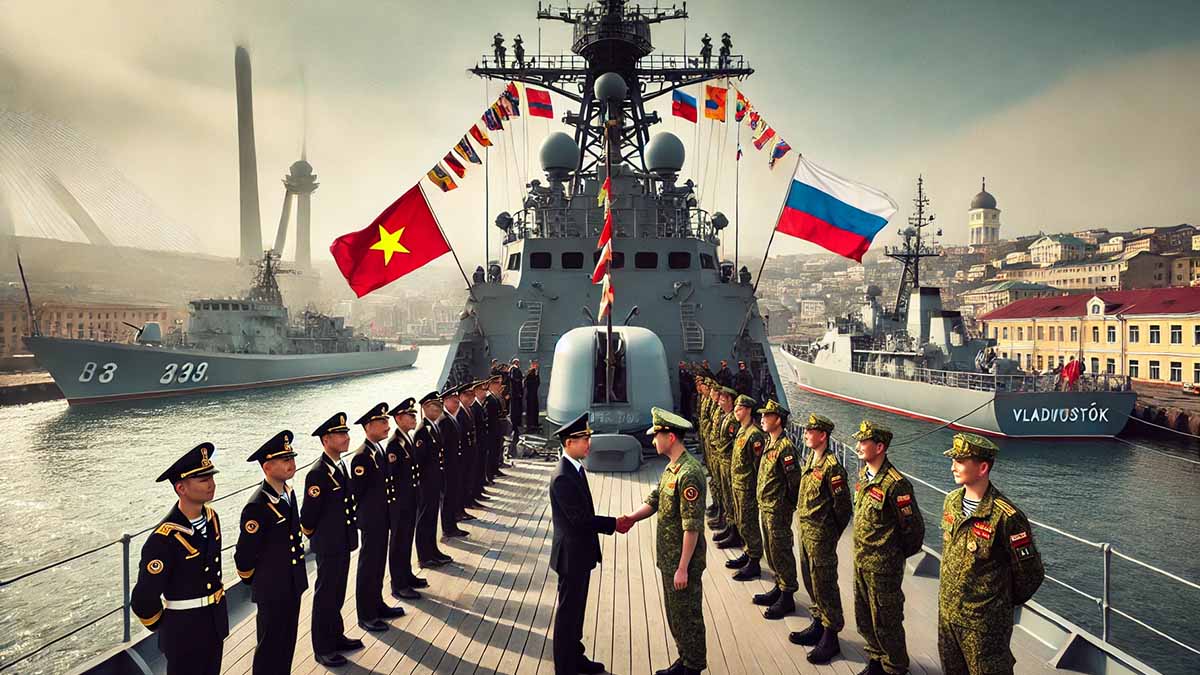
The arrival of the Vietnamese frigate Hung Dao in Vladivostok on July 25, 2024, marks a significant milestone in the naval cooperation between Vietnam and Russia. This event, scheduled to run through July 31, underscores the strengthening defense ties between the two nations. This article provides an in-depth analysis of the visit, the historical context of the frigate, its strategic importance, and its broader implications for international naval diplomacy.
Historical Context of the Frigate Hung Dao
Construction and Specifications
The Hung Dao frigate, named after the legendary Vietnamese national hero Trần Hưng Đạo, is a Gepard-class frigate constructed by the Zelenodolsk Shipyard in Russia. Launched in 2016 and officially handed over to Vietnam in 2017, the vessel represents a significant enhancement to the capabilities of the Vietnam People’s Navy (VPN). The Gepard-class frigates are known for their advanced systems and weaponry, including anti-ship missiles, air defense systems, and sonar capabilities, which make them versatile and formidable assets for maritime defense.
Significance of the Vladivostok Visit
Strategic and Diplomatic Objectives
The visit of the Hung Dao to Vladivostok is part of a broader strategy by Vietnam to enhance its naval presence and foster international cooperation. By engaging in naval diplomacy, Vietnam aims to strengthen its defense ties with major powers, ensuring a stable and secure maritime environment. The warm reception by the Russian Pacific Fleet, led by Rear Admiral Alexey Sysuev, highlights the importance both nations place on their naval partnership.
Analysis of Bilateral Relations
Vietnam-Russia Naval Cooperation
Vietnam and Russia have a long history of defense cooperation, dating back to the Cold War era. The current visit is a continuation of this legacy, aimed at enhancing mutual understanding and operational interoperability between the two navies. Over the years, Vietnam has acquired several military assets from Russia, including submarines, fighter jets, and surface ships like the Gepard-class frigates. This relationship is pivotal for Vietnam as it seeks to modernize its military and enhance its defense capabilities.
The Role of the Hung Dao in Naval Diplomacy
International Engagements and Exercises
The Hung Dao frigate has been actively involved in various international maritime activities. In 2023, the frigate participated in the ASEAN-India Maritime Exercise (AIME) and the International Maritime Defence Exhibition and Conference (IMDEX) in Singapore. These engagements are crucial for enhancing interoperability and mutual understanding among participating navies.
Key Exercises and Training Missions
The Hung Dao’s participation in multinational exercises underscores its role in fostering regional security. During the ASEAN-India Maritime Exercise, the frigate’s crew demonstrated proficiency in complex maneuvers, target tracking, and logistical support at sea. Such exercises are vital for maintaining a high level of combat readiness and ensuring effective responses to maritime security challenges.
Strategic Implications of the Visit
Regional Security Dynamics
The visit to Vladivostok comes at a time of increasing geopolitical tension in the Asia-Pacific region. By strengthening its naval ties with Russia, Vietnam aims to bolster its maritime security and assert its presence in the South China Sea. The cooperation with Russia provides Vietnam with access to advanced military technology and training, which is essential for maintaining a credible defense posture in the region.
Enhancing Interoperability and Readiness
The joint activities and training sessions planned during the visit are expected to enhance the interoperability between the Vietnamese and Russian navies. Such cooperation is crucial for coordinated responses to regional security challenges, including piracy, maritime terrorism, and territorial disputes. The exchange of best practices and operational experiences will contribute to the overall effectiveness of both navies.
Broader Implications for Vietnam’s Naval Strategy
Modernization and Capability Building
Vietnam has been on a path of military modernization, focusing on enhancing its naval capabilities. The acquisition of advanced frigates like the Hung Dao is part of this broader strategy. By participating in international exercises and fostering bilateral naval ties, Vietnam aims to build a navy that is capable of safeguarding its maritime interests and contributing to regional stability.
In conclusion, the visit of the Vietnamese frigate Hung Dao to Vladivostok is more than a routine port call; it is a strategic move that reflects Vietnam’s growing emphasis on naval diplomacy and international cooperation. The event highlights the deepening defense ties between Vietnam and Russia and underscores the importance of naval engagements in promoting regional security. As Vietnam continues to modernize its military and enhance its defense capabilities, such visits and joint activities will play a crucial role in achieving these objectives.
Detailed Analysis and Data
To further understand the significance of the visit and its broader implications, this section provides detailed numerical and analytical data on various aspects related to the visit, the frigate’s capabilities, and the strategic context.
Technical Specifications of the Hung Dao Frigate
- Class and Type: Gepard-class (Project 11661E) frigate
- Displacement: 2,200 tons
- Length: 102.2 meters
- Beam: 13.1 meters
- Draft: 5.3 meters
- Propulsion: Combined diesel and gas (CODAG) with two diesel engines and one gas turbine
- Speed: Maximum speed of 28 knots
- Range: 5,000 nautical miles at 10 knots
- Crew: Approximately 100 personnel
- Armament:
- Anti-ship missiles: Kh-35 Uran-E (SS-N-25 Switchblade)
- Air defense systems: Palma CIWS with Sosna-R missiles
- Torpedoes: 533mm torpedo tubes
- Artillery: AK-176M 76.2mm naval gun, AK-630M CIWS
- Anti-submarine warfare: RBU-6000 rocket launchers, MGK-335EM sonar system
Historical Visits and Exercises
- Singapore (May 2023): Participation in the ASEAN-India Maritime Exercise (AIME) and International Maritime Defence Exhibition and Conference (IMDEX). The crew conducted complex maneuvers, target tracking, and logistical support exercises.
- Japan (September 2023): Docked at Yokosuka Naval Base, marking the 45th anniversary of Vietnam-Japan diplomatic relations. Activities included port visits, cultural exchanges, and joint training exercises.
- India (November 2022): Participated in MILAN 2022, a multilateral naval exercise aimed at enhancing interoperability among navies of the Indian Ocean Region.
Strategic Context and Regional Security
- South China Sea Disputes: The South China Sea is a strategic maritime region with overlapping territorial claims by several countries, including Vietnam, China, the Philippines, Malaysia, and Brunei. Vietnam’s naval modernization and international engagements are aimed at asserting its claims and ensuring freedom of navigation.
- Vietnam-Russia Defense Cooperation: Vietnam’s defense relationship with Russia is rooted in historical ties and mutual strategic interests. Russia remains a key supplier of military equipment to Vietnam, including submarines, fighter jets, and surface ships.
- Geopolitical Tensions: The Asia-Pacific region is witnessing increased geopolitical tensions, with the rise of China and the strategic interests of the United States and its allies. Vietnam’s defense strategy includes strengthening partnerships with other major powers to balance these dynamics.
The Vietnamese frigate Hung Dao’s visit to Vladivostok is a testament to the robust naval cooperation between Vietnam and Russia. This visit, combined with the frigate’s participation in various international exercises, highlights Vietnam’s commitment to enhancing its naval capabilities and fostering regional stability. As Vietnam continues to navigate the complex geopolitical landscape of the Asia-Pacific, its strategic engagements and defense partnerships will play a crucial role in shaping its maritime security posture.
APPENDIX 1 – Vietnam Military Capabilities Analysis
| Category | Details |
|---|---|
| Army | |
| Personnel | Active Duty: ~482,000 Reserves: ~5,000,000 |
| Main Battle Tanks | T-54/55, T-62, T-90S |
| Infantry Fighting Vehicles | BMP-1, BMP-2 |
| Armored Personnel Carriers | BTR-60, BTR-152, M113 |
| Artillery | Towed: D-30, M-46, M101 Self-propelled: 2S1 Gvozdika |
| Rocket Artillery | BM-21 Grad |
| Air Defense | S-300, S-125, Strela-10, ZSU-23-4 |
| Navy | |
| Personnel | Active Duty: ~40,000 |
| Frigates | Gepard-class, Pohang-class |
| Corvettes | Tarantul-class |
| Submarines | Kilo-class (Project 636) |
| Patrol Vessels | Svetlyak-class, Molniya-class |
| Amphibious Ships | Polnocny-class |
| Mine Warfare | Yurka-class |
| Coastal Defense | Bastion-P, P-15 Termit |
| Air Force | |
| Personnel | Active Duty: ~30,000 |
| Fighter Aircraft | Su-30MK2, Su-27, MiG-21, MiG-23 |
| Ground Attack | Su-22, Su-25 |
| Transport Aircraft | An-26, C-295 |
| Helicopters | Mi-8, Mi-17, Mi-24, Ka-28 |
| UAVs | Indigenous and foreign models |
| Air Defense | S-300, S-125, Pantsir-S1 |
| Missile Systems | |
| Short-Range Ballistic Missiles | Scud-B |
| Anti-Ship Missiles | Kh-35, P-15 Termit |
| Surface-to-Air Missiles | S-300, S-125 |
| Special Forces | |
| Units | People’s Army of Vietnam Special Forces Naval Commandos |
| Training | Intensive training for unconventional warfare, counter-terrorism, and reconnaissance |
| Cyber Capabilities | |
| Units | Cyber Operations Command |
| Capabilities | Defensive and offensive cyber operations |
| Nuclear Capabilities | |
| Status | Vietnam does not possess nuclear weapons |
| Treaties | Signatory of the Nuclear Non-Proliferation Treaty (NPT) |
Detailed Technical Information
Army
- Tanks:
- T-54/55: 100mm rifled gun, 580 hp engine, max speed 50 km/h
- T-62: 115mm smoothbore gun, 580 hp engine, max speed 50 km/h
- T-90S: 125mm smoothbore gun, 1000 hp engine, max speed 60 km/h
- Artillery:
- D-30: 122mm towed howitzer, range up to 15.3 km
- BM-21 Grad: 122mm multiple rocket launcher, range up to 40 km
Navy
- Frigates:
- Gepard-class: Equipped with Kh-35 anti-ship missiles, AK-176M 76mm gun
- Pohang-class: Equipped with Harpoon anti-ship missiles, OTO Melara 76mm gun
- Submarines:
- Kilo-class: Equipped with Kalibr cruise missiles, 533mm torpedo tubes
Air Force
- Fighter Aircraft:
- Su-30MK2: Equipped with R-27, R-73 air-to-air missiles, N011M Bars radar
- MiG-21: Equipped with R-3S air-to-air missiles, NR-30 30mm cannon
Missile Systems
- Surface-to-Air Missiles:
- S-300: Range up to 200 km, altitude up to 27 km
- S-125: Range up to 35 km, altitude up to 18 km
Operational and Functional Capabilities
- Operational Readiness: Vietnam maintains a high level of readiness, with regular training exercises and modernized equipment.
- Functional Capabilities: Vietnam focuses on asymmetric warfare, leveraging terrain and local knowledge for defense.
This schema provides a high-level overview of Vietnam’s military capabilities. For in-depth analysis, including strategic doctrines, historical context, and geopolitical implications, a detailed report from defense analysis agencies and military experts would be required.


