













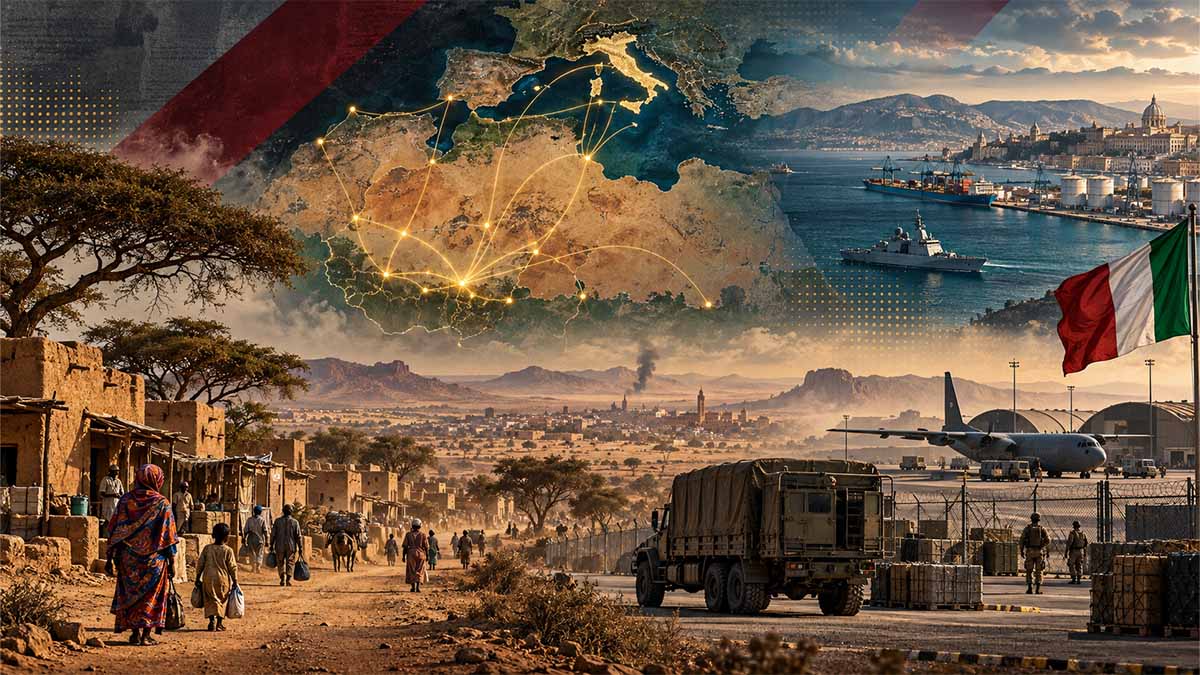
Strategic Intelligence Dossier | Italian Government Decision-Making Framework
Institutional audience: Presidency of the Council of Ministers; Ministry of Foreign Affairs and International Cooperation; Ministry of Defence; Ministry of the Interior; Ministry of Economy and Finance; and competent intelligence, migration, development and national-security authorities.
Scope: This assessment examines the evolving security crisis in Mali, Burkina Faso and Niger as of 18 October 2026, its consequences for Italian migration management, military presence and economic interests, and the strategic options available to Rome through 2031, with particular attention to Libya, Mauritania, coastal West Africa and the influence of Russia and Türkiye.
Executive Summary — Bottom Line Up Front
Principal judgment — High confidence: The deterioration of security across the Central Sahel represents a multidimensional risk to Italy, but its most immediate strategic significance lies in the combination of regional displacement, the vulnerability of Italy’s military access in Niger and the progressive diversification of the Sahelian military governments’ external partnerships.
Humanitarian baseline — High confidence: On 9 October 2026, UNHCR reported nearly 4 million displaced persons across Burkina Faso, Mali and Niger, including more than 818,000 refugees and asylum-seekers, approximately twice the displaced population reported in October 2020.
Conflict escalation — Moderate confidence: Reports identify substantial renewed fighting between JNIM and Islamic State-linked forces around the Mali–Burkina Faso border, particularly in Oudalan in early October. The reported scale of casualties and the outcome of individual engagements remain contested.
Migration exposure — Moderate confidence: Worsening insecurity increases the pool of people vulnerable to secondary displacement, but there is insufficient evidence to translate the regional displacement figure into a forecast of arrivals in Italy. The decisive transmission mechanisms remain movement through Niger, access to Libyan routes, smuggling-market conditions and maritime departures.
Military exposure — High confidence: MISIN retains an authorised Italian presence in Niger during 2026. Its military and diplomatic value is substantial, but the January 2026 attack on Niamey airport demonstrates that an operationally important area hosting Italian personnel is not insulated from jihadist violence.
Strategic competition — Moderate confidence: Russia’s security-oriented relationships with Sahelian military governments and Türkiye’s combination of defence, trade and resource-sector diplomacy challenge assumptions that Western partnerships retain privileged access.
Italian leverage — High confidence: Mauritania offers an established platform for Italian development and regional engagement. The Italian Foreign Ministry identifies €21.5 million in active bilateral development initiatives there, rising above €25.8 million when regional programmes are included.
Decision consequence: Italy should preserve conditional operational access in Niger while diversifying its strategic relationships, reinforcing humanitarian and migration intelligence, and preventing the Piano Mattei from becoming dependent on the political decisions of the AES governments.
Decisive uncertainty: Whether the jihadist confrontation produces sustained territorial consolidation, further civilian flight or an unstable redistribution of armed-group influence remains insufficiently established.
The Sahel Is Redrawing Italy’s Strategic Position: Military Access, Migration and the Cost of Losing Influence
Italy’s position in the Central Sahel rests on a contradiction that Rome can no longer manage through separate military, migration and development policies: it has preserved a military mission in Niger while Russian and Turkish engagement is reshaping the region’s security and economic relationships, and nearly four million displaced people are testing the resilience of neighbouring states. The question is not whether Italy can reverse the political transformation of Mali, Burkina Faso and Niger, but whether it can preserve sufficient influence without assuming indefinite military exposure or committing public resources to projects whose implementation remains uncertain. Italy’s strategic position will increasingly depend on its capacity to convert limited military access, verifiable economic investment and regional partnerships into durable leverage before decisions made elsewhere determine the conditions of Italian engagement.
Italy has retained a military position that other Western powers lost
On 28 July 2026, the Italian Chamber of Deputies authorised the continuation of the Missione Bilaterale di Supporto nella Repubblica del Niger (MISIN), preserving a bilateral military relationship with Niamey three years after the July 2023 coup. The decision was particularly significant because the European Union had already declined to extend its Military Partnership Mission in Niger beyond 30 June 2024, while the United States completed its military withdrawal in September of the same year. Rome consequently retained an institutional military presence after substantial elements of the previous Western security architecture had disappeared.
That continuity carries political value, but it should not be mistaken for control over Nigerien decisions. MISIN was established in 2018 to provide training, advice, technical assistance and capability development. The Italian Ministry of Defence’s published mission framework provides for up to 500 personnel, 100 land vehicles and six aircraft, although those figures represent authorised or planned capacity rather than a verified deployment inventory for October 2026. The distinction matters because Italy’s ability to influence Niger depends on the usefulness of the capabilities it delivers, not on the maximum size of a contingent described in official documentation.
The operational record is more substantial than the mission’s limited public visibility might suggest. The Ministry of Defence reports 458 training courses and more than 11,840 Nigerien security personnel trained since MISIN’s establishment, alongside engineering and medical-support activities. In June 2026, Italian military engineers completed work on the Nigerien Aeronautical Medicine Expertise Centre in Niamey. These activities establish an enduring professional relationship, but training outputs are not equivalent to operational effectiveness: the decisive test is whether Nigerien institutions can sustain the resulting capabilities without permanent external assistance.
That distinction became more consequential after the attack against Niamey’s international airport on 28–29 January 2026, claimed by Islamic State’s Sahelian organisation. General Luciano Portolano, Italy’s Chief of Defence Staff, nevertheless visited the Italian contingent in February and met senior Nigerien military authorities. The sequence established the continuation of bilateral cooperation despite a demonstrated threat to strategic infrastructure. It also exposed Rome’s principal vulnerability: maintaining access requires both acceptable security conditions and the continuing consent of a government increasingly able to choose among competing foreign partners.
Four million displaced people do not mean four million potential arrivals
The numerical evidence reveals why the Sahel crisis cannot be translated mechanically into an Italian migration emergency. On 9 October 2026, the United Nations High Commissioner for Refugees reported nearly 4 million displaced people across Mali, Burkina Faso and Niger, including more than 818,000 refugees and asylum-seekers. The regional total was approximately twice the level reported in October 2020. Yet Italy’s Ministry of the Interior recorded only 24,583 maritime arrivals between 1 January and 15 October 2026, compared with 55,184 during the equivalent period in 2025, a reduction of approximately 55.5%.
The contrast is not evidence that Sahelian instability is irrelevant to Italian security. It establishes that displacement and Mediterranean migration represent different stages of movement, governed by different constraints. A family fleeing violence in Burkina Faso may remain internally displaced, seek protection in a neighbouring country or become unable to finance further travel. Reaching North Africa requires additional transportation, resources and exposure to border controls, while departure from the Libyan coast depends on another set of security and economic conditions. The number of people uprooted by conflict cannot therefore serve as a credible forecast of maritime arrivals.
The Libyan figures reinforce the point. The International Organization for Migration estimated 950,004 migrants present in Libya during May–June 2026, compared with 943,748 in March–April. Although IOM reported a 23% increase in incoming movements across Libyan borders during the second quarter, it simultaneously observed declining movements along the Nigerien frontier, associated with tighter controls and security operations. Libya’s migrant population was growing while the particular corridor most directly relevant to Niger was experiencing a different trend.
Italian nationality data introduce a further limitation. Of the 24,583 people arriving by sea through 15 October 2026, only 449 were recorded as Malian nationals, approximately 1.8% of the total. Bangladesh, Algeria, Somalia, Eritrea and Sudan represented substantially larger groups. These figures do not exclude future secondary movements originating in the Central Sahel, but they make it impossible to describe the present Italian maritime flow as primarily the product of the latest AES security deterioration.
Rome’s migration policy should consequently concentrate on detecting changes between the successive stages of movement rather than using regional displacement as a substitute for operational intelligence. The immediate fiscal consequences concern reception capacity: the Interior Ministry recorded 125,862 people accommodated in the Italian reception system on 15 October 2026, including 85,610 in reception centres and 39,696 in the Reception and Integration System. A future increase in arrivals would have to be assessed alongside accommodation availability, turnover and specialised protection requirements, not against the humanitarian total in the Sahel.
Russian security support and Turkish investment are changing the terms of access
The external competition confronting Italy is not a contest between interchangeable providers. Russia’s involvement in the Central Sahel has concentrated heavily on military assistance, security relationships and the political requirements of incumbent governments. The restructuring of the Wagner presence into the Africa Corps framework strengthened the relationship between Russian security engagement and Moscow’s state institutions, although the precise distribution and effectiveness of personnel in October 2026 cannot be established from the available public record.
Türkiye has pursued a broader institutional and commercial model. On 4 June 2026, Nigerien President Abdourahamane Tchiani met Turkish President Recep Tayyip Erdoğan in Ankara, where discussions covered defence, security, energy, mining, trade, education, healthcare and agriculture. The governments signed instruments concerning a joint economic and trade committee, higher-education cooperation during 2026–2030, diplomatic training and the Niger–Türkiye Friendship Hospital. Ankara was not merely seeking access to Niger’s military establishment; it was establishing relationships across civilian institutions and commercial sectors.
The resource dimension had already acquired institutional form. On 23 October 2024, Türkiye and Niger signed a mining cooperation memorandum, following a July 2024 declaration concerning oil and natural gas. In December 2024, Turkish Energy and Natural Resources Minister Alparslan Bayraktar reported agreements relating to three additional gold fields in the Agadez region. These announcements demonstrate an expanding commercial strategy, although agreements and production ambitions must not be confused with verified output, completed financing or ownership of an entire resource sector.
For Italian policymakers, the consequences arise from the different forms of dependence created by these relationships. Security assistance can establish lasting requirements for maintenance, equipment and specialist training. Mining agreements can generate relationships involving licences, financing and export infrastructure. Healthcare and education agreements can create professional networks that remain useful beyond the immediate diplomatic exchange. Italy’s challenge is that an exclusively military relationship cannot reproduce all these effects, while an economic programme that never reaches implementation cannot compete with functioning institutions or commercially productive assets.
China and Gulf investors introduce further alternatives through infrastructure, resource development and financing. Niger’s oil-export relationship with Benin illustrates how production and transport infrastructure can acquire significance beyond the original investment, since continuing commercial value depends on cross-border cooperation and operational reliability. The competition affecting Italy therefore concerns contractual access, financing, technical services and institutional relationships rather than diplomatic visibility alone.
The Piano Mattei faces an implementation test, not a publicity contest
Italy’s response has a stronger economic foundation where institutional cooperation already exists. On 22 April 2026, the Ministry of Foreign Affairs confirmed that Mauritania had been included among the Piano Mattei focus countries since 2025, identifying approximately €21.5 million in active bilateral development initiatives and more than €25.8 million including regional programmes. Food security, climate resilience, rural development, healthcare and natural-resource management were among the declared priorities, alongside cooperation involving the San Camillo Forlanini Hospital and Nouakchott’s Centre National de Cardiologie.
These figures establish an existing programme portfolio, not completed expenditure or a new financial commitment. Their relevance is that Mauritania offers Italy a different institutional relationship from those available in the AES countries. That makes it a useful partner for regional diversification, without establishing that Mauritania can replace Niger’s military function or eliminate the economic and humanitarian consequences of instability farther east.
The Piano Mattei’s credibility will depend on distinguishing approved programmes from disbursed funds, completed facilities from functioning services and political agreements from commercially sustainable investment. A healthcare project requires personnel, equipment maintenance and recurring expenditure after inauguration. Agricultural programmes require access to markets, water and productive inputs. Energy and infrastructure investments require enforceable contracts, reliable counterparties and financing capable of surviving changes in political conditions. A portfolio evaluated only by announced amounts risks overstating Italian influence while concealing future operating obligations.
The constraint is also fiscal. Regulation (EU) 2021/947, establishing the Neighbourhood, Development and International Cooperation Instrument — Global Europe, provides an institutional framework for eligible external-action financing, but it does not automatically finance every project associated with Italian African policy. Grants, loans, guarantees, equity participation and private investments create different obligations for public finances. Their nominal values cannot be combined as though they represented equivalent expenditure or equivalent economic influence.
This is where Rome must resist the temptation to answer Turkish resource diplomacy or Russian military assistance with announcements of comparable geopolitical ambition. Italy has an interest in selecting projects whose financial structure, contractual rights and expected outputs are demonstrably sound. The strategic value of an investment comes from the infrastructure or institutional capability that remains operational, not from the prominence of the agreement through which it was launched.
European coordination cannot substitute for bilateral choices
The European dimension exposes another constraint. France’s diminished military position in the Sahel, Germany’s development and multilateral instruments, and the United Kingdom’s diplomatic and specialist capabilities do not amount to a unified operational strategy. Italy’s continuation of MISIN following the European Union’s decision to end EUMPM Niger illustrates how national interests and host-government relationships can produce different outcomes within the same regional crisis.
The European Union retains important financing, humanitarian and institutional instruments, but collective programmes depend on political agreement and acceptable legal conditions. Italy can seek complementary financing and coordination without assuming that EU institutions can preserve the bilateral access maintained by Rome in Niger. Equally, Italy’s distinctive military relationship does not confer authority to represent European policy or require other governments to adopt the same assessment of political and operational risk.
This asymmetry strengthens the case for a differentiated national strategy. Military cooperation in Niger should remain conditional on legitimate, useful activities and acceptable personnel security. Development cooperation in Mauritania and selected coastal states should be evaluated through actual implementation. Migration arrangements with Libya and Tunisia should be assessed against both observable maritime outcomes and the obligations associated with international protection. Each relationship serves a different purpose and should have its own criteria for continuation.
The Italian Government’s July 2026 decision to preserve military engagement while recognising the issue of constitutional order in Niger illustrates the underlying political tension. Engagement can retain influence without endorsing every policy of the host government, but the distinction survives only when military assistance has a defined mandate and identifiable limits.
The next two years will expose the price of institutional inertia
Over the next 12–24 months, Italy’s principal risk is not necessarily a dramatic deterioration in every dimension of its Sahel policy. It is the gradual accumulation of dependencies that become apparent only when Rome needs to change course. MISIN could remain formally authorised while restrictions reduce its practical value; migration pressure could develop through secondary movements not captured by headline displacement figures; and economic commitments could continue to expand without equivalent progress in financing, construction or operational delivery.
The immediate cost of failing to distinguish these developments would fall on the Italian defence establishment, which would have to sustain military commitments under increasingly uncertain access conditions, and on the Ministry of the Interior, which would face reception-planning decisions without a sufficiently precise understanding of the movement connecting the Sahel to North Africa. The Ministry of Economy and Finance and the institutions supporting investment would bear the consequences of poorly structured commitments, while Italian enterprises could encounter commercial environments increasingly shaped by established Russian, Turkish, Chinese or Gulf relationships.
African partner countries would also absorb consequences. Communities affected by conflict and displacement would gain little from projects whose public announcements exceeded their actual delivery, while institutions receiving foreign training or infrastructure would remain exposed if the support could not be sustained.
The decisive choice for Rome is therefore not between preserving its entire current position and withdrawing from the Central Sahel. It is between a policy that measures success through continued presence and announced commitments, and one that measures actual military access, migration intelligence, financial exposure and functioning economic partnerships. The former can preserve diplomatic visibility while leaving the terms of future engagement to others. The latter demands narrower commitments, stronger evidence and explicit conditions for changing course. In the 2026–2028 period, the cost of inaction will be paid through reduced negotiating leverage, less reliable operational choices and public resources committed before their strategic return can be demonstrated.
Navigational Index
The dossier is organised into three thematic pillars and six chapters, preserving the six analytical functions of the mandate.
PILLAR I — THE CENTRAL SAHEL SECURITY CRISIS AND ITS TRANSMISSION TO ITALY
Chapter 1. Security Fragmentation, Jihadist Competition and Humanitarian Displacement
JNIM–Islamic State rivalry, Oudalan, territorial control, civilian protection, AES military capabilities, displacement dynamics and climate-driven vulnerability.
Chapter 2. Migration Corridors and the Central Mediterranean Security Nexus
Niger–Libya connectivity, secondary displacement, trafficking economies, Italian–Libyan and Italian–Tunisian arrangements, flow scenarios and migration early-warning indicators.
PILLAR II — ITALY’S MILITARY POSITION AND THE RECONFIGURATION OF REGIONAL POWER
Chapter 3. MISIN, Nigerien Sovereignty and Italian Military Risk Exposure
Legal authorisation, personnel and capabilities, operational access, bilateral relations, force protection, contingency planning and the sustainability of Italian deployment.
Chapter 4. Russia, Türkiye and the Strategic Competition for the Sahel
Africa Corps, Turkish security and industrial cooperation, resource diplomacy, AES political consolidation, Chinese and Gulf engagement, coastal-state interests and implications for the Piano Mattei.
PILLAR III — ITALIAN STRATEGIC RESPONSE, FORESIGHT AND INTELLIGENCE PRIORITIES
Chapter 5. Italian Policy Options, Strategic Leverage and Risk Mitigation
Diplomatic engagement, migration partnerships, military posture, Mauritania, regional economic instruments, budgetary considerations, implementation priorities and policy trade-offs.
Chapter 6. Strategic Scenarios, Early Warning and Priority Intelligence Requirements
Baseline and deterioration scenarios for 2026–2031, analytical methods, data limitations, intelligence collection priorities, decision thresholds and final strategic assessment.
Master Abstract
A regional security crisis with direct consequences for Italian strategic autonomy
The security crisis in the Central Sahel has entered a phase in which the erosion of state authority, rivalry between jihadist organisations, the militarisation of political institutions and the competitive intervention of external powers are reinforcing one another. For Italy, the significance of these developments cannot be reduced to the familiar relationship between African instability and irregular migration across the Mediterranean. The region increasingly presents a broader strategic problem: Rome must preserve security cooperation with governments whose political trajectories diverge from European constitutional and governance expectations, maintain access to areas of operational and intelligence relevance, and defend the credibility of its African economic engagement while other powers seek influence through defence cooperation, resource agreements and political support.
This interaction is particularly consequential in Niger, where Italy’s bilateral military mission constitutes an important remaining channel of structured engagement after the deterioration of several Western security relationships. It is also relevant to Mauritania, whose strategic importance derives not simply from its geographical position but from its potential to connect Sahel stabilisation, Atlantic-facing infrastructure, development assistance and cooperation on population movements. The central Italian policy problem is therefore not whether to engage or disengage from the Central Sahel as a single geopolitical choice, but how to preserve useful relationships without allowing operational dependence, migration bargaining or competition for access to undermine wider national and European interests.
The jihadist confrontation and the territorial consequences of insecurity
The renewed confrontation between Jama’at Nusrat al-Islam wal-Muslimin, affiliated with al-Qaeda, and Islamic State-linked forces in the Sahel is significant because it introduces further military competition into territories where civilian security, transportation, agricultural production and public administration are already severely constrained. Reporting around the 9 October 2026 fighting in Burkina Faso’s Oudalan province describes extensive engagements near the Malian frontier, with militant claims of exceptionally high opposing casualties. The existence of intensifying rivalry is supported by specialist monitoring and multiple reporting streams, but precise casualty counts, the duration of particular engagements and claims of a decisive victory cannot presently be treated as independently established.
For Italian policymakers, the critical variable is not the numerical loss suffered by one armed organisation in isolation. It is whether battlefield developments allow either organisation to establish sustained control of movement corridors, civilian settlements, livestock markets, taxation systems and cross-border logistics. An apparent military victory by one faction might temporarily weaken its adversary while simultaneously strengthening the victorious organisation’s coercive influence over communities. Conversely, prolonged fighting between the organisations may reduce their immediate ability to coordinate attacks elsewhere while producing further forced recruitment, economic disruption and population flight. The most defensible assessment is that jihadist fragmentation should not be equated with a reduction in the overall terrorist threat, because local military attrition can coexist with a deterioration of civilian protection and the weakening of already limited state authority.
Humanitarian displacement does not mechanically translate into Mediterranean migration
UNHCR’s 9 October 2026 warning provides an important measure of the scale of the regional crisis. Nearly four million people were reported to have been uprooted across the three Central Sahel states, including more than 818,000 refugees and asylum-seekers. The agency’s comparison with October 2020 establishes the severity of the cumulative deterioration, but does not demonstrate that an equivalent acceleration of international migration is occurring. Indeed, the distinction between internally displaced persons, refugees crossing national frontiers, returnees and migrants entering longer-distance mobility systems is indispensable to any credible assessment of Italy’s likely exposure. The geographic scope and reporting dates of humanitarian statistics must also be preserved: UNHCR’s wider Sahel portal includes Mauritania and Chad and combines some national displacement figures from substantially different reporting periods.
The migration risk to Italy is consequently best understood as a conditional transmission process. Increasing insecurity and the destruction of household livelihoods may generate additional movements within countries, toward neighbouring states, or toward established urban and cross-border trading centres. Only a fraction of these movements could subsequently reach North African transit systems, and an additional sequence of financial, logistical, political and security conditions would have to be satisfied before they could affect departures across the Central Mediterranean. This distinction has important operational implications: an increase in displacement around Tillabéri or Oudalan cannot be converted into a prediction of arrivals at Lampedusa without evidence of secondary movements, changing smuggling services, altered border enforcement and corresponding developments along the Libyan coastline. Italian monitoring should therefore integrate humanitarian observations with route-specific indicators rather than treating regional displacement stocks as a proxy for future maritime arrivals.
Niger and the strategic value of maintaining military access
Italy’s military presence in Niger has a strategic value that exceeds the numerical scale of its contingent. MISIN provides an institutional mechanism for training, bilateral military dialogue, technical assistance and civil-military cooperation. In February 2026, the Italian Chief of Defence Staff visited the deployed personnel at Base Italia in Niamey, met Nigerien military authorities and reaffirmed the bilateral relationship. In June, the Italian Ministry of Defence reported the completion of engineering work on a Nigerien aeromedical facility, demonstrating that cooperation remained operational beyond the immediate security-training environment. The Italian Parliament subsequently authorised the mission’s continuation for 2026.
The preservation of this relationship is nevertheless subject to several interconnected risks. The attack against Niamey’s international airport during the night of 28–29 January 2026, acknowledged in the Italian Defence Ministry’s February account, establishes that threats can reach locations directly relevant to Italian military infrastructure. At the political level, the Nigerien authorities retain the ability to redefine the acceptable scope of foreign military activity, while the involvement of other external security partners may complicate information protection, operational coordination and perceptions of Italian neutrality. These circumstances do not establish that MISIN is facing an imminent termination order, but they justify treating access, force protection and political consent as continuously monitored variables rather than stable assumptions. Italy’s immediate requirement is to maintain bilateral dialogue and useful assistance while ensuring that any change in the host nation’s operational conditions can be met through proportionate posture adjustment, secure logistics and a credible redeployment contingency.
Russia, Türkiye and the restructuring of external influence
The strategic environment in the AES states is also being reshaped by the different methods through which external powers acquire political influence. Russia’s comparative advantage lies principally in security relationships, military assistance and the political utility of engagement with governments seeking alternatives to Western partnerships. The operational role and current distribution of Africa Corps personnel require continuous verification rather than inference from broader Russian influence. Türkiye employs a more diversified approach in which military cooperation, defence-industrial relationships, technical training, diplomatic visibility, trade and commercial opportunities reinforce one another. In June 2026, Turkish and Nigerien authorities publicly advanced cooperation across defence, security and economic sectors, with discussions extending to energy, mining and investment. These exchanges establish political intent and identifiable cooperation instruments, although they do not by themselves establish completed resource acquisitions or operational military deliveries.
For the Piano Mattei, the consequence is a competition over access, reliability and execution rather than a simple contest between national investment totals. Italy is unlikely to displace security providers offering forms of regime support that fall outside its own legal and political constraints, nor does it need to compete directly in every defence or natural-resource transaction. Its more sustainable comparative advantages concern institutional cooperation, technical expertise, health systems, agricultural resilience, energy infrastructure and project structures compatible with European financing and governance requirements. Mauritania is particularly relevant to this approach. The Italian Foreign Ministry confirmed in April 2026 that the country has been a Piano Mattei focus since 2025 and identified active development cooperation valued at approximately €21.5 million bilaterally and more than €25.8 million including regional programmes. This provides a documented foundation for expanding cooperation, while the effectiveness of Mauritania as a regional anchor will depend on its own institutional resilience, border security, economic capacity and ability to accommodate people displaced by neighbouring conflicts.
The strategic conclusion for Rome
Italy’s most defensible response is a differentiated regional strategy built around three simultaneous objectives: the preservation of conditional military and diplomatic access in Niger, the creation of a more reliable migration early-warning system extending from the Central Sahel to North African departure points, and the diversification of Italian development and economic engagement toward Mauritania and selected coastal West African partners. These objectives are mutually supportive but not interchangeable. Military cooperation cannot substitute for humanitarian stabilisation, financing infrastructure does not immediately suppress irregular movement, and restrictions on migration do not resolve the political and economic conditions that make populations vulnerable to displacement. The strongest policy configuration is therefore one that preserves operational flexibility, avoids unsupported migration forecasts, distinguishes political agreements from implemented capabilities and ties decisions to observable changes in security conditions rather than predetermined diplomatic preferences.
Key Evidence Table
The following table separates established official baselines from claims or figures that cannot yet bear the analytical weight sometimes assigned to them.
| Indicator | Value / status | Reference date | Definition / scope | Issuer | Exact source |
|---|---|---|---|---|---|
| Central Sahel displacement | Nearly 4 million | 9 Oct 2026 | Displaced population in Mali, Burkina Faso and Niger | UNHCR | UNHCR briefing |
| Refugees and asylum-seekers within that population | More than 818,000 | 9 Oct 2026 | Cross-border protection categories; not all internally displaced | UNHCR | UNHCR briefing |
| Historical displacement comparator | More than 1.7 million IDPs and 365,000 refugees | Oct 2020 | Reference figures; definitions require consistent treatment | UNHCR | UNHCR briefing |
| Regional displacement data | National IDP figures include reporting dates from 2023 to 2026 | Portal accessed Oct 2026 | Wider coverage includes Chad and Mauritania | UNHCR, governments, IOM | Sahel Crisis Data Portal |
| MISIN parliamentary status | Renewal authorised for 2026 | 28 Jul 2026 | Italian bilateral mission in Niger | Italian Chamber of Deputies | Parliamentary proceedings |
| MISIN authorised capacity | Ministry mission profile states a ceiling of 500 personnel | Published mission profile | Authorised or planned capacity, not current deployed strength | Italian Ministry of Defence | National Contribution |
| Niamey airport attack | Attack acknowledged by Italy; responsibility claimed by ISIS Sahel | 28–29 Jan 2026 | Security incident near the Italian mission’s operational environment | Italian Ministry of Defence | Defence Staff Visit |
| Italian development cooperation in Mauritania | Approx. €21.5m bilateral; over €25.8m including regional programmes | 22 Apr 2026 | Active cooperation portfolio, not necessarily expenditure | MAECI | Mauritania Ministerial Mission |
Evidence qualification: The approximately 350 personnel cited in the analytical mandate should not be presented as a verified October 2026 deployed strength. The Ministry of Defence’s publicly accessible mission profile identifies a capacity ceiling of 500, while the actual deployed strength requires a dated operational return or equivalent authoritative report. Similarly, the reported Oudalan casualty figures remain militant or secondary-source claims, not independently verified totals.
Competing Strategic Pathways
The available evidence supports four distinct, partly overlapping strategic pathways. They are not mutually exclusive forecasts, and no reliable numerical probabilities are assigned.
| Strategic pathway | Diagnostic support | Evidence against a strong interpretation | Principal indicator | Assessment |
|---|---|---|---|---|
| A. Protracted fragmentation — JNIM and Islamic State forces continue fighting without durable territorial resolution | Recurring inter-group confrontation and persistent governmental weaknesses | Local military outcomes may produce consolidation rather than stalemate | Repeated engagements without sustained changes in territorial access | Plausible baseline |
| B. Jihadist territorial consolidation — One faction gains durable influence over strategic corridors | Local military victories could permit control of civilian movement and economic networks | Claimed battlefield victories do not establish sustainable governance or logistical control | Persistent checkpoints, taxation, route restrictions and forced population movements | Significant deterioration pathway |
| C. Accelerated displacement and secondary migration — Insecurity and livelihood shocks stimulate outward movement | Large displacement stock and humanitarian vulnerability | Most displaced persons do not necessarily move toward North Africa or Europe | Rising cross-border movement followed by verified increases in northern transit and departures | Conditional medium-term risk |
| D. External-partner escalation — AES governments deepen security and resource relationships with non-European powers | Diversification of military and commercial partnerships | Announced agreements do not establish exclusive access, full implementation or displacement of Italy | New binding contracts, operational deployments, revised host-nation restrictions and exclusionary concessions | Strategically important |
The most consequential combinations are not necessarily the most dramatic individual scenarios. A prolonged conflict between jihadist organisations could coexist with expanding Russian or Turkish governmental access, just as a period of relatively stable Mediterranean departures could conceal worsening humanitarian conditions in the Central Sahel. Italy should consequently avoid treating the absence of an immediate migration surge as evidence of regional stabilisation.
Principal Gaps and Priority Watch Indicators
Confidence refers to the strength of the underlying assessment, not an estimated event probability.
1. Territorial outcome of the Oudalan confrontation
Whether the October fighting resulted in sustained territorial changes, identifiable displacement or operational degradation of either organisation.
Confidence: Moderate for renewed fighting; low for casualty figures and territorial outcomes.
Priority 1
2. MISIN personnel strength and host-nation consent
Actual deployed strength, restrictions on movement, airfield access, training permissions, force-protection arrangements and evidence of political pressure to alter the mission.
Confidence: High for 2026 authorisation; limited for current deployment numbers.
Priority 2
3. Displacement-to-migration conversion
Verified increases in population movements from affected districts toward northern Niger, Algeria and Libya, compared with seasonal and historical baselines.
Confidence: High for humanitarian deterioration; low for quantitative effects on Italian arrivals.
4. Libya’s migration transmission mechanisms
Changes in smuggling-network access, conflict around transit hubs, coastal embarkation capacity and interceptions, assessed alongside maritime departures and asylum-arrival data.
Confidence: Moderate in the relevance of the transmission mechanisms; precise future magnitudes undetermined.
5. Russian and Turkish security-sector influence
Independently documented personnel movements, training activity, delivered defence equipment, operational support and changes in AES security procurement.
Confidence: Moderate for the direction of strategic competition; variable for country-level operational footprints.
6. Resource-sector competition
Actual implementation of mining, hydrocarbons and infrastructure agreements, including licensing transfers, beneficial ownership, export arrangements and financial closure.
Confidence: Moderate for diplomatic engagement; limited for unverified project-level implementation.
7. Mauritanian absorption and partnership capacity
Border-community pressures, refugee-service capacity, financing implementation, regional cooperation and changes in security incidents affecting the country’s economic corridors.
Confidence: High for documented Italian cooperation; moderate for future capacity to absorb regional shocks.
8. Coastal West African spillover
Attacks, displacement, commercial-route interruption and governmental requests for additional security assistance in states bordering the AES area.
Confidence: Moderate for the strategic mechanism; dependent on local observations.
Preliminary Decision Architecture for Italian Authorities
The immediate policy distinction should be between reversible measures that improve Italy’s situational awareness and resilience, and more consequential decisions requiring changes in military posture, international commitments or expenditure.
| Policy instrument | Responsible authority | Expected effect | Burden and timeframe | Principal trade-off |
|---|---|---|---|---|
| Integrated Sahel–Libya migration warning | Interior Ministry, intelligence authorities, MAECI and relevant international partners | Detect earlier changes in movement patterns | Moderate; weeks to establish coordinated reporting | Data quality, privacy and differences in measurement |
| MISIN access and contingency review | Defence Ministry, military command and diplomatic authorities | Preserve personnel safety and decision flexibility | Moderate to high; immediate review, continuing readiness | Presence and influence versus exposure |
| Focused bilateral dialogue with Niger | Presidency, MAECI and Defence | Preserve institutional channels and identify operational constraints | Moderate; near term | Access versus governance and human-rights positioning |
| Expansion of Mauritania and coastal partnerships | MAECI, development cooperation institutions and relevant financial actors | Diversify regional engagement and strengthen resilience | Medium to high; months to years | Long-term stability gains versus limited immediate migration effects |
| Piano Mattei project-risk screening | Presidency, MAECI, MEF and implementing institutions | Prioritise viable, financeable projects and avoid politically exposed dependencies | Moderate; can begin immediately | Strategic opportunity versus financial and sovereign risk |
| Coordinated EU approach | Italian Government and competent EU institutions | Share intelligence, financing exposure and diplomatic costs | Moderate to high; continuing | Collective leverage versus differing national priorities |
These policy instruments are complementary rather than strictly substitutable. In particular, maintaining an authorised military presence in Niger and increasing development engagement in Mauritania address different strategic problems. The former protects an existing operational relationship; the latter builds additional political and economic options that may remain useful if conditions in the AES countries deteriorate further.
A formal decision on reducing, restructuring or terminating MISIN should not be driven solely by regional political alignment. It should be linked to observable changes in the host government’s consent, the ability to protect deployed personnel, the availability of reliable evacuation and medical support, and the continued relevance of the mission’s authorised tasks. Equally, investment decisions under the Piano Mattei should distinguish politically endorsed projects from those with secured financing, contractual enforceability, practical access and measurable developmental value.
Preliminary Net Assessment
Italy retains meaningful strategic options in the Central Sahel, but their value depends increasingly on diversification and the quality of operational information. Its existing military relationship with Niger offers access and institutional continuity that should not be surrendered without a clearly defined security or political reason. However, this advantage also creates an exposure that cannot be offset simply by maintaining diplomatic goodwill. The fragility of northern and western Niger, the vulnerability of important transport and military infrastructure and the changing nature of the Nigerien authorities’ external relationships require a military posture capable of adapting quickly to changing conditions.
The humanitarian emergency is more clearly established than its eventual migration consequences for Italy. Nearly four million displaced people constitute a profound regional destabilisation challenge, but they do not constitute a pool of four million potential Mediterranean arrivals. The appropriate response is not speculative numerical forecasting; it is the construction of a defensible chain of observation connecting insecurity, civilian displacement, secondary movement, transit-market activity and actual maritime departures. Without that chain, even apparently precise forecasts would offer little decision-making value.
Russia and Türkiye complicate Italy’s operating environment in different ways. Russian relationships can affect the security choices and political incentives of AES governments, while Turkish defence, commercial and resource-sector engagement can create durable forms of influence extending beyond military assistance. Neither development should be interpreted as proof that Italian engagement has become irrelevant. Italy’s comparative position remains strongest where long-term institutional cooperation, technical delivery and development financing can generate measurable benefits. Mauritania provides a particularly important opportunity to consolidate that approach, while relationships with coastal West African countries can improve resilience against future regional spillover.
The principal strategic objective for Rome through 2031 should therefore be to prevent instability in the Central Sahel from becoming an avoidable constraint on Italian sovereign decision-making. That requires preserving credible military options, improving the empirical basis of migration policy and ensuring that economic engagement is governed by demonstrable feasibility rather than diplomatic visibility alone.
Central Sahel → Italian National Security
A three-dimensional visual model of how jihadist competition, forced displacement, Italian military exposure and external-power competition affect Italian security decisions. The network is conceptual, not a geographical map; connecting nodes signify analytical pathways, not quantified causal effects.
01 / 3D strategic exposure network
Italian policy exposure lies at the centre of interacting security, humanitarian and diplomatic pressures.
Defence · Economy
02 / Migration transmission chain
A rise in displaced people is not equivalent to a proportional rise in arrivals in Italy.
03 / Displacement magnitude: dimensional comparison
A visually approximate comparison of the two UNHCR headline snapshots, not a harmonised annual trend series.
Regional displaced population — approximate snapshots
2020 reference: more than 1.7m internally displaced people plus 365,000 refugees, as described by UNHCR. 2026: nearly 4m displaced, including more than 818,000 refugees and asylum-seekers. Figures are approximate, not exact or fully harmonised; chart heights are illustrative of stated magnitude only.
What can be concluded?
Supported: The regional humanitarian burden has grown substantially since 2020.
Conditional: Some displaced households could move further toward northern transit areas.
Not supported: A numerical conversion from the regional displaced population into future maritime arrivals in Italy.
The 818,000 refugees and asylum-seekers belong to the 2026 headline total and must not be added to the nearly 4 million a second time.
04 / External-actor footprint — differentiated instruments
Security-oriented engagement
Military assistance, political security relationships and elements associated with Africa Corps. The precise force distribution and operational availability require separate corroboration.
Italian exposure: Possible constraints on access, coordination and information security.
Multi-sector engagement
Defence cooperation, technical training, diplomacy and discussion of energy, mining and investment. Announced cooperation does not establish delivery or completed resource control.
Italian exposure: Competition for commercial partnerships and governmental influence.
Access plus diversification
MISIN relationship with Niger; Piano Mattei development, energy and capacity-building instruments; Mauritania and coastal-state partnerships.
Policy opportunity: Preserve reversible operational access while building alternative regional channels.
05 / Italian decision matrix
| Policy vector | Immediate action | Decision trigger / watch point | Principal trade-off | Lead institutions |
|---|---|---|---|---|
| MISIN Military access | Revalidate host consent, force protection, medical evacuation and operating permissions. | Restrictions on movement, airfield access or bilateral training; material change in local threat. | Access and influence vs personnel exposure. | Defence; MAECI; competent command authorities |
| Migration Early warning | Integrate humanitarian, route, border, Libyan coastal and maritime observations. | Consistent rise across several consecutive pathway indicators rather than one stock figure. | Rapid control measures vs durable protection and stability. | Interior; MAECI; intelligence authorities; partners |
| Piano Mattei Economic exposure | Screen projects for implementability, financing, host-country risk and measurable benefit. | Binding contracts, financial close, local access and project execution. | Opportunity vs sovereign, financial and reputational risk. | Presidency; MAECI; MEF; implementing institutions |
| Mauritania / coastal partners Diversification | Strengthen programmes supporting resilience, institutional capacity and corridors. | Refugee-service stress, border insecurity, investment capacity and coastal spillover. | Slow structural returns vs pressing near-term needs. | MAECI; development actors; EU partners |
| External competition Strategic influence | Track documented deployments, delivered equipment and executed resource agreements. | Access restrictions or exclusionary agreements that change Italy’s operating environment. | Engagement vs normative and security constraints. | MAECI; Defence; economic and intelligence authorities |
06 / Verified record and confidence distinctions
| Finding | Evidence status | Meaning for Italian decisions | Primary record |
|---|---|---|---|
| Nearly 4m displaced; >818k refugees/asylum-seekers | UNHCR official report, 9 Oct 2026; figures approximate | High humanitarian priority, no direct migration-arrival forecast | UNHCR — Central Sahel briefing |
| MISIN authorised for 2026; official mission capacity ceiling of 500 | Italian parliamentary and Defence records; ceiling is not current deployed strength | Preserve distinction between authorised capacity and operational headcount | Camera dei Deputati · Difesa |
| Niamey airport attack, 28–29 Jan 2026 | Referenced by Italian Ministry of Defence | Supports continued force-protection review | Italian Defence Ministry |
| Italy–Mauritania active cooperation: €21.5m bilateral, >€25.8m incl. regional | MAECI announcement, 22 Apr 2026; portfolio is not equivalent to disbursement | Established cooperation base for further diversification | MAECI |
| Early-October Oudalan battlefield and casualty claims | Contested reporting; no independently verified total adopted | Watch territorial changes and displacement, not claimed kill counts | Requires geolocated incident and corroborated operational reporting |
PILLAR I — THE CENTRAL SAHEL SECURITY CRISIS AND ITS TRANSMISSION TO ITALY
OPEN-SOURCE STRATEGIC INTELLIGENCE ASSESSMENT
Reference date: 18 October 2026
Geographical scope: Mali, Burkina Faso, Niger, Libya, Tunisia, Algeria, Mauritania and the Central Mediterranean.
Primary analytical objective: To determine how jihadist fragmentation, declining territorial security and the displacement crisis across the Central Sahel could alter Italy’s security environment, migration exposure and strategic capacity to influence developments along the southern approaches to the Mediterranean.
Chapter 1. Security Fragmentation, Jihadist Competition and Humanitarian Displacement
The Transformation of the Central Sahel into a Contested System of Territorial Authority
Principal judgment: The Central Sahel is experiencing a structural fragmentation of security authority in which national armed forces, competing jihadist organisations, local militias and external military partners exercise overlapping and frequently incompatible forms of influence. The escalation of hostilities between Jama’at Nusrat al-Islam wal-Muslimin (JNIM) and the Islamic State in the Sahel during August–October 2026 represents a further destabilising development, but the significance of these engagements lies less in their disputed casualty totals than in their capacity to alter control of territory, disrupt civilian survival systems and weaken the practical authority of the three states belonging to the Alliance of Sahel States.
The security deterioration affecting Mali, Burkina Faso and Niger cannot adequately be understood through the conventional distinction between territory controlled by national governments and territory held by insurgent organisations. Across substantial areas of the Central Sahel, the more relevant distinction concerns the degree to which the state can exercise uninterrupted administrative, economic and security authority over populations and communications infrastructure. Military forces may retain formal control of a provincial capital while armed organisations exert coercive influence over surrounding villages, agricultural areas, livestock markets and transportation corridors. Government institutions may continue to operate in administrative centres while the effective capacity to enforce law, protect commercial activity, maintain schools and deliver public services deteriorates beyond those centres. These differences are strategically important because the apparent preservation of sovereignty on political maps does not establish the existence of effective territorial control, and the capacity to launch military operations does not necessarily translate into the ability to restore enduring civilian security.
The governments of Mali, Burkina Faso and Niger have sought to legitimise their military-led political systems partly through the assertion that national sovereignty and security can be restored by reducing dependence on former Western military partners. The formation and subsequent institutional consolidation of the Alliance of Sahel States, initially established as a collective-defence arrangement in September 2023 and subsequently developed into a confederative political framework, has reinforced this common strategic orientation. Nevertheless, the political convergence of the three capitals must not be confused with the existence of a fully integrated regional defence establishment. Meaningful integration requires interoperable communications, compatible intelligence structures, sustainable cross-border logistics, reliable command arrangements and the ability to maintain operations without degrading the protection of civilian populations. The persistence of large-scale insurgent violence and displacement indicates that the development of political solidarity has not, by itself, resolved these operational requirements.
The regional crisis has consequently evolved beyond a sequence of isolated insurgent campaigns into a confrontation over the organisation of authority itself. JNIM and Islamic State-linked formations compete for the ability to recruit personnel, enforce rules, extract economic resources, influence local communities and determine which roads and markets can function. National governments attempt to recover military initiative and administrative legitimacy while confronting severe geographical, logistical and fiscal constraints. Communities exposed to successive armed groups frequently have to negotiate their survival in environments where collaboration with one actor can provoke punishment by another. For Italy, this fragmentation matters because it generates risks that cannot be addressed exclusively through conventional counterterrorism cooperation: the same conditions undermine regional trade, increase humanitarian dependency, affect population movements and create opportunities for external security actors to obtain privileged relationships with the military governments.
The most recent evidence of this transformation concerns renewed armed confrontation between the two principal jihadist organisations. Reports published in mid-October describe major engagements along the Mali–Burkina Faso frontier, including particularly severe fighting on 9 October in Oudalan province. The Islamic State’s regional organisation has asserted that it inflicted exceptionally heavy losses on JNIM, but independent verification of the precise military outcome remains unavailable. The important analytical distinction is therefore between the documented pattern of inter-jihadist confrontation and the interested parties’ claims about its scale and consequences. The former constitutes a significant development in the regional security environment; the latter requires further confirmation before being used to evaluate combat effectiveness or changes in territorial control.
The historical origins, organisational relationships and October 2026 fighting are described in A War Within a War: The Clash Between JNIM and the Islamic State in the Sahel — Agenzia Fides, 15 October 2026. This contemporaneous reporting is useful evidence of attributed battlefield claims, not independent verification of their casualty figures.
JNIM and the Islamic State: Competing Military Organisations, Different Instruments of Control
The rivalry between JNIM and the Islamic State’s Sahelian organisation is not a new phenomenon created by the October 2026 engagements. It reflects the progressive breakdown of a relationship that previously included periods of local coexistence and tactical accommodation despite competing transnational affiliations. JNIM was established in March 2017 through the consolidation of several jihadist formations operating in Mali and neighbouring territories under the leadership of Iyad Ag Ghaly, while the organisation historically known as Islamic State in the Greater Sahara developed during the preceding years around Adnan Abu Walid al-Sahrawi. The subsequent intensification of fighting between their respective networks, particularly from 2019 onward, demonstrated that shared hostility toward national governments and foreign military forces did not eliminate competition over legitimacy, recruitment, local allegiance or access to resources.
Although both organisations employ terrorism, armed coercion and insurgent operations, their structures and relationships with local communities are not identical. JNIM’s organisational composition gives it access to networks rooted in different ethnic, geographical and militant traditions, making its operational behaviour dependent on the interplay between central ideological commitments and local commanders’ relationships. In some areas, its constituent formations have sought to influence village-level governance, resolve disputes under coercive conditions and impose systems of taxation or compulsory contributions. Such practices are not legitimate civilian administration; they are instruments through which an armed organisation attempts to convert military presence into durable political and economic influence.
Islamic State-linked forces in the Sahel have likewise sought to create territorial influence through coercion, recruitment and armed operations, while maintaining a distinct organisational identity and external ideological affiliation. Their rivalry with JNIM can intensify when either organisation attempts to dominate a strategically important area, recruit defectors from competing formations or monopolise financial and logistical resources. Differences in command structures and approaches to civilian populations may influence local recruitment and resistance, but it would be misleading to describe either organisation as inherently protective of civilians or capable of offering a legitimate alternative to state institutions.
The military significance of these organisations depends not only on estimated numbers of armed personnel but also on mobility, local intelligence, equipment maintenance, financial extraction, access to sanctuary and the ability to replenish losses. Fighters operating in sparsely populated environments can exploit the difficulty of sustaining a continuous governmental security presence across long distances. Armed groups can also adapt to military pressure by dispersing into smaller formations, changing their operating areas and relying on temporary rather than permanent territorial occupation. Consequently, the loss of a large number of combatants in one engagement, even if verified, would not establish the permanent degradation of an organisation unless accompanied by evidence of reduced recruitment, destroyed command capacity, loss of financial access and sustained inability to conduct operations.
A comparison of the two organisational systems illustrates the limits of any assessment based primarily on battlefield casualty claims.
| Analytical dimension | JNIM | Islamic State in the Sahel | Security consequence |
|---|---|---|---|
| Transnational affiliation | Al-Qaeda-linked organisation | Islamic State-linked organisation | Competing claims to ideological and organisational legitimacy |
| Organisational origins | Coalition established in March 2017 | Developed from formations historically associated with ISGS | Different command traditions and local relationships |
| Territorial approach | Mobile insurgency, coercive local influence and selective governance practices | Mobile insurgency, coercive territorial influence and armed control of local resources | Neither requires uninterrupted conventional occupation to exercise influence |
| Recruitment | Ideological networks, local grievances and coercive recruitment mechanisms | Ideological networks, local grievances and coercive recruitment mechanisms | Recruitment remains sensitive to local conflict and community vulnerability |
| Economic mechanisms | Extortion, forced contributions and control of commercial activity in affected areas | Comparable coercive extraction and control of economic access | Civilian commerce can become a source of insurgent financing |
| Relationship with civilians | Varies by locality and commander; coercion and serious abuses remain central concerns | Varies by locality; coercion and serious abuses remain central concerns | Population security cannot be inferred from a group’s temporary military advantage |
| Military vulnerabilities | Leadership losses, fragmentation, interdicted logistics and loss of local support | Similar vulnerabilities, with additional exposure to competition from JNIM | Tactical defeat does not necessarily produce strategic collapse |
| Evidence needed to assess strength | Sustained territorial access, operational tempo, recruitment and financing | Same categories, using comparable periods | Unsupported numerical comparisons should be avoided |
The practical implication is that national and international assessments must distinguish the intensity of confrontation between jihadist organisations from the condition of civilian security. Armed conflict between two insurgent formations can temporarily diminish their ability to concentrate against state forces, yet can simultaneously expose surrounding populations to retaliation, displacement, property seizure and restrictions on mobility. A regional security assessment that focuses exclusively on the number of jihadists killed risks overlooking deterioration in precisely those civilian conditions whose recovery would demonstrate durable stabilisation.
The October 2026 Oudalan Confrontation and the Battle for the Three-Borders Area
The fighting reported on 9 October 2026 around Ganadaouri, in Burkina Faso’s Oudalan province, has particular significance because it occurred within the wider tri-border security environment connecting northern Burkina Faso, eastern Mali and western Niger. Contemporary accounts describe engagements following an intensification of rivalry during August and September, with the Islamic State’s information apparatus claiming that its fighters inflicted losses exceeding 400 JNIM personnel. Some reports also refer to earlier confrontations around N’Daki in September and the killing of Islamic State commanders during August. These accounts collectively establish that the confrontation has developed over several months rather than emerging from a single isolated incident; however, the exact sequence, independently verified casualty totals and durable territorial outcomes are not established to the standard required for a governmental battle-damage assessment.
The October 15 account published by Agenzia Fides identifies Ganadaouri as the principal location of the 9 October engagement and attributes the approximately 400 deaths to Islamic State reporting. The agency explicitly states that this claim has not been independently confirmed. Independent journalistic coverage published on 16 October likewise describes major fighting while emphasising the substantial uncertainty surrounding the casualty figures and competing descriptions of the outcome. The distinction is decisive: a claim disseminated by a party to a conflict is evidence of what that party asserts, not proof of the underlying military result.
The relevant contemporary accounts are Agenzia Fides, 15 October 2026 and Mali, Burkina Faso, Niger: Deadly Clashes Between Rival Al-Qaeda and Islamic State Factions — TV5MONDE, 16 October 2026.
The geographical importance of Oudalan derives from its position near the eastern Malian and western Nigerien security environments, where movement across national borders can provide armed groups with opportunities to evade military pursuit, reorganise their forces and exploit differences between national security deployments. This is not a conventional battlefield defined by continuous front lines. It is a landscape of dispersed settlements, seasonal commercial activity, pastoral mobility and variable access to basic infrastructure. Armed groups operating within it may exercise influence without maintaining fixed garrisons in every locality. The temporary capture of a settlement or the withdrawal of an opposing group therefore provides only limited information about the broader distribution of effective control.
The more consequential military question concerns the ability of either organisation to maintain a coercive presence following the fighting. An organisation that wins an engagement but cannot secure its movement corridors, replace personnel losses or prevent rival forces from returning may obtain little enduring strategic benefit. Conversely, a formation that withdraws from a particular area while preserving its recruitment networks, mobile units and access to surrounding communities may retain substantial capacity for renewed operations. This is why casualty claims should be assessed alongside subsequent evidence concerning population movements, civilian restrictions, road accessibility, repeated attacks and the ability of government forces to operate in the contested area.
Battle-assessment matrix: Oudalan and related fighting
| Reported development | Date | Available evidence | What can reasonably be concluded | Confidence |
|---|---|---|---|---|
| Killing of Islamic State commanders, including Abou Zeid | 17 August 2026 | Contemporary specialist reporting | An earlier stage of escalating inter-group confrontation is reported | Moderate |
| Major JNIM–Islamic State engagement near N’Daki | 1 September 2026 | Contemporary reporting citing conflict accounts | Significant confrontation was reported near the Mali–Burkina Faso frontier | Moderate |
| Major confrontation near Ganadaouri, Oudalan | 9 October 2026 | Multiple contemporary reporting accounts | An important escalation occurred in the tri-border environment | Moderate–high |
| More than 400 JNIM personnel allegedly killed | Reported in October 2026 | Islamic State claim repeated by journalists | The organisation claims a major battlefield success | Low for numerical accuracy |
| Extensive JNIM command degradation | October 2026 | No sufficiently corroborated complete battle-damage assessment | Cannot be established from casualty claims alone | Low |
| Durable territorial gain by either group | After 9 October 2026 | No sufficiently established post-battle control assessment | Strategic territorial consequences remain unresolved | Low |
| Improvement in civilian security following the fighting | October 2026 | Insufficient verified post-conflict access and civilian-protection observations | No defensible conclusion of improved security | Low |
The immediate implications are therefore more serious than a simple interpretation of jihadist organisations exhausting one another. The fighting demonstrates that rival armed formations retain enough access, logistical capacity and freedom of manoeuvre to conduct substantial engagements in an area central to the AES governments’ security claims. While confrontation among jihadist groups might create opportunities for national forces, exploitation of those opportunities would require rapid intelligence acquisition, suitable mobility, capacity to sustain operations and, above all, mechanisms to protect communities after military engagements have ended. Without sustained civilian protection and functioning administration, temporary military gains are unlikely to resolve the underlying contest for authority.
For Italy, the operational significance is indirect but tangible. Renewed competition in the three-borders area complicates security calculations in western Niger, increases uncertainty around population movements and may affect the political pressure on Nigerien authorities to demonstrate military progress. It also changes the environment in which external military partners are judged. Governments facing visible insurgent competition may seek additional military assistance, intensify existing operations or adopt coercive domestic measures. These responses can produce short-term military effects while also creating further grievances if accompanied by indiscriminate violence, forced recruitment or violations of civilian rights.
Territorial Control as an Economic and Administrative System
The importance of territorial influence in the Central Sahel cannot be measured solely by the number of settlements occupied by armed organisations. In many contested areas, authority is exercised through control of movement, access to productive land, livestock taxation, regulation of markets and the threat of punishment against communities that refuse demands. The resulting economic arrangements may be temporary and fragmented, but they can have consequences extending well beyond the immediate area of military activity.
Pastoral activity is particularly exposed because it depends on mobility across large territories, seasonal access to water and grazing land, and commercial relationships connecting rural communities to regional markets. When armed organisations establish checkpoints, impose levies or restrict movement, the impact is not confined to transport costs. Livestock producers may lose access to seasonal grazing, traders may avoid markets, and households can be forced to sell productive assets to finance safe movement or meet immediate consumption needs. These developments undermine the resilience of communities whose livelihoods already depend on variable rainfall and limited public infrastructure.
Agricultural production faces related constraints. Insecurity may prevent cultivation, harvesting and transport even where rainfall conditions are otherwise adequate. Restrictions on access to fields can reduce planted areas, while the destruction or abandonment of storage facilities can increase post-harvest losses. The effects may persist after an immediate military threat has diminished because households cannot necessarily replace livestock, agricultural equipment or seed stocks. The economic recovery of conflict-affected communities therefore depends on much more than the restoration of nominal territorial sovereignty.
Armed organisations may exploit these conditions by presenting compliance with their demands as a means of obtaining limited predictability in otherwise insecure environments. Such arrangements do not establish genuine political legitimacy. They reflect coercive adaptation under conditions where civilians lack credible protection and access to impartial institutions. For governments attempting to recover territory, the challenge is consequently not only to defeat armed units but also to restore predictable civilian access to markets, water, education, healthcare and dispute-resolution mechanisms.
The distinction between military presence and effective authority is particularly important when evaluating official announcements of territorial recovery. A military force may enter a locality, remove an insurgent formation and declare the area secured. Yet a meaningful improvement in territorial control requires subsequent evidence that residents can move without coercive payments, commercial exchanges can resume, public services remain available and armed organisations cannot reimpose their authority once regular forces depart.
Territorial control and economic disruption matrix
| Territory or operational environment | Strategic significance | Principal civilian-economic exposure | Evidence required to establish durable stabilisation |
|---|---|---|---|
| Oudalan, northern Burkina Faso | Access to the Mali–Niger tri-border environment | Livestock movement, local markets, civilian security and cross-border commerce | Repeated access assessments, market activity and absence of coercive checkpoints |
| Séno and neighbouring northern Burkina Faso | Connection between northern communities and wider Burkinabè administrative networks | Agricultural production, road access and population displacement | Sustained transport access and functioning public institutions |
| Gao–Ansongo–Tessit environment, Mali | Eastern Malian communications and proximity to Niger | Trade, pastoral movement and civilian access to services | Reliable civilian movement and uninterrupted administrative presence |
| Ménaka region, Mali | Eastern Malian security and population vulnerability | Pastoral livelihoods, market access and protection of settlements | Verified civilian returns, service restoration and reduced coercive control |
| Tillabéri region, Niger | Western Nigerien security and links to Burkina Faso and Mali | Agriculture, livestock, movement restrictions and displaced populations | Accessible roads, functioning services and reduced attacks against civilians |
| Northern Niger transit environments | Connection between Sahelian and Saharan economic systems | Commercial transport, migration services and vulnerability to armed predation | Documented route conditions and enforceable civilian protection |
These categories describe strategic relationships rather than a verified map of current territorial ownership. Precise territorial-control claims require time-stamped and independently corroborated observations rather than extrapolation from isolated combat reports.
Civilian Protection and the Progressive Destruction of Community Resilience
The civilian consequences of the Sahelian security crisis are cumulative. Displacement is often the final manifestation of a longer process in which families experience repeated threats, economic losses, restrictions on movement and the weakening of public services before deciding that remaining in their communities is no longer sustainable. This sequence matters because it creates substantial delays between the initial emergence of insecurity and the movement of populations toward safer areas, making short-term conflict statistics an incomplete indicator of future humanitarian needs.
Communities exposed to armed competition may confront multiple and sometimes contradictory demands. Jihadist organisations can punish suspected cooperation with state forces or rival groups, while national security operations and associated armed actors may expose residents to additional risks where civilian-protection safeguards are inadequate. Individuals may be displaced because of direct attacks, threats of retaliation, forced recruitment, restrictions on livelihoods or the inability to obtain essential services. The result is not a uniform displaced population but a combination of households with different levels of vulnerability, mobility and capacity to recover.
Repeated displacement further changes the character of the humanitarian emergency. A household displaced for the first time may retain agricultural assets, commercial relationships and relatives capable of providing temporary support. A family displaced repeatedly may have lost those resources, accumulated debt and exhausted informal assistance networks. The probability of prolonged humanitarian dependency consequently increases even when the total displaced population changes relatively little. This makes new displacement flows, repeated movements and the duration of displacement more informative than a single regional headcount.
The interruption of education is especially important for medium-term stabilisation. Where insecurity causes schools to close, the immediate effect is a reduction in access to basic education, but the longer-term consequences can include lower employment prospects, increased household dependency and greater exposure of children to exploitative labour or recruitment by armed organisations. UNHCR’s regional emergency reporting identifies widespread disruption to educational access, serious protection risks and the interaction of conflict with food insecurity and climatic shocks. These conditions weaken the ability of affected communities to recover without sustained institutional support.
The broader humanitarian context is documented in Sahel Emergency — UNHCR, updated December 2025. The regional findings provide evidence of structural vulnerability but should not be interpreted as a substitute for district-level measurements of the October 2026 fighting.
Gender, age and household composition are also consequential. Women and girls may face heightened risks of sexual violence, exploitation and limited access to reproductive healthcare, while children separated from relatives require specific protection measures. Older people, persons with disabilities and households with few financial resources may remain in highly insecure locations because they lack the means to move. Conversely, young adults with greater mobility may leave earlier, changing the demographic composition of communities that remain behind. These differences complicate the interpretation of displacement counts because low observed movement from a particular district may indicate constrained mobility rather than acceptable security conditions.
From an analytical perspective, the deterioration of civilian resilience is one of the principal mechanisms through which violence can produce effects beyond the immediate conflict zone. When communities lose the capacity to sustain livelihoods and access basic services, displacement may spread into areas that have not themselves experienced direct fighting. Host communities then experience additional pressure on housing, food markets, schools, healthcare and water resources. If these pressures remain unaddressed, secondary displacement may become more likely even without a further increase in the intensity of armed conflict.
Humanitarian Displacement in October 2026: Measurement, Composition and Structural Drivers
The UNHCR warning issued on 9 October 2026 provides a central quantitative reference for assessing the scale of the humanitarian crisis. The agency reported nearly four million uprooted people across Mali, Burkina Faso and Niger, including more than 818,000 refugees and asylum-seekers. It compared this situation with October 2020, when the region contained more than 1.7 million internally displaced persons and approximately 365,000 refugees. The figures establish a substantial deterioration over six years, but a rigorous interpretation requires attention to differences between stocks, movements, registration categories and the geographical coverage of individual statistical products.
A displaced population stock measures the estimated number of people within the relevant category at a particular reference date. It is not the same as the number of people newly displaced during a month or year. Nor does a regional total indicate how many people crossed an international border, travelled toward North Africa or expressed an intention to migrate to Europe. Refugees and asylum-seekers represent distinct legal and administrative categories from internally displaced persons, who remain within the internationally recognised boundaries of their own countries. These distinctions affect both the humanitarian obligations of governments and the methods needed to estimate subsequent mobility.
The UNHCR’s October 2026 figures therefore support a strong conclusion about the scale of displacement but not a numerical forecast of Mediterranean arrivals. Even the comparison with October 2020 requires care, because the earlier figures are presented with lower-bound language and category-specific definitions. Taking the reported reference values of 1.7 million internally displaced persons and 365,000 refugees gives a combined historical reference exceeding 2.065 million, whereas the October 2026 headline is expressed as nearly four million. The approximate doubling described by UNHCR is a valid institutional characterisation of the crisis, but should not be converted into an exact percentage growth rate without access to the underlying harmonised statistical series.
Table 1.1 — Displacement evidence and statistical comparability
| Indicator | October 2020 | October 2026 | Interpretation |
|---|---|---|---|
| Internally displaced persons | More than 1.7 million | Not separately established from the headline figure | A consistent category-specific comparison requires the underlying 2026 dataset |
| Refugees | Approximately 365,000 | Included within more than 818,000 refugees and asylum-seekers | The 2026 category is broader and should not be treated as exactly identical |
| Overall uprooted population | More than 2.065 million using the reported historical reference categories | Nearly 4 million | Indicates major cumulative deterioration, not an exact annual growth series |
| Geographical coverage | Mali, Burkina Faso and Niger | Mali, Burkina Faso and Niger | Broad geographical comparability |
| Statistical type | Displaced population stock | Displaced population stock | Neither represents the number newly displaced during the reference month |
| Mediterranean movement | Not established by these figures | Not established by these figures | No direct conversion into Italian arrivals is methodologically justified |
A further statistical complication arises because regional humanitarian databases do not always use identical reporting periods. The UNHCR Sahel situation portal incorporates displacement information reported by governments, UNHCR and other agencies, and its broader geographical scope can include Chad and Mauritania. The portal also cautions that some figures are estimated rather than based on the individual identification of every displaced person. Consequently, figures extracted from different pages or reporting vintages should not be aggregated without checking reference periods, definitions and potential duplication.
The relevant official statistical framework is available through the Sahel Crisis Operational Data Portal — UNHCR.
The Interaction Between Armed Violence, Climate Shocks and Economic Vulnerability
The humanitarian consequences of the Central Sahel conflict are amplified by environmental and economic conditions that predate the present escalation. The region’s populations have historically adapted to highly variable rainfall through combinations of agriculture, pastoral mobility, trade and household diversification. Armed conflict disrupts these adaptation mechanisms, making climatic events more destructive than they would be in communities with secure mobility, functioning markets and reliable public institutions.
The connection between climate and displacement must be formulated carefully. It would be analytically unsound to attribute individual jihadist campaigns directly to climate change or to assume that a drought automatically causes armed violence. The more defensible mechanism operates through the interaction of environmental stress, livelihood insecurity, weak dispute-resolution institutions and armed coercion. When rainfall is insufficient or irregular, pressure may increase on grazing land, water points and agricultural productivity. Where institutions are capable of mediating access and protecting property rights, such pressures need not escalate into organised violence. Where those institutions are absent or contested, however, disputes can become more difficult to resolve and armed organisations may exploit existing grievances.
Flooding introduces a different set of pressures. Extreme rainfall can damage housing, local roads, storage infrastructure and agricultural production, while also displacing populations whose ability to recover has already been weakened by conflict. The effects can persist after floodwaters recede because households may lack savings, livestock or access to functioning markets. Insecurity can further obstruct humanitarian assistance and reconstruction, producing a relationship in which climate-related damage and armed violence reinforce one another without sharing a single causal origin.
The implications for migration are similarly conditional. Environmental shocks may encourage some households to move toward nearby urban areas or relatives in safer communities. Others may become less mobile because they lose the financial resources needed to travel. This distinction is important: climatic deterioration can simultaneously increase the desire to leave and reduce the capacity to undertake long-distance migration. Therefore, the relationship between climate vulnerability and Mediterranean migration cannot be assumed to be linear.
The financial and institutional consequences are equally significant. Humanitarian agencies must respond to food insecurity, shelter needs, protection risks and essential service interruptions while confronting access restrictions and resource constraints. National governments face increased demands on infrastructure and local administration even as insecurity reduces productive activity and the capacity to collect revenue. Under these conditions, displacement can become persistent because the conditions necessary for safe and sustainable return are absent.
Table 1.2 — Interaction of insecurity, climate and displacement
| Primary disturbance | Immediate consequence | Secondary mechanism | Potential migration effect | Critical evidence |
|---|---|---|---|---|
| Armed attacks on communities | Threats to life, property loss and displacement | Loss of livelihood and community protection | Internal or cross-border flight | Verified attacks, newly displaced households |
| Coercive control of transport corridors | Reduced mobility and market access | Higher costs, isolation and disruption of trade | Movement toward more accessible settlements | Road accessibility, market prices, transport activity |
| Drought or rainfall deficiency | Reduced agricultural or pastoral productivity | Asset sales, debt and food insecurity | Local movement or reduced ability to travel | Rainfall anomalies, crop assessments, livestock prices |
| Flooding | Damage to homes and infrastructure | Temporary shelter needs and livelihood disruption | Short-distance or repeated displacement | Flood-impact assessments and displacement registration |
| School and health-service disruption | Reduced access to essential services | Longer-term social vulnerability | Movement toward service-providing areas | School functionality and healthcare access |
| Repeated displacement | Depletion of household assets | Dependence on assistance and informal networks | Possible secondary movement | Repeated-movement surveys and household resources |
| Host-community saturation | Pressure on housing, water and employment | Rising living costs and competition over services | Further displacement within the region | Host-community assessments and local service capacity |
The most important consequence is that humanitarian deterioration can continue even when measured conflict intensity temporarily declines. A period with fewer reported attacks may coincide with worsening food insecurity, limited movement, weakened livelihoods or the exhaustion of displaced households’ resources. Italian and European assessment systems therefore need to avoid treating security-event databases as complete representations of the underlying humanitarian crisis.
The Alliance of Sahel States: Political Consolidation and the Limits of Military Effectiveness
The political development of the Alliance of Sahel States is a decisive component of the regional security environment, but its military effectiveness must be assessed separately from its institutional consolidation. Mali, Burkina Faso and Niger have progressively developed a common political framework centred on sovereignty, mutual support and the rejection of certain forms of external intervention associated with previous Western partnerships. The resulting alignment affects diplomatic access, military cooperation, regional economic policy and the political narratives through which the three governments justify their decisions.
The AES framework nevertheless faces an operational contradiction. Its legitimacy claims place considerable emphasis on recovering national sovereignty and improving security, yet the persistence of insurgent violence and displacement demonstrates that these objectives remain difficult to achieve. The contradiction does not automatically imply imminent political instability or the failure of the alliance. Military governments can retain domestic support, exercise coercive authority and preserve institutional control despite serious security difficulties. However, their ability to sustain a narrative of progressive stabilisation becomes more dependent on demonstrable improvements in civilian protection, transportation access and state functionality.
Military operations across the three countries confront different geographical and institutional constraints. Mali must address insecurity across widely separated northern, central and eastern environments, requiring extensive logistical support and the allocation of forces across multiple operational areas. Burkina Faso faces significant pressure in rural areas where access to major settlements and transport links is essential to the functioning of public administration. Niger combines western border insecurity with broader territorial responsibilities and the additional challenge of maintaining security across extensive Saharan environments. Cooperation may improve cross-border awareness and permit coordinated operations, but it cannot eliminate the national resource constraints of each military establishment.
The presence of external military partners, particularly Russian security personnel and associated support structures, introduces additional considerations. External assistance may improve selected tactical capabilities, training or equipment availability, yet it does not automatically establish strategic effectiveness. The relevant questions concern the actual operational functions performed, the sustainability of logistics and maintenance, the quality of intelligence integration, the relationship between foreign personnel and national command structures, and compliance with civilian-protection obligations. In the absence of reliable current operational returns, the size or distribution of external contingents should not be inferred from general political alignment.
The same principle applies to claims concerning the deployment of new equipment or the formation of combined regional units. Announced procurement, training agreements or force structures must be distinguished from equipment delivered, operationally available and employed effectively under combat conditions. A functioning regional military organisation requires more than political agreement; it must demonstrate the ability to coordinate command, sustain logistical support and maintain security over time.
Table 1.3 — National military pressures within the AES framework
| Strategic dimension | Mali | Burkina Faso | Niger |
|---|---|---|---|
| Principal geographical challenge | Dispersed northern, central and eastern operational environments | Persistent insecurity affecting extensive rural areas and communications | Western border insecurity combined with extensive Saharan responsibilities |
| Principal operational requirement | Sustained mobility, logistics and territorial protection | Protection of settlements, road access and civilian administration | Border security, intelligence coordination and preservation of critical infrastructure |
| Relevance of JNIM–Islamic State rivalry | Particularly important in eastern and border environments | Directly relevant to northern border areas including Oudalan | Relevant to western security dynamics and cross-border movement |
| Civilian-protection challenge | Preventing repeated displacement and preserving access to services | Re-establishing civilian movement and economic activity | Protecting communities and managing internal and cross-border displacement |
| Potential benefit of AES cooperation | Cross-border intelligence and operational coordination | Mutual support against mobile armed formations | Regional coordination and information exchange |
| Principal limitation | Sustaining control beyond individual engagements | Maintaining security over dispersed communities | Reconciling multiple territorial security priorities |
| Evidence needed to measure effectiveness | Civilian access, attack trends, durable administrative recovery | Road functionality, civilian returns and service provision | Border-area protection, infrastructure security and displaced population trends |
The institutional sustainability of the AES military governments will depend partly on factors outside the battlefield. Public finances, agricultural production, energy availability, administrative capacity and the ability to manage relations with neighbouring countries all affect their capacity to maintain domestic authority. International economic restrictions, investment uncertainty and changes in trade relationships can further complicate security expenditure and civilian service provision. However, the relationship between economic pressure and political change is not deterministic. Governments may respond by reallocating resources, seeking alternative partners or intensifying internal control rather than changing their strategic orientation.
For Italian analysis, the principal implication is that diplomatic engagement with the AES states should be informed by differentiated assessments of each government’s capacity, interests and constraints. Treating the three countries as a single military or political actor would obscure important national differences and could lead to incorrect assumptions about the feasibility of regional agreements.
The Wider Humanitarian Geography: From Conflict Areas to Host Communities
The consequences of insecurity in the Central Sahel extend into surrounding countries through refugee movements, commercial disruption and pressure on local services. Mauritania, Chad and coastal West African states are therefore relevant to the humanitarian environment even when their own security circumstances differ substantially from those of the AES countries.
The geographical direction of displacement depends on proximity, family networks, transport accessibility, perceived safety and the resources available to displaced households. Families escaping violence in northern Burkina Faso may seek protection in other areas of the country or across neighbouring borders, while residents of eastern Mali may move toward Niger, other Malian regions or refugee-hosting areas in neighbouring states. The direction of movement should not be confused with an established intention to travel toward North Africa. In many cases, displacement remains regional because households seek safety relatively close to their communities, retain social or economic ties and lack the resources necessary for longer journeys.
Refugee-hosting communities may nevertheless experience substantial cumulative pressures. An influx of displaced households increases demand for housing, water, food, healthcare and education, while local employment opportunities may be insufficient to absorb new arrivals. Where humanitarian financing is inadequate, the capacity of host communities to provide informal support can decline. This can contribute to further movement, particularly among households that have already experienced repeated displacement.
The international implications are therefore broader than the number of refugees crossing any particular border. Displacement can affect national budgets, municipal services, agricultural markets and relations between communities. It can also increase the political importance of states that provide relatively stable humanitarian access and functioning institutional partnerships. For Italy, Mauritania and coastal West African countries consequently have significance as partners in regional resilience and humanitarian management, not simply as potential migration-control intermediaries.
Chapter 1 — Key Judgments
The October 2026 confrontation between JNIM and Islamic State-linked forces represents a significant escalation in the internal competition of Sahelian jihadist organisations, but available public evidence does not establish a definitive military outcome in Oudalan or demonstrate that either organisation has suffered a lasting loss of operational capacity. The principal security risk is the persistence of fragmented authority rather than the temporary battlefield advantage of one armed organisation. This fragmentation affects population protection, economic activity, transportation and the capacity of the AES governments to restore effective administration.
The humanitarian deterioration is much more firmly established. UNHCR’s October 2026 warning confirms the exceptional scale of displacement across Mali, Burkina Faso and Niger, while the interaction of violence, climate vulnerability and livelihood destruction indicates that humanitarian needs may remain severe even during periods of reduced military activity. Nevertheless, regional displacement figures cannot establish the number of people likely to undertake secondary movement toward North Africa.
The most consequential indicators capable of changing this assessment are sustained evidence of territorial consolidation by either jihadist organisation; measurable improvements in civilian movement and functioning administration following national military operations; substantial changes in newly displaced and repeatedly displaced populations; and verified alterations in the effectiveness of regional military coordination. In the absence of such evidence, the most defensible conclusion is that the Central Sahel remains structurally unstable, with substantial potential for further humanitarian deterioration and regional spillover.
Chapter 2. Migration Corridors and the Central Mediterranean Security Nexus
The Central Sahel–Mediterranean Connection: A Strategic Transmission System Rather Than a Direct Migration Pipeline
Principal judgment: The humanitarian deterioration in the Central Sahel creates a credible medium-term risk of additional migration pressure toward North Africa, but the most recent Italian and international migration statistics do not establish a corresponding acceleration of maritime arrivals in Italy. On the contrary, the Italian Ministry of the Interior recorded 24,583 sea arrivals between 1 January and 15 October 2026, compared with 55,184 during the equivalent period in 2025, a reduction of approximately 55.5%. The strategic challenge for Rome is therefore to identify the conditions under which regional displacement could become secondary movement toward Libya, Tunisia or Algeria, rather than assuming that increases in the number of displaced persons will automatically produce proportional increases in Mediterranean migration.
The relationship between instability in the Central Sahel and irregular migration across the Mediterranean is governed by several distinct geographical, economic and political systems. The first concerns displacement within countries affected by violence, where the principal motivation is frequently the immediate search for protection. The second concerns regional mobility between neighbouring African states, which may involve refugee movements, seasonal employment, family reunification, trading activity or attempts to reach more secure urban environments. The third concerns longer-distance movement through Niger, Algeria or Libya, where the costs, risks and organisation of transportation change substantially. The fourth involves access to maritime departure networks along the North African coast, where decisions are influenced by local security conditions, criminal organisations, enforcement activity, weather, available vessels, financial resources and the perceived probability of reaching European territory.
These systems interact, but they do not operate as a single uninterrupted corridor. A person displaced by fighting in Oudalan may seek refuge elsewhere in Burkina Faso, cross into Mali or Niger, remain with relatives, attempt to establish a livelihood in a neighbouring urban area or become dependent on humanitarian assistance. Only under additional conditions might such a person enter a longer-distance migration network extending through Saharan territory. Even arrival in Libya does not necessarily imply an intention or capacity to cross the Mediterranean, because Libya is simultaneously a destination for regional labour migration, a place of prolonged involuntary residence and a transit environment for people seeking international protection elsewhere.
This distinction has immediate consequences for Italian security planning. The Central Sahel represents an important part of the wider geographical environment influencing migration, but the actual number of arrivals on Italian shores depends on developments across several intermediate territories. An escalation of displacement within Niger may be followed by an increase in movement toward Agadez, but a corresponding increase in Libyan arrivals will depend on transport availability, financial resources, security conditions and the operation of border restrictions. Even if more people reach southern Libya, their onward movement may be delayed or prevented by employment opportunities, detention, coercion, conflict or a shortage of transport connections to maritime departure points. Conversely, a change in Libyan coastal smuggling activity could increase Italian arrivals without any contemporaneous deterioration in the Central Sahel.
The latest official Italian data make this distinction essential. In the 15 October 2026 statistical dashboard, the Italian Ministry of the Interior reported 24,583 maritime arrivals since the beginning of the year, substantially below the levels registered during the same periods in 2024 and 2025. This observation does not mean that migration pressure has disappeared, nor does it guarantee that arrivals will remain low. It demonstrates that the available evidence does not support a claim that the October 2026 Sahelian displacement crisis has already generated a corresponding national increase in arrivals.
The source is the Statistical Dashboard, 15 October 2026 — Italian Ministry of the Interior, Department of Public Security, particularly pages 1–5. The ministry identifies the figures as provisional and subject to subsequent consolidation.
The Historical Role of Niger: Commercial Mobility, Labour Migration and Saharan Transportation Networks
Niger has historically occupied an important position within West African and Saharan systems of commercial movement. Its geographical significance derives from its connections with neighbouring states, the movement of agricultural and pastoral products, cross-border employment and the longstanding role of northern urban centres as places where commercial transportation and long-distance travel intersect. The development of irregular migration markets has taken place within this wider economic geography rather than replacing it entirely.
Agadez is particularly relevant because of its historical function as a commercial and transportation centre connecting southern Niger and the wider West African environment with the country’s northern territories. However, treating Agadez exclusively as a migration hub would oversimplify its economic role. Transport, trade, local services and employment are interconnected, and policy measures that restrict movement may have consequences for communities whose livelihoods depend on legitimate mobility. Likewise, the presence of transportation services does not establish that every operator participates in criminal activity. Distinguishing lawful commercial movement from smuggling, trafficking and coercive exploitation is essential to both accurate intelligence assessment and lawful policy design.
The development of migration-control arrangements during the previous decade altered the economic and regulatory environment surrounding Saharan movement. Niger’s Law No. 2015-36, adopted in May 2015, was intended to address the illicit smuggling of migrants and became an important element of European-supported migration cooperation. Its enforcement affected transportation networks and the local economy, particularly in northern Niger. Following the July 2023 military takeover, the Nigerien authorities repealed the law in November 2023, changing the legal conditions under which migration-related transport activities were regulated.
The significance of that repeal should not be exaggerated. A change in criminal legislation does not automatically establish unrestricted mobility, the disappearance of security controls or the restoration of every pre-existing transportation network. Border management continues to be influenced by national security measures, informal restrictions, economic conditions and the actions of security forces. Nevertheless, the legislative reversal illustrates the extent to which migration policy became politically entangled with Niger’s changing relationship with European governments.
For Rome, the central policy lesson is that migration-management cooperation cannot be treated independently of Nigerien sovereignty and domestic economic interests. Agreements perceived primarily as instruments for satisfying European border-control objectives may encounter resistance if local authorities believe they impose disproportionate economic or political costs. Conversely, cooperation that supports lawful mobility, economic alternatives, civilian protection and information exchange may provide more durable results because it addresses interests recognised by both parties.
The geographic function of Niger should therefore be understood through three separate perspectives: as a country experiencing internal displacement, as a regional host and transit environment, and as a state whose political decisions affect the operating conditions of Saharan transportation networks. These roles overlap geographically but require different statistical measurements and different policy instruments.
The Libya Connection: Why the Intermediate Migration System Matters More Than Aggregate Displacement
Libya remains a central element in the potential transmission of Sahelian instability toward the Mediterranean, but its migration system has characteristics that make direct forecasting particularly difficult. The country combines labour-market demand, political fragmentation, irregular transportation networks, refugee movements, detention practices and maritime departure activity. These conditions create a highly variable relationship between the number of people present on Libyan territory and the number who eventually reach Europe.
The International Organization for Migration’s Displacement Tracking Matrix estimated 950,004 migrants present in Libya during May–June 2026, distributed across 100 municipalities and 641 communities. This represented an increase from 943,748 migrants during March–April 2026 and a reported rise of approximately 35% relative to April 2023. The figures describe the estimated migrant population present in Libya rather than the number entering during the reporting period or preparing to depart by sea. They therefore provide an important structural measure of Libya’s role within African mobility systems, but they are not equivalent to a forecast of future arrivals in Italy.
The IOM’s March–April 2026 reporting also identified substantial geographical differences within Libya’s migrant population, with approximately 53% located in western Libya, 36% in eastern Libya and 11% in southern Libya. The distribution is analytically important because most journeys entering Libya from Saharan territory must subsequently interact with internal employment, transportation and security systems before maritime departures become a realistic possibility. The location of a migrant in southern Libya cannot be interpreted as evidence of imminent arrival on the coast, and the presence of migrants in western Libya does not establish that they intend to embark for Europe.
IOM’s findings also provide useful evidence about migration motivations. In the March–April 2026 assessment, approximately 79% of surveyed migrants cited economic hardship as their principal migration driver, compared with 19% citing conflict or insecurity. These figures are survey responses from an identified migrant population and should not be applied automatically to newly displaced persons in Mali, Burkina Faso or Niger. Their significance is that the Libyan migrant population remains shaped by multiple economic and security drivers rather than functioning as a direct statistical extension of humanitarian displacement in the Central Sahel.
Sources: Libya Migrant Report 63, May–June 2026 — IOM Displacement Tracking Matrix, Libya Migrant Report 62, March–April 2026 — IOM Displacement Tracking Matrix, and Libya Migrants Baseline Assessment, Round 61 — IOM Displacement Tracking Matrix.
Table 2.1 — Libya’s migrant population: verified 2026 statistical baseline
| Indicator | Reference period | Recorded value | Analytical meaning |
|---|---|---|---|
| Estimated migrants present in Libya | January–February 2026 | 936,134 | Estimated resident migrant population during the reporting period |
| Estimated migrants present in Libya | March–April 2026 | 943,748 | Increase in the estimated migrant stock |
| Estimated migrants present in Libya | May–June 2026 | 950,004 | Latest verified IOM round used in this assessment |
| Absolute increase, January–February to May–June | Calculated from IOM figures | 13,870 | Change in estimated population present, not net border arrivals |
| Absolute increase, March–April to May–June | Calculated from IOM figures | 6,256 | Increase of approximately 0.66% |
| Estimated increase since April 2023 | Reported by IOM | Approximately 35% | Longer-term growth in estimated migrant presence |
| Western Libya’s share | March–April 2026 | 53% | Distribution of the national migrant population |
| Eastern Libya’s share | March–April 2026 | 36% | Substantial migration and refugee-hosting environment |
| Southern Libya’s share | March–April 2026 | 11% | Important transit and labour-migration environment |
| Municipalities covered | May–June 2026 | 100 | Geographical coverage of IOM assessment |
| Communities covered | May–June 2026 | 641 | Subnational assessment coverage |
The underlying quantitative distinction is important. The increase from 936,134 migrants in January–February to 950,004 in May–June amounts to approximately 1.48%. The longer-term reported increase of about 35% since April 2023 reflects developments over a very different period and cannot be treated as an equivalent short-term growth rate. Moreover, the observed changes in Libya’s estimated migrant population are influenced by arrivals, departures, onward movements and statistical measurement conditions.
Migrant population recorded in Libya
IOM DTM, successive two-month reporting rounds, 2026. Number of migrants present.
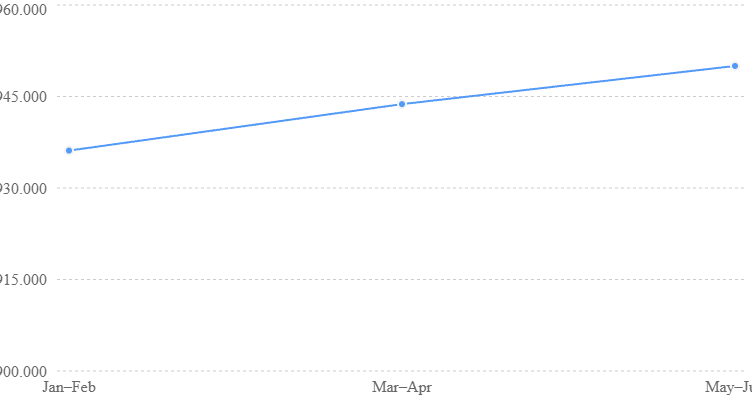
Sources: IOM DTM Libya, Rounds 61–63. Population stock estimates, not migration inflows.
These observations establish the trend in Libya’s measured migrant presence; they do not identify the proportion originating from recent Central Sahel displacement.
The relationship between Libya’s southern borders and its northern coast is also mediated by the country’s internal political divisions. Different authorities and armed organisations exercise influence over different territories, and the conditions governing movement can change without corresponding changes in national-level policy statements. In some areas, migrants may find informal employment and remain for extended periods. In others, coercion, detention, extortion or insecure transportation can prevent movement or force people into routes they did not originally intend to follow.
The consequences are especially serious for people in need of international protection. The absence of a comprehensive national asylum system and the continued exposure of refugees and migrants to detention and exploitation mean that measures directed at reducing irregular movement can also create substantial protection risks. Effective cooperation must therefore account for the distinction between preventing criminal exploitation and obstructing access to lawful protection procedures.
The UNHCR’s Libya Country Strategy and Operational Context — UNHCR identifies the country’s fragmented governance, southern-border vulnerabilities and risks affecting refugees and migrants as central features of the operating environment.
Sudan, Chad and the Eastern Libyan System: A Necessary Qualification to Sahel-Based Forecasting
An important additional complication is the influence of the Sudanese conflict on migration and displacement across Libya. The war that began in Sudan in April 2023 has generated extensive refugee movements toward neighbouring countries and into Libya, with substantial implications for eastern Libyan reception environments. This means that changes in Libya’s migrant and refugee populations cannot be interpreted exclusively through developments in the Central Sahel.
UNHCR’s March 2026 operational reporting estimated that approximately 559,920 Sudanese refugees had fled to Libya since 2023. Its assessment described movement toward Alkufra through routes associated with Chad, while also noting constraints arising from transportation costs, insecurity and border restrictions. The same reporting identified the existence of longer movements toward southern Libyan areas through Niger where other routes became more difficult to use. These observations demonstrate the existence of interconnected mobility systems across the Sahara, but they do not establish that all individuals entering Libya through Niger originate in Niger or the Central Sahel.
Source: Libya Operational Update, 31 March 2026 — UNHCR.
This distinction matters because the nationality, country of recent residence, displacement history and transportation route of an individual may differ significantly. A Sudanese refugee entering Libya through Niger, for example, should not be classified analytically as a person displaced by the October 2026 security deterioration in western Niger. Similarly, a Nigerien national residing in Libya for employment before the current escalation should not be counted as a newly displaced person because of developments in the tri-border area.
For Italian decision-makers, the resulting requirement is to distinguish three forms of geographical attribution. The country of nationality identifies a person’s citizenship or reported national origin. The country of last residence indicates where the person lived before beginning the relevant movement. The route of transit describes the territory through which they travelled. These variables are related but not interchangeable. Without collecting them separately, a migration intelligence system risks attributing changes in Libyan migrant populations to the wrong regional conflict.
The distinction also affects humanitarian interpretation. People moving through Libya may include recognised refugees, asylum-seekers, labour migrants, people escaping local economic collapse, victims of trafficking and individuals who have experienced multiple forms of displacement. The proportions of these groups cannot be inferred reliably from a single migration count.
The Italian Maritime Arrival Baseline: October 2026 Demonstrates a Declining Aggregate Flow
The clearest available measure of Italy’s immediate migration exposure is the Ministry of the Interior’s statistical record of maritime arrivals. Unlike estimates of displaced populations in the Central Sahel or migrants present in Libya, this dataset measures people who have actually disembarked in Italy during the specified reporting period. Its geographical and legal scope is narrower, but it is directly relevant to reception planning and maritime border management.
As of 15 October 2026, the Ministry reported 24,583 arrivals, compared with 54,527 during the corresponding period in 2024 and 55,184 during the corresponding period in 2025. The decline relative to 2025 amounted to 30,601 people, or approximately 55.5%, while the reduction relative to 2024 was approximately 54.9%. These changes indicate a substantial decrease in aggregate maritime arrivals over the equivalent year-to-date periods. They do not establish the reasons for that decrease, which may involve multiple departure countries, route changes, enforcement activity, economic conditions and other variables.
Table 2.2 — Italian maritime arrivals: comparable year-to-date periods
| Indicator | 2024 | 2025 | 2026 |
|---|---|---|---|
| Arrivals, 1 January–15 October | 54,527 | 55,184 | 24,583 |
| Change relative to 2025, absolute | — | — | −30,601 |
| Change relative to 2025, percentage | — | — | −55.5% |
| Change relative to 2024, percentage | — | — | −54.9% |
| Statistical coverage | Maritime disembarkations | Maritime disembarkations | Maritime disembarkations |
| Source | Italian Ministry of the Interior | Italian Ministry of the Interior | Italian Ministry of the Interior |
All three figures refer to the same year-to-date reporting window, not completed calendar years. Percentage changes are calculated from the published arrival totals.
Italian maritime arrivals — comparable periods
1 January–15 October of each year. Italian Ministry of the Interior.
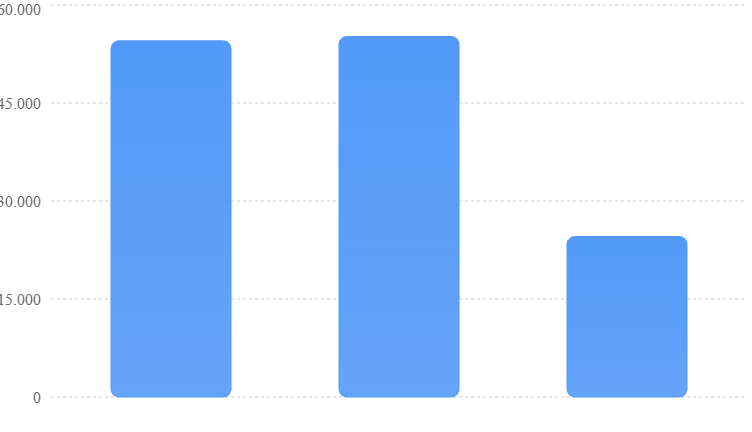
2026 data are provisional and subject to consolidation. This is a comparison of actual disembarkations, not projected arrivals.
The monthly series reinforces the need to distinguish observed changes from long-term projections. Italian official data record 1,457 arrivals in January 2026, 2,510 in February, 2,150 in March, 2,459 in April, 3,054 in May, 2,758 in June, 2,179 in July, 2,995 in August and 3,329 in September. Although monthly arrivals fluctuated, the January–September totals remained substantially below those reported during the same period in 2025. October was still incomplete at the 15 October reference date.
Table 2.3 — Monthly Italian maritime arrivals, January–September 2026
| Month | 2025 | 2026 | Year-on-year change |
|---|---|---|---|
| January | 3,479 | 1,457 | −58.1% |
| February | 3,329 | 2,510 | −24.6% |
| March | 2,407 | 2,150 | −10.7% |
| April | 6,578 | 2,459 | −62.6% |
| May | 7,178 | 3,054 | −57.5% |
| June | 7,089 | 2,758 | −61.1% |
| July | 6,487 | 2,179 | −66.4% |
| August | 6,146 | 2,995 | −51.3% |
| September | 8,315 | 3,329 | −60.0% |
| January–September total | 51,008 | 22,914 | −55.1% |
These percentage changes are calculated from the monthly values published in the Italian Ministry of the Interior’s 15 October 2026 dashboard. They do not adjust for weather, enforcement changes or the different geographical composition of departures.
The January–September series demonstrates that the decline was not confined to a single month. However, it does not reveal the national origin of all people attempting a crossing, the number prevented from departing, the number intercepted at sea or the number of people remaining in transit countries. Those measures are essential for understanding whether reduced arrivals reflect a decrease in migration intentions, changes in maritime enforcement or the accumulation of people in North Africa.
The distinction between actual arrivals and suppressed or delayed departures is central to the policy implications. If fewer people embark because conditions in origin countries have improved, the reduction may indicate a genuine decrease in migration pressure. If departures decline primarily because transportation networks are disrupted or people are confined to transit areas, the underlying population potentially seeking onward movement may remain substantial. A national arrivals count cannot distinguish these mechanisms without complementary evidence.
Nationality Composition: Why the Central Sahel Cannot Be Treated as the Principal Source of Current Italian Arrivals
The nationality distribution in the Italian Ministry of the Interior’s 15 October 2026 report provides another important constraint on broad claims linking Central Sahel instability to Italian maritime arrivals. According to the ministry’s data, the largest reported nationality groups among those disembarking in Italy during the reference period were Bangladesh, Algeria, Somalia, Eritrea and Sudan, while Mali accounted for 449 arrivals. Burkina Faso and Niger were not separately identified among the published principal nationalities.
This does not establish that no Burkinabè or Nigerien nationals arrived, because smaller nationality groups and individuals whose identification remained incomplete may be included in residual categories. Nor does it establish that Malian nationals reaching Italy were necessarily displaced by the recent security deterioration. However, it demonstrates that the publicly reported nationality composition cannot support a claim that arrivals from the three AES states dominate the maritime flow.
Table 2.4 — Reported nationalities among Italian maritime arrivals, 1 January–15 October 2026
| Declared nationality | Arrivals | Approximate share of total |
|---|---|---|
| Bangladesh | 5,974 | 24.3% |
| Algeria | 3,003 | 12.2% |
| Somalia | 2,806 | 11.4% |
| Eritrea | 2,238 | 9.1% |
| Sudan | 1,804 | 7.3% |
| Pakistan | 1,650 | 6.7% |
| Egypt | 1,488 | 6.1% |
| Tunisia | 1,310 | 5.3% |
| Mali | 449 | 1.8% |
| Ethiopia | 429 | 1.7% |
| Nigeria | 372 | 1.5% |
| Côte d’Ivoire | 349 | 1.4% |
| Iran | 321 | 1.3% |
| South Sudan | 318 | 1.3% |
| Guinea | 298 | 1.2% |
| Other / residual classifications | 1,774 | 7.2% |
| Total | 24,583 | 100% |
The nationality values are reproduced from the Italian Ministry of the Interior’s official dashboard. Percentage shares are calculated from the published total and individually rounded, so displayed percentages may not sum exactly to 100%.
Source: Italian Ministry of the Interior — Statistical Dashboard, 15 October 2026, page 5.
The significance of this distribution extends beyond the immediate numerical comparison. The presence of major nationality groups from South Asia, the Horn of Africa and North Africa demonstrates that Italian maritime migration reflects multiple international mobility systems operating simultaneously. Policies based exclusively on instability in the Central Sahel would therefore address only one component of a much broader phenomenon.
The comparatively small recorded Malian component also illustrates the danger of confusing population displacement with international maritime migration. Mali has experienced substantial conflict-related displacement, yet the Italian arrivals series does not show a proportionally large number of individuals declaring Malian nationality. There are several plausible mechanisms consistent with this observation, including regional refuge, limited access to long-distance transport, financial constraints and different migration preferences. Available aggregate data do not permit the relative importance of these mechanisms to be quantified.
Equally, the low recorded number of arrivals from an affected country cannot be interpreted as evidence of limited humanitarian need. People facing the greatest vulnerability may be precisely those least capable of financing extended journeys. As a result, humanitarian severity and Mediterranean arrival volumes can move in different directions.
Cross-Border Movement in 2026: The Difference Between Aggregate Growth and the Nigerien Corridor
The most significant additional evidence concerning the Niger–Libya connection comes from IOM’s second-quarter 2026 border monitoring. During April–June 2026, the organisation reported a 23% increase in incoming migration movements across Libya’s borders compared with the preceding quarter, while simultaneously identifying a notable decline in movements along the Nigerien frontier. IOM attributed the decline in the Niger-related observations primarily to intensified border controls, security operations, arrests and deportations. This difference between aggregate migration into Libya and movements along the Nigerien border is particularly important because it directly challenges the assumption that increases in the broader regional migrant population necessarily correspond to increases along every individual transit corridor.
IOM also reported that 39% of recently arrived migrants interviewed intended to remain in Libya, while 93% identified employment and income opportunities as important reasons for their migration decisions. These figures must be interpreted within their respective survey populations and should not be applied to all persons displaced in the Central Sahel. Nevertheless, they demonstrate that Libya’s role as a labour destination remains substantial and that the relationship between arrival at a Saharan border and subsequent maritime departure is neither automatic nor uniform.
The relevant source is Libya — Migration Trends at Libya Borders, Second Quarter 2026 — International Organization for Migration, 13 August 2026.
This divergence has three consequences for Italian strategic forecasting. First, an increase in arrivals across Libya’s aggregate land borders may be driven by routes outside Niger, particularly those associated with Sudan, Chad, Egypt, Algeria or Tunisia. Second, intensified restrictions at one frontier may alter the geographical distribution of movement rather than eliminate the demand for mobility. Third, a decline in recorded movements can reflect increased risks and reduced observation coverage as well as a genuine decrease in crossings, making independent validation essential.
Table 2.5 — Libya’s second-quarter 2026 border movements
| Indicator | Recorded finding | Scope and meaning | Confidence |
|---|---|---|---|
| Incoming movements across Libyan borders | +23% compared with Q1 2026 | IOM-observed incoming movements, not net migration | High for IOM’s reported series |
| Movements along Nigerien border | Notable decline | Directional observation; magnitude not established here | High for the reported direction |
| Principal factors affecting Nigerien frontier | Tighter controls, security operations, arrests and deportations | IOM’s explanation of observed border conditions | Moderate–high |
| Recently arrived migrants intending to remain in Libya | 39% | Surveyed respondents; not the entire migrant population | High for the reported survey result |
| Employment and income as migration motivations | 93% | Surveyed migrants and the question’s stated scope | High for the reported survey result |
| Verified increase in Sahel-origin Mediterranean departures | Not established | Requires disaggregated maritime and travel-history data | Insufficient evidence |
| Verified increase in Italian arrivals caused by October fighting | Not established | Requires a defensible causal and temporal connection | Insufficient evidence |
The observation that Niger-related movement declined while wider Libyan border inflows increased is particularly relevant to early-warning design. A national or regional monitoring framework capable only of identifying total migration into Libya would miss a change in the relative importance of individual corridors. Conversely, a system concentrated exclusively on Niger could overlook emerging movement through Chad or Algeria. Effective monitoring must therefore distinguish country of origin, country of last residence, border crossing, subsequent residence within Libya and eventual departure location.
Smuggling Economies, Transportation Markets and the Criminal Exploitation of Displacement
Irregular migration across the Sahara is sustained by overlapping transportation, commercial and criminal networks whose organisation changes in response to legal restrictions, enforcement, economic incentives and security conditions. These networks should not be understood as a single hierarchical criminal system operating continuously from the Central Sahel to the Mediterranean coast. Their geographical organisation is often fragmented, with different participants controlling or facilitating separate stages of movement, accommodation, financing and onward transportation.
An individual seeking to leave a conflict-affected community may initially rely on family assistance or ordinary commercial transport. Longer-distance movement may subsequently involve paid intermediaries, informal accommodation, document services and transportation providers. At later stages, individuals may encounter criminal organisations that exploit their vulnerability through extortion, deception, detention, forced labour or trafficking. The involvement of organised criminal actors is therefore not necessarily present at every stage of movement, but the risk can increase where lawful protection mechanisms and regulated transportation options are inadequate.
This distinction also has legal consequences. Smuggling generally concerns the facilitation of irregular entry across borders for financial or material benefit, while trafficking in persons involves exploitation through prohibited means, subject to the applicable legal definitions and special protections for children. A person who has paid for irregular transportation is not automatically a trafficking victim, and someone who initially consented to travel may subsequently become a victim of exploitation. These differences affect the responsibilities of law enforcement, immigration authorities and humanitarian organisations.
The economic resilience of smuggling networks depends on several mechanisms. Transportation costs can rise when border restrictions increase the difficulty or danger of movement. More restrictive enforcement may reduce the number of attempted crossings, but it can also encourage the use of less visible and potentially more dangerous routes. Insecurity can generate additional payments at informal checkpoints, while detention or extortion may force families to transfer money to release relatives. These mechanisms demonstrate why the relationship between border enforcement and criminal profitability is complex: enforcement may disrupt particular networks while creating incentives for others to reorganise.
For Italy, the most consequential intelligence requirement is to distinguish between changes in migrant demand and changes in the capacity or incentives of criminal transportation networks. An increase in displacement in Mali or Burkina Faso does not necessarily produce more attempted sea crossings if households cannot finance onward movement. Conversely, the emergence of relatively accessible maritime departure services could increase departures among people who have already lived in North Africa for extended periods.
The humanitarian consequences of enforcement must also be considered. UNHCR’s reporting on Libya identifies arbitrary detention, exploitation and limited access to protection as persistent problems. Measures designed to disrupt smuggling therefore require safeguards against transferring vulnerable people into situations where they face serious abuse.
Italian–Libyan and Italian–Tunisian Cooperation: Different Legal Frameworks, Different Strategic Functions
Italy’s migration-management relationships with Libya and Tunisia operate within distinct political and institutional environments. Libya’s continuing fragmentation limits the extent to which national-level agreements can guarantee uniform implementation across territory controlled by different authorities and armed actors. Tunisia, by contrast, retains a more centralised state structure and participates in formal bilateral and European Union cooperation frameworks, although political and human-rights considerations remain material to the design and implementation of migration policies.
The Italian–Libyan cooperation framework developed around the memorandum signed in February 2017 must be understood in the context of Libya’s political divisions and the broader obligations arising under international human-rights, refugee and maritime law. Practical cooperation involving maritime security, border management and the activities of Libyan authorities cannot be assessed solely through the number of departures prevented or individuals intercepted. Its effectiveness must also be evaluated against the protection risks faced by people returned to Libyan territory, the availability of lawful procedures and the ability to prevent arbitrary detention and exploitation.
The Tunisian partnership has a different institutional foundation. On 16 July 2023, the European Union and Tunisia signed a memorandum of understanding establishing a comprehensive strategic partnership covering five areas: macroeconomic stability, economic cooperation and trade, energy transition, people-to-people contacts, and migration and mobility. Italy played a prominent diplomatic role in the negotiations, alongside other European partners. The arrangement illustrates the European preference for combining migration management with wider economic and institutional engagement, although the existence of a memorandum does not itself demonstrate implementation or the effectiveness of individual programmes.
The agreement and its institutional structure are documented in The European Union and Tunisia: Political Agreement on a Comprehensive Partnership Package — European Commission, 16 July 2023 and Tunisia: EU Bilateral Relations and Strategic Partnership — European Commission.
The principal difference between the two relationships concerns the degree to which migration cooperation can be embedded within functioning governmental institutions and broader economic commitments. In Libya, fragmentation complicates accountability, territorial implementation and the protection of migrants. In Tunisia, the challenge concerns maintaining a comprehensive partnership that can address migration while preserving safeguards and avoiding excessive political dependence on short-term enforcement outcomes.
Neither framework directly resolves displacement in the Central Sahel. Both primarily influence later stages of the migration system, especially mobility within North Africa and departures toward Europe. Their strategic significance therefore depends on their interaction with measures addressing insecurity, economic vulnerability and humanitarian protection farther south.
Table 2.6 — Comparative assessment of Italian migration partnerships
| Dimension | Libya | Tunisia | Italian strategic implication |
|---|---|---|---|
| Political environment | Fragmented authority and competing security actors | More centralised governmental institutions | Different implementation and accountability conditions |
| Principal cooperation emphasis | Maritime and border-related security cooperation | Wider economic, political and migration partnership | Policies cannot be transferred mechanically between countries |
| Connection with Central Sahel | Saharan mobility, transit and migrant employment | Indirect regional movement and maritime departures | Different relationships with Sahel-origin displacement |
| Principal operational constraint | Fragmented implementation and protection risks | Political sustainability and implementation of commitments | Effectiveness must be assessed beyond announced agreements |
| Humanitarian concern | Detention, exploitation and limited protection mechanisms | Treatment of vulnerable migrants and access to protection | Human-rights compliance is a substantive requirement |
| Economic dimension | Employment, informal markets and transport | Macroeconomic cooperation, investment and energy | Development instruments have different institutional opportunities |
| Intelligence priority | Southern-border movements, internal migrant distribution and maritime departures | Departure trends, migrant treatment and route substitution | Monitoring must preserve country-specific differences |
The strategic risk associated with overreliance on either relationship is that Italy could become increasingly dependent on decisions made by external authorities over which it has limited operational control. This risk is especially significant where cooperation is measured only by immediate reductions in departures. A decline in maritime arrivals may coincide with increased detention, exploitation or prolonged involuntary residence in transit countries. Conversely, an increase in arrivals may reflect changes in enforcement or transportation markets rather than a sudden deterioration in African countries of origin.
Italy’s policy therefore requires both measurable operational objectives and legal safeguards. Cooperation should seek to reduce criminal exploitation, improve information exchange and preserve effective maritime safety while ensuring that actions remain compatible with international protection obligations.
Reception Capacity in Italy: Distinguishing Maritime Flows from the Existing Accommodation Population
The implications of possible future migration pressure cannot be evaluated solely by considering the number of new arrivals. Italy’s reception system contains people who arrived during different periods and who may remain accommodated for varying lengths of time. The relationship between new arrivals and pressure on reception infrastructure consequently depends on admissions, transfers, exits, procedural duration, available accommodation and the geographical distribution of facilities.
The Ministry of the Interior’s 15 October 2026 dashboard reported 125,862 people accommodated across the relevant reception categories, including 556 in hotspots, 85,610 in reception centres and 39,696 in the Reception and Integration System (SAI). These figures represent a stock of people present in reception arrangements, not the number who arrived during October or the number of unused places. Nor can the total be treated as a direct measure of spare national capacity, because available accommodation depends on the operational status and characteristics of individual facilities.
Regional distribution is nevertheless important for preparedness. Lombardia accounted for 15,775 people in reception, Lazio for 11,886 and Emilia-Romagna for 11,054, while Sicilia recorded 10,657. These differences reflect the geographical distribution of the accommodation population rather than a simple ranking of each region’s willingness or ability to receive additional arrivals. Comparing regions without considering population size, existing infrastructure, municipal responsibilities and the characteristics of reception facilities would provide an incomplete assessment.
Table 2.7 — Italian reception population, 15 October 2026
| Reception category | Persons present | Approximate share |
|---|---|---|
| Hotspots | 556 | 0.4% |
| Reception centres, including applicable CAS and related structures | 85,610 | 68.0% |
| SAI system | 39,696 | 31.5% |
| Total | 125,862 | 100% |
Source: Ministry of the Interior, reception data updated 15 October 2026. The ministry notes that SAI figures refer to the end of the preceding month; therefore, the total combines categories with slightly different reporting dates.
Table 2.8 — Selected regional reception populations
| Region | Persons in reception | Share of national reception population |
|---|---|---|
| Lombardia | 15,775 | 12.5% |
| Lazio | 11,886 | 9.4% |
| Emilia-Romagna | 11,054 | 8.8% |
| Sicilia | 10,657 | 8.5% |
| Piemonte | 10,412 | 8.3% |
| Campania | 9,868 | 7.8% |
| Toscana | 9,027 | 7.2% |
| Veneto | 7,450 | 5.9% |
| Calabria | 6,835 | 5.4% |
| Puglia | 6,191 | 4.9% |
Source: Italian Ministry of the Interior — Statistical Dashboard, 15 October 2026, page 4.
The operational significance of these data is that migration pressure should be evaluated through the interaction of arrivals and system occupancy rather than through arrival counts alone. A relatively modest increase in new arrivals can create substantial local difficulties where accommodation is already constrained or where particular groups require specialised services. Conversely, a higher arrival rate may be more manageable if departures from reception facilities, transfers and accommodation availability permit rapid absorption.
A national early-warning model should therefore distinguish between three principal variables: the number of individuals arriving, the number remaining within reception arrangements and the rate at which accommodation becomes available. Additional attention is necessary for unaccompanied minors, people requiring medical treatment and individuals with other protection needs, because their accommodation and support requirements cannot be represented adequately by a single national occupancy total.
Medium-Term Scenarios: How Sahelian Displacement Could Affect Italy Within Six to Twenty-Four Months
The future relationship between insecurity in the Central Sahel and Italian maritime arrivals is characterised by substantial uncertainty. This uncertainty does not justify abandoning forecasting, but it requires scenarios to be constructed around clearly identified mechanisms rather than unsupported probabilities or arbitrary migration multipliers.
A defensible scenario framework should distinguish changes in security conditions in the Central Sahel, changes in the capacity or willingness of displaced populations to undertake further movement, conditions along Saharan transportation corridors and the availability of departures from North African coastal areas. Because these variables can change independently, the same humanitarian shock could produce different migration outcomes.
Under a baseline scenario of continuing instability without substantial territorial consolidation by either jihadist organisation, displacement would remain a serious humanitarian concern while secondary movement toward North Africa would depend on household resources, local host-community conditions and transportation markets. Italian arrivals could remain relatively low, fluctuate seasonally or increase for reasons unrelated to the Central Sahel. This is the most cautious analytical baseline because it does not assume a causal relationship that current data have not established.
Under an accelerated-displacement scenario, a series of major attacks, civilian expulsions or the deterioration of essential services could produce additional movement toward safer regional settlements. If host communities became unable to absorb new arrivals and economic conditions prevented local recovery, some households might seek more distant destinations. The potential implications for Italy would depend on whether these secondary movements became visible in northern Niger, southern Libya or alternative routes through Algeria and Tunisia. A six- to twelve-month transmission period is a reasonable monitoring window, but not a demonstrated statistical lag.
A third scenario would involve a shift in the organisation of Saharan transportation networks, potentially following changes in enforcement, conflict conditions or the economic incentives of transport providers. Such a shift could alter the proportion of migration moving through individual corridors without a major change in the overall number of people displaced. For Italian authorities, the consequence would be a requirement to monitor route substitution rather than rely on historical assumptions about dominant transit geography.
A fourth scenario concerns deterioration in Libya itself. Greater insecurity, economic disruption or changes in the treatment of migrants could encourage some people already present in Libya to consider onward movement. Alternatively, such conditions could make maritime departure more difficult, leaving vulnerable populations immobilised. The direction of the effect cannot be determined without evidence about the relevant locations and the behaviour of transportation and maritime networks.
Table 2.9 — Migration scenarios and the conditions required for transmission to Italy
| Scenario | Principal trigger | Expected intermediate developments | Possible consequence for Italy | Main uncertainty |
|---|---|---|---|---|
| Continuing regional instability | Persistent insurgent violence without major territorial transformation | Ongoing regional displacement and limited secondary movement | Arrivals remain driven by multiple routes and origin countries | The share of affected people able or willing to move farther |
| Accelerated humanitarian deterioration | Major attacks, forced displacement or loss of services | Increased pressure on host communities and regional crossings | Possible delayed contribution to North African migration | Household resources and route accessibility |
| Change in Saharan transport conditions | Enforcement changes or network reorganisation | Redistribution of movement among Niger, Algeria and other corridors | Changes in departure geography and the composition of arrivals | Reliability of border observations |
| Libyan internal deterioration | Conflict, coercion or severe livelihood disruption | Changes in residence, detention and internal transport | Potential changes in maritime departures, in either direction | Whether people can move or become immobilised |
| Combined security and migration shock | Severe Sahel deterioration alongside more accessible onward routes | Rising secondary movement followed by increased coastal access | Greater potential pressure on Italian maritime and reception systems | Timing, magnitude and attribution |
No numerical probabilities are assigned to these pathways because the verified evidence does not support defensible event-specific likelihoods. The scenarios are intended to identify the observations required before authorities alter operational planning assumptions.
The resulting strategic assessment is that Italy should prepare for the possibility of a delayed migration response without treating it as inevitable. The most dangerous forecasting error would be to interpret the absence of an immediate arrival increase as proof that the Central Sahel crisis cannot affect the Mediterranean. The opposite error would be to assume that millions of displaced persons constitute a measurable pool of future maritime migrants. Both interpretations are inconsistent with the available data.
A Quantitative Framework for Migration Risk Without Fabricated Forecasts
Although the available evidence does not justify a numerical prediction of additional Italian arrivals attributable to the October 2026 Sahel crisis, it is possible to establish a quantitative framework identifying the data required for such an estimate.
The appropriate starting point is the number of people newly displaced during a defined period in specific geographical areas, rather than the total displaced population accumulated over several years. The analysis must then estimate the share crossing national borders, the share undertaking subsequent movement toward North Africa, the proportion reaching relevant transit countries and the number eventually attempting maritime departure. Each stage requires independent observational data or assumptions explicitly supported by relevant evidence.
In conceptual terms, the number of additional Italian arrivals attributable to a particular displacement event would depend on the size of the affected population multiplied by successive conditional transition proportions and adjusted for the time between stages. This model cannot be populated credibly using a single UNHCR displacement total or a national Italian arrivals count. The available statistical series describe different populations, with different definitions and temporal coverage.
A stronger empirical approach would construct an origin-cohort analysis. Individuals displaced from particular districts during a specified period would be distinguished from residents displaced during earlier phases of the conflict. Subsequent observations of cross-border movement, residence in transit locations and documented maritime arrivals would then be used to assess whether particular cohorts appear in later migration systems. Because direct individual-level tracking would raise substantial privacy and protection concerns, the most realistic initial approach would use anonymised, aggregated observations and clearly defined geographical categories.
The model would also require counterfactual analysis. If arrivals of a particular nationality increased after an episode of violence, the increase could reflect the security shock, but it could also result from employment conditions, changes in transport prices, maritime enforcement or conditions in other transit countries. A defensible causal assessment would compare observed changes with relevant historical trends and alternative explanations rather than attributing every subsequent movement to the most visible conflict event.
Table 2.10 — Minimum data required to quantify a Sahel-to-Italy transmission effect
| Analytical stage | Required variable | Suitable evidence | Principal limitation |
|---|---|---|---|
| Origin displacement | Newly displaced people by district and month | UNHCR, IOM and competent national statistics | Coverage and registration differences |
| Cross-border movement | Recorded movements by crossing area and direction | IOM flow monitoring and border authorities | Unobserved crossings |
| Secondary migration | Changes in residence and onward movement | Anonymous mobility surveys and humanitarian monitoring | Multiple journeys and inconsistent reporting |
| North African migrant presence | Estimated population by nationality, residence history and region | IOM DTM | Population stocks are not arrival flows |
| Maritime departures | Departures by coastline and period | Maritime authorities and competent monitoring agencies | Incomplete detection and route substitution |
| Italian arrivals | Actual maritime disembarkations | Italian Ministry of the Interior | Arrival location is not necessarily departure or origin location |
| Asylum and protection outcomes | Applications and decisions by nationality and relevant period | National and EU asylum authorities | Administrative delays and differing definitions |
| Reception impact | Admissions, occupancy, exits and available places | Italian reception authorities | Accommodation categories and reporting lags |
Until these datasets are sufficiently compatible, numerical estimates of arrivals specifically generated by the October 2026 fighting would imply a degree of precision that is not supported by the evidence.
Early-Warning Indicators: From Regional Humanitarian Stress to Italian Operational Decisions
A useful early-warning system must identify not only whether migration is increasing, but where in the sequence of movements that increase is occurring. The distinction matters because the same policy response is unlikely to be appropriate at every stage. Rising displacement in northern Burkina Faso would initially require humanitarian and regional protection responses; substantial additional movement through northern Niger would require closer assessment of transit conditions; and sustained increases in departures from North African coastal areas would create more immediate implications for Italian maritime and reception planning.
The first tier of monitoring should therefore concentrate on security and humanitarian indicators in the Central Sahel. These include newly displaced households, repeated displacement, loss of access to markets, disruption of schooling, conditions in refugee-hosting communities and changes in the geographical pattern of armed violence. Their purpose would be to assess the emergence of additional population vulnerability, not to predict immediate sea arrivals.
The second tier should monitor regional and Saharan movement. Relevant observations include cross-border traffic by direction, changes in the composition of people using transportation services, alterations in the availability of lawful transport, evidence of criminal exploitation and conditions affecting communities along transit corridors. These indicators would help determine whether humanitarian deterioration was producing measurable secondary movement.
The third tier should concentrate on developments within Libya and Tunisia, particularly the distribution of migrant populations, the conditions facing vulnerable groups, changes in maritime departures and the ability of local institutions to provide protection and basic services. This tier would be more directly relevant to potential short-term consequences for Italy, although it would still require careful attribution of movements to specific countries or conflicts.
Finally, the fourth tier should assess Italy’s own reception and protection systems. Maritime arrivals, accommodation occupancy, availability of specialised services and asylum-processing conditions should be monitored together so that increases in operational demand can be identified without treating every new arrival as an equivalent burden.
Table 2.11 — Prioritised early-warning and decision framework
| Indicator | Observation frequency | Warning condition | Principal responsible institutions | Initial decision consequence |
|---|---|---|---|---|
| New displacement in Oudalan, Ménaka and Tillabéri | Weekly where reliable reporting exists | Sustained increase across successive reporting periods | UNHCR, IOM and humanitarian partners | Review humanitarian exposure and potential secondary movement |
| Repeated displacement and host-community pressure | Monthly | Persistent deterioration in services and livelihood access | UN agencies and national authorities | Consider regional protection and resilience support |
| Cross-border mobility from affected areas | Monthly or more frequently where data permit | Sustained increase outside seasonal expectations | IOM and relevant national border authorities | Increase analytical monitoring of transit corridors |
| Niger–Libya movement | Monthly | Reversal of the reported decline, corroborated by several observations | IOM and competent authorities | Reassess Libya-bound movement scenarios |
| Migrant population in southern Libya | Each IOM reporting round | Significant unexplained increase or compositional change | IOM DTM | Review route and nationality analysis |
| Movement within Libya toward coastal regions | Monthly where measurable | Sustained increase among identified populations of concern | IOM, UNHCR and competent authorities | Review short-term maritime exposure |
| Maritime departures and interceptions | Continuous operational monitoring | Sustained divergence from seasonal and historical patterns | Maritime authorities and relevant agencies | Adjust preparedness and protection arrangements |
| Italian disembarkations | Daily, consolidated monthly | Sustained increase relative to comparable periods | Ministry of the Interior | Review reception and maritime resource requirements |
| Reception occupancy and accommodation availability | Weekly or monthly | Declining spare capacity with rising admissions | Interior Ministry and local authorities | Activate proportionate reception capacity measures |
| Protection risks in transit countries | Continuous reporting, periodic assessment | Documented escalation in detention, trafficking or serious abuses | UNHCR, IOM and competent monitoring bodies | Review safeguards and external cooperation arrangements |
Warning conditions should be defined against documented historical variability rather than arbitrary fixed percentages. A numerical threshold may be appropriate when a stable time series and sufficient observations are available, but a percentage change drawn from an incomplete baseline can produce misleading alerts. The system should also distinguish a true increase from improved reporting coverage, seasonal changes and temporary movement following a single event.
Italy’s Strategic Migration Exposure: The Difference Between Immediate Conditions and Accumulating Risk
The October 2026 evidence presents an apparent contradiction that is central to the strategic assessment. Humanitarian conditions across the Central Sahel have deteriorated markedly over several years, while maritime arrivals recorded in Italy during 2026 remain substantially below those observed during the comparable periods of 2024 and 2025. At the same time, IOM has identified nearly 950,000 migrants present in Libya and documented increases in aggregate incoming movement across its borders during the second quarter of 2026, even as movement along the Nigerien border declined.
These observations are not mutually inconsistent. They describe different stages of mobility, different populations and different temporal processes. Regional displacement can increase without generating immediate international movement. Migration into Libya can rise because of economic or security developments unrelated to the Central Sahel. Italian arrivals can decline because of changing conditions along maritime departure routes even if the number of migrants already present in North Africa remains substantial.
The decisive policy implication is that Italy should not rely on a single indicator to assess migration risk. The number of internally displaced persons in the Central Sahel measures humanitarian need. The number of migrants present in Libya measures a broader regional population stock. Maritime disembarkations measure arrivals in Italy. None of these variables, considered independently, establishes the causal relationship between Sahelian violence and Italian reception demand.
A more rigorous assessment would integrate all three while preserving their definitions. It would identify the geographical distribution of new displacement, examine whether secondary movement is occurring and determine whether those movements are represented in subsequent Libyan and Italian observations. This framework is more demanding than the use of general migration narratives, but it is essential for allocating resources and distinguishing imminent operational pressures from longer-term strategic exposure.
Chapter 2 — Key Judgments
The verified statistical record does not support the conclusion that the Central Sahel humanitarian crisis has already produced an increase in Italian maritime arrivals during 2026. Italy recorded 24,583 arrivals through 15 October 2026, approximately 55.5% below the equivalent period in 2025. The nationality composition of those arrivals further demonstrates that maritime migration reflects multiple regional and international systems, with Mali accounting for 449 recorded arrivals and Burkina Faso and Niger not individually identified among the principal published nationalities.
Libya remains an essential intermediate environment, but the evidence from IOM demonstrates why its role must be interpreted carefully. The estimated migrant population reached 950,004 during May–June 2026, while observed incoming border movements increased during the second quarter. However, movements along the Nigerien frontier declined, and a substantial proportion of migrants reported employment-related motivations or intentions to remain in Libya. These findings weaken simplistic assumptions about a direct and immediate transmission from Sahelian displacement to Mediterranean departures.
The principal medium-term risk is consequently conditional. Further violence in the Central Sahel could generate additional regional displacement, and deterioration in host-community conditions could encourage secondary movement. Whether such movement ultimately affects Italy depends on transportation access, household resources, conditions inside Libya, changes in maritime departure markets and the operation of national and international protection systems.
Italy’s most defensible approach is to establish an integrated early-warning framework combining humanitarian displacement data, border-movement observations, Libyan migrant-population statistics, maritime departures and national reception capacity. Such a system would permit authorities to identify emerging risks without attributing every change in Mediterranean migration to the latest security crisis in Africa.
The decisive strategic conclusion is that migration pressure on Italy should be assessed as a sequence of observable and potentially interrupted movements, rather than as an automatic consequence of the number of people displaced in the Central Sahel. This distinction is essential to maintaining credible forecasts, proportionate policy responses and an evidence-based assessment of Italy’s actual security exposure.
PILLAR II — ITALY’S MILITARY POSITION AND THE RECONFIGURATION OF REGIONAL POWER
OPEN-SOURCE STRATEGIC INTELLIGENCE ASSESSMENT
Reference date: 18 October 2026
Strategic horizon: 2026–2031
Institutional audience: Presidency of the Council of Ministers; Ministry of Defence; Ministry of Foreign Affairs and International Cooperation; Ministry of the Interior; Ministry of Economy and Finance; and competent national security, intelligence and economic institutions.
Chapter 3. MISIN, Nigerien Sovereignty and Italian Military Risk Exposure
Italy’s Military Presence in Niger: An Exceptionally Valuable but Increasingly Conditional Strategic Position
Principal judgment: Italy’s continued military presence in Niger constitutes an important instrument of strategic access, bilateral defence diplomacy and institutional influence in a regional environment where the military governments of the Alliance of Sahel States have fundamentally reconfigured their relationships with external security partners. However, the sustainability of the Italian Bilateral Support Mission in Niger (MISIN) depends less on its numerical strength than on the continuing consent of the Nigerien authorities, the ability to protect Italian personnel, the operational usefulness of training and assistance activities, and Rome’s capacity to maintain diplomatic relationships without becoming dependent on the political priorities of the military government in Niamey.
The most consequential development in the Italian military relationship with Niger during 2026 is not an announcement of expanded combat involvement, but the confirmation that bilateral cooperation has continued despite the political transformation of the host country and the deterioration of several other Western security relationships in the Central Sahel. On 28 July 2026, the Italian Chamber of Deputies approved the continuation of MISIN under the parliamentary procedures governing international military missions. The decision followed the government’s deliberation of 14 May 2026 and the parliamentary consideration of the documentation relating to military missions and stability-support activities. The parliamentary proceedings are particularly important because they provide an authoritative basis for distinguishing the continuation of an Italian mission from more speculative accounts of European military disengagement from Niger.
The authorisation was not politically unconditional. The approved parliamentary framework included an undertaking concerning efforts to facilitate the restoration of constitutional order in Niger, reflecting the tension between Italy’s interest in preserving cooperation and the democratic-governance considerations associated with the country’s post-coup political system. The simultaneous authorisation of a bilateral support mission in Burkina Faso further illustrates that Rome has retained instruments of military engagement within the AES geographical environment, although the legal basis, scale and operational characteristics of the two missions must be evaluated separately.
The relevant parliamentary record is International Missions: Approval of the Parliamentary Resolutions — Italian Chamber of Deputies, 28 July 2026, together with the Official Parliamentary Proceedings, Sitting No. 699 — Chamber of Deputies, 28 July 2026 and the Associated Parliamentary Documents and Resolutions — Chamber of Deputies, 28 July 2026.
The political significance of this decision should not be underestimated. After the military takeover of July 2023, Niger’s external security relationships became an expression of the country’s broader assertion of political sovereignty. International military cooperation ceased to be governed principally by the assumptions that had characterised earlier Western-supported counterterrorism operations. Niamey’s authorities increasingly sought relationships that could be presented domestically as compatible with national autonomy and less dependent on external political conditionality. Italy’s ability to maintain a bilateral mission within this environment therefore constitutes a form of diplomatic access that requires continuous political management rather than an inherited entitlement.
This access has value beyond the operational services performed by the deployed personnel. The presence of an authorised Italian military contingent creates opportunities for institutional communication with Nigerien defence authorities, permits sustained observation of the requirements facing local security forces and provides a framework through which Italian military expertise can be delivered in identifiable areas. It also gives Rome an instrument for demonstrating that engagement with African security institutions need not be synonymous with direct participation in their military campaigns.
Nevertheless, the preservation of this relationship creates its own risks. A host government may accept technical cooperation while rejecting foreign political influence, restrict certain activities without formally terminating the mission, or seek to use the continuation of military relations as evidence of international acceptance of its political system. Italy must therefore distinguish the existence of diplomatic access from the ability to influence national decisions. An authorised mission can maintain practical cooperation without conferring meaningful leverage over Niger’s broader defence relationships, political transition or treatment of external partners.
The strategic sustainability of MISIN must consequently be evaluated through four separate questions: whether its presence remains legally and politically accepted; whether its activities continue to generate identifiable capabilities; whether its security arrangements remain proportionate to the threat; and whether the benefits of continued deployment exceed the operational, diplomatic and financial obligations associated with maintaining it.
The Legal and Institutional Foundations of MISIN: Parliamentary Authority, Host-Nation Consent and Operational Mandate
MISIN was established in 2018 as a bilateral military-support mission intended to contribute to the stabilisation of Niger and the wider Sahelian environment through training, assistance, mentoring and the development of local security capabilities. Its original conception reflected the security circumstances of a period in which international counterterrorism and stabilisation efforts involved extensive cooperation among Nigerien institutions, European governments, the United States and regional security organisations. The mission’s official description continues to identify support for territorial surveillance, border-security capabilities, military aviation and the strengthening of Nigerien security institutions among its principal functions.
The Italian Ministry of Defence describes the mission’s tasks as supporting the host government in strengthening territorial control and countering illicit trafficking and security threats; contributing to border and territorial surveillance and the development of Niger’s air component; and providing training, assistance, advice and mentoring to Nigerien security forces and governmental institutions. This mandate is significant because it establishes that MISIN is fundamentally a capacity-building and support mission rather than an Italian territorial-combat operation intended to replace Nigerien military authority.
Source: Missione — Missione Bilaterale di Supporto nella Repubblica del Niger, Italian Ministry of Defence.
The mission’s legal and political foundations should be distinguished carefully. Domestic parliamentary authorisation provides the Italian institutional basis for participation and the allocation of national military resources. Host-nation consent provides the international and operational foundation for the presence of Italian armed forces on Nigerien territory. These elements are related but not interchangeable. A decision by the Italian Parliament to continue a mission does not eliminate the requirement for an acceptable relationship with the host government, nor does Nigerien willingness to receive assistance remove the need for Italy to operate within its own constitutional, legislative and military-command arrangements.
The legal distinction becomes especially important when considering possible changes to the mission. Adjustments to the number of deployed personnel, the allocation of equipment or the organisation of training activities may be possible within an authorised framework, depending on the relevant governmental decisions and mission parameters. A fundamental transformation into an offensive combat mission, a new territorial deployment or a substantially different international military undertaking would require a distinct legal and political assessment. Similarly, operational cooperation with Nigerien security forces must remain compatible with the applicable principles of international law, Italian law and the conditions established for the mission.
The presence of a military government in Niger introduces an additional dimension that cannot be resolved simply by reference to formal consent. International engagement with the authorities exercising effective governmental control may be necessary for legitimate security and diplomatic purposes without constituting approval of the manner in which those authorities assumed power or of all subsequent governmental policies. Italy’s parliamentary decision explicitly reflects this tension by preserving MISIN while referring to the restoration of constitutional order.
This dual approach has practical consequences for military diplomacy. Italian representatives must be able to negotiate training access, protection arrangements and technical cooperation with the Nigerien institutions exercising actual authority, while preserving the distinction between professional military engagement and political endorsement. The more effectively those distinctions are maintained, the less likely the mission is to become trapped between operational cooperation and wider diplomatic disagreements.
Table 3.1 — MISIN: Legal, institutional and operational architecture
| Dimension | Verified position or governing principle | Strategic significance for Italy |
|---|---|---|
| Mission designation | Missione Bilaterale di Supporto nella Repubblica del Niger — MISIN | Identifies a national bilateral support arrangement |
| Year of establishment | 2018 | Demonstrates institutional continuity across different Nigerien political administrations |
| Italian domestic framework | National procedures governing international missions | Requires governmental and parliamentary authority |
| 2026 continuation | Approved by the Chamber of Deputies on 28 July 2026 | Establishes parliamentary support for continuation during 2026 |
| Host-nation relationship | Bilateral cooperation with Nigerien authorities | Operational access remains dependent on acceptable host-state arrangements |
| Primary functions | Training, advice, assistance, mentoring and security-capability development | Capacity-building rather than substitution for Nigerien sovereignty |
| Relevant security sectors | Territorial surveillance, border security, aviation, military training and specialist support | Multiple opportunities for technical cooperation |
| Political consideration | Parliamentary reference to restoration of constitutional order | Preserves a distinction between engagement and political endorsement |
| Command responsibility | Italian military command within the applicable national arrangements | Italy retains responsibility for its personnel and assigned activities |
| Operational limitations | Must be assessed against the authorised mandate and current host-state consent | Prevents automatic expansion into unrelated operations |
| Continuation beyond the current framework | Requires applicable subsequent decisions and bilateral conditions | Long-term presence cannot be assumed from a single year’s authorisation |
The original mission description also refers to cooperation with the G5 Sahel and an earlier European and American stabilisation framework. Those references are historically meaningful but should not be read as evidence that the same international architecture remains operational in its original form in October 2026. The withdrawal of international missions, changing political relationships and creation of the AES have substantially altered the regional environment. The underlying Italian mandate has retained elements of continuity, while the network of partners through which that mandate was originally conceived has changed.
Force Levels, Available Capabilities and the Difference Between Authorised Capacity and Actual Deployment
A precise evaluation of MISIN must distinguish between the personnel strength authorised or envisaged under mission planning and the number of Italian military personnel actually present in Niger on a specified date. The distinction is essential because military force-generation ceilings, annual average commitments and actual deployed strength represent different quantities. Confusing them can lead to incorrect assessments of operational exposure, expenditure, evacuation requirements and available military capability.
The Italian Ministry of Defence’s public mission profile provides for a progressive deployment involving up to 500 military personnel, 100 land vehicles and six aircraft. These figures describe the framework of the national contribution rather than an independently verified October 2026 inventory of personnel and equipment physically present in Niger. The approximately 350 personnel identified in some descriptions of the mission cannot therefore be treated as a confirmed current headcount without a dated operational return establishing that figure.
This distinction also applies to specialised units. The ministry identifies training teams, medical personnel, reconnaissance and command-and-control elements, military engineers, civil-military cooperation personnel, chemical, biological, radiological and nuclear threat-detection capabilities, support units, force-protection elements and special-forces personnel within the mission structure. Their appearance in the public force description establishes that these functions form part of the mission’s planned or documented contribution, but does not reveal their exact composition, current availability, readiness or operational tasking in October 2026.
The official reference is Contributo Nazionale — MISIN, Italian Ministry of Defence.
The composition of the force matters because MISIN’s effectiveness depends on the quality and continuity of specialist functions rather than on a large combat formation. Medical teams and military engineers can deliver capabilities that remain useful to Nigerien institutions beyond an individual training cycle. Training units can develop professional skills in areas where equipment or personnel shortages constrain national military performance. Civil-military cooperation programmes can create practical relationships with local institutions, while force-protection personnel are necessary to maintain the security of an international deployment operating in a high-risk environment.
Nevertheless, a smaller specialist mission may be vulnerable to different constraints than a larger combat deployment. Its ability to protect personnel, sustain essential services and maintain communications may depend on concentrated infrastructure, host-nation cooperation and reliable logistical access. Specialist teams also require secure working conditions and predictable permissions if training programmes are to continue. Thus, an increase in nominal personnel strength would not automatically improve the mission’s effectiveness unless accompanied by the capabilities necessary to support the additional deployment.
Table 3.2 — MISIN personnel, equipment and specialist capabilities
| Component | Publicly documented value or function | Evidentiary status | October 2026 assessment |
|---|---|---|---|
| Military personnel | Up to 500 | Public mission planning figure | Not a confirmed current deployed strength |
| Land vehicles | Up to 100 | Public mission planning figure | Actual inventory and availability not established |
| Aircraft | Up to six | Public mission planning figure | Actual deployment and serviceability not established |
| Training teams | Military and security-force instruction | Documented mission function | Training activity confirmed during 2025–2026 |
| Reconnaissance and command-and-control teams | Specialist mission support | Documented force structure | Exact current capability not publicly established |
| Medical personnel | Medical assistance and support | Documented force structure | Medical infrastructure development confirmed |
| Military engineers | Infrastructure and technical works | Documented activity | CEMEDAN project completed to the reported June 2026 stage |
| Civil-military cooperation | Projects supporting local institutions | Documented activity | Accumulated project record available |
| CBRN detection specialists | Detection of chemical, biological, radiological and nuclear threats | Documented force structure | Current deployment strength not established |
| Force-protection personnel | Security of the Italian contingent | Documented force structure | Detailed posture appropriately not inferred from public sources |
| Special-forces personnel | Specialist training and related functions | Documented mission structure | No inference of independent offensive combat operations |
The absence of a verified October 2026 headcount should not be treated as evidence that the mission is operating below or above its authorised levels. It is a consequential public-record limitation. Any ministerial assessment intended to support decisions about exposure, cost or redeployment should use a dated personnel and equipment return produced through the appropriate military chain of command.
Training Outputs: Quantifiable Institutional Activity and Its Limits as a Measure of Military Effectiveness
One of the strongest areas of documentary evidence concerning MISIN’s contribution is the accumulated training record published by the Italian Ministry of Defence. The ministry reports that since the mission’s establishment in 2018, its personnel have conducted 458 training courses and trained more than 11,840 members of Nigerien security forces. The public mission profile also records detailed activity by different Italian training providers, providing a relatively uncommon quantitative basis for evaluating the outputs of a bilateral security-assistance mission.
These figures establish the scale of reported training delivery, but they do not independently demonstrate that Nigerien military units have achieved proportional improvements in operational effectiveness. A trained participant is not necessarily equivalent to an additional fully operational soldier, and repeated attendance by the same individual may affect the interpretation of cumulative participation figures. Training-course completion is also distinct from the sustained incorporation of acquired skills into national military procedures.
The distinction becomes particularly important in an environment where national security forces face equipment constraints, leadership changes, operational losses and rapid personnel turnover. A specialised course may improve the competence of those attending, but its longer-term value depends on whether trained personnel remain in relevant positions, receive appropriate equipment and continue practising the acquired techniques. Consequently, the most important measure of effectiveness is not simply the total number of courses delivered, but the extent to which their content becomes embedded within Nigerien military institutions.
The public profile provides the following detailed training figures for the period from 7 July 2022 to 24 July 2025.
Table 3.3 — MISIN training record by Italian provider
| Training provider | Courses reported | Participants or trained personnel reported | Main subject areas |
|---|---|---|---|
| Italian Army mobile training teams | 283 | 6,185 | Parachuting, aerial resupply, infantry, riverine operations and counter-IED awareness |
| Carabinieri mobile training teams | 140 | 3,678 | Public order, investigative techniques and operational intervention |
| Special-forces mobile training teams | 37 | 2,043 | Specialist qualifications, medical training and tactical instruction |
| Italian Air Force | 2 | 80 | Aviation-related training |
| Sum of detailed entries | 462 | 11,986 | Provider-level entries in the published table |
The provider-level entries are reproduced from the Ministry of Defence’s published table. Their arithmetic sum differs from the headline statement of 458 courses and more than 11,840 personnel. The difference should be reconciled through a dated official training ledger rather than silently treated as an error or explained through an unsupported assumption about overlap.
The discrepancy between the published headline and the detailed provider figures is analytically relevant. The underlying table contains 283, 140, 37 and two courses, which sum to 462 rather than 458. The associated participant values total 11,986. Because the headline uses the formulation “more than 11,840”, the participant figures are not necessarily inconsistent, but the course count is not directly reconciled. This is an example of why the completeness and definitions of institutional performance statistics matter when they are intended to support strategic decisions.
The substantive curriculum demonstrates that MISIN is not restricted to generic classroom instruction. Training in parachute-related activities and aerial resupply supports selected forms of military mobility and logistics. Counter-IED awareness addresses an important threat encountered by security forces operating against insurgent organisations. Riverine instruction, investigative techniques and specialised medical training have different operational applications, while train-the-trainer programmes can potentially improve institutional continuity by allowing national personnel to conduct subsequent instruction.
A government-level effectiveness assessment should therefore examine the relationship between training inputs, immediate outputs, institutional adoption and operational outcomes. Training delivery is established by course records. Institutional adoption requires evidence that procedures and capabilities have been incorporated into units. Operational effectiveness requires further evidence that those capabilities are available and useful under actual conditions. Strategic success would require a measurable contribution to Niger’s broader security objectives without creating disproportionate risks to civilians or fostering dependence on external trainers.
The 2026 Operational Record: Continued Military Cooperation and Infrastructure Delivery
The existence of ongoing MISIN activity during 2026 is supported by several specific Ministry of Defence records rather than inferred solely from parliamentary authorisation. On 16 January 2026, the ministry published an account of the mission’s activities during 2025, describing the continuation of mobile training programmes and civil-military cooperation. The report identified instruction in parachuting, riverine operations and tactical-logistical capabilities, together with infrastructure initiatives supporting Nigerien institutions.
More significantly, General Luciano Portolano, the Italian Chief of Defence Staff, visited the MISIN contingent in Niamey on 9–10 February 2026. The visit occurred shortly after the attack against Niamey’s Diori Hamani International Airport during the night of 28–29 January, an incident claimed by Islamic State’s Sahelian organisation. Portolano met Italian military personnel at Base Italia and held discussions with senior Nigerien military authorities, including General Moussa Salaou Barmou. The Italian Defence Ministry reported that Nigerien counterparts expressed interest in advanced training relating to military medicine, counter-improvised-explosive-device capabilities and specialist military instruction.
This sequence provides several distinct findings. The Italian contingent remained publicly active after the January attack; high-level bilateral military engagement continued; Nigerien authorities maintained an interest in selected Italian training capabilities; and Rome considered the mission sufficiently important to warrant direct attention from the Chief of Defence Staff. None of these findings proves that the security threat had diminished, but together they provide evidence that the bilateral relationship had not been suspended by the incident.
Sources: MISIN: Training and Cooperation Activities Continued During 2025 — Italian Ministry of Defence, 16 January 2026 and Visit of the Chief of Defence Staff to the Bilateral Support Mission in Niger — Italian Ministry of Defence, 10 February 2026.
The infrastructure record supplies further evidence of continuing cooperation. On 16 June 2026, a ceremony at Base Italia marked the completion of the engineering task group’s work on the Nigerien Aeronautical Medicine Expertise Centre, known as CEMEDAN. The Ministry of Defence’s 19 June account states that the engineering activity had developed over a period beginning in September 2021 and included improvements to logistical, accommodation and medical infrastructure. The centre was intended to support Nigerien capabilities in aeronautical medicine and was being prepared for formal transfer to the host authorities.
The distinction between construction completion and operational service delivery is important. Completion of the engineering phase demonstrates the delivery of an identifiable infrastructure asset, while the centre’s subsequent operational performance depends on staffing, equipment, maintenance, medical supplies, national management and sustained use. The June ceremony should not therefore be interpreted as independent confirmation that the facility had already achieved full operational capacity under Nigerien management.
The official account is Niger: Italian Defence Completes the Aeronautical Medicine Centre in Niamey — Italian Ministry of Defence, 19 June 2026.
These activities illustrate a comparatively durable mechanism of influence. Infrastructure and specialist training can create professional relationships that survive changes in the immediate diplomatic environment because their usefulness derives from specific technical requirements. However, the strategic value of such cooperation should be assessed in terms of continued access, operational relevance and the autonomy of the resulting national capabilities, rather than the visibility of individual inauguration ceremonies.
The January 2026 Attack on Niamey Airport: Strategic Implications for Force Protection
The attack against Diori Hamani International Airport during the night of 28–29 January 2026 is among the most consequential security incidents for assessing the environment surrounding Italy’s deployment. The Italian Ministry of Defence explicitly acknowledged the attack in its February 2026 report on the Chief of Defence Staff’s visit and identified Islamic State’s Sahelian organisation as having claimed responsibility. The significance of this incident is not dependent on accepting every claim made by the attackers or on reconstructing operational details that are unavailable in the public record. Its importance derives from the demonstration that a strategically important aviation facility in the capital, directly relevant to the Italian mission’s operating environment, could become the target of an armed attack despite the presence of national security forces.
The incident challenges a distinction that has often shaped external perceptions of Sahelian security: the assumption that a capital city hosting foreign diplomatic and military personnel is effectively insulated from the forms of insurgent violence prevalent in rural areas. Although the level and type of threat differ between urban installations and remote communities, the Niamey attack demonstrates that strategic infrastructure remains exposed to attempts at intimidation, disruption or direct violence. Consequently, a force-protection assessment based mainly on geographical distance from the western border conflict would be insufficient.
The publicly established event also requires a distinction between an attack on an airport and a successful penetration of the Italian military compound. The fact that the incident occurred within the wider airport environment does not establish that Italian facilities were breached, that Italian personnel suffered casualties or that the attackers achieved sustained control of the installation. Those propositions require their own evidence. The strategic relevance is that the operational environment contains a demonstrated attack capability, not that every possible consequence of such an attack occurred.
The Ministry of Defence’s account also provides evidence of continuing political and military engagement after the incident. General Portolano visited the Italian contingent on 9–10 February, met Nigerien authorities and reaffirmed bilateral cooperation. This sequence supports the assessment that Italy did not respond to the attack by publicly terminating the mission. It does not establish that the incident had no effect on force-protection measures or operating restrictions, which would require information not contained in the public statement.
Source: Visit of the Chief of Defence Staff to MISIN — Italian Ministry of Defence, 10 February 2026.
For strategic planning, the attack creates a requirement to evaluate the resilience of the entire operating system supporting the contingent. Personnel protection is necessary but not sufficient. A mission can become operationally unsustainable without suffering a direct attack on its accommodation if access to aviation infrastructure, medical services, communications or essential logistical support becomes unreliable. Likewise, the mission’s ability to continue training can be affected by restrictions on local movement, temporary closures of facilities or changes in the host government’s willingness to authorise particular activities.
These considerations support a layered assessment of operational resilience. The first layer concerns immediate personnel security and the ability to maintain essential functions. The second concerns host-nation protection arrangements and the reliability of access permissions. The third concerns logistical sustainability, medical support and the ability to reduce or reorganise activities if the environment deteriorates. The fourth concerns the political authority to modify the mission rapidly without creating avoidable diplomatic confrontation.
Table 3.4 — Strategic risk exposure of the Italian contingent
| Risk category | Evidence or underlying mechanism | Potential consequence | Assessment confidence | Principal policy implication |
|---|---|---|---|---|
| Terrorist attack against strategic infrastructure | January 2026 Niamey airport attack | Disruption of operations and increased security requirements | High | Maintain current threat assessments and resilience planning |
| Attack specifically against Italian personnel | No specific October 2026 incident established in the sources reviewed | Personnel casualties, mission interruption and political crisis | Threat plausible; occurrence not established | Maintain appropriate preventive protection |
| Host-government access restrictions | Niger’s demonstrated willingness to revise external military relationships | Limitations on training, movement or logistical activities | High for structural vulnerability | Preserve continuous bilateral consultation |
| Interference with essential logistics | Dependence on secure transportation and functioning infrastructure | Reduced mission sustainability | Moderate | Maintain adaptable support and contingency arrangements |
| Unauthorised disclosure of sensitive information | Multiple external partners operating within the wider security environment | Compromise of personnel or institutional information | Conditional risk | Apply information-sharing safeguards |
| Reputational exposure | Assistance to military institutions operating during an internal security crisis | Parliamentary scrutiny and diplomatic costs | Moderate–high | Document training purposes and compliance safeguards |
| Administrative interruption | Changes to mission permissions or national authorisation | Suspension or reduction of activities | High as a governing dependency | Preserve legal and operational flexibility |
| Sudden bilateral rupture | Political decision by the host government | Accelerated reconfiguration or withdrawal | Plausible, not established as imminent | Maintain a credible redeployment contingency |
A useful institutional distinction must also be maintained between force protection and offensive military activity. Measures to safeguard Italian personnel, maintain secure communications and preserve the possibility of orderly redeployment do not imply a decision to participate in Nigerien combat operations. Such participation would raise separate legal, military and political questions. The preservation of MISIN’s support character therefore remains a significant means of controlling escalation and avoiding ambiguity over Italy’s role in the regional conflict.
Nigerien Sovereignty and the Changing Political Value of Foreign Military Cooperation
The relationship between MISIN and the Nigerien military government cannot be evaluated independently of the broader restructuring of foreign military access following the July 2023 coup. The subsequent withdrawal of American forces and the non-extension of European Union missions created a markedly different environment from the one in which MISIN was originally established.
The European Union decided on 27 May 2024 not to extend the European Union Military Partnership Mission in Niger beyond 30 June 2024. The Council’s official explanation referred to the political situation following the coup and to the Nigerien authorities’ termination of the legal arrangements underpinning the relevant European missions. The decision established that the continuation of international security assistance depended not only on operational requirements but also on the acceptability of the political and legal relationship with the host government.
The United States subsequently completed the withdrawal of its military personnel and assets from Niger. US Africa Command announced on 16 September 2024 that the process had concluded, following the departure from Air Base 101 in Niamey and Air Base 201 in Agadez. These withdrawals represented a substantial change in the international military environment and removed facilities and relationships that had previously supported American regional counterterrorism activity.
The official records are EUMPM Niger: Council Decides Not to Extend the Mission — Council of the European Union, 27 May 2024 and US Withdrawal from Niger Completed — United States Africa Command, 16 September 2024.
Italy’s continued presence therefore occupies a different position from the former multinational security architecture. The mission retains a bilateral identity and an identifiable technical-assistance function, allowing Rome to maintain engagement without necessarily reproducing the political conditions associated with missions that the Nigerien authorities rejected. This difference may help explain its continuity, but it should not be interpreted as proof that the Italian relationship is immune to future political changes.
An especially important feature of the new environment is the Nigerien government’s ability to diversify its external partners. When a host government has access to several potential providers of security assistance, it gains additional bargaining options concerning equipment, training, financial support and diplomatic recognition. Foreign partners may differ substantially in their willingness to attach political conditions or human-rights requirements to cooperation. Italy must therefore avoid assuming that the continuation of its mission confers an exclusive relationship or a privileged position in Nigerien defence decision-making.
The most sustainable basis for Italian engagement is not the expectation of exclusivity but the continued usefulness of specific services. Advanced medical training, specialist instruction, engineering support and structured professional education can remain attractive even when Niger develops security relationships with Russia or Türkiye. The value of these activities is enhanced when they respond to needs identified by Nigerien institutions and when their implementation is compatible with Italian legal and political obligations.
Operational Sustainability and the Limits of External Coordination
The departure of major Western military formations from Niger has changed the practical options available for coordinating international military activity. Italy cannot assume that the air, intelligence, medical and logistical support previously associated with larger Western deployments remains available under the same conditions. Consequently, the sustainability of MISIN must be assessed through arrangements that are actually accessible rather than through the historical capabilities of former partners.
This distinction affects both ordinary mission activity and exceptional circumstances. Routine training requires facilities, equipment, transportation and administrative permissions. Infrastructure programmes require supplies, maintenance and the ability to coordinate with national authorities. Personnel protection requires functioning medical and communication systems. Contingency planning requires the capacity to reduce activities or redeploy personnel safely if political or security conditions change.
The appropriate approach is to preserve several levels of flexibility without presuming that every available partner will be willing or legally able to provide support. Italian authorities should maintain their own assessments of essential logistical requirements, engage diplomatically with relevant governments and examine coordination opportunities with European and other partners where their current presence and mandates permit. Such arrangements should be grounded in actual agreements and capabilities, not hypothetical access to facilities that are no longer available.
The military relationship with Niger should also be evaluated against the possibility of gradual rather than abrupt deterioration. A mission may lose effectiveness through a sequence of minor restrictions, reduced training access or increasing administrative delays without receiving a formal termination notice. These developments can be harder to recognise than a direct political demand for withdrawal because each individual restriction may appear manageable. Their cumulative effect, however, can undermine the practical value of continuing the deployment.
Table 3.5 — MISIN posture options and strategic trade-offs
| Posture option | Potential strategic benefit | Operational and political cost | Reversibility | Principal decision condition |
|---|---|---|---|---|
| Maintain existing authorised activities | Preserves relationships and training continuity | Continued exposure to security and political risk | High, subject to host arrangements | Access and protection remain acceptable |
| Concentrate on medical and institutional training | Preserves lower-profile forms of cooperation | Reduced breadth of assistance | Generally high | More restrictive operating environment |
| Reduce exposed activities while preserving core personnel | Limits some operational exposure | Possible reduction in effectiveness and influence | Moderate | Deteriorating security or movement permissions |
| Reconfigure toward periodic training visits | Reduces permanent deployment requirements | Lower continuity and dependence on host permissions for each activity | Moderate | Permanent presence becomes less advantageous |
| Suspend selected activities temporarily | Reduces exposure during acute deterioration | Disruption of training and institutional confidence | Moderate | Significant but potentially reversible security event |
| Orderly redeployment | Removes continuing in-country personnel exposure | Loss of access and reduced diplomatic influence | Difficult to reverse politically | Host consent withdrawn or unacceptable protection conditions |
The attractiveness of these options cannot be determined through an arbitrary numerical risk score. Their relative value depends on the mission’s actual personnel strength, current permissions, logistical arrangements, cost and the changing relationship with Nigerien authorities. A posture that is appropriate for a functioning bilateral mission may become unsuitable if its activities are reduced to symbolic presence. Conversely, premature withdrawal could sacrifice a relationship that continues to generate useful capabilities and diplomatic access.
The principal decision should therefore be tied to the mission’s ability to perform meaningful authorised functions under acceptable security conditions. Presence alone is not a sufficient measure of success, and withdrawal alone is not necessarily a demonstration of strategic prudence.
Contingency Planning, Political Thresholds and the Preservation of Italian Decision-Making Freedom
Italy’s contingency planning for MISIN should distinguish between routine changes in the operating environment, sustained deterioration and events requiring immediate reassessment of the mission’s viability. These conditions should be assessed through established military and diplomatic channels, with the protection of personnel and compliance with the authorised mandate remaining central considerations.
A routine operating adjustment may be appropriate when training schedules, infrastructure activities or administrative permissions change without undermining essential mission functions. A more consequential posture review becomes necessary when restrictions accumulate, the security of key infrastructure deteriorates or the host government seeks to redefine the character of Italian activities. A fundamental decision about continuation arises when essential conditions can no longer be maintained, whether because of unacceptable personnel risk, the withdrawal of consent or the inability to carry out substantive tasks.
These categories do not require disclosure of detailed force-protection arrangements, evacuation routes or operational vulnerabilities. The policy requirement is to maintain a documented decision process through which military commanders, diplomatic authorities and political decision-makers can distinguish temporary disruption from structural loss of mission viability.
A further issue concerns the consequences of Italian military cooperation for civilian protection and international reputation. Security assistance delivered to armed forces operating in a conflict environment requires careful consideration of the subsequent employment of trained personnel and capabilities. Italy cannot exercise continuous control over every decision taken by Nigerien forces after instruction has been completed, but it can establish appropriate safeguards, training standards, reporting procedures and review mechanisms consistent with its responsibilities.
This dimension is important because the political sustainability of international military engagement depends partly on its perceived legitimacy. Technical cooperation may remain acceptable to the host government and useful to local security institutions, yet become politically controversial in Italy if allegations of serious abuses arise involving recipient formations. A defensible approach must therefore demonstrate that training objectives, recipient selection and the conditions of assistance are compatible with relevant legal obligations and national policy.
The longer-term sustainability of MISIN will depend on whether Italy can maintain a form of cooperation that is operationally useful, politically intelligible and legally defensible. Its principal advantage is the preservation of a functioning bilateral channel in a difficult region. Its principal vulnerability is that this channel ultimately depends on the choices of a host government whose security relationships and political priorities are evolving.
Chapter 3 — Key Judgments
The available official record establishes that MISIN remained an authorised Italian military mission during 2026, with continuing bilateral training and infrastructure activities and documented engagement at the level of the Italian Chief of Defence Staff. The Ministry of Defence reports a cumulative training contribution exceeding 11,840 Nigerien security personnel and identifies substantial specialist capabilities within the mission’s public force structure. Nevertheless, the public record does not establish the exact October 2026 deployed personnel strength, and the ministry’s published maximum of 500 personnel must not be confused with the number physically present.
The January 2026 attack against Niamey airport demonstrates a material security threat in the mission’s operating environment, while the withdrawal of American forces and the termination of European Union military arrangements confirm the extent of the regional security reconfiguration. Italy’s bilateral continuity is therefore strategically significant but should not be interpreted as an unconditional guarantee of future access.
The strongest policy judgment is that MISIN should be evaluated according to the continuing value of its authorised activities, the reliability of host-nation cooperation and the acceptability of personnel exposure, rather than through a predetermined preference either for permanent presence or accelerated withdrawal. The decisive evidence capable of changing this assessment would include a formal revision of Nigerien permissions, significant deterioration of the contingent’s operating conditions, loss of essential logistical support or the demonstrated inability to continue meaningful training and assistance.
Chapter 4. Russia, Türkiye and the Strategic Competition for the Sahel
The Reconfiguration of External Power: From Western Security Partnerships to Competitive Strategic Dependence
Principal judgment: The strategic competition unfolding across Mali, Burkina Faso and Niger is not a simple replacement of Western influence by Russia or Türkiye. It is the emergence of a more fragmented system of external relationships in which military governments seek to diversify security assistance, obtain political recognition, renegotiate resource arrangements and reduce selected forms of dependence on former partners. Russia’s comparative strength lies primarily in military-security relationships and support for incumbent authorities, while Türkiye is developing a broader portfolio encompassing defence cooperation, education, healthcare, trade, mining and energy diplomacy. China and Gulf states provide additional economic alternatives. For Italy, the principal danger is not exclusion from every individual market, but a progressive reduction in the political and commercial space available for programmes operating under different legal, financial and governance conditions.
The strategic transformation of the Central Sahel has unfolded through the interaction of domestic political change and the reorganisation of external partnerships. The military takeovers in Mali, Burkina Faso and Niger were followed by efforts to redefine national relationships with foreign states, international organisations and military missions. These developments weakened assumptions that security cooperation with European and American partners would remain the principal institutional framework for the region’s counterterrorism and stabilisation policies. The establishment of the Alliance of Sahel States subsequently provided a political structure through which the three governments could express common positions and develop instruments of mutual support.
Nevertheless, the AES governments do not operate in an international environment offering a single replacement for their former security architecture. Different external partners provide different combinations of military equipment, training, diplomatic support, infrastructure, commercial investment and access to international markets. The resulting relationships may overlap, compete or reinforce one another depending on the priorities of individual governments. A state may obtain specialist military support from Russia while pursuing mining cooperation with Türkiye, infrastructure financing from China and development assistance through other bilateral or multilateral channels. These arrangements are not necessarily mutually exclusive, although they can produce conflicts over strategic infrastructure, information security and access to government decision-makers.
The competitive advantage of each external actor must therefore be assessed according to the specific instruments it can deliver and the dependencies those instruments create. Security assistance can give a provider influence over military leadership, operational planning and procurement. Resource-sector cooperation may generate longer-term relationships through exploration rights, production agreements, transportation infrastructure and export revenues. Infrastructure financing can create dependencies involving debt servicing, maintenance, equipment standards and access to essential networks. Educational and healthcare programmes may establish professional relationships that persist beyond the political tenure of individual officials.
The strategic consequences for Italy depend on the interaction between these different types of influence. Rome does not necessarily need to match Russian security assistance or Turkish defence exports to remain relevant. It does, however, need to understand when a particular external relationship creates exclusivity, when it imposes practical barriers to Italian commercial activity and when it alters the host government’s willingness to cooperate with European institutions.
A competition measured simply by the number of bilateral agreements or high-level visits would be misleading. An announced agreement may never become operational; a relatively small technical project may generate enduring institutional influence; and a large security contract may produce political dependence without materially improving national security. The decisive analytical requirement is to separate announcements from implementation, formal access from effective control and expenditure from measurable results.
Russia’s Security Strategy: Political Protection, Military Assistance and the Reorganisation of the Wagner Legacy
Russia’s security presence in the Central Sahel developed through relationships that initially relied heavily on the Wagner organisation and subsequently underwent restructuring following the death of Yevgeny Prigozhin in August 2023. The Russian state moved to establish greater control over activities that had previously been associated with the Wagner structure, with Africa Corps emerging as an important vehicle for military engagement on the African continent.
The distinction between Wagner and Africa Corps is more than a question of organisational branding. It concerns the degree of integration into Russian state institutions, command relationships, accountability and the political responsibilities arising from military assistance. The activities previously associated with Wagner frequently combined combat support, protection of incumbent governments and commercial interests in environments where formal accountability was limited. A more direct relationship with Russian defence institutions may change the formal structure through which personnel and equipment are deployed, while not necessarily eliminating the operational and political practices associated with earlier arrangements.
In Mali, Russian involvement has been particularly consequential because the government has sought external military assistance while confronting several overlapping security challenges, including jihadist violence, conflict involving northern armed formations and the need to maintain control over major administrative and transportation centres. The continuation of Russian military cooperation therefore serves both an operational and a political function. It provides assistance to national security forces while demonstrating that the government possesses external partners willing to cooperate despite serious disagreements with Western states.
The effectiveness of this assistance must nevertheless be evaluated separately from its political value. The presence of Russian personnel or military equipment does not establish that the Malian state has regained durable control over contested territory. Nor does cooperation with a security provider necessarily improve civilian protection. The relevant measures include whether national forces can sustain operations independently, whether transportation routes become more secure, whether essential services can be restored and whether civilian communities experience a durable reduction in violence and coercion.
Contemporary reporting during 2026 describes continuing difficulties confronting Russian Africa Corps personnel and their Malian partners despite the restructuring of the earlier Wagner presence. Such reports are important for identifying possible operational weaknesses, but claims about precise personnel numbers, battlefield losses or the outcome of individual engagements should not be promoted to the status of verified official data without independent corroboration.
For the purposes of this assessment, the existence and strategic significance of Russian security engagement are better established than the exact distribution, readiness and operational effectiveness of Africa Corps formations as of 18 October 2026. The latter require dated force observations, reliable personnel records and corroborated military-event information that the accessible public record does not comprehensively provide.
The resulting assessment is that Russia’s influence should not be measured exclusively by the territorial success of its military partners. A government facing substantial security difficulties may still value Russian assistance if it provides equipment, political support and a relationship perceived as less conditional than alternatives. Conversely, deteriorating operational performance may increase the need for additional assistance, potentially deepening rather than reducing dependence on the external provider.
Table 4.1 — Russian security influence: Instruments, dependencies and evidence requirements
| Instrument | Strategic function | Potential benefit for AES governments | Potential dependency or exposure | Evidence necessary to assess actual effectiveness |
|---|---|---|---|---|
| Military advisers and training personnel | Improve selected national military capabilities | Access to specialised instruction and support | Dependence on external expertise | Confirmed personnel, training outputs and institutional adoption |
| Equipment and associated maintenance | Support force modernisation | Additional capabilities for national forces | Spare parts, ammunition, maintenance and servicing | Delivered equipment, serviceability and operational utilisation |
| Support to military operations | Assistance against armed organisations | Potential improvement in selected operations | Operational and political exposure to foreign personnel | Verified operational participation and subsequent territorial effects |
| Regime-security relationships | Reinforce cooperation with incumbent authorities | Political and military continuity | Increased reliance on external security support | Formal agreements and documented decision-making influence |
| Military logistics | Sustain deployed capabilities | Improved endurance of certain activities | Dependence on external supply arrangements | Verified deliveries, transport capacity and maintenance |
| Political and diplomatic support | Broaden external diplomatic options | Reduced isolation from some international partners | Possible alignment costs and competing obligations | Official positions and implemented agreements |
| Security-linked economic relationships | Connect military and commercial influence | Potential revenue or investment | Concentration of strategic concessions | Ownership, licensing and contractual documentation |
| Information and strategic communications | Influence perceptions of security and sovereignty | Domestic and international narrative support | Reputational and information-integrity risks | Attributable communications and independently corroborated effects |
The most consequential uncertainty concerns the extent to which Russian support has improved autonomous national military capability. The distinction between providing equipment and generating a sustainable military capability is particularly important for states whose defence institutions face substantial maintenance, logistics and financial constraints. Military assistance that increases reliance on external personnel may improve certain immediate functions while leaving national forces dependent on continued support.
A further uncertainty concerns the sustainability of Russian commitments under competing strategic demands. Russia’s military and industrial resources are not unlimited, and deployments, equipment transfers and financing arrangements must be understood within the wider allocation of Russian capabilities. However, the existence of competing demands does not provide a sufficient basis for assuming a near-term reduction in Africa Corps activity. Reliable assessment requires evidence of changes in personnel, logistical support, contractual arrangements and host-government preferences.
The Strategic Limits of Regime-Centred Security Assistance
Security cooperation focused on the survival and operational requirements of incumbent military governments can produce a relationship that remains politically valuable even when wider stabilisation objectives are not achieved. This distinction is essential when evaluating the strategic consequences of Russian involvement.
A military government may judge external assistance favourably if it provides access to equipment, professional support or diplomatic backing that helps maintain institutional cohesion. International observers may evaluate the same relationship through different criteria, including civilian protection, territorial stabilisation, respect for international humanitarian law and the capacity to restore normal public administration. The two assessments can diverge because the objectives being measured are not identical.
This divergence creates a potential source of strategic dependence. Where a government relies on foreign assistance for particular security functions, the external provider may gain influence over procurement, training and the continued availability of specialised capabilities. Yet that influence does not necessarily translate into unrestricted control over the government’s political or economic decisions. AES governments have repeatedly emphasised sovereignty and may resist forms of dependency they consider inconsistent with their political objectives, regardless of the nationality of the provider.
The practical implication is that external influence must be evaluated sector by sector. Russian participation in military assistance does not automatically confer preferential rights over every mining or infrastructure project. Equally, the existence of Turkish or Chinese commercial agreements does not establish the absence of Russian political influence. The overlap between security access and economic concessions must be demonstrated through contracts, ownership arrangements and documented governmental decisions.
For Italy, this means that Russia’s role is strategically consequential without requiring the assumption that Moscow controls the AES governments. An effective Italian assessment should identify the decisions over which Russian institutions possess demonstrable influence and distinguish them from policy areas where Nigerien, Malian or Burkinabè authorities retain substantial bargaining freedom.
Türkiye’s Expansion: A Multi-Sector Strategy Combining Security, Economic and Institutional Cooperation
Türkiye’s engagement with the Central Sahel follows a more diversified pattern, in which defence cooperation forms part of a wider network of political, commercial and institutional relationships. The distinction is particularly evident in the evolution of Turkish–Nigerien relations during 2024–2026, when energy and mining agreements were accompanied by expanding political dialogue, healthcare cooperation and arrangements concerning education and trade.
The clearest recent evidence is the official visit of Nigerien President Abdourahamane Tchiani to Ankara on 4 June 2026. During meetings with President Recep Tayyip Erdoğan, the two governments discussed security, defence, energy, mining, trade, investment, education, healthcare and agriculture. The Turkish presidency presented these discussions as part of a long-term relationship based on mutual respect and diversified cooperation.
The signed documents provide a more precise basis for assessing implementation than the general language of the presidential statements. Türkiye’s Directorate of Communications identified an implementation protocol covering cooperation in higher education during 2026–2030, a declaration establishing a Joint Economic and Trade Committee, a protocol concerning the joint operation and transfer of the Niger–Türkiye Friendship Hospital, and an agreement concerning cooperation between diplomatic training institutions. These instruments demonstrate that the bilateral relationship extends beyond conventional arms sales or political declarations.
Sources: Joint Agreements Signed Between Türkiye and Niger — Presidency of the Republic of Türkiye, Directorate of Communications, 4 June 2026 and We Continue to Enhance Our Relations with African Countries on the Basis of Equal Partnership — Presidency of the Republic of Türkiye, Directorate of Communications, 4 June 2026.
The institutional architecture is strategically important because it offers multiple channels through which Turkish influence can develop. Defence relations may create direct contacts with military leadership, while commercial commissions provide mechanisms for discussing investment obstacles and market access. Educational cooperation can establish relationships with future administrative and technical personnel. Healthcare programmes may create visible civilian benefits and continuing requirements for training, equipment and institutional support.
These different forms of cooperation can reinforce one another without necessarily being governed by a single central commercial objective. A military relationship may facilitate high-level access, but a hospital-management agreement has a distinct institutional purpose. A mining memorandum may create opportunities for Turkish companies, while educational programmes can operate independently of extractive industries. Consequently, the Turkish footprint should be assessed as a portfolio of relationships rather than as evidence of a single unified transaction linking arms deliveries to resource concessions.
The relationship also illustrates a difference between diplomatic visibility and practical implementation. The establishment of a joint economic committee is an identifiable institutional step, but it is not equivalent to completed investment. A protocol concerning a hospital can establish responsibilities or procedures, but the effective delivery of healthcare depends on staffing, equipment and operating finance. Defence discussions can signal political willingness to cooperate without revealing the status of specific procurement contracts.
Table 4.2 — Türkiye–Niger cooperation: Documentary record and implementation status
| Instrument or initiative | Date | Officially established fact | Implementation question | Strategic implication |
|---|---|---|---|---|
| Declaration of intent concerning oil and natural gas | July 2024 | Turkish ministry records a declaration following ministerial meetings | Whether specific exploration or investment agreements followed | Opens a potential energy-cooperation channel |
| Mining cooperation memorandum | 23 October 2024 | Bilateral memorandum signed | Licensing, financing and realised exploration activity | Institutional access to resource-sector cooperation |
| Additional gold-field agreements | Reported December 2024 | Turkish minister stated that three additional fields had been obtained in Agadez | Legal titles, ownership and actual production | Potential long-term extractive-sector exposure |
| Presidential summit | 4 June 2026 | Erdoğan and Tchiani held official bilateral talks | Delivery of sector-specific commitments | High-level political consolidation |
| Higher-education implementation protocol | 4 June 2026 | Protocol covering 2026–2030 signed | Programmes launched and participants supported | Long-term technical and institutional relationships |
| Joint Economic and Trade Committee | 4 June 2026 | Establishment declaration signed | Meetings, work programmes and commercial agreements | Structured bilateral economic dialogue |
| Niger–Türkiye Friendship Hospital protocol | 4 June 2026 | Joint operation and transfer protocol signed | Operational management and healthcare outputs | Civilian institutional cooperation |
| Diplomatic training cooperation | 4 June 2026 | Memorandum signed between relevant institutions | Training activities and institutional exchanges | Access to administrative and diplomatic networks |
| Defence and security discussions | 4 June 2026 | Cooperation discussed at presidential level | Specific equipment, training and agreements | Potential expansion of security influence |
The documentary record supports the conclusion that Türkiye is expanding its institutional presence in Niger. It does not support a claim that every announced initiative has reached financial closure or operational maturity.
Turkish Defence Industry and the Significance of Unmanned Systems
Türkiye’s defence-industrial strategy is particularly relevant to the Sahel because its military exports include systems potentially attractive to governments seeking improvements in surveillance, reconnaissance and selected strike capabilities. The international visibility of Turkish unmanned aircraft, including systems developed by Baykar, has created a substantial commercial profile for Turkish defence technology. However, the operational implications of these systems in the Sahel must be distinguished from general manufacturer specifications and from unverified claims about particular national inventories.
An unmanned aircraft can contribute to military operations only when incorporated into a functioning system of operators, maintenance personnel, communications, intelligence analysis and command authority. Acquisition of an airframe does not automatically establish a persistent surveillance capability, and possession of an armed unmanned system does not establish reliable target identification or sustained combat availability. Environmental conditions, spare parts, specialist training and the security of supporting infrastructure can materially affect performance.
The attraction of such systems to AES governments is understandable. Their territories include extensive areas where ground-force mobility and situational awareness are constrained by distance and insecurity. Aerial reconnaissance can potentially improve observation of selected areas, while remotely operated systems may reduce some requirements for manned aviation. Nevertheless, these capabilities do not substitute for civilian administration or the ability to protect communities after military operations.
There is also a strategic distinction between equipment purchase and longer-term defence-industrial dependence. An initial acquisition may create subsequent requirements for maintenance, software support, training, ammunition and replacement equipment. The provider can therefore retain influence through sustainment even after delivery. Conversely, a customer with multiple suppliers may seek to reduce dependence by diversifying procurement, creating additional opportunities for competing external actors.
For Italy, the significance of Turkish defence engagement lies less in a presumed direct competition between Italian and Turkish military missions than in the possibility that the acquisition of defence technology strengthens Ankara’s institutional access to senior Nigerien military authorities. Such access may facilitate broader diplomatic and commercial relationships, but any causal relationship between defence cooperation and resource-sector concessions must be established through evidence rather than assumed.
A further consideration concerns international humanitarian law and civilian protection. The acquisition of remotely operated systems does not reduce the legal requirements applicable to military operations, including distinction, proportionality and precautions in attack. These obligations remain relevant regardless of the nationality of the equipment manufacturer. Their practical implementation depends on the conduct of the forces operating the systems, the quality of intelligence and the availability of appropriate procedures.
Turkish Resource Diplomacy: Gold, Mining Rights and Hydrocarbon Cooperation
The most concrete evidence of Türkiye’s attempt to expand resource-sector cooperation in Niger predates the June 2026 presidential summit. On 23 October 2024, the Turkish Ministry of Energy and Natural Resources announced the signature of a memorandum of understanding with Niger’s Ministry of Mining. The agreement was intended to encourage cooperation in exploration and extraction, facilitate information exchange, support institutional contacts and create opportunities for public and private companies.
The ministry also recorded that Minister Alparslan Bayraktar had visited Niamey in July 2024 and held discussions with Nigerien officials responsible for mining, petroleum and energy. Those meetings resulted in a declaration of intent concerning cooperation in oil and natural gas. These records demonstrate that Ankara’s economic engagement was already developing through specialised ministerial channels before the 2026 presidential visit.
A further announcement on 27 December 2024 provides a more specific indication of Turkish commercial ambitions. Minister Bayraktar stated that Turkish interests had secured agreements relating to three additional gold fields in the Agadez region, supplementing earlier activities. He also expressed an objective of beginning production during 2025 at a field where exploration had started in 2020. These statements establish the Turkish government’s reported contractual and production ambitions at the end of 2024, but they do not independently confirm the subsequent production of gold, the quantities extracted or the financial performance of the projects.
The distinction between a mineral agreement and a producing mine is strategically fundamental. Resource development normally involves successive stages of exploration, geological assessment, licensing, financing, construction, extraction and commercial sales. Each stage has different financial requirements and exposes the investor to different risks. A memorandum encouraging cooperation does not confer ownership of mineral reserves; an exploration right does not establish commercially recoverable quantities; and a production target does not establish that a mine has entered operation.
The financial implications also depend on the terms of the applicable agreements. State participation, royalties, taxation, export rights, infrastructure obligations and dispute-resolution provisions determine how economic value is distributed. Without examining those provisions, it would be impossible to calculate the benefit accruing to Niger, the returns available to Turkish investors or the extent to which the arrangement could influence subsequent governmental decisions.
This matters to Italy because competition over critical resources cannot be assessed adequately by counting foreign announcements. A Turkish gold project in Niger may be strategically significant if it becomes commercially productive, supports national revenue and establishes durable logistical infrastructure. It may be less consequential if exploration does not identify economically recoverable resources or if financing and security conditions prevent development. The same logic applies to uranium, lithium and hydrocarbons, where technical characteristics, ownership and market conditions differ substantially.
Table 4.3 — Resource-sector evidence requirements
| Resource or sector | Turkish engagement established by official evidence | Principal missing information | Importance for Italian policy |
|---|---|---|---|
| Gold in Niger | Mining MoU and ministerial statements concerning additional Agadez fields | Licence terms, verified production, capital expenditure and realised exports | Understanding long-term Turkish commercial influence |
| Oil and natural gas in Niger | July 2024 declaration of intent | Subsequent binding contracts, exploration results and project financing | Potential interaction with broader energy relationships |
| Mining cooperation generally | October 2024 bilateral memorandum | Project-by-project implementation | Distinguishing diplomatic access from actual economic control |
| Lithium in the AES region | General strategic interest in critical minerals; no specific Turkish lithium acquisition established by the reviewed official record | Named concessions, beneficial ownership and development status | Avoiding unsupported claims about control of strategic minerals |
| Uranium | Niger possesses a strategically important uranium sector; no comprehensive Turkish control established here | Ownership changes, export arrangements and binding contracts | Energy security and international supply-chain implications |
| Transport and supporting infrastructure | Potential relationship with mining and energy projects | Confirmed investment, financing and infrastructure delivery | Understanding commercial access and logistical dependence |
| Processing and value addition | Potential area of industrial cooperation | Facilities, capacity, technology and commercial operation | Assessment of local industrial development rather than simple extraction |
The importance of these distinctions is particularly evident in discussions of lithium and other critical minerals. The existence of mineral resources in a country does not establish that they are available for immediate commercial exploitation, that a foreign actor has acquired their ownership or that Italy has lost a realistic investment opportunity. Project feasibility depends on geological information, infrastructure, capital requirements, legal conditions and the capacity to secure operations over an extended period.
A governmental assessment that attributes strategic influence to resource arrangements should therefore identify the precise instrument creating that influence. A signed concession with commercial production has a different significance from a ministerial declaration of interest. Both may be politically relevant, but they cannot be assigned equivalent economic weight.
China and the Economic Foundations of Long-Term External Influence
China occupies a different position within the Central Sahel’s external relationships because its principal comparative advantages are associated with infrastructure, industrial supply chains, financing, construction and participation in resource development. The importance of these activities is structural: where a foreign partner helps establish productive or transportation infrastructure, the resulting relationship may persist across changes in government and variations in the security environment.
Niger’s petroleum sector illustrates the importance of infrastructure connectivity. The development of oil production and the export corridor toward Benin creates a relationship between upstream extraction, cross-border transportation and access to international markets. The strategic value of such infrastructure is not limited to its initial construction cost. It depends on operational continuity, maintenance, security, contractual terms, fiscal arrangements and the ability to generate predictable revenue.
China’s relevance therefore cannot be assessed exclusively through diplomatic statements or the visibility of individual construction projects. The more important questions concern the degree of ownership and operational responsibility held by Chinese enterprises, the exposure of national finances to project commitments, the availability of alternative financing and the extent to which host governments can alter contractual arrangements without damaging essential economic activity.
The oil-export relationship also demonstrates how security instability can create economic consequences far beyond the immediate areas of fighting. A government relying on cross-border infrastructure for export revenue becomes exposed to political disputes with neighbouring states, transportation interruptions and the technical requirements of maintaining facilities. In turn, disruption of resource revenue can affect national budgetary flexibility, including the financing of security institutions and basic public services.
For Italy, this environment creates both competitive constraints and potential opportunities. Chinese involvement in a large infrastructure project does not automatically exclude European firms from every related service or future investment. However, technical standards, financing arrangements, procurement preferences and contractual exclusivity may influence subsequent market access. Italian companies should therefore assess whether opportunities exist in identifiable complementary activities rather than assuming that an entire sector is either open or closed on geopolitical grounds.
A related consideration is the distinction between resource extraction and industrial development. The export of unprocessed commodities may generate revenue but does not necessarily create extensive domestic manufacturing capacity. Processing, electricity supply, logistics, engineering services and technical training can generate additional economic value, although their feasibility depends on infrastructure, financing and demand. Italy’s industrial capabilities may be relevant in selected segments of these value chains, particularly where projects have reliable commercial foundations and acceptable legal conditions.
The strategic advantage of such an approach is that it avoids treating economic engagement as a competition to acquire nominal rights over resources. It directs attention toward financially sustainable activities where Italian technical expertise and financing can produce identifiable outputs.
Gulf States: Capital, Commercial Networks and Political Diversification
The Gulf states represent another category of external actor whose influence should not be understood primarily through the framework of military deployment. Their potential importance derives from investment capacity, development financing, energy relationships, commercial networks and diplomatic engagement. These instruments can offer AES governments additional opportunities to diversify partnerships without requiring the same forms of direct military integration associated with Russian security assistance.
However, the Gulf states should not be treated as a unified geopolitical actor. The United Arab Emirates, Saudi Arabia and Qatar possess distinct commercial structures, foreign-policy priorities and approaches to regional engagement. Their interests may overlap in finance, energy, infrastructure or humanitarian activity, but an agreement involving one government or commercial entity does not establish a collective Gulf strategy.
For the AES states, access to alternative financing can increase bargaining flexibility. Governments able to approach multiple investors may be less dependent on any single source of capital. Nevertheless, financing arrangements can create new obligations through debt repayment, guarantees, revenue-sharing provisions or long-term infrastructure commitments. Their strategic significance depends on actual contractual conditions, not simply on the geographic origin of the investor.
Gold markets introduce additional complexity because commercial trading relationships do not necessarily establish political control over producing territories. A destination for mineral exports may exercise economic influence through purchasing, refining or financial services without owning the mines from which the commodities originate. Conversely, a government may grant an exploration concession without creating a significant commercial relationship if production never begins.
For Italy, the practical question is whether Gulf financing can complement European-supported projects in areas such as energy, food security, transport and healthcare, or whether particular investments create exclusive commercial relationships that reduce opportunities for alternative providers. This requires project-level information on ownership, financial structures, procurement and long-term operating obligations.
The most defensible conclusion is that Gulf engagement expands the range of financing and diplomatic options available to the Central Sahel’s governments. Its relative importance compared with Russian, Turkish or Chinese influence cannot be established through a single aggregate measure without comparable country-specific data.
Table 4.4 — External actors: Comparative influence mechanisms
| Actor | Principal strategic instruments | Potential leverage over host governments | Main limitations | Italian strategic response |
|---|---|---|---|---|
| Russia | Military assistance, defence relationships and political support | Security dependence and senior military access | Operational effectiveness, sustainment and political exposure | Preserve distinct technical and diplomatic relationships |
| Türkiye | Defence cooperation, trade, healthcare, education, mining and energy diplomacy | Diversified institutional access and commercial relationships | Uneven implementation of announced projects | Compete through identifiable project quality and sustained cooperation |
| China | Infrastructure, construction, financing and resource-sector participation | Long-term economic and technical dependencies | Financing, contractual and infrastructure risks | Identify complementary industrial opportunities |
| United Arab Emirates | Investment, trade and financial relationships | Access to capital and commercial networks | Project-specific exposure and governance | Examine potential co-financing and commercial partnerships |
| Saudi Arabia | Development, investment and energy-related cooperation | Financial and diplomatic engagement | Country-specific priorities and project selection | Explore compatible development objectives |
| Qatar | Diplomatic, development and investment instruments | Political relationships and potential financing | Scope varies substantially by country and project | Assess opportunities individually |
| Italy | Military training, development cooperation, technical expertise and European institutional access | Specialist capacity-building and long-term institutional relationships | Limited ability to match all forms of security or financial support | Concentrate resources where implementation is viable |
| European Union | Humanitarian assistance, development financing, trade and diplomatic instruments | Multilateral financing and institutional cooperation | Political differences among members and host-state restrictions | Coordinate instruments without assuming common operational access |
This comparison deliberately avoids assigning unsupported numerical influence scores. Such scores would obscure the difference between military, economic and diplomatic influence and could create the false impression that all forms of external engagement are directly comparable.
Coastal West Africa and the Geography of Strategic Alternatives
The position of coastal West African governments is central to the wider implications of AES consolidation. States including Senegal, Côte d’Ivoire, Ghana, Togo and Benin maintain economic and security relationships with the Central Sahel, but their national interests and political conditions differ substantially. The consequences of the AES governments’ external alignment therefore extend into transportation, trade, regional security cooperation and the organisation of access to maritime infrastructure.
For landlocked Sahelian economies, relationships with coastal countries have practical significance because international trade depends on access to transport corridors and port facilities. Political disputes can consequently generate commercial costs even when they do not involve direct military confrontation. Infrastructure interruptions, administrative restrictions and uncertainty over transit arrangements can affect commodity exports, imports of essential goods and the financial sustainability of industrial projects.
Benin’s relationship with Niger is especially important in the context of petroleum transportation and regional commercial connectivity. The existence of cross-border infrastructure creates mutual economic interests, but it does not eliminate the possibility of political tension or administrative disruption. The strategic value of a transport corridor depends on continued cooperation between the relevant national authorities and the capacity to maintain infrastructure.
Côte d’Ivoire and Ghana possess different commercial and logistical profiles, while Senegal’s political and economic relationships with neighbouring countries give it a distinct position in western Sahelian affairs. Togo’s importance must be understood in relation to its own transportation and regional commercial connections rather than inferred from its geographical proximity alone.
For Italy, these states offer opportunities to diversify economic and diplomatic engagement beyond the AES countries. Their value is not simply that they may be politically more accessible. Coastal economies can provide infrastructure, financial institutions, commercial markets and logistical connections that allow regional projects to be structured through different political jurisdictions.
The strategic danger, however, is that excessive concentration on coastal partnerships could be interpreted as disengagement from the populations and institutions of the Central Sahel. A differentiated strategy should therefore maintain the distinction between avoiding unacceptable investment exposure and abandoning regional engagement. Humanitarian cooperation, technical assistance and suitable diplomatic contacts may remain appropriate even where large commercial projects are judged too risky.
This approach also requires recognition that coastal West African governments face their own security challenges. The extension of armed violence toward northern districts of coastal states creates requirements for border-community resilience, civilian protection and regional security cooperation. Italian engagement should therefore be adapted to the specific institutional and security circumstances of each partner rather than constructed around the assumption that coastal geography alone guarantees stability.
Mauritania and the Piano Mattei: Building an Alternative Institutional Anchor
Mauritania occupies a particularly important position in Italy’s evolving African strategy because it combines regional security relevance, Atlantic-facing economic geography, humanitarian responsibilities and opportunities for structured development cooperation. Its strategic value should not be reduced to the expectation that it can replace Niger as a migration-management partner or serve as a simple alternative to the AES countries. Mauritania possesses a different geographical position, institutional structure and set of economic priorities.
The Italian Foreign Ministry’s announcement of 22 April 2026 provides the clearest recent official evidence of Rome’s commitment. Following a visit to Nouakchott by Deputy Foreign Minister Edmondo Cirielli and Health Minister Orazio Schillaci, the ministry confirmed Mauritania’s inclusion among the Piano Mattei focus countries since 2025. It identified an active bilateral development cooperation portfolio worth approximately €21.5 million, increasing to more than €25.8 million when regional programmes were included.
The announced priorities included food security, climate resilience, rural development, healthcare and natural-resource management. The ministry also identified cooperation involving the San Camillo Forlanini Hospital, the Institute for University Cooperation and the Centre National de Cardiologie in Nouakchott as an important component of the bilateral relationship.
These figures establish a measurable portfolio of active cooperation, but they should not be confused with completed expenditure. The ministry’s reference to active initiatives describes the value of programmes within the cooperation framework; determining actual annual disbursements would require the relevant financial and implementation records.
The difference matters because the strategic effectiveness of the Piano Mattei depends on implementation rather than the announced value of its projects. Development initiatives can contribute to institutional capacity and economic resilience only when financing reaches implementation, activities are delivered and their results can be sustained. A healthcare partnership may create a long-term professional relationship, but its effectiveness depends on functioning equipment, trained personnel, operating budgets and access for the intended population. Agricultural resilience programmes require comparable attention to local conditions, access to markets and the capacity of institutions to maintain improvements after the initial intervention.
Mauritania’s suitability as a preferred partner must also be evaluated without overstating its democratic characteristics. The existence of electoral institutions and relatively structured international partnerships differentiates its political environment from the military-led AES governments, but it does not justify treating Mauritania as an unqualified democratic benchmark. Institutional performance, political competition, civil liberties, administrative capacity and the treatment of vulnerable populations remain relevant considerations.
For Italy, the more useful concept is that of an institutionally accessible regional partner with identifiable capacity-building opportunities. Mauritania can contribute to a diversified strategy because it provides a platform for engagement in sectors where Italian expertise and development financing can be aligned with national priorities. Its strategic importance is strengthened by its position between the western Sahel, Atlantic economic systems and wider North African relationships.
Table 4.5 — Italian development cooperation in Mauritania
| Indicator | Verified value or status | Reference date | Strategic interpretation |
|---|---|---|---|
| Piano Mattei focus-country status | Included since 2025 | Confirmed April 2026 | Established political priority |
| Active bilateral cooperation portfolio | Approximately €21.5 million | April 2026 | Documented value of active initiatives |
| Portfolio including regional programmes | More than €25.8 million | April 2026 | Broader programme coverage |
| Difference between the two reported portfolio values | More than €4.3 million | Calculated from official reference values | Regional programme contribution above bilateral figure, subject to rounding |
| Food security | Identified priority | April 2026 | Household and agricultural resilience |
| Climate resilience | Identified priority | April 2026 | Adaptation and livelihood stability |
| Rural development | Identified priority | April 2026 | Productive capacity and local services |
| Healthcare | Identified priority | April 2026 | Institutional and professional cooperation |
| Natural-resource management | Identified priority | April 2026 | Resource governance and environmental sustainability |
| Operational disbursement total | Not established by the cited announcement | October 2026 cut-off | Requires financial execution records |
The difference of more than €4.3 million between the reported bilateral and broader portfolio figures is a derived lower-bound comparison, not a precise accounting of regional expenditure. The values have different coverage, and the underlying project-level financial data would be necessary for a complete reconciliation.
The Piano Mattei’s Competitive Position: Delivery Capacity Rather Than Diplomatic Exclusivity
The strategic credibility of the Piano Mattei will depend on Italy’s ability to develop projects that host governments regard as useful and that implementing institutions can finance, deliver and sustain. In an environment characterised by growing external competition, project announcements alone provide limited protection against the influence of actors capable of delivering equipment, financing or technical services more quickly.
The comparison with Türkiye is instructive. Ankara’s engagement in Niger includes high-level political dialogue, resource-sector agreements and civilian institutional instruments. Italy’s engagement combines specialist military training, development cooperation and access to European financing and regulatory expertise. These portfolios overlap in certain sectors but are not identical. Their competitive significance depends on the needs of the partner government and the conditions attached to the assistance or investment.
A government seeking immediate military equipment may assign greater value to a defence supplier able to satisfy its procurement requirements. A ministry responsible for healthcare may prioritise a provider capable of training professionals and maintaining facilities. A commercial investor may be more concerned with legal predictability, infrastructure access and the ability to repatriate returns than with diplomatic alignment. Consequently, the success of the Piano Mattei cannot be measured through a single comparison with Russian or Turkish expenditure.
The strategic objective should instead be to identify areas where Italy can deliver distinctive combinations of technical competence, institutional reliability and commercially sustainable financing. Healthcare, agricultural technology, energy infrastructure, water management and professional training provide possible sectors for such engagement, but the feasibility of each project must be established individually.
This approach also reduces the risk that economic cooperation becomes a symbolic instrument disconnected from local development requirements. Projects selected mainly because of their diplomatic visibility may fail to generate sustainable economic or institutional benefits. Conversely, relatively modest initiatives can become strategically important when they create durable capacities and professional relationships.
The relationship between development assistance and migration management should be treated with similar care. Investment in employment, infrastructure and public services can strengthen local economic resilience, but it does not necessarily produce an immediate decline in emigration. Improved income and education may initially increase mobility by giving more people the resources needed to travel. The benefits of development programmes should therefore be assessed through their direct economic and institutional results rather than a presumption that every investment will reduce irregular migration.
Financing, Sovereign Risk and the Commercial Sustainability of Italian Engagement
The competitive environment created by Russia, Türkiye, China and Gulf investors increases the importance of rigorous financial analysis. Italian commercial and development institutions must evaluate not only the political attractiveness of a project but also the ability of the relevant counterparties to meet contractual obligations, maintain infrastructure and manage financial exposure.
Sovereign risk is especially consequential where public finances depend on commodity revenues, international assistance or infrastructure vulnerable to political disputes. A project may be technically feasible but commercially unsustainable if the government cannot provide agreed payments or if transportation restrictions prevent access to markets. Similarly, an energy or mining investment may be exposed to changes in licensing conditions, taxation, export controls or national ownership requirements.
Legal and regulatory uncertainty introduces further costs. Investors require clarity concerning applicable law, dispute resolution, taxation and contractual enforceability. Where political authorities have recently altered international relationships or asserted greater control over natural resources, commercial risk assessments should consider the possibility of renegotiation without assuming that all sovereign policy changes are necessarily hostile to foreign investment.
The distinction between development finance and commercial investment is also essential. Development cooperation may support activities with important social benefits but limited direct financial returns. Commercial investment requires an economic rationale capable of supporting the associated capital commitments. Blending the two can be appropriate under clearly defined arrangements, but it should not conceal the allocation of risks or create assumptions about future public financing.
Italian institutions should therefore differentiate among grants, concessional lending, guarantees, equity participation, export-credit support and ordinary commercial finance. Each instrument has different budgetary implications, conditions and potential losses. Without a project-level financial record, it would be misleading to aggregate them into a single figure representing Italian strategic investment.
Table 4.6 — Commercial and development-finance risk assessment
| Risk category | Principal mechanism | Required due diligence | Potential mitigation |
|---|---|---|---|
| Sovereign payment risk | Public counterparties unable to honour obligations | Fiscal analysis and payment-security review | Appropriate financing structure and safeguards |
| Regulatory change | Modification of licences, taxes or operating conditions | Legal analysis and regulatory history | Contractual protections and diversification |
| Political instability | Changes in government or administrative authority | Political-risk assessment | Staged commitments and review provisions |
| Infrastructure dependence | Reliance on vulnerable transport or energy systems | Technical and logistical assessment | Redundant commercial arrangements where viable |
| Security-related interruption | Insecurity affecting workers, facilities or transport | Site-specific security and continuity review | Project design adapted to operating conditions |
| Currency and transfer risk | Restrictions or costs affecting financial settlement | Currency and financial-system analysis | Appropriate contractual denomination and protections |
| Procurement and integrity risk | Lack of transparency or conflicts of interest | Beneficial ownership and procurement review | Auditable procedures and compliance controls |
| Social and environmental risk | Harm to communities, land or essential resources | Impact assessment and consultation | Enforceable mitigation and monitoring |
| Maintenance and operating risk | Inability to sustain infrastructure after completion | Lifecycle cost and capacity assessment | Training, operating finance and maintenance planning |
| Strategic dependence | Excessive reliance on one partner or jurisdiction | Portfolio-concentration analysis | Geographic and contractual diversification |
The principal advantage of this framework is that it separates genuine investment opportunities from politically attractive but insufficiently developed proposals. It also permits comparisons with external competitors on the basis of implemented capability and commercial value rather than the number of agreements announced.
Italy, France, Germany and the United Kingdom: Different National Positions Within a Changing European Environment
The European response to the Central Sahel cannot be understood as the product of a single national strategy. Italy, France, Germany and the United Kingdom possess different historical relationships, operational priorities, commercial interests and domestic political constraints. Their potential contributions to regional policy are therefore complementary in some areas and divergent in others.
France’s position has been affected particularly strongly by the termination or substantial reduction of its former military relationships with several Sahelian governments. Its previous military role gave it extensive operational familiarity with the region, but the political disputes surrounding that presence have altered the conditions under which French security assistance can be delivered. For Italian purposes, this creates a distinction between the value of French regional knowledge and the political feasibility of replicating French military arrangements.
Germany’s role has been shaped significantly by its participation in European and multilateral security and stabilisation efforts, as well as by development cooperation. German policy therefore has potential relevance for humanitarian assistance, institutional resilience and the financing of civilian programmes. The transformation of the regional military environment nevertheless constrains assumptions about the continued availability of previous operational arrangements.
The United Kingdom has a different institutional and geographical profile, with potential contributions through diplomatic engagement, development policy, security analysis and specialised cooperation rather than a direct reproduction of former French deployments. Its role in any particular programme would depend on bilateral decisions, available resources and the legal framework governing the activity.
Italy’s distinctive position derives principally from the continuation of bilateral military cooperation in Niger and its development of a broader African engagement framework through the Piano Mattei. These instruments create opportunities for coordination with European partners, but they do not confer a mandate to represent the military or political preferences of Europe as a whole.
The European Union remains important because of its financial, humanitarian and institutional capabilities. However, the termination of EUMPM Niger demonstrates that EU engagement is subject to political and legal constraints that may not apply identically to every bilateral relationship. Italy must therefore distinguish between activities it can undertake nationally and those requiring collective agreement.
Table 4.7 — Comparative European strategic positions
| Actor | Principal relevant instrument | Comparative advantage | Principal constraint | Potential contribution to Italian objectives |
|---|---|---|---|---|
| Italy | MISIN, bilateral diplomacy and Piano Mattei cooperation | Continuing Nigerien access and specialist technical engagement | Host-nation consent and limited resources | Direct relationships, training and targeted projects |
| France | Regional expertise and diplomatic relationships | Extensive historical and operational knowledge | Political consequences of former military relationships | Analysis, diplomacy and cooperation where acceptable |
| Germany | Development cooperation and multilateral engagement | Civilian institutional and financing capacity | Reduced access through former missions | Humanitarian and development coordination |
| United Kingdom | Diplomacy, development and specialised security cooperation | Flexible bilateral and analytical instruments | Limited relevance of direct military deployment models | Intelligence assessment and selected institutional cooperation |
| European Union | Humanitarian funding, development programmes and diplomatic instruments | Scale and collective financing capacity | Political disagreement and host-state restrictions | Financing, humanitarian response and institutional cooperation |
The comparison does not imply that all listed instruments are currently deployed at equivalent scale or in the same countries. It identifies their different strategic functions and the conditions under which coordination may support Italian objectives.
The Competitive Environment Through 2031: Strategic Pathways and Indicators
The medium-term evolution of external influence in the Central Sahel is likely to depend on several interacting variables: the security performance of the AES governments, the sustainability of Russian military support, the implementation of Turkish economic agreements, the financing of Chinese and Gulf projects, and the ability of European states to maintain useful forms of engagement.
One pathway would involve the continuation of diversified external relationships without a single dominant partner exercising comprehensive influence. Under these conditions, the AES governments would seek military assistance from selected providers while negotiating separate commercial relationships across several sectors. Italy could retain a meaningful position through specialist cooperation and carefully selected economic programmes, provided host governments continued to recognise their value.
A second pathway would involve increasing dependence on external security providers. This could occur if national forces remained unable to maintain territorial security without foreign assistance. The resulting relationships might give security partners greater influence over procurement, institutional priorities and diplomatic choices. Such dependence would not necessarily produce economic exclusivity, but it could complicate Italian access to sensitive institutions and projects.
A third pathway would involve stronger economic diversification through the implementation of Turkish, Chinese or Gulf-supported projects. If these investments became operational, they could alter national revenue structures and strengthen the bargaining position of governments. Their implications for Italy would depend on whether they created complementary infrastructure or exclusive contractual arrangements.
A fourth pathway would involve further deterioration of security or political relations, reducing the feasibility of external projects regardless of the nationality of the investor. In such circumstances, the survival of Italian engagement would depend increasingly on the flexibility of its bilateral arrangements and the availability of alternative regional partnerships.
Table 4.8 — External influence: Priority monitoring indicators for 2026–2031
| Indicator | Evidence required | Strategic significance | Consequence for Italian assessment |
|---|---|---|---|
| New Russian military deployments | Official records and independently corroborated observations | Changes in military support and political relationships | Reassess the security-partner environment |
| Changes in Africa Corps operational functions | Documented training, assistance or combat roles | Evolution of Russian involvement | Review coordination and information-security assumptions |
| Turkish defence contracts | Binding agreements and verified deliveries | Expansion of defence-industrial relationships | Assess implications for military access and procurement |
| Turkish mining production | Verified mine operations and export data | Conversion of agreements into economic influence | Reassess commercial opportunities |
| Turkish–Nigerien trade committee activity | Official meeting records and completed initiatives | Institutionalisation of economic cooperation | Identify areas of potential overlap |
| Chinese infrastructure financing | Project agreements and disbursement records | Long-term financing and technical dependencies | Evaluate complementary investment possibilities |
| Gulf investment implementation | Financial commitments, ownership and operating records | Diversification of sovereign financing | Consider cooperation or competitive exposure |
| Changes in AES resource legislation | Official laws and implementing regulations | Sovereign control and investor conditions | Reassess legal and commercial risk |
| Restrictions affecting Italian activity | Authoritative host-government decisions | Direct impact on bilateral access | Review operational and diplomatic posture |
| Implementation of Piano Mattei projects | Financing, construction and measurable outputs | Credibility of Italian engagement | Redirect resources toward viable initiatives |
No numerical probability is assigned to these pathways because a defensible forecast would require consistent historical and contemporary data on military commitments, financing, project execution and political decisions. The appropriate analytical objective is to identify developments that materially change the relative attractiveness of Italian policy options.
Chapter 4 — Key Judgments
The restructuring of external influence in the Central Sahel has created a more competitive environment for Italian diplomacy, military cooperation and economic engagement, but the available evidence does not demonstrate the emergence of a single foreign power exercising comprehensive control over the AES governments. Russia possesses significant security relationships, while Türkiye has established a diversified bilateral framework with Niger extending across defence discussions, mining, energy, trade, healthcare and education. China and Gulf states provide additional potential sources of financing, infrastructure and commercial engagement.
The Turkish documentary record is particularly important because it identifies both established instruments and areas where implementation remains uncertain. The October 2024 mining memorandum, ministerial statements concerning gold fields in Agadez and June 2026 bilateral agreements establish a sustained expansion of Turkish engagement. They do not, however, provide a verified basis for treating all announced resource projects as commercially operational or for attributing control of Nigerien mineral sectors to Ankara.
Italy’s comparative advantage lies in preserving a distinct portfolio of military training, institutional cooperation and economically viable development projects. MISIN demonstrates the potential durability of specialist bilateral engagement, while the Italian cooperation portfolio in Mauritania provides a documented foundation for regional diversification. Neither instrument can independently compensate for broader deterioration in the Sahel, but together they create options that would be unavailable under a strategy based solely on disengagement or competition for military influence.
The principal strategic risk is the gradual erosion of Italian freedom of action through dependence on externally controlled access, financially weak projects or assumptions about regional partnerships that no longer correspond to actual political conditions. The appropriate strategic response is not to imitate Russian security relationships or Turkish commercial expansion indiscriminately, but to preserve useful existing access, subject potential investments to rigorous implementation standards and diversify relationships across countries and sectors where Italy can produce measurable and sustainable results.
The evidence most capable of changing this assessment would be a formal restriction on Italian military cooperation in Niger, a substantial and verified expansion of Russian operational control over local security institutions, the commercial implementation of major Turkish resource projects on exclusive terms, or a significant deterioration in the institutional conditions supporting Italian investment in Mauritania and coastal West Africa.
The cumulative conclusion of Pillar II is that the Central Sahel has become an arena of competitive strategic dependence in which the value of national influence cannot be measured by diplomatic visibility alone. Italy retains meaningful military, diplomatic and economic instruments, but their future effectiveness depends on the ability to distinguish authorised presence from actual operational access, announced agreements from implemented projects, and short-term political relationships from sustainable institutional cooperation.
PILLAR III — ITALIAN STRATEGIC RESPONSE, FORESIGHT AND INTELLIGENCE PRIORITIES
Chapter 5. Italian Policy Options, Strategic Leverage and Risk Mitigation
From Regional Exposure to National Strategy: Reconstructing Italy’s Freedom of Action
Principal judgment: Italy’s strategic response to the Central Sahel crisis should be organised around the preservation of national decision-making autonomy rather than the pursuit of exclusive influence over any particular African government. The most effective policy is a differentiated system combining conditional military cooperation, selective diplomatic engagement, financially disciplined development investment, humanitarian stabilisation and migration intelligence capable of identifying actual changes in movement before they create operational pressure in the Mediterranean. This approach offers greater resilience than either an unconditional commitment to the existing military and diplomatic arrangements or a strategy of progressive disengagement from the Alliance of Sahel States.
The central problem facing Italian policymakers is that the three principal dimensions of national exposure operate according to different time horizons and institutional incentives. The military relationship with Niger involves immediate questions of personnel security, host-nation consent, operational access and the continued delivery of authorised activities. Migration policy must distinguish developments already measurable along the Central Mediterranean route from the possibility that deteriorating conditions in the Sahel could generate additional secondary movements over subsequent months or years. Economic and development policy involves still longer investment cycles in which project selection, financing, implementation and the development of local institutional capacity may require several years before substantive results become visible. A coherent strategy must integrate these dimensions without pretending that a decision concerning one can automatically resolve the others.
This distinction is especially consequential because the political incentives of African partner governments do not necessarily correspond to the administrative boundaries of Italian ministries. Nigerien authorities may evaluate a military training programme in terms of sovereignty, technical usefulness and the political conditions attached to cooperation. Mauritanian authorities may assess an Italian development initiative according to its ability to support healthcare, agricultural production or employment. Libyan and Tunisian institutions may attach greater importance to domestic security, financial assistance or the wider political character of their relationships with Europe. Italy’s challenge is to understand these different priorities while ensuring that concessions made in one policy domain do not create unacceptable obligations in another.
An effective strategic response therefore requires more than the coordination of existing programmes. It requires an explicit distinction between indispensable national interests, useful but replaceable instruments and commitments that should be modified when their operating conditions no longer justify their continuation. The security of Italian military personnel is an indispensable responsibility; the permanent maintenance of a particular military footprint is an instrument, not an end in itself. Accurate knowledge of migration developments is essential for national preparedness; the use of any particular transit-country arrangement is one possible means of obtaining cooperation. Reliable economic partnerships can advance Italian interests; the announcement of projects lacking financial and operational foundations cannot substitute for actual implementation.
The evidence supports this differentiated approach. The Italian Chamber of Deputies authorised the continuation of MISIN and the bilateral support mission in Burkina Faso during its proceedings of 28 July 2026, while applying different voting arrangements to other international missions. This demonstrates that Italian policy already contains differentiated choices rather than a single undivided position toward military engagement in Africa. The European Union’s earlier decision not to extend its military partnership mission in Niger beyond June 2024 provides a contrasting institutional precedent, demonstrating that political and legal conditions can produce different outcomes for bilateral and collective arrangements. The relevant records are International Missions: Parliamentary Approval of Resolutions — Italian Chamber of Deputies, 28 July 2026 and EUMPM Niger: Council Decides Not to Extend the Mission — Council of the European Union, 27 May 2024.
The strategic objective for 2026–2031 should consequently be to create a portfolio of relationships that can withstand political shocks. Italy should preserve bilateral access where it remains useful and acceptable, develop alternative channels with countries capable of supporting stable institutional cooperation, and avoid concentrating essential operations or investments in circumstances over which Italian authorities possess little effective influence. The resulting strategy would not eliminate exposure to Sahelian instability, but it would reduce the probability that a deterioration in one country or policy relationship forces disproportionate changes across the whole Italian regional posture.
A National Decision Architecture: Integrating Defence, Diplomacy, Migration and Economic Policy
The first requirement is institutional coherence. Italian policy toward the Central Sahel involves multiple authorities whose responsibilities are legally distinct but strategically interconnected. The Presidency of the Council of Ministers possesses an essential coordination function, while the Ministry of Foreign Affairs and International Cooperation manages diplomatic relationships and international development policy, the Ministry of Defence is responsible for military activities within the applicable national framework, and the Ministry of the Interior maintains responsibilities concerning migration management, public security and reception arrangements. The Ministry of Economy and Finance must assess the budgetary and financial implications of expenditure commitments, guarantees and publicly supported investment instruments.
The central weakness of an insufficiently coordinated system is not necessarily a lack of information. Different administrations may possess accurate observations that remain analytically disconnected because they concern different populations, financial instruments or reporting periods. Military reporting may identify increasing restrictions on local movement without determining whether these restrictions are associated with wider changes in transportation networks. Humanitarian organisations may observe repeated displacement without establishing whether affected households possess the resources or intention to move internationally. Development institutions may record programme approvals without knowing whether security conditions permit sustained delivery. Individually, these observations can be correct; collectively, they may fail to provide an adequate basis for national decisions.
A more integrated framework should therefore distinguish three functions: strategic assessment, executive decision and programme implementation. Strategic assessment should reconcile relevant observations, preserve uncertainty and identify developments requiring political attention. Executive decision-making should determine the acceptable balance between security, diplomatic access, expenditure and legal obligations. Programme implementation should remain with the institutions possessing the appropriate statutory responsibilities and technical competence. Creating an analytical coordination process should not be confused with transferring legal authority from established institutions to an informal interministerial body.
An appropriate arrangement would involve a recurring interministerial review under existing Presidency coordination mechanisms, supported by technical contributions from the competent ministries and agencies. Its principal output should be a short set of decision-relevant conclusions supported by traceable evidence, rather than a general inventory of activities already described in departmental reporting. Such a review would identify changes in host-nation consent affecting military missions, the emergence of credible migration transmission indicators, the financial status of strategically important development projects and any material change in the external partnerships of the AES governments.
The existence of an interministerial forum does not automatically improve policy effectiveness. Its value would depend on whether it establishes common definitions, resolves conflicting evidence, assigns responsibility for obtaining missing information and links indicators to decisions that can actually be implemented. A review that reports increasing instability without identifying which Italian instrument is affected would provide limited additional value. Conversely, a review demonstrating that an identified security deterioration has implications for authorised training activity, humanitarian access or a project-financing decision would support a concrete policy response.
Table 5.1 — Proposed national coordination and accountability framework
| Policy domain | Principal Italian authority | Supporting institutions | Required analytical output | Decision responsibility |
|---|---|---|---|---|
| National strategic coordination | Presidency of the Council of Ministers | Competent ministries and intelligence structures | Integrated assessment of national exposure and cross-sector dependencies | Political direction within established institutional competencies |
| Diplomatic relations with AES governments | MAECI | Diplomatic missions, Defence and relevant governmental authorities | Assessment of host-government priorities, agreements and access restrictions | Government and competent diplomatic authorities |
| MISIN sustainability | Ministry of Defence | Military command, MAECI and Presidency | Authorised activity, mission effectiveness, security exposure and contingency readiness | Competent political and military authorities |
| Migration intelligence and preparedness | Ministry of the Interior | Competent security authorities, MAECI, IOM and UNHCR | Route-specific movement indicators and reception implications | Competent migration and public-security authorities |
| Humanitarian and development cooperation | MAECI and AICS | Implementing organisations and partner-country institutions | Financing, implementation, access and independently assessable outputs | Authorities responsible for development expenditure |
| Sovereign and financial exposure | MEF | CDP, SACE, SIMEST and relevant ministries, according to instrument | Fiscal exposure, contractual risk and financing sustainability | Competent fiscal and financial authorities |
| Commercial diplomacy | MAECI and competent economic institutions | ICE, enterprises and relevant financial bodies | Project pipeline, market access and commercial feasibility | Authorities and entities competent for each instrument |
| European coordination | MAECI and relevant ministries | European Commission, EEAS and EU institutions | Availability of complementary programmes and applicable legal conditions | Italian Government within EU procedures |
| Intelligence priorities | Competent national intelligence authorities | Authorised institutional contributors | Evaluated intelligence requirements and confidence assessments | Authorities operating under the applicable intelligence framework |
The table proposes an allocation of analytical functions. It does not establish a new statutory distribution of powers or imply that all named institutions already participate in a unified Sahel decision mechanism.
The most important implementation principle is to prevent the same activity from being counted as evidence of success across several ministries without a common assessment of its actual results. A training programme may be relevant to military cooperation and diplomatic influence, but its immediate output is the delivery of instruction. A development project may support a bilateral political relationship, but its developmental effectiveness must be measured through delivered services or economic outcomes. A migration agreement may improve information exchange, but its effects on irregular arrivals require separate empirical evaluation. Institutional coherence should improve the interpretation of these relationships rather than artificially combine them into a single performance score.
A Conditional Diplomatic Compact with the AES Governments
Italy should maintain channels of diplomatic engagement with Mali, Burkina Faso and Niger while avoiding the assumption that all three governments will accept identical forms of cooperation or pursue the same external relationships. Their common participation in the AES creates a relevant political framework, but each government retains distinct security conditions, economic priorities, institutional relationships and bargaining constraints. A differentiated approach would permit Rome to maintain contacts where specific interests justify them without offering general commitments that cannot be implemented or defended.
The principal opportunity for Italy lies in forms of engagement that address clearly identified institutional needs without requiring political endorsement of the military governments’ broader constitutional trajectories. Technical training, healthcare cooperation, humanitarian access, food-security programmes and support for essential civilian services can provide legitimate subjects for bilateral discussion. These fields are not politically neutral in every circumstance, but they offer a basis for cooperation whose practical value can be documented independently of the political claims of incumbent authorities.
Diplomatic engagement should distinguish between consultation, negotiated access, formal agreements and completed cooperation. The opening of discussions with an AES government is not equivalent to an agreement, and an agreement is not equivalent to the implementation of a programme. Italy should therefore maintain an explicit record of commitments by category, including the authority responsible for each arrangement, the activities authorised, the applicable conditions and the evidence required to establish fulfilment. This would reduce the risk that political access is overvalued merely because senior-level meetings continue to occur.
A further consideration is the relationship between engagement and accountability. The continued provision of certain forms of assistance should not prevent Italian authorities from addressing serious human-rights concerns, arbitrary detention, threats to humanitarian access or other violations of relevant legal obligations. Nor should the existence of those concerns necessarily eliminate every opportunity for humanitarian or institutionally appropriate cooperation. The policy challenge is to establish proportional conditions that preserve legitimate objectives while preventing Italian resources from contributing to unacceptable activities.
The credibility of such conditions depends on consistency. Commitments concerning civilian protection, the purposes for which assistance may be used and the treatment of vulnerable populations should be incorporated into the relevant programme arrangements and monitoring processes. Where compliance cannot be assessed, the level and type of cooperation should be reviewed. This is more defensible than relying on broad political declarations that do not establish operational responsibilities.
Table 5.2 — Diplomatic engagement options and conditionality
| Diplomatic instrument | Intended effect | Required conditions | Time to potential effect | Principal disadvantage |
|---|---|---|---|---|
| Regular bilateral consultations | Preserve communication and identify changes in national priorities | Accepted diplomatic channels and defined agenda | Weeks to months | Limited influence over substantive decisions |
| Sector-specific technical agreements | Support mutually identified capabilities | Clear mandate, implementable provisions and monitoring | Months | Risk of insufficient implementation |
| Humanitarian-access dialogue | Reduce impediments to essential assistance | Humanitarian principles and appropriate safeguards | Potentially immediate, subject to access | Dependence on local security and administrative cooperation |
| Structured defence consultations | Maintain clarity concerning authorised military activity | Host consent, Italian legal authority and acceptable security conditions | Continuing | Exposure to political changes |
| Economic cooperation framework | Develop viable investment opportunities | Legal certainty, commercial diligence and financing | Months to years | Political visibility may precede delivery |
| Coordinated European engagement | Increase consistency and potentially share institutional burdens | Agreement among relevant European authorities | Variable | Collective positions may be less flexible |
| Temporary suspension of selected cooperation | Limit exposure to unacceptable conditions | Defined legal and policy grounds | Immediate to short term | Loss of access and possible retaliation |
| Full diplomatic disengagement | Signal fundamental rejection of a relationship | Major political decision | Immediate politically, longer-term consequences | Severe reduction in information and influence |
A policy of continued engagement should not be interpreted as a guarantee that Italy can alter the political decisions of the AES governments. Its value is more limited and more concrete: preserving access to relevant institutions, maintaining the possibility of mutually beneficial cooperation and reducing the risk that disagreements in one sector eliminate every other relationship.
Military Posture: Preserving MISIN Without Turning Presence into an Irreversible Commitment
The military component of Italy’s strategy should be governed by the distinction between preserving a useful capability and preserving a physical deployment regardless of its actual value. MISIN remains a legitimate and authorised instrument of bilateral military engagement during 2026, but its continuation into subsequent periods should be judged against the mission’s current operating environment, the usefulness of its activities and the security obligations arising from its deployment.
The appropriate immediate policy is a structured continuation review rather than an automatic decision either to expand or terminate the mission. Such a review should establish the number of personnel actually deployed, the current availability of essential mission capabilities, the extent to which training activities are being delivered as authorised, the continued validity of host-government permissions and the resources necessary to maintain acceptable protection and logistical support. These variables are operationally and financially distinct and should not be substituted for one another.
One important policy option is to concentrate continued assistance in areas where Italian expertise generates a demonstrable institutional benefit and where the activities remain compatible with the evolving political environment. Military medicine, selected training programmes, engineering assistance and professional education may offer forms of cooperation whose effectiveness can be evaluated without measuring success through direct participation in offensive operations. This does not mean that such activities are risk-free. Their sustainability depends on host-government consent and the security of personnel and facilities. It does mean that their objectives can be more clearly distinguished from combat operations conducted by Nigerien forces.
The decision to preserve these capabilities should be accompanied by an explicit assessment of their opportunity cost. Personnel, equipment and funds committed to Niger are unavailable for other military requirements during the same period. A mission delivering substantial benefits may justify that allocation, while one whose activities have been reduced to a largely symbolic presence may not. The correct comparison is therefore between the demonstrable value of the deployment and the alternative uses of the associated resources, taking account of the diplomatic costs of modifying the mission.
The parliamentary proceedings of 28 July 2026 are relevant because they establish that the continuation of MISIN was specifically considered and authorised, rather than being an automatic consequence of previous deployments. The record also distinguishes the Niger mission from other military activities according to the resolutions that received approval. International Missions: Parliamentary Proceedings — Chamber of Deputies, 28 July 2026.
Table 5.3 — Military posture decisions and implementation requirements
| Option | Authorising framework | Expected strategic result | Implementation burden | Reversibility | Principal risk |
|---|---|---|---|---|---|
| Continue authorised specialist activities | Existing applicable mission framework and host arrangements | Maintain technical access and institutional relationships | Existing operating and protection requirements | Generally high | Gradual erosion of usefulness without formal termination |
| Concentrate on narrower training functions | Applicable mission authorities, subject to changes required | Reduce complexity while retaining influence | Review personnel and training allocation | Moderate–high | Loss of breadth and continuity |
| Adjust deployed strength | Applicable national and host-state arrangements | Align personnel exposure with actual tasks | Personnel, logistics and contractual adjustments | Moderate | Reduced resilience if capabilities are removed disproportionately |
| Replace some permanent activities with periodic cooperation | New or revised bilateral and mission arrangements as required | Preserve limited technical engagement with reduced permanent presence | Reorganisation and recurring access negotiation | Moderate | Reduced continuity and less reliable access |
| Temporarily suspend exposed programmes | Competent political and military authority | Reduce risks during deterioration | Rapid activity and support adjustments | Moderate–high | Damage to trust and interruption of training |
| Redeploy the contingent | National decision and appropriate bilateral procedures | End continuing in-country deployment exposure | Substantial operational and diplomatic coordination | Politically difficult to reverse | Loss of access and institutional relationships |
The table deliberately excludes tactical details relating to force protection, transport routes or evacuation procedures, which belong to the competent military authorities. The strategic requirement is to maintain decision flexibility rather than prescribe operational arrangements through an open-source report.
A robust review should also address the possibility that mission effectiveness deteriorates gradually. Restrictions on movement, delays in authorising training, reduced access to counterpart institutions or persistent logistical difficulties may individually appear manageable, but collectively deprive a mission of substantive purpose. An annual renewal decision should therefore be informed by cumulative evidence concerning the activities actually delivered and the conditions under which they were performed.
Mauritania as a Development and Diplomatic Anchor: An Investment Strategy Rather Than a Geopolitical Substitute
Mauritania provides Italy with an opportunity to develop a more diversified regional position, but the design of that relationship should be based on Mauritania’s own priorities and institutional capabilities rather than on an assumption that it can substitute for Niger, Mali or Burkina Faso. A coherent policy would treat Mauritania as a partner in healthcare, agricultural resilience, technical training, natural-resource governance and regional stability, with migration cooperation situated within those broader objectives.
The April 2026 Italian governmental record identifies approximately €21.5 million in active bilateral development initiatives in Mauritania and more than €25.8 million including regional programmes. These amounts establish the documented scale of an existing cooperation portfolio, not an additional financial allocation proposed by this report. Their strategic significance derives from the possibility of building upon activities already connected to Italian institutions rather than initiating an entirely new programme without established counterpart relationships.
The healthcare relationship involving the San Camillo Forlanini Hospital, the Institute for University Cooperation and the Centre National de Cardiologie in Nouakchott provides an example of the type of institutional cooperation that could potentially be expanded through measurable objectives. The appropriate performance criteria would include healthcare professionals trained, functioning clinical services, availability and maintenance of relevant equipment, institutional capacity to manage operations and the continuity of services after externally supported activities end.
Food security and climate resilience require comparable discipline. Agricultural programmes should be assessed through changes in productive capacity, access to inputs, water-management performance, market connectivity and the resilience of beneficiary communities. Broad descriptions of resilience are insufficient if programme implementation cannot be evaluated against a baseline. Equally, improvements in local economic capacity should not be represented as guaranteed reductions in irregular migration, because household mobility decisions depend on multiple factors and development can initially increase the financial capacity to move.
The Ministry of Foreign Affairs’ April 2026 statement provides an official foundation for these priorities and identifies Mauritania as a Piano Mattei focus country since 2025. Mission to Mauritania by Deputy Minister Cirielli — Italian Ministry of Foreign Affairs and International Cooperation, 22 April 2026.
The strategic value of Mauritania also depends on avoiding excessive concentration. An effective regional portfolio would combine Mauritanian programmes with selected initiatives in coastal West African states, while retaining appropriate humanitarian and technical engagement with the AES countries. The objective would be to reduce dependence on any single political relationship and preserve the ability to deliver projects if access or security conditions deteriorate elsewhere.
Table 5.4 — Proposed Mauritania programme priorities
| Programme area | Existing Italian policy basis | Proposed measurable output | Main implementation risk | Recommended evaluation horizon |
|---|---|---|---|---|
| Healthcare systems | Documented bilateral health cooperation | Functioning services, trained professionals and operating continuity | Maintenance and recurrent costs | 12–36 months |
| Agricultural resilience | Official cooperation priority | Beneficiary production and reduced vulnerability to shocks | Climate variability and market access | 24–48 months |
| Rural development | Official cooperation priority | Improved infrastructure and service access | Local implementation capacity | 24–48 months |
| Natural-resource governance | Official cooperation priority | Better institutional procedures and resource-management capacity | Administrative and technical limitations | 24–60 months |
| Vocational and technical education | Potential extension of institutional cooperation | Graduates with demonstrable skills and employment outcomes | Labour-market absorption | 24–60 months |
| Humanitarian and host-community resilience | Relevant regional requirement | Access to essential services and protection | Funding constraints and local pressures | 6–36 months |
| Migration data and protection cooperation | Potential component of broader bilateral engagement | Reliable aggregated observations and appropriate protection safeguards | Legal, privacy and institutional limitations | 6–24 months |
The proposed horizons indicate plausible programme-evaluation periods, not guaranteed completion dates. Individual projects require their own implementation schedules, budgets and baseline measurements.
Budgetary Discipline: Separating Political Commitments, Financial Authorisations and Real Expenditure
The financing of Italy’s Sahel strategy should be organised around transparent distinctions among existing appropriations, proposed new expenditure, contingent financial liabilities and private commercial investment. A strategic policy cannot be considered financially defined merely because it identifies desirable programmes. Each instrument requires an appropriate budgetary source, competent authorisation and an assessment of the fiscal or contingent exposure created by the proposed commitment.
Military missions are subject to national authorisation and public-finance procedures that differ from the financing of development cooperation. Humanitarian assistance may be funded through bilateral or multilateral programmes, while commercially oriented initiatives may involve lending, equity participation, export credit, guarantees or private capital. These instruments cannot be combined into a single expenditure total without reconciling their legal and accounting characteristics.
A grant represents expenditure under its applicable accounting treatment, while a loan creates a financial claim whose risk depends on repayment conditions. A guarantee may create a contingent obligation rather than an immediate disbursement. An equity investment exposes capital to commercial performance, while a private company’s proposed investment does not automatically create an obligation for the Italian state. The political announcement of a project is separate from financial commitment, and commitment is separate from disbursement.
These differences become particularly important where commercial projects operate under significant sovereign and security risk. A government-backed guarantee may appear less immediately costly than a grant, yet create financial exposure if the underlying project fails. Conversely, a modest grant supporting institutional capacity may generate benefits without the long-term liabilities associated with infrastructure requiring continued operating subsidies. Appropriate instrument selection is therefore a central element of strategic risk management.
The European Union’s development-financing framework provides a relevant legal context. Regulation (EU) 2021/947 established the Neighbourhood, Development and International Cooperation Instrument — Global Europe, combining geographical and thematic approaches to external action and development financing. Its relevance is not that every Italian Sahel initiative automatically qualifies for financing, but that compatible projects may be assessed within an established European policy and funding structure, subject to applicable eligibility and programming conditions. The legal instrument is Regulation (EU) 2021/947 Establishing the Neighbourhood, Development and International Cooperation Instrument — Global Europe — European Parliament and Council, June 2021.
A rigorous budget framework should also identify the recurrent expenditure associated with completed projects. Infrastructure may require maintenance, utilities, specialist staff and replacement equipment. Training programmes may require subsequent instruction and institutional support. Information systems require secure operation and data-quality management. These obligations should be incorporated into project appraisal rather than treated as unforeseen costs arising after completion.
Table 5.5 — Financial instruments and budgetary exposure
| Instrument | Economic function | Potential public-finance exposure | Suitable application | Principal appraisal requirement |
|---|---|---|---|---|
| Development grant | Finance social or institutional outputs | Direct expenditure | Healthcare, institutional capacity and humanitarian support | Value for money and measurable outputs |
| Concessional loan | Support development investment with repayment obligations | Lending exposure and potential subsidy | Viable infrastructure and productive programmes | Debt sustainability and repayment capacity |
| Public guarantee | Support eligible financing through risk allocation | Contingent liability | Commercially viable projects subject to appropriate eligibility | Expected loss and contractual coverage |
| Equity investment | Participate in commercial enterprise value | Capital at risk | Investable enterprises and infrastructure | Commercial viability and exit conditions |
| Export-credit instrument | Support eligible exports or financing | Credit and guarantee exposure | Industrial and technology supply | Counterparty and country risk |
| Technical-assistance programme | Improve administrative or professional capability | Operating expenditure | Training, planning and institutional reform | Evidence of capability adoption |
| Humanitarian financing | Meet essential protection and assistance needs | Direct expenditure or contributions | Displacement and host-community support | Needs assessment and humanitarian safeguards |
| Military mission allocation | Sustain authorised military activities | Defence expenditure | MISIN and other authorised missions | Operational value, security and legal basis |
| Private direct investment | Develop commercial activity | Primarily private capital risk unless publicly supported | Energy, industry and services | Bankability, legal protection and market demand |
The primary budgeting recommendation is to require every proposed programme to identify its funding source, authorised ceiling, expected disbursement profile, recurrent costs and contingent obligations before being presented as an executable strategic initiative. The absence of these data should prevent unsupported claims about the total value of Italian financial commitments.
Prioritising the First Twelve Months: Measures That Can Be Implemented Before Major New Investment
Italy should distinguish measures capable of improving strategic preparedness through administrative coordination from those requiring substantial new expenditure, international negotiation or infrastructure development. The former deserve priority because they can reduce decision uncertainty without presupposing that the security situation will develop according to a particular forecast. The latter should proceed through staged appraisal and appropriate authorisation, rather than being accelerated solely in response to high-profile security incidents.
During the initial phase, the government should consolidate an authoritative picture of the commitments already in force. This requires a reconciled register of military mission authorisations, actual deployment and expenditure, bilateral cooperation instruments, ongoing development projects and financial exposure in relevant countries. Such a register should distinguish active implementation from announced intentions and should not reproduce aggregate figures without documenting whether projects or contributions overlap. It would establish a reliable basis for determining which commitments are essential, which are delivering useful results and which require reconsideration.
The second priority is to connect the existing migration and humanitarian monitoring systems. A monthly analytical product combining changes in displacement, cross-border mobility, migrant populations in Libya and Italian maritime arrivals would provide greater decision value than separate uncoordinated summaries. It should identify changes in geographical composition, preserve reporting-period differences and explicitly state when data are insufficient to infer a causal relationship. The objective is to improve the government’s ability to recognise meaningful developments, not to produce a new migration forecast on every reporting cycle.
The third priority concerns the financial execution of existing cooperation in Mauritania and relevant coastal countries. Before announcing substantial expansions, Italy should establish which projects are operational, how much financing has been committed and disbursed, what measurable outputs have been delivered and which legal or security obstacles remain. This should permit decision-makers to distinguish programmes capable of expansion from those requiring redesign or additional implementation capacity.
The fourth priority is a structured review of the Italian military posture in Niger. Its purpose would be to determine whether the mission’s actual tasks, personnel and support arrangements remain proportionate to its diplomatic and operational value. The review should provide decision-makers with credible alternatives and identify the conditions requiring an adjustment, while leaving detailed military planning to the competent authorities.
Table 5.6 — Proposed 12-month implementation sequence
| Period | Priority action | Responsible institutions | Required deliverable | Decision value |
|---|---|---|---|---|
| First 30 days | Reconcile existing military, diplomatic and development commitments | Presidency, MAECI, Defence, MEF | Authoritative cross-sector commitments register | Establish the actual baseline |
| First 30–60 days | Confirm MISIN’s current operational and financial position | Defence and competent authorities | Mission sustainability assessment | Support posture decisions |
| First 60 days | Establish a common Sahel–North Africa migration-monitoring framework | Interior, relevant agencies and international data providers | Harmonised indicators and source definitions | Reduce inconsistent interpretations |
| First 60–90 days | Review active Mauritanian cooperation projects | MAECI, AICS and implementing partners | Programme-by-programme implementation assessment | Identify expandable and underperforming activities |
| First 90 days | Complete external-actor influence assessment | Competent diplomatic and intelligence authorities | Verified agreements, projects and institutional relationships | Identify real rather than assumed competitive constraints |
| Months 3–6 | Select additional regional programmes for appraisal | MAECI, MEF and relevant financial institutions | Project concept notes and preliminary financial assessment | Prioritise viable opportunities |
| Months 6–9 | Finalise financing and legal diligence for selected projects | Competent financing and implementing bodies | Investment or grant decision documents | Prevent politically driven commitments without bankability |
| Months 9–12 | Review performance and strategic assumptions | Presidency and relevant ministries | Revised options and implementation assessment | Redirect resources where evidence supports change |
These periods are recommended management milestones, not established government commitments. Their feasibility depends on institutional capacity, data access and the legal procedures applicable to each proposed action.
Policy Trade-offs: Access, Legitimacy, Migration Control and Long-Term Stability
The strategic problem confronting Italy cannot be solved through a policy that maximises every objective simultaneously. Certain choices involve unavoidable trade-offs, and a credible governmental assessment should make those trade-offs explicit rather than obscure them through general references to balanced engagement.
The first concerns military and diplomatic access versus political legitimacy. Maintaining relations with military-led governments may preserve opportunities to protect Italian interests and support useful institutional activities, but it can also generate reputational costs where those governments are associated with serious political restrictions or allegations of abuses. Disengagement may reduce the appearance of political accommodation while simultaneously removing channels for dialogue and technical cooperation. The correct balance depends on the purpose of the engagement, the safeguards available and the extent to which continued cooperation produces results consistent with Italian obligations.
The second concerns short-term migration control versus long-term regional resilience. Measures that reduce maritime departures or cross-border movement may achieve immediate operational objectives, but those results do not automatically indicate improved humanitarian conditions. Restrictive measures can alter routes, increase the cost of movement or leave vulnerable people in transit environments. Conversely, economic and humanitarian programmes can improve welfare and resilience without producing an immediate decline in migration. Evaluating both through a single short-term arrival metric would distort policy incentives.
The third concerns military continuity versus personnel exposure. Maintaining MISIN may preserve access and professional relationships, but the value of those benefits must be continually compared with the resources and risks required to sustain the mission. A reduction in presence can lower some forms of exposure while weakening diplomatic visibility and institutional continuity. The relevant policy question is not whether Italy should always remain or always withdraw, but what conditions justify each option.
The fourth concerns strategic competition versus financial discipline. Pressure to demonstrate influence in the AES region could encourage the announcement of increasingly ambitious economic projects. Yet commercially weak or poorly governed commitments can create financial losses and undermine Italian credibility. A smaller portfolio of implemented projects may generate more durable influence than a larger collection of agreements whose financing or operating conditions remain unresolved.
Table 5.7 — Principal trade-offs and recommended governing tests
| Trade-off | Advantage of greater engagement | Risk of greater engagement | Advantage of restraint | Governing test |
|---|---|---|---|---|
| AES diplomatic engagement | Preserves dialogue and possible cooperation | Political and reputational exposure | Limits association with problematic conduct | Can a defined legitimate objective be achieved under acceptable conditions? |
| MISIN continuation | Maintains operational access and institutional relationships | Personnel, financial and political exposure | Reduces commitment and some security risks | Does the mission retain useful authorised functions under acceptable conditions? |
| Migration-control cooperation | Can improve information and reduce certain operational pressures | Potential protection concerns and route displacement | Avoids some legal and reputational exposure | Are observed outcomes lawful, sustainable and supported by evidence? |
| Economic commitments | Creates commercial and diplomatic opportunities | Financial loss, contractual risk and weak delivery | Preserves fiscal flexibility | Is the project viable and does it have measurable outputs? |
| Mauritania concentration | Builds a more substantial bilateral partnership | Geographical and institutional concentration risk | Maintains broader diversification | Is concentration justified by project performance and local capacity? |
| European coordination | Shares resources and increases institutional reach | Slower decisions and competing priorities | Greater national flexibility | Does collective action improve actual implementation? |
| Conditionality | Protects legal and policy principles | Can reduce immediate access | May facilitate negotiation | Which conditions are essential and enforceable? |
| Rapid programme expansion | Demonstrates political initiative | Limited diligence and weak implementation | Permits evidence-based project selection | Is financing, governance and operational capacity established? |
Chapter 5 — Key Judgments
Italy’s strongest near-term strategic option is to preserve existing useful relationships while improving the quality of information and the discipline governing future commitments. The continuation of MISIN, bilateral dialogue with AES governments, existing development cooperation in Mauritania and European institutional instruments provide a foundation for this approach, but none should be treated as an unconditional commitment or a substitute for measurable effectiveness.
The most urgent institutional requirement is the creation of a coherent decision process that distinguishes actual deployments from authorised ceilings, active project expenditure from announced portfolio values, and observed migration movements from speculative forecasts. Without these distinctions, the government risks making decisions on the basis of figures that are individually plausible but collectively incompatible.
Economic diversification should proceed through financially viable and operationally credible programmes rather than attempts to match every Russian, Turkish or Chinese initiative. Mauritania provides a documented opportunity for such engagement, but the strongest strategy combines Mauritanian cooperation with selected coastal partnerships and appropriate continued access to the AES countries.
The principal recommendation is the establishment of a differentiated regional portfolio governed by explicit continuation criteria, measurable outputs and an integrated early-warning process. This would enable Italy to preserve influence where conditions justify engagement, redirect resources where performance is inadequate and avoid allowing developments in a single country to determine the entire national approach to the Central Sahel.
Chapter 6. Strategic Scenarios, Early Warning and Priority Intelligence Requirements
Strategic Foresight for 2026–2031: From Crisis Description to Decision-Relevant Forecasting
Principal judgment: The most consequential uncertainty facing Italy over the period 2026–2031 is not whether instability in the Central Sahel will continue, but which combinations of security deterioration, political realignment, population movement and external economic dependence will produce material consequences for Italian interests. The available evidence supports several credible deterioration pathways but does not justify precise numerical probabilities or deterministic forecasts of either jihadist territorial control or additional Mediterranean migration. Italian authorities should therefore adopt a structured foresight system that compares competing pathways, identifies the observations capable of distinguishing among them and links those observations to proportionate decisions.
Forecasting the evolution of the Central Sahel requires careful separation of changes in the intensity of violence from changes in the underlying political and economic system. A decline in the number of reported attacks may indicate genuine security improvement, but it can also reflect reduced reporting access, temporary tactical withdrawal by armed organisations or changes in the geographical distribution of fighting. Conversely, an increase in recorded violence may reflect improved observation or intensified conflict between armed groups without a proportional increase in attacks against national institutions. The relevant strategic outcome is therefore broader than the number of armed incidents in a particular period: it concerns whether national governments can maintain meaningful control of administrative functions, protect civilian populations, sustain critical economic activity and operate without growing dependence on external security providers.
The same distinction applies to humanitarian and migration forecasting. A rising displacement stock provides evidence of accumulated vulnerability but does not reveal the number of people who will move farther in the future. Secondary movement depends on household resources, proximity to protection, host-community capacity, access to transport and the incentives created by conditions in neighbouring countries. Changes in maritime departures are then influenced by developments within North Africa that may be unrelated to the original displacement event. These intervening variables create delays, countervailing effects and opportunities for route substitution, making simple extrapolation particularly unreliable.
Political forecasting presents similar difficulties. The consolidation of the AES governments does not guarantee long-term institutional stability, but continued insecurity does not establish that the governments are approaching collapse. Military administrations may retain control despite poor economic and security outcomes, especially where opposition is constrained and alternative political institutions are weak. External assistance can reinforce governmental continuity without necessarily improving civilian conditions, while economic agreements can create new dependencies even when presented as instruments of sovereignty.
Consequently, Italy’s foresight system should concentrate on observable changes in underlying capability and dependence rather than the rhetoric surrounding them. A government claiming territorial recovery should be assessed through civilian access and continued administrative presence. An external actor announcing a major commercial agreement should be assessed through legal rights, financing and implementation. A migration warning should be tested against route-specific observations and compatible statistical periods. These distinctions allow policy to respond to substantive developments without becoming captive to the most visible or politically convenient narrative.
The Baseline Scenario: Prolonged Fragmentation and Selective External Competition
The baseline scenario for 2026–2031 assumes that the AES governments retain their principal state institutions and continue exercising authority over national capitals and significant administrative infrastructure, while armed organisations preserve varying degrees of coercive influence in contested areas. Jihadist violence would remain geographically uneven, with periods of intensified confrontation interrupted by changes in operating areas, local accommodations and military campaigns. The governments would continue seeking external assistance, but their relationships with foreign partners would remain diversified rather than being consolidated under a single exclusive patron.
This scenario does not represent stabilisation in the conventional sense. Continued state authority in major centres can coexist with serious humanitarian conditions, interrupted commercial activity and the absence of effective public services in rural districts. Nor does it imply that every country will experience the same trajectory. Security conditions could deteriorate substantially in one area while improving temporarily elsewhere, producing an uneven regional pattern that resists summary through a single violence indicator.
For Italy, the baseline would preserve the possibility of bilateral engagement in Niger while requiring regular reassessment of the mission’s operating conditions. Development programmes would remain possible in selected areas, although insecurity, weak infrastructure and sovereign-financing risks would constrain the scale and location of investments. Mauritania and coastal West African states would become increasingly important as alternative institutional partners, but their capacity to absorb regional pressures would require continued monitoring.
The migration consequences would remain conditional. Regional displacement could persist or increase without generating a proportional rise in arrivals in Italy. Movements through the Sahara would continue to respond to security, economic and regulatory conditions, while Libya’s internal situation would remain a major determinant of onward mobility. Under this baseline, Italian migration preparedness should be maintained through routine monitoring and adaptable reception arrangements rather than an assumption that a large future arrival surge is inevitable.
The principal evidence supporting this pathway is the combination of continued AES institutional control, the persistence of serious regional insecurity, functioning though politically constrained international relationships and the absence of a verified direct relationship between October 2026 Sahelian displacement and Italian maritime arrivals. The official records confirming MISIN’s 2026 authorisation, the termination of the EU military partnership mission in Niger in 2024, and IOM’s 2026 estimates of Libya’s migrant population establish important parts of this baseline. Sources include Italian Parliamentary Proceedings, 28 July 2026, Council of the European Union Decision on EUMPM Niger, 27 May 2024 and Libya Migrant Report 63, May–June 2026 — IOM.
The Accelerated Humanitarian Deterioration Scenario
A more adverse pathway would emerge if intensified armed competition, renewed attacks against communities and worsening access to essential services produced a sustained increase in new and repeated displacement. The decisive characteristic of this scenario would not be a single large attack or a short-lived deterioration in one province, but the cumulative loss of civilian resilience across multiple districts and host communities.
Under these circumstances, households that previously remained close to their communities might face progressively fewer viable options. Repeated displacement could deplete financial resources, undermine access to agricultural production and increase dependence on already strained local services. Host communities might become less able to accommodate additional families, especially where food insecurity and climatic shocks were simultaneously affecting local livelihoods.
The most important feature of this scenario is that increased humanitarian need would not necessarily generate increased international mobility at the same pace. Some households would move farther because local protection options had become inadequate; others could become effectively immobilised by poverty, insecurity or restrictions on transportation. The result could be simultaneous growth in humanitarian need and relatively limited observable movement along long-distance migration corridors.
Italy’s most immediate policy response would therefore concern humanitarian assistance, diplomatic engagement and the protection capacity of regional host countries. An operational migration response would become necessary only if separate evidence established that secondary movement was reaching North African systems in sufficient numbers to alter the outlook for maritime departures or national reception needs.
The World Bank’s assessment of Burkina Faso illustrates the importance of cumulative shocks and the possibility of displacement and return occurring simultaneously. Its country programme notes that approximately two million people were internally displaced in 2023, while also describing substantial returns reported by March 2026 and the occurrence of new displacement during 2025. These are different categories of population movement and should not be combined into a single measure of improvement or deterioration. Sahel Adaptive Social Protection Programme: Burkina Faso Country Work — World Bank.
The strategic implication is that a forecast based exclusively on total displacement would risk missing important changes in repeated movement, return sustainability and the capacity of communities to provide protection.
The Jihadist Consolidation Scenario: Territorial Influence Without Conventional Occupation
A third pathway involves the progressive consolidation of influence by one or more armed organisations in strategically important areas. This could result from successful military campaigns, the withdrawal of rival forces, the inability of national forces to maintain control following operations or the development of more durable systems of coercive economic and social regulation.
The defining feature would be the transition from episodic violence to sustained influence over movement, local commerce and civilian behaviour. Such influence need not involve continuous occupation of every settlement. An armed organisation capable of imposing restrictions on transport, collecting compulsory payments, intimidating local authorities and preventing civilians from accessing essential services may exercise significant territorial power without maintaining a conventional administrative structure.
This scenario would have particularly serious implications for Italy if it affected areas relevant to Nigerien security, regional transportation or the logistical environment supporting bilateral cooperation. Its consequences for migration would remain indirect but potentially important, because restrictions on civilian movement and livelihoods could produce further displacement while also altering the conditions under which people attempt to leave affected territories.
The scenario would also increase political pressure on the AES governments to demonstrate military effectiveness. They could respond by expanding operations, seeking additional external assistance or imposing stricter domestic security measures. Such responses might improve selected tactical capabilities, but their effects on civilian protection and long-term authority would require independent assessment.
The key intelligence requirement would be to distinguish tactical claims from durable changes in territorial influence. Evidence should include repeated observations of civilian access, functioning markets, transport restrictions, administration and the ability of national forces to remain in contested areas. Casualty claims or statements announcing the recapture of individual settlements would be insufficient.
The External-Actor Escalation Scenario: Increasing Dependency and Reduced Italian Access
A fourth scenario concerns the further expansion of Russian, Turkish or other external relationships to a point where they materially restrict Italy’s freedom of action. This could occur through changes in Nigerien military cooperation, the granting of exclusive rights over strategic resources, new defence agreements or restrictions affecting foreign missions and economic operators.
The relevant risk is not the simple presence of another external actor. Niger and its AES partners retain legitimate sovereign authority to develop international relationships, and the existence of several partnerships can increase their bargaining capacity. The strategic problem for Italy would arise when a new arrangement affects an existing Italian commitment, prevents access to an important institution or changes the legal and commercial feasibility of a project.
Military implications would depend on the precise nature of the relationship. A Russian or Turkish training agreement would not automatically make Italian technical assistance impossible. However, the integration of external personnel into sensitive institutional functions could create information-security requirements or make certain forms of cooperation less acceptable. A formal decision restricting MISIN’s activities would be a more direct indicator of strategic deterioration than the general expansion of another country’s military diplomacy.
Economic implications would depend on the terms of resource and infrastructure agreements. Exclusive concessions, procurement provisions or long-term operating contracts could alter market access, but the effect would vary by sector and project. A memorandum expressing an intention to cooperate would be less consequential than a binding, financed and operational investment.
This pathway would therefore require a network-based approach to monitoring external influence. Italy should identify specific relationships among government ministries, security institutions, commercial companies, financial entities and infrastructure operators rather than treating all national engagements as equivalent expressions of geopolitical control.
A Fifth Pathway: Selective Stabilisation and Institutional Recovery
A complete foresight framework must also preserve the possibility of improvement, even where available evidence supports continued concern. Selective stabilisation could occur if national and local authorities regain reliable control over particular areas, improve civilian access to services, restore essential transportation connections and create conditions for safe and sustainable returns.
Such improvement would need to be assessed through civilian outcomes rather than military announcements alone. A reduction in attacks would be meaningful if accompanied by increased freedom of movement, reopened public services, functioning markets and lower levels of coercive control. Returns would be more convincing if they were voluntary, safe and supported by access to livelihoods rather than resulting from administrative pressure or premature declarations of stability.
For Italy, successful local stabilisation could improve the feasibility of humanitarian and development programmes and reduce the need for emergency assistance in selected areas. It would not necessarily generate immediate reductions in migration, because mobility decisions also depend on economic opportunities and household aspirations. However, sustained improvement in civilian security would strengthen the foundation for longer-term regional cooperation.
This scenario is important because a policy framework constructed solely around deterioration can become self-confirming. If analytical systems search only for evidence of worsening insecurity, they may fail to recognise genuine opportunities to support recovery or adjust assistance toward more sustainable programmes.
Table 6.1 — Central Sahel strategic scenarios, 2026–2031
| Scenario | Defining developments | Principal consequences for Italy | Indicators supporting the pathway | Evidence that would weaken it |
|---|---|---|---|---|
| Prolonged fragmentation | AES governments retain principal institutions while insecurity persists unevenly | Continued conditional military access and uncertain migration transmission | Persistent violence without durable territorial transformation | Sustained recovery or major collapse in particular areas |
| Accelerated humanitarian deterioration | Increasing repeated displacement and declining host-community capacity | Greater humanitarian commitments and possible delayed migration exposure | Rising new displacement and worsening service access | Durable returns and improved household resilience |
| Jihadist territorial consolidation | Armed groups develop sustained coercive control of corridors and communities | Increased regional security risk and pressure on cooperation | Persistent movement restrictions and loss of administration | Restored civilian access and functioning institutions |
| External-actor escalation | New relationships materially alter host-government decisions or commercial access | Reduced Italian leverage or more demanding operational conditions | Binding agreements, deployed capabilities and access restrictions | Diversified nonexclusive partnerships |
| Selective stabilisation | Improved civilian protection and institutional recovery in identifiable areas | Better conditions for development cooperation and reduced humanitarian vulnerability | Safe returns, functioning services and secure commerce | Renewed coercion, attacks or repeated displacement |
The scenarios are not mutually exclusive across the entire region. Different countries or provinces may experience different pathways simultaneously, and changes in one domain may precede or follow developments in another. Assigning probabilities that sum to 100% would therefore create a false representation of their relationship.
Forecasting Methodology: Establishing Comparability Before Assigning Probabilities
A governmental forecasting system should apply statistical and structured analytical methods only where the underlying data satisfy their requirements. The desire for numerical precision does not justify the construction of probabilities or quantitative forecasts from incomplete observations. In the Central Sahel, the main obstacles include uneven reporting coverage, differences in population definitions, uncertainty about conflict-event attribution, limited visibility into external military deployments and the difficulty of tracking movements across several countries without counting the same individuals more than once.
Conflict-event analysis can provide a valuable foundation when incidents are classified consistently and their geographical and temporal precision is retained. ACLED’s published methodology specifies the characteristics of recorded events, including event date, participating actors, event type, location, geographical precision, sources and reported fatalities. Importantly, the database records reported political violence rather than the complete universe of incidents that occurred, and its treatment of disputed fatalities requires careful interpretation. The published methodology also distinguishes changes in territorial control from other forms of political violence, permitting more sophisticated analysis than a simple count of incidents.
The relevant methodological reference is ACLED Codebook — Armed Conflict Location & Event Data.
A defensible conflict model would initially establish a consistent observation window, identify the geographical units being compared and preserve the precision of individual records. It would then examine changes in event frequency, types of violence, reported civilian targeting and the distribution of identified actors. A substantial increase in events near a provincial capital would not necessarily have the same meaning as an increase in fighting between jihadist organisations in remote areas. Similarly, a geographical shift in recorded attacks might reflect changing military activity, improved reporting access or population movement. These competing explanations should be tested rather than collapsed into a single escalation indicator.
Spatial analysis should distinguish the precision of reported locations. An incident assigned to an administrative centre because its exact location is unknown should not be represented as a precisely geolocated attack against that centre. Such errors can create false clusters and lead to incorrect conclusions about the security of transportation or population centres. Where satellite imagery contributes to assessment, it should be used to verify observable features such as infrastructure condition, settlement changes or large-scale physical disruption, while avoiding unsupported inference about the identity or intentions of individuals.
Migration analysis requires comparable discipline. The population estimated by IOM to be present in Libya is a stock, while recorded border crossings and Italian disembarkations are flows. A change in the migrant population stock can result from multiple simultaneous processes, including new arrivals, departures, internal movement and statistical coverage changes. Consequently, the difference between two population estimates is not automatically equivalent to net migration. Quantitative models must preserve these distinctions before attempting to estimate transmission between geographical stages.
The official IOM record for May–June 2026 estimated 950,004 migrants present in Libya, compared with 943,748 during March–April, while noting seasonal influences and the continuing effects of the Sudanese conflict on migrant composition. This is a useful illustration of why a single observed change cannot be attributed to Central Sahel violence without further evidence. Libya Migrant Report 63, May–June 2026 — International Organization for Migration.
A quantitative model should also distinguish descriptive relationships from causal effects. If displacement in western Niger and arrivals in Italy increase during the same period, the correlation would not establish that one caused the other. The researcher would need to examine intervening movements, lag structures, changes in alternative departure routes and other causes affecting Mediterranean arrivals. Similarly, a change in official migration enforcement may reduce recorded border crossings while increasing the share of unobserved movements, complicating any causal inference based on administrative data.
Table 6.2 — Analytical techniques and methodological prerequisites
| Method | Principal application | Minimum evidence required | Main limitation | Recommended use |
|---|---|---|---|---|
| Conflict-event time series | Identify changing violence patterns | Consistent event definitions, dates and geography | Reporting bias and uncertain fatality figures | Routine monitoring |
| Geographic event analysis | Identify shifts in affected areas | Reliable location data and uncertainty codes | Apparent precision can exceed source quality | Regional comparison |
| Actor-network analysis | Assess relationships among governments, armed groups and external partners | Documented relationships and dates | Formal contact is not proof of control | Strategic influence assessment |
| Displacement cohort analysis | Examine movements from affected populations | Comparable origin, date and destination data | Repeated movement and incomplete registration | Humanitarian and migration assessment |
| Migration stock–flow reconciliation | Separate populations present from movements recorded | Harmonised periods and definitions | Missing movements and coverage changes | Migration intelligence |
| Scenario analysis | Explore plausible strategic pathways | Defined mechanisms and observable signposts | Not a numerical forecast | Ministerial decision support |
| Analysis of competing hypotheses | Test alternative explanations | Distinct hypotheses and diagnostic evidence | Dependence on evidence quality | Disputed strategic developments |
| Bayesian updating | Revise assessed event probabilities | Defensible priors and likelihoods | Numerical inputs frequently unavailable | Conditional use only |
| Monte Carlo simulation | Explore distributions of quantified outcomes | Justified input distributions and dependencies | False precision when assumptions are arbitrary | Not currently justified for attributable Italian arrivals |
| Financial scenario analysis | Examine project exposure | Contracts, costs, financing and operating assumptions | Incomplete contractual information | Investment decisions |
| Satellite and infrastructure monitoring | Verify observable physical changes | Suitable imagery and contextual corroboration | Limited visibility into intent and personnel identity | Supporting evidence |
The strongest methodological recommendation is therefore to establish an auditable analytical infrastructure before attempting increasingly sophisticated forecasts. A transparent model using fewer but compatible variables is preferable to a complex system whose outputs cannot be traced to reliable observations.
Quantitative Bounding of Migration Risk: What Can Be Estimated and What Cannot
The most challenging quantitative requirement concerns the possible effect of Central Sahel displacement on future Italian arrivals. The core difficulty is that the available evidence does not provide a validated transition rate between displacement in the AES countries and maritime arrival in Italy. Any attempt to apply a uniform percentage to the regional displaced population would therefore produce an arbitrary result.
A more defensible method would examine consecutive stages of population movement. The initial quantity would be the number of individuals newly displaced in a defined area during a specified period. Subsequent stages would include movement beyond the immediate region, arrival in relevant North African transit environments, continued movement toward the Mediterranean coast, attempted maritime departure and actual arrival in Italy. Each transition would require separately observed data or explicitly justified estimates.
The population at each stage would also need to be reconciled with people entering and leaving the system for other reasons. Individuals may return home, settle elsewhere, seek employment in Libya or move toward different destinations. Those who undertake several movements may appear in multiple administrative datasets, making it essential to avoid interpreting each recorded crossing as a different individual.
The appropriate quantitative objective at the current stage is not a point estimate of additional Italian arrivals, but the identification of meaningful bounds and the evidence necessary to narrow them. A lower bound based solely on observed cases attributable to a specific displacement event would be incomplete if individual movement histories are unavailable. An upper bound based on the entire displaced population would be mathematically possible but strategically meaningless because it would ignore the substantial constraints on international movement. Neither figure would provide a useful operational forecast.
A stronger approach would compare historical cohorts whose displacement and subsequent international movements can be measured with reasonable consistency. However, such comparisons would require careful adjustment for differences in security conditions, regional transportation markets, household resources and policy arrangements. A transition rate derived from one conflict or migration corridor should not be applied mechanically to another.
The resulting statistical outputs should present ranges only where the assumptions supporting those ranges are explicit and defensible. Sensitivity analysis can then identify which variables most strongly affect the result. If the model is overwhelmingly dependent on an assumed rate of onward movement that has not been observed, the correct conclusion is that the forecast remains highly uncertain, regardless of the apparent sophistication of the calculation.
Table 6.3 — Migration estimation: Required transition variables
| Stage | Population or movement to measure | Main source family | Principal risk of misinterpretation |
|---|---|---|---|
| Initial shock | People newly displaced by a defined event or period | UNHCR, IOM and national humanitarian authorities | Confusing new displacement with cumulative population stocks |
| Immediate relocation | People moving to safer communities | Humanitarian registration and surveys | Double-counting repeated displacement |
| International protection movement | People crossing borders in search of protection | UNHCR and competent national authorities | Mixing refugees, asylum-seekers and other migrants |
| Longer-distance mobility | People entering Saharan transportation systems | IOM and relevant border observations | Incomplete coverage and uncertain travel intentions |
| Libyan migrant presence | Population residing in Libya by relevant characteristics | IOM DTM | Treating stock changes as border inflows |
| Onward movement | People moving within North Africa | Applicable mobility and protection data | Attribution to the wrong origin event |
| Maritime departure | People attempting sea crossings | Competent maritime and monitoring authorities | Undetected departures and interceptions |
| Italian arrival | People actually disembarking | Italian Ministry of the Interior | Conflating arrival with asylum outcome or original displacement cause |
| Reception impact | People requiring accommodation and services | Italian reception and asylum authorities | Ignoring capacity, turnover and specialised needs |
The principal policy consequence is that migration forecasts should remain explicitly conditional until the transition mechanisms have been empirically established. The absence of reliable numerical probabilities does not prevent operational preparedness; it requires preparedness to be based on monitored developments and reversible measures rather than precise but unsupported arrival predictions.
External Influence Mapping: From Diplomatic Visibility to Measurable Dependence
An important intelligence requirement concerns the relative influence of Russia, Türkiye, China and other external actors over the decisions of AES governments. Assessments frequently rely on counts of military visits, diplomatic meetings or publicly announced agreements, but these indicators do not establish the degree of influence actually exercised.
A more rigorous framework should distinguish relationships according to their legal, operational and economic significance. Formal diplomatic access establishes that communication exists. A training agreement may provide opportunities for institutional contact. A delivered military system can create maintenance requirements and specialised technical dependencies. A producing resource project may establish continuing financial flows and contractual rights. A strategic infrastructure operator may obtain influence through maintenance, access and the provision of essential services.
The degree of influence also depends on the host government’s alternatives. A provider may possess important capabilities while exercising limited bargaining power if several competitors can supply comparable services. Conversely, a relatively small provider may obtain considerable leverage where its capabilities are difficult to replace. The existence of an agreement should therefore be assessed in relation to substitution costs and the practical consequences of termination.
A network-mapping system should identify the specific national institutions, commercial entities and legal instruments through which relationships operate. It should also distinguish formal ownership from operational control and politically announced cooperation from contractual implementation. The purpose is not to infer hidden control from association, but to establish which external actors possess demonstrable relationships relevant to particular governmental decisions.
Table 6.4 — External influence indicators
| Relationship type | Observable evidence | Potential strategic significance | What the evidence does not establish |
|---|---|---|---|
| Official diplomatic meeting | Governmental meeting record | Access and political dialogue | Control over policy |
| Memorandum of understanding | Signed published instrument | Framework for cooperation | Completed project or expenditure |
| Defence procurement contract | Binding procurement record | Future equipment and support relationship | Delivered, usable capability |
| Equipment delivery | Verified receipt and operational record | Increased potential capability | Effective military employment |
| Training programme | Recorded courses and participants | Institutional relationship | Durable autonomous competence |
| Resource exploration licence | Applicable legal title | Access to exploration activity | Commercial production |
| Producing resource asset | Production and ownership records | Continuing economic relationship | Control over unrelated national decisions |
| Infrastructure operating agreement | Binding contract and operational evidence | Technical and commercial dependence | Comprehensive political influence |
| Public financing | Executed financing documents | Financial relationship and obligations | Successful project delivery |
| Exclusive contractual provision | Verified contract clause | Potential restriction on alternative partners | Exclusivity beyond the specified sector and period |
Such a system would make it possible to determine whether external competition is reducing Italy’s practical opportunities or merely increasing the number of visible relationships among governments. It would also help identify potential complementarities, such as situations where infrastructure financed by one partner creates legitimate opportunities for services provided by another.
Priority Intelligence Requirements: Ten Questions That Should Govern Collection and Analysis
The intelligence requirements facing Italian authorities should be framed around decisions that may need to be made, rather than the general accumulation of information about the Central Sahel. The purpose of collection is to reduce uncertainty affecting the sustainability of Italian commitments, the management of national risks and the allocation of public resources. Each requirement should therefore identify the specific decision it supports, the evidence needed to answer it and the consequences of remaining uncertain.
Table 6.5 — Ten priority intelligence questions
| Priority | Intelligence requirement | Required evidence | Decision supported |
|---|---|---|---|
| 1 | Under what conditions could Niger restrict, restructure or terminate MISIN? | Authoritative bilateral communications, applicable agreements and changes in permissions | Continuation and posture of Italian forces |
| 2 | Is the mission delivering sustainable Nigerien capabilities under current conditions? | Training outcomes, institutional adoption, actual operating activity and resource requirements | Military allocation and mission effectiveness |
| 3 | Has the JNIM–Islamic State confrontation produced durable changes in territorial influence? | Corroborated conflict data, civilian movement, road accessibility and administrative presence | Regional security outlook |
| 4 | Which displaced populations are undertaking secondary movement toward North Africa? | Origin-specific displacement cohorts and cross-border observations | Humanitarian and migration preparedness |
| 5 | Is recent Sahelian displacement measurably affecting Libya-bound movement? | Comparable corridor data, travel histories and changing migrant populations | Assessment of a 6–12-month migration transmission risk |
| 6 | What conditions could produce a sustained increase in departures toward Italy? | Coastal departures, route substitution, migrant intentions and transit conditions | Maritime and reception planning |
| 7 | How dependent are AES security institutions on Russian assistance? | Actual deployed capabilities, procurement, maintenance and training dependencies | Italian military and diplomatic access |
| 8 | Which Turkish agreements have created operational or commercial influence? | Delivered defence systems, binding contracts, resource licences and production | Economic competition and diplomatic assessment |
| 9 | Which Mauritanian and coastal partnerships can generate measurable results within three years? | Project performance, financing, local capacity and implementation risks | Piano Mattei prioritisation |
| 10 | Which Italian commitments are most exposed to political, financial or security shocks? | Consolidated obligations, contingent liabilities, access conditions and alternative options | National strategic portfolio management |
The first intelligence priority: the sustainability of Italian military access
The most immediate collection requirement concerns the conditions under which Nigerien authorities intend to maintain or alter their relationship with MISIN. The public record establishes the continuation of the mission during 2026, but it cannot substitute for authoritative current information concerning host-state permissions, the practical availability of training facilities, the actual scope of military cooperation and the political conditions being attached to future activity.
The principal analytical objective should be to determine whether the mission remains valuable to both parties and whether the relationship is becoming more restrictive. An increase in general Russian or Turkish engagement is not sufficient evidence that Italy will lose access. More diagnostic indicators would include formal restrictions on authorised activities, repeated difficulties in obtaining necessary permissions or changes in the host government’s stated expectations concerning foreign military personnel.
Italian decision-makers should also distinguish a deterioration in relations from a deterioration in local security. Either may affect the mission, but the appropriate response could be different. Political disagreement may require negotiation or a review of the bilateral framework, while an acute security threat requires an assessment of personnel exposure and operational sustainability. Treating both as a single risk category would reduce the precision of the available policy options.
The second intelligence priority: whether training produces autonomous capabilities
The cumulative number of courses and trained personnel establishes that MISIN has delivered substantial activity, but the strategic value of continued assistance depends on whether training results are sustained within Nigerien institutions. Intelligence and programme evaluation should therefore examine the extent to which trained personnel retain relevant roles, whether acquired procedures are incorporated into national practice and whether the capabilities supported by Italy remain available without continuous external intervention.
This requirement is different from evaluating Niger’s overall success against jihadist organisations. The security performance of a national armed force depends on many factors beyond a bilateral training programme, including national leadership, equipment, logistics and the political environment. A fair evaluation should identify outcomes that can plausibly be connected to the assistance delivered and avoid attributing either national military success or failure to MISIN alone.
The third intelligence priority: territorial authority after major jihadist engagements
The disputed outcome of the October 2026 fighting around Oudalan illustrates the importance of collecting evidence after major clashes rather than relying exclusively on initial claims. The decisive questions concern which actors can subsequently move through the affected area, whether civilians can access markets and services, whether displaced populations return and whether national authorities can maintain an effective presence.
An effective assessment would compare observations before and after the engagement using compatible geographical definitions. Satellite imagery, conflict-event records, humanitarian access information and reports from competent local authorities could contribute different forms of evidence, although their respective limitations must be preserved. A claimed battlefield victory should not be treated as an enduring territorial change until subsequent observations establish that result.
The fourth and fifth intelligence priorities: secondary displacement and the Niger–Libya relationship
Italian migration intelligence should determine whether newly displaced populations in the Central Sahel are entering longer-distance mobility systems, and whether any such movement is measurably represented in arrivals to North Africa. This requires more than nationality information. A person’s nationality, previous residence, displacement history and route of movement may differ, and national aggregates cannot establish the origin of a particular migration episode.
The strongest approach would combine district-level displacement data with appropriately anonymised observations of cross-border movement and subsequent residence. The analysis should preserve the distinction between new refugees, existing migrant workers, returnees and people travelling for other reasons. Where direct cohort information is unavailable, conclusions should be correspondingly limited.
The Niger–Libya relationship deserves particular attention because movements along that frontier may change in a different direction from aggregate migration into Libya. A sustained increase in Libya-bound movement originating from recently affected Sahelian districts would provide more meaningful evidence of migration transmission than the total number of people displaced across the region.
The sixth intelligence priority: identifying conditions preceding maritime departures
The central operational requirement is to determine whether developments within Libya or Tunisia are increasing the probability of departures toward Italy. Monitoring should therefore examine actual coastal departure activity, changing migrant residence patterns and the conditions affecting access to transportation. These observations should be compared with historical patterns and alternative explanations, including seasonal variability and changes in maritime enforcement.
An increase in attempted departures would be more immediately relevant to Italian preparedness than an increase in the migrant population of an inland region. Nevertheless, the relationship between attempted departure, interception, arrival and protection outcomes must remain explicit. Lower observed arrivals do not necessarily indicate lower protection needs, and a change in interception activity can alter the relationship between attempted crossings and successful disembarkations.
The seventh and eighth intelligence priorities: operational dependence on Russia and Türkiye
The relative influence of Russia and Türkiye should be evaluated through demonstrable dependencies rather than political rhetoric. For Russia, the central question concerns which national security capabilities would be difficult to sustain without continuing Russian support, and whether those dependencies affect Nigerien, Malian or Burkinabè decisions regarding alternative partners.
For Türkiye, the assessment should distinguish defence contracts and deliveries from broader institutional and commercial agreements. The importance of mining cooperation will depend on actual legal rights, financing, production and export arrangements, not simply on high-level declarations. A comprehensive comparison requires sector-specific evidence because Russian security assistance and Turkish commercial cooperation perform different functions.
The most useful result would be a map of demonstrable influence over individual decisions, rather than an unsupported ranking of which foreign power is strongest across the entire region.
The ninth intelligence priority: the real capacity of Mauritania and coastal partners
Italy should determine which existing or proposed programmes in Mauritania and coastal West Africa can be implemented under acceptable security, financial and institutional conditions. The presence of an authorised cooperation portfolio is a useful starting point, but programme expansion requires evidence of delivery capacity, local counterpart commitment and financial sustainability.
The analysis should identify projects capable of generating meaningful results within the medium term, while distinguishing those results from indirect geopolitical expectations. An improvement in healthcare capacity or agricultural resilience may be demonstrable even if it produces no measurable change in migration. That distinction would permit Italy to evaluate development cooperation according to its legitimate objectives while separately assessing its potential strategic consequences.
The tenth intelligence priority: Italy’s cumulative exposure across sectors
The final requirement is a consolidated assessment of Italian commitments whose sustainability depends on external political or economic conditions. These include military deployments, financial guarantees, development programmes, commercial investments and agreements requiring continued access to foreign institutions or infrastructure.
The principal objective is to identify concentration risk. A single political decision by a host government should not be capable of simultaneously undermining multiple critical Italian objectives without prior recognition of that dependency. The analytical product should therefore identify alternative relationships, reversibility, financial exposure and the consequences of interruption.
A Decision-Threshold System for Italian Authorities
Early warning becomes strategically useful only when indicators are linked to decisions that can be made by identified institutions. A growing collection of observations without predefined consequences may improve awareness without improving preparedness. However, decision thresholds should not be confused with automatic orders. Their purpose is to require review when evidence indicates that the assumptions supporting an existing policy may no longer hold.
For military cooperation, the clearest thresholds concern the continuing availability of host-state consent, essential protection conditions and the capacity to undertake meaningful authorised activity. A fundamental change in any of these would require an immediate political and military reassessment. Less consequential restrictions would warrant monitoring and possible adjustment rather than automatic termination.
For migration, the thresholds should be sequential. A substantial increase in newly displaced populations would justify additional humanitarian analysis, while a corroborated increase in secondary movement toward North Africa would justify a review of the regional migration outlook. A sustained increase in maritime departure activity, combined with measurable effects on Italian arrivals or reception capacity, would provide a stronger basis for operational adjustments.
For economic cooperation, the relevant thresholds concern project bankability, legal access, financing, implementation and recurrent operating commitments. A deterioration in these conditions should trigger appraisal or restructuring before additional funds are committed. The existence of a politically important relationship should not eliminate ordinary financial and legal scrutiny.
Table 6.6 — Proposed decision thresholds and institutional responses
| Strategic area | Trigger for review | Evidence standard | Responsible decision level | Possible response |
|---|---|---|---|---|
| MISIN host-state consent | Formal change to agreed permissions or mission status | Authoritative governmental or bilateral record | Political and military authorities | Reassess authorised posture |
| MISIN operating conditions | Sustained inability to undertake essential activities | Corroborated military reporting | Defence authorities | Adjust mission functions or deployment |
| Personnel safety | Material deterioration affecting acceptable operating conditions | Competent military assessment | Appropriate military and political authority | Implement proportionate protective or posture measures |
| Humanitarian displacement | Sustained increase in newly displaced populations or host-community distress | Comparable humanitarian observations | MAECI and relevant cooperation authorities | Review assistance and protection needs |
| Secondary migration | Verified increase in movement beyond immediate protection areas | Multiple compatible observations | Interior and relevant analytical authorities | Update migration scenarios |
| Maritime departures | Sustained change outside historical and seasonal expectations | Maritime and migration records | Competent Interior and maritime authorities | Review operational preparedness |
| Reception capacity | Admissions materially exceed available operational capacity and turnover | Current reception statistics | Interior and competent local authorities | Expand or reallocate capacity |
| External military influence | New arrangements directly affect Italian access or information protection | Binding decisions and corroborated implementation | Defence, MAECI and competent authorities | Review cooperation conditions |
| Resource-sector investment | Material change in contract enforceability or operating feasibility | Legal, financial and commercial records | Competent financing and investment institutions | Suspend, restructure or reconsider financing |
| Mauritania programme performance | Persistent failure to deliver agreed outputs | Verified implementation reports | MAECI, AICS and relevant bodies | Correct, redesign or terminate programme components |
The table contains qualitative review triggers because suitable numerical thresholds require verified historical baselines and an assessment of normal variability. Establishing arbitrary percentage changes would create precision without an adequate statistical foundation.
Intelligence Collection Standards, Source Reliability and the Prevention of Analytical Distortion
The quality of a Sahel intelligence assessment depends not only on the number of sources consulted but also on the ability to distinguish their institutional competence, interests and evidentiary limitations. Official government statements are important evidence of governmental positions and decisions, but they are not automatically independent confirmation of operational success. Humanitarian statistics provide essential information about affected populations but may be limited by access restrictions and reporting delays. Conflict-event databases permit structured comparison but remain dependent on the coverage and reliability of underlying reports.
These differences should influence the confidence assigned to each conclusion. A formally published Italian parliamentary authorisation is strong evidence concerning the domestic decision to continue a military mission, but it is not a personnel return establishing actual strength on a particular date. A ministerial statement announcing an investment agreement establishes that the government reported the agreement, but not that the project has entered commercial operation. A militant casualty claim establishes the existence of the claim, not the accuracy of the reported losses.
A rigorous collection system should consequently preserve the origin and status of every consequential assertion. Where data are revised, the analytical record should retain the reporting date and the original definition. Where two sources provide different values, the discrepancy should be examined in relation to coverage, timing and methodology rather than resolved through an undocumented average.
The collection process should also distinguish the absence of information from evidence of absence. A public record that does not identify a new military deployment cannot establish that no deployment occurred. Conversely, speculation about an unobserved deployment is not a valid substitute for documentary evidence. The appropriate conclusion is that the proposition remains unresolved and that a specific type of observation would be required to assess it.
Table 6.7 — Source hierarchy and principal limitations
| Source category | Principal authority or information | Strongest analytical use | Principal limitation |
|---|---|---|---|
| Italian parliamentary records | Mission authorisation and official policy decisions | Legal and political status of Italian commitments | Do not automatically establish actual deployment |
| Italian Ministry of Defence | Official activities and declared military capabilities | Mission objectives, institutional actions and documented outputs | Interested-party reporting and possible operational omissions |
| Nigerien and AES official records | National policies, agreements and institutional decisions | Host-government intentions and legal positions | Official claims are not independent proof of effectiveness |
| UNHCR | Refugee and displacement statistics | Protection needs and displacement stocks | Reporting lags, estimates and inconsistent coverage |
| IOM DTM | Mobility observations and migrant population estimates | Migration distribution and movement patterns | Sample and observation limitations |
| Italian Ministry of the Interior | Maritime arrivals and national reception statistics | Direct Italian operational baseline | Does not establish individual migration causation |
| Frontex | EU external-border detections and route analysis | European border trends | Detections may not represent unique individuals |
| ACLED | Coded conflict events and actor relationships | Comparative conflict analysis | Incomplete reporting and uncertain event characteristics |
| Satellite observations | Observable physical changes | Infrastructure and geographical verification | Limited capacity to establish identity or intent |
| Official corporate and financial records | Ownership, contracts and investment implementation | Commercial exposure and resource relationships | Incomplete disclosure and differences between plans and actual delivery |
| Multilateral financial institutions | Economic, fiscal and programme data | Macroeconomic and implementation context | Publication lag and country-level aggregation |
The principal methodological recommendation is to preserve an auditable distinction between established facts, official assertions, supported analytical judgments and unresolved propositions. Confidence levels should describe the quality and completeness of the supporting evidence rather than the apparent certainty of the analyst’s language.
Final Strategic Assessment: Italy’s Position in a Fragmented Sahelian Order
The Central Sahel’s security crisis presents Italy with a strategic problem whose principal consequences are mediated through several distinct systems rather than a single direct threat. The weakening of civilian security and territorial authority generates humanitarian needs, disrupts economic activity and changes the operating environment for external security partners. The consolidation of the AES governments alters diplomatic conditions and the accessibility of national institutions. The diversification of Russian, Turkish, Chinese and other external relationships creates new forms of competition and dependence. Population movements may eventually affect Mediterranean migration, but the relationship depends on multiple intervening processes and cannot be inferred directly from regional displacement totals.
The central danger for Italy is therefore not an inevitable sequence in which greater Sahelian violence produces a predictable number of additional maritime arrivals or automatically eliminates Italian military and economic influence. The greater danger is the development of several interacting constraints that reduce the government’s ability to make independent decisions. Military access may become more politically conditional; the availability of regional migration information may deteriorate; development initiatives may become harder to implement; and external partners may obtain preferential positions in selected security or commercial sectors. These changes could accumulate gradually without producing a single dramatic event that clearly signals a strategic turning point.
Italy nevertheless retains important instruments. Its authorised military relationship with Niger provides a basis for institutional engagement, although the continuation of that relationship must remain subject to the conditions necessary for legitimate and effective operations. Its development cooperation in Mauritania provides an established foundation for a more diversified African portfolio. Its participation in European institutions offers access to broader humanitarian, diplomatic and financial instruments, while national expertise in healthcare, technical training, agriculture, energy and infrastructure can support commercially and institutionally viable cooperation.
The appropriate response is not to seek exclusive influence over the AES governments or to compete directly with every military and commercial initiative advanced by external powers. Such a strategy would expose Italy to costs and political commitments potentially disproportionate to its interests. A more sustainable approach would preserve relationships where they generate useful results, maintain clear conditions concerning military and institutional cooperation, expand projects where financial and operational feasibility has been established and avoid making migration policy dependent on unverified forecasts.
The political position of Mauritania deserves particular attention within this framework, but should not become a substitute for a broader regional strategy. Mauritania can serve as a valuable partner in development and regional resilience while remaining exposed to the consequences of insecurity in neighbouring territories. Coastal West African states provide additional diplomatic and economic opportunities, but face their own institutional and security challenges. Diversification reduces concentration risk only when the resulting relationships are independently viable.
The most important institutional reform would be to link evidence collection more directly to decisions. A recurring national assessment should determine whether MISIN retains acceptable conditions and demonstrable value, whether humanitarian changes are producing measurable secondary movement, whether North African developments are altering Italian maritime exposure and whether externally financed projects are creating new dependencies or commercial constraints. The purpose would not be to predict every future development, but to recognise when existing assumptions are no longer defensible and to provide decision-makers with options before choices become urgent.
The final strategic judgment is that Italy should pursue resilient engagement rather than either strategic withdrawal or an unconditional defence of the existing regional posture. Maintaining flexibility is itself an important national interest in an environment where armed organisations, military governments and external partners retain the capacity to alter conditions rapidly. Italy’s comparative advantage will depend less on the scale of its declared ambitions than on the quality of its institutional relationships, the reliability of its information and the implementation of commitments that remain legally defensible, financially sustainable and operationally useful.
The principal uncertainty for 2026–2031 is whether fragmented insecurity will remain geographically contained within its current regional systems or generate broader changes in state authority, economic viability and international movement. This uncertainty cannot be eliminated through rhetoric or unsupported probability estimates. It can, however, be managed through disciplined collection, explicit decision thresholds, diversified partnerships and a continuing capacity to adjust policy when the evidence changes.
The strategic objective should be the preservation of Italian sovereign choice: the ability to remain engaged where engagement serves national and regional interests, to redirect resources where conditions change, and to respond to emerging security and migration pressures on the basis of verified developments rather than assumptions.