





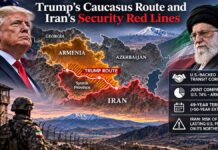








This assessment examines whether the fighting around Mokha, Taiz and Lahj has materially increased pressure on Aden and changed the risk to shipping through Bab al-Mandab, covering the escalation from 3 September to 19 November 2026 and setting an analytical horizon to November 2031.
Executive Summary / BLUF
- Protecting Aden is now an explicit priority for Yemen’s internationally recognised government. On 15 November, its armed forces publicly acknowledged a redeployment on the southern and southwestern fronts and identified protection of the temporary capital and relief of Taiz as priorities. The record supports heightened pressure on Aden. The extent of durable territorial change and the immediate threat to the city remain uncertain. القوات المسلحة تثمن دور القوات الجنوبية في حماية العاصمة المؤقتة عدن والمحافظات وفك الحصار عن تعز — Yemen News Agency (Saba) — Nov 2026 sabanew.net
- Bab al-Mandab remained in commercial use under substantial threat. The Joint Maritime Information Center recorded approximately 22 commercial transits per day on 12–14 November, versus approximately 25 on 5–11 November, and reported no confirmed attacks or disruptions in the southern Red Sea and strait during its latest verified reporting window, ending 15 November. That window provides limited evidence about maritime effects after the redeployment. JMIC Advisory Note, Update 114 — Joint Maritime Information Center — Nov 2026 JMIC_Advisory_Update_114_FINAL
- Civilian access is already impaired. UNICEF reported on 18 November that more than 330,000 people had been displaced since the escalation began, including an estimated 174,000 children. More than 800,000 people in Taiz were reportedly cut off from humanitarian assistance as of late October. The immediate decisions concern aid access and continuity at Aden’s civilian gateways. Changes to shipping posture require incident and traffic data from after the redeployment. At least 64 children killed and 64 injured in Yemen as intensified hostilities approach three-month mark — UNICEF — Nov 2026 unicef.org
Yemen’s coastal war has made Aden the test of Red Sea security
On 15 November 2026, Yemen’s government acknowledged redeploying forces on the southern and southwestern fronts and made protecting Aden an explicit priority. A day later, Maersk announced that three services operated with Hapag-Lloyd would return to Suez on staggered schedules. The two decisions expose a gap in the international response. Shipping companies can restore selected routes while Yemen’s government struggles to sustain civilian access and public services. The test is whether outside partners use the commercial opening to keep essential Yemeni institutions functioning and secure verifiable commitments from the parties to the conflict. Otherwise, maritime protection can lower the cost of some voyages while the fiscal and humanitarian liabilities accumulate ashore.
Aden has to prove it can govern under pressure
The capture of Mokha, reported by UN Special Envoy Hans Grundberg on 10 September 2026, changed the geography of the war. By 9 October, Grundberg was reporting a government counteroffensive and attributing claims of recovered areas around Bab al-Mandab to the government. In its assessment covering 8–12 November, the Joint Maritime Information Center found no independent confirmation of stable or complete control of the strait’s approaches or key islands. The sounder test of Aden’s position is what its institutions can still do. Presidential Decree No. 76 appointed a new head of the Yemen Gulf of Aden Ports Corporation on 2 November, and the corporation documented a completed handover on 5 November. That establishes administrative continuity at the port authority. Its value to households and businesses depends on whether cargo can move onward and essential services keep running.
The numbers show where reopening stops
The Joint Maritime Information Center counted approximately 22 commercial transits a day at Bab al-Mandab on 12–14 November 2026, compared with approximately 25 a day on 5–11 November. Its 15 November report still assessed the threat as substantial. In Taiz, more than 800,000 people were reportedly cut off from humanitarian assistance as of 23 October, and UNICEF reported in November that the city’s water production had fallen by nearly half. As of 11 November, water, sanitation and hygiene, humanitarian cash, and education accounted for US$7,171,980 of UNICEF’s US$8,557,099 published funding gap for the escalation response, or 83.8 per cent. The funding figures expose the limits of a maritime recovery. More sailings through the strait offer little immediate relief to a city whose main supply connection is cut and whose water system and hospitals depend on regular deliveries of fuel, medicines and other essential supplies.
The Cape diversion buys flexibility at a price
The 16 November Gemini advisory identifies where commercial improvement can first be measured. Maersk and Hapag-Lloyd published initial load-port dates of 4 December 2026, 20 December 2026 and 14 January 2027 for the three trans-Suez service changes. If those rotations hold, the benefit comes from releasing ship-days and shortening the time cargo spends in transit. The US Energy Information Administration has documented that voyages diverted around the Cape of Good Hope can take two to three weeks longer, depending on origin and destination. Yet the availability of war-risk cover can determine whether a direct voyage is feasible before its price is compared with the cost of diversion. Gard’s August 2026 circular illustrates the constraint. It provided for reinstatement of specified cover subject to an exclusion in defined waters. A return to Suez can therefore be commercially sound for one service while another carrier continues to pay for the longer route to preserve a reliable schedule.
Enforcement at sea and fiscal support ashore have different limits
The United Nations Convention on the Law of the Sea protects transit passage, while Security Council Resolution 2216 sets out a targeted arms embargo and conditions for inspecting Yemen-bound cargo in a member state’s territory. Resolution 2837, adopted on 12 November 2026, called for vigilance over specified dual-use items and expressed an intention to decide on further steps by 11 January 2027. Its provisions for qualifying UN and humanitarian uses matter because applying restrictions too broadly can delay legitimate supplies to a country already struggling to distribute them. The fiscal limit is equally concrete. Saudi Arabia reported providing more than SAR 224 million for Yemen’s budget and salaries on 4 October, while the IMF approved an 18-month, non-financing Staff-Monitored Program on 7 October. Saudi funding can support payments, and IMF monitoring can help improve revenue collection and expenditure decisions. Their combined value depends on whether payroll and service records show where the money went and what it kept running.
Europe’s commitments carry different obligations
Italy’s 2026 framework provides for up to 753 personnel across four missions, including EUNAVFOR ASPIDES. Germany authorised up to 350 personnel for ASPIDES through October 2027 and estimated additional expenditure of approximately €18.9 million for the mandate period. France’s defence treaty with Djibouti has a 20-year term and sets an annual contribution of €85 million for the presence of French forces under the bilateral agreement. The United Kingdom agreed on 22 September 2026 to provide an RAF Voyager aircraft in support of Saudi defensive activity and separately announced £10 million in humanitarian assistance through the UN emergency appeal. The European Commission’s October announcement brought EU humanitarian allocations for Yemen in 2026 to €110 million. These figures measure different commitments. A personnel ceiling permits a contribution, a basing agreement helps sustain a regional presence, and a humanitarian allocation finances delivery where access permits. The common diplomatic position is easier to establish than the combined effect, which depends on actual rotations and assistance delivered. NATO’s Operation Sea Guardian has its own Mediterranean remit.
Over the next 12–24 months, the bill falls where continuity fails
Omani Foreign Minister Badr bin Hamad Al Busaidi met UN Special Envoy Hans Grundberg on 8 November 2026 to discuss de-escalation and a return to the political process. Oman’s May 2025 arrangement between Washington and Sana’a showed what a limited agreement could secure: a reciprocal undertaking by identified parties to refrain from targeting one another. A wider agreement would have to produce verifiable changes in attacks, civilian access and service delivery. Over the next 12–24 months, the cost of leaving those outcomes disconnected will fall first on Yemeni households, local service providers and the government in Aden. Saudi Arabia will face pressure to provide further budget support, European contributors will have to sustain protection commitments, and carriers will continue to price in diversion and insurance uncertainty where schedules remain fragile. November’s decisions prioritised Aden’s defence and set dates for selected services to return to Suez. Their longer-term value will be measured in salaries actually paid, supplies delivered to Taiz and commercial rotations completed under sustainable cover.
Navigational Index
| Thematic pillar | Chapters |
|---|---|
| Yemen’s coastal war and the pressure on Aden | Chapter 1. From Mokha to Aden — the September–November escalation and the limits of territorial verification. Chapter 2. Governing under pressure — Aden’s institutions, civilian access and the isolation of Taiz. |
| Bab al-Mandab, maritime law and economic exposure | Chapter 3. Transit passage, the UN sanctions regime and the limits of maritime mandates. Chapter 4. Shipping, energy flows, insurance and the cost of diversion. |
| International response and the five-year outlook | Chapter 5. Saudi Arabia, regional diplomacy and the separate roles of Italy, France, Germany, the United Kingdom and the European Union. Chapter 6. Scenarios to November 2031, decision thresholds, response options and final net assessment. |
Master Abstract
The coastal fighting has changed Aden’s priorities
The strongest evidence of a strategic shift is the Yemeni government’s own reprioritisation. On 9 October, UN Special Envoy Hans Grundberg told the Security Council that Ansar Allah, also known as the Houthis, had advanced earlier around Mokha and along the coast near Bab al-Mandab, that intense fighting had continued west and south of Taiz and into Lahj, and that the government had reported retaking areas around the strait in a counteroffensive. The Envoy’s attribution matters because the government’s report establishes its position at that date, while the maritime reporting from 8–12 November records competing control claims and finds no independent confirmation of stable or complete control over the strait’s approaches or key islands during that window. On 15 November, Yemen’s government military spokesperson acknowledged the redeployment and publicly linked it to the protection of Aden and efforts to relieve Taiz. The sequence supports a judgment that pressure on the government’s temporary capital has risen. A redeployment made under pressure can also be an orderly decision to concentrate forces. The public record leaves open how durable the changes are and whether they signal a sustained move against Aden itself. The situation in the Middle East — Security Council, 10236th meeting — United Nations — Oct 2026 · JMIC Advisory Note, Update 113 — Joint Maritime Information Center — Nov 2026 · القوات المسلحة تثمن دور القوات الجنوبية في حماية العاصمة المؤقتة عدن والمحافظات وفك الحصار عن تعز — Yemen News Agency (Saba) — Nov 2026 UN Transcripts
The effects on civilians and shipping are already measurable on different timescales
UNICEF recorded a temporary interruption at Aden International Airport on 28 October and a resumption of air access on 29 October. By late October, closure of the main road from Aden to Taiz and insecurity on alternative routes had reportedly cut more than 800,000 people off from humanitarian assistance. In Taiz, water production had fallen by nearly half, and food and fuel prices had more than doubled, according to UNICEF’s 18 November update. These observations show how a short interruption at one gateway can compound a prolonged access problem elsewhere. Commercial shipping, meanwhile, continued through Bab al-Mandab in the latest verified JMIC window despite its substantial threat rating. Those observations can coexist because the viability of a commercial passage and the continuity of civilian services ashore depend on different infrastructure, operators and authorities. Sustained disruption at an Aden gateway would directly affect civilian movements and relief delivery. A sustained decline in commercial passage or repeated confirmed incidents would raise a separate question about diversion, insurance and European trade exposure. UNICEF Yemen Humanitarian Situation Update #2: Escalation of Conflict in Yemen — UNICEF — Nov 2026 · At least 64 children killed and 64 injured in Yemen as intensified hostilities approach three-month mark — UNICEF — Nov 2026 · JMIC Advisory Note, Update 114 — Joint Maritime Information Center — Nov 2026 unicef.org
Maritime law and European commitments set distinct limits
Articles 38 and 44 of the United Nations Convention on the Law of the Sea establish the right of transit passage in straits to which those provisions apply and prohibit its suspension. The Security Council’s 15 October presidential statement reaffirmed navigational rights and freedoms and condemned continuing Houthi attacks and threats against commercial shipping. On 12 November, Resolution 2837 renewed the time-limited Yemen asset-freeze and travel-ban measures through 14 November 2027, reaffirmed the existing targeted arms-embargo provisions and extended the Panel of Experts’ mandate through 15 December 2027. For the EU, the operative maritime commitment is EUNAVFOR ASPIDES, a defensive operation whose mandate runs through 28 February 2027. These instruments address transit rights, sanctions enforcement and protection at sea. The UN-led political process and humanitarian access negotiations remain the channels for addressing the conflict and civilian access ashore. United Nations Convention on the Law of the Sea — United Nations — Dec 1982 · Presidential Statement S/PRST/2026/4 — UN Security Council — Oct 2026 · Resolution 2837 (2026) — UN Security Council — Nov 2026 · Council Decision (CFSP) 2026/439 — Council of the European Union — Feb 2026 un.org
| European actor | Verified position or contribution | Decision implication |
|---|---|---|
| Italy | EUNAVFOR ASPIDES identified the Italian frigate Spartaco Schergat as a mission asset during the EU Political and Security Committee’s 3 November visit in Djibouti. EUNAVFOR ASPIDES Welcomes EU Political and Security Committee Delegation on Board ITS Spartaco SCHERGAT, one of the ASPIDES naval assets — European External Action Service — Nov 2026 EEAS | Italy’s declared contribution has operational substance. Continued coverage depends on subsequent asset availability and rotations. |
| France | France told the Security Council that it would continue participating in ASPIDES in a strictly defensive posture and supported resuming an inclusive UN-led political process. The situation in the Middle East — Security Council, 10236th meeting — United Nations — Oct 2026 UN Transcripts | France has stated its willingness to sustain defensive protection at sea alongside diplomatic engagement. |
| Germany | On 15 October, the Bundestag approved continued participation in ASPIDES with an authorised ceiling of 350 personnel. The vote was 421 in favour, 66 against and 90 abstentions. Bundeswehreinsatz im Roten Meer um ein Jahr verlängert — Deutscher Bundestag — Oct 2026 Deutscher Bundestag | The authorisation permits continued participation. Deployment levels depend on separate force commitments. |
| United Kingdom | The UK publicly condemned the escalation and threats to navigation in September. UK Maritime Trade Operations distributed the JMIC’s 15 November advisory. FCDO statement on the situation in Yemen: 10 September — Foreign, Commonwealth & Development Office — Sep 2026 · JMIC Advisory Note, Update 114 — Joint Maritime Information Center — Nov 2026 GOV.UK | London’s diplomatic position and maritime reporting provide two channels for coordination with European partners. |
| European Union | The Council extended ASPIDES through 28 February 2027 with a financial reference amount of €14,917,600 for common costs from 1 March 2026. A March amendment added information-sharing on suspicious activity affecting critical submarine infrastructure, within available means and capabilities. Council Decision (CFSP) 2026/439 — Council of the European Union — Feb 2026 · Maritime security: Council updates mandates of EU naval operations ASPIDES and ATALANTA — Council of the European Union — Mar 2026 EUR-Lex | Common funding and the updated mandate support coordination. Protection capacity still depends on assets made available by participating states. |
Key Evidence Table
| Indicator | Value/status | Reference date | Definition/scope | Issuer | Exact source |
|---|---|---|---|---|---|
| Southern and southwestern redeployment | Acknowledged by the government military spokesperson; protection of Aden and relief of Taiz cited | 15 Nov 2026 | Official government position on the movement and its purpose | Yemen’s armed forces, via Saba | القوات المسلحة تثمن دور القوات الجنوبية في حماية العاصمة المؤقتة عدن والمحافظات وفك الحصار عن تعز — Yemen News Agency (Saba) — Nov 2026 sabanew.net |
| Commercial transits through Bab al-Mandab | Approximately 22 per day, compared with approximately 25 per day in the preceding reported period | 12–14 Nov vs 5–11 Nov 2026 | Commercial transit counts from S&P tracking, as reported by JMIC; periods differ in length | Joint Maritime Information Center | JMIC Advisory Note, Update 114, §2F — Joint Maritime Information Center — Nov 2026 JMIC_Advisory_Update_114_FINAL |
| Threat to southern Red Sea and strait traffic | Substantial, meaning JMIC assessed an attack as a strong possibility | 15 Nov 2026 | Regional threat rating; distinct from the incident count | Joint Maritime Information Center | JMIC Advisory Note, Update 114, §§3 and 5F — Joint Maritime Information Center — Nov 2026 JMIC_Advisory_Update_114_FINAL |
| People displaced by the renewed escalation | More than 330,000, including an estimated 174,000 children | Tracking period 3 Sep–10 Nov 2026; public update 18 Nov | Escalation-related displacement in Yemen, based on IOM displacement tracking | UNICEF, citing IOM | UNICEF Yemen Humanitarian Situation Update #2: Escalation of Conflict in Yemen — UNICEF — Nov 2026 unicef.org |
| Child casualties since escalation | At least 64 killed and 64 injured | Since 3 Sep; reported 18 Nov 2026 | Reported child casualties in Yemen | UNICEF | At least 64 children killed and 64 injured in Yemen as intensified hostilities approach three-month mark — UNICEF — Nov 2026 unicef.org |
| Oil flows through Bab al-Mandab | 6.3 million barrels per day | Q3 2026; Nov 2026 release | Estimated average for crude oil, condensate and petroleum products, using tanker tracking; LNG reported separately | U.S. Energy Information Administration | Global Energy Security Data, Table 6 — U.S. Energy Information Administration — Nov 2026 U.S. Energy Information Administration (EIA) |
Visualisation
The quarterly oil series gives a baseline for the scale and variability of exposure before November. The Q3 2026 average was approximately 22.2% below Q2, calculated from the EIA’s rounded estimates of 6.3 and 8.1 million barrels per day. The series ends in September and therefore cannot establish a November effect. Global Energy Security Data, Table 6 — U.S. Energy Information Administration — Nov 2026 U.S. Energy Information Administration (EIA)
Oil flows through Bab al-Mandab
Quarterly average in million barrels per day. Bar scale runs from 0 to 10.
Estimates from tanker tracking, rounded to one decimal place. Coverage ends September 2026. Global Energy Security Data, Table 6 — U.S. Energy Information Administration — Nov 2026
The chart’s values, scale and colour contrast were checked. Browser rendering could not be verified.
Competing Explanations or Pathways
A defensive concentration under pressure is the best-supported explanation of the government’s redeployment. The armed forces explicitly linked it to protecting Aden and addressing the situation around Taiz. That explanation accommodates both battlefield pressure and a deliberate government decision about where to concentrate resources. A widening threat to Aden’s civilian gateways is a distinct pathway that can develop alongside the redeployment. UNICEF’s record of a temporary airport interruption shows that civilian access can be impaired before there is any change in who governs the city. Recurring interruptions and reduced relief throughput would provide stronger evidence that this pathway is worsening. The record supports these two overlapping interpretations and leaves the parties’ longer-term objectives unresolved. القوات المسلحة تثمن دور القوات الجنوبية في حماية العاصمة المؤقتة عدن والمحافظات وفك الحصار عن تعز — Yemen News Agency (Saba) — Nov 2026 · UNICEF Yemen Humanitarian Situation Update #2: Escalation of Conflict in Yemen — UNICEF — Nov 2026 sabanew.net
Principal Gaps and Watch Indicators
| Decision question | Record or observation to watch | Threshold that would change the assessment |
|---|---|---|
| Has pressure on Aden become a sustained threat to essential services? | Formal notices from Aden airport and port operators, corroborated by UN humanitarian logistics reporting and evidence of interrupted services. | Repeated disruptions that impair commercial arrivals or humanitarian deliveries would shift the assessment from elevated exposure to sustained interruption. |
| Can humanitarian access to Taiz recover? | OCHA and UNICEF access updates, aid actually delivered, and restoration of water and hospital services. | Sustained deliveries and measurable service recovery would strengthen the case for improved access. An announced reopening carries limited weight until deliveries resume. |
| Has the maritime threat materially changed since 15 November? | Subsequent JMIC and UKMTO reporting, comparable transit counts and authenticated incident reports specific to Bab al-Mandab and the southern Red Sea. | Repeated confirmed incidents or a sustained fall in comparable transit counts would warrant reassessing commercial exposure. A single short reporting window leaves the direction uncertain. |
| Do reported coastal changes amount to durable control? | Subsequent UN Special Envoy briefings and independently corroborated evidence of continuing civil administration or changes in control of populated coastal areas. | Corroboration across successive reporting dates would raise confidence in durable territorial change. Competing statements from the parties establish their positions and leave control unresolved. |
Yemen’s Coastal Offensive Puts Aden Under Pressure
Assessment dated 19 November 2026
Yemen’s government made protecting Aden an explicit priority after its 15 November redeployment. The extent of durable territorial change remained uncertain. Commercial traffic continued through Bab al-Mandab under a substantial threat rating in the latest verified reporting window.
| Indicator | Value or status | Period and source |
|---|---|---|
| Commercial transits | Approximately 25/day and 22/day, respectively | 5–11 and 12–14 November 2026 · JMIC Update 114 |
| Oil flows | 4.5, 4.7, 5.4, 5.6, 8.1, 6.3 million barrels/day | Q2 2025 through Q3 2026, chronological order · EIA, Table 6 |
| Displacement | More than 330,000 people, including an estimated 174,000 children | Since 3 September · UNICEF, 18 November 2026 |
| Taiz humanitarian access | More than 800,000 people reportedly cut off from assistance | As of late October · UNICEF, 18 November 2026 |
| EUNAVFOR ASPIDES | Mandate through 28 February 2027 | Council Decision (CFSP) 2026/439 |
Pillar I — Yemen’s Coastal War and the Pressure on Aden
Chapter 1 — From Mokha to Aden: The September–November Escalation and the Limits of Territorial Verification
Assessment as of 19 November 2026. The coastal campaign changed the Yemeni government’s priorities before it produced a territorial outcome that could be independently verified. The September record establishes a Houthi advance and control of Mokha at the time of the UN briefing. The October record establishes a government counteroffensive and preserves the government’s claim that it retook areas around Bab al-Mandab. By 15 November, the government had publicly acknowledged a redeployment on the southern and southwestern fronts and identified protection of Aden as a priority. Taken together, these records demonstrate a change in the course of the war and greater pressure on the temporary capital. They leave a consequential question open: whether the November changes produced a durable shift in territorial control or a more fluid front that both sides retained the ability to contest. For officials assessing the risk to Aden, continued government operations, civilian access and service delivery provide firmer evidence of the city’s condition than claims about the extent of the surrounding advance. Security Council, 10219th meeting — United Nations — Sep 2026 · Security Council, 10236th meeting — United Nations — Oct 2026 · Southern forces, protection of Aden and relief of Taiz — Yemen News Agency, Saba — Nov 2026 UN Transcripts
September changed the geography of the war
On 10 September, UN Special Envoy Hans Grundberg told the Security Council that Ansar Allah, also known as the Houthis, had gained control of Mokha. He identified the port city as roughly 75 kilometres from Bab al-Mandab and stressed that fighting remained active. In the same briefing, he placed Mokha within a wider escalation that had begun with extensive attacks in Taiz and Hudaydah and subsequently spread to other governorates. The distinction between the named city and the wider area matters. Grundberg’s briefing gives the September record a defensible point of reference in Mokha, while his account of the expanding fighting shows why the city’s capture alone cannot explain the subsequent pressure on Aden. The escalation affected an area where the western coast, Taiz and Lahj were already connected by civilian movement and economic exchange. Evidence of disruption in those areas can therefore establish the geographic spread of the crisis even where military control remains disputed. Security Council, 10219th meeting — United Nations — Sep 2026 UN Transcripts
The International Organization for Migration’s 13 September release documents that spread in terms of household movement. IOM reported 82,164 people displaced since the beginning of September, distinct from the wider total of 85,818 in the same release. It described Taiz as the hardest-hit governorate, with 9,280 households displaced, and reported 3,225 households displaced in Lahj and 1,374 in Hudaydah. It described Aden in a different capacity, as a place hosting 424 displaced households. The direction of movement is the analytical point. Displacement from communities in the conflict-affected governorates and reception in Aden show that the capital was already absorbing demands generated by the renewed fighting in September. The figures describe displacement and reception. Their value for territorial analysis is to identify areas where civilian conditions had changed by a given date. The numbers alone cannot establish who governed the communities people left or how long the fighting around them continued. IOM Yemen: Yemen Displacement Tops 85,000 as Conflict Continues, 2,000 Flee to Djibouti — IOM and United Nations in Yemen — Sep 2026 United Nations in Yemen
The October counteroffensive makes a single narrative of continuous advance unreliable
On 9 October, Grundberg described the return to full-scale war, identified intense fighting west and south of Taiz and into Lahj, and told the Council that the government had launched a large-scale counteroffensive earlier that week. His account attributed the reported recapture of areas around Bab al-Mandab to the government. That wording is central to the chronology. September establishes control of Mokha at a particular point, while October establishes a counteroffensive and a claim of partial recovery. Neither record establishes a continuous line of control between those dates. At the diplomatic level, Grundberg reported engaging both Yemeni parties and holding consultations in Riyadh, Muscat, Cairo and Washington. He also warned that changing battlefield expectations were affecting how the parties assessed the timing and terms of political engagement. A shift in control could therefore matter politically before it proved durable. The incentive to present a temporary gain as a lasting change was especially strong where the claim might influence negotiations or decisions by outside governments. Security Council, 10236th meeting — United Nations — Oct 2026 UN Transcripts
The November redeployment establishes a priority for Aden and leaves the territorial outcome open
The official November record is strongest on the decision taken by the government. Its military spokesperson acknowledged the redistribution of units on the southern and southwestern fronts and presented the move as a response to changing conditions, with protection of Aden and relief of Taiz among the stated priorities. The Joint Maritime Information Center’s preceding update recorded competing claims by government-linked and Houthi forces and found no independent confirmation of stable or complete control over the approaches to the strait or its key islands during 8–12 November. Its subsequent update also said that specific claims of strikes on staging areas in Lahj and depots in Aden remained unconfirmed in open sources during its reporting window. An organised redeployment can occur under severe battlefield pressure. Evidence that it occurred does not resolve how much freedom the government had in deciding when and where to move, or whether the opposing side retained the areas it subsequently claimed. A durable territorial judgment would require dated reporting on specific populated areas, followed by a second observation establishing continued administration or access after the initial movement. Government military spokesperson’s statement on the southern and southwestern fronts — Yemen News Agency, Saba — Nov 2026 · JMIC Advisory Note, Update 113 — Joint Maritime Information Center — Nov 2026 · JMIC Advisory Note, Update 114 — Joint Maritime Information Center — Nov 2026 sabanew.net
Territorial evidence, September–November 2026
The evidence changes in character across the three months. A dated observation of control, a counteroffensive claim and an acknowledged redeployment support different conclusions.
| Date | What the record supports | Limit of the evidence |
|---|---|---|
| 10 Sep | The UN Special Envoy reported Ansar Allah control of Mokha. | The observation applied at the time of the briefing. Fighting continued. |
| 9 Oct | The Envoy recorded a government counteroffensive and attributed reported recoveries near the strait to the government. | The account established the counteroffensive and the government claim. |
| 8–12 Nov | JMIC recorded competing claims concerning the coastal approaches. | JMIC found no independent confirmation of stable or complete control. |
| 15 Nov | Yemen’s government acknowledged a southern and southwestern redeployment and prioritised protection of Aden. | The decision established a government priority. Its full territorial consequences remained unresolved. |
- Identify the observationSpecify the location, date and reporting institution.
- Check independent confirmationDistinguish an observation from claims made by the parties.
- Verify continuityLook for later evidence of civil administration and sustained access.
UN Security Council, 10 September · UN Security Council, 9 October · JMIC Update 113 · Saba, 15 November
Key judgments, what would change the assessment and open official record
The September–November sequence supports three judgments with different levels of evidence. The UN’s dated observation establishes Mokha as the clearest territorial change in the September record. The October counteroffensive and competing November accounts establish a fluid contest over the wider coastal area. The government’s November redeployment establishes that Aden’s protection had become a higher priority. What would change the assessment is independent evidence that the same authority continued to administer named coastal communities over successive reporting periods, or that conflict-related interruptions repeatedly prevented Aden’s civilian authorities from functioning. The open official record lacks a sufficiently detailed, independently verified post-redeployment account of territorial control. The decisive collection requirement is a dated follow-up from the UN Special Envoy or another competent independent body, supported by civilian access and administrative observations for the same areas. Security Council, 10219th meeting — United Nations — Sep 2026 · JMIC Advisory Note, Update 113 — Joint Maritime Information Center — Nov 2026 UN Transcripts
Chapter 2 — Governing Under Pressure: Aden’s Institutions, Civilian Access and the Isolation of Taiz
Assessment as of 19 November 2026. Aden’s public institutions continued to make and implement identifiable administrative decisions during the escalation, while the civilian supply system linking Aden and Taiz suffered verifiable failures. An official appointment followed by a completed handover offers stronger evidence of institutional continuity than an appointment alone. By contrast, continuity of civilian services depends on whether airport movements, cargo release, onward deliveries, and the supply of water and medical inputs can be sustained across repeated reporting periods. This distinction explains how Aden’s government and port administration could keep functioning while Taiz experienced severe shortages and aid agencies struggled to reach households. It also explains why a reopening announcement has limited value until operators and humanitarian agencies can verify what moved, where it arrived and whether the delivery restored a service. Completion of Handover Procedures at Yemen Gulf of Aden Ports Corporation — Port of Aden — Nov 2026 · Yemen Humanitarian Situation Update #2 — UNICEF — Nov 2026 portofaden.net
Aden retained decision-making capacity under direct pressure
Yemen’s Permanent Representative transmitted a letter to the Security Council on 16 October identifying Ma‘ashiq Presidential Palace as the seat of the presidency and government in the temporary capital. The letter alleged a Houthi attack there on 15 October and reported five security personnel killed and 16 injured. Those figures remain the Yemeni government’s account. The diplomatic filing establishes the formal allegation and the government’s identification of the site’s institutional role. Subsequent records document concrete administrative activity. Presidential Decree No. 76, issued 2 November, appointed Saber Abdo Mohammed Al-Sunaidi chairman and executive chairman of the Yemen Gulf of Aden Ports Corporation. The corporation recorded completion of the handover on 5 November. On 15 November, Prime Minister Shaya Mohsen Al-Zindani issued Decision No. 68 establishing a higher supervisory committee for implementation of Yemen’s IMF Staff-Monitored Program. The state news agency also recorded a committee meeting with the central bank governor and finance minister and a direction to develop a timetable with assigned responsibilities and performance indicators. The decree, handover and meeting show that Aden retained the capacity to exercise administrative authority across several institutions. Measuring the operational effect requires separate records on port performance, fiscal execution and provision of essential services. Letter S/2026/823 — Permanent Representative of Yemen to the United Nations — Oct 2026 · Presidential Decree No. (76) of 2026 — Port of Aden — Nov 2026 · Completion of Handover Procedures — Port of Aden — Nov 2026 · Prime Minister’s decision establishing the supervisory committee — Yemen News Agency, Saba — Nov 2026 digitallibrary.un.org
Taiz’s isolation turned transport disruption into service failure
The loss of dependable access to Taiz was an institutional problem before the 2026 offensive. Under the UN-mediated April 2022 truce, the parties agreed to meet on road openings in Taiz and elsewhere, and the UN subsequently convened direct talks on those openings. By November 2026, UNICEF was describing a crisis in which closure of the main southern road from Aden, insecurity on alternatives and restrictions on supplies impeded both humanitarian and commercial movements. Its situation update reported that, of the more than 800,000 people reportedly cut off from humanitarian assistance as of 23 October, approximately 600,000 were particularly dependent on that support for basic needs. The shortages extended beyond food. Fuel and electricity shortages affected the functioning of services, while shortages of medicines and medical oxygen threatened emergency, maternal and newborn care. UNICEF reported that water production had fallen by nearly half, while food and fuel prices had more than doubled. These measures describe different consequences of the same access shock. Households can face higher prices even when some supplies still enter, while hospitals and water systems can lose capacity when particular inputs arrive irregularly or in insufficient quantities. Multi-Year Appeal 2022 Mid-Year Report, p. 11 — UN Department of Political and Peacebuilding Affairs — 2022 · Yemen Humanitarian Situation Update #2 — UNICEF — Nov 2026 digitallibrary.un.org
UNICEF’s account of Aden airport illustrates why access has to be measured gateway by gateway. It recorded an interruption on 28 October after a reported strike and a resumption of air access on 29 October. The reopening established recovery of that gateway after a discrete shock. It left the overland supply problem facing Taiz unresolved. Inside Aden, the same update documented a different kind of response at the Al Firdous displacement site, where daily provision of safe water by truck rose from 32,000 to 150,000 litres and 60 of 100 planned latrines were complete. Across the wider response, the Rapid Response Mechanism assisted 25,480 households, representing 178,416 people, from the start of the September escalation through 8 November. Those figures measure distinct activities at different scales. Al Firdous shows that an intervention could be expanded at one receiving site, and the wider response figure documents the reach of a specific assistance mechanism. The conditions in Taiz establish why those successes cannot serve as a proxy for restored access throughout the affected area. Yemen Humanitarian Situation Update #2, sections on humanitarian access and response — UNICEF — Nov 2026 unicef.org
Civilian access between Aden and Taiz
Air access in Aden
UNICEF recorded an interruption on 28 October and resumption on 29 October.
Overland access to Taiz
The main southern supply connection was closed. Insecurity limited alternatives.
Each link has to function for supplies to reach Taiz.
Shortages in Taiz
Interruptions to fuel, food, medicines, medical oxygen and water-related supplies put basic services under pressure.
Evidence of recovery
Track completed deliveries, output of safe water and continuity of hospital services across successive reporting periods.
Yemen Humanitarian Situation Update #2 — UNICEF, November 2026
Fiscal capacity and humanitarian funding constrain different parts of the response
The IMF’s 7 October decision approved an 18-month, non-financing Staff-Monitored Program. The Fund projected a 1.5% contraction in real GDP in 2026, a fifth consecutive year of contraction, and a current-account deficit of around 3.3% of GDP, with projected international reserve coverage below adequate levels. The programme prioritised domestic revenue mobilisation, essential expenditure and public financial management. The World Bank’s May assessment had already linked reduced external grants to lower revenues and noted the resulting pressure on salaries, subsidies and essential expenditure. Its account also identified Yemen’s dependence on imported essentials as a source of exposure to global prices and shipping costs. The November implementation committee gives these reforms an identified executive mechanism. The difference between administrative action and fiscal capacity remains decisive in Aden. The ability to set priorities and publish a timetable can strengthen execution, while any increase in the funds actually available for essential services depends on collections, expenditure decisions and external support. IMF Management Approves a Staff-Monitored Program with Yemen — International Monetary Fund — Oct 2026 · Economic Strain Deepens in Yemen as Regional Risks Intensify — World Bank — May 2026 · Prime Minister’s decision establishing the supervisory committee — Yemen News Agency, Saba — Nov 2026 imf.org
The humanitarian appeal shows a different constraint. UNICEF’s 11 November funding table gives requirements of US$20,928,595, available funding of US$12,460,286 and a published gap of US$8,557,099. Water, sanitation and hygiene, humanitarian cash, and education together accounted for US$7,171,980, or 83.8% of that gap, calculated from the published sector figures. The sector breakdown matters because the nutrition line records funding above its requirement and shows no sector shortfall, while other lines retain their own gaps. This is why simply subtracting total available funding from total requirements would understate the published unmet sector needs. The reported nutrition excess accounts for all but one dollar of the difference. The remaining dollar is also visible in the published health row, whose reported gap is one dollar above the subtraction of its requirement and available funding. The figures below preserve UNICEF’s published values. They describe programmable amounts excluding cost recovery and should be read as a funding picture for UNICEF’s escalation response, with feasibility still dependent on physical access and delivery capacity. Yemen Humanitarian Situation Update #2, funding table — UNICEF — Nov 2026 unicef.org
UNICEF’s Yemen escalation response funding
As of 11 November 2026. Amounts in US dollars. Programmable funds exclude cost recovery.
| Sector | Required | Available | Published gap | Gap share |
|---|---|---|---|---|
| Water, sanitation and hygiene | 6,028,700 | 2,530,000 | 3,498,700 | 58% |
| Health | 3,718,000 | 3,373,404 | 344,597 | 9% |
| Nutrition | 2,166,615 | 2,255,404 | None shown | 0% |
| Child protection | 1,732,000 | 1,087,312 | 644,688 | 37% |
| Education | 2,593,280 | 820,000 | 1,773,280 | 68% |
| Community engagement and risk communication | 290,000 | 100,000 | 190,000 | 66% |
| Humanitarian cash transfers | 1,900,000 | None shown | 1,900,000 | 100% |
| Rapid Response Mechanism | 2,500,000 | 2,294,166 | 205,834 | 8% |
| Published total | 20,928,595 | 12,460,286 | 8,557,099 | 41% |
The gap share is the published unfunded percentage for the corresponding row. Figures follow UNICEF’s sector accounting.
Yemen Humanitarian Situation Update #2 — UNICEF, November 2026
Key judgments, what would change the assessment and open official record
Aden’s administrative continuity is demonstrable through the port leadership handover and the establishment of a committee with government, finance ministry and central bank participation. Its service continuity is more uneven. The temporary airport interruption, the persistent access constraints facing Taiz and the sharply different funding positions across response sectors each call for a different measure of recovery. For Aden, the decisive records are regular port and civil-aviation operating reports and evidence of actual humanitarian arrivals. For Taiz, they are delivery confirmations from humanitarian agencies and service records from water and health authorities showing that critical inputs reached the city and kept facilities functioning. For fiscal capacity, the relevant evidence is published revenue and expenditure execution alongside the IMF programme’s implementation reviews. The assessment would improve if those records showed sustained delivery and service restoration through several reporting periods. It would deteriorate if institutions continued to issue decisions while arrivals, onward deliveries or essential service output repeatedly failed. Completion of Handover Procedures — Port of Aden — Nov 2026 · Yemen Humanitarian Situation Update #2 — UNICEF — Nov 2026 · IMF Management Approves a Staff-Monitored Program with Yemen — International Monetary Fund — Oct 2026 portofaden.net
Pillar II — Bab al-Mandab, Maritime Law and Economic Exposure
Assessment as of 19 November 2026
Chapter 3 — Transit Passage, the UN Sanctions Regime and the Limits of Maritime Mandates
The right of transit passage through Bab al-Mandab, authority to inspect Yemen-bound cargo, and authority to protect a vessel under attack arise from different legal instruments. A coastal military advance can change the physical risk to a ship without changing its navigational rights. An arms embargo can require action against prohibited transfers without giving every naval force a general power to board merchant vessels in transit. And a defensive maritime mission can protect ships within its mandate while separate legal authority remains necessary for other uses of force. The distinction has immediate consequences. A government evaluating an inspection, a naval commander assessing a request for protection, and a carrier deciding whether to accept a voyage are each answering a different question. Conflating those questions makes it easy to overstate both what the Security Council has authorised and what a naval presence can deliver. United Nations Convention on the Law of the Sea, Part III — United Nations — Dec 1982 · Resolution 2216 (2015), paras. 14–17 — UN Security Council — Apr 2015 · Council Decision (CFSP) 2024/583, Article 1 — Council of the European Union — Feb 2024 un.org
Transit passage preserves navigation rights alongside coastal jurisdiction
Articles 34 and 37–39 of the United Nations Convention on the Law of the Sea, or UNCLOS, establish the framework for straits used for international navigation. Where transit passage applies, ships and aircraft are entitled to continuous and expeditious passage, subject to the duties laid down in the convention. Bordering states retain sovereignty or jurisdiction over the waters, airspace, seabed and subsoil, with its exercise subject to Part III and other rules of international law. Articles 41 and 42 permit measures in defined areas, including navigational safety and traffic regulation, while Article 42 bars discrimination in form or in fact and measures that have the practical effect of denying, hampering or impairing transit passage. Article 44 requires bordering states to publicise known dangers to navigation or overflight and bars suspension of transit passage. At Bab al-Mandab, the Security Council expressly affirmed navigational rights for merchant and commercial vessels in Resolution 2722. A risk warning, a shipowner’s decision to divert, and a coercive attempt to restrict passage can all affect how many ships transit, but they have different legal significance. United Nations Convention on the Law of the Sea, arts. 34 and 37–44 — United Nations — Dec 1982 · Resolution 2722 (2024), preamble and para. 3 — UN Security Council — Jan 2024 un.org
The International Court of Justice’s Corfu Channel judgment illustrates the difference between passage and a separate operation in another state’s territorial waters. In 1949, applying the law then in force, the Court upheld the passage of British warships through the strait in the circumstances of the October 1946 transit and found that the later British minesweeping operation violated Albanian sovereignty. The judgment predates UNCLOS and addressed innocent passage under customary law. Its relevance here is the distinction it drew between exercising a right of passage and conducting another activity that required its own legal basis. A parallel distinction applies to Resolution 2722. The Council demanded that the Houthi attacks cease and took note of the right of member states, in accordance with international law, to defend their vessels from attack. That language recognises an existing right, subject to its applicable conditions. The resolution supplies no express general authorisation for operations ashore. The Council’s July 2026 decision to continue receiving reports on attacks through 15 January 2027 extends an oversight mechanism. It leaves the legal conditions governing the use of force in place. Corfu Channel, Merits, Judgment of 9 April 1949 — International Court of Justice · Resolution 2722 (2024), paras. 2–3 and 10 — UN Security Council — Jan 2024 · Resolution 2826 (2026), para. 1 — UN Security Council — Jul 2026 icj-web.leman.un-icc.cloud
The UN embargo targets prohibited transfers and defines an inspection procedure
Resolution 2216 distinguishes the prohibition on supplying arms and related materiel to covered persons or entities from the procedure for inspecting cargo. Paragraph 15 calls upon member states to inspect Yemen-bound cargo in their territory, including at seaports and airports, where available information gives reasonable grounds to believe it contains prohibited items. Inspection must be undertaken under national authority and consistently with international law. Paragraph 16 addresses seizure and disposal of prohibited items identified through such inspections. Paragraph 17 requires an initial written report to the sanctions committee and, where prohibited items are found, a follow-up within 30 days covering details absent from the initial report. Those provisions form a defined enforcement sequence. A boarding of a foreign merchant vessel outside the territorial setting described in paragraph 15 would require a separate lawful basis. The UN Verification and Inspection Mechanism for Yemen, meanwhile, publishes a distinct clearance process for commercial vessels serving specified Yemeni ports. Its published procedure contemplates physical inspections at sea in that clearance context. The legal significance of a vessel’s participation in that process derives from its purpose and scope, which differ from the position of a vessel simply passing through the strait. Resolution 2216 (2015), paras. 14–17 — UN Security Council — Apr 2015 · Shipping: Clearance Requests and Vessel Inspections — United Nations Verification and Inspection Mechanism for Yemen digitallibrary.un.org
Resolution 2837 raises a January decision without imposing a new blanket cargo prohibition
The most consequential addition to the November record is the distinction between measures the Council renewed and measures on which it expressed an intention to decide. Resolution 2837, adopted on 12 November 2026, renews the targeted asset-freeze and travel-ban measures through 14 November 2027 and extends the Panel of Experts’ mandate through 15 December 2027. It reaffirms paragraphs 14–17 of Resolution 2216 and confirms application of the arms embargo to the entity listed under Resolution 2624. Paragraph 11 calls for vigilance and expresses the Council’s intention to decide by 11 January 2027 on appropriate steps concerning specified items drawn from the Panel’s work on dual-use components and precursor chemicals. It frames the contemplated steps around covered beneficiaries and reasonable grounds to suspect use in manufacturing arms or related materiel. Paragraph 12 addresses covered UN uses and qualifying humanitarian activities supporting basic civilian needs. As of the assessment date, the text supports heightened attention to the Council’s forthcoming decision and the domestic measures that might follow. The final scope of any additional binding restriction depends on the operative language of a subsequent decision. Paragraph 17 also affirms that attacks or threats against merchant vessels may meet designation criteria. Applying a designation to a particular actor remains a distinct step. Resolution 2140 (2014), paras. 11 and 15 — UN Security Council — Feb 2014 · Resolution 2837 (2026), paras. 4, 11–13, 17 and 21 — UN Security Council — Nov 2026 digitallibrary.un.org
ASPIDES can accompany and protect vessels within a defined defensive remit
Article 1 of Council Decision 2024/583 gives EUNAVFOR ASPIDES three core tasks: accompanying vessels in the area of operation, maintaining maritime situational awareness, and protecting vessels against attacks at sea within a sub-area of that area. For the protection task, the decision expressly invokes international law and the principles of necessity and proportionality. The distinction between the overall area and the protection sub-area matters when interpreting a general statement that the mission is present in the region. The March 2026 amendment added duties, within available means and capabilities, to collect and share information on suspicious activity involving critical submarine infrastructure, train Djiboutian maritime forces, and cooperate with the Yemeni Coast Guard. The amendment widens the mission’s awareness and cooperation functions. The operative protection task remains defensive. A request for accompaniment, a response to an attack at sea, and support to a coastal authority therefore have to be assessed against their respective tasks and legal bases. The public decision establishes those boundaries. Mission-specific procedures and the disposition of assets determine what protection is actually available on a particular voyage. Council Decision (CFSP) 2024/583, recital 8 and Article 1 — Council of the European Union — Feb 2024 · Council Decision (CFSP) 2026/778, Article 1 — Council of the European Union — Mar 2026 eur-lex.europa.eu
Bab al-Mandab: which legal authority applies?
Legal position as of 19 November 2026.
| Activity | Instrument | Scope and limit |
|---|---|---|
| Transit passage | UNCLOS Part III | Continuous and expeditious passage where the regime applies. Bordering states may regulate within the convention’s limits and may not suspend transit passage. |
| Inspection of Yemen-bound cargo | Resolution 2216, paragraphs 14–17 | Paragraph 15 addresses cargo in a member state’s territory where there are reasonable grounds to suspect prohibited items. Seizure and reporting follow the applicable provisions. |
| Clearance for specified Yemeni port calls | UNVIM shipping procedure | Clearance and possible inspection for commercial vessels in the mechanism’s port-call process. |
| Protection of vessels at sea | Resolution 2722 and the ASPIDES decision | Resolution 2722 takes note of vessel defence under international law. ASPIDES has a separate defensive mandate and a defined protection sub-area. |
| Possible further dual-use measures | Resolution 2837, paragraphs 11–12 | Vigilance now. The Council expressed its intention to decide on appropriate steps by 11 January 2027. Paragraph 12 addresses qualifying UN and humanitarian uses. |
- Identify the activityTransit, cargo enforcement, port clearance or vessel protection.
- Match the instrumentCheck the actor, geographic scope and facts that trigger the authority.
- Apply the limitsCheck reporting duties, relevant exceptions and, where force is involved, necessity and proportionality.
UNCLOS · Resolution 2216 · Resolution 2722 · UNVIM · Resolution 2837 · ASPIDES decision
Key judgments, what would change the assessment and open official record
The legal baseline is strongest where the operative texts are explicit: transit passage is protected, the Yemen arms embargo has defined targets and enforcement provisions, and ASPIDES has a geographically bounded defensive protection task. The most consequential prospective change is the Council decision envisaged by 11 January 2027. Its text would determine the covered items, affected transactions, evidentiary threshold and treatment of humanitarian and legitimate commercial activity. The separate merchant-shipping reporting deadline of 15 January 2027 concerns the Council’s access to incident reporting. For any disputed intervention at sea, the decisive record would identify the vessel’s status, the facts triggering the action, the precise authority invoked and the applicable jurisdiction. The public instruments reviewed here establish the governing framework through the November cut-off. They leave the January decision and the application of the framework to any particular disputed incident open. Resolution 2837 (2026), paras. 11–12 — UN Security Council — Nov 2026 · Resolution 2826 (2026) — UN Security Council — Jul 2026 digitallibrary.un.org
Chapter 4 — Shipping, Energy Flows, Insurance and the Cost of Diversion
Commercial recovery through Bab al-Mandab is likely to proceed service by service because operators have different exposure, contractual obligations and insurance arrangements. This was visible by the cut-off. The Joint Maritime Information Center described the strait as open to commercial traffic and volatile in its 15 November advisory. The next day, Maersk announced that three named Gemini services operated with Hapag-Lloyd would move from the Cape of Good Hope to a trans-Suez routing on staggered schedules. The two records are consistent. The first describes the condition of a waterway during a specific observation window. The second records a carrier decision for specified services and future sailings. Neither provides a fleetwide measure of available war-risk cover, utilisation or schedule reliability. For economic assessment, legal passage is the starting condition. A durable recovery becomes visible when carriers actually sail the announced rotations, insurance remains obtainable on workable terms, and shippers see fewer delays over successive operating cycles. JMIC Advisory Note, Update 114 — Joint Maritime Information Center — Nov 2026 · Structural Changes to AE1, AE2 and AE3 Gemini Services — Maersk — Nov 2026 JMIC_Advisory_Update_114_FINAL
Container networks are starting to reverse specific diversions
Maersk’s 16 November advisory names three service changes and gives a first vessel and expected berthing date at the initial load port for each. The first published dates were 4 December 2026 at Ningbo for AE2, 20 December 2026 at Shanghai for AE3, and 14 January 2027 at Shanghai for AE1. These are scheduled first-load-port milestones, so a later observation of the actual Suez passages would be required to establish implementation. The advisory nevertheless provides a stronger forward indicator than a general statement of confidence because the carrier has identified the affected rotations and the sailings from which the changes are meant to apply. For importers, the commercial significance extends beyond the transit time of an individual shipment. A shorter rotation can release ship-days, ease pressure on the number of vessels needed to maintain a scheduled frequency and reduce time that cargo spends in transit. The size and timing of those benefits depend on actual sailings, onward port calls and the carrier’s redeployment of capacity. The IMF’s April 2026 PortWatch analysis found that aggregate Bab al-Mandab transits were still roughly half their pre-attack level at that time, illustrating how long a network can continue to operate around a disruption. The April aggregate and November announcement describe different dates and different measures. Structural Changes to AE1, AE2 and AE3 Gemini Services — Maersk — Nov 2026 · Global Disruptions Are Testing How the World Moves Goods and People — IMF — Apr 2026 Maersk
Energy data show three corridors moving in different directions
The EIA’s November reporting vintage puts the three route measures on a common quarterly basis. Between Q2 and Q3 2026, estimated oil flows through Bab al-Mandab fell by 1.8 million barrels per day, while flows through Suez and SUMED combined rose by 1.3 million barrels per day and flows around the Cape of Good Hope fell by 0.8 million barrels per day. The changes are calculated from rounded EIA estimates. Within Bab al-Mandab, crude oil and condensate moved from 6.1 to 4.6 million barrels per day, whereas petroleum products moved from 2.0 to 1.7 million barrels per day. The larger crude-and-condensate movement determines most of the change in the total. The figures also show why subtracting the Bab al-Mandab change from the Cape or Suez change cannot identify where a given cargo went. The series are estimates at geographic or infrastructure waypoints, cargoes can appear at more than one waypoint, and the Suez measure includes the SUMED pipeline. The three aggregates describe the distribution of exposure, while cargo-level origin, destination and route observations would be needed to measure substitution. Quarterly data through September also precede the November deployments and carrier announcements. Global Energy Security Data, Tables 2, 5, 6 and 10 and methodology — U.S. Energy Information Administration — Nov 2026 U.S. Energy Information Administration (EIA)
Egypt’s balance-of-payments data measure a separate economic effect. The Central Bank of Egypt reports Suez Canal dues of US$2,156.2 million for July–December 2025, compared with US$1,812.1 million for July–December 2024. The increase was US$344.1 million, or approximately 19.0%, calculated from the published nominal dollar amounts. These are receipts recorded under transportation services for corresponding fiscal half-years. Their movement can reflect the number and composition of vessels, applicable dues and other factors affecting receipts. They measure neither profit earned by the canal authority nor performance after the November 2026 announcements. The implication is that a recovery in Egyptian foreign-currency receipts and a recovery in the reliability of Asia–Europe container services require different evidence. A carrier’s routing announcement can improve one service’s prospect of shorter voyages well before the corresponding receipts appear in Egypt’s external accounts. Statistical Annex, Table 5/1, Balance of Payments — Central Bank of Egypt — Vol. 2, FY 2025/26 · Structural Changes to AE1, AE2 and AE3 Gemini Services — Maersk — Nov 2026 cbe.org.eg
War-risk cover changes the economics before it produces a price
The Joint War Committee’s 16 September 2026 Listed Areas circular includes the Gulf of Aden and Southern Red Sea within a defined regional entry. The circular describes where the underwriting market has identified elevated exposure. It publishes no universal additional premium. Gard’s August circular shows a different commercial mechanism. Following notice from reinsurers, Gard issued cancellation notices for specified covers and provided for reinstatement subject to an exclusion for war risks in defined waters. The circular expressly excluded mutual protection and indemnity excess war-risk cover from the scope of that notice and separately addressed potential buy-back arrangements. A vessel can therefore face a route decision shaped by the availability and terms of cover before a premium comparison becomes meaningful. Hull cover, liabilities covered under a protection and indemnity arrangement, cargo insurance, exclusions and the allocation of costs under the charter or carriage contract can affect different parties. The public record establishes that terms changed for covered policies. A defensible November voyage assessment would require a current written quote and endorsements for the actual ship, itinerary and insured interests. JWLA-035, Hull War, Piracy, Terrorism and Related Perils Listed Areas — Joint War Committee — Sep 2026 · 08/2026 Notice of Cancellation for War Risks — Gard — Aug 2026 lmalloyds.com
A diversion’s cost depends on days at sea and on who bears them
The EIA has documented that Cape diversions can add two to three weeks to some voyages, depending on origin and destination. An illustrative calculation makes the trade-off explicit. Assume an additional 14 to 21 days, a US$30,000 daily time cost excluding fuel, 45 metric tonnes of incremental fuel per added sea day, fuel at US$550 per tonne, and US$450,000 in avoided Suez charges. The resulting net Cape cost is US$316,500 at 14 added days, US$508,125 at 17.5 days and US$699,750 at 21 days. The calculation multiplies added days by US$54,750 in combined daily time and fuel costs, then deducts the assumed avoided charge. The time band comes from the EIA’s historical observation; the dollar values and fuel consumption are scenario assumptions, with no claim that they represent November quotes. The values exclude cargo inventory costs, residual insurance and security costs, contractual adjustments and schedule recovery costs. They show how much extra cost on the direct route would offset the modelled Cape cost under these assumptions. Crew safety and acceptable insurance cover remain conditions of a feasible voyage and cannot be inferred from that cost comparison. Longer Maritime Routes Mean More Fuel Consumed in Shipping Following Red Sea Attacks — U.S. Energy Information Administration — Jun 2024 U.S. Energy Information Administration (EIA)
Bab al-Mandab: energy flows and diversion economics
Observed quarterly oil flows
EIA estimates in million barrels per day. Oil includes crude, condensate and petroleum products. The route series overlap and should be read separately.
| Route measure | Q2 2025 | Q3 2025 | Q4 2025 | Q1 2026 | Q2 2026 | Q3 2026 |
|---|---|---|---|---|---|---|
| Bab al-Mandab | 4.5 | 4.7 | 5.4 | 5.6 | 8.1 | 6.3 |
| Suez Canal and SUMED | 5.1 | 5.6 | 5.9 | 5.7 | 5.8 | 7.1 |
| Cape of Good Hope | 9.4 | 9.1 | 10.0 | 8.3 | 9.5 | 8.7 |
Global Energy Security Data, Table 2 — U.S. EIA, November 2026
Illustrative net Cape diversion cost
Assumptions per voyage: US$30,000 daily time cost before fuel, 45 tonnes of fuel per extra day at US$550 per tonne, and US$450,000 in avoided Suez charges. No quoted insurance premium enters the calculation.
| Additional days | Time cost | Fuel cost | Avoided charge | Net Cape cost |
|---|---|---|---|---|
| 14 | $420,000 | $346,500 | $450,000 | $316,500 |
| 17.5 | $525,000 | $433,125 | $450,000 | $508,125 |
| 21 | $630,000 | $519,750 | $450,000 | $699,750 |
From announced routing to sustained service
Voyage feasibility
Check the carrier’s named sailing and whether suitable cover is available for the proposed voyage.
Economic comparison
Compare direct-route charges and voyage-specific costs with the time and fuel cost of the Cape diversion.
Evidence of recovery
Verify completed passages, continued rotations and delivery reliability over several cycles.
Gemini routing advisory — Maersk, November 2026 · War-risks circular — Gard, August 2026
Key judgments, what would change the assessment and open official record
The evidence supports selective commercial re-entry, while the scale and durability of recovery remain open. The three announced Gemini changes provide dated milestones against which actual sailings can be checked. The EIA series establishes the size of energy flows and the fact that the route measures can move in different directions, while the Central Bank of Egypt provides a separate measure of foreign-currency receipts. The insurance record shows how cover terms can constrain a voyage before its premium is compared with diversion costs. The assessment would strengthen with completed trans-Suez passages on the announced services, continued rotations over successive cycles, and comparable traffic and reliability data showing a broader change. Repeated deferrals, shortened availability of cover or sustained disruption to scheduled passages would point the other way. The principal gaps are November voyage-specific terms and endorsements, evidence that the announced sailings were carried out, and later trade and receipts releases that cover the same period. The numerical example uses explicit assumptions for costs unavailable in the public record. The HTML is supplied inline with component-scoped CSS. Its rendering in the live WordPress theme remains unverified. Structural Changes to AE1, AE2 and AE3 Gemini Services — Maersk — Nov 2026 · Global Energy Security Data — U.S. Energy Information Administration — Nov 2026 · 08/2026 Notice of Cancellation for War Risks — Gard — Aug 2026 Maersk
Pillar III — International Response and the Five-Year Outlook for Yemen and Bab al-Mandab
Assessment as of 19 November 2026 · Outlook through November 2031
Chapter 5 — Saudi Arabia, Regional Diplomacy and the Separate Roles of Italy, France, Germany, the United Kingdom and the European Union
The international response has three distinct objectives: reducing the threat to Saudi territory, sustaining Yemeni institutions and civilian services, and protecting commercial navigation. Saudi Arabia has the greatest direct exposure to the interaction between all three. It can help finance Yemen’s government while defending its own territory and infrastructure. Oman provides a channel for de-escalation, while the United Nations has the remit to pursue an inclusive Yemeni political settlement. European governments share an interest in keeping the corridor usable, but their actual commitments differ considerably. Italy has a parliamentary framework for a group of regional missions, France has a long-term basing relationship with Djibouti, Germany has a specific parliamentary authorisation for ASPIDES, and the United Kingdom combines bilateral support for Saudi Arabia with multilateral work on Yemen. The EU adds common naval arrangements, partner assistance and civilian humanitarian funding. The test for each actor is whether its instrument delivers the effect for which it was designed. A naval contribution cannot establish that Yemen’s public salaries have been paid, and an aid allocation cannot establish that a shipping service has resumed. Security Council, 10236th meeting — United Nations — Oct 2026 · G7 Statement on Bab al-Mandab and Navigational Rights and Freedoms — G7 Foreign Ministers and EU High Representative — Sep 2026 UN Transcripts
Saudi Arabia — Border security, Yemeni public finances and exposure to the Red Sea
Riyadh’s most direct leverage over conditions in government-held Yemen is fiscal. On 4 October 2026, the Saudi Development and Reconstruction Program for Yemen reported that it had provided a new instalment of more than SAR 224 million in support of Yemen’s state budget and salaries. Both Saudi and Yemeni representatives referred to the budget support at the Security Council on 9 October. The distinction between transfer and outcome matters for the five-year assessment. An instalment can sustain payments during a crisis and help avert an abrupt interruption in public services. The available releases establish that the support was provided according to Saudi authorities and acknowledged by Yemen’s representative. They do not establish which payroll obligations were ultimately met, how consistently payments reached beneficiaries, or whether the transfer was followed by improvements in domestic revenue collection. The IMF’s October programme for Yemen is non-financing, so its relevant role is to help the authorities improve fiscal management and prioritise essential spending. Saudi transfers and IMF monitoring can complement each other if the government can trace funds through to expenditure and continue to demonstrate domestic revenue performance. Saudi Arabia Provides Over SAR224 Million Installment to Support Yemen’s Budget and Salaries — Saudi Development and Reconstruction Program for Yemen — Oct 2026 · Security Council, 10236th meeting — United Nations — Oct 2026 · IMF Management Approves a Staff-Monitored Program with Yemen — International Monetary Fund — Oct 2026 SDRPY
Saudi Arabia also has an energy interest in limiting conflict around its western approaches. The IMF’s July 2026 Saudi consultation found that rerouting oil through the East–West pipeline to Red Sea ports limited the decline in deliveries during the regional disruption. This gives Riyadh a way to absorb part of a shock elsewhere, while increasing the importance of dependable terminal operations and onward shipping from the Red Sea. The route provides geographic redundancy, but its value varies with where disruption occurs and where cargo is destined. Meanwhile, the Saudi representative told the Security Council that Riyadh reserved the right to defend its territory and assets under international law and renewed its support for the UN Special Envoy. Those positions are consistent with a strategy that combines immediate protection with efforts to contain the conflict’s duration and cost. The official evidence supports that combination. A declared Saudi campaign timetable, or a decision to sustain a particular level of military activity into 2027, remains outside what the reviewed official record establishes. IMF Executive Board Concludes 2026 Article IV Consultation with Saudi Arabia — International Monetary Fund — Jul 2026 · Security Council, 10236th meeting, statement by Saudi Arabia — United Nations — Oct 2026 imf.org
Oman and the United Nations — A narrow agreement can reduce risk while the wider war continues
Oman’s Foreign Ministry recorded that Foreign Minister Badr bin Hamad Al Busaidi met UN Special Envoy Hans Grundberg in Muscat on 8 November 2026. According to the ministry, they discussed the escalation’s regional effects and UN efforts to create conditions for a resumption of the political process. Oman’s 6 May 2025 announcement of an arrangement between Washington and the authorities in Sana’a provides a concrete precedent for what such a channel can accomplish. Muscat described a reciprocal commitment by those two sides to refrain from targeting one another, including American vessels. The parties and scope of that arrangement matter. It demonstrated that Oman could facilitate a defined bargain, while a settlement covering Yemeni forces, Saudi territory, commercial vessels of other states and humanitarian access would require broader participation and commitments. Grundberg’s October briefing documented consultation with the Yemeni parties and interlocutors in Riyadh, Muscat, Cairo and Washington. A diplomatically significant next step would therefore be a written understanding with named participants, defined conduct and a credible means to report violations. A meeting confirms the channel is active. Implementation depends on what the relevant parties subsequently agree and do. Minister Receives the UN Special Envoy for Yemen — Oman Foreign Ministry, Arabic original — Nov 2026 · Oman Announces Ceasefire Agreement Between Washington and Sana’a — Oman Foreign Ministry — May 2025 · Security Council, 10236th meeting, briefing by Hans Grundberg — United Nations — Oct 2026 fm.gov.om
Italy — Burden-sharing and the limits of a pooled authorisation
Italy’s Scheda 10/2026 brings together ASPIDES, ATALANTA, Combined Maritime Forces and the Multinational Force and Observers. The Italian Chamber of Deputies’ dossier records a maximum of 753 personnel, provision for six naval and eight air assets, and a combined 2026 financial requirement of €78,530,343 across the four activities. The national framework allows Rome to draw on a broader regional presence, while the public total gives no basis for assigning all six ships or the full financial requirement to ASPIDES. On 23 September, Defence Minister Guido Crosetto told the Chamber that he had asked the EU High Representative for additional contributions after writing to her on 18 September. His statement establishes Italy’s position on burden-sharing at that date. The documentation of the EU Political and Security Committee’s 3 November visit aboard the Italian frigate Spartaco Schergat in Djibouti separately identifies an actual Italian mission asset. The policy question for Rome is therefore how much continuity partners can supply over successive rotations. A published parliamentary ceiling establishes what Italy may support, whereas mission reporting on rotations and merchant accompaniment gives a better indication of the protection capacity actually available. Scheda 10/2026, international missions dossier — Camera dei deputati — 2026 · Stenographic Record, sitting 714, statement by the Minister of Defence — Camera dei deputati — Sep 2026 · ASPIDES Welcomes EU Political and Security Committee Delegation Aboard Spartaco Schergat — EEAS — Nov 2026 documenti.camera.it
France — A bilateral basing agreement sustains regional capacity beyond a single EU mandate
France’s distinctive instrument is its defence treaty with Djibouti, signed in July 2024 and published by French decree in September 2025. Article 25 sets a 20-year term and provides for a mid-term evaluation. The financial annex sets an annual flat contribution of €85 million from the year of entry into force for the presence of French forces. The same treaty provides for either party to initiate withdrawal, subject to the stated notice provisions, so its value rests on a continuing bilateral relationship. The contribution measures the cost specified under that relationship. It cannot be treated as expenditure attributable to ASPIDES. An earlier report from the French National Assembly documented successive French frigate deployments and close to 50 merchant-vessel accompaniments by the frigates it discussed. That is historical evidence of implementation, with no basis for extrapolating the count to November 2026. Paris subsequently told the Security Council on 9 October 2026 that it would continue its commitment to ASPIDES in a strictly defensive posture and supported a return to an inclusive UN-led process. The durability of the basing agreement gives France a way to sustain regional engagement over a longer period than an annual mission decision. The contribution available to any one mission still depends on its own authorisation and on actual force commitments. Décret n° 2025-873, France–Djibouti Defence Cooperation Treaty, Article 25 and financial annex — Légifrance — Sep 2025 · Defence Budget Opinion, Navy — Assemblée nationale — 2024 · Security Council, 10236th meeting, statement by France — United Nations — Oct 2026 legifrance.gouv.fr
Germany — A specific parliamentary commitment creates room for continuity
The Bundestag’s 15 October 2026 decision authorises continued German participation in ASPIDES through the end of October 2027, subject to a maximum of 350 personnel. The federal government estimated approximately €18.9 million in additional mission-related expenditure for the mandate period. The parliamentary record also states that operations in territorial waters require the relevant coastal state’s consent. The German and EU timelines have different functions. Berlin’s parliamentary decision provides national authority for continued participation within its limits, while an applicable EU mission decision is required to sustain the operation itself. For German trade, the published Gemini schedule gives a concrete, limited measure of exposure: Hamburg appears in a named trans-Suez rotation. That establishes a scheduled commercial link and gives shippers a specific service to track. It supplies no nationwide estimate of goods moving through the strait. A German policy review can therefore test parliamentary authorisation, actual contribution and commercial recovery against three separate records instead of using the 350-person ceiling as a proxy for the protection delivered. Bundeswehreinsatz im Roten Meer um ein Jahr verlängert — Deutscher Bundestag — Oct 2026 · Council Decision (CFSP) 2026/439 — Council of the European Union — Feb 2026 · Structural Changes to AE1, AE2 and AE3 Gemini Services — Maersk — Nov 2026 Deutscher Bundestag
United Kingdom — Bilateral security support, Security Council work and humanitarian delivery
On 22 September, the UK government announced that, following a Saudi request, it had agreed to provide an RAF Voyager aircraft to support Saudi defensive activity. The announcement gave the stated purpose of that bilateral contribution. It does not establish the duration of any deployment or the scope of any individual activity. In a separate parliamentary answer on 10 September, the government said that the UK-led Yemen Maritime Security Partnership had secured more than US$20 million in international pledges, including a US$4 million UK commitment, and had engaged more than 35 international partners. It also identified the UK’s role as the Security Council penholder on Yemen and its work on implementation of the sanctions regime and support for UNVIM. These are instruments for strengthening institutions and coordinating policy. On 25 September, London announced a distinct £10 million humanitarian package through the UN emergency appeal, allocated as £5.5 million to WFP, £1 million to IOM and £3.5 million to UNICEF. The parliamentary and funding records permit clear accountability for each commitment. They leave actual expenditure, operational activity and humanitarian reach to separate reporting. UK Military Support to the Kingdom of Saudi Arabia — UK Government — Sep 2026 · Written Answer 22314 — UK Parliament — Sep 2026 · UK Steps Up Humanitarian Support for Vulnerable Civilians in Yemen — UK Government — Sep 2026 GOV.UK
European Union — Common action with separate budgets and responsibilities
The EU’s most consequential contribution is its ability to use several instruments at once while preserving their distinct purposes. On 22 September, the Council increased the European Peace Facility reference amount for an existing assistance measure for the Djibouti Armed Forces from €10 million to €20 million. On 23 October, the European Commission announced an additional €22.5 million in humanitarian aid for Yemen, on top of €87.5 million already allocated for 2026. That produces €110 million in announced EU humanitarian allocations for the year, calculated from the two published amounts. The Djibouti measure supports a regional partner’s security capacity. The Yemen allocation is civilian humanitarian aid. ASPIDES operates under its own Council decisions and depends on national provision of assets. There is also a substantive limit to what trade statistics can establish. Eurostat reports that sea transport accounted for 73.3% of extra-EU goods import weight and 50.2% of import value in 2025. Those figures demonstrate the EU’s broad exposure to maritime trade and cannot be used to estimate the share passing Bab al-Mandab. The G7 gives Italy, France, Germany, the UK and the EU a common diplomatic position on navigation and a Yemeni-led settlement. NATO’s Operation Sea Guardian has a separate Mediterranean remit. For this dossier, a joint statement is evidence of diplomatic alignment, while any operational commitment requires its own competent authority and record. European Peace Facility: Council Increases Support for the Djibouti Armed Forces to €20 Million — Council of the European Union — Sep 2026 · EU Announces an Additional €22.5 Million to Reinforce Humanitarian Assistance in Yemen — European Commission — Oct 2026 · EU International Trade Mostly by Sea in 2025 — Eurostat — Sep 2026 · G7 Statement on Bab al-Mandab — Sep 2026 · Operation Sea Guardian — NATO Consilium
International commitments affecting Yemen and Bab al-Mandab
Official record through 19 November 2026. Transfers, authorisations, pledges and programme budgets measure different things and cannot be totalled.
| Actor | Documented commitment or action | Scope | Official record |
|---|---|---|---|
| Saudi Arabia | More than SAR 224 million, October 2026 | Reported instalment for Yemen’s budget and salaries. | Saudi programme release |
| Oman | Meeting with the UN Special Envoy, 8 November 2026 | Diplomatic engagement on de-escalation and a return to talks. | Foreign Ministry statement |
| Italy | 753 personnel maximum, six naval and eight air assets, €78,530,343 requirement | Combined Italian framework for four missions in 2026. | Scheda 10/2026 |
| France | 20-year treaty term and €85 million annual contribution | France–Djibouti basing arrangement and treaty financing. | Treaty and financial annex |
| Germany | Up to 350 personnel and about €18.9 million in additional expenditure | National ASPIDES authorisation through October 2027 and government cost estimate. | Bundestag decision |
| United Kingdom | £10 million humanitarian package and US$4 million UK maritime partnership commitment | Separate UN appeal and maritime capacity-building channels. | Aid announcement · Parliamentary answer |
| European Union | €110 million in announced humanitarian allocations for Yemen in 2026; €20 million reference amount for the Djibouti assistance measure | Separate civilian humanitarian and security assistance instruments. | Commission release · Council decision announcement |
Key judgments, what would change the assessment and open official record
The principal coordination problem is the gap between authorisation and delivery. The strongest next evidence would be a renewable diplomatic undertaking that specifies which parties it binds, paired with independent reporting on incidents and access. On the fiscal side, Yemeni expenditure records that identify realised salary payments and essential expenditure would show what the Saudi transfer helped sustain. On the European side, national asset commitments and mission activity reports would show whether rotation capacity improved after Italy’s request, while partner implementation reports would show what the EU and UK programmes delivered. The official material is sufficient to distinguish who decided, pledged or transferred what. It is less complete on the current availability of specific protection services, the beneficiary-level use of fiscal transfers, and whether regional mediation has secured new undertakings from the parties. Saudi Budget and Salary Support — Saudi Development and Reconstruction Program for Yemen — Oct 2026 · Stenographic Record, sitting 714 — Camera dei deputati — Sep 2026 · Meeting with the UN Special Envoy for Yemen — Oman Foreign Ministry — Nov 2026 SDRPY
Chapter 6 — Scenarios to November 2031, Decision Thresholds, Response Options and Final Net Assessment
The planning baseline is a contested but usable maritime corridor alongside an unresolved Yemeni conflict. The immediate evidence supports service-specific commercial recovery and continued external support to Yemeni institutions. It provides a weaker basis for expecting those developments to converge into a political settlement. The path to November 2031 depends on whether three outcomes begin to reinforce each other: sustained civilian access inside Yemen, a reduction in verified threats to shipping and cross-border civilian infrastructure, and enough fiscal continuity to keep essential public services functioning. The scenarios below are conditional pathways. A period of escalation can give way to partial commercial recovery, and that recovery can coexist with continuing restrictions on civilians. Numerical probabilities would exceed the evidence. The proposed review thresholds are therefore stated as observable conditions that would change a decision, with a shorter evidentiary window for acute deterioration and a longer one before crediting durable improvement. Security Council, 10236th meeting — United Nations — Oct 2026 · JMIC Advisory Note, Update 114 — Joint Maritime Information Center — Nov 2026 · Structural Changes to AE1, AE2 and AE3 Gemini Services — Maersk — Nov 2026 UN Transcripts
Managed contestation — Commercial routes reopen selectively while Yemen remains divided
This is the most defensible planning baseline. Selected carriers complete trans-Suez voyages where their own assessment, insurance terms and service obligations permit, while other services retain the Cape option. Aid agencies continue to deliver through available channels, with the results varying by locality and access conditions. The mechanism is that each actor can adapt to part of the problem without waiting for the rest to be solved. Carriers can restore a service where they can secure acceptable cover and operate it reliably. Donors can fund specific delivery partners even when access elsewhere remains constrained. Budget support can sustain particular payments while the political dispute over national institutions continues. The central risk in this pathway is that improvements at sea can make the overall crisis appear more stable than it is for people inside Yemen. It remains the baseline while shipping gains are confined to particular services and the official record shows only intermittent improvements in civilian access and public expenditure. Two or more systems would have to improve together and remain improved before a different five-year trajectory became credible. Structural Changes to AE1, AE2 and AE3 Gemini Services — Maersk — Nov 2026 · UNICEF Yemen Humanitarian Situation Update #2 — UNICEF — Nov 2026 · IMF Management Approves a Staff-Monitored Program with Yemen — International Monetary Fund — Oct 2026 Maersk
Negotiated stabilisation — Limited agreements produce a wider change only if implementation holds
An improvement scenario begins with a narrow agreement the parties can implement and outsiders can verify. Its first effects could be a sustained reduction in specified attacks, protection of particular civilian movements, or predictable humanitarian admissions and deliveries. Its wider significance would emerge only if those changes were accompanied by verifiable improvements in services and by a political process that included the relevant Yemeni actors. The Oman-mediated Washington–Sana’a arrangement demonstrates the feasibility of a reciprocal commitment with defined parties. The 8 November 2026 contacts in Muscat show that the channel remained active. Neither establishes a broader agreement covering the current war. For planning purposes, an announced understanding should trigger closer monitoring rather than a broad downgrade of risk. A stronger case would require successive independent reports showing adherence, humanitarian partners confirming deliveries and local services confirming that the inputs arrived, and a resumption of commercial schedules extending beyond the earliest participating services. If these conditions persist, government and carrier contingency costs can begin to decline. The durability of that reduction depends on whether the agreement survives an incident or dispute without an immediate return to restrictions. Oman Announces Ceasefire Agreement Between Washington and Sana’a — Oman Foreign Ministry — May 2025 · Meeting with the UN Special Envoy for Yemen — Oman Foreign Ministry — Nov 2026 · Security Council, 10236th meeting, briefing by Hans Grundberg — United Nations — Oct 2026 fm.gov.om
Regional escalation — Failures at sea and ashore begin to compound
The adverse scenario concerns simultaneous deterioration in several systems: repeated verified incidents affecting commercial vessels or civilian infrastructure, interruptions at Yemeni civilian gateways, and restrictions on services or insurance that persist beyond the initial shock. The compounding mechanism matters more than any single event. A temporary suspension of sailings can lengthen delivery times. If access to Yemen or onward distribution is also impaired, a supply interruption can intensify shortages and absorb more of the resources needed for emergency response. Saudi Arabia’s ability to reroute energy flows provides resilience against some disruptions, while the value of that resilience depends on the continued reliability of the receiving infrastructure and shipping routes. The evidence needed to distinguish this pathway from a short-lived incident is a verified consequence across domains, such as a serious attack followed by repeated cancellations or unavailable insurance, coinciding with measurable interruptions to civilian arrivals or deliveries. One serious incident can justify an immediate review. The adverse multi-year scenario would warrant greater weight if the effects persist and repeatedly reinforce one another. JMIC Advisory Note, Update 114 — Joint Maritime Information Center — Nov 2026 · UNICEF Yemen Humanitarian Situation Update #2 — UNICEF — Nov 2026 · IMF 2026 Article IV Consultation with Saudi Arabia — International Monetary Fund — Jul 2026 JMIC_Advisory_Update_114_FINAL
Decision thresholds and response options
The thresholds use different observation periods because the costs of acting too early and too late differ. A serious incident can make an immediate review necessary. Crediting a recovery after one sailing, one payment or one aid delivery creates a different error, because the benefit might disappear in the next cycle. The intervals below are proposed review rules, selected to distinguish a first observation from repeat performance. They are not official triggers or statistical forecasts.
| Decision area | Proposed review threshold | Record that would substantiate the change |
|---|---|---|
| Commercial passage | Review exposure immediately after a confirmed serious incident affecting merchant shipping. Credit improvement in a service only after two completed scheduled rotations with current cover confirmed for the relevant voyages. | JMIC or UKMTO incident reporting, carrier completion records and the applicable written cover. JMIC Update 114 — Nov 2026 · Gemini routing announcement — Maersk — Nov 2026 JMIC_Advisory_Update_114_FINAL |
| Civilian access | Review immediately after a gateway interruption that blocks critical deliveries. Credit sustained improvement only after two consecutive humanitarian reporting periods confirm both deliveries and continuity of the affected service. | Humanitarian access updates, delivery confirmations and records of water or health service output. UNICEF Yemen Humanitarian Situation Update #2 — Nov 2026 UNICEF Yemen |
| Public finance | Credit fiscal continuity after two documented payment cycles, with published figures distinguishing domestic receipts, external support and actual expenditure. | Yemeni fiscal execution and payroll records, supported where available by review documentation. IMF Staff-Monitored Program announcement — Oct 2026 imf.org |
| Political de-escalation | Treat a written undertaking as a diplomatic milestone. Credit stabilisation when successive independent reports show compliance with its defined scope and the parties use an agreed channel to address breaches. | Text of the agreement, named parties and subsequent UN or agreed monitoring records. Oman’s published precedent — May 2025 · UN Special Envoy’s briefing — Oct 2026 fm.gov.om |
The response options are ordered by how directly they address documented failures and how easily they can be adjusted. They can operate in parallel. Humanitarian action should proceed on a needs basis while diplomacy continues. Commercial decisions should remain tied to voyage evidence and available cover. Longer commitments are justified when their implementing institutions can report an outcome that matches the authority and funds provided. EU Humanitarian Assistance Announcement — European Commission — Oct 2026 · Council Decision (CFSP) 2026/439 — Council of the European Union — Feb 2026 civil-protection-humanitarian-aid.ec.europa.eu
| Response option | Competent actors and expected effect | Implementation burden and indicative time | Reversibility, second-order consequence and principal risk |
|---|---|---|---|
| Sustain essential civilian services | Humanitarian agencies, local service operators and civilian donors prioritise verified delivery and restoration of water, health and other essential services. | Moderate to high. Initial action can start within days or weeks where access, staff and supplies are available. | Delivery arrangements can be adjusted as access changes. Supporting reception areas may relieve pressure on host communities. The principal risk is committing funds that cannot translate into delivery because access or staffing fails. |
| Seek a defined de-escalation agreement | The UN Special Envoy facilitates talks with the Yemeni parties, supported by Oman and other regional interlocutors where appropriate. The immediate effect would be a verifiable reduction in specified harms if the parties comply. | High political burden. Contacts can begin immediately, with implementation visible only after agreement and reporting. | A limited undertaking is easier to revise. Its success can support wider negotiations, while assurances that apply to only some parties may leave civilians or other shipping exposed. |
| Review defensive maritime protection against actual demand | The EU Council and participating states review scope and burden-sharing. The mission reports on the protective services it can provide within its authority. | Recurring burden on national personnel and assets. Planning follows national and EU decision cycles. | Contributions can be adjusted at review points. Sustained coverage can support commercial confidence. The principal risk is an expectation of coverage greater than the force actually available. |
| Tie budget support reviews to verified execution | Yemen’s fiscal authorities and external fiscal partners document cash received, essential payments made and domestic revenue performance. | Moderate administrative burden, with an initial judgment after payment cycles and stronger evidence after formal reviews. | Future tranches can be adjusted without unwinding completed payments. Better reporting improves oversight. Excessively rigid review conditions can delay essential expenditure when institutions are already strained. |
Bab al-Mandab and Yemen: decisions through November 2031
Conditional scenarios assessed on 19 November 2026. Open a panel to see the evidence and the associated decision. The review thresholds are analytical proposals.
Managed contestation
Some services resume while civilian access and fiscal continuity remain uneven.
Maintain optionsTrack two completed rotations before crediting service recovery. Keep humanitarian access and public payment outcomes under separate review.
Negotiated stabilisation
A written understanding is followed by independent evidence of adherence and repeated civilian deliveries.
Adjust in stagesCredit improvements after successive reports confirm compliance. Broaden the assessment only when access, services and commercial performance improve together.
Regional escalation
Verified incidents begin to coincide with disruption to voyages, civilian gateways or essential deliveries.
Review immediatelyReview exposure after a serious confirmed incident. Give the prolonged adverse scenario greater weight when multiple disruptions persist.
UN Special Envoy briefing · JMIC maritime update · UNICEF humanitarian update · Carrier routing announcement
Final net assessment
Through November 2031, the durable outcome to test is whether recovery at sea begins to coincide with recovery ashore. The shipping industry can restore selected services while Yemen remains at war. Saudi Arabia can support Aden’s finances while facing a continuing cross-border threat. European governments can sustain maritime commitments while Palestinian, Gulf or wider regional developments alter the operating environment. None of those individual outcomes demonstrates that the crisis has become self-limiting. The stronger test is whether confirmed attacks decline, humanitarian access and essential services improve over multiple reporting periods, and Yemeni public institutions continue to execute essential expenditure. Until that evidence converges, managed contestation is the most defensible planning baseline, with responses kept proportionate and adjustable as conditions change. The decisive gaps remain independently verified compliance with any new agreement, reporting on actual civilian deliveries and payment execution, and completed commercial rotations under sustainable cover. The two WordPress components use only instance-scoped CSS and native HTML. Rendering in the live WordPress theme remains unverified. Security Council, 10236th meeting — United Nations — Oct 2026 · IMF Management Approves a Staff-Monitored Program with Yemen — Oct 2026 · UNICEF Yemen Humanitarian Situation Update #2 — Nov 2026 · Structural Changes to Gemini Services — Maersk — Nov 2026 UN Transcripts