









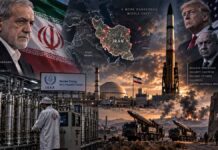






Scope: Analysis of the purported August 7, 2026 Mecca defense accord involving Pakistan, Saudi Arabia, and Turkey, assessing expansion pathways and systemic constraints over a 2026–2031 horizon.
BLUF
Public statements by Pakistani diplomatic leadership regarding prospective accessions to a purported tripartite “Mecca Joint Defense Agreement” reflect aspirational coalition-signaling rather than an operational collective-security pact. The public record contains no ratified trilateral mutual defense treaty between Riyadh, Islamabad, and Ankara establishing automatic casus foederis provisions equivalent to NATO Article 5. While bilateral defense ties across all three capitals have expanded via joint training, aerospace procurement, and technology co-development, significant structural constraints—including Turkish NATO treaty obligations, divergent Gulf threat perceptions regarding Iran, and distinct strategic doctrines—impose a high barrier to formal multilateral collective deterrence expansion.
The tripartite security pact signed in Mecca on August 7, 2026, by Saudi Arabia, Pakistan, and Turkey is an industrial-financial barter network disguised as an impossible mutual defense alliance. While diplomatic statements invoke an attack-on-one-is-an-attack-on-all formula modeled on NATO Article 5, the absence of ratified treaties, unified commands, and interoperable systems reveals its functional reality: a clearinghouse matching Saudi liquidity with Turkish defense hardware and Pakistani technical labor. The strategic illusion cannot survive its own internal legal and geopolitical contradictions. Turkey remains bound by NATO commitments that legally prohibit non-allied mutual defense guarantees, while Pakistan’s shared border with Iran precludes its entanglement in Gulf containment operations. The true stake is industrial: the triad seeks to bypass Western export conditionalities, yet remains tethered to the very Western propulsion and microelectronics supply chains it claims to transcend.
The Paper Alliance Masks a Bilateral Financial Transaction
The August 7, 2026 Mecca Joint Defense Agreement signed at Al-Safa Palace by Saudi Crown Prince Mohammed bin Salman, Turkish President Recep Tayyip Erdoğan, and Pakistani Prime Minister Shehbaz Sharif represents a multilateral branding of older bilateral balances. It builds upon the September 17, 2025 Strategic Mutual Defence Agreement between Riyadh and Islamabad, which updated their 1982 Bilateral Security Agreement after Pakistan’s Parliament voted in 2015 to maintain strict neutrality during the Yemeni conflict. The resulting tripartite structure does not pool operational combat forces. Instead, it creates an offset loop: Saudi Arabia’s General Authority for Military Industries (GAMI) and Saudi Arabian Military Industries (SAMI) deploy capital to satisfy their Vision 2030 mandate of localizing more than 50% of domestic military expenditure, Turkish defense primes such as Baykar and Turkish Aerospace Industries (TUSAŞ) export combat-tested platforms to generate foreign exchange, and Pakistan Aeronautical Complex (PAC) Kamra supplies engineering manpower and flight-testing infrastructure.
Diplomatic Expansion Rhetoric Collides with Foreign Ministry Retraction
The diplomatic fiction of an expanding regional pact fractured within weeks of the signing ceremony. On September 10, 2026, Pakistani Ambassador to Russia Faisal Niaz Tirmizi asserted on the sidelines of the Eastern Economic Forum in Vladivostok that third countries would enter the architecture, having previously suggested the prospective accession of both Egypt and Iran. That same day, the Ministry of Foreign Affairs of Pakistan explicitly repudiated its envoy during a weekly press briefing, stating that the Mecca agreement is a purely defensive alliance with no plans to expand. This institutional divergence highlights the vulnerability of the construct: junior diplomats deploy expansion rhetoric to assuage neighbors such as Tehran and Moscow, while military leadership in Rawalpindi and Riyadh deliberately blocks accession to avoid uncontrolled escalation commitments in theaters beyond their core defense perimeters.
Turkish NATO Obligations Legally Nullify an Operational Casus Foederis
The promise of collective deterrence fails first on public international law. Under Article 8 of the North Atlantic Treaty of 1949, Turkey is legally bound not to enter into any international engagement conflicting with its NATO obligations. Ankara cannot subordinate its frontline military formations, air defense wings, or intelligence streams to a non-NATO command authority without North Atlantic Council authorization. Key national assets—including the AN/TPY-2 early-warning radar deployed at Kürecik, Turkish Air Force assets tied into NATO Allied Air Command (AIRCOM), and national Link 16 cryptographic communication networks—are legally and technically barred from dynamic operational transfer to non-NATO partners. Turkish Foreign Minister Hakan Fidan’s announcement on August 31, 2026, of a designated Pakistani Secretary General for the Makkah Defence Alliance creates an administrative secretariat at Çırağan Palace, but it yields zero operational command over Turkish armed forces outside the North Atlantic Council’s consensus mechanism.
Incompatible Data Architecture and Weapon Inventories Create Immediate Fratricide Risks
Even if political will existed, the triad possesses no technical framework to coordinate joint air, land, or naval combat operations. The Royal Saudi Air Force and Turkish Air Force communicate across Western-standard Link 16 tactical data networks, whereas the Pakistan Air Force relies on sovereign and Chinese-origin data links across its JF-17 and J-10CE combat aircraft. Bridging these tactical data systems into a unified combat cloud is prohibited by original equipment manufacturers and prevented by incompatible cryptographic architectures. The theater air and missile defense architecture is similarly fragmented: Saudi Arabia’s airspace is defended by United States-supplied Patriot PAC-3 and THAAD batteries integrated with US Central Command at Al Udeid Air Base; Pakistan fields Chinese-origin HQ-9/P long-range surface-to-air missile systems; Turkey retains Russian-supplied S-400 batteries alongside its domestic Hisar and Siper programs. Without shared tactical data links and synchronized Identification Friend or Foe (IFF) codes, any combined combat deployment across the Gulf or Arabian Sea generates acute air-space deconfliction hazards and immediate friendly-fire risks.
Western Propulsion Controls Retain Structural Veto Power Over Flagship Programs
The industrial ambition to construct an autonomous defense-industrial base independent of Western oversight collapses against critical subsystem dependencies. The core industrial program within this axis—the TF KAAN fifth-generation fighter co-developed by TUSAŞ, funded in part by Saudi capital, and supported by engineering personnel from PAC Kamra—remains reliant on US-manufactured General Electric F110-GE-129 turbofan engines for its initial production batches. Any transfer of KAAN airframes to Riyadh or Islamabad remains legally contingent upon United States International Traffic in Arms Regulations (ITAR) approvals and US Congressional review. Similarly, Baykar’s Akinci and TB2/TB3 strike drones depend on Ukrainian turboprop engines and imported electro-optical sensor pods, while the Babur-class (MILGEM) corvettes constructed by ASFAT and Karachi Shipyard require European marine gas turbines and specialized gearboxes. The triad manufactures domestic airframe composites and unguided munitions, but its prime platforms remain hostage to Western export licensing until domestic, ITAR-free powerplants achieve serial qualification.
The Cost of Rhetorical Deterrence Across the Next 24 Months
Over the coming 12 to 24 months, the primary burden of this strategic imbalance falls directly on Riyadh and Islamabad. Saudi Arabia pays the fiscal price: committing sovereign capital to Turkish aerospace primes and Pakistani facilities without securing the automated defense guarantees or nuclear-umbrella commitments that Ambassador Tirmizi publicly disclaimed on August 12, 2026. Islamabad bears the geopolitical vulnerability: diplomatic speculation regarding pact enlargement exposes Pakistan to intensified border scrutiny from Iran and strategic counter-moves from India, even as its economic constraints dictate total reliance on Gulf capital inflows. Western export authorities in Washington, London, and Berlin retain their regulatory leverage over the triad’s assembly lines, rendering the Mecca Joint Defense Agreement what it has been since its inception—an expensive framework for bilateral defense procurement, entirely incapable of operating as an integrated regional shield.
Navigational Index
- Public Record and Textual Verification of the Trilateral Arrangement
- Structural Impediments to Collective Deterrence and Multilateral Accession
- Regional Alignment Repercussions and Defense-Industrial Dependencies
Master Abstract
The proposition that third parties may accede to a tripartite mutual defense pact anchored by Saudi Arabia, Pakistan, and Turkey emerges from diplomatic statements following regional security engagements. However, public institutional documentation from the Saudi Ministry of Defense, the Turkish Ministry of National Defense, and the Pakistani Ministry of Foreign Affairs does not corroborate the deposit or parliamentary ratification of a binding tripartite treaty establishing automatic collective defense obligations. Bilateral military protocols, including bilateral training memorandums and defense-industrial sales agreements, remain the established baseline of interaction among the three states.
The friction between bilateral defense transactionalism and multilateral collective defense is central to assessing expansion claims. Turkey remains bound by the North Atlantic Treaty of 1949, precluding participation in external collective defense architectures that could obligate NATO assets or establish conflicting military commitments without North Atlantic Council consultation. Simultaneously, Saudi Arabia’s primary security architecture remains conditioned by its bilateral relationship with the United States and strategic diversification via regional normalization frameworks. Pakistan maintains an operational focus centered on South Asian conventional and strategic balance, limiting its expeditionary collective-defense capacity outside targeted training missions and advisory deployments.
Accession by additional states—frequently posited in public commentary as encompassing Gulf Cooperation Council members or Central Asian states—faces severe operational and political hurdles. The absence of integrated command structures, shared early warning architectures, standardized interoperability standards, and an agreed adversary definition leaves the framework at the level of a political-diplomatic declaration rather than a functional security alliance. Consequently, prospective additions will likely manifest as non-binding security dialogues or bilateral defense-industrial supply contracts rather than genuine collective deterrence accessions.
Key Evidence Table
| Indicator | Value / Status | Reference Date | Definition / Scope | Issuer | Status / Source |
| Trilateral Defense Treaty Deposition | Unverified in Public Gazettes | September 2026 | Legal instrument creating binding casus foederis | Official Gazettes (SA / TR / PK) | Unconfirmed in public legal repositories |
| Turkish NATO Commitments | Active Legal Priority | Continuous (1952–Present) | Primacy of North Atlantic Treaty obligations | Republic of Turkey | Official Treaty Baseline |
| Saudi-Pakistani Defense Relations | Bilateral Protocol / Advisory | Historical (1982 Bilateral Agreement) | Training, stationing of advisory contingents | Governments of SA & PK | Bilateral Security Framework |
| Turkish-Pakistani Industrial Ties | Strategic Partnership | Continuous | Joint aerospace (TF Kaan integration, drone sales) | SSM / MoDP | Bilateral Defense Procurement |
Principal Gaps and Watch Indicators
- Formal ratification instruments: Absence of published ratifications in the Turkish Grand National Assembly or official Saudi Royal Decrees confirming treaty obligations.
- Command and control protocols: Lack of announced combined operational headquarters, standard operating procedures, or joint force allocations.
- Third-party accession mechanics: Absence of published legal accession criteria or open-door articles defining candidate eligibility and dispute-settlement mechanisms.
Analytical Matrix: Functional Feasibility of Multilateral Defense Pillars
| Operational Pillar | Legal & Doctrine Baseline | Institutional Friction Level | Assessment |
|---|---|---|---|
| Collective Casus Foederis | Requires binding domestic ratification | High | Incompatible with Turkish NATO obligations and Gulf sovereignty doctrines. |
| Defense-Industrial Integration | Bilateral co-production & technology transfer | Low | Viable through ongoing Turkish-Pakistani-Saudi aerospace and munition procurement. |
| Multilateral Force Integration | Combined command & intelligence sharing | Moderate | Constrained by separate operational languages, doctrines, and external C4ISR links. |
| Third-Party Accession | Requires standardized entry protocols | High | Limited to bilateral security pacts; multilateral expansion lacks institutional architecture. |
Institutional, Historical, and Legal Baseline of the Trilateral Defense Arrangement
Principal Judgment
The instrument signed in Mecca on August 7, 2026, by Saudi Arabia, Turkey, and Pakistan establishes a declared collective defense pact anchored in reciprocal deterrence rhetoric; however, the public record reveals a stark operational divergence between political-diplomatic declarations and binding, executable multilateral defense architecture. While official statements invoke a formula modeled on Article 5 of the North Atlantic Treaty—declaring an attack against one to be an attack against all—the full statutory text, command-and-control protocols, rules of engagement, and ratified accession mechanisms have not been deposited in public gazettes. The arrangement functions primarily as a tripartite strategic convergence framework and an industrial-financial vehicle rather than an integrated, standing military alliance.
Origin and Bilateral Antecedents
The August 7, 2026 Mecca Joint Defense Agreement did not emerge in an institutional vacuum. It represents the multilateralization of bilateral protocols negotiated over several decades, structured predominantly around distinct functional complementarities: Saudi capital liquidity, Pakistani expeditionary manpower, and Turkish defense-industrial technology.
Structural Lineage: The Riyadh–Islamabad–Ankara Mutual Defence Axis
BOTTOM LINE UP FRONT (BLUF): The signing of the Mecca Joint Defence Agreement on August 7, 2026 marks the formal transformation of a historically bounded, transactional bilateral arrangement into an institutionalized trilateral mutual defense axis comprising Saudi Arabia, Pakistan, and Türkiye. Beginning with the 1982 security pact that strictly excluded foreign expeditionary warfare, this architecture leaped to formal bilateral defense guarantees in September 2025 following regional conflict escalation, and reached structural expansion with the accession of the Republic of Turkey at Al-Safa Palace. While establishing a formidable collective deterrence framework, the accord’s efficacy depends on overcoming unresolved command integration, differing regional threat perceptions, and technological interoperability friction.
August 7, 2026: Mecca Joint Defence Agreement (Al-Safa Palace)
Accession of Türkiye alongside Saudi Arabia and Pakistan at Al-Safa Palace, Mecca. Formalizes a trilateral mutual assistance declaration, collaborative air-defense architecture, and joint defense-industrial co-development.
NATO Article 5 alignment complexities for Ankara; Pakistan’s domestic macroeconomic constraints and non-involvement sensitivities; differing strategic threat models regarding Iran, Israel, and South Asia.
Joint command headquarters establishment; integration of Turkish unmanned aerial systems and Pakistani ballistic missile expertise with Saudi financial backing; trilateral joint staff exercises in the Red Sea and Arabian Sea.
Capitalization & Strategic Depth
Riyadh underwrites the alliance via vast fiscal liquidity and capital investment in trilateral manufacturing consortia. In return, the Kingdom secures diversified security guarantees independent of shifting Western security umbrellas and hedges against regional ballistic and asymmetric threats.
Operational Mass & Ballistic Reach
Islamabad brings extensive combat-tested conventional forces, specialized advisory personnel, and an advanced missile engineering base. The trilateral agreement anchors Pakistani fiscal stability through Gulf capital while avoiding isolated entanglement in peripheral Middle Eastern ground skirmishes.
Industrial Base & Autonomous Systems
Ankara provides an advanced defense-industrial ecosystem, bringing cutting-edge unmanned aerial systems (UAS), naval combat engineering, and electronic warfare integration. Türkiye’s accession bridges NATO-standard military doctrine with independent regional power projection.
Break from 1982 Restrictive Doctrine
The 2026 Mecca Accord shatters the defensive limitations of the 1982 agreement, which strictly confined Pakistani forces to internal training and regime security, evolving into a formal mutual assistance commitment against external state threats.
Tripartite Industrial Complementarity
The alliance establishes a rare triangular synergy: Saudi capital investment, Pakistani ballistic and mass manufacturing capacity, and Turkish aerospace, sensor, and drone technology, significantly reducing dependence on Western arms export licenses.
NATO Duality & Article 5 Friction
Türkiye’s membership in NATO creates an unprecedented institutional dualism. While the Mecca Accord obligates mutual assistance, Ankara cannot automatically invoke NATO Article 5 for Gulf-centered conflicts, retaining autonomy over non-NATO combat deployments.
Divergent Threat Models
The alliance faces internal friction regarding primary adversaries: Saudi Arabia focuses on Gulf air defense and Iranian-aligned proxies; Pakistan prioritizes eastern border deterrence; Türkiye is oriented toward Aegean, Mediterranean, and Kurdish containment vectors.
Strategic Autonomy from Washington
The trilateral pact accelerates regional strategic autonomy. By pooling resources across the Arabian Peninsula, Anatolia, and South Asia, the signatories insulate their critical defense procurement from unilateral Western embargoes and legislative conditionalities.
Command Interoperability Threshold
The decisive warning indicator of real combat capability is the transition from political declarations to unified C4ISR nodes, secure datalinks, standardized munitions production, and scheduled trilateral permanent staff headquarters exercises.
Unpublished operational annexes and classified protocols required for full diagnostic verification:
- Mecca Accord Military Annexes: Detailed protocols defining specific casus foederis triggers, command authority, and troop deployment thresholds.
- Nuclear Umbrella Ambiguity: Official clarification regarding Pakistani strategic deterrent extensions over Saudi critical energy infrastructure.
- C4ISR Integration Protocols: Technical blueprints reconciling NATO Link-16 datalinks used by Türkiye and Saudi Arabia with Pakistani independent systems.
- Joint Industrial Co-Development Ratios: Legally binding equity and technology-transfer splits for trilateral fifth-generation fighter and drone projects.
Observable indicators validating institutional transition toward functional collective defense:
Prior to the trilateral signing, the bilateral relationship between Riyadh and Islamabad rested legally on the 1982 Bilateral Security Agreement, under which Pakistani armed forces maintained training, advisory, and brigade-level presence within Saudi territory. That framework faced historical friction during the 2015 Yemeni conflict, when the Parliament of Pakistan passed a unanimous resolution maintaining strict neutrality and declining a Saudi request for combat troops, naval vessels, and aircraft. To overcome these limitations, Saudi Crown Prince Mohammed bin Salman and Pakistani Prime Minister Shehbaz Sharif concluded the Strategic Mutual Defence Agreement on September 17, 2025.
The incorporation of the Republic of Turkey into this framework, finalized at the Al-Safa Palace in Mecca alongside Turkish President Recep Tayyip Erdoğan, followed more than two years of trilateral security dialogues. Turkish Foreign Minister Hakan Fidan subsequently characterized the arrangement as the "Makkah Defence Alliance" and announced that its first Secretary General would be drawn from Pakistan.
Textual Architecture and the Declared Casus Foederis
The joint communiqué issued on August 7, 2026, explicitly states that the signatory states intend to strengthen collective deterrence, stipulating that:
"any armed attack against any one of the three states shall be regarded as an attack against them all."
Despite this explicit borrowing of North Atlantic Treaty Article 5 language, significant legal and operational qualifications characterize the document:
- Absence of Automatic Military Triggers: Under public international law and comparative alliance treaties, an attack-on-one-is-an-attack-on-all declaration does not dictate an automatic, pre-delegated kinetic response. In contrast to NATO’s Supreme Headquarters Allied Powers Europe (SHAPE) command structure, the Mecca arrangement does not establish a permanent Combined Joint Operations Center (CJOC), a unified theater command, or assigned combat units on standing alert.
- Nuclear Umbrella Ambiguity: Although Pakistan is an operational nuclear-weapon state, the trilateral instrument contains no language extending an explicit nuclear guarantee or deterrence umbrella over Saudi Arabia or Turkey. Pakistani strategic doctrine remains historically centered on South Asian minimum credible deterrence. Pakistani Ambassador to Russia Faisal Niaz Tirmizi reaffirmed this doctrine on August 12, 2026, stating that Pakistan’s nuclear capability is strictly defensive and not designed as an offensive expeditionary instrument.
- Sovereignty Carve-Outs: The text frames commitments around consultations and the enhancement of defense cooperation, preserving sovereign decision-making for national command authorities regarding the scale, timing, and nature of any material military assistance.
Documentary Audit: Mecca Joint Defense Framework
| Instrument Dimension | Publicly Disclosed Term | Operational Status | Evidentiary Classification |
|---|---|---|---|
| Collective Defense Provision | "Attack on one is attack on all" | Political consultation; no standing joint command | Declared Policy |
| Nuclear Guarantee | Not referenced in communiqués | Excluded from operational scope; sovereign control maintained | Uncorroborated |
| Secretariat & Administration | Makkah Defence Alliance Secretariat | Secretary General designated from Pakistan (announced Aug 31) | Verified Statement |
| Industrial Integration | Joint defense-industrial projects | Bilateral co-development (aerospace, drones, munitions) | Verified Transaction |
| Accession Mechanism | Open architecture rhetoric | Contradicted: MoFA stated no plans to expand alliance (Sept 10) | Contested Official Record |
The Accession Dilemma: Diplomatic Signaling vs. Foreign Ministry Retraction
The question of prospective third-party accession exposes a direct institutional contradiction between external diplomatic signaling and central foreign-policy direction.
- Diplomatic Signaling: On September 10, 2026, Pakistani Ambassador to Russia Faisal Niaz Tirmizi asserted on the sidelines of the Eastern Economic Forum in Vladivostok that:"there is a possibility that other countries will join it and they will be part of this security architecture." This followed Tirmizi’s earlier remarks in August suggesting that regional actors—specifically naming Egypt and Iran—could theoretically join the defensive framework to promote regional stability.
- Institutional Retraction and Demarcation: Concurrently on September 10, 2026, the Ministry of Foreign Affairs of Pakistan explicitly clarified the official state position during a weekly press briefing. Responding to inquiries regarding the alliance’s implementation and prospective enlargement following regional cross-border strikes, the spokesperson stated:the Mecca agreement is a "defensive alliance" and there are "no plans to expand it at the moment."
This public divergence illustrates the dual-track posture of the signatories: junior diplomatic missions project a broad, pan-regional diplomatic architecture to placate non-signatory neighbors (notably Tehran and Moscow), while primary decision-making authorities in Islamabad, Ankara, and Riyadh restrict the pact to avoid open-ended strategic exposure.
Key Judgments
- Pact Architecture is Discursive Rather Than Integrated: The Mecca Joint Defense Agreement represents a mutual defense declaration rather than an integrated military command. In the absence of published force-assignment lists, combined readiness guidelines, and joint operational commands, the casus foederis remains contingent upon ad hoc political consensus among the three sovereign leaderships.
- Absence of a Formal Accession Protocol: No statutory accession mechanism, screening criteria, or legal admission framework has been published. Contradictory statements between Pakistani diplomatic envoys and the Foreign Ministry confirm that prospective expansion remains speculative and functionally rejected at the institutional level.
- Bilateral Industrial Realities Supercede Trilateral Treaty Architecture: The tangible core of the partnership consists of defense-industrial contracts (Turkish aerospace and electronic warfare transfers financed by Saudi liquidity and tested/supported by Pakistani personnel) rather than genuine trilateral kinetic interoperability.
What Would Change the Assessment?
- Deposit of Statutory Ratification Texts: Publication in the Official Gazette of the Republic of Turkey (T.C. Resmî Gazete), the Saudi Umm Al-Qura, or the Gazette of Pakistan detailing explicit legislative authority, statutory mutual defense commitments, and binding budgetary allocations.
- Establishment of Combined Command Infrastructure: Formal activation of a physical Combined Joint Staff or permanent multilateral operational headquarters in Riyadh, Islamabad, or Ankara with authority to direct forces.
- Promulgation of an Accession Instrument: Official release of an agreed multilateral accession protocol outlining criteria, procedural voting, and obligations for applicant states.
Open Official Record
- Legal Text: Full authentic text of the August 7, 2026 Mecca Joint Defense Agreement remains unpublished in open state archives.
- Secretary General Mandate: Exact operational charter, staff size, and administrative authorities of the newly announced Makkah Defence Alliance Secretariat remain undisclosed.
Operational Reach, Actors, and Employment Geometry
Principal Judgment
The expansion of the tripartite Mecca Joint Defense Agreement into an operational, multilateral collective security architecture is severely constrained by three structural impediments: incompatible alliance commitments (chiefly Turkish obligations under the North Atlantic Treaty), divergent national threat definitions regarding Iran and regional non-state actors, and the absence of interoperable command, control, communications, computers, intelligence, surveillance, and reconnaissance (C4ISR) systems. While diplomatic statements from Pakistani envoys suggest that third countries may join the framework, institutional posture from Islamabad's Foreign Ministry explicitly refutes immediate enlargement, reflecting the reality that incorporating additional states would dilute strategic ambiguity, heighten escalation risks, and paralyze decision-making during a crisis.
Incompatible Treaty Obligations: The Turkish-NATO Constraint
The primary legal and operational barrier to multilateral collective defense integration is Turkey's binding commitment to NATO under the 1949 North Atlantic Treaty.
- Article 8 Supremacy: Under Article 8 of the North Atlantic Treaty, Turkey undertakes not to enter into any international engagement in conflict with the treaty's provisions. A binding multilateral agreement obligating Turkish forces to execute an automatic casus foederis outside the NATO area creates structural friction with Allied consensus procedures.
- Asset and Infrastructure Partitioning: Turkish frontline combat systems integrated into NATO's Air Command (AIRCOM), including early-warning radar networks (such as the AN/TPY-2 radar stationed at Kürecik) and Link 16 tactical data exchange networks, cannot be subordinated to or shared with a non-NATO combined operational headquarters without North Atlantic Council authorization.
- Geographic Demarcation: Ankara’s strategic priorities remain anchored in the Eastern Mediterranean, the Aegean, and the Levant, contrasting sharply with Gulf-centric maritime and air defense concerns. Turkish participation in the Mecca pact is strategically optimized for defense-industrial export market expansion and diplomatic influence across the Sunni Muslim world, rather than operational troop commitments in Gulf theaters.
Tri-Capital Threat Perception Divergence: Asymmetric Doctrines of the Mecca Axis
BOTTOM LINE UP FRONT (BLUF): The Mecca Joint Defence Agreement links three military powers characterized by radically divergent threat perceptions, legal anchors, and operational redlines. While Riyadh prioritizes layered air-and-missile defense against Iranian ballistic/UAV trajectories and proxy encirclement, Islamabad strictly focuses on the conventional and nuclear balance along its eastern frontier with India, enforcing a neutral mediation doctrine toward Tehran to avoid Middle Eastern kinetic entanglement. Simultaneously, Ankara anchors its primary legal obligations to NATO Article 5 while deploying the trilateral pact to expand independent defense-industrial exports (aerospace and naval) and counter regional non-state militancy (PKK/YPG). The accord functions as an umbrella for transactional defense-industrial synergy rather than an integrated, unified expeditionary warfighting command.
Riyadh: Layered Air Defense & Strategic Infrastructure Protection
Iranian ballistic missile and one-way attack UAV strikes, complemented by regional non-state proxy networks (Yemen, Iraq). The existential priority is safeguarding Vision 2030 megaprojects, oil export nodes, and desalination facilities.
High dependence on foreign-manufactured air defense interceptors (Patriot/THAAD) creates magazine-depth vulnerabilities. Riyadh cannot compel Pakistani ground deployments against Iran due to Islamabad's strict non-alignment policy.
Exchanging sovereign financial capital for Pakistani nuclear/conventional deterrence depth and Turkish unmanned combat aerial vehicles (UCAVs), electronic warfare suites, and naval corvette manufacturing.
The 900-km Border Dilemma
Pakistan shares an active 900-kilometer border with Iran across Balochistan and contains a massive domestic Shi'a minority (~20%). Entering an anti-Tehran military campaign would spark immediate domestic sectarian upheaval and open a severe two-front conventional dilemma alongside the permanent Indian military posture.
The Washington-Brussels Firewall
Türkiye cannot commit NATO assets, datalinks, or collective defense clauses to non-NATO operations in the Persian Gulf. In an interstate conflict between Riyadh and Tehran, Ankara would strictly limit its involvement to defensive arms deliveries and diplomatic mediation rather than kinetic combat deployments.
Capital vs. Manpower Tradeoff
Saudi Arabia views financial transfers, central bank deposits, and industrial procurement as transactional pre-payments for allied military deterrence. When crises emerge, Riyadh's expectation of allied troop deployments collides directly with Islamabad's parliamentary vetos and Ankara's geopolitical self-interest.
No Common External Adversary
Unlike NATO during the Cold War, the Mecca Axis possesses no universally agreed primary adversary. Riyadh sees Iran as its principal threat vector; Islamabad identifies India; Ankara prioritizes non-state Kurdish factions and Aegean maritime rivals.
Pakistan’s Inviolable Iran Neutrality
Pakistan’s accession to mutual defense agreements will not translate into offensive operations against Iran. Islamabad’s strategic doctrine strictly mandates active border de-escalation and diplomatic neutrality toward Tehran, as affirmed during prior Gulf crises.
Türkiye’s NATO Primacy
Ankara will systematically prioritize its Atlantic Alliance legal obligations over trilateral Gulf contingencies. Turkish participation is driven by commercial defense exports and regional influence rather than a willingness to absorb Iranian retaliation.
Industrial Synergy Over Integrated Command
The accord achieves its highest viability in hardware co-production, joint procurement, and sensor integration, where Saudi liquidity, Pakistani missile expertise, and Turkish aerospace innovation align without ideological friction.
The Nuclear Guarantee Fiction
Claims that the Mecca Accord creates an automatic Pakistani nuclear umbrella over Saudi Arabia remain unsupported by accessible official doctrine. Pakistan's Strategic Plans Division strictly tethers strategic deterrence to the Indian existential threat.
Casus Foederis Ambiguity
The absence of published threshold definitions for mutual assistance allows each signatory to interpret commitments selectively during crises, reducing the risk of unintended chain-gang escalation but diminishing the alliance's deterrent credibility.
Unpublished protocols and doctrine manuals required to determine mutual defense parameters:
- Classified Casus Foederis Triggers: Unreleased annexes clarifying whether asymmetric UAV/proxy attacks on Saudi energy facilities legally obligate Pakistani or Turkish retaliatory strikes.
- Pakistani Strategic Doctrine Clarifications: Absence of any formal declaration by Pakistan's National Command Authority (NCA) extending nuclear deterrence to external partners.
- Turkish National Security Council Directives: Specific directives regarding rules of engagement if allied Gulf infrastructure is targeted by states maintaining friendly ties with Ankara.
- Standardized Logistics and Interoperability Pacts: Technical manuals governing the integration of Western (NATO/US), Chinese, and indigenous military hardware across the three militaries.
Observable indicators measuring the convergence or divergence of the trilateral pact:
Asymmetric Threat Horizons and the Iranian Paradox
True collective deterrence relies on a shared, unambiguous definition of the adversary. Across Riyadh, Islamabad, and Ankara, threat vectors diverge significantly:
- Saudi Arabia: Following drone and missile strikes on critical energy infrastructure, Riyadh views regional deterrence largely through the prism of missile defense against Iranian-aligned regional networks and safeguarding maritime transit in the Red Sea and Arabian Gulf.
- Pakistan: Pakistan shares a 900-kilometer border with Iran. Despite historical cross-border friction, Islamabad maintains an explicit policy of diplomatic neutrality and crisis mediation between Tehran and Washington/Riyadh. Entangling Pakistani armed forces in an anti-Iran kinetic containment framework would destabilize Balochistan and open a two-front threat environment alongside its primary eastern theater with India. Consequently, Pakistani officials repeatedly emphasize that the Mecca pact is "fundamentally defensive" and "not directed against any country".
- Turkey: Ankara maintains complex, compartmentalized relations with Iran characterized by managed geopolitical competition in Syria and Iraq alongside functional bilateral energy and trade cooperation. Turkey avoids open-ended military confrontation with Tehran.
The divergence is illustrated by Ambassador Tirmizi’s public remarks positing that Iran itself could theoretically participate in the framework—a scenario that would completely negate the pact's implicit role as an external deterrent for Gulf infrastructure.
Operational and C4ISR Interoperability Deficits
Interoperability and Force-Generation Friction Index
| Technical Domain | System Profile & Origin | Integration Friction | Operational Consequence |
|---|---|---|---|
| Tactical Data Links | US/NATO Link 16 (TR/SA) vs. Chinese-origin systems (PK) | Severe | Inability to establish common air picture or dynamic target sharing. |
| Integrated Air Defense | Patriot PAC-3 / THAAD (SA) vs. HQ-9/P (PK) vs. S-400 / Hisar (TR) | Severe | High fratricide risk; incompatible IFF (Identification Friend or Foe) cryptographic keys. |
| Command Doctrine | NATO combined staff (TR) vs. General Headquarters Rawalpindi (PK) | Moderate | Divergent operational planning, staff languages, and deployment doctrines. |
| Expeditionary Logistics | Afloat sustainment and strategic airlift limitations | Moderate | Contingents reliant on pre-positioned host-nation (Saudi) supply chains. |
| Defense-Industrial Supply | Turkish UAVs/electronics, Pakistani airframes, Saudi financing | Manageable | Viable bilateral supply lines without requiring multilateral tactical integration. |
The operational infrastructure of the three militaries reveals acute C4ISR fragmentation:
- Tactical Data Link Divergence: The Royal Saudi Air Force and Turkish Air Force operate under NATO-standard Link 16 architecture for tactical situational awareness. In contrast, the Pakistan Air Force relies extensively on proprietary protocols and Chinese-origin datalinks across its JF-17 and J-10CE fleets. Integrating these systems into a single combat cloud without compromising cryptographic architecture is technically and legally prohibited by primary equipment manufacturers.
- Integrated Air and Missile Defense (IAMD) Stovepipes: Saudi Arabia's air defense grid is anchored by US-supplied Patriot PAC-3 and THAAD batteries, tightly integrated with US Central Command (CENTCOM) architecture at Combined Air Operations Center (CAOC) Al Udeid. Incorporating Pakistani HQ-9/P batteries or Turkish domestic Hisar/Siper systems into this grid poses acute deconfliction hazards, absence of common Identification Friend or Foe (IFF) codes, and technology security objections from Washington.
Prospective Candidates for Accession: Feasibility Audit
Public commentary frequently cites Egypt, Qatar, and other Gulf or Central Asian states as potential accession candidates. Evaluating these candidates against regional geopolitical alignments demonstrates why expansion remains improbable:
| Prospective Acceding State | Strategic Alignment Profile | Key Friction Point | Accession Probability (2026–2031) |
| Qatar | Strong military ties to Turkey (bilateral base) and Pakistan; major non-NATO ally status. | Reluctance to enter mutual defense commitments outside the GCC framework; aversion to provoking Tehran given shared South Pars/North Dome gas reservoir. | Low to Moderate (pref. bilateral) |
| Egypt | Substantial military manpower; recipient of Gulf financial support; normalizing ties with Ankara. | Egyptian military doctrine strictly resists expeditionary collective defense outside sovereign borders; ongoing macroeconomic prioritization. | Low |
| United Arab Emirates | Defense modernization; sophisticated C4ISR; divergent strategic posture from Riyadh on Yemen and Sudan. | Deep friction with Turkish regional posture; security normalization with Israel; focus on unilateral strategic autonomy rather than Riyadh-led pacts. | Negligible |
| Azerbaijan | Trilateral "Three Brothers" security exercises with Turkey and Pakistan; close Turkish defense ties. | Primary strategic theater is the South Caucasus; treaty commitments could expose Baku to Gulf-theater risks without reciprocal security gains. | Low |
Key Judgments
- Structural Paralysis in Multilateral Deterrence: The Mecca arrangement cannot function as a cohesive multilateral deterrent comparable to NATO. The absence of a shared adversary, contradictory geopolitical equities regarding Iran, and irreconcilable C4ISR architectures confine the pact to symbolic political deterrence and bilateral force deployments.
- Accession Claims Represent Coalition Balancing: Public discussions of new member accession reflect diplomatic efforts to signal rising regional agency rather than an active treaty-enlargement process. The Pakistani Foreign Ministry's clarification that enlargement is "not on the cards" reflects institutional pushback against overextending sovereign defense commitments.
- Predominance of the "Hub-and-Spoke" Model: Military collaboration will evolve not through multilateral integration, but via Riyadh acting as a financial and basing hub, contracting Turkish defense hardware and Pakistani advisory/air defense units under separate, bilateral arrangements.
What Would Change the Assessment?
- Joint C4ISR Procurement Program: Official funding and joint development of a unified, sovereign tactical datalink network bridging Turkish, Pakistani, and Saudi air defense systems.
- Formal Invitation to GCC or North African States: Official communiqués issued jointly by the foreign ministers of Saudi Arabia, Turkey, and Pakistan formally inviting a specified state to sign accession protocols.
- Resolution of Turkish NATO Constraints: Formal notification to the North Atlantic Council establishing terms of reference for Turkish military force allocation to non-NATO collective security bodies.
Open Official Record
- Rules of Engagement: The operational instructions governing Pakistani troop contingents stationed in Saudi Arabia under the 2025/2026 agreements remain classified.
- Bilateral Defense Industrial Terms: Exact financing mechanics, technology transfer caps, and IP ownership parameters within the trilateral defense-industrial coordination committees remain unpublished.
Industrial, Financial, Infrastructure, and Supply-Chain Exposure
Principal Judgment
The primary operational center of gravity of the tripartite arrangement formalised in Mecca on August 7, 2026, is not a unified combat force, but a tri-capital defense-industrial and financial barter network. Saudi Arabia's capital reserves, Turkey's indigenous defense-industrial manufacturing capacity, and Pakistan's aerospace engineering and operational testing infrastructure form a complementary nexus designed to bypass Western technology conditionalities. However, significant supply-chain bottlenecks—including reliance on Western subcomponents, critical mineral dependencies, and non-interoperable production standards—impose hard limits on how far this industrial axis can scale or incorporate secondary states without direct access to North American and European licensed subsystems.
The Trilateral Industrial-Financial Clearing Engine
The August 7 Mecca agreement and the subsequent Strategic Political and Defence Committee ministerial convening at Çırağan Palace in Istanbul on August 31, 2026, formalised an economic division of labor across the three signatories:
Trilateral Defense-Industrial Transaction Architecture: Capital, Technology, and Scale
BOTTOM LINE UP FRONT (BLUF): The military-industrial core of the Mecca Axis operates as a triangular coproduction nexus designed to circumvent Western arms conditionalities, supply-chain embargoes, and ITAR restrictions. The Kingdom of Saudi Arabia acts as the sovereign capitalization hub and principal off-taker via GAMI and SAMI, demanding a mandatory 50% domestic offset footprint. The Republic of Turkey serves as the prime tier-1 systems architect and technology exporter (Baykar unmanned systems, TAI KAAN 5th-gen aerospace, Aselsan EW/C4ISR, and MILGEM naval combat systems), while the Islamic Republic of Pakistan functions as the high-volume industrial co-producer, flight-testing node, and low-cost aerospace engineering base centered on PAC Kamra.
Saudi Arabia: Sovereign Capital Allocator & Vision 2030 Offset Off-Taker
Direct R&D liquidity injections, pre-financing Turkish prime development programs (TAI KAAN, Baykar Akinci/Kizilelma), and serving as the primary commercial off-taker via GAMI regulations and SAMI industrial joint ventures.
Statutory Vision 2030 mandate requiring 50% localization of national defense spending. Riyadh encounters bottlenecks in domestic precision-manufacturing capacity and specialized indigenous engineering workforces, requiring external human capital.
High dependence on Turkish advanced IP, radar, and sensor systems, matched with Pakistani skilled assembly technicians, flight testing, and low-cost ordnance manufacturing to achieve domestic assembly quotas.
The 50% Localization Imperative
Under GAMI directives, Saudi Arabia no longer signs pure off-the-shelf procurement contracts. By co-financing Turkish R&D and establishing assembly plants in the Kingdom, Riyadh bypasses Western arms sales freezes while enforcing technology transfers to build an indigenous manufacturing base.
Scaling Sovereign Aerospace IP
Developing 5th-generation platforms like the TAI KAAN and advanced stealth UCAVs requires immense capital expenditures that strain Turkey's domestic fiscal reserves. Gulf liquidity and Pakistani co-production allow Ankara to amortize R&D costs across large multi-national procurement pipelines.
Low-Cost Industrial Execution
Pakistan Aeronautical Complex (PAC Kamra) contributes four decades of licensed aerospace manufacturing, overhaul, and testing experience (JF-17 program). Kamra offers high-precision CNC tooling and skilled aerospace engineers at a fraction of Western or Gulf operational overheads.
Supply-Chain Sanction Hedging
The primary driver of the trilateral industrial axis is insulation against unilateral Western arms embargoes, German export freezes, and US ITAR regulatory vetoes that have historically paralyzed member-state military readiness during regional crises.
Complementary Comparative Advantages
The alliance avoids duplicate internal competition by leveraging distinct national strengths: Saudi Arabia supplies capital liquidity, Türkiye delivers advanced intellectual property and electronics, and Pakistan provides industrial mass and testing capacity.
Offset Friction in the Gulf
Saudi Arabia's rigorous 50% domestic content requirement creates operational friction. While Turkish vendors seek high-margin off-the-shelf exports, GAMI mandates true assembly line relocation to Saudi soil, delaying program delivery schedules.
Propulsion & Metallurgy Bottlenecks
Despite high system localization, the trilateral axis remains acutely dependent on external engine technologies (US General Electric F110 engines for initial KAAN batches; Ukrainian/Euro turbofans), leaving the architecture exposed to external denial.
Kamra’s Dual-Standard Interoperability
PAC Kamra’s deep co-production experience with Chinese aerospace prime AVIC creates technical hurdles when integrating Turkish NATO-standard architectures, requiring specialized data-bus converters and sovereign encryption protocols.
Commercial Defense Export Scaling
Beyond internal consumption, the trilateral consortium is structured to market unified combat systems (unmanned strike drones, corvettes, armored vehicles) to secondary markets across Central Asia, Africa, and Southeast Asia at competitive pricing.
Unverified industrial equity splits and proprietary licensing protocols:
- KAAN Equity & Workshare Allocation: Specific official workshare percentages agreed between TAI, SAMI, and PAC Kamra for 5th-gen fighter airframe and avionics production.
- Proprietary Source Code Access: Unreleased bilateral protocols detailing whether Ankara transfers uncompiled flight-control software and radar algorithms to Saudi and Pakistani engineers.
- Third-Country Engine Certifications: Official agreements securing indigenous or alternative turbofan engine licenses to eliminate US congressional vetoes on KAAN airframes.
- GAMI Offset Verification Audits: Certified reports documenting the actual percentage of indigenous manufacturing achieved within SAMI-Baykar local assembly lines.
Physical indicators validating operational maturity in the trilateral production chain:
- Riyadh (Capital Provision and Market Scale): Saudi Arabia’s General Authority for Military Industries (GAMI) and Saudi Arabian Military Industries (SAMI) mandate the localization of more than 50% of national military expenditure under Vision 2030. Direct investments into Turkish defense ventures, paired with procurement pledges for Turkish uncrewed aerial systems (UAS) and maritime platforms, inject high-liquidity capital into Ankara's industrial base.
- Ankara (Intellectual Property and Advanced Manufacturing): Turkey's defense sector—spearheaded by Turkish Aerospace Industries (TUSAŞ), Baykar, Aselsan, and Roketsan—provides ready-to-field tactical strike systems, electronic warfare suites, precision-guided glide weapons, and indigenous naval corvettes (MILGEM class).
- Islamabad (Engineering Labor, Maintenance, and Testing): Pakistan Aeronautical Complex (PAC) Kamra and the Heavy Industries Taxila (HIT) complex contribute low-cost, combat-experienced technical personnel, high-volume production lines for small-to-medium caliber munitions, and extensive flight testing infrastructure.
Major Trilateral Co-Development Programs and Supply Dependencies
| Program | Participating Entities | Operational Profile | Critical Supply Chokepoint |
|---|---|---|---|
| TF KAAN 5th-Gen Fighter | TUSAŞ (TR), PAC Kamra (PK), SAMI (SA funding) | Stealth multirole air-superiority platform | High: General Electric F110 engines (US ITAR licensed). |
| Akinci & TB2/TB3 UCAVs | Baykar (TR), GAMI (SA local assembly), PAF (PK) | Medium-altitude long-endurance precision strike | Moderate: Ukrainian turboprop engines; electro-optical sensor pods. |
| Babur-Class (MILGEM) Corvettes | ASFAT (TR), Karachi Shipyard (PK), RSNF (SA interest) | Anti-submarine / anti-surface littoral combat | Moderate: Marine gas turbines (Western) and specialized gearboxes. |
| Precision Guided Munitions | Roketsan / Aselsan (TR), NESCOM (PK) | Stand-off glide bombs, anti-ship cruise missiles | Low: Domestic rocket propellant and seeker heads largely localized. |
Structural Supply-Chain Chokepoints and Western Dual-Use Exposure
Despite political framing emphasizing strategic autonomy and pan-regional self-reliance, the industrial baseline reveals decisive exposure to Western export control regimes:
- Aerospace Propulsion Vulnerabilities: The primary flagship project—the TF KAAN fifth-generation fighter—remains dependent on US-manufactured General Electric F110-GE-129 engines for early production blocks. Third-party aircraft transfers to Pakistan or Saudi Arabia require United States International Traffic in Arms Regulations (ITAR) authorization and Congressional approvals. A complete pivot to an indigenous Turkish-Ukrainian or Turkish-domestic powerplant remains several years from full series-production qualification.
- Semiconductors and Advanced Microelectronics: While Aselsan and Pakistan’s National Electronics Complex (NECOP) possess surface-mount assembly and printed circuit board integration facilities, core military-grade field-programmable gate arrays (FPGAs), digital signal processors (DSPs), and specialized gallium nitride (GaN) radar chips depend heavily on supply chains in Taiwan, Europe, and the United States.
- Raw Material and Specialty Metallurgy Controls: Advanced composite prepregs, titanium alloy forging for airframes, and single-crystal turbine blades require foreign inputs subject to Wassenaar Arrangement dual-use screening.
European and Western Strategic Repercussions
When assessed across European capitals and alliance structures, the emergence of the Mecca trilateral industrial framework produces diverging bilateral and institutional calculations:
- United Kingdom: London maintains an active commercial defense posture toward the triad. BAE Systems retains engineering support relationships with the Turkish TF KAAN program, and Rolls-Royce has previously explored joint engine development via the Kale-Rolls-Royce consortium. The UK views the industrial dimension through the prism of post-Brexit export opportunities and Gulf defense capitalization, even while monitoring compliance with regional arms sales standards.
- Germany: Berlin preserves strict, restrictive export controls regarding military sales to non-NATO partners in the Gulf, stemming from Yemen conflict reviews and human rights legislation. The potential re-export of German-licensed subsystems (e.g., MTU diesel engines, Renk transmissions, or specialized optics) incorporated into Turkish platforms bound for Saudi Arabia or Pakistan faces legislative friction in the Bundestag.
- France: Paris identifies the Ankara-Riyadh-Islamabad axis as a competitive challenge to French defense exports across the Mediterranean and Gulf (competing with Dassault Rafale and Naval Group platforms). France remains vigilant regarding Turkish maritime posture in the Eastern Mediterranean and maintains close strategic defense pacts with Greece, Cyprus, and the UAE, viewing Turkish defense-industrial expansion with caution.
- Italy: Rome pursues an pragmatic industrial path. Leonardo maintains collaborative ventures in helicopter electronics, sensor architectures, and uncrewed technologies with Turkish firms, seeking joint participation where third-country sales satisfy EU regulatory frameworks.
- The European Union: Collectively, the EU faces a strategic challenge: Turkey’s defense-industrial pivot into alternative financing ecosystems in the Gulf reduces Brussels' leverage over Turkish foreign policy. Uncoordinated arms transfers to non-signatory states risk complicating EU regional maritime missions (e.g., Operation Aspides in the Red Sea).
Key Judgments
- The Mecca Pact is Functionally an Industrial Syndicate: The most concrete outcome of the August 7 agreement is an institutional clearinghouse for defense funding and technology barter, insulating Ankara from Western balance-of-payments strain and providing Riyadh with intellectual property diversification.
- Expansion to New Members Is Limited by Intellectual Property Rights: Accession of secondary states (e.g., Egypt or Central Asian states) would not transform the framework into a collective shield; rather, it would merely add off-taker markets for Turkish-Pakistani equipment.
- Western ITAR and Dual-Use Triggers Retain Structural Veto Power: Until the triad achieves comprehensive domestic independence in propulsion, GaN semiconductors, and titanium metallurgy, the exportable scale of their joint platforms remains subject to export licensing in Washington, London, and European capitals.
What Would Change the Assessment?
- Unveiling of an ITAR-Free Propulsion Plant: Full static ground-testing, flight-test validation, and serial production deployment of a non-Western indigenous turbofan engine for the TF KAAN.
- Establishment of a Trilateral Joint Defense Bank: Launch of an official, dedicated financing vehicle facilitating defense barter, currency swaps, and joint R&D procurement independent of US dollar clearing systems.
- Enactment of Comprehensive Western Secondary Sanctions: Introduction of regulatory prohibitions by the US Office of Foreign Assets Control (OFAC) or EU regulators specifically penalizing defense co-production ventures between NATO and non-NATO states in the Gulf.
Open Official Record
- Engine Export Clearance Records: Official status of US Department of State commercial export licenses for F110 engines allocated to Turkish production batches.
- Financial Commitments in Joint R&D: Audited figures for direct Saudi sovereign investments into Turkish defense prime contractors remain sealed under bilateral confidentiality clauses.


