












The Russia–Ukraine War, the Industrialisation of Long-Range Strike, and the Strategic Reconfiguration of European Security
Geographic scope: Russia, Ukraine, the European Union, NATO’s European members, with specific assessments of Italy, France, Germany and the United Kingdom.
Executive Summary — Bottom Line Up Front
Europe is confronting a structural transformation in the military threat posed by Russia. The principal danger is no longer measured exclusively by the balance of armoured formations, conventional missiles, combat aircraft or territorial control. It increasingly involves the capacity to manufacture, deploy and replenish large numbers of increasingly sophisticated unmanned strike systems, while imposing sustained financial, operational and political costs on an adversary’s air defence network.
The accelerating development of Russian unmanned aerial infrastructure is evidence of an evolving model of warfare in which industrial production, rapid infrastructure construction, autonomous and remotely controlled systems, and long-range precision attacks operate as mutually reinforcing capabilities.
Commercial satellite imagery published on 15 October 2026 identifies a new Russian drone-launch installation near Millerovo, in the Rostov region, developed within approximately six weeks. The installation occupies around 0.9 km², with eight apparent launch platforms. Two had visible launch rails in imagery dated 14 October. Its operational status and actual launch rate remain unconfirmed. Nevertheless, its physical characteristics are consistent with preparations to expand Russia’s capacity for long-range unmanned attacks.
The significance is strategic rather than merely geographical. Russia is demonstrating how rapidly it can develop additional launch infrastructure. The same industrial and organisational model could create sustained pressure on European air defence systems during a wider confrontation.
For Europe, the central consequence is the emergence of a defence dilemma: sophisticated interceptors remain indispensable against advanced aerial threats, but using them indiscriminately against comparatively inexpensive drones risks creating an economically and operationally unsustainable defence posture.
European governments are increasing military spending. According to the European Defence Agency, EU defence expenditure reached €418 billion in 2025, with €454 billion projected for 2026. Yet spending growth alone does not establish operational readiness, industrial resilience or sufficient protection against mass drone attacks.
The principal judgment is therefore that European defence must evolve from a predominantly platform-centred procurement model towards an integrated, industrially sustainable architecture combining layered air defence, distributed sensors, electronic warfare, counter-drone systems, secure communications, rapidly replenishable ammunition and coordinated military-industrial production.
The immediate strategic question is not whether Europe can acquire more sophisticated weapons. It is whether European states can generate, integrate and sustain defensive capability quickly enough to match the changing operational tempo and economics of Russian warfare.
Russia’s Drone War Exposes Europe’s €454 Billion Defence Dilemma
Europe is mobilising unprecedented sums for defence, but the decisive question is whether its fragmented industrial system can produce, integrate and replenish military capabilities faster than Russia is adapting its methods of warfare.
Europe is preparing to spend €454 billion on defence in 2026, yet the war in Ukraine has exposed a structural weakness that money alone cannot correct: European governments can authorise military expenditure considerably faster than their industrial systems can manufacture, integrate and replenish the capabilities they require. Russia’s accelerating development of unmanned warfare has made that discrepancy measurable. The strategic contest is moving beyond the possession of sophisticated weapons towards the ability to sustain thousands of engagements, replace equipment and protect critical infrastructure during prolonged attacks. For NATO, this creates a military vulnerability; for the European Union, an industrial and fiscal problem; and for national governments, a procurement dilemma in which domestic political interests frequently compete with collective operational requirements. Europe’s principal defence deficit is no longer financial ambition, but the conversion of financial resources into sustainable military power.
Russia Is Industrialising Warfare Faster Than Europe Is Reorganising Defence
The emergence of a new Russian drone installation near Millerovo, in the Rostov region, illustrates the changing economics of military power. Satellite imagery dated 14 October 2026 identified approximately 0.9 square kilometres of new infrastructure, including eight apparent launch platforms, developed within roughly six weeks. The installation’s operational capacity remains unconfirmed, as does its possible employment of the newer jet-powered Geran-4 and Geran-5 systems. Nevertheless, the speed of construction indicates that Russia is investing in additional physical capacity to support long-range unmanned operations, increasing the demands potentially imposed on Ukrainian surveillance and air defence.
The significance extends beyond any single Russian installation. Ukraine’s Ministry of Defence reported more than 800,000 verified drone engagements against Russian targets between 1 January and 22 June 2026. Those figures concern recorded engagements, not independently confirmed destruction of 800,000 individual targets. They nevertheless demonstrate the scale at which unmanned systems have entered routine military operations. By September, Ukraine had authorised 650 new unmanned aerial systems for military use, including 42 interceptor-drone models. Its forces had also ordered more than 590,000 UAVs through the Brave1 Market procurement platform during the first nine months of 2026, although orders cannot be equated with deliveries. The battlefield is increasingly dependent on an industrial cycle connecting operational requirements, technological modification, procurement and replacement.
The changing performance of Russian aircraft is intensifying that pressure. Ukraine reported the interception of 2,722 Shahed-131/136 drones and 1,935 Shahed-238 jet-powered aircraft during September 2026, while warning that some newer jet-powered systems travel at approximately 400 kilometres per hour. Greater speed compresses the interval between detection and engagement, making some inexpensive countermeasures designed for slower drones less suitable. Europe’s requirement is consequently not a choice between advanced missile defence and economical drone interceptors, but an integrated architecture capable of allocating different defensive systems according to the characteristics of each threat. (Ukrainian Ministry of Defence, October 2026)
Europe’s €418 Billion Budget Conceals a Procurement Deficit
The European Defence Agency recorded €418 billion in EU defence expenditure in 2025, equivalent to approximately 2.2% of combined GDP, with €454 billion projected for 2026. Equipment procurement reached €115 billion in 2025, while defence research and development accounted for approximately €17 billion. Yet collaborative equipment procurement represented only 24% of total equipment procurement, below the Agency’s 35% voluntary collective benchmark. The difference is not an accounting curiosity: it measures the limited degree to which European governments are combining demand despite increasingly common military requirements. (European Defence Agency, July 2026)
The industrial consequences are substantial. Separate national contracts can generate different technical configurations, software interfaces, maintenance procedures and ammunition requirements, reducing economies of scale while complicating multinational operations. Higher expenditure may therefore increase orders without delivering proportional improvements in interoperability or production efficiency. A manufacturer needs sufficiently predictable demand to expand facilities, employ specialised workers and qualify new suppliers; a government needs delivered equipment, available ammunition and trained units. The interval between those requirements is where Europe’s financial mobilisation risks losing operational value.
The European Commission’s Readiness Roadmap 2030 seeks to raise joint procurement to at least 40% by the end of 2027. Meanwhile, the Security Action for Europe instrument, SAFE, provides up to €150 billion in loans to support defence investment, and the European Defence Industry Programme allocates €1.5 billion in grants for 2025–2027, including €300 million for cooperation with Ukraine’s defence industry. These instruments serve different purposes and cannot be combined into a single expenditure total. Their success depends on whether financing produces common requirements, signed contracts, qualified production and accepted deliveries—not on the nominal size of their financial envelopes. (European Commission, Readiness Roadmap 2030; Council of the European Union, European Defence Industry Programme)
Four European Powers Are Rearming Under Different Constraints
France’s updated military programming law of 16 August 2026 introduced approximately €36 billion in additional resources for 2026–2030, raising programmed Defence Mission payment appropriations over 2024–2030 to approximately €435.7 billion. The increase must support conventional requirements while preserving the long-term financial and industrial commitments associated with France’s independent nuclear deterrent. The French problem is therefore one of allocation: expanding conventional defensive capacity without weakening the technological and strategic systems underpinning national military autonomy. (Légifrance, Law No. 2026-791, August 2026)
Germany faces a different test. Its approximately €108.2 billion in 2026 defence resources, including the Bundeswehr special fund, reflects an industrial and military expansion that must be translated into operational forces. The government proposed approximately €139.6 billion for 2027, but that proposal is not a final expenditure outcome. Germany’s planned permanent brigade in Lithuania, intended to reach full operational capability by the end of 2027, makes the distinction between financing and readiness particularly important. A combat formation requires personnel, equipment, ammunition, maintenance and protected reinforcement routes; its strategic value cannot be inferred from appropriations alone. (German Bundestag, September 2026)
The United Kingdom’s Strategic Defence Review 2025 committed the government to raising defence expenditure to 2.5% of GDP by 2027 and announced £6 billion for munitions investment during the parliamentary period, including plans for at least six new factories and up to 7,000 UK-built long-range weapons. Britain is linking industrial renewal with autonomous systems and digital military integration, but factories announced are not factories producing, and planned weapons are not accepted inventories. The credibility of the transformation will depend on production schedules, qualified output and the ability to sustain equipment throughout its operational life. (UK Ministry of Defence, Strategic Defence Review 2025)
Italy confronts a geographical and fiscal allocation problem of its own. Its Mediterranean responsibilities require naval surveillance, maritime infrastructure protection, aerospace capabilities and secure logistics, while NATO commitments impose additional demands on collective territorial defence. The Documento Programmatico Pluriennale della Difesa 2025–2027 provides the relevant national programming framework, but participation in common European projects cannot eliminate the necessity of financing personnel, maintenance and operational readiness. Italy’s industrial capabilities in naval platforms, aerospace, sensors and electronics offer advantages only when procurement connects these technologies to capabilities that can be deployed and sustained. (Italian Ministry of Defence, Programming Documents)
NATO’s Spending Commitment Does Not Guarantee European Readiness
The Hague Summit Declaration of 25 June 2025 committed NATO members to investing 5% of GDP annually by 2035, comprising at least 3.5% for core defence requirements and up to 1.5% for broader defence- and security-related expenditure. The framework establishes a substantial long-term financial obligation, with a review of the trajectory scheduled for 2029. It does not specify that each additional euro will produce the same military return. National expenditure may support personnel, equipment, infrastructure or industrial investment, with different consequences for readiness and different implementation periods. (NATO, The Hague Summit Declaration, June 2025)
The institutional problem is that NATO defines collective military requirements while national governments retain responsibility for procurement and force generation, and EU institutions can support financing and industrial coordination without exercising NATO’s military command authority. The European Drone Defence Initiative, European Air Shield, Eastern Flank Watch and European Space Shield seek to address related capability gaps, but their military value depends on compatible sensors, communications, interceptors and command arrangements. A jointly financed programme that produces incompatible national systems would reproduce fragmentation through a different administrative mechanism.
Transatlantic dependence further complicates the calculation. NATO’s integrated air and missile defence arrangements rely partly on specialised American capabilities, including components of ballistic missile defence. European technological sovereignty therefore cannot be measured solely by the nationality of final assembly. It depends on access to critical components, software, maintenance, intellectual property and replacement supplies. Seeking complete independence from American systems could create expensive duplication; preserving dependencies without reliable continuity arrangements could leave essential functions exposed. Europe’s practical objective must be control over the capabilities necessary to operate during a prolonged crisis while maintaining NATO interoperability. (NATO, Integrated Air and Missile Defence, October 2026)
The Real Cost of Interception Is the Damage That Remains
Ukraine’s defensive record demonstrates why air defence cannot be evaluated through interceptor prices alone. During May 2026, Ukrainian authorities reported 7,476 of 8,150 attack UAVs intercepted or neutralised, approximately 91.7%, compared with 112 interceptions among 211 missiles, approximately 53.1%. Those rates describe different categories of threats and cannot be treated as the performance of one defensive system. More importantly, a high interception rate does not establish that infrastructure, industry or civilians have been adequately protected. (Ukrainian Ministry of Defence, June 2026)
The humanitarian figures expose the consequences. The United Nations documented 2,222 civilians killed and 13,058 injured between January and August 2026, a total of 15,280 verified casualties, 55% above the corresponding period of 2025. Those figures concern the wider conflict, not exclusively long-range drone attacks, but they demonstrate that significant civilian harm can persist despite extensive defensive activity. For European governments, the economic question is consequently not whether a low-cost interceptor is cheaper than an advanced missile. It is whether the selected defensive arrangement can prevent or reduce damage to an asset whose loss may interrupt electricity, communications, industrial production or military logistics. (United Nations, Protection of Civilians in Armed Conflict, August 2026)
The same reasoning applies to European infrastructure. Directive (EU) 2022/2557, governing the resilience of critical entities, and Directive (EU) 2022/2555, the NIS2 cybersecurity framework, establish responsibilities extending beyond conventional military facilities. ENISA’s September 2026 threat assessment reported that 73% of targeted organisations in its analysed incident population were classified as essential or important under NIS2. The figure is not an economy-wide attack probability; it indicates the prominence of regulated essential services within the analysed cases. European preparedness must therefore include recovery capacity, alternative suppliers and continuity arrangements alongside physical defence, particularly where private infrastructure supports military mobilisation. (EU Critical Entities Resilience Directive; ENISA Threat Landscape 2026)
By 2028, Europe Will Be Paying for Delivery Failures, Not Announcements
The next 12–24 months, from October 2026 to October 2028, will reveal whether Europe’s higher defence expenditure is producing operational capacity or merely a larger procurement pipeline. The Commission’s Readiness Roadmap envisages a functional European Drone Defence Initiative by the end of 2027, at least 40% joint procurement over the same period, and functioning Eastern Flank Watch capabilities by the end of 2028. These are implementation targets, not completed capabilities. Failure to meet them would leave NATO planning dependent on national systems whose industrial support, interoperability and operational readiness may remain uneven. (European Commission, Readiness Roadmap 2030)
The financial cost of delay would fall first on national budgets required to finance additional inventories, maintenance, emergency procurement and infrastructure protection without the full benefits of coordinated acquisition. Defence manufacturers would face continued uncertainty over production volumes and technical standards, discouraging capital investment or encouraging fragmented capacity expansion. Infrastructure operators could incur higher expenditure on redundancy, emergency services and repairs, while industrial enterprises would remain exposed to disruption involving energy, logistics and digital services. The European Central Bank’s Financial Stability Review of May 2026 identifies geopolitical uncertainty, hybrid threats and infrastructure vulnerabilities as potential amplifiers of financial instability, making the interaction between security spending and economic resilience a direct fiscal concern. (European Central Bank, Financial Stability Review, May 2026)
The political cost would be borne by governments whose defence commitments create immediate fiscal obligations but whose operational results require years to materialise. The military cost would fall on NATO formations and national forces expected to meet capability requirements with equipment that may not yet have been delivered, integrated or adequately replenished. The economic cost would ultimately reach taxpayers, critical-infrastructure operators and businesses dependent on the continuity of European supply chains.
Europe has committed the money. Its unresolved decision is whether to organise that expenditure around national procurement interests or the capabilities required for collective defence. By October 2028, the consequences will be visible in delivered systems, industrial output, operational readiness and the cost of maintaining infrastructure resilience—not in another round of spending announcements.
Navigational Index
PILLAR I — THE TRANSFORMATION OF THE RUSSIA–UKRAINE WAR
- Chapter 1. The War of Industrial Attrition: Russia’s Changing Military Strategy
- Chapter 2. Long-Range Drones, Jet-Powered Systems and the Transformation of Air Warfare
- Chapter 3. Ukraine’s Defensive Adaptation, Critical Infrastructure and the Economics of Interception
PILLAR II — THE EUROPEAN DEFENCE CHALLENGE
- Chapter 4. NATO’s Eastern Flank: Vulnerability, Deterrence and Escalation
- Chapter 5. European Defence Industrial Capacity, Procurement and Technological Sovereignty
- Chapter 6. Italy, France, Germany and the United Kingdom: National Strategies and Capability Gaps
- Chapter 7. European Union Defence Integration, NATO Coordination and Transatlantic Dependencies
PILLAR III — STRATEGIC OUTLOOK AND DECISION CONSEQUENCES
- Chapter 8. Military, Industrial and Political Scenarios for 2026–2031
- Chapter 9. Critical Infrastructure, Hybrid Threats and European Economic Security
- Chapter 10. Policy Options, Investment Priorities and the Future Architecture of European Deterrence
Master Abstract — The Emerging Strategic Environment
From territorial attrition to industrialised long-range warfare
The Russia–Ukraine conflict has become a strategic laboratory for the transformation of conventional warfare. Its principal innovations extend beyond individual weapons systems. They concern the relationship between manufacturing capacity, technological adaptation, force generation, operational endurance and the ability to impose asymmetric costs over time.
Russia continues to require conventional forces for territorial operations and military coercion. Unmanned aerial systems do not eliminate the importance of artillery, armoured formations, infantry, aviation or logistics. Instead, they introduce an additional operational dimension in which attacks can be sustained over considerable distances without exposing a comparable number of aircrews or requiring the concentration of large conventional formations.
This transformation changes the calculation of military power. An adversary capable of producing and launching substantial numbers of expendable aerial weapons can challenge a defender possessing technically superior but numerically constrained interception systems.
The decisive variables become not only target-detection probability and interception effectiveness, but also production volume, unit cost, replenishment rates, repair capacity, network resilience and the ability to sustain operations for months or years.
Russia’s investment in additional drone infrastructure is consistent with this wider evolution. It does not establish that Russia has achieved strategic superiority in long-range strike, but it strengthens the assessment that unmanned systems are becoming an enduring component of Russian force structure.
The European problem: technological superiority without sufficient defensive mass
Europe possesses advanced military technology, substantial aerospace and defence industries, and significant financial resources. Its problem is the conversion of those assets into sufficiently integrated and sustainable defensive capabilities.
High-end air defence systems remain essential against ballistic missiles, cruise missiles and sophisticated aerial threats. However, a multilayered defence system must also deal with smaller, slower, lower-cost and potentially numerous unmanned aircraft. Faster jet-powered drones introduce a further complication because they can compress engagement windows and reduce the effectiveness of some inexpensive interceptors designed primarily for slower targets.
The strategic requirement is consequently not to replace advanced air defence with inexpensive systems, but to design an architecture in which different layers engage threats for which they are technically and economically appropriate.
This demands an integrated relationship between radar, passive sensors, command networks, electronic warfare, interceptors, aircraft, mobile ground-based systems and civilian infrastructure protection.
Europe must also address a less visible vulnerability: the difficulty of maintaining large-scale operations when certain critical components, communications services, ammunition supplies or defence technologies depend on foreign providers.
The most important measure of European defence readiness will therefore be the ability to sustain effective protection during prolonged attack campaigns, rather than the nominal value of newly announced acquisitions.
The strategic horizon: 2026–2031
Over the next five years, Europe’s security environment will depend heavily on three interconnected developments: Russia’s ability to preserve or expand offensive production, Ukraine’s capacity to adapt its defensive and industrial systems, and European governments’ success in translating higher defence budgets into operationally available capabilities.
A cessation of major fighting in Ukraine would not automatically eliminate Russia’s unmanned-strike capability or the need for European adaptation. Conversely, continued Russian investment in drone warfare would not itself demonstrate the intention or ability to conduct a direct attack against NATO territory.
The analytical distinction is essential: capability, operational preparation, coercive signalling and political intent are different propositions.
The principal European objective should be to make sustained coercion or aggression substantially less attractive by ensuring that attacks can be detected, defeated and absorbed without exhausting defensive inventories or destabilising essential economic functions.
The underlying strategic shift is from the possession of advanced military systems towards the demonstrable capacity to regenerate fighting power continuously.
Key Evidence Table — Verified Baseline
The following indicators distinguish observed infrastructure, official expenditure data, political commitments and programmed capabilities. Figures from different institutions are not directly interchangeable.
| Indicator | Value / status | Reference date | Definition / scope | Issuer and source |
|---|---|---|---|---|
| Millerovo drone facility | Approximately 0.9 km²; eight apparent launch platforms | 14–15 Oct 2026 | Satellite-observed construction; operational capacity unconfirmed | Reuters satellite investigation, 15 Oct 2026 |
| EU defence expenditure, 2025 | €418 billion | 2025 | Reported expenditure, EU-27 | European Defence Agency, 16 Jul 2026 |
| EU defence expenditure, 2026 | €454 billion | 2026 | Projection, not final outturn | European Defence Agency, same source |
| EU collaborative equipment procurement | 24% | 2025 | Share of equipment procurement expenditure | European Defence Agency, same source |
| NATO investment commitment | 5% of GDP by 2035 | June 2025 | At least 3.5% core defence; up to 1.5% broader security-related expenditure | NATO, updated 29 Jun 2026 |
| EU SAFE programme | €150 billion | 2026 programme status | EU-backed loan capacity, not equivalent to expenditure | European Commission |
| European Drone Defence Initiative | Initial capacity objective by end-2026 | 2025–2026 roadmap | Planned collective capability, not proof of deployment | European Commission, Readiness Roadmap 2030 |
| UK defence transformation | More than £4 billion for autonomous systems announced | June 2025 | Announced investment programme | UK Ministry of Defence, 2 Jun 2025 |
| German IRIS-T SLM readiness | Certification preparations under way | Aug–Oct 2026 | German force-readiness milestone; not a verified complete deployment | Bundeswehr, 27 Aug 2026 |
| French-Ukrainian air-defence cooperation | Cooperation and acquisition commitments announced | July 2026 | Political and procurement commitments; delivery status separate | Élysée, 14 Jul 2026 |
European Defence Expenditure: Scale and Limitations
Comprehensive structural assessment of European Union (EU-27) military outlays, industrial absorptive capacity, structural bottlenecks, and geopolitical constraints governing collective deterrence.
Macroeconomic Scale & Historic Baseline Transition
- Front-line Sovereign Re-arming: Poland, the Baltic Republics, and the Nordic bloc allocating between 3.0% and 4.8% of sovereign GDP to defense procurement and infrastructure hardened readiness.
- Big-Three Realignment: Structural expansion programs within Germany (special funds normalization into core federal budgets), France (Loi de Programmation Militaire execution), and Italy shifting emphasis toward maritime domain dominance and air combat modernization.
- Stockpile Regeneration: Replacing massive munitions, artillery, anti-tank systems, and sensor nodes committed to operational theaters since 2022.
Structural Limitations & Friction Points
Aggregate Capital Allocation Dynamics
| Operational Category | 2025 Actual Focus | 2026 Projected Shift | Limiting Constraint | ||||||||||||||||||||||||||||||||||||||||||||||||||||||||||||||||||||||||||||||||||||||||||||||||||||||||||||||||||||||||||||||||||||||||||||||||||||||||||||||||||||||||||||||||||||||||||||||||||||||||||||||||||||||||||||||||||||||||||||||||||||||||||||||||||||||||||||||||||||||||||||||||||||||||||||||||||||||||||||||||||||||||||||||||||||||||||||||||||||||||||||||||||||||||||||||||||||||||||||||||||||||||||||||||||||||||||||||||||||||||||||||||||||||||||||||||||||||||||||||||||||||||||||||||||||||||||||||||||||||||||||||||||||||||||||||||||||||||||||||||||||||||||||||||||||||||||||||||||||||||||||||||||||||||||||||||||||||||||||||||||||||||||||||||||||||||||||||||||||||||||||||||||||||||||||||||||||||||||||||||||||||||||||||||||||||||||||||||||||||||||||||||||||||||||||||||||||||||||||||||||||||||||||||||||||||||||||||||||||||||||||||||||||||||||||||||||||||||||||||||||||||||||||||||||||||||||||||||||||||||||||||||||||||||||||||||||||||||||||||||||||||||||||||||||||||||||||||||||||
|---|---|---|---|---|---|---|---|---|---|---|---|---|---|---|---|---|---|---|---|---|---|---|---|---|---|---|---|---|---|---|---|---|---|---|---|---|---|---|---|---|---|---|---|---|---|---|---|---|---|---|---|---|---|---|---|---|---|---|---|---|---|---|---|---|---|---|---|---|---|---|---|---|---|---|---|---|---|---|---|---|---|---|---|---|---|---|---|---|---|---|---|---|---|---|---|---|---|---|---|---|---|---|---|---|---|---|---|---|---|---|---|---|---|---|---|---|---|---|---|---|---|---|---|---|---|---|---|---|---|---|---|---|---|---|---|---|---|---|---|---|---|---|---|---|---|---|---|---|---|---|---|---|---|---|---|---|---|---|---|---|---|---|---|---|---|---|---|---|---|---|---|---|---|---|---|---|---|---|---|---|---|---|---|---|---|---|---|---|---|---|---|---|---|---|---|---|---|---|---|---|---|---|---|---|---|---|---|---|---|---|---|---|---|---|---|---|---|---|---|---|---|---|---|---|---|---|---|---|---|---|---|---|---|---|---|---|---|---|---|---|---|---|---|---|---|---|---|---|---|---|---|---|---|---|---|---|---|---|---|---|---|---|---|---|---|---|---|---|---|---|---|---|---|---|---|---|---|---|---|---|---|---|---|---|---|---|---|---|---|---|---|---|---|---|---|---|---|---|---|---|---|---|---|---|---|---|---|---|---|---|---|---|---|---|---|---|---|---|---|---|---|---|---|---|---|---|---|---|---|---|---|---|---|---|---|---|---|---|---|---|---|---|---|---|---|---|---|---|---|---|---|---|---|---|---|---|---|---|---|---|---|---|---|---|---|---|---|---|---|---|---|---|---|---|---|---|---|---|---|---|---|---|---|---|---|---|---|---|---|---|---|---|---|---|---|---|---|---|---|---|---|---|---|---|---|---|---|---|---|---|---|---|---|---|---|---|---|---|---|---|---|---|---|---|---|---|---|---|---|---|---|---|---|---|---|---|---|---|---|---|---|---|---|---|---|---|---|---|---|---|---|---|---|---|---|---|---|---|---|---|---|---|---|---|---|---|---|---|---|---|---|---|---|---|---|---|---|---|---|---|---|---|---|---|---|---|---|---|---|---|---|---|---|---|---|---|---|---|---|---|---|---|---|---|---|---|---|---|---|---|---|---|---|---|---|---|---|---|---|---|---|---|---|---|---|---|---|---|---|---|---|---|---|---|---|---|---|---|---|---|---|---|---|---|---|---|---|---|---|---|---|---|---|---|---|---|---|---|---|---|---|---|---|---|---|---|---|---|---|---|---|---|---|---|---|---|---|---|---|---|---|---|---|---|---|---|---|---|---|---|---|---|---|---|---|---|---|---|---|---|---|---|---|---|---|---|---|---|---|---|---|---|---|---|---|---|---|---|---|---|---|---|---|---|---|---|---|---|---|---|---|---|---|---|---|---|---|---|---|---|---|---|---|---|---|---|---|---|---|---|---|---|---|---|---|---|---|---|---|---|---|---|---|---|---|---|---|---|---|---|---|---|---|---|---|---|---|---|---|---|---|---|---|---|---|---|---|---|---|---|---|---|---|---|---|---|---|---|---|---|---|---|---|---|---|---|---|---|---|---|---|---|---|---|---|---|---|---|---|---|---|---|---|---|---|---|---|---|---|---|---|---|---|---|---|---|---|---|---|---|---|---|---|---|---|---|---|---|---|---|---|---|---|---|---|---|---|---|---|---|---|---|---|---|---|---|---|---|---|---|---|---|---|---|---|---|---|---|---|---|---|---|---|---|---|---|---|---|---|---|---|---|---|---|---|---|---|---|---|---|---|---|---|---|---|---|---|---|---|---|---|---|---|---|---|---|---|---|---|---|---|---|---|---|---|---|---|---|---|---|---|---|---|---|---|---|---|---|---|---|---|---|---|---|---|---|---|---|---|---|---|---|---|---|---|---|---|---|---|---|---|---|---|---|---|---|---|---|---|---|---|---|---|---|---|---|---|---|---|---|---|---|---|---|---|---|---|---|---|---|---|---|---|---|---|---|---|---|---|---|---|---|---|---|---|---|---|---|---|---|---|---|---|---|---|---|---|---|---|---|---|---|---|---|---|---|---|---|---|---|---|---|---|---|---|---|---|---|---|---|---|---|---|---|---|---|---|---|---|---|---|---|---|---|---|---|---|---|---|---|---|---|---|---|---|---|---|---|---|---|---|---|---|---|---|---|---|---|---|---|---|---|---|---|---|---|---|---|---|---|---|---|---|---|---|---|---|---|---|
| Equipment & Procurement | Off-the-shelf foreign buys (F-35, Patriot, HIMARS) | Domestic European industrial base
Source: European Defence Agency, July 2026. The projected nominal increase is approximately €36 billion, or 8.6%, calculated from the agency’s published figures. The expenditure figures establish substantial fiscal mobilisation. They do not establish the number of operational interceptors, readiness rates, national ammunition reserves or Europe-wide counter-drone coverage. Those require separate capability and inventory records. No additional quantitative visualisation is supportable from the verified operational record without introducing speculative drone-production, interception or deployment figures. Strategic Assessment — Why the Military Balance Is ChangingThe economic asymmetry of aerial warfareThe emergence of large-scale drone warfare challenges a traditional assumption of advanced military planning: that technological superiority will reliably compensate for numerical inferiority. The relationship is more complicated. When an attacker launches heterogeneous waves containing inexpensive drones, faster unmanned aircraft, decoys and more sophisticated missiles, the defender must classify targets, allocate scarce defensive resources and preserve the ability to respond to subsequent attacks. The consequences are cumulative. Even successful interceptions can impose substantial costs, including ammunition expenditure, equipment wear, personnel fatigue, interruptions to civil aviation and the diversion of resources from other military missions. The problem is especially serious when defensive supplies cannot be replenished at the rate at which they are consumed. Europe’s response therefore requires an industrial assessment alongside a military one. Governments must consider how many defensive engagements their systems can sustain, what replacement production is available and how quickly alternative countermeasures can be deployed. The transition from isolated systems to integrated defenceA modern European defensive architecture requires at least four complementary capabilities. First, persistent surveillance capable of detecting and classifying different aerial threats. Second, command-and-control networks that transmit usable information without creating operational delays or single points of failure. Third, defensive effectors ranging from electronic countermeasures and short-range systems to advanced interceptors. Fourth, industrial and logistical arrangements that sustain the defensive effort under continuing pressure. These capabilities must function as an integrated system. A technically sophisticated interceptor that receives targeting information too late is of limited operational value. Equally, a comprehensive surveillance network cannot provide protection without sufficient engagement capacity. NATO has already identified air defence, drones, military readiness and industrial capacity as central investment requirements. Its 2025 Hague commitment establishes a new fiscal framework, but the decisive issue is the conversion of that commitment into deployable forces and sustainable inventories. NATO — Defence Investment and the 5% Commitment, June 2026. Ukraine as an operational test of European defence assumptionsUkraine’s experience demonstrates that adaptation speed can be strategically important. Defensive technologies must evolve as offensive systems change their speed, navigation, electronic signatures, flight patterns and employment methods. The increasingly diverse Russian unmanned threat complicates the construction of a universally effective counter-drone solution. It also creates a potential industrial opportunity for Europe. Cooperation with Ukrainian developers and manufacturers can support shorter innovation cycles, more realistic testing and rapid feedback between battlefield experience and production. However, this cooperation introduces additional responsibilities: intellectual-property protection, supply-chain security, operational cybersecurity, quality assurance and the ability to scale technologies beyond limited battlefield deployments. European states must therefore distinguish between systems that have demonstrated promising battlefield performance and those that can be manufactured, maintained and integrated reliably at the scale required for continental defence. National Strategic ExposureItaly — Industrial capability, Mediterranean security and defence coordinationItaly faces a dual challenge. It must contribute to NATO’s collective defence architecture while maintaining security responsibilities in the Mediterranean, a region with significant maritime traffic, energy infrastructure, telecommunications networks and strategic logistical facilities. Its industrial capabilities in aerospace, electronics, naval defence, sensors and missile systems provide a substantial foundation for participation in European integrated air defence. The principal strategic risk is fragmentation. Without coherent procurement and interoperable command structures, investment in advanced national capabilities may produce insufficient collective coverage. Italy’s priorities should include the integration of counter-drone technologies into air and naval defence, protection of ports and strategic industrial sites, and industrial participation in European programmes. The Italian Ministry of Defence’s published planning framework includes the Documento Programmatico Pluriennale della Difesa 2025–2027, while the 2026 documentation was listed as under preparation in its July 2026 programme index. This distinction matters when evaluating future investments: a planning requirement must not be presented as a funded and delivered capability. Italian Ministry of Defence — Programming Documents, updated July 2026. France — Strategic autonomy and the integration of advanced and economical defenceFrance occupies a distinctive position through its nuclear deterrent, military aerospace industry and ambition to retain substantial national strategic autonomy. Its principal challenge is to reconcile investment in sophisticated combat systems with the need to develop scalable counter-drone protection. French defence authorities have been evaluating layered counter-drone solutions, including integration across different sensors and effectors. The French-Ukrainian declaration of July 2026 also prioritises combat aviation and air and ballistic-missile defence cooperation. Élysée — Joint Declaration, July 2026. France could play a central role in establishing common European standards for operational integration while preserving competitive industrial development. Its principal constraint is the need to balance long-term strategic systems, expeditionary requirements and the rapidly expanding demand for affordable defensive mass. Germany — Industrial scale and the reconstruction of territorial air defenceGermany is central to European defence because of its industrial capacity, geographical position and role in the logistics of NATO reinforcement. Its growing focus on ground-based air defence reflects the significance of defending military formations, transport routes, logistics hubs and critical infrastructure. The IRIS-T SLM programme illustrates both the technological potential and the implementation challenge. In August 2026, the Bundeswehr described preparations for operational certification, illustrating the distinction between acquisition, training, certification and operational readiness. Germany’s principal opportunity lies in combining advanced missile defence, shorter-range systems, industrial production and multinational procurement. Its principal risk is that organisational and acquisition timelines may not keep pace with the rapid evolution of aerial threats. Bundeswehr — IRIS-T SLM Operational Readiness Preparations, August 2026. United Kingdom — Autonomous warfare and NATO-oriented transformationThe United Kingdom’s 2025 Strategic Defence Review explicitly places autonomous systems, artificial intelligence, digital integration and the lessons of Ukraine at the centre of military transformation. The review also identifies the importance of increasing long-range weapons production, improving ammunition supply and strengthening homeland air and missile defence. Its principal strategic advantage is the ambition to connect conventional military assets with software-defined systems and autonomous platforms. The central challenge is implementation across the armed services, industrial suppliers and NATO networks. Maintaining advanced combat capabilities while introducing larger quantities of relatively inexpensive systems requires difficult procurement and budgetary decisions. The British programme is therefore an important test of whether a major European military power can evolve its force structure without sacrificing existing deterrence and conventional warfighting responsibilities. UK Ministry of Defence — Strategic Defence Review 2025. European Union — From financial mobilisation to common capabilityAt EU level, the Readiness Roadmap 2030 proposes a European Drone Defence Initiative, an Eastern Flank Watch, a European Air Shield and a European Space Shield. These programmes recognise that territorial defence increasingly depends on interconnected surveillance, communications, counter-drone systems and industrial capacity. The principal institutional challenge is that procurement authority, operational command, national sovereignty and military requirements remain distributed among different organisations and governments. The European Union can support financing, industrial cooperation and harmonised procurement. NATO remains indispensable for the collective military command and defence planning of its member states. The policy test is therefore whether EU industrial instruments and NATO military requirements can produce mutually reinforcing capabilities rather than parallel programmes with incompatible interfaces, standards or schedules. European Commission — Readiness Roadmap 2030. Competing Strategic Pathways, 2026–2031The following pathways are not assigned numerical probabilities because the available evidence does not establish a defensible quantitative forecasting model. They can overlap rather than being mutually exclusive.
Principal Gaps and Watch IndicatorsThe most important missing evidence concerns the conversion of observable infrastructure and announced procurement into genuine operational capability.
Decision Consequences for European GovernmentsThe current evidence supports three policy priorities. First, prioritise defensive integration and replenishment. National defence authorities, working through NATO planning and appropriate EU financing mechanisms, should strengthen sensor interoperability, layered interception and ammunition reserves. The near-term implementation burden lies in procurement coordination, integration testing, training and sustainment. The principal risk is spending rapidly on incompatible or insufficiently mature systems. Second, industrialise counter-drone innovation without bypassing operational validation. Joint procurement and European-Ukrainian industrial cooperation can improve development speed and production resilience. Governments should distinguish immediate purchases of proven equipment from experimental capabilities that still require testing. The principal risk is scaling technology before its effectiveness, reliability and cybersecurity have been demonstrated. Third, protect critical infrastructure as part of collective defence. Ministries responsible for defence, transport, energy, internal security and civil protection must coordinate with infrastructure operators. This can produce near-term improvements in detection, contingency planning and resilience, but requires clear legal authority, safe procedures and cooperation with civilian aviation. The principal risk is creating fragmented responsibilities or unsafe responses in densely populated environments. Principal Strategic JudgmentThe transformation of the Russia–Ukraine war demonstrates that military advantage is increasingly determined by the relationship between technological sophistication, industrial production, operational adaptability and the capacity to absorb sustained attack. Europe has the resources and industrial foundation required to strengthen its defence architecture. Yet the existence of those resources does not guarantee a timely or coherent military response. The central vulnerability is the potential mismatch between the speed at which offensive unmanned capabilities can evolve and the speed at which European institutions procure, integrate and deploy their defensive counterparts. This is the principal strategic problem that European policymakers must address between 2026 and 2031. Russia’s expanding unmanned-strike infrastructure increases the urgency of that task. It does not, by itself, demonstrate that Moscow has decided to initiate direct military conflict with NATO. European deterrence will be stronger when political commitments, industrial output and operational readiness converge into a credible capacity to withstand prolonged, complex attacks. The future balance of European security will depend not simply on who possesses the most advanced weapons, but on who can produce, integrate, operate and regenerate effective military power at the pace demanded by contemporary warfare. Open-source analytical assessment / 15 October 2026 Russia’s Drone Warfare Transformation & European DefenceThe strategic contest increasingly depends on industrial endurance, layered interception, resilient infrastructure and the ability to replenish military capabilities. Central judgment: European defence must convert growing budgets into integrated, sustainable protection against varied drone and missile threats. The reported construction of Russian drone-launch infrastructure does not, by itself, establish operational activity or an intention to attack NATO. 01 / Defence expenditure versus readinessThe principal officially documented comparison: EU-27 reported defence spending in 2025 and the EDA projection for 2026. The projected growth is not evidence of delivered operational capability. EU-27 defence expenditure (€ billion)+€36bn / +8.6% projected nominal increase, calculated from the two published figures. Perspective and lighting effects are decorative; height is proportional to values from zero. EU-27 equipment procurement, 2025 €115bn Recorded equipment procurement spending. Collaborative equipment procurement 24% Share of equipment procurement reported as collaborative in 2025. Indicator of fragmentation, not a readiness score. 02 / The industrialised strike–attrition mechanismReported satellite observations and strategic causal interpretation are kept separate. There is no assumed number of operational launches, aircraft deployed or attack success rate. Millerovo-area infrastructure≈0.9 km² Reported installation footprint; eight apparent launch platforms under development between late August and mid-October 2026. Launch activity, actual throughput and operational readiness are not established. These reported figures are contextual and have not been independently verified here against an official primary imagery record. Strategic mechanism1 · Industrial productionOutput, adaptation and replacements 2 · Launch and deployment infrastructureOperational options and resilience 3 · Mixed aerial threat profilesClassification and engagement challenges 4 · Defensive attritionAmmunition, costs, fatigue and disruption 03 / European layered defensive architectureConceptual requirements — not an assertion that a continental defensive network has been completed. Persistent sensorsRadar, passive detection, classification and resilient information exchange across military and civilian operators. Integrated commandInteroperable command-and-control, threat prioritisation, fast tasking and protected communications. Layered effectorsElectronic warfare, suitable short-range systems, advanced interceptors, repair capacity and ammunition replenishment. 04 / Alliance financing and programme commitmentsNATO · Defence investment by 20355% of GDP annual investment commitment, including at least 3.5% in core defence and up to 1.5% in broader defence- and security-related spending. 3.5% core1.5% The proportions illustrate the stated commitment structure, not current expenditure. NATO — Hague Summit Declaration, 25 June 2025. EU · Readiness Roadmap 2030The European Drone Defence Initiative, Eastern Flank Watch, European Air Shield and European Space Shield are proposed flagship projects. End-2026: initial drone-initiative capacity objective. Roadmap targets are not proof of delivery. European Commission — Readiness Roadmap 2030. 05 / European strategic responsibilitiesQualitative national comparison based on the preceding assessment. No invented ranking, score or readiness percentage.
06 / Strategic pathways, 2026–2031The following pathways can overlap; they are not probabilities and are not mutually exclusive. Prolonged attritionDrone production and mixed attacks sustain pressure on interception stocks and critical infrastructure. Watch: production data, launch activity and defensive consumption. Defence integrationJoint procurement and interoperable technology increasingly translate budgets into practical readiness. Watch: delivered systems, exercises and certification. Reduced hostilitiesA durable reduction in fighting changes immediate demands without removing retained long-range capabilities. Watch: verifiable ceasefire arrangements and force posture. 07 / Milestones and decision horizon2025NATO spending commitment; EU expenditure baseline 2026EU drone initiative initial-capacity target; spending forecast 2027–30EU flagship and 2030 capability milestones 2035NATO defence-investment target horizon 08 / Executive decision matrix
PILLAR I — THE TRANSFORMATION OF THE RUSSIA–UKRAINE WARChapter 1. The War of Industrial Attrition: Russia’s Changing Military StrategyPrincipal judgment: Russia’s military transformation is increasingly characterised by the combination of conventional land warfare, industrially sustained unmanned operations and long-range attacks against military and civilian infrastructure. The strategic importance of this transformation lies less in the development of any individual drone than in the ability to continuously adapt weapons, expand supporting infrastructure, regenerate offensive capacity and compel Ukraine to allocate resources across several simultaneous operational demands. The changing foundations of Russian military powerThe fifth year of Russia’s full-scale invasion of Ukraine reveals an increasingly complex relationship between territorial warfare and the industrial organisation of military force. The conflict has not displaced the traditional determinants of military power. Territory, manpower, artillery, ammunition, armoured formations, aviation and logistics remain indispensable. What has changed is the growing importance of relatively expendable systems capable of extending surveillance and strike capacity while reducing the exposure of conventional personnel and platforms. This development must be understood within a broader economic context. The endurance of a modern military campaign depends not only on the number of weapons available at a particular moment, but also on the relationship between expenditure, production, replacement, maintenance and technological adaptation. For Russia, the operational attraction of unmanned systems is therefore structural. A continuously replenished inventory of one-way attack drones permits repeated pressure on Ukrainian air defence and infrastructure without requiring the same exposure of combat aviation associated with manned strikes. At the tactical level, remotely operated systems can supplement artillery reconnaissance, target acquisition and engagement of personnel and vehicles. At the strategic level, long-range drones can contribute to repeated attacks across a defender’s national territory. These functions are distinct. Tactical quadcopters, reconnaissance aircraft, fibre-optic-guided systems and long-range one-way attack drones operate in different physical and economic environments. Their production volumes and battlefield effects cannot be combined into a single measure of military effectiveness. Nevertheless, they reflect a common organisational principle: Russia and Ukraine are both adapting military procurement, battlefield procedures and technological development to environments in which large numbers of unmanned systems are continuously consumed and replaced. The evidence from 2026 demonstrates that this development has become fundamental to the war’s conduct. Ukraine’s Ministry of Defence reported more than 800,000 verified drone engagements against Russian targets between 1 January and 22 June 2026. This was an official Ukrainian operational count, not an independently established total of destroyed equipment or unique targets. It included multiple categories of battlefield engagement and should not be interpreted as evidence that 800,000 Russian weapons systems were destroyed. The same announcement reported approximately 105,800 verified target engagements in January, 105,300 in February, 157,200 in March and more than 160,700 in April. May exceeded 181,000, while the first half of June recorded 93,000. These figures illustrate the scale of Ukraine’s own industrialised unmanned warfare, and therefore the operational environment within which Russia must now organise its forces. The operational consequences of industrial-scale battlefield engagementThe Ukrainian figures are particularly important because they demonstrate why aggregate statistics must be interpreted through their underlying operational definitions. A recorded engagement may concern personnel, a vehicle, a reconnaissance drone, a piece of equipment or another target category. A verified engagement does not necessarily establish permanent destruction of the target. Nor can aggregate engagement counts be equated with independent casualty estimates. The relevant military development is the institutionalisation of high-frequency precision engagement at the tactical level. When reconnaissance, targeting and attack systems operate continuously across a contested area, movement, resupply and force concentration become more difficult. The battlefield becomes increasingly transparent to adversaries equipped with persistent sensors, although weather, concealment, terrain, electronic warfare and communications disruption continue to impose important limitations. The implications extend across the conventional force structure. Armour requires additional protection and coordination with electronic-warfare assets. Infantry operations become increasingly sensitive to enemy observation. Artillery units must manage exposure during firing and displacement. Logistics planners must consider the cumulative effect of attacks against vehicles, assembly areas and supply movements. These changes do not establish the obsolescence of tanks, artillery or conventional infantry. Rather, they increase the resources required for those assets to operate effectively. The interaction between expensive conventional platforms and relatively inexpensive unmanned threats has become a central determinant of combat survivability. The expansion of Russia’s long-range strike infrastructureThe rapid construction of additional Russian launch infrastructure provides a different perspective on the same industrial transformation. Satellite imagery of a new installation in the Rostov region, approximately 3.5 kilometres from Millerovo air base, establishes that Russia can prepare substantial infrastructure for unmanned operations over a short construction period. The facility occupies approximately 0.9 square kilometres. Eight apparent launch platforms were identified, with rails visible on two of them in imagery dated 14 October 2026. This evidence supports a conclusion about infrastructure development, not confirmed launch throughput. No verified number of operational drones, daily sorties, completed launches or replenishment cycles can be derived from the imagery alone. External military experts have associated the installation with possible employment of Geran-4 and Geran-5 jet-powered systems. The full operational status of the complex has not been established. The strategic significance lies in the potential to convert additional geographic locations into sustained offensive capacity. The Russian military does not need to rely exclusively on the availability of aircraft or conventional missile-launch platforms to expand the physical infrastructure supporting long-range attacks. The development also raises important questions about logistics, fuel supply, storage, maintenance, communications and industrial replenishment. These functions determine whether visible launch infrastructure produces meaningful operational capacity over time. A launch platform without sufficient aircraft, trained personnel, supporting equipment or reliable supplies remains an incomplete military capability. The construction of the Millerovo installation therefore strengthens the assessment that Russia intends to preserve or increase its capacity for unmanned attacks, but does not establish the number of attacks the site can sustain. The industrial logic of attritionIndustrial attrition should not be defined simply as the consumption of large numbers of weapons. Its significance lies in the competition between two systems of military regeneration. One system produces the offensive assets required to continue applying pressure. The other must detect, defeat, repair and absorb the effects of those attacks. Russia’s ability to impose military costs consequently depends on several separate variables: the production and availability of attack drones, the reliability of their components, the operational capacity of launch and support facilities, the effectiveness of navigation and guidance, and the proportion of attacks reaching militarily valuable targets. Ukraine’s ability to resist depends on corresponding defensive variables, including early warning, electronic warfare, interceptor availability, command-and-control performance, infrastructure resilience and the speed of repair and replenishment. A favourable exchange of equipment costs does not necessarily imply a favourable strategic outcome. A cheap drone that fails to achieve a useful effect may represent inefficient expenditure. Conversely, a more expensive defensive engagement may be justified when it prevents damage to a power station, hospital, logistics installation or other high-value asset. The correct economic unit of analysis is therefore the expected cost of achieving or preventing an operational effect, not the purchase price of an individual weapon. Industrial attrition: indicators that should not be conflated
This distinction is particularly important for European defence planning. A country may possess significant nominal military-industrial capacity while lacking adequate inventories, production contracts, trained operators or maintenance arrangements to sustain prolonged combat. The relationship between industrial production and strategic enduranceThe prolonged nature of the conflict has made industrial continuity a strategic resource. A military system that depends on small production batches, specialised foreign components or long procurement cycles may deliver excellent initial performance but face difficulty sustaining an extended campaign. Conversely, a system manufactured in large quantities can be strategically ineffective if its operational performance is poor or if its supporting infrastructure is vulnerable. The Russian adaptation is best understood as an attempt to manage this trade-off through successive technological iterations and expanded industrial organisation. New variants do not necessarily replace all previous systems. Different weapons can be employed together when they provide complementary capabilities or when production and supply constraints prevent the exclusive use of more advanced designs. This has implications for the assessment of Russian military strength. The appearance of a new drone model cannot be treated as proof that previous systems have become obsolete, just as the expansion of production facilities does not demonstrate that all production targets are being achieved. A defensible assessment must compare actual attack rates, recovered equipment, procurement disclosures, industrial bottlenecks and demonstrated battlefield performance. The limits of technological adaptationDespite the significance of unmanned warfare, several constraints remain. First, drones are not independent of logistics. They require components, energy, communications, transport, storage, maintenance and trained personnel. Their operational availability is therefore affected by the condition of the industrial and logistical system behind them. Second, technological improvement can increase complexity and cost. More sophisticated propulsion, sensing or guidance systems may offer operational advantages while introducing additional component dependencies and manufacturing challenges. Third, the defender adapts. A weapon that initially achieves favourable results may become less effective as countermeasures mature. The long-term significance of a system depends on the speed at which both sides can modify their equipment and procedures. Fourth, unmanned attacks do not automatically translate into territorial control. The occupation and retention of territory continue to depend on conventional military forces and the wider political and logistical environment. The resulting picture is not one of technological replacement, but of military integration under conditions of prolonged industrial competition. Chapter 1 — Key judgmentsRussia’s changing military strategy reflects an increasingly close relationship between conventional warfare, industrial replenishment and the sustained use of unmanned systems. Ukraine’s own operational statistics demonstrate that this transformation affects both sides of the conflict and has become fundamental to the organisation of battlefield activity. The construction of additional Russian long-range drone infrastructure is strategically significant because it expands the physical basis of potential offensive operations. Its importance cannot yet be quantified through verified launch rates or sustained sortie generation. The decisive issue for European military planning is whether defensive capability can be regenerated at a rate sufficient to withstand extended campaigns involving large numbers of heterogeneous aerial threats. What would change the assessment: credible production and delivery data showing that Russian drone manufacturing is contracting materially, independently verified evidence of declining operational performance across major drone classes, or sustained evidence that Ukrainian countermeasures are neutralising new Russian systems without disproportionate defensive expenditure. Chapter 2. Long-Range Drones, Jet-Powered Systems and the Transformation of Air WarfarePrincipal judgment: The development of faster Russian one-way attack drones is creating a new operational problem for Ukrainian air defence: systems optimised for relatively slow unmanned aircraft cannot automatically provide comparable protection against faster targets with different engagement characteristics. The consequences include shorter detection-to-interception timelines, greater dependence on integrated sensors and aviation, and a potential increase in defensive expenditure. This development does not eliminate the effectiveness of existing counter-drone systems, but it reduces the feasibility of relying on any single defensive technology. From inexpensive one-way attack drones to a differentiated strike architectureThe transformation of Russian long-range drone warfare cannot be understood as a simple progression from primitive unmanned aircraft to sophisticated missiles. It is a process of diversification, in which different systems offer distinct combinations of cost, range, speed, payload, guidance and operational flexibility. Conventional Shahed-derived aircraft are associated with the large-scale use of relatively inexpensive, expendable aerial weapons. Their military value arises partly from the possibility of deploying them in repeated waves and forcing the defender to maintain extensive surveillance and interception capabilities. Faster jet-powered aircraft change the engagement problem. Their greater speed can reduce the interval between detection and arrival at the defended area, particularly where geographical or radar limitations prevent early detection. However, speed is not an independent measure of combat effectiveness. A faster drone may require a more expensive propulsion system, consume fuel differently, produce a more detectable thermal signature or impose additional maintenance requirements. The operational benefit depends on the complete relationship between propulsion, navigation, payload, survivability and the defender’s response. The Russian transition towards Geran-3, Geran-4 and Geran-5 systems must therefore be analysed as the development of different offensive options, rather than assuming that the latest model is superior in every operational circumstance. The emerging Russian threat spectrum
The Ukrainian Ministry of Defence reported on 12 October 2026 that Russia was increasingly using jet-powered drones travelling at approximately 400 km/h, while its account emphasised the reduced reaction time available to defenders. The reported performance characteristics of individual systems differ. The specific speed of a recovered or documented variant should not be used as a universal specification for every aircraft carrying a similar designation. September 2026: evidence of a changing air-defence burdenUkraine’s October 2026 official reporting provides a valuable picture of the widening range of aerial threats. The Ministry of Defence reported that Ukrainian air defence destroyed more than 4,700 drones and missiles while responding to large-scale attacks during September. Its published breakdown included 2,722 Shahed-131/136 aircraft and 1,935 Shahed-238 aircraft, alongside several missile categories. The same release separately identified large numbers of reconnaissance and tactical drones. Notably, its full category-by-category list exceeds the headline total of 4,700. This indicates that the reported groups are not presented as one directly reconcilable statistical population. The data should therefore be retained by category rather than combined into a single inferred total. The key finding remains important: Ukrainian forces reported substantial interceptions of both conventional and jet-powered long-range attack drones. Selected Ukrainian-reported interceptions, September 2026
Source: Ukrainian Ministry of Defence, 12 October 2026. Figures are reported interceptions, not production totals or a consistent estimate of the number launched. The ministry’s separate reconnaissance and tactical categories are excluded from this selected comparison to avoid double-counting or incompatible scope. The difference between the two principal Shahed categories is strategically significant. Although the available statistics do not establish the relative effectiveness of each system, they indicate that Ukraine must operate defensive capabilities capable of engaging aircraft with materially different flight characteristics. This is more demanding than defending against a large population of similar low-speed targets. Why the speed of jet-powered drones mattersAircraft speed affects interception through a combination of detection distance, command-and-control latency, weapon performance and engagement geometry. For a simplified illustration, consider the time required for a target to traverse a fixed distance after detection. At 180 km/h, an aircraft covers 30 kilometres in ten minutes. At 400 km/h, it covers the same distance in four and a half minutes. This comparison does not describe actual radar detection ranges, flight routes or interceptor effectiveness. It demonstrates the time-compression mechanism. If the defender cannot extend detection coverage, a substantial increase in target speed reduces the time available for classification, weapon allocation and engagement. The problem becomes more complicated when attacks occur simultaneously in several geographic sectors. Command networks must process multiple tracks and distinguish hostile aircraft from decoys, civilian traffic and other objects. The defensive system must then allocate an appropriate weapon or countermeasure while preserving resources for subsequent threats. This creates three interacting constraints. The first is engagement time: the period between actionable detection and the loss of a feasible interception opportunity. The second is engagement capacity: the number of tracks the system can classify, prioritise and engage within that period. The third is engagement sustainability: the rate at which ammunition, aircraft, personnel and other resources can be replenished. A system may possess excellent technical performance against one target and still become operationally constrained when several types of aircraft arrive in succession or simultaneously. The limitations of low-cost drone interceptorsUkraine has responded to large-scale aerial attacks by developing comparatively inexpensive interceptor drones. Their emergence is one of the most important practical developments in contemporary air defence. However, a counter-drone system designed to engage a particular flight-speed range cannot automatically be assumed effective against faster targets. Interceptor drones have their own limitations in endurance, acceleration, sensor capability, communications and engagement conditions. The complete interception process includes detection, launch, navigation, terminal tracking and successful engagement. Increasing target speed can make several stages more demanding. This does not mean that every faster unmanned aircraft requires an advanced surface-to-air missile. It means that the defender must possess a broader set of interception options and reliable procedures for selecting among them. In March 2026, Ukraine authorised the JEDI Shahed Hunter system for operational use. The Ministry of Defence described a multirotor interceptor weighing slightly more than four kilograms, carrying a payload of up to 500 grams, with a declared speed exceeding 350 km/h and an operating altitude of up to six kilometres. The technical description is useful, but the declared maximum performance must be distinguished from demonstrated interception success under varied operational conditions. The documented development illustrates Ukraine’s attempt to create a lower-cost defensive capability between electronic countermeasures and conventional missile-based air defence. The emerging role of autonomy in interceptionThe growth of drone-based air defence introduces another important technological development: the automation of detection, tracking and terminal interception. Ukraine’s Ministry of Defence reported in June 2026 that an interceptor technology developed through the Brave1 defence innovation ecosystem had undergone combat testing in the Kharkiv region. According to the ministry, the developer had automated approximately 95% of the interception cycle. A human operator retained the role of identifying and authorising engagement, after which the system performed autonomous tracking and terminal functions. This is a reported technical achievement, not evidence that the technology has achieved a 95% interception success rate. That distinction is fundamental. The percentage describes the automation of processes, not the probability of successfully destroying a hostile aircraft. The strategic value of such technology lies in reducing operator workload, improving the speed of engagement and potentially increasing the number of simultaneous defensive operations. At the same time, autonomous target engagement introduces requirements for reliable identification, electronic-warfare resilience, safe operating procedures, human oversight and operational testing. The transformation of air defence architectureThe combination of low-speed drones, jet-powered aircraft, cruise missiles and ballistic missiles requires a more differentiated air defence architecture. No single defensive system is technically or economically appropriate against every category of threat. The relationship between the layers can be represented as follows.
The effectiveness of this architecture depends not merely on the number of systems in each category, but on the quality of their integration. A surveillance radar may detect a target that a particular weapon cannot engage. An interceptor may have sufficient range but lack a reliable targeting solution. Electronic warfare may disrupt a threat without physically destroying it, complicating the interpretation of reported interceptions. A competent air defence assessment must therefore consider the entire engagement chain. The strategic consequences of mixed aerial attack packagesThe employment of different weapon categories in the same operational period creates challenges that are greater than the sum of the individual threats. A low-cost decoy can consume surveillance capacity even when it does not require interception. A conventional attack drone can threaten an exposed asset. A jet-powered aircraft can reduce the time available for engagement. A ballistic missile may require a highly specialised defensive system. If these threats arrive in overlapping windows, the defender must make rapid allocation decisions without knowing the full scale or composition of the remaining attack. Ukraine’s May 2026 experience illustrates the challenge. The Ministry of Defence reported that a large attack beginning on 13 May involved 1,567 drones and 56 missiles over a period exceeding 30 hours. The same report described another major attack on 24 May involving 600 UAVs, dozens of conventional and advanced missiles, and complex overlapping flight profiles. The military significance lies in the sustained operating requirements imposed on the defence network: ammunition reloads, maintenance, personnel endurance and continuous command coordination. The implications for future European air warfareThe European consequence is that air superiority and air defence can no longer be assessed exclusively through the performance of high-end combat aircraft and conventional missile systems. European armed forces must prepare for operating environments in which comparatively inexpensive unmanned systems are continually present, often alongside more sophisticated threats. The operational requirement is not simply additional interception capacity. It is the ability to sustain surveillance, classification, engagement and recovery in a high-volume environment without exhausting the capabilities required for more dangerous missiles or manned aircraft. This changes the procurement problem. A European state may acquire a sophisticated air defence battery but remain vulnerable if it lacks suitable low-cost interceptors, sufficient sensor coverage, integrated command networks or replenishable supplies. The military capability that matters is the effectiveness of the complete defensive architecture. Chapter 2 — Key judgmentsThe development of jet-powered Russian drones is creating a distinct operational challenge because increased speed compresses the time available for defensive engagement. Ukraine’s 2026 reporting demonstrates that conventional and jet-powered attack drones are both significant elements of the aerial threat, although existing official statistics do not permit a complete comparison of their relative penetration rates. Autonomous and high-speed interceptor drones offer an important response, but individual prototypes, official specifications and combat tests must not be treated as proof of large-scale operational effectiveness. European air defence planning must therefore prioritise interoperability, differentiated interception methods, resilient command systems and sustained ammunition availability. What would change the assessment: consistent official statistics identifying attacks, successful engagements and residual impacts by drone variant; independently corroborated interceptor performance against jet-powered targets; and evidence that new European defensive systems have achieved sustained effectiveness during large-scale exercises or operational employment. Chapter 3. Ukraine’s Defensive Adaptation, Critical Infrastructure and the Economics of InterceptionPrincipal judgment: Ukraine’s defence against Russian aerial attacks is becoming a national resilience system rather than a purely military interception mission. Its effectiveness depends on the combined performance of air defence, domestic weapons production, digital command networks, energy-system protection, industrial cooperation, emergency services and infrastructure repair. The economic challenge is not simply to reduce the cost of shooting down drones, but to maintain civilian and military functionality while preventing an attacker from imposing progressively greater costs through repeated strikes. Ukraine’s transition towards an adaptive defensive systemUkraine’s response to Russian long-range attacks has evolved under conditions that few European military organisations have experienced directly: persistent pressure on the national electricity system, frequent aerial warnings, simultaneous attacks against multiple regions and the need to maintain military operations despite disruption to civilian infrastructure. These conditions have encouraged an unusually close relationship between operational requirements and technological development. Ukraine is not merely acquiring counter-drone systems. It is modifying the institutional mechanisms through which defence technologies are identified, evaluated, purchased and distributed. The transformation can be observed in the increasing diversity of authorised unmanned equipment. On 22 September 2026, the Ukrainian Ministry of Defence reported that 650 unmanned aerial systems had been codified and authorised for military use since the beginning of the year. Most were domestically manufactured. The official breakdown included 238 strike copter systems, 231 fibre-optic-controlled systems, 42 interceptor-drone systems, 32 medium-range strike systems and nine deep-strike systems. These figures establish the breadth of the technology pipeline. They do not prove that every authorised model has entered mass production, that all systems have been delivered or that each has demonstrated comparable battlefield performance. Nevertheless, the numbers illustrate the institutional scale of Ukraine’s adaptation. Ukraine’s unmanned-systems development pipeline in 2026
The residual category of 98 is calculated from the ministry’s published total and explicitly enumerated categories. It is not an independently identified class of UAVs. Source: Ukrainian Ministry of Defence, 22 September 2026. The distinction between models and individual aircraft is essential. A single authorised system may subsequently be produced in significant quantities, while another may remain limited to specialised employment. The importance of the 650 figure lies in the acceleration and diversification of military technology adoption, not in the nominal size of Ukraine’s drone inventory. Procurement reform as an operational capabilityThe speed of technological adaptation depends partly on how quickly the armed forces can translate operational requirements into procurement decisions. Ukraine’s Brave1 Market initiative provides a particularly relevant example. According to the Ministry of Defence, Ukrainian forces ordered more than 590,000 UAVs through Brave1 Market during the first nine months of 2026. Interceptor drones represented the most frequently ordered category, followed by first-person-view attack copters. The ministry reported that fixed-wing attack drones experienced particularly rapid growth in orders. These figures indicate substantial procurement demand and the growing integration of digital purchasing mechanisms into military supply. They do not establish that 590,000 aircraft had been manufactured, delivered or deployed by the reporting date. This difference is strategically material. Procurement platforms can accelerate transactions and reveal demand patterns, but delivered operational capability also requires manufacturing capacity, payment, quality control, logistics, training and maintenance. The broader implication is that the procurement process itself is becoming part of the military innovation cycle. Traditional acquisition systems are designed to ensure compliance, technical suitability, competition and the responsible use of public funds. These requirements remain important. However, rapidly changing battlefield conditions create pressure for shorter testing and acquisition cycles. The institutional problem is how to reduce unnecessary delay while maintaining meaningful controls over safety, reliability, cybersecurity and financial accountability. The scaling of interceptor-drone productionUkraine’s effort to increase interceptor availability provides an example of the transition from battlefield innovation towards organised industrial production. In April 2026, the Ministry of Defence announced procurement of 8,000 Octopus interceptor drones, designed to counter Shahed-type attack aircraft. The ministry reported that 29 Ukrainian companies holding relevant licences, together with the British government, had joined the production effort. Four manufacturers had already signed state supply contracts at the time of the announcement. The procurement demonstrates an attempt to diversify manufacturing participation and reduce dependence on a small number of specialised producers. The industrial significance extends beyond the immediate quantity ordered. Distributed manufacturing can offer redundancy, increase potential output and reduce the effects of disruption at an individual factory. It can also introduce challenges concerning product consistency, quality assurance, component standardisation and integration into military command networks. The effectiveness of the programme will depend on deliveries, operational acceptance, demonstrated interception performance and the ability to supply replacement systems continuously. Quantifying the defensive burdenUkraine’s official reporting in 2026 demonstrates that counter-drone operations have reached a scale requiring permanent industrial and organisational support. On 22 September, the Ministry of Defence reported that Ukrainian forces had neutralised more than 350,000 enemy UAVs since the beginning of the year. The ministry attributed more than 320,000 of these to fixed-wing and multirotor drones destroyed by unmanned-systems units, including approximately 220,000 fixed-wing aircraft and 100,000 multirotors. It also reported 31,000 Shahed-type drones brought down by unmanned units, mobile fire groups and army aviation. These are official Ukrainian figures verified through the country’s DELTA and Brave1 reporting systems. They do not constitute an independently audited census of all Russian drone losses. They also cover different operational categories, which must not be added indiscriminately to figures published for individual attack campaigns. The strategic significance is substantial. Counter-drone defence is no longer an occasional specialist mission. It has become an enduring operational requirement affecting personnel, equipment, sensors, communications and ammunition consumption. That requirement must be sustained while Ukraine simultaneously confronts conventional artillery, ballistic missiles, cruise missiles and ground offensives. Air defence performance: why headline interception rates require careful interpretationUkraine reported an unusually high interception rate against long-range attack drones in May 2026. According to the Ministry of Defence, Russian forces launched 8,150 Shahed, Gerbera, Italmas and related UAVs during the relevant large-scale attacks, of which 7,476 were intercepted or neutralised. This corresponds to a reported interception rate of 91.73%. For missiles, the corresponding official figures were 211 launches and 112 interceptions, a rate of approximately 53.1%. These figures show that overall air defence performance can differ substantially between weapon categories. They also demonstrate why one combined interception rate can be misleading. A high success rate against comparatively slow unmanned aircraft does not mean the same defensive network has equivalent effectiveness against high-speed ballistic threats. Comparative defensive performance, May 2026Reported interception rates by threat class Ukraine, May 2026. Percent of reported launches intercepted or neutralised; figures from the Ukrainian Ministry of Defence. 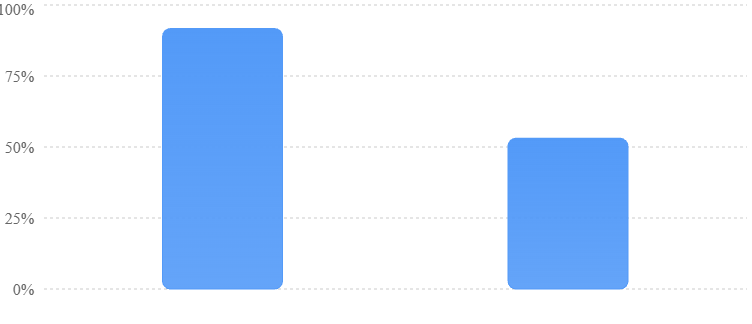 Derived from 7,476 of 8,150 UAVs and 112 of 211 missiles. Figures concern May 2026 and different threat populations; they are not measures of relative value or an estimate of the performance of a specific interception system. A further limitation concerns the meaning of interception. Official reporting may incorporate targets physically destroyed, disrupted by electronic warfare or otherwise assessed as neutralised, depending on the reporting category. The military benefit of an engagement therefore depends not only on whether a target is recorded as intercepted, but also on where it falls, whether its warhead detonates, whether infrastructure is damaged and whether the defending unit retains sufficient capacity to meet subsequent attacks. A national defensive assessment must combine interception statistics with actual infrastructure damage, civilian casualties and operational continuity. The economic calculation behind drone interceptionThe economics of drone warfare are frequently reduced to a comparison between the price of an attacking drone and the price of the interceptor used against it. That comparison is relevant, but incomplete. A defensive engagement produces value by reducing the probability and consequences of damage. Those consequences may include the replacement cost of destroyed equipment, lost electricity generation, industrial downtime, emergency repairs, interruption of public services and human casualties. A more complete assessment must therefore consider both direct defensive expenditure and the expected losses prevented. The relationship can be expressed conceptually as: Expected defensive value = expected losses avoided − the full cost of defensive action. This framework is useful only if the underlying assumptions are explicit. Reliable estimates require knowledge of the probability of target impact, the effectiveness of different countermeasures, the value of the asset at risk and the wider consequences of damage. Publicly available data do not support a credible nationwide calculation of Ukraine’s complete cost per successful interception across all weapons classes. In particular, unit prices quoted for individual drones or missiles often refer to different contract volumes, configurations, ammunition types, support arrangements and production periods. Assigning one universal figure to the cost of a Shahed interception would therefore conceal more uncertainty than it resolves. Cost structure of a sustained defensive campaign
The table shows why evaluating defence solely through ammunition prices can result in poor procurement decisions. An inexpensive defensive weapon may be attractive when it reliably engages a suitable target. The same system may be ineffective or economically wasteful when used outside its operational envelope. Likewise, employing a sophisticated interceptor may be entirely justified against a threat capable of causing catastrophic damage. The appropriate goal is efficient defensive allocation, not the indiscriminate substitution of expensive systems with cheap ones. Infrastructure protection as a national security functionRussia’s repeated attacks on Ukrainian energy infrastructure demonstrate that long-range strike campaigns can produce significant consequences even when many incoming weapons are intercepted. The United Nations Human Rights Monitoring Mission documented systematic attacks against Ukraine’s energy generation, transmission and distribution facilities during the winter of 2025–2026. The UN report covering 1 December 2025 to 31 May 2026 described damage to already degraded infrastructure, emergency electricity outages affecting millions of civilians and substantial disruption to heating and essential services. These effects are particularly significant because electricity infrastructure operates as an interconnected system. Damage to one component can create wider problems through transmission constraints, local distribution failures, equipment shortages and repair delays. The economic consequences may substantially exceed the physical replacement cost of the damaged asset. The strategic significance lies in the relationship between military operations and civilian resilience. A power station, transmission substation or heating network is not merely an isolated physical asset. It may support hospitals, water supply, telecommunications, rail services, industrial production and emergency response. The consequences of an attack therefore propagate through several sectors. This makes infrastructure protection a strategic economic issue alongside its military and humanitarian dimensions. The worsening civilian consequences of long-range warfareThe humanitarian record provides an essential measure of the effects that remain despite Ukraine’s extensive defensive effort. According to the UN Human Rights Monitoring Mission’s August 2026 report, at least 372 civilians were killed and 2,349 injured during that month. Across January–August 2026, the UN documented 2,222 civilians killed and 13,058 injured, a total of 15,280 verified civilian casualties. The mission reported that the eight-month total was 55% higher than the corresponding period of 2025. Long-range weapons, including missiles and drones, accounted for 47% of documented civilian casualties in August. Short-range drones accounted for a further 30%, primarily in frontline areas. These categories describe different operational environments. They should not be interpreted as a single estimate of casualties caused by Russian long-range one-way attack drones alone. Source: Protection of Civilians in Armed Conflict — August 2026 — OHCHR — September 2026. Verified civilian casualties, January–August
Civilian casualties in Ukraine OHCHR-verified killed and injured civilians, January–August of each year. Later reporting and revisions may affect comparisons. ■ Killed ■ Injured Source: OHCHR, September 2026. Totals are calculated from the published killed and injured figures. The statistics concern all documented conflict-related civilian casualties in Ukraine, not exclusively drone attacks. The figures show a substantial worsening of civilian harm in 2026. They do not, by themselves, establish the contribution of any individual Russian weapons programme or the causal effect of a particular change in drone technology. However, the evidence makes clear that the growth of long-range strike warfare is occurring within a broader escalation of attacks affecting civilians. The strategic importance of energy-system resilienceProtecting electricity infrastructure requires more than intercepting incoming weapons. A resilient energy system must also be capable of isolating damage, maintaining essential services, restoring supply and operating under conditions of limited equipment availability. This creates an important distinction between physical defence and functional resilience. Physical defence seeks to prevent an attack from reaching an asset. Functional resilience seeks to prevent damage from causing prolonged disruption. Both are necessary. A critical installation may receive extensive air defence coverage and still experience interruptions from attacks against transmission infrastructure elsewhere. Conversely, a facility with strong backup systems and effective repair procedures may recover relatively quickly from limited physical damage. The Ukrainian experience therefore shows that national security cannot be evaluated solely by counting air defence batteries or interceptor inventories. Civilian infrastructure redundancy, repair capability, available spare parts and emergency coordination form part of the wider defensive system. The UN’s September 2026 update warned that continuing attacks against electricity, heating and gas infrastructure were increasing the vulnerability of Ukrainian civilians as winter approached. The organisation also documented the cumulative effects of damage sustained during previous winters. The relationship between infrastructure damage and economic resilienceThe economic consequences of infrastructure disruption extend beyond the energy sector. Electricity interruptions can affect industrial output, refrigerated supply chains, information technology, financial services, logistics and the availability of public services. For an industrial enterprise, the relevant economic loss may include not only damaged equipment, but also interrupted production, delayed deliveries, equipment degradation and the cost of temporary power generation. For a regional authority, energy outages may increase expenditure on emergency shelters, medical support, transport alternatives and the provision of essential services. For a national government, repeated repairs may divert resources from capital investment, military procurement and long-term reconstruction. These mechanisms help explain why a sustained campaign against infrastructure can impose significant economic costs even when individual attacks cause relatively limited physical damage. The effects are cumulative and depend on network design, available spare equipment, repair speed and the duration of the disruption. Civilian infrastructure exposure and defensive priorities
These consequences are analytically plausible across interconnected infrastructure systems. Their magnitude depends on the characteristics of each network; the table does not assert that every consequence occurred at every Ukrainian installation. The expansion of public-private air defenceOne of the more unusual institutional adaptations in Ukraine has been the incorporation of private companies into authorised air defence activities. On 8 June 2026, the Ukrainian Ministry of Defence reported that 30 companies had joined a pilot initiative involving private-sector air defence groups. Forty-three companies had applied, and several authorised groups were already conducting assigned missions. The ministry reported more than 20 hostile aircraft downed by participating groups, including Shahed-type attack drones and Zala reconnaissance UAVs. It also reported the destruction of a jet-powered Shahed-type aircraft by one of the groups. The programme is significant because it extends defensive participation beyond conventional military units while retaining an authorised framework. Its wider significance concerns institutional capacity. Governments confronting extensive drone threats may be unable to provide equal defensive coverage to every industrial installation through conventional military assets alone. The integration of authorised civilian operators can potentially provide additional local defensive capacity, particularly when the state establishes clear training, identification, command, safety and accountability requirements. However, this model cannot be transferred automatically to European Union member states. National laws governing the use of force, aviation safety, military command authority, weapons possession and liability differ significantly. The Ukrainian approach should therefore be studied as an institutional adaptation developed under wartime conditions, not as an immediately transferable legal model for peacetime Europe. Defence innovation and the importance of verified battlefield feedbackThe development of modern Ukrainian counter-drone capabilities is linked to the growing use of digital systems for recording battlefield results. Ukraine’s DELTA platform has been used to document engagements, while the Brave1 ecosystem supports the identification and adoption of defence technologies. The importance of these systems lies in the possibility of connecting operational observations with procurement and product improvement. Manufacturers can potentially identify recurring technical problems, understand how their products perform in different environments and modify designs more quickly. Military authorities can use structured operational information to identify promising technologies and allocate procurement resources. Yet such systems require careful statistical governance. Video confirmation can strengthen the evidentiary basis for an engagement, but it does not automatically establish that every recorded target was destroyed permanently or that the dataset is free from selection effects. A reliable performance assessment requires consistent definitions, independent validation where feasible and an understanding of what each reporting category actually measures. The limits of defensive successHigh interception rates can coexist with serious civilian damage. The reasons are straightforward. Even a relatively small proportion of successful penetrations can inflict substantial damage when attacks are numerous or when particular weapons strike important installations. Damage may also occur from falling debris, unsuccessful engagements or attacks against targets located outside the effective coverage of particular defensive systems. Furthermore, sustained defensive success depends on the availability of personnel, ammunition and functioning equipment during subsequent attacks. The proper measure of success is therefore multidimensional: the defender must minimise casualties, protect critical functions, preserve military operations and maintain its ability to respond over time. A single monthly interception rate cannot capture all these outcomes. A strategic framework for assessing sustainable air defenceEuropean governments studying Ukraine’s experience should distinguish between five dimensions of defensive performance.
These dimensions are interconnected, but they should not be combined into an arbitrary numerical index without defensible measurement rules. A system may perform strongly in one dimension and poorly in another. High technical interception effectiveness can be undermined by inadequate replenishment. Strong infrastructure recovery may compensate for limited physical protection in some sectors, but not where the consequences of an attack are irreversible or involve substantial loss of life. The policy objective is therefore balanced defensive performance rather than the maximisation of any one metric. Chapter 3 — Key judgmentsUkraine’s defensive adaptation demonstrates that sustained protection against unmanned warfare requires an integrated national effort involving military organisations, domestic manufacturers, digital procurement systems, authorised industrial partners and civilian infrastructure operators. The country’s official 2026 figures demonstrate rapid technological diversification, substantial procurement demand and extensive counter-drone engagement activity. Their different statistical definitions must be preserved when drawing conclusions about operational effectiveness. The growing importance of low-cost interceptor drones does not remove the requirement for sophisticated missile defence. The defender must retain the ability to respond to threats whose flight characteristics and destructive potential exceed the capabilities of inexpensive countermeasures. The humanitarian evidence establishes that significant civilian harm and infrastructure disruption can persist even during periods of high reported interception effectiveness. What would change the assessment: independently audited procurement-to-delivery statistics, consistent system-level interception performance data, reliable nationwide figures on infrastructure recovery times and credible evidence that defensive production is either keeping pace with or falling materially behind operational consumption. Pillar I — Integrated Strategic AssessmentThe three chapters establish a central proposition: the Russia–Ukraine conflict is no longer adequately understood through the conventional relationship between offensive firepower and defensive military strength. It is increasingly a contest between two continuously adapting military-industrial systems. Russia’s principal strategic opportunity is to combine long-range strike infrastructure, differentiated unmanned aircraft and sustained industrial output to impose persistent operational pressure. Its constraints include production, logistics, technological reliability and Ukrainian countermeasures. Ukraine’s response demonstrates that effective resistance involves far more than acquiring additional missiles or drones. It requires continuous technological development, scalable procurement, operationally validated interception systems, reliable battlefield information and the ability to preserve essential infrastructure despite repeated attacks. The distinction between the two systems is not simply one of offensive versus defensive technology. Both countries must produce, replace and adapt large quantities of equipment while maintaining the ability to conduct conventional military operations. For European security, the most consequential lesson is the importance of time: the time required to detect and intercept a threat, manufacture replacement weapons, introduce technological modifications, restore damaged infrastructure and translate political decisions into operational capability. This leads to the strategic question addressed in Pillar II: whether the existing European defence architecture, industrial base and multinational procurement system can generate effective capability at a speed consistent with the requirements demonstrated by the war. The evidence developed in Pillar I provides the basis for examining NATO’s eastern flank, European military-industrial capacity, national defence differences and the practical limits of European strategic autonomy without presuming that higher expenditure automatically produces higher readiness. PILLAR II — THE EUROPEAN DEFENCE CHALLENGEChapter 4. NATO’s Eastern Flank: Vulnerability, Deterrence and EscalationPrincipal judgment: NATO’s eastern flank is undergoing a structural transformation in which the principal defence requirement is no longer limited to preventing territorial penetration by conventional forces. The Alliance must now defend a geographically extensive and economically interconnected area against combinations of military intimidation, airspace violations, unmanned aircraft, missiles, cyber operations, infrastructure disruption and the possibility of conventional escalation. The most consequential challenge concerns the relationship between the political credibility of collective defence and the operational availability of forces capable of responding to an increasingly heterogeneous threat environment without producing uncontrolled escalation. The eastern flank as a strategic system rather than a geographical frontierThe eastern flank of NATO cannot be reduced to a military line separating Russia and Belarus from the territories of the Alliance. It is a complex strategic system involving northern European maritime routes, the Baltic region, Poland, Central European reinforcement corridors, the Black Sea, southeastern European infrastructure and the transportation networks connecting these areas with the industrial and military resources of Western Europe. Its defence depends on the capacity to move and sustain forces over considerable distances while maintaining the continuous functioning of communications, transport systems, energy infrastructure and military command networks. Consequently, its vulnerability cannot be assessed simply by counting the number of permanently deployed combat brigades or air defence batteries. A geographically distant logistics hub may be operationally indispensable to a formation deployed near the Russian frontier, while a disruption to rail transportation, electricity transmission or digital communications may delay military reinforcement without requiring the destruction of a major military installation. This relationship between physical geography and functional dependence is increasingly important because Russia’s demonstrated investment in long-range strike technologies expands the range of locations that European governments must consider within their defensive planning. Nevertheless, the ability to strike an object and the political intention to attack a NATO member remain analytically separate. The existence of Russian long-range military capabilities does not establish an imminent decision to initiate a direct war against the Alliance. NATO’s updated regional defence plans, approved at the 2023 Vilnius Summit and subsequently supported by more demanding capability requirements, reflect the need to strengthen forward defence, reinforcement and readiness across several operational domains. The Alliance’s 2025 capability targets specifically identify air and missile defence, long-range weapons, logistics and large land manoeuvre formations among the capabilities requiring additional investment. Source: Deterrence and Defence — NATO — 2026. The significance of these requirements is that European deterrence cannot be credible if reinforcement depends on infrastructure that remains insufficiently protected against the forms of attack now being developed and employed in Ukraine. From air policing to comprehensive territorial air defenceThe evolution of NATO’s air defence posture provides one of the clearest institutional indicators of the changing security environment. Traditional air policing arrangements were designed primarily to preserve the integrity of Allied airspace through surveillance, identification, interception and the management of unauthorised or potentially hostile aircraft. These missions remain essential, but their operational assumptions differ from those associated with the systematic defence of territory against large numbers of unmanned aircraft and missiles. A conventional air policing response generally concerns identifying and responding to a relatively limited number of aircraft. A complex unmanned threat may require the simultaneous tracking and classification of many objects with different flight characteristics, uncertain intentions and potentially conflicting identification information. The distinction became politically significant in September 2025, when Russian drones violated Polish airspace, followed by additional airspace incidents elsewhere on NATO’s eastern flank. On 12 September 2025, NATO announced Eastern Sentry, a multinational activity intended to strengthen vigilance and defensive responsiveness across the eastern flank. The operation incorporated conventional military assets alongside technologies and procedures designed to address the growing drone threat. Source: NATO Launches Eastern Sentry to Bolster Posture Along Eastern Flank — NATO — September 2025. The subsequent institutional development is particularly relevant. NATO’s integrated air and missile defence documentation, updated on 7 October 2026, records that the Alliance has moved during 2026 towards a comprehensive Air Defence posture that integrates its long-established Air Policing mission with Eastern Sentry and other defence activities. This transition broadens the range of threats for which Allied air defence is organised, while preserving the importance of national contributions and centralised operational coordination under NATO command. Source: NATO Integrated Air and Missile Defence — NATO — October 2026. The operational significance is substantial. NATO is adapting from a posture in which air sovereignty is maintained primarily through conventional aircraft interception towards one in which persistent surveillance and differentiated defensive responses must address a more extensive range of threats. This is not evidence that the Alliance has completed the transition. The existence of an agreed operational model does not establish that all necessary sensors, aircraft, ground systems, inventories and trained personnel are already available in sufficient quantities. NATO’s eastern-flank security architecture
The table identifies functional exposure, not a published NATO ranking of national vulnerability. The operational relationships derive from the Alliance’s regional defence structure and its increasing emphasis on reinforcement, resilience and integrated air defence. The strategic importance of military mobilityEuropean deterrence depends not only on the forces permanently stationed near a potential conflict area, but also on the credibility of reinforcement. Reinforcement is a logistical process extending across national borders and involving the movement of personnel, military vehicles, ammunition, fuel, maintenance equipment and medical resources. Its effectiveness depends on infrastructure that is often owned, operated or regulated by civilian authorities. Rail capacity, bridge load limits, port facilities, customs arrangements, road networks and digital information systems influence how rapidly military forces can move from their home bases to operational locations. This creates an important strategic relationship between military planning and civilian infrastructure governance. The European Union’s role in transport policy, infrastructure investment and cross-border regulatory coordination can directly support NATO’s military reinforcement requirements, even though the EU does not exercise NATO’s collective defence command responsibilities. Military mobility is therefore one of the areas in which European strategic autonomy should be assessed through practical implementation rather than institutional rhetoric. A multinational force may possess adequate combat vehicles and personnel but still experience operational limitations if its reinforcement route cannot support the required movement or if national administrative procedures delay deployment. The 2025 Hague Defence Investment Plan explicitly includes critical infrastructure, resilience and related requirements within the broader investment commitments of NATO members, demonstrating that the Alliance recognises the importance of capabilities extending beyond conventional combat equipment. Source: The Hague Summit Declaration — NATO — June 2025. Forward presence and the operational credibility of deterrenceThe defence of the Baltic region illustrates the increasing importance of permanent or sustained Allied military presence. Germany’s decision to station a combat brigade in Lithuania represents a substantial change in the organisation of its land forces and its contribution to forward defence. The Bundeswehr’s Panzerbrigade 45 is planned to include approximately 4,800 military personnel and five battalions by 2027. The German Ministry of Defence has also described an additional civilian component, bringing the planned overall German presence to approximately 5,000 military and civilian personnel. The brigade is intended to maintain a permanent presence in Lithuania, with full operational readiness planned for the end of 2027. These figures describe a force-generation objective, not the number of personnel demonstrated to be continuously operational in Lithuania in October 2026. Source: Panzerbrigade 45 — Bundeswehr — 2026. The strategic significance is broader than the number of soldiers involved. A permanently stationed combat formation changes the political and military consequences of an attack because Allied personnel and equipment are already physically integrated into the defence of the host nation. It also requires Germany to sustain personnel rotations, family arrangements, training infrastructure, ammunition, maintenance and command structures over a prolonged period. The commitment therefore tests the ability of a major European military power to generate and sustain a substantial formation abroad while maintaining its other NATO obligations. Why forward presence does not eliminate the reinforcement problemPermanent deployments are important instruments of deterrence, but they cannot substitute for the wider force structure required during a major military confrontation. A deployed brigade depends on ammunition supplies, communications, air protection, medical evacuation, engineering support and access to reinforcement. It also operates within a broader command system involving host-nation forces and other NATO formations. If European governments allocate substantial resources to forward deployments without corresponding investment in sustainment, they risk producing a visible military presence that is less resilient than its nominal strength suggests. The operational requirement is therefore to connect forward presence with protected rear-area logistics, integrated air defence and sufficient reserve capacity. The distinction between visible deployment and operational endurance is especially important when assessing deterrence. An adversary evaluating NATO’s ability to respond to aggression would consider not only the number of soldiers positioned near the frontier, but also the Alliance’s capacity to reinforce, protect and sustain those formations after the opening phase of a conflict. The escalation problem created by airspace violationsAirspace violations create a difficult relationship between territorial sovereignty, military response and escalation management. Not every violation carries the same military or political meaning. An aircraft may enter an airspace because of navigation failure, loss of control, electronic interference, deliberate reconnaissance, coercive signalling or an intended attack. These explanations can produce similar initial observations while implying very different levels of threat. The defensive authority must therefore make decisions under uncertainty while preserving the ability to react quickly if hostile intent becomes evident. A delayed response can permit damage or create doubts about defensive credibility. An inappropriate response can endanger civilian populations, disrupt aviation or contribute to escalation. The key challenge is the maintenance of a reliable chain connecting detection, classification, decision-making and authorised military action. NATO’s political mechanisms remain essential in this process. Article 4 of the North Atlantic Treaty provides for consultations when a member considers its territorial integrity, political independence or security threatened. Article 5 concerns collective defence in response to an armed attack, with the treaty providing that each member takes such action as it deems necessary, including the possible use of armed force. The occurrence of an airspace violation does not automatically establish that an armed attack has occurred within the meaning of Article 5. Source: The North Atlantic Treaty — NATO — April 1949. Distinguishing security incidents from military escalation
The table describes analytical categories rather than automatic NATO rules of engagement. Actual decisions depend on circumstances, legal authority, intelligence assessments and the political decisions of Allied governments. The Black Sea as a distinct strategic environmentThe southeastern flank presents security problems different from those of the Baltic region. Romania and Bulgaria must consider the interaction between territorial air defence, maritime security, commercial navigation and the continuing military confrontation in the wider Black Sea environment. The region contains important transport routes and port infrastructure, while proximity to Ukrainian and Russian military operations creates opportunities for incidents affecting vessels, aircraft and coastal facilities. Maritime incidents are especially complex because the legal position of a commercial vessel, its flag state, the location of an event and the circumstances of an attack can alter the applicable responsibilities and response options. The destruction of or damage to commercial shipping does not automatically establish the intention to attack NATO as an alliance. Nevertheless, a pattern of repeated incidents affecting ships, ports or coastal infrastructure could increase political pressure for stronger surveillance and coordinated protective measures. Recent developments reinforce the importance of this distinction. On 14 October 2026, Bulgaria’s defence minister indicated that the country expected to join a NATO anti-drone initiative before the end of the month, against a background of serious maritime incidents in the Black Sea. Public reporting did not establish definitive responsibility for every incident. The strategic significance is the increasing intersection of commercial maritime security and unmanned warfare. The broader operational requirement is to ensure that military surveillance can support maritime situational awareness without confusing commercial shipping protection with offensive naval operations. The requirements of credible conventional deterrenceThe credibility of NATO deterrence depends on an adversary’s expectation that aggression would produce consequences outweighing its potential benefits. That expectation is influenced by military capability, political commitment, readiness, reinforcement and alliance cohesion. Declaratory commitments remain important, but they are not substitutes for deployable military resources. An effective eastern-flank posture requires sufficient conventional forces to resist or respond to territorial aggression, air and missile defences that protect those forces, logistics that sustain operations, and command structures capable of coordinating multinational responses. It must also preserve the capacity to manage incidents below the threshold of large-scale armed conflict. This is particularly important in the case of unmanned systems because their relatively low individual cost and the possibility of ambiguous employment can complicate deterrence. A state may seek to create pressure through repeated limited incidents without committing the conventional forces normally associated with a major offensive operation. Defensive planning must therefore address both the ability to defeat large-scale aggression and the institutional capacity to respond proportionately to lower-level coercion. Chapter 4 — Key judgmentsNATO’s eastern flank is becoming a test of integrated territorial defence rather than merely forward military deployment. The transition during 2026 towards a broader NATO Air Defence posture demonstrates an institutional recognition of the changing aerial threat, but does not independently establish that sufficient defensive capacity has already been delivered. The German brigade in Lithuania provides a concrete example of the increasing European commitment to forward defence, while also illustrating the importance of personnel availability, logistics and sustainment. The principal challenge is to preserve the credibility of collective defence across a spectrum extending from ambiguous airspace incidents to conventional military aggression. What would change the assessment: verified improvements in NATO’s sustained air-defence coverage, successful multinational exercises demonstrating reinforcement under simultaneous infrastructure disruption, completed readiness certification for major forward formations, or official evidence of a material deterioration in Russia’s capacity to threaten European territory. Chapter 5. European Defence Industrial Capacity, Procurement and Technological SovereigntyPrincipal judgment: Europe’s principal industrial defence weakness is not the absence of financial resources or advanced engineering capabilities, but the incomplete relationship between national procurement decisions, manufacturing scale, industrial investment, supply-chain security and the operational requirements of multinational armed forces. The rapid expansion of defence expenditure creates an opportunity to correct these weaknesses, but it also creates the risk that governments will reproduce existing industrial fragmentation at a substantially higher financial cost. European technological sovereignty will be determined by control over critical components, production processes, software, intellectual property and the ability to maintain and modify military systems throughout their operational life. The difference between financial mobilisation and industrial transformationThe expansion of European defence spending represents one of the most consequential fiscal developments in the region’s contemporary security policy. The European Defence Agency’s July 2026 data show that aggregate defence expenditure by the 27 EU member states reached €418 billion in 2025, representing approximately 2.2% of their combined gross domestic product. The increase was significant, but expenditure alone cannot establish whether the resulting military capabilities correspond to Europe’s most pressing operational requirements. Different expenditure categories generate different forms of military value over different periods. Personnel expenditure supports recruitment, compensation and force retention. Research spending finances technological development that may not produce fielded systems for several years. Equipment procurement can generate future military capability, but contractual obligations do not necessarily result in immediate deliveries. Infrastructure spending can improve operational resilience while producing relatively little visible combat equipment. Consequently, an assessment of the European industrial response must examine not only the aggregate amount spent but also the distribution of that expenditure, the structure of procurement and the readiness of the industrial system to satisfy orders. According to the European Defence Agency, equipment procurement reached €115 billion in 2025, while defence research and development accounted for approximately €17 billion. Collaborative procurement represented 24% of total equipment procurement. These figures are particularly revealing because they demonstrate that, despite a substantial expansion of investment, most equipment expenditure continued to take place outside the statistical category of collaborative procurement. European defence investment: the industrial structure behind the figures
The figures are drawn from the European Defence Agency’s published statistical series and the European Commission’s Readiness Roadmap. Procurement and investment categories are not interchangeable, and the collaborative share cannot be treated as the proportion of European-produced equipment. EDA Defence Data — European Defence Agency — July 2026; Readiness Roadmap 2030 — European Commission — October 2025. The comparison between the 24% observed collaborative procurement share and the European Defence Agency’s 35% benchmark indicates a difference of 11 percentage points. This is a statistical gap between an observed value and a voluntary collective benchmark, not an estimate of how much additional expenditure is required to achieve the target. A higher collaboration rate could improve economies of scale and interoperability, but only when the participating states agree on sufficiently similar requirements, production schedules, technical standards and maintenance arrangements. Why fragmented procurement can undermine military effectivenessDefence procurement fragmentation produces consequences extending beyond higher acquisition prices. When European countries procure equipment independently, manufacturers may be required to develop separate configurations for relatively small national orders. Each configuration can introduce different software, communications interfaces, maintenance procedures, spare parts, ammunition requirements and training arrangements. These differences can increase the complexity of multinational operations even when the underlying equipment performs well. The problem becomes particularly significant during prolonged conflict, when military forces must replace damaged equipment, integrate systems supplied by different countries and maintain continuous access to spare parts. Common procurement can reduce some of these difficulties, but not all multinational acquisitions produce standardised equipment automatically. Participating governments may still demand national modifications, specific industrial workshares or different operational configurations. The strategic value of collaborative procurement therefore depends on the extent to which cooperation produces practical commonality. For an air defence system, that commonality may involve missile compatibility, command interfaces, radar integration, maintenance procedures and training standards. For autonomous systems, it may involve communications security, software architecture, navigation resilience, payload interfaces and the ability to introduce rapid technical updates. A procurement agreement that standardises only the administrative purchasing process offers fewer operational advantages than one that also creates sustained technical interoperability. Procurement fragmentation and its industrial consequences
The relative importance of each obstacle differs by weapons category. Fragmentation is not always avoidable, particularly where strategic requirements genuinely diverge. The aim should be to reduce unnecessary duplication without eliminating legitimate differences in military roles. The industrial significance of stable demandDefence manufacturers make investment decisions according to their expectations of future orders, financing conditions and production risks. A government announcement may create political confidence, but it does not automatically provide the contractual certainty necessary to construct new facilities, acquire machinery or employ specialised personnel. Industrial expansion normally requires a more durable signal of demand. Manufacturers need to know whether additional production will be purchased over several years, whether critical inputs can be sourced reliably and whether the expected order volume justifies the necessary capital investment. This is especially important for ammunition, explosives, propulsion components, military electronics and other products requiring specialised manufacturing facilities. Capacity expansion may also be constrained by environmental permits, safety regulations, workforce availability and the time required to qualify additional suppliers. The time needed to increase output therefore varies considerably across products. Some relatively simple unmanned systems may be adapted or assembled quickly when components are available. More sophisticated missiles, advanced radar systems and complex propulsion technologies can require lengthy production and testing processes. It would be misleading to apply a single production-expansion timeline to the entire European defence-industrial sector. European industrial sovereignty: a question of control rather than geographyTechnological sovereignty is frequently discussed in terms of the nationality of the manufacturer supplying a defence product. This definition is insufficient. A system may be assembled in Europe while depending on imported semiconductors, proprietary foreign software, externally controlled communications services or components that cannot be replaced without third-party authorisation. The reverse can also occur: a European company may retain significant technical control over a product whose manufacturing supply chain extends across several allied countries. A meaningful assessment of sovereignty therefore requires examining the rights and capabilities necessary to operate, sustain and modify a system independently. The most important variables include access to technical documentation, the ability to alter software, control over essential encryption and communications functions, intellectual-property rights, component substitution, maintenance capability and the availability of alternative suppliers. Sovereignty should not be confused with complete national self-sufficiency. The latter may be economically inefficient or technologically unrealistic for many advanced systems. The strategically relevant objective is to avoid dependencies that could prevent Europe from operating essential capabilities during a crisis. Critical industrial dependencies
No uniform numerical dependency ratio can be assigned to these categories without product-specific supply-chain evidence. The European Defence Industry ProgrammeThe European Defence Industry Programme represents a further development in the Union’s industrial policy architecture. Formally adopted in December 2025, EDIP provides €1.5 billion in grants for 2025–2027, including €300 million allocated to a dedicated instrument supporting Ukraine’s defence industry. Its importance extends beyond the monetary allocation. The programme introduces mechanisms intended to encourage collaborative procurement, strengthen manufacturing capacity, improve security of supply and support more durable forms of industrial cooperation. It also establishes a framework for closer cooperation between European and Ukrainian defence producers. Source: European Defence Industry Programme — Council of the European Union — December 2025. The €1.5 billion budget should not be confused with the much larger national defence expenditures reported by the European Defence Agency. EDIP is primarily a targeted EU-level industrial-policy instrument. Its effectiveness must be evaluated according to the projects it supports, the additional cooperation it generates and its contribution to overcoming specific industrial bottlenecks. Comparing the programme’s budget directly with European military expenditure would obscure the different functions of the two financial mechanisms. SAFE and the financing of collaborative acquisitionThe Security Action for Europe instrument introduces a different financial model. SAFE provides up to €150 billion in loans to support defence investment by participating member states, with the intention of encouraging common procurement and strengthening Europe’s industrial base. Unlike a grant programme, a loan instrument creates financing obligations for the borrowing state. The existence of the facility does not mean that its entire nominal amount has already been spent or converted into delivered military equipment. The financing mechanism is intended to support priority capabilities, including air and missile defence, drones and other categories relevant to military readiness. The Commission also applies industrial-origin and supply-chain eligibility requirements, including rules governing the proportion of component costs associated with the EU, European Economic Area countries and Ukraine. These requirements are intended to strengthen European production and reduce strategic dependencies, although they must be implemented without unnecessarily restricting access to urgently required capabilities. Source: Future of European Defence — European Commission — 2026. Comparing the principal European financing instruments
Financial envelopes, planned expenditure, loans, grants and actual outlays are different accounting categories. They should not be summed to obtain a supposed single amount of European defence spending. The fiscal dilemma of accelerated rearmamentHigher defence budgets create important macroeconomic and public-finance consequences. A sustained increase in government expenditure can support industrial production, employment and technological investment, particularly when procurement is directed towards domestic and European suppliers. However, these benefits depend on productive capacity, the structure of demand and the wider fiscal environment. Where manufacturing capacity is already constrained, rapid expenditure growth may increase prices before it produces proportional increases in output. Governments may also face difficult choices between defence investment, debt-service costs and other public priorities. These constraints differ substantially between EU member states. A country with relatively strong public finances and substantial borrowing capacity may find it easier to support long-term industrial investment than a state operating under more restrictive fiscal conditions. European financing mechanisms can reduce some of these asymmetries, but they cannot eliminate differences in national debt, industrial capacity or political priorities. The strategic consequence is that the distribution of European defence investment may not automatically correspond to the geographic distribution of operational risk. The importance of defence research and developmentThe increase in European defence research and development expenditure from €17 billion in 2025 towards a projected €20 billion in 2026 indicates greater recognition of technological competition. However, research expenditure must be connected to practical pathways for testing, procurement and manufacturing. A research programme can produce valuable technological knowledge without generating a deployable military system. Conversely, a relatively modest innovation programme may generate substantial operational benefits when it solves an urgent problem and can be scaled rapidly. The Ukrainian experience demonstrates the importance of maintaining short feedback loops between users and developers, but European institutions must adapt these practices within their own legal, financial and operational environments. A balanced research portfolio should preserve investment in long-term technologies while providing faster development routes for systems responding to immediate military requirements. Chapter 5 — Key judgmentsEurope possesses substantial financial and industrial resources, but the current defence investment expansion will produce maximum strategic value only if governments reduce unnecessary procurement fragmentation, improve long-term production planning and address critical supply-chain dependencies. The observed collaborative procurement share remains below the European Defence Agency’s collective benchmark, demonstrating that higher expenditure has not yet produced the desired degree of common acquisition. SAFE and EDIP provide distinct instruments for supporting investment and industrial cooperation. Their contribution to military readiness must be evaluated through contracts, delivered equipment, production capacity and operational integration rather than headline financial envelopes. Technological sovereignty depends on the ability to operate, modify, repair and reproduce essential defence systems during prolonged crises. What would change the assessment: evidence of sustained improvement in collaborative procurement, independently documented reductions in major production bottlenecks, verified increases in industrial output and measurable reductions in critical external technological dependencies. Chapter 6. Italy, France, Germany and the United Kingdom: National Strategies and Capability GapsPrincipal judgment: Italy, France, Germany and the United Kingdom possess complementary military and industrial capabilities, but their defence systems are shaped by different strategic geographies, constitutional arrangements, procurement structures, fiscal conditions and force commitments. The resulting divergence is not inherently detrimental to European security; it becomes a strategic weakness when national priorities prevent effective cooperation in capabilities that must function collectively. The principal policy challenge is therefore to identify where specialisation strengthens the European defence system and where fragmentation produces avoidable operational vulnerabilities. Four defence models within an increasingly demanding European security environmentThe four countries examined occupy different positions within the European defence architecture. France and the United Kingdom maintain independent nuclear deterrents and substantial military aerospace and naval capabilities. Germany is central to European land reinforcement, industrial mobilisation and the logistics of defending NATO’s eastern flank. Italy combines advanced aerospace, naval, electronics and missile-related industrial capabilities with major security responsibilities in the Mediterranean. These differences affect the allocation of defence resources. A government responsible for nuclear deterrence and continuous at-sea operations faces different long-term investment obligations from a country principally concerned with territorial defence, armoured formations and reinforcement corridors. Likewise, a state with extensive maritime responsibilities must allocate resources to naval surveillance, port protection and maritime infrastructure that may not figure as prominently in another country’s immediate planning. The objective of European coordination should therefore not be to impose identical force structures. It should be to ensure that national capabilities contribute coherently to collectively identified requirements. The most important areas for coordination are those in which military effectiveness depends on interaction among national forces: air and missile defence, strategic communications, logistics, ammunition supply, surveillance, military mobility and multinational command networks. National financial commitments: a comparison of different planning instruments
These figures cannot be ranked as comparable national defence expenditure totals. France’s multiyear programme, Germany’s annual budget allocations, the UK’s GDP-based commitment and Italy’s programming document have different accounting definitions and time horizons. Sources: Italian Defence Programming Documents — Ministry of Defence — July 2026; Updated French Military Programming Law — Légifrance — August 2026; German Federal Defence Budget 2027 — Deutscher Bundestag — September 2026; Strategic Defence Review 2025 — UK Government — June 2025. Italy: the challenge of maintaining a credible Mediterranean defence role within the European rearmament cycleItaly’s strategic position differs from that of countries located directly on NATO’s eastern land frontier. The central Mediterranean, the Adriatic, maritime transport routes, offshore infrastructure and the wider security environment extending towards North Africa all contribute to Italy’s defence requirements. This geography creates a broad set of responsibilities involving naval forces, air surveillance, maritime security, expeditionary operations and the protection of transport and energy infrastructure. Italy must nevertheless contribute to NATO’s collective defence requirements in Central and Eastern Europe. The consequence is a potential competition for resources between geographically distinct operational commitments. An Italian air defence asset assigned to protecting a national installation cannot simultaneously provide coverage to another European area unless it is redeployed or duplicated. Likewise, military personnel and platforms committed to maritime security may not be immediately available for reinforcement operations elsewhere. This means that Italy’s defence planning must preserve the ability to allocate forces across several missions without assuming that the resources required for one geographical theatre can always be reassigned without cost. Italian industrial strengths and technological opportunitiesItaly possesses important defence-industrial capabilities in radar, electronic systems, military aircraft, helicopters, naval platforms, missile-related technologies and systems integration. The principal national industrial actors include Leonardo and Fincantieri, together with Italian participation in multinational missile and defence programmes. The relevance of these companies extends beyond national procurement. European integrated air defence depends on technologies and industrial competencies associated with sensors, command systems, naval air defence, electronic warfare and the integration of different military platforms. Italy’s industrial position therefore creates opportunities to participate in common European programmes without duplicating the entire range of technologies domestically. However, industrial participation and operational capability must be distinguished. A national company may manufacture a component used in a multinational system without the Italian armed forces possessing the corresponding equipment in the quantities required for sustained operations. Likewise, the presence of an advanced industrial base does not automatically establish national independence across the entire supply chain. Italy’s strategic objective should be to exploit its technological strengths within programmes that provide both industrial continuity and operational benefits. Italy’s maritime exposure and the unmanned threatThe growth of unmanned warfare creates a particularly relevant challenge for naval and coastal security. Ports, naval bases, maritime energy infrastructure and commercial transport networks can be exposed to different categories of unmanned threats. Airborne drones are only one component of the problem. Naval planners must also consider unmanned surface and underwater systems, surveillance technologies and the possibility of coordinated attacks involving different platforms. Defending a naval installation therefore requires a layered approach involving surveillance, access control, physical protection, electronic systems and coordination with civilian authorities. The same challenge applies to strategically important ports that perform both commercial and military functions. A major port may support civilian trade, energy imports, naval operations and military reinforcement. Its security responsibilities consequently extend across several ministries, infrastructure operators and regulatory authorities. The operational priority is to ensure that these responsibilities are clearly allocated before a major crisis. Italy’s fiscal and procurement challengeItaly’s capacity to expand defence expenditure is influenced by its wider public-finance position. A substantial increase in military investment must be financed within a fiscal environment already shaped by public debt, expenditure commitments and the requirements of European fiscal governance. This creates an incentive to emphasise long-term procurement planning, common European programmes and industrial arrangements capable of distributing costs across participating states. However, collaborative procurement should not be treated as a substitute for national budgetary commitment. Even when a project benefits from EU financing, governments must still support their own acquisition obligations, personnel requirements and operating costs. The Ministry of Defence’s public programming documentation remained centred on the 2025–2027 multiyear programme in its July 2026 index, with the 2026 documentation then identified as under preparation. The absence of a fully examined 2026 national programme in the present evidence record prevents a defensible programme-by-programme assessment of Italy’s latest procurement allocations. Source: Documenti di programmazione — Ministero della Difesa — July 2026. The strategic issue is therefore not simply whether Italy increases its nominal defence expenditure, but whether additional investment is directed towards capabilities that connect national Mediterranean responsibilities with NATO’s wider readiness requirements. France: strategic autonomy under the pressure of accelerated rearmamentFrance’s defence model combines nuclear deterrence, substantial conventional military capabilities, a broad aerospace and naval industrial base and a longstanding commitment to maintaining national freedom of military decision-making. This model creates both significant strategic advantages and important financial obligations. The French nuclear deterrent requires sustained investment in specialised systems, personnel, infrastructure and industrial capabilities. These commitments cannot be readily displaced by shorter-term procurement priorities. At the same time, the requirements of high-intensity conventional warfare are increasing demand for ammunition, ground-based air defence, unmanned systems, electronic warfare and logistical endurance. France must therefore reconcile the maintenance of its strategic capabilities with the expansion of conventional defensive mass. The August 2026 revision of the French military programming frameworkThe French military programming framework underwent a significant update in August 2026. Law No. 2026-791 of 16 August 2026 revised the 2024–2030 military programming framework and introduced an additional €36 billion in resources for the 2026–2030 period. The updated schedule provides approximately €435.7 billion in programmed payment appropriations for the Defence Mission over 2024–2030, compared with the original schedule of approximately €400 billion. The law also establishes the objective of increasing France’s national defence effort from 2% of GDP in 2025 to at least 2.5% in 2030, with an objective of reaching 3.5% by 2035. These are different measures. The multiyear payment-appropriation schedule is not equivalent to the GDP-based defence-effort targets. Sources: Law No. 2026-791 Updating Military Programming for 2024–2030 — Légifrance — August 2026; Actualisation de la LPM: La France Intensifie Son Effort de Réarmement — Ministère des Armées — August 2026. French defence programming: original and updated annual schedulesBillions of current euros; Defence Mission payment appropriations
Source: Law No. 2026-791, Article 3. Annual figures are rounded, and calculated differences between displayed values may differ from the legislated changes derived from unrounded appropriations. These are programming figures rather than audited expenditure. The distribution of the increases is strategically relevant. The revised schedule accelerates the availability of budgetary resources during the second half of the programming period. This can support additional acquisition and industrial investment, but the effect on operational readiness depends on implementation schedules, contract execution and delivery capacity. A substantial increase in payment appropriations may support existing programmes, accelerated deliveries, additional acquisitions or other expenditures. The budget table alone does not establish how much of the additional funding has been allocated specifically to counter-drone systems or ground-based air defence. French industrial sovereignty and multinational cooperationFrance’s preference for preserving essential national defence capabilities creates a complicated relationship with European industrial integration. A strong national industrial base can improve strategic autonomy and create technologies that support the wider European defence system. However, it may also encourage procurement preferences that complicate multinational standardisation. The challenge is to distinguish between capabilities whose sovereign control is indispensable and those for which collaborative production would produce greater military value. For France, nuclear deterrence and certain strategic technologies involve considerations that differ fundamentally from the procurement of more numerous conventional systems. In areas such as air defence, electronic warfare, communications and unmanned technologies, cooperative arrangements can potentially strengthen both national security and European industrial scale. The French objective should therefore be assessed through its ability to preserve critical strategic control while participating effectively in common European capability development. Germany: industrial mobilisation and the reconstruction of European land defenceGermany occupies a central position within NATO’s European security architecture because of its economic scale, industrial capacity, geographic location and role in military reinforcement. Its strategic transformation since Russia’s full-scale invasion has involved a substantial increase in defence expenditure and a greater emphasis on conventional readiness. Germany’s 2026 defence financing framework provides a particularly important indication of the scale of the change. The federal defence budget contains approximately €82.69 billion in regular appropriations, accompanied by approximately €25.51 billion from the Bundeswehr special fund. Together, these elements produce approximately €108.2 billion in resources for 2026. The Bundestag’s September 2026 discussion of the draft 2027 budget identified proposed total defence expenditure of approximately €139.6 billion, combining €109.7 billion in the regular defence budget and €29.9 billion from the special fund. The 2027 amount is a draft figure and should not be treated as an enacted final budget. Source: Deutlicher Anstieg bei den Verteidigungsausgaben — Deutscher Bundestag — September 2026. German defence expenditure: budgeted and proposed resources
Source: German Bundestag, September 2026. Rounded figures. The 2027 column represents a government budget proposal, not final expenditure. These amounts are not directly interchangeable with NATO-standardised defence expenditure figures. This scale of budgetary expansion creates opportunities for accelerated modernisation, but it also raises questions about industrial absorption capacity. Defence expenditure can increase more quickly than the production capacity of certain weapons systems. A manufacturer may need additional facilities, qualified workers, components and testing capacity before orders translate into equipment available to military units. Germany’s industrial advantage is therefore important but must be converted into deliverable products and trained formations. Germany’s responsibility for European reinforcementGermany’s permanent brigade commitment in Lithuania demonstrates that its defence transformation extends beyond procurement. Sustaining a major land formation abroad requires a military organisation capable of recruiting, training, deploying and maintaining personnel and equipment over time. The brigade also requires integration with Lithuania’s armed forces, national infrastructure and NATO command arrangements. Its planned full operational capability by the end of 2027 makes this commitment a measurable test of German military implementation. The country’s wider responsibilities include support for military movements across central Europe, logistics, air defence and the industrial maintenance of conventional forces. Germany’s strategic challenge is therefore to combine domestic force regeneration with the capacity to support an extensive multinational defence architecture. Germany’s air and missile defence challengeGerman defence policy places substantial emphasis on ground-based air defence and the development of capabilities suited to different threat categories. This reflects the requirements of protecting military formations, logistics facilities and national infrastructure. However, creating a credible air defence network is not equivalent to purchasing a small number of advanced systems. Operational coverage depends on radar deployment, command integration, missile inventories, maintenance, trained crews and the compatibility of national systems with NATO’s wider network. Germany’s role in European air defence is particularly consequential because capabilities located in or supported from German territory can contribute to the defence of reinforcement routes and Allied forces. Its principal risk is the gap between financial commitments and the time required to produce sufficiently numerous operational systems. United Kingdom: military transformation through industrial renewal and technological integrationThe United Kingdom’s defence strategy combines an independent nuclear deterrent, naval and aerospace capabilities, NATO commitments and a growing emphasis on autonomous warfare and digitally integrated force structures. The Strategic Defence Review published in June 2025 identifies a transformation extending beyond conventional platform replacement. It calls for greater integration between military services, faster adoption of new technologies, expanded ammunition production and increased readiness for high-intensity conflict. The government committed to increasing defence spending to 2.5% of GDP by 2027 and expressed an ambition to reach 3% in the subsequent parliamentary period, subject to fiscal and economic conditions. The same review proposes significant investments in conventional military capabilities and industrial infrastructure. Source: The Strategic Defence Review 2025 — UK Ministry of Defence — June 2025. British defence industrial commitments
Source: New Munitions Factories and Long-Range Weapons — UK Ministry of Defence — June 2025; Strategic Defence Review 2025 — UK Ministry of Defence — June 2025. The commitment to establish additional munitions and energetics factories is especially important because energetic materials and their associated industrial processes can constrain ammunition production independently of final assembly capacity. The British approach recognises that industrial readiness depends on maintaining production capabilities before a crisis rather than attempting to recreate them after operational demand has already increased. However, the proposed quantities and investment envelopes remain implementation commitments. They do not establish that the new facilities have achieved their intended output or that the complete planned weapon inventory has been delivered. The British relationship between technology and military structureThe Strategic Defence Review’s emphasis on digital integration addresses a problem extending beyond individual weapons systems. Modern military capabilities often depend on the ability to connect sensors, operational command structures, communications networks and different categories of weapon. The British Digital Targeting Web initiative reflects the ambition to improve this integration. Its military value will depend on the reliability and security of the underlying data architecture, the interoperability of participating systems and the ability to maintain operations when communications are contested. The introduction of autonomy and advanced software also requires changes in training, maintenance and military organisation. A force designed around expensive manned platforms cannot achieve the full potential benefits of unmanned systems merely by adding them to existing procurement inventories. The operational concept, personnel structure and logistical arrangements must evolve together. Comparative national capability assessment
The table compares strategic functions and officially documented policies. It does not rank the four countries by military power or assert that one possesses superior overall readiness. The danger of treating industrial competition as strategic integrationEuropean cooperation is complicated by the fact that national defence industries compete for contracts, technological leadership and market access. Competition can encourage innovation, cost discipline and industrial efficiency. However, when defence procurement decisions are governed primarily by national industrial return rather than operational requirements, Europe risks creating overlapping systems that are difficult to integrate. This is particularly serious where multinational forces must share information, ammunition or maintenance infrastructure. The challenge is not to eliminate national industrial competition but to establish agreed standards and coordinated demand in areas where interoperability is operationally indispensable. National specialisation can strengthen European defence when it produces complementary capabilities within a shared architecture. It becomes problematic when programmes duplicate essential functions while leaving collective requirements unmet. Chapter 6 — Key judgmentsItaly, France, Germany and the United Kingdom are not pursuing identical defence models, and their differences reflect genuine strategic responsibilities. France’s updated military programming law and Germany’s substantial budget expansion demonstrate the scale of the current rearmament effort, while the United Kingdom’s industrial commitments emphasise manufacturing continuity and technological integration. Italy’s contribution is particularly relevant to the protection of Mediterranean maritime infrastructure and the integration of advanced electronics, aerospace and naval capabilities into common defence programmes. The fundamental challenge is to transform national strengths into interoperable military capabilities rather than allowing increased expenditure to reinforce industrial fragmentation. What would change the assessment: evidence that joint projects achieve common technical configurations and sustained deliveries, verified improvements in national readiness and ammunition stocks, completed industrial expansion projects, and comparable national data demonstrating that increased expenditure is producing deployable capability. Chapter 7. European Union Defence Integration, NATO Coordination and Transatlantic DependenciesPrincipal judgment: The central institutional challenge for European defence is the coexistence of several organisations that possess complementary but different forms of authority. NATO is responsible for collective defence planning and multinational military command, while the European Union can support financing, regulation, industrial policy, infrastructure and cooperation among its member states. National governments retain decisive authority over their armed forces, defence budgets and many procurement decisions. Europe’s military effectiveness will consequently depend less on the creation of additional political declarations than on the practical alignment of NATO operational requirements, EU industrial instruments and national implementation programmes. The institutional architecture of European securityEuropean security is not governed by a single political or military authority. The European Union possesses extensive competencies affecting industrial policy, trade, infrastructure, research and financial regulation, but its member states retain central responsibilities for national defence. NATO operates through its own treaty framework, integrated military command structures and collective defence arrangements. The two organisations overlap substantially in membership, but they are not institutionally interchangeable. The United Kingdom, for example, remains an important NATO military power while operating outside the European Union. Likewise, the EU includes member states whose defence arrangements and political positions do not correspond exactly to those of NATO members. This institutional complexity has important practical consequences. A European Commission initiative may support the financing of missile-defence equipment, but it does not independently establish the operational requirements or command arrangements under which that equipment would be used by NATO. A NATO capability target may identify the need for additional military resources, but NATO does not automatically possess the legal authority to direct national budget allocations or industrial production within member states. A national government may support a multinational defence objective while retaining procurement procedures that delay or complicate its implementation. The European defence problem is therefore partly a coordination problem among different sources of authority. The distinction between NATO capability planning and EU industrial policyNATO’s capability targets identify the types and quantities of forces and equipment required to execute the Alliance’s defence plans. Their implementation depends on national contributions, force generation, procurement and readiness. The European Union’s defence industrial initiatives operate through different mechanisms. They seek to support financing, collaborative procurement, production capacity, technological development and the functioning of the European defence industrial base. The relationship between the two is potentially complementary. NATO can provide a common operational framework defining the military functions that require strengthening. EU instruments can support some of the industrial and financial conditions necessary to deliver those capabilities. The danger arises when the two processes proceed without sufficiently precise coordination. A jointly financed European project may develop equipment that does not correspond to an urgent NATO requirement. Conversely, a NATO capability target may remain unfulfilled because participating governments cannot organise procurement or production efficiently. The appropriate objective is therefore not institutional competition, but the establishment of a reliable connection between military requirements and industrial implementation. The European Commission’s Readiness Roadmap 2030 explicitly states that its initiatives should contribute to the closure of capability gaps while supporting NATO requirements. Source: Readiness Roadmap 2030 — European Commission — October 2025. The European Readiness Roadmap and the emergence of capability coalitionsThe Readiness Roadmap 2030 proposes a structured sequence of initiatives intended to strengthen the EU’s collective military preparedness. Its significance lies in the attempt to connect political objectives with specific implementation milestones. The roadmap calls for capability coalitions in priority areas, industrial capacity assessments, the launch of collaborative projects and the establishment of contractual and financing arrangements before 2030. It also sets a target for joint procurement to reach at least 40% of defence procurement by the end of 2027, with further milestones extending through 2030. The objective is not simply to increase the amount of defence spending carried out through multinational arrangements, but to accelerate the acquisition of capabilities that individual countries may struggle to develop or purchase efficiently alone. Source: Readiness Roadmap 2030 — European Commission — October 2025. EU defence readiness milestones
The publication of a milestone does not establish that it has been achieved. Verification requires reviewing implementation records for each programme and its participating states. The four European defence flagship initiativesThe roadmap identifies four flagship initiatives intended to address strategically important capability gaps. The Eastern Flank Watch is associated with improved surveillance and situational awareness along Europe’s eastern security frontier. The European Drone Defence Initiative is intended to support a coordinated response to the expanding unmanned threat. The European Air Shield addresses the broader requirement for improved integrated air defence. The European Space Shield concerns capabilities and resilience in the space domain, including systems that contribute to communications, surveillance and military operations. Their strategic functions overlap, but they are not identical. The Eastern Flank Watch principally concerns surveillance and awareness. The Drone Defence Initiative addresses a defined category of threats. The Air Shield involves broader aerial and missile defence. The Space Shield concerns assets and services that can support multiple military functions. Effective implementation requires these initiatives to operate as parts of a coherent architecture. A surveillance system is of limited practical benefit if its data cannot be integrated into the command networks used by defending forces. Likewise, a defensive interceptor programme may generate equipment that cannot be employed effectively if relevant targeting information is unavailable or incompatible. Institutional responsibilities for European defence readiness
The table reflects functional institutional responsibilities rather than an exclusive allocation of competence. Actual arrangements vary by treaty, mission, programme and participating country. NATO’s 2035 investment framework and its implementation consequencesThe Hague Summit Declaration adopted on 25 June 2025 established a commitment to invest 5% of GDP annually by 2035, divided between at least 3.5% of GDP for core defence requirements and up to 1.5% for broader defence- and security-related expenditure. The distinction between these categories is important. Core defence expenditure is intended to meet military capability requirements under NATO’s agreed definition. The broader category can include critical infrastructure protection, networks, civilian preparedness, resilience, innovation and defence-industrial measures. The Declaration also requires annual plans demonstrating a credible and incremental path towards the 2035 objectives and provides for a review of the trajectory in 2029. Source: The Hague Summit Declaration — NATO — June 2025. The policy significance lies in the creation of a framework for sustained investment over a period extending beyond the immediate political cycle. However, the commitment also introduces a substantial implementation challenge. Governments must decide how additional expenditure will be distributed between personnel, equipment, infrastructure, logistics, research and industrial capacity. Increasing the defence share of GDP does not automatically produce the same mix of capabilities in every country. A state facing recruitment shortages may devote substantial additional expenditure to personnel. Another may prioritise ammunition or air defence. A third may invest heavily in military infrastructure. The result can be strategically coherent if NATO’s capability-planning process successfully aligns national contributions with collective requirements. It can be problematic if individual governments pursue expenditure targets without demonstrating that the resulting capabilities contribute adequately to the Alliance’s operational plans. European capability integration and the problem of transatlantic dependenceThe United States remains an indispensable contributor to NATO’s military capabilities. Its role extends beyond the provision of equipment. American capabilities contribute to strategic intelligence, surveillance, communications, military logistics, long-range operations, air and missile defence and the wider architecture supporting multinational military command. Europe’s reliance on these capabilities is not uniform across all military functions. European states possess substantial national aerospace, naval, land and intelligence capabilities. Nevertheless, particular operational functions depend heavily on American systems or participation. NATO’s integrated air and missile defence architecture illustrates this relationship. The Alliance identifies the United States’ European Phased Adaptive Approach as a central component of NATO ballistic missile defence, including ground- and sea-based sensors and interceptors. Other allies contribute and develop additional capabilities, but the American contribution remains structurally significant. Source: NATO Integrated Air and Missile Defence — NATO — October 2026. European strategic autonomy must therefore be approached as a question of reducing critical dependence rather than seeking complete separation from the United States. A European force can operate effectively within NATO while still requiring access to specific American intelligence, software, satellite services or weapons. The operational risk arises where a dependency cannot be substituted, replenished or maintained during a prolonged crisis. Strategic dependency: a functional assessment
This assessment identifies functional dependencies without implying that every European country depends equally on the United States for each category. The political economy of European defence integrationDefence integration creates both collective benefits and distributional conflicts. A joint programme may reduce total acquisition costs while concentrating industrial activity in a limited number of participating countries. Governments must therefore reconcile the economic value of national employment and technological development with the military advantages of industrial specialisation. The distribution of procurement contracts can become a central political issue, particularly where governments are increasing defence spending under domestic fiscal pressure. Smaller countries may seek opportunities for their firms to participate in large multinational programmes, while larger industrial powers may prefer arrangements that preserve national technological leadership. Neither objective is inherently illegitimate. The problem arises when industrial participation rules undermine the technical coherence, schedule or affordability of a military project. A sound integration strategy must identify which industrial activities require geographical diversification for resilience and which benefit from concentration because of scale, expertise or specialised infrastructure. This requires more detailed analysis than simply measuring the nationality of final assembly. The relationship between Europe and Ukraine’s defence industryUkraine’s defence-industrial development creates a potential opportunity for closer integration with European manufacturers. The country’s experience can provide operationally relevant information about the performance of technologies under contested conditions. European industrial partners can potentially contribute manufacturing capacity, quality assurance, access to capital and established procurement structures. This relationship can create mutual benefits, but it also presents difficult questions involving intellectual property, export controls, component security and production continuity. A Ukrainian system developed rapidly for battlefield conditions may require modifications before it can satisfy the formal certification and interoperability requirements of other European armed forces. Conversely, an excessively slow certification process could undermine the value of technologies whose effectiveness depends on rapid adaptation. A coherent European-Ukrainian industrial policy should therefore preserve rigorous safety and security standards while developing acquisition routes suited to rapidly evolving technologies. The dedicated Ukraine component within EDIP provides an institutional basis for such cooperation, but the effectiveness of the programme will depend on its actual projects and implementation. Source: European Defence Industry Programme — Council of the European Union — December 2025. The importance of political cohesionEven a technically advanced and adequately financed defence architecture depends on sustained political agreement. NATO decisions involve sovereign governments with different threat perceptions, domestic political conditions and strategic responsibilities. European Union decisions are similarly influenced by national fiscal priorities, industrial interests and institutional constraints. The Russian threat is not necessarily perceived with the same immediacy in every European capital. Countries bordering Russia or Belarus generally confront a different geographical security environment from states located farther from the eastern frontier. At the same time, southern European states face additional responsibilities relating to maritime security and instability in the Mediterranean. These different perspectives do not automatically prevent effective collective defence. However, they can complicate the allocation of financial resources, industrial priorities and operational commitments. The long-term effectiveness of European integration will depend partly on whether governments can establish a sufficiently durable political agreement around capabilities whose benefits are distributed unevenly across the continent. What institutional integration should achieveThe objective of European defence integration should not be measured primarily by the number of initiatives announced or the volume of political declarations issued. It should be measured through operational and industrial outcomes. An integrated procurement programme should produce equipment that participating forces can operate and maintain together. A common financing mechanism should reduce implementation barriers and accelerate acquisition. An industrial policy initiative should address identifiable production constraints or strategic dependencies. A multinational military exercise should demonstrate that participating forces can exchange information and operate effectively under realistic conditions. A military mobility project should reduce measurable delays or increase the capacity of reinforcement routes. These are the practical indicators through which institutional coordination becomes strategically meaningful. European defence integration: performance indicators
The consequences of failing to coordinateIf European governments increase expenditure without improving integration, several adverse outcomes are possible. National procurement programmes could compete for the same limited components and specialised industrial workers, increasing costs and lengthening delivery schedules. Different countries could acquire technically capable systems that cannot exchange information or ammunition efficiently. New manufacturing facilities could be constructed without durable procurement demand, creating expensive unused capacity. Alternatively, governments could focus excessively on short-term acquisitions and fail to invest in the industrial infrastructure required for sustained replenishment. Financial fragmentation could also produce uneven military readiness, leaving critical capability gaps unaddressed despite substantial aggregate expenditure. These risks are not inevitable. They arise from identifiable decisions concerning procurement structure, investment timing, technical standards and institutional coordination. Their importance is that they can undermine the military benefit of higher spending without reducing the nominal level of expenditure. Chapter 7 — Key judgmentsNATO and the European Union possess complementary instruments for improving European defence, but their effectiveness depends on the ability to align military requirements, financial resources, industrial investment and national procurement decisions. The Readiness Roadmap 2030 and NATO’s 2035 investment commitments establish significant political and institutional objectives. Their implementation must be assessed through verifiable contracts, production, deliveries, interoperability and readiness. Transatlantic cooperation remains central to European security. The most defensible objective for European strategic autonomy is to reduce critical dependencies that could impair military action, while preserving effective NATO integration. The principal institutional risk is that Europe may increase defence expenditure substantially without achieving a corresponding improvement in the operational coherence of its forces. What would change the assessment: official evidence of completed interoperability programmes, delivery of jointly procured systems in operationally significant quantities, measurable reductions in critical supply-chain dependencies and demonstrated improvements in multinational readiness. Pillar II — Integrated Net AssessmentThe evidence developed across Chapters 4–7 establishes that Europe’s defence transformation is advancing through three interconnected processes: military reinforcement, industrial mobilisation and institutional coordination. Each process is necessary, but none is sufficient independently. NATO’s eastern flank is receiving increased attention through forward deployments, revised defence planning and the expansion of integrated air defence activities. Yet the effectiveness of those measures depends on whether multinational forces possess the ammunition, logistics, infrastructure protection and command capabilities required for sustained operations. European defence expenditure is increasing rapidly, while new financial instruments are intended to support collaborative procurement and industrial production. Nevertheless, current spending patterns continue to demonstrate substantial fragmentation, and the conversion of additional resources into delivered military capability remains the decisive implementation challenge. National differences among Italy, France, Germany and the United Kingdom reflect genuine strategic responsibilities. Their industrial strengths can provide complementary contributions to European defence, provided that procurement and operational planning prioritise interoperability where it is essential. The European Union’s growing role in defence financing and industrial policy can support NATO requirements, but it cannot substitute for national force generation or the Alliance’s collective defence command arrangements. The principal conclusion is that European defence readiness must be evaluated as a functioning military-industrial system rather than as the aggregate value of national defence budgets. Four criteria will determine whether the present rearmament cycle produces a durable improvement in European security: the demonstrated readiness of deployable forces; the capacity to manufacture and replenish critical equipment; the interoperability of multinational defence systems; and the resilience of infrastructure supporting military operations. The greatest strategic risk is a mismatch between the pace of political and financial mobilisation and the slower processes of industrial expansion, procurement integration and operational force generation. This assessment provides the basis for Pillar III, which will evaluate how these vulnerabilities may evolve through 2031, the consequences for European economic and infrastructure security, and the policy decisions most likely to strengthen deterrence while preserving fiscal and strategic sustainability. PILLAR III — STRATEGIC OUTLOOK AND DECISION CONSEQUENCESOPEN-SOURCE STRATEGIC INTELLIGENCE ASSESSMENT | 15 OCTOBER 2026 | FORECAST HORIZON: 2026–2031 Chapter 8. Military, Industrial and Political Scenarios for 2026–2031Principal judgment: Europe’s security outlook through 2031 will be determined less by the immediate outcome of any individual military engagement in Ukraine than by the interaction between Russian force regeneration, Ukrainian military-industrial resilience, European procurement execution and the durability of NATO’s political commitments. The available evidence supports the assessment that a prolonged period of military competition and elevated security expenditure is a more prudent planning baseline than a rapid return to pre-2022 European security conditions. However, neither an inevitable direct war between Russia and NATO nor a continuous expansion of Russian military capabilities can be established from current evidence. European governments must therefore prepare for several distinct, potentially overlapping strategic developments while avoiding investments that depend upon a single forecast of the conflict’s outcome. The strategic problem facing Europe after 2026The question confronting European governments is not simply whether Russia will continue its military campaign against Ukraine, whether a ceasefire will emerge or whether negotiations will eventually produce a settlement. Those developments will affect the intensity of the immediate crisis, but they do not independently determine the future military balance in Europe. A political settlement could reduce active hostilities while leaving Russia with substantial manufacturing facilities, experienced personnel, unmanned strike technologies and a military establishment organised around the lessons of prolonged conventional warfare. Conversely, the continuation of hostilities could constrain Russian force regeneration by maintaining high requirements for personnel, equipment, ammunition and financial resources. The two developments carry different implications for European security. Continued war could sustain immediate pressure on Ukraine while limiting the Russian resources available for other military commitments. A durable reduction in hostilities could lower the immediate threat to Ukrainian civilians while creating opportunities for Russia to repair equipment, rebuild formations and reorganise elements of its conventional forces. Neither outcome automatically determines Russian intentions towards NATO. Those intentions would need to be assessed separately through official policy, force posture, military exercises, mobilisation decisions and other corroborating evidence. Europe’s planning problem is therefore characterised by uncertainty in both the timing and direction of future military developments. A responsible strategy must be able to operate under several possible conditions: sustained war, partial de-escalation, renewed confrontation or a gradual reorganisation of the European military balance. The European Commission’s Readiness Roadmap 2030 establishes a formal institutional horizon within which member states are expected to address capability shortfalls, strengthen industrial capacity and improve collective procurement. NATO’s 2025 Hague commitment establishes a longer investment horizon extending to 2035, with a formal review scheduled for 2029. These overlapping schedules create an important strategic constraint. European forces must improve their capabilities while the security environment continues to evolve, rather than assuming that military and industrial transformation can be completed before the next major crisis. Sources: Readiness Roadmap 2030 — European Commission — October 2025; The Hague Summit Declaration — NATO — June 2025. The fundamental variables determining Europe’s security trajectoryA scenario for 2031 cannot be built credibly from the assumption that defence expenditure automatically produces military strength or that the continued use of unmanned weapons necessarily translates into strategic superiority. The analysis must instead distinguish between the underlying variables governing offensive capacity, defensive resilience and political decision-making. The first variable is Russia’s ability to regenerate military power. This includes manufacturing capacity, recruitment, equipment replacement, military training, access to technological components and the capacity to sustain conventional formations alongside long-range strike forces. The second is Ukraine’s ability to preserve an effective military and industrial system. This involves not only external assistance and domestic production, but also access to energy, functioning logistics, financial stability and the continuation of military training and force regeneration. The third is Europe’s ability to convert appropriated resources into operational capability. A defence budget can increase within one financial year, whereas the construction of manufacturing facilities, recruitment of specialised personnel, introduction of complex equipment and establishment of military formations often require a longer period. The fourth is the institutional reliability of NATO. Military deterrence depends on the expectation that political decisions, command arrangements, operational plans and available forces will function together under crisis conditions. The fifth is the degree of technological and logistical dependence on external actors. Europe may possess sufficient nominal financial resources while remaining vulnerable to the interruption of particular components, software systems, military support services or specialised ammunition supplies. Finally, there is the changing character of warfare itself. Technologies that appear promising in 2026 may become less effective through the development of countermeasures, while previously secondary capabilities may become strategically important because of unexpected operational developments. Strategic drivers and observable evidence
These variables are not independent. A change in one can alter the relevance of several others. For example, increased European interceptor production could improve defence sustainability, but its operational effect would depend on detection systems, trained personnel, logistical distribution and continued technological suitability against evolving threats. Scenario I — Prolonged confrontation and accelerated military-industrial competitionThe first pathway involves the continuation of substantial Russian-Ukrainian hostilities, accompanied by recurring long-range attacks and sustained military-industrial mobilisation. Under this scenario, Russia would continue dedicating considerable resources to military operations while attempting to maintain or improve its production of ammunition, missiles and unmanned systems. Ukraine would remain heavily engaged in defending its territory, infrastructure and population, requiring continuous replenishment of military equipment and economic support. European governments would face an extended period of procurement demand rather than a short emergency requiring temporary increases in expenditure. The principal consequence would be the growing importance of manufacturing continuity. Military inventories would need to be replenished not only to support Ukraine, but also to meet national and NATO readiness requirements. Governments would face pressure to maintain production contracts over several years, improve access to specialised components and ensure that newly created manufacturing capacity remains economically sustainable. Industrial capacity could expand, but expansion would not necessarily occur uniformly across weapon categories. Producers of relatively simple systems may respond differently from manufacturers of sophisticated air defence interceptors, propulsion technologies or advanced electronics. The military balance would therefore be influenced by the differential rates at which offensive and defensive systems could be manufactured, improved and replenished. This scenario would also create continuing fiscal pressure. European states would need to balance immediate equipment purchases against investment in production facilities, infrastructure, training and long-term technological development. The principal political risk would be the gradual divergence between governments that consider sustained defence investment essential and those facing greater domestic fiscal or political resistance. The scenario is consistent with the continued institutional emphasis on strengthening European industrial capacity. It is not presented as a quantified forecast of the duration or outcome of the war. Scenario II — A ceasefire accompanied by continued military competitionA second pathway involves a reduction or cessation of major combat operations without the establishment of a stable, comprehensive European security settlement. This scenario is strategically distinct from genuine reconciliation. A ceasefire could reduce civilian casualties and immediate military consumption while leaving unresolved questions concerning territory, security guarantees, sanctions, military deployments and the future organisation of European defence. For Russia, a reduction in frontline expenditure could potentially create additional opportunities for equipment maintenance, force training and military restructuring. Whether such regeneration occurred would depend on financial, technological, demographic and political constraints. For Ukraine, a ceasefire could provide opportunities to repair infrastructure, restore industrial activity and improve military training, while leaving substantial requirements for deterrence and reconstruction. European governments would confront a difficult policy dilemma. A reduction in active hostilities could create political demands to slow defence expenditure, precisely when additional time might be available for the reorganisation of military forces and industrial systems. The danger would be to interpret a reduction in military violence as proof that the underlying security threat had disappeared. The appropriate analytical test would concern the durability and verification of the settlement, the military forces maintained by the parties and the existence of credible arrangements reducing the risk of renewed hostilities. A ceasefire unsupported by effective monitoring and enforceable commitments would have different strategic implications from a durable agreement accompanied by observable changes in force posture. Scenario III — Intensified coercion against European states below the threshold of major warA third pathway involves the continuation or intensification of hostile activities against European states without a deliberate transition to full-scale conventional conflict between Russia and NATO. The European External Action Service has identified a broad range of hybrid threats involving cyber operations, sabotage, information manipulation, airspace violations and damage to critical infrastructure. Its March 2026 assessment describes these methods as activities intended to destabilise states and institutions, sometimes through the combination of physical, digital, economic and information-related means. The EEAS also associates a wider pattern of such activities with Russian conduct, while recognising that Russia is not the only actor capable of conducting hybrid operations. Source: Countering Hybrid Threats — European External Action Service — March 2026. Under this scenario, the principal strategic objective of an aggressor would not necessarily be immediate territorial conquest. It could involve increasing the cost of European support for Ukraine, creating political uncertainty, undermining public confidence or testing the speed and cohesion of European responses. The security consequences would be disproportionate to the apparent size of some incidents. An isolated disruption to a critical digital service, transport facility or energy installation could generate substantial economic or political effects when it occurred within a system already experiencing wider pressure. However, attribution would remain essential. A cyber incident, equipment failure or infrastructure accident cannot be classified as a Russian operation solely because it occurred during heightened geopolitical tension. The risk associated with this scenario lies partly in the difficulty of determining responsibility quickly and accurately. European governments would need to combine effective protection with investigative procedures capable of distinguishing hostile activity from criminal behaviour, technical failure and accidental events. The strategic value of such a posture would be to deny an adversary the expectation that limited disruptive acts could reliably generate political concessions or disproportionate institutional confusion. Scenario IV — Accelerated European readiness and more effective deterrenceA fourth pathway concerns the possibility that European governments successfully convert increased expenditure into a substantially stronger collective defence system. This would require more than additional contracts or the acquisition of advanced platforms. The decisive changes would include improved force readiness, interoperable air defence, expanded ammunition production, shorter replenishment cycles, resilient military mobility and closer alignment between national procurement and NATO requirements. The European Commission’s published roadmap provides measurable intermediate milestones. It proposes initial capacity for the European Drone Defence Initiative and Eastern Flank Watch by the end of 2026, a fully functional Drone Defence Initiative by the end of 2027, and a functional Eastern Flank Watch by the end of 2028. It also envisages contracts and financing for critical capability shortfalls by the end of 2028, with SAFE-funded procurements contributing to the closure of identified gaps by the end of 2030. These are institutional targets, not verified completion dates for fully operational systems. Source: Readiness Roadmap 2030 — European Commission — October 2025. Successful implementation would strengthen deterrence by increasing the expected difficulty and cost of military coercion. It could also reduce certain dependencies on external suppliers and make European forces more capable of sustaining prolonged operations. Nevertheless, improved readiness would not eliminate security competition. Military capabilities are relative and adaptive. Russia could continue to develop countermeasures or alter its force structure in response. The most defensible outcome would therefore be increased resilience and reduced vulnerability, not the permanent elimination of military risk. Scenario V — An acute escalation involving NATO territoryThe most consequential adverse pathway involves a serious military incident or deliberate attack affecting NATO territory and producing a wider confrontation. This scenario warrants preparation because of its potentially severe consequences, but the current public record does not justify treating it as inevitable or assigning it an unsupported numerical probability. Escalation could arise through several mechanisms, including a deliberately hostile military action, miscalculation, incorrect attribution or a sequence of reciprocal responses that becomes difficult to control. The most important distinction concerns the relationship between limited incidents and a major armed conflict. Not every airspace violation or infrastructure disruption would constitute an armed attack requiring the same response. NATO’s political decision-making procedures, national legal authorities and the specific facts of an incident would remain decisive. A serious escalation could place immediate pressure on air defence, military logistics, civilian infrastructure and political coordination. It could also expose vulnerabilities that remain relatively inconspicuous during peacetime, such as insufficient ammunition inventories, inadequate transport capacity or dependence on external communications services. The implication is that European preparedness must include the ability to manage severe but uncertain contingencies without structuring all expenditure around an assumption of imminent direct war. Comparative assessment of the strategic pathways
The pathways are neither mutually exclusive nor collectively exhaustive. A prolonged war could coexist with accelerated European rearmament and intensified hybrid coercion. No numerical probabilities are assigned because the public evidence does not provide a defensible base-rate model or reproducible probability elicitation. Strategic signposts: 2026–2031The utility of scenarios lies in identifying observations that would require policymakers to revise their assumptions. A serious forecasting framework should therefore establish the distinction between developments that merely confirm an existing tendency and those that materially change the strategic outlook. The most important observations are those concerning military regeneration, operational readiness, political cohesion and the resilience of critical economic systems.
The final entry is an analytical review point, not a published EU or NATO deadline. The problem of forecasting Russian military recoveryRussian military recovery is sometimes discussed as if it were a single process occurring at a uniform rate. In reality, the relevant capabilities may regenerate on different timelines. Personnel recruitment, training, industrial production, equipment repair, command development and the construction of supporting infrastructure involve distinct constraints. A military force might increase its inventory of certain unmanned systems while continuing to experience shortages in trained personnel, specialised equipment or other conventional capabilities. Similarly, the appearance of new weapons or facilities would not establish that all elements of a major operational formation are ready for sustained combat. Europe should therefore avoid using a single headline indicator, such as defence expenditure or drone production, to estimate Russia’s total military recovery. A more useful approach would assess separate functional capabilities: sustained long-range strike, large-scale ground operations, logistics, air defence, electronic warfare and force mobilisation. Because much of the necessary operational information is classified or unavailable, any public forecast must preserve uncertainty rather than manufacture a precise year in which Russia will supposedly become capable of a particular operation. The relationship between diplomacy and military preparednessMilitary planning and diplomacy are sometimes presented as competing policy choices. For European security, they are better understood as mutually dependent instruments. Credible military capability can reduce incentives for coercion, while effective diplomacy can create mechanisms for crisis communication, incident investigation and the limitation of escalation. A defence policy based exclusively on military expansion may fail to address the political mechanisms through which incidents become crises. Conversely, a diplomatic strategy unsupported by credible defensive capabilities may be insufficient to discourage an adversary willing to employ force. Europe’s challenge is to maintain credible deterrence while preserving channels through which misunderstandings can be clarified and escalation controlled. This becomes especially important in environments involving unmanned systems, where the technical origin, control status and intended mission of an aircraft may not be immediately evident. The appropriate strategic objective is not simply to increase the cost of aggression but also to reduce the probability that ambiguous events are interpreted incorrectly. Chapter 8 — Key judgmentsThe most defensible European planning baseline for 2026–2031 is one of sustained security competition, variable levels of military tension and continuing requirements for industrial and operational adaptation. This is a planning judgment, not a numerical prediction that war will continue throughout the entire period. A cessation of major hostilities in Ukraine could improve the immediate humanitarian and security situation without automatically eliminating the need for European military regeneration. The risk of hybrid coercion requires a different policy response from the risk of conventional invasion, particularly in relation to attribution, civilian infrastructure and crisis management. The success or failure of European rearmament should become increasingly measurable through the Commission’s 2027–2030 implementation milestones and NATO’s 2029 investment review. What would change the assessment: a durable and verifiable security settlement, significant evidence of either accelerated or constrained Russian force regeneration, a substantial change in NATO’s collective defence arrangements, or official confirmation that European operational readiness is progressing materially faster or slower than the institutional plans envisage. Chapter 9. Critical Infrastructure, Hybrid Threats and European Economic SecurityPrincipal judgment: European economic security is increasingly exposed to disruptions that originate outside the conventional boundaries of military operations. Energy networks, maritime communications, payment systems, transport infrastructure, cloud services, industrial control systems and civilian emergency capabilities form an interconnected economic environment in which relatively limited incidents can produce effects extending across several jurisdictions and sectors. The strategic vulnerability is not necessarily the physical destruction of large assets, but the possibility that disruption to a limited number of essential functions propagates through systems whose technical and commercial interdependencies are insufficiently understood. European defence policy must consequently incorporate measurable civilian resilience, rigorous incident attribution, financial contingency arrangements and the protection of infrastructure that supports both the economy and military mobilisation. Critical infrastructure as an interconnected system of national and European securityThe conventional separation between military infrastructure and civilian economic infrastructure has become increasingly difficult to maintain in contemporary European security planning. Commercial ports support both ordinary trade and military logistics. Electricity networks supply civilian households, industrial facilities, military installations and telecommunications systems. Railways transport commercial goods but can also become indispensable to military reinforcement. Digital networks underpin financial transactions, government communications and operational coordination. These relationships do not mean that every civilian facility becomes a legitimate military target. The rules of international humanitarian law concerning distinction, proportionality and precautions remain applicable during armed conflict, and civilian infrastructure retains protection unless the relevant legal criteria concerning military objectives are met. The strategic question is different: a society’s ability to sustain essential functions during crisis depends on infrastructure that serves several purposes simultaneously. The European Union’s Critical Entities Resilience Directive, Directive (EU) 2022/2557, establishes an all-hazards framework addressing the resilience of entities providing essential services. It covers eleven sectors: energy, transport, banking, financial market infrastructure, health, drinking water, wastewater, digital infrastructure, public administration, space, and the production, processing and distribution of food. The Directive recognises that disruption in one sector can produce consequences in another because of shared infrastructure, supply relationships and service dependencies. This legal framework provides an important starting point for understanding how European economic security should evolve. It requires attention not only to hostile attacks but also to technical failure, natural hazards, accidents and other disruptions capable of affecting essential services. Its relevance to defence derives from the fact that resilience against non-military disruptions can also improve the ability of civilian systems to operate during security crises. However, the existence of a directive does not establish uniform compliance across the European Union. Directives require national implementation, competent authorities, identification of relevant entities, supervision and the practical adoption of appropriate measures. The economic significance of cascading disruptionInfrastructure disruption produces economic damage through several mechanisms that must be distinguished. The first is direct physical loss, including damaged machinery, buildings, cables, pipelines, transformers or transport equipment. The second is interruption of productive activity. A manufacturing facility may be physically undamaged but unable to operate because of electricity failure or telecommunications disruption. The third is network propagation. A transport disruption may prevent components from reaching manufacturers, while a failure affecting a digital service provider may interrupt numerous businesses simultaneously. The fourth is financial transmission. Delayed production, interrupted payments or increased operating expenditure can reduce liquidity, affect debt servicing and generate additional financing requirements. The fifth is behavioural and political transmission. Persistent uncertainty may lead firms to accumulate inventories, diversify suppliers, delay investment or relocate operations, generating costs even when actual disruption remains relatively limited. These mechanisms can reinforce one another. A prolonged electricity outage may interrupt production, reduce revenue, increase demand for emergency financing and impair the operation of communication systems required for restoration. At the same time, firms may redirect scarce resources towards backup capacity, reducing the capital available for productive investment. The resulting losses cannot be calculated reliably by multiplying the value of damaged equipment by an arbitrary economic coefficient. They depend on network structure, available substitutes, outage duration, sectoral concentration, recovery capacity and the behaviour of affected firms and households. Economic transmission channels of infrastructure disruption
The consequences are conditional pathways rather than assertions that every infrastructure incident produces all listed effects. European cybersecurity exposure: what the 2026 official evidence establishesThe European Union Agency for Cybersecurity published its ENISA Threat Landscape 2026 on 22 September 2026, analysing incidents and events observed between 1 January and 31 December 2025. The report identifies ransomware as the type of incident with the greatest short-term impact and describes a threat environment influenced by cybercrime, cyberespionage, hacktivism and geopolitical developments. It also highlights the role of dependencies between organisations and service providers in expanding the potential consequences of cyber incidents. According to ENISA’s published statistics, 73% of targeted organisations in the analysed incident population were entities classified as essential or important under the NIS2 framework. Public administration accounted for 32% of targeted sectors, followed by business services and transport at 8% each, manufacturing at 7%, and finance or banking at 6%. These percentages describe the distribution of cases in ENISA’s analysed dataset. They are not the probability that an organisation in any sector will experience an attack, nor do they establish the financial loss associated with each incident. Selected sector exposure in ENISA’s 2026 analysis
Source: ENISA Threat Landscape 2026, released 22 September 2026, with the reporting period covering calendar year 2025. The selected sector figures do not represent all categories in the dataset. The most important analytical observation is not that public administration necessarily experiences greater economic losses than other sectors, but that public institutions remain highly visible targets for disruptive activity. Distributed denial-of-service attacks can impair public access to digital services without necessarily compromising underlying data or causing physical destruction. This distinction matters because different cyber incidents require different recovery procedures and produce different risks. An attack disrupting a public website, a ransomware incident encrypting essential operational systems and an intrusion into industrial control infrastructure cannot be treated as technically or economically equivalent. European resilience policy must therefore distinguish between the frequency of incidents, their technical severity, their operational consequences and the possibility of broader systemic disruption. NIS2 and the institutionalisation of cybersecurity responsibilityThe NIS2 Directive, formally Directive (EU) 2022/2555, establishes a broader European framework for cybersecurity risk management, supervision and incident reporting. Its significance lies in placing cybersecurity obligations within the governance of essential and important entities rather than treating security exclusively as an internal technical function. Article 21 addresses cybersecurity risk-management measures, including incident handling, business continuity, supply-chain security and policies concerning network and information-system security. Article 23 establishes a staged reporting framework for significant incidents, including an early warning generally required within 24 hours of becoming aware of a significant incident, a subsequent notification generally within 72 hours, and a final report normally within one month of the incident notification, subject to the Directive’s detailed provisions. These periods concern reporting obligations; they do not constitute universal deadlines for restoring services or completing technical remediation. The practical significance is that effective cybersecurity now requires senior management, procurement authorities, operators and national supervisory institutions to engage with the problem. Cybersecurity cannot be evaluated solely by the number of security products installed. Its effectiveness depends on risk ownership, incident preparation, supplier governance, recovery arrangements and the ability to maintain critical functions when preventive measures fail. The relationship between physical resilience and cybersecurityThe Critical Entities Resilience Directive and NIS2 are complementary but address different dimensions of security. The former concerns the resilience of critical entities against a broad range of hazards. The latter concentrates on cybersecurity risk management and the protection of network and information systems. Their interaction is especially important for infrastructure employing industrial control systems. A transport operator, electricity distributor or water utility may possess substantial physical protection but remain vulnerable to a software failure or cyber incident affecting its operational systems. Conversely, a technically robust digital system may still become unavailable because of physical damage to a facility, a prolonged power interruption or a failure in supporting telecommunications. The relevant security requirement is therefore continuity across physical and digital dependencies. European resilience framework: responsibilities and limitations
The European Preparedness Union StrategyThe European Commission’s Preparedness Union Strategy, presented in March 2025, broadens the concept of resilience beyond specialised security institutions. It promotes an all-hazards approach involving government, the private sector and the population. Among its measures are improved risk assessments, stronger public-private cooperation, civil-military preparedness, regular exercises and a proposed objective of ensuring that the population can sustain a minimum level of self-sufficiency for 72 hours. The 72-hour objective is a preparedness policy benchmark, not a prediction of how long any future military or infrastructure crisis will last. The strategy also envisages improving emergency coordination and developing arrangements through which civilian and military authorities can cooperate more effectively. Source: EU Preparedness Union Strategy — European Commission — March 2025. The importance of this framework is that resilience cannot be delegated entirely to military organisations. A military command can protect particular facilities, but it cannot independently maintain the operation of all electricity networks, hospitals, commercial transport systems and public services during a prolonged crisis. The private sector controls or operates much of the infrastructure on which national security depends. Effective preparedness therefore requires regulatory clarity, reliable information exchange and realistic exercises involving infrastructure operators. Subsea infrastructure and the European maritime economySubmarine communications cables and energy infrastructure deserve particular attention because they connect national security with international economic activity. Their strategic importance does not imply that every damage event is deliberate sabotage. Subsea assets are exposed to environmental conditions, commercial maritime activity, equipment failure and other accidental causes, as well as intentional interference. Consequently, attribution requires technical examination, corroborated evidence and consideration of alternative explanations. The European Union has publicly identified subsea infrastructure security as an increasingly important concern. In an April 2026 statement at the OSCE, the EU expressed concern regarding Russian submarine activity in the North Atlantic and emphasised the importance of protecting cables and pipelines supporting connectivity, economic activity and security of supply. The statement also referred to EU measures concerning cable security and the expansion of relevant maritime information-sharing responsibilities. The correct policy response is not to assume hostile responsibility for every incident, but to improve monitoring, repair preparedness, redundancy and investigative cooperation. A telecommunications system with sufficient alternative routes may continue functioning after damage to one cable. A system concentrated around a limited number of routes or landing facilities may experience more significant disruption. The same principle applies to energy interconnectors, pipelines and major maritime terminals. Maritime infrastructure and the strategic positions of European statesEuropean exposure is geographically differentiated. Italy’s maritime economy is influenced by the Mediterranean and its connections with European industrial markets. France and the United Kingdom possess extensive maritime security responsibilities, while Germany depends heavily on continental industrial logistics and access to European trade routes. Other European states occupy strategically important positions in the Baltic, North Sea, Atlantic and Black Sea regions. These differences mean that infrastructure protection cannot rely on an identical national investment model. The economically appropriate protection for a major commercial port may involve redundancy, surveillance, emergency procedures and coordination with naval authorities. Protection for a strategic electricity interconnector may require different measures involving network monitoring, spare equipment and cross-border restoration arrangements. The common objective should be continuity of essential functions, not the universal duplication of physical protection measures. The financial-system consequences of hybrid disruptionThe relationship between security threats and European financial stability requires particular caution because military incidents do not automatically generate systemic financial crises. Financial transmission depends on the scale and duration of disruption, existing economic conditions, the exposure of financial institutions and the availability of liquidity. Nevertheless, the European Central Bank’s Financial Stability Review of May 2026 identifies cybersecurity vulnerabilities, hybrid threats against critical infrastructure and geopolitical tensions as factors capable of amplifying financial instability. The ECB also highlights the potential for interactions between market volatility, sovereign fiscal pressures, non-bank financial institutions and vulnerabilities in credit and funding markets. Source: Financial Stability Review — European Central Bank — May 2026. The economic mechanism can be understood through several distinct channels. A major infrastructure disruption may increase operating costs for firms and reduce revenue, affecting their ability to service debt. A sustained increase in geopolitical uncertainty can influence investment decisions and market valuations. Higher energy costs may place pressure on inflation and the profitability of energy-intensive industries. A simultaneous tightening of financial conditions may make it more expensive for governments and firms to finance infrastructure protection or recovery. These mechanisms are not unique to the Russia–Ukraine war, and their contribution to actual financial outcomes cannot be isolated without a more comprehensive empirical model. Their relevance lies in showing why infrastructure protection is also a macro-financial stability issue. The interaction between geopolitical shocks and public debtEuropean defence expenditure is increasing in an environment in which national fiscal capacity differs significantly. The economic consequences of a higher defence burden depend on the financing mix, industrial supply response and wider macroeconomic conditions. Debt-financed investment may be justified where it produces durable security benefits, but borrowing also creates future obligations. If geopolitical disruption simultaneously weakens growth and increases government expenditure, fiscal pressures may intensify. Higher borrowing costs can also change the economics of long-term infrastructure investment. The ECB’s May 2026 assessment identifies the interaction between geoeconomic shocks, public-finance vulnerabilities and potential financial-market adjustments as a significant area of concern. This does not support a conclusion that European defence spending is intrinsically destabilising. The more important question is how governments structure expenditure and whether investment produces durable industrial and security benefits. Spending that addresses a genuine vulnerability may prevent future losses. Spending that duplicates existing capability or fails to generate operational readiness can impose fiscal costs without equivalent strategic value. Why insurance and private-sector risk management matterInsurance arrangements can influence the economic consequences of infrastructure disruption. Coverage may differ according to the type of damage, policy wording, jurisdiction, exclusions and the circumstances under which an incident occurs. War-related exclusions and the distinction between malicious cyber activity, terrorism and armed conflict can complicate the allocation of financial responsibility. However, no general conclusion about coverage can be drawn without examining the applicable policies and legal definitions. The broader strategic issue is that private infrastructure operators may face substantial uninsured or underinsured exposure during severe geopolitical events. This can influence investment in resilience and emergency restoration. Governments should therefore understand which critical services depend on private operators whose financial capacity to absorb prolonged disruption may be limited. Public contingency arrangements may be necessary in certain circumstances, but they should not automatically transfer all commercial risks to the state. A robust framework should clarify responsibilities before a crisis, preserve incentives for preventive investment and ensure that essential services can continue even when the immediate financial consequences are disputed. The economics of infrastructure concentrationModern infrastructure frequently benefits from concentration. Large ports, data centres, electricity interconnections and logistics hubs can achieve economies of scale that reduce operating costs and improve efficiency. However, concentration can also create systemic vulnerability when several services depend on one location or provider. This produces an important economic trade-off between efficiency and resilience. Complete duplication of infrastructure would often be prohibitively expensive. Excessive concentration, however, may create unacceptable interruption risk. The appropriate level of redundancy depends on the consequences of failure and the availability of substitutes. For some services, geographically dispersed backup capacity may be justified. For others, rapid repair capability or contractual access to alternative providers may offer greater value. The policy challenge is to determine the minimum continuity requirement and select the most efficient combination of prevention, redundancy and recovery. Infrastructure resilience investment: economic decision matrix
No general cost-benefit ranking can be assigned without asset-specific financial and operational evidence. The governance problem created by cross-border infrastructureMany essential European services operate across national borders, while legal authority and emergency responsibilities remain primarily national. An electricity disturbance in one country can affect regional power markets. A digital service provider operating from one jurisdiction may support public institutions and private firms in several others. A transport interruption may affect supply chains extending across the European single market. These relationships can create uncertainty over which authority should coordinate the response, who should receive incident information and how costs should be allocated. The problem is particularly serious where infrastructure has both civilian and defence relevance. A transport facility may be privately operated, nationally regulated and simultaneously identified as important for multinational military reinforcement. Effective governance requires prior agreements concerning emergency access, information-sharing obligations and the protection of commercially or militarily sensitive data. Europe’s military mobility agenda is relevant here. In November 2025, the European Commission presented measures intended to reduce regulatory barriers to the movement of troops and military equipment, including proposals for more uniform procedures and emergency arrangements. The initiatives demonstrate that infrastructure resilience and military mobility are connected, but their success will depend on subsequent legal adoption, national implementation and practical operational testing. Hybrid threats and the danger of analytical over-attributionOne of the most significant risks in the current security environment is the tendency to classify every serious technical malfunction, cybersecurity incident or suspicious infrastructure event as part of a coordinated hostile campaign. Such an approach can weaken rather than strengthen security analysis. Technical evidence, forensic findings, intelligence assessments and official investigations may establish responsibility for particular incidents, but similarities between events do not automatically prove common authorship. The European External Action Service has publicly attributed various hybrid activities to Russia and described a wider pattern of destabilising behaviour. In September 2026, the High Representative addressed the European Parliament concerning Russian hybrid attacks and the need for a coordinated response. These institutional assessments are important evidence of the EU’s position and the incidents it identifies. They do not eliminate the requirement for incident-specific attribution. A defensible security policy should operate at two levels: it should recognise documented patterns of hostile activity while preserving rigorous investigation of each material event. Chapter 9 — Key judgmentsEuropean economic security depends increasingly on the resilience of systems whose infrastructure, ownership and regulatory responsibilities extend across several sectors and jurisdictions. The 2026 ENISA evidence confirms the scale and diversity of cybersecurity threats affecting essential and important entities, while the ECB identifies cyber and hybrid risks as potential amplifiers of financial instability. European legal frameworks provide important foundations for resilience, but they do not establish uniform implementation or guaranteed operational continuity. The most strategically valuable investments may often concern redundancy, recovery capability, protected communications and cross-sector coordination rather than exclusively the physical protection of individual installations. What would change the assessment: comparable national records demonstrating substantial reductions in service interruption, successful cross-border resilience exercises, verified improvements in recovery capacity or official evidence that particular infrastructure dependencies have become significantly more concentrated or difficult to replace. Chapter 10. Policy Options, Investment Priorities and the Future Architecture of European DeterrencePrincipal judgment: The central strategic decision facing European governments is how to convert an exceptional increase in defence expenditure into a durable architecture of deterrence capable of resisting conventional aggression, absorbing sustained unmanned attacks and preserving essential economic functions. The most effective approach is not indiscriminate expansion across every military capability, nor the abandonment of advanced systems in favour of cheaper technologies. It is a disciplined allocation of resources according to operational necessity, technological maturity, industrial replenishment capacity, alliance interoperability and the economic consequences of failure. European security policy must distinguish investments that increase immediate readiness from those that develop future capability, while ensuring that neither category is allowed to consume resources required by the other. The strategic objective: credible denial and sustained military capacityDeterrence rests on the expectation that aggression will fail to achieve its objectives or will impose unacceptable costs on the aggressor. For European defence, the most relevant concept is the ability to deny an adversary a rapid and politically advantageous military outcome. That requires forces capable of defending territory, protecting essential infrastructure, preserving communications and sustaining operations long enough for multinational reinforcement and political decision-making to function. It also requires an industrial base capable of replenishing equipment rather than relying exclusively on inventories accumulated before a crisis. This changes the standard against which defence investment should be evaluated. The possession of advanced military platforms remains important, but their strategic value depends on operational availability, force integration, trained personnel, ammunition reserves and the capacity to replace losses. The same reasoning applies to new autonomous technologies. A large number of inexpensive unmanned systems offers limited value if those systems cannot operate reliably in contested environments or cannot be integrated into the command structure of the armed forces. The relevant objective is therefore sustained operational effectiveness, not maximum procurement volume. NATO’s 2025 capability targets identify specific requirements for air and missile defence, long-range weapons, logistics and large land formations, while the Hague investment framework links additional spending to military readiness, infrastructure protection and industrial capacity. Sources: NATO Defence Ministers Agree New Capability Targets — NATO — June 2025; The Hague Summit Declaration — NATO — June 2025. The policy challenge is to translate these objectives into an investment sequence that produces meaningful capability before the end of the decade. Investment priorities should follow operational dependenciesDefence budgets are frequently organised according to armed service, equipment category or individual procurement programme. These structures are necessary for financial accountability, but they can obscure operational dependencies. A new defensive weapon may require additional sensors, specialised training, secure communications, maintenance facilities and replenishment inventories before it provides meaningful military value. Consequently, investment in the weapon itself may represent only one component of the total capability cost. A force-development programme should therefore begin with the operational effect required and identify the minimum set of mutually dependent capabilities necessary to achieve it. For an integrated air defence mission, this would include surveillance, communications, command-and-control integration, suitable defensive effectors, trained operators and sustainable ammunition supplies. For military reinforcement, it would include deployable formations, transport, infrastructure access, fuel, medical support and maintenance. For critical infrastructure resilience, it would include prevention, redundancy, emergency coordination and repair capacity. The correct investment unit is not always an individual weapons system. It is often the entire chain required to produce a military or protective effect. A European defence investment hierarchyThe following ranking is a policy prioritisation based on urgency, dependencies and implementation characteristics. It is not a claim that the selected functions have been assigned official numerical scores by NATO or the European Union.
The horizons are broad planning categories, not verified delivery schedules for particular products. Actual implementation periods must be determined through contract and programme evidence. Policy Option I — Accelerate the operational availability of existing forcesThe first option is to prioritise maintenance, training, spare parts, ammunition and the readiness of capabilities already acquired. Its central advantage is that it may produce improvements more quickly than the procurement of entirely new complex systems. A military organisation may possess equipment that is unavailable because of maintenance delays, missing components, insufficient personnel or incomplete training. Correcting these constraints can increase usable capacity without requiring the immediate development of a new platform. The relevant authority would remain with national defence ministries and armed forces, supported by NATO readiness planning and multinational exercises. The implementation burden would consist of personnel expenditure, maintenance contracts, inventory management, training and the repair or modernisation of existing equipment. The principal risk would be that short-term readiness investment absorbs resources required for longer-term modernisation. The appropriate balance depends on the useful life and strategic relevance of the equipment being sustained. A system approaching technological obsolescence may not justify indefinite investment in maintenance, particularly where new threats have fundamentally changed its operational value. The correct policy is therefore selective improvement in readiness rather than the uncritical preservation of every existing capability. Policy Option II — Establish sustained European ammunition and interceptor productionThe second option is to place greater emphasis on industrial continuity. A prolonged defensive campaign consumes ammunition, replacement components, fuel and other supplies at rates that may exceed normal peacetime assumptions. Governments must therefore identify critical items whose replenishment would become difficult during sustained operations. The industrial policy response should favour credible multiyear procurement commitments where demand is sufficiently established, together with mechanisms to preserve production capacity and qualified suppliers. This could improve the willingness of manufacturers to invest in facilities, specialised workers and supply-chain arrangements. However, governments must distinguish between purchasing finished weapons and supporting industrial capacity. The two measures have different financial consequences. A contract for delivered equipment produces a defined inventory, while investment in manufacturing capacity may improve the future ability to replace that inventory. Both may be necessary, but their expected benefits should be evaluated separately. The European Commission’s Readiness Roadmap identifies industrial scaling and reduced delivery times as explicit objectives, alongside measures addressing critical materials and supply-chain dependencies. Source: Readiness Roadmap 2030 — European Commission — October 2025. The principal risk is excessive commitment to technologies or production configurations that become less useful as the operational environment evolves. Industrial contracts should therefore preserve appropriate opportunities for technical modification, component substitution and adaptation to new requirements. Policy Option III — Develop a genuinely integrated European counter-drone architectureA European counter-drone capability must be assessed through its ability to function across national jurisdictions, military organisations and different operating environments. A system providing effective protection for an isolated military installation may not be suitable for continuous operation around civilian airports, densely populated areas or major transportation networks. Technical requirements and legal responsibilities differ. The most important architectural problem is therefore to combine standardised information exchange with defensive solutions appropriate to the protected asset and threat category. National forces should retain the ability to employ different systems where operational needs justify them, while ensuring that those systems can contribute to shared surveillance and command arrangements. This is a more practical objective than requiring every European country to acquire identical equipment. The European Drone Defence Initiative creates an institutional opportunity to support common standards, procurement cooperation and the sharing of operational experience. Its success should be measured through tested interoperability, sustained operational availability and the availability of appropriate defensive capacity. The principal danger is premature standardisation around technologies that have not been sufficiently validated under realistic operational conditions. A sound programme should therefore distinguish between mature capabilities suitable for immediate deployment and experimental technologies requiring further evaluation. Policy Option IV — Strengthen military mobility and the protection of reinforcement infrastructureMilitary reinforcement is a collective capability because it depends on the movement of forces across national borders and infrastructure systems. The principal legal and administrative responsibility lies with national governments and relevant transport authorities, while the European Union can support regulatory coordination and infrastructure investment. The November 2025 Commission military mobility initiative seeks to improve the speed and scale of military movements by reducing regulatory obstacles and introducing emergency procedures. The policy objective should be expressed through measurable reductions in deployment delays and improvements in the capacity to transport personnel and military equipment. This requires more than infrastructure construction. Procedures governing access, movement permissions, security, traffic management and coordination between civilian and military authorities must also function under crisis conditions. The implementation burden includes physical investment, regulatory cooperation and repeated operational exercises. The principal risk is that projects are selected for their political visibility rather than their contribution to operationally important reinforcement requirements. Investment should therefore be tied to military mobility assessments rather than general transport-development objectives alone. Policy Option V — Establish a European system for infrastructure continuity and recoveryCritical infrastructure protection should be organised around the preservation of essential services rather than exclusively the physical defence of individual installations. This requires three complementary capacities: prevention, substitution and restoration. Prevention reduces the likelihood of successful disruption. Substitution permits essential functions to continue through alternative equipment, suppliers or routes. Restoration reduces the duration and consequences of service interruption. The appropriate combination differs among sectors. Electricity networks may require spare equipment and alternative transmission arrangements. Digital infrastructure may require technical redundancy, backup data and resilient communications. Transport networks may require alternative routes, emergency permissions and reserve operational capacity. National governments would remain the principal authorities, working through the frameworks established by the Critical Entities Resilience Directive, NIS2 and the relevant domestic legal arrangements. Source: Directive (EU) 2022/2557 on the Resilience of Critical Entities — European Parliament and Council — December 2022; Directive (EU) 2022/2555 on Cybersecurity — European Parliament and Council — December 2022. The strategic advantage is that resilience can reduce the consequences of several different hazards, including accidents, natural disasters and hostile activity. The main implementation challenge is allocating costs among governments, infrastructure operators, regulators and customers. Policy Option VI — Reduce critical technological dependencies without undermining interoperabilityEuropean technological sovereignty should be pursued selectively. Attempting to reproduce every advanced defence technology within Europe would create substantial duplication and could undermine access to highly capable allied systems. The objective should instead be to identify dependencies whose interruption would materially reduce military readiness or prevent essential systems from being maintained. Critical dependencies should be classified according to substitutability, availability of technical documentation, supplier concentration, lead time and the ability to modify or repair equipment. The resulting information could support procurement decisions and industrial investment. Where a system depends on foreign intellectual property, governments should consider appropriate contractual arrangements concerning software access, maintenance, security updates and permitted modifications. Where essential components have limited suppliers, supply-chain diversification or qualified alternatives may be necessary. Where a capability cannot be reproduced economically in Europe, continuity agreements and trusted allied cooperation may provide a more proportionate solution. The principal risk is protectionism that increases cost or reduces access to capability without providing a meaningful improvement in operational autonomy. Comparative policy options: authority, timing and consequences
The table compares implementation characteristics without assigning artificial monetary costs or numerical effectiveness scores. Detailed financial evaluation would require programme-specific investment and lifecycle data. The economic case for prioritising replenishmentA defence investment programme should distinguish between maintaining a stock of equipment and preserving the capacity to regenerate that stock. Inventories are essential because manufacturing cannot normally replace every item immediately after consumption. However, an inventory purchased without a corresponding replenishment strategy may gradually lose value if equipment is consumed, deteriorates or becomes technologically obsolete. Manufacturing capacity can provide future supply, but it cannot replace the need for immediately available inventories. The economically appropriate policy is therefore to combine operational reserves with credible replenishment arrangements. For equipment with long production lead times, inventories may need to be relatively substantial. For systems that can be produced quickly and reliably, production continuity may offer greater flexibility. This balance cannot be established universally across all defence products. Advanced interceptors, conventional ammunition, electronic components and relatively simple unmanned aircraft differ in production complexity, storage characteristics, replacement times and technological development cycles. A sound procurement policy must reflect those differences. From acquisition price to total military capability costThe financial assessment of defence programmes should extend beyond the initial acquisition contract. A complete capability requires expenditure on training, maintenance, infrastructure, software updates, spare parts, ammunition, personnel and eventual replacement. The cost of integrating a new system with existing equipment can also be substantial. A cheaper acquisition may ultimately be more expensive if it requires incompatible support systems or unusually high maintenance expenditure. Conversely, a system with a higher initial price may produce greater value when it offers longer service life, reliable support arrangements or meaningful commonality with existing capabilities. A decision-grade assessment should therefore compare alternatives using a consistent lifecycle framework. Defence acquisition: financial evaluation framework
A lifecycle analysis must also distinguish nominal and real prices, expenditure years, currency conventions and the expected operating period. Publicly available information is insufficient to produce comparable complete lifecycle costs for every major European defence capability. Designing an investment framework without artificial budget percentagesIt would be analytically misleading to recommend that Europe allocate a fixed percentage of all defence expenditure to unmanned systems, air defence or military infrastructure without first establishing the operational requirement and the current capability gap. Countries possess different force structures, existing inventories, industrial capabilities and geographic responsibilities. A uniform percentage would therefore produce different military outcomes across national systems. A better approach is to assess investments according to four questions. The first concerns operational necessity: which capability gap could prevent the execution of an agreed defence plan? The second concerns implementation: can the proposed programme deliver a usable capability within the required period? The third concerns sustainability: can the system be maintained and replenished under prolonged operational demand? The fourth concerns collective benefit: does the programme strengthen interoperability or address a dependency shared by several European countries? These questions create a more defensible investment framework than arbitrary expenditure shares. A practical European defence investment scorecard
This framework should be used as a decision checklist rather than converted into an unsupported composite score. The danger of excessive concentration in high-end systemsSophisticated air and missile defence systems remain essential because certain threats cannot be defeated reliably by inexpensive countermeasures. However, concentrating excessive resources in a small number of advanced systems can create vulnerabilities. High acquisition costs may limit the number of deployed units. Expensive ammunition can constrain engagement sustainability. Long production lead times may delay replenishment, while a limited supplier base can create maintenance or component bottlenecks. These risks do not justify abandoning high-end systems. They justify combining them with other capabilities that address threats for which advanced interceptors are unnecessary or economically inefficient. An integrated architecture can preserve specialised systems for demanding targets while employing suitable lower-cost measures against other threats. The quality of the architecture depends on coordination, not merely diversity. Too many incompatible systems can increase complexity and reduce operational effectiveness. The equal danger of overreliance on inexpensive autonomous systemsThe opposite procurement error would be to interpret the operational prominence of inexpensive drones as evidence that advanced military capabilities have become unnecessary. Lower-cost systems may provide substantial advantages in particular missions, but they face limitations concerning range, endurance, communications, payload, environmental conditions and survivability. Their effectiveness may also change rapidly as adversaries develop countermeasures. A military force relying disproportionately on one category of autonomous equipment risks exposing itself to technological adaptation by its opponent. European procurement should therefore preserve a balanced capability portfolio, including conventional forces, sophisticated air defence, electronic warfare, surveillance and unmanned systems. The requirement is not technological enthusiasm, but demonstrated mission effectiveness. The architecture of European deterrence in 2031A credible European defence architecture should consist of several mutually supporting functions. Its first function is political and military decision-making. NATO and national authorities must be capable of assessing threats, consulting rapidly and directing forces under established legal and operational arrangements. Its second function is persistent situational awareness, combining national and multinational surveillance capabilities with secure information-sharing arrangements. Its third function is layered defensive action, employing appropriate systems against different categories of threat. Its fourth function is conventional military strength capable of preventing or resisting territorial aggression. Its fifth function is industrial regeneration, ensuring that equipment can be repaired, replaced and modified as conditions evolve. Its sixth function is civilian resilience, preserving the continuity of energy, transport, communications, health and other essential services. Its seventh function is crisis-management capacity, reducing the probability that ambiguous incidents produce unnecessary escalation. Each function depends on the others. Defensive weapons cannot compensate indefinitely for the absence of military logistics. Industrial production cannot produce operational effect without trained forces. Political commitments cannot sustain deterrence if implementation is persistently delayed. Civilian resilience cannot substitute for effective territorial defence, but territorial defence becomes more difficult when civilian infrastructure fails. The appropriate measure of European security is therefore the coherence of the entire system. Implementation governance: who should decide and who should deliver?The distribution of institutional responsibility is a central part of the policy problem. NATO should continue to identify collective military requirements and coordinate the operational integration of allied forces. National governments must retain responsibility for defence appropriations, force generation and procurement decisions within their legal systems. European Union institutions can provide financing instruments, industrial-policy coordination, research support and measures addressing cross-border infrastructure and procurement obstacles. Manufacturers must demonstrate credible production capacity, technical compliance and delivery performance. Civilian infrastructure operators must implement appropriate continuity measures under applicable law and regulatory supervision. The principal danger is that responsibility becomes diffused across institutions, allowing delays to occur without clear accountability. Large multinational projects require named lead authorities, defined milestones, financing commitments and transparent performance indicators. Governance responsibilities and accountability
The importance of measurable implementation deadlinesEurope’s defence programmes require a distinction between political milestones and operational achievements. A programme launched in 2026 may not produce a fielded military capability until several years later. Likewise, a signed contract does not establish that equipment has been manufactured, accepted or integrated into an operational unit. Monitoring should therefore proceed through a sequence of increasingly demanding evidence. The first stage concerns political authorisation and financing. The second concerns procurement and industrial preparation. The third concerns equipment production and delivery. The fourth concerns technical integration and personnel training. The fifth concerns demonstrated operational capability. The sixth concerns sustained readiness and replenishment under realistic conditions. These stages should not be collapsed into a single category labelled programme completion. A five-year implementation roadmap
The roadmap combines published institutional milestones with recommended implementation priorities. The recommended elements are analytical policy options, not commitments already adopted by European governments. The investment decisions European governments should avoidThe expansion of European defence expenditure creates opportunities, but it also increases the consequences of poor procurement decisions. One risk is the acquisition of advanced equipment without adequate support infrastructure, leading to nominal capability that cannot be maintained at the required level of operational availability. Another is the establishment of manufacturing capacity without sufficiently durable demand, producing industrial investment that becomes economically difficult to sustain. A third is excessive reliance on politically attractive multinational programmes whose technical requirements or industrial responsibilities have not been adequately resolved. A fourth is the premature procurement of emerging technologies before their effectiveness, security and support requirements have been demonstrated. A fifth is the concentration of resources on military platforms while underinvesting in logistics, infrastructure, personnel and ammunition. These risks share a common cause: treating procurement decisions as isolated transactions rather than components of an integrated military system. The corrective approach requires discipline in programme approval, explicit responsibility for implementation and the continuous evaluation of operational outcomes. The strategic importance of European defence-industrial continuityThe manufacturing capacity required for effective deterrence cannot be reconstructed instantaneously during a crisis. Specialised personnel, machinery, materials, technical knowledge and qualified suppliers may require significant time and investment to develop. Industrial capacity therefore has a strategic value beyond its immediate commercial output. However, preserving that capacity creates financial responsibilities. Governments may need to establish longer-term procurement commitments, maintain limited reserves of critical components or support research necessary to ensure that production systems remain technologically relevant. These measures should be justified through identifiable military requirements and documented supply constraints. They should not become permanent subsidies detached from operational necessity or production performance. European industrial cooperation should also maintain competition where possible, particularly in technologies evolving rapidly enough that early dependence on a single supplier could reduce innovation. The objective is to combine manufacturing continuity with adaptability. The role of Ukraine in Europe’s future military-industrial developmentEuropean defence planning through 2031 should incorporate cooperation with Ukraine as a distinct strategic opportunity. Ukraine possesses extensive operational experience with rapidly evolving military technologies under conditions of sustained conflict. That experience can improve the relevance of European research, testing and procurement. However, Ukrainian operational experience should not replace formal technical validation. Equipment effective under one battlefield condition may require modification for different military missions, operating environments or regulatory frameworks. Joint programmes should therefore combine operational feedback with rigorous testing, quality assurance and secure production. Industrial cooperation can also create opportunities to diversify manufacturing and improve supply continuity. The strategic value will depend on practical outcomes: validated technologies, qualified production, reliable deliveries and systems capable of operating within European military structures. Reconciling deterrence, fiscal sustainability and technological competitionThe economic sustainability of European rearmament will depend on the relationship between expenditure, productive capacity and military effectiveness. Higher spending can produce positive industrial effects, particularly where it supports investment, technological development and skilled employment. Nevertheless, defence spending should not be assumed to generate economic benefits sufficient to offset its fiscal cost automatically. The effects will vary according to supply constraints, imports, technological spillovers, labour availability and the opportunity cost of public expenditure. A government may obtain substantial security value from a procurement programme even when its direct economic return is limited. The appropriate justification for defence expenditure remains the protection of national and collective security, supported by a rigorous assessment of costs and alternatives. Fiscal sustainability matters because deterrence must be maintained over time. A procurement strategy producing rapid expenditure growth but creating unsustainable operating or debt obligations may weaken the government’s ability to finance subsequent readiness requirements. This is particularly relevant for complex systems whose full lifecycle costs extend well beyond the initial acquisition. The ECB’s May 2026 Financial Stability Review emphasises the interaction between geopolitical uncertainty, economic shocks and public-finance vulnerabilities, reinforcing the importance of considering defence investment within broader macroeconomic conditions. Source: Financial Stability Review — European Central Bank — May 2026. An institutional decision framework for European defenceA senior European decision-making body considering a major defence programme should require a consistent assessment of the military function, implementation conditions and financial exposure. The decision should identify the threat or capability gap being addressed, determine whether the proposed investment is necessary, compare credible alternatives and establish measurable outcomes. It should also distinguish between risks created by delaying the investment and risks created by proceeding prematurely. The appropriate decision may differ according to the maturity and urgency of the capability. An urgent replacement of consumable equipment may require a different process from the development of a new advanced missile system. A major infrastructure project may justify a longer preparation period than the acquisition of equipment already tested and available for delivery. A mature institutional framework should accommodate these differences without abandoning accountability. Final policy decision matrix
The appropriate choice is not necessarily the most technologically ambitious or politically visible option. It is the option that produces the greatest defensible improvement in security relative to its implementation risk, lifecycle cost and contribution to the overall military architecture. Chapter 10 — Key judgmentsEurope’s military-industrial transformation should prioritise sustainable operational capability rather than the nominal scale of expenditure. The most consequential investments are those addressing documented weaknesses in readiness, replenishment, interoperability, logistics and infrastructure continuity. Advanced military technologies remain essential, but they must be integrated into a broader defensive architecture containing sufficiently numerous and affordable systems suited to different operational requirements. Common procurement and industrial cooperation offer potential benefits when they produce genuine equipment compatibility, reliable manufacturing capacity and reduced strategic dependencies. The EU’s financing and industrial instruments can support this transformation, while NATO’s capability requirements provide an important military planning framework. National governments remain responsible for converting these arrangements into deployable forces and sustainable expenditure. What would change the assessment: demonstrated reductions in major readiness gaps, reliable evidence that European industrial output can meet sustained military demand, verified interoperability across national defensive systems, and significant improvements in civilian infrastructure continuity under realistic crisis conditions. Pillar III — Final Strategic AssessmentThe military transformation associated with the Russia–Ukraine war has exposed a fundamental weakness in traditional European security planning: the assumption that military superiority can be evaluated primarily through defence budgets, advanced platforms and the nominal strength of national armed forces. The conflict demonstrates that contemporary military effectiveness is increasingly influenced by the capacity to generate, deploy, adapt and replace military capabilities under conditions of sustained consumption and technological competition. This does not eliminate the importance of conventional military power. It changes the industrial, logistical and technological conditions under which that power remains effective. Russia’s investment in unmanned warfare contributes to a broader military environment in which aerial threats may be produced and employed at rates that challenge the economic sustainability of defensive systems. The emergence of faster and more diverse unmanned aircraft complicates this problem by requiring defensive networks to respond across increasingly different technical and operational conditions. Ukraine’s experience demonstrates the potential value of rapid technological adaptation, decentralised innovation and close relationships between military users and manufacturers. It also reveals the limits of interception as a measure of national security. High reported defensive effectiveness can coexist with substantial civilian casualties, damage to infrastructure and severe economic disruption. For Europe, the strategic implications extend beyond the immediate battlefield. The defence of NATO territory depends on the capacity to maintain conventional forces, protect reinforcement infrastructure, sustain air and missile defence, preserve essential economic functions and manage incidents that may occur below the threshold of major war. The European Union’s institutional response provides substantial financial and industrial instruments, while NATO has established more demanding capability targets and longer-term investment commitments. However, these developments do not guarantee operational success. The decisive variable is implementation. A government commitment does not constitute a deployed capability. A procurement contract does not constitute a delivered weapon. An industrial production target does not constitute actual output. A technological prototype does not establish sustained operational performance. A jointly financed programme does not automatically create interoperability. Europe’s defence transformation will succeed only when these distinctions are incorporated systematically into planning, acquisition, operational testing and public accountability. The central security objective for 2031 should therefore be the creation of a European military-industrial system capable of maintaining deterrence despite technological adaptation, prolonged military pressure and potentially severe disruption to critical infrastructure. This requires more than higher expenditure. It requires a closer relationship between military requirements and industrial investment, a more disciplined approach to procurement, the protection of essential technological capabilities, credible replenishment arrangements and the strengthening of national and multinational institutions responsible for readiness. It also requires sustained political commitment. Industrial facilities, trained military formations and complex defence networks cannot be created or maintained effectively through short-term political announcements. The strategic horizon must extend beyond individual budget cycles. A durable European security system will depend on governments’ willingness to invest consistently in capabilities whose value is measured not only through their immediate military employment, but through their ability to discourage aggression and preserve essential national functions. The final strategic assessment is therefore that the principal European defence challenge is not an absolute shortage of economic or technological resources. It is the difficulty of organising those resources into a coherent, interoperable and continuously regenerating security architecture. Russia’s transformation of unmanned warfare has accelerated the urgency of that task, but the requirement itself is broader than any single conflict or weapons technology. By 2031, European security will be determined not simply by the equipment its governments have purchased or the financial commitments they have announced, but by whether their armed forces, manufacturers, civilian institutions and alliance structures can function together during a prolonged and demanding security crisis. The most credible measure of deterrence will be the demonstrated capacity to withstand pressure, preserve operational continuity and deny an aggressor the expectation of a rapid or inexpensive military advantage. Europe’s future defence credibility will depend on the industrial endurance of its armed forces, the resilience of its societies and the ability of its political institutions to transform collective commitments into sustained operational power. Copyright of debuglies.com – Even partial reproduction of the contents is not permitted without prior authorization Reproduction reserved |


