










Government-Grade Geopolitical Intelligence Assessment | Strategic Horizon: 2027–2031
Executive Summary — Bottom Line Up Front
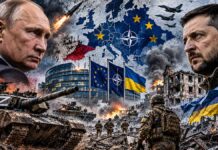
Principal judgment — High confidence: The Russia–Ukraine war remains the central military confrontation shaping European security. Russia retains the capacity to sustain significant military pressure, while Ukraine continues to depend on domestic mobilisation and international military, financial and industrial assistance. Neither Russian diplomatic engagement nor Western support arrangements establish an imminent negotiated settlement.
Russia’s strategic position — High confidence on sustained operations; moderate confidence on long-term endurance: The Russian military continues to conduct intensive missile and drone attacks, while its economy remains operational under expanding sanctions and wartime pressures. The observable record does not establish that Russia can achieve its ultimate political objectives at an acceptable cost.
Western response — High confidence: NATO and EU institutions continue to coordinate military assistance, procurement, training, sanctions and defence readiness. The European Union’s October 2026 decisions demonstrate continued institutional commitment rather than diplomatic disengagement.
Transatlantic interests — High confidence on institutional cooperation; moderate confidence on political alignment: Washington remains indispensable to important equipment supply chains, but European governments are assuming greater financial and procurement responsibilities. Shared deterrence objectives coexist with differences over industrial capacity, strategic autonomy, fiscal burden and the design of security guarantees.
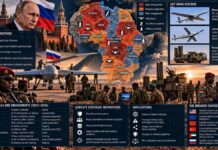
Russia’s partnerships — High confidence on differentiated relationships: Belarus, Iran and North Korea occupy materially different positions from China, India and states participating in BRICS-related diplomacy. Military assistance, strategic cooperation, commodity trade and diplomatic engagement must not be treated as equivalent commitments.
Türkiye — High confidence: Ankara combines operational NATO participation with an independent diplomatic posture, mediation initiatives and relationships with Moscow. Its strategic value derives partly from its capacity to maintain channels across competing political systems.
Putin’s statements of 29 October — Moderate confidence in the interpretation of intent: His simultaneous offer of renewed European relations and warning of military escalation is consistent with a strategy combining deterrence, diplomatic access, pressure on Western cohesion and protection of Russian maritime interests. The statements do not independently demonstrate readiness to accept an enforceable peace.
Principal decision consequence: Governments should distinguish diplomatic communication from demonstrated de-escalation, maintain verifiable incident-prevention channels, and assess proposed settlements against measurable changes in Russian military activity and Ukrainian security conditions.
Russia, Europe and the Price of Deterrence: Why Military Power Is Outrunning Diplomacy
The Kremlin is offering dialogue while sustaining military pressure on Ukraine. Washington is redistributing the financial burden of European security, while European governments are committing unprecedented resources without yet securing the industrial capacity to translate expenditure into deterrence. The resulting imbalance may determine Europe’s strategic position more decisively than the next round of negotiations.
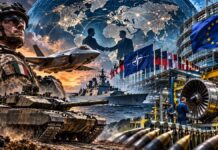
Europe’s security dilemma has acquired a precise financial and political dimension. NATO has committed its members to defence and security investment equivalent to 5% of GDP by 2035, the European Union has established a €90 billion financing framework for Ukraine for 2026–2027, and Russia continues military operations while offering renewed diplomatic engagement. Yet these developments do not amount to a coherent settlement strategy. Financial commitments do not automatically produce combat-ready capabilities, military endurance does not guarantee political victory, and diplomatic contact does not establish agreement. The central contradiction is that Western governments are increasing the resources devoted to deterring Russia while remaining dependent on American military technology, fragmented European procurement and an uncertain negotiating process. The next strategic contest will concern who can convert political commitments into sustainable military capacity without exhausting the economic foundations that support it.
Moscow Wants Negotiations Without Surrendering Its Military Leverage
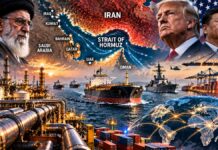
President Vladimir Putin’s statements of 29 October 2026, following the Russia–Africa summit, brought Russia’s diplomatic strategy into sharper focus. His reported assurances that Moscow does not seek war with Europe were accompanied by declarations of military preparedness, warnings about the consequences of escalation and an offer to restore relations with European governments. His objection to a Baltic maritime crisis resembling the disruption of the Strait of Hormuz extended the message from military confrontation to commercial navigation and economic security.
The sequence matters more than the rhetoric. On 27 October, Finnish President Alexander Stubb and Norwegian Prime Minister Jonas Gahr Støre jointly contacted Putin from Helsinki after consultations with Ukraine. Both governments specified that they were acting in their national capacities, not negotiating on behalf of the European Union. Stubb subsequently indicated that Russia’s positions had contained no surprises. The initiative reopened direct communication without establishing a Russian concession or a departure from European support for Kyiv.
Moscow’s interest in such contacts is understandable. Direct negotiations with individual European governments allow Russia to communicate security concerns and explore possible agreements without first resolving its confrontation with the European Union as an institution. They may also expose differences between national priorities, particularly where maritime access, geographical proximity and regional security are concerned. But diplomatic access is not diplomatic success. The Nordic initiative did not produce a documented change in Russian negotiating conditions.
The military record reinforces that distinction. In its statement to the OSCE Permanent Council on 29 October, the European Union reported approximately 1,600 guided aerial bombs, 48 missiles and nearly 2,300 attack drones launched against Ukraine during the preceding week. These are EU-attributed figures rather than independently audited launch totals, but they describe the scale of military activity accompanying Moscow’s diplomatic overtures.
The Kremlin’s approach is therefore consistent with coercive bargaining: preserving the capacity to impose costs while exploring whether diplomacy can improve Russia’s position. It does not establish that Putin intends a general European war, nor that he is preparing to accept an enforceable peace. Both conclusions would exceed the available evidence.
Europe’s Financial Commitments Are Growing Faster Than Its Military Independence
The scale of Western financial mobilisation is substantial, but the figures describe different kinds of obligations. NATO’s June 2025 Hague commitment requires members to invest 5% of GDP annually by 2035, comprising at least 3.5% for core defence and up to 1.5% for broader security-related expenditure. European allies and Canada increased their combined real defence expenditure by nearly 20% in 2025 compared with 2024, reaching an aggregate 2.3% of GDP.
The European Union’s €90 billion Ukraine support-loan framework for 2026–2027 provides for an indicative €30 billion in economic support and €60 billion in military assistance. Its 2026 implementing arrangements identified €45 billion in financing, including €28.3 billion for defence-industrial capacity. According to the Council’s reporting, €19.8 billion had been disbursed under the framework, including €15.8 billion for defence procurement, €3.2 billion in macro-financial assistance and €800 million through the Ukraine Facility. The difference between the overall programme and actual disbursements is central to evaluating implementation.
The Council’s decisions of 26 October added approximately €4.93 billion through the European Peace Facility, principally comprising €4.7 billion for partial reimbursement of previously delivered assistance and €230 million for military training. These amounts cannot be treated as entirely new equipment supplied to Ukraine.
Washington remains indispensable to the military value of this financing. NATO’s Prioritised Ukraine Requirements List, introduced in July 2025, enables allied governments and partners to finance US-origin equipment identified as important for Ukraine’s defence. By October 2026, commitments exceeded US$6 billion. The arrangement redistributes financing among participating governments without automatically transferring American production capabilities to European manufacturers.
This exposes the fundamental limit of burden sharing. European capitals can finance additional American weapons while remaining dependent on the same supplier, production schedules and available inventories. Greater European expenditure strengthens deterrence only when procurement produces equipment, trained personnel, ammunition, maintenance capacity and operational readiness. A higher defence-to-GDP ratio is a fiscal indicator, not a measure of combat effectiveness.
Defence Industry Has Become the Real Test of European Sovereignty
Germany’s 2026 federal budget illustrates the distance between political ambition and industrial implementation. Berlin increased its regular defence allocation from €62.4 billion to €82.7 billion, supplemented by €25.5 billion through the Bundeswehr’s special financing arrangement. Approximately €11.5 billion in military assistance for Ukraine was planned for the year. The German government’s objective is to advance toward NATO’s 3.5% core defence requirement by 2029.
Germany possesses the industrial and logistical position to influence military capacity across continental Europe. Yet budget appropriations cannot immediately produce additional ammunition, air-defence systems or operational formations. Procurement requires manufacturing capacity, specialised labour, components and predictable orders. The strategic question is not whether Berlin can allocate additional resources, but how rapidly German and European industry can convert those resources into usable capabilities.
France is pursuing a related objective through a different political model. President Emmanuel Macron has combined support for Ukraine with efforts to strengthen Europe’s capacity to act through its own defence industries and security arrangements. The Paris Declaration of 6 January 2026 established a framework for prospective post-ceasefire guarantees, including monitoring, support for Ukrainian forces and a possible multinational force. Subsequent French-Ukrainian cooperation addressed combat aviation, missile defence, training and licensed manufacturing. These arrangements could strengthen Ukraine’s long-term military capacity, but authorisations and declarations do not constitute completed production or deployed forces.
The United Kingdom has concentrated significant financial and military resources on Ukraine while maintaining its position as a leading European NATO power outside the EU. On 28 October, HM Treasury announced a package exceeding £10 billion, including £7 billion in economic support over three years, £500 million in additional air-defence assistance and a £3 billion increase in UK Export Finance capacity. London’s cumulative commitments were reported at approximately £35 billion, including £16 billion in military support, up to £12.6 billion in non-military assistance and £6.5 billion in export-finance cover. Guarantees, financing capacity and completed expenditure are materially different financial instruments.
Italy faces a different distribution of strategic demands. In October, Defence Minister Guido Crosetto advanced reforms concerning cyber capabilities, unmanned systems, joint-force integration, procurement and defence-industrial cooperation. Italy also participated with France, Germany, Poland and the United Kingdom in the European Group of Five defence discussions in Paris on 26 October. Rome must balance eastern-flank commitments with security requirements in the Mediterranean, maritime transport and its southern neighbourhood. The Italian Ministry of Foreign Affairs reported more than €3.2 billion in bilateral civilian assistance to Ukraine since 2022, highlighting reconstruction, connectivity and energy diversification.
These national strategies are complementary but not identical. German industrial scale, French strategic capabilities, British military and intelligence relationships and Italian maritime-industrial interests contribute differently to European defence. Coordination cannot eliminate these differences; it must convert them into capabilities that can operate together.
The Council’s defence-industry simplification measures of 9 October 2026, including a general maximum of 102 working days for specified authorisation procedures, address administrative obstacles. But regulatory acceleration cannot manufacture missing components, create trained workers or eliminate production lead times. Europe’s military independence will be determined by industrial output and operational availability, not the number of procurement initiatives announced.
Russia’s Partners Weaken Isolation Without Forming a Single Alliance
Western economic pressure has expanded, but Russia’s international relationships remain more extensive than the structure of European sanctions might suggest. On 12 October, the European Commission announced additional designations covering 1,569 individuals and entities, including 826 Russian companies and 743 executives. The targeted industrial group represented at least €20 billion in annual turnover and more than 250,000 employees. The restrictions focused on networks associated with electronics, semiconductors, navigation, aviation, radar, communications, explosives and other inputs relevant to military manufacturing.
The measures are designed to increase the cost and difficulty of sustaining military production. Their effect, however, depends on access to alternative suppliers, substitute components, financial intermediaries and manufacturing technology. The number of sanctioned companies does not establish the quantity of Russian production lost.
Russia’s relationships with Belarus, Iran and North Korea are more directly relevant to military cooperation than its economic relationships with China and India. The October 2026 joint sanctions statement issued by the EU, United States and other governments identified unlawful North Korean military cooperation with Moscow. European institutions also identified continued military support involving Belarus and Iran.
China occupies a different category. Its commercial and diplomatic relations with Moscow do not constitute a demonstrated commitment to fight Russia’s war. India’s strategic relationships are similarly broader than its cooperation with Russia. BRICS provides a framework for political and economic coordination, not a collective-defence organisation. African diplomatic engagement also differs considerably among individual governments.
The distinction has practical consequences. Sanctions enforcement must identify specific transactions and restricted technologies rather than treating every commercial relationship with Russia as military assistance. Moscow’s diplomatic access should not be confused with the existence of a coherent anti-Western coalition.
Russia’s energy sector illustrates the additional difficulty of applying economic pressure in an interconnected market. The International Energy Agency reported Russian crude production of approximately 8.36 million barrels per day in August 2026, down from 8.56 million in July, while documenting disruptions affecting Russian refining and petroleum-product exports. North Sea Dated crude averaged US$91 per barrel in August and reached US$113.48 on 9 September amid wider international supply disruptions. Higher benchmark prices can support export earnings even as infrastructure damage reduces available volumes. Production, exports and government revenue must therefore be assessed separately.
Moscow’s capacity to sustain confrontation remains subject to economic constraints, but neither sanctions designations nor individual production figures establish the point at which those constraints would compel a political change.
Türkiye Shows Why Strategic Autonomy Does Not Mean Neutrality
Türkiye occupies an unusually consequential position because it combines NATO membership with independent diplomatic relationships involving Moscow and Kyiv. Its authority under the 1936 Montreux Convention governing passage through the Turkish Straits gives Ankara direct influence over the legal conditions of Black Sea naval access. This geographical advantage complements its defence capabilities and diplomatic infrastructure.
The Turkish Ministry of National Defence’s NUSRET-2026 exercise involved NATO mine-countermeasure forces and the Türkiye–Bulgaria–Romania Black Sea cooperation framework. The activity demonstrated operational participation in allied maritime security, while Ankara continued to maintain diplomatic relations with Russia.
The ninth Istanbul Mediation Conference, held on 23–24 October, reflected a diplomatic policy developed over more than a decade. Türkiye’s ability to communicate with governments holding opposing positions can support negotiations, maritime safety and regional crisis management. It does not give Ankara authority to impose a settlement.
This model matters because future European security will not be governed exclusively by the choices of Washington, Moscow and Brussels. States controlling important maritime routes, maintaining independent defence capabilities or retaining access to competing governments can influence specific outcomes without joining a unified geopolitical bloc.
The same principle applies to Baltic maritime security. Putin’s reported comparison with the Strait of Hormuz reflects concern about restrictions affecting Russian navigation, but NATO’s Baltic Sentry initiative concerns surveillance and infrastructure protection rather than a documented general blockade. The legal difference between maritime enforcement, infrastructure security and military denial of passage is consequential. Confusing them would increase the danger of miscalculation.
The Next 24 Months Will Expose Who Has Purchased Security and Who Has Only Financed It
The consequences of the choices already made will become increasingly visible during the 12–24 months following October 2026. Germany must convert exceptional defence allocations into delivered equipment and operational readiness. France and the United Kingdom must establish whether prospective security guarantees for Ukraine can acquire the legal authority, resources and implementation mechanisms required to make them credible. Italy must meet European defence commitments without neglecting Mediterranean and maritime-security requirements. The United States must reconcile its role as a critical defence supplier with demands for greater European financial responsibility.
For Ukraine, the financial stakes are particularly concrete. The IMF’s July 2026 programme review depended on continued international support, while the fifth joint Rapid Damage and Needs Assessment estimated almost US$588 billion in reconstruction and recovery requirements over the following decade. These obligations will not disappear with a diplomatic announcement or an unstable ceasefire.
For Russia, continued military pressure preserves bargaining leverage but prolongs exposure to industrial restrictions, monetary pressure and infrastructure disruption. The Bank of Russia’s decision to maintain its key rate at 14% on 23 October, alongside annual inflation of 6.8% as of 19 October, illustrates the economic conditions under which Moscow is sustaining its policies.
For Europe, the cost of inaction is distributed among taxpayers funding procurement, industries awaiting reliable investment, governments maintaining expensive military inventories and commercial operators exposed to maritime and infrastructure disruption. Ukraine bears the most immediate human and economic costs of continued hostilities, while Russia incurs the costs of maintaining military operations and adapting its economy to restrictions.
The strategic choice is no longer simply whether European governments should spend more. That political commitment has largely been made. The question is whether, by October 2028, those expenditures will have produced operational capabilities, secure infrastructure, reliable industrial supply and diplomatic arrangements capable of managing confrontation.
Putin has offered dialogue without demonstrating a cessation of military pressure. Europe has committed financing without yet achieving full military autonomy. Washington remains indispensable while encouraging a greater European share of the burden. The resulting security order will be judged by implementation, not declarations: who can sustain military power, who controls the industrial capacity behind it, and who ultimately bears the financial and political cost when diplomacy fails to alter events.
Navigational Index
PILLAR I — The War and Russia’s Strategic Sustainability
Chapter 1 — Russia’s Military Position and the Operational Balance in Ukraine
Territorial control, operational tempo, attrition, missile and drone warfare, Ukrainian resistance, force regeneration, logistics and the limits of battlefield reporting.
Chapter 2 — The Russian Wartime Economy and the Domestic Political System
Economic performance, fiscal and monetary constraints, energy revenue, defence production, sanctions, technological dependencies, political control and the sustainability of prolonged confrontation.
Chapter 3 — Ukraine’s Strategic Resilience and the Conditions for Negotiation
Military and demographic pressures, external financing, defence-industrial development, infrastructure protection, sovereignty, territorial questions and security guarantees.
PILLAR II — Western Security Architecture and Global Strategic Alignments
Chapter 4 — The United States, NATO and the Transformation of Transatlantic Security
American strategic priorities, military assistance mechanisms, burden sharing, alliance deterrence, defence production and constraints on European strategic autonomy.
Chapter 5 — European Power and the National Strategies of Germany, France, Italy and the United Kingdom
Distinct national assessments, military commitments, industrial and fiscal exposure, political constraints, Baltic and Black Sea security, and European institutional coordination.
Chapter 6 — Russia’s Partnerships and the Global Distribution of Strategic Power
Belarus, Iran, North Korea, China, India, BRICS-related diplomacy, African partnerships, sanctions circumvention risks and the distinction between alignment and alliance.
Chapter 7 — Türkiye Between NATO Commitments, Russian Relations and Strategic Autonomy
NATO participation, the Black Sea, maritime access, defence-industrial interests, diplomacy with Moscow and Kyiv, mediation, regional influence and Ankara’s international ambitions.
PILLAR III — Escalation, Diplomacy and the International Order
Chapter 8 — Putin’s 29 October 2026 Statements: Strategic Signalling and Competing Explanations
Statements following the Russia–Africa summit, proposed European rapprochement, the warning against general war, Baltic–Hormuz comparisons, deterrence logic and consistency between rhetoric and operations.
Chapter 9 — Escalation Pathways Across European and Global Security Systems
Baltic maritime security, NATO–Russia incidents, hybrid operations, energy infrastructure, economic coercion, nuclear signalling, diplomatic miscalculation and potential geographic spillover.
Chapter 10 — Strategic Outlook, Early-Warning Indicators and Policy Choices, 2027–2031
Competing pathways, observable thresholds, intelligence gaps, diplomatic options, industrial preparedness, institutional responsibilities and final net assessment.
Master Abstract
The Strategic Balance: A War of Endurance Without a Demonstrated Political Settlement
The international security environment in October 2026 is characterised by a widening separation between military endurance, political bargaining and the institutional capacity to prevent escalation. Russia has demonstrated the ability to maintain offensive military activity despite successive Western sanctions and the substantial costs of prolonged warfare. Ukraine has preserved its state institutions, continued military resistance and secured sustained external assistance, but remains exposed to the cumulative effects of strikes against infrastructure, civilian population centres and logistics. These developments support a central assessment: Russia’s capacity to prolong the war is established; its capacity to convert continued military pressure into a comprehensive, sustainable political victory remains unproven. The United Nations Human Rights Monitoring Mission in Ukraine verified 2,570 civilians killed and 15,211 injured between January and September 2026, a combined total 59% above the equivalent period in 2025. Long-range missiles and drones accounted for 53% of civilian casualties during September. These findings establish a continuing high-intensity threat to the civilian population, although civilian casualty data cannot independently measure Russian territorial gains, Ukrainian military losses or the operational balance along individual sectors of the front. Protection of Civilians in Armed Conflict — September 2026 — OHCHR — Oct 2026. United Nations in Ukraine
The confrontation has also become an industrial and financial contest in which procurement systems, production capacity and the availability of critical weapons increasingly influence diplomatic leverage. In October 2026 the EU adopted decisions mobilising approximately €4.9 billion through the European Peace Facility, including €4.7 billion for partial reimbursement of previously delivered military assistance and €230 million for the EU Military Assistance Mission in Support of Ukraine. Separately, NATO’s Prioritised Ukraine Requirements List provides an operational mechanism through which allies and partners finance US-origin military equipment for Ukraine. These instruments demonstrate strategic cooperation but also expose structural dependencies: European governments contribute substantial financing while the United States remains an important source of military equipment that cannot always be substituted quickly by European production. The question confronting Western governments is therefore not simply how much assistance can be authorised, but whether funding, production, delivery and Ukrainian operational absorption can be sustained at the required pace. EU Support for Ukraine — Council of the EU — Oct 2026; Relations with Ukraine — NATO — Oct 2026. Consilium+1
European Security: Institutional Solidarity and Divergent National Exposure
Europe’s response cannot be reduced to a single political preference. The European Council continues to uphold Ukrainian sovereignty and territorial integrity, demand an immediate ceasefire, support security guarantees and maintain pressure on Moscow. Yet the practical distribution of responsibilities remains uneven, and the strategic calculations of individual European powers differ. Germany’s industrial and logistical position gives it particular importance for sustaining continental military capacity and assistance flows. France combines European defence ambitions with an independent nuclear deterrent and a permanent seat on the UN Security Council. The United Kingdom occupies a distinctive position as a European NATO nuclear power outside the EU, participating in transatlantic military coordination and European assistance arrangements. Italy’s role is shaped by NATO commitments, Mediterranean security interests, industrial and fiscal constraints, and the political importance of coordination with both Brussels and Washington. These are structural distinctions, not evidence that any of the four governments intends to abandon Ukraine. Indeed, France, Germany, Italy, Poland and the United Kingdom participated in the European Group of Five defence discussions in Paris on 26 October, with NATO and EU representatives also engaged. NATO Deputy Secretary General Highlights Continued Support to Ukraine at E5 Meeting — NATO — Oct 2026; European Council Conclusions, 15 and 16 October 2026 — European Council — Oct 2026. NATO News+1
The European security problem now extends beyond conventional military assistance. Maritime transport, submarine infrastructure, energy systems, industrial facilities and cross-border incidents represent potential channels through which an already prolonged war could create a more direct confrontation between Russia and NATO states. On 28 October, the EU’s statement at the OSCE Forum for Security Co-operation identified the sinking of the cargo ship Khoryv in Romania’s exclusive economic zone on 23 October and attributed a September industrial sabotage incident in Brașov to a network coordinated from the Russian Federation, citing Romanian authorities. These are consequential institutional assessments, but their respective evidentiary foundations should be examined separately before assigning operational responsibility beyond the competent investigations. The broader implication is that European deterrence and crisis management must now address not only military force posture but also the protection of commercial navigation, critical infrastructure and the integrity of national decision-making. EU Statement on Russia’s War of Aggression Against Ukraine — EEAS, OSCE Forum — Oct 2026. EEAS
Russia’s External Partnerships: Cooperation Is Not a Single Alliance System
Russia’s international relationships form a differentiated network rather than a geographically unified or legally equivalent alliance. Belarus constitutes a particularly close security partner, while Iran and the Democratic People’s Republic of Korea have been identified by EU institutions as providers of military assistance to Russia. The October 2026 joint statement issued by the EU, United States and ten other governments specifically addressed unlawful DPRK–Russia military cooperation and associated sanctions enforcement. Relations with China and India demand a different analytical classification: trade, diplomatic engagement, energy purchases and common opposition to particular Western policies do not, by themselves, establish binding military commitments to support Russian operations in Ukraine. The same distinction applies to BRICS-related institutions and African states participating in Russian diplomatic initiatives. For Moscow, the strategic value of these relationships lies partly in preserving economic channels, international engagement and opportunities to contest Western efforts at isolation. For partner governments, however, economic and diplomatic cooperation with Russia may coexist with separate security interests and relationships with Western countries. Joint Statement on DPRK Sanctions — EEAS and Participating Governments — Oct 2026; EU Statement on Russia’s War of Aggression Against Ukraine — EEAS — Oct 2026. EEAS+1
Türkiye is a distinct case because its strategic autonomy operates from within NATO rather than outside the Western security architecture. Turkish participation in NATO maritime activities, combined with its diplomacy and established relations with Moscow, makes Ankara a potentially important channel for managing Black Sea security and negotiations. The Turkish Ministry of National Defence announced the participation of NATO naval mine-countermeasure units, the Türkiye–Bulgaria–Romania Black Sea mine-countermeasure group and other international participants in the NUSRET-2026 exercise conducted in October. Separately, the Turkish Ministry of Foreign Affairs convened the ninth Istanbul Mediation Conference on 23–24 October, reaffirming mediation as an institutional element of its foreign policy. The evidence supports the judgment that Ankara seeks greater independent diplomatic influence while retaining the military and political benefits of NATO membership. It does not establish that Turkey exercises equal leverage over Russia and Ukraine or can independently deliver an enforceable settlement. NUSRET-2026 Invitation Exercise — Turkish Ministry of National Defence — Oct 2026; Regarding the 9th İstanbul Mediation Conference — Turkish Ministry of Foreign Affairs — Oct 2026. T.C. Millî Savunma Bakanlığı+1
Putin’s October Statements: Diplomatic Accessibility and Coercive Deterrence
The remarks attributed to President Vladimir Putin on 29 October 2026, following the third Russia–Africa summit, combine three messages with different intended audiences.
- The first is an assurance that Moscow does not seek a direct war with Europe.
- The second is a warning that Russia considers itself prepared for such a confrontation and that extreme escalation would leave no winners.
- The third is an offer to restore European relations either collectively or through bilateral engagement, accompanied by opposition to restrictions on Baltic navigation that Putin compared with the situation in the Strait of Hormuz.
The publicly reported remarks establish a coherent rhetorical structure, but the available research has not established an authenticated, complete Kremlin transcript or independently verified every detail of the reported diplomatic exchanges with Finnish and Norwegian leaders. Their precise wording and context therefore remain subject to an additional primary-record requirement. The leading analytical interpretation is that Moscow seeks to preserve military coercive leverage while discouraging direct NATO involvement and keeping bilateral diplomatic options open. This interpretation is plausible, not proven: deterrence, bargaining and attempts to influence divisions among European governments can coexist without requiring a single exclusive motive.
The decisive inconsistency is between the language of prospective rapprochement and the observable persistence of military attacks. The United Nations documented renewed coordinated Russian strikes against Ukrainian electricity and heating infrastructure during September and October 2026; the European Council, meanwhile, continued to call for an unconditional ceasefire and meaningful negotiations. A government evaluating Moscow’s statements should therefore distinguish expressions of diplomatic willingness from observable changes in force employment, targeting patterns, conditions for negotiations and acceptance of independently monitorable commitments. The central strategic test is whether diplomatic language is accompanied by verifiable restraint. Absent that evidence, the statements should be treated as an element of Russia’s wider strategic communication rather than as proof of a change in its war objectives. Civilian Casualties Remain at Record Levels Amid Intensifying Attacks on Energy — United Nations Human Rights Monitoring Mission in Ukraine — Oct 2026; European Council Conclusions, 15 and 16 October 2026 — European Council — Oct 2026.
Key Evidence Table
The following evidence separates observed or documented indicators from projections, official institutional positions and unresolved operational questions.
| Indicator | Value/status | Reference date | Definition/scope | Issuer | Exact source |
|---|---|---|---|---|---|
| Civilian fatalities in Ukraine | 2,570 verified killed | Jan–Sep 2026 | Civilian casualties verified under OHCHR methodology | OHCHR | Sep 2026 update |
| Civilian injuries in Ukraine | 15,211 verified injured | Jan–Sep 2026 | Same OHCHR verification universe | OHCHR | Sep 2026 update |
| Change in civilian casualties | +59% | Jan–Sep 2026 vs 2025 | Combined verified fatalities and injuries | OHCHR | Sep 2026 update |
| Long-range weapons’ share of civilian casualties | 53% | Sep 2026 | Missiles and long-range drones | OHCHR | Sep 2026 update |
| EU European Peace Facility decisions | €4.9 billion, rounded | 26 Oct 2026 | Includes €4.7bn reimbursement and €230m military training financing; not all new deliveries | Council of EU | Council decision announcement |
| EU Ukraine support loan | €90 billion | 2026–2027 | Financing framework, not equivalent to amounts disbursed | Council of EU | EU support timeline |
| NATO PURL commitments | Over US$6 billion | NATO 2026 reporting | US-origin procurement funded by participating allies and partners; distinct from all US Foreign Military Sales | NATO | Relations with Ukraine |
| NATO Ukraine CAP Trust Fund | Over €1.4 billion contributed | Oct 2026 | Trust-fund contributions, not all necessarily expended | NATO | Relations with Ukraine |
| Russian GDP growth | 1.1% projected | 2026, July forecast vintage | IMF real-GDP forecast; not realised annual growth | IMF | Russian Federation |
| DPRK–Russia military cooperation | Officially documented in multilateral monitoring | Oct 2026 | Military and sanctions-related cooperation; quantities not inferred | Participating governments / EEAS | Joint statement |
| Russian military control and losses | No reconciled estimate adopted | 31 Oct 2026 | Requires geolocated military evidence and consistent territorial/loss definitions | Multiple competent sources required | Not quantified |
| Putin’s European diplomatic signal | Reported offer of restored relations and warning against escalation | 29 Oct 2026 | Statement attributed to the Russian president; full official transcript not authenticated in this research | Russian presidency, subject to primary verification | Primary transcript outstanding |
Evidence integrity: €4.9 billion is the Council’s rounded presentation of the October decisions; the underlying components total €4.93 billion. The IMF country-page figure is explicitly from its July 2026 forecast, while an October 2026 WEO dataset exists. These vintages are not silently combined. Sources: OHCHR, Council of the EU, NATO, IMF and EEAS. Consilium+4
Competing Explanations — Russia’s Diplomatic Signalling
The 29 October statements are assessed through an Analysis of Competing Hypotheses framework. The hypotheses concern political purpose, not the authenticity of every reported quotation, and are not necessarily mutually exclusive. Their standing is qualitative; no numerical probabilities are assigned.
| Hypothesis | Diagnostic support | Disconfirming evidence or limitations | Indicators | Current standing |
|---|---|---|---|---|
| H1 — Coercive deterrence: Moscow seeks to discourage direct European military confrontation while maintaining pressure on Ukraine. | The combination of declared readiness, an escalation warning and continued military operations is consistent with deterrent signalling. | No authenticated internal Russian policy record establishes the intended recipients or desired behavioural changes. | Subsequent military signalling, European force posture, official Russian responses to NATO activity. | Strongly plausible — Moderate confidence |
| H2 — Selective diplomatic re-engagement: Moscow seeks to restore bilateral channels with selected European governments. | The reported offer of restored relations, including bilateral arrangements, is consistent with efforts to regain diplomatic access. | Continued attacks and unresolved ceasefire conditions weaken evidence of substantive rapprochement. | Documented bilateral contacts, formal negotiating proposals, verifiable reciprocal measures. | Plausible — Moderate confidence |
| H3 — Coalition differentiation: Russia seeks to exploit differing political interests among European governments. | A distinction between EU-wide and bilateral engagement could permit selective diplomacy. | Bilateral contact is also compatible with ordinary crisis management; it does not prove an effort to divide NATO or the EU. | Divergent national policy decisions, separate negotiating proposals, changes in common sanctions positions. | Plausible but not established — Low-to-moderate confidence |
| H4 — Genuine preparation for a negotiated de-escalation: Moscow is preparing to modify its military and diplomatic demands. | Expressed willingness to restore relations leaves a possible opening for negotiation. | The verified continuation of strikes and the absence of a demonstrated change in Russian military conduct provide significant contrary evidence. | Durable reduction in attacks, acceptance of monitoring, specific negotiating concessions. | Insufficiently supported — Low confidence |
The current record best supports a combination of deterrent signalling and selective diplomatic engagement. It does not justify treating Russian political intentions as definitively known. The strongest discriminating evidence would be a change in military operations or a formal negotiating instrument containing obligations capable of independent verification.
Key Assumptions Check and Red-Team Assessment
The assessment depends on several assumptions requiring explicit examination.
1. Military endurance is not equivalent to strategic success. Russia’s capacity to continue fighting cannot establish the probability of achieving its political objectives without independent evidence of battlefield performance, resource sustainability and Ukraine’s future defensive capacity.
2. Institutional commitments do not equal operational deliveries. European authorisations, financing programmes, procurement commitments and completed equipment transfers must remain distinct. Apparent financial solidarity could coexist with industrial bottlenecks or delayed military effects.
3. Diplomatic contact is not necessarily a concession. Communications between Russian and European leaders can serve incident prevention, negotiation, information exchange or domestic political objectives. A conversation alone does not establish policy realignment.
4. Russia’s partners have different obligations and incentives. Diplomatic cooperation with Beijing, New Delhi or African governments cannot be substituted for evidence of direct military participation or a mutual-defence commitment.
5. Escalation warnings may reflect both coercion and genuine concern. A warning about uncontrollable conflict can be intended to influence an adversary while also expressing a real assessment of unacceptable strategic risk.
A red-team interpretation challenges the tendency to interpret all Russian diplomatic activity as a coordinated attempt to divide Europe. Moscow could be attempting to preserve basic communication in response to heightened risks while continuing to pursue objectives in Ukraine. Conversely, the existence of diplomatic channels does not rule out coercive intentions. Neither interpretation can be decisively adopted without more direct evidence of Russian conditions for negotiation and related operational decisions.
Principal Intelligence Gaps and Watch Indicators
Russian battlefield sustainability — High priority
The decisive gap is an independently reconciled assessment of territory controlled, personnel replacement, operational losses, ammunition availability and force regeneration through October 2026. Official belligerent claims require verification against geolocated imagery and other independent observations.
Watch: persistent operational breakthroughs, defensive stabilisation, changes in strike intensity and verifiable equipment production or replacement.
Putin’s 29 October statements — High priority
The complete authenticated Russian presidential record, including the precise questions and answers, is necessary to distinguish formal proposals from rhetorical positioning. Finnish and Norwegian government records of their reported contacts would be especially important independent checks.
Watch: official meeting readouts, written diplomatic proposals, announced concessions and observable implementation.
Baltic and Black Sea escalation — High priority
The evidentiary requirement is to distinguish lawful maritime enforcement and commercial restrictions from military interference, sabotage and coercive threats. Attribution of individual incidents must rest on competent investigations rather than political inference.
Watch: official incident investigations, vessel-routing restrictions, navigation warnings, naval deployments and critical-infrastructure disruptions.
Western delivery and defence-industrial capacity — High priority
Public allocations do not fully establish delivery timetables, available interceptor inventories, equipment readiness or replacement rates. Reconciled national procurement and NATO reporting are required to evaluate the military effect of announced support.
Watch: verified shipments, completed production, air-defence availability, new contracts and procurement-to-delivery delays.
External partnerships and economic endurance — Medium-to-high priority
Trade and diplomatic engagement should be compared with evidence of restricted technology transfers, military cooperation and actual financing. Russia’s October 2026 macroeconomic position also requires reconciliation against the latest IMF vintage and Russian primary fiscal data.
Watch: customs and trade statistics, sanctions enforcement, official defence agreements, budget execution and defence-industry output.
Initial Net Assessment
The principal strategic risk entering November 2026 is not necessarily an imminent deliberate decision by Russia or NATO to initiate a general European war. It is the accumulation of military, maritime, political and infrastructure incidents within a security environment in which both parties seek to preserve deterrent credibility, while Ukraine continues to experience intensive attacks and relies on international assistance.
The available official record establishes that Western governments are expanding institutional and military support mechanisms; that Russia continues to impose substantial military pressure on Ukraine; and that Moscow’s diplomatic language includes both an offer of improved relations and warnings against escalation. It does not establish that these three developments are moving toward a common political settlement.
The governing strategic judgment is therefore that diplomatic engagement and military preparedness are not alternative policy tracks but simultaneous features of the present confrontation. Their coexistence may help manage risks, but it can also prolong confrontation when political objectives and conditions for de-escalation remain incompatible.
For European, American and other governments, the consequential distinction is between statements of intent and actions that change the security environment. Reliable indicators of movement toward a settlement would include independently observable military restraint, formal conditions for negotiations, operationally credible monitoring arrangements, and agreed protections against renewed hostilities.
THE EUROPEAN SECURITY ORDER
UNDER STRATEGIC PRESSURE
Russia–Ukraine War · NATO and European Security · Global Partnerships · Türkiye · Diplomatic Signalling · Escalation
Strategic Evidence Monitor
Verified Civilian Casualties
Linear relative scale. Verified civilian casualties, not estimated military losses or total wartime casualties.
Source: OHCHR, September 2026European Peace Facility Decisions
Bars are scaled against the €4.70bn component. These decisions must not be interpreted as €4.93bn in newly delivered equipment or immediate cash disbursements.
Source: Council of the EU, 26 October 2026Interactive Strategic Relationship Network
Select an actor to inspect its role and the limits of the established evidence. Connections are schematic, not weighted.
Ukraine — Central Conflict Actor
Ukraine remains the central state affected by the war. Its defence depends on domestic military capacity and continuing international military, financial and industrial assistance.
Network lines illustrate documented strategic interaction, not treaty equivalence, military commitments, combat involvement, alliance strength or geographical proximity. Node locations have no geographic meaning.
Multi-Domain Evidence Matrix
| Domain | Verified baseline | Assessment | Confidence |
|---|---|---|---|
| Russia | Continued military attacks against Ukraine | Capacity to prolong significant military pressure remains established; decisive political victory is not demonstrated. | High / Moderate |
| Ukraine | Continued resistance and external assistance | Operational sustainability depends on personnel, domestic production and continued assistance. | High |
| NATO | Ukraine support and defence coordination mechanisms | Financing and delivery capacity remain distinct requirements. | High |
| Territorial balance | No reconciled October estimate adopted | Territorial and attrition conclusions require independent verification. | Open record |
| Instrument | Reported amount | Scope | Interpretation |
|---|---|---|---|
| EU EPF decisions | €4.93bn components | October 2026 decisions | Reimbursement and training, not solely new deliveries |
| EU Ukraine financing framework | €90bn | 2026–2027 | Framework is not equivalent to disbursement |
| NATO PURL | Over US$6bn | 2026 NATO reporting | Funding commitments for US-origin procurement |
| Russia real GDP | 1.1% projected | IMF July 2026 vintage | Forecast, not annual realised growth |
| Actor | Position / Role | Analytical limit | Confidence |
|---|---|---|---|
| EU | Supports Ukrainian sovereignty, security guarantees, military assistance and pressure on Russia | National implementation capacity differs | High |
| Russia | Reported 29 October statements combine diplomatic outreach and escalation warnings | Complete authenticated transcript outstanding | Moderate |
| Türkiye | NATO participation and independent diplomacy | Mediation activity does not guarantee mediation success | High |
| China / India | Distinct economic and diplomatic relationships | Not interchangeable with a military alliance | High |
Analysis of Competing Hypotheses
Interpretations of Russia’s reported 29 October diplomatic signalling. Select a hypothesis to examine supporting and contrary evidence.
H1 — Coercive Deterrence
The reported combination of military readiness, warnings against escalation and continuing military operations is consistent with deterrent signalling.
Limitation: No authenticated internal record establishes the intended recipients or specific behavioural objectives.
Watch: Formal military signalling, changes in force posture and official responses to NATO activities.
Qualitative assessment only. No unsupported probabilities, invented intelligence scores or numerical weights.
Strategic Watch Indicators
Baltic and Black Sea
Official investigations, navigation warnings, naval deployment changes and restrictions affecting commercial vessels.
Submarine infrastructure incidents, validated attribution, emergency measures and continuity arrangements.
Military Sustainability
Confirmed production, replacement, ammunition availability and independently established territorial change.
Delivered equipment, operational availability, industrial capacity and procurement delays.
Diplomatic Movement
Authenticated statements, formal proposals, reciprocal concessions and verification mechanisms.
Durable military restraint, monitoring provisions and documented changes in operations.
Official Documentary References
Protection of Civilians in Armed Conflict — September 2026
EU Support for Ukraine: European Peace Facility Decisions
Relations with Ukraine
European Council Conclusions
EU Statement on Russia’s War Against Ukraine at the OSCE
Russian Federation — IMF Country Data
Ninth Istanbul Mediation Conference
Joint Statement on DPRK Sanctions
PILLAR I — THE WAR AND RUSSIA’S STRATEGIC SUSTAINABILITY
OPEN-SOURCE ANALYTICAL ASSESSMENT
Assessment date: 31 October 2026
Geographic scope: Ukraine, the Russian Federation, the Black Sea region and the economic systems supporting the conflict
Strategic horizon: 2027–2031
Evidence standard: Official primary documentation, institutional statistics, independently documented observations and explicitly qualified analytical judgments.
Chapter 1 — Russia’s Military Position and the Operational Balance in Ukraine
Principal Strategic Judgment: Russia Retains Offensive Capacity, but Military Endurance Does Not Establish Strategic Victory
Assessment — High confidence in Russia’s continuing capacity to conduct military operations; moderate confidence in conclusions concerning its longer-term force sustainability.
The Russian Federation enters the final quarter of 2026 with the demonstrated ability to maintain military operations across several regions of Ukraine, conduct repeated long-range strikes, sustain occupation forces and impose substantial pressure on Ukrainian military and civilian infrastructure. This operational capacity represents an important strategic asset for Moscow, but it must be distinguished from its ability to achieve the political objectives associated with the invasion, consolidate control of contested territories or compel Ukraine to accept a settlement on Russian terms. The distinction is particularly important because prolonged warfare permits both sides to claim tactical achievements without necessarily resolving the larger conflict. Russian military endurance demonstrates that sanctions, equipment losses, personnel expenditure and Ukrainian resistance have not eliminated Moscow’s ability to continue fighting. It does not establish that Russian force generation exceeds attrition, that territorial advances produce proportional strategic returns or that continued operations will eventually overcome Ukraine’s capacity to resist. A government-grade assessment must therefore evaluate operational geography, the sustainability of military resources, the effectiveness of long-range attacks, the balance between offensive and defensive systems and the relationship between military activity and political objectives as separate variables.
The October 2026 country assessment issued by the United Kingdom Home Office provides an important officially documented geographic baseline. It records that Russian forces continue to occupy Crimea and parts of the Donetsk, Luhansk, Zaporizhzhia and Kherson regions, while the majority of Ukrainian territory remains under the authority of the Ukrainian government. It identifies the eastern, southeastern and northeastern regions as the principal areas of active hostilities and distinguishes the intense violence affecting frontline territories from the geographically wider danger created by long-range missile and drone attacks. This distinction is analytically consequential: a state may retain control of most of its territory while experiencing severe disruption to electricity generation, industrial production, transportation and civilian protection far from the front. Conversely, the existence of Russian occupation across several regions cannot be interpreted as confirmation that Russia controls each region in its entirety. The publicly accessible assessment does not provide a newly reconciled, geolocated measurement of Russian territorial control on 31 October, and its territorial description should not be converted into an unsupported percentage of Ukraine’s national territory. Country Policy and Information Note: Security Situation, Ukraine, Version 3.0 — UK Home Office — Oct 2026. GOV.UK
Territorial Control and the Operational Significance of Occupied Regions
Russia’s military position remains geographically differentiated. Crimea is important for the military infrastructure, naval access and logistical connections associated with the Black Sea theatre. Donetsk and Luhansk form part of the principal eastern land-war theatre, where territorial control, urban settlements, defensive positions and transport corridors have immediate operational significance. Zaporizhzhia and Kherson connect the territorial conflict to the lower Dnipro, the Black Sea approaches and infrastructure essential to movement and regional economic activity. The operational significance of these areas, however, depends on more than their appearance on political maps. Control of a settlement may provide access to roads or defensive positions without ensuring secure freedom of movement beyond it. Occupation of territory may increase a military force’s ability to project firepower while simultaneously extending logistics requirements and creating additional infrastructure that must be defended. Consequently, territorial gains should be assessed alongside the condition of connecting routes, the persistence of Ukrainian resistance, the exposure of supply facilities and the ability to consolidate newly held positions.
The distinction between territorial possession and operational control is especially relevant to assessments of Russian advances. A geographically small gain might be operationally important if it enables control of a transport junction, reduces the effectiveness of an opposing defensive position or changes the configuration of a broader front. A larger gain over sparsely populated terrain might have comparatively limited military value if it does not improve logistics, reduce exposure or enable a subsequent operation. The reverse can also occur: a defensive withdrawal by Ukraine may preserve combat-capable forces while surrendering ground, whereas a successful defence of a particular settlement may impose costs that affect future Russian offensive activity. Neither development can be judged adequately through territorial measurements alone. Because a consistent October 2026 dataset of geolocated territorial changes, Russian losses and Ukrainian defensive dispositions was not established from the official records examined, this chapter does not assign unsupported rates of advance, estimate the number of square kilometres captured during October or present claims from either military command as independently verified battlefield outcomes.
| Operational geography | Documented territorial status | Principal military significance | Critical analytical limitation | Confidence |
|---|---|---|---|---|
| Crimea | Under Russian occupation | Black Sea access, military infrastructure and logistical connections | Operational availability of individual facilities requires separate verification | High for territorial status |
| Donetsk | Russian occupation of parts of the oblast; continuing hostilities | Eastern operational theatre, settlements, transport and defensive geography | No precise October control percentage established | High for general status |
| Luhansk | Russian occupation of parts of the oblast | Eastern land-war geography and connections with Russian territory | No independently reconciled current force disposition | High for general status |
| Zaporizhzhia | Parts occupied; region remains contested | Southern operational routes, infrastructure and strategic depth | Occupation is not equivalent to control of the entire oblast | High for general status |
| Kherson | Parts occupied; contested regional environment | Lower Dnipro, access routes and southern defensive positions | Exact tactical conditions require date-specific evidence | High for general status |
| Kharkiv | Ukrainian-government-controlled areas exposed to military operations | Northeastern defensive geography and proximity to Russia | Incident frequency cannot independently establish territorial change | High for exposure |
| Sumy | Border and near-border areas exposed to active hostilities | Border security, defensive resources and civilian protection | No verified basis for claims of decisive operational change | High for exposure |
| Dnipropetrovsk | Conflict-affected areas identified in UK assessment | Support infrastructure, regional security and civilian exposure | Risk classification does not establish comprehensive occupation | High for documented risk |
Evidence basis: UK Home Office — Country Policy and Information Note: Security Situation, Ukraine — Oct 2026. Geographic and military significance are analytical interpretations of the officially documented territorial baseline.
Operational Tempo, Attrition and the Conditions for Sustainable Offensive Warfare
The central military-economic question is whether the Russian armed forces can continue to generate usable combat power at a rate sufficient to sustain offensive operations without progressively weakening the military resources required for territorial defence, long-range strike operations and wider strategic deterrence. The answer cannot be derived from recruitment announcements, government procurement allocations or nominal equipment inventories alone. Combat power depends on the relationship between trained personnel, functioning equipment, ammunition, tactical proficiency, communications, repair capacity, engineering support, intelligence, logistics and the ability to coordinate these elements under operational conditions. A military force may replace lost vehicles numerically while receiving equipment of a different technological standard, or recruit personnel without immediately reproducing the experience and cohesion of established formations. Similarly, an expanding supply of inexpensive drones may improve reconnaissance and attack capacity without replacing the distinct operational functions of artillery, armoured vehicles, air defence and conventional aviation.
Attrition must be understood as a dynamic process rather than simply an accumulated casualty total. Personnel losses have different consequences depending on rank, specialist skill, training requirements and the ability to replace experienced commanders, technical personnel and operators. Equipment losses also vary in significance: the destruction of a specialised air-defence vehicle, counter-battery system or electronic-warfare platform may have effects disproportionate to its numerical contribution to an inventory. The difference between an equipment system that is destroyed, one that is damaged but repairable, one that is temporarily unavailable and one that is operationally ready is essential to measuring military capacity. Publicly reported aggregate loss claims frequently omit these distinctions, while photographic and video evidence may provide stronger confirmation of individual incidents without establishing total attrition across an entire theatre. Under these conditions, Russian and Ukrainian official casualty claims are evidence of their respective reported assessments, not independent confirmation of total losses.
A credible assessment of force regeneration would require comparison of observed and documented replacement flows with losses over equivalent periods, separated by relevant categories. For personnel, the indicators would include recruitment, conscription and mobilisation, training throughput, rotation arrangements, medical recovery and the retention of experienced specialists. For equipment, they would include newly manufactured systems, recovered stored equipment, repair activity, delivered imports and mission-capable availability. For munitions, production and imports must be assessed against expenditure rates, because reported manufacturing capacity cannot determine the sustainability of offensive fire without a corresponding consumption estimate. None of these categories can be reduced to a single numerical indicator of Russian military strength without documented definitions, reliable reference periods and a transparent methodology. The current evidence therefore supports a conclusion of continuing Russian operational capacity, but not a precise estimate of how many months or years that capacity could be sustained at an unchanged tempo.
Missile Warfare, Unmanned Systems and the Expansion of the Operational Battlespace
Long-range missile and drone warfare has increasingly connected the battlefield with the national infrastructure required to sustain Ukrainian resistance. The immediate military purpose of long-range strikes may include attacks against military logistics, industrial facilities, command structures or transport infrastructure, but their actual consequences depend on the target, weapon accuracy, defensive interception, damage severity and the ability to restore essential services. Attacks against civilian electricity and heating systems have consequences that extend well beyond the physical destruction of individual installations. Loss of electricity can impair hospitals, water supply, telecommunications, commercial activity and the functioning of urban services. Damage to heating infrastructure becomes particularly consequential during winter, while repeated strikes against repaired systems can increase the financial and logistical requirements of recovery. These mechanisms can generate strategic pressure without producing equivalent changes in the territorial military balance.
The United Nations Human Rights Monitoring Mission documented a substantial intensification of attacks on energy infrastructure during September and October 2026. Its 16 October assessment records that the Russian Ministry of Defence announced on 30 August preparations for major strikes against Ukrainian energy facilities. On 30 September, attacks damaged generation, transmission or distribution infrastructure in three regions and Kyiv. During 13–14 October, further strikes affected multiple energy installations, including Kyiv’s three main power stations; according to Ukrainian authorities cited by the UN, approximately 600,000 people in Kyiv were temporarily left without electricity. The same UN documentation records Ukrainian attacks against energy facilities in Russian-occupied territory and the Russian Federation, identifying a Ukrainian military report of 82 such attacks. That figure is an attributed Ukrainian operational statement, not an independently verified total of successful strikes or confirmed physical damage. These observations demonstrate the relevance of energy infrastructure to the continuing conflict while requiring careful differentiation between attack announcements, observed damage, reported outages and independently established target effects. Civilian Casualties Remain at Record Levels Amid Intensifying Attacks on Energy as Winter Approaches — UN Human Rights Monitoring Mission in Ukraine — Oct 2026. United Nations in Ukraine
The humanitarian record also provides evidence of the scale and geographic reach of long-range attacks without furnishing a comprehensive assessment of their military effectiveness. In September 2026 the UN verified 328 civilians killed and 2,105 injured, compared with 249 killed and 1,068 injured during September 2025. The combined September 2026 total was therefore 2,433 verified casualties, compared with 1,317 in the earlier period, consistent with the UN’s reported increase of approximately 85%. Long-range missiles and drones accounted for 165 civilian fatalities and 1,119 injuries, representing approximately 53% of September’s documented civilian casualties. Short-range drones caused 87 civilian fatalities and 475 injuries, or approximately 23%. These figures illustrate the simultaneous importance of long-range strike capacity and shorter-range unmanned systems, but the populations and mechanisms involved are not interchangeable: long-range weapons create exposure across geographically dispersed areas, while short-range systems can create persistent danger closer to tactical contact zones. Protection of Civilians in Armed Conflict — September 2026 — OHCHR — Oct 2026. United Nations in Ukraine
| September 2026 indicator | Verified fatalities | Verified injuries | Combined casualties | Analytical interpretation |
|---|---|---|---|---|
| All documented civilian harm | 328 | 2,105 | 2,433 | Total verified civilian casualties for the month |
| Long-range missiles and drones | 165 | 1,119 | 1,284 | Approximately 53% of monthly civilian casualties |
| Short-range drones | 87 | 475 | 562 | Approximately 23% of monthly civilian casualties |
| Other causes, calculated remainder | 76 | 511 | 587 | Residual across causes other than the two specified categories |
| September 2025 comparison | 249 | 1,068 | 1,317 | Comparable prior-year monthly total |
Source: OHCHR — Protection of Civilians in Armed Conflict, September 2026 — Oct 2026. The residual is calculated from published category totals; it is not a separate OHCHR weapon classification.
The Military Significance of Ukraine’s Defensive Adaptation
Ukraine’s continued resistance demonstrates that Russia has not converted its military superiority in several conventional resource categories into uncontested operational control across the country. This observation should not be confused with a conclusion that Ukrainian defensive capacity is sufficient under every future condition. The sustainability of Ukrainian operations depends on the interaction of national mobilisation, trained personnel, equipment replacement, domestic manufacturing, external deliveries, defensive construction, repair capacity and the continued functioning of civilian institutions. Each component contributes to the military system in a different way. Personnel mobilisation provides manpower but requires training, leadership, equipment and rotation. Defensive fortifications can reduce exposure and strengthen positional defence but do not eliminate the need for mobile reserves or logistical support. Drone production may expand the availability of reconnaissance and precision-attack systems while leaving continued requirements for air-defence interceptors, specialised missiles, artillery ammunition, communications technology and protected mobility.
Ukraine’s defensive system also requires the capacity to adapt to changes in Russian tactics and technology. This adaptation cannot be measured solely by production announcements or isolated battlefield successes. A new system becomes militarily consequential when it can be produced or acquired, integrated into existing formations, supplied with consumables, operated by trained personnel and maintained under combat conditions. The ability to manufacture large numbers of inexpensive unmanned systems is therefore significant but not sufficient evidence of a sustainable advantage in the wider conflict. Equally, an increase in Russian missile or drone launches does not automatically indicate that an equivalent proportion of weapons penetrates Ukrainian defences or destroys designated targets. Credible comparisons require separate data on launches, interceptions, verified impacts, recovery times and the resulting change in operational capability. Public data on these categories often come from parties directly involved in the war and must be attributed accordingly.
The broader industrial issue is the interaction between Ukraine’s domestic defence sector and foreign assistance. The European Union’s October decisions demonstrate that support has developed beyond the transfer of equipment from national stocks. The Council reported that more than €1.5 billion worth of military equipment had been procured directly from the Ukrainian defence industry using extraordinary revenues from immobilised Russian assets channelled through the European Peace Facility. This is significant because domestic procurement can support Ukrainian manufacturing capacity and shorten some links in the supply system, although expenditure alone does not establish production completion, acceptance into service or battlefield effectiveness. The corresponding assessment of whether Ukrainian manufacturing can replace foreign assistance must consider technological dependencies, imported components, industrial electricity supply, workforce availability and exposure to long-range strikes. EU Support for Ukraine: Council Mobilises €4.9 Billion Under the European Peace Facility — Council of the EU — Oct 2026. Consiglio Europeo
Logistics and the Relationship Between Frontline Operations and Strategic Infrastructure
Military logistics represent an essential connection between Russia’s production capacity and its ability to employ forces in Ukraine. Personnel and weapons cannot be treated as usable combat resources simply because they exist within a national inventory or have been allocated to a military district. Their operational value depends on their movement to the required formation, the availability of ammunition and maintenance services, the protection of transport routes, and the ability to replace damaged equipment. Rail transport, road networks, storage facilities, repair establishments and distribution systems therefore form part of the military capability of both sides. The importance of these systems increases during prolonged warfare, when repeated consumption and equipment damage create continuous requirements rather than exceptional wartime demands.
For Russia, the geographic relationship between national territory, occupied Ukrainian regions and the active front provides logistical advantages and vulnerabilities that differ by operational theatre. Shorter routes can improve transport efficiency, while concentrated facilities or geographically constrained connections may increase exposure to attacks. For Ukraine, the ability to move equipment and supplies from domestic industrial centres and external partners into operational formations creates a distinct form of resilience but also demands sustained coordination with foreign procurement and transport systems. Neither country’s logistical condition can be evaluated adequately by counting the number of transport routes shown on a map. The decisive variables include throughput, repair and restoration times, availability of alternative routes, transport equipment, storage capacity and the ability to maintain delivery under attack. These variables would require operationally detailed records not established within the current publicly verified evidence set.
The increasing intersection between military operations and civilian infrastructure requires additional legal discipline. Facilities may have civilian functions, military functions or both, but their status under international humanitarian law cannot be determined by the mere existence of an economic or logistical connection to the war. The Independent International Commission of Inquiry on Ukraine reported on 26 October 2026 that Russian authorities had committed war crimes through intentionally directing attacks against civilian objects and crimes against humanity through sustained attacks against Ukrainian energy infrastructure. The Commission’s conclusions are institutional investigative findings and deserve to be identified as such; they should not be expanded into an unsupported determination regarding every individual strike, nor conflated with a final judgment of a criminal court. The Commission also reported findings concerning the trafficking and recruitment of foreign nationals into Russian armed forces, introducing a separate question concerning the legal and operational characteristics of some personnel recruitment practices. Russian Authorities Committed Crimes Against Humanity Through Attacks on Ukraine’s Energy Infrastructure — Independent International Commission of Inquiry on Ukraine / United Nations — Oct 2026. United Nations in Ukraine
Operational Net Assessment
The Russian military position in October 2026 is best characterised as one of sustained offensive capability within a prolonged and costly confrontation rather than demonstrated decisive success. Moscow possesses the capacity to maintain occupation forces, conduct military operations and employ long-range weapons against targets across Ukraine. Ukraine continues to resist and retain authority over most national territory, supported by external resources and ongoing domestic adaptation. The available official record confirms the continuation of extensive military activity and serious civilian consequences, but it does not provide a sufficiently reconciled basis for calculating Russia’s net force regeneration, Ukraine’s remaining military capacity or the probability of a decisive operational outcome.
The most consequential uncertainty is not whether Russia retains military strength; that is established by continuing operations. It is whether the relative rates of force regeneration, industrial production, equipment attrition, defensive adaptation and financial sustainability will alter the balance sufficiently to change the political bargaining position of either side. A continued capacity to conduct offensive operations is compatible with both long-term strategic resilience and progressive resource degradation. Discriminating between those possibilities requires evidence of comparable production and loss categories across time, rather than selective reporting of battlefield events.
Key judgments
- High confidence: Russia continues to occupy parts of Ukraine and conduct substantial military operations, including long-range attacks.
- High confidence: Ukrainian resistance and continued external assistance prevent a conclusion that Russia has achieved comprehensive strategic victory.
- Moderate confidence: The endurance of Russia’s offensive capability depends on the sustainability of personnel, equipment, logistics and industrial replacement, none of which can be inferred solely from announced production.
- Low confidence in precise quantification: No independently reconciled October 2026 territorial-change or force-loss series has been established in the admissible record used for this chapter.
What would change the assessment: Independently verified sustained territorial breakthroughs, a documented breakdown in defensive continuity, demonstrable changes in operationally available equipment, or comparable evidence that replenishment is persistently exceeding or falling below attrition.
Open official record: Date-specific military operational reports; verifiable geolocated territorial observations; official procurement and repair records; independently corroborated battle-damage assessments; and reconciled personnel and equipment loss classifications.
Chapter 2 — The Russian Wartime Economy and the Domestic Political System
Principal Strategic Judgment: Russia’s Economic Resilience Is Increasingly Conditional on Monetary Stability, Energy Revenue and Industrial Adaptation
Assessment — High confidence in the existence of substantial macroeconomic and industrial constraints; moderate confidence in their cumulative effects on the sustainability of Russia’s military operations.
Russia’s economic performance in 2026 illustrates the difference between the continued functioning of a national economy and its ability to support an extended period of military mobilisation without accumulating structural costs. The Russian state has preserved the institutional capacity to finance public expenditure, regulate its financial system, support defence-related manufacturing and maintain important channels of international commodity trade. Nevertheless, the economic evidence available in October indicates persistent inflationary pressure, restrictive domestic financing conditions, exposure to disruptions in oil refining and petroleum exports, and a growing European sanctions effort directed specifically at the industrial companies and technological components sustaining Russian military production. These developments do not demonstrate an imminent economic collapse, and none should be interpreted as proof that Russia will be unable to finance continued military operations. They do, however, establish that maintaining a wartime economy involves increasingly complex trade-offs between defence procurement, civilian investment, price stability, labour allocation, technological development and the capacity to sustain government finances over time.
A useful assessment must avoid treating headline GDP growth as a sufficient measurement of economic health. Gross domestic product measures the value of economic production, but wartime expenditure can increase recorded output even where the resulting products are consumed or destroyed in military operations rather than generating lasting improvements in civilian productive capacity. State procurement may support employment and industrial activity while simultaneously increasing fiscal pressure, competing for labour and diverting resources from infrastructure, housing, civilian investment or technological modernisation. The distinction between nominal output, real output, productive capacity and sustainable household welfare is therefore essential. Likewise, changes in the value of the ruble, financial-market activity or international trade cannot independently reveal the operational condition of defence factories or the state’s capacity to purchase the full range of inputs needed for advanced weapons systems. Russia’s wartime economic sustainability is better understood as the interaction of several distinct systems: the state budget, monetary policy, energy earnings, industrial supply chains, labour availability, external trade and political control over resource allocation.
Monetary Policy and the Price of Sustaining Domestic Demand
The Bank of Russia’s monetary-policy decision of 23 October 2026 provides unusually direct evidence of current domestic economic pressures. The central bank retained its key interest rate at 14.00% per annum, stating that underlying price pressures remained elevated and that inflation expectations were high. Its assessment described the economy as growing at a moderate pace during the second half of 2026, while identifying underlying annualised price growth in the range of 5–6%. More importantly, the bank reported that seasonally adjusted price growth accelerated to an annualised 8.0% in the third quarter from 4.8% in the second quarter, while the comparable measure of core inflation increased from 4.5% to 6.2%. As of 19 October, annual inflation stood at 6.8%, and the central bank anticipated a year-end inflation rate between 7.1% and 7.6%. Its baseline forecast envisaged a return to the 4% inflation target in 2027, supported by an average key rate of 12.5–13.5% during that year. These values have distinct statistical meanings: the annualised quarterly growth rates describe the pace of recent price changes, while the annual inflation rate compares the price level with the corresponding period one year earlier. They must not be presented as interchangeable measurements. Bank of Russia Keeps the Key Rate at 14.00% per Annum — Bank of Russia — Oct 2026. Bank of Russia
| Russian monetary indicator | Official value | Reference period | Interpretation |
|---|---|---|---|
| Central bank key interest rate | 14.00% | 23 October 2026 decision | Monetary-policy rate |
| Annual inflation | 6.8% | 19 October 2026 | Year-on-year price change |
| Annualised seasonally adjusted price growth | 8.0% | Q3 2026 | Recent inflation momentum |
| Previous quarterly annualised price growth | 4.8% | Q2 2026 | Comparison for inflation acceleration |
| Annualised core inflation momentum | 6.2% | Q3 2026 | Seasonally adjusted underlying price indicator |
| Previous annualised core inflation momentum | 4.5% | Q2 2026 | Comparable earlier quarterly measure |
| Underlying price growth | 5–6% | October policy assessment | Bank of Russia estimate, annualised |
| Expected annual inflation | 7.1–7.6% | End-2026 forecast | Forecast, not observed year-end outcome |
| Average key rate | 12.5–13.5% | 2027 baseline | Forecast monetary-policy range |
| Inflation target | 4.0% | 2027 onward | Official policy objective |
Source: Bank of Russia — Monetary Policy Decision, 23 October 2026. The figures are published central-bank assessments and forecasts, not independently established economic outcomes for future periods.
The monetary implications are important because a policy rate of 14% changes the financing environment facing businesses and households, although its effects differ by sector and by access to government support. Commercial enterprises relying on ordinary bank credit face financing conditions that can discourage borrowing, investment and inventory accumulation. Companies participating in government procurement may operate under different payment arrangements, preferential financing programmes or contract structures, and their effective borrowing costs cannot be inferred directly from the central bank’s policy rate. This creates the possibility of divergent conditions within the same economy: selected industrial activities may receive sustained government demand while commercially exposed enterprises face restrictive financing and weaker incentives to expand. The long-term significance of this divergence depends on whether state-financed production strengthens transferable technologies and durable industrial capacity, or whether resources increasingly flow toward specialised military production with limited civilian application.
Inflation also affects the real resources available to the government. When public expenditure rises in nominal terms, the increase does not necessarily represent a proportional expansion of real procurement capacity if wages, components, imported inputs, machinery and energy are becoming more expensive. A nominal defence budget can therefore expand while the quantity of equipment or services purchased rises by less, remains unchanged or even declines in particular categories. The purchasing power of government expenditure must be evaluated using relevant sector-specific costs rather than a single consumer price index. The same problem affects attempts to convert ruble-denominated defence allocations into US dollars or euros: an exchange-rate conversion may be useful for limited financial comparisons, but it cannot establish how much equipment can be produced domestically or acquired internationally. The absence of a complete, consistently defined October 2026 defence-budget execution series prevents a defensible calculation of the current real growth of Russian military procurement.
Energy Revenue, Oil Refining and Russia’s Exposure to International Market Disruption
Russia’s energy sector is strategically important because hydrocarbon production and exports connect domestic economic activity to international demand and the availability of foreign-currency earnings. However, the relationship between oil production, export volumes, market prices, fiscal receipts and usable government resources is not automatic. Revenue depends on the quantity of products successfully sold, realised prices, transportation arrangements, discounts, exchange rates, taxation, payment mechanisms and the costs of producing and delivering the commodities. A rise in international benchmark prices may increase potential export earnings while refinery disruptions, infrastructure damage, transport costs or changes in the composition of exports reduce the volume or profitability of Russian shipments. Conversely, a decline in export volume does not automatically produce a proportional reduction in revenue when international prices rise. Any assessment of sanctions effectiveness or wartime financing must therefore distinguish production, actual export deliveries, gross export revenue, government tax revenue and the state’s capacity to convert receipts into desired industrial imports.
The International Energy Agency’s September 2026 Oil Market Report provides significant evidence of the interaction between Russian energy infrastructure and wider global market disruption. The report identified intensified Ukrainian attacks against the Russian refining system and described a near-halt in Russian petroleum product exports in the period examined. It also documented disruptions affecting energy flows from the Gulf and the Strait of Hormuz, creating an unusually complex international market environment in which pressure on Russian infrastructure coincided with broader constraints on petroleum supply. According to the IEA, the combined net exports of diesel and gasoil from Gulf countries and Russia during August were approximately 1.6 million barrels per day below their February level. This is a combined regional measurement and must not be misrepresented as a Russian-only reduction. In the IEA’s published August OPEC+ production table, Russian crude production stood at approximately 8.36 million barrels per day, compared with 8.56 million barrels per day in July. The published monthly difference is approximately 0.20 million barrels per day, but this change alone does not establish the quantity of crude exported, the revenue earned or the fiscal effects of refinery disruptions. Oil Market Report — International Energy Agency — Sep 2026. IEA
The wider market conditions complicate interpretations of the strategic consequences. The IEA reported that benchmark North Sea Dated crude oil averaged US$91.00 per barrel in August, an increase of US$7.61 per barrel from July, and subsequently reached US$113.48 per barrel on 9 September. The agency also described a tightening market for refined products, particularly diesel, as disruptions affected both the Gulf and Russian refining systems. These observations show why higher international energy prices cannot be treated as an unqualified advantage for Russia. Elevated prices may support the gross value of available crude exports, while damage to refining capacity can restrict petroleum product supply and alter the structure of domestic and foreign sales. The consequences may differ for crude producers, refiners, transport companies, government revenue and domestic consumers. A rigorous assessment would require a reconciliation of Russian crude exports, refined-product exports, realised prices, export destinations and government receipts over comparable months before deriving a net financial conclusion.
| Energy indicator | Reported value | Period | Scope and interpretation |
|---|---|---|---|
| Russian crude production | 8.56 million barrels/day | July 2026 | IEA OPEC+ production estimate |
| Russian crude production | 8.36 million barrels/day | August 2026 | IEA OPEC+ production estimate |
| Monthly change, calculated | −0.20 million barrels/day | July–August 2026 | Production difference; not an export figure |
| North Sea Dated benchmark crude | US$91.00/barrel | August 2026 average | International benchmark, not Russian realised export price |
| North Sea Dated benchmark crude | US$113.48/barrel | 9 September 2026 | Reported benchmark observation |
| Combined Gulf and Russian diesel/gasoil net-export decline | 1.6 million barrels/day | August versus February 2026 | Combined geography; cannot be attributed solely to Russia |
| Global petroleum demand change | −2.5 million barrels/day | 2026 forecast | IEA projection affected by wider international disruptions |
| Global oil supply | 100.7 million barrels/day | 2026 forecast | Worldwide supply estimate, not Russian production |
Source: IEA — Oil Market Report, September 2026. Values represent the agency’s September publication vintage. Forecast and observed measures are presented separately.
The strategic importance of energy disruption extends beyond its immediate effect on revenue. Refineries, storage facilities, transport infrastructure and associated industrial services require specialised equipment, skilled labour, repair materials and operating continuity. Damage to these assets can create replacement demands that compete with other sectors for industrial resources. If disruptions persist, they may also affect domestic fuel availability and the reliability of downstream commercial activity. Nevertheless, the duration and national significance of refinery interruptions cannot be established from a report describing disruption during a particular month. The relevant questions are how quickly facilities recover, whether alternative refining or transport capacity is available, what volumes can continue to reach customers and whether interruptions produce measurable changes in government fiscal receipts. The public record examined here establishes a significant energy-sector vulnerability but does not justify assuming a permanent loss of Russian refining capacity or an irreversible deterioration of the state’s financing position.
Defence Manufacturing, Technological Dependencies and Sanctions Enforcement
The Russian military-industrial system is exposed to a different category of constraints: the availability of specialised components, manufacturing equipment, technical expertise and commercially accessible supply networks. Production of technologically complex military equipment depends on multiple layers of industrial capability, including electronics, mechanical precision, navigation, communications, optical systems, chemical inputs and quality control. Domestic assembly capacity may coexist with dependence on imported subcomponents or manufacturing technologies. A state may therefore be able to produce substantial quantities of certain weapons while facing more restrictive conditions in categories that require advanced semiconductors, specialised machine tools or technologically demanding materials. Conversely, the identification of foreign components in Russian equipment does not prove that all production depends on imports, nor does the presence of sanctions establish that every restricted input has become unavailable.
The European Commission’s announcement of 12 October 2026 provides unusually detailed institutional evidence concerning the industrial networks targeted by European sanctions. The EU adopted additional restrictive measures covering 1,569 individuals and entities, comprising 826 Russian companies and 743 company executives. The Commission stated that these entities represented an important group of mid-level suppliers within Russia’s military-industrial system, with aggregate annual turnover of at least €20 billion and employment exceeding 250,000 people. The measure targeted suppliers associated with electronics, semiconductors, microcircuits, computers, radar and communications equipment, aviation systems, satellite and missile technology, explosives, ammunition, optics and navigation. The European Commission further reported that the additional designations brought the total number of listings under the relevant Ukraine territorial-integrity sanctions regime close to 4,600. These quantities describe the identified sanctions universe and associated industrial activities; they do not establish that all listed companies have ceased operating or that the full stated turnover is attributable to military production. EU Adopts Largest-Ever Package of Listings Against Russia — European Commission, DG FISMA — Oct 2026. Finance
| Sanctions indicator | Official amount | Date | Definition |
|---|---|---|---|
| Newly designated companies and individuals | 1,569 | 12 October 2026 | Combined new designation package |
| Companies included | 826 | 12 October 2026 | Russian industrial entities identified by the EU |
| Executives included | 743 | 12 October 2026 | Individuals associated with designated companies |
| Aggregate annual turnover of industrial group | At least €20bn | Commission assessment | Turnover, not verified military sales |
| Employment in identified supplier group | More than 250,000 | Commission assessment | Employees associated with the targeted industrial group |
| Total listings in the relevant sanctions regime | Close to 4,600 | October 2026 | Overall designated population, not exclusively defence producers |
Source: European Commission — EU Adopts Largest-Ever Package of Listings Against Russia — 12 October 2026.
The strategic effect of these measures depends on more than the number of entities designated. Asset freezes, prohibitions on making funds or economic resources available and individual travel restrictions impose legal and financial constraints within the applicable jurisdictions. However, industrial output is affected only insofar as these restrictions alter access to financing, suppliers, technology, customers, machinery or cross-border services. A sanctions package aimed at mid-level suppliers may seek to disrupt the production networks that connect individual component manufacturers to final weapons assemblers. This differs from restricting a limited number of large defence contractors, because production chains depend on many commercially specialised enterprises whose outputs may be relatively inexpensive but technically indispensable. The effectiveness of this approach requires investigation of the actual supplier relationships, the existence of alternative sources, the ability to redesign production, the availability of substitutes and the capacity of enforcement authorities to detect restricted transactions.
There is a corresponding analytical risk in assuming that industrial sanctions generate uniform outcomes. Some technologies are comparatively substitutable, while others require specific design, manufacturing or certification characteristics. A company might replace a commercially available component without materially affecting product performance, or it might encounter a bottleneck that prevents completion of a disproportionately valuable system. Sanctions can also create indirect costs by lengthening procurement chains, increasing uncertainty or requiring additional testing and technical modification. These effects may accumulate even where final production continues. But their magnitude cannot be established from designation lists alone. An assessment of sanctions effectiveness would require observed changes in output, delivery schedules, procurement costs, component composition and supply-network behaviour, ideally compared with similar data before the restrictive measures entered into force.
Fiscal Capacity, Defence Expenditure and the Allocation of National Resources
The fiscal sustainability of Russia’s war effort depends on the ability of the government to maintain sufficient revenue and financing to meet military expenditure while preserving essential domestic obligations. Defence spending competes with civilian public services, capital investment, pensions, regional transfers and the maintenance of infrastructure. Yet the significance of this competition depends on the structure of budget expenditure and the ability of the state to reallocate resources, raise taxes, issue domestic debt or use accumulated financial buffers. A large defence share of public spending would indicate strong state prioritisation but would not, without additional evidence, determine whether the budget is immediately unsustainable. Similarly, a fiscal deficit does not necessarily imply imminent financing failure; its implications depend on debt structure, domestic savings, financial institutions, inflation, currency arrangements and the continued availability of government revenue.
The essential measurements must remain distinct. Budget appropriations establish the authority to spend; budget execution records expenditure actually undertaken; procurement contracts establish obligations or purchasing arrangements; completed payments represent financial transfers; and delivered military equipment constitutes a separate physical output. A defence-sector allocation announced in a national budget cannot be converted automatically into a quantity of aircraft, missiles or armoured vehicles. Nor can the difference between planned and executed spending be interpreted without accounting for the timing of contracts, advance payments, revisions or classification practices. Given the absence of a sufficiently reconciled current primary record for Russian defence-budget execution and classified expenditure, this assessment does not assign a specific October 2026 military-spending share of GDP or federal expenditure.
The October monetary evidence nevertheless identifies a material fiscal constraint. Persistent inflation and restrictive financing conditions can increase the real cost of maintaining government programmes and alter the terms on which the state finances deficits. Where wartime expenditure expands demand in sectors already operating near capacity, additional spending may produce higher prices or wages without equivalent increases in output. Where skilled labour is limited, state procurement can shift workers from civilian activities into designated military production, reducing their availability elsewhere. Such reallocations may be politically sustainable for considerable periods, especially where the state can prioritise strategic production, but they can create long-term productivity and investment costs. The Bank of Russia’s own identification of elevated inflation expectations and capacity-related price pressure provides evidence that domestic supply conditions matter to monetary stability. It does not, on its own, permit the precise share of inflation attributable to defence expenditure to be calculated. Bank of Russia — Monetary Policy Decision, 23 October 2026. Bank of Russia
Domestic Political Authority and the Sustainability of Economic Mobilisation
Russia’s political system influences wartime economic sustainability by determining how resources can be allocated, how priorities are implemented and how much institutional resistance can constrain government decisions. The centralisation of strategic decision-making can facilitate the concentration of public expenditure and regulatory attention on defence-related objectives. It may also reduce the visibility of policy disagreements or the independence of domestic scrutiny. These potential effects should not be conflated with assumptions about public opinion, elite cohesion or the security of the political leadership. The absence of reliable, comparable and independently verified evidence on these matters prevents defensible claims about the probability of domestic political instability or regime change.
The relationship between domestic political authority and military sustainability is mediated through several mechanisms. Government decisions concerning mobilisation and recruitment influence labour availability and household conditions. Industrial procurement directs financial resources toward selected production sectors. Regulatory decisions concerning imports, exports, financial transactions and industrial investment affect access to technologies and external markets. Public expenditure on social services and regional transfers can influence the distribution of wartime costs among groups and territories. The state may have considerable authority to impose these decisions, but authority does not eliminate the underlying resource constraints. A legally enforceable procurement order cannot by itself create scarce machinery, technical expertise or immediately productive manufacturing capacity.
This distinction matters because an analytically unsound assessment might treat political centralisation either as proof of indefinite wartime endurance or as evidence of impending domestic instability. Neither conclusion follows automatically. Centralised government may sustain unpopular or economically costly policies for an extended period, while the resulting allocation decisions may gradually diminish efficiency, investment or household purchasing power. The relevant evidence would include publicly available budget execution, real household income, labour-market data, regional public finances, industrial production, banking conditions and measurable changes in government policy. In the absence of reconciled contemporary indicators, the defensible judgment is narrower: Russia continues to possess functioning monetary and governmental institutions capable of supporting military expenditure, while the costs and limits of those institutions remain consequential but incompletely measured.
The Integrated Economic Sustainability Assessment
The most useful interpretation of Russia’s 2026 economic position is neither that sanctions have failed nor that economic exhaustion is imminent. Sanctions have expanded considerably, and the European Union has demonstrated a capacity to identify and designate additional parts of the Russian industrial supply chain. Russia has also demonstrated continued economic and military activity under restrictive conditions. These facts can coexist because sanctions effectiveness depends on the categories of trade, technology and financing affected, and because an economy can adapt to constraints while incurring costs that emerge gradually rather than through immediate discontinuity. The strongest economic indicators of strategic pressure would be sustained deterioration in production of relevant military systems, recurrent inability to obtain critical inputs, a persistent mismatch between government expenditure and financing capacity, or inflationary conditions that force policy choices materially reducing defence production or broader state capacity.
The international environment adds an additional uncertainty. Russia’s energy revenue is affected not only by sanctions and Ukrainian attacks but by the wider oil market, including developments in the Middle East, shipping constraints and changes in global demand. The IEA’s September 2026 report demonstrates that disruptions elsewhere can significantly alter benchmark prices and refined-product availability. The monetary environment is likewise influenced by domestic capacity, inflation expectations and the central bank’s reaction. Because these systems interact, a single indicator can produce misleading conclusions. Higher energy prices may coincide with lower refining output; tighter monetary policy may restrain inflation but increase civilian financing costs; expanding defence orders may increase measured production while weakening resources available for other investment.
The principal economic judgment is that Russia retains the capacity to sustain significant wartime expenditure, but the long-term efficiency and affordability of that effort are not established by current headline indicators. Continued war places demands on a system already experiencing elevated inflation, restrictive monetary conditions, targeted technological sanctions and energy infrastructure disruption. The evidence supports the assessment of mounting economic trade-offs, not a numerical prediction of financial failure or military exhaustion.
Key judgments
- High confidence: The Bank of Russia’s October decision confirms substantial monetary restrictions and elevated inflationary pressure.
- High confidence: The EU’s October sanctions measures target a broad industrial supply network connected with military production.
- High confidence: The IEA documented significant disruptions affecting Russia’s refining system in the international energy-market conditions examined.
- Moderate confidence: The combined effects of financing conditions, industrial constraints and external trade disruption impose growing opportunity costs on Russian economic mobilisation.
- Low confidence: A precise exhaustion date, real military-production growth rate or comprehensive fiscal sustainability threshold cannot be established from the presently reconciled official record.
What would change the assessment: Sustained changes in industrial output, repeated failures or successes in obtaining restricted components, a substantial change in the real value of government revenues and expenditure, or a persistent shift in monetary-policy conditions supported by official statistical evidence.
Open official record: Reconciled federal budget execution, classified and unclassified defence expenditure, comparable manufacturing output, observed component procurement, verified military deliveries, monthly oil-export revenues and the specific economic costs of industrial reorganisation.
Chapter 3 — Ukraine’s Strategic Resilience and the Conditions for Negotiation
Principal Strategic Judgment: Ukraine’s Survival as a Functioning State Is Established, but Its Long-Term Security Depends on Military Capacity, Predictable Financing and Credible Settlement Guarantees
Assessment — High confidence in the continued functioning of Ukraine’s principal state institutions and the central importance of external assistance; moderate confidence in the durability of existing support arrangements over the 2027–2031 horizon.
Ukraine’s strategic resilience must be evaluated through the capacity of the state to preserve sovereignty, maintain effective military resistance, finance essential public functions, restore damaged infrastructure and retain the institutional legitimacy necessary to negotiate and implement an eventual settlement. These functions are interdependent but cannot be measured through a single indicator of national endurance. A government may continue operating and meeting its financial obligations while the productive economy experiences severe damage, public infrastructure remains exposed to repeated attack and substantial numbers of citizens are displaced. Military forces may successfully prevent an adversary from achieving decisive territorial gains while confronting worsening constraints on personnel, equipment or the availability of particular weapons. International financing may keep the budget operational without eliminating the need for domestic revenue mobilisation and public-sector reform. The fundamental strategic question is therefore not merely whether Ukraine can survive the next phase of the conflict, but whether the financial, demographic, industrial and institutional foundations of resistance can be maintained without creating vulnerabilities that would undermine the state’s position in future negotiations.
The official international record establishes that Ukraine has preserved a functioning macroeconomic and financial framework under extraordinarily difficult conditions. On 20 July 2026 the International Monetary Fund completed the first review of Ukraine’s 48-month Extended Fund Facility arrangement and the 2026 Article IV consultation. The review enabled an immediate disbursement of SDR 503 million, approximately US$690 million, bringing total IMF disbursements under the arrangement to approximately SDR 1.6 billion, or US$2.2 billion. The IMF assessed programme performance as broadly satisfactory, while identifying missed or delayed structural reforms and a failure to meet the June net international reserves target, partly connected to adverse external conditions arising from the Middle East conflict. It also emphasised that continued external financial support remained indispensable to macroeconomic stability and the restoration of debt sustainability. These findings are significant because they describe an economy that has maintained basic policy and financial functions without having returned to self-sustaining peacetime conditions. IMF Executive Board Completes First Review of Ukraine’s Extended Fund Facility Arrangement and Concludes 2026 Article IV Consultation — IMF — Jul 2026. Fondo Monetario Internazionale
Military Resilience and the Demographic Foundations of National Defence
Ukraine’s ability to maintain military resistance depends on the availability of personnel as well as equipment and financial assistance. Personnel requirements are especially difficult to evaluate because they involve more than the number of individuals available for service. The operational effectiveness of a force depends on training, command experience, specialist skills, medical support, rotation, unit cohesion and the ability to replace losses without undermining other essential functions of the state. Mobilisation policy also interacts with the civilian economy. Individuals who enter military service may otherwise have contributed to industrial production, healthcare, transport, agriculture, engineering or public administration. The degree to which mobilisation affects these sectors depends on labour-market participation, the distribution of skills, the capacity to train replacements and the availability of economically active people who have been displaced internally or internationally.
The demographic effects of war are more complicated than a single population-loss estimate. Refugee movements, internal displacement, temporary migration, emigration, return migration, mortality and changing household structures have distinct economic and social consequences. A population present outside Ukraine may remain economically connected through remittances, business activity or potential return, while an internally displaced person may retain legal and economic ties but face difficulties finding housing, employment or access to public services. The United Kingdom’s October 2026 official security assessment, citing International Organization for Migration data, reported that approximately 58% of internally displaced persons, corresponding to around 2.25 million people, originated from districts under full or partial occupation. The same assessment identified substantial internally displaced populations in Dnipropetrovsk oblast, approximately 611,000, Kharkiv oblast, approximately 469,000, Kyiv city, approximately 341,000, and Kyiv oblast, approximately 315,000. These figures refer to distinct categories of displacement and locations within the reporting framework; they are not a complete count of Ukrainians displaced abroad and should not be added to refugee statistics without reconciling population definitions and reference dates. Country Policy and Information Note: Security Situation, Ukraine — UK Home Office — Oct 2026. GOV.UK
| Displacement indicator | Reported estimate | Geographic or statistical definition | Strategic relevance |
|---|---|---|---|
| Internally displaced persons originating in fully or partially occupied districts | Approximately 2.25 million | Reported as 58% of the IOM internally displaced population covered | Indicates the contribution of occupation to population displacement |
| Internally displaced persons in Dnipropetrovsk oblast | Approximately 611,000 | Location of displacement within Ukraine | Housing, labour-market and public-service requirements |
| Internally displaced persons in Kharkiv oblast | Approximately 469,000 | Location of displacement within Ukraine | Regional protection and service requirements |
| Internally displaced persons in Kyiv city | Approximately 341,000 | Urban displaced population | Housing, employment and infrastructure demand |
| Internally displaced persons in Kyiv oblast | Approximately 315,000 | Oblast population outside the separate Kyiv city category | Regional public-service and housing demand |
Source: UK Home Office — Ukraine Security Situation, October 2026, citing IOM estimates. Figures are approximate, and reporting periods and category definitions must be preserved.
Demographic conditions affect military and economic sustainability through different time horizons. The immediate military issue concerns the availability of trained service personnel, while the medium-term economic issue concerns the maintenance of a sufficiently productive civilian workforce. The longer-term challenge is whether households, businesses and skilled individuals can make credible plans for permanent residence, family formation, investment and employment. Persistent uncertainty about security, housing and energy availability can discourage these decisions even where formal hostilities decline. Consequently, the return of displaced populations cannot be treated as an automatic result of a ceasefire. Durable return would depend on physical security, freedom of movement, access to housing, functional public services, employment opportunities and confidence that renewed hostilities will not recreate the conditions that caused displacement.
A related issue is the location of displaced populations in relation to national reconstruction priorities. Areas receiving large numbers of internally displaced people may need additional housing, schools, healthcare capacity and transport systems even if they have suffered less direct physical destruction than frontline territories. Regions experiencing both displacement and attacks may confront simultaneous demands for emergency protection and long-term investment. The geographical distribution of funding should therefore be based on a combination of documented physical damage, population needs, regional economic functions and the practical possibility of implementation. Allocating resources solely according to the monetary value of destroyed assets could overlook municipalities facing significant population pressure, while allocating resources only according to population could neglect infrastructure required to restore wider national economic activity.
External Financing and the Transition from Emergency Assistance to Multi-Year State Capacity
Ukraine’s fiscal position is inseparable from international financial assistance because the war imposes extraordinary expenditure demands while damaging the economic activities from which the government collects revenue. Essential expenditure includes defence, social protection, healthcare, education, infrastructure maintenance, administration and support for displaced populations. External assistance may help finance these functions directly, support the balance of payments, provide guarantees or finance particular procurement and reconstruction programmes. However, the financial significance of an international commitment depends on its legal structure, conditions, disbursement timetable, currency, maturity and permitted uses. Grants, loans, guarantees and procurement financing represent different economic instruments, and an announced multi-year envelope cannot be treated as cash already available in the treasury.
The Council of the European Union finalised the legal framework for a €90 billion Ukraine support loan on 23 April 2026, covering the years 2026 and 2027. The financing is supported by EU borrowing backed by the Union budget, with an indicative division of €30 billion for economic support and €60 billion for military assistance. The accompanying Council decision identified €45 billion to be made accessible during 2026, consisting of €8.35 billion in macro-financial assistance, €8.35 billion under the Ukraine Facility and €28.3 billion for defence-industrial capacity. The allocation demonstrates the direct relationship between public financial stability and military production: the instrument is intended both to help maintain the state’s financing position and to support the acquisition or production of defence equipment. Yet the annual allocation and the overall framework are not equivalent to completed disbursements. Council Finalises €90 Billion Support Loan to Ukraine — Council of the EU — Apr 2026. Consilium
The Council’s published financial-assistance information, available at the assessment cut-off, reported that €19.8 billion had been disbursed under the €90 billion support-loan framework, comprising €15.8 billion for defence procurement, €3.2 billion in macro-financial assistance and €800 million through the Ukraine Facility. It also reported €43.9 billion mobilised under the Ukraine Facility and €43.3 billion in EU macro-financial assistance over the broader period covered by those programmes. These figures require careful treatment because programme totals and financial classifications can overlap in their presentation or describe different accounting stages. The €19.8 billion already disbursed under the support loan must not be added to the full €90 billion framework as though they were independent commitments. Nor should financing channelled through the Ukraine Facility automatically be treated as separate from the loan programme when the same amount is reflected in both programme descriptions. EU Financial Assistance to Ukraine — Council of the EU — 2026. Consilium
| Financing instrument or allocation | Amount | Reference | Status and accounting distinction |
|---|---|---|---|
| Ukraine support-loan framework | €90.0bn | 2026–2027 | Overall authorised financing framework |
| Indicative economic-support component | €30.0bn | 2026–2027 | Part of the €90bn framework |
| Indicative military component | €60.0bn | 2026–2027 | Part of the €90bn framework |
| Financing made accessible under the 2026 implementing decision | €45.0bn | 2026 | Annual planned allocation, not all disbursed |
| Macro-financial assistance allocation | €8.35bn | 2026 decision | Component of the €45bn allocation |
| Ukraine Facility allocation | €8.35bn | 2026 decision | Component of the €45bn allocation |
| Defence-industrial allocation | €28.3bn | 2026 decision | Component of the €45bn allocation |
| Support-loan disbursements reported | €19.8bn | Council 2026 reporting | Actual reported disbursements within the €90bn framework |
| Defence procurement within reported disbursements | €15.8bn | Council 2026 reporting | Component of reported €19.8bn |
| Macro-financial assistance within disbursements | €3.2bn | Council 2026 reporting | Component of reported €19.8bn |
| Ukraine Facility within disbursements | €0.8bn | Council 2026 reporting | Component of reported €19.8bn |
Sources: Council of the EU — Council Finalises €90 Billion Support Loan, April 2026 and Council of the EU — EU Financial Assistance to Ukraine, 2026. Rows describe nested allocations and should not be summed.
The IMF’s July 2026 review provides an independent institutional perspective on the need for such financing. It found that the programme remained financed under both the baseline and downside scenarios, supported by assurances from international partners, including the EU support loan, the G7 Extraordinary Revenue Acceleration initiative and additional bilateral financing. This assessment is materially different from an assertion that Ukraine can independently finance the war. The IMF’s conclusion concerns the financing assumptions and commitments underpinning the programme, including future disbursements subject to their respective conditions. It is therefore possible for a programme to be considered financed while remaining exposed to the consequences of delayed implementation, renewed economic shocks or interruptions in donor support. IMF Executive Board Completes First Review of Ukraine’s Extended Fund Facility Arrangement — IMF — Jul 2026. Fondo Monetario Internazionale
The distinction between immediate financing and long-term sustainability is particularly important for negotiations. If a ceasefire or settlement reduces military expenditure but leaves considerable reconstruction needs, the government may still require large-scale financial assistance for infrastructure, social services, economic recovery and the restructuring of public debt. Conversely, if negotiations fail and hostilities continue, the financing system must accommodate a more prolonged defence burden and the possibility of additional damage to productive assets. A credible negotiating position therefore depends partly on having sufficiently predictable financial support to avoid being compelled into concessions by short-term liquidity pressures. This does not mean that financial assistance can resolve territorial or security disputes, but it can affect the time available for diplomacy and the state’s ability to maintain public confidence during negotiations.
Economic Destruction, Infrastructure Exposure and the Reconstruction Requirement
The scale of physical damage to Ukraine establishes that long-term resilience cannot be reduced to military expenditure and public-sector liquidity. The fifth Rapid Damage and Needs Assessment, published jointly by the Government of Ukraine, the World Bank Group, the European Commission and the United Nations on 23 February 2026, estimated that reconstruction and recovery requirements had reached almost US$588 billion over the subsequent decade, assessed using damage and needs information available through 31 December 2025. This amount was nearly three times Ukraine’s estimated nominal GDP for 2025. The same assessment reported direct physical damage exceeding US$195 billion, compared with US$176 billion in the previous assessment. These are different economic categories: direct damage refers to the estimated value of destroyed or damaged physical assets, while recovery and reconstruction needs include the broader expenditure required to restore, rebuild or improve economic and social systems. They cannot be summed into a single national damage figure without double counting and conceptual error. Updated Ukraine Recovery and Reconstruction Needs Assessment Released — World Bank, Government of Ukraine, European Commission and United Nations — Feb 2026. worldbank.org
The sectoral structure of reconstruction needs reveals the magnitude of the problem facing the Ukrainian state beyond immediate military operations. The assessment estimated transport-sector reconstruction and recovery needs exceeding US$96 billion, reflecting the importance of roads, railways, ports and related logistics to both domestic economic integration and international trade. Energy-sector requirements approached US$91 billion, demonstrating the scale of repair, replacement and resilience investments needed to maintain the electricity and heating systems supporting industrial and civilian activity. Housing needs approached US$90 billion, reflecting the extensive social and economic consequences of damaged residential property. Commerce and industry required more than US$63 billion, while agriculture required more than US$55 billion. These estimates describe different sectors within the larger reconstruction requirement, not additional amounts outside the US$588 billion total. The World Bank further reported that 14% of Ukraine’s housing stock had been damaged or destroyed as of the reference date, affecting more than three million households, while damage to energy assets had increased by approximately 21% compared with the previous assessment. World Bank — Updated Ukraine Recovery and Reconstruction Needs Assessment, February 2026. worldbank.org
| Reconstruction category | Estimated needs | Assessment reference date | Strategic interpretation |
|---|---|---|---|
| Total recovery and reconstruction | Almost US$588bn | 31 December 2025 | Estimated requirements over the following decade |
| Direct physical damage | More than US$195bn | 31 December 2025 | Asset damage, distinct from recovery needs |
| Previous assessed direct damage | US$176bn | Previous RDNA vintage | Historical comparison; not an additional cost |
| Transport | More than US$96bn | RDNA5 | Roads, rail, transport networks and associated recovery |
| Energy | Nearly US$91bn | RDNA5 | Generation, transmission, distribution and heating systems |
| Housing | Nearly US$90bn | RDNA5 | Residential reconstruction and recovery |
| Commerce and industry | More than US$63bn | RDNA5 | Economic and productive capacity |
| Agriculture | More than US$55bn | RDNA5 | Agricultural recovery requirements |
| Housing affected | 14% of stock | 31 December 2025 | Damaged or destroyed housing |
| Households affected by housing damage | More than 3 million | RDNA5 | Household exposure to residential destruction |
| Increase in damaged energy assets | Approximately 21% | Compared with previous RDNA | Change in measured energy asset damage |
Source: Fifth Ukraine Rapid Damage and Needs Assessment — Government of Ukraine, World Bank, European Commission and United Nations — Feb 2026. Sector figures are rounded and must not be interpreted as an exhaustive additive breakdown.
The reconstruction figures have strategic significance beyond their absolute financial scale. Damage to transport affects the movement of workers, agricultural goods, industrial products and imported equipment. Damage to energy infrastructure constrains the operating conditions of manufacturers and service providers. Housing destruction affects household welfare, labour mobility and the willingness of displaced populations to return. Industrial damage can weaken domestic tax generation, while agricultural damage affects export earnings, rural employment and the availability of investment capital. The recovery of each sector therefore contributes to the recovery of others. Restoring electricity can improve industrial production and household conditions; restoring transport can reconnect industrial centres and agricultural producers to domestic and foreign markets; rebuilding housing can support workforce return and municipal economic activity. The policy challenge is to sequence these investments so that each produces complementary benefits rather than creating isolated assets that cannot function effectively.
Reconstruction requirements also raise difficult questions of public investment governance. A project can be urgently needed while remaining impractical because of insufficient security, inadequate financing, unavailable contractors, labour shortages or dependencies on infrastructure that has not yet been restored. The timing of reconstruction must therefore reflect the difference between emergency repairs, investments that can improve continuity during ongoing hostilities and long-term projects whose economic returns depend on a more stable security environment. Public procurement systems need to balance urgency with transparency and accountability, because the scale of funding creates substantial implementation risks. The IMF’s July programme review explicitly identified delays in structural reforms and emphasised fiscal discipline, expenditure efficiency and governance as elements of macroeconomic stability. This establishes that international assistance is accompanied by an institutional requirement to demonstrate the capacity to administer resources effectively. IMF Executive Board Completes First Review and 2026 Article IV Consultation — IMF — Jul 2026. Fondo Monetario Internazionale
Domestic Defence Industry and the Requirements of Sustainable Technological Autonomy
Ukraine’s defence-industrial development is relevant to national sovereignty because it affects the degree to which military operations depend on foreign manufacturing, foreign procurement decisions and the international transport of equipment. A national defence industry capable of producing and maintaining systems used by Ukrainian forces can strengthen operational continuity and allow manufacturers to incorporate lessons from battlefield experience. However, the significance of domestic production depends on the technological content and operational importance of the equipment, not simply the value of contracts or number of companies participating in military manufacturing. Production capacity must also be distinguished from delivered output, while delivered output must be distinguished from equipment available for combat. A domestic manufacturer may complete assembly but depend on imported electronics, machinery, materials or specialised components; the resulting industrial system may therefore strengthen national autonomy in some areas while preserving dependence in others.
The European procurement framework provides a direct mechanism for increasing investment in Ukraine’s defence-industrial capacity. The Council’s 2026 financing arrangements include substantial allocations for defence procurement and industrial production, while the European Peace Facility has supported the direct procurement of equipment from Ukrainian manufacturers using revenues generated by immobilised Russian assets. This represents an important institutional shift from assistance centred only on transferring existing foreign equipment toward arrangements intended to finance production as well. The distinction matters because the strategic effects may persist beyond the immediate delivery of particular systems: sustained procurement can support manufacturing infrastructure, employment, technical knowledge and the relationships between producers and military users. Those potential effects remain conditional on contract continuity, security, the availability of components and the ability to maintain production during attacks. Council Finalises €90 Billion Support Loan to Ukraine — Council of the EU — Apr 2026; EU Support for Ukraine: Council Mobilises €4.9 Billion Under the European Peace Facility — Council of the EU — Oct 2026. Consilium+1
In strategic terms, domestic manufacturing also influences Ukraine’s position in future negotiations. The credibility of security guarantees depends partly on whether Ukraine retains the ability to maintain armed forces, replenish equipment and respond to renewed aggression after any cessation of hostilities. A settlement that leaves Ukraine formally sovereign but unable to obtain or produce essential military systems would create a different security condition from one in which defence capabilities remain available under predictable legal and industrial arrangements. This does not imply that Ukraine can achieve complete military self-sufficiency, which would be an especially demanding objective for a state recovering from extensive wartime destruction. Rather, the relevant question is which capabilities must be available domestically, which can be obtained reliably through international procurement, and which require continued cooperation over a longer period. The answer depends on cost, technological complexity, production volume, training requirements and the nature of the security guarantees eventually negotiated.
Sovereignty, Territorial Integrity and the Legal Structure of a Negotiated Settlement
Any credible settlement must distinguish between the termination or suspension of military operations and the resolution of the underlying international legal and political disputes. A ceasefire can reduce or interrupt hostilities without determining sovereign title to territory. A political declaration may establish diplomatic objectives without creating immediately enforceable obligations. An agreement on the withdrawal of forces may require geographical definitions, implementation timetables and monitoring arrangements that are distinct from provisions dealing with prisoners, displaced persons, property, infrastructure or future security guarantees. The existence of an agreement therefore cannot be assessed solely by whether the parties announce that negotiations have succeeded. Its strategic value depends on its substantive provisions, the mechanisms for implementation and the credibility of arrangements intended to prevent renewed conflict.
Ukraine’s internationally recognised borders and sovereign rights remain central to the European Council’s official position. At its meeting of 15–16 October 2026, the European Council reaffirmed support for Ukraine, including its sovereignty and territorial integrity, and continued discussion of military support, financing and conditions for a just and lasting peace. The Council also welcomed ongoing disbursements under the €90 billion support loan and called for an updated assessment of Ukraine’s financing and military needs. These positions establish the EU’s collective institutional framework, but they do not establish that all governments possess identical preferences concerning negotiating procedures, the timing of a ceasefire, the design of guarantees or the distribution of future financial obligations. Those differences require separate national analysis within the subsequent chapters devoted to Western policies. European Council, 15–16 October 2026 — European Council — Oct 2026. Consilium
The legal and strategic characteristics of a territorial settlement present particular challenges. A military line of contact records the location of forces at a particular time, but it does not automatically establish an internationally recognised boundary. A ceasefire arrangement may incorporate geographical coordinates or areas of separation without resolving claims to sovereignty. Similarly, the withdrawal of forces from a designated area may be an implementation obligation rather than an agreement on permanent political status. These distinctions are crucial because ambiguous language can create disputes over whether a party has complied with its commitments. The reliability of an agreement may therefore depend on technical instruments such as mutually accepted maps, rules for observation and reporting, arrangements for addressing incidents and procedures for verifying the movement or withdrawal of forces.
Security guarantees introduce a further distinction between political assurances, legally binding commitments and operationally executable measures. A government may declare its intention to assist Ukraine in the event of renewed aggression, but the practical value of the assurance depends on the legal authority of the guaranteeing state, the circumstances that activate the commitment and the resources available to fulfil it. A commitment to consult is different from a commitment to provide equipment, financing or direct military support. Likewise, advance financing for military procurement can increase Ukraine’s defensive capacity without constituting a promise of military intervention. These arrangements are not interchangeable, and describing them all as security guarantees can conceal essential differences in legal obligation and strategic effect.
| Settlement component | Principal issue | Evidence required for credibility | Main implementation risk |
|---|---|---|---|
| Ceasefire | Cessation of hostilities | Defined start, geographic coverage, prohibited actions and monitoring arrangements | Disputes over incidents and attribution |
| Military separation | Physical disposition of forces | Agreed coordinates, withdrawal procedures, observation rights | Ambiguous territorial implementation |
| Territorial sovereignty | Legal status of disputed territory | Formal legal provisions and competent authority | Conflict between military control and sovereign claims |
| Security assurances | Political commitments | Official instruments and participating governments | Insufficient or discretionary implementation |
| Binding defence commitments | Legally defined obligations | Treaty or other operative legal instrument | Failure to provide resources when required |
| Arms and industrial support | Future defensive capacity | Procurement agreements, financing and deliveries | Supply disruption or inadequate production |
| Civilian protection | Safety of affected populations | Monitoring, access, humanitarian provisions | Inadequate access or compliance |
| Prisoners and missing persons | Humanitarian and legal obligations | Agreed procedures and verifiable records | Incomplete information and delayed implementation |
| Reconstruction | Restoration of essential systems | Financing agreements, governance and project plans | Renewed destruction or financing shortfalls |
| Sanctions arrangements | Conditions for relief or continuation | Competent legal decisions and measurable conditions | Disagreement over compliance and reversibility |
Analytical framework based on the distinctions between military arrangements, legal obligations and institutional implementation. It does not represent provisions of an existing negotiated agreement.
The Political Economy of Negotiations and the Risk of a Financially Unsustainable Peace
The conditions under which Ukraine negotiates cannot be separated from its economic and military sustainability. A state facing immediate financial distress may possess less freedom to reject unfavourable terms, even if the terms do not resolve its underlying security problem. Conversely, a state with predictable financing and credible defensive capabilities may have greater flexibility to engage in prolonged negotiations without accepting immediate commitments that expose it to renewed military pressure. This relationship does not mean that more financing automatically produces peace or that continued military assistance is always the decisive negotiating factor. Rather, it means that economic resources influence the set of options realistically available to the government. Ukraine’s external financing arrangements therefore have a diplomatic function alongside their fiscal and military purposes: they can reduce the extent to which short-term funding shortages determine political decisions.
A poorly designed settlement could also create fiscal risks extending far beyond the immediate cessation of hostilities. If public revenues remain depressed because industrial assets are damaged, labour markets remain disrupted and export infrastructure is unreliable, a reduction in military expenditure may not immediately restore fiscal balance. Large numbers of displaced persons may need housing assistance and public services, while regions affected by occupation or hostilities may require substantial investment before economic activity can recover. Moreover, reconstruction expenditure is not automatically self-financing. Projects can improve future productivity, but they require initial capital, implementation capacity and a sufficiently stable operating environment. A government emerging from prolonged warfare could therefore remain dependent on international financing even after large-scale military operations decline.
The IMF’s programme framework provides evidence of this problem. It emphasises revenue mobilisation, public expenditure discipline, debt sustainability, financial stability and governance reforms alongside international financial assistance. These priorities reflect the need to maintain state capacity throughout the war while preparing for eventual recovery. The World Bank reconstruction assessment demonstrates that the scale of investment required is far larger than can be addressed through emergency repairs alone. Together, the two institutional records show why ceasefire design, security conditions and economic reconstruction must be considered jointly. A cessation of hostilities that is not durable would expose new infrastructure investments to renewed destruction; a security arrangement without credible economic recovery could leave the state politically and fiscally vulnerable; and reconstruction financing without adequate governance could reduce the effectiveness of resources intended to restore national capacity. IMF — First Review of the Extended Fund Facility Arrangement — Jul 2026; World Bank — Fifth Ukraine Rapid Damage and Needs Assessment — Feb 2026. Fondo Monetario Internazionale+1
Settlement Pathways and the Conditions That Would Change Ukraine’s Strategic Position
The publicly established record does not support assigning numerical probabilities to particular settlement outcomes. The relevant alternatives are nevertheless analytically distinguishable because they would impose different demands on Ukraine’s military system, public finances and reconstruction capacity. The first pathway is the continuation of substantial hostilities, under which the state’s strategic priority would remain the maintenance of defensive operations and essential public functions. The second is a limited or unstable ceasefire, which could reduce some immediate military activity without eliminating the risk of renewed attacks, unresolved territorial disputes or continued requirements for military readiness. The third is a negotiated arrangement containing independently monitorable military measures, sufficiently explicit security commitments and conditions that permit sustained economic recovery. These pathways are not necessarily mutually exclusive stages: a ceasefire may be followed by renewed hostilities, while negotiations may continue without producing a settlement.
| Strategic pathway | Military implications | Fiscal implications | Reconstruction implications | Principal uncertainty |
|---|---|---|---|---|
| Prolonged hostilities | Continued personnel, equipment and defensive requirements | Sustained exceptional expenditure and external-financing dependence | Emergency repairs and selective resilient investment | Relative military and financial endurance |
| Limited or unstable ceasefire | Reduced activity in some areas but continuing readiness requirements | Potential relief in selected expenditure categories | Some improvement in project access, but persistent security risk | Compliance and renewed escalation |
| Negotiated arrangement with verifiable commitments | Force restructuring and monitoring requirements | Transition from emergency defence financing toward recovery expenditure | Improved conditions for larger long-term investment | Durability and enforceability of commitments |
| Renewed escalation after negotiations | Increased demands on military and civilian protection | Additional financing needs and potential economic disruption | Damage to restored assets and project delays | Response capacity and institutional coordination |
Qualitative analytical pathways, not forecasts or mutually exclusive probability scenarios.
The first pathway would intensify the importance of predictable military procurement, personnel replacement, infrastructure protection and external financial assistance. Its sustainability would be affected by the speed at which Ukrainian forces can replace losses and adapt to Russian military operations, but also by the willingness and capacity of foreign governments to continue supplying critical equipment and financing. The second pathway could reduce immediate civilian harm if effectively observed, yet might create difficult decisions concerning mobilisation, the maintenance of military readiness and the resumption of commercial investment. A ceasefire that lowers the frequency of major attacks without creating reliable enforcement arrangements might encourage premature reductions in defensive capacity or expose reconstruction projects to substantial financial risk. The third pathway would require agreement not only on the suspension of hostilities but on specific, verifiable commitments and an institutional structure capable of addressing alleged violations. The principal obstacle is that the necessary degree of assurance and the political terms acceptable to the parties remain unresolved in the public record examined.
The strategic significance of these alternatives lies in the interaction between military credibility and economic recovery. A defensible security arrangement can improve conditions for private investment and displaced-population return, while renewed economic activity can strengthen domestic revenue and reduce dependence on external support. However, the transition is not automatic. Private investors require functioning property rights, enforceable contracts, access to energy and transport, insurance arrangements and confidence in the continuity of public institutions. Households require housing, employment, schooling, healthcare and physical safety. The state requires budget financing, debt arrangements and administrative capacity. International security commitments may improve confidence, but they cannot substitute for the underlying civilian and economic systems.
Ukraine’s Strategic Position at the End of October 2026
Ukraine’s present position is defined by a combination of demonstrated institutional endurance and continuing structural vulnerability. Its armed forces continue to resist Russia, its government maintains relations with international institutions and its macroeconomic framework remains supported by substantial external financing. At the same time, the documented destruction of housing, energy and transport infrastructure, the continuing displacement of the population and the exceptional fiscal demands of war create constraints that cannot be resolved solely through additional military equipment or diplomatic declarations. The IMF’s programme assessment and the joint reconstruction needs analysis support the conclusion that Ukraine’s recovery will require sustained institutional capacity, financing, reform and physical security over a period substantially longer than the immediate military confrontation.
The decisive strategic variable is the reliability of the arrangements that connect these different requirements. Military assistance must reach Ukrainian formations in usable form. Economic support must be disbursed in accordance with the state’s financing needs. Domestic manufacturing requires secure inputs and predictable procurement. Reconstruction projects require investment conditions that reduce the danger of repeated destruction. Security guarantees must be distinguishable from nonbinding assurances and supported by mechanisms that can operate under adverse conditions. The failure of any one of these arrangements would not necessarily cause the failure of the Ukrainian state, but cumulative weaknesses could materially reduce its negotiating position and the sustainability of any settlement.
Ukraine’s strategic resilience is therefore substantial but not self-sufficient. The most defensible assessment is that the country retains the military, institutional and diplomatic capacity to continue resisting Russia, while its long-term sovereignty and economic recovery depend on a combination of national resource mobilisation, sustained external support, credible security arrangements and the restoration of productive capacity. The international community’s capacity to provide financing and military assistance is an important component of this equation, but the eventual settlement must also address the territorial and legal disputes that generated the conflict and the conditions necessary to prevent renewed hostilities.
Key judgments
- High confidence: Ukraine maintains functioning state and financial institutions under conditions of exceptional military and economic pressure.
- High confidence: External financial assistance remains essential to macroeconomic stability and defence financing.
- High confidence: The documented scale of reconstruction requirements establishes that economic recovery will remain a major strategic issue beyond an eventual cessation of hostilities.
- Moderate confidence: Domestic defence production and coordinated international procurement can strengthen Ukraine’s capacity to sustain its military requirements, provided financing and industrial inputs remain available.
- High confidence: A ceasefire, a territorial settlement and legally enforceable security guarantees are distinct arrangements requiring different instruments and implementation mechanisms.
- Low confidence: The public record examined does not support a numerical probability for a negotiated settlement during a specific future period.
What would change the assessment: A verified change in international disbursement schedules, a sustained deterioration or improvement in Ukrainian military capacity, independently documented recovery of critical infrastructure, a material change in population displacement or return, or a formal agreement providing specific and monitorable military and security commitments.
Open official record: Updated national demographic and labour-force data; harmonised military equipment-delivery records; current defence-industrial output; reconciled fiscal and financing requirements; updated reconstruction damage assessments; and authenticated negotiating proposals defining territorial, military and security obligations.
Pillar I — Integrated Strategic Judgment
The three principal systems examined in this pillar—Russia’s military capacity, Russia’s wartime economy and Ukraine’s strategic resilience—are connected by resource constraints, but they are not governed by the same indicators or time horizons. Russia’s ability to continue offensive operations is an observable military fact, while the long-term sustainability of those operations depends on replacement rates, industrial output, fiscal capacity and the availability of specialised inputs. Russia’s economy remains functional and capable of supporting military expenditure, but the monetary, energy and sanctions evidence establishes material constraints whose cumulative effects are not yet measurable with sufficient precision to justify a forecast of exhaustion. Ukraine has preserved institutional continuity and military resistance, supported by international financing and defence cooperation, while confronting extraordinary reconstruction needs, demographic disruption and continuing attacks against essential infrastructure.
The most important analytical conclusion is that neither country’s demonstrated ability to continue the conflict establishes the conditions under which it will end. Russia’s military endurance does not prove that continued pressure will secure its political objectives. Ukraine’s successful preservation of sovereignty and institutional continuity does not establish that existing financial and military arrangements can be sustained indefinitely without modification. The balance therefore depends on a changing relationship among operational performance, resource regeneration, political decisions and the credibility of external commitments. Developments in international energy markets, the effectiveness of technology restrictions, the availability of military equipment and the condition of Ukrainian public finances can alter that relationship without producing an immediate or proportionate change in battlefield territory.
For government decision-makers, the essential requirement is to avoid transforming uncertainty into artificial precision. The currently documented evidence permits strong judgments about the continuation of war, the existence of economic constraints, the importance of external support and the magnitude of reconstruction needs. It permits more qualified assessments of cumulative military attrition, sanctions effectiveness and the durability of future assistance. It does not establish an imminent Russian victory, an imminent Russian economic collapse or a sufficiently advanced negotiating process to predict an enforceable settlement.
The strategic position at 31 October 2026 is therefore one of prolonged confrontation between a Russian state capable of continuing substantial military operations and a Ukrainian state capable of continued resistance but exposed to significant military, financial and demographic pressures. The ultimate political outcome remains dependent on developments that cannot be inferred reliably from the present record alone.
PILLAR II — WESTERN SECURITY ARCHITECTURE AND GLOBAL STRATEGIC ALIGNMENTS
OPEN-SOURCE ANALYTICAL ASSESSMENT
Assessment cut-off: 31 October 2026
Strategic horizon: 2027–2031
Geographic coverage: United States, NATO, European Union, United Kingdom, France, Germany, Italy, Russia, Belarus, Iran, North Korea, China, India, BRICS-related states, Africa and Türkiye.
Chapter 4 — The United States, NATO and the Transformation of Transatlantic Security
Principal Strategic Judgment: The Transatlantic Alliance Is Moving Toward Greater European Responsibility Without Achieving Independence from American Military Capabilities
Assessment — High confidence on NATO’s institutional commitments and assistance mechanisms; moderate confidence on the future balance of American and European strategic responsibilities.
The transformation of transatlantic security in 2026 is characterised by a structural tension between the political objective of strengthening European defence responsibility and the continuing dependence of the North Atlantic Alliance on American military capabilities, industrial output, intelligence systems and strategic deterrence. Russia’s war against Ukraine has accelerated the reassessment of European defence requirements, but the resulting policy response cannot be understood simply as an increase in military budgets. NATO governments are attempting to reorganise the allocation of responsibilities among national armed forces, multinational command structures, defence industries and political institutions while maintaining the credibility of collective defence across a geographic area extending from the Arctic and Baltic regions to the Black Sea and Mediterranean. The United States remains central to this architecture because it possesses capabilities and industrial resources that European governments cannot necessarily replace within the time required by an immediate military contingency. At the same time, European governments have committed themselves to higher defence investment, larger contributions to Ukraine-related procurement and greater responsibility for the industrial infrastructure necessary to sustain deterrence. The strategic consequence is an alliance that is becoming more financially European without becoming operationally independent of Washington.
The institutional foundation of this transition is NATO’s commitment, adopted at the June 2025 Hague Summit, to invest the equivalent of 5% of national GDP annually in defence and defence-related security requirements by 2035. The commitment comprises at least 3.5% for core military requirements and up to 1.5% for broader defence- and security-related expenditure, including critical infrastructure, resilience, innovation and defence-industrial development. These categories matter because they distinguish expenditure directly associated with military capabilities from investment intended to strengthen the wider environment in which armed forces operate. Core military expenditure must address NATO’s capability targets, while the broader category can support infrastructure, network protection and preparedness. The distinction also creates an accounting challenge: expenditure that improves civilian resilience may be strategically valuable without producing an immediately deployable combat formation. Governments therefore cannot establish that they have satisfied NATO’s operational requirements merely by increasing the reported share of GDP allocated to the broader defence category. NATO’s official reporting states that European allies and Canada increased their combined real defence expenditure by nearly 20% in 2025 compared with 2024, demonstrating a significant collective financial adjustment but not establishing that all corresponding capabilities have already entered operational service. Defence Investment and NATO’s 5% Commitment — NATO — Jun 2026. NATO Topic
American Strategic Priorities and the Changing Economics of Alliance Leadership
The United States approaches European security from a different strategic position from that of its European allies. Washington’s responsibilities extend beyond the European theatre, and decisions concerning procurement, military production, strategic reserves and force deployment must take account of demands arising in the Indo-Pacific, the Middle East and other regions. This does not establish that the United States is disengaging from European security; rather, it demonstrates why the allocation of American resources is an essential variable in European defence planning. Equipment available for transfer to Ukraine, for example, may also be needed to replenish American inventories, satisfy national readiness requirements or support existing commitments elsewhere. The operational value of American assistance is therefore determined not solely by political willingness but by industrial output, stock availability, procurement lead times and the priorities governing allocation.
Under President Donald Trump’s administration, the negotiating role of Washington and the distribution of military-support costs have become particularly relevant to European calculations. An important distinction must be maintained between American diplomatic initiatives concerning negotiations with Russia and the continued availability of American military equipment through arrangements financed by other governments. Washington can pursue diplomatic contact while remaining an essential defence-industrial supplier to Ukraine and NATO allies. Similarly, European governments can support American negotiating efforts while maintaining separate positions concerning territorial integrity, sanctions, security guarantees and the conditions required for a durable settlement. The United Kingdom’s official response to the US–Russia agreement announced on 9 October 2026 explicitly affirmed support for US-led efforts to secure peace while stating that London would continue military assistance and sanctions pressure. This illustrates the difference between support for diplomatic engagement and acceptance of any particular negotiated outcome. UK Government Response to Agreement Between US and Russia: 9 October — UK Prime Minister’s Office — Oct 2026. GOV.UK
The procurement dimension is especially consequential. NATO’s Prioritised Ukraine Requirements List (PURL), launched in July 2025, allows participating allies and partners to finance US-origin military equipment identified as important for Ukraine’s defence. NATO’s Supreme Allied Commander Europe identifies packages of equipment and munitions that Ukraine requires and that the United States can provide in greater volumes than other allies. Participating governments then undertake to finance particular packages, while NATO coordinates their delivery, including through NATO Security Assistance and Training for Ukraine. By October 2026, NATO reported that more than two-thirds of allies, together with Australia and New Zealand, had committed funding through PURL and that the aggregate value exceeded US$6 billion. The significance of this mechanism lies in the separation of industrial supply from financial responsibility: American equipment remains important, but the immediate financing burden can be distributed among participating governments rather than concentrated on the United States. Relations with Ukraine — NATO — Oct 2026. NATO Topic
The same mechanism exposes the limitations of a purely financial interpretation of burden sharing. A European government may commit funding for an American-produced missile or air-defence system without acquiring the industrial capacity to manufacture an equivalent system. The resulting transaction can improve Ukrainian capabilities while preserving the underlying dependence on American supply. This distinction is not an argument against joint procurement; it is essential to evaluating what the procurement achieves. If the strategic objective is to provide urgently required equipment, purchasing from an established American production system may be the most practical available option. If the objective is to create greater European industrial autonomy over a longer horizon, procurement must also support European research, production, workforce development, maintenance and component supply chains. These objectives can coexist, but they require different investments and produce effects over different periods.
NATO’s Defence-Expenditure Framework and the Limits of Percentage-Based Comparisons
The following table records the institutional parameters of NATO’s defence-investment framework. Financial commitments are not treated as completed procurement, and percentage targets are not interpreted as measures of military effectiveness.
| Indicator | Official value or status | Reference period | Definition | Strategic interpretation |
|---|---|---|---|---|
| NATO overall investment commitment | 5% of GDP | By 2035 | Core defence plus qualifying broader security expenditure | Long-term collective investment objective |
| Core military expenditure | At least 3.5% of GDP | By 2035 | Spending under NATO’s core defence definition | Principal financing basis for capability targets |
| Broader security-related expenditure | Up to 1.5% of GDP | By 2035 | Qualifying infrastructure, resilience and defence-related investment | Supports wider readiness, not automatically additional combat units |
| Earlier defence investment benchmark | 2% of GDP | 2014 and 2023 frameworks | Previous core defence spending objective | Historical comparison; not the current full commitment |
| Earlier major-equipment benchmark | 20% of defence spending | 2014 and 2023 frameworks | Equipment and related research and development | Industrial-modernisation indicator |
| European allies and Canada | Nearly +20% real defence expenditure | 2025 versus 2024 | Combined real annual expenditure change | Significant collective investment growth |
| Combined European allies and Canada | 2.3% of GDP | 2025 | NATO-reported core defence expenditure | Aggregate; conceals national differences |
| PURL military-equipment funding | More than US$6bn | NATO 2026 reporting | US-origin procurement financed by participating governments | Financial commitments and procurement mechanism |
| PURL participation | More than two-thirds of allies | October 2026 reporting | Allied participants, plus Australia and New Zealand | Multinational participation, not identical obligations |
| Investment-commitment review | Scheduled for 2029 | 2025 Hague framework | Review against strategic conditions and capability requirements | Institutional opportunity to reassess implementation |
Sources: Defence Investment and NATO’s 5% Commitment — NATO — Jun 2026 and Relations with Ukraine — NATO — Oct 2026. Monetary commitments and completed expenditure are distinct categories.
Defence-expenditure ratios should be interpreted with particular care when comparing national capacity. Two countries allocating the same percentage of GDP may provide very different amounts of financing because their economic sizes differ. Even where nominal expenditure is comparable, the purchasing power of national defence budgets can vary according to domestic wages, industrial costs, exchange rates, procurement arrangements and the proportion devoted to personnel rather than equipment. Expenditure also does not measure readiness directly. A military organisation may acquire expensive equipment without obtaining sufficient trained crews, maintenance infrastructure, ammunition or operational integration. Conversely, relatively modest investments in logistics, communications or specialised maintenance can produce significant improvements in military availability where those functions represent existing bottlenecks.
The most meaningful measure of NATO’s investment transition will therefore be the relationship between additional expenditure and improvements in defined military capabilities. These include deployable formations, air and missile defence, long-range precision capabilities, logistics, ammunition availability, command-and-control systems, infrastructure protection and the ability to sustain operations over time. The assessment must also account for the difference between national defence investment and resources committed to collective missions. A government may increase national expenditure to meet domestic force-modernisation requirements while contributing comparatively little to capabilities needed elsewhere in the alliance. NATO’s collective planning process is intended to address such imbalances, but meeting the financial target remains only one element of the broader readiness problem.
Alliance Deterrence and the Problem of Simultaneous Threats
NATO’s deterrence architecture is based on the credibility of collective defence, but that credibility depends on the availability of military resources, established command structures, political decision-making and the ability to respond to threats across multiple operational domains. The security environment of 2026 demonstrates why deterrence cannot be reduced to conventional ground-force strength. Military aircraft, missiles, unmanned systems, cyber operations and threats to maritime infrastructure can affect alliance members without requiring a conventional invasion. Governments must therefore prepare for situations in which the immediate challenge is the protection of national airspace, maritime routes, essential infrastructure or civilian populations rather than the defence of a continuous land front.
The geographical distribution of risks creates particular demands. The Baltic region combines closely situated national territories, substantial maritime activity and critical undersea infrastructure. The Black Sea region involves NATO coastal states, Türkiye’s legally significant position regarding the Turkish Straits, commercial shipping and the proximity of active military operations. The Arctic and northern Atlantic require maritime surveillance, reinforcement arrangements and the protection of communication routes. The Mediterranean connects European security to instability in the Middle East and North Africa. These theatres are strategically related but not operationally identical, and resources assigned to one cannot always be redirected rapidly to another. NATO’s deterrence posture must consequently address not only the total resources available to the alliance but their location, readiness, interoperability and ability to reinforce threatened regions.
The challenge of simultaneous demands extends to air and missile defence. Systems intended to protect military bases, cities or critical infrastructure may compete with assistance requirements for Ukraine. Interceptor production, launcher availability, radar maintenance and trained personnel form distinct constraints. Increasing financing can help expand production over time, but it cannot immediately eliminate industrial lead times. NATO’s PURL mechanism reflects the importance of access to American-produced equipment in categories where European availability is constrained. The broader strategic implication is that alliance credibility depends on industrial capacity and stock replenishment as much as on political declarations of solidarity. NATO’s Support for Ukraine — NATO — 2026. NATO Topic
European Strategic Autonomy: Industrial Capability, Political Authority and the Limits of Substitution
European strategic autonomy is often discussed as a single objective, but it involves several distinct capacities. Political autonomy concerns the ability to formulate and implement security decisions without external approval. Industrial autonomy concerns the ability to design, manufacture, maintain and replace military equipment. Operational autonomy requires the command structures, intelligence, logistics and combat capabilities necessary to conduct military operations. Financial autonomy concerns the ability to sustain these activities without disproportionate dependence on external financing or procurement systems. Progress in one category does not automatically produce autonomy in the others.
The European Union has increasingly treated defence-industrial capacity as an institutional priority. On 9 October 2026, the Council adopted legislation intended to accelerate defence-related permitting and procurement, including a general maximum of 102 working days for specified authorisation procedures, subject to legal exceptions and national safeguards. The legislation also seeks to facilitate intra-EU transfers of defence-related products and reduce administrative delays. These measures address regulatory obstacles that can affect industrial expansion, but their military significance depends on whether companies subsequently obtain investment, expand facilities, secure skilled workers and increase actual deliveries. A shorter permitting procedure is valuable where administrative delay prevents capacity development; it does not substitute for financing, industrial demand or the availability of technically qualified suppliers. Simplification: Council Gives Final Green Light to New Laws Boosting Defence Industry and Readiness — Council of the EU — Oct 2026. Consilium
The European Council’s June 2026 conclusions called for defence readiness to be strengthened by 2030, explicitly identifying critical capability gaps, industrial reinforcement, military mobility and the need to reduce strategic dependencies. This objective is not identical to NATO’s 2035 spending commitment. The European Union’s 2030 framework emphasises the capacity to address specific security and industrial shortcomings within a shorter period, while the NATO commitment establishes broader alliance investment expectations over a longer horizon. The two can reinforce each other, but their measures of success differ. European defence autonomy would be demonstrated most convincingly by documented increases in usable capabilities and production output rather than by the announcement of institutions or financial targets alone. European Council Conclusions on Ukraine and European Defence and Security — European Council — Jun 2026. Consilium
The Relationship Between American Leadership and European Sovereignty
The most consequential transatlantic policy question is whether greater European responsibility can improve alliance resilience without weakening the coordination on which deterrence depends. A larger European defence-industrial base could reduce shortages, increase available inventories and support the ability of European governments to respond to regional crises. Yet an attempt to replace American capabilities without ensuring compatibility with NATO command structures could create inefficiencies, duplicated investments or delays in the production of urgently required systems. European governments therefore face a choice not between dependence and independence in absolute terms, but among different forms of cooperation, substitution and joint production.
The most defensible strategic model is one in which European governments develop capabilities where existing dependencies create material operational vulnerabilities, while continuing cooperation with the United States in areas where transatlantic production and military integration provide advantages that cannot be replicated rapidly. This assessment does not imply that American and European political preferences will always coincide. They may differ over procurement priorities, the conditions of negotiations with Russia, the division of financial responsibilities and the treatment of wider international crises. However, the existence of divergent national interests is not evidence that NATO’s common defence obligations have ceased to function. The relevant indicators are changes in actual military deployments, national procurement decisions, allied planning commitments and the implementation of collective defence measures.
Chapter 4 net assessment — High confidence: NATO’s financial and industrial transition is substantial and institutionally documented. Moderate confidence: Europe’s ability to translate increasing expenditure into greater operational independence will remain constrained by American technological, industrial and strategic capabilities over the medium term. The alliance’s principal challenge is to convert higher national investment into reliable collective military capacity while preserving the political coherence required for deterrence.
Chapter 5 — European Power and the National Strategies of Germany, France, Italy and the United Kingdom
Principal Strategic Judgment: Europe’s Major Powers Share a Security Objective but Differ in Their Instruments, Industrial Interests, Military Capabilities and Geographic Exposure
Assessment — High confidence on officially documented national commitments; moderate confidence on the longer-term implications for European strategic leadership.
Europe’s response to the transformation of the security environment cannot be understood through an undifferentiated reference to European unity. The governments of Germany, France, Italy and the United Kingdom operate within overlapping but distinct institutional, economic and military frameworks, and the differences among them are material to the future of European defence. Germany is a central industrial, financial and logistical power whose decisions concerning public expenditure, procurement and military readiness influence the wider continental defence system. France combines participation in NATO and the European Union with an independent nuclear deterrent, extensive defence-industrial capabilities and a diplomatic tradition emphasising European strategic responsibility. Italy contributes through NATO, the European Union and its defence industries while balancing commitments to the eastern flank against geographically immediate interests in the Mediterranean, maritime security and the wider southern neighbourhood. The United Kingdom, outside the EU but central to NATO, retains a nuclear deterrent, important intelligence and military relationships with Washington, and a particularly active role in Ukraine-related diplomatic coordination. These national differences do not negate shared objectives concerning the security of Ukraine and NATO territories; they determine how those objectives are financed, implemented and sustained.
The institutional architecture governing European cooperation has become increasingly complex. NATO provides the framework for collective defence and military planning, whereas EU institutions influence defence-industrial investment, financial support, procurement coordination, sanctions, infrastructure resilience and the development of shared capabilities. Additional arrangements, including the European Group of Five and the Coalition of the Willing, facilitate cooperation among selected governments without possessing the same membership, legal authority or operational function as NATO and the EU. On 26 October 2026 the defence ministers of France, Germany, Italy, Poland and the United Kingdom met in Paris under the E5 format, with wider transatlantic and European coordination forming part of the discussions. Italy’s subsequent official account identified continued support for Ukraine, military-industrial integration, the northern European security environment, maritime-route protection and responses to hybrid threats as important elements of the discussions. The E5 format is strategically significant because it permits a smaller group of major European military and industrial powers to coordinate positions, but its existence must not be interpreted as the establishment of a new mutual-defence treaty or a replacement for existing alliance structures. Italian Defence Minister Concludes Northern European Mission — Italian Ministry of Defence — Oct 2026. Ministero della Difesa
Germany: Industrial Scale, Continental Logistics and the Fiscal Requirements of Defence Expansion
Germany’s strategic position derives from the combination of its economic scale, central European geography, industrial capabilities and responsibility for supporting allied military activity across the continent. Its contribution to European security cannot be evaluated solely through the number of national military formations available for deployment. Germany also provides industrial production, transport infrastructure, procurement financing, maintenance capabilities and the economic resources required to sustain wider military programmes. In a prolonged confrontation, these functions can be as important as the direct employment of military units, particularly where reinforcement and the maintenance of equipment require reliable access to central European logistics and manufacturing networks.
The German federal government’s 2026 budget documentation demonstrates a substantial expansion of defence financing. The regular defence budget increased from €62.4 billion to €82.7 billion, with a further €25.5 billion provided through the Bundeswehr’s special financing arrangement. The government identified major procurement programmes and ammunition as important uses of the additional resources and indicated that up to 10,000 additional military personnel could be added during 2026. It also stated that approximately €11.5 billion in military assistance to Ukraine was planned for the year. The federal government’s longer-term objective is to raise defence expenditure progressively toward NATO’s 3.5% core defence requirement by 2029. These amounts describe different budgetary and policy categories: the regular defence budget and the special financing allocation must be reconciled with NATO’s accounting definitions before calculating a comparable national expenditure ratio, while Ukraine-related allocations should not be treated as automatically equivalent to completed equipment transfers. Federal Budget 2026: Investments for the Future — German Federal Government — 2026. Bundesregierung
Germany’s expansion of defence financing raises an industrial question that is distinct from the availability of public money. Major military procurement requires specialised production capacity, predictable orders, trained personnel, components, testing, certification and the ability to maintain equipment over its operational life. A large increase in expenditure can permit the placement of additional contracts, but deliveries may occur over several years. Some projects may also involve infrastructure and workforce development before production can expand. Consequently, the German fiscal commitment should be interpreted as evidence of greater public investment and strategic prioritisation, not as proof of an immediate proportional increase in combat-ready equipment. The duration of the adjustment depends on the ability to align parliamentary authorisations, industrial investment and operational requirements.
Germany’s national interests also extend to the political and economic stability of central and eastern Europe. A deterioration in the security environment affecting Poland, the Baltic states or the broader continental transport network would have direct implications for German logistical responsibilities and economic relationships. At the same time, the cost of defence expansion must be considered alongside competing domestic expenditure priorities, infrastructure renewal and economic competitiveness. This creates an enduring tension between the strategic need to increase military investment and the fiscal requirements of a large industrial economy. The government’s commitment to higher defence expenditure demonstrates how it intends to manage the trade-off politically, but the eventual industrial and macroeconomic effects will depend on budget execution, production and the efficiency of procurement.
Germany’s involvement in European security guarantees further demonstrates that its strategic role is not confined to financing. The Franco-German Defence and Security Council statement of 17 July 2026 affirmed support for Ukrainian sovereignty, the €90 billion EU support loan, defence-industrial cooperation and credible security guarantees, including those being developed through the Coalition of the Willing. The statement explicitly identified joint procurement, research, development, co-production and support for Ukrainian defence manufacturing as priorities. This provides evidence of an increasingly integrated German approach that combines national military investment with European industrial development and political commitments concerning Ukraine’s future security. Nevertheless, the declaration of willingness to contribute to guarantees is not equivalent to the completion of a legally binding deployment obligation or the establishment of a particular multinational force. Conclusion of the Franco-German Defence and Security Council — Élysée Palace — Jul 2026. elysee.fr
France: Strategic Deterrence, European Political Leadership and Defence-Industrial Influence
France occupies a distinct position in European security because it combines military capabilities, diplomatic institutions and a defence-industrial system that allow Paris to pursue objectives beyond the immediate requirements of national territorial defence. Its independent nuclear deterrent contributes to its strategic status, while its permanent membership of the United Nations Security Council provides an additional diplomatic platform. These characteristics do not mean that France can independently replace American strategic capabilities across Europe, nor do they establish that French nuclear forces provide an automatic extended-deterrence guarantee to every European state. They do, however, distinguish the French position from countries whose security strategies depend more extensively on NATO’s collective arrangements.
President Emmanuel Macron’s government has placed particular emphasis on the relationship between Ukrainian security and the future European security order. The Paris Declaration of 6 January 2026, adopted by members of the Coalition of the Willing together with Ukraine and the United States, set out an approach to post-ceasefire security guarantees including monitoring, support for Ukrainian armed forces, a potential multinational force and arrangements for responding to renewed Russian aggression. The declaration envisaged European-led reassurance measures involving non-European coalition members and proposed American support. It also provided for a US–Ukraine–Coalition coordination cell at the coalition’s operational headquarters in Paris. These are important institutional developments because they identify a prospective planning and coordination structure. However, the declaration makes clear that particular measures are intended to operate after a credible cessation of hostilities, and it does not by itself establish that a multinational force has been deployed in Ukraine. Paris Declaration: Robust Security Guarantees for a Solid and Lasting Peace in Ukraine — Élysée Palace — Jan 2026. elysee.fr
The distinction between planning and deployment is essential to evaluating the strategic implications. A multinational security arrangement would require governments to determine the legal authority for participating forces, their mission, operational command, rules for responding to incidents, logistical support, duration and financial responsibilities. A declaration of intent may establish political coordination and permit military planning, but it cannot substitute for national constitutional procedures or the allocation of actual forces. France’s political leadership in developing such arrangements is therefore a relevant indicator of its ambition to shape European security, while the implementation of the proposed measures remains conditional on further decisions.
France’s defence-industrial relationship with Ukraine is another important part of its strategy. A joint French-Ukrainian declaration published in July 2026 identified cooperation relating to combat aviation, air and anti-ballistic missile defence and the integration of Ukrainian and European defence-industrial capabilities. It included arrangements concerning Rafale-related training and the authorisation of licensed production in Ukraine for specified French weapons systems. Such agreements are strategically significant because they concern potential technology transfer, production and long-term military interoperability. They should nevertheless be interpreted according to their implementation stage. An authorisation for licensed production is not proof that production has reached a particular volume, and training arrangements do not establish that a specified number of operational aircraft has entered Ukrainian service. Joint Declaration by the President of the French Republic and the President of Ukraine — Élysée Palace — Jul 2026. elysee.fr
France’s strategic objectives consequently operate on three levels. It seeks to preserve the credibility of its national military and diplomatic capabilities, influence the design of European security arrangements and strengthen the industrial basis of European defence. These objectives can reinforce NATO cooperation while also producing a French preference for greater European political and industrial responsibility. The potential tension arises when European initiatives require capabilities, financing or intelligence support that remain concentrated in the United States. French leadership can contribute to strategic coordination, but the operational feasibility of the arrangements advocated by Paris remains dependent on broader coalition participation.
Italy: Mediterranean Security, Industrial Integration and a Multi-Theatre Defence Strategy
Italy’s geopolitical position differs from that of Germany and France because its responsibilities extend across both the continental European security system and the wider Mediterranean. Russia’s war against Ukraine affects Italian interests through NATO deterrence, defence expenditure, energy security, industrial supply chains and European political coordination. At the same time, instability in North Africa, the Sahel, the Middle East and the eastern Mediterranean presents geographically closer risks involving maritime transport, migration, energy infrastructure and regional security cooperation. Italian defence policy must therefore address multiple theatres whose requirements cannot always be met through the same forces or procurement programmes.
The Italian Ministry of Defence’s announcement of 1 October 2026 identified a proposed national defence reform intended to modernise the armed forces’ organisational and technological capabilities. The reform priorities included stronger responses to hybrid threats, expanded cyber capabilities, updated rules governing unmanned systems, greater joint-force integration, faster acquisition procedures, rapid prototyping, defence research and closer cooperation with industrial partners. The ministry also identified the separate issue of personnel strength and reserve arrangements as requiring an additional legislative initiative with multi-year financial coverage. This distinction is important because reforms to technology, acquisition and command arrangements do not automatically create the personnel resources necessary to operate expanded capabilities. Defence Reform: Strengthening Capabilities to Address New Threats — Italian Ministry of Defence — Oct 2026. Ministero della Difesa
Italy’s diplomatic contribution includes a particular emphasis on European integration, connectivity and the economic recovery of neighbouring regions. On 5 October 2026 the Italian Ministry of Foreign Affairs reported that bilateral civilian assistance to Ukraine had exceeded €3.2 billion since 2022. The statement highlighted transport connectivity, energy diversification and alignment with European standards as priorities for supporting Ukrainian reconstruction and integration. It also placed these objectives within the framework of regional cooperation involving EU member states, the Western Balkans, eastern European partners and the Caucasus. This policy orientation reflects Italy’s interest in economic connectivity and stability across the broader European neighbourhood. The amount cited refers to civilian bilateral assistance and should not be interpreted as Italy’s total military, financial and humanitarian contribution or added indiscriminately to multinational EU commitments in which Italy participates. Deputy Minister Cirielli at the Conference on the CEI and Ukraine’s Recovery — Italian Ministry of Foreign Affairs — Oct 2026. Ministero degli Affari Esteri
Italy’s participation in the October E5 ministerial discussions illustrates its attempt to connect national priorities with wider European defence planning. The Ministry of Defence reported that Minister Guido Crosetto’s meetings in Paris, Norway and Finland addressed strengthening the European pillar of NATO, defence-industrial cooperation, Arctic and northern security, protection of critical infrastructure and responses to hybrid threats. This geographic range demonstrates why Italy should not be treated solely as a Mediterranean power. Participation in northern European security initiatives may strengthen alliance coordination and industrial relationships, even though Italian national priorities also include maritime and Mediterranean concerns. The central policy challenge is the availability of military and financial resources to support commitments across these different areas without producing excessive fragmentation of national defence capabilities. Italian Defence Minister Concludes Northern European Mission — Italian Ministry of Defence — Oct 2026. Ministero della Difesa
Italian strategic interests also have an industrial dimension. Defence cooperation can generate demand for aerospace, naval, electronic, communications and systems-integration capabilities, but national industrial benefits depend on the content of procurement programmes, intellectual-property arrangements, production locations and access to international supply chains. Participation in European programmes does not automatically ensure that production is distributed proportionately among participating states. The economic implications of European defence integration should therefore be assessed through contract awards, industrial workshare, domestic value added, research investment and the capacity to sustain employment and technological development. The absence of comparable October 2026 programme-level data prevents a defensible numerical assessment of Italy’s share of the expected industrial benefits.
The United Kingdom: Military Assistance, Security Guarantees and Leadership Beyond the European Union
The United Kingdom occupies a distinctive position because its security policy combines NATO membership, an independent nuclear deterrent, close defence and intelligence cooperation with the United States and extensive bilateral engagement with European states. Its departure from the EU has not removed it from the European security system, but it has changed the institutional channels through which London participates in EU programmes and political decisions. UK influence therefore depends on NATO structures, bilateral relationships, selected European coalitions, defence-industrial cooperation and diplomatic initiatives in which it participates directly. Ukraine has become a central element of these arrangements, particularly through assistance commitments and cooperation with France and Germany in the Coalition of the Willing.
On 28 October 2026 the British government announced a new support package exceeding £10 billion, comprising £7 billion in economic support over three years, an additional £500 million for Ukrainian air defence and a £3 billion increase in UK Export Finance capacity for Ukraine. The economic package included up to £5.5 billion in World Bank guarantees and a £500 million contribution to an international crisis-financing facility intended to mobilise additional support. The same announcement stated that the United Kingdom’s cumulative commitments to Ukraine had reached approximately £35 billion, consisting of £16 billion in military support, up to £12.6 billion in non-military support and £6.5 billion in export-finance cover. These categories are not equivalent to cash expenditures: guarantees represent contingent financial commitments, export-finance cover provides a capacity for supporting eligible transactions, and military commitments include funds allocated across different periods and mechanisms. Further Support for Ukraine — HM Treasury — Oct 2026. GOV.UK
| United Kingdom assistance indicator | Amount | Reference | Definition |
|---|---|---|---|
| New support package | More than £10bn | 28 October 2026 | Combined economic, military and export-finance measures |
| Economic support | £7bn | Three-year package | Includes guarantees and a grant contribution |
| World Bank guarantees | Up to £5.5bn | October announcement | Guarantee exposure, not direct expenditure |
| International crisis-facility grant | £0.5bn | October announcement | Grant contribution intended to mobilise further support |
| Additional air-defence support | £0.5bn | Winter 2026 | New military-support allocation |
| Increase in UK Export Finance capacity | £3bn | October announcement | Increase in potential export-finance cover |
| Total UK Export Finance cover | £6.5bn | Following announcement | Maximum cover capacity, not disbursed expenditure |
| Cumulative UK commitments to Ukraine | Approximately £35bn | October 2026 | Combined commitments with differing accounting classifications |
| Cumulative military support | £16bn | Since 2022 | Includes the UK’s ERA loan contribution |
| Cumulative non-military support | Up to £12.6bn | Since 2022 | Includes bilateral assistance and fiscal guarantees |
| Annual continuing military commitment | £3bn | Through at least 2030–31 | Forward political and budgetary commitment |
Source: HM Treasury — Further Support for Ukraine, 28 October 2026. The new package and cumulative commitments overlap and must not be summed.
The size and composition of this package demonstrate that the United Kingdom’s strategy is not confined to supplying military equipment. London is also attempting to support the Ukrainian state’s fiscal capacity and the conditions necessary for defence-related production and reconstruction. Nevertheless, the presence of guarantees and export-finance facilities means that announced amounts cannot be compared directly with German budget allocations or French equipment commitments. A meaningful comparison would distinguish grants, loans, guarantees, contractual obligations, completed disbursements and the estimated value of physical equipment delivered. Without such reconciliation, rankings of European support based solely on headline totals risk being misleading.
The United Kingdom’s role in post-ceasefire arrangements adds a separate political dimension. Alongside France and Germany, London has participated in coordinating the Coalition of the Willing. The coalition’s August 2026 statement identified preparations for a multinational force to operate after a credible cessation of hostilities, alongside continued military assistance, stronger air defence, industrial cooperation and sanctions. The coalition’s position demonstrates political willingness to develop security arrangements extending beyond immediate wartime assistance, but the proposed force remains conditional on further implementation decisions. The composition, command authority and operational mandate of any eventual deployment are essential determinants of its credibility. Co-Chairs’ Statement of the Coalition of the Willing — Élysée Palace — Aug 2026. Élys
Comparative National Assessment
| Strategic dimension | Germany | France | Italy | United Kingdom |
|---|---|---|---|---|
| Principal institutional position | EU and NATO | EU and NATO | EU and NATO | NATO, outside EU |
| Nuclear deterrent | Participates in NATO nuclear arrangements; no independent national deterrent | Independent national deterrent | Participates in NATO nuclear arrangements; no independent national deterrent | Independent national deterrent |
| Principal strategic strength | Industrial scale, financing and continental logistics | Strategic capabilities, diplomacy and defence industry | Mediterranean security, industrial integration and alliance participation | Military assistance, intelligence relationships and coalition leadership |
| Central geographic exposure | Central and eastern Europe | Continental Europe, Atlantic and wider overseas interests | Mediterranean, southern Europe and NATO eastern flank | North Atlantic, northern Europe and wider maritime security |
| Documented 2026 Ukraine-related figure | Approximately €11.5bn planned military assistance | Specific industrial and security cooperation; no harmonised total adopted here | More than €3.2bn bilateral civilian assistance since 2022 | Approximately £35bn cumulative commitments, including guarantees and cover |
| Defence-industrial emphasis | Procurement expansion, ammunition and manufacturing | Combat aviation, missile defence and European industrial cooperation | Cyber, unmanned systems, naval and industrial integration | Air defence, procurement and international defence cooperation |
| Post-ceasefire position | Coalition and bilateral cooperation | Principal coalition co-chair and security-guarantee planning | EU and NATO coordination; implementation depends on national decisions | Principal coalition co-chair and security-guarantee planning |
| Main implementation constraint | Procurement timing, personnel and fiscal allocation | Coalition participation and operational resources | Multi-theatre demands and financing | Financing classification, available equipment and deployment authority |
Sources: German Federal Government — Federal Budget 2026, Élysée Palace — Paris Declaration, January 2026, Italian Ministry of Foreign Affairs — October 2026 and HM Treasury — October 2026. The financial values are not directly comparable.
Baltic and Black Sea Security: Different Operational Problems Within a Common European Framework
The Baltic and Black Sea regions represent distinct operational challenges despite their shared relevance to European deterrence. The Baltic region is characterised by proximity among NATO members, Russia and critical maritime infrastructure. Protection of shipping, submarine cables, energy connections, ports and national airspace requires coordination among maritime forces, national authorities and infrastructure operators. The Black Sea involves a different combination of coastal geography, commercial navigation, mine threats, military operations and the legal position of Türkiye regarding naval access through the Turkish Straits. The two regions therefore require different combinations of maritime surveillance, mine countermeasures, air defence, infrastructure resilience and diplomatic communication.
European national priorities reflect these distinctions. Germany’s security interests are closely connected with reinforcement and continental logistics, while France and the United Kingdom contribute to wider maritime and strategic deterrence. Italy maintains interests in maritime security that extend beyond the Baltic and Black Sea to the Mediterranean and related transport networks. The effectiveness of European coordination depends on whether these different national capabilities can be integrated without assuming that every government will provide identical forces or face identical risks.
The European Council’s October 2026 conclusions identified the need to strengthen responses to hybrid threats and improve the protection of critical infrastructure, while the September Foreign Affairs Council’s defence meeting discussed accelerating defence investment and capability development. These institutional decisions demonstrate a broadening of European security policy beyond traditional military procurement. However, the creation of a common initiative does not establish the operational readiness of all participating forces or infrastructure projects. Effective implementation requires agreement on responsibilities, interoperable systems, information exchange, procurement and the legal conditions for responding to incidents. European Defence Readiness Timeline — Council of the EU — Oct 2026; Foreign Affairs Council, Defence — Council of the EU — Sep 2026. Consilium+1
Chapter 5 net assessment — High confidence: Germany, France, Italy and the United Kingdom share important commitments to European security and Ukrainian sovereignty but employ different military, financial and diplomatic instruments. Moderate confidence: Their capacity to translate cooperation into durable collective military capability depends on procurement implementation, national political decisions and the resolution of industrial and fiscal constraints. The principal European challenge is not the absence of shared strategic interests, but the difficulty of coordinating different national resources within a security environment that demands simultaneous continental, maritime, industrial and diplomatic responses.
Chapter 6 — Russia’s Partnerships and the Global Distribution of Strategic Power
Principal Strategic Judgment: Russia Has Preserved International Access Through Relationships That Differ Fundamentally in Military Commitment, Economic Significance and Political Purpose
Assessment — High confidence that Russia’s external relationships constitute a differentiated network rather than a unified military alliance; moderate confidence regarding the aggregate contribution of these relationships to long-term Russian strategic sustainability.
Russia’s ability to maintain international relationships despite the war against Ukraine is a significant feature of the contemporary geopolitical environment. Moscow has preserved military cooperation with selected states, maintained economic and diplomatic engagement with major non-Western powers and continued to participate in international organisations and political forums whose memberships extend well beyond states closely aligned with Russia. This network complicates Western attempts to isolate Moscow, but its strategic significance must be assessed through the actual obligations, transactions and capabilities associated with each relationship. A formal security commitment, the transfer of military equipment, trade in civilian commodities, diplomatic participation in a multilateral forum and shared criticism of particular Western policies are distinct forms of international cooperation. Treating them as evidence of a single anti-Western alliance would exaggerate the coherence of the relationships and obscure differences among their participants.
The available official record identifies Belarus, Iran and the Democratic People’s Republic of Korea as particularly relevant to Russia’s wartime military relationships. China and India occupy different positions because their international importance derives substantially from economic scale, diplomatic autonomy and bilateral relations that extend beyond their engagement with Moscow. BRICS-related institutions provide an additional framework for political and economic coordination, but membership does not establish a common defence obligation or an agreed position concerning military operations in Ukraine. African governments likewise maintain diverse relationships with Russia, Western states, China, Türkiye, Gulf countries and other partners. The strategic significance of these connections lies in their cumulative capacity to preserve channels of trade, diplomacy, international legitimacy and selected forms of security cooperation, rather than in the existence of an integrated military coalition comparable to NATO.
Belarus: Formal Security Integration and the Geographic Advantages of Proximity
Belarus occupies a distinctive position within Russia’s network because its relationship with Moscow combines geographical proximity, formal political and security structures and extensive bilateral cooperation. Unlike economically important partners located far from the European theatre, Belarus is directly relevant to the military geography of Eastern Europe. Its territory borders Russia, Ukraine and NATO member states, giving its infrastructure, airspace and national security decisions immediate importance for regional military planning. The operational significance of this relationship does not depend solely on whether Belarusian regular combat units are participating directly in fighting inside Ukraine. Access to infrastructure, the coordination of defence systems, political support and logistical cooperation may influence military operations and deterrence even without such participation.
The European Council’s conclusions of 16 October 2026 identified Belarus among the countries providing continuing military support to Russia and condemned the participation of North Korean forces in the war. The statement also called on Russia and Belarus to ensure the return of Ukrainian civilians and children unlawfully deported or transferred. This provides a clear official European institutional assessment of Belarus’s role. However, the EU’s identification of military assistance must not be expanded without further evidence into an assertion that Belarusian armed forces are undertaking specific offensive operations in Ukraine at the assessment date. Such a conclusion would require operational records or independently verifiable observations identifying the relevant formations, locations and actions. European Council Conclusions on Ukraine, 16 October 2026 — European External Action Service — Oct 2026. EEAS
The principal strategic effect of Belarusian cooperation is to complicate the security calculations of neighbouring states. Ukraine must consider risks arising from its northern border in addition to the principal areas of active conflict, while NATO governments neighbouring Belarus must account for military activity associated with Russia’s wider regional posture. This can affect force allocation, surveillance requirements and preparedness even where no immediate attack is under way. Nevertheless, geographical proximity does not establish the probability of a future offensive, and military exercises or official political declarations cannot automatically be converted into evidence of an imminent operation. A reliable assessment would require repeated observations of force concentrations, logistical preparation, command activity and other operational indicators.
North Korea: Military Cooperation, Sanctions Violations and the Exchange of Strategic Benefits
North Korea’s relationship with Russia has acquired particular importance because the official international record identifies direct military cooperation and violations of United Nations sanctions arrangements. On 28 October 2026, the European Union and the governments of Australia, Canada, France, Germany, Italy, Japan, the Netherlands, New Zealand, South Korea, the United Kingdom and the United States issued a joint statement addressing sanctions enforcement against North Korea. The statement specifically identified unlawful DPRK–Russia military cooperation and referred to reporting by the Multilateral Sanctions Monitoring Team, established to monitor and document North Korean activities following the termination of the UN Security Council’s earlier expert-monitoring mandate. The participating governments explained that recent sanctions measures targeted overseas labour activities, cyber-enabled revenue generation and actors involved in prohibited cooperation with Russia. Joint Statement on Democratic People’s Republic of Korea Sanctions — EEAS and Participating Governments — Oct 2026. EEAS
The significance of the relationship extends beyond the immediate value of military supplies. For Russia, cooperation with North Korea may provide access to additional military resources and preserve relationships outside Western-controlled procurement systems. For Pyongyang, engagement with Moscow may create opportunities involving political support, revenue, technological exchange or wider diplomatic leverage. The actual extent of each benefit must be established from specific transactions, agreements and verified observations rather than presumed from the relationship itself. In particular, allegations concerning advanced technology transfers or the quantity of military equipment supplied require evidence identifying the systems, transfer dates and relevant legal restrictions. The official October statement supports the conclusion that military cooperation exists and is a focus of multinational enforcement; it does not independently establish every operational consequence or the total value of exchanges.
North Korea’s involvement also demonstrates how the war intersects with security concerns in Northeast Asia. Sanctions enforcement concerning prohibited weapons programmes is not exclusively a European issue, and governments such as Japan and South Korea have direct national interests in preventing transfers that could strengthen Pyongyang’s military capabilities. Their participation in the October statement illustrates the wider geographic consequences of Russia’s external security relationships. The involvement of these governments does not establish that the European and East Asian theatres have become a single integrated conflict, but it confirms that developments in one region can affect the interests of states in another.
Iran: Military Cooperation Within a Wider Regional Strategy
Iran’s relationship with Russia must be analysed through both wartime military cooperation and the broader regional positions of the two countries. The European Council’s October statement identified Iran among the states providing continued military assistance to Russia. This official finding is relevant, but the general designation of military support does not establish the current quantities, delivery dates or operational use of individual weapons systems. Those details require separate primary documentation, including competent investigations, verified recovered components, customs evidence or official transfers. European Council Conclusions on Ukraine — EEAS — Oct 2026. EEAS
The strategic relationship operates in a complex regional environment because Russia and Iran each maintain interests extending beyond Ukraine. Cooperation between the two countries can serve military procurement, diplomatic coordination and economic purposes, while their individual priorities may differ concerning regional security, relations with neighbouring states and the consequences of wider military escalation. The fact that two governments cooperate against particular Western policies does not establish that they will support each other under every contingency. Strategic alignment may be strong in one domain while remaining conditional in another.
The distinction becomes especially important when assessing the interaction between developments in the Middle East and the Russian economy. Disruptions to maritime trade, energy production and international oil markets can influence Russia’s export earnings without requiring Russian and Iranian interests to be identical. Tehran may benefit from particular regional arrangements that impose costs on other countries, while Moscow’s interests may be affected through international energy prices, diplomatic relations and the security of commercial routes. The net effects depend on the circumstances and cannot be reduced to the proposition that instability automatically benefits both countries.
China: Strategic Cooperation Without an Established Mutual-Defence Obligation
China is among the most consequential external actors in Russia’s strategic environment because of its economic size, industrial capacity, diplomatic position and role in international trade. Its relationship with Moscow creates opportunities for political and commercial cooperation, but China maintains interests and international relationships that are distinct from Russia’s objectives in Ukraine. The analytical problem is to distinguish the existence of significant bilateral cooperation from the stronger proposition that Beijing is legally or operationally committed to achieving a Russian military victory. The latter conclusion would require evidence of obligations or actions more specific than diplomatic engagement and commercial transactions.
On 21 October 2026, the Chinese Ministry of Foreign Affairs responded to a question concerning possible diplomatic discussions among China, Russia and the United States about Ukraine. The ministry reiterated its stated support for peace talks and a political settlement and did not confirm arrangements for a trilateral summit. This official statement establishes Beijing’s publicly articulated diplomatic position, not its private assessment of the conflict or the complete nature of its bilateral discussions with Moscow. China’s position should therefore be understood as one in which diplomatic engagement remains available and the government preserves discretion concerning participation in particular negotiating formats. Foreign Ministry Spokesperson Mao Ning’s Regular Press Conference on October 21, 2026 — Ministry of Foreign Affairs of China — Oct 2026. fmprc.gov.cn
The economic dimension is equally important. International trade with China may provide Russia with access to manufactured products, commercial services and markets, but the strategic effect of individual trade flows depends on their composition and legality. The export of ordinary civilian goods does not establish military assistance. Conversely, a component nominally intended for civilian use may fall within export-control restrictions because of its technical characteristics or potential military applications. A defensible assessment of sanctions circumvention therefore requires evidence concerning the controlled item, exporting entity, destination, transaction structure and applicable legal framework. Aggregate bilateral trade values are insufficient to determine whether prohibited military technology has been transferred.
China’s broader international interests create reasons not to assume complete alignment with Moscow. Beijing maintains substantial economic relationships with European countries and other global markets and has separate concerns about financial stability, international trade and its diplomatic position. Its approach to Russia can therefore combine political cooperation, commercial engagement and caution concerning particular forms of military or financial exposure. Whether this balance changes should be evaluated through official agreements, customs statistics, export-control decisions and observable government actions rather than through broad descriptions of an emerging geopolitical bloc.
India: Strategic Autonomy and the Limits of Bloc-Based Analysis
India represents another important example of why Russia’s partnerships cannot be classified exclusively through the categories of Western alignment and anti-Western alignment. New Delhi maintains historical and contemporary relations with Moscow while also pursuing cooperation with the United States, European governments and numerous states across Asia and the Global South. These relationships reflect India’s broader interest in preserving freedom of action within a competitive international environment. They do not establish that India has accepted Russian political objectives in Ukraine or undertaken military commitments comparable to those associated with Russia’s closer security partners.
The economic significance of India–Russia relations requires particular care because energy trade and strategic policy are frequently discussed together. Commercial purchases of energy resources may benefit the exporting state financially, but the existence of such transactions does not prove a common military strategy. Their economic effects depend on realised prices, shipping arrangements, payment systems, commercial contracts and the relevant legal restrictions. Similarly, the continuation of defence-related relationships cannot automatically establish agreement over Russia’s conduct in Ukraine. The appropriate approach is to assess specific transactions and statements within their institutional and temporal context.
India’s strategic autonomy also limits the usefulness of a simple international-bloc model. A government may oppose unilateral restrictions in one economic context while cooperating with Western governments on maritime security or technological development. It may participate in BRICS while maintaining other partnerships that are unrelated to Russia’s military objectives. This behaviour is not inherently contradictory. It reflects the fact that multilateral institutions, national security interests and international commercial relationships operate through different decision-making systems.
BRICS: A Framework for Political and Economic Coordination, Not a Collective-Defence Organisation
BRICS-related diplomacy provides Russia with access to governments representing different regions, economic structures and political systems. Yet the institutional characteristics of BRICS are fundamentally different from those of NATO. The official BRICS presidency’s institutional description identifies the grouping as an informal coordination mechanism with rotating leadership and activities spanning politics and security, economics and finance, and exchanges among societies. Its decision-making arrangements are based on consensus, and participation encompasses countries whose foreign-policy interests and relationships with Western governments differ substantially. The institutional record describes eleven members following the 2024–2025 expansion, including Brazil, Russia, India, China, South Africa, Egypt, Ethiopia, Indonesia, Iran, Saudi Arabia and the United Arab Emirates. Membership and partnership categories are distinct, and participation in outreach arrangements does not itself confer full membership. About the BRICS — Official Brazilian BRICS Presidency.
The importance of this structure lies in its ability to facilitate diplomatic contacts and economic coordination without requiring a unified military strategy. Some members have significant commercial relationships with Russia, while others maintain close security or economic relationships with Western governments. Their participation in a common forum therefore cannot establish that they collectively endorse Russian military operations. Nor does the creation of a financial or political initiative under a BRICS-related framework automatically mean that it has displaced established international payment systems or institutions. Such conclusions require evidence of actual transactions, legal arrangements and adoption by participating governments.
The membership structure also creates practical limits on collective action. Consensus-based coordination among governments with different economic models, security relationships and regional interests can facilitate agreement on broad principles while making more specific commitments difficult. Russia may regard the grouping as an opportunity to preserve diplomatic engagement and promote alternatives to Western institutional influence, but individual members retain their own interests. Consequently, a policy adopted through BRICS should be assessed according to its precise content and implementation rather than interpreted as evidence of a unified geopolitical strategy.
African Partnerships and the Diversity of Russian External Influence
Russia’s engagement with African governments forms part of its wider diplomatic strategy, but the African continent cannot be treated as a single political actor. Governments differ in their security needs, commodity exports, development requirements, international financing relationships and attitudes toward Russia’s war against Ukraine. Some may maintain military or security cooperation with Moscow, while others engage principally through diplomatic, commercial or educational channels. Many have relationships with the European Union, China, the United States, Türkiye, Gulf states and international financial institutions at the same time. The existence of Russia–Africa summit diplomacy demonstrates Moscow’s intention to maintain international engagement but does not establish a common African position on European security.
The analytical significance of African partnerships is best evaluated through concrete agreements and observable implementation. Military-training arrangements, equipment sales, mining concessions, infrastructure contracts, trade agreements and diplomatic declarations have different legal and strategic consequences. An announced project may never reach completion; an agreement may generate significant activity without implying political alignment over Ukraine; and a government may cooperate with Russia in a particular security domain while pursuing economic development through Western or multilateral financing. These distinctions are essential when evaluating claims that Moscow has overcome diplomatic isolation.
Summit participation also requires methodological caution. Attendance demonstrates engagement with a diplomatic event, but it cannot establish agreement with every statement issued by the host government. A joint declaration can provide stronger evidence of a shared position, but only to the extent of its actual language and the authority of the signatories. Military cooperation requires still more specific evidence concerning contracts, deliveries, training or operational arrangements. The October 2026 Russia–Africa diplomatic context should therefore be examined through the authenticated summit documents and individual participating governments’ statements before attributing collective commitments or military obligations.
Sanctions Circumvention and the Operational Importance of Third-Country Networks
The legal effectiveness of sanctions depends partly on whether restricted entities can obtain financial services, equipment and technology through third-country relationships. A sanctions regime may prohibit direct transactions while leaving enforcement authorities responsible for identifying indirect procurement networks involving intermediaries, false end-user declarations, misclassification or changes in shipping and commercial arrangements. Nevertheless, the presence of increased trade between Russia and a third country is not sufficient evidence of illicit activity. Trade statistics can identify unusual patterns, but individual violations require evidence that the relevant transaction falls within an applicable restriction.
The October 2026 multinational statement concerning DPRK sanctions demonstrates the importance of coordinated enforcement. It identifies overseas labour arrangements, cyber-enabled revenue generation and prohibited cooperation as areas of concern and links enforcement measures to reporting by the Multilateral Sanctions Monitoring Team. Such actions can restrict specific networks, but they do not establish that every transaction involving the designated country is unlawful or that all suspected networks have been disrupted. Joint Statement on DPRK Sanctions — EEAS and Participating Governments — Oct 2026. EEAS
| Actor or grouping | Principal relationship with Russia | Documented or institutional basis | Military-alliance classification | Evidence limitation |
|---|---|---|---|---|
| Belarus | Close political and security cooperation | EU identifies continued military support | Close security partner | Specific operational activity requires verification |
| North Korea | Military cooperation and sanctions-related activity | October 2026 multinational statement | Direct military partner; treaty obligations require separate legal examination | Exact transactions and capabilities require corroboration |
| Iran | Military support and broader bilateral cooperation | October European Council conclusions | Military cooperation, not automatically a universal defence obligation | Quantities and operational consequences not established here |
| China | Major economic and diplomatic relationship | Chinese Foreign Ministry statements and bilateral engagement | No collective-defence commitment established in the cited record | Restricted-technology transfers require transaction-level evidence |
| India | Economic, diplomatic and historical defence relationships | Bilateral relations and participation in multilateral forums | Independent strategic partner, not a Russian military ally | Current trade and procurement flows require comparable primary statistics |
| BRICS | Multilateral political and economic coordination | Official BRICS institutional framework | Not a military alliance | Member interests differ |
| African partners | Diverse bilateral diplomatic, economic and security relationships | Country-specific agreements and summit diplomacy | No collective African military alignment | No uniform country position can be inferred |
| Türkiye | NATO membership alongside bilateral relations with Moscow | NATO and Turkish official records | NATO ally, not a member of a Russian collective-defence structure | Cooperation differs by sector |
The strongest conclusion is that Russia’s international relationships provide different forms of strategic advantage. Military partners can affect the availability of equipment and operational resources; commercial partners can influence access to markets and manufactured goods; diplomatic partners can preserve communication and international participation. These advantages are cumulative but not interchangeable. Russia’s international position is therefore better described as a network of differentiated partnerships than as the centre of a coherent alternative military alliance. The evidence supports continued international engagement and selected military cooperation, but not the proposition that BRICS, China, India and African states constitute a unified coalition committed to Russia’s military objectives in Ukraine.
Chapter 6 net assessment — High confidence: Russia has retained significant military, diplomatic and economic relationships outside the Western alliance system. Moderate confidence: These relationships contribute to Russia’s capacity to absorb international pressure, but their collective effect is constrained by differences in national interests, legal obligations and willingness to assume direct military or economic costs. A more precise estimate of their contribution would require verified bilateral trade, military deliveries, financial transactions and technology-transfer records.
Chapter 7 — Türkiye Between NATO Commitments, Russian Relations and Strategic Autonomy
Principal Strategic Judgment: Türkiye Seeks Greater Independent Influence by Combining Alliance Membership, Maritime Geography, Defence Capabilities and Diplomatic Access Across Competing Security Systems
Assessment — High confidence on Türkiye’s NATO participation and established diplomatic initiatives; moderate confidence on the extent to which its policy can deliver greater independent regional and international influence.
Türkiye’s geopolitical position in October 2026 illustrates a form of strategic autonomy that differs fundamentally from neutrality or non-alignment. Ankara remains a NATO member with defined collective-defence obligations and active participation in alliance military activities, while maintaining its own relationships with Russia, Ukraine and governments across the Middle East, the Caucasus, Central Asia and Africa. This combination provides diplomatic opportunities unavailable to states whose foreign policies are more directly aligned with one side of the Russia–Ukraine conflict. It also creates conflicting pressures. Ankara must preserve the credibility of its alliance commitments and protect its interests in Black Sea security while managing relations with Moscow and maintaining economic and regional-policy flexibility. The strategic significance of Türkiye therefore lies not in its supposed position outside competing blocs, but in its ability to operate within one formal security alliance while exercising considerable discretion in other areas of foreign policy.
The Turkish approach is most clearly understood through the interaction of geography, institutions and national capabilities. Türkiye controls access between the Mediterranean and Black Sea through the Turkish Straits under the applicable international legal framework. It possesses armed forces and a defence-industrial sector relevant to regional military cooperation. Its diplomatic institutions maintain relationships with governments whose interests diverge on Ukraine, the Middle East and other regional questions. Its position in NATO provides access to alliance planning and military cooperation, while its bilateral relations with Russia allow channels of communication that are not necessarily available to every allied government. These attributes create opportunities for mediation and regional influence, but they also impose responsibilities and costs. Maintaining diplomatic access does not guarantee that conflicting parties will accept Ankara’s proposals, and independent foreign-policy decisions may generate tensions with allies or partners whose preferences differ.
NATO Membership and the Operational Evidence of Turkish Alliance Participation
Türkiye’s commitment to NATO is not merely a formal characteristic of its international status. The October 2026 military record demonstrates operational participation in alliance activities, particularly in maritime security and mine countermeasures. The Turkish Ministry of National Defence announced that the NUSRET-2026 exercise, scheduled for 6–16 October in the Gulf of İzmir and the Karadeniz Ereğli area, would involve Turkish naval, air and coast-guard elements, NATO Standing Naval Mine Countermeasures Group 2 and the Black Sea mine-countermeasure task group involving Türkiye, Bulgaria and Romania. The participation arrangements also included explosive-ordnance-disposal and autonomous underwater-vehicle teams from several partner countries. These activities provide direct evidence of Turkish military cooperation within NATO-related and regional security arrangements, and they are particularly relevant to the maritime threats associated with the Black Sea. NUSRET-2026 Invitation Exercise Press Release — Turkish Ministry of National Defence — Oct 2026. T.C. Millî Savunma Bakanlığı
The operational significance of mine countermeasures is sometimes underestimated because the activity is less visible than combat aviation or major surface combatants. Maritime mines can threaten commercial shipping and naval operations, impose route restrictions and create the need for specialised detection and clearance capabilities. Their effects are not confined to the immediate location of active fighting. Floating or displaced mines may create hazards for civilian vessels and require coordination among coastal states, while the presence of suspected mines can affect insurance, port access and commercial decisions even before damage occurs. Mine-countermeasure cooperation is therefore an important component of maritime security and a practical area in which NATO members can develop interoperable procedures without requiring identical national policies toward Russia.
Türkiye’s maritime cooperation also demonstrates that alliance participation can coexist with bilateral diplomacy. Hosting allied exercises does not prevent Ankara from communicating with Moscow, just as maintaining diplomatic relations with Russia does not eliminate the legal and political obligations associated with NATO membership. The relevant distinction is between activities governed by formal security commitments and decisions undertaken through national foreign-policy authority. An assessment that interprets every Turkish contact with Russia as a departure from NATO would therefore overlook the different institutional functions involved. The more consequential question is whether specific Turkish policies conflict with, reinforce or remain separate from established alliance commitments.
The Black Sea, the Turkish Straits and the Legal Foundations of Regional Influence
The Black Sea is the geographical centre of Türkiye’s distinctive influence over the European security environment. Access between the Black Sea and the Mediterranean passes through the Bosporus, the Sea of Marmara and the Dardanelles, placing Türkiye in a position of direct importance to commercial shipping and naval movement. The legal framework governing the Turkish Straits is the Montreux Convention Regarding the Regime of the Straits of 1936, which establishes differentiated rules concerning merchant vessels and warships and provides specific conditions applicable during peace, war and circumstances involving threats of war. This framework gives Türkiye responsibilities and powers that cannot be replaced by ordinary bilateral political arrangements. It also means that Turkish decisions concerning naval transit must be assessed under the Convention’s operative provisions rather than treated simply as discretionary instruments of diplomatic pressure.
The Convention’s relevance has increased because Russia and Ukraine are Black Sea states directly involved in war, while NATO includes several Black Sea coastal states and other members interested in maritime security. The application of the Convention affects the movement of warships through the Straits, and therefore influences the conditions under which naval forces can enter or leave the Black Sea. However, legal restrictions on particular categories of warships should not be confused with a complete closure of the Straits to all maritime activity. Commercial shipping and naval vessels are subject to different provisions and exceptions, and the legality of specific transit decisions depends on the relevant vessel classification and circumstances. The legal distinction is essential when evaluating the wider debate over maritime restrictions, including Russian warnings against measures that could disrupt Baltic or Black Sea navigation.
Türkiye’s position creates a combination of influence and exposure. Its authorities must apply treaty obligations while maintaining safe commercial passage and avoiding the transformation of maritime disputes into direct confrontation. They must also coordinate with neighbouring states on mine threats, accidents and other navigational hazards. The Black Sea mine-countermeasure task group involving Türkiye, Romania and Bulgaria represents a practical example of regional cooperation among NATO members. Turkish official reporting identified several activations of the group during 2026, including a March operation involving Turkish, Romanian and Bulgarian naval vessels. The 9th Activation of the Mine Countermeasures Black Sea Task Group — Turkish Ministry of National Defence — Mar 2026. T.C. Millî Savunma Bakanlığı
The strategic implications extend to any prospective cessation of hostilities in Ukraine. A reduction in direct military activity would not automatically eliminate maritime mines, unexploded ordnance or risks to commercial navigation. Restoring confidence in shipping routes could require surveys, clearance operations, emergency coordination and the dissemination of reliable maritime safety information. Türkiye’s geography and existing regional cooperation provide a basis for involvement in such activities, but the exact arrangements would depend on the legal and political conditions prevailing at the time. Maritime security may therefore remain a Turkish diplomatic and military priority even after any agreement affecting land operations.
Relations with Moscow: Diplomatic Access and the Management of Conflicting Interests
Türkiye’s relations with Russia should be understood as a combination of cooperation, competition and risk management rather than evidence of a stable common strategic position. The two countries have interests that intersect in energy, commerce, maritime security and regional diplomacy, but their policies are not necessarily identical concerning Ukraine or other conflicts. Maintaining direct communication can provide Ankara with access to information, opportunities for negotiation and the ability to address practical disputes. It can also create political tensions where Western governments seek to impose additional costs on Moscow. The strategic significance of Turkish–Russian relations therefore depends on the content of particular agreements and the degree to which they affect military, economic or diplomatic outcomes.
Ankara’s relationship with Moscow also interacts with its alliance position. Türkiye’s participation in NATO means that it has collective-security responsibilities, yet national authorities retain considerable influence over bilateral diplomacy and economic arrangements within the applicable legal framework. This separation permits different policy instruments to operate simultaneously. The existence of commercial or diplomatic engagement with Russia is not, in itself, evidence of a breach of NATO obligations. Conversely, Turkey’s NATO membership does not prove that every economic relationship with Moscow serves an alliance objective. An evidence-based assessment must examine the legal status and operational consequences of particular transactions rather than infer alignment from the existence of cooperation.
The capacity to maintain dialogue is itself a potential source of diplomatic influence. States seeking to communicate with opposing parties may find value in an intermediary that possesses established relations with both. However, an intermediary’s ability to facilitate communication is different from its ability to alter the political objectives of the participants. Russia and Ukraine may accept Turkish diplomatic assistance while rejecting particular settlement proposals. Western governments may value Ankara’s communication channels while disagreeing with other elements of Turkish foreign policy. Diplomatic influence therefore depends on the willingness of the parties to use the available channel and on the intermediary’s ability to provide a service that cannot be obtained more effectively elsewhere.
Ankara’s Mediation Policy and the Institutionalisation of Diplomatic Influence
Türkiye has invested in developing mediation as a recognisable component of its international diplomatic role. The Turkish Ministry of Foreign Affairs announced that the ninth Istanbul Mediation Conference would take place on 23–24 October 2026 under the theme of partnerships and changing perspectives for peace. The ministry identified the conference as part of a broader diplomatic initiative extending back to 2012 and referred to the Mediation for Peace initiative launched jointly by Türkiye and Finland at the United Nations in 2010. It also stated that Türkiye co-chairs Groups of Friends on Mediation within the United Nations, the Organization for Security and Co-operation in Europe and the Organization of Islamic Cooperation. These institutional arrangements establish that mediation is a sustained element of Turkish foreign policy rather than an activity developed exclusively in response to Russia’s war against Ukraine. Regarding the Ninth Istanbul Mediation Conference — Turkish Ministry of Foreign Affairs — Oct 2026. Ministero Turchia
The importance of these initiatives lies partly in their institutional continuity. An international mediation platform can help establish contacts among officials, diplomats and specialists, reinforce a country’s reputation as a potential venue for negotiations and maintain communication among actors that do not share formal alliance relationships. These advantages are particularly valuable when diplomatic relations among major powers deteriorate. Yet participation in mediation forums is not equivalent to a demonstrated capacity to resolve a particular war. Effective mediation normally requires a minimum willingness among the relevant parties to negotiate, agreement on the procedural role of the intermediary and an understanding of the issues that may be addressed. The existence of a diplomatic venue cannot substitute for these political conditions.
Türkiye’s mediation policy also serves objectives beyond the immediate Russia–Ukraine conflict. Participation in international mediation initiatives permits Ankara to cultivate diplomatic relationships across regions and institutions, reinforcing its aspiration to act as a significant political intermediary. This approach may increase the country’s visibility in international decision-making, but visibility should not be confused with the acceptance of Turkish leadership by other major powers. A credible assessment of its effectiveness would examine completed agreements, implementation records, sustained diplomatic participation and the extent to which Turkish initiatives materially influenced the behaviour of the parties.
Defence-Industrial Interests and the Development of Independent Military Capabilities
Türkiye’s defence-industrial ambitions constitute another element of its effort to expand strategic autonomy. A nationally developed defence-industrial base can reduce reliance on foreign suppliers in selected equipment categories, provide greater freedom concerning procurement and create opportunities for military exports and technology cooperation. However, autonomy is not an absolute condition. Military systems frequently incorporate components, materials, software and manufacturing technologies originating in several countries. The ability to assemble or export a finished system does not necessarily establish independence from foreign engines, electronics or other essential inputs. A meaningful evaluation must therefore distinguish national design authority, production location, intellectual-property control, component dependence and the capacity to sustain systems throughout their operational lives.
The geopolitical implications of defence-industrial development extend beyond national military capacity. Exports can create long-term relationships involving training, maintenance, logistics and technological cooperation. These relationships may increase diplomatic access and provide commercial benefits, while also creating obligations and sensitivities concerning the eventual use of exported equipment. For Türkiye, this industrial dimension is relevant to relations with European states, neighbouring regions and countries seeking alternatives to existing major suppliers. Yet an official export announcement cannot establish the full strategic value of a programme without evidence of completed deliveries, maintenance arrangements and actual operational availability.
The relationship between defence-industrial autonomy and NATO is therefore complex. Greater Turkish domestic manufacturing can contribute to the availability of equipment for national and allied forces, but interoperability with NATO systems remains important for collective operations. A nationally controlled industrial capability may increase Ankara’s procurement flexibility while still depending on alliance standards and international component supply chains. These objectives are not inherently contradictory, but specific programmes may generate disputes over technology access, procurement restrictions or industrial competition. The practical outcome depends on individual agreements rather than on the general principle of strategic autonomy.
Türkiye’s Relations with Ukraine and the Limits of Diplomatic Equidistance
Türkiye’s simultaneous relations with Ukraine and Russia do not establish that Ankara is politically or legally equidistant from the two countries in every respect. NATO membership, bilateral defence cooperation and support for particular principles of international law can coexist with continued diplomatic and commercial engagement with Moscow. The analytical challenge is to distinguish the different relationships according to their actual content. Türkiye may cooperate with Ukraine on maritime security or military matters while maintaining dialogue with Russia concerning regional stability. Such a policy can serve the national interest by preserving flexibility, but its sustainability depends on the behaviour of the parties and the extent to which the relevant obligations remain compatible.
Turkish participation in NUSRET-2026 provides concrete evidence of cooperation with NATO countries and the broader maritime-security community, including the participation of Ukrainian observers. This does not prove the existence of a particular new Turkish–Ukrainian defence agreement, nor does it quantify the operational contribution of Turkish military assistance. It does demonstrate that Ukraine is included within the network of security contacts associated with Turkish-hosted multinational activities. NUSRET-2026 Invitation Exercise — Turkish Ministry of National Defence — Oct 2026. T.C. Millî Savunma Bakanlığı
Türkiye’s ability to maintain these relationships may become particularly significant in the context of a negotiated cessation of hostilities. Maritime safety, prisoner exchanges, humanitarian arrangements and the verification of particular operational commitments are areas in which established diplomatic access can be useful. However, Ankara’s involvement in any future arrangement would require the consent of the relevant parties and a clear definition of its responsibilities. Diplomatic access should not be treated as evidence that Türkiye can unilaterally enforce a settlement or substitute its own security guarantees for those of other governments.
Türkiye’s Wider Regional and Global Ambitions
Ankara’s ambition to increase its independent international influence is supported by the breadth of its diplomatic and security activities, but the evidence does not justify a categorical conclusion that Türkiye has become a global power comparable in overall capabilities to the United States or China. International influence is multidimensional. It may derive from military capacity, economic scale, geographic position, industrial technology, diplomatic relationships or the ability to influence international institutions. Türkiye possesses advantages in several of these categories, particularly where its geography creates access to strategically important regions. Nevertheless, the conversion of regional influence into sustained global power requires resources, institutional capacity and international relationships that cannot be established solely through participation in international forums or regional military operations.
The Turkish Ministry of Defence’s October reporting provides evidence of a geographic reach extending beyond the Black Sea. It identified participation in NATO enhanced-vigilance activities in the North Sea, Adriatic and Ionian Sea, alongside maritime exercises and visits involving European allies and partners. The reported activities included the Turkish naval task group centred on TCG Anadolu, accompanied by other naval assets, in NATO-related operations. Such deployments demonstrate participation in multinational military activity beyond immediate national waters. Their significance is operational and diplomatic, but they should not be treated as proof of independent global power projection on the scale possessed by states with extensive overseas basing networks and sustained expeditionary capabilities. Turkish Ministry of National Defence Weekly Press Briefing — Oct 2026. T.C. Millî Savunma Bakanlığı
The broader strategic objective is more plausibly understood as the development of a capacity to influence multiple regional security environments while preserving national decision-making flexibility. Türkiye’s position connects European and Middle Eastern security, Black Sea and Mediterranean maritime systems, and diplomatic relationships extending into Africa and Asia. Its involvement in mediation initiatives enhances its ability to participate in international political processes. Defence-industrial development can strengthen military autonomy and commercial influence. NATO membership provides institutional security and access to military cooperation. Relations with Russia provide an additional diplomatic channel in an increasingly divided security environment. These advantages are significant but conditional, and their value depends on maintaining a balance among interests that do not always coincide.
Strategic Autonomy: An Assessment of Turkey’s Instruments and Constraints
| Strategic instrument | Documented institutional or operational basis | Potential contribution to autonomy | Limitation |
|---|---|---|---|
| NATO membership | Formal alliance commitments and active military participation | Collective security, interoperability and political influence | Alliance obligations and coordination requirements |
| Turkish Straits | Montreux Convention and geographic control of maritime passage | Influence over Black Sea naval access under international law | Treaty obligations constrain discretionary action |
| Black Sea mine countermeasures | Türkiye–Romania–Bulgaria maritime cooperation | Regional operational role and maritime-security leadership | Limited to defined missions and available capabilities |
| NUSRET-2026 | Turkish-hosted multinational exercise | Military cooperation and interoperability | Exercise participation is not combat readiness certification |
| Mediation diplomacy | Istanbul conferences and international mediation initiatives | Access to competing governments and negotiating forums | Requires consent and cooperation of parties |
| Relations with Russia | Bilateral diplomatic and economic engagement | Additional communication and policy flexibility | Exposure to conflicting alliance and national interests |
| Relations with Ukraine | Diplomatic and security contacts | Regional influence and potential contribution to settlement arrangements | Does not confer unilateral settlement authority |
| Defence-industrial development | National procurement and manufacturing objectives | Reduced dependence in selected equipment categories | Continued component and technology dependencies |
| Multinational naval activity | NATO-related deployments and exercises | Extended operational and diplomatic presence | Not equivalent to independent global military reach |
| Regional and international diplomacy | Engagement through multiple institutions and geographic theatres | Diversified political relationships | Influence differs by region and issue |
The Turkish Strategic Balance: Cooperation, Competition and Independent Decision-Making
The evidence supports an interpretation of Turkish policy as an effort to accumulate influence without surrendering the benefits of existing international commitments. Türkiye is not pursuing autonomy by leaving NATO or abandoning its European security relationships. Rather, it is using formal alliance membership, geography, industrial development and diplomatic access as complementary instruments. This approach can produce substantial strategic advantages because Ankara may participate in Western security arrangements while maintaining channels of engagement with governments whose relations with Western capitals are more constrained. It can also create friction when Turkish national preferences diverge from those of allied governments or when bilateral arrangements are perceived as undermining common policies.
The most consequential uncertainty is whether this model can remain stable under conditions of greater Russia–NATO confrontation. A prolonged conflict in Ukraine permits a degree of policy differentiation because Türkiye can support particular alliance activities while maintaining selected diplomatic and commercial relationships with Moscow. A major escalation involving a direct attack on NATO territory, a serious maritime incident or a wider regional military confrontation could reduce this flexibility by increasing the demands associated with alliance obligations and national security. Conversely, an eventual negotiated cessation of hostilities could increase the value of Turkish mediation and maritime-security capabilities by creating practical requirements for communication, verification and the restoration of commercial navigation.
A government assessing Ankara’s trajectory should therefore avoid two unsupported assumptions: that Türkiye is abandoning the Western alliance, or that its relations with Russia provide unlimited freedom to shape the regional security order. The first assumption is contradicted by documented military participation in NATO activities. The second is constrained by the legal, military and diplomatic realities of international security, including the need for other governments to accept and implement particular arrangements.
Chapter 7 net assessment — High confidence: Türkiye’s independent diplomacy and active NATO participation coexist as established elements of its foreign policy. Moderate confidence: Ankara is attempting to expand its regional and international influence by combining maritime geography, defence capabilities, mediation and diversified diplomatic relationships. Low confidence in any claim of decisive mediation leverage: The present record does not demonstrate that Türkiye can compel Russia and Ukraine to reach an agreement or independently enforce its implementation.
Pillar II — Integrated Strategic Assessment
The Western and non-Western security relationships examined in this pillar reveal an international order that is more complex than a confrontation between two internally coherent geopolitical blocs. NATO remains the principal formal collective-defence alliance linking the United States and Europe, and its members have adopted a substantial increase in long-term defence investment. European governments are developing additional institutions and industrial programmes intended to strengthen their capabilities, but the resulting transformation remains constrained by the continued importance of American military resources, uneven national industrial capacity and differences in public expenditure and strategic priorities. Germany, France, Italy and the United Kingdom contribute through different combinations of financing, military capability, industrial technology, maritime security and diplomatic coordination, and the effectiveness of their cooperation depends on their ability to translate common political objectives into operationally credible resources.
Russia’s external relationships exhibit a different structure. Belarus, Iran and North Korea provide forms of security cooperation that are distinguishable from the commercial and diplomatic relationships maintained with China, India and other states participating in BRICS-related institutions. Russia’s continued diplomatic engagement with African governments demonstrates international access but does not establish a common African position on the war. The overall network contributes to Moscow’s ability to preserve relationships beyond Western institutions, yet its participants do not form a unified military alliance with a single set of strategic objectives. This distinction is important because the strength of Russia’s external position cannot be measured solely by counting partner states or multilateral memberships.
Türkiye occupies a particularly significant position within this environment because it combines membership in NATO with independent diplomatic relationships and responsibilities arising from its control of access to the Black Sea. Ankara’s policy demonstrates that international alignment is not necessarily uniform across military, economic and diplomatic domains. Its ability to maintain communication with Moscow while participating in NATO security activities creates opportunities for regional influence, but these opportunities remain subject to treaty obligations, national interests and the willingness of other governments to cooperate.
The principal strategic conclusion is that the future balance of international power will depend less on the formal number of states associated with either side than on the capacity to convert political relationships into usable military capabilities, economic resources, institutional commitments and enforceable diplomatic arrangements. The Western alliance possesses substantial institutional and industrial advantages, but these require continued political coordination and effective implementation. Russia retains international partners and alternative economic channels, but their contribution to its military and diplomatic position differs considerably among states. Türkiye and other independent actors can influence regional outcomes without necessarily accepting the broader objectives of either Russia or the Western alliance.
For the 2027–2031 horizon, the decisive indicators will include the delivery of NATO capability investments, the effectiveness of European industrial expansion, the implementation of security arrangements for Ukraine, the development of Russia’s external military relationships, and the ability of regional diplomatic actors to reduce the risk of confrontation. These indicators support a framework for evaluating future developments without assigning unsupported numerical probabilities or assuming that present alignments will remain unchanged.
PILLAR III — ESCALATION, DIPLOMACY AND THE INTERNATIONAL ORDER
Chapter 8 — Putin’s 29 October 2026 Statements: Strategic Signalling and Competing Explanations
Principal Strategic Judgment: Moscow Is Combining Diplomatic Re-engagement With Coercive Deterrence, Without Demonstrating a Corresponding Change in Military Policy
Assessment — High confidence in the documented Finnish–Norwegian diplomatic initiative; moderate confidence in the interpretation of Russia’s strategic intentions; low confidence that the statements establish an imminent substantive change in Moscow’s negotiating position.
President Vladimir Putin’s statements following the Russia–Africa summit in Moscow on 29 October 2026 represent a significant episode in the interaction between Russian diplomatic signalling, European security policy and the management of escalation risks. Their importance does not arise from the announcement of a new military capability, a signed peace agreement or a formally adopted change in Russian policy. Rather, the significance lies in the deliberate combination of several politically distinct messages: Russia claims that it does not seek war with Europe, insists that it possesses the capacity to respond to a military confrontation, warns against an escalation that would produce unacceptable consequences for all participants, expresses willingness to restore relations with European governments and opposes restrictions on maritime navigation that could produce a confrontation in the Baltic Sea. Each element addresses a different strategic problem. The reassurance concerning war with Europe seeks to limit perceptions of Russian offensive intent beyond Ukraine; the declaration of military readiness seeks to discourage actions Moscow considers threatening; the warning of uncontrollable escalation invokes the consequences of conflict between nuclear-armed powers; the offer of diplomatic normalisation creates opportunities for engagement with individual European governments; and the maritime argument connects European security to commercial navigation, sanctions enforcement and the protection of Russian economic interests.
These messages must be interpreted within the actual diplomatic sequence rather than as an isolated presidential intervention. On 27 October 2026, Finnish President Alexander Stubb and Norwegian Prime Minister Jonas Gahr Støre jointly contacted Putin from Helsinki after consultations with Ukraine. The Finnish and Norwegian governments issued corresponding official statements identifying the initiative as a follow-up to discussions in Oslo on 20 October and explaining that the purpose was to communicate directly with Moscow concerning future negotiations, the termination of the war and European security. The two leaders explicitly stated that they were acting in their national capacities rather than representing the European Union or Europe collectively. They also emphasised continued support for Ukraine, stability in the Baltic Sea and the High North, and the need to resume negotiations. The official records connected the initiative with forthcoming meetings in Abu Dhabi, but did not announce a negotiated settlement or disclose a complete agreement on the substance of future talks. These circumstances provide a firmly documented diplomatic background against which Putin’s subsequent public remarks can be assessed. President Stubb and Prime Minister Støre Held a Phone Call with President Putin — Office of the President of Finland — Oct 2026 and President Stubb and Prime Minister Støre Held a Call with President Putin — Norwegian Prime Minister’s Office — Oct 2026.
Documentary Reconstruction of the October Diplomatic Sequence
The distinction between who initiated the contact, what was discussed and how the subsequent conversation was publicly characterised is essential to evaluating Moscow’s strategic intentions. The Finnish and Norwegian accounts independently confirm the same basic circumstances, although their substantially corresponding language reflects coordination rather than two wholly independent observations of the conversation. Both establish that the Nordic leaders initiated the call, that Ukraine had been consulted and that the purpose was to convey positions concerning negotiations and regional stability. Putin’s later characterisation of the conversation as a constructive initiative is consistent with the fact that the call occurred, but it does not establish that the European participants accepted Russian negotiating conditions. In a statement delivered to the Nordic Council on the same day, President Stubb indicated that Putin’s positions had contained no surprises and that the purpose of the call had been to encourage serious negotiations. This materially qualifies any interpretation suggesting that the conversation itself demonstrated a diplomatic breakthrough. Address by President Alexander Stubb at the Nordic Council Session in Helsinki — Office of the President of Finland — Oct 2026.
The importance of the Nordic initiative also derives from geography. Finland and Norway border Russia and are directly exposed to changes in the security environment of northern Europe. Their interest in direct communication cannot therefore be understood solely through the broader diplomatic competition between Moscow and Brussels. Both countries have specific concerns involving regional military activity, border stability, the High North, the Baltic Sea, maritime infrastructure and the consequences of a prolonged conflict affecting the European security order. Direct discussions may help communicate national positions and reduce misunderstandings without representing a weakening of support for Ukraine. Their governments explicitly maintained that support in their statements. The existence of national diplomatic channels is consequently not equivalent to European disunity, although Russia may perceive opportunities to influence European governments individually.
The sequence can be reconstructed from the available official record as follows.
| Date | Documented event | Primary institutional evidence | Confirmed significance | Evidentiary limitation |
|---|---|---|---|---|
| 20 October 2026 | Oslo discussions involving Finnish and Norwegian leaders and Ukrainian diplomacy | Subsequent Finnish and Norwegian government records | Background to the Nordic diplomatic initiative | Does not establish a Russian negotiating concession |
| 27 October 2026 | Stubb and Støre jointly call Putin from Helsinki | Finnish Presidency and Norwegian Prime Minister’s Office | Direct senior-level communication with Moscow | Complete telephone transcript not public in the examined record |
| 27 October 2026 | Both governments confirm consultation with Ukraine | Official coordinated statements | The initiative was not presented as independent of Ukrainian interests | Does not establish Ukrainian agreement with any future proposal |
| 27 October 2026 | Nordic leaders clarify that they do not represent Europe collectively | Finnish and Norwegian official statements | Defines the mandate and diplomatic scope of the initiative | National representation must not be equated with EU authorisation |
| 27 October 2026 | Stubb reports no unexpected change in Putin’s positions | Official Nordic Council address | Evidence against treating the call as an immediate breakthrough | Public account does not disclose every exchange |
| 29 October 2026 | Putin publicly addresses European relations, military preparedness and Baltic navigation | Contemporaneous reporting of presidential remarks | Establishes the reported public diplomatic message | Complete authenticated Kremlin transcript not independently recovered |
| 30 October 2026 | European institutional record continues to demand a ceasefire and withdrawal | EU statement at the OSCE, concerning 29 October proceedings | No documented shift in the EU’s substantive Ukraine position | EU institutional position does not reveal private Russian intentions |
Primary sources: Finnish Presidency — 27 October 2026, Norwegian Prime Minister’s Office — 27 October 2026, President Stubb’s Nordic Council Address — 27 October 2026 and EU Statement at the OSCE Permanent Council — 29 October 2026.
The Status of Putin’s 29 October Remarks and the Limits of Primary-Source Authentication
The available contemporaneous reporting consistently attributes to Putin the principal themes concerning readiness for confrontation, unwillingness to initiate war with Europe, possible restoration of relations and opposition to a Baltic maritime crisis comparable to the situation in the Strait of Hormuz. Nevertheless, a complete authenticated presidential transcript from the Russian government’s official repository was not recovered in the current research. This distinction matters because the precise wording of diplomatic statements can determine whether a remark is a formal offer, a conditional warning, a rhetorical response to a journalist or a reference to a previous conversation. The publicly reported statements are sufficiently consistent to support analysis of their broad political meaning, but the absence of the complete primary record prevents definitive conclusions concerning every qualification, contextual exchange or the formal authority of any reported proposal.
Accordingly, the following assessment does not treat the reported remarks as a signed diplomatic initiative, a formal military order or evidence of a change in Russian war objectives. It evaluates the strategic implications of the publicly attributed statements against official European records, documented Russian military activity and established institutional positions. The strongest conclusions concern the public diplomatic context and observable actions; conclusions concerning Putin’s private intentions remain assessments.
The First Message: Russia Does Not Seek War With Europe
The statement that Russia does not seek war with Europe has a potentially important reassuring function, particularly when delivered during heightened concern over direct confrontation between Russia and NATO states. Its meaning, however, depends on the distinction between political intent, operational preparation and the conditions that Moscow might consider sufficient to justify military action. A declaration that a government does not desire a particular conflict does not constitute a binding commitment never to initiate military operations, and it does not determine how that government would respond to an incident that its leadership characterises as an attack or unacceptable security threat. Strategic communication frequently combines assurances concerning general intentions with reservations concerning specific contingencies.
In the Russian case, the credibility of a broad reassurance must be assessed against the continuation of military operations in Ukraine and Moscow’s demonstrated willingness to employ force in pursuit of its objectives. The two propositions are not logically identical: Russia may genuinely seek to avoid direct war with NATO while continuing its campaign against Ukraine. However, continued military operations can create circumstances in which escalation occurs without either side having initially selected a general European war as its preferred outcome. The strategic problem is therefore not simply whether Moscow desires confrontation but whether its operational conduct creates risks that could produce it.
The European Union’s statement at the OSCE Permanent Council on 29 October provides evidence of the security environment in which Putin’s reassurance was delivered. The EU reported continuing Russian missile and drone attacks against Ukraine, including damage to civilian, energy and transport infrastructure. It also identified incidents involving commercial vessels in the Black Sea and reiterated demands for Russia to cease its military aggression. These institutional positions do not prove Putin’s private intentions, but they demonstrate why European governments distinguish general statements about avoiding war from observable military restraint. EU Statement on the Russian Federation’s Ongoing Aggression Against Ukraine — European External Action Service, OSCE Permanent Council — Oct 2026.
Analytical judgment — Moderate confidence: Moscow’s reassurance is consistent with an interest in avoiding direct military confrontation with NATO while preserving freedom to continue military operations against Ukraine. It does not establish a reduction in Russia’s objectives or an acceptance of European conditions for negotiations.
The Second Message: Russia Is Prepared for Confrontation
The declaration of military preparedness serves a fundamentally different function from reassurance. Its strategic purpose can be to influence the risk calculations of potential adversaries by conveying that confrontation would encounter substantial Russian resistance and potentially impose unacceptable costs. Such statements can discourage actions perceived as escalatory, reinforce domestic confidence and contest the idea that continued sanctions or military assistance will necessarily weaken Russia to the point of strategic incapacity. Their effectiveness depends on whether the recipients believe the capabilities and political resolve underlying the declaration are credible.
Preparedness, however, is not a single measurable condition. The capacity to defend national territory, sustain operations in Ukraine, attack targets at long range or fight a conventional war against NATO represents different military requirements. A statement that Russia is prepared for war with Europe does not establish that all Russian formations possess the readiness, equipment, logistics, training or geographical disposition necessary for a prolonged direct confrontation with NATO. It also does not establish an intention to launch such a war. Evaluating the declaration requires evidence of actual force posture, operational movements, production, command arrangements, exercises and the political conditions under which Russian authorities might authorise military action.
The distinction between claimed readiness and observable capability is particularly important in nuclear deterrence. Russia’s possession of nuclear forces introduces a strategic dimension that cannot be inferred from its conventional performance in Ukraine. Nevertheless, nuclear capability cannot be treated as evidence of an ability to achieve every conventional military objective. Nuclear deterrence may influence the risks considered by opposing governments while leaving unresolved questions concerning conventional force readiness, industrial sustainability and the outcome of operations below the nuclear threshold.
Analytical judgment — Moderate confidence: The preparedness statement is most consistent with deterrent communication designed to influence European decision-making, but it cannot independently establish Russia’s actual capacity for a sustained conventional conflict with NATO.
The Third Message: Escalation Would Produce No Winners
The warning that major escalation would produce no winners introduces an explicitly catastrophic dimension into Russia’s diplomatic communication. It is particularly consequential because any direct confrontation between nuclear-armed states or alliances creates risks qualitatively different from those associated with most conventional regional conflicts. The statement may be intended to discourage European military measures, influence public perceptions of the consequences of confrontation and create pressure for diplomatic engagement. It may also reflect a genuine assessment within Moscow that uncontrolled escalation would impose unacceptable consequences on Russia itself.
These explanations are not mutually exclusive. A government can genuinely recognise the catastrophic risks of major conflict while using those risks as leverage to influence another government’s decisions. An escalation warning may therefore perform both a deterrent function and a diplomatic function. The central analytical task is not to determine whether the warning is sincere in an abstract sense, but to identify whether it is accompanied by measures that reduce the probability of the outcomes it describes.
NATO’s official nuclear policy illustrates the institutional context. In its September 2026 statement, NATO described nuclear weapons as one component of a deterrence architecture that also includes conventional and missile defence, space and cyber capabilities. It identified the primary function of nuclear weapons as preventing aggression and coercion and stated that the circumstances in which NATO might use them remain extremely remote. France, the United Kingdom and the United States possess distinct nuclear decision-making arrangements that contribute to deterrence. NATO’s Nuclear Planning Group provides the relevant alliance consultation mechanism, while France does not participate in that group. These arrangements demonstrate that escalation management requires coordination among several institutional and national authorities rather than the decisions of a single European government. NATO’s Nuclear Deterrence Policy and Forces — NATO — Sep 2026.
The presence of nuclear weapons does not make every conventional incident likely to escalate into nuclear conflict. It does, however, alter the consequences of miscalculation and the incentives governing political communication. Governments may attempt to demonstrate resolve without crossing thresholds that could produce uncontrollable responses. This creates an environment in which threatening rhetoric, military deployments and diplomatic reassurance can appear simultaneously. The strategic risk emerges when one government interprets another’s limited action as preparation for a larger attack, or when political leaders assume that an opponent will necessarily retreat under pressure.
Analytical judgment — High confidence in the relevance of nuclear escalation risks; moderate confidence concerning their intended political use in Putin’s remarks. The warning is consistent with both genuine escalation avoidance and coercive deterrence. Observable restraint is required to distinguish the two more convincingly.
The Fourth Message: Restoration of Relations With Europe
Putin’s reported willingness to restore relations with European governments has a distinct diplomatic function because it introduces potential flexibility concerning the institutional format of engagement. Relations could theoretically be addressed through the European Union, individual states or smaller groups of governments with particular interests in regional security. Yet the availability of different diplomatic formats does not establish agreement over the fundamental issues preventing normalisation.
The October Nordic initiative illustrates why bilateral contact should not automatically be interpreted as a weakening of European institutional solidarity. Finland and Norway communicated directly with Moscow while coordinating with Ukraine and explicitly affirming continued support. Their governments did not claim to negotiate on behalf of the EU or all European states. Putin’s reported approval of their initiative is therefore compatible with Moscow’s interest in additional diplomatic channels, but the evidence does not establish that those channels produced concessions or altered the positions of the participating governments.
This distinction is particularly important when examining the hypothesis that Russia seeks to differentiate among European governments. Moscow may perceive bilateral discussions as opportunities to engage states with particular geographic, economic or security concerns. Such engagement could provide information, facilitate crisis management or potentially generate differences in negotiating approaches. Nevertheless, a bilateral conversation does not prove an intention to divide Europe, and policy differences among European states may arise independently of Russian influence. The stronger evidence of successful coalition differentiation would be an observable change in coordinated sanctions, military assistance, security guarantees or formal European negotiating positions following specific Russian diplomatic initiatives.
The Finnish and Norwegian official records provide no such evidence of a change in their substantive support for Ukraine. Indeed, they emphasise that their participation was consistent with continuing assistance and the objective of ending the war. Consequently, the existence of this diplomatic opening supports a conclusion that channels of communication remain available; it does not support the stronger conclusion that Moscow has achieved a political realignment within Europe.
The Fifth Message: The Baltic Sea and the Strait of Hormuz Comparison
The reported comparison between the Baltic Sea and the Strait of Hormuz is strategically significant because it brings together maritime security, commercial navigation, energy markets, sanctions enforcement and military deterrence. However, the two maritime environments have different legal, geographic and operational characteristics. The Strait of Hormuz connects the Persian Gulf with the wider ocean and is centrally important to international energy transport. The Baltic Sea is an enclosed or semi-enclosed European maritime region with numerous coastal states, extensive commercial traffic, ports, pipelines, telecommunications infrastructure and established national and international legal arrangements. A comparison between the two may be politically effective as a warning about the economic consequences of maritime disruption, but it cannot establish that the same military or commercial outcomes would necessarily occur in the Baltic.
The strategic purpose of Putin’s comparison can be analysed through the economic and security interests involved. Restrictions affecting Russian maritime activity could influence the costs and viability of international trade, while restrictions that are perceived as excessive or legally contested could generate diplomatic disputes or operational incidents. Russia may seek to discourage enforcement measures that threaten its commercial interests by emphasising the possibility of wider disruption. Equally, European governments have interests in preventing unsafe navigation, protecting critical infrastructure and enforcing applicable sanctions within the boundaries of international law. The resulting disagreement is therefore not simply about freedom of navigation in abstract terms. It concerns the relationship among lawful enforcement, commercial risk, military signalling and the practical consequences of maritime incidents.
NATO’s Baltic Sentry initiative provides an important distinction. Launched in January 2025, the activity was intended to increase maritime awareness, protect critical undersea infrastructure and improve allied responses to potentially destabilising incidents. NATO identified frigates, maritime patrol aircraft, unmanned naval systems and coordination with national authorities as elements of the initiative. The alliance also distinguished its surveillance and deterrence activities from law-enforcement responsibilities exercised by national authorities. This institutional framework is not equivalent to a general naval blockade of the Baltic Sea or a prohibition on Russian commercial navigation. Any claim that European states have imposed a Hormuz-type closure would require specific evidence of the relevant legal measures, routes affected, enforcement practices and resulting restrictions. NATO Launches Baltic Sentry to Increase Critical Infrastructure Security — NATO — Jan 2025.
The distinction becomes particularly consequential when evaluating the legal and military implications of an incident. Boarding a vessel under a recognised national legal authority, investigating suspected sanctions violations, protecting a cable-repair operation and militarily preventing passage through a major maritime route are different actions. They involve different legal authorities, potential risks and levels of interference with shipping. Treating them as interchangeable would create analytical ambiguity and could exaggerate the degree of escalation already present. Russia’s opposition to particular maritime restrictions must therefore be assessed against the actual measures adopted, rather than inferred solely from presidential rhetoric.
Analytical judgment — Moderate confidence: The Baltic–Hormuz comparison is consistent with an attempt to discourage maritime measures Moscow considers harmful while warning that commercial restrictions could create military and economic consequences. The available evidence does not establish that a comparable maritime closure has occurred in the Baltic Sea or that Russia has decided to initiate such a crisis.
Analysis of Competing Hypotheses: The Purpose of the 29 October Intervention
The principal hypotheses concern the intended political purpose of the statements rather than the occurrence of the reported remarks. They can overlap: Moscow may simultaneously seek to deter European military action, preserve diplomatic channels and influence the internal calculations of European governments. The fourth hypothesis, substantive preparation for a change in Russian war policy, is more demanding because it requires evidence extending beyond rhetorical willingness to communicate.
| Hypothesis | Diagnostic evidence | Evidence against or limiting conclusion | Discriminating indicators | Confidence |
|---|---|---|---|---|
| H1 — Coercive deterrence | Military readiness and catastrophic escalation warnings accompany continued operations | No direct evidence of the intended effect on specific governments | Russian responses to NATO measures, changes in deployments, military communications | Moderate |
| H2 — Diplomatic re-engagement without strategic concession | Approval of Nordic contact and reported offer of restored relations | No demonstrated Russian concession on core negotiating issues | Formal proposals, further official contacts, documented reciprocal measures | Moderate |
| H3 — Differentiation among European governments | Bilateral relations explicitly presented as an available format | Nordic governments reaffirmed Ukrainian support and did not claim European representation | Changes in EU common positions, bilateral agreements departing from common commitments | Low-to-moderate |
| H4 — Preparation for substantive de-escalation | Public expressions of willingness to avoid war and restore relations | Continued attacks, no demonstrated change in Russian military activity or ceasefire acceptance | Verified operational restraint, defined negotiating concessions, acceptance of monitoring | Low |
The balance of evidence favours H1 and H2 as complementary explanations. H3 remains plausible but requires stronger evidence that Moscow’s diplomacy has altered the conduct of European governments. H4 cannot be excluded, but the public record does not provide the observable changes needed to support it strongly. The most important evidence against prematurely adopting H4 is the persistence of military operations during the same period.
The European Union’s 29 October statement at the OSCE reported approximately 1,600 guided aerial bombs, 48 missiles and nearly 2,300 attack drones launched against Ukraine during the preceding week. These are figures presented by the EU in an official diplomatic statement, not a separately audited count of launch events. They are nevertheless relevant evidence of the scale of reported military activity immediately surrounding Putin’s remarks. The continuation of such operations does not logically preclude future negotiations, but it does demonstrate that the public diplomatic language was not accompanied by an established suspension of military pressure. EU Statement on the Russian Federation’s Ongoing Aggression Against Ukraine — EEAS — Oct 2026.
Chapter 8 Net Assessment
Putin’s 29 October intervention is best interpreted as an attempt to operate simultaneously within three strategic arenas: the management of direct confrontation risks, the preservation of Russian bargaining leverage and the possible restoration of diplomatic channels with European governments. Its coercive components seek to influence perceptions of Russian military preparedness and the consequences of escalation, while its diplomatic components suggest that Moscow remains interested in political engagement under conditions not yet fully established in the public record.
The central inconsistency is not between saying that Russia does not want war with NATO and continuing the war in Ukraine, since these are different military propositions. It is between offering broader diplomatic normalisation and continuing actions that European governments identify as incompatible with the conditions for normal relations. That inconsistency cannot be resolved through rhetoric alone. It requires changes in verifiable conduct, formal negotiating positions or enforceable commitments.
The Finnish–Norwegian initiative demonstrates that direct communication with Moscow can occur without an abandonment of support for Ukraine. The European institutional response demonstrates that such communication has not, by itself, altered the collective position concerning sovereignty, ceasefire and the continuation of military pressure. The decisive question is therefore whether future diplomatic contacts produce operational restraint and specific negotiating instruments, or merely provide additional channels through which opposing governments communicate established positions.
Key judgments
- High confidence: The 27 October Finnish–Norwegian diplomatic initiative occurred, was coordinated with Ukraine and was undertaken in a national rather than EU-wide capacity.
- Moderate confidence: Putin’s 29 October remarks combined reassurance, deterrence, diplomatic outreach and maritime warnings.
- Moderate confidence: The strongest explanation is simultaneous deterrent signalling and preservation of diplomatic access.
- Low-to-moderate confidence: The intention to divide European governments is plausible but not demonstrated by the Nordic contact.
- Low confidence: The statements establish an imminent change in Russia’s military objectives or negotiating conditions.
What would change the assessment: An authenticated Russian presidential transcript clarifying formal offers, published negotiating proposals, demonstrable military restraint, bilateral agreements altering existing European policy, or independently monitorable commitments concerning Ukraine and maritime security.
Open official record: Complete Kremlin transcript and recording of the 29 October exchanges; further official diplomatic readouts; documents governing the anticipated Abu Dhabi discussions; and operational evidence of changes in Russian military activity following the statements.
Chapter 9 — Escalation Pathways Across European and Global Security Systems
Principal Strategic Judgment: The Most Credible Escalation Danger Lies in the Interaction of Military Incidents, Maritime Disruption, Hybrid Operations and Political Miscalculation
Assessment — High confidence that multiple escalation mechanisms are already relevant to European security; moderate confidence concerning their future interaction; insufficient evidence for numerical estimates of direct Russia–NATO war probabilities.
The risk of escalation between Russia and European governments cannot be evaluated exclusively through the possibility of a deliberate, large-scale Russian attack on NATO territory. A general European war would involve an extraordinary expansion of military objectives and commitments, but escalation can also arise from incidents that are initially limited in geography, intention or operational scale. Commercial shipping may be struck near a NATO member’s territorial waters, an aircraft or unmanned system may enter allied airspace, a critical energy installation may be damaged under disputed circumstances, or a suspected act of sabotage may generate pressure for a military or economic response before responsibility has been established to the degree required for consequential action. Such incidents do not automatically lead to armed conflict. Their significance lies in their capacity to produce successive political and military decisions under conditions of uncertainty, particularly where governments believe that failing to respond would weaken deterrence or encourage further hostile activity.
The current security environment contains several mechanisms through which geographically limited events could acquire wider strategic significance. The Baltic Sea combines commercial shipping, military surveillance and vital undersea infrastructure within a relatively confined maritime environment. The Black Sea remains directly exposed to operations associated with the war in Ukraine and connects military activity to shipping, ports and internationally important trade. NATO’s eastern flank includes national territories where airspace violations and military incidents can prompt collective consultations. European energy and telecommunications networks are susceptible to disruption that may have cross-border consequences even when the initial damage occurs inside a single jurisdiction. Cyber operations can interrupt essential services without requiring conventional military forces to cross a border, while economic measures can alter commercial behaviour and create disagreements over lawful enforcement.
The analytical significance of these pathways is not that all constitute equivalent threats. A maritime collision, an independently established sabotage operation, an accidental drone incursion and an intentional military strike involve different legal questions, political intentions and response options. Their escalation potential depends on attribution, casualties, the nature of the targeted object, whether the incident is repeated, the response of the affected government and the communication between the parties. An assessment that assigns all such incidents a single level of danger would obscure these distinctions and could itself encourage inappropriate policy responses.
Baltic Maritime Security: Infrastructure Protection, Navigation and the Risk of Misinterpreted Enforcement
The Baltic Sea provides a particularly important example of how maritime infrastructure and conventional military deterrence are becoming more closely connected. The region contains dense commercial traffic, port systems, energy installations and telecommunications links serving multiple countries. Disruption of an undersea cable or pipeline may affect economic activity across national boundaries, while an investigation of suspected deliberate interference can require cooperation among civilian authorities, coast guards, maritime operators, intelligence organisations and naval forces. The operational challenge is compounded by the difficulty of distinguishing accidental damage, negligent navigation and deliberate interference from the physical consequences alone. A damaged cable does not independently establish sabotage, just as the presence of a vessel near an incident does not prove that its crew acted with hostile intent.
NATO’s Baltic Sentry operation, introduced in January 2025, was designed to increase maritime awareness and improve the protection of critical infrastructure following a series of incidents affecting undersea systems. NATO described the use of frigates, patrol aircraft and unmanned technologies, with additional coordination involving national surveillance capabilities and private infrastructure operators. The alliance emphasised that enforcement actions remained within the competence of national authorities under applicable law. This division of responsibilities is central to escalation management because military surveillance and national law enforcement involve different authorities, procedures and thresholds for action. A naval force may help detect suspicious activity without automatically possessing the legal authority to board a commercial vessel, while national authorities may be empowered to investigate or detain vessels under circumstances defined by domestic and international law. NATO Launches Baltic Sentry to Increase Critical Infrastructure Security — NATO — Jan 2025.
The situation also creates an economic-security dilemma. European governments seek to protect critical infrastructure and enforce applicable restrictions on commercial entities, including those associated with sanctioned Russian activities. Russia has incentives to preserve maritime trade and may object to enforcement measures it regards as discriminatory or politically hostile. The legality of an individual measure is not determined by either government’s political description. A vessel’s flag, cargo, ownership, commercial purpose, location and conduct may all be relevant, as may the treaty and national-law provisions invoked by the authorities taking action. The difference between inspection under an established legal power and the military denial of navigation through international waters is fundamental. Putin’s reported Baltic–Hormuz warning should therefore be evaluated against actual maritime measures rather than treated as evidence that the Baltic Sea has already entered a comparable condition of restricted passage.
Several forms of escalation are possible in this environment. A government may identify a vessel as presenting a risk to critical infrastructure and order it to stop for inspection. The vessel may refuse, creating a dispute over the legitimacy of the order. Another state may interpret the enforcement action as interference with lawful navigation and deploy naval assets to observe or contest it. An unrelated technical failure or communication problem could then increase uncertainty over the participants’ intentions. Each stage contains opportunities for de-escalation through communication, evidence preservation and the use of legal procedures, but the political risk increases if the incident is publicly characterised as a deliberate military challenge before the necessary facts have been established.
A government-grade assessment should distinguish the following categories.
| Maritime activity or incident | Principal legal and operational issue | Potential escalation mechanism | Evidence required |
|---|---|---|---|
| Routine commercial navigation | Compliance with applicable navigation rules | Misidentification or excessive interference | Vessel location, route, registration and applicable rules |
| Investigation of suspected infrastructure damage | Cause and responsibility | Premature political attribution | Technical inspection, vessel data and forensic evidence |
| Sanctions-related vessel enforcement | Competent authority and lawful jurisdiction | Resistance to boarding or diplomatic dispute | Legal basis, cargo, ownership, jurisdiction and enforcement record |
| Military surveillance | Monitoring and force protection | Close encounters or misinterpreted manoeuvres | Positions, communications and operational logs |
| Deliberate infrastructure sabotage | Criminal or hostile activity and attribution | Retaliation, sanctions or security response | Forensics, communications, evidence of coordination |
| Interference with commercial shipping | Lawfulness of interception or obstruction | Economic coercion and military countermeasures | Verified vessel movements, orders and applicable law |
| Naval weapons incident | Intentional or accidental use of force | Immediate military response and alliance consultation | Weapon effects, command records and independently established circumstances |
The table does not assign arbitrary risk scores because the same category of incident can have substantially different consequences depending on its circumstances.
The Black Sea: A Demonstrated Maritime Security Problem Near NATO Territory
The Black Sea presents a more immediate connection between the Russia–Ukraine war and civilian maritime safety because military activity has affected vessels operating near NATO member states. The EU’s statement at the OSCE Forum for Security Co-operation on 28 October 2026 reported that the cargo vessel Khoryv was struck by a drone on 23 October in Romania’s exclusive economic zone, approximately one nautical mile beyond Romanian territorial waters. According to the statement, the vessel caught fire and sank, nine crew members were rescued, one person died and three remained missing. The location is legally significant. An exclusive economic zone is not identical to sovereign territorial waters, and an incident there should not automatically be characterised as an armed attack on the territory of the coastal state. Nevertheless, the location places the event within an area of direct Romanian economic and maritime interest, while the casualties and loss of the vessel establish serious consequences for civilian navigation. EU Statement on Russia’s War of Aggression Against Ukraine, OSCE Forum for Security Co-operation No. 1151 — EEAS — Oct 2026.
The subsequent EU statement at the OSCE Permanent Council on 29 October identified an additional drone attack against a container ship in Bulgaria’s exclusive economic zone on 28 October. The occurrence of maritime incidents in the exclusive economic zones of two NATO coastal states is strategically consequential even without a determination that the events constituted attacks against NATO territory. They raise questions about the safety of civilian shipping, the protection of commercial routes, the attribution of weapons and the responsibilities of coastal and flag states. The EU condemned the incidents and connected them with its wider concern about Russian military activity affecting the Black Sea. Its statement provides an official institutional account, but the military origin of a particular drone, the precise circumstances of targeting and legal responsibility should be assessed against competent incident investigations before further conclusions are drawn. EU Statement on the Russian Federation’s Ongoing Aggression Against Ukraine, OSCE Permanent Council No. 1583 — EEAS — Oct 2026.
The distinction between the location of an incident and the political consequences is important. Romania and Bulgaria possess national responsibilities concerning their maritime interests, while NATO provides a framework for consultation and collective security. The destruction of a commercial vessel may create demands for diplomatic protest, investigation, protection of navigation, humanitarian response or changes in maritime surveillance. It does not determine automatically whether NATO’s collective-defence provisions apply. That question requires an assessment of the circumstances under the North Atlantic Treaty, including the nature of the event and decisions of the member states. Political consultation under Article 4 and collective-defence considerations under Article 5 must not be treated as identical mechanisms.
The immediate policy requirement is to maintain maritime-security arrangements capable of protecting commercial navigation without converting every incident into a direct military confrontation. This includes timely incident reporting, coordination among coastal states, the preservation of evidence, cooperation with flag-state authorities and clear communication concerning temporary navigational hazards. Where naval or air-defence measures are adopted, their legal basis and operational scope should be explicit. The objective is not simply to increase military presence but to ensure that the presence improves security and reduces the probability of misunderstanding.
Hybrid Operations and the Problem of Attribution
Hybrid operations create another escalation pathway because they may combine criminal conduct, covert activity, political influence and the disruption of civilian or military-support infrastructure. The term should not be used as a substitute for identifying specific conduct. Sabotage, cyber intrusion, disinformation, interference with communications and the covert financing of disruptive networks involve different investigative methods and legal authorities. Their effects also vary. An operation that damages an industrial facility may produce immediate economic and safety consequences, while an information operation may seek to influence public perceptions without creating physical damage. The strategic importance of hybrid activity lies partly in its ability to impose costs while complicating attribution and the selection of a proportionate response.
A documented example appears in the European Union’s statement concerning the industrial fire in Brașov, Romania, on 14 September 2026. The EU reported that Romanian authorities, following an assessment, had concluded that a network coordinated from the Russian Federation deliberately set fire to an industrial site adjacent to the defence manufacturer Carfil. The EU condemned the operation and placed it within a broader pattern of activities threatening European security and resilience. This is an official institutional attribution based on a national investigation, but the public statement does not disclose the complete underlying forensic record, operational command chain or judicial findings. Its evidentiary standing is therefore stronger than an anonymous allegation but different from a complete public court record establishing individual responsibility beyond reasonable doubt. EU Statement on the Sabotage Act in Brașov, Romania, 14 September 2026 — EEAS, OSCE Permanent Council — Oct 2026.
The consequences of such incidents extend beyond the immediate physical damage. A security investigation may require the suspension of industrial activity, additional protection measures, changes in access arrangements and cooperation among civilian authorities and intelligence organisations. If the facility is connected to defence production or procurement, disruption can affect supply schedules and increase costs. Public attribution may lead to diplomatic measures or sanctions, while contested attribution can create disputes among governments. The resulting escalation risk is particularly serious when political authorities must make decisions before all investigative material becomes publicly available.
An evidence-based response must therefore distinguish technical confidence in the cause of an incident, confidence in the identity of immediate perpetrators and confidence in direction or support from a foreign government. These are separate propositions. For example, establishing that a fire was deliberately set does not automatically establish who organised it; identifying an individual suspect does not automatically establish state direction. Intelligence information may support a government’s attribution without being fully publishable, but outside analysts should not claim access to undisclosed material. Where governments release conclusions without the complete supporting evidence, the appropriate approach is to attribute the conclusion and explain the resulting verification limits.
Energy Infrastructure and the Escalation of Economic Coercion
Energy infrastructure constitutes a strategic vulnerability because its disruption can create effects across several sectors simultaneously. Electricity is necessary for industrial production, telecommunications, transport, water supply, healthcare and household welfare. Oil and gas infrastructure affects domestic consumption, government revenue, international trade and the costs of transportation. Damage to energy systems can therefore impose economic pressure that exceeds the replacement value of the affected equipment. Where disruption occurs during periods of high seasonal demand or constrained international supply, the consequences may be amplified by limited substitute capacity.
The escalation risk arises from the possibility that attacks against infrastructure become linked to retaliatory measures beyond the original theatre. Governments may respond through additional sanctions, support for infrastructure protection, cyber measures or changes in military assistance. These actions may then be interpreted by the opposing side as evidence of wider participation in the conflict. The causal chain is not automatic, and each step involves legal and political decisions. Nevertheless, prolonged attacks against energy systems can expand the number of states and commercial actors affected by the conflict even when the military operations remain geographically concentrated.
The United Nations’ October 2026 reporting documented renewed coordinated attacks against Ukrainian energy facilities and the consequences for civilian electricity supply. The European Union’s statements during the same period treated the attacks as evidence of the continuation of the conflict and the need for pressure on Moscow. The Independent International Commission of Inquiry on Ukraine also issued findings concerning the legal character of sustained attacks against civilian energy infrastructure. These institutional records establish that energy attacks are not merely an abstract future risk but an ongoing element of the conflict requiring legal, humanitarian and security assessment. Civilian Casualties Remain at Record Levels Amid Intensifying Attacks on Energy — United Nations Human Rights Monitoring Mission in Ukraine — Oct 2026.
Nuclear Signalling and the Risk of Miscalculated Deterrence
Nuclear deterrence represents the most consequential dimension of escalation because the potential effects of nuclear use are not comparable with those of ordinary conventional incidents. Nevertheless, nuclear risks should be evaluated without assuming that every crisis will progress mechanically toward nuclear confrontation. NATO’s official policy identifies nuclear weapons as instruments intended to prevent aggression and coercion, while maintaining conventional, missile-defence and other capabilities that permit responses at different levels. The alliance’s strategic nuclear forces include those of the United States, the United Kingdom and France, with separate national decision-making arrangements. NATO’s policy also recognises the importance of consultation, political control and the maintenance of credible deterrence. NATO’s Nuclear Deterrence Policy and Forces — NATO — Sep 2026.
The strategic challenge is the relationship between declared thresholds and perceptions of threat. A government may intend a military exercise or deployment to reassure allies and discourage aggression, while an adversary interprets the same activity as preparation for offensive operations. Conversely, a state may employ threatening rhetoric to deter intervention, while its opponents interpret the statement as evidence of aggressive intent. In either case, uncertainty about intentions can increase the political importance of military readiness and generate pressure for further signalling.
The risk is especially sensitive when conventional events affect assets associated with strategic command, early warning or nuclear forces. Such incidents may create uncertainty about whether an adversary is conducting a limited operation or preparing to weaken the other state’s deterrent capability. The consequences depend on actual circumstances, and no evidence from the sources examined establishes that such an escalation is imminent. The relevant policy implication is the importance of preserving communication channels and avoiding unnecessary ambiguity concerning defensive activities, while maintaining credible military capabilities.
Putin’s reported warning that an extreme European confrontation would produce no winners is consistent with recognition of this danger. It does not establish that Russian nuclear policy has changed, and the statement should not be treated as a formal modification of operational doctrine. A reliable assessment would require official doctrinal documents, documented force-posture changes and other primary evidence. The political significance of the warning lies in its potential influence on allied decisions and public perceptions, not in any independently established new nuclear capability.
Escalation Pathway Matrix
| Pathway | Established baseline | Mechanism of escalation | Critical threshold | Principal actors | Confidence |
|---|---|---|---|---|---|
| Baltic infrastructure incident | NATO Baltic Sentry and documented regional infrastructure concerns | Disputed attribution followed by enforcement or military response | Verified deliberate hostile action and consequential state response | Coastal states, NATO, Russia, civilian operators | High for baseline; moderate for pathway |
| Black Sea commercial-vessel attack | October incidents identified by the EU near Romania and Bulgaria | Civilian casualties, maritime protection and competing military attribution | Verified intentional attack against protected assets or significant military consequences | Romania, Bulgaria, Ukraine, Russia, NATO | High for reported incidents; moderate for escalation mechanism |
| Airspace violation | NATO eastern-flank reinforcement and official concern over violations | Interception, accident or misinterpretation | Serious incident with casualties or demonstrated hostile intention | NATO members, Russia | High for institutional relevance; outcome unknown |
| Industrial sabotage | Romanian attribution concerning Brașov | Criminal investigation, sanctions and diplomatic retaliation | Reliable state attribution and policy response | Romania, EU institutions, Russia | High for official attribution; underlying public record limited |
| Energy disruption | Verified damage to Ukrainian energy systems | Economic damage, humanitarian consequences and retaliatory pressure | Major sustained disruption with broader cross-border effects | Russia, Ukraine, European governments | High for ongoing attacks; moderate for spillover |
| Cyber operation | Existing cyber-security responsibilities and exposure | Disruption of essential services and disputed responsibility | Verified high-impact operation affecting national security | National cyber agencies, operators, governments | Conditional pathway; no specific October incident adopted |
| Nuclear signalling | Official NATO nuclear deterrence policy and reported Russian warning | Misinterpretation of threats or strategic deployments | Exceptional threat to fundamental national or alliance security | Nuclear-armed states and NATO institutions | High for strategic consequence; no numerical likelihood |
| Maritime economic coercion | Sanctions enforcement and Russian objections to Baltic restrictions | Commercial interference, countermeasures and naval confrontation | Sustained unlawful interference or military enforcement conflict | Russia, EU coastal states, shipping operators | Moderate |
The matrix is categorical and does not represent a numerical risk-ranking system.
Geographic Spillover and the Wider International System
The consequences of European escalation may extend beyond European territory because military activity and economic responses interact with international supply chains, energy markets, finance and maritime transportation. The Black Sea is relevant to agricultural exports and regional commercial routes, while the Baltic Sea supports shipping and infrastructure serving multiple European economies. The Strait of Hormuz is central to international energy transport, and developments there can influence the economic effects of sanctions, procurement costs and the fiscal conditions under which governments finance defence programmes. The same international economic environment can therefore transmit shocks between geographically separate theatres without the existence of a single coordinated military confrontation.
Financial and commercial transmission mechanisms are particularly important because their effects may occur faster than governments can expand industrial production or substitute major infrastructure. Higher energy prices can increase transportation and manufacturing costs, while interrupted shipping routes can delay deliveries and increase insurance requirements. Defence industries may face higher input costs or difficulties obtaining components, and governments may need to allocate additional resources to infrastructure protection or emergency support. These consequences depend on the severity and duration of the disruption and on available alternatives. They should not be interpreted as fixed outcomes of every incident.
The political consequences can also cross regional boundaries. Governments with economic relationships involving Russia, European states and countries affected by Middle Eastern developments may adjust their policies in response to changing trade conditions. However, commercial exposure does not automatically produce military alignment, and international market effects must not be treated as evidence of coordinated political intent. A government-grade assessment should examine the actual decisions undertaken by the relevant states and institutions.
The Escalation Control Problem: Deterrence Must Be Credible Without Making Every Incident a Strategic Crisis
The central policy challenge is to maintain the credibility of defence commitments while preserving the capacity to distinguish limited incidents from deliberate attempts at military escalation. Inadequate responses to verified hostile conduct may create incentives for repetition, while disproportionate responses based on incomplete evidence may magnify the risks they are intended to address. Effective crisis management consequently requires institutional arrangements that can establish facts, communicate legal positions, coordinate protective measures and permit political authorities to make decisions with sufficient information.
NATO’s structure provides consultation and military planning, while national governments retain responsibilities concerning domestic law enforcement, intelligence and the deployment of their armed forces. EU institutions can coordinate sanctions, industrial measures, infrastructure resilience and diplomatic positions. Civilian agencies and commercial operators possess technical information needed to evaluate infrastructure and shipping incidents. The effectiveness of the overall system depends on these institutions sharing relevant information without confusing their legal mandates.
The requirement is particularly clear in cases involving attribution. An incident that causes serious damage may require immediate protective measures before responsibility is established. Such measures can be taken without prematurely declaring that a particular foreign government ordered the incident. Subsequent diplomatic or military decisions may require a different standard of evidence and a more extensive assessment of proportionality and legal authority. Keeping these stages separate can strengthen both deterrence and the credibility of international responses.
Chapter 9 net assessment — High confidence: Maritime security, critical infrastructure and hybrid activities constitute important channels through which the Russia–Ukraine confrontation affects European security beyond the immediate battlefield. Moderate confidence: The interaction of these channels creates meaningful risks of escalation through miscalculation or contested attribution. Low confidence in specific outcome probabilities: No verified basis exists in the examined public record for assigning a numerical likelihood of direct Russia–NATO war during a defined future period.
What would change the assessment: A verified attack against NATO territory or forces, a sequence of repeated high-impact maritime incidents, demonstrated state-directed sabotage involving critical defence infrastructure, formal changes in military posture or the adoption of new crisis-communication arrangements that materially reduce uncertainty.
Open official record: Complete maritime incident investigations; national attribution evidence; published legal bases for vessel enforcement; official military incident logs; updated critical-infrastructure assessments; and authoritative records concerning changes to strategic force posture.
Chapter 10 — Strategic Outlook, Early-Warning Indicators and Policy Choices, 2027–2031
Principal Strategic Judgment: The European Security Order Is Entering a Period in Which Military Preparedness, Diplomatic Engagement and Economic Resilience Must Be Managed as Interdependent Strategic Requirements
Assessment — High confidence in the persistence of substantial structural security challenges; moderate confidence in the direction of institutional adaptation; low confidence in precise forecasts of political settlements or military escalation over the five-year horizon.
The strategic environment entering November 2026 does not support a deterministic forecast of either a comprehensive European settlement or an unavoidable military confrontation between Russia and NATO. The available evidence establishes several developments that will influence the international security system through 2031: Russia retains the ability to conduct major military operations and sustain pressure on Ukraine; NATO governments have adopted longer-term defence-investment commitments and are strengthening military capabilities; European institutions are expanding defence-industrial and infrastructure-resilience programmes; diplomatic communication with Moscow remains possible even among governments strongly supporting Ukraine; and maritime incidents, hybrid operations and attacks against essential infrastructure create additional risks beyond the active Ukrainian battlefield. These developments are not necessarily moving in the same direction. Increased military preparedness may improve deterrence while also generating concern about opposing intentions. Continued diplomatic contact may reduce misunderstandings without producing agreement. Economic restrictions may increase the costs of military operations without compelling a change in political objectives. The central requirement for strategic planning is therefore to distinguish observable structural trends from contingent decisions by governments whose future behaviour remains uncertain.
The five-year horizon must also be treated as an analytical planning period rather than as a predetermined timetable. NATO’s defence-investment commitments extend to 2035, while European defence-readiness initiatives include objectives intended to produce results closer to 2030. These timelines create institutional incentives for governments and defence industries to expand capabilities, but the pace of implementation depends on procurement, production, personnel, infrastructure and national political decisions. The war itself may alter those requirements before the planned objectives are achieved. An unexpected settlement could change priorities concerning post-conflict security and reconstruction, while renewed escalation could increase the urgency of capabilities that remain under development. The strategic value of the five-year assessment therefore lies in identifying decisions that remain useful under several plausible future conditions, rather than attempting to predict a single course of events with unsupported precision.
Competing Strategic Pathways for 2027–2031
Four principal pathways can be identified from the currently documented relationships among military operations, diplomacy, alliance commitments and economic constraints. They describe distinguishable strategic conditions, but they are not assigned numerical probabilities because the public record does not provide a defensible empirical base rate or calibrated forecasting model. They are also not strictly mutually exclusive over the full five-year period: a prolonged conflict may be followed by a limited ceasefire, while a negotiated arrangement may be interrupted by renewed hostilities.
Pathway A — Prolonged Military Confrontation With Limited Diplomatic Progress
Under this pathway, Russia and Ukraine continue military operations without achieving a settlement that resolves the principal territorial and security disputes. Negotiations may occur intermittently, but the parties remain unable to reconcile their positions on sovereignty, withdrawal, security guarantees and the political conditions for ending hostilities. The strategic consequence would be an extended demand for military production, personnel regeneration, infrastructure protection and international financing. For NATO, the central problem would be sustaining credible deterrence and Ukrainian assistance while implementing long-term capability commitments. For Russia, the corresponding challenge would be maintaining operational effectiveness under continuing industrial, monetary and international economic constraints. European governments would have to balance expenditure on Ukrainian assistance with investments in their own military inventories and readiness.
This pathway is compatible with the present record because continuing Russian operations, the absence of a demonstrated settlement and ongoing European assistance are all documented. However, the continuation of current conditions cannot be assumed indefinitely. Significant changes in the military balance, domestic political decisions or external support could alter the incentives of the parties. The principal indicators would include the persistence of substantial attacks, the absence of agreed ceasefire mechanisms, continued mobilisation and procurement, and diplomatic contacts that produce statements without enforceable measures.
Pathway B — Limited Ceasefire and Persistent Strategic Confrontation
A second pathway would involve a negotiated or otherwise implemented reduction in military activity without a comprehensive political settlement. Such an arrangement might lower casualties and permit some restoration of economic activity while leaving territorial disputes, sanctions and security guarantees unresolved. The immediate benefits could be significant, but the durability of the arrangement would depend on agreed boundaries, monitoring provisions, procedures for investigating violations and the ability of the parties to maintain forces without interpreting defensive preparations as renewed aggression.
For Ukraine, a limited ceasefire could create opportunities for infrastructure repair and economic recovery, but it could also raise difficult decisions concerning military readiness and the return of displaced populations. For Russia, a reduction in active operations might alter resource requirements without automatically removing sanctions or resolving diplomatic disputes. European governments would face questions concerning the maintenance of military assistance, reconstruction financing and the legal conditions for modifying restrictive measures. A limited ceasefire would therefore represent a change in operational conditions rather than the disappearance of strategic competition.
The principal risk would be the emergence of an unstable arrangement in which the parties hold incompatible interpretations of their obligations. A cessation of major operations without reliable incident-investigation mechanisms could create repeated disputes, while insufficiently defined security guarantees could leave governments uncertain about their responsibilities in the event of renewed attacks. The decisive indicators would be the existence of an authenticated agreement, independently observable reductions in hostile activity and functioning procedures for verifying compliance.
Pathway C — Negotiated Settlement With Credible Security and Implementation Arrangements
A more comprehensive settlement would require agreement on military measures, procedures for implementation, the management of territorial disputes and arrangements intended to prevent renewed hostilities. It could create improved conditions for economic recovery and international relations, but its practical value would depend on whether the relevant governments possess the authority, resources and political willingness to implement their commitments. A declaration of peace without operationally credible provisions would be substantially different from an arrangement supported by monitoring, security assistance, dispute-resolution mechanisms and reliable financing.
This pathway would create demanding requirements for NATO and European governments. Security guarantees would need to be defined according to their actual legal and operational content. Reconstruction financing would have to be coordinated with the security environment, while sanctions-related decisions would require clarity concerning compliance and the conditions for any change. Russia would need to demonstrate acceptance of the agreed measures through observable conduct, and Ukraine would need sufficient institutional and military capacity to preserve its security under the settlement. The principal uncertainty is whether the parties can agree on these conditions without leaving fundamental disputes unresolved.
The existence of the Nordic diplomatic initiative and wider international negotiations demonstrates that communication channels remain available. It does not establish that this pathway is imminent. Stronger evidence would include formal proposals containing verifiable obligations, agreement on monitoring and a sustained change in military operations.
Pathway D — Expanded Russia–NATO Confrontation Through a Regional Incident or Deliberate Escalation
The fourth pathway would involve a serious deterioration in European security through a military incident, sustained hostile activity against a NATO member or a deliberate decision to expand confrontation beyond Ukraine. The initiating event could arise in a maritime, aerial, infrastructure or other security context, but the subsequent outcome would depend on attribution, political decisions and the operational responses of the governments involved. The consequences could be severe because a direct Russia–NATO confrontation would involve a wider set of military capabilities, alliance commitments and potentially nuclear escalation risks.
This pathway should not be treated as an inevitable consequence of the present confrontation. The existence of military incidents and threatening rhetoric does not establish that Russia or NATO intends to initiate a general war. Nevertheless, the October maritime and sabotage reports demonstrate that events capable of creating diplomatic and security crises are already occurring. Preparedness for such contingencies is therefore justified even without assigning them a numerical probability.
The principal indicators would be an independently verified attack against NATO forces or territory, sustained hostile actions involving clear state direction, exceptional changes in military readiness, the breakdown of communication channels or a sequence of incidents demonstrating that existing crisis-management mechanisms have failed.
Strategic Pathway Comparison
| Pathway | Defining condition | Main security consequence | Economic consequence | Diplomatic requirement | Principal disconfirming indicator |
|---|---|---|---|---|---|
| A — Prolonged confrontation | Continued large-scale operations without settlement | Persistent military pressure and deterrence requirements | Continuing defence expenditure and infrastructure damage | Negotiating channels without enforceable result | Durable ceasefire with verified implementation |
| B — Limited ceasefire | Significant reduction in attacks, unresolved political disputes | Continued readiness and monitoring requirements | Selective recovery, persistent uncertainty | Incident management and compliance verification | Renewed sustained operations or comprehensive settlement |
| C — Comprehensive settlement | Binding or operationally credible arrangements covering major security issues | Improved prospects for stable force posture | Stronger basis for long-term recovery | Monitoring, guarantees and enforceable implementation | Persistent violations or failure of agreed guarantees |
| D — Expanded confrontation | Serious Russia–NATO military crisis | Direct alliance-security emergency | Potential major cross-border economic disruption | Immediate crisis communication and de-escalation | Effective containment and restoration of stable security conditions |
These pathways are qualitative planning scenarios. They are not numerical forecasts and do not imply that all four outcomes are equally likely.
Early-Warning Architecture: From Isolated Events to Observable Strategic Change
A government-grade early-warning system should be designed to distinguish short-term incidents from developments that materially alter the strategic environment. This requires indicators with defined meanings, reliable sources and an explanation of why a particular change matters. Simply counting public statements, military exercises or individual incidents can generate misleading conclusions because their significance depends on context and comparison. An exercise may be routine or exceptional; a new procurement contract may expand future capacity without affecting current readiness; a diplomatic meeting may indicate communication without substantive agreement. The objective is therefore to identify combinations of observations that reveal a change in capabilities, intentions or the institutional capacity to manage risks.
The indicators should cover four interconnected domains. Military indicators concern force posture, operational activity, readiness and the ability to sustain operations. Diplomatic indicators concern formal negotiating positions, communication channels and the implementation of agreements. Economic indicators concern financing, industrial production, critical supply chains and the consequences of international restrictions. Infrastructure and internal-security indicators concern maritime safety, cyber resilience, sabotage investigations and the continuity of essential services. Their value increases when observations from different domains reinforce or contradict one another.
For example, an increase in threatening rhetoric combined with routine military activity would have a different significance from similar rhetoric accompanied by extraordinary force movements, changes in strategic readiness and the suspension of diplomatic contacts. Likewise, a claimed diplomatic breakthrough would be more credible if accompanied by a verified reduction in attacks, formal proposals and a functioning monitoring arrangement. A public declaration of support would be more meaningful for Ukrainian military sustainability if matched by procurement contracts, completed deliveries and available equipment. Early warning must therefore be based on the relationships among indicators rather than on the isolated prominence of individual events.
| Indicator | Observable evidence | Source authority | Confirmation threshold | Strategic interpretation |
|---|---|---|---|---|
| Military force-posture change | Official deployments and independently corroborated changes | National armed forces, NATO and verified observation | Sustained change beyond routine activity | Potential alteration of military readiness or intent |
| Russian operational tempo | Comparable records of launches, attacks and verified impacts | Competent military records and independent monitoring | Persistent change over equivalent reporting periods | Shift in military pressure |
| Negotiating progress | Signed instruments or consistent official statements | Governments participating in negotiations | Specific commitments and implementation measures | Movement beyond rhetorical diplomacy |
| Ceasefire compliance | Independently observed cessation or reduction of defined prohibited activity | Agreed monitoring bodies and competent authorities | Durable and measurable compliance | Increased credibility of de-escalation |
| Maritime interference | Verified vessel incidents, orders and navigational restrictions | Coastal and flag states, maritime authorities | Repeated or serious legally consequential incidents | Heightened maritime confrontation risk |
| Infrastructure sabotage | Technical forensics and official attribution | National investigators and judicial authorities | Verified deliberate act and credible responsibility | Potential hybrid escalation |
| Defence-industrial output | Completed deliveries and comparable production records | Governments, procurement agencies and audited suppliers | Sustained production change in relevant categories | Change in long-term military capacity |
| Ukrainian financing | Actual disbursements and budget execution | Ukraine, EU institutions and international financial organisations | Significant deviation from documented financing plans | Change in state sustainability |
| Russian fiscal pressure | Comparable revenue, expenditure and financing measures | Russian fiscal and monetary authorities, competent international institutions | Sustained deterioration across relevant measures | Change in economic capacity to sustain commitments |
| Alliance readiness | Implemented NATO capability measures | NATO and national defence ministries | Operational capability rather than funding alone | Stronger deterrence or response capacity |
| Strategic communications | Authenticated statements and formal policy instruments | Presidential offices and defence authorities | Substantive change supported by observable measures | Possible alteration of policy intentions |
The table does not establish mechanical escalation thresholds. A credible threshold depends on the actual event, relevant legal authority and the combination of observations available to decision-makers.
Intelligence Collection Priorities and Consequential Evidence Gaps
The most important intelligence gaps concern the conditions under which the strategic balance could change, rather than facts that would merely improve the descriptive completeness of the report. A more precise estimate of Russia’s force regeneration would improve assessments of its capacity to maintain military pressure, but only if the underlying figures distinguish production, repair, inventories and operational availability. A reliable account of Ukraine’s equipment deliveries and personnel requirements would clarify its defensive sustainability, but only if delivery schedules and equipment readiness are reconciled. Detailed official documentation of negotiations would help distinguish procedural contact from substantive agreement. Maritime incident investigations would clarify the legal and operational circumstances of events capable of escalating beyond Ukraine.
These gaps have different collection requirements. Military-capability assessments require comparable operational and industrial evidence. Economic assessments require official statistics and audited data that distinguish forecast, authorisation, expenditure and actual output. Diplomatic assessments require authenticated statements, negotiating instruments and the observable implementation of commitments. Maritime and hybrid-security assessments require technical investigations and competent legal authorities. A government that treats all gaps as equivalent risks allocating resources to highly visible issues while neglecting observations that would materially change decisions.
The following priorities identify the principal unresolved questions and the consequences of obtaining reliable evidence.
| Collection priority | Essential missing evidence | Principal consequence for decisions | Priority |
|---|---|---|---|
| Russian force regeneration | Comparable equipment production, losses, repair and readiness | Determines sustainability of Russian operational pressure | High |
| Ukrainian defensive capacity | Actual deliveries, available equipment and personnel capability | Determines requirements for external assistance | High |
| Russian negotiating conditions | Authenticated proposals and substantive requirements | Distinguishes political signalling from genuine bargaining movement | High |
| Maritime incident attribution | Vessel data, forensic evidence and competent investigations | Supports lawful, proportionate responses | High |
| NATO capability implementation | Completed procurement, deployable forces and inventories | Tests credibility of collective defence investment | High |
| European industrial expansion | Verified output, component capacity and delivery timetables | Identifies persistent dependencies and bottlenecks | High |
| Critical-infrastructure resilience | Restoration capacity, redundancy and incident reporting | Determines continuity of essential services | High |
| Russian external procurement | Transaction-level technology and military-transfer evidence | Tests effects of sanctions and external partnerships | High |
| Settlement monitoring feasibility | Legal mandates, access arrangements and verification resources | Determines whether a ceasefire can be implemented credibly | High |
| Reconstruction financing | Disbursement schedules, project implementation and security conditions | Evaluates recovery sustainability | Medium-to-high |
Policy Choice I — Maintain Credible Collective Defence While Strengthening Incident Prevention
The principal objective of this option is to reduce the likelihood that Russia interprets allied vulnerabilities as opportunities for coercion while avoiding responses that unnecessarily magnify limited incidents. Its institutional authority derives primarily from NATO’s collective-defence framework, national defence responsibilities and the legal authority of the governments concerned. Implementation would involve the continued development of military readiness, surveillance, infrastructure protection, secure communications and procedures for managing incidents.
The expected effect is to make deliberate hostile actions less attractive while improving the ability to respond proportionately to ambiguous events. The principal burden involves military personnel, equipment availability, operating expenditure, information-sharing arrangements and the maintenance of national and alliance readiness. Some benefits, such as improved incident reporting and communication, can arise comparatively quickly once procedures are implemented, while major changes to military capabilities require procurement and training over longer periods. The measures are partly reversible, but reducing preparedness may affect the credibility of deterrence and the continuity of operational cooperation.
The main risk is that protective measures could be misinterpreted as preparation for offensive action. This is particularly relevant where military assets operate near opposing forces or where exercises involve capabilities whose intended purpose is not immediately visible. The risk can be reduced through appropriate transparency, communication and the use of established international procedures, without disclosing information whose protection is necessary for national security. NATO’s official deterrence framework and its Baltic Sentry activities demonstrate the institutional basis for combining military preparedness with defensive objectives. Deterrence and Defence — NATO — Jun 2026 and Baltic Sentry — NATO — Jan 2025.
Policy Choice II — Establish More Reliable Maritime Incident-Management Arrangements
Maritime incidents deserve a distinct policy response because they involve military forces, civilian ships, commercial operators and national authorities operating under different legal frameworks. The objective should be to improve the protection of navigation while reducing uncertainty about incidents and the risk of contested enforcement. The relevant authorities include coastal states, flag states, national maritime and law-enforcement agencies, defence ministries and international maritime institutions operating within their respective mandates.
An effective arrangement would provide for rapid exchange of navigational warnings, procedures for recording and investigating incidents, cooperation concerning damaged vessels and critical infrastructure, and clear communication of the legal basis for enforcement measures. It should also preserve the distinction between civilian maritime safety and military operations. Where states maintain diplomatic channels with Russia, these may be used to communicate concerns concerning navigation and avoid unnecessary escalation, but such channels should not replace competent investigations or the enforcement of applicable law.
The expected effect is improved situational awareness and reduced risk of miscalculation. Implementation requires technical systems, coordination procedures, trained personnel and political agreement among the participating authorities. Some measures can be introduced through existing structures, while broader arrangements may require negotiation. The principal risk is that a communication mechanism may be interpreted as political recognition of disputed claims or used to delay lawful enforcement. This can be mitigated by defining the mechanism as a technical and incident-prevention arrangement that does not prejudge sovereignty, sanctions or legal responsibility.
Policy Choice III — Separate Diplomatic Access From Substantive Concessions
The October Nordic initiative demonstrates the practical relevance of direct communication with Moscow under conditions of continuing disagreement. The corresponding policy objective is to preserve channels that can communicate positions and manage risks without allowing the existence of dialogue to substitute for evidence of progress. The authority to conduct such diplomacy rests with national governments and the institutions mandated to represent them. The Finnish and Norwegian governments explicitly clarified the scope of their initiative and its coordination with Ukraine, providing an example of how the mandate of a diplomatic contact can be defined publicly. Finnish Presidency — Joint Call With President Putin — Oct 2026 and Norwegian Prime Minister’s Office — Joint Call With President Putin — Oct 2026.
The expected benefit is greater clarity concerning the positions of the parties, opportunities to communicate warnings and the possibility of identifying areas where formal negotiations may be feasible. The implementation burden is primarily diplomatic and institutional, although substantive negotiations may subsequently require legal, military and technical expertise. Diplomatic channels can be maintained or suspended comparatively easily, but public commitments made through them may have consequences for political credibility.
The principal risk is that communication may be misrepresented as a concession or as evidence of disagreement among allied governments. This can be reduced by identifying the scope of the initiative, consulting affected partners and distinguishing between exploratory discussion and decisions requiring collective authorisation. The success of the arrangement should be evaluated through specific outcomes, such as formal proposals, agreements concerning humanitarian measures or verified changes in behaviour, rather than through the number or prominence of meetings.
Policy Choice IV — Prioritise Implemented Military and Industrial Capacity Over Announced Financial Totals
The objective of this option is to improve the relationship between public financing and usable military capabilities. Governments should evaluate defence programmes through their actual contribution to readiness, replenishment, maintenance and industrial sustainability rather than treating nominal appropriations as evidence of completed capability development. NATO, national procurement authorities and relevant European institutions possess different responsibilities in this area, and coordination must respect those distinctions.
The expected effect is a more reliable ability to maintain armed forces and assist Ukraine without creating avoidable procurement bottlenecks. The implementation burden includes financial commitments, industrial investment, workforce development, long-term contracts, procurement reform and technical integration. Time to effect varies substantially by equipment category: improvements in contracting and maintenance may yield benefits sooner than the creation of new production facilities or development of advanced systems. Many industrial investments are difficult to reverse without financial loss, which makes the quality of demand forecasts and procurement planning particularly important.
The principal risk is excessive concentration on particular systems or suppliers, producing dependencies that become costly when operational requirements or technology change. Another risk is that national industrial priorities undermine collective procurement efficiency. These concerns support the need for transparent capability requirements and coordination among participating governments, while recognising that not every national procurement programme can or should be fully centralised.
Policy Choice V — Establish Verifiable Conditions for Any Future Settlement
A final policy option concerns the design of security and implementation arrangements associated with a possible settlement. The objective is to ensure that reductions in hostilities are accompanied by measures capable of verifying compliance and responding to violations. The relevant authorities would depend on the legal instruments adopted, the governments participating and the mandates assigned to any monitoring or guarantee mechanisms. No future force deployment or guarantee should be assumed to exist solely because governments have expressed political willingness to consider it.
The expected benefit would be a more durable reduction in military activity and improved conditions for recovery. The implementation burden could be substantial because monitoring requires personnel, information systems, access arrangements, reporting procedures and agreement concerning the interpretation of incidents. Security guarantees may require longer-term military and financial commitments. Some measures, such as temporary monitoring arrangements, may be reversible, while treaty obligations and major reconstruction commitments can create enduring legal and political responsibilities.
The principal risk is that ambiguous obligations create expectations that cannot be fulfilled under crisis conditions. A settlement might appear politically satisfactory while leaving unclear who must respond to violations, what evidence is required or which measures are legally authorised. These weaknesses could undermine confidence and increase the possibility of renewed confrontation. The strongest approach is to define obligations according to their actual legal and operational content rather than relying on general assurances.
Comparative Policy Decision Matrix
| Course of action | Principal authority | Expected effect | Implementation burden | Time to effect | Reversibility | Main downside |
|---|---|---|---|---|---|---|
| Strengthen collective defence and incident prevention | NATO and national governments | More credible deterrence and improved crisis response | Military, operational and institutional | Immediate procedural measures; longer for major capabilities | Partial | Defensive activities may be misinterpreted |
| Improve maritime incident management | Coastal states, national maritime authorities and relevant international institutions | Safer navigation and better attribution | Technical, legal and diplomatic | Short to medium | Relatively high for procedures | Disputes over jurisdiction and enforcement |
| Maintain defined diplomatic channels | National governments and authorised diplomatic institutions | Communication and possible negotiating opportunities | Primarily diplomatic | Potentially short | High | Contacts may be misrepresented |
| Expand implemented defence-industrial capacity | National procurement authorities, NATO coordination and EU institutions | Greater military sustainability and reduced bottlenecks | Financial, industrial and technological | Medium to long | Limited for major investments | Cost overruns and industrial dependence |
| Develop verifiable settlement mechanisms | Negotiating governments and competent monitoring institutions | Improved prospects for durable de-escalation | Legal, military, technical and financial | Conditional on political agreement | Varies by instrument | Weak enforcement or ambiguous obligations |
Institutional Responsibilities and the Limits of Collective Action
Effective implementation requires recognition that NATO, the European Union, national governments and international institutions possess different legal and operational responsibilities. NATO provides the principal collective-defence architecture for its members, while national governments retain political authority over their forces and their participation in specific operations. EU institutions can adopt economic and regulatory measures within the relevant treaty framework and support defence-industrial development, financing and coordination. National maritime and investigative authorities determine the lawfulness of particular enforcement or criminal-investigation activities. International organisations may provide monitoring, humanitarian assistance, legal documentation or diplomatic frameworks where they possess the appropriate mandates.
These distinctions are not procedural details. They determine which institutions can act, how quickly decisions can be implemented and what legal consequences follow. A NATO political statement cannot substitute for a national procurement contract. An EU sanctions regulation cannot by itself establish military responsibility for an incident. A national diplomatic conversation cannot bind the European Union or another sovereign state without the relevant authority. A proposed international monitoring mission cannot operate effectively without a mandate, access and resources. The ability to coordinate these functions while preserving their legal integrity is therefore a central measure of institutional resilience.
The risk of institutional fragmentation is significant where different governments pursue similar objectives through overlapping mechanisms. Multiple initiatives can provide flexibility and allow smaller groups of states to act where broader consensus is difficult, but they can also create unclear responsibilities or duplicate expenditure. The relevant solution is not necessarily the creation of another institution. It may be more effective to clarify mandates, share reliable information, harmonise selected procurement requirements and establish procedures through which national decisions contribute to common strategic objectives.
The 2027–2031 Outlook: Structural Trends and Discriminating Indicators
Several structural developments are likely to remain important over the five-year horizon because they arise from established institutional commitments or persistent characteristics of the security environment. NATO governments have adopted defence-investment objectives extending to 2035, and European institutions are pursuing earlier defence-readiness and industrial-capacity improvements. Russia retains the military capability to continue major operations, but its future sustainability depends on economic and industrial factors that remain incompletely measured. Ukraine’s security depends on military effectiveness, institutional continuity and predictable assistance, while reconstruction requirements create longer-term economic demands. Türkiye and other regional diplomatic actors maintain opportunities to influence communication and regional security without possessing authority to determine the outcome of the conflict independently.
These structural conditions do not determine a single geopolitical outcome. Their relative importance will change according to military developments, economic shocks, national elections and government decisions, technological progress and the implementation of diplomatic commitments. A significant improvement in European military production could reduce specific dependencies and alter the distribution of alliance responsibilities. An enforceable settlement could change the priorities governing security guarantees and reconstruction. A severe maritime incident or prolonged disruption of critical infrastructure could redirect resources toward immediate crisis management. A change in Russia’s external procurement arrangements could influence its military-industrial sustainability, while changes in global energy markets could affect fiscal conditions across several states.
The central early-warning requirement is therefore to identify whether changes in one domain are accompanied by reinforcing developments elsewhere. A shift in diplomatic rhetoric without operational restraint is weak evidence of de-escalation. A large procurement announcement without production and delivery is weak evidence of increased readiness. An isolated maritime incident without corroborated attribution is insufficient to establish a new pattern of state-directed aggression. By contrast, a sustained reduction in attacks accompanied by formal negotiating commitments and operational monitoring would provide stronger evidence of a substantive change in the conflict. Similarly, a persistent increase in actual production, equipment availability and trained personnel would support a stronger assessment of changing military capabilities than financial targets alone.
Final Net Assessment: A Security Order Defined by Endurance, Deterrence and Conditional Diplomacy
The geopolitical position at 31 October 2026 is characterised by the persistence of a major European war within an international system whose military, economic and diplomatic relationships have become increasingly interconnected. Russia continues to possess substantial military capabilities and external relationships that complicate Western efforts to constrain its actions. NATO maintains a formal collective-defence framework and has adopted major investment commitments, while European governments are expanding industrial and institutional initiatives intended to strengthen their capacity for independent action. Ukraine remains central to the confrontation, but the consequences of the conflict now extend through maritime security, critical infrastructure, sanctions enforcement, international trade and the political decisions of states beyond Europe.
The direct diplomatic contacts involving Finland, Norway and Russia in October 2026 demonstrate that communication remains possible even among governments whose substantive positions are sharply opposed. Putin’s subsequent statements combined an expressed willingness to restore relations with warnings about military confrontation and maritime escalation. These messages indicate that Moscow recognises the political value of diplomatic engagement and the strategic importance of deterrent credibility. They do not establish a willingness to accept the terms required for a durable settlement. The continuation of Russian military activity during the same period reinforces the need to evaluate actions independently of rhetoric.
The principal risk for the European security system is the interaction between a prolonged confrontation and an increasing number of potential escalation channels. Maritime incidents, infrastructure sabotage, airspace violations and economic coercion can create serious political crises even when the governments involved do not initially seek a general war. Deterrence remains necessary, but its effectiveness depends on the ability to distinguish genuine hostile action from accidents, technical failures and contested claims. Diplomatic communication remains valuable, but its credibility depends on whether it produces verifiable changes. Economic and industrial investment is essential to preparedness, but announced expenditure must be converted into operational capability before it can alter the strategic balance.
The strongest overall judgment is that the future European security order will be determined not simply by the outcome of individual battles or diplomatic meetings, but by the interaction of military sustainability, institutional credibility, economic resilience and the ability of governments to manage escalation without surrendering their fundamental security commitments. Russia’s capacity to prolong the conflict does not demonstrate that it can obtain a durable political victory. Western military and financial resources do not automatically guarantee that European security requirements will be satisfied. Diplomatic contact does not establish agreement, and military preparedness does not inevitably produce war.
The most consequential strategic choices concern whether governments can create conditions in which deterrence remains credible, communication remains possible, infrastructure and commercial activity are protected, and any eventual settlement can be implemented and independently verified. These requirements are not alternatives. They are mutually dependent elements of a security architecture capable of managing prolonged competition while preserving opportunities for a reduction in hostilities.
Final confidence assessment
| Principal finding | Confidence | Decisive basis |
|---|---|---|
| Russia maintains substantial military capabilities and continues operations in Ukraine | High | Official institutional reporting and documented military activity |
| European security risks extend beyond the Ukrainian battlefield | High | Maritime incidents, infrastructure concerns and official NATO/EU measures |
| Nordic diplomatic contact with Putin occurred on 27 October 2026 | High | Matching Finnish and Norwegian government records |
| Putin’s 29 October intervention combined deterrence and diplomatic outreach | Moderate | Consistent contemporaneous reporting; complete primary transcript outstanding |
| Moscow seeks to exploit differences among European governments | Low-to-moderate | Plausible mechanism, but specific intended and realised effects not established |
| NATO and European defence investment will strengthen available capabilities | Moderate | Institutional commitments documented; implementation remains decisive |
| Maritime and hybrid incidents could produce direct Russia–NATO escalation | Moderate | Established pathways, but highly contingent outcomes |
| An enforceable negotiated settlement is imminent | Low | No demonstrated agreement on implementation or security conditions |
| A direct Russia–NATO war is inevitable during 2027–2031 | Unsupported | No defensible evidence or forecasting basis establishes inevitability |
| Sustained deterrence, verified incident management and defined diplomacy remain strategically important | High | Consistent with the documented institutional responsibilities and risk mechanisms |
The final assessment does not assign numerical probabilities to war, peace or regime change. Such figures would imply a level of predictive precision unsupported by the available official record. The appropriate intelligence standard is to identify what is established, distinguish it from political assertions, and define the observations that would justify changing the judgment.
FINAL ASSESSMENT — 31 OCTOBER 2026
The international security environment is characterised by a persistent Russia–Ukraine confrontation, a continuing transformation of Western defence institutions and a wider distribution of diplomatic and economic relationships that cannot be reduced to two opposing blocs. Russia’s presidential diplomacy demonstrates the continuing relevance of communication with European governments, while its military operations demonstrate that communication has not yet produced a substantive de-escalation. The strategic priority for governments is to maintain credible defence, preserve lawful and reliable channels for managing incidents, improve the conversion of industrial investment into usable capabilities, and evaluate diplomatic proposals according to their enforceable content and observable implementation.
The decisive measure of strategic progress will not be the intensity of official rhetoric, the size of announced financial programmes or the number of diplomatic contacts. It will be the extent to which these activities produce verifiable reductions in insecurity, credible military capabilities, functioning institutions and durable arrangements capable of preventing renewed confrontation.


