

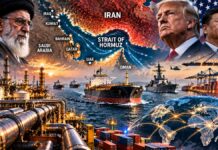


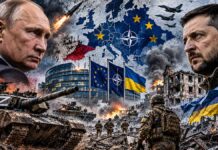


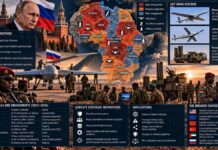
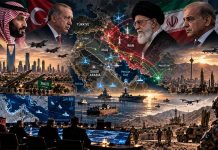








An institutional geopolitical, military, diplomatic and defence-industrial assessment of the emerging Türkiye–Saudi Arabia–Pakistan security architecture, its relationship with NATO and the United States, and its implications for Iran, Yemen, regional trade corridors and European strategic interests.
Executive Summary — Bottom Line Up Front
The Mecca Joint Defence Agreement, signed on 7 August 2026 by Türkiye, Saudi Arabia and Pakistan, represents a significant attempt to institutionalise collective defence among three influential states connecting the Eastern Mediterranean, the Arabian Peninsula and South Asia. Its strategic meaning, however, remains unsettled.
The agreement establishes a mutual-defence commitment, strengthens military coordination and provides a framework for defence-industrial cooperation. It can increase regional deterrence and reduce exclusive reliance on external security guarantees. It can also transmit conflicts involving one member to its partners.
The decisive development came on 5 October 2026, when the alliance announced steps to implement collective-defence commitments and prepare military capabilities for deployment in Saudi Arabia. This created a distinction between the alliance’s declared defensive purpose and its potential operational involvement in the Yemen confrontation.
On 27 October, the Turkish parliament’s Foreign Affairs Committee approved the ratification bill. This did not constitute final parliamentary ratification or automatic authority to deploy Turkish forces abroad.
The central assessment is that the alliance is neither demonstrably an autonomous alternative to the US security architecture nor proven to be an American-directed military instrument. Its institutional design permits both outcomes. What matters is who defines common threats, who authorises military operations, and whether the members can pursue security arrangements with Iran rather than institutionalise confrontation with it.
The greatest near-term risks are conflict spillover from Yemen, divergent perceptions of Iran, constitutional and military commitments extending beyond the original diplomatic purpose, and potential friction between the alliance’s regional autonomy ambitions and Türkiye’s NATO obligations.
The opportunity is equally consequential: a regional security mechanism capable of combining deterrence, maritime protection, industrial cooperation and diplomatic de-escalation without becoming an exclusive anti-Iranian bloc.
The strongest existing evidence for that alternative is the opening of security consultations with Tehran in October 2026. Their significance depends on whether the discussions produce an institutional mechanism rather than temporary diplomatic reassurance.
The Mecca Alliance: Regional Sovereignty or Washington’s New Security Frontier?
The defence agreement signed by Türkiye, Saudi Arabia and Pakistan on 7 August 2026 poses a question that reaches well beyond the Arabian Peninsula: can regional powers build an independent security architecture while remaining embedded in military relationships shaped by Washington? The contradiction became immediate on 5 October, when the alliance moved toward operational implementation amid renewed fighting in Yemen, before Türkiye had completed parliamentary ratification. For Ankara, the agreement promises greater industrial reach and diplomatic influence, but also introduces military commitments involving Saudi Arabia, Iran and the Red Sea. For Europe, the stakes extend from Mediterranean shipping to energy supplies and defence procurement. The Mecca Alliance will strengthen regional sovereignty only if its members retain control over threat definitions, military deployments and diplomatic engagement; otherwise, it risks transferring Western security burdens onto regional states without transferring strategic independence.
Collective defence has advanced faster than political control
The agreement’s institutional development has been exceptionally rapid. Signed in Mecca on 7 August 2026 by Turkish President Recep Tayyip Erdoğan, Saudi Crown Prince and Prime Minister Mohammed bin Salman and Pakistani Prime Minister Muhammad Shehbaz Sharif, it establishes that an armed attack against one participating country is to be treated as an attack against all three. On 31 August, the Strategic Political and Defence Committee met in Istanbul to advance military coordination, industrial cooperation and the establishment of a permanent secretariat in Saudi Arabia. At its emergency meeting in Riyadh on 5 October, the committee appointed retired Pakistani Lieutenant General Nauman Mahmood as secretary-general and announced immediate measures to implement collective-defence commitments, including preparations for the rapid deployment of agreed forces and capabilities to Saudi territory.
Yet institutional ambition has advanced ahead of complete domestic authorisation. Türkiye submitted the 16-article agreement for parliamentary consideration on 21 October, and the Grand National Assembly’s Foreign Affairs Committee approved the ratification bill on 27 October. The full parliamentary process remained a separate requirement. The agreement also establishes an indefinite commitment with restrictions on withdrawal during its initial ten-year period, creating obligations potentially extending across several governments and regional crises.
Turkish Deputy Foreign Minister Zeki Levent Gümrükçü told legislators that preparatory activities did not themselves create personnel, legal or financial obligations and that no deployment under the agreement was then planned for Saudi Arabia. Article 92 of the Turkish Constitution remains relevant to the authorisation of forces abroad. The distinction is decisive: a political promise of collective defence cannot substitute for the constitutional authority to employ military force. Nor does Türkiye’s membership in NATO extend Article 5 protection automatically to Saudi Arabia or Pakistan.
The treaty’s future credibility will depend on resolving precisely what constitutes a common threat, who establishes responsibility for an attack and whether an individual member can refuse military assistance extending beyond territorial defence. Without those safeguards, the alliance could institutionalise obligations whose operational limits become clear only after a crisis begins.
Yemen exposes the difference between deterrence and intervention
Yemen is the first major test of those limits. The 5 October committee declaration condemned attacks against Saudi cities, religious sites and civilian infrastructure, while announcing military implementation measures. On 9 October, United Nations Special Envoy for Yemen Hans Grundberg warned the Security Council that the country had returned to full-scale war, with hostilities spreading across several fronts and increasing pressure on the strategically sensitive approaches to Bab el-Mandeb.
The humanitarian consequences are already formidable. The United Nations estimated that more than 22 million people would require humanitarian assistance in Yemen during 2026, including 18.3 million experiencing acute food insecurity. Another 5.2 million people were internally displaced, while more than 2.2 million children under five faced acute malnutrition, including 516,157 suffering severe acute malnutrition. Only 59.3% of health facilities were fully functional. The 2026 humanitarian response plan requested $2.16 billion, including $1.6 billion for prioritised life-saving assistance.
Against this background, reinforcing Saudi air defence and protecting civilian infrastructure represent objectives fundamentally different from conducting military operations inside Yemen. The former can be organised around identifiable defensive requirements; the latter risks creating an extended conflict involving territorial operations, retaliation and additional civilian harm.
Saudi Arabia’s security interests cannot be dismissed, but neither can they automatically become Türkiye’s or Pakistan’s military priorities. Ankara already carries commitments across NATO’s geographical area and its neighbouring regions. Islamabad must preserve forces and capabilities for its South Asian security requirements. If collective solidarity becomes an obligation to participate in every escalation involving Riyadh, the agreement will distribute conflict rather than strengthen deterrence.
The oil corridors turn a regional military decision into a global economic exposure
The energy dimension explains why developments around Yemen and Iran reach far beyond the alliance’s membership. According to the US Energy Information Administration’s August 2026 data, petroleum liquids transiting the Strait of Hormuz declined from 21.6 million barrels per day in the fourth quarter of 2025 to 4.9 million in the second quarter of 2026, a fall of approximately 77%. Over the same interval, Bab el-Mandeb flows increased from 5.4 million to 8.1 million barrels per day, while the Suez Canal and SUMED pipeline system carried 5.8 million barrels per day in the second quarter of 2026.
These figures do not imply that lost Hormuz traffic was automatically transferred to Bab el-Mandeb. They demonstrate how differently the components of the regional energy system can behave during severe disruption. Hormuz is a principal outlet for Gulf petroleum and liquefied natural gas, while Bab el-Mandeb connects the Indian Ocean with the Red Sea and the Mediterranean approaches.
Saudi Arabia’s East–West oil pipeline and Red Sea export infrastructure provide a partial alternative to Hormuz, but they do not remove the vulnerability of western maritime routes. A pipeline can bypass one chokepoint while leaving cargoes exposed to instability elsewhere. For Europe, the consequences extend beyond crude prices: freight costs, insurance, refinery supplies, industrial inventories and delivery schedules all transmit disruption into economic activity.
The European Union has already responded through EUNAVFOR ASPIDES. On 23 February 2026, the Council extended its mandate until 28 February 2027, allocating nearly €15 million in common costs for the relevant annual period. On 30 March, the mandate was expanded to include information concerning threats to critical submarine infrastructure and additional regional capacity-building responsibilities. The figure excludes the full costs borne through national military contributions.
The strategic contradiction is that protecting maritime commerce and expanding the war are not interchangeable objectives. An alliance strengthening Saudi defensive infrastructure could reduce particular threats. An alliance drawn into sustained combat affecting Yemen or Iran could simultaneously increase the commercial insecurity that European and Asian governments are attempting to contain.
Turkish industrial ambition meets Saudi financing and Pakistan’s Chinese dependence
The Mecca Alliance also reflects a substantial redistribution of defence-industrial opportunities. SIPRI ranked Türkiye the world’s 11th-largest exporter of major arms during 2021–2025, with 1.8% of global transfers, compared with 0.9% during 2016–2020. Turkish export volume increased by 122%, substantially exceeding the global market’s 9.2% growth over the same comparison. Pakistan received 16% of Turkish major-arms exports, followed by the United Arab Emirates with 12% and Ukraine with 8.4%.
Yet the three partners enter the industrial relationship from markedly different positions. Pakistan was the world’s fifth-largest major-arms importer during 2021–2025, accounting for 4.2% of global imports, with China providing 80% of its imported major weapons and Türkiye 7%. Saudi Arabia accounted for 6.8% of global imports, of which 77% originated in the United States.
These figures expose the difference between industrial diversification and technological sovereignty. Turkish–Pakistani production projects may broaden capabilities and procurement options, while Saudi financing can support new industrial investment. But existing inventories, imported components, maintenance systems and technology rights create dependencies that cannot be removed through a political agreement.
The alliance’s industrial provisions envisage joint production, technology development and closer cooperation. They do not establish a verified consolidated investment budget or prove that Riyadh has committed to financing Turkish weapons for Pakistani operations in Yemen. Such conclusions require contracts and financial authorisations.
The commercial stakes are nonetheless considerable. Military procurement creates relationships extending through training, software updates, spare parts and decades of equipment maintenance. The choice of supplier can therefore influence future diplomatic flexibility long after the initial acquisition. Ankara’s industrial expansion may increase autonomy in some technologies while creating new commercial incentives to preserve security relationships whose military obligations require separate scrutiny.
China and Russia complicate Washington’s preferred regional alignment
The alliance’s relationship with Washington is best understood through the evolution of regional security policy. The United States promoted the Middle East Strategic Alliance in 2018–2019, seeking stronger political, defence and energy-security coordination among regional partners. In January 2021, Washington transferred Israel from US European Command to Central Command, facilitating military cooperation within a common American regional structure.
The Mecca Agreement is not a continuation of those institutions under an American command. Nevertheless, an alliance that increases regional defensive capabilities while preserving NATO compatibility and existing US security relationships can serve Washington’s burden-sharing interests. Operational compatibility does not establish American control, but neither does regional membership alone demonstrate independence.
China represents a different diplomatic model. On 10 March 2023, Beijing sponsored the Saudi–Iranian agreement restoring diplomatic relations, subsequently followed by trilateral consultations in 2023, 2024 and 2025. Chinese influence rests here on diplomatic access to competing regional powers rather than an American-style network of mutual-defence relationships.
Russia’s position is distinct again. Moscow signed a Comprehensive Strategic Partnership Treaty with Iran on 17 January 2025, which entered into force on 2 October. The treaty establishes extensive cooperation but not an automatic NATO-style obligation to enter every Iranian conflict. On 9 October 2026, Russian Permanent Representative to the United Nations Vassily Nebenzia condemned attacks affecting Saudi infrastructure and maritime security while calling for inclusive negotiations in Yemen.
These relationships limit the plausibility of a stable regional order organised exclusively around confrontation with Tehran. Saudi Arabia maintains diplomatic channels supported by China; Russia has institutional commitments to Iran; Türkiye has interests requiring continued regional engagement; and Pakistan cannot reduce its security priorities to the Arabian Peninsula.
The 26 October contacts in Tehran, acknowledged in the following day’s Turkish parliamentary proceedings, therefore deserve attention. They do not demonstrate imminent Iranian accession to the Mecca Alliance. They suggest that the founders retain an alternative to an exclusive military bloc: structured Iranian consultations on maritime security, non-aggression and crisis management, without immediately extending collective-defence guarantees.
Europe cannot afford to treat the alliance as another Gulf procurement story
European exposure differs sharply by country. Italy ranked sixth among international major-arms exporters during 2021–2025, with 5.1% of global exports and a 157% increase in transfer volume over the previous five-year period. SIPRI reported that 59% of Italian major-arms exports went to the Middle East. Qatar received 26% of Italian exports, Kuwait 17% and Indonesia 12%.
France ranked second globally with 9.8%, Germany fourth with 5.7%, the United Kingdom eighth with 3.4% and Spain tenth with 2.3%. Türkiye’s 1.8% share remains below these suppliers, but its rapid expansion introduces competition over procurement, industrial localisation and technology-transfer conditions.
For Rome, the challenge involves both Mediterranean security and industrial exposure. On 16 September 2026, Italian Foreign Minister Antonio Tajani reaffirmed support for Yemen’s internationally recognised government, de-escalation and Red Sea navigation, emphasising Italy’s role in ASPIDES. A prolonged conflict would threaten shipping reliability while complicating commercial relationships across Gulf defence markets.
London faces more immediate military responsibilities. On 22 September 2026, the British Ministry of Defence announced the provision of an RAF Voyager refuelling aircraft to support Saudi defensive operations, alongside existing British assistance. The United Kingdom therefore maintains direct security commitments that may intersect with, but are legally distinct from, the Mecca Alliance.
Germany condemned attacks on Red Sea shipping in September 2026 and participated in diplomatic consultations with UN Special Envoy Grundberg in October. Its exposure is concentrated in industrial supply chains, transport reliability and defence-export governance. Spain condemned attacks against Saudi infrastructure on 8 September and 11 October while reaffirming support for UN-sponsored negotiations. Its Mediterranean and Atlantic shipping interests make route stability a direct commercial concern.
France must balance established Gulf defence relationships with the diplomatic consequences of regional polarisation. Its industrial position offers commercial opportunities, but the expansion of Turkish–Saudi production could progressively reshape procurement decisions.
The European Union cannot eliminate these differences through one naval operation. It can, however, maintain a distinction between defensive maritime protection, national military assistance and participation in regional conflicts. That distinction will be decisive if the Mecca Alliance’s operational role expands.
The next 24 months will determine whether sovereignty has operational meaning
Between late 2026 and late 2028, the decisive developments will be the completion of Turkish ratification, the publication of military implementation procedures, any verified deployment of Turkish or Pakistani forces, the emergence of financed industrial projects and the possible institutionalisation of consultations with Iran.
Three trajectories warrant particular attention. The alliance could consolidate a limited defensive role, strengthening Saudi infrastructure protection while preserving national military authorisation. It could evolve into a US-compatible burden-sharing mechanism, expanding regional capabilities without significantly changing external technological dependence. Or repeated incidents involving Yemen could generate broader operations, increasing the probability of confrontation with Iran and exposing the founders to commitments exceeding the original defensive rationale.
A fourth possibility remains diplomatically significant: an arrangement in which the Mecca Agreement retains its founding membership while Iran participates through a separate consultation mechanism. This would preserve collective defence without making exclusion from regional diplomacy a permanent principle.
The costs of inaction would not fall equally. Saudi Arabia would remain exposed to attacks on civilian and economic infrastructure; Türkiye and Pakistan could inherit poorly defined military obligations; European manufacturers and transport operators would face continued commercial uncertainty; and Yemen’s population would bear the greatest immediate humanitarian burden. Italy, Germany, Spain and the United Kingdom would experience different combinations of shipping disruption, industrial exposure and security expenditure.
The Mecca Alliance’s first two years will therefore be judged less by its declarations than by its operational decisions. A treaty that expands military capability without clarifying political authority may redistribute responsibility without producing sovereignty. A treaty that establishes enforceable mission limits, independent threat assessment and credible diplomatic channels could produce a different outcome: regional defence capacity that reduces dependence on external intervention without requiring permanent confrontation with Iran.
For Ankara, that distinction is the central economic and strategic calculation. Turkish defence exports can expand under either model. Only one preserves the freedom to decide whose war Türkiye is prepared to fight.
Navigational Index
Pillar I — Institutional Architecture, Strategic Origins and Sovereignty
- Chapter 1. The Mecca Agreement: Formation, Legal Design and Ratification
- Chapter 2. Washington, NATO and the Evolution of Middle Eastern Security Architecture
- Chapter 3. Divergent National Threat Perceptions and Collective-Defence Obligations
Pillar II — Military Risk, Industrial Power and Regional Connectivity
- Chapter 4. Yemen, Ansarallah and the Operational Geography of Escalation
- Chapter 5. Iran, Hormuz and Bab el-Mandeb: Energy and Maritime Security
- Chapter 6. Turkish Defence Industries, Pakistani Capabilities and Gulf Financing
- Chapter 7. Europe, NATO and the Strategic Interests of Italy, France, Germany and the United Kingdom
Pillar III — Strategic Futures, Governance and Decision Options
- Chapter 8. Alternative Security Architectures and the Prospects for Iranian Participation
- Chapter 9. Escalation Scenarios and Strategic Indicators, 2026–2031
- Chapter 10. Policy Options, Institutional Safeguards and Final Strategic Assessment
Master Abstract — The Strategic Contest Behind a New Regional Defence Architecture
Regional autonomy and the redistribution of military responsibility
The Mecca Alliance emerges at the intersection of two transformations in Middle Eastern security: the diversification of regional military partnerships and the increasing expectation that regional states will undertake greater responsibility for their own defence. These processes are related but not identical. A state can reduce its operational dependence on American forces while remaining strategically aligned with Washington. Conversely, it can preserve American military and technological relationships while pursuing diplomatic positions that differ from those of the United States.
This distinction is fundamental to assessing the agreement. A regional defence institution should not be considered autonomous simply because its founders are geographically located in the region. Strategic autonomy depends on decision-making authority, intelligence independence, operational control, technological sovereignty, financing and freedom to refuse participation in military activities that do not serve national interests.
The agreement’s formal defensive character provides an important safeguard. The joint declaration of 7 August describes collective deterrence against aggression and establishes that an armed attack against one participating state is to be regarded as an attack against all three. It does not, in that declaration, identify Iran, Yemen or another state as an adversary. The joint-defence commitment therefore establishes a broad principle while leaving the most consequential implementation questions to institutional procedures and national decision-making.
The alliance combines three distinct strategic assets. Türkiye contributes a developed defence-industrial base, NATO interoperability experience and military relationships across several theatres. Saudi Arabia contributes substantial financial resources, Gulf strategic geography and a strong interest in securing its territory, energy infrastructure and maritime access. Pakistan contributes established military capabilities, a nuclear deterrent under its own national command, and decades of security engagement with Saudi Arabia.
The complementarity is evident, but so is the asymmetry. Each state enters the agreement with different adversaries, operational priorities and domestic political constraints. The alliance’s effectiveness will depend less on the number of capabilities the members possess than on whether they can translate those capabilities into jointly authorised operations without importing one another’s regional confrontations.
The October acceleration changes the risk calculation
The institutional sequence is unusually important. The agreement was signed on 7 August. On 5 October, the Strategic Political and Defence Committee announced immediate implementation measures and preparations for the rapid deployment of agreed forces and capabilities to Saudi Arabia. On 21 October, the ratification bill was presented to the Turkish parliament, and on 27 October it passed the Foreign Affairs Committee.
The October decision does not establish that Turkish combat forces have entered Yemen or that Türkiye has undertaken offensive action against Ansarallah. Indeed, Deputy Foreign Minister Zeki Levent Gümrükçü told the parliamentary committee on 27 October that no deployment under the alliance was then planned for Saudi Arabia. The distinction between an announced readiness measure and an authorised, executed deployment is essential.
Nevertheless, the timing reveals a significant institutional tension: operational planning advanced while Türkiye’s domestic approval process remained incomplete. The Turkish government’s position is that the preparatory activities had not created personnel, legal or financial obligations for the country. Opposition legislators challenged both the sequencing and the longer-term risks to parliamentary control.
Foreign Affairs Committee Proceedings — Turkish Grand National Assembly — Oct 2026
The constitutional distinction has operational consequences. A collective-defence commitment can create a political expectation of assistance, but deploying Turkish forces abroad remains subject to Türkiye’s constitutional system, including parliamentary authority under Article 92 where applicable. A regional alliance cannot be treated as an independent command empowered to override national constitutional procedures.
Washington’s strategic interests are compatible with the alliance, but do not establish American control
The alliance may reduce the direct military burden on Washington while preserving a security environment favourable to American objectives. Regional states that develop their own air defence, maritime surveillance, intelligence exchanges and military readiness can become more capable partners for the United States without necessarily receiving instructions from it.
This is particularly relevant because the agreement has not been designed as a replacement for NATO. During the Turkish parliamentary proceedings, officials explicitly described it as complementary to existing international defence commitments. Deputy Foreign Minister Gümrükçü also stated that NATO allies had received briefings about the new framework and had responded positively.
That official formulation weakens the proposition that the pact is intended to displace the American-led security order. It does not, however, prove that its founders lack independent strategic ambitions.
The central distinction is between strategic compatibility and operational subordination. The former is documented in Türkiye’s official explanations; the latter would require stronger evidence, such as American participation in alliance decisions, binding operational arrangements or documented external direction over military deployments.
Neither favourable American political commentary nor the historical existence of proposals for a regional security bloc establishes those mechanisms.
Yemen is the decisive operational test
The risks become most acute where an alliance’s broad defensive principles encounter a prolonged and politically contested armed conflict.
Saudi Arabia’s security concerns include attacks against its territory, civilian infrastructure and economic facilities. Yemen’s conflict also involves the Ansarallah movement, competing Yemeni authorities, regional intervention, humanitarian consequences and disputes over the legitimacy and objectives of military operations.
Protecting Saudi territory from attack is not equivalent to authorising a military campaign inside Yemen. The former can be organised around territorial defence, air and missile interception, intelligence and early warning. The latter involves separate questions of necessity, proportionality, international law, military feasibility and political settlement.
For Türkiye, the strategic danger would be the gradual transformation of a deterrence commitment into an extended campaign whose objectives are defined principally by another alliance member. For Pakistan, a comparable danger lies in the diversion of military attention and resources from its immediate national-security priorities.
A defensive mission limited to protecting Saudi territory could remain consistent with the alliance’s stated purpose. Offensive operations intended to alter the military balance inside Yemen would represent a substantially different level of involvement, with heightened risks of retaliation, conflict expansion and diplomatic deterioration.
Iran determines whether the alliance becomes inclusive or exclusionary
The relationship with Tehran is the central political variable in the agreement’s future.
Iran is simultaneously a regional military power, a participant in Gulf security dynamics and a state whose relations with Saudi Arabia, Türkiye and Pakistan differ considerably. Treating Tehran as an automatic enemy of all three founders would obscure those distinctions.
Ankara’s official position is significant. In testimony to the Turkish parliament on 27 October, Deputy Foreign Minister Gümrükçü stated that the pact contains no commonly designated enemy country or armed group. He explained that collective-defence action requires a shared assessment of threats and agreement on the nature of the response. The government also presented the agreement as open to additional regional members that accept its principles.
The 26 October contacts in Tehran, acknowledged during the following day’s parliamentary proceedings, offer a potential diplomatic counterweight to military polarisation. They do not establish an Iranian accession agreement or a negotiated settlement concerning Yemen.
The strategic choice is therefore not necessarily between excluding Iran and granting Iran full membership immediately. Intermediate arrangements could include structured security consultations, maritime incident-management mechanisms, non-aggression understandings and confidence-building measures, without extending collective-defence guarantees before the parties have resolved their fundamental disagreements.
Defence production creates incentives that may outlast the immediate crisis
The agreement’s industrial dimension is not incidental. Cooperative production, technology transfers, military training and procurement relationships can generate durable economic and institutional interests.
According to the Stockholm International Peace Research Institute, Türkiye became the world’s 11th-largest supplier of major arms in 2021–2025, accounting for 1.8% of global exports, compared with 0.9% in 2016–2020. The volume of Turkish major-arms exports increased by 122% between the two periods. Pakistan received 16% of Turkish arms exports during 2021–2025, followed by the United Arab Emirates at 12% and Ukraine at 8.4%.
These figures document a substantial expansion of Turkish defence-industrial reach. They do not establish the value of contracts attributable to the Mecca Agreement, nor do they demonstrate that Saudi Arabia has agreed to finance a specific Turkish-equipped Pakistani deployment.
The longer-term issue is whether industrial cooperation strengthens sovereign defensive capabilities or creates procurement incentives that make military disengagement politically and economically more difficult.
Trends in International Arms Transfers, 2025 — SIPRI — Mar 2026, Table 1
European security consequences
The European implications extend beyond Türkiye’s NATO membership. The Eastern Mediterranean, the Red Sea, the Suez route, Gulf hydrocarbon infrastructure and regional defence markets connect Middle Eastern instability with European supply chains and military planning.
Italy’s exposure is particularly relevant to Mediterranean maritime connectivity, shipping, energy security and defence-industrial relationships. France combines Gulf security partnerships, defence exports and a wider regional military-diplomatic role. Germany faces industrial and energy-supply consequences alongside the implications of arms-export controls and NATO coordination. The United Kingdom has substantial Gulf defence relationships and an interest in the security of maritime routes connecting the Indian Ocean and Europe.
These countries do not have identical interests or policy instruments. The European Union’s economic and regulatory competences must also be distinguished from the military responsibilities of individual states and NATO.
For European decision-makers, the alliance is best assessed through its practical effects: whether it reduces attacks on critical infrastructure, improves shipping security, stabilises insurance and logistics conditions, increases transparency over regional military activity, and preserves channels for de-escalation with Tehran.
The conclusion is conditional but strategically important. A more capable regional defence architecture can strengthen European security if it prevents conflict. The same architecture can increase European exposure if it becomes an additional mechanism for military escalation.
Key Evidence Table — Verified Institutional and Strategic Baseline
| Indicator | Value / Status | Reference date | Definition / Scope | Issuing institution and exact source |
|---|---|---|---|---|
| Alliance foundation | Agreement signed by three governments | 7 Aug 2026 | Collective defence and security cooperation | Pakistan Broadcasting Corporation — Aug 2026 |
| Collective-defence principle | Armed attack on one member treated as an attack on all | 7 Aug 2026 | Formal mutual-defence undertaking | Pakistan Broadcasting Corporation — Aug 2026 |
| Operational activation measures | Immediate implementation and rapid-deployment preparations announced | 5 Oct 2026 | Committee declaration, not confirmation of troop deployment | Joint Committee Statement — Oct 2026 |
| Turkish legislative status | Foreign Affairs Committee approval; final assembly approval not established | 27 Oct 2026 | Bill 2/3961 | TBMM Legislative Record — Oct 2026 |
| Agreement duration | Indefinite, with an initial 10-year restriction on withdrawal | Oct 2026 | Duration and withdrawal framework | TBMM Committee Proceedings — Oct 2026 |
| Designated common enemy | None identified in Turkish official testimony | 27 Oct 2026 | Common threat assessment | TBMM Deputy Minister Testimony — Oct 2026 |
| Türkiye’s NATO relationship | Complementary, not a replacement | 27 Oct 2026 | Turkish government’s stated position | TBMM Committee Proceedings — Oct 2026 |
| Turkish arms-export position | 11th worldwide; 1.8% global share | 2021–2025 | SIPRI major-arms transfer volume | SIPRI Fact Sheet, Table 1 — Mar 2026 |
| Turkish arms-export growth | +122% | 2021–2025 versus 2016–2020 | Change in SIPRI transfer volume, not dollar revenue | SIPRI Fact Sheet, Table 1 — Mar 2026 |
| Pakistan’s share of Turkish arms exports | 16% | 2021–2025 | Share of Türkiye’s major-arms transfers | SIPRI Fact Sheet, Table 1 — Mar 2026 |
| Iranian diplomatic engagement | Contacts in Tehran acknowledged by Turkish authorities | 26–27 Oct 2026 | Regional security consultations; no verified accession | TBMM Committee Proceedings — Oct 2026 |
The strongest available evidence establishes that the agreement is a genuine institutional development, not merely a political declaration. It also establishes that the legal and operational stages of implementation are distinct.
A particularly important limitation concerns the 5 October announcement. It provides evidence of an intention to prepare military capabilities for deployment, while the Turkish government’s statements on 27 October indicate that no deployment was then planned under the agreement. These statements should be assessed by their dates and precise meaning, not treated as interchangeable evidence of an executed military commitment.
Competing Strategic Explanations
Three overlapping explanations account for the alliance’s formation and early development. They are not mutually exclusive; their relative importance may change as the treaty is implemented.
| Strategic hypothesis | Diagnostic support | Countervailing evidence | Indicators | Current assessment |
|---|---|---|---|---|
| H1 — Autonomous regional security architecture | Regional founders, institutionalised mutual defence, locally directed coordination, openness to additional members | NATO complementarity and persistent external military dependencies | Independent threat assessments; inclusion of Iran in consultations; sovereign operational command | Credible institutional objective, autonomy not yet demonstrated |
| H2 — Burden-sharing within a US-compatible security order | Existing US-aligned defence relationships, NATO compatibility, Saudi territorial-defence priorities | No verified evidence of US command authority over the alliance; founders assert independent regional ownership | US operational participation; procurement dependence; alignment of deployments with US priorities | Strong evidence of compatibility, insufficient evidence of subordination |
| H3 — Defence-industrial and strategic-commercial consolidation | Turkish arms-export growth, defence cooperation provisions, opportunities for production and technology transfer | No verified alliance-specific contract totals or financing structure | Joint factories, procurement awards, technology agreements, budget allocations | Credible supporting motive; not proven to be the dominant purpose |
Interpretation of the competing explanations
The first hypothesis is supported most directly by the language of the founding declaration and the Turkish government’s stated ambition to develop regional solutions. Its weakness is that independence cannot be inferred from founding membership alone. It requires demonstrated control over intelligence, military planning, procurement and operational authorisation.
The second hypothesis is supported by the alliance’s compatibility with NATO and the existing Western security relationships of its members. However, compatibility should not be confused with external direction. An alliance serving some American strategic interests may simultaneously strengthen the autonomy of its regional participants.
The third hypothesis identifies a more durable source of integration. Defence production and procurement can survive diplomatic disagreements because factories, training systems, maintenance infrastructure and technology partnerships create continuing economic incentives. Nevertheless, it would be analytically premature to attribute the ten-year withdrawal restriction principally to arms-export ambitions without documentary evidence concerning the negotiations and expected contracts.
The most defensible current explanation is therefore a regionally initiated security framework operating within an existing system of Western military relationships, reinforced by substantial defence-industrial incentives.
That assessment would change if the alliance developed an independently controlled regional military command, signed binding arrangements placing its forces under an external authority, or opened formal accession negotiations with Iran.
Principal Gaps and Watch Indicators
The unresolved questions are sufficiently consequential to affect future assessments, military planning and diplomatic policy.
| Strategic issue | Critical missing evidence | Observable development that changes the assessment |
|---|---|---|
| Turkish ratification | Final parliamentary act, publication and entry-into-force record | Formal ratification and publication of implementing legislation |
| Operational commitments | Authorised force packages, deployment orders and command arrangements | Verified dispatch of personnel, air-defence systems or other military assets |
| Yemen-related mission scope | Agreed defensive mission boundaries and rules of engagement | Shift from territorial protection to combat operations inside Yemen |
| Common threat definition | Formal committee decisions and threat-assessment criteria | Identification of Iran or an armed group as a collective adversary |
| Washington’s role | Documented coordination mechanisms involving US institutions | Formal US operational or decision-making involvement |
| Iranian participation | Official negotiating mandate or agreed framework | Establishment of structured consultations, observer arrangements or accession negotiations |
| Defence-industrial financing | Signed contracts, procurement budgets and financing agreements | Verifiable Saudi-funded joint production or equipment procurement |
| Withdrawal and amendment safeguards | Final operative text and ratification instruments | Clarified procedures for withdrawal, amendment and national legislative approval |
Decision consequences for the founding states
For Türkiye, the primary requirement is to preserve the distinction between collective deterrence and participation in another state’s military campaigns. This requires parliamentary control, clear mission limitations and independent assessment of the national interest.
For Saudi Arabia, the alliance can diversify sources of security assistance, improve military preparedness and support domestic defence-industry ambitions. The principal risk is that greater military backing could weaken incentives to pursue a sustainable political settlement with Yemen if the framework is employed coercively.
For Pakistan, stronger Gulf and Turkish partnerships can support defence cooperation and industrial development. Its principal challenge will be preventing commitments outside South Asia from generating disproportionate financial or military obligations.
For Iran, the alliance’s significance will depend on whether it is treated as an exclusionary coalition or a possible participant in wider security negotiations. Tehran’s engagement may also be motivated by a desire to prevent military encirclement without making fundamental concessions on regional security policy.
For the United States, increased regional military capability can reduce the requirement for direct intervention, provided that allied states remain sufficiently aligned with Washington’s interests. However, a genuinely independent regional mechanism could also produce diplomatic arrangements the United States does not fully control.
For European states, the preferred security outcome is not simply a more powerful alliance, but one that increases the reliability of critical trade routes, reduces the frequency of armed confrontation and limits demands for external military intervention.
Strategic Outlook, 2026–2031
The next five years will test whether the alliance develops primarily through military integration, defence-industrial cooperation or diplomatic enlargement.
Pathway A — Defensive regional consolidation
The alliance develops integrated training, early warning, logistics and defensive capabilities while retaining national control over operations. It improves deterrence without adopting an exclusive regional enemy definition. This pathway is consistent with the founders’ declared objectives, but depends on disciplined operational limits.
Pathway B — US-compatible military burden-sharing
Regional members assume greater responsibility for protecting Saudi and Gulf infrastructure while maintaining close coordination with existing Western security institutions. This pathway may improve military efficiency, but can create political dependence if common threat assessments become inseparable from external priorities.
Pathway C — Conflict transmission and regional polarisation
A major attack on Saudi territory triggers pressure for alliance military support. Mission expansion, retaliatory strikes or disputed threat attribution generate direct or indirect confrontation with Ansarallah or Iran. This pathway would expose the alliance’s weakest institutional feature: the mismatch between collective obligations and differing national interests.
Pathway D — Inclusive regional security diplomacy
The founders extend consultations to Iran and other regional actors while negotiating arrangements for maritime security, conflict prevention and territorial non-aggression. This is the most ambitious institutional pathway and requires substantive political compromises. The October Tehran contacts offer a diplomatic starting point, not evidence of its eventual success.
These pathways are not assigned numerical probabilities. The available official record does not support a defensible quantitative forecast of their relative likelihood.
Preliminary Strategic Assessment
The Mecca Alliance should be assessed neither as an inevitable instrument of American regional dominance nor as proof that Middle Eastern states have achieved security independence. Both propositions would overstate the record.
The agreement matters because it connects three states possessing complementary military, industrial, financial and geographic capabilities under a shared commitment that may endure for decades. Its significance lies not simply in the formal promise of mutual defence, but in the institutional machinery through which military assistance, threat assessments, technology transfers and diplomatic priorities will be coordinated.
The most immediate test is Yemen. If collective defence remains confined to protecting sovereign territory and preventing attacks on civilian infrastructure, the alliance can strengthen regional deterrence without necessarily reproducing the intervention patterns that have contributed to regional instability. If that mandate expands into offensive action or regime-changing objectives, the members will face a different strategic calculation involving legal authority, escalation risk, political legitimacy and military sustainability.
The second test is Iran. Its exclusion would not automatically make the alliance hostile, but sustained military coordination against threats attributed to Tehran, without meaningful diplomatic engagement, could consolidate antagonistic security blocs. Conversely, an Iranian consultation mechanism would not by itself establish lasting cooperation. Its value would depend on specific, enforceable arrangements.
The third test is institutional sovereignty. An alliance cannot be regarded as genuinely independent merely because its members purchase more weapons from one another or undertake missions previously performed by external forces. Independence requires the capacity to define interests, refuse missions, control command structures and sustain capabilities without external political direction.
The central strategic judgment is that the Mecca Alliance’s future character will be determined by the limits its members establish on the use of collective military power. Its defence-industrial potential is considerable, its diplomatic possibilities remain open, and its escalation risks are material. The outcome will turn on whether regional ownership becomes a system of collective restraint or simply a redistribution of military burdens within the existing security order.
The Mecca Alliance
Regional Security Sovereignty or Washington’s New Strategic Front? An interactive assessment of the Türkiye–Saudi Arabia–Pakistan defence architecture, its military-industrial foundations, and the strategic risks surrounding Iran and Yemen.
Three States, Different Strategic Priorities
The alliance combines military capability, defence manufacturing, financial resources and geographic reach. Complementary assets do not automatically create identical security interests.
Collective defence / Intelligence / Military coordination / Industrial cooperation
Collective deterrence
The founding declaration establishes a mutual-defence principle under which aggression against one participating country is treated as aggression against all three.
Documented declarationNational authorisation
Collective commitments must be distinguished from domestic approval requirements. Turkish deployments abroad remain subject to applicable constitutional procedures.
Legal safeguardFrom Signature to Parliamentary Scrutiny
Türkiye, Saudi Arabia and Pakistan sign the joint defence agreement.
The strategic committee announces immediate measures and rapid-deployment preparations. This does not establish that combat forces were deployed.
Security consultations involving Iran are acknowledged in subsequent Turkish parliamentary proceedings.
The Turkish parliament’s Foreign Affairs Committee approves the ratification bill. Final parliamentary approval remains a separate legislative stage.
Strategic Alignment and Divergence
| Actor | Principal interests | Potential advantage | Exposure |
|---|---|---|---|
| Türkiye | Industrial expansion, regional influence, deterrence | Broader defence cooperation | Conflict spillover and NATO coordination |
| Saudi Arabia | Territorial defence and infrastructure protection | Diversified security partnerships | Escalation involving Yemen |
| Pakistan | Defence partnerships and strategic cooperation | Industrial and military opportunities | Commitments beyond South Asia |
| Iran | Regional security and avoidance of encirclement | Diplomatic participation | Exclusionary security alignment |
| United States | Regional stability and burden-sharing | More capable regional partners | Reduced direct influence over autonomous decisions |
Türkiye’s Expanding Global Arms Position
The following figures use SIPRI major-arms transfer volume data. They are not financial export revenue and should not be interpreted as the value of contracts associated with the Mecca Alliance.
Share of Global Major-Arms Exports
Displayed bar heights are proportional to the stated global shares, using a zero baseline.
Growth in Export Volume
SIPRI reports that Turkish exports of major arms increased by 122% between 2016–2020 and 2021–2025.
Global Ranking
11thTürkiye’s position among international suppliers of major arms for the 2021–2025 period.
Source: SIPRI, March 2026Principal Destinations of Turkish Major-Arms Exports
Percentage share of Türkiye’s total major-arms exports, 2021–2025.
Bars use a zero-to-100% scale, representing shares of all Turkish exports rather than a ranking-only scale. The three destinations shown are not an exhaustive distribution.
| Destination | Share | Reference period |
|---|---|---|
| Pakistan | 16% | 2021–2025 |
| United Arab Emirates | 12% | 2021–2025 |
| Ukraine | 8.4% | 2021–2025 |
Source: Stockholm International Peace Research Institute, Trends in International Arms Transfers, 2025.
Industrial Integration: Opportunities and Constraints
Potential cooperation
Joint weapons production, technology transfers, intelligence coordination, military training and long-term procurement.
Principal constraints
Export permissions, technological dependencies, financing, national procurement choices and different military priorities.
| Claim | Evidence position |
|---|---|
| Türkiye has expanded major-arms exports | Supported by SIPRI transfer statistics |
| The alliance provides an industrial cooperation framework | Supported by the institutional record |
| Saudi Arabia finances specific Turkish weapons for Pakistani operations in Yemen | Not established by the official evidence assessed |
| Industrial incentives explain the full ten-year withdrawal restriction | Possible interpretation, not demonstrated causation |
Four Possible Security Pathways
These are qualitative scenarios, not probability forecasts. No numerical likelihoods or fabricated risk scores are assigned.
A. Defensive Consolidation
Integrated training, deterrence, early warning and military logistics, combined with strict national command authority.
B. US-Compatible Burden-Sharing
Regional members assume more defensive responsibility while continuing to cooperate with Western military institutions.
C. Conflict Transmission
An attack on Saudi territory generates political pressure for broader operations, increasing confrontation risks around Yemen.
D. Inclusive Regional Diplomacy
Consultations with Iran develop into maritime security, confidence-building and regional de-escalation arrangements.
What Would Change the Assessment?
| Watch indicator | Evidence required | Strategic meaning |
|---|---|---|
| Operational deployment | Official authorisation and verified force movement | Move from preparation toward military implementation |
| Mission expansion | Rules of engagement and authorised operational objectives | Potential shift from territorial defence to wider conflict |
| Iran dialogue | Official negotiation mandate or established consultation mechanism | Evidence of an inclusive regional security approach |
| US involvement | Formal operational command or decision-sharing arrangements | Clarifies external influence over alliance decisions |
| Defence procurement | Contracts, budget commitments and production records | Measures the industrial integration beyond announcements |
| Final ratification | Published parliamentary and entry-into-force records | Clarifies the agreement’s legal status |
Regional and European Decision Implications
Türkiye — Military autonomy and parliamentary control
Preserve independent threat assessment, constitutional authority, explicit mission limitations and the ability to decline operations beyond Türkiye’s national interests.
Saudi Arabia — Territorial security and political settlement
Strengthen infrastructure protection while maintaining incentives for diplomacy and avoiding military objectives that could prolong the confrontation in Yemen.
Pakistan — Defence cooperation and resource discipline
Evaluate obligations against national readiness, financial commitments and security priorities in South Asia.
Iran — Consultation or strategic exclusion
Track whether diplomatic contacts develop into practical security mechanisms, maritime agreements or a structured regional dialogue.
Italy, France, Germany and the United Kingdom
Italy: Mediterranean shipping, maritime security, energy connectivity and defence-industrial partnerships.
France: Gulf security relationships, military cooperation, defence exports and regional diplomacy.
Germany: industrial supply chains, maritime trade, NATO coordination and arms-export governance.
United Kingdom: Gulf defence relationships, maritime passage security, military cooperation and crisis management.
PILLAR I — INSTITUTIONAL ARCHITECTURE, STRATEGIC ORIGINS AND SOVEREIGNTY
The Mecca Alliance: Regional Security Sovereignty, Collective Defence and the Reorganisation of Middle Eastern Power
Open-Source Institutional and Strategic Assessment | 30 October 2026 | Türkiye, Saudi Arabia, Pakistan and the wider Middle East
Chapter 1. The Mecca Agreement: Formation, Legal Design and Ratification
A new collective-defence institution with consequences beyond its founding declaration
The Mecca Joint Defence Agreement of 7 August 2026 marks a significant institutional development in Middle Eastern security because it seeks to transform established military relationships among Türkiye, Saudi Arabia and Pakistan into a durable framework of collective defence, political consultation and industrial cooperation. Its importance does not depend exclusively on whether its members eventually undertake joint combat operations. The agreement changes the institutional environment in which future crises will be assessed, creates expectations of mutual assistance and establishes structures through which three governments can coordinate military capabilities and strategic decisions. These effects can emerge before the creation of an integrated command or the deployment of additional forces. For Ankara, the undertaking expands the geographical and political scope of its formal defence relationships beyond NATO and its existing bilateral arrangements. For Riyadh, it creates an additional framework for securing territorial integrity and critical infrastructure through regional partners rather than exclusively through longstanding relationships with external military powers. For Islamabad, it elevates relationships that already contain substantial defence and strategic elements into an explicitly collective arrangement. The fundamental legal and political question is whether these overlapping commitments strengthen sovereign decision-making or establish expectations of intervention that become increasingly difficult to control during an emergency. The agreement should therefore be examined as a developing international institution rather than as an isolated diplomatic event or an already operational military alliance.
The founding summit took place in Mecca on 7 August 2026, with Saudi Crown Prince and Prime Minister Mohammed bin Salman receiving Turkish President Recep Tayyip Erdoğan and Pakistani Prime Minister Muhammad Shehbaz Sharif. The joint declaration described a framework intended to strengthen collective deterrence against aggression, declaring that an armed attack against one participating state would be regarded as an attack against all three. This formulation is central because it moves beyond ordinary defence cooperation, training and procurement: it creates an express political and treaty-based commitment to collective security. Nevertheless, the founding declaration does not itself specify the military forces that each participant must provide, the circumstances under which combat operations become compulsory, or an automatic mechanism for deploying national armed forces. These matters require examination of the operative agreement, its implementation arrangements and the national laws governing each member. Pakistan’s Ministry of Foreign Affairs further characterised the agreement as defensive, not directed against another country, and consistent with the right of collective self-defence recognised by Article 51 of the United Nations Charter. That official position establishes the founders’ stated purpose, but international legal assessment must ultimately consider the nature of any military operation undertaken pursuant to the agreement, rather than relying exclusively on the terminology used to describe it. Makkah Al-Mukarramah Summit for Joint Defence — Ministry of Foreign Affairs of Pakistan — August 2026 and Message to the Nation on the Signing of the Makkah Joint Defence Agreement — Ministry of Foreign Affairs of Pakistan — August 2026.
Institutional construction: the emergence of a permanent coordination mechanism
The transformation from political declaration to institutional machinery began rapidly. On 31 August 2026, the foreign ministers, defence ministers and senior military leaders of the three countries met in Istanbul through the Strategic Political and Defence Committee established under the agreement. The composition of this body is significant because it brings together diplomatic decision-makers and military authorities rather than limiting cooperation to defence ministries or the armed forces. A mechanism combining these functions can coordinate strategic consultation, operational planning, defence procurement and crisis management; it can also become the principal institutional arena for negotiating differences over threat assessments and military commitments. The Istanbul meeting agreed to establish a secretariat in Saudi Arabia, initially headed by a Pakistani secretary-general serving a three-year term. This arrangement distributes institutional responsibility among the founders while placing the permanent administrative centre on Saudi territory. The location of a secretariat does not necessarily determine operational control, but it can influence administrative continuity, communications, staffing, information flows and the practical accessibility of the institution to participating governments. The declared industrial programme was equally substantial: the members envisaged joint technology development, defence production and measures to improve the cohesion and capabilities of their armed forces. These activities could gradually create an organisational identity extending beyond conventional consultations, particularly where common training, shared equipment and interoperable procedures generate habits of cooperation that endure through changes of government. Strategic Political and Defence Committee of the Makkah Agreement for Joint Defence — Ministry of Foreign Affairs of Pakistan — August 2026.
The institutional structure took another step on 5 October, when an emergency meeting of the Strategic Political and Defence Committee convened in Riyadh to address threats facing Saudi Arabia. The committee appointed retired Pakistani Lieutenant General Nauman Mahmood as the first secretary-general for the agreed three-year term. The declaration condemned attempted attacks against Mecca and Medina and continuing attacks against Saudi cities and civilian and economic facilities. More consequentially, it approved immediate practical implementation of collective-defence commitments, including measures intended to provide agreed military forces and capabilities and ensure their rapid deployment to Saudi Arabia under approved arrangements and applicable national legislation. The precise wording matters because it demonstrates movement toward military implementation without necessarily establishing that the announced capabilities had already been transferred or that every founding state had authorised the participation of its armed forces. A formal decision to prepare rapid deployment is neither equivalent to an executed deployment nor a legally sufficient basis for assuming that domestic constitutional approval has been obtained. The agreement’s credibility will depend on whether the three governments can translate collective decisions into lawful national action while preserving the ability to assess the necessity and proportionality of each proposed military contribution. Emergency Meeting of the Strategic Political and Defense Committee of the Makkah Alliance — Ministry of Foreign Affairs of Pakistan — October 2026.
The legal distinction between collective commitment and sovereign military authorisation
One of the most consequential questions arising from the agreement concerns the difference between accepting an international defence obligation and authorising the practical use of national military forces. The distinction is particularly important for Türkiye, whose constitutional framework gives the Turkish Grand National Assembly a defined role in authorising the deployment of armed forces abroad, subject to the applicable constitutional provisions. The principle of collective defence does not automatically displace this domestic authority. A participating government may have an international commitment to assist an ally, yet the form of that assistance can remain subject to national legislation, parliamentary approval, executive decisions, rules of engagement and international law. In practice, assistance might include intelligence, air defence, logistics, technical maintenance, surveillance, military training or direct combat operations. These alternatives differ considerably in political significance, personnel exposure, financial cost and escalation potential. The agreement therefore cannot be assessed only by asking whether assistance is mandatory. It is necessary to establish who determines that an armed attack has occurred, which government or committee proposes a response, whether unanimity is required, which forms of support are available, and what national procedures must be completed before operational execution.
International law introduces a separate but equally important framework. Article 51 of the United Nations Charter recognises the inherent right of individual and collective self-defence if an armed attack occurs, while preserving the Security Council’s authority and requiring that measures undertaken in self-defence be reported to it. The legality of collective military assistance cannot be established solely by the existence of a defence treaty. It depends on the factual circumstances, the legal basis for employing force, the requirements of necessity and proportionality, and the conditions under which assistance is requested and provided. These questions become particularly complex when a state faces attacks from a non-state armed organisation operating from another country’s territory, when attribution is contested, or when military operations risk crossing the boundary between territorial defence and intervention in another state’s internal conflict. The institutional design of the Mecca Agreement must consequently be evaluated against two different legal orders: the international rules governing the use of force and the domestic constitutional rules governing national participation. Neither can simply be replaced by a political declaration of solidarity. Charter of the United Nations, Articles 2 and 51 — United Nations and Security Council Repertoire: Actions with Respect to Threats to the Peace, Breaches of the Peace and Acts of Aggression — United Nations.
Turkish parliamentary ratification and the limits of executive discretion
The Turkish parliamentary process provides the clearest documented example of the difficulties associated with institutionalising the agreement. The ratification bill, registered as legislative proposal 2/3961, reached the Grand National Assembly on 21 October 2026. The parliamentary record describes an agreement intended to strengthen collective deterrence against threats and attacks, including terrorism, when these are determined through the parties’ common assessment to affect their defence and security. It also identifies greater coordination among the armed forces and enhanced defence-industrial cooperation as central objectives. The Foreign Affairs Committee considered the proposal on 27 October and approved it, but committee approval must be distinguished from completion of the parliamentary and constitutional process required for Türkiye to become fully bound under its domestic procedures. As of the assessment date, the official records reviewed establish committee approval rather than a completed sequence of final parliamentary adoption, publication and entry into force. The legal status should therefore be described precisely, without presenting ministerial meetings or preliminary military preparations as substitutes for legislative authorisation. Legislative Proposal 2/3961 — Turkish Grand National Assembly — October 2026 and Foreign Affairs Committee Approval of the Mecca Agreement — Turkish Grand National Assembly — October 2026.
The parliamentary debate exposed disagreements that are more substantial than conventional disputes between government and opposition. Several legislators questioned the definition of aggression, the possible extent of military contributions, the duration of the commitments, the administrative and financial responsibilities of the proposed institutions, and the risk that Turkish security policy could become dependent on threats faced by other governments. Concerns were also expressed about the relationship between military assistance and parliamentary supervision, the circumstances under which Turkish personnel might serve abroad, and the legal implications of decisions made by alliance bodies before completion of ratification. Government representatives responded by emphasising the defensive character of the undertaking, its compatibility with existing commitments and the continuing relevance of domestic legal procedures. The debate is particularly important because it identifies practical issues that may remain unresolved by general declarations: whether intelligence cooperation can be expanded without further legislative action, whether logistical support entails operational involvement, how defence-industrial commitments are financed, and whether the executive can participate in alliance planning while reserving binding decisions for the legislature. These are not merely procedural concerns. The answers will determine the effective distribution of military decision-making power between Turkish constitutional institutions and the new multinational framework. Official Foreign Affairs Committee Proceedings — Turkish Grand National Assembly — 27 October 2026.
The duration and withdrawal arrangements create another institutional concern. The agreement is described in the parliamentary discussion as an indefinite undertaking with an initial ten-year period during which withdrawal is restricted, followed by a mechanism permitting withdrawal with advance written notice. This is a different commitment from a renewable bilateral cooperation memorandum that governments can terminate relatively easily. A decade-long initial restriction can support continuity in training, defence procurement, institutional construction and military planning, but it also limits flexibility when strategic priorities change. The governments signing the agreement in 2026 cannot guarantee that their successors will share identical threat perceptions throughout the following decade. Nor can they assume that the regional environment will remain stable enough to preserve the original balance of interests. The withdrawal issue is therefore best understood as a question of intergenerational political commitment: one government may create international obligations that future governments must administer under conditions that could be substantially different. Opposition criticism of the ten-year restriction reflects this concern, although the existence of a long withdrawal period does not by itself establish that the agreement was designed to facilitate arms sales or constrain future Turkish governments for commercial reasons. Such a causal conclusion would require evidence concerning the negotiations, the reasons for the chosen duration and the commitments expected to operate throughout that period. Foreign Affairs Committee Proceedings and Statements on Long-Term Commitments — Turkish Grand National Assembly — October 2026.
Treaty implementation and the unresolved distribution of authority
The agreement’s ultimate character depends on the relationship among four levels of authority: national political leadership, the multinational political-defence committee, the permanent secretariat and the national military commands responsible for implementing approved activities. The committee’s ability to establish institutions and coordinate military preparations is documented, but the public declarations alone do not disclose every operative rule governing internal voting, operational delegation, classified intelligence, financial contributions or force employment. Those omissions are consequential. A secretariat responsible only for administration and consultation would have a different institutional role from a headquarters capable of issuing binding operational orders. Similarly, a requirement for unanimous political approval would give individual members much stronger protection against unwanted commitments than a system in which a coalition majority could impose decisions on dissenting participants. A comprehensive legal evaluation must therefore distinguish powers expressly conferred by the agreement from powers that might be introduced later through implementing protocols or joint military procedures. The absence of a publicly demonstrated integrated command should not be interpreted as proof that such a command cannot eventually emerge, but neither should its existence be assumed on the basis of general military-coordination language.
| Institutional component | Documented function or status | Decision significance | Question requiring further official clarification |
|---|---|---|---|
| Founding heads of government | Signature of the collective-defence agreement on 7 August | Political commitment and strategic direction | Scope of subsequent implementing instruments |
| Strategic Political and Defence Committee | Ministerial and military coordination, institutional development and implementation decisions | Principal multinational political-military forum | Voting rules and the legal effect of committee decisions |
| Permanent secretariat | Located in Saudi Arabia; Pakistani secretary-general for an initial three-year term | Administrative continuity and institutional coordination | Budget, staffing, disclosure obligations and delegated authority |
| Secretary-general | Nauman Mahmood appointed on 5 October | Executive administration and coordination | Relationship with national military commands |
| National legislatures and executives | Domestic approval and military authorisation | Preservation of sovereign decision-making | National procedures applicable to each category of assistance |
| National armed forces | Potential providers of agreed capabilities and personnel | Actual operational implementation | Force composition, command, rules of engagement and mission restrictions |
| Defence-industrial institutions | Cooperation envisaged in production and technology | Long-term interoperability and procurement | Binding contracts, financing, intellectual-property rules and export controls |
| Dispute and withdrawal arrangements | Long-duration commitment and withdrawal restrictions | Ability to modify or terminate obligations | Implementation of amendment, dispute-resolution and withdrawal provisions |
The table reflects the institutional roles established or discussed in the official records; it does not imply that undisclosed command or financing rules have been verified. Sources: Strategic Political and Defence Committee Statement — Pakistan Ministry of Foreign Affairs — August 2026, Emergency Committee Statement — Pakistan Ministry of Foreign Affairs — October 2026 and Turkish Parliamentary Proceedings — October 2026.
Key judgments and outstanding institutional questions
The principal conclusion of this chapter is that the Mecca Agreement has already progressed beyond symbolic diplomacy through the creation of a political-military committee, the establishment of a secretariat and the adoption of measures for collective-defence implementation. What remains insufficiently demonstrated is the precise distribution of binding authority over military operations, financial commitments and crisis decisions. The agreement’s long duration increases the importance of these questions because governance procedures established during its first years may shape regional security cooperation well beyond the governments that negotiated it. The next decisive records are the final Turkish ratification instrument, the complete operative rules for committee decision-making, any officially published implementation protocols and the national authorisations associated with actual military deployments. Their publication would allow a more definitive assessment of whether the agreement preserves a strongly intergovernmental character or develops the institutional capacity to coordinate military action with a degree of independence from the national political processes of its members.
Chapter 2. Washington, NATO and the Evolution of Middle Eastern Security Architecture
The historical distinction between American regional dominance and regional military integration
The Mecca Alliance cannot be understood adequately through a simple opposition between American influence and regional independence. For decades, the United States has pursued a Middle Eastern security architecture combining bilateral military relationships, access to strategic facilities, arms transfers, intelligence cooperation and selective multilateral arrangements. Unlike NATO, which possesses a formal collective-defence treaty, a permanent political council and an established integrated military structure, the American security system in the Middle East has relied heavily on overlapping partnerships whose membership, obligations and operational purposes differ. This fragmentation has provided Washington with considerable freedom to maintain bilateral relationships while avoiding a universal collective-defence guarantee covering every partner. It has also created persistent demands among regional governments for stronger security commitments, more reliable crisis coordination and access to military capabilities that they cannot independently reproduce. The significance of the Mecca Agreement lies in its attempt to consolidate some of these functions among three regional governments without formally incorporating the United States into its founding membership. Whether that development constitutes an alternative to American strategic influence depends on the actual control exercised over military decisions, defence technologies, intelligence and external relationships.
The historical American approach has involved a fundamental asymmetry between military capability and political obligation. Washington has been able to maintain considerable regional influence through weapons sales, military training, security assistance and operational partnerships without extending the same legal guarantees available to NATO members. Regional governments, meanwhile, have often sought stronger assurances while remaining concerned about becoming excessively dependent on decisions taken in Washington. The result is a system in which security cooperation is substantial but the distribution of responsibility remains negotiable. During periods of relative stability, this flexibility can permit pragmatic arrangements among countries with different interests. During crises, it can generate uncertainty about who will provide assistance, under which legal authority and for what military objectives. The Mecca Alliance partly addresses this uncertainty by establishing a collective-defence commitment among Türkiye, Pakistan and Saudi Arabia. Yet a new commitment can create a second form of uncertainty if its participants do not share a common understanding of aggression, military necessity or the relationship between territorial defence and intervention beyond national borders.
The American precedent: from Gulf security partnerships to the Middle East Strategic Alliance
The proposed Middle East Strategic Alliance, commonly described as MESA, offers an important institutional comparison. American diplomatic efforts during 2018 and 2019 sought to strengthen cooperation among Gulf and other Arab partners across political, economic, energy and security domains. The official American approach was not limited to creating an exclusively military alliance. It also sought greater political coordination, stronger energy-security arrangements and multilateral responses to threats viewed as common by Washington and participating governments. At the ministerial meeting of 28 September 2018, Secretary of State Mike Pompeo discussed the prospective alliance with Bahrain, Egypt, Jordan, Kuwait, Oman, Qatar, Saudi Arabia and the United Arab Emirates. The American readout explicitly connected regional cooperation with concerns about Iran, terrorism and instability affecting Syria and Yemen. This is significant because the earlier project included an openly articulated strategic threat perception, whereas the official documents governing the new Mecca framework deliberately avoid identifying a specific state as the common enemy of its members. The institutional similarities are therefore real, but the political formulations are not interchangeable. GCC+2 Ministerial Readout — United States Department of State — September 2018 and Middle East Strategic Alliance Political and Security Pillar Consultations — United States Department of State — February 2019.
The February 2019 consultations in Washington further demonstrated that American policymakers regarded regional integration as a process involving several different instruments rather than a single treaty. Officials discussed political and security pillars within a framework intended to advance stability and cooperation across multiple sectors. By September 2019, MESA participants were addressing the implications of attacks on Saudi oil facilities, and in November the United States hosted a broader meeting covering regional political developments, air defence in the Arabian Peninsula, counterterrorism and energy security. These official records reveal a recurrent American objective: encouraging regional partners to organise collective responses to military and economic threats, particularly those affecting the Gulf. The connection with the Mecca Alliance is not that the latter has been demonstrated to be a continuation of MESA under another name. No such institutional succession is established by the records assessed. Rather, the earlier initiative illustrates a policy preference for strengthening regional capabilities while maintaining compatibility with American strategic interests. The Mecca Agreement enters an environment in which that preference has already shaped defence cooperation, political expectations and the strategic vocabulary employed by regional governments. Joint Statement by Middle East Strategic Alliance — United States Department of State — September 2019 and Middle East Strategic Alliance General Conference — United States Department of State — November 2019.
The central institutional difference concerns membership and control. MESA was promoted through American diplomacy and explicitly included the United States in its multilateral consultations. The Mecca Alliance was founded by three regional states and has not been documented as an American-led institution. Türkiye’s involvement also changes the character of the arrangement because it introduces a NATO member with an established defence industry and an international military posture, while Pakistan adds substantial military capabilities and a separate strategic environment in South Asia. These characteristics could make the agreement more operationally significant than an exclusively diplomatic consultation mechanism. They also make the project more complicated to govern because Türkiye, Saudi Arabia and Pakistan possess different relationships with Washington, different domestic legal systems and different strategic calculations regarding Israel, Iran and neighbouring conflicts. The degree of American influence cannot therefore be inferred merely from the alliance’s compatibility with Western strategic interests. It must be established through the actual mechanisms by which American institutions might influence decisions, technical dependencies or operational planning.
Israel’s transfer to CENTCOM and the regionalisation of American military planning
A second historical development is particularly relevant to understanding the wider security environment: the American decision announced on 15 January 2021 to transfer Israel from the geographical area of responsibility of United States European Command to that of United States Central Command. Before that change, Israel had been placed within the American European command structure despite its geographical location in the Middle East. The Department of Defense explained that the easing of tensions between Israel and several Arab states following the Abraham Accords created additional opportunities for military cooperation under a common regional command. This was an American command-organisation decision, not the establishment of a new collective-defence treaty among Israel and Arab governments. Its practical significance lay in reducing organisational barriers to military coordination and bringing Israel into the same American regional command framework as numerous Middle Eastern security partners. The decision illustrates how Washington can facilitate regional military integration through its own operational architecture without requiring every participating government to join a common formal alliance. Department of Defense Statement on Unified Command Plan Change — United States Department of Defense — January 2021 and U.S. Aligns Key Partners Against Shared Threats in the Middle East — United States Department of Defense — January 2021.
The relationship between this command restructuring and the Mecca Alliance requires careful interpretation. Both developments concern the organisation of military cooperation among regional actors, but they employ different institutional mechanisms. CENTCOM is an American military command operating under United States national authority. The Mecca Alliance is a treaty-based arrangement among sovereign regional governments. The former can facilitate coordination among states that have distinct or even limited diplomatic relationships; the latter creates direct obligations and expectations among its founding members. It would therefore be inaccurate to conclude that the Mecca Agreement is automatically subordinate to CENTCOM merely because Saudi Arabia maintains close defence relationships with Washington or because Türkiye participates in NATO. The more relevant question is whether future alliance missions depend upon American intelligence, command systems, logistics or operational approval to such an extent that independent decisions become difficult to implement. That question cannot be answered conclusively from the founding declaration. It requires evidence concerning specific operational arrangements, technical dependencies and the division of responsibility among national military authorities.
NATO compatibility: what the North Atlantic Treaty permits and what it does not guarantee
Türkiye’s NATO membership introduces a legal structure that differs fundamentally from the general political question of alignment with Washington. Article 5 of the North Atlantic Treaty recognises that an armed attack against one or more allies within the treaty’s geographical scope is to be considered an attack against them all, but it provides that each member assists through such action as it considers necessary, including the possible use of armed force. Article 6 defines the geographical application of the collective-defence provision and explicitly includes Turkish territory. Articles 4, 7 and 8 are also relevant. Article 4 provides for consultations when an ally’s territorial integrity, political independence or security is threatened. Article 7 preserves the responsibilities of the United Nations Security Council, while Article 8 requires parties not to enter international commitments conflicting with the North Atlantic Treaty. Consequently, Türkiye’s participation in the Mecca Agreement is not prohibited simply because it creates another defence relationship, but that relationship must remain compatible with its existing NATO obligations. The North Atlantic Treaty, Articles 4–8 — NATO — April 1949.
The scope of NATO’s collective-defence obligations also prevents a common analytical error. An attack against Saudi Arabia does not become an attack against NATO merely because Türkiye participates in a separate collective-defence agreement with Riyadh. Saudi Arabia and Pakistan are not NATO members, and their territories do not acquire Article 5 protection through the Mecca Agreement. Conversely, Türkiye’s NATO membership does not automatically make every Turkish military commitment in the Middle East an operation undertaken on behalf of the Atlantic Alliance. Ankara can participate in national or multinational military activities outside NATO’s command structure, provided that those activities comply with the applicable legal obligations. This distinction between overlapping membership and overlapping collective-defence guarantees is crucial because it identifies the limit of institutional transmission: political interests and military capabilities can overlap without automatically extending one treaty’s legal protections to another organisation’s members. NATO’s own explanation of Article 5 confirms that assistance is determined by individual allies within the treaty framework and that collective defence does not invariably require every member to employ armed force. Collective Defence and Article 5 — NATO — November 2025.
During the 27 October parliamentary proceedings, Turkish Deputy Foreign Minister Zeki Levent Gümrükçü expressly described the Mecca framework as complementary to existing international agreements, including NATO. This statement is important for two reasons. First, it indicates that Ankara does not officially present the new arrangement as an alternative intended to replace the Atlantic Alliance. Second, it establishes that Turkish authorities regard security developments in the broader Middle East and Euro-Atlantic areas as interconnected. The government’s argument is that stronger regional defence capacity can contribute to wider stability rather than create institutional incompatibility. This position deserves to be distinguished from the allegation that the new alliance is designed to implement American policy. A complementary relationship may arise from shared interests, practical military interoperability or overlapping threat assessments without conferring formal authority on external institutions. Nevertheless, the possibility of political influence remains substantial where military cooperation depends on common weapons systems, sensitive intelligence, training arrangements and strategic relationships developed over many years. Compatibility is therefore a necessary legal and political consideration, but it is not a sufficient measure of strategic autonomy. Turkish Foreign Affairs Committee Proceedings — Turkish Grand National Assembly — October 2026.
Strategic burden-sharing as an instrument of influence
The concept of burden-sharing is especially relevant because it describes a mechanism through which one major power can benefit from increased capabilities among partner states without necessarily controlling every national military decision. If regional governments finance, train and deploy additional defensive capabilities, the United States may be able to reduce some direct operational demands while preserving a favourable regional balance. However, this outcome is not automatic. Stronger regional partners can also become more capable of refusing American requests, negotiating military assistance on different terms and developing relationships outside Washington’s preferred institutional arrangements. The redistribution of military responsibility may therefore either reinforce or weaken external influence depending on the distribution of technological dependencies, intelligence access, financing and political authority. For the Mecca Alliance, a burden-sharing interpretation is plausible because the founders operate within a regional security environment shaped substantially by American defence relationships. Yet the available founding and implementation documents do not establish American control of the alliance’s decision-making bodies. An institutional assessment must distinguish an outcome beneficial to Washington from a process directed by Washington; the first can occur without the second.
The defence-industrial dimension makes this distinction more complicated. A country can possess considerable domestic manufacturing capacity while remaining dependent on foreign components, sensors, engines, software, specialised materials, communications infrastructure or export authorisations. Such dependencies can limit freedom of action even when military operations are commanded nationally. Conversely, joint development among the three founders could diversify supply relationships and reduce dependence on particular foreign providers. The actual balance cannot be determined from general statements about technology transfer or joint production. It requires examination of programme-level agreements, ownership of intellectual property, export restrictions, production capacity and the resilience of supply chains. The Mecca Agreement’s industrial provisions may therefore support greater regional autonomy, but the effect depends on the technological content and governance of future programmes rather than on the existence of cooperation clauses alone. That industrial question belongs to a separate analytical level from military subordination and should not be reduced to a claim that all weapons trade either advances independence or creates political dependency.
Comparative institutional architecture
| Dimension | NATO | Earlier Middle East Strategic Alliance initiative | Mecca Joint Defence Agreement |
|---|---|---|---|
| Institutional origin | North Atlantic Treaty, 1949 | US-led diplomatic initiative, 2018–2019 | Three-state agreement, 7 August 2026 |
| Membership framework | Treaty alliance of European and North American states | Consultations involving United States, Gulf and other Arab partners | Türkiye, Saudi Arabia and Pakistan |
| Collective-defence undertaking | Express Article 5 obligation | No comparable operational collective-defence treaty established in the reviewed official record | Express mutual-defence principle |
| Military organisation | Established political and military institutions | Multilateral political and security consultations | Committee and secretariat; military implementation procedures developing |
| Threat approach | Treaty protection against armed attack, with alliance strategic assessments | Explicit attention to Iran and other regional threats in diplomatic records | No particular country or group identified as a common enemy in Turkish official testimony |
| Relationship with United States | United States is a treaty member | United States initiated and participated in the framework | United States is not a founding member |
| Relationship with Türkiye | Türkiye is a member | Türkiye was not among the principal participating states in the cited consultations | Türkiye is a founding state |
| International legal context | UN Charter and North Atlantic Treaty | General international law and participating states’ commitments | UN Charter, agreement provisions and national legislation |
| Status of operational authority | Established NATO decision and command mechanisms | Consultative framework | Specific operational allocation requires further documentary confirmation |
| Principal institutional limitation | National political decisions and geographical treaty scope | Limited institutional consolidation | Divergent threats, implementation rules and national constitutional constraints |
Sources: The North Atlantic Treaty — NATO, Middle East Strategic Alliance Political and Security Consultations — US Department of State — February 2019, MESA General Conference — US Department of State — November 2019 and Mecca Agreement Parliamentary Proceedings — TBMM — October 2026.
The sovereignty test: institutional independence versus alignment of interests
The most useful test of the alliance’s independence is not whether its founders disagree with Washington in public or participate in diplomatic meetings with other major powers. A more defensible assessment examines whether they retain control over five strategic functions: defining threats, authorising the use of force, commanding military operations, sustaining essential capabilities and terminating commitments when national interests change. These functions are related but not identical. An alliance could independently decide which threats require action while remaining technically dependent on American intelligence or logistics. It could manufacture much of its equipment domestically while accepting external political influence over military objectives. It could possess substantial military capability yet lack the political cohesion required to act when a founding state faces a serious crisis. Strategic sovereignty is therefore multidimensional, and the autonomy of one institutional function cannot be assumed to demonstrate autonomy across the entire system.
The agreement should also be evaluated against the alternative explanation that the founders are deliberately constructing a regional institution capable of maintaining simultaneous relationships with competing powers. Such a strategy does not require complete separation from Washington. It may instead involve using existing Western partnerships while expanding regional diplomatic options and defence-industrial cooperation. The distinction is particularly important for Ankara because its international security relationships have never been confined to one geographical theatre. The new alliance creates an opportunity to strengthen regional influence, but only if Türkiye can maintain the distinction between cooperation with its partners and automatic participation in their external conflicts. From this perspective, autonomy is not demonstrated by hostility toward American policy. It is demonstrated by the ability to cooperate where interests coincide and decline commitments where they diverge.
Key judgments and changing indicators
The verified historical record demonstrates that Washington has repeatedly promoted regional military and political coordination in the Middle East, particularly where security, energy infrastructure and threats involving Iran intersect. It also demonstrates that NATO permits its members to maintain additional compatible international commitments and that Türkiye’s official position treats the Mecca Agreement as complementary to the Atlantic Alliance. These facts support a finding of strategic compatibility between the new agreement and aspects of the existing American-led regional security order, but they do not establish external command or political subordination. The assessment would materially change if published implementation arrangements gave American institutions a formal role in alliance decisions, if operational deployments were demonstrably dependent on external approval, or if the founders established sufficiently autonomous command, intelligence and industrial systems to act independently when their interests diverge from those of Washington. The future significance of the Mecca Alliance will therefore be determined not simply by the expansion of regional military cooperation, but by the allocation of actual decision-making power within that cooperation.
Chapter 3. Divergent National Threat Perceptions and Collective-Defence Obligations
The structural contradiction between a common defence guarantee and different national security environments
The most difficult problem confronting the Mecca Alliance is not the absence of military resources but the absence of a fully shared strategic environment. Türkiye, Saudi Arabia and Pakistan occupy different geographical positions, confront different combinations of state and non-state threats, and maintain external relationships that cannot be reduced to one regional security doctrine. Their armed forces have developed around different national requirements, while their political leaderships face different domestic pressures concerning military intervention, international alliances and the use of force. A collective-defence agreement can create a formal obligation to respond to aggression without eliminating these differences. Indeed, the political consequences of those differences may become more serious once mutual assistance is institutionalised. A country that previously considered another state’s conflict primarily through diplomacy may suddenly face pressure to classify the same events as a matter of collective security. The central governance challenge is therefore to prevent the alliance from treating every national threat perception as a common threat while still providing credible protection when a member experiences an armed attack.
The Turkish parliamentary proceedings of 27 October provide unusually direct evidence of this problem. In response to questions about the specific threats identified by the three governments, Deputy Foreign Minister Zeki Levent Gümrükçü stated that the alliance had not designated a particular country or armed group as its common enemy. He explained that individual national perceptions would not, by themselves, be sufficient to activate collective-defence commitments. The three governments would need to undertake a common assessment of the threat and determine the nature and extent of the support considered appropriate. This official explanation has significant institutional implications. It indicates that the agreement is not intended to function as a mechanism under which one member can automatically impose its national threat classification on the others. However, it also leaves unresolved how quickly a common assessment must be completed, whether dissent can prevent collective action, and how the alliance would operate when the evidence supporting an alleged attack is disputed. The credibility of collective deterrence depends on the ability to reach timely decisions, while the protection of national sovereignty depends on maintaining the right to scrutinise the circumstances and consequences of military assistance. Foreign Affairs Committee Testimony of Deputy Foreign Minister Zeki Levent Gümrükçü — Turkish Grand National Assembly — 27 October 2026.
Türkiye: regional military reach without an identical regional threat hierarchy
Türkiye approaches the agreement with a security policy shaped by its geographical position between Europe, the Black Sea, the Caucasus and the Middle East. Its NATO membership creates formal responsibilities associated with Euro-Atlantic collective defence, while its national security policy also concerns territorial integrity, border security, terrorism, regional instability and maritime interests. These priorities are not necessarily identical to the security concerns of Saudi Arabia or Pakistan. A military incident affecting Saudi infrastructure, for example, may be regarded by Riyadh as an immediate national-security emergency without possessing the same operational urgency for Ankara. Conversely, a crisis directly affecting Turkish territory or its immediate neighbouring environment may not command equivalent political attention in Islamabad or Riyadh. The alliance attempts to bridge these differences through a common defensive principle, but that principle cannot substitute for a negotiated hierarchy of threats, military capabilities and acceptable responses. The possibility that Türkiye might face simultaneous pressures in several geographical theatres makes this distinction especially important: military personnel, intelligence resources, air-defence assets and logistical capabilities assigned to one mission cannot be presumed to remain fully available for every other national commitment.
Ankara’s principal strategic advantage in the new framework is its ability to combine diplomatic relationships, defence technology and military experience within an institutional arrangement that potentially increases its regional influence. The corresponding liability is the possibility that an obligation intended to reinforce deterrence could become a mechanism for drawing Turkish forces into a confrontation whose political objectives, duration and termination conditions are not defined by Ankara. A state can support the sovereignty of an alliance partner without endorsing every military response proposed by that partner. The distinction becomes critical where armed incidents involve irregular forces, disputed attribution, cross-border attacks or a broader confrontation between regional powers. For Türkiye, the relevant question is not whether collective defence is desirable in principle, but whether the agreement preserves sufficient authority to distinguish protection of an allied state’s territory from support for offensive military objectives. This is a question of sovereign decision-making, not merely operational caution. An agreement that allows Ankara to make an independent assessment before authorising a military contribution would provide substantially greater protection against unwanted conflict transmission than one in which political solidarity is interpreted as an expectation of immediate operational participation.
Saudi Arabia: territorial defence, strategic infrastructure and the legacy of regional confrontation
Saudi Arabia enters the agreement with a different security profile. Its territory contains major population centres, religious sites, government institutions and strategic economic infrastructure whose protection is central to national security and international economic stability. The kingdom’s exposure to attacks against cities and economic facilities gives air defence, missile interception, surveillance, intelligence and military readiness particular importance. The emergency committee declaration of 5 October 2026 explicitly identified attempted attacks against Mecca and Medina and continuing threats to Saudi civilian and economic infrastructure as reasons for accelerating collective-defence implementation. These statements establish the position adopted by the three governments concerning the threats discussed at the meeting. They do not, by themselves, establish independent attribution of every incident or determine which military response would satisfy the requirements of international law. The operational distinction matters because a defensive reaction to an incoming attack may have different legal and political consequences from military action directed against facilities, personnel or territory outside Saudi Arabia. Emergency Meeting of the Strategic Political and Defense Committee — Ministry of Foreign Affairs of Pakistan — 5 October 2026.
The relationship between Saudi security concerns and the conflict in Yemen is especially consequential. Yemen’s prolonged fragmentation, the military role of Ansarallah and the history of Saudi intervention create a political environment in which territorial defence, deterrence, retaliation and attempts to influence the military balance can overlap. An alliance designed to defend Saudi territory may be drawn into this environment even if its founding documents do not identify Yemen as an adversary. The mechanism is straightforward: an attack attributed to forces operating in Yemen can create pressure for immediate military assistance; the initial assistance may involve surveillance or defensive systems; subsequent attacks may generate demands for more expansive operations; and the distinction between protecting Saudi territory and changing conditions inside Yemen may become increasingly difficult to preserve. This does not mean such escalation is inevitable, nor does it demonstrate that the founding governments intend to undertake a renewed intervention. It establishes a plausible pathway through which a collective-defence mechanism could extend the consequences of an existing conflict to states that are not otherwise direct parties to it.
Saudi Arabia’s interest in strengthening security partnerships should also be distinguished from a desire to transfer every operational burden to its partners. A more diversified regional security structure can improve resilience, reduce dependence on a single external provider and enhance deterrence by increasing the number of states politically invested in defending Saudi territory. Nevertheless, institutional diversification may produce its own complications when participating governments have different thresholds for the use of force. If Riyadh regards a particular incident as an intolerable violation requiring military retaliation while Ankara or Islamabad considers a more limited defensive response appropriate, the alliance must possess procedures capable of reconciling those positions. Otherwise, public expectations of unconditional assistance can undermine confidence when member states disagree. Conversely, an alliance designed around automatic responses could increase the risk of military escalation. The quality of the institution will depend on its capacity to maintain credibility without eliminating political discretion.
Pakistan: the tension between Gulf security obligations and South Asian strategic priorities
Pakistan’s participation introduces a strategic environment extending well beyond the Arabian Peninsula. Islamabad’s principal national-security calculations include its relationship with India, border security, internal security challenges and the management of relations with Afghanistan. Its military capabilities and longstanding relationships with Saudi Arabia make it a consequential participant, but its geographical circumstances differ materially from those of the other founders. A collective-defence framework can deepen military cooperation and strengthen Pakistan’s position as a regional security partner. At the same time, the prospect of commitments affecting another region raises questions concerning force allocation, equipment availability, operational sustainability and the political acceptability of military participation in external conflicts. These considerations become particularly important where assistance is expected during periods of heightened tension affecting Pakistan’s immediate strategic environment.
Pakistan’s nuclear deterrent requires particularly careful treatment. Possession of nuclear weapons under national authority does not establish that the Mecca Alliance possesses a shared nuclear deterrent, that Saudi Arabia benefits from an automatic nuclear guarantee or that nuclear-use decisions have been delegated to a multinational institution. None of those conclusions follows from the official founding declaration or the committee statements examined. The agreement’s collective-defence language concerns the mutual treatment of armed aggression and does not, on its own, determine the role of strategic nuclear forces. Any claim that the agreement creates an operational nuclear umbrella would require a specific official commitment and evidence concerning command authority, doctrine and the circumstances under which nuclear capabilities could be considered. The distinction is essential because conflating Pakistan’s national nuclear capabilities with an alliance-wide nuclear guarantee would substantially exaggerate the agreement’s documented military implications.
For Pakistan, a further consideration is the relationship between defence assistance and economic or industrial cooperation. Military partnerships can provide training opportunities, equipment access, technological relationships and potential commercial benefits. However, participation in external security operations can also entail direct expenditure, maintenance obligations, personnel commitments and opportunity costs. Without verified financing agreements or deployment budgets, it is not possible to determine whether the economic benefits of the Mecca framework would offset the cost of particular missions. The strategic value of participation will depend on the balance between institutional influence and obligations actually undertaken. A credible assessment must therefore avoid treating potential defence-industrial gains as evidence that Pakistan has agreed to conduct military operations in Yemen, or treating Pakistan’s existing security relationships with Saudi Arabia as proof of an unlimited commitment to future regional conflicts.
Iran: a major regional actor outside the founding membership
Iran presents a different category of challenge because it is not a founding member, yet its relationship with the three participants will strongly influence the alliance’s security environment. Tehran’s regional military and diplomatic relationships intersect with Saudi strategic concerns, Turkish regional policy and Pakistani border and security interests. However, the nature of those intersections differs from one bilateral relationship to another. It would be analytically misleading to assume that all three founders consider Iran an identical military threat or that participation in a common defence agreement necessarily requires an anti-Iranian policy. The Turkish government’s explicit rejection of a predetermined common enemy is therefore a substantive political position rather than an incidental feature of its presentation. It permits the alliance to preserve relationships with Tehran while developing collective-defence capabilities. Whether this possibility becomes practical will depend on the way common threats are interpreted and on whether consultation mechanisms allow potentially conflicting national assessments to be reconciled before an operational decision is made.
The diplomatic contacts in Tehran on 26 October, referred to by Foreign Affairs Committee Chairman Fuat Oktay during the following day’s proceedings, provide an important institutional signal. Oktay stressed that the agreement should not be understood as an exclusionary military bloc and indicated that participation by additional regional actors would require the consent and strategic assessment of the founding members. The significance lies in the combination of two principles: potential openness to enlargement and continued control by existing participants. The first creates space for diplomatic engagement with Iran; the second preserves the founders’ authority over the identity and obligations of future members. Neither establishes that Iran has been invited to join, that accession negotiations have formally begun or that the four governments have agreed on a common approach to Yemen. The relevant development is therefore the existence of diplomatic engagement alongside an emerging defence institution, not the completion of an inclusive security settlement. Foreign Affairs Committee Chairman Fuat Oktay’s Statements — Turkish Grand National Assembly — 27 October 2026.
The question of Iranian participation must also be separated from the broader issue of conflict prevention. Full membership would create far-reaching obligations and would require agreement on threat definitions, military coordination, institutional responsibilities and the compatibility of existing national commitments. More limited participation could involve diplomatic consultations, security hotlines, maritime incident-management arrangements or confidence-building measures without creating immediate mutual-defence guarantees. These alternatives would have different effects on the alliance’s credibility and its relationship with existing partners. A consultation mechanism could reduce misunderstandings without requiring the founding members to abandon their current security relationships. Full membership, by contrast, would transform the political identity of the organisation and could expose unresolved differences over regional armed groups, territorial security and external military partnerships. For this reason, the feasibility of Iranian participation should not be assessed as a binary question. It is a sequence of institutional choices whose legal and political implications increase as cooperation becomes more binding.
The problem of incompatible terrorist designations
A further challenge arises from differences in national definitions and legal classifications of terrorism. Counterterrorism cooperation requires more than a general commitment to combat violent organisations. States must establish which organisations fall within the scope of common operations, how intelligence is exchanged, which legal standards govern detention and prosecution, and whether a designation recognised by one government is accepted by the others. National sanctions lists and domestic counterterrorism legislation may not cover identical organisations or individuals. The existence of differing legal classifications can therefore generate practical difficulties in intelligence sharing, financial restrictions, military assistance and the attribution of attacks. An operation presented by one member as counterterrorism may be interpreted by another as involving a politically contested armed organisation operating within a broader conflict. These disagreements can affect both domestic legality and international diplomatic relationships.
The official Turkish explanation provides an important safeguard in principle: individual threat perceptions are not sufficient to trigger collective-defence obligations without a common assessment. Yet it does not eliminate the challenge of constructing shared criteria. Consider the distinction between a state-sponsored attack, an attack by an autonomous armed group, an internal insurgency and a cross-border operation involving irregular forces. Each category can raise different questions of attribution, applicable international law and permissible military response. A joint assessment mechanism would need to consider the reliability of intelligence, the identity and organisation of the alleged perpetrators, the severity of the incident, the existence of an armed attack and the scope of an appropriate response. It would also need to determine whether the proposed action is collective self-defence, assistance to a government conducting domestic security operations or another form of military cooperation. Without these distinctions, counterterrorism provisions could become a source of disagreement rather than a means of consolidating security. The parliamentary exchange demonstrates that the founders recognise the need for a common assessment, but the public record does not establish a complete set of operational criteria. Official Parliamentary Exchange on Common Threat Definitions — Turkish Grand National Assembly — 27 October 2026.
Collective defence requires a distinction between threat identification, legal qualification and political choice
A credible collective-defence mechanism must distinguish three separate decisions that are frequently combined in public declarations. The first is factual: determining what occurred, who conducted the action and what evidence supports that conclusion. The second is legal: establishing whether the incident constitutes an armed attack, whether collective self-defence is available and which limits apply to the proposed response. The third is political and operational: deciding whether assistance should be supplied, what form it should take and which national authorities must approve it. These decisions may be closely connected in an emergency, but they do not become identical merely because the alliance has declared that an attack against one member concerns them all. An institution that reaches a factual conclusion without sufficient evidence risks responding to misattribution. An institution that makes a legal determination without considering the nature and scale of the incident risks exceeding the permissible scope of force. An institution that treats a legally available response as politically compulsory may deprive participating governments of discretion that their constitutional systems continue to require.
The importance of this distinction is confirmed by the international framework for self-defence. Article 51 of the United Nations Charter recognises collective self-defence in response to an armed attack, while the broader international legal system imposes limits on the use of force. The United Nations terminology associated with self-defence identifies necessity and proportionality among the relevant requirements. These principles do not prescribe a single military response. They require that the facts and circumstances of an incident be evaluated in relation to the purpose and extent of defensive action. For the Mecca Alliance, the practical consequence is that a common political declaration of solidarity should not be interpreted as a standing legal authorisation for any operation proposed by a participating state. A defensive interception, a reinforcement mission, an intelligence contribution and an offensive strike on another territory represent different military acts whose legality and strategic consequences must be assessed separately. United Nations Charter — United Nations, Article 51 and Self-Defence: Terminology and Legal Definition — United Nations Terminology Database.
Comparative assessment of national threat structures
| Security dimension | Türkiye | Saudi Arabia | Pakistan | Consequence for collective defence |
|---|---|---|---|---|
| Territorial security | Border threats, regional military instability and territorial integrity | Protection of territory, population centres and strategic facilities | Territorial defence and South Asian security environment | Common defence must accommodate different threat geographies |
| Principal external strategic environment | Euro-Atlantic area, Black Sea, Caucasus and Middle East | Arabian Peninsula, Gulf and Red Sea | South Asia, Afghanistan and wider regional partnerships | The same crisis may have different national priorities |
| Relationship with NATO | Treaty member | Not a member | Not a member | NATO guarantees do not automatically extend to the other founders |
| Relationship with Iran | Regional neighbour and diplomatic counterpart | Major regional strategic relationship and security concern | Neighbour with distinct bilateral interests | An automatic common anti-Iranian position is not established |
| Domestic authority over military operations | Turkish constitutional and parliamentary procedures | Saudi national decision-making | Pakistani national constitutional and command arrangements | Multinational decisions require legally valid national implementation |
| Counterterrorism | National threat assessments and classifications | National security legislation and threat assessments | National security legislation and threat assessments | Common designations cannot be presumed |
| Operational priorities | Multiple regional commitments and national defence | Territorial defence and critical-infrastructure protection | National deterrence and immediate regional defence | Force contributions must account for competing requirements |
| Nuclear capability | No independent national nuclear arsenal | No independent national nuclear arsenal | National nuclear weapons capability | National possession does not establish an alliance-wide nuclear guarantee |
| Principal institutional risk | Conflict transmission beyond national priorities | Differing member responses to attacks | Diversion of resources toward external contingencies | Need for clear mission boundaries and national consent |
The comparison addresses enduring strategic characteristics and the official alliance framework; it is not a quantitative measurement of the relative military capabilities of the three countries. The NATO and collective-defence distinctions are established by The North Atlantic Treaty — NATO, while the absence of a designated common enemy and the requirement for common assessment are documented in Turkish Parliamentary Committee Testimony — October 2026.
The credibility dilemma: deterrence without automatic escalation
The alliance faces a strategic dilemma that cannot be resolved simply by increasing military cooperation. Effective deterrence depends partly on the perception that assistance will be provided when a member is attacked. Yet political legitimacy and strategic restraint depend on maintaining sufficient control over the circumstances and form of that assistance. If the agreement leaves too much uncertainty about whether assistance will be provided, potential adversaries may question its credibility. If it creates an expectation of automatic combat participation, it may increase the possibility that a local confrontation develops into a broader regional conflict. The optimal institutional structure is therefore not necessarily the one imposing the strongest automatic response, but the one combining a credible defensive capacity with clearly defined decision procedures and limits on escalation. NATO’s own collective-defence system illustrates that mutual assistance need not require every member to undertake an identical military action. The applicability of that principle to the Mecca framework depends on the actual provisions and implementation decisions governing each founder. Collective Defence and Article 5 — NATO — November 2025.
A credible system would also need to manage the relationship between intelligence and political decision-making. Where intelligence concerning an alleged attack is incomplete or contested, the pressure to demonstrate alliance solidarity can encourage rapid political declarations before the factual record is settled. This can be particularly dangerous when incidents involve armed groups, long-range weapons or operations originating from territory under fragmented political control. An effective common assessment should therefore distinguish information supplied by an affected member from evidence independently reviewed by the others, while recognising that immediate defensive action may be necessary before every uncertainty is resolved. The objective is not to eliminate political disagreement or guarantee perfect attribution, but to prevent the institutional structure from transforming uncertain intelligence into an irreversible military commitment. This is a particularly important requirement for a new alliance whose members have different threat perceptions and whose credibility has not yet been tested through a sustained sequence of operational decisions.
Institutional indicators of cohesion and fragmentation
| Indicator | Evidence of increasing cohesion | Evidence of emerging fragmentation | Decision relevance |
|---|---|---|---|
| Joint threat assessments | Commonly accepted findings and documented decision procedures | Repeated disagreement over attribution or severity | Credibility of collective-defence activation |
| Military planning | Clearly authorised and coordinated defensive missions | Conflicting national interpretations of mission objectives | Operational coherence |
| Domestic authorisation | Timely and constitutionally valid approvals | Political disputes over obligations and deployments | Legal durability |
| Intelligence cooperation | Agreed security standards and controlled information sharing | Restrictions, mistrust or conflicting intelligence assessments | Situational awareness |
| Command arrangements | Defined national and multinational responsibilities | Unclear delegation or competing military authorities | Control over force employment |
| Counterterrorism coordination | Mutually accepted criteria and case-specific cooperation | Conflicting classifications of organisations | Scope of permissible joint action |
| Relations with Iran | Diplomatic contacts capable of reducing misunderstandings | Increasing identification of Tehran as an adversary | Regional polarisation |
| Crisis termination | Agreed conditions for ending assistance | Divergence over when military objectives have been achieved | Risk of prolonged intervention |
| Institutional enlargement | Negotiated accession criteria accepted by all founders | Disputes over potential new members | Long-term political identity |
| Parliamentary and public accountability | Published authorisations and meaningful scrutiny | Operational commitments advancing without adequate oversight | Domestic legitimacy |
This table identifies analytical indicators rather than claiming that the specified outcomes have already occurred. The most consequential observations will be the first cases in which the alliance must decide whether a particular incident triggers collective defence and what assistance each government is prepared to authorise.
Political cohesion cannot be inferred from military interoperability
It is important to distinguish the technical ability of armed forces to operate together from the political willingness of governments to accept the same strategic objectives. Interoperability can improve through common communications, training, command procedures, weapons integration and logistical planning. These are measurable and potentially valuable achievements. However, they do not eliminate disagreements over when military action is justified or what political outcome an operation should seek. A force that can operate effectively alongside an ally may still be withheld when the national government rejects the proposed mission. Conversely, political solidarity may exist without the technical capacity to provide timely assistance. The Mecca Alliance must develop both dimensions if it is to become an effective institution, but their development should be assessed separately. An increase in joint exercises or defence-industrial projects would demonstrate stronger practical cooperation; it would not establish that the three governments have converged on Iran, Yemen, terrorism or every other potential source of conflict.
This distinction also affects the political meaning of deterrence. A potential adversary may be influenced by the military capabilities available to an alliance, but it must also assess whether the members are likely to employ those capabilities under the relevant circumstances. Strong declarations combined with uncertain decision procedures can reduce clarity rather than strengthen it. On the other hand, a limited but credible commitment to territorial defence may be more effective than an expansive declaration whose operational meaning remains disputed. For the founding governments, the challenge is to identify a common defensive purpose sufficiently narrow to sustain political agreement and sufficiently robust to provide meaningful protection. The success of that effort will depend on institutional discipline, not simply the size of national armed forces or the volume of defence trade.
Sovereignty, restraint and the political durability of collective defence
The long-term political durability of the Mecca Alliance will depend on whether the founding states can reconcile collective obligations with the preservation of independent national judgment. This requires more than a formal statement that sovereignty is respected. It requires procedures through which each government can examine evidence, assess legal obligations, determine the military contribution it considers appropriate and retain responsibility for the personnel and resources placed at the alliance’s disposal. Such procedures need not prevent rapid assistance. They can instead define in advance which defensive measures are authorised under particular circumstances, which require additional political approval and which fall outside the alliance’s intended mandate. The legal and strategic distinction between territorial defence and participation in an external conflict should be especially explicit because it bears directly on the possibility of escalation involving Yemen and Iran.
The principle of national discretion must also apply to the termination of military assistance. An operation may initially be justified by an armed attack but subsequently encounter political developments that alter its objectives, necessity or proportionality. An alliance without a clear mechanism for reassessing commitments could create pressure to continue assistance long after the circumstances that justified the original response have changed. That risk becomes greater when military cooperation is supported by institutional structures, procurement arrangements and political expectations that develop their own momentum. A sustainable system should therefore provide for continuous political assessment alongside military coordination, particularly where operations involve another state’s territory or the possibility of confrontation with a major regional power.
Key judgments, changing indicators and open official record
The decisive finding is that the Mecca Agreement unites three states with important complementary security capabilities but without an identical hierarchy of threats. The Turkish government’s insistence on common threat assessment is consequently one of the agreement’s most important declared safeguards. It provides a basis for distinguishing the national concerns of one member from threats requiring collective action by all three. Its practical significance, however, depends on the procedures through which that assessment is conducted and translated into authorised military assistance. The alliance’s cohesion will be strengthened if its first operational decisions demonstrate credible territorial defence, transparent national authorisation and the capacity to reject military objectives that fall outside agreed commitments. It will be weakened if political pressure for solidarity overrides divergent national assessments or if preparations for deployment develop into broader operations without a clearly established legal and strategic mandate.
The most important outstanding official records concern the criteria for activating collective defence, the extent of national discretion over military contributions, the procedures for resolving disagreement, the treatment of disputed terrorist designations and the command arrangements governing any forces assigned to collective missions. These documents would allow the alliance to be evaluated not merely by its stated intentions, but by the actual distribution of authority and responsibility among its founders.
PILLAR II — MILITARY RISK, INDUSTRIAL POWER AND REGIONAL CONNECTIVITY
Chapter 4. Yemen, Ansarallah and the Operational Geography of Escalation
Yemen as the operational test of a regional security system
Yemen constitutes the most immediate test of whether the Mecca Alliance can operate as a defensive security institution without becoming a mechanism for expanding the geographical and political consequences of an existing armed conflict. The underlying strategic problem is not simply that Saudi Arabia faces threats originating from Yemen, nor that Türkiye and Pakistan have undertaken to strengthen Saudi security. It is that Yemen combines territorial fragmentation, competing political authorities, organised armed movements, external military involvement, maritime disruption and a humanitarian emergency on a scale that makes the consequences of military intervention difficult to contain. An alliance whose institutional legitimacy rests on collective deterrence may find itself responding to incidents in which the distinction between an attack on a member’s territory and the broader conduct of the Yemeni war becomes increasingly contested. For Ankara and Islamabad, this represents a fundamentally different operational environment from the routine protection of Saudi military installations or economic infrastructure. The decision to provide intelligence, defensive systems or technical assistance could be relatively limited in military scope, while the decision to participate in attacks on armed formations operating inside Yemen would create direct exposure to retaliation, extended operational commitments and the political difficulties associated with determining an achievable end state.
The significance of this challenge became clearer after the emergency meeting of the alliance’s Strategic Political and Defence Committee on 5 October 2026. According to the official declaration, the participants condemned attempted attacks against Mecca and Medina and continuing attacks against Saudi cities and civilian and economic facilities. They agreed to advance implementation of collective-defence commitments and to undertake measures providing for the rapid deployment of agreed military forces and capabilities in Saudi Arabia, subject to approved arrangements and national legislation. This is an important shift in the operational posture of the agreement, but the documentary distinction between preparation, authorisation and actual deployment must be preserved. The statement does not establish the composition of the proposed military contingent, the number of personnel, the designation of individual weapon systems or the existence of an executed Turkish combat operation in Yemen. Nor should it be treated as conclusive independent evidence regarding the attribution of every incident motivating the committee’s decisions. It establishes the governments’ official assessment and their declared intention to strengthen coordinated defensive capacity. Joint Statement of the Strategic Political and Defense Committee — Ministry of Foreign Affairs of Pakistan — 5 October 2026 5 October 2026.
A further development on 11 October enlarged the diplomatic context without formally enlarging the Mecca Alliance itself. Türkiye, Egypt, Pakistan and Saudi Arabia issued a joint statement as the R4 Group condemning attacks attributed to the Houthis against Saudi Arabia, including an attack on King Khalid International Airport in Riyadh that the four governments said had caused civilian deaths, injuries and damage to civilian infrastructure. The declaration supported Saudi Arabia’s right to take legitimate measures against the attacks in accordance with the United Nations Charter and international law. This matters because Egypt’s participation in the declaration demonstrates that diplomatic coordination over Saudi territorial security extends beyond the agreement’s three founding members. It would nevertheless be incorrect to infer that Egypt thereby became a member of the Mecca Alliance or accepted its collective-defence obligations. The distinction between a political coalition supporting a particular diplomatic position and a treaty-based institution assuming military commitments is substantial. A government may condemn an attack, endorse another state’s right of self-defence and participate in consultations without authorising the deployment of military forces or accepting responsibility for subsequent operations. Joint Statement by the R4 Group — Ministry of Foreign Affairs of the Republic of Türkiye — 11 October 2026 Ministero Turchia.
The geography of the Yemeni conflict and the difference between territorial control and maritime influence
Yemen’s strategic geography derives from its position at the southern end of the Arabian Peninsula, where the Red Sea, Gulf of Aden and Arabian Sea meet regional land routes and international shipping networks. The country’s western coastline faces the Red Sea and the maritime approaches to Bab el-Mandeb, while its southern coastline opens toward the Gulf of Aden and the Indian Ocean. This geography gives armed actors capable of operating along the coast or projecting force toward adjacent waters a potential influence disproportionate to the economic size of the territory they control. Military operations directed against these actors consequently create overlapping consequences: the immediate tactical balance inside Yemen, the protection of Saudi territory, the security of maritime traffic and the reactions of external powers concerned with freedom of navigation. Yet the capacity to threaten maritime traffic must not be confused with uncontested control over an international strait. A movement’s ability to launch attacks against vessels does not necessarily imply that it controls every coastline, shipping lane or approach through which international traffic passes.
Ansarallah’s strategic position must be understood within this distinction. The movement has developed military capabilities capable of challenging domestic opponents and projecting threats beyond its immediate areas of control. Its political authority over territory in Yemen does not make it the internationally recognised government of the entire country, while its military capabilities cannot be reduced to those normally associated with an irregular land-based movement. The combination of internal territorial control, regional military relationships and the capacity to threaten commercial shipping has contributed to the internationalisation of Yemen’s conflict. For the Mecca Alliance, the operational implication is that defensive assistance to Saudi Arabia could become connected to maritime security even if the initial military activity takes place entirely on Saudi territory. Attacks on ports, energy facilities, ships or transport infrastructure can generate demands for a broader defensive posture, particularly when national economic security and international supply chains are affected simultaneously.
The resulting operational environment cannot be analysed adequately through the conventional idea of a single front line. Saudi Arabia’s principal vulnerability concerns attacks against territory and infrastructure; Yemen’s internal conflict involves different territorial and political actors; maritime disruption affects vessels operating across international routes; and external powers may participate in defensive escort, interception or other missions under different legal mandates. These operational areas interact, but they are not interchangeable. The fact that the same armed organisation may be involved in attacks affecting more than one area does not establish that every response has the same military objective or legal character. A territorially limited defensive mission, for instance, can seek to reduce the likelihood of civilian casualties within Saudi Arabia without pursuing territorial objectives inside Yemen. A maritime protection mission can accompany commercial vessels without attempting to change the political leadership of a Yemeni authority. Direct military intervention in Yemen, by contrast, would raise additional questions concerning the conduct of hostilities, civilian protection, military sustainability and the political arrangements expected to follow operations.
The humanitarian environment as a strategic constraint on military effectiveness
The humanitarian situation is not a secondary consideration unrelated to the military balance. It directly affects the feasibility, consequences and political sustainability of operations because prolonged conflict has weakened Yemen’s essential services, displaced millions of civilians and reduced the capacity of communities to withstand additional economic disruption. The United Nations Office for the Coordination of Humanitarian Affairs estimated in its March 2026 Humanitarian Needs and Response Plan that more than 22 million people would require humanitarian assistance and protection during the year, including 10.95 million women and girls. The same assessment identified 5.2 million internally displaced persons, approximately 329,000 migrants and 63,000 refugees and asylum seekers. Acute food insecurity affected an estimated 18.3 million people, while more than 2.2 million children under five were acutely malnourished, including 516,157 experiencing severe acute malnutrition. A further 1.3 million pregnant and breastfeeding women were expected to suffer malnutrition. The scale of these needs demonstrates that an additional military escalation would occur in a country where civilian resilience is already severely constrained, increasing the potential consequences of damage to ports, roads, markets, water systems and health facilities. Yemen Humanitarian Needs and Response Plan 2026 — United Nations Office for the Coordination of Humanitarian Affairs — March 2026 United Nations in Yemen.
The consequences extend beyond food security. The United Nations estimated that 14.4 million people would require assistance involving water, sanitation and hygiene in 2026, while only 59.3% of health facilities were fully functional and complete vaccination coverage stood at 63%. The humanitarian response plan sought US$2.16 billion for its activities, including US$1.6 billion for prioritised life-saving assistance. It aimed to reach 12 million people, with 9.4 million selected for prioritised assistance based on severity. These figures have direct implications for military and diplomatic policy. Damage to transport infrastructure can affect not only military logistics but also the movement of humanitarian supplies and commercial goods. Interruptions to energy supplies can reduce the functioning of hospitals, water systems and food-distribution networks. Displacement created by renewed fighting can increase demand for assistance in locations already unable to meet existing needs. The report also identified serious operational restrictions affecting United Nations activity in areas controlled by de facto authorities, compounded by reduced humanitarian financing. Consequently, even a military operation achieving a limited tactical objective could produce strategic costs if it further undermined essential infrastructure or humanitarian access. Yemen Humanitarian Needs and Response Plan 2026 — United Nations Office for the Coordination of Humanitarian Affairs — March 2026 United Nations in Yemen.
Humanitarian baseline and operational relevance
| Indicator | 2026 value | Definition | Strategic consequence |
|---|---|---|---|
| People requiring humanitarian assistance and protection | More than 22 million | Estimated people in need | Magnitude of civilian exposure |
| Women and girls requiring assistance | 10.95 million | Subset of people in need | Gender-specific protection and service needs |
| Internally displaced persons | 5.2 million | Population displaced within Yemen | Additional vulnerability to renewed hostilities |
| Acutely food-insecure population | 18.3 million | Acute food insecurity | Exposure to transport and supply interruptions |
| Acutely malnourished children under five | More than 2.2 million | Acute malnutrition | Severe public-health vulnerability |
| Children experiencing severe acute malnutrition | 516,157 | Severe acute malnutrition | Immediate life-threatening nutritional needs |
| Pregnant and breastfeeding women expected to be malnourished | 1.3 million | Maternal nutritional vulnerability | Elevated public-health and protection risk |
| People requiring water, sanitation and hygiene assistance | 14.4 million | Humanitarian WASH requirements | Sensitivity to infrastructure disruption |
| Fully functional health facilities | 59.3% | Share of health facilities fully operational | Limited medical absorption capacity |
| Complete vaccination coverage | 63% | Reported coverage indicator | Greater exposure to preventable disease |
| Humanitarian response plan financing request | US$2.16 billion | Total requested, not secured funding | Dependence on donor support |
| Prioritised life-saving financing | US$1.6 billion | Component of response request | Financing requirement for critical assistance |
| Target population for humanitarian assistance | 12 million | Planned reach, not completed delivery | Scale of proposed response |
| Population prioritised for targeted assistance | 9.4 million | Severity-based prioritisation | Continued unmet needs beyond priority coverage |
Source: Yemen Humanitarian Needs and Response Plan 2026 — OCHA — 29 March 2026. The figures describe the humanitarian planning baseline and should not be interpreted as casualties or outcomes attributable to particular military operations.
The escalation mechanism: from Saudi territorial defence to a wider regional confrontation
The principal military risk arises from the possibility that successive incidents change the operational objectives of the alliance without an equally explicit political decision to alter its original defensive purpose. An initial attack against Saudi infrastructure could justify heightened surveillance, defensive interception and preparations to reinforce vulnerable facilities. If subsequent attacks continued, alliance members might face pressure to expand assistance to intelligence collection, logistical support or military operations intended to suppress the source of the threat. Each additional measure would carry a different combination of legal obligations, operational requirements and political consequences. The danger lies in cumulative escalation: several individually limited decisions can eventually produce a military commitment substantially more extensive than the one initially contemplated. This process is especially relevant where attacks involve weapons capable of crossing borders, perpetrators operating within fragmented territory, or uncertainty regarding the involvement of outside governments. The movement from protection to retaliation may be politically gradual even when its strategic consequences are abrupt.
Three different forms of escalation should be distinguished. Horizontal escalation occurs when military activity spreads to additional geographical areas, states or operational theatres. Vertical escalation occurs when the intensity, lethality or objectives of military action increase within an existing confrontation. Political escalation occurs when diplomatic positions harden, threats become institutionalised and governments face increasing domestic or alliance pressure to undertake military commitments. These processes can reinforce one another, but they do not necessarily advance together. An increase in defensive military readiness within Saudi Arabia, for example, need not represent horizontal escalation into Yemen. Conversely, a relatively limited operation outside Saudi territory could carry major political significance if it transforms Türkiye or Pakistan into a direct participant in hostilities. The alliance therefore requires a consistent distinction between the geographical location of a mission, the capabilities employed, the legal justification invoked and the political end state being pursued.
| Military activity | Operational purpose | Main legal or political requirement | Potential escalation consequence |
|---|---|---|---|
| Defensive intelligence exchange | Improve warning and situational awareness | National authorisation and information-sharing rules | Sensitive information could support broader operations |
| Air and missile defence assistance | Protect Saudi territory and infrastructure | Agreed defensive mandate and national approval | Retaliatory targeting of participating forces |
| Technical support and maintenance | Sustain defensive capabilities | Defined personnel status and mission scope | Increased dependence and extended presence |
| Logistical assistance | Support approved military missions | Clear limits on supported operations | Indirect involvement in contested operations |
| Maritime escort and surveillance | Protect civilian navigation | Lawful maritime mandate and operational restrictions | Exposure to attacks against escorted vessels |
| Cross-border military strikes | Suppress or neutralise a perceived threat | Separate assessment under international and domestic law | Direct participation in hostilities and retaliation |
| Sustained military campaign inside Yemen | Alter the military balance or achieve territorial objectives | Substantially broader legal and political authority | Prolonged intervention and humanitarian consequences |
These categories are analytical distinctions, not evidence that all listed activities have been authorised or undertaken by the Mecca Alliance.
The relationship between defensive credibility and strategic restraint
For the founders, the principal policy challenge is to make Saudi territorial defence credible without allowing the imperative of alliance solidarity to become a substitute for operational judgment. Defensive credibility depends on the availability of appropriate capabilities, reliable communications, clear command relationships and the political willingness to respond to attacks. Strategic restraint depends on limiting the objectives and geographical scope of military action and preserving opportunities for de-escalation. These requirements are not necessarily contradictory. A clearly defined commitment to protecting civilian infrastructure can strengthen deterrence while reducing uncertainty about the alliance’s military intentions. By contrast, an undefined commitment to eliminate threats originating in Yemen could become open-ended because the political and military conditions required to achieve that objective may change throughout a prolonged conflict. The distinction is particularly important because the humanitarian consequences of renewed operations would interact with existing pressures on food security, medical services and civilian infrastructure.
The chapter’s principal judgment is that Yemen can transform the Mecca Alliance from an institution of collective deterrence into an active military participant in regional conflict, but such an outcome is not established merely by the October committee declarations. The relevant evidence is the scope of approved military missions, the actual deployment of personnel and capabilities, the geographical limits placed on operations and the political mechanisms available to terminate assistance. A defensive posture would be demonstrated by missions confined to protecting territory, civilian infrastructure and navigation under defined mandates. A more expansive role would become evident through official authorisation or verified execution of operations designed to change conditions inside Yemen. The distinction must remain central to any assessment of the alliance’s effectiveness, legality and strategic sustainability.
Chapter 5. Iran, Hormuz and Bab el-Mandeb: Energy and Maritime Security
The strategic transformation of the Gulf–Red Sea energy system
The consequences of the Mecca Alliance for global energy security are best understood through the interaction between two maritime chokepoints that perform different functions within the international petroleum system. The Strait of Hormuz controls the principal maritime outlet from the Persian Gulf into the Gulf of Oman and the Indian Ocean, while Bab el-Mandeb connects the Gulf of Aden to the Red Sea and, through the Suez Canal and associated transport infrastructure, to the Mediterranean. These passages are often discussed together because both are strategically sensitive to developments involving Iran, Saudi Arabia, Yemen and external naval powers. Yet they are not equivalent components of a single transport corridor. Hormuz primarily affects the ability of Gulf producers to deliver oil and liquefied natural gas to global markets, especially Asian destinations. Bab el-Mandeb affects maritime movements between the Indian Ocean and the Red Sea, including energy shipments, container traffic and other commercial vessels. Their different positions mean that disruption at one passage can alter shipping patterns at the other without producing identical consequences for production, exports or final consumption.
The importance of distinguishing the passages is demonstrated by the United States Energy Information Administration’s August 2026 Global Energy Security Data, incorporated in its Short-Term Energy Outlook. The EIA estimated that total crude oil and petroleum liquids moving through Hormuz averaged 21.6 million barrels per day in the fourth quarter of 2025, before declining to 14.9 million barrels per day in the first quarter of 2026 and 4.9 million barrels per day in the second quarter of 2026. The corresponding Bab el-Mandeb series moved in the opposite direction over the latter part of the period, increasing from 5.4 million barrels per day in the fourth quarter of 2025 to 5.6 million in the first quarter of 2026 and 8.1 million in the second quarter. The figures should not be interpreted as evidence that flows displaced from Hormuz were transferred directly through Bab el-Mandeb. The two waterways serve different transport patterns, and the published figures alone cannot establish the commercial decisions responsible for their movements. They do, however, reveal an important shift in the distribution of maritime energy traffic during a period of severe regional instability. Global Energy Security Data, Tables 2–6 — United States Energy Information Administration — August 2026 U.S. Energy Information Administration (EIA).
The numerical contrast is strategically important. The second-quarter 2026 Hormuz estimate represents a decline of approximately 77.3% from the fourth quarter of 2025, calculated from the EIA’s reported values of 21.6 and 4.9 million barrels per day. Over the same comparison, the Bab el-Mandeb figure increased by 50.0%, from 5.4 to 8.1 million barrels per day. These percentages describe changes in recorded flows, not the proportion of world production physically lost, the percentage of shipments unavailable to consumers or the economic impact on import-dependent countries. A barrel that no longer transits a particular passage may be exported through another route, remain in storage, be consumed domestically or be affected by a change in production. The implications must therefore be evaluated through a broader system comprising production, pipeline availability, port capacity, vessel movements, inventories and refinery requirements. Nevertheless, the magnitude of the observed changes demonstrates why the security environment surrounding Hormuz and Bab el-Mandeb has become a material concern for the governments participating in the Mecca Alliance and for states dependent on international energy markets.
Comparative energy transit data: six consecutive quarters
All figures below represent average daily flows of crude oil and petroleum liquids, measured in millions of barrels per day. The EIA series covers the first quarter of 2025 through the second quarter of 2026.
| Maritime passage | Q1 2025 | Q2 2025 | Q3 2025 | Q4 2025 | Q1 2026 | Q2 2026 |
|---|---|---|---|---|---|---|
| Strait of Hormuz | 20.9 | 21.0 | 21.3 | 21.6 | 14.9 | 4.9 |
| Bab el-Mandeb | 3.9 | 4.5 | 4.6 | 5.4 | 5.6 | 8.1 |
| Suez Canal and SUMED pipeline | 4.6 | 5.1 | 5.6 | 5.9 | 5.7 | 5.8 |
| Strait of Malacca | 22.3 | 23.8 | 23.4 | 24.9 | 21.3 | 16.6 |
| Turkish Straits — Dardanelles | 3.8 | 3.7 | 3.7 | 3.7 | 3.3 | 4.1 |
| Cape of Good Hope | 9.0 | 9.3 | 9.0 | 9.9 | 8.2 | 9.4 |
Source: Global Energy Security Data, Table 2 — US Energy Information Administration — August 2026. The EIA provides separate tables for the relevant categories of crude oil, condensate and refined petroleum products. The Suez figure includes the SUMED pipeline and is therefore not a measure of canal traffic alone. Some maritime routes can form consecutive parts of the same voyage, so the figures must not be summed to estimate unique global trade.
These data permit a more rigorous assessment of geographical exposure than a general statement that the Middle East contains important maritime chokepoints. In the fourth quarter of 2025, the Hormuz volume was four times the Bab el-Mandeb volume, indicating that the two passages were operating at substantially different scales. By the second quarter of 2026, the recorded Bab el-Mandeb flow exceeded the Hormuz figure. This reversal does not mean that Bab el-Mandeb replaced Hormuz as the principal outlet for Gulf petroleum production. It means that shipping flows through the two passages evolved differently, with consequences for the relative importance of maritime protection, alternative loading ports and the movement of energy products through the Red Sea system. The distinction matters because a security arrangement focused solely on defending Saudi territory might reduce certain direct threats without resolving the wider constraints imposed by maritime disruption, while an alliance concentrating exclusively on military operations near Yemen would be unable to restore Gulf exports if the primary limitation concerned Hormuz or production and export infrastructure elsewhere.
The relationship between Hormuz, Saudi export infrastructure and strategic redundancy
Saudi Arabia possesses a geographical advantage over several other Gulf producers because it can connect production in its eastern oil-producing regions with export infrastructure on the Red Sea coast. The East–West pipeline system, commonly associated with the Petroline network and Red Sea loading facilities around Yanbu, provides an alternative route for some petroleum exports that would otherwise depend on maritime passage through Hormuz. This infrastructure does not eliminate the kingdom’s exposure to regional instability, but it changes the configuration of that exposure. Oil moved across Saudi territory to the Red Sea can avoid Hormuz, while its onward maritime transportation may remain sensitive to conditions affecting Bab el-Mandeb, the Suez route or alternative navigation around Africa, depending on the destination. The economic value of this redundancy therefore depends not simply on installed pipeline capacity, but on the actual availability of pumping facilities, storage, terminal loading operations, vessel capacity and safe maritime routes serving consuming markets.
The strategic consequence is that Saudi energy security cannot be reduced to protecting a single coastline or a single shipping passage. Eastern production facilities, cross-country pipelines, western export terminals, electricity supplies, communications systems, storage installations and maritime approaches all form part of an interconnected energy infrastructure. An attack that damages one component may constrain the usefulness of others even if the primary transport corridor remains physically intact. For example, the ability to move additional crude oil toward the Red Sea would provide little immediate benefit if loading facilities were unavailable or if shipping companies regarded the intended maritime route as commercially unacceptable. Conversely, maintaining redundant export infrastructure can reduce the economic effect of a disruption at one chokepoint even when regional tensions remain elevated. From the perspective of the Mecca Alliance, the greatest potential contribution to energy security may therefore lie in protecting distributed infrastructure and supporting continuity of operations rather than attempting to exercise military control over every maritime threat.
This distinction has consequences for the design of collective-defence missions. Protection of Saudi energy infrastructure involves a set of objectives that can be defined in relation to identifiable installations, territorial boundaries and civilian economic functions. An effort to guarantee uninterrupted maritime traffic throughout the Red Sea would require a wider operational framework, substantial cooperation with commercial shipping and coastal authorities, and clear arrangements concerning international waters and the use of force. The latter cannot be presumed to fall automatically within the former. A regional defence institution may contribute surveillance, information exchange and protection of national infrastructure without becoming the principal international maritime-security authority for the surrounding seas. Attempting to perform all these functions without clearly defined mandates could create duplication with existing naval operations and uncertainty over the responsibility for protecting civilian ships.
Hormuz and Bab el-Mandeb are not interchangeable vulnerabilities
The structure of maritime energy trade makes the distinction between the two chokepoints more important than their physical proximity within the broader Middle Eastern security environment might suggest. A disruption in Hormuz can affect the export of petroleum and liquefied natural gas from producers whose principal maritime outlets lie within the Gulf. The immediate consequences may include reduced tanker movements, the use of available alternative infrastructure, inventory changes and interruptions to deliveries. Bab el-Mandeb, by contrast, is a passage connecting maritime trade between the Indian Ocean and the Red Sea. A disruption there can force ships to reconsider whether they should enter the Red Sea and continue toward Suez, undertake alternative routes around the Cape of Good Hope or defer movements because of unacceptable security exposure. The resulting economic consequences include changes in voyage duration, vessel availability, fuel use, freight costs, insurance conditions and delivery schedules. A direct comparison of the number of barrels moving through the two passages is useful for measuring physical transit but insufficient for calculating the full economic effects of a security crisis.
The EIA’s separate figures for the Suez Canal and SUMED pipeline provide an additional distinction. In the second quarter of 2026, the combined Suez and SUMED system handled 5.8 million barrels per day, consisting of 3.6 million barrels per day of crude oil and condensate and 2.2 million barrels per day of petroleum products. The same source reported 8.1 million barrels per day through Bab el-Mandeb, including 6.1 million barrels per day of crude oil and condensate and 2.0 million barrels per day of petroleum products. These figures are not directly additive because they measure different points within a network of routes, some of which may be used consecutively. They nevertheless demonstrate that the composition of petroleum traffic can differ significantly across nearby passages. A security policy designed to safeguard crude exports may therefore need different capabilities and commercial arrangements from one intended to protect refined-product deliveries or liquefied natural gas shipments. Global Energy Security Data, Tables 5 and 6 — United States Energy Information Administration — August 2026 U.S. Energy Information Administration (EIA)
.
| Energy-security component | Documented Q2 2026 indicator | Principal exposure | Relevant policy instrument |
|---|---|---|---|
| Hormuz petroleum transit | 4.9 million barrels/day | Gulf export access | Diplomatic de-escalation, alternative outlets, supply management |
| Bab el-Mandeb petroleum transit | 8.1 million barrels/day | Red Sea maritime security | Shipping protection and maritime coordination |
| Suez/SUMED petroleum transit | 5.8 million barrels/day | Mediterranean–Red Sea energy connectivity | Infrastructure continuity and maritime access |
| Bab el-Mandeb crude and condensate | 6.1 million barrels/day | Tanker traffic and oil delivery | Vessel protection and route reliability |
| Bab el-Mandeb refined products | 2.0 million barrels/day | Product supply chains | Trade continuity and refinery supply coordination |
| Suez/SUMED crude and condensate | 3.6 million barrels/day | Crude supply to connected markets | Transport infrastructure and commercial logistics |
| Suez/SUMED petroleum products | 2.2 million barrels/day | Refined-product transport | Shipping reliability and distribution planning |
Source: Global Energy Security Data — US Energy Information Administration — August 2026.
Iran’s strategic relevance and the distinction between military pressure and maritime access
Iran’s position in the regional energy system is fundamentally different from that of the Mecca Alliance’s founding members. Its geographical proximity to Hormuz, military capabilities and relationships with regional armed actors give it a consequential role in the security environment affecting Gulf shipping and energy infrastructure. However, it would be analytically incorrect to infer that every disruption involving Yemen, Bab el-Mandeb or Red Sea traffic is directly commanded by Tehran. Political alignment, financial assistance, arms transfers, military cooperation and operational control are different forms of relationship that require different evidence. The presence of shared strategic interests does not automatically establish a unified command structure. This distinction matters because policies based on an exaggerated assumption of centralised control can produce responses that fail to address the immediate cause of an incident while increasing the likelihood of confrontation with a larger regional power.
For Türkiye, Saudi Arabia and Pakistan, the Iranian question is therefore both military and diplomatic. Stronger defensive capabilities may reduce the vulnerability of Saudi territory and infrastructure, but they cannot by themselves guarantee freedom of navigation through Hormuz. Stable passage through the strait depends on the wider political and military relationship among the coastal states and external naval powers. An alliance that increases deterrence while preserving effective consultation with Tehran may help reduce the likelihood that local incidents escalate into a wider confrontation. Conversely, an institution that becomes identified primarily with coercive action against Iran could strengthen perceptions of encirclement and encourage countermeasures affecting shipping, regional armed groups or diplomatic relations. The difference between these outcomes depends on the alliance’s operational behaviour, not merely its public insistence that it has no predetermined enemy.
The commercial consequences reinforce the importance of diplomatic restraint. Maritime transport relies on the willingness of shipowners, insurers, charterers, crews and financial institutions to accept the risks associated with a voyage. Even where a passage remains physically navigable, the perceived probability of attack or detention may alter commercial decisions. Military protection can reduce certain risks but cannot eliminate the wider uncertainty associated with a sustained regional confrontation. Accordingly, the economic value of collective defence should not be measured solely by the number of defensive systems deployed or the formal strength of military guarantees. It should also be assessed through observable changes in shipping continuity, the use of alternative routes, the reliability of port operations and the capacity of governments to prevent incidents from developing into larger conflicts.
Maritime security and the governance of international trade corridors
The Mecca Alliance’s possible contribution to maritime security should be distinguished from the mandates of existing international operations. A regional military arrangement among three states may improve intelligence exchange, coastal surveillance and protection of national infrastructure, but it does not automatically acquire legal authority to regulate international navigation or undertake unrestricted military operations in the waters surrounding Yemen. Existing naval missions operate under their own political authorities, legal frameworks and operational limits. In particular, the European Union established EUNAVFOR ASPIDES in February 2024 to contribute to the protection of commercial vessels and freedom of navigation following attacks against shipping in the Red Sea. In February 2026, the Council extended the operation until 28 February 2027, allocating a financial reference amount of nearly €15 million for common costs during the period from March 2026 to February 2027. This amount refers to common operational costs under the relevant EU financing arrangements and should not be interpreted as the total value of national naval assets or the full economic cost of maritime security activities. Red Sea: Council Extends the Mandate of Operation ASPIDES — Council of the European Union — 23 February 2026 Consiglio dell’Unione Europea.
The Council’s decisions of 30 March 2026 expanded the relevance of European maritime security beyond conventional vessel protection. ASPIDES received additional tasks relating to the collection and exchange of information concerning suspicious activity affecting critical submarine infrastructure, capacity-building for Djiboutian maritime forces and cooperation with the Yemeni Coast Guard. The Council also updated the mandate of EUNAVFOR ATALANTA, the European operation active in the Western Indian Ocean and Red Sea, including measures connected with critical submarine infrastructure and maritime-security information. Both missions were extended through February 2027, but they remain distinct operations with separate histories and mandates. Their evolution demonstrates that maritime security now encompasses not only attacks against ships but also the protection of infrastructure essential to international communications, economic activity and regional connectivity. Maritime Security: Council Updates Mandates of EU Naval Operations ASPIDES and ATALANTA — Council of the European Union — 30 March 2026 Consilium.
For the Mecca Alliance, these developments create opportunities for narrowly defined cooperation but also risks of institutional overlap. Information sharing regarding threats to shipping, search-and-rescue coordination and protection of civilian maritime infrastructure could generate practical benefits without integrating the alliance into European command arrangements. Military operations directed against armed groups or facilities inside Yemen would present different legal and strategic issues. The European defensive model is relevant primarily as an example of a mandate defined around freedom of navigation and the protection of commercial traffic. It does not establish that the same operational approach is sufficient for Saudi territorial defence or that European and Mecca Alliance forces would automatically share objectives. A responsible maritime-security architecture must therefore distinguish the protection of navigation from coercive operations, national territorial defence from international maritime missions, and diplomatic coordination from command integration.
Economic transmission from maritime disruption to industrial production
The economic effects of disruption around Hormuz and Bab el-Mandeb extend through several mechanisms that cannot be reduced to changes in the international price of crude oil. The first mechanism is the physical availability of energy supplies. A reduction in exports can affect the volumes reaching importing countries, depending on alternative production, storage, pipeline routes and trade substitution. The second mechanism concerns the cost of transportation, including freight rates, fuel consumption, insurance premiums and the availability of suitable vessels. The third involves timing: even where cargoes eventually reach their destinations, extended voyages can increase working-capital requirements and complicate refinery operations, manufacturing schedules and commercial contracts. The fourth concerns financial risk, as shipping companies, lenders and insurers assess exposure to a changing security environment. These mechanisms can operate simultaneously, but their relative importance differs among countries, industries and shipping routes.
The effects on European economies also differ. A refinery dependent on particular crude qualities may not be able to substitute supplies immediately without operational adjustments. A petrochemical producer may face different constraints from a steelmaker or vehicle manufacturer, even when all are affected by energy prices. A shipping company may experience higher revenue from freight rates while industrial customers incur additional costs. A port may lose transshipment activity because of rerouting while another gains business. These differences explain why aggregate energy-market indicators cannot be translated directly into national economic losses without detailed information about imports, refinery configurations, inventories, trade routes and contract structures. The EIA’s transit data provide a reliable measure of changes in physical flows; they do not independently establish the resulting inflation, industrial production losses or national fiscal costs.
The chapter’s principal conclusion is that Hormuz and Bab el-Mandeb form part of a connected but geographically differentiated energy-security system. Saudi Arabia’s strategic value within that system derives partly from its position between Gulf production infrastructure and Red Sea export facilities, while Iran and Yemen influence different elements of the surrounding security environment. The Mecca Alliance may contribute to resilience through territorial defence, infrastructure protection and coordinated security information, but it cannot substitute for diplomatic arrangements protecting maritime access or for the physical investments required to maintain alternative transport routes. Its effectiveness should therefore be assessed against observable outcomes in infrastructure security, commercial shipping continuity and escalation prevention rather than against the scale of its military declarations.
Chapter 6. Turkish Defence Industries, Pakistani Capabilities and Gulf Financing
The industrial foundations of a regional military partnership
The defence-industrial dimension of the Mecca Alliance deserves treatment as a strategic system in its own right rather than as an economic supplement to collective defence. Modern military cooperation depends on far more than the procurement of weapons. It requires training, maintenance, communications, ammunition, software support, technical documentation, secure information exchange and the capacity to sustain equipment throughout its operational life. Countries that develop these functions together acquire forms of practical interdependence that can endure regardless of whether they agree on every diplomatic issue. The significance of the agreement’s provisions concerning joint technology development and production therefore lies in their potential to create industrial relationships extending beyond individual purchases. For Türkiye, industrial cooperation could support the internationalisation of its defence manufacturers and strengthen long-term relationships with foreign military customers. For Pakistan, it could offer additional opportunities for technology acquisition, joint production and equipment diversification. For Saudi Arabia, the partnership could support the development of local industrial capabilities while increasing access to defence technology and military expertise from countries possessing different production structures and operational requirements.
The available evidence nevertheless requires a distinction between an announced industrial framework and a completed industrial transformation. The Strategic Political and Defence Committee’s declaration of 31 August 2026 explicitly envisaged cooperation in defence industries, joint technology development and production. It did not establish the total investment committed to the programme, the value of specific procurement contracts, ownership arrangements for future intellectual property or the precise division of manufacturing activity among the three countries. These details are fundamental to evaluating the economic consequences. A programme involving the purchase of finished equipment from Türkiye would produce a different distribution of industrial benefits from one involving licensed manufacturing in Saudi Arabia, joint research conducted by Turkish and Pakistani institutions, or locally assembled systems incorporating imported components. Each arrangement would affect technology transfer, employment, foreign-exchange requirements, industrial resilience and the long-term dependence of buyers on original manufacturers. The strategic significance of the alliance will consequently depend on the contractual architecture of future programmes, not simply the number of cooperation announcements. Strategic Political and Defence Committee Joint Statement — Ministry of Foreign Affairs of Pakistan — 31 August 2026 Joint Statement.
Turkish arms exports: a measurable industrial expansion
The most robust comparative evidence concerning Türkiye’s international position comes from the Stockholm International Peace Research Institute’s March 2026 analysis of major-arms transfers. SIPRI ranked Türkiye 11th among global suppliers of major arms during 2021–2025, with 1.8% of international exports, compared with 0.9% during 2016–2020. The reported volume of Turkish exports increased by 122% between the two periods. These figures demonstrate a major expansion in Türkiye’s international position, but their meaning requires precision. SIPRI measures the volume of international transfers of major conventional weapons using a trend-indicator value methodology. It does not present this measure as the financial value of export contracts or as the revenue recognised by individual manufacturers. Consequently, a 122% increase in SIPRI transfer volume cannot be interpreted as a 122% increase in the monetary value of Turkish defence exports, nor can it be used to determine profitability, domestic value added or the contribution of particular companies to national income. The distinction is especially important because modern defence exports include components, support services, maintenance and other transactions that may not be represented in the same way as major weapon systems. Trends in International Arms Transfers, 2025 — Stockholm International Peace Research Institute — March 2026 SIPRI.
The destination structure is directly relevant to the Mecca Alliance. During 2021–2025, Pakistan accounted for 16% of Turkish major-arms exports, the United Arab Emirates for 12% and Ukraine for 8.4%. Pakistan was therefore already Türkiye’s largest single recipient in the SIPRI destination ranking before the new agreement began to acquire institutional form. This matters because it demonstrates that defence-industrial integration among the founders is not beginning from an empty commercial relationship. It also places Türkiye’s growing defence exports in a broader international market that includes the Gulf, South Asia and European security requirements. The presence of Pakistan as a major customer can facilitate future cooperation by creating familiarity with Turkish equipment, technical standards, support arrangements and industrial partners, although the precise extent of this effect depends on the systems involved. A previous export relationship does not automatically establish the technical compatibility of future weapons, nor does it demonstrate that existing contracts have been converted into alliance programmes. Nevertheless, the available transfer data identify Pakistan as an established partner through which the military and industrial objectives of the new agreement could become mutually reinforcing.
Türkiye’s international rise is even more notable when compared with the overall expansion of the arms-transfer market. SIPRI reported that the global volume of major-arms transfers increased by 9.2% between 2016–2020 and 2021–2025. Türkiye’s 122% increase was therefore substantially greater than the growth of the global market measured on the same basis. The comparison indicates that Türkiye gained international market share rather than simply expanding at the general rate of the industry. However, increased transfer volumes do not establish that Türkiye has achieved full technological independence in every relevant weapons category. Industrial autonomy must be assessed separately through evidence concerning engines, electronic systems, materials, production processes, export licences, supply-chain security and the capacity to manufacture replacement components during periods of disruption. The importance of the Mecca Agreement is that additional cooperation could broaden the resources and industrial capabilities available to participating states, but such an outcome remains conditional on the substance of future production arrangements. Global Arms Flows Jump Nearly 10 Per Cent as European Demand Soars — SIPRI — 9 March 2026 SIPRI.
The competitive position of Turkish defence exports
| Supplier | Global export rank, 2021–2025 | Global export share | Change in export volume versus 2016–2020 |
|---|---|---|---|
| United States | 1 | 42% | +27% |
| France | 2 | 9.8% | +21% |
| Russia | 3 | 6.8% | −64% |
| Germany | 4 | 5.7% | +15% |
| China | 5 | 5.6% | +11% |
| Italy | 6 | 5.1% | +157% |
| Israel | 7 | 4.4% | +56% |
| United Kingdom | 8 | 3.4% | +13% |
| South Korea | 9 | 3.0% | +24% |
| Spain | 10 | 2.3% | +6.7% |
| Türkiye | 11 | 1.8% | +122% |
Source: Trends in International Arms Transfers, 2025, Table 1 — SIPRI — March 2026. All growth percentages concern the SIPRI volume of major-arms transfers between the two five-year periods.
The comparison reveals an important competitive structure. Türkiye is expanding rapidly but remains well below the largest European and American suppliers in its share of global major-arms transfers. Its 1.8% share is smaller than Italy’s 5.1%, Germany’s 5.7% and France’s 9.8%, while the United States retains a much larger position at 42%. Rapid growth does not therefore imply that Türkiye has already displaced established suppliers across the broad international market. It does, however, indicate a potentially important competitive trajectory in selected segments. For the Mecca Alliance, the industrial opportunity lies in combining access to established markets with deeper cooperation in manufacturing and technological development. The associated commercial risk for other suppliers is not necessarily an immediate loss of market share but the possible emergence of long-term procurement relationships in which Turkish systems become embedded in training, maintenance and production arrangements. Such relationships can influence future purchasing decisions because replacing a military platform involves costs extending well beyond the initial acquisition.
Pakistan’s defence procurement structure and the limits of diversification
Pakistan’s position within the international arms-transfer system is especially relevant because it demonstrates the distinction between possessing significant national military capabilities and maintaining a diversified external supply base. SIPRI ranked Pakistan the fifth-largest importer of major arms during 2021–2025, accounting for 4.2% of global imports, compared with 2.8% during 2016–2020. Its import volume increased by 66% between the two periods. China supplied 80% of Pakistan’s imported major arms during 2021–2025, followed by Türkiye with 7.0% and the Netherlands with 4.6%. These figures establish that Pakistan’s military import relationships are strongly concentrated around China, notwithstanding the importance of Türkiye as an emerging supplier. The Mecca Alliance therefore offers potential industrial diversification but does not, on the available evidence, establish a replacement of China’s dominant role in Pakistan’s imported major-weapons inventory. Trends in International Arms Transfers, 2025, Table 2 — SIPRI — March 2026 SIPRI.
The distinction has important implications for technology cooperation. A country receiving military systems from several foreign suppliers must manage the compatibility of equipment, communications, training procedures and maintenance arrangements. Procurement diversification can reduce dependence on one supplier, but it may also increase logistical complexity if systems require different spare parts, software environments or technical support. Pakistan’s future relationship with Turkish defence manufacturers will therefore depend partly on whether new systems complement capabilities already in service and whether cooperation extends into sustainable local maintenance and production. Technology-transfer agreements are particularly significant because they can alter the division of industrial responsibility between supplier and customer. However, the transfer of manufacturing knowledge or assembly rights must not be confused with independent ownership of every underlying technology. A production line established under licence may remain dependent on imported components or export permissions, while joint research may generate more substantial national capability if participating institutions retain meaningful rights over future development.
The military significance of Pakistan’s participation also extends beyond procurement, but it requires evidence-based limits. Pakistan possesses national armed forces, military training institutions and an established strategic deterrent. These capabilities can make it an important contributor to joint exercises, military education and selected forms of operational support. However, the existence of national capabilities does not establish their availability for an alliance mission. Forces may be assigned to domestic requirements or other contingencies, equipment may need additional preparation, and the political authorisation to deploy personnel abroad may differ from the authority to participate in training. No reliable assessment of Pakistan’s potential contribution to a specific Saudi operation can be derived solely from the number of personnel in its armed forces or its position in global arms-import rankings. Such an assessment would require verified information concerning assigned units, operational readiness, logistics, host-nation arrangements and the financial responsibility for maintaining deployments. The current official declarations do not support assigning particular force strengths or mission costs to Pakistan’s future participation.
Saudi Arabia and the financial dimension of defence-industrial integration
Saudi Arabia’s relevance as an industrial partner derives from its position as a major importer of advanced military equipment and from its ability to organise procurement relationships across different international suppliers. SIPRI reported that Saudi Arabia accounted for 6.8% of global major-arms imports during 2021–2025, placing it among the world’s largest recipients. Its import volume nevertheless declined by 31% compared with 2016–2020, illustrating why changes in procurement volumes should not be confused with a complete withdrawal from military modernisation. The United States supplied 77% of Saudi Arabia’s major-arms imports during 2021–2025, while Saudi Arabia represented 12% of American major-arms exports, making it the largest single recipient of US exports over that period. These figures reveal a substantial existing procurement relationship and demonstrate that diversification through the Mecca Alliance would begin within an established structure of American industrial and technological influence. Trends in International Arms Transfers, 2025 — SIPRI — March 2026 SIPRI.
The implications of these relationships are frequently overstated in two opposite directions. One interpretation assumes that Saudi Arabia’s established dependence on American equipment prevents any meaningful diversification. The other assumes that agreements with Türkiye and Pakistan will rapidly replace Western suppliers. Neither follows from the available data. Military inventories and procurement programmes evolve over long periods, and the replacement of aircraft, air-defence systems, naval vessels or other major platforms requires substantial planning, financing and training. New procurement relationships may therefore supplement existing capabilities rather than displace them. Saudi Arabia could seek Turkish technology for particular applications while retaining other systems acquired from the United States or European manufacturers. Such a structure would increase the diversity of suppliers without necessarily reducing dependence on foreign technology overall. The relevant industrial measure would be the extent to which new contracts establish local production, independent maintenance, technology rights and sustainable supply chains rather than the nationality of the company receiving the initial purchase order.
An equally important distinction concerns Saudi financing. The existence of considerable national financial resources and established defence expenditure does not prove that the Saudi government has committed to finance Turkish equipment for Pakistani military formations assigned to operations in Yemen. Such a proposition would require a verifiable contract, government budget allocation or formally announced financing mechanism identifying the parties, equipment, expenditure and intended use. The records assessed establish a defence-cooperation framework and significant pre-existing commercial relationships, but they do not provide a confirmed alliance-wide financing total or the cost of planned force contributions. In particular, the financial value of industrial cooperation cannot be calculated by combining national defence budgets or previous arms purchases, because those figures represent distinct activities and accounting categories. The future economic significance of the agreement should be measured through separately identifiable contracts, actual production, technology transfers and payments rather than through assumed financial commitments.
Gulf import dependence and potential supplier diversification
| Importing country | Share of global major-arms imports, 2021–2025 | Main supplier | Main supplier’s share of national imports | Import-volume change versus 2016–2020 |
|---|---|---|---|---|
| Saudi Arabia | 6.8% | United States | 77% | −31% |
| Qatar | 6.4% | United States | 48% | +106% |
| Kuwait | 2.8% | United States | 62% | +805% |
| United Arab Emirates | 2.7% | United States | 42% | −15% |
| Pakistan | 4.2% | China | 80% | +66% |
Source: Trends in International Arms Transfers, 2025 — SIPRI — March 2026. The table includes Pakistan for comparison with the Gulf importers. Qatar, Kuwait and the UAE are not founding members of the Mecca Alliance, and their inclusion does not imply participation in its treaty obligations.
This evidence identifies a potentially important commercial opportunity while also illustrating the constraints facing Turkish suppliers. The Gulf market remains heavily supplied by American manufacturers, and established procurement relationships are reinforced by training, sustainment and technological arrangements. However, the supplier distribution is not uniform. The United States accounted for 77% of Saudi imports but 48% of Qatar’s, 62% of Kuwait’s and 42% of the UAE’s during the same five-year period. This variation demonstrates that Gulf governments already pursue different procurement strategies and degrees of supplier diversification. The Mecca Alliance could contribute to this process by creating an institutional setting favourable to Turkish–Saudi projects, but any evaluation of its commercial success must distinguish ordinary bilateral arms sales from contracts generated specifically by the agreement. The existence of a regional market does not itself establish that the alliance will capture a particular percentage of future procurement.
Defence-industrial cooperation as a long-term system of technological dependence
The industrial value of military cooperation is distributed across the entire life cycle of equipment. Initial development and procurement may attract the greatest political attention, but long-term support can involve software updates, technical certification, spare parts, repair facilities, ammunition production, training systems, engineering modifications and periodic modernisation. These requirements create repeated interactions between supplier and customer. Where a recipient state lacks control over essential intellectual property, components or maintenance procedures, its apparent operational autonomy may remain limited. Conversely, meaningful technology transfer and local production can reduce vulnerability to external restrictions and improve the ability to sustain equipment during international crises. The distinction is especially important for a regional alliance intending to develop common capabilities, because interoperability built around proprietary systems can strengthen military coordination while simultaneously increasing dependence on particular companies or supplier states.
For Türkiye, the industrial challenge is to maintain export competitiveness while managing the costs of technological development, production capacity and international support obligations. For Pakistan, the challenge is to integrate additional technologies without creating unsustainable logistical complexity or conflicting dependencies. For Saudi Arabia, the challenge is to convert procurement relationships into durable industrial capacity rather than relying indefinitely on imported complete systems. The effectiveness of this cooperation will depend on factors that require programme-level evidence: the distribution of engineering responsibilities, ownership of software and design rights, local manufacturing content, qualification and testing standards, maintenance rights, export-control restrictions and the capacity to produce replacement components. Public announcements about cooperation provide evidence of political intention, but they do not establish that these conditions have been fulfilled.
The comparative data also demonstrate that Türkiye’s industrial ambitions will operate in a competitive environment involving European and American suppliers with considerably larger established market shares. Saudi procurement decisions may therefore become a source of cooperation and competition among countries that are otherwise political or military partners. European defence manufacturers may compete with Turkish firms for selected contracts while participating in other programmes involving Turkish industry. The same government may purchase equipment from different suppliers because of technical requirements, political considerations or the need to diversify supply risks. Treating the industrial dimension as a simple contest between Türkiye and the West would obscure these overlapping relationships and underestimate the commercial importance of compatibility, financing and lifetime support.
Industrial evidence matrix and unresolved financial commitments
| Industrial dimension | Established evidence | What cannot yet be concluded | Record needed for a definitive assessment |
|---|---|---|---|
| Turkish export expansion | SIPRI volume growth of 122% | Alliance-specific revenue growth | National export records and company disclosures |
| Turkish–Pakistani equipment relationship | Pakistan received 16% of Turkish major-arms exports | Automatic conversion into alliance procurement | New contracts and delivery schedules |
| Saudi procurement position | 6.8% of global major-arms imports | Committed Mecca Alliance procurement budget | Saudi budget and procurement decisions |
| Pakistani import dependence | China supplied 80% of Pakistan’s imports | Rapid replacement by Turkish equipment | Contracted deliveries and inventory changes |
| Joint production | Explicitly envisaged in the August committee declaration | Factories already built or production commenced | Facility announcements, investment decisions and commissioning records |
| Technology transfer | Identified as a cooperation objective | Full technological sovereignty achieved | Licensing, ownership and technical agreements |
| Saudi financing of Pakistani deployments | No confirmed alliance-specific amount in the reviewed official record | Financing package for a Yemen operation | Authorised expenditure and contractual documents |
| Alliance-wide industrial value | No reliable consolidated total established | Aggregate contract revenue or economic return | Audited project-level financial records |
| Operational sustainment | A necessary element of military cooperation | Readiness or availability of specific assigned assets | Maintenance, logistics and operational reporting |
The principal conclusion is that the Mecca Alliance possesses a credible industrial foundation because its founders already participate in substantial international defence relationships, while Türkiye and Pakistan have a measurable supplier–recipient connection. Nevertheless, the available evidence does not support assigning a monetary value to the alliance’s industrial programme or assuming that specific military operations will be financed through particular arms-purchase arrangements. The next decisive developments will be procurement awards, joint-production agreements, technology-transfer disclosures and verified industrial investments. Their significance will depend on the extent to which they create durable capabilities within the participating states rather than merely redistributing purchases among foreign suppliers.
Chapter 7. Europe, NATO and the Strategic Interests of Italy, France, Germany and the United Kingdom
Europe’s exposure to a regional security transformation beyond its institutional control
The Mecca Alliance matters to Europe because the geographical area affected by its potential military activities connects the Mediterranean economy with the Persian Gulf, the Red Sea, the Indian Ocean and international defence markets. European governments are not parties to the new collective-defence agreement, but they possess major economic, industrial and security interests in the surrounding region. These interests differ by country. Italy’s exposure combines Mediterranean maritime connectivity, energy security and a substantial defence-industrial presence in Gulf markets. France operates as a major military supplier with regional security partnerships and a significant diplomatic role. Germany approaches the region through industrial trade, energy supply, arms exports, maritime security and the constraints of domestic export governance. The United Kingdom maintains extensive Gulf defence relationships and places particular strategic importance on maritime access and cooperation with regional partners. At the European Union level, the protection of commercial shipping has already become a distinct security-policy responsibility through naval operations established under the Common Security and Defence Policy. These overlapping interests mean that changes in the Mecca Alliance’s operational direction could affect European economies even when European governments have no formal role in its decisions.
The relationship is especially important because Europe is simultaneously undergoing a substantial expansion of defence procurement. SIPRI reported that European countries increased their imports of major arms by 210% between 2016–2020 and 2021–2025, while the combined imports of the 29 European NATO members included in its assessment increased by 143%. The United States supplied 58% of the latter group’s imports during 2021–2025. These figures demonstrate that European military requirements have been growing rapidly at the same time that Middle Eastern governments are evaluating new forms of regional defence cooperation. The two developments are connected through global industrial production, competition for equipment, export markets and the allocation of military resources. A European manufacturer expanding production to meet domestic requirements may also hold contracts in the Gulf, while a government seeking greater defence autonomy may face difficult decisions about technology sharing with countries whose regional military commitments are changing. The Mecca Alliance therefore has implications extending beyond the geographical location of potential military operations. Trends in International Arms Transfers, 2025 — Stockholm International Peace Research Institute — March 2026 SIPRI.
The European Union and its member states must also distinguish the immediate security of maritime transport from the wider political question of alignment with regional military coalitions. A European interest in preventing attacks on commercial vessels does not automatically imply support for offensive operations against the authorities or armed groups responsible for those threats. Similarly, support for Saudi territorial integrity does not require European endorsement of every military response undertaken by Saudi Arabia or its partners. The institutional separation is important because European naval operations operate under mandates established by the Council of the European Union, whereas the Mecca Agreement is governed by its founding states and their respective national authorities. Coordination may be useful in particular circumstances, but it would need to preserve independent political decision-making and the legal limits of each operation. The central European concern is therefore the effect of the alliance on regional stability, international navigation and the risk of military escalation, rather than the mere existence of another collective-defence treaty.
Italy: Mediterranean energy security and a major industrial stake in Gulf defence markets
Italy has a particularly direct interest in the regional consequences of the Mecca Alliance because its economy depends on reliable maritime connectivity across the Mediterranean and because Italian defence manufacturers possess a significant commercial position in Middle Eastern markets. The country’s strategic exposure cannot be reduced to crude oil imports. Maritime disruption can affect refined petroleum products, industrial components, consumer goods, intermediate manufacturing inputs and the scheduling of commercial transport. Italy’s ports, refining system, transport operators and industrial supply chains are affected by the reliability of Mediterranean connections with the Suez route and the wider Indian Ocean. This geographical position gives Rome a strong interest in preventing the militarisation of the Red Sea and in maintaining the physical accessibility of the infrastructure connecting the Mediterranean with Asian and Middle Eastern markets. The strategic value of maritime security is therefore broader than the protection of individual ships. It concerns the continuity of production, the availability of transport capacity and the ability of companies to operate without large and unpredictable changes in delivery schedules.
Italy’s defence-industrial position provides a second, independently measurable dimension. SIPRI ranked Italy sixth among the world’s exporters of major arms during 2021–2025, with 5.1% of global exports, compared with 2.2% during 2016–2020. Italian export volume increased by 157%, exceeding Türkiye’s reported growth of 122% over the same periods. More importantly for the Mecca Alliance’s regional environment, SIPRI reported that 59% of Italian major-arms exports went to the Middle East during 2021–2025, while 16% went to Asia and Oceania and 13% to Europe. The concentration of Italian exports in the Middle East is substantial and means that developments in Gulf procurement policy, regional alliances and industrial localisation could influence the international position of Italian manufacturers. These figures do not establish that the Mecca Alliance will displace existing Italian contracts, but they demonstrate why its industrial evolution warrants attention from Rome. Global Arms Flows Jump Nearly 10 Per Cent as European Demand Soars — SIPRI — 9 March 2026 SIPRI.
The destination structure is particularly relevant. SIPRI identified Qatar as the recipient of 26% of Italian major-arms exports during 2021–2025, followed by Kuwait with 17% and Indonesia with 12%. Although Qatar and Kuwait are not founding members of the Mecca Alliance, their procurement relationships illustrate the scale of Italian defence-industrial involvement in markets that could also become increasingly attractive to Turkish manufacturers. SIPRI further recorded that Qatar received five major warships from Italy during 2021–2025 and that Kuwait received 23 combat aircraft from Italy over the same period. These deliveries demonstrate that Italy’s regional position involves major naval and aerospace systems rather than a narrow market for minor military equipment. The possibility of closer Turkish–Saudi industrial cooperation must therefore be viewed in the context of existing European supply relationships that already involve expensive platforms, long-term sustainment and substantial training requirements. Trends in International Arms Transfers, 2025 — SIPRI — March 2026 SIPRI.
Italy consequently faces a dual strategic calculation. As a European state dependent on maritime trade, it benefits from diplomatic arrangements that reduce the threat of disruption in the Red Sea and Gulf. As an important defence exporter, it also has an interest in maintaining a predictable commercial environment for long-term military-industrial relationships. These interests are generally compatible but can create policy tensions if regional military operations increase instability while generating additional demand for weapons and security systems. A durable Italian strategy should therefore avoid equating commercial success with regional security. The sale of equipment may support legitimate defensive capability, but the wider political and economic effects depend on how that equipment is employed and whether military cooperation contributes to deterrence or further escalation. Italy’s position within the European Union gives it a direct role in decisions concerning the mandates and financing of European maritime operations, providing an institutional means of advancing maritime security without becoming a participant in the Mecca Alliance’s collective-defence obligations.
France: defence-industrial leadership, Gulf relationships and strategic diplomatic flexibility
France’s exposure to the new regional architecture differs from Italy’s because of its position as a major global defence exporter and its established role in European security and international diplomacy. SIPRI ranked France second worldwide among suppliers of major arms during 2021–2025, accounting for 9.8% of global exports, compared with 8.8% during 2016–2020. French export volume increased by 21% between the two periods. France supplied weapons to 63 states, and its principal recipients were India, Egypt and Greece, accounting for 24%, 11% and 10% of French exports respectively. Although exports within Europe increased by 452%, SIPRI reported that almost 80% of French major-arms exports still went to destinations outside Europe. This combination of European and non-European demand illustrates the extent to which French defence-industrial policy is connected to global security relationships. Global Arms Flows Jump Nearly 10 Per Cent as European Demand Soars — SIPRI — March 2026 SIPRI.
The Middle East remains significant for French industry. SIPRI reported that Qatar received 13 combat aircraft from France during 2021–2025, while Egypt accounted for a substantial share of French exports. The United Arab Emirates also remained a major prospective destination, with 79 combat aircraft on order from France at the end of 2025, according to SIPRI. The distinction between delivered systems and aircraft on order is essential. Orders establish future procurement commitments, subject to contract performance and delivery, but they are not evidence that all aircraft are already available for operational use. Nevertheless, the figures demonstrate that French manufacturers maintain important positions across Gulf and neighbouring defence markets. Türkiye’s expansion may introduce additional competition in certain categories, but it does not follow that French and Turkish systems are direct substitutes across all programmes. Differences in capability, price, maintenance, technology transfer and existing fleet structures can influence procurement decisions as much as diplomatic alignment. Trends in International Arms Transfers, 2025 — SIPRI — March 2026 SIPRI.
France’s political interests are more complex than the preservation of defence exports. As a major European military power with Gulf security relationships and an independent diplomatic role, Paris has incentives to support regional stability while retaining the ability to engage multiple governments. The Mecca Alliance could facilitate some of these objectives if it strengthens Saudi defensive capacity and reduces the risk of uncontrolled attacks against civilian infrastructure. It could complicate them if military commitments expand toward Yemen or increase confrontation with Iran. French diplomacy must therefore distinguish between supporting the sovereignty and security of regional partners and endorsing the strategic objectives of a particular coalition. This distinction is especially important where the legal basis for military action is disputed or where offensive operations risk undermining wider diplomatic efforts. France’s industrial position also provides an incentive to monitor the transfer of military technologies and the emergence of local production arrangements, but an assessment of competition must be based on identifiable programmes rather than assumptions that all regional industrial cooperation necessarily reduces European influence.
Germany: industrial supply-chain exposure, export governance and the limits of military commitments
Germany’s relationship with the Mecca Alliance is shaped by a different combination of economic, legal and strategic factors. Its industrial economy is highly integrated into international supply chains, making the continuity of maritime transport relevant to manufacturing activity and trade. Changes in shipping routes, energy costs and delivery schedules can affect companies even when they have no direct commercial relationships with the Gulf. Germany also possesses a major defence-industrial base and participates in NATO and European security institutions, but its decisions concerning military exports and overseas commitments operate within national legal and political frameworks that differ from those of France, Italy and the United Kingdom. Consequently, Berlin’s response to changing regional security arrangements cannot be inferred solely from its membership in the European Union or NATO.
SIPRI ranked Germany fourth among global exporters of major arms during 2021–2025, with a 5.7% market share, compared with 5.4% during 2016–2020. German export volume increased by 15% between the two periods. Ukraine received 24% of German major-arms exports, while Egypt accounted for 14% and Israel for 10%. These figures demonstrate that Germany’s defence-industrial relationships span both European security requirements and markets in the broader Middle East. They also show why German policy must consider competing demands on production and deliveries. Military equipment supplied to strengthen European defence may create different political and legal obligations from equipment exported to countries whose future operations could involve conflicts around Yemen or Iran. Global Arms Flows Jump Nearly 10 Per Cent as European Demand Soars — SIPRI — March 2026 SIPRI.
Germany’s exposure is particularly evident in the relationship between industrial demand and maritime logistics. Manufacturing supply chains may depend on components transported through routes connected to Suez, while energy-price changes can affect production costs across numerous sectors. The significance of disruption varies by industry and cannot be estimated accurately without company-level information regarding supply routes, inventories and energy consumption. Nevertheless, the possibility that intensified regional conflict could alter freight costs or delivery reliability is sufficient to make maritime stability a material German economic interest. For Berlin, a policy aimed at preventing further conflict may therefore yield benefits extending well beyond defence and diplomacy. The ability to maintain predictable trade routes can be relevant to industrial competitiveness, working-capital requirements and production planning.
Germany also has a distinct interest in ensuring that technological cooperation within the Mecca framework complies with applicable national and European controls on defence exports and sensitive equipment. Industrial partnerships may involve multinational supply chains in which components developed or produced in one country are incorporated into systems assembled elsewhere. The destination and ultimate use of such systems can raise regulatory questions that differ from the diplomatic question of whether Germany supports a particular regional security arrangement. A country may maintain constructive relations with Türkiye and Saudi Arabia while retaining restrictions on the export or re-export of specific technologies. The relevant question is therefore not whether the Mecca Alliance is politically acceptable in general, but whether each proposed transaction meets the applicable legal standards and national authorisation requirements. Germany’s policy room for manoeuvre will be influenced by the interaction between commercial interests, European commitments, national legislation and the security implications of the intended end use.
United Kingdom: Gulf defence relationships and maritime strategic continuity
The United Kingdom’s interests are shaped by its longstanding defence relationships with Gulf governments, its maritime capabilities and its position as a significant international supplier of military equipment. SIPRI ranked the United Kingdom eighth among global suppliers of major arms during 2021–2025, with 3.4% of global exports, compared with 3.3% during 2016–2020. Its export volume increased by 13% between the periods. Qatar accounted for 31% of British major-arms exports, the United States for 14% and Ukraine for 13%. The concentration of exports to Qatar demonstrates that the Gulf remains an important commercial and strategic market for British defence industry, even though Qatar is not a founding member of the Mecca Alliance. Trends in International Arms Transfers, 2025 — SIPRI — March 2026 SIPRI.
The British position is also connected to the relationship between naval security, international trade and the protection of strategic maritime routes. Disruption around Bab el-Mandeb can affect shipping movements connecting the Indian Ocean with European markets, while instability around Hormuz can influence access to Gulf energy exports and wider regional security. The United Kingdom consequently has an interest in arrangements that reduce threats against merchant vessels and prevent attacks on critical infrastructure. Yet the existence of these interests does not imply that London would necessarily support all military actions undertaken by the Mecca Alliance. A defensive operation protecting commercial shipping and an offensive campaign intended to alter the political balance in Yemen would raise different strategic considerations. British participation in NATO also does not transform the Mecca Agreement into an Atlantic Alliance obligation. The United Kingdom remains responsible for decisions taken under its own legal and political authority, including any military assistance provided outside NATO’s institutional structure.
The industrial consequences are equally important. Turkish defence manufacturers are increasingly active internationally, while British companies maintain established relationships with Gulf customers and participate in complex multinational production and support arrangements. Competition can arise where suppliers seek similar procurement opportunities, but cooperation may also occur where systems require components, engineering expertise or technical support from multiple countries. The implications of the Mecca Alliance therefore depend on the specific technologies and procurement arrangements involved. A general forecast that the agreement will weaken British defence exports would be unsupported without contract-level evidence. Conversely, it would be equally speculative to assume that existing British market positions are insulated from the emergence of new Turkish–Saudi industrial partnerships.
Comparative European defence-industrial exposure
| Indicator | Italy | France | Germany | United Kingdom |
|---|---|---|---|---|
| Global major-arms export rank, 2021–2025 | 6 | 2 | 4 | 8 |
| Global export share | 5.1% | 9.8% | 5.7% | 3.4% |
| Global export share, 2016–2020 | 2.2% | 8.8% | 5.4% | 3.3% |
| Export-volume change | +157% | +21% | +15% | +13% |
| Largest recipient | Qatar | India | Ukraine | Qatar |
| Share going to largest recipient | 26% | 24% | 24% | 31% |
| Second-largest recipient | Kuwait | Egypt | Egypt | United States |
| Share going to second recipient | 17% | 11% | 14% | 14% |
| Third-largest recipient | Indonesia | Greece | Israel | Ukraine |
| Share going to third recipient | 12% | 10% | 10% | 13% |
Source: Trends in International Arms Transfers, 2025, Table 1 — Stockholm International Peace Research Institute — March 2026. All percentages refer to SIPRI major-arms transfer volumes. They are not financial values, profit margins, government defence budgets or forecast contract revenues.
The comparative figures reveal significant differences in the strategic geography of European defence exports. Italy’s largest recipients are concentrated across the Gulf and Asia, while France’s export distribution includes India, Egypt and Greece. Germany’s leading recipients include Ukraine and states in the wider Middle East, whereas the United Kingdom’s position is strongly influenced by Qatar. These differences mean that a change in regional procurement arrangements would not affect the four countries equally. An increase in Turkish–Saudi industrial cooperation could be commercially significant for particular equipment categories without producing a measurable effect on every European supplier. At the same time, changes in Gulf military requirements could create additional opportunities for European manufacturers in systems that Turkish or Pakistani producers do not supply at the required specification, scale or delivery schedule. Market outcomes depend on procurement decisions, industrial capacity, technology and financing, not simply on the diplomatic composition of an alliance.
The European Union: defensive maritime operations and institutional responsibility
At the European Union level, maritime security provides the most direct established operational connection to the geographical environment surrounding the Mecca Alliance. EUNAVFOR ASPIDES was launched in February 2024 to contribute to freedom of navigation in the Red Sea crisis. Its defensive mandate includes accompanying vessels and improving maritime situational awareness in the relevant area of operations. The Council’s February 2026 decision extended the mission until February 2027, while its March 2026 amendments added tasks concerning critical submarine infrastructure and regional capacity-building. These measures demonstrate that the Union has developed an operational response to the security problems affecting maritime commerce, but they do not make the EU a party to the Mecca Agreement or give it authority over decisions taken by that alliance. EUNAVFOR ASPIDES Mandate — European External Action Service — February 2026 and Maritime Security: Council Updates Mandates of ASPIDES and ATALANTA — Council of the European Union — March 2026 EEAS+1.
The European Union’s role is particularly relevant because defensive maritime operations can protect common economic interests without requiring agreement among member states on every aspect of Middle Eastern security politics. Protecting commercial vessels, collecting maritime information and supporting capacity-building are identifiable activities that can be evaluated against defined operational mandates. A broader military campaign involving strikes or intervention inside Yemen would raise different questions concerning political authority, international law and the willingness of individual European governments to participate. The distinction is essential for maintaining the legitimacy and effectiveness of European security policy. It also provides a basis for potential practical coordination with regional states without requiring the European Union to endorse the political agenda or military objectives of a separate alliance.
Different European interests require different policy instruments
| Strategic dimension | Italy | France | Germany | United Kingdom | European Union |
|---|---|---|---|---|---|
| Red Sea maritime access | Direct Mediterranean trade interest | Maritime and regional security interest | Industrial supply-chain interest | Maritime trade and security interest | ASPIDES and related maritime policies |
| Gulf energy security | Energy and refinery-system exposure | Energy and regional security exposure | Industrial and energy-market exposure | Energy-market and commercial exposure | Energy-market coordination and external relations |
| Defence exports | Significant Gulf procurement relationships | Major international supplier and regional partnerships | Defence exports subject to national controls | Established Gulf defence relationships | Common export-control framework alongside national authority |
| Turkish NATO membership | NATO coordination | NATO coordination | NATO coordination | NATO coordination | Not itself a NATO member |
| Yemen escalation | Humanitarian and maritime consequences | Diplomatic, military and commercial consequences | Humanitarian and economic consequences | Maritime and regional-security consequences | Humanitarian assistance and maritime security |
| Iranian diplomacy | Regional stability and energy security | Regional security and diplomatic interests | Economic and security concerns | Gulf security and diplomatic interests | Common foreign-policy coordination |
| Principal policy lever | National diplomacy, defence policy and EU participation | National diplomacy, defence relationships and EU participation | National diplomacy, export decisions and EU participation | National diplomacy, security partnerships and naval cooperation | Maritime mandates, diplomacy and coordinated economic measures |
This comparison identifies differing fields of exposure and institutional responsibility. It does not assign artificial quantitative risk scores or imply that the four national governments share identical policies.
The relationship between defence exports, regional stability and strategic dependence
European governments face a structural tension between the commercial importance of defence exports and the political consequences of military instability. Defence sales can support employment, production capacity, technological development and relationships with foreign governments. They can also create lasting obligations concerning spare parts, maintenance, technical support and training. When customers participate in regional conflicts, governments may face pressure to reconsider the political and legal conditions under which equipment and services are supplied. The Mecca Alliance could increase the complexity of such decisions because a system originally supplied to one country might be integrated into broader multinational military activities. The relevant regulatory and political questions concern the final recipient, intended end use, applicable export controls and contractual restrictions. These are programme-specific matters that cannot be resolved through a general judgment that the alliance is either supportive of or hostile to European interests.
The competitive significance of Turkish defence-industrial growth should also be assessed within the wider international distribution of military production. SIPRI’s figures show that the United States retains a dominant 42% share of global major-arms exports, while European suppliers collectively represent a substantial portion of the remaining market. Türkiye’s 1.8% share demonstrates important progress but does not establish comprehensive parity with larger suppliers. Its future competitiveness may be influenced by price, delivery schedules, technology transfer, local manufacturing and the political conditions attached to procurement. European manufacturers may retain advantages in certain systems while encountering stronger Turkish competition in others. Without identified procurement tenders, technical specifications and contract awards, it is not possible to quantify a prospective loss of European market share caused by the Mecca Agreement. The appropriate strategic assessment is therefore one of emerging competitive pressure and possible industrial restructuring, rather than a predetermined replacement of European suppliers.
European energy resilience and the limits of military protection
For European economies, the energy-security consequences of instability around Hormuz and Bab el-Mandeb cannot be addressed exclusively through naval deployments. A commercial shipping route can remain physically open while freight costs, insurance conditions or delivery schedules deteriorate. Conversely, alternative infrastructure and changes in sourcing can reduce exposure to a particular passage, although often at additional financial or logistical cost. European resilience therefore depends on a combination of maritime security, diversified supplies, transport infrastructure, storage, commercial flexibility and diplomatic stability. Military protection is one component of this system, not a substitute for it. The EIA’s figures for 2025–2026 demonstrate substantial changes in petroleum traffic across several strategic passages, but they do not establish the country-specific costs incurred by Italy, France, Germany or the United Kingdom. Such calculations would require consistent data concerning national trade flows, energy imports, refinery requirements, freight rates and industrial consumption. Global Energy Security Data — United States Energy Information Administration — August 2026 U.S. Energy Information Administration (EIA).
A further implication concerns critical submarine infrastructure, which has become part of the EU’s formal maritime-security responsibilities. The March 2026 amendments to ASPIDES and ATALANTA explicitly included information collection and sharing concerning suspicious activity affecting such infrastructure. This development illustrates the expanding definition of maritime security beyond the interception of attacks against surface vessels. International communications, data transmission and maritime trade increasingly depend on infrastructure whose protection requires technical monitoring, cooperation and coordination across jurisdictions. For the Mecca Alliance, a future role involving maritime surveillance or infrastructure security would therefore intersect with European concerns even if the governments involved pursued separate political objectives. Cooperation could improve situational awareness, but its value would depend on reliable information-sharing arrangements and respect for the distinct mandates of the participating institutions.
NATO’s European members and the risk of indirect entanglement
Türkiye’s participation creates an additional consideration for European NATO members: the possibility that a crisis involving Saudi Arabia and the Mecca Alliance could affect a NATO ally without triggering the North Atlantic Treaty’s collective-defence provisions for the other founding states. If Turkish personnel or assets were involved in operations connected to the alliance, the resulting political and military circumstances could become relevant to NATO consultations. However, the existence of those circumstances would not automatically establish that NATO must undertake military action. The applicability of Article 5 would depend on the treaty’s terms and the facts of the incident, while Article 4 provides a mechanism for consultations when an ally considers its security threatened. The institutional separation between a Turkish national operation and a NATO operation remains essential. The North Atlantic Treaty — NATO — April 1949.
The principal European concern is therefore the possibility of political and operational spillover rather than automatic treaty transmission. A serious confrontation involving Turkish forces could generate demands for consultations, diplomatic support or additional military coordination, even when the alliance’s other founders remain outside NATO. Different European governments might assess the circumstances differently because their relationships with Saudi Arabia, Iran and Yemen are not identical. A clear understanding of the command arrangements and legal mandate governing any Turkish participation would help prevent uncertainty about NATO responsibilities. The same principle applies to the relationship between European Union maritime missions and national operations conducted by individual member states: institutional membership does not automatically merge separate legal mandates or political objectives.
European policy priorities and decision consequences
The most defensible European approach is to evaluate the Mecca Alliance through observable consequences rather than to assume that a new regional military arrangement is inherently favourable or unfavourable. A coalition capable of protecting Saudi infrastructure, reducing attacks and facilitating regional diplomacy could improve security conditions for international trade and energy supply. An alliance whose obligations encourage expanded military intervention in Yemen or confrontation with Iran could increase economic uncertainty and create additional demands on European diplomacy and maritime security. The difference is consequential because European governments possess significant industrial and commercial interests in the region but limited formal authority over the alliance’s internal decisions.
For Italy, the principal policy priority is to preserve Mediterranean connectivity while managing the interaction between maritime security and the country’s substantial defence-industrial exposure to Gulf markets. For France, it is to maintain diplomatic flexibility and the reliability of regional security relationships without treating defence procurement as a substitute for political stability. For Germany, it is to protect industrial supply chains, preserve the integrity of arms-export decisions and avoid commitments inconsistent with national legal authority. For the United Kingdom, it is to sustain Gulf security cooperation and commercial navigation while maintaining control over the objectives of any military participation. At the European Union level, the priority is to maintain a clearly defined defensive maritime role and coordinate member-state interests where security developments affect common trade and infrastructure. These objectives need not produce identical national policies, but they provide a common basis for assessing whether regional military integration is reducing instability or redistributing it among a larger number of actors.
Final strategic assessment of Pillar II
The military, energy and industrial evidence demonstrates that the Mecca Alliance enters an environment in which the costs of regional instability are already substantial and measurable. Yemen’s humanitarian emergency places severe limits on the political sustainability of additional military escalation. The EIA’s petroleum transit figures show that Hormuz and Bab el-Mandeb experienced markedly different changes in traffic during the first half of 2026, making the management of energy infrastructure and maritime routes an urgent strategic concern. SIPRI’s arms-transfer data confirm that Türkiye’s defence exports have expanded rapidly, that Pakistan already constitutes an important customer, and that Saudi Arabia remains deeply integrated into established international procurement relationships. European suppliers, particularly Italy and France, maintain substantial commercial positions in the surrounding markets, while Germany and the United Kingdom possess distinct industrial, diplomatic and security interests.
These developments point to three linked conclusions. First, military capability and operational restraint must be assessed together: an alliance capable of mobilising forces rapidly may strengthen territorial defence, but the same capacity can increase escalation risk if missions extend beyond clearly defined objectives. Second, industrial integration can strengthen regional capabilities without automatically establishing full strategic independence, particularly where technological dependencies, procurement financing and national command arrangements remain differentiated. Third, the stability of maritime trade and energy infrastructure depends on a combination of physical protection, transport redundancy, commercial resilience and diplomatic arrangements; military cooperation alone cannot guarantee continuity through both Hormuz and Bab el-Mandeb.
The decisive unresolved issue is whether the Mecca Alliance’s first substantial operational commitments will demonstrate a controlled defensive role or establish practices through which the national conflicts of one member become collective military responsibilities for all three. The answer will shape its future relationships with Iran, its credibility as a regional institution and its consequences for European security and industrial interests. Those outcomes will depend on actual authorisations, deployments, contracts and diplomatic agreements rather than on the ambitions attributed to the alliance by its supporters or critics.
The Mecca Alliance: Strategic Futures 2026–2031
Regional security sovereignty, Iranian participation, China and Russia, European consequences, escalation scenarios and governance decisions.
The Mecca Alliance is not proven to be either an independent alternative to US security architecture or a Washington-controlled instrument. Its direction will depend on operational command, threat definitions, Iran diplomacy and limits on collective military action.
Regional Sovereignty or External Alignment?
The founding states combine different security assets and military priorities. Strategic autonomy requires independent threat assessment, political authorisation, operational control, industrial capacity and freedom to pursue diplomatic negotiations.
Common threat assessment · Collective defence · Political coordination · Military cooperation
This diagram represents institutional relationships, not a unified chain of command. Neither China nor Russia is shown as a member or commander of the Mecca Alliance.
Paths for Iranian Participation
Model A — Exclusive Alliance
Collective defence remains restricted to the founding states. Iranian security issues are handled through separate diplomacy.
Preserves current membershipModel B — Iran Consultation
Iran participates in structured security dialogue without acquiring collective-defence obligations.
Lower institutional burdenModel C — Regional Security Forum
Wider consultations address non-aggression, maritime incidents, crisis management and regional stability.
Broader diplomatic coverageModel D — Expanded Defence Treaty
Additional governments become formal members following negotiation of mutual obligations and threat definitions.
Highest governance complexity| Architecture | Strategic opportunity | Principal constraint |
|---|---|---|
| Exclusive defence bloc | Clearer membership and defensive purpose | Risk of political polarisation |
| Iran consultation | Direct crisis communication | Consultation may not influence operations |
| Regional security forum | Greater inclusion and maritime cooperation | Limited enforcement authority |
| Expanded collective defence | Potentially wider security community | Divergent national threat perceptions |
Institutional Milestones
China, Saudi Arabia and Iran announce restoration of diplomatic relations.
Russia and Iran sign their Comprehensive Strategic Partnership Treaty.
Türkiye, Saudi Arabia and Pakistan sign the Mecca Joint Defence Agreement.
Alliance committee announces operational implementation measures.
Iran security contacts are acknowledged, and the Turkish parliamentary committee approves the ratification bill.
Watch military implementation, treaty governance, Iranian engagement and regional diplomacy.
China, Russia and the European Powers
The country assessments distinguish documented positions from strategic interests and conditional future consequences.
China — Diplomatic Reconciliation and Regional Balance
Established role: Beijing facilitated the Saudi–Iranian agreement of March 2023 and participated in subsequent trilateral consultations.
Strategic interest: Maintaining relations with both Riyadh and Tehran, protecting trade stability and preserving diplomatic influence.
2031 outlook: China could gain diplomatic relevance if regional dialogue expands. An explicitly anti-Iranian military alignment could complicate the reconciliation framework.
Russia — Iran Partnership and Yemen Diplomacy
Established role: Moscow signed a comprehensive strategic partnership treaty with Tehran in January 2025 and has advocated an inclusive political settlement in Yemen.
Strategic interest: Preserving its relationship with Iran while maintaining wider Middle Eastern diplomatic access.
2031 outlook: Russia’s diplomatic role could increase if regional security polarises. Its treaty with Iran should not be represented as an automatic obligation to enter every Iranian conflict.
Italy — Mediterranean Security and Industrial Exposure
Established position: Italy supports de-escalation, the UN political process and freedom of navigation, including through EUNAVFOR ASPIDES.
Strategic interest: Suez–Mediterranean connectivity, energy security, industrial supply chains and defence-industry relationships.
2031 outlook: Italy benefits if defensive security and diplomatic settlement improve maritime reliability. Wider conflict may increase transport and industrial uncertainty.
United Kingdom — Direct Defensive Assistance
Established position: The British government announced additional defensive support for Saudi Arabia in September 2026, including an RAF Voyager refuelling aircraft.
Strategic interest: Gulf security, existing military cooperation, international navigation and energy-market stability.
2031 outlook: The key decision is whether British assistance remains limited to specified defensive missions or faces pressure for expansion.
Germany — Manufacturing, Logistics and Legal Governance
Established position: Germany condemned attacks against Red Sea shipping and remained engaged in diplomatic discussions concerning Yemen.
Strategic interest: Stable industrial supply chains, secure trade routes, defence-export governance and regional de-escalation.
2031 outlook: Germany faces increasing economic exposure if maritime disruption becomes prolonged, even without a direct national military role.
Spain — Maritime Trade and Negotiated Settlement
Established position: Madrid condemned attacks against Saudi territory and Yemeni government forces, while calling for UN-supported negotiations.
Strategic interest: Mediterranean and Atlantic shipping, port connectivity, commercial stability and international law.
2031 outlook: Spain’s economic consequences will depend on vessel-routing patterns, port activity and the duration of Red Sea instability.
France — Defence Industry and Diplomatic Flexibility
Established profile: France has significant defence-industrial and security relationships with Gulf and wider Middle Eastern governments.
Strategic interest: Diplomatic influence, security partnerships, arms-export markets and protection of maritime routes.
2031 outlook: France may face simultaneous commercial opportunities and political risks as regional defence-industrial cooperation expands.
European and Turkish Arms Export Positions
The bars present documented shares of global major-arms transfers in 2021–2025. They are descriptive historical data, not projections of future Mecca Alliance procurement.
Zero-to-100% scale. Values measure SIPRI major-arms transfer volumes, not export revenue. Source: SIPRI, March 2026.
| Supplier | Global share | Volume change versus 2016–2020 |
|---|---|---|
| France | 9.8% | +21% |
| Germany | 5.7% | +15% |
| Italy | 5.1% | +157% |
| United Kingdom | 3.4% | +13% |
| Spain | 2.3% | +6.7% |
| Türkiye | 1.8% | +122% |
Five Pathways to 2031
These scenarios are qualitative. No artificial probabilities, weighted risk scores or simulated forecasts are presented.
A — Defensive Consolidation
The alliance develops defensive coordination, intelligence exchange and infrastructure protection without extensive intervention beyond member territory.
Key signal: limited mission scopeB — US-Compatible Burden-Sharing
Regional capabilities expand while Western military cooperation, intelligence relationships and technological dependencies remain.
Key signal: external coordinationC — Conflict Transmission
Attacks on Saudi territory produce pressure for broader military assistance, raising the risk of operations connected to Yemen and confrontation with Iran.
Key signal: expanded operationsD — Inclusive Regional Diplomacy
Iranian consultations develop into practical regional communication, maritime-security and de-escalation mechanisms.
Key signal: formal dialogueE — Prolonged Fragmentation
The alliance survives and expands selected industrial functions, but member states remain divided over the extent of joint military action. Yemen’s conflict persists without a durable political settlement.
Key signal: limited military cohesionScenario Consequences for Europe and External Powers
| Pathway | European consequence | China / Russia consequence |
|---|---|---|
| Defensive consolidation | Potentially stronger protection of trade routes and infrastructure | Space for continuing diplomatic engagement |
| Burden-sharing | Continued defence cooperation, commercial opportunity and dependency questions | Potential competition over regional influence |
| Conflict transmission | Greater maritime, industrial, energy and security exposure | Increased pressure on relations with Iran and Saudi Arabia |
| Inclusive diplomacy | Better prospects for transport reliability and de-escalation | Greater role for diplomatic mediation |
| Fragmentation | Recurring disruption and uncertainty over defensive commitments | Parallel diplomatic relationships without durable resolution |
Critical Strategic Indicators
| Indicator | Evidence of stabilisation | Evidence of deterioration |
|---|---|---|
| Military mandate | Published defensive limits | Open-ended combat operations |
| Iran engagement | Recurring formal consultations | Explicit collective enemy designation |
| Yemen negotiations | Substantive Yemeni-led political process | Extended warfare without talks |
| Maritime security | Reliable passage and declining attacks | Persistent attacks and widespread rerouting |
| External-power involvement | Diplomatic coordination | Direct participation in escalating confrontation |
| Alliance governance | Transparent authorisations | Disputed national military commitments |
Strategic Decision Framework
The priority is to combine credible territorial defence with independent political authority, lawful military operations and durable channels for regional diplomacy.
Collective-Defence Governance
Define threat assessment, activation procedures, national consent and rules governing military assistance.
Authority: founding governmentsMission Boundaries
Separate territorial protection from cross-border combat operations and define the conditions requiring fresh authorisation.
Authority: national institutionsIran Crisis Communication
Establish structured contacts concerning maritime incidents, escalation prevention and non-aggression.
Authority: participating governmentsUN-Led Yemen Settlement
Support negotiations among the principal Yemeni parties while preserving humanitarian access and civilian protection.
Authority: Yemeni parties and UN processEuropean Maritime Resilience
Protect civilian shipping and improve coordination among ports, transport operators, critical infrastructure and European institutions.
Authority: EU and member statesDefence-Industrial Oversight
Evaluate procurement financing, intellectual-property rights, technology transfers, end use and long-term sustainment.
Authority: governments and procurement bodiesPolicy Trade-offs
| Policy | Expected benefit | Principal downside | Implementation horizon |
|---|---|---|---|
| Clear defence activation criteria | Greater legal certainty | Possible delay in decisions | Near to medium term |
| National mission safeguards | Reduced escalation exposure | Less operational flexibility | Near term |
| Iran consultation | Improved crisis communication | Limited effect without substantive agreement | Near to medium term |
| Yemen political settlement | Addresses conflict drivers | Difficult negotiations | Medium to long term |
| Defence-industrial localisation | Greater productive capability | Investment and technology risks | Medium to long term |
| European supply-chain resilience | Reduced economic vulnerability | Additional financial cost | Medium to long term |
Decision Triggers: What Requires a New Assessment?
Military escalation trigger
Officially authorised operations beyond Saudi territory, a major expansion of military commitments or verified direct confrontation involving another state require reassessment of legal obligations and escalation risks.
Iran diplomatic trigger
A signed agreement establishing Iranian association, recurring consultations or formal accession negotiations would change the assessment of regional inclusiveness.
European maritime-security trigger
A major deterioration in commercial navigation or changes to EU naval mandates require fresh evaluation of resources, operational limits and economic exposure.
Industrial integration trigger
Verified procurement contracts, production facilities, financing agreements and technology-transfer commitments provide evidence of real industrial integration.
Yemen political-settlement trigger
A substantive Yemeni-led agreement would change the requirements for external military assistance and regional security coordination.
The Decisive Measure of Regional Sovereignty
The alliance’s future will be determined by who defines its threats, controls military deployments and decides when collective action should begin or end.
A defensive institution capable of maintaining dialogue with Iran could strengthen regional stability. An alliance whose commitments expand into open-ended confrontation could increase economic and security exposure for its founders, Europe and external powers.
Core decision criterion: credible defence with independent authority and enforceable limits on escalation.
Principal Official and Institutional Sources
Russian Permanent Mission to the UN — Yemen Statement, October 2026
UN Special Envoy for Yemen — Security Council Remarks, October 2026
British Ministry of Defence — Saudi Arabia Military Support, September 2026
Council of the European Union — ASPIDES and ATALANTA, March 2026
SIPRI — Trends in International Arms Transfers, 2025
Turkish Grand National Assembly — Mecca Agreement Committee Proceedings, October 2026
Methodological note: documented institutional developments and historical statistics are separated from conditional 2026–2031 assessments. The dashboard contains no fabricated probability distributions, numerical risk scores or projections of economic loss.
PILLAR III — STRATEGIC FUTURES, GOVERNANCE AND DECISION OPTIONS
Chapter 8. Alternative Security Architectures and the Prospects for Iranian Participation
The central strategic question: who will govern security in the Middle East?
The Mecca Alliance enters a regional environment in which the traditional relationship between military power, diplomatic influence and economic interdependence is undergoing a profound adjustment. Its emergence raises a question substantially broader than the military commitments undertaken by Türkiye, Saudi Arabia and Pakistan: whether Middle Eastern security will continue to be organised predominantly through bilateral relationships with external powers or progressively evolve toward institutions in which regional governments exercise greater control over collective decisions. These possibilities are not mutually exclusive. A regional security organisation can maintain extensive relationships with the United States while conducting independent diplomacy with China, Russia and Iran. Equally, it can present itself as an autonomous institution while depending on foreign intelligence, military technology, financing or operational support. The distinction between institutional independence and strategic sovereignty is consequently decisive. The former concerns the formal location of decision-making authority; the latter concerns the practical capacity to formulate and implement decisions without external approval. Between 2026 and 2031, the evolution of the Mecca Alliance will be shaped by the interaction of these two dimensions, particularly as the conflict in Yemen, the security of international maritime passages and the relationships among the United States, China, Russia and Iran continue to influence the calculations of regional governments.
The new agreement should therefore be examined not as a completed regional order, but as a potential centre of institutional gravity competing or cooperating with several existing arrangements. These include the American network of bilateral security partnerships, NATO’s relationship with Türkiye, Gulf political institutions, the Saudi–Iranian diplomatic process initiated in Beijing, the United Nations framework for resolving Yemen’s conflict, and Russian diplomatic relations with Iran and other Middle Eastern states. The distinction among these institutions matters because they do not possess equivalent legal authority or operational capabilities. NATO is a treaty-based collective-defence organisation. The United Nations Security Council exercises responsibilities under the Charter but is constrained by the political relationships among its members. The Beijing-sponsored Saudi–Iranian process is a diplomatic mechanism rather than a collective military command. Russian–Iranian cooperation operates within a bilateral strategic treaty whose provisions differ from those of a mutual-defence alliance. The Mecca Agreement adds another institutional layer to this environment, creating potential opportunities for regional cooperation while increasing the complexity of coordination during crises. Whether it becomes a source of stability depends on how these overlapping frameworks interact when their participants disagree about the legitimacy, necessity or objectives of military action.
China: the Beijing reconciliation framework and the protection of diplomatic influence
China’s most important established contribution to the regional security architecture is the diplomatic agreement reached by Saudi Arabia and Iran in Beijing on 10 March 2023. The joint statement followed talks held from 6 to 10 March and provided for the restoration of diplomatic relations, the reopening of embassies and renewed implementation of earlier Saudi–Iranian agreements on security and economic cooperation. The parties explicitly reaffirmed sovereignty, non-interference and the resolution of disagreements through diplomacy. The document also recognised the preceding mediation efforts undertaken by Iraq and Oman, demonstrating that China’s initiative built upon an existing regional diplomatic process rather than creating negotiations without antecedents. Its strategic significance lay in the willingness of two important regional rivals to formalise a diplomatic accommodation under Chinese sponsorship, providing Beijing with a recognised role in an area historically influenced heavily by American security relationships. The arrangement did not create a Chinese military guarantee, establish a Chinese-led regional defence command or resolve every dispute between Riyadh and Tehran. It demonstrated that regional governments could use Chinese diplomatic engagement alongside, rather than necessarily instead of, their existing relationships with Washington. Joint Trilateral Statement by China, Saudi Arabia and Iran — Ministry of Foreign Affairs of the People’s Republic of China — 10 March 2023. mfa.gov.cn
The durability of this framework is supported by subsequent official meetings. The first vice-ministerial meeting of the China–Saudi Arabia–Iran trilateral committee took place in Beijing on 15 December 2023, reviewing the implementation of the agreement and the restoration of diplomatic exchanges. A second meeting followed in Riyadh on 19 November 2024, where Saudi Arabia and Iran reaffirmed their commitment to the agreement and to principles including national sovereignty and territorial integrity. The third meeting was held in Tehran on 9 December 2025, with participation from all three governments and renewed commitments to the continuation of diplomatic relations. These developments are relevant because they establish an institutional sequence extending beyond the original announcement. China has not merely hosted one diplomatic encounter; it has participated in a recurring mechanism through which Riyadh and Tehran can review their relationship. That mechanism provides an existing political foundation for considering how Iran might participate in a wider regional-security dialogue without immediately becoming a member of a collective-defence organisation. First Meeting of the China–Saudi Arabia–Iran Trilateral Joint Committee — Chinese Ministry of Foreign Affairs — December 2023, Second Trilateral Committee Meeting — Chinese Ministry of Foreign Affairs — November 2024 and Third Trilateral Committee Meeting — Chinese Ministry of Foreign Affairs — December 2025. mfa.gov.cn
China’s strategic interests in the evolution of the Mecca Alliance are therefore likely to centre on the preservation of diplomatic influence, uninterrupted commercial exchange and the avoidance of an openly hostile regional bloc that would complicate Beijing’s relationships with both Saudi Arabia and Iran. This is an analytical judgment derived from China’s demonstrated diplomatic engagement, not evidence that Beijing has adopted an official position in favour of Iranian accession to the new agreement. China benefits from maintaining relationships with competing regional governments because it can participate in economic and diplomatic cooperation without assuming the military responsibilities associated with a formal collective-defence guarantee. A more confrontational alliance directed against Iran could undermine the political value of the Beijing reconciliation process by encouraging Tehran to question the durability of its accommodation with Saudi Arabia. Conversely, an alliance capable of defending its members while maintaining a formal dialogue with Iran could reinforce the principle of regional diplomatic coexistence that Beijing promoted in 2023. China’s preferred outcome should not automatically be equated with the exclusion of American influence. A region in which governments retain multiple external partnerships but avoid major military escalation may be more consistent with China’s economic and diplomatic interests than a polarised security system requiring states to choose between Washington and Beijing.
The deeper implication is that China could become an important diplomatic participant without joining the alliance or placing military forces under its authority. A mechanism connecting the established China–Saudi Arabia–Iran consultations with a broader regional dialogue involving Türkiye and Pakistan would permit discussion of maritime security, territorial non-aggression and crisis communication. Such a system would have to be carefully designed because the diplomatic relationship between two governments cannot automatically be extended to a binding military institution involving additional states. It would also need to preserve the distinction between the legal commitments of the Mecca Agreement and the diplomatic principles established by the Beijing process. The credible Chinese contribution would be mediation, continuity of consultations and support for negotiated security arrangements rather than the assumption of responsibility for collective defence. If these mechanisms were developed successfully, the region could acquire a layered architecture in which military deterrence and diplomatic engagement were conducted through different institutions, reducing pressure to transform every political disagreement into an alliance confrontation.
Russia: strategic partnership with Iran and the preservation of diplomatic access to Yemen
Russia approaches the emerging regional architecture from a position fundamentally different from China’s. Moscow possesses a formal strategic partnership with Iran, maintains diplomatic relationships with Middle Eastern governments and participates directly in United Nations Security Council deliberations on Yemen. Its relationship with Tehran is particularly significant because Russia and Iran signed a Comprehensive Strategic Partnership Treaty on 17 January 2025, establishing a long-term framework covering political relations, defence and security cooperation, energy, technology and other fields. The treaty entered into force on 2 October 2025, following the applicable ratification procedures. Its provisions include cooperation against common military threats, military-technical cooperation and commitments not to assist aggression against the other party. However, the treaty should not be represented as an automatic collective-defence guarantee equivalent to NATO Article 5. The distinction is strategically important: Moscow and Tehran have institutionalised extensive cooperation without creating an express obligation that Russia must enter every armed conflict involving Iran. This structure gives Moscow political commitments and significant strategic interests while preserving a degree of discretion over the character of its responses. Treaty on the Comprehensive Strategic Partnership between Russia and Iran — Signed January 2025, effective October 2025. Iran Watch
Russia’s position on the renewed Yemen conflict is more directly established by its statement to the United Nations Security Council on 9 October 2026. Permanent Representative Vassily Nebenzia described the deterioration of the military situation, condemned attacks affecting Saudi civilian and economic infrastructure, expressed concern regarding maritime security and urged the parties to resume negotiations. The Russian statement explicitly warned against the involvement of additional parties in the conflict and stressed that the political settlement of Yemen requires an inclusive dialogue involving the country’s principal forces. Moscow also indicated its willingness to maintain contacts with the internationally recognised Yemeni authorities and other political actors, including Ansarallah. This position differs materially from a strategy based on eliminating Ansarallah through military force. It does not mean that Russia endorses attacks against Saudi Arabia or commercial shipping. Rather, Moscow’s stated position combines opposition to attacks on civilian infrastructure with a rejection of the proposition that a durable political outcome can be imposed by military means alone. Statement by Permanent Representative Vassily Nebenzia on Yemen — Permanent Mission of the Russian Federation to the United Nations — 9 October 2026. russiaun.ru
The relationship between the Mecca Alliance and Russian strategy is therefore ambivalent. An alliance that strengthens Saudi territorial defence while preserving diplomatic engagement with Tehran and supporting a negotiated settlement in Yemen could remain compatible with significant Russian interests. An alliance that develops an explicitly anti-Iranian military character would create a different situation because Moscow would have to consider its existing partnership with Tehran and its diplomatic relationships with the other regional governments. Even under that scenario, Russia’s likely behaviour should not be reduced to an assumption of automatic military intervention on Iran’s behalf. The operative treaty does not justify such a conclusion, and Russian policy would remain influenced by its wider security requirements, economic interests and assessment of the costs of escalation. Moscow could seek to maintain diplomatic contacts across the confrontation, use the United Nations as a forum for political initiatives and oppose military operations that it judged likely to destabilise Yemen further. Whether it would provide additional practical assistance to Iran would require separate evidence and should not be treated as predetermined.
Russia also possesses an economic interest in the functioning of international energy markets, but the direction of its interests cannot be inferred mechanically from higher petroleum prices. Oil and gas revenues, sanctions, transport routes, commercial partnerships and global demand interact in ways that can produce different outcomes depending on the nature of disruption. A short-term increase in prices may affect exporters differently from a sustained crisis that damages global demand or blocks particular trade channels. Furthermore, Moscow’s relationships with energy-producing states do not eliminate geopolitical competition among those producers. It is therefore more defensible to identify Russia’s interest in preserving diplomatic influence and avoiding uncontrolled regional escalation than to assert that Moscow necessarily benefits from an extended maritime crisis. The decisive political indicator will be whether Russia uses its access to Tehran, Saudi Arabia and Yemeni political actors to support a negotiated framework or instead increasingly coordinates its security policy around opposition to an exclusionary regional alliance.
China and Russia: overlapping interests, different instruments
China and Russia both possess an interest in avoiding a regional military order controlled exclusively by the United States, but that shared concern does not make their strategies identical. China has demonstrated an ability to sponsor formal reconciliation between Saudi Arabia and Iran, placing diplomatic continuity and bilateral accommodation at the centre of its initiative. Russia has formalised a comprehensive strategic relationship with Iran while maintaining a United Nations diplomatic position that recognises the necessity of an inclusive political settlement in Yemen. China is therefore particularly relevant to the future of Saudi–Iranian diplomacy, while Russia is especially relevant to the strategic calculations of Tehran and to international efforts to negotiate the Yemeni conflict. Neither relationship establishes that Beijing and Moscow have agreed to sponsor the Mecca Alliance or direct its future development. Their possible influence lies in their ability to affect the choices available to its founders and to Iran, particularly where regional diplomacy becomes a means of preventing military escalation.
| Strategic dimension | China | Russia | Implications for the Mecca Alliance |
|---|---|---|---|
| Established regional diplomatic instrument | Saudi–Iranian reconciliation agreement and trilateral committee | Bilateral strategic partnership with Iran and UN diplomacy on Yemen | Different channels for regional dialogue |
| Principal verified agreement | Beijing agreement, 10 March 2023 | Russia–Iran treaty, 17 January 2025 | Neither creates Mecca Alliance membership |
| Documented continuing process | Trilateral committee meetings in 2023, 2024 and 2025 | Diplomatic engagement and Security Council statements in 2026 | Potential influence over future negotiations |
| Relationship with Iran | Diplomatic partner in reconciliation framework | Comprehensive strategic treaty partner | Iranian exclusion may create different concerns for each power |
| Relationship to Yemeni settlement | Interest in regional stability; no established command role in Mecca institutions | Explicit support for inclusive UN-mediated negotiations | Possible diplomatic convergence without military integration |
| Automatic collective-defence obligation toward Iran | Not established by the cited Beijing agreement | Not established by the cited strategic treaty | Neither should be presumed committed to direct intervention |
| Possible future contribution | Facilitation of regional diplomatic consultations | Mediation, Security Council diplomacy and engagement with conflicting parties | Potential support for de-escalation |
| Principal limiting factor | Lack of direct authority over the founders’ military commitments | Competing strategic obligations and costs of escalation | External diplomacy cannot replace decisions by the alliance members |
Sources: China–Saudi Arabia–Iran Joint Statement — Chinese Ministry of Foreign Affairs — March 2023, Russia–Iran Comprehensive Strategic Partnership Treaty — January 2025 and Russian Statement on Yemen — Russian Permanent Mission to the UN — October 2026.
Iranian participation: enlargement, association or parallel diplomacy
The prospect of Iranian participation in the Mecca framework is strategically significant because it presents a choice among several different forms of regional security organisation. Full membership would potentially transform the alliance from a three-state collective-defence agreement into a broader security institution incorporating governments with substantial disagreements concerning regional armed movements, external alliances and the employment of force. Such enlargement could reduce the risk of a formal anti-Iranian bloc, but it could also make common threat assessment more difficult if the parties remained divided over the legitimacy of military activities in Yemen or other regional conflicts. A security institution is not necessarily more effective because it includes a larger number of governments. Its effectiveness depends on whether its members can agree on a sufficiently precise purpose and on procedures that allow disagreements to be managed without undermining the core commitments. Including Iran without resolving these institutional problems could weaken collective-defence credibility rather than strengthen regional stability.
A less ambitious approach would involve an associated diplomatic mechanism through which Iran participates in consultations concerning maritime security, non-aggression, crisis communication and the protection of civilian infrastructure without becoming a party to the alliance’s mutual-defence provisions. This would preserve the existing three-state institutional structure while providing Tehran with a channel for reducing the risk of misinterpretation and unintended confrontation. A third possibility would be to maintain the Mecca Agreement and the China-supported Saudi–Iranian process as separate institutions, while establishing periodic contacts between them. Such an arrangement could reduce legal complexity because it would not require the immediate renegotiation of collective-defence obligations. Its weakness would be the possibility that diplomatic consultations remain politically symbolic and fail to influence operational decisions during crises. The most substantial challenge is therefore not the formal question of membership, but the design of a mechanism connecting security consultations with decisions concerning military action.
The October 2026 diplomatic contacts involving Iran provide a potential starting point, but they do not establish an agreed institutional destination. Full membership, observer status, association and parallel consultation are distinct outcomes requiring different forms of political consent. Their comparative significance should be assessed through the practical problems they are intended to solve. If the objective is to prevent incidents affecting Hormuz from escalating into wider confrontation, a maritime communications mechanism may be more feasible than a broad collective-defence treaty. If the objective is to support a negotiated settlement in Yemen, consultations must involve the relevant Yemeni parties and the United Nations rather than assume that arrangements among external governments can substitute for a Yemeni political process. The UN Special Envoy, Hans Grundberg, warned the Security Council on 9 October 2026 that Yemen had returned to full-scale war and emphasised that military developments could not replace a credible political settlement. This creates an important limit on the strategic ambitions of any regional alliance: a security agreement among external governments cannot by itself resolve the underlying political conflict within Yemen. Statement by the UN Special Envoy for Yemen to the Security Council — United Nations Department of Political and Peacebuilding Affairs — 9 October 2026. DPPA
Comparative institutional alternatives for 2026–2031
| Institutional model | Participation | Principal function | Potential benefit | Principal limitation |
|---|---|---|---|---|
| Exclusive three-state collective defence | Türkiye, Saudi Arabia, Pakistan | Mutual defence and military coordination | Clear founding membership and obligations | Risk of divergent interpretations and external polarisation |
| Three-state alliance with Iranian consultation | Founders plus Iranian diplomatic participation | Confidence-building and crisis management | Lower barriers to engagement | No automatic influence over military decisions |
| Regional security forum linked to existing diplomatic processes | Founders, Iran and potentially other states by agreement | Non-aggression, maritime security and dialogue | More inclusive security coordination | Weakness if commitments remain non-binding |
| Expanded collective-defence treaty | Founders and additional acceding members | Wider mutual-defence guarantees | Larger institutional security community | Difficult convergence over threats and military obligations |
| Parallel defence and diplomatic institutions | Mecca Alliance alongside Saudi–Iranian and UN mechanisms | Separation of military and diplomatic functions | Preserves distinct legal mandates | Coordination failures during emergencies |
| Predominantly external-power-supported security arrangement | Regional states with extensive outside military support | Deterrence and capability provision | Access to advanced capabilities | Reduced scope for autonomous operational choices |
The current evidence does not justify assigning numerical probabilities to these institutional pathways. Their future feasibility will depend on the agreement of participating governments, the persistence of conflict in Yemen and the willingness of external powers to support diplomatic accommodation rather than exclusive alignment.
The future of regional sovereignty
The principal conclusion of Chapter 8 is that the Mecca Alliance’s institutional future will be determined by whether the founders treat regional security as a system of exclusive military alignment or as a framework capable of combining credible defence with diplomacy involving governments outside the founding membership. China has already established a recurring mechanism for Saudi–Iranian relations, while Russia maintains a distinct strategic relationship with Tehran and has called for renewed negotiations in Yemen. These developments do not establish that either power controls the direction of the new alliance. They demonstrate that the founders operate within a multipolar diplomatic environment in which regional governments possess alternatives to relying exclusively on one external patron.
A viable inclusive architecture would not require the disappearance of American defence relationships, NATO commitments or national differences over regional threats. It would require defined procedures for preventing those differences from turning local incidents into wider wars. The decisive achievement would be the ability of participating governments to maintain territorial defence and freedom of navigation while creating credible political channels through which disputes with Iran and within Yemen could be addressed without automatic military escalation. Whether such an arrangement emerges before 2031 will depend less on declarations concerning regional independence than on the willingness of governments to establish enforceable limits on collective military action and durable procedures for diplomacy.
Chapter 9. Escalation Scenarios and Strategic Indicators, 2026–2031
The strategic forecast: five years of institutional competition under conditions of military instability
The period from 2026 to 2031 will be decisive for the Mecca Alliance because the agreement is being implemented at a time when the security environment surrounding the Arabian Peninsula is already experiencing substantial military escalation. The immediate crisis is not hypothetical. On 9 October 2026, United Nations Special Envoy Hans Grundberg informed the Security Council that Yemen had returned to full-scale war, with hostilities spreading across multiple fronts, including areas close to Bab el-Mandeb. He reported that government forces had launched a major counteroffensive following earlier advances by Ansarallah, while the deteriorating humanitarian environment made renewed negotiations increasingly urgent. These developments create a particularly difficult setting for the first operational decisions of a newly established collective-defence institution. A regional alliance introduced during relative stability may develop its procedures gradually through exercises and diplomatic consultation. An alliance facing a serious crisis within weeks of its founding may be required to interpret obligations, organise assistance and explain its strategic purpose before its institutions have acquired sufficient experience. Special Envoy for Yemen’s Security Council Remarks — United Nations Department of Political and Peacebuilding Affairs — 9 October 2026. DPPA
The forecast must therefore distinguish institutional development from regional conflict dynamics. The alliance may strengthen its internal organisation while the security situation deteriorates, or achieve greater military readiness without preventing attacks. It may also maintain limited military activity while expanding defence-industrial cooperation and diplomatic relationships. These outcomes are not mutually exclusive, and it would be inappropriate to reduce them to a single prediction about whether the alliance will succeed or fail. The most useful forecast examines the conditions under which different trajectories become plausible, the consequences for European states and global powers, and the observable developments that would cause policymakers to revise their assumptions. Numerical probabilities are not assigned because the available official record does not provide a defensible base rate for newly established regional defence organisations with the particular membership, security environment and institutional provisions of the Mecca Agreement. The analysis instead evaluates pathways by their causal mechanisms, implementation requirements and potential consequences.
Scenario A: defensive consolidation and limited operational integration
Under the first scenario, the Mecca Alliance develops into a functioning regional defence institution while avoiding direct involvement in offensive military campaigns inside Yemen. Its participating governments establish procedures for intelligence exchange, defensive coordination, training and the protection of critical infrastructure, but retain national control over military deployments and the interpretation of collective-defence obligations. This pathway could strengthen deterrence by improving the ability of Saudi Arabia to detect, intercept and respond defensively to attacks against its territory. It could also strengthen relations among the founding governments through recurring institutional contacts and industrial cooperation. The conditions required for this scenario include agreement on the scope of defensive missions, procedures for assessing threats, sufficient military interoperability and the preservation of political discretion concerning operations that might extend beyond the original mandate. Its principal advantage would be the possibility of generating credible security benefits without transforming the alliance into a participant in every regional confrontation involving one member.
The strategic significance for Europe would be broadly favourable if increased defensive capacity reduced attacks on infrastructure and improved the reliability of maritime trade. Italy and Spain would benefit through greater stability in Mediterranean transport connections, while Germany would have an interest in reduced supply-chain disruption. The United Kingdom would find such an arrangement compatible with its existing support for Saudi territorial security, provided that the alliance’s activities remained consistent with international law and did not undermine diplomatic efforts. China could regard limited defensive consolidation as compatible with its Saudi–Iranian reconciliation initiative if Tehran were not explicitly designated as a collective adversary. Russia could similarly maintain diplomatic relationships with the founders while continuing its engagement with Iran and the Yemeni parties. The principal limitation is that stronger defensive capability does not resolve the political conflict in Yemen. If the underlying confrontation persists, repeated attacks could generate pressure to expand the alliance’s mission even when its initial purpose remains narrowly defensive.
Scenario B: the alliance becomes a principal mechanism for regional burden-sharing
A second pathway would involve the progressive development of the Mecca Alliance as a major regional security partner operating in close coordination with existing Western military relationships. The founders could strengthen their own military cooperation while relying on external suppliers for sensitive technologies, intelligence support, training and logistical assistance. This would be compatible with the official Turkish position that the agreement complements existing international commitments. The distinction between this scenario and defensive consolidation is the degree to which alliance operations become connected to external security strategies. The United States would not need formal membership or direct command authority to benefit from stronger Saudi defences or expanded regional military cooperation. Its interests could be served by greater capability among partners whose operations remained broadly compatible with American objectives. The resulting system might reduce some demands for direct American intervention while preserving extensive technical and diplomatic cooperation.
An important contemporary precedent is the United Kingdom’s own additional military assistance to Saudi Arabia. On 22 September 2026, the British Ministry of Defence announced that the United Kingdom would provide an RAF Voyager air-to-air refuelling aircraft to support Saudi defensive activity following renewed Houthi attacks. The announcement stated that this support supplemented existing British contributions to Saudi air defence, including defensive equipment and UK personnel assisting protection against missiles and drones. This is not evidence that London controls or participates in the Mecca Alliance, but it demonstrates that Western military support to Saudi Arabia can continue in parallel with the development of the regional agreement. It also illustrates how an emerging regional defence institution may operate within an environment containing pre-existing national military contributions by external partners. UK Military Support to the Kingdom of Saudi Arabia — British Ministry of Defence — 22 September 2026. GOV.UK
The risk associated with this trajectory is not necessarily the loss of formal national sovereignty, but the gradual narrowing of the range of operational choices available to the founders. Where equipment, intelligence and logistics depend on external relationships, governments may face practical constraints on conducting missions independently or declining requests that affect those relationships. The opposite possibility must also be acknowledged: stronger regional capabilities may improve bargaining power and allow governments to negotiate security cooperation on more favourable terms. The relative importance of these outcomes would depend on technology transfer, command arrangements, the availability of alternative suppliers and the willingness of governments to pursue diplomatic relationships beyond the Western security system. For China and Russia, the central question would be whether the alliance remains open to their diplomatic participation or becomes a mechanism through which regional states coordinate more exclusively with Washington and its close partners.
Scenario C: direct conflict transmission from Yemen to the founding states
The most dangerous pathway involves the progressive extension of the alliance’s military commitments from defensive assistance to participation in hostilities associated with Yemen. The underlying mechanism is the accumulation of military incidents and political expectations. A significant attack against Saudi territory could generate a collective demand for assistance. Initial commitments might involve surveillance, defensive equipment, logistical support or personnel. Continued attacks could subsequently create pressure for operations intended to suppress the source of the threat. A further escalation could occur if Turkish or Pakistani personnel were attacked while participating in authorised missions, creating additional political pressure to retaliate or reinforce the deployment. The cumulative result could be a substantially broader conflict than the one initially contemplated by the founding governments. The danger is amplified by the possibility that incidents affecting Yemen, Saudi Arabia and maritime shipping become politically connected even when their operational circumstances differ.
The evidence available in October 2026 demonstrates that such escalation risks deserve serious attention. In its 9 October statement to the Security Council, the United Kingdom reported attacks against Saudi airports, civilian infrastructure and shipping, and described the humanitarian consequences of renewed fighting. The British government stated that 479 civilians had been killed or injured and more than 200,000 people had been displaced during the recent escalation, according to the figures it presented at the meeting. These are attributed governmental figures, not an independently verified comprehensive casualty count for the entire conflict. They nevertheless illustrate the severity of the immediate crisis and the political pressure that can arise when armed operations extend across civilian and strategic infrastructure. UK Statement on the Escalation in Yemen — Foreign, Commonwealth & Development Office — 9 October 2026. GOV.UK
The European consequences of this scenario would be particularly severe if escalation affected maritime traffic or Gulf energy infrastructure. Italy could face increased uncertainty in Mediterranean trade connections and energy supply, while Spain’s ports and commercial operators could experience changes in traffic routing and logistics costs. Germany’s manufacturing economy would be exposed through imported components and transport reliability, although the magnitude of any effect would depend on actual trade patterns and inventories. The United Kingdom could encounter pressure to reassess the scale and mission of its existing defensive assistance to Saudi Arabia. At the European Union level, the continuing operation of ASPIDES would become more demanding if attacks intensified or expanded geographically. China would face a challenge to its diplomatic relationships with both Riyadh and Tehran, while Russia would need to balance its strategic partnership with Iran against its stated support for freedom of navigation and an inclusive Yemeni settlement.
An especially consequential variant would involve direct confrontation with Iran. Such an outcome should not be treated as inevitable or inferred automatically from the relationship between Tehran and Ansarallah. It would require specific developments, such as attacks attributed to Iranian forces, military action against Iranian targets, or a series of incidents escalating beyond the immediate Yemeni theatre. The risk would be greatest where disputed attribution and strong political expectations for retaliation combined with limited crisis communication. In that environment, the alliance’s institutional provisions could become either a safeguard or an accelerant. If the founders insist on common threat assessment and separate national authorisation, they may be able to prevent escalation based on incomplete evidence. If political solidarity is treated as sufficient justification for military involvement, the alliance could become an additional mechanism connecting local violence to wider regional confrontation.
Scenario D: negotiated de-escalation and an inclusive regional-security mechanism
A fourth pathway would involve the gradual creation of a diplomatic framework linking the Mecca Alliance to wider regional consultations, including Iran and the principal actors involved in Yemen. This would not necessarily require Iranian accession to the agreement. The most feasible initial measures could include structured diplomatic consultations, maritime crisis communication and specific arrangements intended to reduce attacks on civilian infrastructure. Over time, these could be incorporated into a broader regional security forum whose purpose was to reduce the likelihood that armed incidents develop into international confrontation. The key condition would be that military and diplomatic institutions remain sufficiently connected for political negotiations to influence operational decisions. An arrangement in which governments continue diplomatic meetings while conducting incompatible military campaigns would provide limited stabilising value.
The established Saudi–Iranian diplomatic mechanism supported by China provides one possible institutional foundation. Russia’s stated willingness to engage with the Yemeni parties and the United Nations mediation process provides another diplomatic channel. The UN Special Envoy’s activities in October 2026 further demonstrate the continued relevance of international mediation. Between 15 and 20 October, Grundberg visited Berlin and London for discussions on developments in Yemen and efforts to advance a Yemeni-led political process under United Nations auspices. These meetings establish that European capitals remain involved in the diplomatic response to Yemen’s renewed conflict even while regional and Western governments are strengthening defensive military cooperation. United Nations Political and Peacebuilding Affairs Weekly Report — 17–23 October 2026 and UN Special Envoy’s Visits to Berlin and London — October 2026. DPPA
The principal advantage of negotiated de-escalation would be the possibility of addressing both immediate security threats and the political conditions that sustain them. A defensive military posture could be maintained while negotiations sought to reduce attacks, reopen commercial routes and establish more predictable relations among regional governments. The principal limitation is that diplomacy involving external states cannot substitute for agreement among the Yemeni parties themselves. A settlement focused solely on Saudi–Iranian relations or the interests of major powers would risk leaving Yemen’s internal political divisions unresolved. The relevant objective would therefore be a complementary process: regional diplomacy to reduce external confrontation, international support for humanitarian and maritime security, and a Yemeni-led negotiation concerning domestic political arrangements.
Scenario E: prolonged fragmentation without decisive military or diplomatic resolution
A fifth pathway, analytically distinct from direct escalation or successful diplomatic accommodation, is prolonged institutional and regional fragmentation. Under this scenario, the Mecca Alliance continues to exist and develop selected functions, but its members remain reluctant to undertake extensive common military operations because their national priorities differ. Defence-industrial cooperation could expand while common threat assessments remain difficult. Saudi Arabia might continue to receive varying forms of assistance from individual partners, while Iran, China, Russia and European states pursue separate diplomatic initiatives. Yemen’s conflict could remain unresolved, with periodic military escalation and temporary reductions in fighting. The international maritime system would continue adapting to security conditions, producing repeated changes in routes, commercial risk and defensive deployments rather than a single permanent reorganisation.
This pathway is important because the existence of formal institutions does not guarantee either military integration or political settlement. Governments may prefer to preserve the diplomatic value of an alliance without assuming the costs of full operational participation. Commercial and industrial cooperation can proceed even when military commitments remain contested. A persistent division between the symbolic strength of collective-defence declarations and the practical limits of national contributions could eventually undermine deterrence if external actors conclude that the members are unwilling to act together. Alternatively, it could allow the alliance to avoid unwanted intervention while retaining useful consultation mechanisms. The outcome would depend on the credibility of limited defensive commitments and the ability of the institution to explain why particular crises do or do not justify collective action.
Scenario comparison and strategic consequences
| Scenario | Required developments | Main potential benefit | Principal downside | European consequence | External-power implications |
|---|---|---|---|---|---|
| Defensive consolidation | Defined defensive missions, national approvals, effective coordination | Stronger protection without broad intervention | Underlying Yemeni conflict persists | Better infrastructure and trade security if attacks decline | Compatible with multiple diplomatic relationships |
| US-compatible burden-sharing | Greater regional capability and continued Western coordination | More capable regional security partners | Technical or political dependence | Opportunities and risks for European defence suppliers | May reinforce Washington’s influence |
| Conflict transmission | Repeated attacks, mission expansion, contested attribution | Possible short-term military gains | Direct regional confrontation and prolonged war | Higher maritime, energy and security exposure | Increased China–Russia–US diplomatic rivalry |
| Inclusive regional diplomacy | Iranian consultation, credible Yemeni negotiations, crisis mechanisms | Reduced escalation and institutional polarisation | Difficult compromises and weak implementation | Improved conditions for trade and energy security | Greater role for diplomatic mediation |
| Prolonged fragmentation | Limited cohesion and unresolved regional conflict | Avoidance of binding high-cost commitments | Persistent uncertainty and weak deterrence | Repeated disruption and security expenditure | Parallel influence without durable settlement |
These pathways overlap in their early stages. A defence-industrial alliance could develop while regional diplomacy continues, and a generally defensive institution could still experience a severe crisis. The table is therefore a framework for identifying trajectories rather than a distribution of mutually exclusive forecast probabilities.
China, Russia and the European powers under different future outcomes
The positions of the external powers will not remain static through 2031 because their interests will be affected by the actual behaviour of the alliance. China would have the strongest incentive to preserve the diplomatic relationship created through the Beijing reconciliation process if that process remained politically viable. A limited defensive Mecca framework could coexist with Chinese diplomatic engagement, while an explicitly anti-Iranian operational doctrine would create greater friction. Russia would face a comparable but distinct problem because of its formal strategic partnership with Tehran and its stated support for an inclusive Yemeni settlement. Moscow could oppose military escalation while maintaining working relations with Riyadh, but the scope of that flexibility would be tested if military activities involved Iranian territory or forces. The United States could benefit from increased military capability among regional partners, but an inclusive diplomatic arrangement developed independently of Washington might also reduce its ability to determine regional political outcomes. These considerations illustrate why the alliance should be analysed as part of an evolving multipolar security environment rather than simply as an extension of one great power’s strategy.
European responses would also diverge. Britain is already providing defensive military assistance to Saudi Arabia, making it directly exposed to decisions concerning the continuity and limits of that support. Italy has explicitly emphasised the importance of protecting Red Sea navigation and supporting a Yemeni peace process. Germany has condemned attacks on commercial shipping and maintains an interest in preventing the spread of conflict into the wider region. Spain has publicly condemned attacks against Saudi territory and the internationally recognised Yemeni authorities while calling for a negotiated settlement under United Nations auspices. These positions reveal a degree of convergence concerning civilian protection, territorial security and freedom of navigation, but they do not establish a common European willingness to participate in offensive military operations. The future European role will be shaped by the institutional distinction between defending shipping and participating in the wider conduct of the war.
Strategic indicators: what must be observed through 2031
| Indicator | Development supporting stabilisation | Development indicating deterioration | Primary evidence |
|---|---|---|---|
| Mecca Alliance military mandate | Published limits on defensive operations | Expansion into open-ended external combat | Official implementation and deployment records |
| Turkish constitutional authorisation | Transparent parliamentary decisions | Disputed operational commitments | TBMM proceedings and legal instruments |
| Saudi territorial security | Sustained decline in attacks on civilians and infrastructure | Repeated attacks and extensive damage | Saudi official reporting and independent corroboration |
| Yemen political process | Negotiations involving principal Yemeni parties | Persistent refusal of substantive engagement | UN Special Envoy reports |
| Iranian participation | Structured and recurring security dialogue | Identification of Iran as a collective enemy | Official diplomatic communiqués |
| China–Saudi–Iran mechanism | Continued meetings and implementation | Breakdown of diplomatic relations or consultations | Chinese, Saudi and Iranian official records |
| Russia’s diplomatic role | Continued support for negotiations | Direct involvement in escalating military confrontation | Russian government and UN records |
| UK military support | Clearly limited and transparent defensive mission | Expanding operational objectives without clear safeguards | UK Ministry of Defence statements |
| EU maritime security | Protection of navigation within defined mandate | Sustained expansion of attacks and mission demands | Council decisions and EEAS reporting |
| Commercial shipping | Greater reliability of transit | Prolonged routing changes and operational disruption | Port, maritime and official transport data |
| Defence-industrial integration | Verified production and technology-transfer projects | Politically announced projects without implementation | Contracts, budgets and audited reports |
| Regional humanitarian situation | Improved access and reduced displacement | Increased civilian casualties and interruptions to services | UN humanitarian reporting |
The indicators should be evaluated in relation to their causes rather than treated as independent signals. Increased naval activity, for example, could indicate worsening threats, improved defensive capacity or both. Greater defence spending could reflect long-term industrial plans rather than an immediate intention to enter war. Diplomatic meetings could be important if they lead to actionable agreements, but their frequency alone would not establish progress toward settlement. A sound forecast requires interpreting these developments together and distinguishing measures of activity from evidence of strategic outcomes.
Chapter 10. Policy Options, Institutional Safeguards and Final Strategic Assessment
The European strategic problem: preventing regional military integration from becoming a source of continental economic vulnerability
For European governments, the central question is not whether the Mecca Alliance should exist, but how its evolution affects the security of international trade, the reliability of energy infrastructure, the legality of military commitments and Europe’s ability to maintain independent diplomatic relationships with competing regional powers. Europe cannot determine the membership or internal governance of the alliance, but it can influence the wider security environment through national diplomacy, European Union maritime operations, commercial relationships, defence cooperation and support for international negotiations. These instruments are not equally available to every European state. The United Kingdom maintains bilateral military contributions to Saudi Arabia. Italy plays a prominent role in the European Union’s maritime response. Germany has substantial industrial and logistical interests alongside its diplomatic commitments. Spain has articulated support for Saudi territorial integrity and the internationally recognised Yemeni authorities while calling for negotiations. France retains an important diplomatic and defence-industrial position in the wider region. The resulting policy landscape is not one of uniform European alignment but of overlapping national interests that can be coordinated around identifiable objectives without necessarily requiring identical military participation.
The strongest common European interest is the prevention of further disruption to the international economic system. This includes the reliability of petroleum and refined-product flows, maritime passage through the Red Sea and Suez approaches, the safety of commercial shipping, and the integrity of infrastructure supporting international communications and transport. However, European responses must recognise that the same military measures can have different economic and political consequences. Strengthening defensive protection for ships may reduce the immediate risk of attack while leaving the underlying conflict unresolved. Supporting regional air defence may protect civilian infrastructure without creating the conditions for a political settlement in Yemen. Conversely, military operations intended to suppress armed groups through extensive force could increase risks to civilian populations and create retaliatory pressures affecting international trade. The relevant strategic question is therefore whether a proposed measure reduces the overall likelihood and consequences of escalation, not merely whether it increases military capability.
Italy: from maritime protection to a broader Mediterranean security strategy
Italy’s position is particularly important because it combines a direct interest in the functioning of Mediterranean transport corridors with diplomatic relationships extending toward the Arabian Peninsula and an established defence-industrial role in the region. The Italian government’s public position is documented in the telephone conversation held on 16 September 2026 between Foreign Minister Antonio Tajani and Yemen’s foreign minister. Tajani condemned attacks against civilians, Yemeni government forces and Saudi Arabia, reaffirmed support for Yemen’s internationally recognised government, and emphasised Italy’s commitment to restoring a political process. He also highlighted the importance of freedom of navigation in the Red Sea and Italy’s leading role in the European Union’s ASPIDES operation. These statements establish a policy orientation combining territorial security, maritime protection, humanitarian assistance and diplomacy rather than one limited to the provision of military support. Tajani Holds Talks with Yemeni Foreign Minister: De-escalation and Freedom of Navigation — Italian Ministry of Foreign Affairs — 16 September 2026. Ministero degli Affari Esteri
The economic implications for Italy require an integrated assessment of ports, industrial production, energy supply and shipping services. The Mediterranean connects Italian commercial infrastructure with trade routes passing through Suez and the wider Indian Ocean. Maritime insecurity can affect companies not only through physical delays but also through uncertainty over delivery schedules, working-capital requirements and the cost of transporting intermediate goods. These effects are particularly important for manufacturing systems organised around international supply chains, where a delay in one component may affect production even if the component represents a relatively small share of the final product’s value. The same logic applies to energy products, whose delivery depends on the physical availability of cargoes, shipping arrangements and the operational requirements of refineries and industrial consumers. Italy’s strategic interest is therefore to reduce the frequency and severity of disruptions rather than merely compensate for them after they occur.
For the period through 2031, a more developed Italian policy could combine continued participation in defensive maritime security with improved coordination among maritime authorities, ports, industrial operators and energy infrastructure managers. The objective would be to identify exposure to transport disruption and develop credible alternatives where they are economically justified. This does not imply that every supply chain should be reorganised or that all trade should be redirected away from the Red Sea. Alternative routes may create additional costs, and redundancy is useful only when supported by realistic transport and storage capacities. A more resilient Italian system would distinguish critical goods requiring secure delivery from products for which temporary delays can be managed commercially. It would also maintain diplomatic engagement with the governments relevant to maritime security without treating their military policies as automatically aligned with Italian interests.
Italy’s defence-industrial position introduces another requirement: separating commercial opportunities from the political assessment of regional military operations. Italian manufacturers can participate in international defence markets while Rome maintains an independent position concerning the legitimacy and consequences of particular operations. The emergence of Turkish–Saudi industrial cooperation could create competition in selected systems, but the appropriate response would be technological competitiveness, contractual reliability and carefully governed industrial partnerships rather than the assumption that commercial rivalry requires geopolitical confrontation. The longer-term Italian interest is to maintain a technologically capable defence industry while avoiding dependence on regional instability as a source of demand. In practical terms, Italy should evaluate the Mecca Alliance according to its contribution to regional stability, not according to whether its procurement decisions favour or disadvantage individual suppliers.
The United Kingdom: an existing defensive commitment and the necessity of mission limits
The United Kingdom occupies a different position because its military support to Saudi Arabia is not merely prospective. The British Ministry of Defence announced on 22 September 2026 that it would provide an RAF Voyager refuelling aircraft following renewed attacks against Saudi Arabia, supplementing existing British assistance to Saudi air defence. The government expressly connected the decision to the protection of regional stability and to domestic economic interests, including the potential effects of Gulf instability on energy supplies and British businesses. This is a more direct form of military involvement than the diplomatic positions adopted by some other European states, although the official announcement describes the contribution as defensive. It also establishes that Saudi Arabia can receive military assistance through existing bilateral arrangements independently of the Mecca Agreement. UK Military Support to Saudi Arabia — Ministry of Defence — 22 September 2026. GOV.UK
The British government’s subsequent diplomatic statements reinforce the relationship between military protection and political support for Saudi Arabia. On 9 October 2026, the United Kingdom condemned attacks against Saudi airports, commercial shipping and critical infrastructure, reaffirmed support for Saudi Arabia and Yemen’s internationally recognised government, and called for a return to diplomacy. The significance of these statements is not that the United Kingdom has joined the Mecca Alliance, which the available record does not establish, but that it maintains an independent military and diplomatic relationship with Saudi Arabia whose practical effects may intersect with the alliance’s activities. If Türkiye and Pakistan begin providing similar defensive assistance, the question will arise as to how different national contributions are coordinated, what information is shared and whether operational responsibilities remain clearly separated. Such coordination could improve effectiveness, but it could also create political uncertainty if one country expands its mission beyond the limits accepted by another.
For London, the most important safeguard is a clearly documented distinction between territorial protection and participation in operations inside Yemen. Defensive equipment and refuelling support may operate under specific national authorisations and mission objectives. Their continuation or expansion should be assessed against the circumstances that originally justified them and the potential effects of changed operational requirements. A future increase in Mecca Alliance military activity would not automatically justify an equivalent expansion in British commitments. The United Kingdom must retain the ability to review its participation independently, particularly if regional operations begin affecting Iran or become more closely connected to offensive campaigns. Such discretion would be consistent with the government’s stated objective of protecting regional stability rather than encouraging an indefinite conflict. UK Statement on Yemen at the United Nations Security Council — Foreign, Commonwealth & Development Office — 9 October 2026. GOV.UK
Germany: preserving the distinction between maritime defence and external military intervention
Germany’s position is grounded in an explicit concern about attacks against commercial navigation and the deterioration of regional security. In a statement published on 24 September 2026, the Federal Foreign Office condemned Houthi attacks against civilian shipping in the Red Sea and described the risks generated by territorial advances along Yemen’s western coastline and islands near Bab el-Mandeb. The ministry noted that the international community had deployed naval vessels to protect shipping and improve maritime situational awareness. This statement provides a clear basis for identifying Germany’s interest in the security of maritime trade, but it does not establish German support for the Mecca Alliance’s collective-defence commitments or for offensive operations connected to Yemen. Germany’s position must therefore be evaluated at the level of the specific measures it supports. Houthi Attacks in the Red Sea — German Federal Foreign Office — 24 September 2026. Auswärtiges Amt
Germany also has a significant diplomatic role in efforts to preserve a negotiated settlement. The UN Special Envoy for Yemen visited Berlin on 15–16 October 2026 as part of his consultations with international partners concerning the renewed conflict. The visit demonstrates that Germany remains a relevant diplomatic interlocutor in the United Nations process. Its value lies in supporting negotiations and international coordination rather than in establishing German command over regional security decisions. This distinction is important because Germany’s economic exposure to instability can create strong incentives for action even when the political justification for additional military intervention is disputed. Berlin’s most effective contribution may therefore involve the combination of defensive maritime security, support for international mediation and economic measures improving the resilience of critical supply chains. UN Special Envoy’s Diplomatic Consultations in Berlin and London — United Nations Department of Political and Peacebuilding Affairs — October 2026. DPPA
Germany’s industrial interests also require careful management of defence exports and technology. Regional military partnerships can change the ultimate use of systems acquired through existing contracts, particularly where equipment becomes integrated into multinational operations. The appropriate policy response is not a categorical conclusion about the legitimacy of the Mecca Alliance, but a continued assessment of individual transactions, applicable export controls and the consequences of operational use. For a manufacturing economy dependent on global commerce, the broader economic interest lies in preserving stable international transport conditions while preventing military escalation from creating repeated energy and logistical shocks. A German strategy that concentrates only on the military dimensions of Red Sea security would neglect the significance of diplomatic stability, industrial resilience and the commercial decisions of shipping operators.
Spain: solidarity with Saudi Arabia combined with support for a negotiated Yemeni settlement
Spain’s position is particularly useful for identifying the political space between supporting Saudi territorial security and endorsing an expanded regional military campaign. On 8 September 2026, the Spanish Ministry of Foreign Affairs condemned attacks against forces of Yemen’s internationally recognised government and civilian infrastructure in Saudi Arabia. Madrid expressed support for Saudi sovereignty and territorial integrity, reaffirmed the importance of freedom of navigation in the Red Sea and called for a return to negotiations. The statement also referred to United Nations Security Council Resolution 2216, placing Spain’s position within the existing international framework concerning Yemen. A further Spanish statement on 11 October condemned the attack on Riyadh’s international airport, expressed solidarity with Saudi Arabia and reiterated support for a negotiated solution under United Nations auspices. These are documented governmental positions rather than an inference from Spain’s membership in European institutions. Spain Condemns Houthi Attacks Against Yemeni Government Forces and Saudi Arabia — Spanish Ministry of Foreign Affairs — 8 September 2026 and Spain Condemns the Attack on Riyadh International Airport — Spanish Ministry of Foreign Affairs — 11 October 2026. Ministero degli Affari Esteri+1
Spain’s broader economic interest lies in the protection of international shipping and the reliability of the maritime connections linking the Mediterranean, Atlantic and global trade networks. Its ports and logistics operators may be affected by changes in shipping routes, but the direction of those effects is not uniform. A vessel avoiding Suez may alter its route around Africa, potentially changing the relative attractiveness of particular port calls and transshipment services. Some operators may face higher costs, while specific locations may experience additional traffic. A national assessment therefore requires detailed maritime data rather than a general assumption that every diversion produces identical economic losses. Spain’s policy should be evaluated in relation to these differentiated commercial effects and the importance of maintaining stable navigation for the wider European economy.
Madrid’s documented diplomatic position also suggests a distinction between deterrence and negotiated settlement. Spain recognises the right of Saudi Arabia to defend its security while urging an end to attacks and a return to political dialogue. This approach could remain compatible with a Mecca Alliance limited to defensive functions, but would require reassessment if the institution moved toward extensive offensive operations. Spain’s capacity to influence regional outcomes would lie principally through diplomacy, European Union decisions and the application of national legal authority to any military participation. Its strategic interest is to prevent the emergence of a new regional security arrangement from weakening the international diplomatic framework for Yemen.
France and the European Union: differentiated capacities within a shared maritime-security system
France’s position deserves separate treatment because its military-industrial and diplomatic capabilities extend beyond the instruments available to several other European states. France has substantial defence relationships across the Gulf and wider Middle East and remains a major international arms supplier. Its diplomatic influence provides opportunities to support maritime security and regional de-escalation, while its industrial relationships create interests in the long-term procurement decisions of Gulf governments. These interests are not necessarily contradictory, but they can create tensions if regional military commitments expand toward a confrontation that undermines broader commercial stability. France would have to distinguish its support for legitimate territorial defence from any endorsement of operations whose political objectives or legal basis it did not accept. Its response to the Mecca Alliance should therefore be understood as a question of maintaining strategic flexibility rather than choosing between unconditional support and automatic opposition.
At the European Union level, the institutional baseline is clearer. On 23 February 2026, the Council extended EUNAVFOR ASPIDES until 28 February 2027, with a financial reference amount of nearly €15 million covering common costs for the March 2026–February 2027 period. On 30 March, the Council expanded the mission’s tasks to include information collection concerning suspicious activity around critical submarine infrastructure, capacity-building for Djiboutian maritime forces and cooperation with Yemen’s Coast Guard. These measures demonstrate an increasingly comprehensive European approach to maritime security, incorporating commercial vessels, regional security partners and infrastructure essential to global communications. The financial figure should not be interpreted as the total cost of European naval commitments, since national military contributions involve additional resources not captured by the common-cost reference amount. Red Sea: Council Extends the Mandate of Operation ASPIDES — Council of the European Union — 23 February 2026 and Maritime Security: Council Updates ASPIDES and ATALANTA Mandates — Council of the European Union — 30 March 2026. Consilium+1
The European Union’s principal institutional advantage is that it can coordinate common maritime objectives without assuming responsibility for the full range of military operations undertaken by individual regional governments. This separation may become increasingly important if the Mecca Alliance develops more extensive operational capabilities. European cooperation with regional states can focus on information exchange, vessel protection and the security of infrastructure while remaining distinct from offensive campaigns. The effectiveness of that approach will depend on sufficient naval resources, clear mandates and political willingness among member states to maintain the operation. The Council’s decision to conduct another strategic review during 2026–2027 provides an appropriate institutional point at which to reassess the mission against changing security conditions. If the regional threat environment worsens substantially, European governments may need to consider whether existing defensive capabilities remain adequate; if stability improves, they may be able to adjust operational requirements without abandoning the protection of commercial navigation.
Comparative national positions and policy implications
| Actor | Documented official position or policy | Principal strategic exposure | Most defensible near-term policy direction | Potential 2026–2031 consequence |
|---|---|---|---|---|
| China | Sponsored Saudi–Iranian reconciliation and subsequent trilateral meetings | Diplomatic influence and regional economic stability | Preserve consultations and promote de-escalation | Greater diplomatic relevance if regional dialogue becomes institutionalised |
| Russia | Supports an inclusive Yemeni settlement; condemns attacks affecting civilians and shipping | Relationship with Iran, regional diplomacy and maritime stability | Maintain diplomatic channels and support negotiations | Increased influence if an inclusive political settlement advances |
| Italy | Supports internationally recognised Yemeni authorities, peace efforts and Red Sea navigation | Mediterranean trade, energy and defence industry | Defensive maritime protection and diplomatic engagement | Greater resilience if shipping stabilises; increased exposure if conflict expands |
| United Kingdom | Condemns Houthi attacks and provides defensive military support to Saudi Arabia | Gulf security, military commitments, trade and energy | Preserve clear mission limits and diplomatic channels | Greater operational responsibility if Saudi security demands increase |
| Germany | Condemns attacks on shipping and supports diplomatic engagement | Industrial supply chains, energy and export governance | Maritime security, mediation and industrial resilience | Economic sensitivity to prolonged transport disruption |
| Spain | Supports Saudi territorial integrity and UN-backed negotiations | Mediterranean logistics and trade | Diplomatic de-escalation and secure navigation | Shipping and port consequences vary according to rerouting |
| France | Significant regional military and industrial relationships | Gulf security, diplomacy and defence exports | Maintain strategic flexibility and lawful defence cooperation | Commercial opportunities and greater diplomatic responsibilities |
| European Union | Maintains defensive ASPIDES and ATALANTA maritime operations | Freedom of navigation and infrastructure security | Preserve mandates and review operational needs | Continued requirement for maritime-security coordination |
| United States | Existing security partnerships with regional governments | Regional influence and military responsibilities | Cooperation with capable partners while managing escalation risks | Greater burden-sharing or reduced influence depending on regional autonomy |
| Iran | Participates in established Saudi–Iranian diplomatic framework | Regional security and relations with the founders | Security consultations and crisis communication | Inclusion may reduce polarisation; exclusion may deepen confrontation |
The positions attributed to governments are grounded in the official statements discussed in this report. Future consequences are analytical assessments, not announced policies or assured outcomes.
Policy options for the Mecca Alliance: authority, implementation and second-order consequences
A credible governance strategy requires the founding governments to distinguish decisions that can be taken rapidly under existing defensive arrangements from decisions that materially expand military obligations. The first category could include consultations, intelligence sharing and defensive readiness within nationally authorised limits. The second could include substantial deployments, operations beyond national territory, commitments requiring new expenditure and activities likely to involve direct confrontation with another state. Maintaining this distinction is essential because the institutional credibility of an alliance depends on the reliability of its commitments, while its political legitimacy depends on the legal authority under which those commitments are implemented. A governance system that obscures these distinctions may initially appear flexible but can become increasingly difficult to control during a crisis. Conversely, a system that requires every operational detail to be renegotiated during an attack could undermine timely defensive assistance. The appropriate balance involves clearly defined standing arrangements for limited defensive activity and separate authorisation for measures that change the strategic character of a mission.
One priority would be the development of an agreed framework governing threat attribution and collective response. The participating governments should establish what forms of evidence are required before an incident is classified as an armed attack triggering collective-defence consultation, which institutions are authorised to make that assessment and what happens when members disagree. This is particularly important where attacks involve irregular forces, disputed territorial control or allegations of external sponsorship. The purpose would not be to eliminate disagreement but to prevent a single national interpretation from automatically becoming a multinational military obligation. A second priority would be explicit mission boundaries for any military assistance to Saudi Arabia. Defensive protection of civilian infrastructure, support for surveillance and direct combat operations across an international border should be treated as separate categories requiring appropriate political and legal authority. A third priority would be a mechanism for reassessing military commitments when the circumstances underlying their authorisation change. Such provisions would reduce the risk that an initially limited defensive mission develops into an extended campaign without a fresh political decision.
The diplomatic dimension requires equally precise institutional design. Dialogue with Iran should not be presented as a substitute for the security of Saudi Arabia, nor should Saudi territorial defence be treated as inherently incompatible with negotiations involving Tehran. The two objectives can coexist if the governments agree that protecting civilian infrastructure and preventing external confrontation are distinct but mutually reinforcing tasks. A practical first step would be a standing channel for addressing incidents affecting maritime navigation and cross-border security. This channel could be linked to existing Saudi–Iranian consultations without altering the legal membership of the Mecca Agreement. Its success would depend on the willingness of participants to exchange useful information, maintain communications during emergencies and refrain from treating every incident as conclusive evidence of an adversary’s strategic intentions. A broader regional security forum might eventually become possible, but its creation should follow demonstrated success in narrower areas rather than precede agreement on the obligations it would entail.
Comparative policy options and implementation requirements
| Policy option | Competent authority | Expected strategic effect | Implementation burden | Time to effect | Reversibility | Principal downside |
|---|---|---|---|---|---|---|
| Define collective-defence activation criteria | Founding governments through agreed institutional procedures | Reduce ambiguity over common threats | Negotiation of legal and operational rules | Near to medium term | Amendable through agreed procedures | Slow decisions if criteria become overly restrictive |
| Establish explicit defensive mission limits | National governments and competent legislative authorities | Contain escalation and clarify responsibilities | Operational planning and legal review | Near term | High for prospective missions; lower once combat begins | May constrain responses during emergencies |
| Create an Iran consultation mechanism | Founding governments and Iran by mutual agreement | Reduce misperception and diplomatic polarisation | Political negotiations and communication arrangements | Near to medium term | Generally high | Weak effect if not connected to real decisions |
| Support UN-led Yemeni negotiations | Yemeni parties, UN mediator and supporting governments | Address political causes of conflict | Sustained diplomacy and negotiated compromises | Medium to long term | Political process can be suspended, but costs may persist | Failure if parties treat talks as tactical instruments |
| Develop verifiable defence-industrial projects | Governments, manufacturers and procurement authorities | Increase industrial capabilities and supply diversification | Capital, technology, skills and regulatory approvals | Medium to long term | Lower after major capital commitments | Cost overruns, dependence and procurement lock-in |
| Maintain independent European defensive maritime operations | EU Council and participating member states | Protect trade without joining regional collective defence | Naval assets, personnel and common coordination | Existing capability; adjustable near term | Subject to mandate and national decisions | Resource demands under persistent attacks |
| Improve critical supply-chain resilience | National governments and private operators | Reduce economic exposure to maritime disruption | Investment, procurement changes and infrastructure | Medium to long term | Varies by investment | Additional cost and inefficient redundancy |
| Establish periodic strategic review of alliance operations | Founding governments and competent national institutions | Align commitments with changing national interests | Regular assessment and institutional reporting | Near term | High | Political disputes may become more visible |
The proposed implementation periods are qualitative planning horizons, not confirmed schedules or official commitments.
An integrated European response requires more than naval deployments
The European Union’s future policy should not be defined exclusively by the size of the naval presence available in the Red Sea. Military protection of shipping is important, but the economic consequences of instability depend on the entire transport and production system connecting the region with European markets. The movement of energy products, industrial components, consumer goods and critical materials is influenced by commercial decisions concerning routes, storage, inventories and delivery schedules. A more effective European approach would therefore combine maritime security with economic monitoring and targeted investment in resilience. Such coordination would require cooperation among national maritime authorities, customs and port administrations, energy companies, industrial firms, transport operators and European institutions. The objective would be to improve awareness of the consequences of disruption and identify practical measures that reduce vulnerability without imposing unnecessary costs on commercial activity.
The challenge is particularly important because national interests differ. Italy has a direct geographical stake in the Mediterranean’s connections with the Red Sea. Spain’s ports and maritime operators may experience differentiated effects as trade routes change. Germany’s manufacturing system is sensitive to the reliability of international supply chains. France combines economic exposure with extensive defence-industrial and diplomatic interests. The United Kingdom has significant Gulf security relationships and existing defensive commitments. These differences do not prevent coordination, but they make a single undifferentiated European response unlikely to address every national priority adequately. An effective policy would preserve common objectives concerning navigation, civilian protection and international law while allowing individual governments to address their specific economic and strategic exposures.
European decision-makers should also avoid assuming that every improvement in regional military capabilities automatically produces a corresponding reduction in commercial risk. A larger number of defensive systems may reduce the probability that particular attacks succeed, but shipping operators also respond to the perceived risk of escalation, the reliability of maritime communications and the ability of governments to restore predictable conditions after incidents. In that sense, diplomatic de-escalation can possess economic value even when it produces no immediately measurable increase in military capability. Conversely, military action that achieves a tactical objective but generates prolonged uncertainty may create wider economic costs. The appropriate standard is therefore the net effect on security, commercial continuity and the probability of additional confrontation.
Decision thresholds for 2027–2031
A strategic monitoring system should translate observations into conditions requiring political reassessment rather than rely on arbitrary risk scores. An official decision authorising combat operations inside Yemen by Turkish or Pakistani forces would materially change the assessment of the alliance’s military character. A formal agreement establishing Iranian participation in regional security consultations would change the assessment of its diplomatic potential. Repeated attacks on commercial vessels despite increased defensive deployments would call into question the sufficiency of existing maritime-security measures. A substantial expansion of defence-industrial cooperation accompanied by verified production investments and technology transfers would strengthen the evidence that the agreement is generating capabilities beyond political declarations. The relevant thresholds are institutional and operational: they involve identifiable decisions, legal instruments, deployments and outcomes rather than unsupported numerical probabilities.
| Decision area | Observation requiring reassessment | Required response |
|---|---|---|
| Alliance mission scope | Authorised combat operations beyond Saudi territory | Reassess escalation pathways and legal mandate |
| Türkiye–NATO relationship | Incident involving Turkish forces with potential treaty implications | Examine Article 4 consultations and applicable treaty provisions |
| Iranian diplomacy | Formal association or accession negotiations | Reassess institutional identity and common threat definitions |
| Russian involvement | Material change in military or diplomatic commitments concerning Iran or Yemen | Reassess external-power escalation risks |
| Chinese diplomacy | Expansion or breakdown of Saudi–Iranian trilateral consultations | Reassess feasibility of inclusive regional security |
| UK military support | New deployment or significant expansion of mission objectives | Review mandate, operational responsibility and exposure |
| EU naval operations | Major deterioration in maritime security or new Council mandate | Reassess European assets and mission limits |
| Industrial integration | Major signed procurement or manufacturing agreement | Evaluate production capacity, financing and technology rights |
| Humanitarian situation | Sustained increase in displacement or loss of essential services | Reassess civilian consequences and support for diplomacy |
| Yemen negotiations | Credible agreement among principal Yemeni parties | Reassess requirements for external military involvement |
Final strategic assessment: the future will be decided by institutions, not declarations
The Mecca Alliance represents a potentially important development in the distribution of military responsibility across the Middle East, but its political meaning cannot be determined solely from the identities of its founders or its compatibility with American strategic interests. The agreement brings together three governments possessing significant military, industrial and financial capabilities and establishes mechanisms that could increase their capacity to act collectively. Yet the central strategic question remains unresolved: whether those capabilities will be governed through sufficiently independent and restrained institutions to reduce regional insecurity, or whether collective commitments will transmit existing conflicts to a larger group of states. The renewed war in Yemen makes that distinction immediate rather than theoretical, while the vulnerability of critical maritime passages gives its consequences international economic significance.
The evidence examined throughout this assessment supports three major conclusions. The first is that regional military integration does not automatically produce strategic autonomy. Independence requires effective control over threat assessments, military authorisation, operational command, industrial capabilities and diplomatic choices. The second is that stronger defensive arrangements can contribute to regional stability only when the geographical and political limits of military assistance are clear. The third is that maritime and energy security cannot be secured permanently by military means alone, because their reliability depends on political settlement, infrastructure resilience and the willingness of commercial actors to operate under acceptable conditions.
The interests of China, Russia, the United States and Europe will influence the choices available to the alliance, but none of these external powers should be treated as capable of determining every outcome. China has demonstrated diplomatic influence through the Saudi–Iranian reconciliation process. Russia maintains a formal strategic partnership with Tehran and supports negotiations concerning Yemen. The United States remains deeply connected to regional security relationships, while the United Kingdom provides identifiable defensive military assistance to Saudi Arabia. Italy, Germany, Spain and France possess different combinations of maritime, industrial and diplomatic interests that make regional stability a substantial European concern. These overlapping relationships create both opportunities for cooperation and the possibility of strategic competition.
The most consequential question for the period to 2031 is whether the Mecca Alliance can establish a credible separation between collective territorial defence and participation in the wider political and military confrontations of the region. If it succeeds, the institution could contribute to a regional order in which governments retain multiple international partnerships while assuming greater responsibility for their own security. If it fails, it may become another mechanism through which crises originating in one territory generate military commitments and economic consequences across a wider geographical system.
The final judgment is that the Mecca Alliance’s strategic value will be measured not by the number of governments it can mobilise for confrontation, but by its capacity to provide credible defence while preventing the escalation of conflicts that its members cannot resolve through force alone. For Europe, China, Russia and the United States, the decisive indicators will be the alliance’s actual operations, its approach to Iran, its contribution to the Yemeni political process and its effect on the continuity of international trade. For Türkiye, Saudi Arabia and Pakistan, the central test will be whether the creation of a common security institution strengthens national sovereignty through cooperation or progressively constrains sovereign judgment through obligations whose consequences were not fully defined at the moment of signature.


